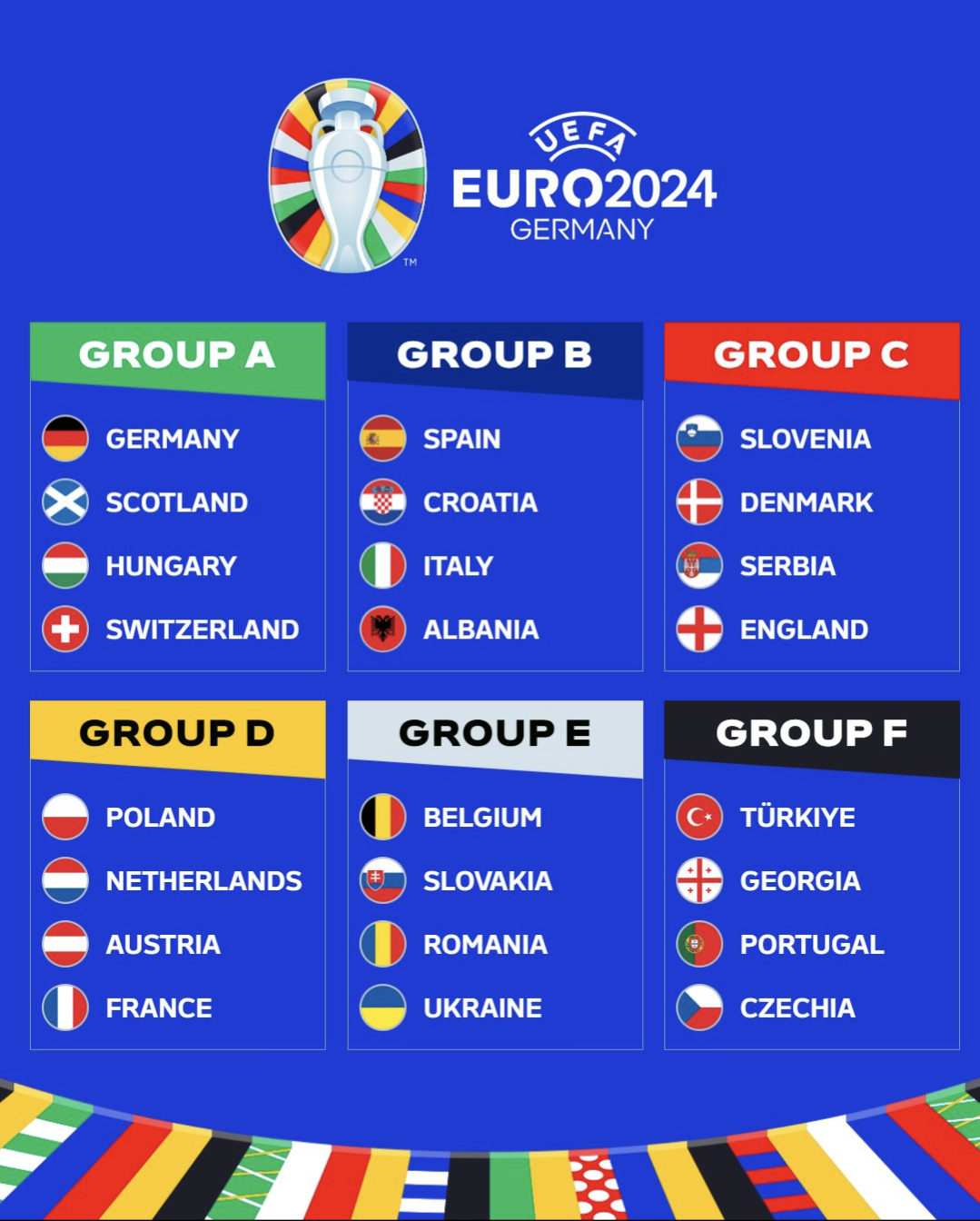
Group C has an interesting allotment of teams. First, there are two Balkan teams. Second, there are two teams that met in the semifinals at the last Euro. I mentioned that Group B is commonly scene as the “group of death” because of having three of the best teams in the World, but this group looks like a group where anything can go. It’s possible any of the teams can be ranked anywhere in the end. So with our further ado, here’s a look at the teams from Group C:
-Slovenia (57): One thing about the Balkan nations is that they know how to pull surprises. Slovenia is one such team that knows how to surprise. From the tiny Balkan/Alpine nation of just slightly over 2 million comes a team that was last at the Euro in 2000 and has played in two World Cups. It’s even won against some big names like Italy and Portugal. Among the teams they’re playing here, they’ve never won against England or Denmark but have beat Serbia once.
The team, which is one of only two teams at Euro 2024 that doesn’t have an official nickname, has been coached by Matjaz Kek since 2018. Kek played with the very first Slovenian national team. The players play for various teams in Europe and North America. Stars are Atletico Madrid goalkeeper Jan Oblak, midfielder Jasmin Kurtic and striker Josip Ilicic. Over the past year and a half, they’ve had wins to Northern Ireland, San Marino, Portugal and Armenia. They’ve had a draw to Bulgaria, a win and a loss to Finland, and a draw and a loss to Denmark. Euro 2024 is a new chance for Slovenia to prove itself. They could be the minnows that break through!
-Denmark (21): If there’s one team that’s unpredictable, it’s Denmark: the lone Nordic team to qualify for Euro 2024. De Rød-Hvide were the surprise winner of 1992. They also delivered shockers in Euro 2020. The first was after teammate Christian Erikson suffered cardiac arrest. The team played on and ended up in the semifinals. Some say it was because of Eriksen that they had the spirit to go that far. The team would go on to return to the World Cup in 2022.
Denmark has been coached by Kasper Hjulmand since August 2020. Star players include goalkeeper Kaspar Schmeichel, midfielder Eriksen and defender Simon Kjaer. In the last year and a half, they’ve won against Finland, San Marino, Sweden and Norway. They drew to Switzerland and had a win and a draw to Slovenia. They’ve also had a win and a loss to both Kazakhstan and Northern Ireland. It’s possible Germany can be the place for Denmark to prove its team one of the best in Europe. A surprise win again like in 1992? Never say never in football!
-Serbia (33): It seems as though the Orlovi struggle to relive the glory days of Yugoslavia where they finished fourth twice at the World Cup and finished runner-up in two Euros. Ever since Yugoslavia split up in the 1990’s, it first started as Serbia-Montenegro which was a single Euro in 2000 and a single World Cup in 2006. On its own, Serbia has successfully qualified for three World Cups in four attempts but has only now qualified for its first Euro out of five tries.
The team has been coached by Dragan Stojkovic for over three years. The players play for various clubs in Europe and Arabia with most players playing for Greek teams. Their stars include midfielder Dusan Tadic and forward Aleksandar Mitrovic. The team has had wins to Lithuania, Cyprus, Sweden and the United States. They’ve had draws to Bulgaria and losses to Hungary, Austria and Belgium. It’s quite possible Serbia can make their Euro debut a bang and go further than most predict!
-England (4): People have a love-hate relationship with the Three Lions. They always bring the finest combined football talent in the world onto their team, but they often can’t play as a team. You figure a team as talented as England would have won a plethora of awards! One thing in the last eight years is England sure has changed as a team as there has been more team unity in play. The World Cup saw them in the semifinals in 2018 and quarterfinals in 2022. At the last Euro, England made it to their first-ever championship final. They scored five minutes into the game, but it was downhill from there as Italy equalized and it led to penalty kicks where England, of course, lost.
Despite their biting losses, the team has played with the most team unity it’s had in decades. You can thank coach Gareth Southgate for that ever since he became coach in 2016. All members play for Premier League teams except two, including captain Harry Kane who plays for Bayern Munich. England brings a team full of top players but it also brings in a lot of young talent too. Since World Cup 2022, they’ve had wins against Italy, Scotland, Australia and Bosnia. They’ve had a win and a draw against both Ukraine and North Macedonia. They only had two loss since the World Cup and they were against Brazil and Iceland. Euro 2024 could be another chance for England to clinch its first-ever win.
My Predictions: It never fails. At the end of play, all four teams will have to be ranked. I believe the qualifiers from this group will be England and Denmark. Serbia will be in third, but I don’t think they will have enough points to qualify.
And there you go. That’s another look at a Euro 2024 group. This time Group C. Hard to believe I’m halfway done! Well it’s in good time as Euro starts in a week!
It’s crazy how they arrange these groups. Sometimes you wonder how do they organize these draws? Especially if you look at Group B. Of all groups in this Euro, Group B is the one group that can best be called the “group of death.” Look at the roster of teams! Three of them are ranked in FIFA’s most recent Top 10! Not only that but three of those teams were also in Group C in Euro 2012! Coincidence? Hmmm.
For those curious about what happened in 2012, Euro 2012 was a case only the Top 2 qualified. Spain and Italy not only qualified, but they would go on to be the two finalists, which Spain won!
In the meantime, let’s see how the four teams of Group B stack up and which teams will be the qualifiers:
-Spain (8):La Furia Roja may often come across as the World Cup’s greatest underachievers but they do very little underachieving at the Euro. Just like Germany, Spain also has three Euro wins. They were also semi finalists in the previous Euro tournament. They continued their achievements last year as they won the UEFA Nations League. The two Nations League teams they played against last year, Spain will be facing again right here in group play! One thing to point out about Spain is they’ve had a habit of slacking off in the early stages of group play and they can’t afford to do it here!
Spain is currently managed by Luis de la Fuente who has managed the team since their Round Of 16 ouster at the 2022 World Cup. The team is a mix of young and old and most play in Spain’s La Liga. Since then, they’ve had impressive wins over Norway, Italy, and Georgia, drawn against Brazil and Croatia in the Nations League final (which they won on penalty kicks) , had a win and a loss to Scotland and lost to Colombia. Germany is another chance for Spain to excel and possibly win a record-setting fourth Euro trophy!
-Croatia (10): I don’t call Vatreni or The Blazers “the little nation that can” for nothing. A nation under 5 million people and they’ve finished in the Top 3 in three World Cups including third in the most recent World Cup of 2022! Euro play, however, tells a different story. Ever since their existence as their own nation, they’ve qualified for the Euro six out of seven times, they’ve progressed to the knockout round four times, but have never won a knockout match at the Euro. That’s something to take into account.
Croatia has been managed by Zlatko Dalic since 2017. The legendary Luka Modric is the team captain. He will be joined by greats like forward Ivan Perisic, midfielders Mateo Kovacic and Nikola Vlasic and defenders Domagoj Vida and Josko Gvardiol. Their play since the 2022 World Cup has included wins against Netherlands, Armenia, Portugal and Egypt, a win and a loss to Turkey and a draw and a loss to Wales. This Euro is a chance for Croatia to go further than they ever have at the tournament, and even possibly win. Don’t count them out.
-Italy (9): The Gli Azzurri have always been seen as a major powerhouse in football with their superb showings at the Euro and the World Cup. Now they’re an enigma. Ever since they won the World Cup in 2006, they followed it up with two straight outs in the Group Stage and they’ve failed to qualify for the last two World Cups. Their failure to qualify for the 2022 World Cup was especially shocking since they won the Euro 2020 eight months earlier and they looked like they were on their way to redeeming themselves.
Since then, the Italian system had to reform itself and they hired Napoli’s Luciano Spalletti as the national coach back in September 2023. The lineup for Italy’s team for the Euro consists of all but three players who play for Italy’s Serie A, eight members who were part of Italy’s Euro-winning team from three years ago and only one from the last World Cup team Italy sent back in 2014! The focus as of late has been getting new talent to rise. Since World Cup 2022 ended, they’ve acquired wins against the Netherlands, Ukraine, Ecuador, Bosnia-Hercegovina and even got revenge against North Macedonia who ended their World Cup 2022 chances! They’ve also had a draw to Turkey and losses to England and Spain. Euro 2024 offers a chance for Italy to redeem itself and regain its reputation as a football great.
-Albania (66): It’s tempting to dismiss the Kuqezinjtë as the weakest link of this group. You shouldn’t jump to conclusions. They’ve won a Euro qualifying game against Portugal in 2014, a friendly against France in 2015, a friendly against Wales in 2018, and both World Cup 2022 qualifying match against Hungary in 2021. Even in their first Euro back in 2016, they achieved a win over Romania. Although they’ve always lost against Italy and Spain and has never played Croatia, history has proven Albania can deliver a shocker. Even their play in the last year helped them move from a C status in UFEA’s Nations League to a B status.
Maybe their recent success is because since the very beginning of 2023, they’ve been coached by a Brazilian: Sylvinho. His coaching has led the team to five wins in eleven games and qualifying for only their second Euro. None of Albania’s team play in teams in their own country and most play in teams for Italy’s Serie A. They’ve achieved wins against Bulgaria, Azerbaijan and the Faroe Islands, a win and a draw to Czechia and Moldova, a win and a loss to Poland, and a loss to Sweden. Germany 2024 is an opportunity for Albania to deliver a shocker of a result and even qualify. Never rule Albania out!
My Predictions: The crazy thing about a group called “Group Of Death” is that eventually predictors will still have to rank first from fourth. It will be a close one which I feel will have the most draws. In the end, I will have to go with recent Nation’s League action and I feel Spain will top, Croatia will be second. Italy will be third but will have enough points and stats to qualify.
And there you go. That’s my look at the four teams of Euro 2024’s Group B. It may be seen by most as the “group of death,” but don’t rule out the other groups. They could have tight rivals too.
The 2024 UEFA European Football Championships, commonly referred to as Euro 2024, will be starting very soon! There will be a lot of differences from that of the previous Euro 2020. For starters, there will be no full-year delay because of a pandemic and there will be no regulated seating like it was in some stadiums. Secondly, it has returned to a single-nation hosting format. This year, Germany hosts and it will be held in ten different venues. All of the stadiums have been built long before but the Stuttgart Arena and Hamburg’s Volksparkstadion went through renovations or expansions in time for this tournament.
THE GROUPS OF EURO 2024
Qualifying for Euro 2024 was no easy feat as it would involve team’s play for almost a full year for some, starting in late-March 2023. Twenty of the teams would secure their berths by November of 2023 with twelve more nations needing to play in the playoffs in March of this year to secure the last three berths. Drawings of the groups were done through a system of UEFA”s Nations League rankings that don’t make too much sense. Russia was banned from the tournament because of their role in the Russo-Ukrainian War. Even the system of qualifying didn’t make too much sense. The top two of each of the ten groups would qualify; that made sense. Finishing third, however, didn’t guarantee qualifying for the repechage playoff round as Nations League points would supersede it in some cases. Some groups didn’t have any teams qualify for the playoff route, some teams that finished lower than third in their group would advance to the playoff round, and Group J had their 3rd, 4th and 5th place teams advance! The playoffs were the most straightforward as the twelve qualified teams were drawn into three groups of four and it was a knockout tournament with the last team standing in its group advancing and completing the last three berths.
GROUP AFOCUS
After all that, the twenty-four teams competing in Euro 2024 have been decided. Nineteen of the teams are returnees from Euro 2020, one team will be in its first Euro since 2000 and one team is making their Euro debut! Now to start with my look at each group’s teams and my prediction of who will most likely qualify form the groups. FIFA rankings are in brackets:
-Germany (16): They may be known as the DFB-Team or The Mannschaft, but Germany has one of the biggest legacies among European teams. It’s not just their World Cup success with four wins but at the Euro, they’ve won three times and qualified for an additional three finals! Nevertheless, it all feels like a distant memory as Germany have struggled these past six years. Disappointments include going out in the Group Stage at the 2018 World Cup, a lousy ranking in the Nations League and an ouster in the Round Of 16 at Euro 2020. This led them to drop longtime coach Joaquin Low and take on former Bayern Munich manager Hansi Flick. Troubles continued as Germany again was out in the Group Stage at World Cup 2022. After more lackluster results, Flick was dismissed in September 2023. To add further shock, it was announced this March the German team would switch their national kit supplier to Nike in 2027 from Adidas: a brand they’ve been with for seven decades.
Although Germany is going through tough times, this is not the lowest they’ve ranked on FIFA’s list. Their lowest ever is 22nd in March 2006, just three months before World Cup 2006 which Germany hosted. The team is now headed by former Bayern Munich manager Julian Nagelsmann. The only members of the 2014 World Cup winning team that are still there are goalkeeper Manuel Neuer, midfielder Toni Kroos and striker Thomas Muller. The rest of the team consists of a lot of young rising talent with other established members. 2023 was a bad year with losing six of their eleven friendlies. Ever since Nagelsmann was made head, they’ve had struggles with a 3-2 loss to Turkey and a 2-0 loss to Austria. They’ve also had some wins with 3-1 against the USA, 2-0 against France and 2-1 wins against both the Netherlands and Greece. This tournament will give Germany a chance to rebuild its reputation as a major world football force in the world’s eyes.
-Scotland (39):The Tartan Army is commonly seen as the hard luck team in major tournaments. Not only have they played in the most World Cups without advancing past the opening Group Stage, but they’ve also played the most Euros without ever advancing to the Group Stage: three in total! I remember one Scottish comedian saying they have the most creative ways in getting eliminated from major tournaments.
The team has been coached by Steve Clarke since 2019. His success in getting Scotland to Euro 2020, their first Euro in 24 years, helped keep him coach despite the team not qualifying for the 2022 World Cup. Most of the team’s players hail from either teams from the Premier League or the Scottish Premiership. They did an excellent job in their Euro qualifying play, winning all games except one to Spain. Play since has been troubling as they have drawn to Georgia, Finland and Norway and have lost to England, France, the Netherlands and Northern Ireland. Germany 2024 is another chance for Scotland to take its team to new heights and possibly their first-ever knockout round in a major tournament.
-Hungary (26): Sometimes it does seem like the days of the Magical Magyars are a thing of the past with being in two World Cup finals, winning three Olympic gold medals and finishing third at only the second Euro ever. As Hungary made the move from Communism to freedom in the late 80’s, it actually caused a decline in football as the fall of Communism caused financial problems for many Hungarian clubs including some of their bigger clubs declaring bankruptcy in the 90’s. The resurgence of Hungarian football started in the 2010’s with qualifying for the past three Euros starting in 2016.
The team has been coached by Italian Marco Rossi since 2018. The team has a wide variety of players that play for various leagues, but it has done a lot of promotion of its younger talent. In fact the team captain, midfielder Dominik Szoboszlai who plays for Liverpool, is only 23 years old. Since 2023 began, Hungary has had a great record, achieving wins against Turkey, Serbia (twice) and Lithuania, and its only loss coming from Ireland. Euro 2024 can be another opportunity to bring Hungary’s past magic back!
-Switzerland (19): Switzerland is often seen by many as a sleeping giant. La Nati have not had that much of a legacy but the team shows potential to achieve greatness at any time. They’ve qualified for the last five World Cup and have made it to the Round Of 16 in four of them. The first Euro where they qualified for the knockout round was in 2016 and in 2020, they made it to the quarterfinals.
Switzerland is coached by Yurat Makin, who became their coach in August 2021, shortly after Euro 2020. Veteran greats like Granit Xhaka and Xherdan Shaqiri will be returning, but the team will feature a mix of old and new talent. They were consistent in group play in Euro qualifying. They’ve managed wins against Israel, Belarus, Estonia and Ireland but they’ve also had losses to Romania and draws to Denmark, Austria and Kosovo. Germany could be the stage for the Swiss team to reach new heights.
My Predictions: And now is that hard part of the blog. Predicting the two or three teams that will qualify for the knockout round. I will say Germany and Hungary with Switzerland a wildcard.
And there you go! That’s my first blog for Euro 2024 where I do a group breakdown. More to come over the next two weeks.
Will Italy win for the second time? Or England for the first?
Fifty matches, 140 goals, eleven venues and eleven countries. And an event format current UEFA president Aleksandar Cerefin says is too troubling and won’t happen again. I didn’t have a problem with it. Despite it, now the field is narrowed down to the two for the Cup: Italy and England. For Italy, this will be their fourth time playing for the Cup. Their one win came in 1968 and it came after two hugely controversial semifinals. For England, this is their first time ever qualifying for the final! Yes, I find it hard to believe too. Ever since 1996, they’ve been singing ‘It’s Coming Home’ in hopes they win whatever big trophy they’re chasing and now is more chance than ever! For this, I will do my review of Italy vs. England and make my prediction.
Head-To-Head Stats:
Italy vs. England isn’t normally one of the bigger rivalries in football. Italy’s more legendary rivalries are with Germany, Brazil, eastern neighbors Croatia, Spain and France in recent years. England has bigger rivalries with Germany, Argentina and northern neighbors Scotland. Italy and England have played each other 27 times. Italy has won ten times while England has won eight. The last time Italy played England, it was a March 2018 friendly and it ended in a 1-1 draw.
Team Breakdown:
ITALY: It’s hard to believe a team with one of the biggest football legacies of four World Cups has only won a single Euro. It was all the way back in 1968, and after both semifinals consisted of major controversies. In fact Italy’s case was they played a scoreless draw against the Soviet and there wasn’t a penalty kick system like we have now. So a coin-toss was used to decide Italy’s win! Since 1968, they have made it to the final twice: in 2000 and 2012. The Forza Azzurri have always been one of the most dazzling teams in the world, but they can also end up being one of the most unpredictable teams too. There have been many times in tournaments when even if they didn’t win, they would go further than expected. However there are times when Italy has delivered below pre-event expectations. That has especially been the case after they won the World Cup in 2006. However it was right after their failure to qualify for the 2018 World Cup that it was aware there had to be changes not only in the team, but the Italian football system.
Since their World Cup failure, they have a new head of the Italian Football Federation (FIGC) Gabriele Gravina and a new coach in Roberto Mancini. Ever since Mancini took hold of the Italian team, the Azzurri have only lost two games with the last loss being in September 2018. They capped hugely successful, 2019 with straight wins. 2021 was also hugely successful with straight wins until the Euro semifinal where they drew 1-1 against Spain. Their win on penalty kicks is a victory for them as Italy is one of the weaker teams at penalty kick rounds. Italy came to this Euro with a lot to prove and prove they did. The final is another opportunity for them to prove themselves. They showed they can score well and that they have good defense. However even coach Mancini admits that England is a stronger team. He even warned his team to be cautious of players like Harry Kane and Raheem Sterling. That could be their one glitch as they may not be able to fend off England’s star strikers. Another is Emerson Palmieri as the replacement goalkeeper. He plays in the Premier League with Chelsea and some England players may be familiar with his weaknesses. Nevertheless, Italy can rise to the challenge and possibly win their second Euro over in Wembley Stadium.
ENGLAND: Hard to believe this is the first-ever Euro final England has made it to! It’s just as surprising as their one World Cup, which was won in 1966 in old Wembley Stadium. Euro 2020 would be poetic if they won their first Euro in the new Wembley Stadium. Yes, it does seem like England’s win of the 1966 World Cup has made them a one-hit-wonder in football. England has almost always fielded the national team with the most talent and the most skill combined. However its inability to go far on the international stage has almost always seems to be the team not being able to come together and play as a team unit. That often seems to be the case. Ever since their World Cup win, the best England has done at the World Cup was two fourth places. Also the best they ever did at Euro was a third place.
2016 appears to be the turning point. This was after England came off possibly its most dreadful performance as a national team with Roy Hodgson. It involved an out in the Group Stage at World Cup 2014 and an out in the Round of 16 at Euro 2016. After Euro 2016, the English team hired Gareth Southgate as the manager. A former national team player himself, Southgate was coach of the national under-21 team at the time. It turned out to be the best move for England. Southgate’s England squad made it to the semifinals of World Cup 2018: the first time since 1990 and only the third time even England make the Top 4 at the World Cup.
Then Euro came. The current English team consists of some of the best veterans and many top rising talents. All but three play for Premier League teams with one playing for Atletico Madrid and two playing for Germany’s Bundesliga teams. England and Southgate had a lot to prove to the eyes of the world here at the Euro 2020 and boy have they been proving it. It the Group Stage, their only non-win was a scoreless draw against Scotland, but their other two matches were wins of 1-0. In the Round of 16, they beat their common rival Germany 2-0. They would show dominance in their quarterfinal against Ukraine by winning 4-0. The semifinal was the first Euro 2020 where England conceded a single goal. Despite it, England was able to recover and win the semi 2-1 in added extra time to qualify for their first-ever Euro final!
England overcame a lot of ‘team demons’ in order to get where they are now. Back at the 2018 World Cup, they won their Round of 16 game against Colombia on penalty kicks. That was the first time ever in four tries that England won a World Cup match on penalty kicks. Even here in Euro 2020, winning over Germany, a team they commonly lose to in major tournaments, shows how much team chemistry between England has improved over Southgate. However England does have their imperfections. You can look at their semifinal win, for starter. The controversy of a fan flashing a laser pointer to the eyes of Danish goalkeeper Kasper Schmeichel as Harry Kane was about to make his penalty kick has given their win a tarnish. The English team has been fined by UEFA for this. Another case, as far as play goes, is that Italy has been noticed to have better midfielders than England. That could hurt England during some key moments. Whatever the situation, Wembley Stadium tonight is their chance to tell the world ‘It’s Coming Home’ instead of ‘It’s Coming To Rome.’
My Final Verdict:
This is a tough call and this is a game that could end up as a draw even at the end of added extra time. However I feel I will have to predict England to win this 2-1.
And there you go! That is my focus on the Euro 2020 final and my prediction. You can bet there will be a ton of excitement over in Wembley Stadium and lots to look forward to. Can excitement and national pride repeat itself 55 years later? Only time will tell!
The field has been narrowed from 24 to eight. For most, like myself, not the eight we expected!
Normally I don’t concoct a blog of quarterfinal predictions of a major football tournament if it has a Round of 16. Normally I predict the winners of the Round of 16 matches, then make quarterfinal predictions based on my picks of Round of 16 winners and leave it at that. However those that read my blog of my Round of 16 guesses are undoubtedly laughing at how I only got three right. That explains my rewritten predictions for the quarterfinals. I feel they deserve a redo. So here goes my predictions:
Switzerland vs. Spain – Here is the big irony. Switzerland beat out reigning World Cup holders France on penalty kicks to qualify, and Spain beat out World Cup 2018 finalists Croatia in added extra time to qualify! Additional irony is both teams here had Round of 16 matches that ended with 3-3 after regulation time! Interesting!
This is Switzerland’s first-ever win of a knockout game at a Euro ever, and their first in a major tournament since the 1938 World Cup. For Spain, they’re in familiar territory as they’ve won three Euros and a World Cup in the past. Also in the 22 times the two countries played each other, Switzerland has only won once. Switzerland could come alive in soring prowess like they did against France, but I will predict Spain to win here.
Belgium vs. Italy – Two different teams. One is the result of years of teamwork and perfecting that has taken them to the rank of #1 in FIFA’s World rankings. The other is a fresh team with a history of a legacy that’s making a comeback after failing to qualify for the most recent World Cup. Both teams have one thing in common. They both all have straight wins in this Euro tournament.
This is the one quarterfinal lineup I predicted correctly! Hard to choose. The goal scored by Austrian Sasa Kalajdzic was the first goal Italy conceded not just in Euro 2020 but since their match against the Netherlands in October! Belgium only conceded one goal in Euro 2020 in their group game against Denmark. It’s tough to pick a winner in a quarterfinal of two teams with straight wins in this Euro. I know Italy has beaten Belgium more often in head-to-head matches but I pick Belgium because they are the powerhouse of the moment and this Italian team is a rising power.
Czech Republic vs. Denmark – Another quarterfinal of teams that surprised in their Round of 16 match. Most people would have touted the Netherlands over the Czech Republic. However the Czechs delivered a surprise win of two goals. Also many would have predicted Wales to beat Denmark as they have the more lauded players. Denmark surprised them with four goals!
It’s interesting in these past two games, Denmark scored four goals each game. Their group match against Russia was do or die for them to qualify and it became a case where the Danish Dynamite finally exploded! The Czechs are also a team that appear to be showing their best traits in only their most recent games. For this match, I will predict Denmark because they’re best at pulling surprises. Also if this is a possible draw, which is quite likely with the head-to-head record, I think the Danes will take it in penalty kicks.
England vs. Ukraine – Tuesday was a case where the eventual winners were not the favorites going into their Round of 16 matches. England has been known in recent decades of losing to Germany. How easy we forgot they beat Germany to win the 1966 World Cup. And in the old Wembley Stadium. However it was a case of one of the best English teams ever against a struggling German team and it resulted in a 2-0 win! And in the new Wembley Stadium. Their first win of a knockout game since Euro 1996, which England hosted! And current coach Garreth Southgate was a player for the team back then!
For Ukraine, Sweden had the bigger expectations to win considering they topped their group with two wins and a draw, while Ukraine squeaked in with just a win and two losses. Anything can happen in a match. The game drew 1-1 after regulation and then in the stoppage time of added extra time, Ukraine’s Artem Dovbyk scored the winning goal!
England have not yet conceded a goal during the Euro 2020 tournament. Ukraine have lost games during Euro 2020, but have also delivered some surprise moments. In football, anything can happen. England have won four of the seven head-to-head matches while Ukraine has only won once. I will have to go with England on this. Even though they won’t be in their home country for this quarterfinal, it won’t rob them of their luck.
And there you have it. My revised predictions of the Euro 2020 quarterfinals. Interesting that the quarterfinals is the last round that will have the teams play in alternating cities and countries. The semis and finals will all be held in Wembley. Stay tuned for some exciting play!
In the middle of May 2021, the Eurovision Song Contest took place while the COVID pandemic was still happening. In addition, it allowed seating capacity for thousands of spectators. One would consider this to be a very dangerous move as the world is trying to recover from a world wide pandemic. Few know that this is an event to test whether it’s possible to hold a concert during a pandemic.
EUROVISION 2020 CANCELLED
2020 started like any other year. If there was COVID happening, it was half a world away and showed no real signs of crossing any borders. The Rotterdam Ahoy arena looked like it had plans to be made ready to stage the Eurovision 2020 while national TV networks were getting their performers and songs ready, whether by internal selection or by hosting national finals. Then the pandemic crossed borders. The news got more frightening every day as cases were starting to crop up from country to country. Sports events like the PGA golf series, MLB and NFL football had to cancel their seasons, the Olympics had to postpone to the following year. Then in mid-March Eurovision 2020 had to cancel because of the pandemic. That was just after all 41 competing nations had already submitted their entries and songs.
The COVID-19 pandemic led to the cancellation of the 2020 Eurovision Song Contest in Rotterdam.
With no Song Contest happening and it being hugely complicated, if not impossible, for people to meet up, the European Broadcasting Union (EBU) decided to have all the entered songs recognized for the participation. There would still be a set of Eurovision shows during the days the Song Contest was originally intended to take place. The Tuesday and the Thursday which were originally supposed to have the semi-finals contested had the Eurovision Song Celebration which paid tribute to the songs and performers of that year and during what was to be their respective semi-final performance. Even before the Song Celebration, the Eurovision Youtube channel had the artists of 2020 perform ‘home concerts’ to keep people’s spirits up.
On the Saturday that was to have the Grand Final held, May 16, 2020, there was Eurovision: Europe Shine A Light. It was a two-hour show which paid tribute to the 41 songs and performers who were to be participating that year. A piece of the video of their song was played followed by a message of well-wishes during this pandemic from the respective entered act remotely from their home country. The show was held with a central location of Studio 21 in Hilversum instead of an arena. Past Eurovision entries gave their wishes to all during this time. There were additional performances from past Eurovision entries singing past Eurovision songs with encouraging messages like ‘Ein Bisschen Frieden,’ ‘Molitva,’ and ‘What’s Another Year.‘ Italian entry Diodato performed ‘Volare‘ live from Milan as well as showcased his song ‘Fai Rumore‘ from an empty arena in Verona. Singers of the two most recent winning songs, Israel’s Netta and the Netherlands’ Duncan Laurence, performed original songs about the frustration of loneliness one receives during the time we all have to isolate ourselves to prevent contagion. Israel’s Gali Atari performed her 1979 winning song ‘Hallelujah‘ with Dutch Junior Eurovision contestants and Junior Songfestival entries from past years. It was done as a Zoom-style ensemble. The show ended with all the 41 contestants singing a piece of the 1997 winning song ‘Love Shine A Light‘ with the song ending with all of them singing together as a Zoom-style choir with Katrina Leskanich, formerly of Katrina and the Waves, to sing the last part.
There were also two noteworthy announcements that happened during the show. The first announcement came during the part when they were with the 2019 Junior Eurovision winner Viki Gabor from Poland. From her home in Poland, she announced that the Junior Eurovision Song Contest will be taking place in Warsaw on November 29, 2020. The second announcement came from the hosts of Europe Shine A Light. It was announced that the Eurovision Song Contest will be taking place in May 2021 in Rotterdam.
CONSIDERING OPTIONS FOR EUROVISION 2021
The announcements of a Junior Eurovision in six months time and a Eurovision in a year’s time seemed like far-fetched things at the time. Nobody knew what the pandemic would be like over time. Rates were increasing at frightening rates, people were still in lockdowns and a vaccine of any kind had not been discovered. Nevertheless it was something still worth pursuing. Twelve months since the ill-fated 2020 Contest is enough time for the pandemic to either subside or for preventative measures like vaccinations to be in effect. Countries were already announcing their intention to compete in 2021. Many even announced their intended 2020 entry would be their performer for 2021. However staging the Contest would be difficult. Possible, but difficult. The EBU had four scenarios to deal with. Each of the scenarios would involve the holding of shows, presence or non-presence of performers, number of spectators, side events and the media press:
Scenario A (normal): This would almost be as if the pandemic never happened. All shows from Ahoy Arena, all the participants in Rotterdam to perform, arena filled to 100% capacity, side events happening throughout Rotterdam the Press Centre would have all 1,500 anticipated press people on site.
Scenario B (1.5 metre social distancing): All shows would be from Ahoy, but only performers who are COVID-negative could perform on stage. Since there would still be no guarantee that the performers would all be COVID-negative on the day of the show, they would all do taped back-up performances that would act as their Contest submission in case. Those whose country was still under lockdown because of travel restrictions could have a taped performance recorded by their network. Arena audience could be anywhere from 0% to 80%, side-events would have to be adapted virtually, and the 1500 press people would be limited to 500 on site and 1000 virtually.
Scenario C (Travel-restrictive): All shows would still be from Ahoy and the arena would still have a capacity of spectators anywhere from 0 to 80%, but participants would all do their performances in their home country. There would still be adapted side performances, but greatly reduced and all 1,500 press people would conduct interview questions virtually.
Scenario D (lockdown): Even with a lockdown mode, there would still be a show from Ahoy arena as there was a show from a studio during 2020’s lockdown in the Netherlands as well as most of Europe. The arena however would only be empty of spectators, consisting only of show and network personnel. There would be no side-events, performers would do their performance in their home country and again all 1,500 press people would conduct interview questions virtually.
JUNIOR EUROVISION 2020: THE FIRST TEST EVENT
Six months in between the intended Eurovision Song Contest 2020 and the Junior Eurovision Song Contest 2020 was enough time to get a good sense of how to conduct business and events during the pandemic. The 2020 Eurovision Contest couldn’t be held because everything happened all of a sudden and it was too sudden to plan an alternate for holding a Contest. However the EBU was well-aware statistics and restrictions would change by the time Junior Eurovision, the song contest for performers aged 9 to 14, would come around on November 29, 2020. Some would be for the better, some worse. It was decided that the Junior Eurovision would be held in a situation close to that of Scenario D. I will get to the specifics in the next three paragraphs.
The 2020 Junior Eurovision Song Contest held in November that year was a trial of Eurovision Scenario D consisting strictly of studio performances.
Over time, seven nations that competed at the 2019 JESC such as Australia, Italy, North Macedonia, Ireland and Portugal would not participate because of the COVID situations in their country. Armenia intended to compete, but the Nagorno-Karabakh conflict that happened a month before Junior Eurovision was about to start led to their withdrawal. In the end, twelve countries, the lowest since 2013, chose to compete. Germany was one country that would make their Junior Eurovision debut. The Contest organizers were sensitive to the pandemic and announced that the Contest would be restricted to studio performances. They gave two options where the performers could do their performances in Warsaw in the studio of the host network TVP (Telewisja Polska) or in the studio of their respective nation’s network. I believe it was a case of three performances could be done and the best of the three was chosen as the performance for the competition. Only performers from four nations — Poland, Malta, Ukraine and Serbia — were willing to do their performances in Warsaw. Performers form the other eight countries stuck to doing their performances in the studio of their respective nation’s network. Also performances and parts from the Common Song — a song performed by each nation’s singing entries as an ensemble onstage — had to be recorded from whichever studio they performed at beforehand.
Junior Eurovision 2020 was finally held on November 29 inside the TVP headquarters in Warsaw. There was an audience but it was restricted to network organizers and their families. The show began with a performance from last year’s winner Viki Gabor performing her winning song from that year: ‘Superheroes.’ Back-up dancers were present during the performance. For the remainder of the show, the chosen performances from the studios were the competitive performances the juries judged on and the home audiences would vote for online. Instead of the Green Room where the competing performers would normally sit, drink and mingle in, the performers and their assistants were in a special room in their respective network studio. It was also live broadcast from the room where interviews were conducted and their reactions to the scoring would take place.
For the Interval Acts after all the competitive performances were shown and viewers voted, the Common Song was shown as if all the performers gathered together as one. It was actually created through hologram technology. Another hologram performance was the performance of the 2019 Eurovision-winning song ‘Arcade’ by winner Duncan Laurence and Poland’s two Junior Eurovision winners Viki Gabor and Roksana Wegiel. Viki and Roksana performed together, but Laurence’s part was done in an NPO Zapp studio in the Netherlands. The winning song — “J’Imagine” by singer Valentina from France — was a song whose submitted performance was taped one month earlier in a France 2 studio in Paris. There was not the usual Winner’s Reprise where the act of the winning song traditionally goes back on stage, accepts the award and gives and encore performance of their winning song. Instead Valentina and her team celebrated in the France 2 studio and a replay of the submitted competitive performance was done instead of the Winner’s Reprise.
EUROVISION 2021 PLANNING
In all honesty, that year’s Junior Eurovision did feel like a constricted event with all the performers limited to taped performances in a studio, hologram performances of most interval acts, and studio rooms instead of a green room. It didn’t have the same look and feel as if the performers were performing in from of a live audience full of excitement or the same celebratory feel of the performers all getting together in the Green Room having their post-performance fun. What it did do is that it showed that a Eurovision contest was possible. It would be very limited but very possible. Also on an optimistic note, that year’s Junior Eurovision’s online voting had the most online votes totalling 4,500,000! That showed the pandemic can’t stop the Eurovision excitement. For the organizers of Eurovision 2021, this Contest served as an example on how to do a Eurovision if it does come down to a Scenario D situation. Of course they would want to do the Contest with a bigger stage, as many performances on that stage as possible, and with a live audience full of excitement. It would be dependent on time and the situation involving the pandemic as they got closer and closer to Contest time. This would be dependent on statistics of numbers of cases, possible other COVID variants and their effects, the potential for vaccines to be distributed, the efficiency of testing, and the latest studies in COVID prevention.
As time passed, it was announced all 41 nations that entered in the 2020 Contest intended to participate in the 2021 Contest. Many nations intended to enter their entry from 2020 into the 2021, but a new song had to be created in order to keep within the rules. Some nations stuck to having their usual national contests to have the performer and song selected, but said their respective 2020 entry can participate without having to audition. As for the pandemic, there would be a lot of changes over time in terms of the pandemic. The statistics would yield differing results, but vaccinations would also begin to take place en masse in the countries and many travel restrictions would be lifted. This would allow for the ability for performers to travel to the Netherlands to perform and even foreign visitors to come. The one thing the vaccinations and eased restrictions did not do over the time is decrease the potential contagion of COVID significantly nor the disease’s effects on those that caught it. The organizers in the end decided to do the Contest via Scenario B. There would be live performances for all six live rehearsals and three live shows, and the Dutch Cabinet approved a live performance one month before the Contest. Concert crowds would be a limited number and there would be no spectators standing on the arena floor level. More details on the concert crowds in the Handling Of Ticket Holders section. Side events would be impacted such as the ‘Turquoise Carpet’ being the only in-person side-event to take place normally, the Opening Ceremony not held, the Eurovision Village to be held only as an online event and the EuroClub cancelled completely.
The 2021 Eurovision Song Contest was allowed to take place in Rotterdam’s Ahoy arena with spectators. The event was under strict preventative regulations for performers and spectators alike.
Safety Measures For Performers
None of the nations from 2020 that intended to compete in 2021 cancelled out because of COVID-related reasons, but two nations did withdraw. Armenia withdrew because of political unrest from after the Nagorno-Karabakh conflict and Belarus withdrew because their entry for this year had a political message, which is against the EBU rules for the Contest, and would not submit a replacement song. Thirty-nine nations did compete in the Contest. Twenty-six of those nations had the act that was intended for the 2020 Contest as their entry for 2021.
The COVID pandemic was just as real of a threat in the performers’ home countries as it was if they were in Rotterdam. The EBU knew this. They were still aiming for live performances for rehearsals, jury performances and live Contest performances. They still wanted to make sure the performers didn’t endanger themselves or others. In addition, not all travel restrictions had been lifted for the participating countries. The EBU gave the entries the obligation to record back-up performances on video for in case they could not perform their song live on stage whether it be the semifinal, final, or even rehearsals because of travel restrictions. Rules for back-up performances were the artists were each given an hour and during that hour, they were allowed to give three performances of their song. At the end of taping, the delegation would decide which one of the three performances they were most satisfied of. The choice would be the entry’s official back-up submission.
There was also the possibility that some performers would test negative while in their home country, but end up testing positive or being a high-risk group any time while they were in Rotterdam. It could happen anytime, whether it be after the first rehearsal, but before the jury performance or even the live performances. Performers had the option to use their best rehearsal performance or even a jury performance, whichever they were happiest with, as their back-up performance for the Contest. There could even be stand-ins for the rehearsals should one test positive and have to sit the rehearsals or performances out. There were times when these regulations for this year’s Contest were very helpful for all thirty-nine to have a performance worthy of submission for the Contest:
Australia was still unter travel restrictions. Montaigne could not travel to Rotterdam to do her performance of her song ‘Technicolor‘ so the chosen back-up performance acted as the entered song. Audiences both in the arena and through television would see the performance on the LED.
Kateryna Pavlenko, lead singer of the Ukrainian band Go_A, reported feeling ill before the performance of their song ‘Shum’ for the second rehearsal just before the first semifinal. Rules were that anyone reporting feeling ill before performing no matter what had to miss because of a precaution. All other band members tested negative for COVID-19. The band continued with their performance as a Dutch singer, Emmie van Stijn, acted as the stand-in. Pavlenko soon after took a COVID test and the results were negative. Pavlenko was able to continue performing for the remainder of the competition. The band was so impressed with van Stijn’s singing and diction of the Ukrainian language, they had her sit with them in the Green Room during the semifinal as a thank-you!
All six members of the Icelandic entry Daði og Gagnamagnið were COVID-negative when they arrived in Rotterdam. Their performance of their song ’10 Years’ went as normal during the first and second rehearsals. However one of the members tested positive for COVID. They had a rule that they would all perform as a band on the Eurovision stage. They opted to miss out from further performances. Their performance from the second rehearsal was their chosen submission for the jury performances and live shows.
2019 winner Duncan Laurence was slated to reprise his winning song ‘Arcade‘ and perform his new song ‘Stars‘ as part of the interval act of the Grand Final. Laurence opened the first semifinal with the song ‘Feel Something,’ but tested positive for COVID shortly after. Duncan had to miss performing live in the Grand Final, but he did deliver a message of well-wishes on the LED screen and pre-recorded performances of ‘Arcade‘ and ‘Stars‘ were used instead.
Handling Of Ticket Holders And Rapid Testing
It was decided by Dutch Parliament in less than three weeks before the start of the Contest that the event would be open to spectators. Organizers set the limit to the number of performances accessible to public audiences to be nine: all jury shows, family shows and live shows of the two semi-finals and Grand Final. The number of spectators per show was set to a limit of 3,500. Now I know a lot of people would be freaking out over live crowds occurring during a pandemic, but there were rules and regulations regarding spectators for the Contest. In fact the Contest was a pilot event event under FieldLab Concerts. Rules included:
Ticket holders had to personalize their tickets, undergo COVID tests within the day of their event, and show up at the Ahoy entrance during their allotted time-slot.
High-risk groups as defined by the Netherlands’ National Institute for Public Health and the Environment (such as those 70 years or older) cannot purchase tickets.
Those attending the events couldn’t just simply purchase tickets. All sold tickets had to be personalized and registered. Meaning only the specific person is allowed to use the ticket. There are to be no ticket exchanges. Part of the personalization includes ticketholders to download the Close app and CoronaCheck app.
Just after purchasing the ticket, the Eurovision Contest Shop will bring ticketholders to a webpage to personalize the tickets. The ticket will be accessible for the Close app.
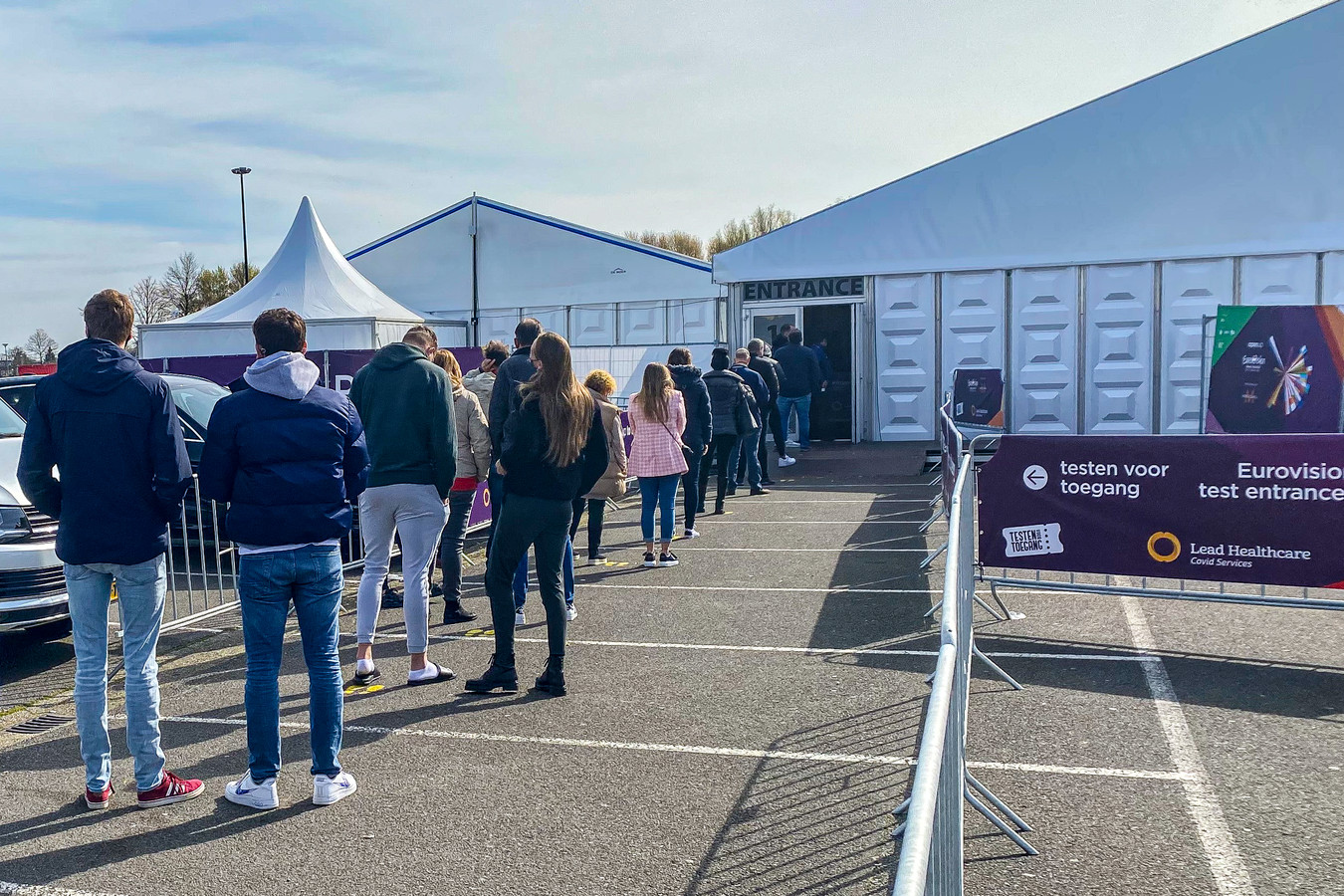
Ticketholders will need to take COVID tests the day of the ticketed event. Maximum 24 hours before the event’s anticipated end. Showing a card that confirms COVID vaccination is not enough. Appointments for COVID testing would have to be made through the Dutch ‘Testen Voor Toegang’ website which assists in setting appointments for rapid COVID testing throughout the Netherlands. Even attendees coming from other countries will have to be tested in the Netherlands. Test results can be made available as soon as an hour after they’re taken. Tests done through Testen Voor Toegang appointments are the only valid COVID tests for the Contest.
Results of the COVID test will be made available through the CoronaCheck app. Those that test negative are allowed to attend their ticketed event. Those that test positive are not allowed and they do not receive a refund.
All spectators who test negative can’t simply arrive at the Ahoy Arena anytime. In their Close app, they are given an entrance time-slot for them to show up at the entrance to their ticketed event and do their airport-style security check.
At their entrance, they are required to show both their ticket and their negative COVID test result in order to be admitted.
As far as face masks go, attendees are allowed to take off their face masks when they’re inside the actual arena seating. Spectators are allowed to eat and drink inside the arena seating.
Spectators will have to put their face masks back on once they leave the arena seating area. That includes in areas of the Ahoy Arena such as concession lobbies or the washrooms. Arena seating is the only mask-free area for Contest spectators.
Once spectators are outside the Ahoy Arena building, all mask-wearing regulations made by the Dutch government apply.
Also worth taking note is that all spectators had to be in seated areas. In fact the Green Room took up the whole arena floor area outside of the stage to ensure no spectators on floor level and the performers’ own social distancing. This is arguably the first big event with large spectators to be held during the pandemic so it’s obvious strict regulations would be required. Since the Contest has been completed, there has been no news of massive positive tests from spectator attendance. It so far has proven to be an excellent success, if not a flawless success, that a concert can still take place during the latter period of a pandemic and make progress to more back-to-live performances. Even spokespeople throughout the Contest were speaking their delight and approval of the Contest getting back to live performances and celebrative spirits. Also for those who want to know who the winner is, but don’t know, it’s Italy’s glam-rock band Måneskin who won with the song ‘Zitti e Buoni.’
This year’s Eurovision Song Cotest proved that live performances with spectators can happen during a time of a pandemic. Measures in terms of ticket holders and performers had to be strict and within government regulations, but it all turned out to be successful in the end.
Wow! Euro 2016 is not even a week away. Fast notes about the ten stadiums staging the Euro. Six were venues of the 1998 World Cup. The other four are new stadiums that opened anywhere from back this January to four years ago. Glad to see this Euro isn’t that big of an expense. Although five of the ‘older’ stadiums did need upgrades for this event. Anyways here’s my look at the Group D teams:
Turkey (13): Turkey is a team known for its infrequent successes. It has competed in three Euros and two World Cups. It finished third in the 2002 World Cup–its first World Cup since 1954– and hasn’t qualified since. Turkey didn’t qualify for the 2004 Euro but finished in the semis in 2008 and didn’t qualify for 2012. Turkey’s back now. All but six players play for Turkey’s Super Lig, three play for German teams and captain Arda Turan plays for Barcelona. The team has done very well in play the past year and a half including wins against the Netherlands, Czech Republic and Sweden. Their only loss came to England two weeks ago and the score was 2-1. Turkey is one team that shouldn’t be underestimated.
Croatia (23): Croatia has a reputation of being world class ‘minnows’ that will surprise you when you least expect it. However Vatreni has struggled to regain their strong reputation they had back in the late 1990’s. In fact the team’s play has been mostly quiet news. However they still should not be underestimated. They may have lacked a standout moment for the team in recent major tournaments but they’ve continued to exhibit consistent play. They may lack a standout superstar but they function excellently as a team unit. Since World Cup 2014, they’ve regained the consistency they’re known for. They’ve had wins against Russia, Israel, Norway and Bulgaria and have even drawn against Italy. The team has only had two losses in that time: against Argentina and Norway. In this group, their toughest opposition will be Spain as they’ve only won against them once in the last 25 years. In that same time, they’ve never lost to Turkey and the Czechs. Euro 2016 is another time for the team to prove themselves once again.
Spain (6): We’ve talked about England trying to recover from its 2014 World Cup embarrassment. England’s not alone. Spain entered the Cup as the reigning holders only to lose their first two Group games which meant their elimination as Group play concluded. Like England, La Roja didn’t drop their coach: Vicente Del Bosque. Their road to redemption did have a struggle for the remainder of 2014 as they lost three of their six 2014 games after the Cup. Spain did have challenges bringing in new players who aren’t as well seasoned as their veterans still on the team. However Spain were very good in qualifying for the Euro and their only loss in 2015 came to the Netherlands. This past week they scored big wins against Bosnia (3-1) and South Korea (6-1). No doubt they will be coming to France with something to prove.
Czech Republic(29): The Czechs are an enigma in football. Since the divorce of Czechoslovakia in 1992, the team has qualified for every Euro even being finalists in 1996 and semifinalists in 2004. However they’ve only qualified for one World Cup: back in 2006 and they were out in Group Stage. Their play since the 2014 World Cup has also been enigmatic. They’ve lost to the United States, Slovakia, Iceland, Turkey, Poland and Scotland. However they’ve also won against Iceland, the Netherlands, Serbia and Russia. France will be another chance for the team to prove themselves.
Prediction: This is a tough one because both teams have a lot of strengths but they also have a lot of very noticeable weak spots. You could call this a ‘group of death.’ I predict Spain to top it with Croatia second and Turkey third.
And there are my thoughts for Group D. Next up my review of Group E.
This is actually my favorite group of the six because I’m 3/4 Ukrainian, 1/4 German. Plus I like Poland because Poland and Ukraine have a lot in common, especially in their language. Nevertheless this should make for an exciting group with a lot of rivalry. So here’s my review of Group C:
Poland (27): Poland may have a good World Cup legacy with seven appearances and two third-place finishes but they lack a Euro legacy with competing in only the last two and going out in the Group Stage both times. Last Euro was especially embarrassing since they were co-hosts and didn’t win a game. Since then the White Eagles has gotten better. And it’s not just with Robert Lewandowski becoming a star striker for Bayern Munich. It’s the whole team that has been performing consistently. In fact the team even scored their first ever win against Germany in October 2014 during Euro qualifying. They’ve had other notable wins in the past two years against Ireland, Czech Republic and Serbia. Their only loss in the past two years came to Germany when they got their Euro qualifying revenge last September. Before I even give my predictions, I can already say I know Poland will advance to the Round of 16 at the very least. Poland could be the team most likely to cause a surprise.
Northern Ireland (26): This is Northern Ireland’s first ever Euro. They’ve played in three World Cups before and even made the quarterfinals in 1958 but no previous Euro. The team may not have a George Best right now but they appear to be getting stronger in recent years. Five players play for the Premier League and they’ve scored notable wins against Hungary and Greece. Their two losses to European teams in the past two years were to Romania and Scotland. France could be another proving ground for the team.
Germany (5): You think that since they’ve won the World Cup in 2014, they should be top of the world, right? Well one of the reasons why they won the World Cup is because they had the most team unity and best team chemistry of all. No standout superstars, just one functioning team. And that’s how it should be. However three of its top players from World Cup 2014–Per Mertesacker, Phillipp Lahm and Miroslav Klose–retired immediately after. This led to dealing with a new team format since then and also into developing new national team players. Manuel Neuer, Thomas Muller, Mesut Ozil, Andre Schurrle and Mario Gotze and still part of The Mannschaft but they’re also added some new younger talent too.
With the changes to the team, they’ve gone through some ups and downs. They qualified for the Euro top of their group. They’ve had some notable wins against Poland, Spain, Scotland and their traditional ‘Achilles heel’ Italy. However they’ve also had some notable losses to Argentina, Poland, the U.S., France, England and most recently Slovakia. However Germany has a habit of coming alive when they most need to so it’s not right to dismiss them quite yet. Plus Euro 2016 could be the grounds for a lot of the new younger players to come of age. Only time will tell.
Ukraine (22): Ukraine is a team that either gets better or keeps on learning over time. They first arrived as a team at the 2006 World Cup where they made the quarterfinals. However they’ve struggled to qualify for a World Cup since. They played in their first Euro in 2012 as co-hosts going out in the Group Stage. The current team mostly plays for teams in the Ukrainian Premier League. The current team has a lot of good talent like veteran Anatoliy Tymoschuk and rising great Andriy Yarmolenko. In the past year, the team has had some notable wins over Wales, Romania and Slovenia. Their only loss in 2015 came to Spain. In their history, they’ve either won or tied Northern Ireland, had mixed results against Poland and never won against Germany. Chances they could be on at Euro 2016.
Prediction: I think Germany vs. Poland will be a draw game and both teams will have the exact game results in all of group play. But I think Germany will come out on top over Poland because of goal differentials. Third place in this group will go to Ukraine.
And there you go. My thoughts on Group C. My thoughts on Euro 2016’s Group D coming soon.
Here I am with my second review of the Euro 2016 Groups. One thing I won’t do for this tournament is review the stadiums like I did for the World Cups of 2014 and 2015. I prefer to restrict it to World Cups. Group reviewing is something I won’t stray away from. So without further ado, here’s my review of Group B:
Wales (24): This is Wales’ first ever Euro. They may have played in a single World Cup back in 1958 but this will be their first Euro. Some will say this is thanks to star player Gareth Bale but you could say it’s more thanks to coach Chris Coleman. Besides there are four other players on the team with more career caps than Bale.
The Dragons may not have the biggest combined talent but they can prove to be a surprise such as winning against Belgium and tying against Bosnia and Northern Ireland. However they will face a tough Group B. They’ve played Slovakia twice ever winning once and losing the other time. They’ve never won against Russia in the four times they’ve played them and they’ve lost to England more often than they’ve won against them. It will have to take the right play and right team unity if they want to get far.
Slovakia (32): This is Slovakia’s first ever Euro. They’ve competed at the 2010 World Cup before but never a Euro. Slovakia doesn’t have too many players on its national team playing for too many major leagues but they play very well as a team. In the past two years, they’ve had wins over Spain, Ukraine, Switzerland, Czech Republic and most recently Germany. They’ve also lost to Spain and Belarus. Leading to Euro 2016, their chances in Group play are iffy. The Falcons have always lost to England, have a win and a loss against Wales and have mixed results against Russia. France will be the grounds where they will take another step in defining themselves.
England (10): What do you do after your team has possibly their most humiliating result in World Cup play ever? Surprisingly England still kept coach Roy Hodgson after World Cup 2014. The Three Lions has since delivered excellent play since winning all but four of their games and losing only twice, to Spain and the Netherlands. Notable wins since include Germany and France. Hey, humiliation can be one helluva motivator.
The big question is can they continue their success streak into Euro 2016 all the way to the win. England has always had the reputation of bringing the most talented players to a major tournament but lacking the necessary team unity to win. They’ve shown since World Cup 2014 that England can play as a united team, and play very good. They will come to France with a lot of young talented players as well some of the young players of World Cup 2014 that have become well-seasoned over time and some older experienced veterans like Wayne Rooney. Euro 2016 will write another chapter for the team.
Russia (27): If there’s one team that’s struggling to make a name for itself, it’s Russia. Ever since the fall of the USSR in 1991, Russian football has struggled to get a reputation. It’s fallen out during the Group Stage in each of the three World Cups they’ve played. They’ve had better success at the Euro with a semifinals placement in 2008 but they’ve been Group Stage each of the three other times including the last Euro.
They want to deliver an excellent performance at this Euro especially with the fact they will host the 2018 World Cup. They want to send a message to the world they’re a force to be reckoned with. One thing Russia has returned to is hiring their own as head coach. In the past they hired foreign coaches like Guus Huddink and Fabio Capello to get their team in action. Now they have Leonid Slutsky who also coaches CSKA Moscow. All but one of the players are part of the Russian Premier League. They have a mixed record in the past two years. They have notable wins against Sweden and Portugal. They’ve only had three losses but to Austria, Croatia and France. Euro 2016 will not only be the arena for them to prove themselves once more but also to prepare en route to the big one in 2018.
Prediction: England has the most consistency. I think they will come out on top. Russia will come in second and Slovakia will come in third.
And there are my thoughts on Group B. Review of Group C up next.
The Euro is expanded from a 16-team contest to a 24-team contest in 2016.
It’s that time for the second-biggest football tournament on the planet. The UEFA European Championships or EURO. The tournament returns to France, the host country of the very first Euro all the way back in 1960.
The Euro may not be the first continental championships but they are the biggest no doubt about that. The first Euro tournament was only a four-team tournament that consisted of two semifinals, a final and a third-place match. However qualifiers were held in the months leading up to determine the four as well as the host nation as hosting was relegated to one of the four semifinalists at that time. That would continue to be the play of the tournament until Italia 1980 when it was expanded into eight qualifying teams and the host nation decided years in advance. Group play was held for the first time with two groups of four to determine the four semifinalists. The Euro would really take off in 1996 when the number of teams in the tournament was expanded to 16 and have a quarterfinals added to the tournament for the first time.
Here in France, there is another expansion: to 24 teams. This tournament is also the first to feature a Round of 16 and ‘wildcard’ qualifiers as there will be six groups of four. There will be ten stadiums facilitating the matches in nine different cities. There was concern over security in the months leading up as Stade de France was one of the places bombed in the November 13 Paris bombings of ISIS. In fact there are videoclips of the match of France vs. Germany when the bombing took place. No one in the stadium was injured. France has made it clear that security will be a serious issue during the event and will use the maximum measured needed to facilitate.
Throughout the next two weeks, I will be focusing on the teams participating at the 2016 Euro group by group just like I do for most football tournaments. I will analyze each team per group and make my predictions on which two teams will advance as well as a third-place team. I think predicting the four wildcards who will advance will be too tricky. I’ll leave it at that. Also the number in brackets is the team’s FIFA ranking for May 2016. So here goes it for Euro 2016:
GROUP A:
France (21): So France is host nation for the third time. Les Bleus even won it as host back in 1984. France has a reputation of going all the way or going nowhere in major tournaments. Very rarely are they an in-between team. At the 2014 World Cup, France made an investment in putting a lot of young talent on their team and it paid off as Paul Pogba won the Best Young Player award and Raphael Varane was third. A lot of France’s young players like Pogba and Antoine Griezmann have come of age since. The current team consists of a good mix of young and old including 35 year-old captain Patrice Evra.
France however has had a lot of inconsistent moments in the months since the World Cup. They’ve had some noticeable losses to Brazil 3-1, Belgium 4-3, England 2-0 and Albania 1-0. They’ve also had some noteworthy wins like the Netherlands 3-2, two wins against Denmark last year and a 2-0 win against Germany which occurred on the day of the Paris attacks. France could just come alive as host nation again.
Romania (19): Romania is a team whose success seems to come in waves. There’s usually a time when the team has what it takes to go far or a time when the team doesn’t have what it takes to even qualify. I still remember the period of time after the Romanian Revolution of 1989 when they had their best World Cup success and even made it past the Group Stage of Euro 2000 for the first time ever. The team is hoping to bring its success back here in France. However it won’t come without challenges. They did succeed in qualifying for Euro 2016 but drew in four of their last five matches. They have been able to bring both Italy and Spain to draws in the last 12 months so they are able to prove themselves to be tough opponents. We’ll see how they turn out here.
Albania (45): This is Albania’s first ever appearance not just at a Euro but at any major tournament. Albania may lack the past successes of the other three teams but they are very capable of pulling surprises. That was especially noteworthy during their first game of Euro 2016 qualifying against Portugal whom they beat 1-0. Portugal’s loss embarrassed the team enough to find a new head coach. They’ve delivered other surprise wins over the past two years like 3-0 to Serbia and 1-0 to France. Albania still has a ways to go to prove themselves further. They’ve lost to Austria and Italy and have drawn against Georgia and Kosovo. However Euro 2016 could prove to be the stage for another upset by the team. They’re in their best form ever so now’s the time.
Switzerland (14): Switzerland is a team that’s also either on or off. They’ve been on at the World Cup when people least expect it but they’ve also been off especially when they play at the Euro. In fact they’ve never made it past the Group Stage in the three previous Euros they’ve played in. The current team doesn’t have that consistent of a record right now. They may have had notable wins against Slovenia and Austria but they’ve also had notable losses against Belgium, England, Slovakia, Ireland and Bosnia-Hercegovina. The latter is a bit disheartening since current head coach Vladimir Petkovic is from Bosnia. However they will have to come alive in France if they want to develop their reputation.
Trivia: Switzerland’s first Euro game against Albania should be noteworthy since six members of Switzerland’s team are ethnic Albanians!
MY PREDICTION: As I said, I only plan on predicting first, second and third. I expect France to come out on top with Switzerland second. I’ll take a chance and say Albania will be third.
And there are my thoughts on the first Euro 2016 group. Five more group reviews to go.








 ITALY: It’s hard to believe a team with one of the biggest football legacies of four World Cups has only won a single Euro. It was all the way back in 1968, and after both semifinals consisted of major controversies. In fact Italy’s case was they played a scoreless draw against the Soviet and there wasn’t a penalty kick system like we have now. So a coin-toss was used to decide Italy’s win! Since 1968, they have made it to the final twice: in 2000 and 2012. The Forza Azzurri have always been one of the most dazzling teams in the world, but they can also end up being one of the most unpredictable teams too. There have been many times in tournaments when even if they didn’t win, they would go further than expected. However there are times when Italy has delivered below pre-event expectations. That has especially been the case after they won the World Cup in 2006. However it was right after their failure to qualify for the 2018 World Cup that it was aware there had to be changes not only in the team, but the Italian football system.
 ENGLAND: Hard to believe this is the first-ever Euro final England has made it to! It’s just as surprising as their one World Cup, which was won in 1966 in old Wembley Stadium. Euro 2020 would be poetic if they won their first Euro in the new Wembley Stadium. Yes, it does seem like England’s win of the 1966 World Cup has made them a one-hit-wonder in football. England has almost always fielded the national team with the most talent and the most skill combined. However its inability to go far on the international stage has almost always seems to be the team not being able to come together and play as a team unit. That often seems to be the case. Ever since their World Cup win, the best England has done at the World Cup was two fourth places. Also the best they ever did at Euro was a third place.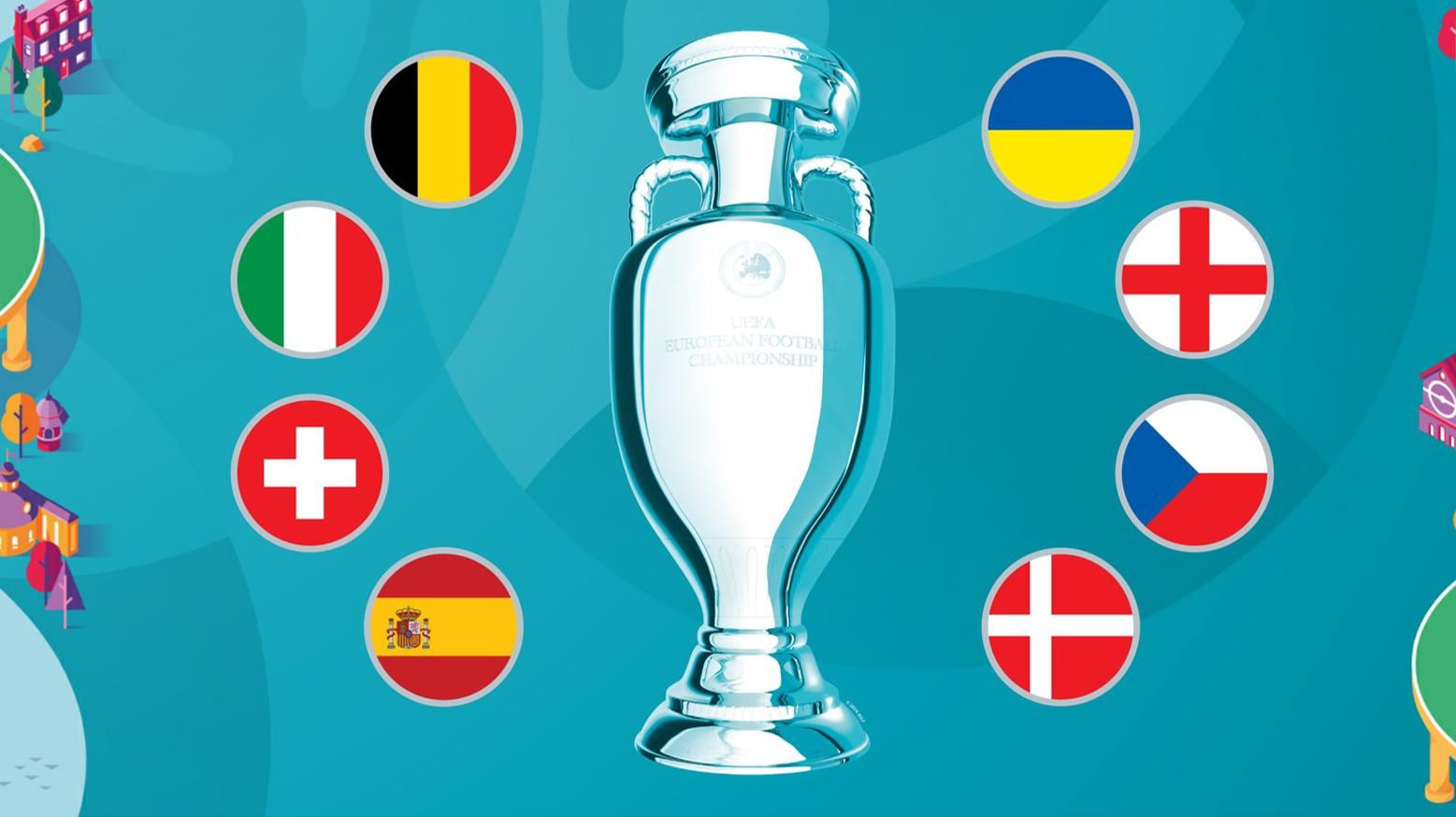
 Belgium vs.
  Czech Republic vs.
  Ukraine – Tuesday was a case where the eventual winners were not the favorites going into their Round of 16 matches. England has been known in recent decades of losing to Germany. How easy we forgot they beat Germany to win the 1966 World Cup. And in the old Wembley Stadium. However it was a case of one of the best English teams ever against a struggling German team and it resulted in a 2-0 win! And in the new Wembley Stadium. Their first win of a knockout game since Euro 1996, which England hosted! And current coach Garreth Southgate was a player for the team back then!


 Turkey (13): Turkey is a team known for its infrequent successes. It has competed in three Euros and two World Cups. It finished third in the 2002 World Cup–its first World Cup since 1954– and hasn’t qualified since. Turkey didn’t qualify for the 2004 Euro but finished in the semis in 2008 and didn’t qualify for 2012. Turkey’s back now. All but six players play for Turkey’s Super Lig, three play for German teams and captain Arda Turan plays for Barcelona. The team has done very well in play the past year and a half including wins against the Netherlands, Czech Republic and Sweden. Their only loss came to England two weeks ago and the score was 2-1. Turkey is one team that shouldn’t be underestimated.
 Croatia (23): Croatia has a reputation of being world class ‘minnows’ that will surprise you when you least expect it. However Vatreni has struggled to regain their strong reputation they had back in the late 1990’s. In fact the team’s play has been mostly quiet news. However they still should not be underestimated. They may have lacked a standout moment for the team in recent major tournaments but they’ve continued to exhibit consistent play. They may lack a standout superstar but they function excellently as a team unit. Since World Cup 2014, they’ve regained the consistency they’re known for. They’ve had wins against Russia, Israel, Norway and Bulgaria and have even drawn against Italy. The team has only had two losses in that time: against Argentina and Norway. In this group, their toughest opposition will be Spain as they’ve only won against them once in the last 25 years. In that same time, they’ve never lost to Turkey and the Czechs. Euro 2016 is another time for the team to prove themselves once again.
 Poland (27): Poland may have a good World Cup legacy with seven appearances and two third-place finishes but they lack a Euro legacy with competing in only the last two and going out in the Group Stage both times. Last Euro was especially embarrassing since they were co-hosts and didn’t win a game. Since then the White Eagles has gotten better. And it’s not just with Robert Lewandowski becoming a star striker for Bayern Munich. It’s the whole team that has been performing consistently. In fact the team even scored their first ever win against Germany in October 2014 during Euro qualifying. They’ve had other notable wins in the past two years against Ireland, Czech Republic and Serbia. Their only loss in the past two years came to Germany when they got their Euro qualifying revenge last September. Before I even give my predictions, I can already say I know Poland will advance to the Round of 16 at the very least. Poland could be the team most likely to cause a surprise.
 Northern Ireland (26): This is Northern Ireland’s first ever Euro. They’ve played in three World Cups before and even made the quarterfinals in 1958 but no previous Euro. The team may not have a George Best right now but they appear to be getting stronger in recent years. Five players play for the Premier League and they’ve scored notable wins against Hungary and Greece. Their two losses to European teams in the past two years were to Romania and Scotland. France could be another proving ground for the team.
 Wales (24): This is Wales’ first ever Euro. They may have played in a single World Cup back in 1958 but this will be their first Euro. Some will say this is thanks to star player Gareth Bale but you could say it’s more thanks to coach Chris Coleman. Besides there are four other players on the team with more career caps than Bale.
 Slovakia (32): This is Slovakia’s first ever Euro. They’ve competed at the 2010 World Cup before but never a Euro. Slovakia doesn’t have too many players on its national team playing for too many major leagues but they play very well as a team. In the past two years, they’ve had wins over Spain, Ukraine, Switzerland, Czech Republic and most recently Germany. They’ve also lost to Spain and Belarus. Leading to Euro 2016, their chances in Group play are iffy. The Falcons have always lost to England, have a win and a loss against Wales and have mixed results against Russia. France will be the grounds where they will take another step in defining themselves.
 Russia (27): If there’s one team that’s struggling to make a name for itself, it’s Russia. Ever since the fall of the USSR in 1991, Russian football has struggled to get a reputation. It’s fallen out during the Group Stage in each of the three World Cups they’ve played. They’ve had better success at the Euro with a semifinals placement in 2008 but they’ve been Group Stage each of the three other times including the last Euro.
 France (21): So France is host nation for the third time. Les Bleus even won it as host back in 1984. France has a reputation of going all the way or going nowhere in major tournaments. Very rarely are they an in-between team. At the 2014 World Cup, France made an investment in putting a lot of young talent on their team and it paid off as Paul Pogba won the Best Young Player award and Raphael Varane was third. A lot of France’s young players like Pogba and Antoine Griezmann have come of age since. The current team consists of a good mix of young and old including 35 year-old captain Patrice Evra.
 Romania (19): Romania is a team whose success seems to come in waves. There’s usually a time when the team has what it takes to go far or a time when the team doesn’t have what it takes to even qualify. I still remember the period of time after the Romanian Revolution of 1989 when they had their best World Cup success and even made it past the Group Stage of Euro 2000 for the first time ever. The team is hoping to bring its success back here in France. However it won’t come without challenges. They did succeed in qualifying for Euro 2016 but drew in four of their last five matches. They have been able to bring both Italy and Spain to draws in the last 12 months so they are able to prove themselves to be tough opponents. We’ll see how they turn out here.
 Jon The Blogcentric