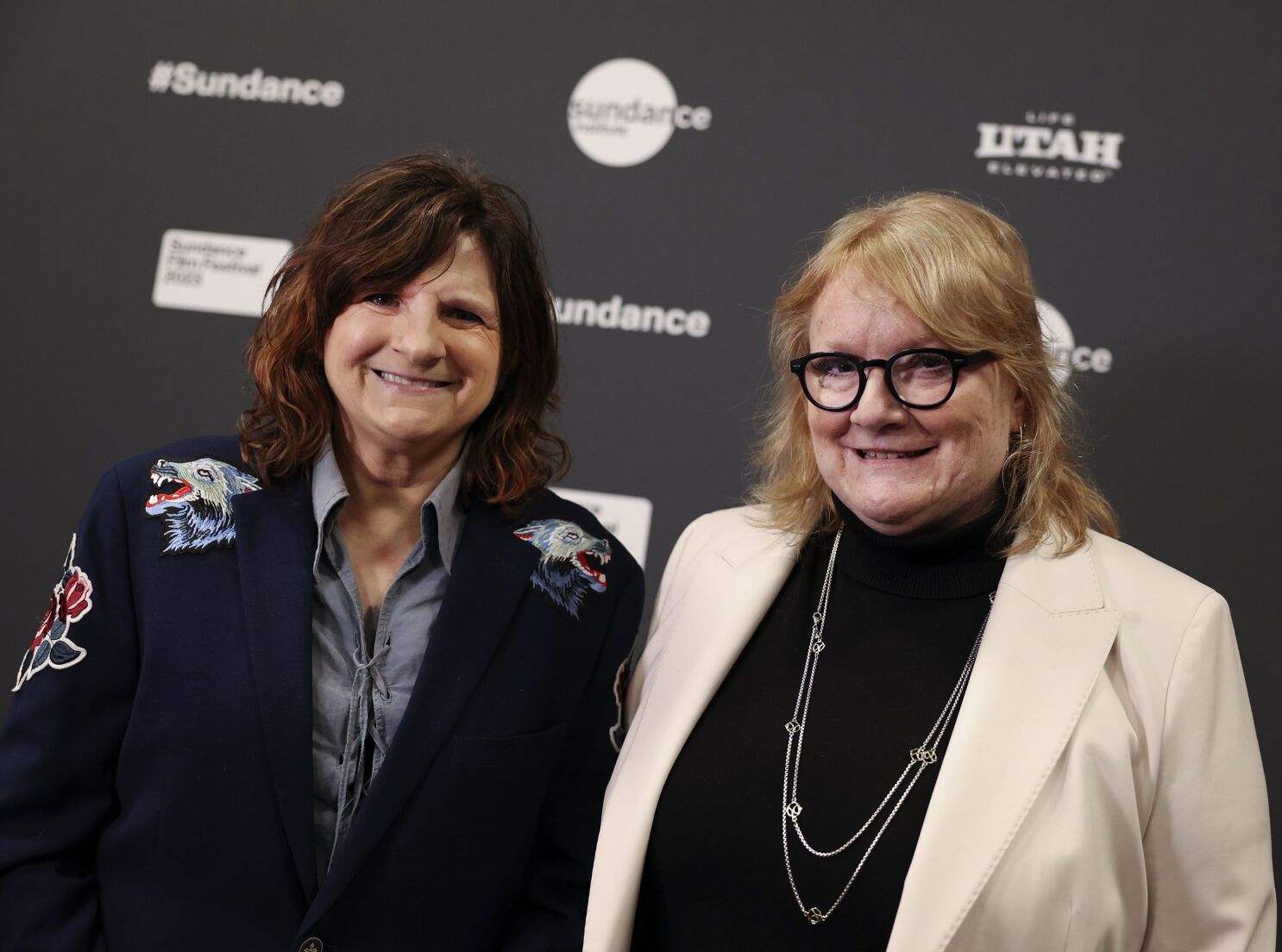
VIFF 2023 Review: It’s Only Life After All

It’s Only Life After All is an intimate and personal look at the Indigo Girls and their long career of establishing themselves as musicians. Not just female musicians.

Before I saw the documentary It’s Only Life After All, I wasn’t really a fan of the music of the Indigo Girls. If you like music, this is a documentary that will keep you intrigued.

The film begins with Amy Ray and Emily Saliers, the two women making up the Indigo Girls, meeting with Alexandria Bombach and bringing out a lot of old audio tapes, video tapes, old magazine articles and various pictures. They wonder what this documentary will be like. First we learn that Amy and Emily first met in elementary school but it wasn’t until attending Shamrock High School in DeKalb County, Georgia that they both learned the other likes music. A friendship began and the musical companionship started soon after. At the same time, they discovered through their own ways, they’re lesbians. Both had differing initial reactions to it as well as initial reactions from family.

As both graduated in different years and went to colleges in separate states, they both eventually became homesick and dropped out. The music led them back together. The two went through various names at first but decided on The Indigo Girls in 1985. Over time they began to draw bigger crowds in their home state of Georgia and started cutting records. First a single, then an EP in 1986 and then a full-length album Strange Fire in 1987 recorded in a studio in the ‘college rock’ town of Athens, Georgia. Their album attracted the attention of music manager Russell Carter who first dismissed their music as too ‘immature’ to get a record deal. The album changed his mind about the two and Carter agreed to be their manager which he still is to this day.

Their success grew in the coming years but they did face some difficulties in terms of establishing themselves. Folk music had commonly been known as stoic and serious. The Indigo Girls were more light-hearted and cheerful on stage. Then there’s the fact that they’re two lesbians which was becoming more acceptable, but still seen as a taboo by most. The AIDS epidemic and how it increased the public’s hostility towards LGBT people in the late-1980’s didn’t help much either.

One thing is the two did have a source of luck on their side. In the late-80’s, there came this boom in folk music. Possibly as a backlack to the loud heavily-distorted guitars of the heavy metal phenomenon from years earlier. It was also a boost for female folk acts like 10,000 Maniacs, Suzanne Vega and Tracy Chapman. The folk phenomenon also led the two to be signed on to Epic Records in 1988. Their self-titled release with Epic included participation with REM’s Michael Stipe and Irish band Hothouse Flowers. After its release in 1989, it has since gone double-platinum and spawned their biggest hit “Closer To Fine.”

Their overnight success came with both perks and problems. The perks included appearances on MTV and VH-1, a Grammy win for Best Contemporary Folk Recording, praise from critics and a growing fan base. The problems included fame coming too fast, not being a feature in Rolling Stone or musical guests on Saturday Night Live, some negative reviews from male critics whose reviews sounded more like sexism than critiquing. Even the big question or concern about whether their fame will turn them into a ‘product’ or not was of concern.

As their sudden fame cooled off, they continued making music together. They also ventured into activism. Their causes include feminism and indigenous rights but their most notable activism has been LGBT rights. With them being two lesbians from Georgia and having established a big LGBT following, they have been active in being active in LGBT issues. From dealing with AIDS, whom they lost a lot of musical friends to, to military participation, marriage and adoption, The Indigo Girls have been very vocal on many LGBT issues. The two also made a cameo appearance in an Ellen episode in 1997. Even some LGBT fans have gone as far as crediting The Indigo Girls for saving their lives.

In the 21st Century, the two started to focus more on themselves as individuals. They wanted to start families. Both married another woman and have daughters of their own. Amy did solo recordings and started exploring her gender identity more. Emily encountered a struggle with alcoholism for years and needed time to recover. Despite it all, both came back to each other and got performing again. They also have their own record label. The film ends with a recent post-COVID concert.

This is a film that will capture one’s intrigue if they like biographies about music and musicians. This is a telling story about two friends who have had a career together going on almost 40 years. Like most musician’s careers, it has not been smooth and it has had its fair share of hurdles. The Indigo Girls being two women who play folk will undoubtedly face obstacles more than just facing a general public that may accept them or not. They face the sexism that’s common to women in music. They face the homophobia of them being two lesbians. They face the music business which frequently pressure musical acts, established and rising, to make a product of themselves. They face unwelcomed intrigue of them being two lesbians who never dated each other. They even have to face their own personal demons and their own personal obstacles. It’s not just about music that they face obstacles and frustrations with.

Even though it is about a folk duo who rose to fame and are still going strong after all these years, it’s about the two as people. It shows through images and their words about what it was like growing up as lesbian teens in the late-70’s and early-80’s. It shows how the two still worked to keep themselves together as a duo and still keep themselves grounded and avoid the common pitfalls of the music business. It shows Emily’s struggle with alcoholism, It shows Amy’s path to starting her own family. It shows personal sides to them known to few including Amy’s spiritual side. It shows the close personal relations they have with family, fellow musicians and close friends. It shows the duo’s move towards activism towards various causes. This film is very in depth about showcasing the two.

This is an excellent work from director Alexandria Bombach. Bombach’s documentaries have commonly been about feminist topics. Her most renowned works involve stories of women in Islamic countries. Here, her subject matter is less intense. Nevertheless the documentary she delivers presents The Indigo Girls as musicians, as temporary celebrities, as activists, as crusaders, as mothers and as people. It’s a good documentary featuring footage on media, footage never seen before and filming during their more private moments. It does an excellent job of being three-dimensional and going beyond.

This documentary has had awards acclaim at film festivals. Nominations for Best Documentary include Seattle, Cleveland, Atlanta and the South By SouthWest (SXSW) Film Festivals. The Sidewalk Film Festival awarded it their Audience Award for Best Documentary and The Film Club made it their winner of their Lost Weekend Award for documentaries.

It’s Only Life After All is a telling look at the Indigo Girls through all the ups and downs and struggles they had to go through from their formation to now. It succeeds in getting you to respect them and what they do.
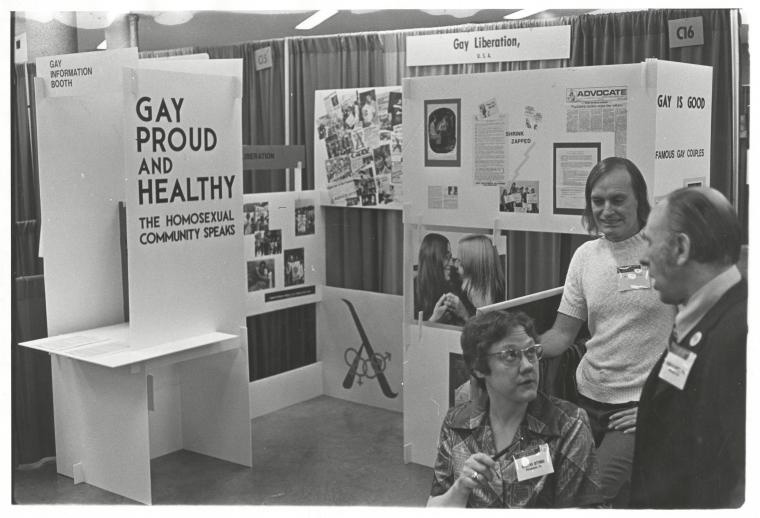
VIFF 2020 Review: Cured

Cured is a documentary that retraces what is arguably the first hurdle cleared by LGBT activists and would pave the way to rights gays and lesbians have today.

The VIFF presents a lot of documentaries and a lot of LGBT-themed films. Cured is an LGBT-themed documentary that focuses on what one arguably considers the first hurdle they had to overcome.

The documentary begins with an introduction of the American Psychiatric Association. In 1952, they published their first edition of Diagnostic and Statistical Manual of Mental Disorders. They included a chapter on sexual disorders. At the top of the list was ‘homosexuality.’ No doubt it was controversial. Psychiatrists bought it up, had ‘treatments’ and ‘therapy methods’ invented to ‘cure gay men and women, and really created a stigma. Most outraged were the gays and lesbians. They would hate how something like this would demonize them and how they lived and loved.

Once it was declared a form of mental illness, and had treatments listed, people were sent to hospitals like Utica, NY for painful treatments like electroshock therapy or in extreme cases, a lobotomy. However there was a slow but sure number of LGBT people that would start things to get this overturned. The first was a lesbian group led by couple Barbara Gittings and Kay Lahusen. They were joined by Frank Kameny. During the 1960’s they worked to start support groups and organize rallies to spread awareness and end the negative stigma the public had towards gay people. Besides fames sexologist Alfred Kinsey published shocking studies in 1948 of a good percentage of men engaging in same-sex behavior.

After gaining a lot of support, the next step was to influence the APA to remove homosexuality form the list of mental illnesses. They would soon find support among doctors. There was one psychiatrist, Dr. John Fryer, who not only supported them but was gay himself. There were times they had to go to meetings and rallies involving the APA and ‘crash’ them. During the meeting they ‘crashed’ in San Francisco, they encouraged doctors to come sit with a homosexual and listen to what they have to say. For two hours, many doctors were willing to do so.

Over time, there were a growing number of doctors with the APA who soon adopted a gay-friendly attitude and were supportive of the group’s pleas. However there were still stubborn naysayers like Drs. Irving Bieber and Charles Socarides who were determined to have it kept listed as a mental illness. Gay and lesbian groups would hold information booths at APA rallies with titles like ‘Gay, Proud And Healthy.’ Then would come a meeting in 1972 to have gay activists openly speak to the APA. Dr. Fryer would be one of the speakers, but with a clown mask and under the name Dr. H. Homosexual to keep him from losing his job. In 1973, the APA soon removed homosexuality in its list of neurological disorders. However it would still be subject to a vote at a 1974 APA meeting. The majority voted in favor of the removal.

You think of all the milestones LGBTs have made over the past fifty or so years. There was Stonewall, decriminalization of homosexuality, allowing gays to teach and own houses, lobbying for funding for AIDS research, allowing gays in the military, and the legalization of gay marriage. It’s easy to forget this is one of the most important moments in LGBT history, and arguably their first victory in the US. We shouldn’t forget LGBTs have been through worse. There was a time centuries ago gays and lesbians were executed worldwide. In fact Thomas Jefferson’s recommendation that gays be castrated was a ‘liberal’ recommendation during a time when they were hanged. It was a universal norm throughout most of history that a man should love a woman and a woman should love a man and that’s that. Anything else was deviant and criminal. So it should be no surprise a national psychiatric association would label same-sex attraction a mental illness. I’m sure the US wasn’t the only nation that did so.

This is a documentary that’s an important lesson for LGBT people to know. I’m sure there are a lot of young LGBT people who still don’t understand why many in the heterosexual majority consider them inferior. But like Bill Maher once said: “If you think you have it tough, go read history books!” Today’s LGBT young people have it better than any generation of LGBT young people before them. In the past, such young people would be subject to disowning from family, criminal prosecution, and way back having next-to-nobody to turn to. Since the history of humanity on the planet until just after World War II, the gay or lesbian lifestyle or attraction was universally condemned and even criminalized and you could easily lose your job if your ‘secret’ was unraveled. The moments in this documentary are a good indication of the feeling and the attitudes of the times. It’s also important for young LGBT people know how pride movements started out or came to be. They’ll learn of people who started pride at a time when there was no one to turn to and a time when fierce opposition was eventual. The LGBT activists of that era were especially important in paving the way to the liberties, freedoms and social acceptances today’s LGBT people have today.

This documentary is also beneficial today for two main reasons. The first is that there are still people, mostly religious leaders and their followers, who still insist that homosexuality is a mental illness and conversion therapy is the answer. Many will remember advertisements starting in the late-90’s about faith-based conversion therapy programs. If the failure rates of programs from psychiatrists were high, what do you think that says about these unproven faith-based programs? It’s all a political game. The second is that it shows how something that starts off as a grass-roots movement can grow into something nationwide and have a big impact. Even paving way to the civil liberties and rights LGBTs have today.

Top marks go to directors Patrick Sammon and Bennett Singer. This documentary may not be too original in terms of style, but it’s excellent with interviews, both original and archived, and rare footage. They have the facts together in stringing this story together about what is an important part of LGBT history and celebrates a lot of lesser-known or forgotten founders of the LGBT movement. It’s also important that they show the shocking footage of the electroshock therapy and other ‘conversion’ methods used in the time. Because the LGBT of today need to know what the past had to fight,

Cured is a documentary about history being made by those who made the history. It’s important history for today’s young LGBT’s to know what those of the past have overcome. It’s especially relevant today since there are many opponents who harbor those similar thoughts today.

VIFF 2020 Review: Reel Youth Film Festival

Has it been five years since I last saw the Reel Youth Film Festival? It’s been a long time. Nevertheless having VIFF online gave me the chance to see it again.

This year’s films were a mix of films that looked like they were done by youth and films that were obviously directed by 20+. Some looked very professionally done while some make the amateurishness obvious. All of them did have themes and messages that appeared to be directed to the youth or would be of youth interest.

This year, there were eighteen films. There were five Canadian films, but only two local. Film entries for this year came from the United States, Brazil, India, Bulgaria, Spain, Australia, Romania, China, Ethiopia, Switzerland, Iraq and the UK. Films were a mix of animation, documentary to live-action fiction. They ranged from drama to comedy to informative.

Topics were of a wide range. Even with this pandemic, there was one Canadian film by a teen girl about the struggles of physical isolation and only being able to reach out through a computer. There was another from India of a woman using her creativity to work from home. There were other themes of focus like breaking social barriers, generation gaps, regaining silence in a world full of noise, choices that can change one’s life, a future of pollution, overcoming loneliness with your passion, dealing with post-war trauma, and dealing with autism. There were also some light-hearted films like an animated film about monkeys and baby aliens.

The two themes that most stood out among the short films were themes involving racism and racial identity, and sexuality. With racism being a hot topic in 2020, the Fest didn’t stray away from it this year. One film was about a black girl admitted into an all-white private school and made to feel inferior. Another is of a Mexican-American girl and how she deals with the identity of herself and her people at a time with calls of ‘build the wall’ from Trump and his supporters. There were two films of Inuit people. One was of an elder from Nunavut who passes down to the younger generation hunting skills, cultural traditions and the language. Another film focuses on Inuit youth and what culture means to them. The film ends with them doing traditional throat singing.

As for films about sexuality, there were three. One was a documentary about a Vancouver drag performer who performs by the rule “Don’t do drag for free.” Another was a drama of a girl from China returning home after her grandmother’s death; a grandmother who rejected her after she spoke of her orientation. The third was a comedy about a girl who never had a first kiss from a boy. She realizes she’s a lesbian and gets her first kiss from a girl during the first snowfall.

They again had the ballot for the three favorite films of this year. This year’s ballot was completely online. I had lots of problems trying to access the online ballot. So it looks like I will have to post the picks of my Top 3 here:

  1. Monochrome – The story of Essence, a 17 year-old girl who’s the only black student in an all-white private school. The teens and students don’t hesitate to make her feel like a misfit. She feels like the only way to fit in is to assimilate herself. It’s a very powerful message about the racism we don’t always notice.
  2. Little Swallow Coming Home – A Chinese film about a young girl who returns home after her grandmother died. The memories of how her grandmother rejected her when she came out as a lesbian flood her mind and make her nervous. Then she notices a photo with a message from her grandmother saying she always loved her. It’s a reminder that LGBT struggles are universal. Not just at home.
  3. Dayo – A man named Dayo is lonely at home. But when he walks into the kitchen, he’s an artist and beloved for his culinary confections by the customers and his co-workers. It’s a brief three-minute animated film, but it packs in the charm in its time.

This year’s Reel Youth Film Festival didn’t offer too much in terms of local film. Nevertheless the Festival was very good at providing a wide variety of films from around the world with common themes relating to young people.

VIFF 2013 Review: Blue Is The Warmest Color (La Vie d’Adèle)

Blue Is The Warmest Color is a French lesbian love story that tells more than just a story.

One of the biggest attractions at this year’s Vancouver Film Festival is the French film Blue Is The Warmest Color. The win at the Palme d’Or at the Cannes Film festival will make it an attraction, no doubt. There are some that already know what it’s about and others that don’t. The question is will the crowds be satisfied?

The story starts with Adèle, a young high school student from Paris nearing adulthood and trying to decide what she wants to do with her life especially in times when Europe is going through economic troubles. She’s very involved with her job at day care, but lost in thought during school and unhappy in her relationship with Thomas. She soon leans of her lesbian attractions and starts trying to get as better understanding of it. She even breaks up with Thomas in the process.

Her gay friends from high school introduce her to Paris’ gay scene. She’s exposed to gay culture at one gay bar then visits a lesbian bar for the first time where she meet a tomboy woman with blue hair named Emma. Emma not only introduces Adèle to the lesbian scene but also to her work as an artist. Adèle’s high school friends are surprised with her relationship with Emma but over time the relationship goes from being simply Adèle being the subject of Emma’s art to a full intimate relationship. They share everything. Both are also good with each other’s parents. Both are also supportive as Emma helps with Adèle’s 18th birthday and Adèle cooks for Emma’s art party.

Things mark a turning point at Emma’s art party as Adèle senses something between Emma and Lise, her artistic colleague. Adèle also senses the advances of her boss from the daycare she works at. Eventually she does engage with her boss only for Emma to find out. Emma breaks up with Adèle in a rage leaving Adele frustrated and heartbroken. Months pass and Adèle is now a first grade schoolteacher. Emma is soon to have her first art exhibit opening. They meet again in a café to try and resolve what they can only for Adèle to learn a hard new truth. Adèle goes to the exhibit opening only to leave heartbroken but older and wiser.

The surprising thing about this is how this film tries to portray a relationship between two young girls. Its biggest quality was its truthfulness. It showed a girl-meets-girl scenario that’s often the common way two meet. It shows the relationship and how the two share so much with each other that almost mirrors other relationships. It also shows the friction in relationships with being attracted to another person, infidelity, break-up and aftermath that you will notice in other relationships. I believe that’s the biggest thing about this film. This is not a film that aims for heavy intense dramatic story but rather a film of a lesbian relationship between two young girls that mirrors most relationships people have or have had, possibly even one of your own.

It’s not only about the relationship in the film but also as much about the two main characters too. Adèle is turning 18 and in the midst of deciding what she wants to do with the rest of her life, eventually setting on teaching elementary school. Emma is an older art student and she’s disinterested in conforming to the expectations of the world nor to the art business. Adèle has just recently learned of her same-sex attraction. She slowly tries to learn about it and welcomes it when Emma comes into her life, but questions if she still has attractions and feeling to men. Emma on the other hand knew of her lesbian attraction at 14 and became very comfortable with it. The personality traits of both adds to the story of the relationship as it shows that opposites can attract. It also shows how the two personalities cause friction as Adèle has the common immaturities with an 18 year-old and Emma is a free person but with a fierce attitude.

One of the things of the movie is that it also brings up certain forms of thought. It should not be surprising because Adèle is a student just learning and it’s the student years where one tries to expand their mind. Emma makes mention of Sartre and him creating a intellectual revolution in saying we are ‘condemned to be free.’ Another time we’re in one of Adèle’s science classes seeing a lesson in gravity and one student talks of unavoidable vices and how the Catholic Church tells us that vices should be avoided. There’s also the division of the arts world and the business world that’s also present in the film. Adèle embraces the arts greatly in her own way but wants a career that’s stable especially since the future of the young of France looks uncertain and chooses teaching. Emma on the other hand wants to do what she wants to do and paint what she wants to paint and resists offers to ‘market’ her talent. That pressure of the dilemma of doing what one is born to do vs. doing what pays the rent is a common pressure in the minds of a lot of young people during those years. I remember it was even a pressure for me when I was a college student.

Without a doubt, the biggest thing that got me thinking were the graphic lesbian sex scenes. I know that sex scenes are choreographed but I was still surprised in seeing it’s explicitness. Even though I learned just now that fake genitalia were used, there’s no question that there will be many who will label it ‘pornography.’ In fact the producers refused to edit the film for release in the US and that got it an NC-17 rating.

In all frankness, I did find this a very revealing and intimate look at a lesbian couple but nevertheless I found this film to be too long. I believe if a film is going to be 3 hours long, it should justify its purpose. I really question whether 179 minutes is really necessary for that film because it didn’t appear to justify its length of time. I’m sure the film could’ve done as good a job of telling the story of the relationship if it was even two hours. There are even times when I question if that heavy-duty sexual activity, especially the impulsive activity in the café near the end, really added to the story or was included for shock value. That’s the problem with over-the-top sex scenes in movies: it may be intended for the story but could be taken the wrong way with the public. In fact there were times my ‘inner teenager’ felt like saying: “Owww! Get down!”

The best quality was the acting. Adèle Exarchopoulos did a very good job not just of portraying a young lesbian but also of a young teenage girl on the verge of womanhood. Her mix of a character who’s on the verge of adulthood trying to be more responsible but also dealing with her own immaturities, both behavioral and sexual, made Adèle very believable as a young woman. Lea Seydoux did a great job of playing Emma, the older freer one who’s in control. For those who didn’t notice, Lea is the one who won Owen Wilson’s heart in Midnight In Paris. It’s surprising how she’s completely unrecognizable here. She did a very good job of character transformation. Director/writer Abdelatif Kechiche was really daring in his subject matter and his adaptation of the story. I checked his Wikipedia profile and there’s no mention of himself being gay. Nevertheless He did an excellent job of taking the relationship and making it look so relatable.

The question will remain will Blue Is The Warmest Color go well with the movie-going public? Marketing gay-themes movies to the general public is not an easy task especially with the predominantly heterosexual crowd. Yes there have been films of gay characters and gay relationships that have scored well like Philadelphia, The Hours, Brokeback Mountain and Milk, but it’s still a chancy thing that’s still hit-and-miss with no proven consistent results. Even this being a French-language film may cause some difficulties. I even question if a film like this will score well with the LGBT populations in North America. We should also take in mind that living as a gay man or lesbian in Europe is a lot different that living as a gay man or lesbian in North America. Two different continents with two different social attitudes. Something I question.

Blue Is The Warmest Color is a unique film in its portrayal of a lesbian couple. It has a lot of good qualities that make it worth watching for some but not for others. It all boils down to the individual audient and their tastes and tolerances to decide if this is the right film for them or not.

The Confederations Cup And Protests In Brazil

One of many protests in Brazil that occurred during the time of the Confederations Cup.

The Confederations Cup soccer tournament began on June 15th. Also what started around that time was a protest in Sao Paulo about transit fare inflation. Protests soon grew in Brazil. I’m sure the Confederations Cup competition and the worldwide media attention to that event had a lot to do with the growth. But what are the protests about? And why are they happening all of a sudden?

First it’s important to look at the country of Brazil. Most people will consider Brazil a poor or developing country. It is true to an extent. What most people don’t know is how much Brazil’s economy has grown since the 1980’s. Its biggest growth was in the industries of oil, mining and agriculture which grew at 47% or 3.6% per year since 2000. Its industrial growth rate is also impressive with an 8.8% back in 2008. Brazil’s economy is one of the fastest growing in the world and actually now ranks 7th in the world and has the highest GDP per capita in South America and 53rd in the world overall. Its gross national income of $10,721 US in 2011 classifies itself as upper-middle income: an income on par with many countries of Eastern Europe. It can be attributed to many factors. Some say it could be Brazil’s move to democracy that started with an Amnesty Law in 1979 and developed into its own Constitution in 1988.

The quality of life has also gone up considerably in the last 20 years and Brazil has worked to establish methods to either keep it that way or improve it. Despite huge urban sprawl in cities like Rio de Janeiro and Sao Paulo, its cities have some of the finest public transit systems that have been copied and studied by many major cities in the world. Brazil has also reformed its Social Security programs and tax systems. There was even a Law Of Fiscal Responsibility that controls public expenditures by the Executive Branches of all government levels. Export, Industry and Trade has been increased while allowing Brazil to keep itself from vulnerabilities by methods such as not exporting the oil it consumes. It has also halved its debt through exchange rate-linked certificates which has allowed exporting to grow to as much as 20% a year and put a limit on its inflation rate to 4%. It also has an average life-expectancy rate of 72.7 years (2009) which is comparable to that of many Eastern European countries.

So what are all the protests about? Even before I get into the nitty gritty of the protests there are some facts to send a message that a bubble was about to burst. We must remember that while Brazil has improved a lot in past years and especially this century, there’s still a lot of development to go. Despite its improvements, the 53rd best GDP in the world shows they can do better. Its gross national income is roughly 1/4 of what developed countries like Canada are receiving. In addition, the minimum wage translates to an annual income of an unenviable 8,086 Brazilian Reals (R$) or roughly $3,600 American. Even in government despite being a democracy, Brazil still ranks as the 69th least corrupt country in the World according to Transparency International with a score of 43 out of 100.

The first protests actually started on June 1st, two weeks before the Confederations Cup was about to begin. The first major protest was in the city of Sao Paulo of a transit fare increase from R$ 3.00 to R$ 3.20. The first protest started on June 6 and grew over time. The real turning point came when police fired rubber bullets at the protesters and journalists on June 13th. This was widely criticized by Amnesty International and even Brazilian Amnesty Groups.

Soon after, and while the Confederations Cup was progressing further, the protests grew to as many as 250,000 in various major Brazilian cities on June 17th protesting. Rio de Janeiro had the biggest that day with 100,000. Even Brazilians in other world cities stages their own protests. By June 20th, protests grew to millions of people in 100 cities and grew over the next few days. As negotiations and government involvement in matters occurred, which I will discuss later, the protests calmed down but not without incidents.

Interesting enough is not just the number of protesters and cities involved growing but the issues too. What started off as one protest over a transit fare increase grew to a wide array of issues being protested against or demanded:

  • A bill (PEC – 37) that hindered Public Ministry to investigate.
  • The distribution of petroleum royalties to the appropriate causes.
  • Lack of criminalization of all forms of Corruption and Embezzlement.
  • Secret Voting in Congress for forfeiture of office.
  • A bill (PEC – 33) allowing decisions made by the Supreme Court going to Congress.
  • Having a Privileged Forum.
  • Taxing in Public Transport.
  • Demands to the National Pact for fiscal responsibility, control of inflation and proper distribution of funds to education, public transport and health.
  • Demands to implement means of political reform in the country.
  • Demanding 10% of the GDP be devoted to education.
  • Demanding a free-pass for full-time university students.
  • Demanding a revocation of a ‘gay cure’ bill (PDL – 234) authorizing psychologists to treat LGBT people.

Evident enough is that the growth in numbers and issues happened as the Confederations Cup matches were occurring. I still remember telecast of Confederation Cup matches on CBC that even included security updates of what was happening in the cities. Even though the protests have been successful in leading to solutions of problems being protested over, there was still last chances for opportunity as violent clashes occurred in Belo Horizonte as it was hosting a semifinal match on the 26th and in Rio de Janeiro as it was hosting the final on the 30th.

You could understand why the Confederations Cup had a lot to do with the increase in protests. With a major world event happening, it’s obvious the protesters want to highlight Brazil’s problems right while the eyes of the world are watching. Mind you these next three years are going to be very big for Brazil as they will play host to many major international events. Besides the Confederations Cup that finished yesterday, Rio will host the Catholic event World Youth Day later this month. Next year Brazil will host soccer’s World Cup with twelve major cities contesting the competition. And 2016 will have Rio hosting the Summer Olympic Games. I don’t know of any other country that has had to host this many major events in a matter of four years. For Brazil it’s a chance for them to show the world their image as a well-to-do nation as they will be the first developing country since Mexico in 1986 to host a World Cup and the first developing country since Mexico again in 1968 to host a Summer Olympics. In fact the World Cup was even the subject of protests that received less notice than most other protests. Many were protesting the government giving a lot of the budget ($12 billion US) to these sports events instead of on living conditions.

I mentioned that many of the issues being protested upon have been approved within this two-week span of time. You can assure the media attention to this had a lot to do with it. Among those approved by the governments and senate are: public transit prices reduced and taxes eliminated; petroleum royalties destined to education (75%) and health (25%); reform and improvement demands to the National Pact being granted; secret voting ended; Bill PEC – 37 being revoked; all forms of Corruption and Embezzlement being criminalized; and implementing a Plebiscite to politic national reform. Even though the Confederations Cup is over and a lot of reform and improvements have been politically approved, there are still demands outstanding. Some like the 10% allocation of the GDP to education, revocation of bill PDL – 234, and the Free Pass for students are currently under negotiation by Congress while issues of ending of Privileged Forum and the elimination of Bill PEC – 33 still remain undiscussed. On top of it, time will tell if the approved reforms are carried out and if carried out successfully or not. Another thing to look for in the future is how much impact it will have on President Dilma Rousseff. Her popularity has already been hit by the protests. It remains into question whether she will win the next election.

Even though many of the protester’s demand have been met and even though many are still pending as of now, don’t expect all the action to end just as the Confederation Cup has ended. I’m sure as long as Brazilians see injustice or wrong ways of doing things, there will continue to be protests even without the anticipated major events happening and even after they all end. Nevertheless it’s excellent opportunism to make improvements happen to a developing nation that has improved so much in recent decades but still has more to improve upon.

WORKS CITED:

WIKIPEDIA: Economy Of Brazil. Wikipedia.com.  2013. Wikimedia Foundation Inc. <http://en.wikipedia.org/wiki/Economy_of_Brazil>

Uncredited Author . “Brazil: One Million People Demand Accountability” Transparency International. 21 June 2013. <http://www.transparency.org/news/feature/brazil_one_million_people_demand_accountability>

WIKIPEDIA: 2013 Protests In Brazil. Wikipedia.com.  2013. Wikimedia Foundation Inc. <http://en.wikipedia.org/wiki/2013_protests_in_Brazil>

Obama’s Same-Sex Marriage Stance And The Upcoming Election

DISCLAIMER: The object of the article is not to express my personal view of same-sex marriage but to give an analysis on how it could impact the National Election.

 “I’ve been going through an evolution on this issue. At a certain point, I’ve just concluded that for me personally, it is important for me to go ahead and affirm that I think same-sex couples should be able to get married. I have hesitated on gay marriage in part because I thought that civil unions would be sufficient. I was sensitive to the fact that for a lot of people the word marriage was something that evokes very powerful traditions, religious beliefs and so forth.”

That announcement from Barack Obama during an ABC news interview is seen by many as a positive move. For many Americans, this is an announcement they feel they’ve waited too long to hear. For other Americans, they are unhappy at what he declared and can’t believe that an American president would approve of such a thing. One thing to take a note of is that Obama made that announcement almost six months before the American people go to vote for President of the United States. The question remains was that a smart pre-election move or a risky move?

To get an understanding of why the topic of same-sex marriage has always been a hot button, you have to look at social history. Same-sex relationships and activities have always been looked down upon worldwide throughout history. Things started changing starting in the late 60’s. The signs of changes coming first occurred in the late-40’s early 50’s when professor Alfred Kinsey published his findings on human sexuality and activity. Part of his findings included what he learned of homosexuality and he even talked of the seven levels of homosexuality from the completely heterosexual Level 0 to the fully homosexual Level 6. It wasn’t until the 1970’s that things reached a turning point in the US when openly gay politician Harvey Milk was voted into San Francisco city council and helped defeat a bill banning homosexuals from housing and teaching jobs in 1978. The 80’s was a hard and dark time for gay men as the AIDS epidemic had gay men as most of their victims. The 90’s experienced a resurgence of pride with President Bill Clinton urging gays in the military. It’s only until this century that the gay population of the United States saw the possibility of gay marriage. And with good reason.

Hard to believe that 25 years ago, the idea of same-sex marriage was unheard of anywhere in the world. The first sign of things to come happened when same-sex relations were first legitimized in Denmark back in 1989 as ‘legalized partnerships’. Many countries followed with their own recognition, like ‘registered partnerships’ or ‘life partnerships’, but it wasn’t until 2000 when the Netherlands became the first country to officially recognize same-sex matrimony. Belgium and the Canadian province of Ontario followed in 2003 with Spain following in 2005 and South Africa following in 2006. Today thirteen countries legally recognize same-sex marriages.

The United States was always hard to achieve legal recognition. Even if a President is liberal in beliefs and stances, he will face the pressures of the political opposition. That explains why even though Bill Clinton was the most ‘gay-friendly’ President Of The United States in its history and even supported gays in the military, he compromised to a ‘don’t ask: don’t tell’ rule. In 1996 he even signed the Defense of Marriage Act (DOMA) which defines marriage as ‘one man and one woman’ after it was passed as law by Congress. Nevertheless the right would gradually increase state-by-state. It wouldn’t be until May 2004 that Massachusetts would become the first state in American history to legally recognize same-sex marriages. The issue of gay marriage would continue to be a state-by-state issue as some states would legitimize same-sex marriages while other states would pass laws prohibiting such recognition. Even some states–most noticeably the state of California with Proposition 8– would place the issue on the voter’s ballot. Currently nine states in the United States give full recognition to same sex marriages while most other states have either a statute or a constitutional law banning same-sex marriage. Nineteen states have a constitutional law banning recognition of any same-sex union.

Now comes President Barack Obama. Like Bill Clinton before him, Obama has also had his times of personal stances and bowing to pressures from the opposition. Obama favored legalizing same-sex marriages in a 1996 interview but during the 2008 Presidential Election campaign, he stated he believed marriage to be one man and one woman. Obama exhibited similar complications when in January 2009 he opposed a federal mandate for same-sex marriage and opposed DOMA. He’d continue to say that his opinion of same-sex marriage was ‘evolving’. However the first hint of Obama siding with the position of same-sex marriage came in February in 2011 when he announced that DOMA was unconstitutional. It wouldn’t be until May 9, 2012 that Obama would finally make his stance on same-sex marriage heard. His opinion was warmly greeted by many people, especially LBGT groups and other liberals. Some people were skeptical, feeling they might still get the same raw deal they’ve been getting for years. There’s no question that the upcoming Presidential Election had a lot to do with his announcement.

Even though Obama’s gay marriage stance appears as a positive step towards the upcoming election, there is also the opposite side as this could pave the way for a Republican being President. Of all issues facing the United States, it’s this issue that best resembles the current divisiveness and polarization of American politics. Its strongest opponents of course are those that side with the Republican Party and the values it stands for. The Republican Party has always left a bitter taste in the throats of the LGBT population of the United States. They still remember how conservative icon President Ronald Reagan sided with religious leaders; including the Moral Majority’s Jerry Falwell who declared  the AIDS epidemic in the early 80’s as “God’s punishment to the gay lifestyle”. This may have a lot to do with the Reagan Administration’s slow acting upon the epidemic. President George Bush Sr. was strongly opposed to gays in the military and campaigned the Republican Party during the 1992 Presidential election as ‘the party of family values’: a title that has popularity stuck since. The younger George Bush even tried to push for a constitutional amendment defining marriage as ‘one man and one woman’ only to lose in the Supreme Court in 2004. Many believe his opposition to same-sex marriage is what helped him win the 2004 Election.

Soon after came the right-wing of the United States of today. You can hear it in the many voices of the right-wing pundits on the airwaves constantly stating their opposition to same-sex marriage, even going as far as declaring that ‘marriage is not a right’.  Many Republicans strongly believe that defining marriage as ‘one man and one woman’ is a value instead of a prejudice. There’s even a set of voters in the millions that vote at election time on ‘family values issues’, known as ‘Values Voters’. Even Republican politician Mike Huckabee slammed Obama’s declaration of DOMA as ‘unconstitutional’ and a bad move come the Election. As expected, all candidates for the Republican Race were opposed to same-sex marriage.

You can bet after Obama’s stance that Wednesday, there was a lot of talk of the right-wing and the Republicans, especially from Race front-runner Mitt Romney. Three days after, Romney spoke to a graduating class at Liberty College reaffirming his opposition towards same-sex marriage and declaring his strong support for traditional Christian values. He even declared: that the “pre-eminence of the family” remains at the heart of the principles that underpin the nation. That drew a loud cheer from the 25,000 in the crowd.

There is an interesting footnote in Romney’s view. It’s also been known that he’s not opposed to same-sex adoption. Also interesting to know is just days after his stance on traditional marriage, it was brought to the attention that Romney was a high school bully who bullied an allegedly gay student because of his fancy hairstyle. Romney promptly apologized in public for all the bullying he did.

So Obama said his thoughts on same-sex marriage and the public have responded. His stance on same-sex marriage could either help him or hinder him. The big question is will it work against him n the upcoming Presidential Election or will it work for him? And if it does work for him, will that pave the way for full recognition of same-sex marriages in the whole of the United States? It will all be decided on November 6th, and possibly the four years after.

WORKS CITED:

WIKIPEDIA: Timeline of Same-Sex Marriage. Wikipedia.com. 2012. Wikimedia Foundation Inc.

<http://en.wikipedia.org/wiki/Timeline_of_same-sex_marriage>

WIKIPEDIA: Same-Sex Marriage In The United States. Wikipedia.com. 2012. Wikimedia Foundation Inc.

<http://en.wikipedia.org/wiki/Same-sex_marriage_in_the_United_States>

Roberts, Robin. Interview.  ABC News. May 2012. 9 May 2012. <http://news.yahoo.com/transcript-robin-roberts-abc-news-interview-president-obama-001212560–abc-news-topstories.html>

Parisse, Emmanuel. “Romney adamantly rejects same-sex marriage” Yahoo! News 12 May 2012. <http://news.yahoo.com/romney-courts-young-evangelicals-promotes-values-062331045.html>