Election 2015: Canada Votes

ElectionsCanadaToday on October 19th, all of Canada will vote for who will lead the country over the next four years. For over ten years and three terms, Conservative leader Stephen Harper has led Canada. He seeks a fourth term but faces tough opposition from Liberal leader Justin Trudeau and NDP Leader Tom Mulcair. Possible challenges come from the Bloc Quebecois and Gilles Duceppe and the Green Party under Elizabeth May. One thing about this election is that it has proved that anything can happen and no one is guaranteed the label of ‘winner.’ It’s been that close and full of yo-yo statistics. Here’s my rundown:

-Conservative Party: Stephen Harper – You can’t go anywhere without people talking about Stephen Harper. He ran for Prime Minister for the first time in 2004 and was seen as the one to help put conservative muscle back into Canadian politics. Even though he didn’t win, he did succeed in bringing the conservative side back into politics. The Conservative party had 99 seats, up from 72 in 2000, and the victorious Liberals under Paul Martin were left with a minority government after three terms as a majority under Jean Chretien.

Then in January 2006, a new election was held at the sudden revelation of the corruption of Liberal leader Paul Martin and after Governor General Michaelle Jean dissolved parliament. This worked for the benefit of Stephen Harper as the Liberal Party lost enough seats to give Harper’s Conservatives victory. Sure it was a minority with 124 seats but it was enough to give the Liberal party their first loss on the national level since 1988. This meant new changes for Canada with a Conservative government having most of the power albeit only with a minority.

There were many varied opinions about the first term of Stephen Harper. There were many on the left who felt he was too right-wing or making a lot of decisions they felt were wrong. There were others who admired him simply because ‘he says he’s gonna do some thing and he does it.’ I think that’s what wins people: a politician that actually delivers on their claims. This was enough for Harper to be able to win the next election in 2008. He increased the number of seats from 127 to 143 but it was still a minority.

Over time, people across Canada, especially in BC, were expressing their disappointment with his policies. I especially remember the arts community unhappy about the cuts in funding they were dealt in 2008. Then in March of 2011, the Conservative Party was found to be in contempt of parliament. The Government General, like in 2005, again dissolved parliament. This time things went the reverse. Harper’s Conservatives won a third term, this time with a majority of 166 seats.

The time since has been loaded with corruption and complains to Harper and the Conservatives. They run the gamut from political overspending on advertising to reducing door-to-door delivery of mail to the point there will only be mail boxes by 2019, to denying funding for science to promoting the controversial Keystone pipeline for boosting the export of crude oil to the controversial bill C-51 which appears to threaten Canadian’s privacy freedoms the same way the Patriot Act threatened Americans’ privacy rights. A lot of his misdoings appear to make good things he did like provide tax breaks to families and transit users.

-Liberal Party: Justin Trudeau – The Liberal party is one party that has had its biggest struggles ever these past ten years. It started with the Paul Martin fiasco leading the Liberals to their first ever election loss after winning the previous four. It continued with Stephan Dion in 2008 as their seat total declined from 95 to 77. However it was at the 2011 election under Michael Ignatieff where the Liberal party hit what appeared to be rock bottom by winning only 34 seats. They weren’t even the official opposition. After Ignatieff’s resignation just days later, they looked for a leader who could fill the spot. They found it in Justin Trudeau, the 43 year-old son of Prime Minister Pierre Elliot Trudeau. In fact, Justin was born while his father was Prime Minister.

The buzz around him grew but it hasn’t been without controversy. Justin has been faced with accusation that he’s riding off the coattails of his father’s legend. His only jobs before have either been a raft guide or a school teacher. This was especially noteworthy in Stephen Harper’s ads attacking Trudeau with the claim he’s “Just not ready.” It included the comment, ‘Nice hair, though.’ I myself even felt he didn’t deserve my vote because “He hasn’t proven himself politically. He’s all image and no real cred.” Even some of his campaign claims like his promise to legalize marijuana or prostitution have caught the disgust of many. Last poll had him in the lead. Whatever the situation if he wins, he will have to prove he deserves it.

-New Democratic Party: Tom Mulcair – The 2011 election was a landmark for the NDP. Actually it started months after the 2008 election when the NDP led by Jack Layton teamed up with the Liberals for a coalition takeover of parliament in order to reduce Harper. It didn’t work but it did catch the eye of the nation and it caused Canadians to look more favorably to the NDP party: a national party who were often lucky enough to just finish third in national elections.

The 2011 was a landmark for the party as they won 103 seats, up from 36 and the most they’ve ever won. Leader Jack Layton became the head of the official opposition. He only had months to enjoy his victory as he would die of cancer later that year. It would take time to find a new leader of the party and they found it in Tom Mulcair. Since he assumed power, he has been seen as Harper’s toughest political rival most able to put pressure on the Conservatives. He has hoped to take that with him to the election. It worked in August when the campaign trail began. However the NDP have been in a struggle since to win back the approval ratings they had back then and sit third. Only tonight’s election will tell the tale.

-Bloc Quebecois: Gilles Duceppe – If any party has had it harder than the Liberals since 2011, it’s the Bloc Quebecois. It’s not even just because of slipping to two seats. It’s of going through three different leaders after Duceppe resigned from incumbents to leaders voted in. After all the frustration, Duceppe is back in. He’s hoping to bring the Bloc’s power back into Canadian parliament and push for Quebec independence.

-Green Party: Elizabeth May – One party on the grow is the Green Party. They’ve been around for decades but it’s only in this century that they’ve been able to see their political power grow. I know. I’m from BC where the Green Party appears to have possibly its biggest support. Elizabeth May has done a lot to boost this party which holds left-wing policies and ideas noticeably different from the other two leading liberal parties: Liberal and NDP. In fact the Greens won their first ever seat in Parliament back in 2011 but it was not May.

The Green Party may have a candidate in almost every riding and their policies may appear to be the best for the country but they still have to develop more political muscle before they can be considered a serious contender. However May has done nothing wrong as a leader and should keep doing what she’s doing and take it further.

Since the start, the election has been called anyone’s game and hard to predict. The NDP had a lead at the start but it appeared to deteriorate over time and they hang at third in the polls. Harper and the Conservatives only had a brief lead in September for a week or two but found themselves soon slipping and now find themselves at second. Right now the Liberals lead at 37% at the last polls. Anything can happen on Election Day. In fact in BC, Christy Clark’s Liberals were expected to lose according to the polls but they won. The biggest shocker is the advance polls held during the long weekend of October 9-12. Voter turnout was way higher than expected. An increase of 16%. The increase resulted in a lot of long line ups. I myself had to wait almost a full hour to vote. nevertheless this is an optimistic sign as it shows more Canadians are willing to vote in this year’s election as compared to 2011.

Whatever the situation, it will be decided by 8pm Pacific Time who will be the Prime Minister of Canada. It could be decided earlier upon final results in Ontario but you never know. Anyways history will be decided tonight.

Funny thing but if the US presidential election can best be described as “two five year-olds fighting over the same toy,” what should the Canadian national election be described as?
Montreal Shooting Reminds Canada Political Violence Rare But Likely

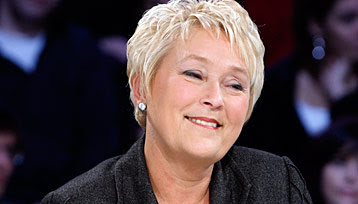
Quebec premier-designater Pauline Marois avoided being shot by a crazed gunman on Sept. 4th. One man was killed and another critically wounded.

The news shocked all of Canada. On September 4, 2012, Parti Quebecois leader Pauline Marois won the Quebec provincial election. She was to give her victory speech at the Metropolis in downtown Montreal when a masked gunman opened fire, killing a stage technician and injuring another. Marois was unharmed. It has not been determined whether this was meant to be an assassination attempt on Marois or not. Even if it was, politically-motivated assassination attempts in Canada are extremely rare. Nevertheless the shooting did remind us that such a catastrophe is very possible here in Canada.

Throughout the beginning of time, being a political leader has always been a position to put one’s life in jeopardy. The King of a country would be seen as the prime target for warring armies in the quest to conquer. A leader could even be assassinated by a person within their circle as Julius Caesar was. Even in modern day dictatorships or dictatorships of the recent past, a head of state would be prey for assassination attempts like Fidel Castro, Saddam Hussein, Salvador Allende or Anwar Sadat. The assassin would either be an person of opposition or a militarized coup.

Even in democracies assassination attempts are still common as was the failed attempt on UK Prime Minister Margaret Thatcher in 1984 and the successful attempts on India’s Indira and Rajiv Gandhi in 1984 and 1991 respectively. Even countries with a reputation of being peaceful like Sweden are not immune to assassination attempts as was the case when Prime Minister Olaf Palme was shot and killed in 1986. The most famous assassination attempts in a democracy have come from the United States. Four presidents including legendary presidents like Abraham Lincoln and John F. Kennedy have been assassinated while in office. In 1981, President Ronald Reagan was shot while in office but survived. The most recent assassination attempt on an American politician was on January 8, 2011 on Arizona US Representative Gabrielle Giffords. She survived but six others, including US District Court Judge John Roll, were killed.

Here in Canada, we’re lucky not to have a prime minister assassinated while in office.  Even infamous prime ministers like Brian Mulroney lived to see his last day in office and even Stephen Harper is still alive and active during a time of Harperphobia that’s heavily promoted through the gab of liberal Canadians. The closest call was on Jean Chretien back in November 5, 1995 when a man armed with a knife broke into his home residence to stab him. Neither Jean nor his wife were hurt.

There have only been two successful assassinations in Canadian politics. The first is Thomas D’Arcy McGee. He was both an Irish nationalist and a father of Canadian Federation. He would attack the Orange Order in his writings in the 1850’s and defended the Irish Catholic right to representation in the assembly. He was elected to the Legislative assembly of the Province Of Canada in 1858 and played a significant role in the creation of the Dominion Of Canada. Less than a year after the independence of Canada, McGee was shot to death by Patrick Whelan, an Irish Catholic and a sympathizer of the Fenians: a group of Irish Americans who wanted to take over Canada to prevent British occupancy. Whelan was hanged. McGee remains the only Canadian politician at the federal level to be assassinated.

The second successful assassination was at a provincial level and an act of terrorism. Pierre Laporte was Vice-Premier and Minister of Labour of Quebec in 1970 as Robert Bourassa was the Premier. On October 10, 1970, Laporte was kidnapped outside his home by a cell of the FLQ: A Quebec independence terrorist group. The FLQ was already regarded as a dangerous group for it had already committed seven murders, multiple mail bombings in the 60’s and bombed the Montreal Stock Exchange one year earlier. A British diplomat had been kidnapped days earlier and was still hostage. Laporte’s abduction was part of a ‘political protest’ to have ‘political prisoners’ freed. The Government of Canada under Pierre Trudeau responded with the enactment of Canada’s War Measures Act and Trudeau’s promise to punish whoever harms the two men. On October 17th, seven days after the abduction, Laporte’s body was found. The incident is remembered in Canadian history as the October Crisis. The British Diplomat was released in December and the FLQ eventually declined due to heavy police crackdown and declining public support after the assassination. Nowadays the biggest lobby for Quebec independence is through peaceful political lobbying like the Parti Quebecois.

Despite current politics in Canada being mostly peaceful, there is a chance for violence either by a cowardly person or a person with opposing viewpoints. We shouldn’t forget that Canadians have often reacted angrily to political situations in the past. We’ve had rebellions in both Lower Canada and Upper Canada before the Dominion was created. We’ve had rebellions in Manitoba in the 19th Century like the Riel Rebellion. We’ve had labor riots in various cities with the Winnipeg Riot of 1919 being the most famous.

Political violence became less admired and more looked down upon since World War II but it’s not to say it’s completely gone away. Back in the 60’s there were attacks on air force bases to protest the war. In the 80’s and 90’s, there were protests and blockades from First nations groups. Even in my city of Vancouver, there have been political riots like the G7 riot back in 1997 and various anti-Olympic protests before Vancouver 2010. There was also the G8 riot in Toronto from anarchist groups. So there’s no doubt that there’s political anger here in Canada that can turn violent.

I won’t say that the Montreal shooting was politically motivated as that has yet to be proved but I will state the facts I’ve read and know as of now. On the night of September 4th, 2012, the Parti Quebecois won the provincial election with a minority government. Party leader Pauline Marois delivered her victory speech when partway through, a masked gunman opened fire with what many thought was an AK-47. One stage technician was killed and another was injured. Marois was taken away by her bodyguards and was unharmed in the shooting. The gunman then attempted to set fire to the building with a Molotov cocktail. The shooter was quickly tackled and arrested by the police.

The victim was 48 year-old stagehand Denis Blanchette. Witnesses including Marois herself believe his actions taken that night could have prevented more fatalities. His funeral was held in a Roman Catholic church and was attended by hundreds including Marois and other political dignitaries. Police were present throughout the church. Dave Courage, the 27 year-old man who was also shot, was originally in critical condition and continues to recover in hospital. The suspect is 62 year-old Richard Henry Bain of La Conception, QC, a small town 90 miles northwest of Montreal. He faces 16 charges including first-degree murder, one count of attempted murder as well as possession of explosive material and prohibited weapons. While being placed in a police cruiser, he yelled in French “Anglos are waking up.” then in English: “It’s f***ing payback time.” Crown Prosecutor said Bain has 27 guns, all but one had been registered.

Bain is expected to reappear in court on October 11th. Despite the statement, it’s unknown whether Bain’s actions were politically motivated or the actions of a crazed man. Court trials and public reaction will define the events yet to come and could even affect the political climate in Quebec. One thing about the shooting is that it reminded Canada that political assassinations in Canada are quite possible. An extremely rare chance of happening but still likely.

WORKS CITED:

WIKIPEDIA: FLQ. Wikipedia.com. 2012. Wikimedia Foundation Inc. <http://en.wikipedia.org/wiki/FLQ>

WIKIPEDIA: October Crisis. Wikipedia.com. 2012. Wikimedia Foundation Inc. <http://en.wikipedia.org/wiki/October_crisis>

WIKIPEDIA: Thomas D’Arcy McGee. Wikipedia.com. 2012. Wikimedia Foundation Inc. <http://en.wikipedia.org/wiki/Thomas_D%27Arcy_McGee>

WIKIPEDIA: 2012 Montreal shooting. Wikipedia.com. 2012. Wikimedia Foundation Inc.

< http://en.wikipedia.org/wiki/2012_Montreal_shooting>

Montgomery, Sue. “Shooting suspect Richard Henry Bain arraigned on 16 charges, including first-degree murder”  Montreal Gazette 6 September 2012 <http://www.montrealgazette.com/news/Shooting+suspect+Richard+Henry+Bain+arraigned+charges+including+first+degree+murder/7200523/story.html>

Movie Review: Monsieur Lazhar

If a Canadian movie has a Best Foreign Language Film nomination, do you think I’m going to go see it? Of course I’m going to go see it. For the second year in a row and for the sixth time ever, a Canadian film was nominated for an Oscar in that category. This year’s nominee is titled Monsieur Lazhar.

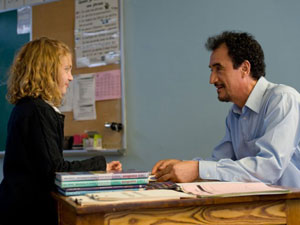
The film starts with what is to be a typical day at a Catholic elementary school. A boy named Simon is getting the milk for the day. As he walks into his classroom alone, he discovers his teacher Martine hanging. This is very hard for the students and the school. One of the difficulties is finding a new teacher for the students of the deceased teacher’s class. In walks Bachir Lazhar, an Algerian immigrant. They are hesitant at first but they agree to hire him.

Known to few is that Bachir’s immigration status is in question by the courts. A package he receives comes into question. The immigration court asks him why he won’t return since ‘Algeria is back to normal’ but he replies “Nothing is ever really normal in Algeria.” The interrogations eventually get frustrating to the point Bachir admits of the fire in Algiers that killed his wife and children back in the 90’s. That fire was no accident.

The class tries to move on as usual. For some students, it goes fine. For others like Simon and Alice, who witnessed their teacher hanging, it’s difficult and painful. Alice is more vocal about her difficulties. She makes a speech in class about violence and how the hanging has an effect. She also has a softer side and develops a liking for Monsieur Lazhar, even learning about his home city of Algiers. Simon is more reserved and difficult. He’s not the same since the hanging and appears like he has something to let out but can’t. He even resorts to fights with other students. Home life isn’t easy for him because his parents are rarely there. However something has to be done as it’s discovered he has a picture of Martine which he drew angel wings and a noose on.

Dealing with the students is not an easy task to do either. The elementary school is worried about the suicide being brought out into the open. Plus teachers are now under strict limits over what to deal with students’ issue and how to deal with them. The new laws set twenty years ago changed lots to how a teacher can function towards a student. This is hard for Bachir as he wants the students to heal from this trauma. Especially Simon, whom the teachers are considering expelling. We learn shortly before Martine hung herself, Simon was hugged by Martine while he was crying but told his parents she kissed him. The parents came down hard on her.

What happens in the end is one scenario ends on a bright note and another scenario ends on a low note for Bachir. In the end we get a turnaround that’s more valuable than Bachir keeping his job as a teacher. Something that the school board could never give the children.

The role of Monsieur Lazhar was that of a man who would help bring help when it was needed unexpectedly.  Right at the beginning of his teaching he would tell the meaning of his name:  “Lucky” and “Tell the good news,” In the end, he was the lucky one who would give the good news to the children. The students in turn would be the lucky ones as he would help the most troubled of the students heal from the trauma. He would succeed where the school board and the counselor would fail. Even in the end, his impulsive helping of the students would be too much for the school to handle. The ending would show the common belief that no good deed goes unpunished but it’s not without its rewards. Bachir Lazhar would give to the students and he would receive from them as well. His teaching of the students would also help him in terms of his own healing from the loss of his own family.

The best quality of the movie was in its gentle storytelling. We have a situation of a troubled school being taught by a teacher with a troubled past of his own. He faces two pressures of keeping his new-found job, keeping the peace of his classroom since the suicide, maintaining the peace of the school and being able to stay in Canada to avoid persecution back home in Algeria. All of this was told in a gentle manner that would keep the audience intrigued and hoping for the best for Bachir Lazhar and for Simon and Alice. That was its best quality.

The acting overall was excellent and stuck to their parts well without coming across as showy or phony. Mohammed Fellag was excellent playing a teacher with a troubled past thousands of miles away. The children were also good as they played genuine child roles instead of the typical cutesy acting Hollywood normally gives them. Their feelings, traumas and actions were not over-the-top either. The directing and scriptwriting of Phillippe Falardeau was also well-written, although not a standout. Known to few, Monsieur Lazhar is actually an adaptation of a one-man monologue. Falardeau did a very good job in creating and directing a script with a multitude of actors. He did a very smart job in making the story very real.

Intersting how Monsieur Lazhar gives Canadian film a unique achievement. This is the first time Canadian entries in the Best Foreign Language Film category has been nominated for two years in a row. Last year was Incendies. Interestingly two of the three producers of Monsieur Lazhar also produced Incendies. The Oscar nomination isn’t the only acclaim Monsieur Lazhar has received. The film also won the Viewers Choice Award for Best Canadian Film at the Toronto Film Festival, Best Film award at the Valladolid Film Festival and has been nominated for nine Genie Awards, Canada’s national award for filmmaking excellence. Surprisingly, it was not shown at the Vancouver Film Festival. It’s a shame because I would have liked to have seen it if it was out then.

Monsieur Lazhar is a film that starts out on a dark subject but it ends on a bittersweet positive note. The warmth of Monsieur Lazhar reminds us how people can succeed where the system fails. We need more people like Monsieur Lazhar out there.

Election 2011: Canada Votes

Okay, some of you who don’t live in Canada have heard that we have a National Election—the 41st Canadian General Election– in which we will be voting on May 2nd, but don’t know all the details of what’s going on. Here are the details about what’s been happening and what to anticipate.

For those unfamiliar with how Canadian elections work compared to American elections, Canadian elections are held on any given date instead of the first Tuesday of November. A Prime Minister’s term can be any length of time instead of the solid four years of an American President’s term, even though most Prime Minister terms are between three to five years. While Presidential Elections are decided by electoral votes based on which Party wins the most votes per state, Canadian Prime Ministers are decided by the most won seats with each voting district or region deciding its own winning Member of Parliament per Seat. In other words, while citizens vote for electors in the Presidential election and the winning Party in the state wins all the state’s electors, Canadians vote for MP seats in the Prime Minister election. While an American President is decided by the most electoral votes, even if he doesn’t have the highest total of votes, A Canadian Prime Minister can be declared upon winning the most seats even if they don’t have the highest total of votes. So there are some similarities between Canadian elections and American elections but a lot of differences.

Now for the current political scenario in Canada. Politics in Canada has gone through a lot of chaos over the past few years; so chaotic this is the FOURTH National Election in seven years. The most recent National Election was declared in the aftermath of a political scandal. Stephen Harper’s Conservative party was long considered to be in contempt of parliament at the beginning of March upon refusing to meet Opposition requests for details of proposed bills and their cost estimates. The Liberal Party responded by declaring a motion of non-confidence against the Government and on March 25, 2011, the House voted agreeing 156-145 to the motion. This marked the first time in the history of Canada or any nation in the Commonwealth of Nations that a cabinet has been found in contempt of Parliament. Following a meeting with Stephen Harper, Governor-General David Johnston agrees to dissolve the 40th Canadian Parliament and a Federal Election was declared.

Even before the most recent election was declared, Canadian politics has already been known for its chaos in the last seven years. Back in 2005, the Liberal Party under then-Prime Minister Paul Martin faced a sponsorship scandal of what would be documented in the Gomery Report. Even though Paul Martin had been Prime Minister for less than a year, an election was declared and in January 2006 Conservative Party Leader Stephen Harper won the election with a minority of seats. The Conservative Party victory was considered an arrival for political conservatives in Canada who struggled during the 90’s after the eventual decline of the Progressive Conservative party upon the resignation of Brian Mulroney.

 Another national election was held less than three years later in October 2008 and Harper’s Conservatives again won the election with a minority with Liberals, Bloc Quebecois and NDP making up most of the remaining seats. Shortly after the 2008 Federal Election, the Liberals and NDPs banded together for an overthrow of the Conservative government through a unified vote of non-confidence. Some may call it the right thing, others political mutiny. Whatever the situation, the coalition didn’t succeed and the Harper-led Conservatives remained the leading party of Canada. Since then, many Liberals have tried to distance themselves from the coalition.

Now it’s Stephen Harper’s try for a third term as Prime Minister. He comes in the election with the scandal creating baggage for him, but not a lot. Before the scandal, the Conservatives were tops in the polls and they still remain on top. One thing Stephen Harper is hoping for is a Conservative majority, especially with the 2008 attempted coalition still in his Party’s memory. The most surprising fact of the polls is that the Liberal Party is not the party with the second-highest ratings but the NDP. The Jack Layton-led NDP surpassed the Liberals in the April 20th poll and the most recent polls have the NDPs at an average of 31.4% in comparison with 3% for the Conservatives and the Liberals at 20%. This has many believing that the NDP could be setting up for a possible upset for Monday’s election; maybe even a Prime Minister Layton. Mind you the polls only represent popular voting patterns. It will all be decided when the ridings vote for the MP’s and their parties.

Win or lose, Jack Layton appears poised to have the biggest National Election result for the NDP party ever. The biggest ever result for the NDP Party is 43 seats in the 1988 election while the Party was led by Ed Broadbent. Even its founder, Tommy Douglas, never experienced the success Ed received. One difficulty of Layton’s, especially after the coalition, is for the NDP to distinguish its political platform from that of the Liberal Party. Too many voters label the NDP to be like the Liberals since they are on the same left stance. This may be seen good for liberal-siding voters but not so good for the NDP’s own identity. Whether Jack Layton wins or loses, he will have to prove the NDP’s distinction from the Liberals politically. Otherwise voters will continue to believe the NDP and Liberals are two choices of the same stance.

Then there’s the Bloc Quebecois. The Bloc was started in response to a resurgence of Quebec nationalism felt after the decline of the Parti Quebecois and after the Meech Lake Accord, which was intended to grant Quebec distinct constitutional status, was overturned in 1990. The party has attracted Quebec nationalists and even prompted a second referendum in 1995 in which Quebec nationalism lost again. Despite Quebec nationalism being voted down, the party has always won at least 50% of the Seats open to Quebec. The Bloc had 49 Seats in the last election–47 are still current– with 10% of the popular vote in Canada and 38.1% of the vote in Quebec. However recent polls have them at 7%. Could this mark a decline of the Bloc?

Party aspects aside, One thing about the election is that the parties are hoping for a better voter turnout than what happened during the 2008 election. Then, the voter turnout was 58.8%, the lowest turnout percentage ever for a National Election. Parties have been making the effort to urge voters out. Even campuses have had young people out to drum out support. Interesting how around the time I first became an adult, MTV started a ‘Rock The Vote’ campaign around the time of the 1992 Presidential election and MuchMusic started ‘Vote With A Vengeance’ for the 1993 Federal Election. This election, there’s no ‘Vote With A Vengeance’ campaign. Funny. Doesn’t Much care anymore?

The big day is May 2nd, tomorrow to be exact. Canadian history will be decided by the people. The election results and its aftermath will further shape Canadian democracy in the years to come. Stay tuned. As for Canadians, get out and vote!

WORKS CITED:

WIKIPEDIA: Canadian Federal Election, 2011.Wikipedia.com. 2011. Wikimedia Foundation Inc. <http://en.wikipedia.org/wiki/Canadian_federal_election_2011>

WIKIPEDIA: New Democratic Party.Wikipedia.com. 2011. Wikimedia Foundation Inc. <http://en.wikipedia.org/wiki/New_Democratic_Party>

 WIKIPEDIA:Opinion Polling in the Canadian Federal Election, 2011.Wikipedia.com. 2011. Wikimedia Foundation Inc. <http://en.wikipedia.org/wiki/Opinion_polling_in_the_Canadian_federal_election,_2011>

WIKIPEDIA: Bloc Quebecois. Wikipedia.com. 2011. Wikimedia Foundation Inc. <http://en.wikipedia.org/wiki/Bloc_Qu%C3%A9b%C3%A9cois>