VIFF 2015 Review: Umrika

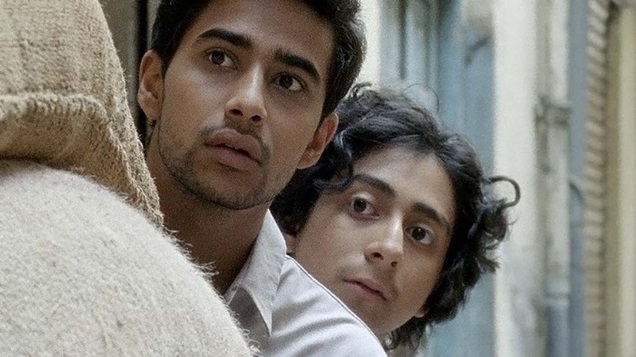
Suraj Sharma, left and Tony Revolori, right, go on a mission in Mumbai of truth and lies in Umrika.lies
Suraj Sharma, left and Tony Revolori, right, go on a mission in Mumbai of truth and lies in Umrika.

After the VIFF ended on October 9th, I managed to take in a few film festival repeats immediately after. The day after, I saw Umrika and I thought it was an amusing story.

The film begins with Udai, a young adult from India in the 1970’s, leaving his family and younger brother Ramakant for a better life in the USA. The whole village says their goodbyes to him. The family wait a long agonizing time for his first letter. When it comes, the whole village is excited. It’s a letter with pictures of how life is in ‘Umrika.’ The letters with pictures keep coming for years and they’re filled with more exciting stories and pictures. It gets the whole village dreaming. Then suddenly in 1985, Ramakant’s father is electrocuted to death. Shortly after, Rama learns that the letters are all forgeries created by his father and uncle to keep his mother from agonizing. The truth is Udai vanished without a trace in the port city of Mumbai. Ramakant is determined to find him, even if it means his own trip to Umrika.

Rama learns the best person who would have knowledge of the whereabouts of his brother is the man in charge of illegal immigration. However to reach him, one would have to be like a delivery driver or messenger. Rama is opportunistic enough to steal a bike belonging to a delivery driver of a sweets bakery. Rama is the new driver. He’s able to deliver as well as win the favoritism of the man with each delivery he makes. Rama also learns of the dark secret of him, that he’s involved in a crime ring. One deliver Rama made was of a gun used by one of his men to shoot wrongdoers.

Soon Rama finds himself living in an area owned by a restaurateur and his family. The youngest daughter who’s a waitress takes a big liking to Rama. Soon Rama’s friend Lalu comes to visit Mumbai to catch up with him. Lalu has been concerned with Rama since he left. Lalu agrees to help despite film making ambitions of his own. Soon Udai is discovered. He’s a barber working in Mumbai and married to the Himalayan girl of the village, something his mother never would have approved of. Udai revealed he never would have left because of how much it would break his mother’s heart. But the truth cannot be revealed to their mother as it would cause disgrace to the whole family and the village. In the end, Rama, Udai and Lalu devise a scheme to ‘make things right.’ It gives the impression the story ends on the right note.

The film is an impressive comedy-drama. It captures a lot of moments in the right sense. In the first half, it captures the essence of the excitement upon reading the ‘letters’ and it giving American dreams to the village children. It even captures some light humor as they insist on believing the wieners in the hot dogs are actually barbecued carrots. The film switches to drama at the right moment starting with the father’s death and then the truth revealed. I feel the film made good choices in setting the stage for the pursuit when the mother says: “It hurts me to know your brother wasn’t here to light the flame. It should be the oldest.” Despite switching to drama, it does keep the viewer intrigued with Rama’s each move from taking on a delivery job to trying to find his brother. At the same time, it highlights what it is to be young and full of dreams even when it’s faced with stiff opposition and challenges.

I don’t think the film was trying to make too huge of social commentary. However I do feel it did a good job of displaying the corruption and the shadiness happening in the big cities of India like Mumbai. I also found the time setting for the story interesting. Writer/director Prashant Nair starts the story in the 1970’s and then moves to 1985-1986. I thought that was intriguing and wondered why he chose that time period. One thing I especially noticed was the scene inside the restaurant where Rama and all the others saw images of the Space Shuttle Explosion as it happened. Looking back I think Nair was trying to say even devastating moments for the US like this doesn’t stop people from India from having their American dreams.

I feel this is an excellent comedy-drama from Prashant Nair. This is only his second feature-length film and it was very entertaining. It kept your hopes up but ended not how one would expect but on the right note. It’s unique as it becomes a story where Rama doesn’t just search for his brother but chart a path of his own. Suraj Sharma was excellent as the protagonist Ramakant. I will admit it’s not as good as his performance in the Life Of Pi but he played his part well and very believable. Tony Revolori was also good as Lalu and made a great supporting player.

Umrika has had impressive results since it debuted at this year’s Sundance Film Festival. At that Festival, it won the Audience Award for dramas and was nominated for the Grand Jury Prize in the world Cinema categories. Shortly after its premiere, the film was sold by Beta Cinema to a wide variety of countries and became the most widely distributed Indian movie ever.

Umrika is a delightful Indian film that mixes both comedy and drama well. It captures a positive essence and even keeps it alive during its negative moments.
Oscars 2014 Best Picture Review: The Grand Budapest Hotel

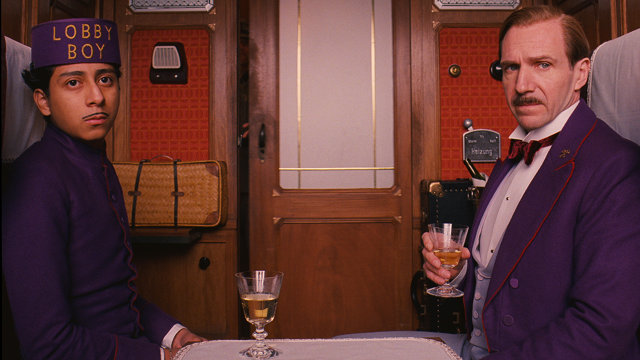
A hotel owner and his lobby boy (played by Tony Revoloro and Ralph Fiennes) go on a bizarre adventure in The Grand Budapest Hotel.

Anyone else here who missed seeing The Grand Budapest Hotel back when it was released in the spring? Yes, I’m guilty of that too. I can blame it on things like me being tired right after last year’s Oscar season to having a lot of preoccupations in my life at that time. This year’s Oscar race sent me the message of what I missed out on the first time. I finally saw it on DVD a few days ago and I now finally see why it ranks among one of the best of 2014.

This is another review of mine where I won’t give an analysis of the plot. Instead I will put focus on the movie’s strengths and possible flaws.

This film is quite typical of what to expect from a Wes Anderson film. It has an eccentric situation along with eccentric characters and a lot of comedy along the way. However this movie has its charm: the common charming eccentricity with Wes Anderson movies that continuously attract fans of his movies and moviegoers looking for something different. It’s also a trademark charm of the director that does not run stale with their movies time after time and continues to be enjoyable.

This too is a film that offers a lot and doesn’t make a whole lot of sense at first but makes sense as it goes along. It starts with a young girl paying honor to a writer in the present. Then flashing back to the writer in 1985 talking about hearing from Zero the owner of the practically lifeless Grand Budapest Hotel in 1968 about why he won’t close it down and Zero flashing back to 1932 to explain the whole story why. Wow, a lot of flashing back!

The story itself unravels itself over time with its various chapters from Zero joining the hotel as an orphaned lobby boy to the fictional country of Zubrowska nearing war to the owner Monsieur Gustave’s affair with Madame D to inheriting her most coveted painting much to the anger of her own family who hoped to have it to being framed for her murder. Yes, already bizarre. However the colorfulness comes with Zero’s love for the cakemaker Agatha whom he eventually becomes engaged to and helps bake cakes with escape tools.

The situation gets weirder as an assassin is on pursuit for him and the hotel needs to be managed, especially since news about a second will from Madame D is in existence somewhere. It’s after a pursuit while at a winter sport’s to kill off the assassin that the can return to the hotel only to find it overtaken by soldiers in the war and police on the hunt for Gustave.

As you can tell, this all makes for a bizarre confusing story and even leave you wondering about why the hotel is still in existence.  Understanding it means having to see the story for itself from beginning to end. There may be some confusing moments along the way and even a lot of eccentric humor but you will understand it and even the reason why a mountaintop hotel that’s completely useless is still in existence. You’ll even understand why the lobby boy is the only person in the world Gustave can trust wholeheartedly and would eventually own it. It’s no wonder Wes had to write a story along with his writing partner Hugo Guinness in order to bring this to the screen and make it work.

There are even times when I felt the story resembled Farewell To Arms, albeit with Wes Anderson’s dark humor intertwined into the story. Actually the credits in the end say the film was inspired by the readings of Stefan Zweig. I’ve never read Zweig’s writings so it’s hard for me to judge on that factor. Nevertheless the fact that Zweig was an Austrian Jew who fled to Brazil for refuge where he died may have some bearing on this. Even seeing how the character of The Writer looks like Zweig gives a hint.  Whatever the situation and even if the story does not go as well as you hoped it would, it does leave you feeling that it does end as it should.

Despite this film being another excellent work from Wes Anderson, we shouldn’t forget that this is also because of the excellent ensemble of actors. Many of which have already acted in Wes Anderson movies of the past. Here they deliver well as a whole to make the movie enjoyable and true to Anderson’s style of humor and style of film making. However it also succeeds well with those who have never acted in a Wes Anderson movie before, like lead Ralph Fiennes. He delivers a character that’s humorous and true to the humor of the movie. Newcomer Tony Revolori also adds to the charm of the movie as the young bellboy who becomes Gustave’s partner in crime as does Saoirse Ronan as Agatha. You can easily see why she won his heart. Even minor roles from other Anderson first-timers like Jude Law and F. Murray Abraham add to the story.

Even the technical aspects of the story are excellent. The costumes designed by Milena Canonero are perfect to a T in this movie as is the set design and the makeup and hair. All these elements fit the times they’re set in and add to the film’s charm. The cinematography by Robert Yeoman fit the story well and the music from Alexandre Desplat also fit the film.

The interesting thing to note is that The Grand Budapest Hotel is Wes Anderson’s highest-grossing film ever with $59.1 million in North America and almost $175 million worldwide. Buzz for the film first started after it won the Silver Bear at the Berlin Film Festival. Buzz continued after it continuously impressed film festival after film festival. Although his box office total in North America is not too impressive, it should be seen as respectable as it opened around the same time as the summer movie phenomenon that was happening. It made for a nice humorous alternative to the overhyped summer schlock.

The Grand Budapest Hotel is a DVD worth watching. We all didn’t know what we were missing during the summer and now we can finally see why.