
So the seventeen days of Olympic action has ended. History was written in London. Some of these athletes’ dreams came true, some dreams had to be put on hold for another four years, and some died right there. Nevertheless they were a seventeen days that gave the world lots to cheer about.
MEMORABLE MOMENTS AND NAMES IN HISTORY
One of the unique things of these Olympic Games were that two of the biggest stars from the Beijing Games were back to thrill the world again. An aging Michael Phelps was back in London proving to the world he still has it. He left London with four gold and two silver, successfully defended his gold medal for the third straight time in two different events, set a career Olympic medals record with 22 over three Olympic Games, and ended his Olympic year as arguably the greatest Olympian of all time. Another great from Beijing, Jamaican sprinter Usain Bolt, won the 100m, 200m and anchored Jamaica’s 4*100m relay to gold as he did back in 2008. He too solidified himself as one of the greatest Olympians of all time. It wasn’t just Bolt and Phelps who added more glory to their Olympic careers in London. There was the American beach volleyball team of Kerri Walsh and Misty May-Treanor who won gold for the third straight time. There was British cyclist Chris Hoy whose two gold medals at the Velodrome gave him a career total of six gold medals. No other cyclist has won more. Also British yachtsmen Ben Ainslie won gold for the fourth straight Olympics. Only one other sailor, Denmark’s Paul Elvstrom, has won as many yachting golds.
Even with greats adding to their legacy here in London, this was also the arena where great were born. American swimmer Missy Franklin won five medals, four of the m gold. American sprinter Allyson Felix won three gold medals. British distance runner Mo Farah dazzled the home crowd by achieving the 5000m-10000m double. American decathlete Ashton Eaton and British heptathlete Jessica Ennis gave brilliant wins. Right after the US won the women’s team event in gymnastics, it was American Gabby Douglas who won hearts and the all-around gold. Swimming wasn’t only Michael Phelps and Missy Franklin. American Ryan Lochte also provided some great rivalry for Phelps in the pool. The women’s swimming also saw double golds from China’s Ye Shiwen and the Netherlands’ Ranomi Kromowidjojo. Tennis made a double-winner out Serena Williams in both individual and doubles with her sister Venus. There were also brilliant team efforts in London too. China dominated badminton and table tennis while the Americans dominated basketball. China also won six out of the eight diving events. While the American women’s gymnasts were the clear winners, it was China again who was the class of the men’s field. And the football contest showcased the gold medal-winning brilliance of the Mexican men and the American women.
Despite all the sports action, one of the biggest attractions of these Games were the attendance of members of the royal family at events. The most notable were Prince William, Prince Harry and Kate Middleton. They were seen taking in the athletic action and cheering for Britain. Some of the most notable appearances of them were at the men’s team gymnastics tournament, the swimming finals where they saw Michael Phelps and Missy Franklin in action, the track cycling events where the British women’s pursuit team set a world record in front of them, and the equestrian competition where they cheered Duchess Zara Phillips to a team silver in the eventing competition. Her medal was placed around her neck by her mother Princess Anne: a former Olympic equestrian rider and a member of the International Olympic Committee.
As for medal totals, the most medaled male athlete of these games was once again Michael Phelps with six: four gold and two silver. The most medaled women were three swimmers–Austrailian Alicia Coutts and Americans Missy Frankin and Allison Schmitt– who won five medals each. The American team won the most medals with 104 as well as the most golds with 46. Next in line was China with a total of 88 medals, 38 of them gold. Russia was third in total medals with 82. However it was the host country of Great Britain with the third-most gold medals with 29 which I will elaborate on later in this article.
As for Canada, Canadian athletes won eighteen medals over eleven sports. The eighteen medals was the same medal total as in Beijing but Canada only won a single gold. Canada’s only gold medalist was trampolinist Rosie MacLennan. Canada’s other medals were also worthy of respect too. Both of Canada’s rowing eights teams took silver. Wrestler Tonya Verbeek regained her past winning form to take silver in her category. Canada’s female synchro diving pairs both won bronze. Christine Girard became Canada’s first female weightlifter to win a medal, a bronze. Swimmer Brent Hayden won bronze in the 100m freestyle in his third Olympics. Derek Drouin was a surprise bronze medalist in the men’s high jump. And it was Canada’s women’s football team that won the hearts of the country after their controversial semifinal loss against the Americans and their win in the bronze-medal game. There were even non-medallists like Jessica Zelinka, Damian Warner, Mary Spencer and Canada’s women’s gymnastics team who won the respect of the nation.
The Olympic Games here showed that inspiring a generation doesn’t strictly mean winning a gold medal. For the first time in London, all Olympic sports had events for women or were mixed. Also every competing country sent female athletes with their delegation. This was especially victorious for women of Muslim nations as they could finally compete for their country. There was also individual achievements here in London too. There was marathon runner Guor Mariol from South Sudan. South Sudan was just formed as a nation one year ago and has not yet formed its own national Olympic Committee. Guor was given the option to compete for Sudan but refused. Because Sudan it is the country responsible for the genocide of two million of his people, including eight of Guor’s own brothers and sisters, he believed competing for Sudan would be a betrayal to his people. The IOC agreed to have him compete as an Independent Olympic Athlete, one of four at these Games. His appearance could lead to a South Sudan team for the 2016 Olympics. There was South African double-leg amputee runner Oscar Pistorius who had only run in the Paralympics previously and won a long battle with the IAAF to run as an Olympic runner. He ran as part of South Africa’s relay team and in the men’s 400m event. He only made it to the semifinals in the individual 400m but the highlight was at the end as eventual Olympic champion Kirani James did a name tag exchange with him as a sign of respect. There was the American men’s 4*400m relay where the first runner Manteo Mitchell broke his fibula halfway through his run but still ran to the exchange to help the US qualify for the finals. In the finals, Bryshon Nellum who was shot in the leg three years earlier and was told he would never run again ran as part of the silver-medal winning team. He would be chosen as the American flag bearer at the closing ceremonies. And there was delight in the home crowd as British diving prodigy Tom Daley wanted to win a medal for his father who died one year earlier. Those in Britain and the diving world were well aware of the close relationship he had with his father whom wholeheartedly supported Tom during his lifetime. He faced a tightly competitive field in the men’s platform diving but won the bronze. You don’t have to win a gold to be a hero.
THE NEW POSSIBLE: NEW RECORDS SET
Have you been seeing all those ads from AT&T where they show a winning moment and a young athlete writes it as their goal followed by the tagline: “Here’s to the new possible?” The new possibles have been celebrated as new World Records and new Olympic Records countless times here in London. Archery saw the world records fall in the ranking rounds of both the men’s individual and team tournaments. Athletics saw the Olympic record broken in twelve events: four of them new world records. The most amazing had to be the American women’s 4*100 relay team breaking a 27 year-old world record held by East Germany by more than half a second. Cycling saw ten world records broken in four events. All but two were set by British cyclists. Shooting saw seventeen Olympic records and seven world records broken or equaled. Both Modern Pentathlon events saw new Olympic record totals set. Swimming saw the Olympic record fall in twenty events and the world record fall in eight events. The women’s events were the ones with the most change as only two events saw the old Olympic record still standing. Weightlifting saw nineteen Olympic records set, eight of them world records. They say records were made to be broken. Makes you wonder how many of those new records will be broken in 2016?
THE FIRST OF THEIR COUNTRY
Remember how I made mention in my segment of Botswanian sprinter Amantle Montsho that one of my favorite Olympic moments is when a country wins their first ever Olympic medal? Here in London, seven nations won their first ever Olympic medals here in London. Botswana was one of them but it wasn’t Montsho; it was Nijel Amos who won silver in the men’s 800m run. Bahrain’s first ever medal was a bronze in the women’s 1500m run won by Maryam Yusuf Jamal. Montenegro’s women’s handball team won their country’s first medal, a silver. Guatemalan race walker Erick Barrondo brought his country on the medals table for the first time ever with a silver in the 20km walk. The victory ceremony of the men’s heavyweight category in taekwondo saw Gabon’s flag raised for the first time ever at the Olympics for silver medalist Anthony Obame. Cyprus arrived on the medals podium for the first time ever thanks to sailor Pavlos Kontides winning silver in the Laser event. And finally the tiny Caribbean island of Grenada with a population of only 110,000 had an Olympic champion in 19 year-old sprinter Kirani James in the men’s 400m run. With that Grenada set a unique Summer Olympic record for most gold medals per population, beating The Bahamas in 1964 when they had a population of 130,000. The Winter Olympic record is another story. Anyways back to the focus of this segment, one of the reasons why I like seeing a country win their country’s first Olympic medals is because you know they will come home to their country a national hero. That’s the biggest example of the London Games motto “Inspire a generation” happening here. No doubt they’ll inspire their country’s children to excel like them.
HOST NATION PRIDE
The British Olympic Committee has existed possibly ever since there was an Olympic Games. However things changed in the late 90’s after the Atlanta Games of 1996 where Britain won a total of 15 medals and only one was gold. The Olympic Committee revamped itself as Team GB in 1999 and meant to unify the team as one body, irrespective of one athlete’s particular sport. It’s formula appeared to pay off as Team GB, had set targets of medal achievements in each sport at the London Olympics and a total medal target of at least 48 medals; one more than the total won in Beijing. That seemed a pretty high target considering Beijing had one of Britain’s biggest medal hauls ever. It actually turned out to be a very realistic target as Great Britain won a total of 65 medals including 29 golds in a total of 17 sports. It all started with a silver medal won by cyclist Lizzie Armistead in the Women’s Road Race and ended on closing day with pentathlete Samantha Murray winning silver in the women’s modern pentathlone event. In between were loads of reasons for the host country to cheer, especially on Saturday the 4th when Britain won six golds on what will be known as ‘Super Saturday’.
One of the benefits of Team GB’s sport unity was the ability for Brits to excel better than ever in sports Britain was never much of a power in. Taekwondo had only one British medal in the past and here in London they had their first Olympic champion. Previously underrated tennis player Andy Murray won the men’s singles tournament and later won silver in the mixed doubles tournament. Britain won its very first triathlon medals here through the Brownlee brothers: Alastair taking gold and Jonathan taking bronze. British canoeists won more gold medals than ever. And the British gymnastics team here in London won a silver and three bronze; the same total of medals British gymnasts have won in all past Olympic Games combined. There were also some sports where Britain used to dominate in the past that saw a return to the dominance here in London. British boxers won medals in five of the thirteen categories including three wins. Britain’s equestrian riders won gold in three of the six events. And British sailors won medals in five categories including a gold medal for Ben Ainslie in the Finn class: his fourth consecutive.
However it was in the sports that Britain has consistently done best in over the years that saw their biggest successes. It was the sports of cycling, rowing and athletics that most gave the home country something to cheer about. The GB cycling team that included greats like Chris Hoy and Bradley Wiggins always got the crowd cheering especially in the velodrome as they won twelve medals, eight of them gold. No other country did better in cycling. British rowers won the most medals winning in nine of the fourteen categories including four gold. Athletics saw huge success with four gold and six total medals but it was on ‘Super Saturday’ August 4th that Britain had three Olympic champions: Mo Farah in the men’s 10000m; Greg Rutherford in the long jump; and Jessica Ennis in the heptathlon. There hasn’t been that many athletics wins by a host country in a single day since the Los Angeles games of 1984. The only sport Britain fell short in was swimming where they targeted five medals at the least but wound up with only three. A far cry from the six medals won in Beijing. There were other sports where Britain made no target and no medals resulted. Even in soccer Britain’s teams lost their quarterfinals: the women to Canada and the men to South Korea via (what else?) penalty kicks. Nevertheless it was their biggest Olympics since 1908 and it gave the whole of Great Britain something to cheer about and a Games to be proud of.
OLYMPIC LOWLIGHTS
Even though these were an excellent Olympic Games, it’s not to say they weren’t without their problems. First was to do about their security. In the days leading up to the Games, the media made highlights of the security inadequacies. This lead the London Organizing Committee of the Olympic Games (LOCOG) to bring in British troops from even as far away as Afghanistan to help. Another was to do about the use of Twitter by some athletes. The bad tweets got most of the attention but two athletes–a Greek triple-jumper and a Swiss soccer player–wrote tweets bigoted enough to get them taken off their team.
There were lowlights during the events. First was news about all the empty seats at some events. despite ensuring fans that tickets were all sold out. Even the non-ticketed qualifying rounds of archery held just before the opening ceremonies raised eyebrows. Another controversy was a man from the stands threw a bottle at the track just before the start of the men’s 100m final and was subsequently arrested. One boxing referee was dismissed from the Olympic for awarding a win to an Azerbaijani fighter who was knocked to the canvas six times by his Japanese rival. A women’s fencing semifinal was given extra time because of a clock malfunction. That allowed German fencer Britta Heidemann to win the match against South Korea’s Shin A-Lam. A-Lam protested with a one-hour sit-in to no avail. One scoreless judo quarterfinal led to the judges unanimously deciding the win on the Korean fighter at first then changing it to the Japanese fighter with no explanation.
However of all the lowlights outside of actual cheating, the two most notable came in the gymnastics events and women’s soccer. Gymnastics first saw scoring problems first in the case of two scores–one by a Japanese gymnast in the team competition and another by American Aly Raisman in the balance beam final–leaving the individual and team out of the medals. Their country’s respective official immediately appealed the score in both cases and both were changed to a score that allowed the gymnasts to win their medals. Another case came when British gymnast Louis Smith and Hungarian Krisztian Berki were both given the same score in the pommel horse final. However Berki won the gold because of a higher execution score. This broke the hearts of both Smith and the British people especially since had Smith won the gold, he would have become Britain’s first-ever Olympic champion in gymnastics. No doubt gymnastics scoring will be debated and reassessed by the FIG in the years before the 2016 Olympics. And a woman’s soccer semifinal received a rare delay-of-game call against the Canadian goalkeeper which allowed an American player to get a penalty kick to tie the game. The American team won the semifinal and went on to win the gold medal. The Canadians were disheartened but not enough to win their bronze-medal match three days later.
CHEATER CHEATER
The biggest Olympic lowlights are always the cheaters. Usually the Olympic cheaters that make the biggest news are often those that test positive for drugs. Here at these Olympics the cheaters that made the biggest news were the ones that cheated through different means. The biggest news came in the women’s doubles badminton tournament. Four teams deliberately lost in their preliminary bouts so they can get a more favorable position in the elimination round. When it was revealed, all four teams were disqualified. Also newsworthy was the stricter rules in sports such as the no-false-start rule which means even a single false start in swimming and athletics would get one disqualified. It almost happened in two swimming finals but both false-starters were allowed to compete as the starts were on technical malfunctions. Another case of stricter rules came when Canada’s men’s 4*100 relay team was third across the finish line but was disqualified of the race as one of their runners stepped on the lane’s line only once. In the past runners were allowed a maximum of three steps.
There were even some cases of cheating later admitted and cheating being questioned now. First was the swimming feat of China’s double-gold medalist Ye Shiwen. Her 400m Individual Medley win was set in world record time with her final 50m swum comparable to the time of the men’s winner Ryan Lochte. Despite the controversy, she tested negative in all of her drug tests. Another swimming shocker came in the men’s 100m breaststroke when South Africa’s Cameron van der Burgh won in world record time. He later admitted to using more than one allowable dolphin kick during the race. He was not disqualified. Britain may have provided some of the biggest highlights of the cycling competition but the Men’s sprint team provided a lowlight as member Philip Hindes crashed and the team was given a restart. Hindes claimed in an interview that he crashed deliberately after a slow start to get the restart for his team. He later retracted his statement and so far no action has been taken against him. And then there’s men’s 1500m run champion Taoufik Makhloufi of Algeria. On the day before his gold-medal run, he withdrew himself from the 800m heats after 200m. The IAAF disqualified him feeling he didn’t give an honest effort. He was later reinstated after providing a medical certificate showing that an ailment hampered his efforts. Whatever the truth is, Makhloufi will continue to be under suspicion. One thing about these incidents of potential disqualification is that it shows the sports feds need to get their acts together.
And then there are the positive drug tests. The IOC and the WADA (World Anti-Doping Agency) have developed tougher doping rules over the last few years such as having half the competitors of the London Games, 6000 in total, being tested between the start of the Olympics and the end of the Paralympics. All medalists and fourth-place finishers will be tested. The Olympic anti-doping agency will test up to 400 samples a day for more than 240 banned substances. Samples will also be stored and tested over a time period of four year for in the case of additional substances added to the banned list. Even WADA set an ‘in-competition’ time starting July 16th and declared that any athlete can be tested during the in-competition time without notice. During the in-competition period, thirteen athletes from thirteen countries tested positive for banned substances and sent home with suspensions. The only Olympic medalist to test positive was women’s shot put champion Nazdeya Ostapchuk of Belarus. She tested positive for Methenolone and was stripped of her gold medal. New Zealand’s Valerie Adams, second-place finisher behind Ostapchuk, now has the gold medal. One thing about all this cheating is Canadian magazine Maclean’s wrote an article about it asking: “Whatever happened to sportsmanship?”
RIO 2016: A LOOK AHEAD
The next Summer Olympic Games will be held in Rio De Janeiro in 2016. This marks the first time ever a South American city will host an Olympic Games. There’s no doubt Brazil is hoping to use these Games to showcase themselves to the world. This comes at a busy time as Rio will also be facilitating to two more major events within the next four years: World Youth Day in 2013 and the World Cup in 2014. These Olympics already have their own official motto: “Live your passion.” They will begin on August 5 and end on August 21. There are expected to be 304 events in 28 sports. There will be no new sports introduced to the Olympic program in Rio but there will be one making a comeback. Rugby will be making its Olympic return since it was last contested in 1924 although the Olympics will stage Rugby sevens instead of the Rugby union conducted in the past.
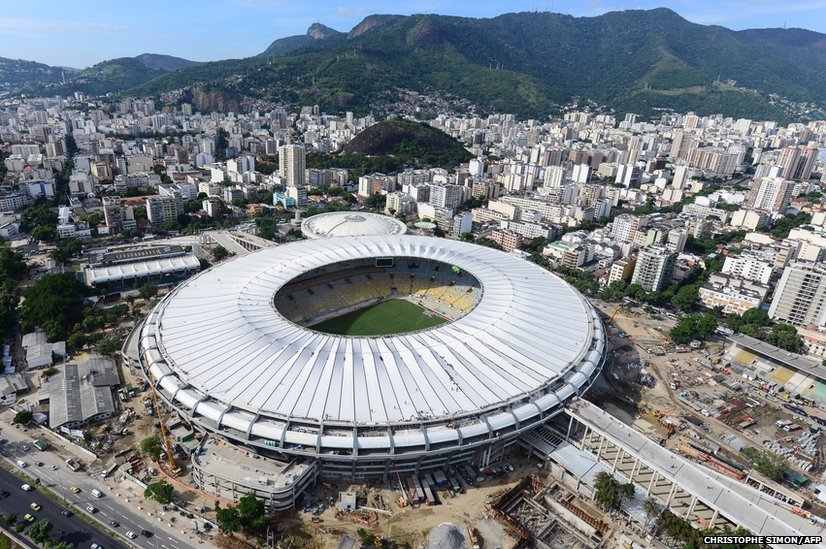
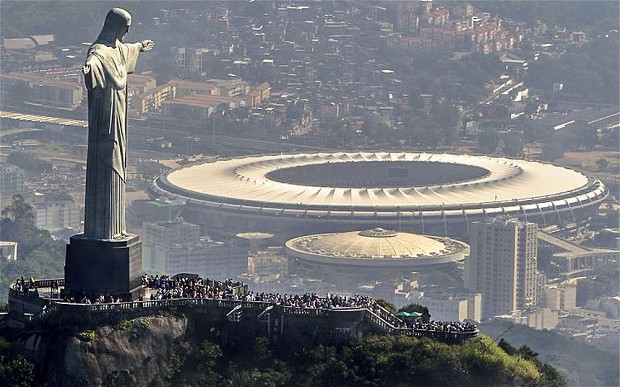
The city of Rio is planning on hosting most of the events within the greater city. There are four districts of Rio where the majority of facilities are planned: Deodoro, Maracana, Copacabana and Barra. Deodoro is planned to host most of the modern pentathlon events as well as whitewater canoeing and mountain biking. Copacabana is the perfect place planned to host events in rowing, canoeing, yachting, marathon swimming and beach volleyball. Barra will be a hub for contesting sports such as swimming, gymnastics, hockey, tennins, boxing and wrestling. Maracana will have the biggest hosting of events with the legendary Maracana stadium for football events and the ceremonies, Joao Havelange stadium for athletics, the Maracanazinho arena for volleyball and the Sambadrome which normally host Carnival will host the archery and marathon events.
Most of the events will be held in facilities that already exist like the Maracana, the Joao Havelange Stadium, the HSBC Arena, Pio Olympic Velodrome, the Maria Lenk Aquatics Centre and the multipavilion Riocentro. There are some temporary facilities planned strictly for the Olympic Games like the Copacabana stadium for beach volleyball, the Deodor Modern Pentathlon Park, an Olympic Hockey Center, an Olympic Hockey Park and a temporary pavillion at the Riocentro. There are only six new venues planned for these Games like the Olympic Aquatics Stadium, the Olympic BMX Centre, an Olympic Tennis Centre and an Olympic Training Centre consisting of four halls and a total seating capacity of 50,000. The only competition venues held outside Rio will be soccer stadiums in four different Brazilian cities.
As for the Brazilian team, Brazil’s team here in London won a total of seventeen medals including three golds in eight sports. That’s their biggest medal haul ever although the most golds they won were five back in 2004. Brazil is one country whose Olympic prowess has really grown in the last twenty years. The first Olympics where Brazil ever won ten or more medals was back in 1996 and the Brazilian team has left every Summer Olympics since with ten medals at the very least. There’s no doubt Brazil wants these Games to have their biggest medal haul ever. What they will have planned in preparation for their Olympic team for these Games will be decided and carried out gradually in the next four years.
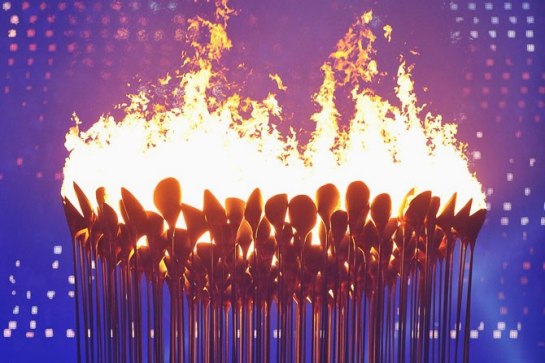
The Olympic flame won’t be lit again until the Winter Games in Sochi in 2014. By now all the Olympians are either home or heading home. Each nation’s Olympic Committee will be taking home the one of the 204 pedals of the cauldron that has their country’s name on it. One has to agree the London Games gave a lot of great memories and once again brought the world together. The Olympic flame may be extinguished in London but the flame still burns in the hearts of the athletes. That’s what continues to make the Olympic Games so great. Its ability to unite the world, put on a show and inspire the young. The motto of the Games was “Inspire a generation” and you can be sure there were many children watching that were inspired here. Thank you London for a job well-done.
WORKS CITED:
WIKIPEDIA: 2012 Summer Olympics. Wikipedia.com. 2012. Wikimedia Foundation Inc. <http://en.wikipedia.org/wiki/2012_Summer_Olympics>
WIKIPEDIA: 2016 Summer Olympics. Wikipedia.com. 2012. Wikimedia Foundation Inc. <http://en.wikipedia.org/wiki/2016_Summer_Olympics>
WIKIPEDIA: Controversies at the 2012 Summer Olympics. Wikipedia.com. 2012. Wikimedia Foundation Inc. <http://en.wikipedia.org/wiki/Controversies_at_the_2012_Summer_Olympics>
WIKIPEDIA: Controversies at the 2012 Summer Olympics. Wikipedia.com. 2012. Wikimedia Foundation Inc. <http://en.wikipedia.org/wiki/Team_GB>
 -Belgium (12)- If you thought it was a surprise to see Switzerland among the seded team in FIFA’s World Cup draw, it should have been just a surprising to see Belgium. Even though Belgium was in the FIFA Top 8 at the time, Belgium is a country one would not normally expect to see as a seded team. Their best World Cup finish ever of the eleven previous World Cups they’ve played in was fourth in 1986. The last World Cup they played in was 2002 and they didn’t even qualify for Euro 2012. However that all changed in 2012 when they hired Marc Wilmots as head coach after being assistant coach for three years. Wilmots himself had played for Belgium in four World Cups and even scored five goals in World Cup play. Belgium was placed in possibly the most difficult European qualifying group for 2014 but they played like magic. They won eight games and tied the other two en route to coming first in their group and automatically qualifying with just one game to go. The spirit of the Red Devils was felt again in their homeland as the country greeted them upon their return in big fanfare. Their success helped put them in FIFA’s Top 8 around the time of the draw which led to them classed as one of the seded teams. Their performance in qualifying was so impressive, Wilmots was signed on to be coach for another four more years. However Belgium’s play in friendlies have not been so spectacular as they’ve lost to Romania, Colombia and Japan. They do have impressive wins against the U.S.A. and Sweden and even tied France. Nevertheless their lackluster friendly play has dropped them from the Top 8 and now stand 12th. Nevertheless this is a big boost for country as this will be their first World Cup in 12 years. Half the team play for top European teams like Manchester United, Bayern Munich and Atletico Madrid. Whatever the situation, no doubt they’ll send the message that Belgium is back.
 -Algeria (25)- Algeria is another team coming to this year’s World Cup hoping for a breakthrough moment. They’ve competed in three World Cups before: in 1982, 1986 and 2010. They have had better luck defining themselves at the Africa Cup of Nations where they’ve made it as far as the semifinals five times and even won back in 1990. However they’re hoping this World Cup to finally progress past the Group Stage. Their squadron is coached by Bosnian Vahid Halilhodzic who coached the Ivory Coast at the 2010 World Cup. Top players include Madjid Bougherra, Islam Slimani and Sofianne Feghouli who’s already being called ‘the New Zidane.’ Algeria won their opening group in qualifying for the World Cup. They would then face Burkina Faso for the berth. The first game ended with a 3-2 loss but Algeria came back 1-0 to clinch their trip to Brazil. They’ve also not lost a friendly in the past two years and would include wins against Slovenia and Romania and ties to South Africa and the Ivory Coast. If they play consistently, Algeria could have their best ever World Cup here.
 -Russian Federation (18)- Russia is a team that has struggled to prove itself since the breakup of the USSR back in 1991. Back during the days when the USSR did well by advancing past the Group Stage in all but one of their seven World Cup appearances and even finishing fourth in 1966, the majority of Soviet players were Russian. Since the collapse of the USSR in 1991, Russia has continued to shell out remarkable talents in the years since. However the national team has always fallen short of making a statement of their prowess. They’ve only qualified for two World Cups–1994 and 2002– and only went as far as the Group Stage in both cases, even though Ukrainian-born Oleg Salenko set a World Cup record in 1994 with the most goals in a single World Cup game: five. They did however have a moment of glory by finishing third at Euro 2008. However they come to Brazil looking for more as they will have the task of hosting the next World Cup in 2018. No doubt they want to create an impression here. Although all the players play for Russian League teams with many playing for Dynamo Moscow, their coaching staff is almost all Italians and the head coach is Fabio Capello who has coached AC Milan, Real Madrid, Juventus and England up to 2012. Russia performed well enough in qualifying to win their qualifying group over heavily-favored Portugal. They’ve showed their abilities by scoring wins against Portugal, Slovakia, South Korea and Morocco. They’ve also tied countries like the U.S.A. 2-2, Serbia 1-1 and Brazil 1-1. It’s make or break for the Russian team here in Brazil. They come to play well and learn.
 -South Korea (55)- Isn’t it interesting that Group H has two teams named The Red Devils? There’s Belgium, where the Belgians call them les Diables Rouges or de Rode Duivels, and there South Korea who also go by the name the Taegeuk Warriors. South Korea has traditionally been the best team in Asia. None of the other Asian countries here in Brazil have as much of a track record as South Korea who will be playing in their eighth straight World Cup. Their best finish ever was a fourth-place finish in 2002 when they co-hosted with Japan. Much of their prowess has to be with the K-League that was started in 1983 and has really taken off since. However South Korea appears they don’t have the prowess they’re used to showing. They’ve had wins against Greece and Switzerland in the past two years. However they’ve had to endure losses to Brazil, Croatia, the U.S.A., Russia and Mexico. Since qualifying for the World Cup, they’ve changed coaches to Hong Myung-Bo who’s had experience coaching in the MLS. They’re hoping he can make an improvement for the team and he’s already helped Korea move up to 55th from 59th a month ago. It’s quite possible they might prove in Brazil those low FIFA rankings are just bad estimates.

 Jon The Blogcentric