Oscars 2024 Best Picture Reviews: Part Four

The thing about the Oscars is that each year, there are Best Picture nominees for films of subject matter that most people would normally not want to see. In some cases, films of unwatchable subject matter end up Best Picture nominees. A lot of these unwatchable things are based on people or events that actually happened, like these two films. For these next two films, I wouldn’t say they’re unwatchable but they do treat on dark subject matter. They’re far from the topics or themes that would draw crowds. Some scenes many would find too disturbing to watch. All I can say is you be your own judge:
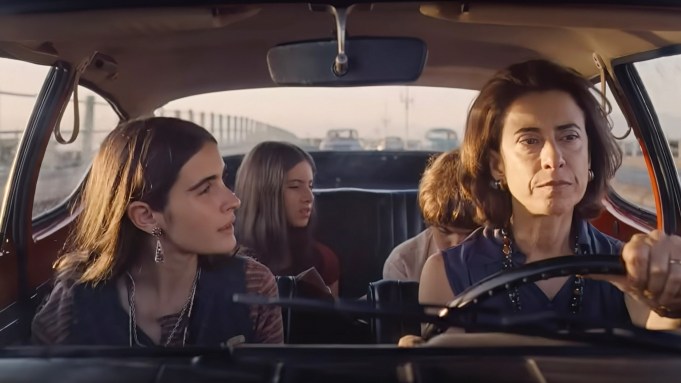
I’m Still Here (Ainda Estou Aqui )

When one thinks of a Brazilian film, one would think of a film that may have scenes of the carnival, the festivities or the beaches. I’m Still Here is a very different film as it presents a dark side of Brazil’s history that they’re still troubled by today. Even the angle from which the film tells its story is unique. We have heard of people kidnapped during political regimes but we rarely hear about how it affects families. It’s through Eunice Paiva that we see how sometimes being married to an enemy to a regime could lead one to being imprisoned. Through Paiva we also see her as she struggles to keep her family together, struggles hiding the truth from her youngest children, struggles with her relationship with her youngest daughter and struggle to get the answers she needs of what happened to her husband. Eunice’s story of being the wife of a kidnapped man really tells a lot. It also shows how it would shape her to be the social justice warrior she became.

The film begins with a beach trip with the Paiva family. Everyone has fun, they all pose together for a photo and Marcelo found a stray dog they can make their own. It’s after that when everything changes. Soon the interrogation of Rubens, Eunice and their daughter, Eunice’s days of imprisonment and the years of aftermath not knowing whether her husband will return alive or if she will be kidnapped again. Then the long wait hoping Reubens will return and the fear of spies outside her door hoping to get her and imprison her again. It’s after the dog Pimpao is run over by the spies’ car that she lashes out at them and she’s had enough. Soon, her desire to leave Rio and start a new life for her and her family in Sao Paulo. The film moves forward to 1996 where Eunice has become a social justice advocate in Brazil, which had returned to democracy in 1989. She shows the death certificate of her husband she achieved. Her family has changed. Especially son Marcelo who became a successful author, despite being confined to a wheelchair. The film ends in 2014, years before Eunice would die of symptoms of Alzheimers. She is connected to a news story about the abductions and the continued pursuit of justice before a family photo.

Looking at it, the film is as much about family unity as it is about injustice in Brazil. Eunice had the nice orderly happy family life before the political abductions happened but that all changed after the imprisonment of the three. Trying to hide the truth of what happened to her father and deal with her older daughters’ knowledge of what happened is not an easy task. Trying to get the answers to what happened to her husband during a political regime that refuses to do so and trying to raise a family is a hard task. That’s one thing we rarely think about. We hear of political abductions in the news but we hardly ever hear of how families cope and try to keep themselves together. It’s through Eunice we see a personal strength we often ignore. You can understand why the family photo at the end of the film was so important. She succeeded in keeping the family ties together as much as she succeeded in achieving justice. The effect on children is also noticed in the film as her daughters fear the worst and are frequently arguing with Eunice. They’re the children with the most truth of what happened. Also the scene in 1996 when Marcelo and Maria, the two youngest, ask each other when they knew their father died, even as Eunice tried to hide the truth.

This is an excellent work from director Walter Salles. He’s one of the most acclaimed Brazilian directors with films like Central Station, The Motorcycle Diaries, Paris je t’aime and the adaptation of On The Road. This film is an excellent accomplishment of telling a dark story and making it a personal story. Even having it end on a positive note is an achievement. With the script written by Murilo Hauser and Heitor Lorega adapted from the novel written by Eunice’s son Marcelo, he takes the story and makes it relatable even though most of us will never experience something this terrible. He makes us connect with Eunice Paiva’s story and tells it so most of us who don’t know Brazil’s history know of the amazing woman Eunice Paiva was.

Making the film work is actress Fernanda Torres. She succeeds in telling Eunice’s story and makes us feel for Eunice and hope for the best. She did a great job, as did her mother Fernanda Montenegro who plays the dying Eunice at the end. Selton Mello was also great as the husband who still tries to live his life daily knowing he could be a political target any minute and eventually becomes one. The cinematography by Adrian Teijido added to the telling of Eunice’s story.

I’m Still Here is both the retelling of a dark era of Brazil’s history and the personal strength that came out of a kidnapped politician’s wife. It’s a sad story, but positive and hopeful.

Nickel Boys

Let’s face it. A film about a reform school that is infamous for its racism, physical and sexual abuse, and even murder of minors will not make one want to watch it. In fact, Nickel Academy is the pseudonym for the now-closed Dozier School For Boys in Florida where graves of those killed were discovered and survivors are now receiving their justice. Those that have learned of the ugly news of Dozier of recent years will want to avoid seeing Nickel Boys, but it does give people reason to see it.

When it comes down to it, what happened at Dozier School should serve as something that should never happen again. What happened there needs to be told, but how? How can you make a place of abuse and murder watchable? RaMell Ross succeeds in doing it with the character of Elwood Curtis. The film flashes frequently in between Elwood’s time at the school to the adult Elwood who just learns of the truths unraveled in 2003 as he’s a successful businessman with a stable relationship. The film tells Elwood’s story as it starts before Martin Luther King’s civil rights movement and Florida still having Jim Crow laws. The film shows how as we fast forward 40 years later, Elwood is overcome with hurt and trauma as the secrets are unraveled with the finding of mass graves. In the flashback, we see Elwood bond with one of the boys named Turner he’s with and the two plan an escape while Elwood documents all that has happened in a diary. The escape fails for Elwood as he’s shot dead while Turner succeeds in escaping around the time of the Civil Rights Movement. In the flash forward, Turner adopted Elwood’s name to thank him for all he taught him.

Elwood and Turner are fictional characters, but they could be representative of any of the boys at Dozier School. It’s through Elwood’s and Turner’s friendship at Nickel that we’re shown of the corruption, abuse of various kinds and the murders that happened there. Through Nickel Academy, Dozier School was as much about racism as it was about abuse. White students got better facilities and a better education while the black students got bad facilities, a bad education, the most hazardous jobs, and even harmful punishments like the sweatbox. African American students got it harder and their death rate at the school was way bigger than that of white students. Even black students who didn’t do what the white superintendent says, like fix a boxing match, could be executed and the superintendent would never get arrested. You can understand why the story has Turner’s escape around the time of the Civil Rights Movement. It would be the beginning of the end for Nickel/Dozier.

This is a great work from RaMell Ross. The story he directs is based upon a 2019 novel of the same title that is the telling of that fictional friendship. The story he co-adapts with Joslyn Barnes is very good and very revealing. He succeeds in making a film about the abuse that is watchable and gets one to think. It’s a reminder of the ghosts of the past and how even if we do well in the present, it will come back to haunt us. Even as the guilty people are slowly brought to justice, we’re reminded it can’t erase the hurt and trauma. He does a good job in making it as much a story about two friends as it is about exposing the truth. Excellent work. Also great is the acting of Ethan Herisse and Brandon Wilson. Their performance as the friends caught in the drama did as much storytelling about the place as it did about them. Daveed Diggs is also very good as the adult Elwood who tries to hide his hurts of the past, but they eventually come out. Also great is the performance of Aunjanue Ellis-Taylor playing the grandmother who is hoping for the best for Elwood and tries with every chance and opportunity, only for every white ‘helper’ to fail her. Her mix of optimism and heartbreak adds to the story.

Nickel Boys succeeds in making what could be a film of unwatchable subject matter be watchable. The mix of a story of a friendship around a school with a notorious past exposes truths of the school while maintaining a sense of hope.

And that does it for now. That’s my review of the latest two Best Picture nominees of review. The last two will be coming very shortly.
VIFF 2019 Review: Pain And Glory (Dolor y gloria)

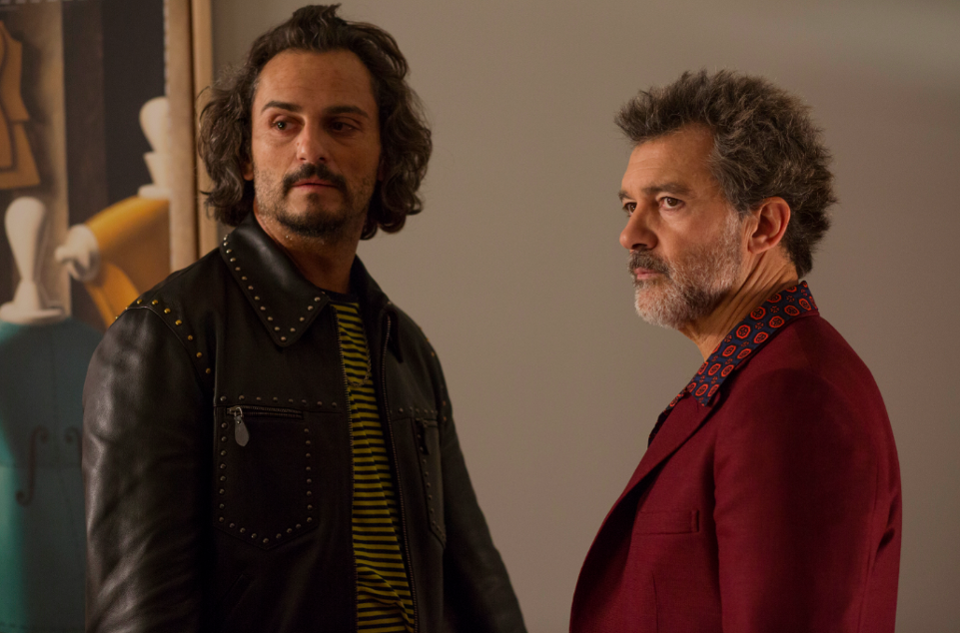
Pain And Glory
A film director, played by Antonio Banderas (right), seeks to get back his creative inspiration despite his failing health in Pain And Glory.

It’s to be expected that Pain And Glory would get a huge turnout at the VIFF. Pedro Almodovar is a darling of the arthouse film world. The buzz is this time, he’s reuniting with Antonio Banderas for the first time in over 30 years. Is it worth the hype?

The film is told by the first-person view of film director Salvador Mallo. Salvador is in a pool meditating alone. He has had open-heart surgery in the past. He’s had issues involving both his family and his sexuality in his past. He became renowned through his breakthrough film Sabor– a still beloved in its current remastering — but considers every film since to be a failure. He’s also had issues with back pain and other medical issues. All of this has caused a struggle to get inspired again with filming. He knows he has to, but he can’t. Not even as his landmark film Sabor (‘flavor’ in Spanish) has been remastered and re-released.

Over time, he learns he has to make peace with his past. He first reflects back to his childhood. His mother was the biggest influence in his life. As a child, he was a dreamer and his mother always fancied him to be one. He did great in academic studies, but he had a love for singing and a special love for movie stars. He was sent over to a convent school; something that was of great expense to his mother. However he also reflects to the last days he was with his mother. He was so consumed with his filmwork and his writing, he was negligent to his ailing mother. He did however promise he would take her back to the countryside where she could spend her last days, but she died before he could.

As his film Sabor is being re-released and even shown to film enthusiast, he reunites with Alberto Crespo, the lead actor of the film. Mallo hasn’t spoken to Crespo in 30 years because of his perceived ‘bad’ performance in the film. Crespo is not happy to see him, but gets Mallo into smoking heroin. During his heroin-smoking, he’s able to recount some of his memories. One is of the time in his childhood when his parents had to move into a whitewashed cave house because of how poor they were. The mother hired a laborer to repaint the inside. As part of the deal, Salvador is to teach the illiterate laborer how to read and write.

Another flashback of past memories comes during a Q&A during a screening of Sabor. Mallo, at Crespo’s house at the time, is too down to attend, but corresponds with the crowd through Crespo’s phone. Crespo is able to tell the crowd of some of the wonderful memories of the 80’s and talks of Federico: Mallo’s boyfriend at the time. Federico is in the crowd and responds. That infuriates Mallo and he responds to Crespo violently. It just reminds him it’s another past memory he has to come to terms with. Mallo loved Federico and the two were almost inseparable, but Federico had a bad drug addiction at the time and Mallo had to end the relationship. The heroin abuse Mallo is addicted to is very similar to the struggle Federico went through during their time together. Eventually Federico and Mallo reconcile during a dinner. He learns Federico has sobered up since, moved to Buenos Aires, married a woman and fathered three children.

Over time, Mallo needs to recover from his own drug addiction and have further check-ups on his throat which causes him to choke for no reason. He knows his time is very limited, or feels strongly that it is. His assistant gives him tickets to an opening to an art gallery. Over at the opening, Salvador notices a drawing of a boy sitting with a book. That drawing isn’t any child. It’s Salvador! It then reminds him of the time in Salvador’s childhood the laborer was drawing a picture of Salvador sitting with a book as a thank-you gift. Only his mother would later hide the drawing without Salvador’s knowledge. After the laborer finished, he needed to bathe. Salvador left to lie down in the bed from all the heat, but woke up to get the man a towel. When he saw the laborer naked, Salvador had a look of delightful surprise and fainted. The laborer thought Salvador fainted of heat stroke.

Soon Salvador is able to buy the drawing and he sees the thank-you message from the laborer on the back. His assistant recommends Salvador to find the laborer through a Google search, but Salvador feels it’s not worth the bother. Soon Salvador does go for the surgery to get the growth removed from his throat. The film goes to a scene to Salvador’s childhood of him with his mother waiting for a train during a village fiesta and watching the fireworks in awe. Only it’s not a flashback. It’s a scene from a film Salvador is directing about his past life. His desire to film has returned again!

When one watches the film, one can easily wonder if this is a film meant to be autobiographical of Almodovar himself? The life of Salvador does seem to mirror Almodovar’s own life in many ways. Pedro himself fell in love with films and movie stars as a child He was sent to a religious school as a boy in hopes of becoming a priest and was abused. Pablo is openly gay, and of course became a renowned film maker. Even the falling out between Salvador and Crespo is actually symbolic of the falling out between Almodovar and Banderas. However there are a lot of differences between Salvador and Pedro. Salvador appears to be born around 1960 while Pedro was born in 1949. Salvador is an only child raised by a mother and father who’s rarely there while Pedro was one of four raised by both parents; his father being alcoholic. Salvador appears to have had one masterpiece film while Pedro has had decades of masterpiece films. Also while Salvador appeared to lack inspiration and the drive to make films after illness and physical setbacks, Almodovar appeared to continue well.

Nevertheless it still gets one thinking. The film got me thinking does Almodovar see Women On The Verge Of A Nervous Breakdown, his breakthrough film outside of Spain, to be garbage or the bane of his existence to him? Artsy types are so full of self-loathing! Also I have not been too familiar with Almodovar’s health problems. I have not known of any health problems happening to Almodovar. If there are any problems, they have not been made too public. Almodovar has made his back problem open recently, but did he ever have that throat problem? And the drug addiction. I know addiction is common in Almodovar films, but I haven’t heard of Almodovar addicted to heroin smoking.

This film may not be the best film Pedro Almodovar has done, but it has to be his most personal. There are a lot of similarities between Salvador and Pedro. There are also some that become questioning. Was Almodovar ever hooked on heroin? Is Almodovar envisioning what he could have been if he were a one-hit-film-wonder? One thing about Almodovar’s films is that he doesn’t just tell a story. He creates a lot of moods and images as if he’s paining a cinematic portrait. He tries to get us to feel the characters, feel the moments, feel the emotions. He has the ability to romanticize even the most bizarre moments. Even a man who impregnates a comatose woman (in 2002’s Talk To Her). This film is no exception. He helps us see the story through the eyes of Salvador in both his flashbacks and of the present moment, and romanticizes it. This is another accomplishment for Almodovar. It’s no wonder he’s become a film festival darling.

The funny thing of the film is that the flashbacks of Salvador’s childhood appear to be flashbacks. However it’s at the end that we learn that the flashbacks of his childhood we see are the flashbacks intended for Salvador’s new film. Filming within a film. That should have been apparent when there was Penelope playing the younger version of the mother in the flashbacks while the older mother had blue or green eyes. It made you wonder how did that happen? Now you know at the end.

The film also marks a great return to Almodovar collaborating with Antonio Banderas. Those of us in North America remember how he became a huge movie star in the 1990’s. What many did not know is that it was through Almodovar’s films that Banderas had his breakthrough. I still remember how he played a husband in Women On The Verge Of A Nervous Breakdown. Banderas actually acted in five of Almodovar’s film before breaking into the US upon the release of Mambo Kings. It appears like both made the other’s success. Here they reconnect and Banderas delivers what could be his most intimate, if not his best, acting performance ever. He does an excellent job of adding dimension to the character of the filmmaker in all of his joys, his hurts and his passions. Also Banderas isn’t afraid to show the surgery scars from his own open-heart surgery here.

Asier Exteandia is also good at the actor Crespo who is able to make peace with him, albeit turbulently. Also a delight to watch is Asier Flores as young Salvador. He added to the light-hearted parts of the film and even added some comedy too. The score from Alberto Iglesias helps dd to the feel to the film. Iglesias has contributed to the scores of many of Almodovar’s films and he does a great job of it again here.

The film could do well at this year’s Oscars. For the Cannes Film Festival, it was nominated for the Palme d’Or and won Best Actor for Banderas and Best Soundtrack for Iglesias. The International Cinephile Society gave the Prix Du Jury award to Almodovar and the Best Actor award to Banderas, and Banderas also won Best Actor at this year’s Hollywood Film Awards. This film is also Spain’s official submission to the Oscar category of Best International Feature Film; the seventh Almodovar film to be Spain’s official entry in this category.

I wouldn’t say Pain And Glory is worth the hype, but it is a very unique story. It almost autobiographical in some ways. Even if it’s not completely autobiographical, it makes a good story all its own.