VIFF 2016 Review: Harold And Lillian: A Hollywood Love Story

harold-lillian
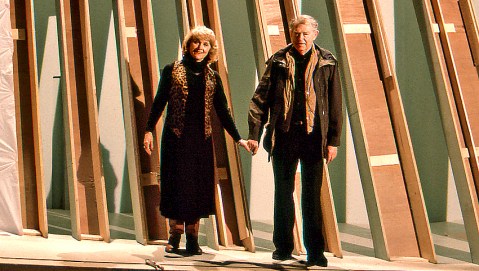
Film researcher Lillian Michelson and storyboard artist/set designer Harold Michelson are the subject of the documentary Harold And Lillian: A Hollywood Love Story.

Yes, we know too much about Hollywood couples. Harold and Lillian Michelson are a couple that won’t come to most people’s minds. Nevertheless they’re worth knowing in Harold And Lillian: A Hollywood Love Story.

Harold and Lilian Michelson were a power couple in Hollywood, but a couple the masses never knew. Those in Hollywood not only knew them, they wanted them for their movies. Harold was a storyboard artist who drew the images for most of Hollywood’s best movies from the 50’s, 60’s and 70’s continuing into the 80’s.The start of his legend began with The Ten Commandments and led to even bigger films like Ben-Hur, The Apartment, Cleopatra, The Birds, Who’s Afraid Of Virginia Woolf, The Graduate, Catch-22, Fiddler On The Roof, Hair, Spaceballs, and ending with 2003’s Duplex. Harold was also a set designer for Star Trek: The Movie (for which he received his first of two Oscar nominations), Terms Of Endearment, Spaceballs and Dick Tracy.

Lillian Michelson was a film researcher. Her research helped contribute to films like Fiddler On The Roof1941, Reds, Scarface and Rain Man to name a few. Her research was very intense as she would go searching about all information related to the place and time of the story including as far as what people would wear in a certain time. One example of how far she’d go for her research: Lillian even interviewed an actual drug lord from Colombia for Scarface. She was that fearless. She even owned a library full of research materials for films she worked on: a library she would constantly have to fight for a space to have it all kept.

Harold and Lillian were also a dedicated couple who kept a solid marriage for 60 years. Harold was well to do but Lillian was raised an orphan. The age gap of 11 years didn’t stop Harold from taking a liking to her and they married in 1947 when Harold was 28 and Lillian was 17. Harold decided to pursue life as a storyboard artist in Hollywood after returning from the war. An Army Sargent saw the drawings Harold drew of the war and thought he would make an excellent artist. Lillian had nothing really to lose as her first pregnancy cost her a telephone company job; this happened during a time women didn’t have the right to sue for their job back. Lillian would mother three children including an autistic son. Harold was frequently away at work and this caused friction in their marriage. Lillian, bored with motherhood, found an opportunity to become a film researcher and the rest is history. Their marriage was strong and committed and went through the ups and downs until Harold died in 2007. Lillian retired in 2010 and now lives in a Hollywood retirement home.

This documentary is a mix of things. This film mixes the love of Harold and Lillian with their accomplishments in Hollywood. It takes you into what they achieved in film and fits it with the films they were a part of. Sometimes you’re led to think they helped make the film’s greatness. The film tells of the times where they were getting their start in the business: Harold having to spend time as an apprentice in the Hollywood system before his rise and Lillian chasing an opportunity because of the limited chances for women at the time. This film also tells the stories of their own lives where they had to both play spouse and parent, including a parent to an autistic son. We also see how Harold would take his storyboard illustration style he used for his Hollywood books and include it in his own personal diary of his marriage and family life in all its triumphs and struggles.

It’s interesting how when you watch this film, you learn how much these two are responsible for some of the best films to come out of Hollywood. You’d be shocked to see how many films Harold was a storyboard illustrator for: Ben-Hur, The Graduate, The Birds, Cleopatra, Fiddle On The Roof, Who’s Afraid Of Virginia Woolf, etc. You often feel he helped make that era of Hollywood. Learning about all the films Lillian did research for starting with Fiddler On The Roof, and most notably Scarface and Rain Man, you not only develop an appreciation for her too but her profession. The words of gratitude from such big names like Danny De Vito, Mel Brooks and Francis Ford Coppola leave you convinced they may have been the best ever. Even learning about all the research materials she had and continuously fought have a space for, you feel it deserves its own permanent library.

Kudos to Danial Raim for making a very intriguing, very entertaining documentary. This is the third documentary he directed, wrote, edited, produced and cinematographed. This documentary finally exposes Hollywood’s best kept secret in both the films they made and the love they had. However I will admit there are some areas where I felt the editing could have been done better. Most of the time, it goes from the story to the movie they created to the people they worked with in the right order. Nevertheless there are times when the order doesn’t seem to go right. Rare in the film but noticeable. I personally feel this would be a good film to release at the box office. However I’m a person who’s interested in some of the stories of Hollywood movies past. It’s hard to know what exactly makes for a documentary that has what it takes for a box office release. Even those nominated for the Oscars and win don’t exactly explain it all. I think this documentary is best for channels like B.C.’s Knowledge Network or TCM.

Harold And Lillian: A Hollywood Love Story is more than just a story about a Hollywood couple. It’s also a film that gets you understanding their behind-the-scenes jobs and leaves you thinking they were the best ever in their professions.
Movie Review: Star Trek Beyond

STAR TREK BEYOND
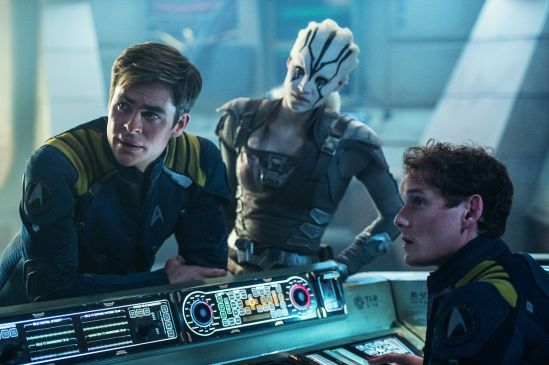
Star Trek Beyond is the third installment of the revamped Star Trek series.

I was originally planning on saving my review for Star Trek Beyond for a summer movie summary on science fiction movies outside of superhero movies. That was not to be the case as most of the top sci-fi movies were superhero movies. Nevertheless Star Trek Beyond is a movie worth reviewing by itself.

For the third of four movies of the revamped Star Trek series, the writers and director Justin Lin had to deal with making a 2-hour movie that is a continuation of the series while leading to an ending setting up for the fourth and final movie, which currently has no set year of release right now. The trick is trying to make the right choices of what to include, whether it be pieces from the original television series of the 60’s or of movies of the past, and create the right third-movie.

One thing about this installment is that the focus is more about exploring new worlds which is what Star Trek is all about. However it’s also about friction as smaller ships ambush and wreck the USS Enterprise. Even the threat of an intergalactic race in another galaxy under a tyrannous villain adds to the drama this time. This is a case of a fresh story for the Star Trek franchise while trying to maintain the same spirit of the whole Star Trek series.

I mentioned back in my review of superhero movies that despite the action scenes, morals and values are essential for a superhero movie. Morals and values are also essential for a movie like Star Trek as well. The Starship voyage continues in its quest to discover new intergalactic worlds and develop ties between the life forms. The value of doing what’s right is present in this Star Trek movie as Kirk is about to go on a rescue mission that might endanger his life. He responds by saying; “I would rather die saving lives than live knowing that I took them.”

The movie sometimes seems like it wants to be a sweet farewell to Leonard Nimoy. It’s evident in the story as Spock receives news that Lieutenant Spock has died. Reminders pop up in the story line as Spock plans to leave the Starship to carry on the Lieutenant’s duties and even a sentimental scene near the end. I don’t think it did any wrong moves in doing so. Memorializing an actor, especially if they had such a memorable role in their lifetime, is never an easy thing. There are some times in retrospect I felt there were some wrong moves in memorializing Paul Walker in Furious 7 like the farewell image of his character played by his look-alike brother. However I feel they did it right here, including the toast ‘to absent friends.’ Even at the end the movie is dedicated ‘In Loving Memory’ of Nimoy.

yelchin
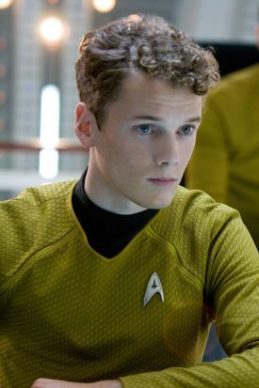
The film makers of the fourth and final revamped Star Trek film decided to drop the character of Chekov in respect to the late  Anton Yelchin.

Unexpected was the death of Anton Yelchin who played Chekov in the three revamped Star Trek films. He was a gifted actor capable of doing an excellent job in each role he played. In Star Trek, he delivered a Chekov that was half the age of the original Chekov but made it work on screen. He even added some charming humor to the movie series with lines like “Nine-Five-Wictor-Wictor-Two” or “I can do zat! I can do zat!” Unfortunately he was killed an a car accident one month before the film’s premiere. He was 27. The film didn’t make any major last-minute changes in editing or storyline upon news of his death but he is memorialized after Nimoy’s dedication with ‘For Anton.’

New to directing the Star Trek series is Justin Lin. He’s best known as the director of four Fast And The Furious movies. With his first attempt at directing Star Trek, he does a very good job in maintaining the spirit of the Star Trek franchise along with delivering the right storyline and right action to the movie. For the record, J. J. Abrams is producer this time. The script written by Simon Pegg who plays Scotty and Doug Jung who’s past work is mostly writing for television is consistent with the story and the spirit of Star Trek despite it being short on the expected action. All the returning actors still maintain their respective characters well. One thing noticeable is Chekov has more of a presence and he doesn’t deliver so many humorous lines this time. Another new addition is Idris Elba doing an excellent convincing role as the villain Krall. Visual effects were still good even if they weren’t the most spectacular. Also the addition of the Beastie Boys song ‘Sabotage’ got me thinking again to how Guardians Of The Galaxy and The Martian has made it a must to include musical moments in such movies.

The big surprise is the lack of box office success that came with this film. The film currently has a North American gross of over $157 million and a total worldwide gross of over $333 million. Since it cost $180 million to make, it’s labeled a ‘flop,’ especially knowing the first two revamped Star Trek movies starting back in 2009 both made over $200 million. People are wondering why? The film has an approval rating at Rotten Tomatoes of over 80% and there was expected to be big fare since this year is the 50th anniversary of the Star Trek franchise starting all the way back with the TV series. Some are saying Yelchin’s sudden death may have a lot to do with it, like it ‘spoiled the fun.’ It’s wrong to make such an accusation. Nobody saw his death coming. Not even Anton himself, if you’ve bothered to read the news about it. Some are saying the story lacks excitement. Possibly but it still has a lot of ingredients win crowds and Star Trek fans alike. Hard to say exactly. My assumption is that simply this is the third movie, not the first and not the last. Plus it faced competition from a wide variety of other movies this summer. I feel that the final movie can achieve more at the box office because it will be the final movie of a revamped film series that worked rather than flopped.

Star Trek Beyond may not be as action-packed as most of the other summer fare out right now or even past Star Trek films but it is a movie that delivers on the Star Trek franchise and stays true to its spirit. It even paves way to the fourth and final Star Trek movie to come.