
VIFF 2025 Review: Death Does Not Exist (La mort n’existe pas)

Activist Helene is given a second chance in her life after a failed heist in Death Does Not Exist.

The only feature-length animated film I saw at this year’s VIFF is the Canadian French-language film Death Does Not Exist. It is not your typical animated film as it defies expectation.

Helene is part of a group of young radical climate activists. They have the goal of attacking a rich family and brought guns along to make their message heard and to encourage others to follow their act. The attack becomes full-fledged a hail of gunfire on between both the radicals and the family’s bodyguards follow. People on all sides are killed. Helene’s colleagues, the rich family members, the bodyguards, no one is safe. Just as Helene appears to be the only one of the radicals who survives, she runs off into a forest and is completely lost.

The forest she runs into, which is immediately outside the mansion, is treacherous and wild wolves chase her. Lost in the woods, she comes across many wild creatures. The ground is covered with red leaves, resembling the blood of her comrades. In the woods, she comes across wolves chasing after sheep. She senses it’s telling her a message about herself. As she runs away, she falls and knocks herself unconscious.

As she wakes up, she comes across a childhood version of herself. It’s possible she can start a new life. However, she finds Manon: one of her activist comrades who was gunned down. How is she not dead? As Manon makes meat of a rabbit she killed, she makes Helene confront her own cowardice for leaving them all behind to die. She may be unhappy with Helene leaving them behind, but she offers a second chance.

The moment reoccurs again. Helene’s activist group and the rich family are all alive as if the massacre never happened. Will things change? Again, the massacre blows up and all of Helene’s comrades are gunned down. Again, few from the rich family in the golden mansion survive. The grandmother from the wheelchair, the survivor of the rich family Helene noticed most, survives again.

Instead of running into the woods, Helene goes into the mansion. Will shooting the woman be what she needs to do? It is there that the mansion becomes a forest or jungle of its own with the animals themselves also resembling characters of Helene. Helene soon confronts the grandmother in the wheelchair and has a message to give to her that stuns her. Soon after, Helene confronts an older version of herself and received messages from her. She then moves into images of the future, including one of the mansion being swallowed by the ground and flowers growing where it once stood. The film ends with message Manon delivers at the end.

The film does have a message. It’s that we’ve always lived in a world full of opposites, especially in terms of beliefs and convictions. It’s just now people on either side don’t talk. They just promote their belief and vilify those that believe otherwise. The massacre at the beginning is symbolic of such a situation as incidents that have happened in the past and what could happen in the future if we’re not careful. The world may be in crisis right now, but violence is simply making things worse.

Often the point of this film is that you should stand for what’s right but be cautious about your own actions at the same time. With Helene as the central character, it’s Helene’s consciousness that needs to be examined and exposed to her as she runs away. She’s exposed to her moral weaknesses and what she failed to become, but she also is shown enlightened images of what could happen, if she gets a second chance.

The film does a good job of being picturesque and telling in its imagery. Its images do catch your eye and can captivate the audience, but it can also lead them astray as they watch the story. Often there’s too much imagery happening and it doesn’t always make sense of whether the film is trying to tell a story or dazzle the viewer. Often, the audience can be led astray and become confused of what the whole message is. It does have a lot to say in both dialogue and imagery. It just doesn’t do it in too orderly of a fashion.

This is a good feature-length film directed by Felix Dufour-Laperriere. He’s had over 20 years of experience directing and producing animated film with 2021’s Archipelago being his biggest. Here, he creates a film that is so full of imagery, it took four years to complete. A lot of the imagery works in telling the story, while a lot of it can also lead the viewer astray. It is well done, but its imperfections are noticeable. Zeneb Blanchet does an excellent job in voicing Helene. She is good at capturing Helene’s confusions and insecurities well. She’s also great at making the character of Helene one of the best qualities of the film.

Death Does Not Exist is a slow and confusing animated film, but it’s also very picturesque. It deals with a deep subject matter and a deep message and allows the audience an escape to the beyond as images most tell its intended message.
VIFF 2016 Review: 1:54

154
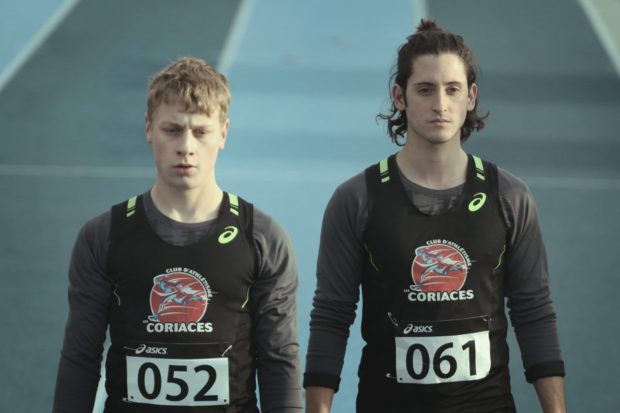
Antoine-Olivier Pilon (left) plays a gay teen who wants to settle a score with his bully (Lou-Pascal Trembley; right) in a track meet in 1:54.

As I’ve said countless times, Quebec is the leader in Canadian cinema. 1:54 is one of the latest to come from la belle provence and this is not your typical teen story.

The film begins with 16 year-old Tim returning to high school. The first back-to-school moment comes from Jeff, who has taunted him since the age of 12, throwing food at him and later posting the video of it on YouTube. It’s not easy for Tim to make new friends. He’s a gifted student who’s great at chemistry but it doesn’t attract too much appreciation despite the chemistry teacher’s encouragement. Life at home is difficult for Tim as he has been distant with his father since his mother died four years ago.

If there’s one escape from Tim’s problems, it’s with his friend Francis. He’s able to share Francis his second-biggest secret: he’s able to create a bomb. However Tim’s unable to share with Francis his biggest secret that he’s gay and attracted to Francis. Francis has been developing more security in being gay himself but that all changes after Jeff bullied Francis into admitting he’s gay. It upsets him to the point he jumps off a bridge, right in front of Tim.

Francis’ death affects Tim into questioning why he was always embarrassed about his sexuality. And right while a girl named Jen is taking an interest in him. Tim wants to get even with Jeff. Sure, he’s become friends with Jen who actually rejected a pass from him months ago. Tim actually decides the best way to get even is to get him where it hurts: in running. Jeff is a stellar half-miler who dreams of of making the National Championships. Tim was also a talented runner who even rivaled Jeff in the 800m at aged 12 but quit just after his mother’s death. Through the encouragement of a coach who knew him back then, Tim returns to running and to be the one qualifying for the Nationals instead of Jeff.

Finally we see a more positive side from Tim as he has something to chase. However it’s not without its troubles. Jeff still bullies him questioning his sexuality and it bothers Tim into making Jen look like his girlfriend in front of everyone, much to Jen’s discomfort. Tim is still distant with his father and has even kept his return to running a secret even from him. On top of that, Tim goes to a party where he receives a fellatio from another male and Jeff has it on videocamera.

Jeff thinks he can use the video to threaten Tim’s goals of beating him and it works, but temporarily as Tim resumes running with top-secret training drills from his coach and Jen as his training partner. The running goals even rekindle the closeness between Tim and his father as he’s back to supporting Tim in his running and delighted to see Tim happy again.

At the Provincial Championships, Jeff and Tim run separate heats and they both qualify for the finals both with the fastest times of the heats and only .02 seconds between them. This sets up for excitement for the final as the winner qualifies for the nationals. At the second turn, Jeff notices Tim in front of him and tells him to look to his friend. Standing by the side is the friend with the video waiting to download it. Tim is undeterred but before the final turn, the friend downloads the video right with Tim watching. The trick works. Tim slows down in embarrassment with Jeff coming through to win.

While Jeff is celebrating his win, the whole school’s track team gets the video on their phones. No doubt Tim is humiliated. There’s no way out. Even his father finds out. The father may be shocked to learn Tim is gay but he promises to be supportive of him. Despite Tim’s father, Jen and the coach trying to be supportive, Tim feels there’s no way out. Not while the video’s on YouTube and all over social media where Tim constantly gets taunted by everyone at school, including Jeff. Tim decides there’s only one way to end this all and it’s at Jeff’s celebration party at a night club. Tim decides it’s the perfect place to set off the bomb he showed Francis. The story leads into a heavily climactic ending that’s a surprise to all.

No doubt this film is full of topics. It’s about teen peer pressure, teen sexuality, depression, teen violence, teen competitiveness, but most noticeably bullying. A lot packed into one film. Yan England has even mentioned that he hopes this film stimulates a lot of discussion of the topics. No doubt it’s worth talking about.

It’s definitely a film that can bring back bad memories of high school to many. Especially me. I struggled with learning disabilities which were also behavioral disabilities. The behavior I displayed in a lot of cases would be cause for fellow teens to easily single me out. It doesn’t upset me as much but I’m still not happy about my past. In fact years ago, one person got on the topic of bullying and asked those in her conversation, including me, if we were bullied. I responded: “I was a bully’s delight,” with a smile of disgust. The craziest thing about the film is that it brought back a lot of the anger and frustration I had when I was a teen. Memories I thought I resolved those many years ago. What can I say? All I can say is high school never changes. Teens still think that mocking others different from the will make them look cool. Problem is it does make them look cool in front of their peers. I like the end when Jeff tells the police of the video: “It was a joke.” That common response from teens: “It was a joke.” They think it’s that easy to get off.

The frustrations Tim goes through are a lot of frustrations teens go through. Being bullied by someone for years can be a frustration one can have. The frustration of learning of one’s homosexuality can definitely be a frustration, especially since many teens are known to respond with hostility. Trying to be someone is a frustration most feel. It’s obvious Tim wanted to be somebody other than Jeff’s victim. Francis’ death made him want to get even with Jeff and he thought he could do it in track. He had what it took. Then the race. This was to be Tim’s chance to get even with Jeff for the many years of bullying and for Antoine’s suicide. Instead it became the creme de la creme of Jeff’s bullying and the biggest humiliation of Tim’s life.

You could easily see and feel Tim’s frustration at that moment. Even with the support of people like his coach, his father and Jen after the incident, it just bothered Tim so much, he snapped. I can easily remember about frustrations I went through as a teen and feeling like my situation was hopeless. It’s easy to forget your parents’ love for you or even support from your friends when this happens. It’s easy to see why Tim would snap and do this.

As for the film itself, this comes across as a conventional story at first and you think you know the ending when you see the track competition. However it’s right there when it becomes a new movie. That’s the best thing about the film: it’s like three films in one. Yan England is taking a lot of unorthodox, if not all that creative, steps in creating a film that’s unpredictable. The victory over Jeff we all hoped for all of a sudden turns into a worse situation for Tim. A surprise to all of us in the audience. That scene at the beginning where Tim shows Francis his bomb seems to be an irrelevant scene as time goes on until the very end. Even the scene at the end when we don’t know what will happen to Tim’s bomb will have you at the edge of your seats. However, I will say if the movie had the right scenes at the end. I’m thinking it could have ended better.

This is a very good first feature-length film for writer/director Yan England. Yan used to be a young actor in Quebec with the teen variety show Watatatow back in the 90’s. He’s moved into directing and writing. In fact his short Henry was nominated for an Academy Award years ago. Here he delivers a film relevant to what’s happening with teens and the subject of bullying. He shows how much bullying has ‘progressed,’ if you can truly call it that, with cybertechnology. He also does a very good job in creating three movies in one.

Antoine-Olivier Pilon delivers again in a character completely different from the one he played in Mommy. Instead of an eccentric, he plays a down-to-earth teen filled with anger and hurt but ambition. He also played the frustration parts in the last part of the film very believably. Another accomplishment for him. Sophie Nelisse was very good on playing the supportive friend. She shows a maturity since Monsieur Lazhar. David Boutin was very good as the father trying to be supportive and Lou-Pascal Tremblay was very convincing as Jeff. You will end up hating him! The techno music score in the film added to both the excitement and the drama.

1:54 is not your typical teen movie. It deals with a lot of serious issues very well, if imperfectly. It has some technical glitches but it does engage the audience and is worth seeing.

Movie Review: Room

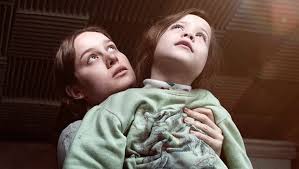
Room is a drama of a mother (Brie Larson) and a son (Jacob Tremblay) bonding in a difficult situation.

I’ll admit I was late in reviving my interest in the movies with Oscar buzz. Room was even at the VIFF and I ignored it thanks to not hitting the website AwardsDaily. However Room was out in November and I finally had my chance.

The film begins with Jack waking up in a room. The room is small and crowded with a television, small kitchen, beds, bathtub and a toilet. There are no windows but there is a skylight in the ceiling. The only other person who lives in this room is a young woman named Joy, his mother. Soon we learn the two are abduction victims held captive in a shed full of escape alarms by a man she calls Old Nick. We also learn that Joy has protected Jack from knowing the truth of the situation and tried to create a world of childhood wonder for him. She even gets him to hide from Old Nick fearing Nick will sexually assault Jack the way she’s been.

Joy has been calm about her abduction situation mostly as Old Nick has kept them both fed well and sheltered well despite his obvious sexual assault on Joy of which Jack was born from. However food, clothing and shelter supplies have been scarcer since Old Nick has been kept out of a job for six months. Joy has attempted to escape before but it failed. This time, she uses Jack where she gets him to fake having a fever. It doesn’t work. The next day she gets Jack to play dead in a rolled-up carpet and to run out of the back of Nick’s truck when he gets to a stop sign en route to ‘burying’ him somewhere. The plan works as Jack is able to get out in a residential area. Jack is rescued but police would have to pursue Old Nick back at the shed where he has Joy hostage temporarily. The two are soon reunited in freedom from Old Nick.

Once free, Jack and Joy are given medical treatment where Joy is reunited with her mother Nancy, stepfather Leo and father Robert. Jack is thanked by Nancy for taking care of Joy.

As the two are starting to embrace their new freedom from captivity, they realize that they are not completely free. There’s the general public that are so dazzled by the story, the media turns this into a circus. There is Joy dealing with her divorced parents and the fact Robert doesn’t want to accept Jack. There’s even Joy returning to her room and unpleasant reminders of her fun carefree life before the abduction. While Jack is embracing his grandmother and stepgrandfather, his new freedom and the whole new world for him that comes with it, Joy can’t handle her situation and she attempts suicide. Jack sends her a piece of his hair in hopes she gets better. Eventually Joy does recover and thanks Jack for giving her reason to live. However there’s one last thing to do.

This is a film based on a novel by a novel by Irish-Canadian author Emma Donoghue released five years ago. Filmmakers hired Emma to write the script for the film. Normally a situation like an abduction of a minor and a child coming from the abduction would make for something unwatchable. I wouldn’t blame any of you for feeling that way. What makes it watchable is that it’s mostly seen from the child’s point of view. Throughout the film we see the world through the eyes of Jack. Him and his sense of wonder at the small world around him as well as his hope for entering the world outside keeps this film from feeling the tense situation around it. I will say that most people would find the child’s sense of awe and wonder in the middle of an abduction would find it bizarre but it’s a creative twist that actually helps the story.

However the film is not without reminders of realities. First is the father who doesn’t want to look at Jack. While Joy sees Jack as his child and Nancy willfully accepts Jack as her grandson, grandfather Robert doesn’t want to accept him. Possibly because he may see Jack as a product of his daughter’s abduction and rape and would naturally be upset by it. Second is the media attention. No doubt the freedom achieved by Jack and Joy is a remarkable story but the media attention that came with it was too much, especially since Joy would just want to get back to her life again. Also just as Joy is getting use to life back at home, she’s reminded of her life before the abduction and of so many things that were cut short because of it.

The highlight of the film is actually the bond between Joy and Jack. No doubt Joy is a victim of her abduction. Her son Jack is where she’s able to forget her problem temporarily and feels like a mother instead of a victim. Plus she loves him back. She could have seen him as a product of her rape and neglected him but instead chooses to be a mother. Seeing her make a birthday cake for him and protect Jack from Old Nick shows how much she means to him. Even after they’re free, they still have a bond: a bond that gives Joy a reason to live after her suicide attempt.

The film I’ll admit is even a reminder of how both children and adults see situations differently. Joy sees the shed as her prison but Jack doesn’t. Joy is doing what she can to keep Jack from seeing this as a traumatizing time for the both of them and creates for him a world of joy, creativity and wonder for Jack. That’s why Jack feels an attachment to the shed to the point he even calls it ‘Room.’ Even the time in freedom is seen in different ways. Jack sees it as a time for new worlds and new explorations. Joy is supposed to see it as her time of the freedom she thought she’d never achieve but there are a lot of things that bother her like a father who doesn’t want to accept Jack and a future that was robbed from her. Even that scene at the end as the two see ‘Room’ one last time shows the difference in how the two feel. Jack willfully says goodbye to it–now a place of the police’s crime scene as is should be– but you can still see the trauma in Joy’s face. However seeing how Joy willfully says goodbye to it upon Jack’s request reminded me that if us adults handled their problems they way children like that do, we’d have much less trauma in our lives.

I will admit that I knew the film was shot in Vancouver. Whenever I see a film that was made in Vancouver, I try to identify the sites and sets in the film with areas of Vancouver I know well. I was able to do so. Even though the film is set in Ohio, it couldn’t fool me!

This film is the North American breakthrough for Irish director Lenny Abrahamson. His direction along with Donoghue’s screenplay adaptation of her own novel is the right mix and delivers a great story. I will admit the story of Room begins on an awkward note as we don’t fully understand the situation. The abduction and Joy’s impregnation of Jack from Old Nick becomes more obvious later on. I feel the two together made the right choices.

Brie Larson was the right pick for Joy. She displayed the right mix of compassion, trauma and frustration. It’s not easy to play a character who’s first a victim of abduction and rape and later adjusting to her freedom but she succeeded in playing Joy Newsome excellently. Just as excellent is Vancouver actor Jacob Tremblay. He was the right fit to play Jack with his naivety, his sense of wonder and his undying love for his mother. Joan Allen, William H. Macy and Tom McCamus were all good as the grandparents. Sean Bridgers was rather limited in his role of Old Nick. Mind you Old Nick wasn’t too be that big of a role anyways.

Room has to be the best film coming out of Vancouver this year. It’s a very unique story that makes what would normally be an unwatchable and even taboo situation very watchable. Even enlightening.