VIFF 2016 Review: Barakah Meets Barakah (بركة يقابل بركة)

barakahmeetsbarakah_04
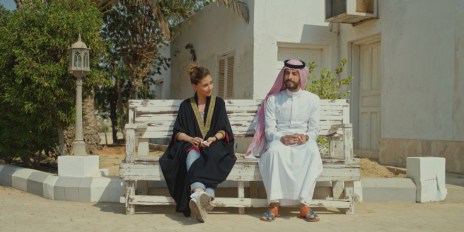
Barakah Meets Barakah is a Saudi film of a man and a woman from separate societies who fall in love.

On opening night of this year’s Vancouver International Film Festival, I had the good fortune to see Barakah Meets Barakah. It is Saudi Arabia’s official entry in the Best Foreign Language Film category for this year’s Oscars and proved to be an enjoyable film.

At the beginning of the film, we meet Barakah: a young man from a section of Jeddah full of tradition and religious values. However Barakah does have a liking for the arts and especially drama as he agrees to perform in a community production of Hamlet. We also meet Bibi: a young woman who’s a local celebrity in the city due to her popularity both on television and in social media where she commonly posts videos of her speaking a message. In fact her mother who adopted her is one of the heads of the network. Both are opposite personalities as Barakah is a civil servant obedient to tradition while Bibi is very liberal both in what she wears on television and what she says in her Instagram videos which feature just her mouth talking. Both however live in a time where religious law is strictly enforced in Saudi Arabia.

The two meet for the first time by a bizarre circumstance. Bibi has a modeling shoot out by the coast where her face, arms and chest are very visible. Barakah is commissioned to stop it because the shoot hasn’t been licensed on the property. However he does eventually compromise. The two later meet again by accident. This time it becomes something despite his dating skills being non-existent.

Despite their feelings for each other, dating would be next to impossible. Barakah lives in area full of common people and Bibi is more the high society of the town. On top of that, there’s the religious police who are very suspicious of unmarried unchaperoned pairs out on a date. There are criminal penalties for that under religious law. Their dates have to be completely secret. Over time, they become a lot more even with the help of Barakah’s friends.

Dating does become difficult as Barakah keeps his love secret from others. Even Bibi faces difficulties as her mother is disapproving. However the mother finds something positive out of this when she visits the townswoman in Barakah’s neighborhood, who plays a mother figure to Barakah, to ‘cure’ her of her infertility. It works as it is announced she will have a baby. Instead of it bringing Barakah and Bibi closer together, it causes more friction.

Eventually it does come to a point when the two do call it quits. They can’t handle it anymore. It’s not until Bibi learns a truth about herself and how her mother appears to treat her as ‘disposable’ that there’s the turning point. The film ends convincing us that it was meant to be after all.

It’s very obvious in this film writer/director Mahmoud Sabbagh has something to say about imposed religious values in Saudi Arabia. It’s not just about it causing a detriment to people’s daily lives but also how it has robbed the people of progress and hope they were anticipating in decades past. As a Catholic, I can understand this belief. I’ve seen how the Church has influenced strict moral laws on the people in a lot of countries in the past and now most people in those countries are sick of the Church. Just ask Ireland. I believe morals and values work better on people when they adopt them themselves rather than have them forced upon them.

Although the film makes Islamic law look more like a problem than a help, he is able to make his statement in a comedic way in this film. Yes, religious law in these countries has resulted in a lot of deaths and unnecessary imprisonments and has even led to a lot of friction and civil unrest. Nevertheless Sabbagh is able to make light of the problem by creating a romance that is both critical of imposed religious law in his country but also able to satirize it too. He satirizes it in the scene where Bibi is taking an Instagram photo of the henna tattoo of her belly by blurring her belly for all of us. He also sends a message when Barakah takes the mini-Koran dangling from his rear-view mirror and replaces it with the thing given to him by Bibi.

The film not only focuses on religious influence in Saudi Arabia but also about the classism there. The separation of the upper class and the common or lower class are commonly shown in films but Sabbagh shows what the gap is like in Saudi Arabia. It’s a common thing in most developing countries for the gap to be that much bigger. No wonder something like that would cause friction in a romance between Barakah and Bibi. Even knowing how her mother calls her Bibi instead of her real name Barakah possibly to hide Bibi’s poor past is there to send the message.

Sabbagh succeeds in delivering a comedy that’s both smart and thought-provoking. He does have a message to deliver but he delivers it in an entertaining way with the right moves and without it being overly preachy. The film has already won a special prize at this year’s Berlin Film Festival. Hisham Fageeh was very good as the common young man Barakah as was Fatima Al-Banawi as the progressive Bibi. There also good supporting performances from the actress playing the local townswoman and the actress playing Bibi’s mother.

Barakah Meets Barakah is a good comedy that will both make you laugh and get you thinking. Also in a time when ISIS has made a lot of bad news, it is welcome comic relief.
VIFF 2016 Review: Tales Of Two Who Dreamt

tales-website
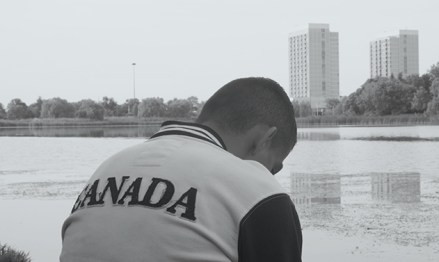
Tales Of Two Who Dreamt document the dreams of a Romani refugee family who dream of immigrating to Canada and hopefully doing a small film.

One thing about the VIFF is that it will show films done by Canadian directors or people close to home. In fact the VIFF credits itself as the film festival that shows the most Canadian films: shorts and feature-length. One example this year of a feature-length Canadian film shown at the VIFF was Tales Of Two Who Dreamt which was a unique documentary.

The film begins with a man, Sandor Laska, telling a story of a boy who turned into bird after a dream. Over time, we the director is planning to make a small film of this story. Even a makeup artists is seen putting a beak on the son Alexander.

What we get is something else. We hear the story of the father and the Laska family. They are refugees living in a tall apartment in Toronto specifically for refugees. They are Romani people from Hungary. They seek refuge in Canada because they are of an oppressed minority and often face discrimination.

As they live in the apartment awaiting approval of their status in Canada, we learn there are many Romani families also seeking refuge. Often they meet together and party together. The children play soccer on the apartment’s field together often with refugee kids from other countries.

Time passes as the family continues to pursue both dreams: the dream of doing the film and the dream of immigrating to Canada. In the end, neither happen. Their immigration case wasn’t approved and they have to return back to Hungary where they really have nothing to return to. The film that was to be made couldn’t be done. The family were deported back before it could be completed.

This film is a good eye opener to the Romani people that seek refuge. They are a people who number in the tens of millions spread across various countries of Europe. They are people whose lifestyle are considered questionable. They are a people who value their cultural roots in music and dance often to the point they neglect working a real job. They live their lives their own way; many of which are illiterate.

The Romanis are seen by the other people in the country as lazy, irresponsible or even the ‘scum of the earth.’ They are often referred to as ‘Bohemians’ or ‘gypsies’: the latter of which they consider to be a slur. They’ve had their discrimination over the decades and centuries. They were even one of the groups of people executed during the holocaust. Discrimination against them still continues today in various European countries. Some countries like Italy have passed anti-Romani laws. Some countries like Hungary let discrimination go freely. You can easily see why a family like the Laskas would try to seek refuge in Canada.

Sometimes when you see the struggle of the Laskas and other Romanis in the apartment as they seek their residency status, you sometimes think this film is about the refugee situation as a whole. What you see the Romanis struggling with is often what you see most refugees struggling with. That tall apartment with nets on the outside put on after the death of a six year-old boy who fell off his 19th floor balcony tells a lot about the place where refugees wait to hear their fates in Canada. At the end, you get thinking that the Laskas didn’t succeed in escaping what they attempted to escape. Sandor talks about how the interpreter didn’t state his case right to the judge and that had to be why his residency status was revoked. Sometimes it makes you sense could the interpreter have an anti-Romani attitude? Did he misinterpret purposefully so that the Laska did fail and then get sent back to Hungary to return to their discrimination? It does get you thinking.

Directors Nicolas Pareda and Andrea Bussmann turn the film into a docudrama. There are times when the film gets ready to film the ‘birdboy’ story, times when they focus on another family who are to be part of the skit, times when they focus on the apartment building as a whole, and times when they focus on the Laskas and their reality. It’s a mix of various shots from family struggles to kids playing to young adults holding a party. The two directors try to piece together the many stories. There are times when scenes are shown with a score of a Romani song sung a capella. There are even times when they include Timea’s scratchy violin-playing as score to a scene in the film. Sometimes it hits, sometimes it misses. There are times when the mixed organization appears to work and then there are times when the film feels disjointed. I think the film aimed to be creative in its documentation during times when it wasn’t supposed to be.

Despite the film’s noticeable imperfections, I would have to say the best thing about this film is that it gave a voice to a people. This was a chance for Romani refugees to tell their story of what they faced and why they came to Canada along with the hopes for their children. The adding in of the ‘birdboy’ story adds color to the film as it is a Romani tale. You can see why the film is called Tales Of Two Who Dreamt. The first dreamer was the ‘birdboy’ and the second dreamer was Sandor Laska. I’ll admit I was disappointed at the end to learn the ‘birdboy’ film was never finished. But it’s something that just happens and you saw why.

Tales Of Two Who Dreamt is a documentary that’s noticeably disjointed in a lot of areas. It is still very valuable as it gives an image of the refugee situation Canada is trying to deal with.

VIFF 2016 Shorts Segment: Teen Trouble

Cinema

One thing about the VIFF is that you will have the opportunity to see shorts films whether it be a short shown before a feature or a segment of shorts assembled together. They pack a lot of entertainment value for something brief in length. The first shorts segment I was lucky to see was Teen Trouble. It consisted of seven different shorts situated in seven different countries all with a teen-related subject and boy were they entertaining:

-I Love Anna (Finland)- 12 year-old Finnish boy Santeri has always had a crush on Anna: the local farm girl. Anna likes Santeri too. One night Anna’s parents are away and she has to look after her little sister. This could be Santeri’s chance to take it to new levels.

The quality of this short is that it takes you into the excitement of the moment as it progresses without any added music score. It adds to the excitement of the moment. Another added quality is it will remind you of when you fell in love for the first time or even of your own sexual curiosities when you were that age.

-Fabrizio’s Initiation (Argentina)- Sexual feelings many years later. Only Fabrizio is now a 15 year-old Argentinian boy who has been in a relationship with Nadia for over a year. Their chances of doing it for the first time are constantly interrupted. However Fabrizio’s friends derive a plan to make it work by conniving the village elder into giving them his car and fixing it up for the moment. Will this finally be it? The film ends with a surprise in more ways than one.

This is a humorous short about the constant pressure of losing your virginity for the right moment and trying to make it right. Hey, it’s not always prom night! It also will remind you of your own teenage love and of all the stuff you tried to do behind your parents’ back.

-The Law Of Moments (UK)- The lessons of Isaac Newton younger sister Mal studies from physics class play into this drama. Mal and Lucy are teen sisters who lost their closeness as older sister Lucy got involved with partying. It’s been of concern to Mal as she sees Lucy and her mother constantly fighting. One night, Mal goes to the farm to see what kind of crowd she’s hanging with. It’s not pleasant at all. Mal goes to help Lucy only for things to end not as it should.

Here we go from comedy to drama. This is a good story that shows the end at the beginning and how it came to be. The addition of Mal’s physics lesson as well as her childhood memory of her and Lucy on the see saw add style to the story line. Very creative.

-Three Minute Warning (UK/Palestine)- This possibly the darkest short of the segment. Palestinian teen girl Miriam has to look after her mother who has a leg problem. It’s a daily thing which includes cooking for her mother and even assisting her to the bathroom and it robs her of the carefree life most teenage girls have. One night a warning bomb– a bomb sent three minutes before the real bomb is to hit its target– hits their apartment. Miriam has to help her mother make the escape while all the others leave them behind. It’s hopeless and it sets up for the heartbreaking ending.

No doubt Palestinian director Iqbal Mohammed has something to say in this short. It was very well-told and will leave you infuriated with the political situation in the Middle East today.

-On The Roof (Spain)- Five Barcelona teen boys love to go to the top of their apartment balcony to spy on sunbathing women during the summer. Bonus points if they’re topless. One day they go to check out a topless sunbather. One boy, Adrian, spots a naked man showering. He also learns something of himself he never knew. One of Adrian’s friends senses his attraction and reacts with hostility. He even senses it on the youngest of the friends and pressures the young boy to take a photo of the bather standing on the top ledge. Adrian stops and volunteers to do it. The end comes with a surprising result but nothing dreadful.

This short focuses on a teen boy’s discovery of his same-sex attraction which catches him by surprise and causes hostility among one of his friends. The short also focuses on teen male machismo which naturally approaches same-sex attraction with hostile discomfort. A reminder of some of the difficulties gay teens go through.

-Winds Of Furnace (Mexico)- A young Mexican teen boy faces a daily responsibility of looking after his grandmother. One day, two of his friends come to his house with a van they stole. The three go out to have fun in their neighborhood. However you know something will go wrong when they take a body found in the van and dispose of it. It’s the case as a van driven by a cartel crosses their paths and shoots one of the friends. This leads to a vicious chase where the boy fires a gun at the cartel. The ending ends with you thinking this is what’s meant to be.

This short didn’t have its subtitles on at the time so it was hard to make sense. However it was a good story of peer pressure taken to the extreme with the potential for dangerous consequences. The heat of the moment left you wondering if he would be killed by the end. I’m sure a lot of boys in Mexico have gone through this temptation. It’s good to see he was possibly the one who didn’t get killed.

-Aeris (Canada)- A young rising teen snowboarder is seen as a possible future great in the sport. However, the 19 year-old suffers a broken leg during competition requiring plates, screws and months of healing. Months later, she goes snowboarding with her friends to see if she still has it and to get her competitive drive back. This proves difficult as she encounters fans on the mountain and even the fear of her broken leg returning if she tries another jump.

This may be the least heavy short of the seven but it does feature a pressure: a personal pressure young rising phenoms in sport know all too well. It makes for a good snowboarding story. It even gets you fearing for her as well as she questions whether to make that big jump.

In summary, all seven shorts were very good and had a lot to say about teen life in the humorous moments, the tense moments and even tragic moments. All definitely gave an image of what it’s like to be young.

Teen Trouble was an impressive selection of shorts. Anyone can be entertained by something in the selection.


VIFF 2016 Shorts Segment: Space And Time

CinemaShorts, shorts, shorts. Lots of them worth seeing at the VIFF. The next segment I saw this year Space And Time which consisted of nine shorts filmed by Canadian directors. They were all different but all shared something in common:

-24:24:24 dir. Daniel Dietzel- This is a film shot on a Montreal street corner facing the CCSE Maisonneuve over a 24-hour time period. What makes it amusing is that it shows the same corner with images of various hours at once. Sometimes all 24 simultaneously. The splitting of the various footage images in its sections along with the sounds mixed in will definitely make you curious during the whole thirteen minutes. The images of time and seeing the images of the Maisonneuve and the tower of the Olympic Stadium add to its charm. It’s surprisingly pleasant and enjoyable to watch. Quite the kaleidoscope.

-By The Pool dir. Karine Belanger- The film begins at an outdoor pool as a worker cleans the pool out in the spring just before it opens. He finds a small fish. Throughout the film, there are images of people doing aquarobics, swimming laps, swimming and playing, going off the diving board, late-night lifeguard parties and even a pool emergency. As summer ends, the diving board gets taken down and the pool gets drained. The man cleaning the drained pool finds a big fish! Funny how a film simply showing the summer of an outdoor pool can be amusing.

-Ranger dir. Sandra Ignagni- It’s a boat trip from a town in Labrador to an Arctic town. The long trip on the M. V. Norther Ranger is documented from boarding for deoarture to arrival. It focuses on everything from passengers to the captain directing to crewmen working to the waters it travels to passengers sleeping overnight to its arrival. It makes for a good simple unnarrated documentary film that tells a lot.

-Last Night dir. Joel Salaysay- Sarah is woken up by a phone call by her friend Jamie and tells her to come over. However the calls become more frightening over time as Jamie calls her back and doesn’t know where she is. Jamoe sounds like she’s lost or has lost her memory. As Sarah tries to get help, she tries to keep connection with Jamie. This is a good short as it keeps the audience intrigued not knowing what will happen next and hoping for the best for Jamie and Sarah.

-Late Night Drama dir. Patrice Laliberte- A young thug is in pursuit with a man he’s at odds with. He finds him at a night club and picks a fight with him. As he’s booted out, his girlfriend is angry at him and they get into a squabble in the car. After he throws a fit, she leaves him to drive off by himself.

This was all in French with the subtitles absent. Despite it, I could get a good sense of what’s happening. This is your typical night club drama you see all the time. What makes this film intriguing is its method of ‘follow-around’ cinrmatography. The audient follows the story wherever the young jerk goes keeping one in the thick of the drama

-Oh What A Wonderful Feeling dir. Francois Jaros- A woman deals with a truck-stop that’s normally a meeting place for those working their job, a spot for young people biking around and even a place of ill repute. She tries to make sense of the situation while also trying to solve a problem of her own. Even the paranormal comes into play. It doesn’t make for a lot of sense but it does tell the story well.

-Seven Stars dir. Sofia Banzhaf- A Vancouver woman visits Tokyo but struggles with her feelings of anxiety and alienation there. It’s a four-minute film that tells its situation. It’s more about the person in the place and their feelings rather than what happens.

-Stone Makers dir. Jean-Marc E. Roy- It’s just a four-minute film of a work day in a granite quarry but it’s more if you look close enough. The machines move around in almost a fluid motion like they’re dancing and the granite slabs look like works of art. It makes for an ‘oddly-satisfying’ film.

-Einst dir. Jessica Johnson- It starts with a view of a lone section of the Lower Seymour Conservation Reserve. Then a young woman comes to take off her clothes with nothing but a swimsuit on and swim in the Seymour River. As she goes under, she doesn’t re-emerge, leaving us to wonder. The quality of this short is its mix of natural beauty added with the mystery of the story. That’s what makes the film intriguing.

The nine shorts shown in this segment were all impressive. It was good to see them. There were some with stories to tell while some were more about focusing in on the scenery and the area around them. There were a few that turned out to be just footage and filmage of as-is situations. They remind you a lot of these ‘oddly satisfying’ videos on YouTube of everyday things that are somehow picturesque to look at and even tell its own story. Now you know why these ‘oddly satisfying’ videos are a hit.

Space And Time was an impressive selection of Canadian films. It was an hour and a half well-spent and was very enjoyable.