The Trayvon Martin Case Should Make Lawmakers Rethink Stand-Your-Ground Laws

The shooting of Trayvon Martin by George Zimmerman has sparked outrage and anger across the US towards racial stereotypes and faulty self-defence laws.
The fatal shooting of Trayvon Martin has sparked outrage and anger across the US towards racial stereotypes and faulty self-defence laws.

How many of you were surprised to hear of Trayvon Martin’s shooting death? How many of you were surprised to hear of the motives? And now how many of you are shocked over the verdict? I can’t blame you. I won’t talk of this being an issue of racism but I will talk about this being an issue of faulty self-defense laws. Even if racism was an issue of this, it wouldn’t be the only issue. These laws need to be looked at in good detail.

First of all let us have a look at the Stand Your Ground law in the state of Florida that started this hullabaloo. It’s a law passed into legislation in 2005 while Jeb Bush was governor of the state at the time. If you want to have a look at the exact text of the law ,click here. The law states deadly force is unnecessary unless it appears the person feels such force is necessary to prevent imminent death or great bodily harm. The law appears to pretty much set the grounds for self-defense and its boundaries, right?

Obviously not. This was brought to my attention from a year-old video from Adam Buckley of A Dose Of Buckley. In that video he pointed out that in the year the Stand Your Ground law was enacted (2005), the number of murders in Florida increased by over 25%. He also pointed out that the per-year number of ‘justifiable homicides’ in the five years of the passing of the law was triple the number of justifiable homicides in the five years before the passing. That’s sad. Stats like those should make anyone want to reconsider either the law or the police and legal system involved in this. Also I liked how he referenced the mentality of the state of Florida. That could have something to do with it!

Now onto the George Zimmerman/Trayvon Martin side of that law. It was February 26, 2012 in Sanford, Florida. Trayvon Martin had celebrated his 17th birthday three weeks earlier. He lived in Miami Gardens with his mother and brother. He was an A and B student at Dr. Michael Krop High School. However it didn’t stop him from succumbing to the typical peer pressures of a teen like spray-painting graffiti and owning a marijuana pipe. He was also suspected of burglary once because of police searching him and finding jewelry and a screwdriver. However no evidence was found against him and he was dismissed.

Born to a German-American father and a Peruvian mother, 28 year-old George Zimmerman was an insurance underwriter on his way to completing a degree in criminal justice at the time. He had been married for years and had just moved to The Retreat at Twin Lakes just three years earlier. The previous year he was part of a citizens forum and even protested the fatal beating of a black homeless man by the son of a white police officer. Zimmerman had a history of violence such as assaulting a police officer while intoxicated in 2005. That same year he was also charged with assaulting his ex-fiancée.

Then there’s the neighborhood of Twin Lakes. The Retreat is a gated 260-home community in Sanford. The community was racially mixed with almost half the population white with 23% Hispanic and 20% black. Both George Zimmerman and the fiancée of Trayvon Martin’s father rented homes in The Retreat. The Retreat however had an unsafe feel for many of the residents. From the beginning of 2011 up to the date of Trayvon’s shooting, there were eight burglaries, nine thefts and one shooting. Police received over 400 calls to The Retreat during that period of time, mostly for suspected burglaries. Twin Lakes decided to start a neighborhood watch in September of 2011 and Zimmerman was selected to be the program’s coordinator. During the six-month period Zimmerman, who has been licensed to own a gun since 2009, made seven calls to the non-emergency line to the police. The most recent was more than three weeks before the shooting

Then the evening of February 26, 2012 was the moment when all hell started to break loose. Martin was returning to his father’s fiancée after leaving a convenience store. Zimmerman was driving by on a personal errand. Zimmerman then called police about what looked like to be a ‘suspicious person’ in the neighborhood. Zimmerman observed that Martin was walking around homes with his hand in his waistband. Two minutes later he told the police martin was running. Zimmerman followed him but was told by police not to do so. He stopped and the call ended. However Martin and Zimmerman encountered each other again, things turned violent and that’s when Zimmerman drew out his shotgun and fatally shot Martin. The bombshell: all Martin had on him was a can of Arizona ice tea and a pack of Skittles.

It took weeks of court meetings and legal discussions before Zimmerman was finally arrested for second-degree murder. Zimmerman pleaded ‘not guilty’ due to self-defense. The ‘Stand Your Ground’ law was not used by Zimmerman’s defense team during the trial but is part of the required Jury Instruction of all Florida murder trials. Zimmerman even requested a ‘Stand Your Ground’ hearing but his defense elected to bypass it. Nevertheless Zimmerman was found not guilty.

I’m not going to deny that racial stereotyping may have something to do with the whole mess-up of justice but if it does, it’s not the only thing that is a mess-up. Just as much of a mess-up is the Florida self-defense laws like the ‘Stand Your Ground’ law. In fact current Florida Governor Rick Scott responded to the heat of the highly-publicized news story by commissioning a 19-member task force to review that law just three weeks after the shooting. There were seven public hearing held all around Florida and there was a total of 11,000 comments from the public with three comments opposed to the law for every comment in support. Nevertheless the task force recommended against repealing the statute defending the use of self-defense. Several bills attempting to revise or repeal the ‘Stand Your Ground’ law since the task force have died before a committee hearing.

To sum it up, the shooting of Trayvon Martin was the result of a very paranoid person. George Zimmerman acted before he thought. He caused many alarms in the past and the shooting of Trayvon Martin tragically was his actions coming back to bite him. However a declaration of innocence would not be considered valid, except in the state of Florida. I’m confident in most other states, George Zimmerman would be found guilty and would receive a stiff sentence. They would see his shooting as a result of his paranoia rather than justifiable self-defense. Many people would believe that a black teenage boy in a hoodie is no excuse to panic and suspect crime in one’s area. However the jury in Florida thought otherwise. This is a failure of the law.

The Stand-Your-Ground law was already showing signs of the problem but were overlooked. The verdict of ‘innocent’ on George Zimmerman shows that the law cannot be overlooked any more. Not while someone like Trayvon Martin would be a victim of this. Will they revise the law, or bring it up for debate at the very least? Only time and the efforts of the state of Florida will tell.

WORKS CITED:

WIKIPEDIA: Shooting Of Trayvon Martin. Wikipedia.com. 2013. Wikimedia Foundation Inc. <http://en.wikipedia.org/wiki/Trayvon_Martin#Trayvon_Martin>

Cory Monteith’s Death All Too Common

Cory Monteith hit the big time with the TV series Glee but his death last week at the age of 31 ended it all.

I’m sure all of you know the news by now, especially Glee fans. Star Cory Monteith was found dead in a Vancouver hotel Saturday night. He was 31. I know because I live in Vancouver so that news hit fast. Toxicology results came immediate: it was an overdose of alcohol and heroin. It was a shock to many. Problem is this tragedy is way too common in the history of entertainment.

The arts and showbiz are known for great lives being cut short due to substances or their own personal demons. They go far back to such greats like composers Mozart and Schubert who never made it to their 40th birthday. They include poets like Edgar Allen Poe, Sylvia Plath, Anne Sexton, Dylan Thomas…the list is lengthy. They include artists like Vincent Van Gogh, Jackson Pollock and Frida Kahlo. Actually it was right after the release of the 2002 film Frida that I made the comment: “A tortured soul makes an artist.” Young showbiz deaths include singers like Sam Cooke, Mario Lanza, Marvin Gaye and Amy Winehouse. They include rappers like Tupac Shakur and The Notorious B.I.G. They also include actors like John Gilbert, Marilyn Monroe and River Phoenix.

Also unique about celebrities and artists is that quite often their young death can add to their mystique as an artist. Many people feel know of Jackson Pollock’s struggle with alcoholism and that it led to him to paint his feelings out. Many people are awestruck by the personal troubles of Kurt Cobain who sang out his troubles: troubles that eventually led to his suicide. Marilyn Monroe’s mystique of being the Hollywood beauty whose fame and fortune couldn’t save her from her personal struggles has added to her legend since her suicide. James Dean epitomized the popular 50’s belief  ‘live fast, die young’ upon his death in a high-speed car crash. Even Tupac Shakur’s knowledge that he would die an early death because of his bad attitude but still went for it anyways also mesmerizes fans to this day. Sometimes an entertainer dying young of natural causes like Bob Marley from cancer can leave us in amazement about what they did in their short life. Early deaths linked to a particular profession create a mystique too. We know of the ’27 Club’ of rock musicians like Jimi Hendrix, Janis Joplin, Jim Morrison and Kurt Cobain who died at the age of 27. We also see how some of the greatest divas in history like Billie Holiday, Edith Piaf, Judy Garland and most recently Whitney Houston failed to reach their 50th birthday. Even early deaths of the biggest of the big like Elvis Presley at 42 and Michael Jackson at 50 capture our intrigue.

The most recent celebrity to be amongst entertainers and celebrities who died a young death was Cory Monteith. Cory was a young actor who had been in the business since he was 22. He was mostly cast in minor roles but received a big break in 2009 when he was cast in the lead role of Finn Hudson in the TV series Glee. The success of the musical TV series took off instantly with huge fanfare and hit records of song they performed on the show. There was even a Glee tour and a 3D concert movie. Things appeared to be going very well for Cory. He appeared to be handling fame well, was in a relationship with fellow cast member Lea Michele and appeared to have overcome a lightly-publicized substance problem within a month earlier this year.

Then the news hit in the evening of July 13, 2013. 31 year-old Cory Monteith was found dead in his room at the Fairmount Pacific Rim Hotel in Vancouver. An autopsy was completed in less than 48 hours. Cause of death was ruled to be a mix of heroin and alcohol. It was ruled to be an accident. Cory became yet another young celebrity who died an early death to drugs and alcohol.

The big question was did celebrity have to do with it? I’ll admit that on the day of his autopsy results released, I posted on my Facebook status:

On the subject of Cory Monteith’s toxicology results, you hear of celebrities past who died early deaths of drugs and various substances and you’d think the next generation will learn the lessons and avoid it, only to see them make the same dumb mistakes!

However if you read stories about him, you will hear that Cory had problems with alcohol and marijuana since he was 13. It should be too surprising knowing he was raised in Victoria when that happened. BC is known for its substance abuse problems. Since then he attended 16 different schools until dropping out at the age of 16. Cory continued to fuel his drug habit by stealing off of family and friends until his family staged an intervention when he was 19 and attended a rehab program that was successful in helping him recover. However his problems would come and go. One news source said his problem would actually disappear when he was in Hollywood but would recur when he was in BC. This may be true or not but one thing’s sure is that his death at the Vancouver Fairmont would make that statement look right.

I’ll admit I was erroneous in my Facebook update but it was nevertheless an easy assumption to make. When I was younger, it appeared that celebrities dying young deaths from drugs and alcohol would serve as a lesson to the younger stars that it’s not worth it. Boy was I naïve. The last ten years has shown us a lot of stories of young celebrities, especially the likes of Paris Hilton, Britney Spears and Lindsay Lohan, who kept on getting themselves into substance problems again and again. I even remember a quote from actress Barbara Eden just after Lindsay Lohan’s DUI arrest in 2007. I don’t remember the exact words but it went something like: “I feel sorry for those young girls in Hollywood. You just can’t simply do some coke. You have to do a whole lot.” It left me with the impression that stardom is still something people feel is worth putting your life at risk for. Even with all these gossip blogs of other celebrities dealing with their substance issues you’re left with that impression. It’s because of all that in which Cory’s death from that lethal mix of heroin and alcohol led me to think it was showbiz again doing its thing. However I’m willing to agree that it has more to do with Vancouver as I’m very familiar with its drug abuse problems. I see it almost every day.

Whatever the situation, or however it happened, Cory was nevertheless a life cut short. Apart from his celebrity, he left behind a mother, father and a brother having to deal with this. His father had an additional dealing as he was not invited to Cory’s viewing. Lea Michele has to deal with her boyfriend gone. The official Twitter accounts of top Glee stars like Lea, Chris Colfer and Kevin McHale have not had a tweet since July 13th: the day of Cory’s death. Lea however has had an official statement wishing for privacy at this time. The future of Glee also remains in question.

Cory Monteith may have shocked all with his death coming at a time of fame and fortune. However a young death is a young death. One can’t help but be left wondering what could’ve been, celebrity or not. I remember a quote from Stevie Nicks when she talked about her cocaine addiction and how she said part of her wanted to die but part of her made her think if she died young, people would say: “That was stupid of her,” and it made her recover. Did that ever cross Cory’s mind?

WORK CITED:

WIKIPEDIA: Cory Monteith. Wikipedia.com. 2013. Wikimedia Foundation Inc. <http://en.wikipedia.org/wiki/Cory_Monteith>

Disasters In Canada: Three In One Month

Even though it is a good thing, Canada is not normally famous for its disasters. Yes we’ve had the Halifax Explosion, Hurricane Hazel and the Winnipeg Flood of 1950 but they don’t come that often. These past few weeks were a rare exception as Canada had three sudden disasters to deal with.

The Alberta Floods

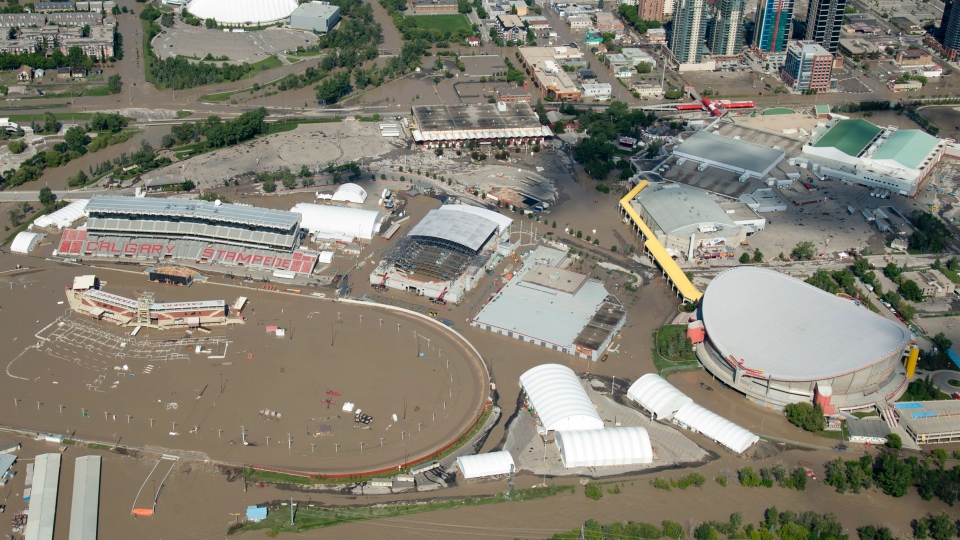
Much of Calgary's downtown was flooded out in what has become the worst flooding in Alberta's history.
Much of Calgary’s downtown including the Stampede racetrack and saddledome was flooded out in  the worst flooding in Alberta’s history.

Alberta’s rivers are not known for their floods. However heavy rainfall throughout the province of Alberta from June 19th to 22nd led to the worst flooding in the province’s history. Seven major Alberta rivers including the Bow and Elbow Rivers were filled hard and were over flooded to the point they caused huge damage to surrounding cities. The damage done to the city of Calgary received the most coverage especially since the flooding damage hit the downtown core bad. That and the fact that the annual Calgary Stampede was about to start. The stampede grounds endured considerable damage. Even venues like the Scotiabank Saddledome reported flooding up to the tenth row. In fact 26 surrounding neighborhoods around the Calgary area were placed under a mandatory evacuation order for three straight days. The 75,000 evacuees made it the largest evacuation in the city’s history.

It wasn’t just Calgary. The town of High River had to evacuate. The Siksika First Nation east of Calgary had to declare evacuation. Even towns of Banff and Canmore had to be cut off after floods and mudslides cut off much of the Trans-Canada Highway. Even cities like Lethbridge, Red Deer and High River had to declare their states of emergency. The flooding resulted in four fatalities in total.

The towns and cities continue their clean-up in the aftermath. One thing that did happen is that the Calgary Stampede went on as planned. Events planned for the Saddledome however were either cancelled or relocated to other locations in the city.

Toronto Flash Flood

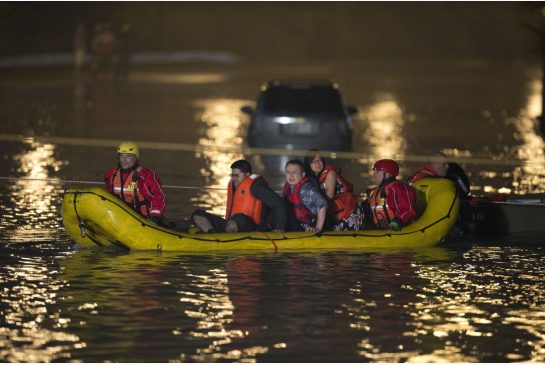
Soaking wet Go Train passengers are rafted to safety during a surprise flash flood in Toronto.
Soaking wet Go Train passengers are rafted to safety during a surprise flash flood in Metro Toronto.

Monday July 8, 2013 was expected to be like any other day in Toronto. If there was to be a thunderstorm, it was expected to be brief and pass by. However the afternoon provided some of the most serious thunderstorm activity faced by Toronto. Rain was delirious. Rainfalls ranging from 97mm in downtown Toronto to 126mm at Pearson Airport caused major flooding in many areas including the freeways and the subway stations. In fact news images showed a GO train with 1400 people that was caught in the floods. Power outages were rampant as 80% of Mississauga was without power as was 300,000 other people who received Toronto Hydro. A big surprise for a city that normally gets an average of 74mm of rain in the whole of July. Fortunately the floods have subsided and fortunately there were no fatalities.

Train Derailment In Quebec

I saved to worst for last. Until a week ago, Lac-Megantic was a simple small town in Quebec close to the Canada/U.S. border. Since the early morning of Saturday July 6th, it’s the centre of possibly the biggest train accident of the year and continues to make more bad news with each day.

It was a simple train trip done many times before: a trip transporting oil from the United States to New Brunswick. Lac Megantic was just simply a town where the train was to pass through without disturbance or incident of any kind. The train set consisted of 72 tanks each filled with 113,000 litres of crude oil and had been transferred from train system to train system.

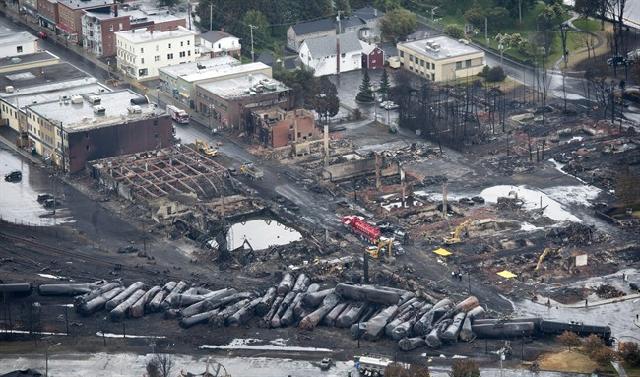
Burned out buildings and burned out oil tankers lay in the aftermath of a train derailment in Lac-Megantic, Quebec.
Burned out buildings and burned out oil tankers lay in the aftermath of a train derailment in the downtown of Lac-Megantic, Quebec.

Two hours before the incident while the train was parked in Nantes, the engineer left the train as he was done his shift. He felt however that it was unsafe since it was spitting oil and thick black smoke and wanted to call an American official about directives for the situation. Actually drivers who were driving along the train 40 minutes earlier complained of thick black smoke coming from the train. The Nantes Fire Department put out the blaze at 11:30pm and the train company employees confirmed the train was safe. However one failed to notice that the locomotive was tampered with. The train tanks, detached from the locomotive, started moving downhill at witnesses considered a dangerous speed. Then the unmanned train derailed in an area of downtown Lac Megantic, the tanks collapsed spilling crude oil on the ground and cause a huge fire 91 to 121 meters in diameter. Between four to six explosions were heard and heat from the fire could be felt as far as two kilometers away. Over 1000 of the town’s 6000 residents had to be evacuated. People in the third floor of burning buildings jumped to avoid being caught in the blaze.

Even as of now, there are no final statistics and new information is being gathered every day. 35 people have been confirmed dead but 15 remain missing. Thirty buildings in the downtown of Lac Megantic have been destroyed by the blaze. Information has surfaced that the locomotive is believed to have been tampered with. I’m sure more clues will come up in the future.

The Aftermath

With every disaster comes action. Not just action from emergency crews but action from all those involved including officials from the various industries affected. Here’s some of the action that has been taken so far. Remember these incidents happened three weeks ago at the most so there is still more action to come:

-The province of Alberta has started to create new flood-mapping standards such as categorizing high-risk flood areas. Some homeowners in high-risk areas are offered to move from their current location with financial assistance from the province or risk being ineligible for any future Disaster Recovery Fund assistance. Homeowners will be given new regulations in the future such as notating homes for sale being in a possible flood-risk zone. Even developers will be made aware of high risk areas.

-The City of Toronto will have to do some rethinking and reassessing certain aspects of the city. Especially the drainage system. Also Toronto transit will have to organize a better system of escape from its trains and subways to avoid a worse scenario. One thing is train riders who had to travel on the still-wet trains the following day were given a $100 credit to cover whatever dry cleaning costs. Hydro One had most of its equipment underground. It will soon review its standards and practices in the aftermath including bringing some equipment above ground.

-Once the clean-up and other activities from the Lac Megantic derailment are completed, you can be sure there will be a full inquiry on this incident. Even without the death count being finalized, this has already become the deadliest train accident in Canada since 1864. Montreal, Maine and Atlantic Railway (MMA) will definitely face the biggest heat from this as well as Transport Canada. Already the Transport Safety Board of Canada has started an investigation on this. The Red Cross has started emergency efforts in the town. Lac Megantic will have to make efforts to rebuild and have makeshift locations for businesses that used to exist before the disaster. You can be sure that certain people will be prosecuted for criminal negligence and the government agencies will set new regulations for dealing with petroleum-filled tanks.

It is a shock to see all of this happening in Canada in the span of one month’s time but it was possible. Nevertheless it is Canadian nature to take immediate action towards something like this. In fact a roof collapse in an Ontario shopping mall last year that caused the deaths of two people made national news and brought fast action. In some countries, you’d need a bigger fatality result to get major action happening. Only time will tell what the end results are and what actions come of these incidents.

WORKS CITED:

Uncredited Author. “Alberta Unveils New Flood Proofing Rules” CBC News cbc.ca 14 July 2013 <http://news.ca.msn.com/top-stories/alberta-unveils-new-flood-proofing-rules-1>

Ogrodnik, Irene. “By the numbers: 2013 Toronto flood” Global News Global News And The Canadian Press. 9 July 2013 <http://globalnews.ca/news/704015/by-the-numbers-2013-toronto-summer-storm/>

Gheciu, Alex Nino. “Toronto flood: Underground equipment sank Hydro One” Toronto Star 11 July 2013 <http://www.thestar.com/news/gta/2013/07/11/toronto_flood_underground_equipment_sunk_hydro_one.html>

WIKIPEDIA: Lac Megantic Derailment. Wikipedia.com. 2012. Wikimedia Foundation Inc. <http://en.wikipedia.org/wiki/Lac-M%C3%A9gantic_derailment>

The Confederations Cup And Protests In Brazil

One of many protests in Brazil that occurred during the time of the Confederations Cup.

The Confederations Cup soccer tournament began on June 15th. Also what started around that time was a protest in Sao Paulo about transit fare inflation. Protests soon grew in Brazil. I’m sure the Confederations Cup competition and the worldwide media attention to that event had a lot to do with the growth. But what are the protests about? And why are they happening all of a sudden?

First it’s important to look at the country of Brazil. Most people will consider Brazil a poor or developing country. It is true to an extent. What most people don’t know is how much Brazil’s economy has grown since the 1980’s. Its biggest growth was in the industries of oil, mining and agriculture which grew at 47% or 3.6% per year since 2000. Its industrial growth rate is also impressive with an 8.8% back in 2008. Brazil’s economy is one of the fastest growing in the world and actually now ranks 7th in the world and has the highest GDP per capita in South America and 53rd in the world overall. Its gross national income of $10,721 US in 2011 classifies itself as upper-middle income: an income on par with many countries of Eastern Europe. It can be attributed to many factors. Some say it could be Brazil’s move to democracy that started with an Amnesty Law in 1979 and developed into its own Constitution in 1988.

The quality of life has also gone up considerably in the last 20 years and Brazil has worked to establish methods to either keep it that way or improve it. Despite huge urban sprawl in cities like Rio de Janeiro and Sao Paulo, its cities have some of the finest public transit systems that have been copied and studied by many major cities in the world. Brazil has also reformed its Social Security programs and tax systems. There was even a Law Of Fiscal Responsibility that controls public expenditures by the Executive Branches of all government levels. Export, Industry and Trade has been increased while allowing Brazil to keep itself from vulnerabilities by methods such as not exporting the oil it consumes. It has also halved its debt through exchange rate-linked certificates which has allowed exporting to grow to as much as 20% a year and put a limit on its inflation rate to 4%. It also has an average life-expectancy rate of 72.7 years (2009) which is comparable to that of many Eastern European countries.

So what are all the protests about? Even before I get into the nitty gritty of the protests there are some facts to send a message that a bubble was about to burst. We must remember that while Brazil has improved a lot in past years and especially this century, there’s still a lot of development to go. Despite its improvements, the 53rd best GDP in the world shows they can do better. Its gross national income is roughly 1/4 of what developed countries like Canada are receiving. In addition, the minimum wage translates to an annual income of an unenviable 8,086 Brazilian Reals (R$) or roughly $3,600 American. Even in government despite being a democracy, Brazil still ranks as the 69th least corrupt country in the World according to Transparency International with a score of 43 out of 100.

The first protests actually started on June 1st, two weeks before the Confederations Cup was about to begin. The first major protest was in the city of Sao Paulo of a transit fare increase from R$ 3.00 to R$ 3.20. The first protest started on June 6 and grew over time. The real turning point came when police fired rubber bullets at the protesters and journalists on June 13th. This was widely criticized by Amnesty International and even Brazilian Amnesty Groups.

Soon after, and while the Confederations Cup was progressing further, the protests grew to as many as 250,000 in various major Brazilian cities on June 17th protesting. Rio de Janeiro had the biggest that day with 100,000. Even Brazilians in other world cities stages their own protests. By June 20th, protests grew to millions of people in 100 cities and grew over the next few days. As negotiations and government involvement in matters occurred, which I will discuss later, the protests calmed down but not without incidents.

Interesting enough is not just the number of protesters and cities involved growing but the issues too. What started off as one protest over a transit fare increase grew to a wide array of issues being protested against or demanded:

  • A bill (PEC – 37) that hindered Public Ministry to investigate.
  • The distribution of petroleum royalties to the appropriate causes.
  • Lack of criminalization of all forms of Corruption and Embezzlement.
  • Secret Voting in Congress for forfeiture of office.
  • A bill (PEC – 33) allowing decisions made by the Supreme Court going to Congress.
  • Having a Privileged Forum.
  • Taxing in Public Transport.
  • Demands to the National Pact for fiscal responsibility, control of inflation and proper distribution of funds to education, public transport and health.
  • Demands to implement means of political reform in the country.
  • Demanding 10% of the GDP be devoted to education.
  • Demanding a free-pass for full-time university students.
  • Demanding a revocation of a ‘gay cure’ bill (PDL – 234) authorizing psychologists to treat LGBT people.

Evident enough is that the growth in numbers and issues happened as the Confederations Cup matches were occurring. I still remember telecast of Confederation Cup matches on CBC that even included security updates of what was happening in the cities. Even though the protests have been successful in leading to solutions of problems being protested over, there was still last chances for opportunity as violent clashes occurred in Belo Horizonte as it was hosting a semifinal match on the 26th and in Rio de Janeiro as it was hosting the final on the 30th.

You could understand why the Confederations Cup had a lot to do with the increase in protests. With a major world event happening, it’s obvious the protesters want to highlight Brazil’s problems right while the eyes of the world are watching. Mind you these next three years are going to be very big for Brazil as they will play host to many major international events. Besides the Confederations Cup that finished yesterday, Rio will host the Catholic event World Youth Day later this month. Next year Brazil will host soccer’s World Cup with twelve major cities contesting the competition. And 2016 will have Rio hosting the Summer Olympic Games. I don’t know of any other country that has had to host this many major events in a matter of four years. For Brazil it’s a chance for them to show the world their image as a well-to-do nation as they will be the first developing country since Mexico in 1986 to host a World Cup and the first developing country since Mexico again in 1968 to host a Summer Olympics. In fact the World Cup was even the subject of protests that received less notice than most other protests. Many were protesting the government giving a lot of the budget ($12 billion US) to these sports events instead of on living conditions.

I mentioned that many of the issues being protested upon have been approved within this two-week span of time. You can assure the media attention to this had a lot to do with it. Among those approved by the governments and senate are: public transit prices reduced and taxes eliminated; petroleum royalties destined to education (75%) and health (25%); reform and improvement demands to the National Pact being granted; secret voting ended; Bill PEC – 37 being revoked; all forms of Corruption and Embezzlement being criminalized; and implementing a Plebiscite to politic national reform. Even though the Confederations Cup is over and a lot of reform and improvements have been politically approved, there are still demands outstanding. Some like the 10% allocation of the GDP to education, revocation of bill PDL – 234, and the Free Pass for students are currently under negotiation by Congress while issues of ending of Privileged Forum and the elimination of Bill PEC – 33 still remain undiscussed. On top of it, time will tell if the approved reforms are carried out and if carried out successfully or not. Another thing to look for in the future is how much impact it will have on President Dilma Rousseff. Her popularity has already been hit by the protests. It remains into question whether she will win the next election.

Even though many of the protester’s demand have been met and even though many are still pending as of now, don’t expect all the action to end just as the Confederation Cup has ended. I’m sure as long as Brazilians see injustice or wrong ways of doing things, there will continue to be protests even without the anticipated major events happening and even after they all end. Nevertheless it’s excellent opportunism to make improvements happen to a developing nation that has improved so much in recent decades but still has more to improve upon.

WORKS CITED:

WIKIPEDIA: Economy Of Brazil. Wikipedia.com.  2013. Wikimedia Foundation Inc. <http://en.wikipedia.org/wiki/Economy_of_Brazil>

Uncredited Author . “Brazil: One Million People Demand Accountability” Transparency International. 21 June 2013. <http://www.transparency.org/news/feature/brazil_one_million_people_demand_accountability>

WIKIPEDIA: 2013 Protests In Brazil. Wikipedia.com.  2013. Wikimedia Foundation Inc. <http://en.wikipedia.org/wiki/2013_protests_in_Brazil>

Dove Campaign For Real Beauty Hits Youtube With Viral Results

The Dove Campaign For Real Beauty is an attempt to make women feel confident about their looks.

Have you seen the campaign for Dove where they campaign ‘for real beauty?’ I’m sure we all have. They’ve been doing that for years. Many people like it while some find it annoying. However they’ve most recently taken their campaign to Youtube and the rapport has been surprising.

Dove’s worldwide Campaign For Real Beauty started back in 2004. It was created by Brazil’s branch of the advertising agency Ogilvy & Mather and bought by Unilever in 2004 when it learned in a survey that only 4% of women consider themselves beautiful. Sure, women have always struggled with the self-consciousness of their beauty for years and even decades but this was a highly critical time. Do you remember who the top celebrities were at the time? Paris Hilton, Britney Spears, Christina Aguilera. These were young female women who rose to the top of the fame game with little attention to whatever talent they had and more attention to their looks. Breast implants operations were at an all-time high. Girls getting their hair bleached like Pamela Anderson were still very popular. There were huge concerns about eating disorders in young women. Pop and hip hop videos featured scantily clad women and it paid off in taking them to the top of the charts. Not a nice picture at all.

Some of you may argue that it has always been that way. Sure there have been problems from generation to generation. Mind you it was a lot different from the time I was growing up. Back when I was a teenager–from the mid-80’s to the early 90’s–we had a mixed bag of female stars to look up to. MTV was just starting to become a vice in popular culture. There was Pat Benatar who rocked out female empowerment but wouldn’t use ‘sex as a weapon.’ There was the always controversial Madonna who raised eyebrows with whatever controversial thing she did but always had a message behind it and urged female empowerment. There was Tina Turner, a rock legend who was strong enough to leave an abusive husband. We had full-bodied models like Cheryl Tiegs, Christy Brinkley and Elle MacPherson. However it was not completely perfect. I even remember one moment back in the 80’s talking to one of my classmates just after she bought a pack of diet pills. Also in the 80’s was Karen Carpenter, a singer who died of anorexia at a time when hardly anybody knew what it was. Just like Morgan Fairchild said “Rock Hudson gave AIDS a face,” Karen Carpenter gave anorexia a face.

By the 90’s things really started to get to a concern from parents. Soon came Kate Moss and her waif look followed by ‘heroin chic’ models. The term supermodel became present and a phenomenon at the beginning of the decade as models were able to command salaries over $1 million a year. Young girls went from wanting to be models to wanting to be supermodels. Imagine making millions just for looking good. Rap videos consisted of scantily clad women dancing and acting unapologetically immodest. Baywatch babe Pamela Anderson rose to the top of the fame game with her bleached-blonde hair and breast implants and would soon be emulated by girls everywhere.

It’s not to say the whole 90’s was completely vicious to girls. In fact the 90’s should have been a more positive time for women and young girls. There was actress/comedian Roseanne who wouldn’t let her overweight looks or attempts at male dominance stand in her way. And she’s send that message in her sitcom. There was Nike promoting Jackie Joyner-Kersee as she was seen as an achiever with little attention paid to her looks. There were more and more women assuming higher political office or higher business positions. There were movies with more forceful depictions of women like Thelma And Louise and G.I. Jane. There were even attempts from the media to promote intimate singers like Jewel and Sarah McLaughlin as well as the Lilith Fair. But right while that was all taking off, the teen revolution in pop happened with the likes of Britney Spears and Christina Aguilera hitting the top of the charts. You could’ve simply dropped Lilith Fair in favor of ‘Tart Fest.’ By the end of the 90’s the more positive female role models like comediennes, athletes and business executives were being shunned by promoters in favor of tart-like girls that were cute or thin or both. Hey, they were easier to guarantee sales and ratings.

You could understand with the celebrity admiration and star emulation that has been wildfire especially in the last 15 years there would be some concerns. It became apparent that the obsession of beauty was not just about fitting in but having the looks that won. If a certain look or certain body is going to put a female celebrity to the top of the ‘fame game,’ you could be sure girls wanted to copy that. You can’t blame pop star Pink for singing in her song Stupid Girls: “What happened to the dream of a girl president? She’s dancin’ in the video next to 50 Cent.” Problem was the beauty industry wanted to take full advantage of it. They wanted women to think that their product would make them more attractive or they’d be inferior without it. I even remember hearing a radio ad for a plastic surgery office and the voiceover said: “How you look on the outside affects how you feel on the inside.” What does that tell you?

Dove wanted to change all that with their Campaign For Real Beauty. It was created by Brazil’s Ogilvie & Mather and its mission was: “to create a world where beauty is a source of confidence and not anxiety.” I still remember seeing ads on a bus in 2004 of women with regular bodies looking confident and the tagline ‘campaign for real beauty.’ Those pictures were taken by reputed photographer Annie Liebovitz. I also remember a television ad of a city square full of what appears to be blondes. Soon one woman takes her blonde wig off and the others follow. One thing I didn’t know at the time of the first ads was that the campaign also involved studies too about the opinions of the bodies. There were even some ads that invited people to vote on a female image if she was ‘fat or fab’ or ‘wrinkled or wonderful’ with results displayed on the billboard itself.

Like every campaign, this Campaign had to market attention. The Campaign won media coverage from talk shows, women’s magazines, as well as mainstream news broadcasts and publications. Unilever were able to purchase a $2.5 million 30-second spot during the Super Bowl XL of 2006 as part of the Little Girls branch of their campaign. With the purchase of a Campaign For Real Beauty website, the campaign was expanded into videos that started with Daughters, an interview-style piece where mothers and daughters related to the beauty industry and how it affected their perceptions of beauty. Further videos followed including Evolution, Onslaught and Amy. Evolution won two Cannes Lions awards for advertising film making. Unlike most campaigns, research was being conducted on this by Dove.

It’s not to say the campaign has had their doubters. There have been those who’ve accused Dove as being hypocritical since it belongs to the Unilever company: the same company responsible for Axe body spray products that feature overtly sexual women in their ads, Fair and Lovely skin-lightening products and Slim Fast diet bars. There would be defenders saying that Dove represents Dove, not Unilever as a whole. There were also females who posted their dissatisfaction of the ads because they believed Dove was telling them of the insecurities they felt. Also you have the odd person on the street who likes being cynical and say “They’re just doing it to sell more products.” Even if it was true, you should remember that the campaign came at a time when marketers were shelling out ads to make people insecure about themselves to get their product sold. If that argument was true, I could rightfully argue it’s great to see Dove use a positive message to sell their products instead.

However the biggest attention came as they released two videos of Dove Real Beauty Sketches on Youtube back in April of this year. The videos consisted of regular women being drawn portraits by a forensic artist. While drawing the women, he’d ask them to describe certain aspects of their looks. Before being drawn, the women were asked to get friendly with another person. Those people, both women and men, would be asked by the artist to describe their looks and features. Days later the women would return to the studio and see two drawings of herself. The first drawing would be of herself of how she described herself. The second drawing would be herself of how the other person saw her. The differences were very noticeable. It also changed the way they thought of themselves. The ads definitely caught a lot of attention as they’ve received more than 50,000,000 hits on Youtube.

The question is will it change how women, especially young women, look at themselves? We should take into account not all has been better ever since the Campaign For Real Beauty started. Girls still idolize celebrities, even no-talents like Kim Kardashian. Fashion magazines continue to sell. Girls still desire to be models. On top of it there are many complaints in recent years of female figures being photoshopped. That was especially made evident in a Youtube video entitled Fotoshop by Adobe where Adobe is pronounced “Ad Obey.” Even Dove did ads where it showed young girls in sports with a caption saying: “Six out of ten young girls would give up a sport if it made them seem unattractive.”  The results of the Sketches video going viral are encouraging but its effect is still yet to be seen. Also it would be interesting if Dove releases another Real Beauty Sketches video in the future.

Dove Campaign For Real Beauty surely does take their Campaign to a new level with their Sketches video. This is only the latest in the Campaign’s efforts. Whether it will pay off in terms of a woman’s self-image is questionable in the future. I’m sure Dove will be paying close attention to the results.

WORK CITED:

WIKIPEDIA: Dove Campaign For Real Beauty. Wikipedia.com. 2013. Wikimedia Foundation Inc. <http://en.wikipedia.org/wiki/Dove_Campaign_for_Real_Beauty>

Montreal Shooting Reminds Canada Political Violence Rare But Likely

Quebec premier-designater Pauline Marois avoided being shot by a crazed gunman on Sept. 4th. One man was killed and another critically wounded.

The news shocked all of Canada. On September 4, 2012, Parti Quebecois leader Pauline Marois won the Quebec provincial election. She was to give her victory speech at the Metropolis in downtown Montreal when a masked gunman opened fire, killing a stage technician and injuring another. Marois was unharmed. It has not been determined whether this was meant to be an assassination attempt on Marois or not. Even if it was, politically-motivated assassination attempts in Canada are extremely rare. Nevertheless the shooting did remind us that such a catastrophe is very possible here in Canada.

Throughout the beginning of time, being a political leader has always been a position to put one’s life in jeopardy. The King of a country would be seen as the prime target for warring armies in the quest to conquer. A leader could even be assassinated by a person within their circle as Julius Caesar was. Even in modern day dictatorships or dictatorships of the recent past, a head of state would be prey for assassination attempts like Fidel Castro, Saddam Hussein, Salvador Allende or Anwar Sadat. The assassin would either be an person of opposition or a militarized coup.

Even in democracies assassination attempts are still common as was the failed attempt on UK Prime Minister Margaret Thatcher in 1984 and the successful attempts on India’s Indira and Rajiv Gandhi in 1984 and 1991 respectively. Even countries with a reputation of being peaceful like Sweden are not immune to assassination attempts as was the case when Prime Minister Olaf Palme was shot and killed in 1986. The most famous assassination attempts in a democracy have come from the United States. Four presidents including legendary presidents like Abraham Lincoln and John F. Kennedy have been assassinated while in office. In 1981, President Ronald Reagan was shot while in office but survived. The most recent assassination attempt on an American politician was on January 8, 2011 on Arizona US Representative Gabrielle Giffords. She survived but six others, including US District Court Judge John Roll, were killed.

Here in Canada, we’re lucky not to have a prime minister assassinated while in office.  Even infamous prime ministers like Brian Mulroney lived to see his last day in office and even Stephen Harper is still alive and active during a time of Harperphobia that’s heavily promoted through the gab of liberal Canadians. The closest call was on Jean Chretien back in November 5, 1995 when a man armed with a knife broke into his home residence to stab him. Neither Jean nor his wife were hurt.

There have only been two successful assassinations in Canadian politics. The first is Thomas D’Arcy McGee. He was both an Irish nationalist and a father of Canadian Federation. He would attack the Orange Order in his writings in the 1850’s and defended the Irish Catholic right to representation in the assembly. He was elected to the Legislative assembly of the Province Of Canada in 1858 and played a significant role in the creation of the Dominion Of Canada. Less than a year after the independence of Canada, McGee was shot to death by Patrick Whelan, an Irish Catholic and a sympathizer of the Fenians: a group of Irish Americans who wanted to take over Canada to prevent British occupancy. Whelan was hanged. McGee remains the only Canadian politician at the federal level to be assassinated.

The second successful assassination was at a provincial level and an act of terrorism. Pierre Laporte was Vice-Premier and Minister of Labour of Quebec in 1970 as Robert Bourassa was the Premier. On October 10, 1970, Laporte was kidnapped outside his home by a cell of the FLQ: A Quebec independence terrorist group. The FLQ was already regarded as a dangerous group for it had already committed seven murders, multiple mail bombings in the 60’s and bombed the Montreal Stock Exchange one year earlier. A British diplomat had been kidnapped days earlier and was still hostage. Laporte’s abduction was part of a ‘political protest’ to have ‘political prisoners’ freed. The Government of Canada under Pierre Trudeau responded with the enactment of Canada’s War Measures Act and Trudeau’s promise to punish whoever harms the two men. On October 17th, seven days after the abduction, Laporte’s body was found. The incident is remembered in Canadian history as the October Crisis. The British Diplomat was released in December and the FLQ eventually declined due to heavy police crackdown and declining public support after the assassination. Nowadays the biggest lobby for Quebec independence is through peaceful political lobbying like the Parti Quebecois.

Despite current politics in Canada being mostly peaceful, there is a chance for violence either by a cowardly person or a person with opposing viewpoints. We shouldn’t forget that Canadians have often reacted angrily to political situations in the past. We’ve had rebellions in both Lower Canada and Upper Canada before the Dominion was created. We’ve had rebellions in Manitoba in the 19th Century like the Riel Rebellion. We’ve had labor riots in various cities with the Winnipeg Riot of 1919 being the most famous.

Political violence became less admired and more looked down upon since World War II but it’s not to say it’s completely gone away. Back in the 60’s there were attacks on air force bases to protest the war. In the 80’s and 90’s, there were protests and blockades from First nations groups. Even in my city of Vancouver, there have been political riots like the G7 riot back in 1997 and various anti-Olympic protests before Vancouver 2010. There was also the G8 riot in Toronto from anarchist groups. So there’s no doubt that there’s political anger here in Canada that can turn violent.

I won’t say that the Montreal shooting was politically motivated as that has yet to be proved but I will state the facts I’ve read and know as of now. On the night of September 4th, 2012, the Parti Quebecois won the provincial election with a minority government. Party leader Pauline Marois delivered her victory speech when partway through, a masked gunman opened fire with what many thought was an AK-47. One stage technician was killed and another was injured. Marois was taken away by her bodyguards and was unharmed in the shooting. The gunman then attempted to set fire to the building with a Molotov cocktail. The shooter was quickly tackled and arrested by the police.

The victim was 48 year-old stagehand Denis Blanchette. Witnesses including Marois herself believe his actions taken that night could have prevented more fatalities. His funeral was held in a Roman Catholic church and was attended by hundreds including Marois and other political dignitaries. Police were present throughout the church. Dave Courage, the 27 year-old man who was also shot, was originally in critical condition and continues to recover in hospital. The suspect is 62 year-old Richard Henry Bain of La Conception, QC, a small town 90 miles northwest of Montreal. He faces 16 charges including first-degree murder, one count of attempted murder as well as possession of explosive material and prohibited weapons. While being placed in a police cruiser, he yelled in French “Anglos are waking up.” then in English: “It’s f***ing payback time.” Crown Prosecutor said Bain has 27 guns, all but one had been registered.

Bain is expected to reappear in court on October 11th. Despite the statement, it’s unknown whether Bain’s actions were politically motivated or the actions of a crazed man. Court trials and public reaction will define the events yet to come and could even affect the political climate in Quebec. One thing about the shooting is that it reminded Canada that political assassinations in Canada are quite possible. An extremely rare chance of happening but still likely.

WORKS CITED:

WIKIPEDIA: FLQ. Wikipedia.com. 2012. Wikimedia Foundation Inc. <http://en.wikipedia.org/wiki/FLQ>

WIKIPEDIA: October Crisis. Wikipedia.com. 2012. Wikimedia Foundation Inc. <http://en.wikipedia.org/wiki/October_crisis>

WIKIPEDIA: Thomas D’Arcy McGee. Wikipedia.com. 2012. Wikimedia Foundation Inc. <http://en.wikipedia.org/wiki/Thomas_D%27Arcy_McGee>

WIKIPEDIA: 2012 Montreal shooting. Wikipedia.com. 2012. Wikimedia Foundation Inc.

< http://en.wikipedia.org/wiki/2012_Montreal_shooting>

Montgomery, Sue. “Shooting suspect Richard Henry Bain arraigned on 16 charges, including first-degree murder”  Montreal Gazette 6 September 2012 <http://www.montrealgazette.com/news/Shooting+suspect+Richard+Henry+Bain+arraigned+charges+including+first+degree+murder/7200523/story.html>

London 2012: Fourteen To Watch

On the evening of Friday July 27, 2012, the cauldron of the London Olympics, the Games of the XXX Olympiad, will be lit and over ten thousand athletes from over 200 countries will compete for glory in their respective sport over these seventeen days. London will become the first city ever to host three Olympic Games: the first two being in 1908 and 1948. Here are ten athletes from around the world, two from the host country and two teams of these Games who are worth keeping a close eye on:

-Michael Phelps/USA – Swimming: Talk about a legendary career. Olympic debut in 2000 at the age of 15. Six golds and two bronzes in 2004. A record eight golds in 2008. Now London is the big finale. He’s just three medals away from breaking the record for most total Olympic medals. He also has four chances to become the first male swimmer to threepeat in an individual swimming event. Unstoppable? Maybe not. Teammate Ryan Lochte broke Phelps’ 400 IM record last year and even beat him in that event at Olympic trials. Plus there could be other younger swimmers from around the world chasing him down. It will all be decided in the London Aquatic Centre.

-Usain Bolt/Jamaica – Track and Field: Remember back in Beijing Usain was the sprinting star winning the 100, 200 and anchoring Jamaica’s 4*100 relay? All in world record time? Incredibly Usain has since broke them all. No kidding he’s been the most exciting thing in track and field since Carl Lewis. He could do it again in London. But he faces a formidable challenge from his own younger teammate Yohan Blake who currently has the year’s fastest 100 and 200 times. Plus don’t count Americans Justin Gatlin and Tyson Gay out, nor sprinters from Trinidad or St. Kitts.

-Amantle Montsho/Botswana – Track and Field: One of my favorite Olympic moments is when an athlete wins their country’s first ever Olympic medal. There are eighty countries competing in London that have never won an Olympic medal. Botswana is one of them but that could change. This will be Montsho’s third Olympics and she has progressed from the 400m heats in 2004 to 8th in the 400 final in 2008 to being crowned World 400m Champion last year. She still appears strong in the 400 this year as she has run the 400 four times under 50 seconds and even set a personal best a month ago. Winning a medal will not come easy as three other runners–two Russians and American Sanya Richards–have run faster times this year. Nevertheless if she’s all there in London, she could just make Botswanian Olympic history.

-Elena Isinbaeva/Russia: Track And Field: She has established herself as possibly the greatest female pole vaulter ever. She has won two gold medals and has set 30 world records including two at the Olympics. Nevertheless her career since Beijing has had some noticeable chokes: no-heighting at the 2009 world Championships final, fourth at the 2010 World Indoor championships, sixth at last year’s Worlds. 2012 has seen a return to her winning ways as she won the World Indoor Championships in March and even set a new world indoor record of 5.01m. She has only competed in one outdoor competition this year but it was two weeks ago and she won with an impressive 4.75m. It’s clear that in London the only person that can defeat Elena is Elena. It will all be decided in Olympic Stadium whether she threepeats or if she defeats herself.

-Caster Semenya/South Africa – Track and Field: She burst on the scene in 2009 at 18 showing the world her athletic talent in the 800m including a World Championship win. However she received more attention that year over her gender being questioned to the point the IAAF, athletics’ governing body, had to conduct gender tests on her. Caster found them both humiliating and invasive. She was eventually cleared by the IAAF but wasn’t allowed to resume competition until July 2010. The controversy has since died and Caster has continued running and even finished 2nd at last year’s Worlds. Nevertheless her country of South Africa has always stood beside her even during the heaviest of controversy and she has even been designated as South Africa’s flagbearer for the opening ceremonies. Many track experts believe she has what it takes to win but the 800m has a tough field. Could she prevail? Only time will tell.

-Carmelita Jeter/USA – Track and Field: Usually 32 is seen as the age when it’s time for a sprinter to retire. For Carmelita, it’s the age in which her sprinting career is finally taking off and could just reach her peak. Already she qualified for her first ever Olympic team. She has had world-class talent for years even finishing third in the 100m at the 2007 Worlds but she had a disastrous Olympic trials the following year filing to make the team despite being one of the favorites. In the four years since she’s become a faster runner and a better competitor. She would win bronze again at the 2009 Worlds and the 2011 Worlds gave her 100m gold, 200m silver and 4*100 relay gold. This year’s Olympic trials were better as she won the 100 and finished second in the 200. She already has the second-fastest 100m time in the world this year with defending Olympic champion Shelly-Anne Fraser the only other runner with a faster time. Jeter not only faces rivalry from her in both events but Jamaican triple Olympic champion Veronica Campbell-Brown who won the 200m at last year’s Worlds and her teammate Allyson Felix who has won 200m silver in 2004 and 2008. Whatever the situation, London will be now more than ever for her.

-Ashton Eaton/USA – Track and Field: The United States has consistently turned out decathlon champion after decathlon champion at the Olympics: eleven in total. At first it appeared Trey Hardee would become the next American to win Olympic gold in decathlon after winning the 2009 and 2011 world Championships. However teammate Ashton Eaton, who finished second to Hardee at the 2011 Worlds, had a surprise for him at the Olympic Trials. He won the Trials and broke the world record by 13 points. The Eaton/Hardee rivalry should prove to be exciting as two teammates being the two best in the world competing for gold. The winner will be decided two weeks from now.

 -Mariel Zagunis/USA – Fencing: When you think of fencing and the USA, you don’t think of any greats, do you? Well Mariel could be just that. She’s already only the second American fencer ever to win Olympic gold and she did it in the saber category twice in 2004 and 2008. Both times she was not the favorite. This time she is the favorite being ranked #1 in the world but she’s not invincible. Since Beijing she has won her first World Championship medals: saber gold in both 2009 and 2010. She however lost her title at the 2011 Worlds to Russian Sofiya Velikaya. She also faces challenges in London from other Russian fencers and Ukrainians like Olha Kharlan. If she does win in London, she will make history by becoming only the second fencer to achieve an Olympic threepeat in an individual event. History in the making? It’s all in Mariel’s hands.

-Marta/Brazil – Soccer: It’s interesting how women’s soccer has been growing only in the last ten years or so. Women didn’t get their own World Cup until 1991. women didn’t compete in the Olympics until 1996. Since then the improvements have been made not just in North America and Europe but South America too. Even Brazil has a star that has been called the ‘female Pele’ and her name is Marta. She showed huge promise in football at a young age but would come of age at 16 in 2002 when she was selected to be on Brazil’s national team. Since then she has received major accolades such as two Olympic silver medals, runner-up at the 2007 World Cup and crowned FIFA World Female Footballer of the year for five years straight. She and the Brazilian team want to win and London but they face stiff challenges from Japan, Sweden and the USA who want to win their third-straight Olympic title. nevertheless they want to improve from their quarterfinal ouster at last year’s World Cup. The game’s the thing in London.

-Daba Keita/Mali – Taekwondo: Another country that has never won an Olympic medal is Mali. Daba Kaita looked like the one to win Mali’s first ever medal after winning the heavyweight title at the 2007 World Championships. However he was eliminated in the quarterfinals in Beijing and the president of Mali went as far as calling it a ‘painful day for Mali.’ Since Beijing the 6’8″ Keita successfully defended his World title in 2009. He was dealing with a knee injury in 2011 and couldn’t compete at the Worlds that year. Nevertheless Keita believes he is ready. He considers himself a smarter fighter than he was at Beijing. He has been coached in the United States since 2006 through an Olympic Solidarity program and he hopes for it to pay off in London. Even though he hasn’t been too active on the taekwondo scene in the past year, Keita could surprise his opponents and make Olympic history for Mali in London.

 TWO FOR THE HOST COUNTRY:

-Tom Daley/Great Britain – Diving: For the record Great Britain has never won a diving gold medal at the Olympics. Six medals but never gold. Tom Daley burst on the world scene in 2008 by winning the tower event at the 2008 European Championships just before turning 14. He would be the ‘teddy bear’ of the British team of the Beijing Olympics and would go on to finish 7th in individual tower and 8th in synchro tower. Since then the precocious diving prodigy has had his ups and downs. He had a stellar 2009 that included a World Championship win in tower at the age of 15. An injurious 2010 ended on a good note as he won two golds at the Commonwealth Games. 2011 however was the hardest year. He had to deal with injury, learning new dives and the death of his father. The difficulties he faced showed at the World Championships that year as he lost his World tower title finishing 5th. 2012 has seen a new Tom Daley as he has been performing consistently even winning a World Cup meet and returning as European Champion. All eyes of Britain will be on him as he has beenone of the most iconic advertized images leading up to the London Games. He could lift the hearts of the nation like Cathy Freeman in 2000, Enrico Fabris in 2006 and the Canadian hockey teams of 2010. Or he could break their hearts like Konstandinos Kenteris in 2004 or Liu Xiang in 2008. It’s an awful big gamble for an 18 year-old. Nevertheless it will all be decided August 11th.

-Beth Tweddle/Great Britain – Gymnastics: Diving isn’t the only sport where Britain wants to win its first gold here. Gymnastics is another sport and Britain’s only women’s medal is a team bronze back in 1928 when women’s gymnastics was contested for the first time. Beth Tweddle looks like just the one to change that. She has been winning World Championship medals since 2003 but Olympic glory has always seemed elusive to her. 2004 was a disappointment. 2008 she finished fourth in the uneven bars but the two Chinese gymnasts who finished ahead of her have been under suspicion of being under the age limit and still remains unsolved. Since Beijing she has become a tougher competitor. She won the floor gold at the 2009 Worlds and won uneven bars gold at the 2010 Worlds. The 2011 Worlds were a tough event for her as she fell off the bars in qualifying and went out of bounds during the floor finals. Nevertheless she has proved she is ready for London as she won the uneven bars at a key international gymnastics meet and even increased the difficulty on her dismount with an extra full twist. Will she finally do it in London? It will all be decided in the Millennium Dome.

 AND TWO TEAMS TOO:

-Romanian Women’s Gymnastics Team: This could be the triumph of the underdogs. Now I know what you’re thinking: “Underdogs? Romania’s gymnasts?” Yes. The 2011 World Championships were the first since 1974 in which the Romanian women failed to win even a single medal. That’s awfully odd coming from a country that introduced Nadia to the world and has shelled out countless world and Olympic Champions. Since then Romania has worked to get their gymnasts into winning ways. They field a team that includes 2004 three-time Olympic Champion Catalina Ponor coming out of retirement, 2008 Olympic floor champion Sandra Izbasa and 2010 World beam champion Ana Porgras. The plan has worked well as the team won the European Championships over 2011 Worlds silver-medalists Russia by less than a point. They even won three of the four individual event. No doubt they’re doing everything right in their comeback but they still will face challenges from Russia, host country Great Britain with possibly their best team ever, and the 2011 World Champions the United States featuring top competitors like Jordyn Wieber, Ali Reisman and Gabby Douglas. Winning will come with a fight in London.

-Cuban Boxing Team: No kidding Cuba wants to rebound after not winning a single boxing gold in Beijing 2008. Yeah, you’re probably thinking what I thought: “Cuba? No boxing golds? How can that be?” Ever since amateur boxing has gone from three three-minute round to four two-minute rounds, the Europeans have excelled while the American countries have struggled. Since Beijing amateur boxing has made a return to three three-minute rounds and Cuba is on a comeback trail. Boxers Lazaro Alvarez and Julio Cesar la Cruz won at the 2011 World Championships. Cuba’s hoping to return back to their Olympic glory days of the 70’s and 90’s and London could lead them on the right path.

 And there you have it. Twelve athletes and two teams to keep a close eye on in London. My list of Canadians to watch will come tomorrow.In the meantime check this out below. This is my one and only souvenir of the London Games. I spent so much on souvenirs of the Vancouver 2010 Games I decided only one of London.


UPDATE: I did ten more to watch.

Euro 2012: With One Last Group Stage Game Left

Go Slavek! Go Slavko!

It’s always that way whether it’s the Euro or World Cup. The Group Stage is always what separates the contenders from the pretenders. The contenders qualify for the quarterfinals and keep playing until the last team is standing. The pretenders pack for home earlier than they hoped. This Euro has told a lot about each of the four teams in each of the four groups. So with the final game for each group’s teams coming up, here’s my team-by-team rundown:

GROUP A

Russia- They have been the class of the group so far with their 4-1 win against the Czechs. But they would soon find themselves humbled by Poland with a 1-1 draw. Even a simple draw against Greece would have them advancing and it would have to take a win from the Czechs or a big win from the Poles to displace Russia from #1. The only way Russia could fail to qualify is if they lose to Greece by at least a -4 goal differential and either team from the other game winning. Otherwise Russia is very comfortable in qualifying.

Czech Republic- Czechs are also comfortable as they could just simply draw against the Poles and still advance. They may have taken a beating from Russia but their win against Greece keeps their hopes alive. Mind you it’s very chancy. Poland has pulled some surprises. If Poland wins, Czechs are packing early. Simple as that.

Poland-If there’s one team in this group that had the most to prove, it was Poland. The team at Euro with the lowest FIFA ranking (65th), they had something to prove and boy have they done it. They haven’t won a game yet but they’ve drawn 1-1 against Greece in the Euro opener and even drawn 1-1 against Russia. The latter is remarkable since Russia had one of the tournament’s biggest winning games so far. Goes to show what a homefield advantage can do. Since Greece and the Czech Republic already have a loss, this puts Poland at an advantage as they face their final Group Stage match against the Czech Republic. Already Poland is ranked 3rd in the group standings. A win, and nothing less, is what it takes for them to qualify for the quarterfinals. Can they do it?

Greece-They drew hosts Poland in the opening game and then lost to the Czech Republic. This is it plain and simple. They need to have nothing less than a win of +3 goal differential against Russia if they are to have any chance at qualifying. The winner of the Poland vs. Czech Republic game will be the one qualifying and Russia already has a 4-1 win. Even if the Poles and the Czechs draw, Czech Republic will be the one moving on if Greece doesn’t win.

GROUP B

Germany- They seem to have it the most comfortable of all teams at this Euro. Two games, two wins. That doesn’t mean they’re completely guaranteed a berth in the quarterfinals. The only ways Germany can fail to qualify is if Portugal wins and Denmark wins either 1-0, 2-1 or with a +2 goal differential. That just shows how tight it is in this Group of Death. There’s no telling what will happen. Even though Germany’s comfortable right now, who know? A simple draw against Denmark can have them qualifying #1 in their group but don’t forget the Danes surprised the Dutch.

Portugal- Portugal started out with a 1-0 loss against Germany and then came roaring back against Denmark with a 3-2 win. Even though Portugal and Denmark have the same win-loss stats and goal differentials, Portugal has the advantage because their win was bigger than Denmark’s 1-0 win. Draws in the next games will help Germany and Portugal advance. The only chance Portugal doesn’t have of qualifying is if the Netherlands wins and both Denmark even so much as draws Germany. Knowing that all final games of the Group Stage are simultaneous, there are no taking chances. And Portugal wouldn’t want to do that.

Denmark-They were the surprise of the group. Lowest ranked of the four but they beat Netherlands 1-0 and give Portugal a strong challenge in their 3-2 loss. They can qualify not just by simply drawing against Germany but if the Netherlands beat Portugal. Otherwise nothing less than a win against Germany is what they need to move on.

Netherlands-The problem with being in the Group Of Death is that even the best teams in the World can face stiff competition and look less powerful than they are. Netherlands is the team that had it the worst here at the Euro. A 0-1 loss to Denmark and a 2-1 loss to Germany. Its only chance of qualifying comes not just in beating Portugal but in Germany beating Denmark. Anything less and the Dutch are packing. This should make for an interesting match. Will the Dutch play hard and well or will it all be in vain?

GROUP C

Spain-Funny how they used to be known as ‘football’s greatest underachievers’ and they sure have been achieving a lot in the last five years. They’ve continued their achieving here with a 4-0 victory against Ireland and a healthy 1-1 draw against Italy. Their lead is comfortable enough that they could still qualify if they lose against Croatia and Ireland draws against Italy. Mind you they could be out if they lose to Croatia and Italy wins. This group may not be as much of a group of death as Group B but they have their own tight statistics that can even cause Spain to be out in the Group Stage. It will all be decided Monday.

Croatia-Like Spain, they too are quite comfortable. A win against Spain means they win the group. A draw against Spain still has them moving on but the draw would have to be at least 1-1 and Italy doesn’t do better than 2-0 against Ireland. A 2-2 draw against Spain would help them qualify provided Italy doesn’t win 3-0. Even if they lose to Spain, Croatia can still qualify if Ireland beats Italy. Mind you I’m sure the Croats won’t want to take any chances.

Italy-After 1-1 draws against Spain and Croatia, this is it. Croatia and Spain both have a win and a draw under their belt. They have to win against Ireland if they are to move on. The real complicated part comes in being #1 in the group. The only way that could happen is if a win of 2-0 and Spain and Croatia have a scoreless draw. A 1-1 draw of Spain and Croatia would mean Italy would have to beat Ireland 4-0 for #1. Yeah, this numbers thing is confusing but for the teams it matters tons. Especially for the Azzuri since they want to recover from their Group Stage ouster form the 2010 World Cup.

Ireland-Simply put, it’s over. A 3-1 loss to Croatia and a 4-0 loss to Spain marks the end of Ireland’s chances completely. This should make it interesting in their game against Italy. Even though it’s over, they could still try to beat Italy for the sake of their own pride. I’ve seen it done before at World Cups where the team that’s out and knows it still makes the effort to win with one last thing to prove. Could Ireland do it? They face a tight challenge from the Azzuri hungry for its first win.

GROUP D

France-If you remember the 2010 World Cup, France’s performance was so dreadful the president of the French Football Association resigned before their last Group Stage game. When you hit rock bottom, all that you can do is rebuild. France’s rebuilt team has obviously paid off here. A 1-1 draw against England and a 2-0 win against Ukraine has France top of the group with one last game to play. The only way France can fail to qualify is if they lose to Sweden and Ukraine beats England. And even then it would have to come down to some tricky goal-scoring numbers to deny France a quarterfinal berth.

England-Like France, they too have a  draw and a win. Unlike France, their win against Sweden was 3-2. Their single-goal differential is what puts them in second. For England to be top of the group, they not only have to win but France would have to lose or draw against Sweden or England’s win would have to be two more goals than a France’s win. England can simply draw against Ukraine on Tuesday and they’d still qualify. A loss to Ukraine would be what would deny England a quarterfinal berth. The only way they could qualify upon losing against Ukraine is if Sweden beats France by at least two goals. Do you think England would want that to happen?

Ukraine-Like co-host Poland, they too had low expectations but surprised everyone with a 2-1 win against Sweden. The excitement died down four days later with a 2-0 loss to France. Plain and simple, Ukraine has to win against England if they want to qualify. The only other option would be drawing and Sweden beating France by at least 3 goals. Knowing that’s an impossibility, you can imagine Ukraine wants to be ready on Tuesday. Three Euro hosts of the past have failed to make it past Group Stage. You can bet Ukraine doesn’t want to be added to that list.

Sweden-Like Ireland, they’re out. Not even a big win against France can help them qualify for the quarterfinals. Their match against France would be as interesting as Ireland’s match against Italy as it could be one last thing for Sweden to prove. Also interesting for Sweden, Ireland or any of the other six countries that get eliminated is to see in the months ahead what changes they’ll be making to their football board, coaching or even player roster as the World Cup qualifiers start just months from now. The teams will want to take from this experience in all their victories and defeats and learn from it in preparation for qualifying for a World Cup berth. Will they improve? Will they still stay the same? Or will they get worse during the qualifying matches? Only time will tell.

And there you have it. A summary of the teams and what they need to do to qualify for the quarterfinals. Nothing is really sacred for any team right now. Even though Germany has the most comfortable qualifying chances, there’s still a slim chance they may be eliminated: slim but still possible. It will all be decided during these next four days. I have to say there’s something about the final Group Stage match. What is it? The simultaneous play? The heat and pressure of qualifying? The sometimes thrilling moments of some games? Whatever it is, they will finalize all the Group Stage play of Euro 2012 and sports history will be paved from then on.

Euro 2012: Anyone’s Game

Mascots Slavek and Slavko can’t wait for Euro 2012 to begin!

The World Cup is definitely the most exciting and anticipated football/soccer tournament in the World. Next in line would have to be the UEFA European Football Championships, or the ‘Euro’. Like the World Cup, it takes place once every four years. Also like the World Cup, it is a contest of the last team standing to win the Cup. This year’s Euro will take place in two countries: Poland and Ukraine from June 8th to July 1st. This is the first time the two countries have hosted a soccer tournament this huge. The draw for the First Round groups were decided back in December and people have made predictions which country will win the championships. This is not easy as it involves group play in the first round and the second round being the last team standing.

For my part, I won’t predict the winner. What I will do is give an analysis of each country group by group in terms of what to expect in terms of current skill and even possible surprises (FIFA ranking of May 2012 in brackets):

GROUP A

-Czech Republic (26)-The Czech Republic always has a talent-loaded team each time they make a tournament like the World Cup or Euro. It’s just a matter of them being on the ball. Since Czechoslovakia split up in 1992 and the Czech Republic has fielded its own team, it has participated in all four Euros since and their performances include being a finalist in 1996 and a semifinalist in 2004. They’ve also been known to lose out early as in the other two Euros and their only World Cup appearance in 2006 where they started strong but racked up a lot of injuries. Lately they’ve been looking strong as they’ve won or drew five of their last six friendlies. Will they go the distance at Euro or will they lose out early? It’ll all be determined in Poland.

-Greece (14)-In the past, Greece’s football team was never thought of as much. Greece’s team of today is a lot different that their team of twenty or even ten years ago.  Never underestimate Greece as they are very capable of pulling a surprise. They were the team at the 2004 Euro that was least expected to win and they won. They do have an Achilles Heel and it’s evident as they tied 1-1 in friendlies against Belgium and Slovenia this year. Nevertheless they could prove to be a very formidable opponent this year. Knowing that the nation of Greece has been going through a lot of violent rioting and huge economic turmoil this past year, a win of the Euro could lift the spirits of the country.

-Poland (65)-Poland’s international prowess is always in question. They’ve qualified for seven World Cups in the past and even finished 3rd twice yet only qualified for one other Euro: the previous one. They currently have the lowest FIFA ranking of all the teams at this year’s Euro but were able to tie Portugal and defeat Slovakia, two countries with higher rankings, in recent Friendly play. Being in the weakest of the first round groups–this is the only group without a team in FIFA Top 10– could be an advantage, as well as playing home field. A surprise could await.

-Russia (11)-Russia has always been known to have a strong football team even after the breakup of the USSR back in 1991. Nevertheless acquiring big achievements has always been a challenge for them. They’ve qualified only two World Cups in 1994 and 2002 and failed to advance past the first round both times. They’ve also had lackluster showings at Euros until they had a breakthrough in 2008, qualifying for the semifinal. There’s no question Russia wants to do well here. The next World Cup is two years away and they’ll host the World Cup right after in 2018. They’ve even acquired coach Dick Advocaat to get their team ready. They’re already looking strong as they beat Denmark and Italy in friendlies this year. Hopefully this Euro could write a new chapter for their team.

GROUP B

-Denmark (10)-Denmark is a country that has really come alive in the last 30 years. They’ve qualified for four World Cups and even made it to the quarterfinals in 1998. Their Euro achievements have been better as they qualified for seven Euros including winning in 1992 and qualifying for the semifinals in 1984. They are a strong team as they’ve won friendlies against Portugal and Sweden last year but they also lost to Russia months ago. Nevertheless they could pull a surprise. Don’t forget that their winning 1992 Euro happened as they were a replacement team for Yugoslavia. Also don’t forget this is a tight group: the group most called the ‘group of death’. All four countries ranked in FIFA’s Top 10 which means any two of them can qualify for the quarterfinals and even Denmark has a good shot. It’s all a matter of who delivers.

-Germany (2)-The Mannschaft are always considered heavy contenders and this Euro is no exception. However they too are known for choking big at Euro. They’re the only country ever to win the Euro three times and they even made the finals three other times.  However thy have failed to move past the first round in 2000 and 2004. Being in the ‘Group Of Death’ could go either way for Germany. They’re always at their most consistent during World Cup play and they showed in the 2010 that they’re still a strong team. However they’ve lost their two friendlies of this year: against Switzerland and France. Will they show the strength they’re known for at Euro 2012 or will they face an early out? Anything’s possible here.

-Netherlands (4)-Netherlands has what it takes to win; no doubt about it. However they could face an early out. We shouldn’t forget at the last Euro, the Orange were eliminated in the quarterfinals by Russia. This Euro could provide for some interesting results. They’re already known for consistency at the Euro as they’ve always made it past the First Round since 1980. They’ve since won in 1988 and made three semifinals. Since the 2010 World Cup where they made it to the finals, they’ve been ranked #1 in the World back in August 2011. Could they return as champions? It’s possible as they’ve won their last three friendlies but they did lose to Germany in a friendly in November 2011. It can go any way here.

-Portugal (5)-If any country seems to have come from nowhere to become a major force in the soccer world, it has to be Portugal. Before the 90’s it’s had successes in the past with a third at both the 1966 World Cup and 1984 Euro. Nevertheless they would rarely qualify for those events. Starting in the 90’s, Portugal’s football prowess has grown tremendously. They’ve qualified for the past three World Cups and even came in fourth back in 2006. They’ve also qualified for every Euro since 1996 where they even made it to the semifinals in 2000 and finals in 2004 when they were co-hosts. They have the power and the talent to perform well at Euro 2012. Nevertheless they do have an Achilles Heel as they’ve played to scoreless draws in friendlies against Poland and Macedonia this year and even lost to Turkey recently. Will The Navigators excel or will they choke? It’s all in their hands.

GROUP C

-Croatia (8)-Ever since the collapse of Yugoslavia, Croatia has proven themselves to be the little country that can. The Blazers have been able to qualify for four of five Euros and three out of four World Cups including a third-place finish in 1998. The team of that World Cup is known as Croatia’s “Golden Generation”. However the country has been in a struggle ever since most of the Golden Generation have retired. They have had their ups and downs in the past twelve years. This year’s team hopes to revive the successes of the Golden Generation but it won’t come without a fight. Recent friendly results include ties to Ireland and Norway and a loss to Sweden. Nevertheless Croatia could just deliver here and make this their best ever Euro.

-Italy (12)-The Azzuri’s Euro record is just as impressive as its World Cup record as it has won once in 1968, finalists in 2000 and semifinalists in 1980 and 1988. But it too has a habit of choking. The last two Euros have been dismal for them. And they choked badly at the 2010 World Cup. Not pleasant at all when you’re defending Cup champions. They have worked hard to improve its reputation since and even hired a new coach: Cesare Prandelli. It hasn’t been completely easy. Their friendly play these past twelve months have been a mixed bag: they won against Spain and Poland but lost against Ireland, Uruguay and the USA. Will Italy play like the Italy we’ve always known them to be or will they struggle again? It all starts June 11th in Gdansk.

-Republic Of Ireland (18)-Ireland is actually better at qualifying for the World Cup than it is at qualifying for the Euro. It has qualified for three World Cups but only one Euro: way back in 1988. It has the lowest ranking of the four teams of this group but it could pull a surprise. In fact it tied Croatia and beat Italy in friendly games within the last 12 months. Ireland also drew 1-1 against the Czech Republic. Besides Euro wins from Denmark in 1992 and Greece in 2004 remind us not to count the little guys out. So don’t count Ireland out.

-Spain (1)- Spain has always been referred to as ‘football’s greatest underachievers’. They have an excellent team full of talent and capable of winning, but often lose out early in the tournament. Last Euro was a big turnaround for La Furia Roja as they won it. They also went on to win the World Cup in 2010. Finally the greatest underachievers were achieving. They could continue their achievements or they could go back to being the Spain the football world knows. Another important thing to take note of is no winning team has successfully defended their title at the Euro. As for Spain, they’ve so far continued to show their strength in friendlies play this past year but they did lose to Italy 2-1 in one match. This Euro will tell another story of Spain and it will either be continued consistency or back to choking. Time will tell.

GROUP D

-England (7)- It’s the same story all over again. The Three Lions always has a team that can boast of some of the best combined talent in the world. The problem is when they get to a major event like Euro or the World Cup, the TriLi’s aren’t the best at playing as a team unit. They almost always lose out too soon. While they’ve only won one World Cup, they’ve never won a Euro. They’ve qualified for the tournament seven times and their best finish was being a semifinalist twice. This Euro could be different if England plays well as a team unit. Their play in friendlies has been very good as they beat Sweden and Spain and only lost to the Netherlands. Will this be England’s first-ever win at the Euro? It will all be decided this month.

-France (16)-Les Bleus are an enigmatic team. They can go all the way or lose out fast. In the past four World Cups, they’ve been champions in 1998, runners-up in 2006 and out in the First Round in both 2002 and 2010. Even the Euro has seen their all-or-nothing play pay off or fall flat. They’ve won the Euro twice, including 2000 as reigning World Cup holders. However they lost out in the first round at the last Euro. This coming Euro will be a chance to prove themselves again as the team has gone through massive reconstruction since their disappointing World Cup in 2010. Can they bounce back? They’ve been looking impressive in friendlies as they’ve beaten the USA and Germany. The 2012 Euro looks like the playing fields for their redemption.

-Sweden (17)-Sweden is a country that has had their ups and downs in the past. They’ve qualified for eleven World Cups where they’ve been finalists once and semifinalists three other times. As for Euro, they’ve qualified for five including this one and their best finish was the semifinals back in 1992. This year’s team has potential to do well. In recent friendly play they’ve won against Ukraine, Croatia and Serbia but also lost to England and Denmark. Will they have it all together at Euro 2012? It’s all up to them.

-Ukraine (50)- Even though they’re co-hosting Euro, this will be the very first Euro the team will have ever played in. Even though they competed at the 2006 World Cup where they made it to the quarterfinals, they have yet to prove themselves amongst the best European teams. Like co-host Poland, they’re the only other country not in FIFA’s Top 30. Nevertheless they could pull a surprise. In their last seven friendlies, they’ve won five and tied Germany 3-3. So they could still prove to be a surprise contender. Homefield could prove to be an advantage. Never has there been a better time to seize the moment.

And there you have it. The summary of each team competing at Euro 2012. There are many heavy favorites but even they have weaknesses that could cause them to lose out even as early as the First Round. There are also teams that have minimal expectations that could perhaps pull a surprise. It all starts with Poland playing Greece in Warsaw’s National Stadium on Friday June 8th, twenty-nine matches in between, and ends with the winner decided July 1st in Kiev’s Olimpiyskiy Stadium. Excitement awaits.

Etan Patz Update: First Arrest Made

Etan Patz went missing exactly 33 years ago to this day.

Some of you may remember I did an article on Etan Patz about a month ago. It was as much a focus on how Etan’s abduction sure changed the meaning of childhood as it was about the failed attempt of finding the body. Who would have thought that an arrest would be made within a month? This could lead to the closure of the most famous missing child case in US history.

For the record, there have been no previous arrests in Etan Patz’s disappearance. Jose Ramos has always been considered the prime suspect and was even slapped a wrongful death lawsuit against Stan and Julie Patz, but was never charged criminally. The common reason was because there was no body to charge him. Last month’s investigation by the NYPD in excavating an apartment’s basement didn’t lead to the arrest of Othniel Miller because nothing was found.

Pedro Hernandez was arrested yesterday and charged with second-degree murder.

On May 24, 2012, an arrest was finally made in the Etan Patz case. His name is Pedro Hernandez. His confession comes as he is currently going through cancer. He’s 51 and a resident of Maple Shade, NJ but he was 18 at the time of Etan’s disappearance and worked a bodega just blocks from the Patz’s apartment. Hernandez has provided a written signed confession to the police that he lured the boy into the store with candy, strangling him, and putting the body in a box. He also claimed he put the box with the trash where it was later taken away. The NYPD have charged Hernandez with second-degree murder in the ‘online booking process.’ Hernandez is now in Bellevue Hospital where is under suicide watch.

One would ask why would this take a long time to happen? It’s been known that Hernandez is a schizophrenic with a long history of both audio and visual hallucinations. A brother-in-law described him as having a short fuse and ‘would get angry at nothing.’ His wife Rosemary even took out a restraining order against him once but allowed him to move back in recently. The big shocker is some of the clues leading to this. Family members have heard confessions from Hernandez as far back as 1981 that he ‘done a bad thing and killed a boy in New York City.’ It was even revealed that his name was in the original police file back in 1979. Back then, some of his co-workers were questioned but he wasn’t. Even when he did admit to police about killing Etan in the past, it was treated as suspicion as a hoax-call as there were so many at the time. It wasn’t until the heightened activity of last month that prompted a tip off leading to Hernandez finally being arrested.

This also brings into question the allegations of the other two accused suspects Jose Ramos and Othniel Miller. Ramos’ accusations could become touchy since the Patz parents won a wrongful death lawsuit against him in 2004. There were a lot of strong hints linking him to be the prime suspect like being the boyfriend of his babysitter at the time and even confessing in prison during an unrelated pedophilia case of ‘activity’ with him. Now with Hernandez being arrested, does that clear Ramos of Etan’s wrongful death? Future events and new leads should lead to the truth coming out once and for all about Etan’s disappearance.

It seems like a humorless irony that I should publish this update on what is National Missing Childrens Day and 33 years to the day Etan went missing. Nevertheless this is a ray of hope in getting the case solved and possibly the answers to a family of what happened to their Etan.

WORKS CITED:

Webster, Richard. “Pedro Hernandez Charged With The Murder of Etan Patz” San Francisco Examiner 24 May 2012. <http://www.examiner.com/article/pedro-hernandez-charged-with-the-murder-of-etan-patz>

Hughes, Mark. “Etan Patz killing: Pedro Hernandez ‘had a long history of hallucinations’” The Daily Telegraph 26 May 2012. <http://www.telegraph.co.uk/news/worldnews/northamerica/usa/9291650/Etan-Patz-killing-Pedro-Hernandez-had-a-long-history-of-hallucinations.html>