Movie Review: Twelve Years A Slave

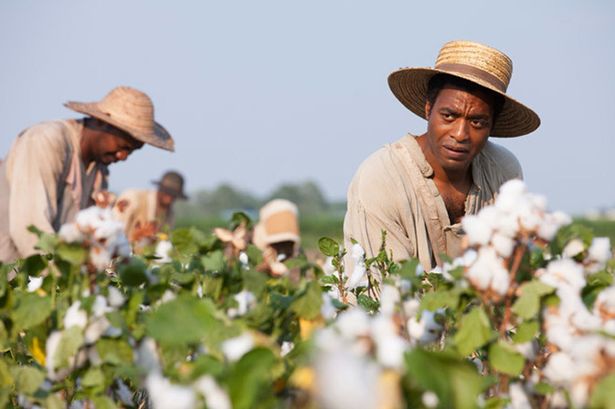
Chiwetel Ejoifor (right) recreates Solomon Northup's slavery expereince with brutal honsety in Twelve Years A Slave.
Chiwetel Ejiofor (right) recreates Solomon Northup’s slavery experience with brutal honesty in the film adaptation of Twelve Years A Slave.

Twelve Years A Slave is a landmark book for what it helped to overthrow. Adapting it to the big screen is a new challenge. Did the attempt from British director Steve McQueen work?

The movie begins with Solomon Northup in captivity. However it flashes back to when he lived as a free man in a town in New York. New York was a free state during the days of slavery and blacks were free even to the point where they could be businessmen. However he was tricked during a trip one day by slavetraders into touring with the circus. He was drunk that night and the following morning he finds himself chained to a floor and beaten. He was forced through brutal punishment to accept the name Platt and was sold in New Orleans to plantation owner William Ford.

His first experiences as a slave were not bad under Ford. Ford actually treats him with enough respect for Northup to give him a violin in gratitude. However things change when his boss becomes carpenter John Tibeats. Tibeats is terrible as he mocks all his slaves but takes a special dislike to Northup. Tensions go from Tibeats harassing Northup to the two fighting to Tibeats getting his men to hang Northup. Ford notices this and sells Northup away from Tibeats to cotton planter Edwin Epps.

Both Ford and Northup know Epps is cruel to his slaves and believes his right to be cruel to them is in the Bible. Northup insists to Ford that he’s a free man but Ford believes it’s not for him to say because he has a debt to pay. Epps places a demand on all his slaves they pick 200 pounds of cotton a day or be whipped. Throughout his stay, he is subject to brutal treatment from the Eppses and even a plague of the cotton worm where he and the other slaves are sent away to a temporary field. He is even betrayed in his attempts to freedom and has his letter to New York burned by Epps.

Meanwhile Epps is observant to the other brutality going on. Most notably to the female slave Patsey. She is excellent at picking cotton but has caught the jealous of Edwin Epps’ wife who repeatedly beats her. Edwin himself rapes her repeatedly and worsens over time. Patsey’s mental condition worsens to the point where she wants a suicide and even welcomes a whipping from Solomon ordered by Mistress Epps.

There is a ray of hope as Northup works construction along with a Canadian named Bass. Northup knows of Bass’ opposition to slavery by how much it disgusts Edwin Epps. Northup confides to Bass of his experiences. Northup again attempts a letter to pass on but Bass agrees to do so despite that being a risk to his life. The movie ends on a bittersweet positive note and provides information on what happened after the novel was published.

I’ll admit I’ve never read the actual book ‘Twelve Years A Slave.’ Nevertheless I consider it an accomplishment to bring it to the big screen for the first time. It gave an excellent depiction of the horrors and brutalities the slaves went through during the times of slavery. Those who don’t know all the details of what was all involved with slavery other than simply owning black people don’t know all the details. The movie in itself was a recreation of the slave life Northup experienced. This is a life that Northup experienced and witnessed and was a life with thousands or even millions of slaves experienced in the United States. It will shed quite a light and will give all the reason why slavery had to be ended. It will also surprise you with the fact that Solomon was one of the few slaves to escape to freedom. It will even cause you to think of the slaves that weren’t lucky enough to be free.

One thing that made me question was the state of slavery laws at the time. I may be Canadian but I knew of the Dred Scott Decision that had a bearing to the Civil War and the eventual end of slavery. What surprised me is that Northup was a free man living in New York State when he was kidnapped and sold off to Southern slave owners. That had me thinking there must have been some laws against kidnappings and even selling of African Americans from free states. I’m actually surprised to see that kidnappings of free black people by Southern slave traders happened back then. Makes me wonder if there were those that unlike Northup never got their freedom back.

Another thing that caught my attention was the scene where Edwin Epps whips Solomon mercilessly. A white man tries to stop him but he rejects, saying; “he’s my property.” It’s a reminder of the reason why African-American slaves were treated so abhorrently. The white owners looked at them as property that they can do whatever they wanted to them. They could whip them all they wanted or even kill them. They could even be raped in the case of Patsey. None of it would matter because they weren’t considered people. They were considered ‘property.’ And one thing that will strike you once you leave the theatre was how much the Southern states treasured slavery. This was something they valued to the point that when it became clear slavery would end in the United States, they declared their own nation: The Confederate States of America. They would even fight a brutal Civil War over four years with hundreds of thousands of soldiers killed for the sake of keeping their slavery, in which they’d eventually lose. Really makes you think.

The biggest accolade for the efforts given to the film have to be given to director Steve McQueen. Steve is actually a mostly unknown director in the past who had previously directed two previous feature-length films and 23 shorts. Watching Twelve Years A Slave will cause many including myself not to believe this is only his third feature-length. This is excellent and impressive. He did an excellent job of recreating the story and also bringing out excellent performances of actors famous, well-accomplished and those short on experience. What’s also surprising is that Steve McQueen is not African-American but British of Grenadian descent. I too find it surprising that it’s a black British director that has best depicted American slavery to the big screen. He already looks poised to become the third black director to be nominated for a Best Director Oscar. Not even Spike Lee was nominated in that category. The big buzz is will he win? If he does, he’ll be the first black director to do so.

The acting was also excellent. Chiwetel Ejiofor was excellent as Solomon Northup. It was not only of what he said and what he did but also what he witnessed that made his performance of Solomon. Supporting performances were also excellent too. Lupita Nyong’o was the one that stood the most out as Patsey: a slave that’s as tortured inside as outside. This is actually Lupita’s feature-length film debut. Excellent work. Michael Fassbender was also excellent as Edwin Epps. His jerk attitude made him that hateable. Sarah Paulson was also excellent as Mistress Epps. Even though her role didn’t have as much dimension as Edwin, she was just as hateable. Both made it look like the Eppses had a lust for blood and abuse. Even the performances from Benedict Cumberbatch, Brad Pitt and Paul Dano added to the film.

John Ridley did an excellent job of adapting Northup’s biography to the big screen. This is surprising as Ridley has more of a reputation for writing for television comedy. However he did write the story for 1999’s Three Kings. This was an excellent job for him. Sean Bobbitt did an excellent job of cinematography and Hans Zimmer did a great job for composing original music.

Twelve Years A Slave is an accomplishment of a film. An accomplishment in both acting and directing. The story may be too unwatchable for some but its brutal honesty is its best quality and help make it one of the best films of 2013.

Movie Review – The Hunger Games: Catching Fire

Catching Fire does include some elements that keeps it being too much like the first Hunger Games.

NOTE: I know this is awfully late to post a review of Catching Fire but I’ve had another lack of ambition in terms of writing this year. Those of you who’ve been subscribed to my blog for more than a year will remember the six week gap that began after the Oscars and left me with a March of nothing. Fortunately this gap ends today. However it explains this review coming awfully late.

I’m sure most of you have already seen The Hunger Games: Catching Fire. Heck, there are still people seeing it as it’s still in the Top 10 at the box office this weekend and about to pass the $400 million mark. In this review, I won’t focus too much on the nitty gritty as I normally do. However I will post my thoughts on it as I was watching. Being one who has not read the novels, I will have a lot to say from what I remember seeing.

Those of you who have read my review of the original Hunger Games may have gotten a sense I did not read the novels. Especially since I made guesses about what was to happen in future movies. The funny thing is in the first movie, I thought the new love between Katniss and Peeta was real. I should have known Katniss did it for the sake of both of them winning. If it was a real relationship, why would boyfriend Gale applaud at the end?

One thing about the ending of the first. It provides the catharsis for President Snow to visit Katniss and even threaten her. The funny thing about the beginning is that it tells the whole truth about Katniss’ love triangle. There’s Gale whom she truly loves. And there’s Peeta whom she faked love for the both of them winning but he truly loves her and is crushed with the truth. There’s also the whole Hunger Games charade. Champions have to tour year after year across the districts. That mean the Katniss/Peeta charade has to be kept alive. It’s not an easy thing to do as people see them as this thing and rebels are executed by militia. Even harder is Peeta adding to the charade by proposing marriage to Katniss.

As one who hasn’t read the novel, the Quarter Quell came to me as a total surprise. Each year you have kids killing for the win and now you have winners killing each other off? I’m sure there were others who thought: “Not another Hunger Games. Twenty-four winners competing to be the one still alive? Why?” I was confused by it all, even though I was made aware that this was part of President Snow’s plan. I was also thinking is this was going to be your typical movie sequel where they rehash the elements of the original.

The Quarter Quell does appear to be redundant as it involves a parade around the stadium and even the contestants introducing themselves to the crowd and showing off their costumes. Even the new high-tech training does appear to be a case of rehashing from the first. Having Heymitch back as their coach and Cinna back as their costumer didn’t make things that much fresher either. There was one new element. There’s Katniss interacting and even befriending some of the other contestants before the competition.

Then comes the actual competition. There comes deadly rivalry from some of the contestants. There’s even potential fatality from some of the virtual effects created by the games masters. The way Katniss reaches out and befriends some of the other contestants is only slightly repetitive of the first but it does have its own original moments with her befriending of Mags, Wiress, Beetee and even the obnoxious Johanna. The Katniss/Peeta relationship in this movie had me on the untrusting side. It left me wondering if this was real or fake for the show again. Even the addition of Finnick leaves me wondering about the love triangle as I wondered is he really helping or is he trying to get a piece of Katniss?

It isn’t until the very end of the movie that I learned that the real battle in this Hunger Games movie is not Katniss against the other competitors but actually Katniss against the whole Hunger Games institution. It was obvious she knew what President Snow was up to. It also gave Katniss a sense that the other contestants in the Quarter Quell were as much a victim of this whole Hunger Games system as she was. It was evident that they all wanted out and would be lucky to survive getting out. The ending of the movie left me with a lot of questions about what to expect for the final part of the trilogy. Make that ‘parts’ since the final novel will follow the examples of Harry Potter and Twilight and divide it into two movies. Way to go, Hollywood!

Now onto the technical stuff. Jennifer Lawrence was good but not that spectacular. I’ll admit that I compared it to her Oscar-winning role of Silver Linings Playbook and it just doesn’t compare. It’s hard not to now! Josh Hutcherson turned Peeta from a lonely homely boy to a boy now angry and hurting. Sam Claflin helped make Finnick the one fresh character that added to the movie this time around. Actually the characters of the contestants of the Quarter Quell were all quite good in terms of both their characterizations and in making their characters human and likeable. The characters of those pulling the strings of the Hunger Games like Stanley Tucci’s Caesar and Elizabeth Banks’ Effie may have come across as irritating and stockish at times but they added to the story. Actually they added to the theme of the movie of how there are these cartoonish people pulling the strings of the show while the contestants are mostly the real 3D people in this game. Even though they have a show to put on and a game to kill for the win, they still feel and hurt.

Now onto the technical stuff. Francis Lawrence did a good job of directing, even though there was nothing fresh added. Actually he’s slated to direct both Mockingjay movies. We’ll see how he works it. Once again I admit I’ve never read the novel so I can’t say how good of an adaptation Simon Beaufoy and Michael De Bruyn did. I will say that it did seem too much like the first. James Newton Howard did a very good job in terms of the score. The visual effects team did an excellent job with the effects. Trish Summerville did a very good job with the costumes. It’s unfortunate that the first movie’s costumes didn’t get an Oscar nomination. I shouldn’t be surprised since the Academy normally favors timepiece costuming over fantasy costuming. But is it deserving, even again here.

The Hunger Games: Catching Fire is bound to get a lot of people who haven’t read the novel surprised, then questioning, then surprised and then guessing at the end what to expect next. The good thing about this movie is that even though there is some redundancy, it doesn’t resort to Twilight’s trick of focusing on hot guys. It knows it’s mostly about the drama and sticks to it. That’s the best thing and I hope they keep it up for the two Mockingjay movies.

Movie Review: Captain Phillips

Captain Phillips

Captain Phillips is a recreation of a moment of recent history. It’s as much about the man involved in this moment as the moment itself.

Richard Phillips is a captain of freighter ships who lives in Vermont but pilots his freighter ships mostly in the Arabian Sea. One day in April 2009, he’s assigned to be a captain of a freighter bringing relief supplies from Oman to Mombasa, Kenya. He accepts the duty but is well aware of the risk of pirates from Somalia once he sails around the horn of Africa. Meanwhile in Somalia, a group of pirate leaders recruit young men for their next sting. It could be big, it could be small, it’s all in a day’s work.

Captain Phillips is sailing the freighter Maersk Alabama through the Arabian Sea. He’s also taking all precautions to prevent a pirate attack including getting the ship to participate in a drill. The pirates are hungry not just for a simple ship but bigger stuff. Their small rusty motor boats, or skiffs, have ship radar. They see the Maersk Alabama within their view and they chase after it. Fortunately Captain Phillips and the crew are prepared. The first day, the pirates’ motor blows on their boat. Captain Phillips and the crew think the have it solved. What they don’t know is that the pirates are fixing the motor in the boat overnight.

The next day the pirates try again. Captain Phillips and the crew again take precautions like using the hose system to prevent them from coming on board. The pirates notice an area where a hose isn’t working. Perfect opportunity to climb aboard the ship and hold the crew hostage. It’s there where pirate Muse and Captain Phillips meet eye to eye. Phillips tries to get them to leave by offering $30,000 but they want more: millions. The ship is able to shut the power down and able to make the pirates fail in their attempt. However the US forces have received word and have arrived. They try to negotiate with Muse only the have the pirates get away in a lifeboat with Captain Phillips as hostage. They hope Phillips will be their ticket for ransom.

That night the lifeboat is surrounded by navy ships and the crew is too frustrated and start turning on each other. Muse is stubborn with Phillips feeling he can’t go after going this far. The end scene adds to the intensity as it shows the whole standoff between the pirates, the Navy and the SEAL team. You’d be surprised to see how close Phillips was to being executed by the pirates. And even after you think it’s over, it’s not.

The most remarkable thing about the movie is that this is one that really depicts pirates for the negative people that they are. Admit it. We’ve all been charmed by pirate stories: Captain Hook, Captain Kidd, Jack Sparrow, Blackbeard, you get the idea. Even the popular lines like: “Arrrrgh Matey;” “Shiver me timbers” and “Yo ho ho and a bottle of rum!” show how charmed we are with them. However the news about Somali pirates have given us a reality check about pirates and what they do. This film even shows pirate really are: dirty, merciless thieves who threaten people on ships for their riches.

Another remarkable aspect the movie shows us is the sheer determination of those four pirates. You’d think that a group of four young Somali pirates not even 21 would not stand a chance against a huge freighter like the Maersk Alabama with all their devices and a prepared captain. However they were stubborn enough to fix a motor overnight, find a dry gap in the ship’s hosings, use a ladder to get to the deck, try a getaway with a lifeboat and even resist arrest with the US Armed Forces. The film is very focal on the pirates’ determination and their false sense of invincibility. It even shows how sometimes small has a competitive advantage over the big guy. It’s like that way in the animal kingdom too where insects can find their way into large prey.

Just as much as it focuses on the Somali pirates and their determination, it also focuses on Captain Rich Phillips himself. It especially focuses on Rich’s smarts as he knows about Somali pirates before the attack and even prepares his crew just in case, his smarts when he’s under attack on board and his smarts during the attempted getaway. Even the assault by the navy and the aftermath had Rich Phillips in focus. It was as much about Richard Phillips as it was about the pirates.

Tom Hanks once again delivered a remarkable performance: his best since Cast Away. It’s great to see him perform well in a movie that’s the least Hollywood-like I’ve seen him in. His performance really had a lot of range and was as much about Captain Phillips the person as it was about Captain Phillips the hostage. Equally as spectacular is the direction of Paul Greengrass. Actually It shouldn’t be that Greengrass, who made a name for himself with United 93 about a 9/11 terrorist operation botched by vigilante passengers, directs it. It’s like the film reminds us that the pirates of the seas are like the terrorists on airlines. Always were. Billy Ray did an excellent job of scriptwriting. Surprising that the writer of The Hunger Games is the scriptwriter here.

It’s not to say the movie’s all Tom Hanks, Paul Greengrass and Billy Ray. Barkhad Abdi was also excellent as pirate Muse. He makes Muse look like a pirate who didn’t have much of a clue to what he got himself into. Barkhad Abdirahman was also great as the vicious pirate Bilal who possessed a false sense of invincibility. The emsemble of lesser-known American actors added to the quality of the film. The only other well-known actor in the film is Catherine Keener. Actually it’s surprising to see the role of Andrea Phillips, Captain Phillips’ wife, as such a small role. The music of Henry Jackman and the cinematography of Barry Ackroyd also added to the quality of the film.

Captain Phillips is an excellent recreation of a moment in recent history that’s both about the moment and the man involved. Both Hanks and Greengrass do it again.

Movie Review: Ender’s Game

Asa Butterfield plays child genius Ender Wiggin in the family sci-fi thriller Ender's Game.
Asa Butterfield plays child genius Ender Wiggin in the family sci-fi thriller Ender’s Game.

Very rarely do I go to see a live-action family film nowadays. There isn’t usually one that makes me want to go out and see it. However Ender’s Game was one that caught my eye. It’s based on the novel written by Orson Scott Card.

It’s the future and the Earth is under threat from alien Formics. They’ve already attacked in the year 2086 but their advances were halted by a small reserve force which involved an attack which had commander Mazer Rackham sacrifice himself in the battle to win. The International Fleet or IF was created shortly after to protect the Earth from the Formics.

Years later, IF commanders Colonel Hyrum Graff and Major Gwen Anderson are screening out teenage cadets as part of their next battle. They’re impressed with the intelligence and strategic thinking of cadet Andrew Ender Wiggin both with his playing of virtual games and his ability to deal with rejection in a fake dismissal. Ender is a complex boy. He’s smart as he can deliver what it takes to win virtual games but has a sensitivity as he feels like a misfit because he’s the ‘third born’ and frequently confides with his older sister Valentine. However it’s when Graff and Anderson visit the Wiggin household that things change. They offer him a place in their battle school. It’s after an intimate talk with Graff that Ender accepts because: “it was what he was born for.”

On the trip to the school via the shuttle, Ender and the other recruits or launchies are given lessons of the school by Sargent Dap. Ender further impresses Major Anderson when she asks him to create a mind game for the sake of analyzing recruit’s emotional states. He creates a mouse and giant game where he causes a surprise win to Anderson’s amazement.

The intrigue on Ender continues to grow. Ender is then promoted to the Salamander Army headed by Commander Bonzo Madrid. Bonzo is a fierce trainer with an unlikeable personality. One of his top students, Petra Arkanian, takes a liking to Ender and teaches him how to shoot free time. Bonzo starts a feeling of dislike to Ender especially after he cheats with Petra during a training game and they win with a surprise attack. Ender continues with his mouse mind game where he also has a Formic, an image of his sister, a snake he kills off and his brother in the game. The military are further amazed with Ender and switch him to the Dragon Army. To everyone’s surprise, he defeats the other two army’s including the Salamander Army headed by Bonzo in a weightless battle contest.

Despite Ender amazing the heads of the military, things start to take a turn for the worse. Bonzo is infuriated with Ender after his army loses and challenges him to a fight. Ender seriously injures Bonzo in self-defence leaving Bonzo badly injured enough to return to Earth. The emotional toll weighs in on Ender and demands to be flown back to Earth and leave the army. It’s right after Valentine convinces him to stay and fight that he continues on.

Ender learns of his mission through a travel to a Formic outpost of the IT. It’s there through the image of the deceased Mazer Rackham that he learns of his mission and of his most deadly devise on their ship. Ender then becomes a commander and assembles the best launchies and trainies he’s been working with. They continue training up for a ‘Graduation Day’ exercise. Gaduation Day turns out to be a game but it turns out to be a lot more. After the outcome, everybody is happy with Ender and themselves for what they have done, except Ender. He’s remorseful and it’s only after meeting with one of the Formics in his mind that he makes clear what his next mission is.

The movie is intended to be both a sci-fi action film for the family and the first book of a potential series. The film shows Ender Wiggin as a fighter who triumphs via brain more than brawn. It was once said in a US Marines commercial years ago: “To compete, you have to be strong. To win, you have to be smart.” Ender’s that smart competitor who’s able to make his mind do incredible things even to the point of the supernatural in the virtual world. That was the type of hero Orson Scott Card intended with Ender Wiggin. However Ender is unique in terms of his sensitivity and feeling for others, including his enemies. In fact a unique quote from Ender appears at the beginning of the film: “In the moment when I truly understand my enemy, understand him well enough to defeat him, then in that very moment I also love him.” It’s there where we understand Ender Wiggin and how he’s able to do what he does. He’s a very unique protagonist in both how he thinks and how he feels and how someone so young can do all this.

You may remember how back in the summer I talked about big-budget action thrillers losing at the box office. I figured that the fall season would provide a better picture for them. It has been better but the outcome has been better for the more established movie franchises like Riddick, Insidious and Thor. Ender’s Game is a sci-fi thriller that is the first of the trilogy of Ender Wiggin novels. Any hope of future films rode on the success of Ender’s Game. The film debuted at #1 but with a weekend intake of only $27 million, it was questionable whether it would hit its $110 million budget. The latter weeks have shown it wouldn’t as it gained less and less. It now stands at just $55 million. It’s unfortunate that the success didn’t pan out, especially since this is 28 years in the making. However all is not lost. If there are no additional films, it may be turned into a television series.

Harrison Ford did a good job as Colonel Graff, even though I’ve seen him play better and stronger action roles. He shows that even after three decades he can still make the thriller. Viola Davis was probably the best scene stealer as Major Gwen. She showed that she’s able to upstage Harrison at times. Asa Butterfield was also very good as the protagonist Ender Wiggin. Actually he’s a major reason why I saw this. He impressed me in Hugo and I was looking forward to seeing how he would do in Ender’s Game. He did a very good job of playing a child soldier that was both an outside soldier and an inside soldier. Also he was able to give Ender more dimension with his sense of emotions and feelings. Asa helped make Ender a unique character. Ben Kingsley was also good in his role of Mazer but lacked scene-stealing qualities. The young supporting characters were also very well done. Haille Steinfeld made Petra likeable, Abigail Breslin was very convincing as making Valentine the source of Ender’s mental strength and Moises Arias was very successful in making Bonzo dislikeable.

Gavin Hood did a very good job in terms of directing. The screenplay was also done well but I feel the ending could have been done better. His best effort is the South African film Tsotsi which won the Oscar for Best Foreign Language Film but he already has experience in directing sci-fi with directing X-Men: Wolverine. The movie’s qualities that most stand out are its visual effects and the score by Steve Jablonsky. The film did have some controversy as Orson Scott Card’s opposition to the same-sex lifestyle and gay marriage has caused outspoken critics and pundits. Card has defended his views each time. As for my feeling, I feel Card’s opinions should not matter in terms of this film because his opinions are not made present in the film anyways.

Ender’s Game is an impressively smart sci-fi film for families and young adults. It’s a very smart story that’s very well-done. However it does fall prey to the box office because of its lack of buzz and tight competition of other sci-fi releases this November.

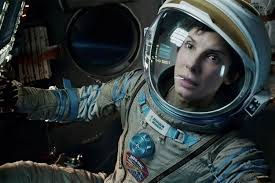
Movie Review: Gravity

Sandra Bullock plays a rookie astronaut who struggles to survive in space after a freak accident in Gravity.
Sandra Bullock plays an inexperienced astronaut who struggles to survive in space after a freak accident in Gravity.

DISCLAIMER: Okay, I know Gravity has been out in theatres for weeks. Even I saw it almost a month ago. But as you can tell from my VIFF writing, I lacked the ambition to write for weeks. It’s only until now I’m getting it back. So I hope you understand. Also I hope you like my review.

Gravity is a movie that promises not to be like your typical outer space movie. The trailer also promised a thrill ride. The question is does it deliver?

The film shows a space shuttle mission commanded by two people: Dr. Ryan Stone and Matt Kowalski. This is Ryan’s first journey. She receives guidance from Matt: a veteran on his last shuttle trip. It is while they both service the ship’s hubblescope that they learn the Russians did a missile strike on a defunct satellite. It appears to be no big deal until the debris comes straight to their spaceship. The debris detaches Stone, damages the shuttle to the point it’s unusable and leaves the rest of the crew dead. Fortunately Kowalski is able to catch Stone before she flies away into oblivion.

Stone and Kowalski are the only two survivors left. They know they have to make it to the International Space Station (ISS) within 90 minutes to avoid the orbiting space debris. The two talk. Stone admits she hasn’t had a happy life since her young daughter died. They approach the ISS finding many of the Soyuz models inoperable. Kowalski finds one still operable and suggests it be used to travel to a Chinese space station to return back to Earth. However the force of weightlessness becomes too much for the two to travel to the Soyuz together. Kowalski leaves Stone to the Soyuz despite her protests and floats away.

Stone is left on her own in the ISS trying to get to the one safe Soyuz even as there’s a fire in the ship area. Fortunately she finds her way there in time as the debris make a return orbit to commit further damage. Stone tries to communicate with the Chinese ship only to come across audio of a Greenlandic fisherman cooing his baby. Stone turns off her oxygen resigned to giving up. She receives a change of heart from Kowalski where he scolds her and tells her to go on and she receives instructions.

Stone immediately realizes that her conversation with Kowalski was a dream but she develops the will to go on. She directs herself to the Chinese capsule only to learn that it’s been damaged too. She immediately has to find her way to land back to Earth. She has to do it and time is running out. Nevertheless the movie ends as many believe it will but actually not as many originally though the ending would be.

This is one of the best and one of the most unique against-all-odds stories I’ve seen in a long time on the big screen. If you’ve seen it, you’ll know everything was against Ryan. She suffered tragedy in her life and made a loner of herself. She was completely inexperienced in space travel and nothing disastrous was expected to happen. The debris of the satellites leaves the ship damaged and the crew dead. Then Matt Kowalski, her partner in need, floats off into oblivion. She’s left all alone to fend for herself, try and work two damaged spaceships she has no clue how to operate and with broken communication and bring herself back to Earth. Being in the theatre will leave one at the edge of their seat not knowing what will happen next. I myself remember feeling the intensity of the moment during its high-tension scenes. Once you thing something is solved, it turns out that it isn’t and a new decision has to be made.

The best thing about this movie is that it’s not just and outer space thrill-ride. It’s a thrill-ride that’s able to keep its focus on one main actor practically throughout the whole movie and it succeeds in being both entertaining and thrilling. Even having it almost completely in space without ever really focusing outside of it during the space scenes also adds to it being an accomplishment. I remember 127 Hours attempted to focus on one person and their story but there were a few times it shifted away in flashbacks or other scenes. Gravity was better at the focus. It was almost like watching a moment in real-time.

Without a doubt, Sandra Bullock was the performance of the movie. She was the lead role and it was her movie technically from start to finish but she did all the right moves. She succeeded in making her character not just a player in the action but a three-dimensional person with deep feelings. That’s what made the movie more. George Clooney also did well in his supporting role. His role didn’t include the depth or range as Bullock’s but he succeeded with his presence and playing an experienced astronaut who’s cool under pressure.

The big accomplishments go to Alfonso Cuaron and his son Jonas. Alfonso directed it. Alfonso and Jonas both wrote it. Alfonso also co-produced and co-edited it. They took a story one normally could not create a good box office-winning movie with. Trying to turn a story like that into an eye-catching movie would take a huge amount of effort and may needs the right effects to be added to it to make it work. But they made it work. The cinematography from Emmanuel Lubezki and the music from Steven Price also added to the excellence of the movie.

Gravity is a sci-fi movie that goes above and beyond what one would expect from a space movie. No big space wars. Just one person and their struggle to stay alive and make it back to Earth. A tough job to turn into a winning picture but it succeeds brilliantly.

A VIFF 2013 Wrap-Up: Better Year Than Expected

Cinema

The 2013 Vancouver International Film Festival wrapped up show on Friday, October 11th. Almost 350 films were shown on nine different screens in seven movie venues over the sixteen days. This year was expected to be a nervous one as it was trying to fit a new venue format but it worked out well in the end.

Getting used to new venues was part of this year’s VIFF. It was with that with us volunteers, the supervisors and the VIFF heads. The theater I volunteered at, the SFU Woodwards, was unique that it was located in the Woodwards Square of Gastown. It’s also a campus for film and theatre students of Simon Fraser University. The theatre itself was very good. It’s both a screen and a classroom with a seating capacity of 350. Also the theatre didn’t have concessions but the shopping square had no shortage of eating facilities.

One of the challenges of this year was separating moviegoers from students. Another was knowing how to set up lines. The venue consisted of the main floor, second floor and theatre on the third floor. On the first day we had the box office on the main floor and throughout the VIFF. Thus we’d have the ticketholders on that floor. We’d organize passholders in a line in the outdoor area of the second floor. On the third day we’d have ticketholder and passholder lines all outside. That became a concern because of the rain. After that we returned to having ticketholders indoors on the first and passholders indoors on the second. A bit of getting used to.

I was able to take advantage of my film viewing opportunities as often as I could. One highlight was the Rio Theatre showing films at 11:30 in the evening. That was actually one of my best chances to see films. Yes, I’d be very tired the following morning but it was worth it for my VIFF fix.  This year featured an additional treat for volunteers however it would have to wait until after the Festival was officially finished. The treat was free films for the repeat screenings in the week that followed the Festival. Volunteers were allowed only 5% of the seats during the actual Festival but repeats allowed for 20% of the seats up for volunteers. That explains why you see so many of my reviews coming late. It was great for me because it allowed me to see three more films and do some more volunteering at the SFU Woodwards Theatre. Oh yeah, that’s another thing. VIFF repeats were not strictly limited to the Vancity theatre this year. They also added in repeat screenings at both the Rio and the SFU Theatre on Saturday and Sunday. I volunteered at SFU that Sunday and finished the night taking stuff from both SFU and the Rio back to the storage of the main VIFF office downtown.

Those who’ve followed my blog may have noticed I saw sixteen films in total both at this year’s VIFF and the week of repeats. They came from many countries around the world like the US, Australia, South Africa, Israel, Iceland, Mexico, Poland, Croatia, I could go on. The list could even be extended if I add in filming locations like Laos, Cambodia, Cuba or India. The films ranged from dramas, to comedies to thrillers to documentaries to horror films. The quality ranged anywhere from film for art’s sake to moviemaking to getting their message across. The material ranged from entertainment-driven to message-driven to envelope-pushing to family friendly. I also saw two nation’s official entries for Best Foreign Language Film category at this year’s Oscars: Heli and The Rocket. One thing I felt I missed out on this year was my fix of short films. I did get a fix of it over at the reel Youth Film Festival but I would have liked to have seen more shorts shows. Also I only saw two Canadian films. Hopefully I’ll see more next year. If you want to see all my reviews of VIFF films, just click here.

The Festival also ended on a positive note for us volunteers. We were all given a volunteer screening at the Vancity Theatre to attend. Actually the VIFF organizers had to do two volunteer screenings of the film in order to accommodate the 700 volunteers for this year. I went to the one that was held late Friday evening. It was a good occasion. Out in the lobby there was your typical party food and we were all treated to at least one free drink. I was able to meet with people I volunteered with. There were door prizes given to people before the movie was shown. Then we were treated to The Fantastic Mr. Fox. I actually saw it four years ago but I was cool with seeing it again. Also have you ever noticed the things you see in a movie the second time you forgot you saw the first time?

As for the Festival itself, the Festival films attracted a total of 130,000 in gated admission. As a flat number, that’s 7% lower than last year  and 20,000 shy of 2011’s record but that’s actually a very optimistic number to the VIFF staff. The reason being the new theatre facilities had less total capacity than those of last year and the VIFF staff were anticipating a smaller number. Don’t forget there were some facilities that took some time off from showing VIFF films. Like the SFU theatre had all of Monday the 6th off and the evening off on the 7th. Also the three screens at the International Village stopped showing movies on Sunday the 6th. Media coverage was extensive and mostly positive. Audience and filmmaker feedback was also very good regarding the films shown and the facilities. The VIFF wrap-up report called the ticket numbers ‘a record year.’ I assume that ‘record’ would be based on a per-screening analysis which is a good estimate of over 250 per screening.

Here is this year’s VIFF by the numbers:

-130,000+: gated attendance
-1000+: Film and Television forum delegates
-700+: volunteers
-515: public screenings
-341: films shown

  • 212: feature length (60+ minutes)

-92: Canadian Films shown

  • 31: feature length
  • 55: shorts
  • 6: mid-length

-85: non-fiction films shown

  • 73: feature length
  • 17: Canadian

-75: countries entering films
-64: Canadian premieres
-41: North American premieres
-27: International premieres (first screening outside home country)
-26: World Premieres
-16: days of showing films
-15: entries in the Best Foreign Language Film category for this year’s Oscars shown
-9: screens showing films
-7: theatres participating in the VIFF

Bonus Stats:

-27: media screenings

-26: VIFF repeats

Another year of good numbers. Now I know some of you want to know what were the award winners, right? Here they are:

ROGERS PEOPLE’S CHOICE AWARD

-LIKE FATHER, LIKE SON  (Japan) dir. Koreeda Hirokazu,

VIFF MOST POPULAR INTERNATIONAL DOCUMENTARY FILM AWARD

-DESERT RUNNERS (USA) dir. Jenifer Steinman

VIFF MOST POPULAR CANADIAN DOCUMENTARY AWARD

WHEN I WALK, dir. Jason da Silva

VIFF MOST POPULAR ENVIRONMENTAL FILM AWARD

-SALMON CONFIDENTIAL(Canada) dir. Twyla Roscovich

VIFF MOST POPULAR INTERNATIONAL FIRST FEATURE

-WADJDA (Saudi Arabia/Germany), dir. Haifaa Al Mansour

VIFF MOST POPULAR CANADIAN FILM AWARD

-DOWN RIVER, dir. Ben Ratner

WOMEN IN FILM AND TELEVISION ARTISTIC MERIT AWARD

-SARAH PREFERS TO RUN (Canada) dir. Chloe Robichaud

DRAGONS & TIGERS AWARD for YOUNG CINEMA

-ANATOMY OF A PAPERCLIP (Japan) dir. Ikeda Akira

Runner-Up: TRAP STREET (China), dir. Vivian Qu

Special Mention: FOUR WAYS TO DIE IN MY HOMETOWN (China), dir. Chai Chunya

BEST CANADIAN FEATURE FILM AWARD

– (tie)RHYMES WITH YOUNG GHOULS, dir. Jeff Barnaby

THAT BURNING FEELING, dir. Jason James

MOST PROMISING DIRECTOR OF A CANADIAN SHORT FILM

-Matthieu Arsenault for NATHAN

Honorable Mention: Timothy Yeung for 90 DAYS

BEST BC FILM:

-THE DICK KNOST SHOW, dir. Bruce Sweeney

MUST SEE BC AWARD:

-LEAP 4 OUR LIFE, dir. Gary Hawes

BC EMERGING FILMMAKER AWARD:

-Matthew Kowalchuk for LAWRENCE & HOLLOMAN

So there you go. Those are the winners of the 2013 Vancouver International Film Festival. A good end to a great VIFF. I know this year was a nervous year as we didn’t know what to expect with a new set of theatres to work with. Nevertheless it turned out great and we had our best per-screening rate ever. Next year’s VIFF is scheduled from September 25th to October 10th, 2014 and should be bigger and better. Also I hope one year the VIFF grows to achieve accreditation from the FIAPF: the International Federation of Film Producers Associations. Most of the big Film Festivals are accredited and the VIFF being accredited should definitely add to its attraction. Anyways see you next VIFF!

VIFF 2013 Review: Felix

Hlayani Junior Mabasa (right) plays Felix, A South African boy with jazz dreams.

The last film I saw from the Vancouver Film Festival repeats was Felix. Felix is an entertaining movie of a South African boy with musical talents. How entertaining is it?

Felix Xaba is a 13 year-old Zulu boy gifted in music as he’s an expert at the pennywhistle. He lives in a Zulu area of Cape Town. His mother Lindiwe or ‘Lindy’ wants her children to have the success she never had so she is able to get Felix accepted into an exclusive all-boys prep school. This comes thanks to the help of Mr. Soames: a rich white man whom Lindy is his maid and is a former graduate of that school. Fitting in is not that easy especially since there is a lot of elitist attitudes amongst some of the richer boys of his classrom, especially Junior whom he ranks Felix as NOCD: ‘Not Our Class Dear.’ A punch from Junior during rugby practice leaves Felix with a bad first day. Further ostracism is felt days later when Felix is mocked for his green bag.

Felix does find his way. He does make friends with the big but shy Ricardo and the awkwardly friendly and goofy Samuel. They’re frequently at odds with the ‘elite’ clique of Junior, Marshall and Rocky. Felix wants to make the school’s jazz ensemble but can’t with the pennywhistle. Jazz music however is discouraged by his mother. She calls it the ‘Devil’s Music’ and believes if Felix pursues it, he will be like his late father, whom she refers to as ‘useless’ in front of her children but secretly still loves him. The children soon learn Lindy still loved their father when they come across the ‘evil chest.’ They learn it’s not evil at all. In fact it has memories of their father: various pictures, magazine articles of him and his band the Bossa Boys and even his own saxophone which Felix tries to play to make the jazz ensemble.

Felix tries to re-audition for the jazz band. During the wait, he finds help in learning to play the saxophone from Bra Joe, a former member of the Bossa Boys. All lessons have to be secret because he knows his mother will get angry at him for learning jazz and has a certain hatred to Bra Joe. Actually Lindy has a reputation of being the village snob. The one place where she is friendly is with her church choir. Through Bra Joe, Felix is able to learn to play the saxophone, learn sheet music and learn about his late father.

Everything turns upside down when Lindy learns Felix went into the chest and took the saxophone. She then pawns the saxophone. To get it back, the Bossa Boys hold a reunion concert that’s a benefit concert for Felix. The Bossas try to get the villagers to attend and Ricardo and Samuel try to get schoolmates and their families attend. The concert comes and theplace is packed with villagers and schoolfriends alike. , Felix and the Bossas put on a great show and the money is raised to get Felix’s saxophone back.

However it comes at the expense of Lindy as she disowns Felix. The final act comes after Felix succeeds in re-auditioning. He’s able to impress his strict instructors and he’s eligible to perform in the upcoming show where he has a solo part and a performance with the Bossas. Everybody involved with the school is coming, even Mr. Soames. But Lindy refuses. She still stubbornly disowns Felix. Only time is running out. This leads to an ending that is somewhat predictable but enjoyable nonetheless.

This is a very enjoyable family movie that succeeds in being entertaining without being overly ridiculous. There are some times when the movie does tread on some things like racism and the hard times of apartheid but it succeeds in not making it too heavy for the sake of it being a family movie. Actually the movie is shown mostly of blacks and whites conversing and getting along quite well in the movie. Even Mr. Soames treats Lindy like a friend instead of his maid. The movie does remember to portray the South Africa of today. Even scenes where there’s talk of the death of Felix’s father, including that scene where Felix asks Bra Joe why his father drank himself to death, came across as not too harsh as not to ruin the family-friendly atmosphere of the movie.

If there was one issue this family friendly movie focused on most, it was classism. It does show the separation between the rich and the working-class. It’s evident in Junior and his clique labeling outsiders as NOCD. It’s evident as one of the schoolmasters thinks that being labeled ‘elitist’ is a good thing. It’s also evident as one member of Junior’s clique, Marshall, is black coming from a wealthy political family and he treats Felix as an outsider. It also shows about the sometimes unfair world about privilege. It’s first evident not necessarily in the school but with Mr. Soames as he shows Lindy his tie from the school and says: “This opens doors.” Even Lindy’s attitude as she struts around her village thinking she’s too good for the village and she’s going to get her children out by sending them to prep school is another example of the theme of elitism. Nevertheless it’s Felix and his musical pursuits who shows that class is another border music can cross and actually unite the classes together in harmony.

Without a doubt this is a family movie that follows a familiar formula. It’s a child coming of age and doing what’s in his heart and desire despite the opposition of a parent. I’ve seen the formula before. The only way for a film like this to succeed is if it does the story right and if it makes you want the protagonist to win in the end. The movie does more than just simply make us want Felix to perform at the jazz recital despite Lindy’s opposition. The movie also wants to make the mother heal from the loss of her husband. We know that Lindy secretly still loves Felix’s father despite drinking himself to death. We also know the real reason why she considers jazz music evil: because she blames it for her husband’s death. The movie’s story succeeds in being a risk-taker in the plot. Felix’s pursuit of jazz, especially through playing his late father’s saxophone, could either help her heal from the pain or make it worse. That adds friction to both sides of the story. It’s something that not even Mr. Soames having tickets to Felix’s recital can soften Lindy’s heart.

For all intents and purposes, this is a feel-good movie that did all the right moves. There were many instances in the movie where the feel-good moments would normally come off wrong or ridiculous but it did things right. Some may feel the ending of it to be too fluffy or sugar-coated but we shouldn’t forget that this is intended to be a family movie. Besides name one classic family movie with a sad ending.

This is yet another example of countries trying to lean more towards creating movies and maturing past making simply films. And it’s not just simply making a movie loaded strictly with entertainment elements. They want to put effort into the story and deliver a professional winsome product. Felix is a good example of the South African film industry doing so. And it’s not just any type of movie but a family movie. Film industries around the world have always tried to make family entertainment. Very rarely does one stand out and catch the world’s attention. Felix appears poised to do just that.

Right now making live-action family movies is in a bit of a slump for Hollywood. It’s been a while since they’ve shelled one out that has fared well at the box office. Most family movies that have fared well in the last few years have been the animation movies. Felix doesn’t feel the pressures of Hollywood. The South African film industry is an industry that has little to lose and everything else to gain. A movie like Felix can gain a lot if distributed internationally. I see a lot of elements in the movie that can allow this film to excel internationally whether it be on the big screen or DVD. It just has a lot of charming ingredients that succeeds in entertaining.

The biggest accolades has to come from Hlayani Junior Mabasa for playing the musically gifted Felix Xaba. He was entertaining from start to finish and never let go of his scenes. Lina Sokhulu was also very believable as Lindy. She had to personify a woman with many different personalities: struggling, confused and hurting. She delivered a performance that was very well without interfering with the family-friendly atmosphere of the movie. Thafelo Mofokeng was also very good as the warm Bra Joe. Actually it was Bra Joe’s easygoing personality that seemed to make the hardest issues in the movie come across easier. The ensemble of both the young actors and the older actors and musicians also worked to make it enjoyable.

The thing that will surprise most people is that Felix is actually written and produced by women. It’s directed by Roberta Durrant who has an excellent resume in terms of film and television production in South Africa. In fact she has even received a Lifetime Achievement award for her contributions to film and television in South Africa. Shirley Johnson is a new writer with credentials in writing for television and stage and is an experienced actress. In both cases this is Johnson’s first time writing for a feature film as this is Durrant’s first time directing a feature film as well. Actually the script for Felix was an idea that started by Johnson back in 1995, finished the original draft in 2004 but only now came to full fruition. The end result is very professional, very impressive and very entertaining. The music ranging from the school band to the Bossa Boys to the church choir was also top notch and made the movie.

Felix is a fun entertaining family movie from South Africa. It’s a feel-good movie you don’t have to feel guilty liking. Reminds film festival crowds that audience satisfaction is not a weakness in film making.

VIFF 2013 Review: The Rocket

Ahlo, a Lao boy, attempts to win a rocket-launching contest to bring his family good fortune in The Rocket.

The Rocket is Australia’s official entry for the Best Foreign language Film category for the Academy Awards. The question is how does it fare as a film?

The story revolves a young Laotian boy named Ahlo. Ahlo’s birth is supposed to be a happy occasion but is not as a stillborn twin is born shortly after. Even though Ahlo is the one who survived, the grandmother is still suspicious of him, believing that a twin can either be good luck or bad luck.

Ten years pass. Ahlo is a typical normal boy in his Laotian village protected by a dam from an Australian corporation. However all residents in the village have to relocate as the corporation is proposing a second dam which will flood the village. All the villagers including Ahlo, his parents and grandmother pack up to walk to their new home planned by the corporation. It’s a long walk to the area and they have to use a boat to transport their goods. Unfortunately while going up a hill, they lose grip of their boat and it hits the mother, killing her. Once again the grandmother feels Ahlo is a bad luck child. Even the father feels that sense.

When they reach the top of the hill, they learn their settlements are not finished, leaving everyone to create a temporary village of makeshift shelters for themselves. Ahlo continues to get himself into trouble and damages many properties. However he does find a friend in a young girl named Kia. Kia lives with her eccentric uncle in a small shack. She is an orphan, losing her parents to malaria and has a fear of water. Her eccentric uncle is a James Brown fan who dons his hairstyle and a purple outfit in his like. They make Ahlo feel welcome but the uncle is also shunned by the village, including Ahlo’s father who warns him to stay. Both cause problems: Ahlo with constantly getting into mischief whether with Kia or himself and Purple for stealing electricity. It’s right after Ahlo damages sacred areas in the village that they’re all chased out.

The five of them–Ahlo, the father, the grandmother, Kia and Purple–reluctantly travel to another rural village together. The village is only temporary as it is on an area littered with undetonated bombs that belonged to Americans during the Vietnam War. The father contemplates taking the family to the city where they can find labor jobs. This would mean Ahlo would never be able to see Kia or Purple again.

Ahlo gets an idea when he learns about an annual rocket launching contest held by the nearby village. The prize money is good enough for all to start a new life anywhere. Ahlo wants to make a rocket of his own but most believe it would be both dangerous and impossible for a child to construct a winning rocket for the contest. However Purple believes differently and gives Ahlo an idea. The father builds a rocket of his own to prevent Ahlo from entering. However Ahlo is stubborn enough to saw off a bamboo bush and get bat dung from a bat cave to make it.

The festival starts and Ahlo is still at work on his rocket. The contest is pretty chancy. The rocket has to fly straight in the air. If a rocket fails, the flyer is humiliated by being thrown into the muddy river. The contest is also dangerous as seen when one man’s rocket explodes with him launching. The result of the contest ends with a somewhat predictable moment. Many would have guessed the ending by now. However the full ending is a total surprise and a delight.

I will admit that this is a common formula of a person beating the odds to win. We’ve seen it before. However this does take a different turn of events. This is not simply about a simple child trying to win a contest. This is more about a boy considered a ‘bad luck charm’ trying to win good fortune to his family after so much misfortune has happened to them. The setting of an impoverished location like the bomb-ridden valleys of Laos may give some reminders of Slumdog Millionaire. The superstitious attitude of the Lao people comes off as a bit foolish. I guess it’s also here where the movie is attempting to defy the superstitions.

Some may see it as a family movie since this is a story of a boy who’s able to help his family out. However there are some things that many may feel are too dark or a discussion starter from children that’s too soon to happen. I’m sure if children saw this, they may ask about the country of Laos and why the people had to be moved. The images of all those bombs I feel is also too much for the children. Also questions about Lao tradition and believe, of why Ahlo suspect of being a ‘bad luck’ child because he’s a twin, will also be things parents would not be prepared to answer.

It’s interesting that this film is Australia’s official entry in the Best Foreign Language Film category for the Oscars but it’s not in say one of the languages of the indigenous of Australia. Instead it’s in the Lao language. Also interesting is that it takes place completely in Laos. The Australian things about this film is that it was done by an Australian director and the films plot includes an Australian corporation building a dam which causes the Lao villagers to move. Once again this is a case of a film making one think about what would define a film from another country, especially one that’s running in such a category. It’s just like last year where Canada’s nominee Rebelle was a story situated in Congo and the winner Amour was an entry from Austria because of Austrian director Michael Haneke even though it was situated in France and in the French language. I guess that category is always subject for discussion.

One thing to take note of is that Laos has never submitted an entry into the Best Foreign language Film category ever. I don’t think that they would want to do it with this film as it makes Laos look like an impoverished country with undetonated bombs all over the place. A bit of trivia: director Kim Mordaunt once did a documentary released in 2007 called Bomb Harvest of Laos being a dumping ground of unused bombs by Americans during the Vietnam War. One thing to note is that Australia isn’t shown as the good guy as it’s an Australian corporation causing the people to relocate themselves.

This was very good work from Australian director Kim Mourdant. She has already had experience as an actress including being a former cast member of Australia’s famous drama series Home And Away. She’s started writing and directing in recent years. I’m unfamiliar with her previous works but this film is very well-written and well-thought out. She has to be very familiar with Lao culture and Lao tradition in order for this to look true. A great performance from newcomer Sitthiphon Disamoe. A street kid in real life, Disamoe is an excellent discovery for this film. Loungnam Kaosainam is also great and charming as Kia. Most of the main actors are newcomers with the exceptions of Sumrit Warin and Alice Keohavong, a Lao-Australian actress with a healthy resume in film, television and theatre.

The Rocket follows a familiar premise but adds its own elements into it. It makes for an impressive film that will cause you to think but also keep your faith in hope.

VIFF 2013 Review: Antisocial

Antisocial is a Canadian-made bloody gory teen horror thriller that's very impressively made.
Antisocial is a Canadian-made bloody gory teen horror thriller that’s surprisingly high quality and entertaining.

I’ll admit that I didn’t see as many Canadian films as I hoped to see at the VIFF. Antisocial was one I did see. It was the very last movie of the official Film Festival shown: starting at 11:30pm at the Rio Theatre. It proved to be an ambitious work from Canadians at moviemaking, particularily at horror filmmaking.

The movie begins with an introduction of two girls filming what appears to be a simple video about clothing only for it be one torturing the other and killing her. Later on New Years Eve a college girl named Sam interacts with her boyfriend through a social website called The Social Redroom. It goes bad as he breaks up with her. That leads her to delete her account.

She tries to party it up with her friends to help try to forget the problem. Four of her five friends have active accounts with The Social Redroom. Unknown to them is that an epidemic is spreading outside of them out on just as they’re about to party. The epidemic gets worse and reporters show how this is affecting the world. They even trace it back to The Social Redroom. The founder of The Social Redroom even makes a video of his own warning people of a deadly tumor transmitted to its users. Then Sam and her friends get their first notice when one of their outside friends is a monster infected by this virus. The virus soon spreads throughout the campus. Those of the friends with accounts to The Social Redroom are most at risk. Now the infected are coming after their blood.

There is a way to rid one of this virus but it’s to come out of their bodies. So it’s up to Sam and her friends to try to protect each other. They try to look for everything. First the video of the original two girls to trace its origins. Then the warning video of The Social Redroom founder, in which he commits suicide. Then finding information to rid the tumor being transmitted via The Social Redroom. Then Sam to defend herself and then rid herself of the virus.

I don’t think the filmmakers intended on giving a negative message about social media sites. Anyone who sees this knows that The Social Redroom is a Facebook-like site. In fact looking at this movie, I feel it’s more of just an attempt at trying to make a teen horror movie. That’s it: nothing more than a teen horror movie meant to scare them for their entertainment pleasure. I will have to say this is a very good effort at putting one together. It features many ingredients that would make for your typical entertaining horror movie. There’s the paranormal, the action happening at a college dorm, and the all-too-common phenomenon of social media and giving everyone all the details. The visual effects, horror make-up and even the climactic moments of horror didn’t come across as too cheesy or amateurish. Even the ending didn’t look bad. It ended on the right ridiculous note. The musical score was also a good addition to the horror story as well.

I will admit that it doesn’t have the big-star fuel that Hollywood teen movies have nor does it have the mass marketing given from Hollywood to make it excel at the box office. Oh yeah, it also lacks the shirtless scenes of guys that have been standard ever since the Twilight movies. Nevertheless this is a very entertaining movie that was put together very well and very professionally. I had a hard time trying to find a moment that was very amateurish. I even found it hard to notice a moment from one of the actors that lacked believability. Michelle Mylett was good in what is her first acting role. Also good is Cody Calahan in his first ever direction of a feature-length film as well as co-writing with more experienced writer Chad Archibald. I felt it was kind of like The Ring mixed with 28 Days Later with Night Of The Living Dead mixed in.

Okay I’m sure a lot of you are wondering: “What’s a film like this doing in a Film Festival? Film festival films are supposed to take the art of filmmaking to new lengths.” True but not 100% true. The Vancouver Film Festival is an event that showcases filmmaking quality from around the world including Canada but it’s also an opportunity to have films for further distribution. Some films will go on to the big screen for bigger and better things. Some will find their way on DVD, Digital Movie Websites or movie television networks. And then there are some where the VIFF will be the furthest it gets. Antisocial made its debut at Montreal’s Fantasia Film Festival. It continues to make appearances at various film festivals. Good buzz for it can help it get picked up for further distribution. We should remember few English language Canadian-made movies make it to the big screen. Nevertheless I see good potential for this film. We’ll have to see.

Antisocial is a teen horror thriller that lacks the star-studded buzz but is excellently put together and goes beyond its modest expectations. All it needs is more film fest buzz to develop a crowd to give it a fair chance.

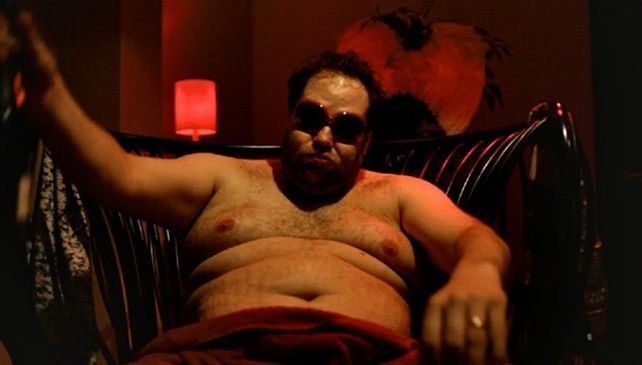
VIFF 2013 Review: XL

Olafur Darri Olafson plays a debaucherous Icelandic senator in XL.
Olafur Darri Olafson plays a debaucherous Icelandic senator living it up before rehab in XL.

XL is something unique: a feature film from Iceland. Just as unique is the story and the subject matter. Question is how watchable is it?

The story focuses on Leifur Sigurdarson, a senator in the Icelandic parliament. Leifur has been told by the Prime Minister of Iceland that he is about to be placed into a rehab clinic. His alcoholism is that obvious. Leifur then decides to live his ‘last few days of freedom’ with a bang.

He is known for his tempestuous relationship with his girlfriend Aesa. He gets involved with all sorts of kinky games with Aesa and even sado-masochism. The two of them also live it up together with some of his rich friends who also like to live life in the fast lane. They all go from bar to bar having their fun and doing whatever they want.

Despite this orgy of debauchery, Leifur receives constant reminders from others about what he’s headed towards. Politicians remind him, family try to reach out to him and even his daughter from a past marriage tries to remind him of who he’s neglecting. Nevertheless Leifur continues on with his debauchery. It isn’t until the last day that he’s reminded that time is running out and he can’t handle it any more.

It is possible that the director is trying to send a message in this film of the corruptness of politicians in Iceland, especially as it headed to economic collapse in 2008.Iceland has always been ranked as one of the Top 10 least corrupt countries in the world according to Transparency International’s annual Corruptions Perception Index but it’s not to say that corruption doesn’t exist there or even in the other top nations. Even in the least corrupt nations in the world there are sleazy senators or debaucherous congressmen. Even heads of state can commit their own sleaze.

However the film caused me to question what the purpose of the film was. Was it to make a statement about corruption in Iceland? Was it to push boundaries or even envelopes with the material? Was it to be artistic? I was left undecided when I saw this. All too often it seemed like the film makers were putting huge focus on Leifur’s debauchery and even the sadomasochism. I was often tempted to think it was trying to put the heaviest emphasis on the shock value. Even the artistic elements like making a stage play out of Leifur’s life appeared confusing especially since it wasn’t put in as consistently. Sometimes there were some artistic merits the film makers took that even appeared like it was bad editing. I was left with the frank impression that this lacked a definite direction to what it was attempting to show.

This film is the latest effort from Marteinn Thorsson. He worked for Canada’s The Movie Network in the past directing ads and promos. His first film One Point O helped put him on Variety magazine’s list of ‘Top 10 Directors To Watch’ in 2004. He also directed the critically renowned drama-comedy Stormland from two years ago. I’ll admit I’m not familiar with his style of filmmaking but I still stand by what I say that this film he directed and co-wrote with Gudmundur Oskarsson doesn’t make its intentions or its point clear. Even if he’s trying to make a statement about political corruption, it looks like he’s making more of an effort trying to entertain us with shock value. The film has receives some renown. It was nominated for the Crystal Globe at the Karlovy Vary film festival and the performance of Olafur Darri Olafson won Best Actor at that festival.

If there was one standout from the movie, it was the performance of Olafur Darri Olafson. His performance as Leifur was very complex as he went from the king of debauchery to this man with a problem. Also a scene stealer is Maria Birta as Aesa, the one woman who seemed to know how to control Leifur. The best minor supporting role came from Tanja Omarsdottir as Anna, the daughter caught in the middle of this. The musical score by Anna Thorvaldsdottir, which was mostly modern-based, fit with the film well.

XL is an artistic attempt at telling a story of a politician and his corrupt mannerisms. In the end it comes across as a film that’s unclear what its intent is.