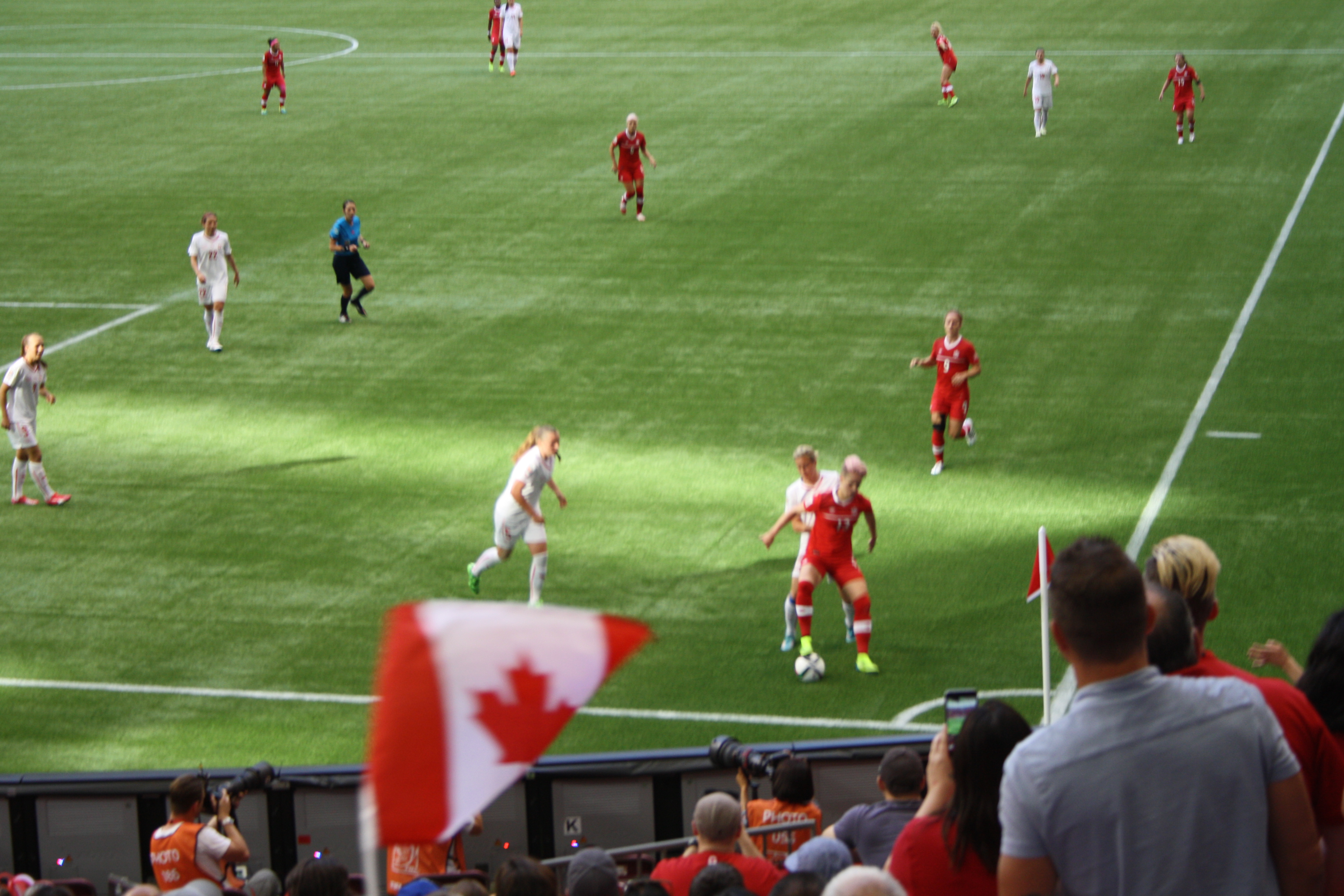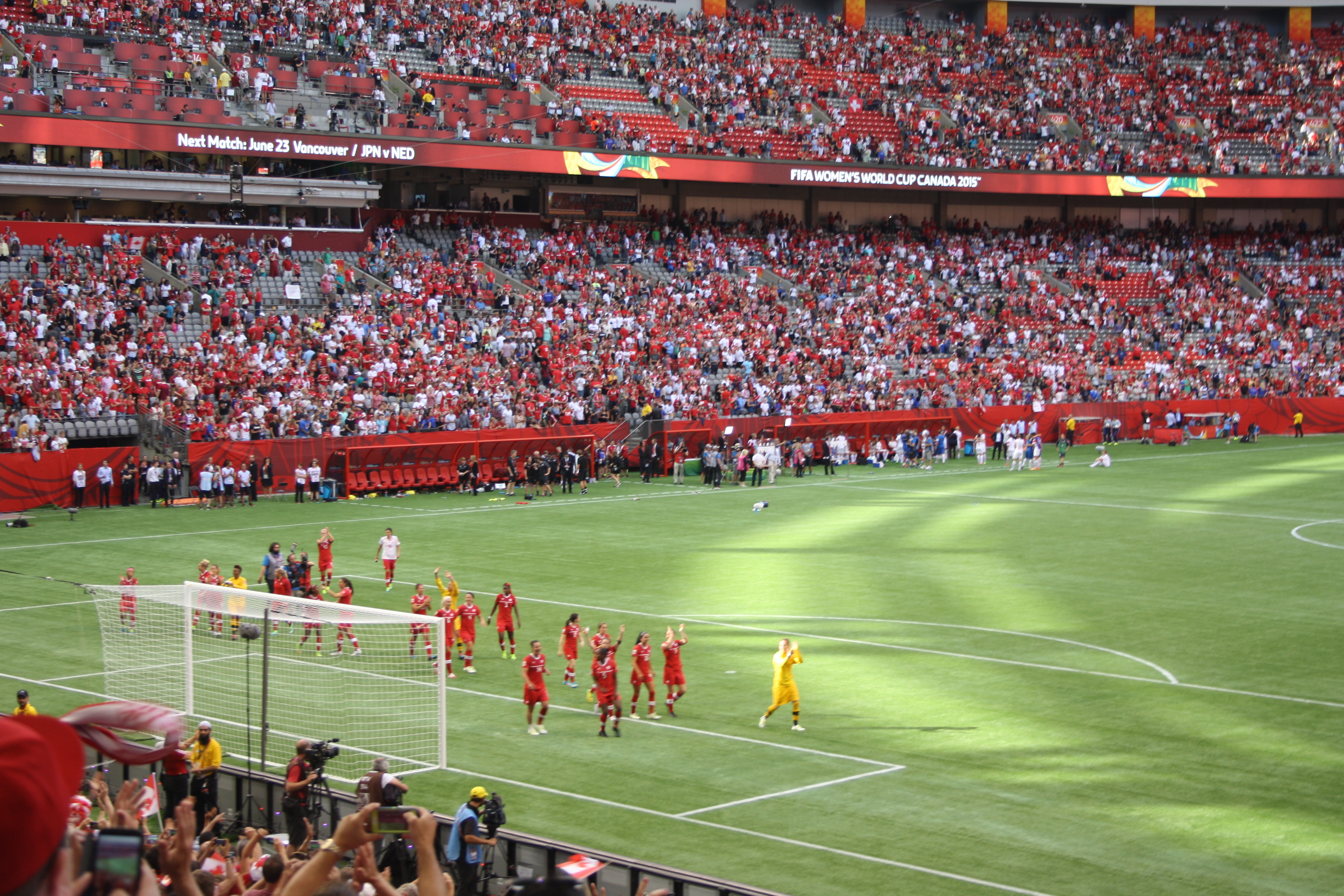
The Group Stage has been contested over the past two weeks. Some results did go as widely predicted and some were surprises. Who thought Cameroon would come second in their group? Who thought Colombia would beat France? And who thought Group D would be that close? A group with three teams in FIFA’s Top 10 would be a tough group. Whatever the situation, the 24 at the beginning had to be reduced to 16 and now that it’s decided, it’s off to the knockout rounds.
Round of 16
First off the Round of 16. It’s not like the men’s World Cup where it’s just the Top2 from the group that qualify. This WWC is now going to the format of the men’s World Cups from 1986 to 1994 where it’s the Top 2 plus the four best third-place teams. Ah, nothing makes any real sense. Whatever the situation, here are my predictions with my winner prediction bolded:
China (Group A 2nd) vs. Cameroon (Group B 2nd): This is a hard one to predict since neither team have played each other in the past. China is performing well especially for such a young team–for the record no Chinese player is older than 26– but Cameroon have been pulling some surprises. They won 6-0 against Ecuador, beat Switzerland and was the only team to score a single goal against Japan. I will have to predict Cameroon to win this match because of the excitement they’ve been delivering in their performances.
USA (Group D Winner) vs. Colombia (Group B/E/F 3rd): Colombia has been one of the surprises of the Cup so far but I believe this is where their magic will come to an end. The US are tops on talent and experience. Colombia have accomplished a lot here but they’re still growing as a team while the US is among the top in the world. So that’s why I predict the US for an easy win.
Germany (Group B Winner) vs. Sweden (Group A/D 3rd): If there’s one Round of 16 match that can deliver a surprise, it’s this match. Both teams are raked in FIFA’s Top 5 and both are capable of surprising the top countries. As for past stats, they’ve played each other three times before with Sweden winning twice and Germany once. However Germany has been playing brilliantly and powerfully and Sweden has drawn in all three of their games. That’s why Germany is my pick for this match but in extra time.
France (Group F Winner) vs. South Korea (Group E 2nd): There’s not too much to build upon in terms of past results. They’ve only met once before with France winning 1-0. However I would have to make my judgment upon the teams’ game play here. France was excellent but did expose their weaknesses with their 2-0 loss to Colombia. South Korea is a team still learning and playing. With that in mind I will have to pick France.
Brazil (Group E Winner) vs. Australia (Group D 2nd): How about that? Brazil was the first team to clinch #1 in their group after only two games. Shows that Marta and the girls are on target. Australia are also phenomenal as they’ve been playing with consistency by winning against Nigeria and drawing against Sweden. May make FIFA want to rethink their current #10 status. However even though Australia want this to be the World Cup where they finally win a knockout game, I don’t think the Matildas will win here. Brazil has played them eleven times and won seven. I have to go with Brazil on this one.
Japan (Group C Winner) vs. Netherlands (Group A/F 3rd): Another pair that will meet together for the first time at this World Cup. This is actually easier to predict. Japan has been dominating while the Netherlands are learning and getting better over time. However I don’t think they will have enough to defeat the defending Cup champions. I believe Japan will take it.
Norway (Group B 2nd) vs. England (Group F 2nd): One thing about the Three Lionesses is that some people on Twitter are saying they can teach the men a thing or two. England has been brilliant this tournament but Norway has proven themselves great performers too. Their ‘blast from the past’ thing seems to be just a myth and are able to prove themselves again. Predicting this game won’t be easy especially since they’ve only played each other once before and Norway won 2-0. For this, I will have to go with England in extra time. Norway has shown improvements over time but I don’t think it will be enough here.
Canada (group A Winner) vs. Switzerland (Group C 3rd): I will have to be frank and honest here. I’m happy of Canada’s progress but judging by their play over the past few days, I don’t think they’re playing like they deserve to win the Cup. They will really have to step up their game if they want to win the World Cup or even progress further. Basing a prediction on head-to-head play only adds to the confusion. Wikipedia says they’ve played each other four times with Canada winning three while FIFA says they’ve never played head-to-head ever. As for Switzerland, they’re getting better. This is their first World Cup and they’re improving. However I don’t think they’re at the same level of play as Canada. That’s why I predict Canada to win this match. And Canada better win! Because that’s the Round of 16 game I’m seeing!
Quarterfinals
Updated: June 24, 2015
I was going to leave my original predictions for the quarterfinals but seeing the number of hits this post has been getting has caused me to change a couple of matches. So here are my predictions for the quarterfinals:
Germany vs. France: If you think Germany’s Round of 16 match against Sweden will be a nailbiter, the nailbiting won’t be over yet as I believe they will face France in the quarterfinals. However Germany has been next to dominant while France has shown in their loss to Colombia their reputation of choking at big meets. That’s why I’m leaning towards Germany.
China vs. USA: China is a former great country in women’s football seeing to make a comeback. It appears their ‘young team’ has paid off because they have made it to the quarterfinals. However this is where I feel their comeback will stop. The US is more experienced, more familiar with being a dominator, and they know how to deliver. That’s why the US is my unanimous pick for the win here.
Australia vs. Japan: Australia are the surprise of the tournament. Everyone thought Brazil would be the team in the Round of 16 but Simon seized the moment. However this is where the Matilda’s magic will end. I’m going to have to side with Japan on this one not just of how they’re doing now but of the last four years of head-to-head play. Australia and Japan have met many times but only won one game and that was back in 2010.
Canada vs. England: Okay, both team played well but both showed weaknesses. England may have lost to France but they won against Mexico and Colombia. Canada won against China but drew their two other games. I feel this will be a tight match that will draw down to penalty kicks which will be won by, believe it or not, England. Hey, the English men may have a reputation of being complete rubbish at penalty kicks but the lasses may tell another story.
And there you go. Those are my WWC predictions so far. I have no plans to make any more WWC predictions until the semi-finals. Stay tuned until then!
Today is now a rest day at the FIFA Women’s World Cup. All 24 teams are now moving away from the stadiums they’ve played their first two group games and preparing for their final group game. Sixteen teams will move on after this game, eight will be heading home. Third-place teams still have a chance but it depends on how well they all stack up as only the best four of the six can go through. Here is a group-by-group breakdown of those who made it (with countries who are guaranteed to advance in bold), those who will be leaving soon and those who still have a chance:
Canada leads but without a doubt they lack the dazzle they’ve been known to have. A 1-0 win over China and a scoreless draw over New Zealand may assure them first place right now but they’re not impressing the home crowd. Canada could still likely qualify even if they lost to the Netherlands but I don’t think they’d want to do that. China was able to get itself in after its win against the Netherlands. Actually both China and the Netherlands are tied as they both won 1-0 and lost 1-0. Their play in the next game will decide their fates. New Zealand still has a chance of qualifying after that scoreless draw against Canada but they need nothing less than a win against China if they’re to do so. This group is anyone’s game right now.
Norway’s win over Thailand was not a surprise. Neither was Germany’s win over the Ivory Coast but the score was definitely a surprise. For the record, the 10-0 score is not the most lopsided victory at the FIFA WWC. That was achieved by Germany in 2007 in a Group Stage match against Argentina: 11-0. Germany and Norway drawing was a surprise. It’s not uncommon to see teams drawing after they feel they have a comfortable enough lead. Both Germany and Norway are likely to win their next games as neither Thailand nor the Ivory Coast seem like a challenge to either of them. Thailand could still have a chance if they draw against Germany but that’s unlikely. That would have to draw down how they’d rank against the third-place teams. Ivory Coast doesn’t appear too likely to qualify as they will play Norway next.
Japan is definitely progressing. Their two wins secured it for the defending Cup champions. They will highly likely come in first as their last match of group play will be Ecuador and it looks most likely to be a win. Both Switzerland and Cameroon have lost to Japan but they were able to profit off of play against Ecuador. Switzerland had it best with their 10-1 win on Friday. If they both tie in their final game, both will qualify because of goal differentials to their advantage. The win of course would decide the second place team in the group. Of course Ecuador is out. As I said in my group blogs, there are some countries that don’t have a chance of progressing or winning and this World Cup is their opportunity to learn and hopefully grow in the years to come.
As you probably read in my blog, I had a feeling this group would be the ‘Group Of Death’ and it has already delivered some surprises. The first being the 3-3 draw between Sweden and Nigeria. The second being the scoreless draw between the U.S. and Sweden. The U.S. will qualify no matter what happens against Nigeria. All three other groups’ fates will be decided in their final game. As of now, all three have a chance. Nigeria could get in if they beat the Americans. Australia could qualify upon a draw against Sweden but Sweden needs nothing less than a win to qualify.
Brazil is already guaranteed to finish top of their group with their two wins against South Korea and Spain. Even if they lose to Costa Rica, which highly won’t happen, they have enough game points to finish on top. Neither of the other teams have even a single win and that means second and third is anyone’s game. Costa Rica could still qualify if they tie Brazil though that may not be too likely but if they do, they would have to rely on the third-place team rankings to see if they made it. They have an advantage over teams that would have a win and two losses because of even goal differentials. South Korea and Spain both still have a chance but either team has to win if they want to qualify. A draw won’t cut it as there are at least four third-place teams with at least a win.
This is another group with surprises. At first I thought Colombia didn’t have a chance of qualifying but right now they’re the Group F team that’s assured of advancing. It was their 2-0 win over France that did it. That leaves favorites France having their fate decided in their game against Mexico. England however received an advantage after their 2-1 win over Mexico. That kept them in contention of qualifying with their match against Colombia to decide it. Both France and England can advance by simply drawing against their opponents but there’s no question they’d want to win with their reputations as women’s football leaders in Europe at stake. Mexico however needs nothing less than a win in order to advance. They’re lucky as their goal differential is actually quite small. Nevertheless it’s interesting to see that this group best demonstrates the progress of women’s football in countries of Europe and Latin America.
And there you go. That’s what’s needed in terms of advancing to the Round of 16 starting on Monday. I’m sure it will be crazy shifting your attention from one game to the other but don’t worry, the other will eventually get replayed.
You can understand with the WWC happening here in Vancouver, there would be a ton of excitement. And rightly so. Fortunately for the city, we are one city getting the FIFA Fan Zone. On Monday, I thought I’d check the Fan Zone out for myself.
Usually when there are special things like these, I go alone before I go with friends to see what it’s like. Such was the case when I went to the FIFA Fan Zone two days ago. It’s located at Landwill Park: a concrete parking lot big enough to host downtown events. It was also the sight of events held for the Vancouver Winter Olympics five years ago. It’s located nearby BC Place which will host nine matches including the Final for the Cup.
HAVE A COKE AND A SMILE
The Zone has Coca-Cola as a major sponsor. As such free Cokes were given out to people in commemorative World Cup bottles. Coca-cola was the most noticeable sponsor at the Fan Zone but it wasn’t the only one. There was also a special photo stage from Adidas where one can get a picture of themselves kicking a soccer ball in a multitude of locations. There was also Hyundai asking people what kind of fan they are with a whole bunch of questions ending with entry into a contest to win a Hyundai.
It wasn’t only the big brand names advertising there. There was also a Canadian online security system which featured a photo op to have you as the goalkeeper and asked what kind of defender you are in promotion of their online service. There were local vendors selling food. There was also the BC Sports Hall of Fame promoting their place. They also had a sample of the turf being used at BC Place during the World Cup. It looked like real grass but felt like silicon.
GAMES, GAMES, GAMES
The mini-field is an ideal place for small children to simply play football or learn new skills.
The biggest thing you’ll notice at the Fun Zone is the games featured at the Fun Zone. Remember I told you about the Ultimate Goalie? She’s back and she still performs as well as she did back at Metrotown. Included especially for the Fun Zone is a child drop-off area where children can practice football skills on a mini-field.
There were some new games this time around. There was also a dribbling game. It was a case of a mat of eight circles where one lights up at any time. You’re to dribble the ball to touch that circle. Once you get it there, you get 10 points and have to dribble to the next lit-up circle. You have to get a certain number of points to win a prize. I tried it and I didn’t!
Goalkeeper Challenge allows the player to virtually block the ball with their hands.
There were also video games involving performance. One was a penalty kick game called Kickpoint. No goalkeeper there but when you kick the ball to the next, the area it hits is of a certain pointage as displayed on the computer. Hit the area with big points and you win a prize.
Then there’s the chance for the player to be the goalkeeper in the video game called Goalkeeper Challenge. However there’s no controller. This is a body scan game where the game corresponds with the player’s arm and hand movements. However they have to be in the right catching position as they will have to try to catch the virtual ball kicked at them.
SIT BACK, RELAX AND CHEER
The Fan Zone is the place to sit back, relax and cheer you team on in a well-shaded area.
The games are mostly fun for children. The Fun Zone is especially there for the fan. The Zone has a wide canopy where people can watch games on a Jumbotron. It’s a good opportunity to kick back, relax or even cheer loudly. Alcohol consumption is fine in the Fan Zone but the Zone includes a lounge area which serves special drinks.
At the time, they were actually showing the U.S. vs. Australia game instead of the games being contested at BC Place. Games are already scheduled well in advance so even on the days matches are played simultaneously, there will only be one broadcast match. One thing’s for sure. Every game Canada plays will be broadcast there.
MORE THAN FUN AND GAMES
FIFA’s Live Your Goals campaign to expand women’s football was a major feature at the Fan Zone.
Sure there are a lot of fun and games at the FIFA Fan Zone. However the Fan Zone also takes the time to focus on women’s football. The locker room-style setting where one learns of the history of the Women’s World Cup returns to the Fan Zone after good views at the trophy tour. The ‘Live Your Goals’ program that I talked about in my blog about women’s football is there for promotion. It has a goal and a vision of expanding football especially in developing countries and other countries where football has been traditionally seen as a man’s game. As mentioned in my former blog, it plans to increase the number of girls and women playing football from 30 million to 45 million before the start of the 2019 WWC in France.
MORE DAYS TO COME
Special note to Vancouver residents is that the Fan Zone is not open every single day of the WWC. It is definitely open on days when Team Canada is scheduled to play and whenever Vancouver is hosting a game. Below is the schedule for other days when the Fan Zone will be open:
Friday June 11 – 12 noon to 9 pm
Monday June 15 – 12 noon to 8 pm
Tuesday June 16 – 12 noon to 8 pm
Sunday June 21 – 12 noon to 8 pm
Tuesday June 23 – 3 pm to 10 pm
Saturday June 27 – 12 noon to 8 pm
Wednesday July 1 (Canada Day) – 12 noon to 8 pm
Saturday July 4 – 12 noon to 5 pm
Sunday July 5 – 12 noon to 8 pm
Musical performers are slated to perform on the days it’s open.
As for my visit, it was nice to see what it was like to be there. It would be neat to see a game but especially if it was crowded. I know it will be during the finals or during games where Team Canada plays. I was also able to see a ‘freestyle footballer’ as she demonstrated her foot juggling skills with the football. That’s something that has been growing lately: freestyle football. I saw people get their faces painted to cheer on their teams. I saw a news crew from Switzerland interview a couple of Swiss fans. It was nice.
If you’re in Vancouver, go and visit the FIFA Fan zone when you have a chance. Good for families, good for young ones who want to cheer on their team, good for anyone.
That now leaves me with one last group to review. Here’s my review of Group C. Once again, thank you Google Translate for the Spanish and Portuguese translations:
GROUP C:
-Brazil (5): Okay, we don’t need an explanation. We all know the story of how they all fell apart at the World Cup. What most don’t know is how much Brazil has improved since. After the World Cup, Dunga returned as coach of the national team and it seems like the games since have been a case of Brazil getting its groove back. They’ve won every game since including winning 3-1 against their traditional ‘Achilles heel’ France. They appear in good shape to redeem themselves at this Copa. This will be the first major tournament to redeem themselves. They could win it. However rebuilding a team doesn’t happen overnight. Even if they don’t win, as long as they show the world they’re getting back on track, that should matter.
Ok,nós não precisamos deuma explicação.Nós todos sabemosa história de comotodos elesse desfezna Copa do Mundo. O quea maioria não sabeé o quantoo Brasil melhoroudesde então.Apósa Copa do Mundo, Dungavoltoucomo treinador daequipe nacionale parece queosjogos desdeter sido umcaso do Brasilrecebendode voltaseu sulco. Eles ganharamtodos os jogos desdeincluindovencer por 3-1contra a suatradicional “calcanhar de Aquiles” da França.Eles aparecemem boa forma pararedimir-senesteCopa. Este será oprimeiro grande torneiode redimir-se. Eles poderiamganhar.No entantoreconstruiruma equipa nãoacontecer durante a noite. Mesmose nãoganhar,desde quemostrar ao mundoque eles estão recebendode volta aos trilhos, quedeve importar.
-Colombia (4): This is the time for Colombia’s best era. Even though they only made it to the quarterfinals at the World Cup, they impressed the world with their fair play and immense talent like striker James Rodriguez and Juan Cuadrado who have since gone on to be the hottest new talents of the year.
Since the World Cup, Colombia has only lost to Brazil and have scored key wins against the United States and Costa Rica. They could top Group C but it all depends how well they play against Brazil. They could even win the Copa. It all comes down to playing like a top notch team. They already have an excellent reputation happening and whatever happens in Chile can add to it.
-Venezuela (69): Venezuela is the only CONMEBOL country never to have qualified for a World Cup. Venezuela is possibly the one CONMEBOL country whose favorite sport is not football. They take better to baseball and basketball. However Venezuela has shown improvement in recent years. They finished fourth at the Copa in 2011: the first time they ever made the Top 4 at the Copa. They didn’t qualify for the 2014 World Cup but they did finish sixth in the CONMEBOL playoffs. Venezuela hopes to add to their reputation in Chile but they face a stiff challenge. Their only wins in the past twelve months came to Peru and Honduras. 2015 is another chapter for a team seeking their first breakthrough.
-Peru (63): Some South American teams consistently rank the best in the continent and among the best in the world. And there are some teams that have an ‘up time’ and a ‘down time.’ Peru had their ‘up time’ back in the 1970’s that included two Top 8 finishes at two World Cups and winning the Copa in 1975. They’ve had a down time since with their last World Cup being in 1982. It’s not fair to say Peru is completely down. They did finish third at the last Copa in 2011. However the current lineup lacks players playing in European leagues and they’ve had recent losses to Chile and Paraguay. Nevertheless don’t count Peru out. Like Pele keeps saying: “Football is a box of surprises.”
PREDICTION:
This will be a tight one between Brazil and Colombia. I think Colombia will top the group with Brazil second and Venezuela third.
And there you have it. My third and last review of the Copa America groups. Tournament begins today and I’m sure it will be exciting. It may compete for attention against the Women’s World Cup but it should have a lot of fanfare nonetheless and a lot of excitement. My next blog on the Copa will come after the quarterfinals. Stay tuned!
Hoy es el día de la Copa América se abre en Chile. Para aquellos de ustedes que no vieron mis opiniones de los dos primeros grupos, haga clic en los siguientes enlaces:
Que ahora me deja con un último grupo de revisión. Aquí está mi opinión del Grupo C. Una vez más, GRACIAS traductor Google para las traducciones al español y portugués:GRUPO C:
-Brasil (5): Muy bien, no necesitamos una explicación. Todos conocemos la historia de cómo todo se vino abajo en el Mundial. Lo que la mayoría no sabe es cuánto Brasil ha mejorado desde entonces. Después de la Copa del Mundo, Dunga volvió como entrenador de la selección nacional y parece que los partidos desde haber sido un caso de Brasil conseguir su ranura espalda. Han ganado todos los partidos desde incluyendo ganar 3-1 en contra de su tradicional ‘talón de Aquiles’ de Francia. Aparecen en buena forma de redimirse en esta Copa. Este será el primer gran torneo de redimirse. Podrían ganar. Sin embargo la reconstrucción de un equipo no sucede durante la noche. Incluso si no ganan, siempre y cuando muestran el mundo que van a obtener de nuevo en marcha, que debería importar.
-Colombia (4): Este es el momento para la mejor época de Colombia. A pesar de que sólo llegaron a los cuartos de final en la Copa del Mundo, que impresionó al mundo con su juego limpio y el inmenso talento como el delantero James Rodríguez y Juan Cuadrado que han pasado ya a ser los mejores nuevos talentos del año.
Desde el Mundial, Colombia sólo ha perdido ante Brasil y ha anotado victorias clave contra Estados Unidos y Costa Rica. Podrían rematar el Grupo C, pero todo depende de lo bien que juegan contra Brasil. Incluso podrían ganar la Copa. Todo se reduce a jugar como un equipo de primera clase. Ellos ya tienen una excelente reputación sucediendo y lo que sucede en Chile puede agregar a ella.
-Venezuela (69): Venezuela es el único país de la Conmebol que nunca se ha clasificado para una Copa del Mundo. Venezuela es posiblemente el país uno CONMEBOL cuyo deporte favorito no es el fútbol. Toman mejor béisbol y el baloncesto. Sin embargo Venezuela ha mostrado una mejora en los últimos años. Acabaron cuarto en la Copa en 2011: la primera vez que jamás se ha hecho en el Top 4 en la Copa. Ellos no califican para la Copa del Mundo de 2014, pero lo hicieron sexta final en las eliminatorias de la CONMEBOL. Venezuela espera agregar a su reputación en Chile pero que se enfrentan a un duro desafío. Sus únicas victorias en los últimos doce meses llegaron a Perú y Honduras. 2015 es un capítulo más de un equipo en busca de su primer gran avance.
-Perú (63): Algunos equipos sudamericanos clasificar sistemáticamente los mejores del continente y entre los mejores del mundo. Y hay algunos equipos que tienen un “tiempo de” y un “tiempo muerto”. Perú tuvo su “tiempo de atrás en la década de 1970 que incluyeron dos Top 8 acabados en dos Copas del Mundo y ganador de la Copa en 1975. Han tenido un tiempo de inactividad ya que con ser su última Copa del Mundo en 1982. No es justo decir Perú es completamente. Hicieron tercera final en la última Copa en 2011. Sin embargo, la formación actual carece de jugadores que juegan en ligas europeas y han tenido pérdidas recientes a Chile y Paraguay. Sin embargo no cuentan Perú cabo. Al igual que Pelé sigue diciendo: “El fútbol es una caja de sorpresas.”
PREDICCIÓN:
Esta será una apretada entre Brasil y Colombia. Creo que Colombia va a liderar el grupo con Brasil y Venezuela segundo tercio.
Y ahí lo tienes. Mi tercera y última revisión de los grupos de la Copa América. Torneo comienza hoy y estoy seguro de que será emocionante. Puede competir por la atención contra la Copa Mundial de la Mujer, pero debe tener un montón de fanfarria, no obstante, y mucha emoción. Mi próximo blog en la Copa vendrá después de los cuartos de final. Manténganse al tanto!
The Copa is just two days away but the excitement still builds. This group should be especially exciting because there are two World Cup winners here. Hey, the Copa’s any country’s game. So here’s the run-down of Group B:
GROUP B:
-Argentina (2): Argentina is one country that keeps on having a stellar reputation and a team full of talent. Argentina is also a team that is known to have legendary misses such as losing in the quarterfinals at the last Copa America in 2011. Even the shots in the World Cup final where they’ve could have won it but missed still linger in the memory of many. Since the World Cup, Argentina has had a mixed bag of results. They got their revenge on Germany in September 4-2 and they’ve have wins Against Croatia, Ecuador and Bolivia. However they’ve also endured losses to Brazil and Portugal. This Copa will be another proving point for Messi and the boys.
-Uruguay (8): Uruguay looks great to repeat as Copa champions. However they still face the difficulty of playing without Luis Suarez as he will be suspended from the tournament because of the biting incident at the 2014 World Cup. Nevertheless we should remember that Uruguay is not just Suarez. It’s Edinson Cavani, Cristian Rodriguez and Maxi Pereira too. They also never official lost a game since the World Cup, only enduring a penalty kick loss to Costa Rica in November. I’m sure football’s ‘little giant’ can surprise us once again.
-Paraguay (81): Paraguay appeared to have a stellar era starting back in the late 1990’s and ending just years ago. That included qualifying for four straight World Cups and even being runners-up at the Copa in 2011. However Paraguay is going through a difficult time now. They finished last in the CONMEBOL qualifiers for the 2014 World Cup. They’ve also only had two wins in the last twelve months: against Cameroon and Peru. Few players on their team play in leagues outside of Paraguay. However this tournament could be one where Paraguay can see it as a stepping stone for a comeback. No matter what they do, they can always grow.
-Jamaica (74): Caribbean teams have been taken more seriously in the last few decades. In fact FIFA is thinking of expanding its World Cup to forty nations in hopes of making it more global and even including Caribbean countries. Jamaica has a big part in it. They played in the 1998 World Cup. Even though they didn’t qualify for the next round, they did win over Japan. Trinidad and Tobago was the next Caribbean team to qualify for the World Cup. However it’s Jamaica that first caught the eyes of FIFA.
Currently their team has five players in England’s Premier League and five in the MLS. Their recent play has not been the most spectacular as they have endured some big losses in friendlies. However they did win against Venezuela and Cuba recently. This tournament will give another sign how the Reggae Boyz are doing.
PREDICTION:
This is a tough one. Argentina’s the leader but this competition has traditionally been Uruguay’s domain. I’ll pick Argentina to top the group with Uruguay second. Third to Jamaica.
And there you go. My summary of the Group B teams of the Copa. Only one more group to sum up and that’s Thursday.
La Copa está a sólo dos días de distancia, pero la emoción todavía construye. Este grupo debe ser especialmente emocionante porque hay dos campeones del mundo aquí. Oye, la Copa es el partido de cualquier país. Así que aquí está la decadencia del Grupo B:
GRUPO B:
-Argentina (2): La Argentina es un país que sigue teniendo una reputación estelar y un equipo lleno de talento. Argentina también es un equipo que se sabe que tiene fallos legendarios como de perder en los cuartos de final en la última Copa América en 2011. Incluso los disparos en la final del Mundial donde han podrían haber ganado pero se perdió aún persisten en la memoria de muchos. Desde la Copa del Mundo, Argentina ha tenido una mezcla de resultados. Ellos consiguieron su venganza en Alemania en septiembre 4 a 2 y han tener victorias contra Croacia, Ecuador y Bolivia. Sin embargo, también han soportado pérdidas a Brasil y Portugal. Esta Copa será otro punto de prueba para Messi y los chicos.
-Uruguay (8): Uruguay se ve muy bien para repetir como campeones de Copa. Sin embargo todavía se enfrentan a la dificultad de jugar sin Luis Suárez como será suspendido del torneo debido al incidente de morder en la Copa del Mundo de 2014. Sin embargo, debemos recordar que Uruguay no es sólo Suárez. Es Edinson Cavani, Cristian Rodríguez y Maxi Pereira también. También no oficial perdieron un partido desde la Copa Mundial, sólo soportar una pérdida de tiro penal a Costa Rica en noviembre. Estoy ‘pequeño gigante’ Seguro de fútbol nos puede sorprender una vez más.
-Paraguay (81): Paraguay parecía tener una era estelar empezando de nuevo a finales de 1990 y terminando apenas hace años. Eso incluía clasificación para cuatro rectas Copas del Mundo y aun siendo subcampeón en la Copa en 2011. Sin embargo Paraguay está pasando por un momento difícil ahora. Terminaron última en las eliminatorias de la CONMEBOL para la Copa del Mundo de 2014. Han también sólo tenían dos victorias en los últimos doce meses: contra Camerún y Perú. Pocos jugadores de su equipo juegan en ligas fuera de Paraguay. Sin embargo este torneo podría ser aquella en Paraguay puede verlo como un trampolín para un regreso. No importa lo que hagan, siempre pueden crecer.
-Jamaica (74): Los equipos del Caribe se han tomado más en serio en las últimas décadas. De hecho la FIFA está pensando en ampliar su Copa del Mundo de cuarenta naciones con la esperanza de lo que es más global e incluso incluyendo los países del Caribe. Jamaica tiene un papel importante en ello. Jugaron en el Mundial de 1998. A pesar de que no calificaron para la siguiente ronda, que ganaron sobre Japón. Trinidad y Tobago fue el siguiente equipo caribeño clasificarse para la Copa del Mundo. Sin embargo, es Jamaica, que primero llamó la atención de la FIFA.
Actualmente su equipo tiene cinco jugadores de la Premier League inglesa y cinco en la MLS. Su obra reciente no ha sido el más espectacular, ya que han sufrido algunas grandes pérdidas en los amistosos. Sin embargo ellos ganaron contra Venezuela y Cuba recientemente. Este torneo dará otra señal de cómo los Reggae Boyz están haciendo.
PREDICCIÓN:
Esta es una pregunta difícil. Argentina es el líder, pero esta competición ha sido tradicionalmente el dominio de Uruguay. Voy a recoger Argentina al principio el grupo con Uruguay segundos. Tercero a Jamaica.
Y ahí lo tienes. Mi resumen de los equipos del Grupo B de la Copa. Sólo un grupo más para resumir y que es jueves.
The Copa America has actually been contested longer than the World Cup. Since 1916 to be exact.
The biggest football tournament is the FIFA World Cup, right? The second-biggest men’s tournament is UEFA’s Euro, right? What’s the third-biggest? I don’t know either but I think the Copa America should be it. Here, it’s almost like a continental tournament the way the Euro is, adding in two CONCACAF teams. However knowing that the tournament consists mostly of South American teams should draw big football interest. Here we’re talking about a continent that has won nine of twenty FIFA World Cups and continues to show some of the top football prowess in the world today.
HISTORY:
The Copa America actually began fourteen years before the World Cup. The first competition was actually called the Campeonato Sudamericano de Football. It was contested in Argentina on July 2 and July 17, contested in two stadiums in Argentina and featured four teams competing: hosts Argentina, Brazil, Chile and Uruguay. The competition was decided strictly on round robin play between the four teams. The game results became that the final match, Argentina vs. Uruguay would be a contest to decide the Championship. Argentina needed a win and nothing less because of winning one game and tying another while Uruguay could afford to draw to win the Championship. A scoreless draw is what happened and Uruguay was the first ever Championship winner.
During that time the president of the Uruguayan Football Federation proposed that a continental federation be founded. On July 9, 1916, Argentinian Independence Day, the CONMEBOL was founded. Funny how while Europe and North America were fighting in World War I, South America made advances for football competitions.
The Championship was actually to be a yearly event and except for 1918 because of a flu epidemic in Brazil, it was an annual event until 1928. More countries would be added including Paraguay, Bolivia and Peru. However because of the creation of the World Cup and a bitter rivalry between Uruguay and Argentina, the Championship was no longer an annual event. It would then take a six-year break between 1929 and 1935 and re-emerge either bi-annually or irregularly such as two competitions in 1959. The inclusion of the Copa Libertadores that year affected how those saw the Championships.
The last Championships were held in 1967 but the idea of returning a continental championships for the CONMEBOL countries was still under consideration at the time. In 1975, the Copa America was born. There was no fixed country as round robin games were contested throughout the continent over a period of five months. Only the ten CONMEBOL countries competed and it consisted of round robins, two semi-finals, two finals and a grand final. The continental champion would earn a berth to the upcoming FIFA World Cup for the first and only time. Since then all previous continental championships have been official recognized as Copa Americas.
The Copa America would have its growing pains over the next two decades. It was originally to be a quadrennial event and the format from the 1975 tournament would continue to be the norm where competitions would be scattered throughout the countries and a grand final held in a country other than the finalists’. In 1987, the Copa would then be contested in a single host country. It was held in Argentina that year consisting of three groups of three. The winners of the three groups would qualify for the semifinals with the defending Copa champions automatically earning a semifinal berth. In 1989, the Copa changed to a bi-annual event and was held in Brazil. The Copa consisted of First Round group play of two groups of five. The Top 2 from each group would move to the Second Round of additional round robin play to decide the Copa winner upon play statistics. That would continue to be the format in 1991.
In 1993, the Copa underwent a new format that currently exists today. The Copa held in Ecuador would be the first ever Copa to include two invitees from the CONCACAF countries of North America, Central America and the Caribbean nations. There would be three groups of four with a maximum of one CONCACAF invitee per group, quarterfinals, a semifinal and a final to decide the Copa winner. The event would continue to be bi-annual until 2001 when the next Copa was played in 2004. It would be tri-annual only temporarily until 2007. Since then, the Copa is slated to be a quadrennial event like the Euro except for a commemorative Copa America to be contested in the United States next year to commemorate the event’s centennial.
Here’s something to take note of. As I’ve said in past blogs, sometimes it’s harder for a team to win a continental championship than it is to win the World Cup. Brazil has won eight Copas but the country that has won the most is Uruguay with a total of 15 including the last Copa America in 2011. Argentina has won fourteen. Countries that have never won the World Cup like Colombia, Bolivia, Paraguay and Peru have won a Copa America. Actually a total of seven countries have won the Copa. No country outside the CONMEBOL has won a Copa but Mexico has been a finalist twice.
Host country Chile has never won the Copa: one of three CONMEBOL countries that have never done so. They’ve been runner-up four times but they’re hoping to win for the first time ever this year. The winner of this year’s Copa America will represent the CONMEBOL at the 2017 Confederations Cup in Russia. So there’s some additional pressure here.
So without further ado, here is my review of the Group A teams. Number in brackets are the FIFA rankings of May 2015:
GROUP A:
-Chile (16): Well, Chile is host this year. It’s actually a good time since Chile is experiencing one of its best eras in football. Chile is actually one South American country long overdue for a major international win. It’s been runner-up to the Copa four times: they’re one of only three CONMEBOL countries never to have won the Copa. Its best World Cup finish was third back in 1962 which they hosted. Nevertheless this could be their competition as anything can happen in football. They’ve had some good plays since the World Cup where they were ousted by Brazil once again. They still face a tough rivalry with Brazil as they lost to them in a March friendly 1-0. Other friendly results include ties with Mexico and Bolivia, a 2-1 loss to Uruguay and wins over Peru and Venezuela. But they also include losses to Iran and Uruguay. Nevertheless football is a game of surprises and they could just do it if they play right.
-Mexico (22): Mexico is the sleeping giant of football. A country loaded with talent but still waiting for their big breakthrough. The last World Cup didn’t help because they lost their Round of 16 match against the Netherlands on a controversial note. An interesting note: ever since the Copa America has allowed invitees from the CONCACAF to play starting back in 1993, Mexico has qualified every time. Mexico could pull an upset as the first ever non-CONMEBOL country to win the Copa. They’ve had a great 2015 with wins over Ecuador and Paraguay but they’ve also had a loss to the United States back in April. Mexico could be the big surprise of this Group and possibly the whole tournament.
-Ecuador (34): The 21st century has definitely been good to Ecuador. They never qualified for a World Cup during the 20th century but this century has given Ecuador berths in three of the four World Cups. Copa America success is a different story as they’ve failed to advance past the first round in all four Copas this century. Their best Copa finish ever is fourth-place finishes in 1959 and 1993. The team is full of talent as they have five players playing in Europe and three in Mexico. However they’ve had a rocky 2015 as they’ve lost to Mexico and Argentina. Chile will be another proving point for them.
-Bolivia (92): Bolivia is an on-again off-again team in terms of success. They’ve played in three World Cups: the last being in 1994. They have won the Copa before in 1963 as hosts and was runner-up when they hosted again in 1997. They’ve had greats before like Luis Cristaldo and Erwin ‘Platini’ Sanchez but their team lacks the depth they’ve had. Most of the team plays for Bolivian teams or for lesser celebrated European teams. Whatever the situation, this Copa should be a meet where the Bolivians learn to improve themselves en route to the next World Cup.
PREDICTION:
My prediction for this group is that Mexico will top it with Chile in second. Third will be Ecuador. Instead of predicting if the third-place team will be the wildcard qualifier, I’ll just leave it with a third-place pick.
That wraps up my first blog of the Copa America. Like the next two, I will just predict group finishes and wait until further into the tournament to predict the eventual Copa winner once each team’s performance give indications which ones have the edge. More on Tuesday.
WORK CITED:
WIKIPEDIA: Copa America. Wikipedia.com. 2015. Wikimedia Foundation Inc.<Wikipedia: Copa America>
BONUS: Also you’re in for a treat. I have included a Spanish translation of my blog courtesy of Google Translate!
BONUS: También estás de enhorabuena. He incluido una traducción al español de mi blog cortesía de Google Translate!
¿El torneo de fútbol más importante es la Copa Mundial de la FIFA, verdad? ¿El segundo mayor torneo de los hombres es de la UEFA Euro, verdad? ¿Cuál es la tercer mayor? Yo tampoco lo sé, pero creo que la Copa América debe ser la misma. Aquí, es casi como un torneo continental de la forma en que el euro es, añadiendo en dos equipos de CONCACAF. Sin embargo, sabiendo que el torneo se compone principalmente de los equipos sudamericanos deben atraer el interés de fútbol grande. Aquí estamos hablando de un continente que ha ganado nueve de veinte Copas Mundiales de la FIFA y continúa para mostrar algunas de las proezas de fútbol más importantes del mundo en la actualidad.
HISTORIA:
La Copa América comenzó en realidad catorce años antes de la Copa del Mundo. La primera competición se llamaba en realidad el Campeonato Sudamericano de Fútbol. Se disputó en Argentina el 2 de julio y 17 de julio, impugnada en dos estadios en la Argentina y contó con cuatro equipos que compiten: los ejércitos de Argentina, Brasil, Chile y Uruguay. La competición se decidió estrictamente en juego del round robin entre los cuatro equipos. Los resultados de los juegos se hicieron que el partido final, Argentina vs Uruguay sería un concurso para decidir el campeonato. Argentina necesitaba una victoria y nada menos porque de ganar un partido y empatar otro, mientras que Uruguay podía permitirse el lujo de sacar para ganar el campeonato. Un empate sin goles es lo que pasó y Uruguay fue el primer ganador del campeonato.
Durante ese tiempo el presidente de la Federación Uruguaya de Fútbol propuso que se fundó una federación continental. El 9 de julio de 1916, Día de la Independencia argentina, la CONMEBOL se fundó. Es curioso cómo, mientras que Europa y América del Norte estaban luchando en la Primera Guerra Mundial, América del Sur hizo avances para las competiciones de fútbol.
El campeonato fue en realidad ser un evento anual y con excepción de 1918 a causa de una epidemia de gripe en Brasil, fue un evento anual hasta que se añadirían 1928. Más países incluyendo Paraguay, Bolivia y Perú. Sin embargo, debido a la creación de la Copa del Mundo y una amarga rivalidad entre Uruguay y Argentina, el Campeonato ya no era un evento anual. Luego tomaría un descanso de seis años entre 1929 y 1935 y re-emerger ya sea dos veces al año o irregularmente como dos competiciones en 1959. La inclusión de la Copa Libertadores de ese año afectó cómo los vio a los Campeonatos.
Los últimos Campeonatos se celebraron en 1967, pero la idea de volver a los campeonatos continentales de los países CONMEBOL todavía estaba bajo consideración en el momento. En 1975, la Copa América nació. No había ningún país fija como juegos del round robin fueron impugnadas en todo el continente en un periodo de cinco meses. Sólo los diez países de la CONMEBOL compitieron y consistieron en round robin, dos semifinales, dos finales y un gran final. El campeón continental ganaría un puesto para la próxima Copa Mundial de la FIFA por primera y única vez. Desde entonces todos los campeonatos continentales anteriores han sido reconocidos como oficial de Copa América.
La Copa América tendría sus dolores de crecimiento en los próximos dos decenios. Fue originalmente para ser un evento cuatrienal y el formato del torneo 1975 seguirían siendo la norma en competiciones estarían dispersos por los países y una gran final que tuvo lugar en un país distinto de los finalistas. En 1987, la Copa y luego se disputó en un solo país de acogida. Se llevó a cabo en la Argentina ese año que consiste en tres grupos de tres. Los ganadores de los tres grupos calificarían para las semifinales con los campeones defensores de la Copa ganando automáticamente una plaza en semifinales. En 1989, la Copa cambió a un evento bianual y se llevó a cabo en Brasil. La Copa constaba de Primera Ronda de juego en grupo de dos grupos de cinco. El Top 2 de cada grupo se trasladaría a la Segunda Ronda de juego del round robin adicional para decidir el ganador de la Copa en las estadísticas de juego. Eso seguirá siendo el formato en el 1991.
En 1993, la Copa se sometió a un nuevo formato que actualmente existe en la actualidad. La Copa celebrada en Ecuador sería la primera Copa de incluir dos invitados de los países de la CONCACAF de América del Norte, América Central y los países del Caribe. Habría tres grupos de cuatro, con un máximo de un invitado de la CONCACAF por grupo, cuartos de final, una semifinal y una final para decidir el ganador de la Copa. El evento seguirá siendo semestral hasta el año 2001 cuando la próxima Copa se jugó en 2004. Sería trianual sólo temporalmente hasta 2007. Desde entonces, la Copa está programado para ser un evento cuatrienal como el Euro a excepción de un conmemorativa Copa América que se disputará en Estados Unidos el próximo año, para conmemorar el centenario del evento.
Aquí hay algo para tomar nota. Como he dicho en blogs anteriores, a veces es más difícil para un equipo para ganar un campeonato continental de lo que es ganar la Copa del Mundo. Brasil ha ganado ocho Copas pero el país que ha ganado la mayoría es Uruguay con un total de 15 incluyendo la última Copa América en 2011. Argentina ha ganado catorce. Los países que nunca han ganado la Copa del Mundo como Colombia, Bolivia, Paraguay y Perú han ganado una Copa América. En realidad, un total de siete países han ganado la Copa. Ningún país fuera de la CONMEBOL ha ganado una Copa, pero México ha sido finalista en dos ocasiones.
País anfitrión Chile nunca ha ganado la Copa: uno de los tres países de la CONMEBOL, que nunca lo han hecho. Han sido finalista cuatro veces, pero que están esperando ganar por primera vez en la historia de este año. El ganador de la Copa América de este año representará a la CONMEBOL en la Copa Confederaciones 2017 en Rusia. Así que hay un poco de presión adicional aquí.
Así que sin más preámbulos, aquí está mi crítica de los equipos del Grupo A. Número entre paréntesis son los ranking de la FIFA de mayo 2015:
GRUPO A:
Chile (16): Bueno, Chile es sede de este año. De hecho, es un buen momento ya que Chile está viviendo uno de sus mejores épocas en el fútbol. Chile es realmente un país de América del Sur desde hace mucho tiempo para una importante victoria internacional. Ha sido finalista de la Copa de cuatro tiempos: son uno de los únicos tres países CONMEBOL nunca han ganado la Copa. Su mejor resultado en la Copa del Mundo fue tercero en 1962 que se organizó. Sin embargo esto podría ser su competencia como cualquier cosa puede suceder en el fútbol. Han tenido algunas buenas jugadas desde la Copa del Mundo donde fueron expulsados por Brasil, una vez más. Ellos todavía se enfrentan a una dura rivalidad con Brasil, ya que perdió a ellos en un amistoso 1-0 de marzo. Otros resultados incluyen amistosas relaciones con México y Bolivia, una derrota por 2-1 a Uruguay y victorias sobre Perú y Venezuela. Pero también incluyen las pérdidas a Irán y Uruguay. Sin embargo el fútbol es un juego de sorpresas y que sólo podría hacerlo si juegan bien.
México (22): México es el gigante dormido del fútbol. Un país lleno de talento, pero a la espera de su gran avance. El último Mundial no ayudó porque perdieron su ronda de 16 partido contra los Países Bajos con una nota polémica. Una nota interesante: desde que la Copa América ha permitido a los invitados de la CONCACAF para jugar a partir en 1993, México ha calificado cada vez. México podría tirar una sorpresa como el primer país no CONMEBOL para ganar la Copa. Han tenido un gran 2015 con triunfos sobre Ecuador y Paraguay, pero también han tenido una pérdida para los Estados Unidos en abril. México podría ser la gran sorpresa de este Grupo y posiblemente todo el torneo.
Ecuador (34): El siglo 21 sin duda ha sido bueno para el Ecuador. Nunca se clasificaron para la Copa del Mundo durante el siglo 20, pero este siglo ha dado literas Ecuador en tres de las cuatro Copas del Mundo. El éxito de la Copa América es una historia diferente, ya que han fallado para avanzar más allá de la primera ronda en las cuatro Copas de este siglo. Su mejor final de Copa siempre es el cuarto lugar acabados en 1959 y 1993. El equipo está lleno de talento, ya que tienen cinco jugadores que juegan en Europa y tres en México. Sin embargo han tenido una rocosa 2015, ya que han perdido a México y Argentina. Chile será otro punto de prueba para ellos.
Bolivia (92): Bolivia es un en-otra vez de nuevo fuera del equipo en términos de éxito. Han jugado en tres Copas del Mundo: la última de ellas en 1994. Ellos han ganado la Copa antes en 1963 como anfitriones y fue subcampeón cuando acogido de nuevo en 1997. Han tenido grandes antes como Luis Cristaldo y Erwin ‘Platini ‘Sánchez, pero su equipo carece de la profundidad que han tenido. La mayoría del equipo juega para los equipos bolivianos o para los equipos europeos célebres menores. Sea cual sea la situación, esta Copa debe ser un encuentro donde los bolivianos aprenden a mejorarse a sí mismos en el camino a la próxima Copa del Mundo.
PREDICCIÓN:
Mi predicción para este grupo es que México superará con Chile en la segunda. En tercer lugar será Ecuador. En lugar de predecir si el equipo de tercer lugar será el calificador comodín, sólo voy a dejarlo con un tercer puesto de recogida.
Que envuelve mi primer blog de la Copa América. Al igual que los dos siguientes, me limitaré a predecir acabados de grupo y esperar hasta más lejos en el torneo de predecir el eventual ganador de la Copa una vez que el rendimiento de cada equipo da indicaciones cuáles tienen el borde. Más el martes.
The Women’s World Cup was contested for the first time only 24 years ago.
The 2015 FIFA Women’s World Cup starts today. It will be a competition between 24 countries and broadcast to billions worldwide. An enormous event and a huge celebration of the sport but it was a long time coming.
ITS ROUGH BUT HOPEFUL START
Back in the early centuries when football was just invented and games were being played for leisure, women were welcomed participants. There was even the British Ladies Football Club founded in 1894 but was frowned upon by the predominantly male society and received no financial support. Men saw it as a threat to the ‘masculinity’ of the game. A stigma that surprisingly still exists today.
An English women’s football team from 1920. Hard to believe the FA banned them for decades!
Women’s football saw an increase during World War I and the men were off and fighting. However women’s football received a blow in 1921 when the Football Association (the FA), outlaws the play of women’s games on FA-associated pitches. Despite that, the English Ladies Football Association was formed after the ban was instituted.
It wasn’t just England that looked down upon women’s football. Many other countries would look down too. Once again the stigma of the ‘masculinity’ of the game. Even Brazil had a case where women’s football was growing up to 40 teams in the 1940’s until it too was banned. The ban wasn’t lifted until 1979.
WOMEN’S FOOTBALL GAINS STRENGTH
You can’t keep the desire down. The FA’s ban on women was eventually dropped in 1971 shortly after the Women’s FA was founded in 1969. In North America while soccer was starting to grow in popularity around the beginning of the 1970’s, girls teams were organized along with boys teams. That may explain why the US and Canada do well. In the 1980’s, women’s national teams were formed like the U.S. team in 1985 and the Canadian team in Winnipeg on Canada Day 1986 (July 1st). Japan became the first country to have a female semi-professional league: the L-League founded in 1989 that still exists today.
A WORLD CUP AND OLYMPIC GOLD EMERGE
As women’s national teams were emerging, FIFA knew they had to do something to encourage the competition but were reluctant to give women their own World Cup. In fact FIFA organized the FIFA Women’s Invitational Tournament in Taiwan in 1988. It was actually a test to see how successful of a competition it would be. Contested over two weeks, it was a success and weeks later, FIFA approved implementing a Women’s World Cup competition.
The 1991 US women’s World Cup team: the first ever Women’s World Cup winners.
The first FIFA Women’s World Cup was held in China back in 1991. FIFA was still reluctant to call it the World Cup so it was called the 1st FIFA World Championship for Women’s Football for the M&Ms Cup. Twelve countries competed in six venues across the country. Ticket sales were a success with a total of over 50,000–an average of almost 20,000 per match–and the U.S. won the Cup with their teammate Michelle Akers the highest scorer of the tournament with 10 goals.
The success of the 1995 tournament helped paved the way for further World Cup competitions and women’s football being added to the Olympic program starting in 1996. The 1995 World Cup in Sweden however was met with lackluster success as ticket sales were only above 112,000: a sign that women’s football had a long way to go in Europe. Things looked a lot more positive with women’s football contested at the Atlanta Olympics the following year. Despite having only eight teams playing for the gold, ticket sales totaled almost 700,000 including 76,489 for the final which the U.S. won.
Brandi Chastain’s shirtless celebration from USA 1999. One of the most iconic images of the Women’s World Cup.
It’s no wonder the U.S. hosted the next World Cup in 1999. The U.S. really did an intense job of marketing the event and it paid off. Ticket sales totaled over 1.2 million– more than double that of China 1991 and ten times that of Sweden 1995– and the Rose Bowl Stadium was sold out for both the third-place match and the final for the Cup with 90,185 each.
The Women’s World Cup would have continued success over the years. Even if none of the successive tournaments have broken the attendance record of USA 1999, they’ve still given impressive results such as the 1.156 million who saw games in China in 2007. The 845,000 tickets sold during Germany 2011 showed Europe’s increasing welcoming of women’s football even though the top male continents like Europe and South America still lag behind that of Asia and North America.
PRESENT AND FUTURE
Despite the increase of fanfare and support in women’s football, it’s still lagging behind in terms of parity with the men’s sport. It’s not like tennis, golf, athletics or swimming where female athletes are almost on par with the men. Nor is it like figure skating or gymnastics where the women actually steal the show from the men. There are many countries that still see football as a ‘men’s sport’ and the women are given lackluster attention. There was even a row last week when EA sports video games announced in their FIFA 16 game, women’s players would be included for the first time. There were a lot of sexist tweets on Twitter, overshadowing the 98% of tweets that were positive and welcoming of women’s inclusion in the game.
Nevertheless great strides have been made over the years. Since the 1990’s there have been women’s continental tournaments like the Women’s Euro and the Copa America Feminina. Professional leagues in Europe like the Bundesliga, Premier League and France’s Division 1 have included a women’s league and top men’s team have included women’s braches of their team. England even contests the FA Women’s Cup annually. Women’s football is still supported well with high school teams and NCAA college teams. The MLS has also included female branches of teams. In Brazil, Marta has become a beloved athlete of the country and has even received welcome from other male players like Pele and Neymar whom describes Marta as ‘craque’ (Portuguese for phenomenal).
FIFA also has a special section of their organization focusing on women’s football dedicated to improving the game and its availability to young girls and women around the globe. Every World Cup since 1995 there has been a symposium on women’s football and this year’s symposium is slated for Vancouver from July 3rd-5th. This year FIFA included campaigns such as the Live Your Goals social media campaign through the #LiveYourGoals hashtag. Another FIFA campaign is the ‘No Barriers’ campaign through video commercials. Its goal is to increase the global number of young girls and women playing football form 30 million to 45 million by the 2019 Women’s World Cup.
There’s no question man’s football has no further to go. It’s already universal and the most popular sport in the world. Women’s football is still growing but never before has the future of women’s football looked more ambitious and more promising.
WORKS CITED:
WIKIPEDIA: Women’s Association Football. Wikipedia.com. 2015. Wikimedia Foundation Inc.<Women’s Association Football>
Oxenham, Gwendolyn. “Pele With A Skirt: The Unequal Fortunes Of Brazil’s Soccer Stars” The Atlantic. 4 June 2015<Atlantic Article: Neymar and Marta>
The tourism activities in English Bay were suspended by the spill for at least eleven days.
All too often whenever we hear of a disaster, it’s miles away. All too often it seems it’s at the other end of the world. However something happened just two months ago that hit close to home.
Wednesday April 8, 2015 was supposed to be like any other day including around English Bay: a beach located close to downtown Vancouver. Unfortunately bad news struck. A freighter called the Marathassa accidentally spilled 2700 litres of bunker oil into the waters of the Georgia Strait near the English Bay beaches. The biggest shock is that the federal government authorities did not alert the public about this for 12 hours.
Those enjoying leisure activity around the waters could have been affected. This oil is harmful if inhaled, can cause fertility or organ damage and could cause cancer. The oil would wash up on surrounding beaches creating a slick six to eight inches thick. At least twenty seabirds were affected by the spill. When news hit that day, the whole city was in shock. Especially since English Bay has been very popular with tourists and residents for leisure. For at least, ten days, the beach was closed off to the public warning them not to engage in any activities in the water.
No doubt that this was huge news that week. Even bigger was the shock that this incident wasn’t alerted to the public by the federal government until 12 hours after it happened. Already people were outraged. Even the decision to close the Kitsilano Coast Guard base two years ago was to blame. Both the municipal and provincial governments through Gregor Robertson and Christy Clark, environmental scientists and an international shipping expert criticized the federal government’s lack of immediate response. However Roger Girouard, Assistant Commissioner of the Canadian Coast Guard, defended it and said: “You don’t contain 80 per cent of a spill inside 36 hours and call that inadequate. I will not accept that definition of my team in the ops centre or on the water. Look at the normal standards throughout the world and what we achieved over the last couple of days, it was exceptional.” Okay, it’s exceptional in terms of containment but notifying the city 12 hours later exceptional? Even our national Coast Guard leaders as Coast Guard Commisioner Jody Thomas described the response as ‘exceptional.’ Makes you question our current Coast Guard heads.
Most of the oil washed up on other shores but the dirty foam was enough of a reminder of what occurred three days earlier.
On Saturday the 11th just three days after the incident happened, I walked English Bay to see for myself any noticeable aftermath. I didn’t get anything too tragic or too graphic-looking. What I did get was enough to give me quite a picture. Freighters were all along the bay. Business as usual in Canada’s busiest ports. Recreation as usual but only as far as people sailing recreational ships. People wanting to do recreation on the beach were warned not to do so by signs. The beaches of English Bay were lifeless except for a few people that just want to visit. I didn’t notice any blotches of oil or sludge washing up on the ricks at the beach. News reports at the time said that they’ve cleaned up over 95% of the spill. However I did notice something unpleasant: foam. Foam had just washed up and right on top you can see dirt of a black or grey dinge. An ugly reminder of what happened. I was looking around to see any birds or other animals around the beach. I didn’t find any. Actually a map of the spill would show that more areas around the coasts of West Vancouver or Stanley Park would be hit bigger.
It’s going to be hard to try and calculate the whole damage of what happened. There were no fatalities and no record of illnesses caused by the spill. As for environmental damage and its effect on wildlife, that also remains unanswered. Even though there hasn’t been too much reported two weeks after the spill, two months is still not enough time to tell the whole story. In fact it was later reported on April 29th that a slick 80 metres long and six to eight inches thick made its way the Sandy Cove in West Vancouver: the other side of the shore. English Bay was not the only area hit. New Brighton Park, ten miles away from the spill, was even hit.This will really affect the Burrard Inlet.
I don’t even know if the crew of the MV Marathassa have been arrested. They should be and they should go on trial for this, more than anyone else. Canada’s laws ensure that polluters are held financially liable, and the operators of the MV Marathassa have agreed to pay for clean up and to appear in future legal proceedings that could lead to fines. Further news revealed this was actually the Marathassa’s maiden voyage.
Leisure activity did eventually return to English Bay. This photo taken on Victoria Day (May 18th).
I did return to English Bay just two weeks ago. The signs are no longer there. They were taken down after April 19th. The shores no longer have that dirty foam. There wasn’t too huge of a turnout at the coast that sunny Monday which happened to be a national holiday: Victoria Day. There was a mother who took her toddler child to the coast. That was something you couldn’t do over a month earlier. I saw a bird flying over the coast and even walking close to the shoreline. Seeing that made me hope the water’s safe. I don’t know how long it will be until English Bay will become swimmable again.
The oil spill isn’t that colossal of a disaster as say recent disasters like the earthquakes in Nepal or even the train crash in Philadelphia. It was chicken feed compared to legendary spills like the 210 million liters from BP off the Gulf of Mexico in 2010 or even all that spilled from the Exxon Valdez disaster. Nevertheless it did hit close to home and it’s going to affect a lot of attitudes in the city towards oil.
As you can tell, I’ve been excited about the Women’s World Cup coming. It was a long time in anticipation. This was actually the last weekend before the World Cup is to begin this Saturday in Edmonton. With it came the Trophy Tour concluding in Burnaby. I had the good fortune to visit that afternoon.
The FIFA Women’s World Cup trophy tour was a tour that happened in twelve cities across Canada including the six cities that have the venues for the Cup. The purpose was to showcase the World Cup encased in glass. The tour also allowed for other things too like a chance to learn more about FIFA’s goals in women’s football and to learn more about the Cup and its 24 years. There were also games and giveaways as well as music and an appearance from the mascot Shueme. The final stop of the journey was Vancouver. The event took place at Burnaby’s Metrotown: the biggest shopping mall in all of Greater Vancouver. Sunday morning was my one free chance I had to go see it. I’m glad I did.
THERE’S ALWAYS A LINE-UP
A week or two ago, I saw something from the Coca-cola web page on the tour saying there tickets through Ticketmaster available. At that time, I instantly thought you needed a ticket to see the trophy. I agreed to a ticket. They came at no cost so I really lost nothing. I arrived at the area in Metrotown where the event was supposed to take place–the lower level where Toys ‘R Us and T&T Groceries are– and I saw the line up. Most didn’t have a ticket. It wasn’t really needed. It may have helped for some getting to see the Cup sooner but it wasn’t needed. For kids too impatient to wait in line, there was a foosball table in the outside area.
Meeting with mascot Shueme made the wait in line easier.
I actually forgot my ticket at home so I ended up waiting in line. I arrived at 10:55: five minutes before the event was to begin. I could see volunteers setting up. I could see Shueme in the waiting area. Then at 11am it all began. Music was playing and the line was actually moving faster than I thought. Shueme actually left the event area and was walking around the Metrotown concourse including around the outside foosball table. Yes, they had a foosball table out in case people got too bored waiting. Fortunately she came around where I was standing. I told the volunteer I hope to get a picture with her when she returns to inside. The volunteer actually offered to take the picture right there. It was great.
VIEWING THE CUP
Here I am with the Women’s World Cup!
It wasn’t even half an hour of a line up when I finally had the chance to see the Cup. However just before I got in, I saw there was a separate line up for the virtual goalie. I’ll talk more about that later. The exhibit could only have so many people at once so they had to group people: those seeing the Cup, those in the Winners Tunnel who were next in line and those in the waiting area.
The waiting area was there to keep us entertained while we were one step closer to seeing the Cup. There was one section that looked like a dressing room but it had jerseys commemorating past Cup champions. As well as there were pads that had WWC trivia. There was also a DJ spinning music with the official ball, the conext15, on display. Then came the Winners Tunnel. This was the section for those about to see the Cup. In there, people waited for about five minutes. Nevertheless we were treated to a video with scenes from the previous World Cup and even clips from the qualifiers.
Then it finally came to our turn to see the Cup. It was encased in glass and there were already cameras set up so we can have a custom portrait for sharing. Just go to the website and key in the code. I think mine turned out well. Finally of course with Coca-Cola hosting the event, people were treated to a free Coke in a commemorative aluminum bottle. I have mine as a keepsake.
A FUTURE CARNIVAL GAME?
That’s the virtual goalie, controlled by motion sensors that make the split-second decision of which angle to block the shot.
Not everything was about the Cup. Some wanted to try their luck at the Ultimate Goalie. How does it work? First it involves the participant doing a penalty kick into a net smaller than usual. Secondly the goalie is placed right in the middle of the goal post. Successful penalty kicks win a free commemorative shirt. The thing about this goalie is that it’s on a semicircle of 180. What controls the goalie are motion-sensor cameras that are able to detect how fast the ball is going and what direction it’s headed. The computers are programmed to position the goalie at the right angle to stop the shot. This was very smart and very fast. I remember seeing a couple of shots taken that were very fast and she was able to stop it. I took a shot at it and she even stopped mine. Fortunately for me, there were two people that said I delivered a good shot. I’m not over the hill yet! As for the goalie, I would not be surprised if I see that as a carnival game anytime soon. Good luck in trying to win!
I GOT A TICKET!
For a long time I was hoping to get a ticket. For the last few days I was hoping to get a ticket for a certain Round of 16 game. However I wondered if it would be too expensive. Not just because of the price but the ticket processing fee and tax added on. I wanted a second class ticket for that event but thought maybe it’s better I got third class. Glad I waited because just as I was in line to see the Cup, I heard that tickets were 30% off that day. By the time I was done seeing the Cup, I was ready to order my ticket. Yes, there was a bit of a line up for buying it and very often it was a case of families buying tickets together because of discounts for groups. Sometimes it took a family ten minutes or longer to have their order finalized.
Finally it was my turn and I knew what I wanted as I was eyeballing that seat on Ticketmaster the past few days. Knowing what I wanted and where only made me wait five minutes. There was a bit of card trouble at first but I finally got it: a second-class Round of 16 ticket that was originally billed at $75 I bought for just under $62. It was worth it! Now I just have to wait to see if Canada’s playing as one team slated to play is the first-place team of Group A. I’ll be shocked if it’s not Canada!
And there you go: my visit to the 2015 FIFA Women’s World Cup Trophy Tour. It was fun and a bit tiring but it was worth it in the end.
GROUP RECAP
Okay, for those of you just hitting my blog for the first time, below are links to my predictions for each group in the Group Stage:
Meet Ava: a female A.I. robot who captures the intrigue of a young computer tech in Ex Machina.
Ex Machina didn’t seem like a movie that would win a lot of people over. However it did capture a lot of people’s intrigue both with the story and its subject.
The movie begins at the office of Bluebook, the world’s most popular search engine. A worker named Caleb has won a prize. He’s excited and everyone’s excited. Later on we learn what his prize was. A trip to his boss Nathan’s laboratory in a remote location up north with no cellphone use available. His boss Nathan is there with Kyoko his maid the only other person. Nathan mentions that he is working on artificial intelligence persona and wants Caleb to assist in the studies. Specifically to focus on if robots can be human and have feelings and a conscious. In a sense, pass the Turing Test where the barrier between humans and computers are broken. Nathan wants this thing to be a friend-friend atmosphere instead of boss-worker. Caleb nervously agrees.
He is told he would meet with the subject named Ava. Ava is a robot with a female face and voice and Caleb is to first sense if Ava has a conscious. Caleb is introduced to Ava who has muscle-like arms and legs but very human-like skin and a very human-like voice. Caleb and Ava have a conversation. Nathan admits he constructed Ava’s images, behavior and motions from information and photos he hacked from people’ data searches through Bluebook.
Caleb’s study of Ava is not confined to one-on-one meetings in a special room. He can view Ava in her small ‘apartment’ where he notices her sitting and moving around. Caleb also notes of power outages that happen at the place and happen for only a few minutes at most. It’s claimed to be because of Ava charging herself and that Nathan has bad wiring due to the system. The next day Caleb and Ava develop a conversation that’s more personal. Then another blackout occurs where Ava tells Caleb that Nathan is a liar and not to be trusted.
Over time, Ava becomes more like a human and Caleb noticeable develops a bond with her. However he sees Ava’s confinement by Nathan as a form of abuse, especially since Ava talks of how she wants to go out in the work. Nathan adds to the drama by saying Ava will be reprogrammed in the future which will effectively kill her.
Thins become more frustrating for Caleb. He notices how Kyoko goes from being Nathan’s maid to being his party person. It becomes frustrating to the point when Nathan passes out drunk, Caleb steals his card to look up information of any other robots. He learns of other robots Nathan created and eventually did away with. They’re all there in a storage section. All were very human in behavior in their use. During an outage while in conversation with Ava, Caleb mentions his escape plan to her and tells her to be ready by a certain time. Caleb also learns the truth about Kyoko: she’s a robot too. It frustrates Caleb to the point he cuts himself to see if he’s still human.
The plan to escape is foiled. Nathan knew the information of the escape because of videotaping during the blackout. Nathan even tells Caleb that Ava is the user as she wants to use Caleb to escape. Right at the moment of the planned escape, Nathan knocks Caleb out and goes to destroy Ava only to have Kyoko kill him. On the day Caleb is scheduled to leave, another backfiring happens. This time with Ava in an ending nobody expected.
This is another film dealing with A.I. and people interacting with computerized machines. Seeing the movie made me think of the movies this century of people interacting with A.I. personas. There was 2001’s A.I.: Artificial Inteliligence where a woman assumed the role of a mother with a child-like robot programmed with human emotions. There’s 2013’s Her of a man interacting with a ‘virtual girlfriend.’ And now we have Ex Machina. At first, movies of humans interacting with computers or robots didn’t appear to be the material for smart movie making. However it has gotten way better over time. Ex Machina is an example of a thriller that succeeds in getting the audience intrigued over Caleb’s involvement with Ava while leaving us nervous what will happen next at the same time.
SPOILER WARNING IN PARAGRAPH: Human interaction with robots isn’t the only reason why people would be so fascinated by this film. Other elements include how Nathan is like this svengali-like master of the show who eventually becomes a victim to his own game. There’s even the question of who is being the true user to Caleb? Nathan or Ava? Even all the talk between Caleb, Nathan and Ava of various philosophers, scientists and artists would have us interested as it deals with the human mind and how Nathan creates these types. Also as fascinating is how Caleb tells his story to Ava about the girl who wants to escape and does. In the end, it becomes what happens to Ava as she does just that leaving Caleb behind with a dead Nathan and a dead Kyoko.
Alex Garland did an excellent movie that has us both thrilled and nervous, and possibly even thinking about ourselves. Would we be fooled by robot types or feel a human connection to those types in the future? Alex has done an excellent job in his directorial debut. He already has a reputation as a scriptwriter for British movies like 28 Days Later. This film which he directs and writes is an excellent accomplishment as it succeeds in making a smartly-done movie about human-like robots and delivers with unexpected twists and turns. It’s also good to see how other countries are also getting into the sci-fi genre. It’s not just Hollywood anymore. And to think Hollywood could never do human/robot movies this well.
Domhnall Gleeson was very good as Caleb however his performance was overshadowed by the roles of Ava and Nathan. Alicia Vikander did an excellent performance as Ava. She had the challenge to come across appearing as a believable robot at first that becomes more human over time. That was no easy task and she accomplished it. Oscar Isaac was also excellent as Nathan. He does an excellent job of portraying the eccentric genius with a svengali-like persona quite well. His character could remind you of some other eccentric geniuses of the past. Isaac even gets you wondering whether Nathan created all those robots for the sake of a technological breakthrough for the public or simply for sex toys for himself. He adds that intrigue. The visual effects were excellent and fit flawlessly with the film and the music from Ben Salisbury and Geoff Barrow fit with the intensity of the film.
The summer movie season is still young but Ex Machina is already a surprise winner for this year. This is one movie of 2015 that goes beyond what one will first expect.