Last year, I was only able to see the Oscar-nominated short films online through VIFF Connect. This year, they returned back to the theatre. I had the good fortune to see the nominated films for both the Animated and Live-Action categories. All the films are unique and deserving of their nominations. Here’s my review of the nominated films for Animation and Live-Action:
BEST ANIMATED SHORT FILM
Affairs Of The Art (dir. Joanna Quinn) – Beryl is a struggling artist. She comes from an eccentric family. She has a sister whom, as a younger child, had a fixation with deceased animals and dissecting them. It paid off for her as her sister has done a very profitable post mortem business in Los Angeles and has attracted many big name celebrities. Beryl has always had an obsession with drawing and colors and has a goal of being an ‘artiste of note,’ but it’s only paid off very humbly for her. How can she make it work?
This is a charming animated film. Full of quirky drawings with a quirky story and charming characters. Not to mention very colorful 2D animation. It’s a story that will get you either laughing or weirded out. You will find yourself liking it in the end.
Bestia (dir. Hugo Covarrubias) – This stop-motion animated film tells the story of a Chilean woman. She has a good relationship with her dog. The outside world on the other hand, she is savage to. She is cold and calculated in every move she does. She cuts her meat in sinister fashion. Whenever she plays music, it’s in cold fashion. And she’s cold to the people she meets. She just comes as a very sadistic emotionless person.
The character is inspired by a female prison guard who is one of the most infamous Chileans ever. The film in stop-motion is done excellently giving a cold feel of the story. Although most of us outside of Chile may never know this person, it does an excellent job in capturing someone cold, merciless and emotionless. Also a reminder of how Chile still harbors silent wrath over some of its past infamy.
BoxBallet (dir. Anton Dyakov) – The film is a story of two people. One is a female ballet dancer, slender and graceful. The other is a male boxer, rough and laden with visible scars. Boy meets girl and opposites attract. But can it result in love? What unfolds is a love story between two people that one would not expect to see happen.
This is another charming 2D animation story. It has its own quirky style of animating and telling the story. The visuals are comedic and entertaining to watch. The story does seem odd at first, but the relationship and the story does come across as right in the end. Very enjoyable.
Robin Robin (dirs. Dan Ojari and Mikey Please) – This is a sweet fable of a robin who is raised by mice since birth. The mice have a habit of stealing from humans houses. But every time they attempt stealing, the robin gets the ‘who-mans’ angry and after them. It happens every time. The Robin breaks the top rule of their stealing: “Don’t attract attention.” And now they’re down to the last house in the neighborhood. On Christmas, the robin wants to prove to the mice, and a cat who’s pursuing her, that she can be a good mouse and steal the Christmas Star. In her attempt she fails again, but she later learns a lesson of self-acceptance.
This is a charming story, a fable put to good visuals, Kind of what most of us expect of animation. Aardman Animations, the studio famous for the Wallace and Gromit and Shaun The Sheep movies, does an excellent job in telling the story with great visuals and great characters in its short time. A charming delight for all to see. It’s because of this I give it my Should Win and Will Win picks.
The Windshield Wiper (dir. Alberto Mielgo) – Inside a cafe, a man is smoking a whole pack of cigarettes and reading a newspaper. Then he poses a question he asks all of us: “What is love?” The film then goes over his narrative of how humans view love along with visual images of dates, encounters and even dating apps.
The film is a 2D film full of visuals that are key to telling the story. It gives us colors and various images that we can identify with and also add more significance to what the man is talking about. Funny thing is in these 2D images, we can see us. Sometimes it makes it look like humans nowadays are more clueless about love than ever!
To sum up the five nominated films, all are good in their storytelling. Some are 2D and some 3D. All have their own different style. No two are alike. What’s most surprising is that none of the films shown before the Disney Studios or Disney Pixar films were nominated this year! Most years, one of the films is nominated. That’s a surprise!
BEST LIVE-ACTION SHORT FILM
Ala Kachuu: Take And Run (dir. Maria Brendle) – Sezim is a young girl in a village in Kyrgyzstan who dreams of going to college. Her friend Aksana is supportive of her and arranges an interview with the college for her. She even gives her a brief driving lesson. This does not sit well with Sezim’s mother who wants her to be more traditional. One day while working at the bakery, three men come looking for one of her female co workers. The co-worker is absent for her shift. They first leave, but then return to abduct her and have her married off to a man she never met before. This breaks Sezim’s heart because she had so many future goals. Her mother is very approving. The village is supportive of this and her husband acts loving to her. However Sezim is frustrated and needs to find a way to escape. Can she seize the opportunity?
This is an excellent film from director Maria Brendle. It deals with the taboo of marriage-by-capture or “bridenappings.” This is something that is happening in many countries. In most of them, they’re illegal, but law officials are too laxed to enforce the law. Traditionalists often embrace it as the way to be. Often the woman is pressured to stay in the marriage by the society and even her families. This story puts a human image to this taboo issue. Even seeing of how her mother is approving of this sends a message of one of the barriers to stop it. That scene where Oksana is searching for Sezim, but her mother talks scornfully to her about her independent way of living also adds to how traditionalism adds to this problem. Even the attitude of traditionalists to “city girls” says a lot about this issue. It’s because of how a hot but taboo topic is tackled is why I give it my Should Win pick.
The Dress (dir. Tadeusz Lysiak) – Julia is a woman with dwarfism in her thirties who works cleaning motel rooms. She’s been single all her life. Her best friend, Renata, her co-worker for years, is a full-grown divorced woman and the mother of three. Julia often confides to Renata her personal feelings. Julia hates feeling like a misfit. She strongly feels if she was “normal-sized,” she’d have a man in her life. One day, she attracts a patron named Bogdan. She later learns Bogdan lives in the same building as her. Bogdan has been showing attraction to her, but it’s hard to date since he has a trucking job where he frequently goes to Kyiv and back. Could she finally have a chance at love? Julia always dreamed of having a nice dress. Renata helps assemble a dress for her for the big night. The big night between her and Bogdan finally happens, but it turns out to end not how she expected at all.
This is a story you want to have a happy ending. Like finally Julia meeting the man of her dreams. Finally Julia’s in love. Instead, Bogdan turns out to be a misogynist. The ending of the film leaves you wondering if the overall message of the film is about the way women are treated. Julia learned Bogdan gets misogynist in his lust, but Renata has an abusive husband. Maybe the message is saying that it doesn’t matter whether a woman is full sized or small like Julia. Women share the same struggle with their treatment from men. I mean the story appears to be one about a woman with dwarfism searching for a purpose or a belonging but maybe it was meant to be something else.
The Long Goodbye (dirs. Aniel Karia and Riz Ahmed) – The film begins with an Indian family in the UK getting ready for a wedding. Everyone in the house is excited and panicking at the same time. They all want to look their best but will they be ready? However the simple concerns about being dressed properly end as they notice a group of white nationalists enter their area with a van and a gun. Riz is the first to notice and warn the family, but it’s too late. The nationalists enter and demand the family get out of the house where they are lying down on the street. Then one of the men shoots five of his family. Riz gets up and does a rap full of anger about British imperialism and how his people have been treated by the UK in history.
White nationalism is on the rise in many countries, including the UK. Something that many were hoping to see become a thing of the past has seen a recent resurgence as many right-leaning politicians in the world have help embolden racists and stimulated in them a will to be more vocal. Most threatened are the racial minorities. Like families from India who come to settle in the UK. And this is where Riz starts his angry rap about where he’s from. They came to the UK to get a better life only to get this racist incident. He doesn’t know whether to see the UK as a country of opportunity or this monster who’s constantly running his people through the mud time and time again. The mix of drama and Riz’s rap really makes a strong angry statement. He concludes it well when he says “Where I’m from is not your problem, bro.” That’s why I give it my Will Win pick.
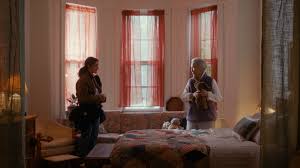
On My Mind (dir. Martin Strange-Hansen) – It’s morning in a bar in Denmark owned by a husband and wife named Preben and Louise. Louise doesn’t have too many customers to serve which allows Preben to do accounting of all the receipts from the previous night. A depressed-looking disheveled man comes into the bar and asks for a large amount of a whisky. His name is Henrik. As he’s drinking, he notices the bar has a karaoke microphone. He asks Louise if he can do a song for his wife: the country song “Always On My Mind.” The problem is the karaoke system isn’t on until the evening. Henrik can’t wait until the evening. He has to do it now. He even gives the two 500 Krone to do it. Preben is stingy about it, but Louise is more willing. Preben begrudgingly allows him one chance. Henrik starts singing and Louise records his singing on his smartphone, but it’s interrupted by a message. Henrik attempts to do it again, but Preben cuts the power to the screen. He’s had it with him, especially since running the karaoke machine is costly. He even gives Henrik his money back, but it’s there when Henrik explains the reason why this is so important; his wife doesn’t even have an hour to live. It’s there when Preben is willing. Henrik is finally able to complete his rendition of the song and play for his wife to hear, even if she’s brain-dead when he plays it for her.
At the end of the showing of the shorts, I was with some Danish students who said it’s very common in Danish student movies to have it set in a bar. I never knew that. Whatever the situation, this is a good story. You think it’s one thing but it turns out to be something more instead. You think it’s a simple karaoke song, but instead it’s Henrik’s last opportunity to tell his wife he loves her. Even though she’s brain-dead, he senses she got the message. The film gets you believing in the human soul and it convinces you the love between Henrik and his wife is eternal. Not just “til death do us part.”
Please Hold (dirs. K. D. Davila and Levin Menekse) – A young man named Matteo is just living his life normally when all of a sudden, a police drone, gun and all, has let him know he’s under arrest. He’s ordered to enter the automated police car which takes him to the automated holding centre. He’s instructed to go to his cell, where he’s unattended and supervised by video cameras. He can see a lawyer, but it’s through an online legal service where lawyers meet through Zoom-style meetings. Making phone calls to anyone is very costly and credits can be earned back through time or hobbies automatically delivered. That’s especially frustrating since Matteo is in danger of being sentenced to over 20 years in prison. He needs a lawyer bad. He takes a knitting hobby which he slowly earns credit. He does get the lawyer money he needs from his mother, but the appointment fizzles out, leaving him extremely frustrated. However there is a light at the end of the tunnel.
This is a very unique “What If” scenario. We have computers and Zoom meetings taking care of a lot of our duties. Can we really trust an automated justice system or police drones? Sure, the flesh-and-blood police have lost a lot of our trust, but replaced by computers? This film seems to think computerized technology can’t replace human interaction. Also Matteo’s scenario of being in a prison where he can only communicate through automation could even remind a lot of people of the pandemic and of its tightest days of how people had to confine themselves to their houses. A lot of ways you can look at this film.
To sum up the nominated Live-Action Shorts nominees, all of them are very good films. There are a lot of stories that are well thought-out and some stories that end up being more than what one originally expects. Some have topics that are very relevant to what’s happening now, like about racism and sexism. There’s one that focuses on a futuristic topic and fancies what the future of justice will be like, which is nothing to fancy over. And there’s one about a universal topic of love beyond death that has always been one of thought and continues to be one of thought.
And there you go. This is my summary of the films nominated for the Oscars for Best Animated Short Film and Best Live Action Short Film. Hope you’re lucky enough to catch them in the movie theatre like I did. Some may be seen on streaming services or YouTube, but the big screen experience can’t be beat.

 Jon The Blogcentric