A film like The Plague is one of those films that sounds ideal to watch on a Saturday night at the Rio. Let’s just say it delivers on the crazy stuff you’d expect from a film in the Altered States series, and more.
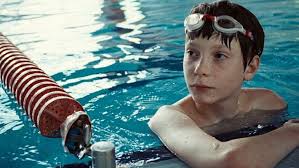
It’s 2003 and Ben is a 13-year old boy at a water polo camp for 12-13 year old boys from across the nation. They spend time training in the school pool coached by a coach nicknamed ‘Daddy Wags’ and sleeping in the same lodge. The boys all have the best and worst attributes of boys their age. They befriended one moment and taunted the next. Ben’s first encounter comes while talking to Jake who’s back for his second year. During dinner, Jake notices Ben’s speech impediment when he says ‘s’op’ instead of ‘stop.’ Ben soon gets the nickname ‘Soppy.’
Despite being called ‘Soppy,’ Ben is still one of the boys. They tease and they are teased back. Ben and the boys talk of the girls they fantasize over. Ben notices that Eli is the boy most singled out. Eli showers alone, changes alone, and eats alone. When it’s dinner on the first day at camp, the boys leave whatever table Eli sits at. Ben wonders why. The boys say it’s because Eli has ‘the plague.’ Eli has a noticeable rash on his arm and wears a long-sleeved shirt while training while the other boys wear simple trunks.
Ben doesn’t buy this talk of ‘the plague’ or its alleged contagion from the other boys. Ben dares to befriend Eli despite what the other boys say. Ben does notice a lot of ‘weird talk’ from Eli and it gets him thinking about him. Other incidents that get Ben thinking is when the boys have fun vandalizing an alley one night. One of the boys plays music and they all dance, but Eli does a super-bizarre dance to music that includes dancing with a poster of a cartoon character he calls ‘Boopie.’ Another time, Eli’s finger looks like it’s cut of, but it grows back in front of Ben. Ben is starting to get nervous about Eli.
Things soon get more heated. The water polo camp shares a pool with the 12-13 artistic swimming camp. The girls to their training after the boys are finished and all the boys are attracted to the girls. Including Ben being attracted to one swimmer with braces. One day, as the girls are warming up at the other end, Eli’s hormones let loose (to put it politely) and they all taunt Eli. Daddy Wags disciplines the boys about people’s feelings. Jake is the one that still gives a jerk attitude to the coach and doesn’t regret the teasing. Soon the boys start suspecting Ben has ‘the plague’ because of the time he spends with Eli and they notice a similar rash on him as Eli’s rash is growing.
Ben tries to run away from the camp and even calls his mother from a diner’s pay phone to try and pick him up. Daddy Wags finds him at the diner. They have a dinner together and Wags tells him about the teasing he endured when he was Ben’s age. Upon returning, Ben tries to make peace with Jake but Jake reveals to Ben that his mother died.
Very soon, the rash on Ben grows and that prompts more rumors from the boys. Especially from Jake. In a training scrimmage, Jake is mad Ben wasn’t fouled while he was. He starts a fistfight with Ben and that becomes the end of it. Jake is expelled from the camp. Despite Jake being gone, it’s clear from the looks of the other boys the torment won’t be over.
As the camps for both water sports end, Daddy Wags is holding an end-of-camp dance where the water polo boys can finally dance with the artistic swimming girls. Finally, Ben will have a chance with the girl he’s been interested since the start. At the dance, there’s not much dancing but they notice Eli doing his ‘freak dance’ from days ago. It’s when Eli again dances with the Boopie poster that Ben has had enough and has to give Eli a talk. Ben just let’s it out on Eli that his behavior will get him continuous ostracism. It gets so heated, Ben tears the Boopie poster. What happens after, I won’t give away the ending. I will say that what happens to Eli and Ben will convince you that ‘the plague’ is real!
Bizarre supernatural thrillers like these usually have some theme that’s a common reflection of daily life. This is a case of boys on the verge of puberty. I don’t miss being a 12- or 13- year old boy either. I was the mocked at times and the mocker other times. Acting like a jerk, talking tough, lewd talk, being mean to look like a big shot, I don’t miss being a young mouthy jerk. This film does make the nastiness of the middle school years it’s common theme. I’m sure those that watch this film, especially adult males, will remember the insecurities they themselves faced when they were that young. Looking back, it’s kind of understanding why it would make the ideal theme for a scenario as bizarre as this plague. A bizarre thing happening to one at the most vulnerable time in a person’s life..
Here we have a water polo camp for boys sharing a poll with the girls of the artistic swimming camp. Both camps have the same age ranges. At the end of the camp, there’s a farewell dance where the boys and girls can finally dance together. As for the story being a thriller, the toxic masculinity of middle school boys adds to the drama of this story. Does Eli really have a ‘plague’ that’s contagious? Or are the boys just being mean? You’re left to question. The drama gets even bigger when Ben gets the same rash. Is it really ‘the plague’ they’re talking about? What will happen to Ben? Will he be able to dance with the girl he fantasizes over? Or will he end up acting like a freak like Eli? Add that in to the story of the difficulties of being 12 or 13 and other boys being big shots. It does make one curious of how this story will end for either of them.
Mind you this story isn’t just showcasing the nastiness of middle school boys. It also showcases the fun with the recklessness of getting into mischief. It showcases the feelings of love and attractions to girls at that age. The desire to meet with the girl of Ben’s curiosity will remind you of the innocence of those days. Mix that in with the camera angles and the slow-motion filming as well as the mix of hit songs and original score, it gives a fun boost to the drama of the story.
This film is a great first feature-length film from writer/director Charlie Polinger. Based on his summer camp experience in 2003 when he was 12 and kept journals over, Polinger does a good job in mixing in the story of the anxiety of being a misfit among a group of 12-13 boys while fearing getting the ultimate in ostracism from the possible contagion. The characters of the boys will remind you of some middle school-aged boys you may have encountered in your own life. He does a very good job of showing the ugliness of boys being big shots at other boys’ expense while reminding us this is a thriller about something supernatural. It’s a story that’s mixed with scripted dialogue and improvisation. The addition of subtitles that are not always there and leaves some things out is an odd but unique addition to the story. A great achievement!
Holding the film together is the performance of young Everett Blunck. He handles a role involving a lot of young insecurities well and makes a story about something both bizarre and frightening compelling to watch. Joel Edgerton plays it low-key as the coach Daddy Wags. In playing the coach trying to guide the boys and keep order, he keeps it low but makes for a believable coach hiding his own insecurities.
The biggest scene-stealer of the film has to be Kayo Martin. His performance as Jake will remind you of the middle school boy that seems to be the stand-out of jerks or the ‘king jerk’ of all of them. We all have memories of that boy! At the same time, he is sympathetic. We all remember how middle school boys are bad at dealing with their feelings. It may explain why Jake acts like a jerk. Maybe Jake doesn’t know how to deal with the death of his mother. Kayo is very convincing. Kenny Rasmussen also stole scenes as Eli. He’s both sympathetic and frightening at the same time. You don’t know if he is the ‘odd boy’ (another middle-school boy type we have memories of) or if ‘the plague’ is the real thing. Despite being singled out as a freak, he will make you feel for him at the same time too. The cinematography from Steven Breckon mixes the fun, cruel and frightening environments very well and the mix of hit music and original composition from Johan Lenox helps with the film’s shifting moods from start to finish.
It’s interesting to note this film has won awards at film festivals. The film was nominated for Un Certain Regard at Cannes as well as Charlie Polinger nominated for the Golden Camera award. At the Deauville Film Fest, the film won two awards: for the Critics Prize and the Grand Special Prize. At the Calgary Film Festival, it won for Best International Feature in the narrative category.
The Plague will remind you of the ugly days of middle school and how you tried to prove you were all that or were mean to others. It also makes for a bizarre and intriguing thriller about something that turns out to be more than just a skin condition in the end.
 Jon The Blogcentric