Hi. I know it’s been a long time for me to publish a blog. That’s a common trait of mine that if I do a lot of writing for one period of time, I tire out for a long time. That explains the lack of blogging. However I hope to get back to the process over the next while. I’m planning some more movie reviews and even a political topic or two.
Here, I’ll be posting my long-awaited Top 10 films list of the year. Here are the links to past years:
When it comes to reviewing movies, I’m not your typical ‘film snob.’ Most of the time I’m okay with the typical commercial Hollywood movies as long as it’s done well. I approach them with the attitude: “Okay I know it’s your job to sell big but give the audience their money’s worth.” I also have my own approach to the artsy film-fest fare type of films: “Okay I know you want to be creative and do your own inspired thing but don’t forget this will be shown in front of an audience. Don’t alienate them.”
That’s how I approach films. That’s also how I approach my Top 10 list. Bonus points are given to films that go beyond my expectations. With that in mind, here are my Top 10 films of 2014:
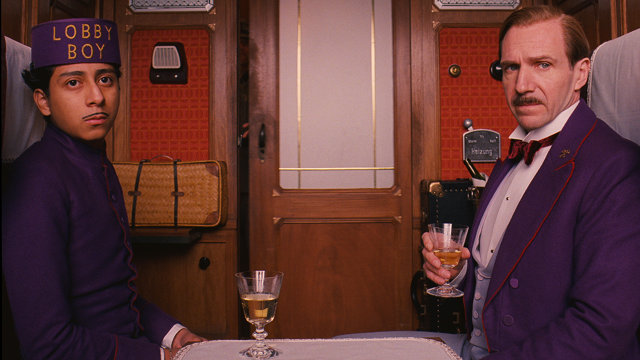
A hotel owner and his lobby boy (played by Tony Revoloro and Ralph Fiennes) go on a bizarre adventure in The Grand Budapest Hotel.
Anyone else here who missed seeing The Grand Budapest Hotel back when it was released in the spring? Yes, I’m guilty of that too. I can blame it on things like me being tired right after last year’s Oscar season to having a lot of preoccupations in my life at that time. This year’s Oscar race sent me the message of what I missed out on the first time. I finally saw it on DVD a few days ago and I now finally see why it ranks among one of the best of 2014.
This is another review of mine where I won’t give an analysis of the plot. Instead I will put focus on the movie’s strengths and possible flaws.
This film is quite typical of what to expect from a Wes Anderson film. It has an eccentric situation along with eccentric characters and a lot of comedy along the way. However this movie has its charm: the common charming eccentricity with Wes Anderson movies that continuously attract fans of his movies and moviegoers looking for something different. It’s also a trademark charm of the director that does not run stale with their movies time after time and continues to be enjoyable.
This too is a film that offers a lot and doesn’t make a whole lot of sense at first but makes sense as it goes along. It starts with a young girl paying honor to a writer in the present. Then flashing back to the writer in 1985 talking about hearing from Zero the owner of the practically lifeless Grand Budapest Hotel in 1968 about why he won’t close it down and Zero flashing back to 1932 to explain the whole story why. Wow, a lot of flashing back!
The story itself unravels itself over time with its various chapters from Zero joining the hotel as an orphaned lobby boy to the fictional country of Zubrowska nearing war to the owner Monsieur Gustave’s affair with Madame D to inheriting her most coveted painting much to the anger of her own family who hoped to have it to being framed for her murder. Yes, already bizarre. However the colorfulness comes with Zero’s love for the cakemaker Agatha whom he eventually becomes engaged to and helps bake cakes with escape tools.
The situation gets weirder as an assassin is on pursuit for him and the hotel needs to be managed, especially since news about a second will from Madame D is in existence somewhere. It’s after a pursuit while at a winter sport’s to kill off the assassin that the can return to the hotel only to find it overtaken by soldiers in the war and police on the hunt for Gustave.
As you can tell, this all makes for a bizarre confusing story and even leave you wondering about why the hotel is still in existence. Understanding it means having to see the story for itself from beginning to end. There may be some confusing moments along the way and even a lot of eccentric humor but you will understand it and even the reason why a mountaintop hotel that’s completely useless is still in existence. You’ll even understand why the lobby boy is the only person in the world Gustave can trust wholeheartedly and would eventually own it. It’s no wonder Wes had to write a story along with his writing partner Hugo Guinness in order to bring this to the screen and make it work.
There are even times when I felt the story resembled Farewell To Arms, albeit with Wes Anderson’s dark humor intertwined into the story. Actually the credits in the end say the film was inspired by the readings of Stefan Zweig. I’ve never read Zweig’s writings so it’s hard for me to judge on that factor. Nevertheless the fact that Zweig was an Austrian Jew who fled to Brazil for refuge where he died may have some bearing on this. Even seeing how the character of The Writer looks like Zweig gives a hint. Whatever the situation and even if the story does not go as well as you hoped it would, it does leave you feeling that it does end as it should.
Despite this film being another excellent work from Wes Anderson, we shouldn’t forget that this is also because of the excellent ensemble of actors. Many of which have already acted in Wes Anderson movies of the past. Here they deliver well as a whole to make the movie enjoyable and true to Anderson’s style of humor and style of film making. However it also succeeds well with those who have never acted in a Wes Anderson movie before, like lead Ralph Fiennes. He delivers a character that’s humorous and true to the humor of the movie. Newcomer Tony Revolori also adds to the charm of the movie as the young bellboy who becomes Gustave’s partner in crime as does Saoirse Ronan as Agatha. You can easily see why she won his heart. Even minor roles from other Anderson first-timers like Jude Law and F. Murray Abraham add to the story.
Even the technical aspects of the story are excellent. The costumes designed by Milena Canonero are perfect to a T in this movie as is the set design and the makeup and hair. All these elements fit the times they’re set in and add to the film’s charm. The cinematography by Robert Yeoman fit the story well and the music from Alexandre Desplat also fit the film.
The interesting thing to note is that The Grand Budapest Hotel is Wes Anderson’s highest-grossing film ever with $59.1 million in North America and almost $175 million worldwide. Buzz for the film first started after it won the Silver Bear at the Berlin Film Festival. Buzz continued after it continuously impressed film festival after film festival. Although his box office total in North America is not too impressive, it should be seen as respectable as it opened around the same time as the summer movie phenomenon that was happening. It made for a nice humorous alternative to the overhyped summer schlock.
The Grand Budapest Hotel is a DVD worth watching. We all didn’t know what we were missing during the summer and now we can finally see why.
Rebecca Houseknecht gets ready something more than a dance competition in First Position.
“You have five minutes of stage to prove why you deserve this chance.”
I went to see First Position a week or two back because I wanted to finally make use out of movie tickets for a certain cinema I won during an Oscar party. I’m glad I did. It’s a unique outlook on the art of ballet dancing, the children that aspire to excel, and the Youth America Grand Prix competition which is a potential ticket for many futures in the dance. It left me with a surprising outlook and I now know more.
Before I go into reviewing First Position, I’d like to explain the Youth America Grand Prix (YAGP) competition. The competition was created in 1999 by two former dancers of the Bolshoi Ballet. The competition is not just a top dance competition but a potential ticket to futures in dance. Many dancers are awarded scholarships to various renowned dance academies from around the world. The total value of scholarships are estimated to be $250,000 annually and they range from summer intensives to full-year schooling. Dancing jobs are also offered from renowned ballet ensembles worldwide. Many dance companies have considered this competition a ‘game-changer in dance’ or a ‘dancer’s marketplace’ ever since it began.
As for the YAGP competitions, they consist of semifinals contested in twelve American cities and five foreign cities and the finals in New York. The individual competitions are divided into three age divisions: pre-competitive (11 and under), junior (12-14) and senior (15-19). The junior and senior divisions have Grand Prix awards and the pre-competitive division has a Hope Award. Medals are awarded in each age division with men and women separately. There are also competitions in Pas de Deux and Ensembles with medals awarded. There are also special awards given out at the end.
The YAGP may start with an annual total of 5000 dancers competing in the semifinals and almost 300 dancers in the finals in New York City annually but the movie focuses specifically on six in the 2010 competition:
-Rebecca Houseknecht, 17: The Maryland teen is a self-described ‘princess’ and has an obsession with the color pink. She’s been dancing and competing her whole life. Now that she’s on the verge of graduating high school she wants to dance professionally. Competing at the YAGP could open the door for opportunity. Nevertheless she’s nervous since she knows chances are slim.
-Joan Sebastian Zamora, 16: A Colombian so good at dancing, he had to move to the renowned The Rock Dance Academy in Philadelphia to improve his skills. Ballet is his passion. He receives a lot of support from his family and frequently talks with them from thousands of miles away. He’s hoping to become a professional dancer but is now chasing a scholarship from a top academy.
-Michaela DePrince, 15: A refugee from Sierra Leone who was shunned in an orphanage as the ‘devil’s child’ for vitiligo discoloring her skin. She carried a picture of a ballerina with her during her days in the refugee camp and dreamed of being that woman. Adopted by a white American family at age 4 along with another girl from the refugee camp, she looks back at her past saying: “It’s a miracle I’m even here.” She’s come this far training at a top professional school but wants to take things further.
-Miko Fogarty, 12: The daughter of a Japanese mother and British father, her mother was a dancer in her native Japan and she took to the love of dance instantly. Unlike most children who are either influenced or forced into things by their parents, she shares the same love of dancing as her mother and a special bond with her.
-Aran Bell, 11: A real-life Billy Elliot. It’s a surprise that this ballet prodigy is the only dancer in his family. An American boy living in Naples, Italy where his military father is stationed, Aran trains at a renowned school in Rome. Being 11 doesn’t excuse him from training over 30 hours a week, but Aran loves ballet enough to commit himself to it.
-Jules “J.J.” Fogarty, 10: Miko’s younger brother. He too is very skilled of a dancer but he doesn’t seem to be the dancer type his sister and mother are. He lacks the passion shared by his mother and sister but will he continue on or give out?
Throughout the documentary, there are many factors about the life of a young ballet student. One starts when a judge says “Kids who are pursuing ballet as a career give up their childhood.” Even Michaela will acknowledge: “You’ve been working your body to death since five.” We see the childhoods of all six. All six may train an excruciating number of hours a week but they all have time for fun, even those that are home-schooled or take correspondence learning. Rebecca points out she has fun with friends and a boyfriend: “I feel I lead a pretty normal life”. We see Michaela talking and eating with her friends. We see Aran play catch and skate on his skateboard. He has a BB gun, toy cars and many teddy bears. Miko herself says: “I think I’ve had the right amount of childhood and the right amount of ballet.” Maybe children pursuing dancing do have a childhood. Just a different one than most of us.
Other themes about ballet enter the picture in the film too. One is the importance of the family dynamic in supporting the child chasing their dream of dancing. They may be lucky like Michaela and Rebecca to live near a top notch school or they may be like Joan Sebastian’s family whom Joan only sees a few times out of the year. Nevertheless the support is evident for all in an art that involves a lot of time and a lot of money. Another is the difference between loving dance and liking it. It becomes evident with J.J. as he admits that he likes dancing but doesn’t love it enough to devote the huge number of hours any longer. Viewers may have even sensed that at the beginning. Another element included is race and gender. Michaela talks about the flack she hears like: “blacks lack the grace to excel in ballet.” Joan Sebastian mentions of an African-Cuban ballet dancer as his idol and inspiration. Aran keeps his dancing private from his classmates: “A lot of men think ballet is not what it is.” On the other hand Joan Sebastian’s six year-old little brother wants to be a dancer just like Joan.
As the competition progresses from the semifinals to the finals, we also see other aspects of ballet come to light. One is highlighted in a conversation with Rebecca and her dancing friends about the competitiveness of the dancers. She mentions how when she gives a compliment, many react to her with suspicion. The funny thing is while many people believe ballerinas to have snobby catty personalities, all the dancers profiled in the movie have very likeable personalities. Another aspect is dancers and eating. To the surprise of many, all the dancers featured have big appetites and admit to eating a lot. There’s been a lot of talk about dancers and eating disorders but the dancers’ eating reminds us that a dancer with an eating disorder like anorexia won’t have the energy to train or perform well. So good eating is necessary. Another aspect is dancing injuries. They range from blisters to pulled muscles to inflamed toe joints to popped knees to the unspeakable. It shouldn’t surprise you with training 30 or more hours a week. What would surprise you is that dancers are expected to perform with the injuries and still make it look pretty. That could lead to further aggravation. Many dancing careers have been cut short because of injury. Surprising how watching ballet performances are beautiful but the training part has a lot of ugliness.
Yes, the film shows a lot of themes and aspects of ballet as it goes from showcasing the training to the home life to the competition. Competition has some aspects of its own. First is the semifinals held in the various cities. As I mentioned, a total of 5000 dancers try out in the semis to become amongst the 300 that qualify for the finals in New York. They show all six competing in their own semifinal competitions but the most eye-catching were that of Miko, J.J. and Aran. Miko falls during the first performance in her semifinal. Her mother always blames herself whenever Miko falls. Nevertheless we’re made aware that the judges like a good recovery. Miko performs well during the second performance and she qualifies. J.J. also qualifies as he’s given special consideration for his age. Even though Aran is American, he competes in the European semifinals. We’re also introduced to Aran’s friend from Israel. Her name is Gaya Bommer and she’s a dancer trained by her mother. They form a special friendship even though they’re miles apart and Gaya can’t speak any English.
One thing we should remember is that the semifinals are held anywhere from two to six months before the finals. A lot can happen within that time. That’s the time when J.J. decided to quit ballet. This breaks his mother’s heart as he quits before the finals. Miko and the other dancers continue on. Nevertheless some face their own pressures. Joan Sebastian returns to visit his family in Colombia. It’s a warm homecoming visit. The family is from modest means. They know dancers have a short career life but they encourage Joan to chase his dream. Rebecca still hopes for the YAGP to be her chance for a dancing job with a company but we hear from her mother that many companies have either hired less new dancers or let go of some existing ones. We’re even told by a judge at the beginning that there are many dancers but few will get good work dancing. Then Michaela faces an aggravated foot injury. It’s starting to flare up shortly before the Finals. She’s uncertain if she will perform well.
Then the 2010 YAGP finals take place. There are anywhere from 200 to 300 dancers from around the world competing in both individual and group competitions. The film focuses solely on the individual competitions. Two things the film showcases about the finals outside of the featured dancers’ performances is firstly how international the competition is. There are dancers from a multitude of countries competing here even though most of the semis were held in the US. Another is how even in a tight competition like this, bad steps, stumbles and falls do happen. Reactions from the dancers are not pleasant at all. One teen male was seen backstage walking silently angry over his fall. Another girl’s instructor reacts with frustration after her fall. Another young boy bursts into tears at the end of his performance. We’re also told by one of the dancers that hitting or missing at the YAGP could actually hurt one’s chances of getting their career. A reminder that while the YAGP has become a game-changer as a dancer marketplace, it’s also a game-changer for one’s reputation in the world of dance. Yes, the YAGP is a competition a lot like a sports competition but it included the same cruel unforgiving attitude of showbiz mixed in.
Then it’s time for the featured dancers to perform. Both Aran and Gaya are magnificent. Rebecca also dances well. Joan Sebastian flies brilliantly. However the performances with the biggest interest were Miko and Michaela. Miko displays the confidence and the flawlessness that was missing from the semifinals. And Michaela performs excellently and gracefully as if the injury wasn’t there. After the dancing is over, it’s time to award the prizes and the scholarships. You can find out the results of those over at the YAGP website. I’ll just say some were rewarded with prizes and some were rewarded with scholarships to renowned academies. Those with scholarships looked forward to a new life and for better things to come. Those that won prizes continued on dancing preparing for next year’s competition. J.J. had since been pushed into academics. His mother told him if he won’t shoot high in dancing, he’s left to shoot high in his schooling. As for Rebecca–SPOILER WARNING–she was the only one of the featured dancers who left the competition without a prize, scholarship or a job offer. We learn in the epilogue she was later offered a job at a Washington Dance Ensemble.
One of the best qualities of this documentary is that it doesn’t just simply take you into the lives of the participants but makes you want each of them to achieve. We see in front of our eyes how much dance means to them. It’s a given. If they’re born to do it and they love it enough to work hard at it, it’s natural for one to want them to excel at it. Even though we’re reminded of all the odds, we still want them to succeed in the end because we feel they deserve it. Director Bess Kargman is a former dancer herself so she has first-hand knowledge of all the odds and ends of training and competing in dance. The YAGP started long after her childhood ended but she still knows of all the right elements to place in the movie such as the training, the outside factors, the semifinal highlights, the time in between and the finals.
She succeeded in giving the audience a look at the struggles, the ugliness, the stresses and the triumphs from the dancers’ points of view. It will surely open a lot of people’s eyes about what it’s like to be a young dancer. Also it’s interesting how a lot of moviegoers got a perception of the ballet world after seeing Black Swan. The movie had some truth to it but not all of it is completely true. Even with the dancers shown here, none of them appeared to be as insecure as Nina. They all had their own issued but they were all likeable, confident and exhibited high self esteem. This documentary sure changed what I thought about kids in ballet. The film also got me interested in next year’s YAGP.
Another thing that’s unique about this documentary is that it’s one of few that one can bring their children to see. There were children in the audience when I attended and that’s a good thing. I feel any child who sees this will learn a lot about dance and competing. Most girls dream of being ballerinas. This will show them that to be successful in ballet you not only have to dance as light and pretty as a swan but have a body of steel and a will of iron to make it. Most girls dream of being it. Few are willing to put in the hours and years to achieve it. Also it shows that boys who want to make it not only have to have the same iron will but a thick skin to the common negative stigma associated with boys in ballet not just from other boys but some adults too. It’s the Billy Elliot story all too often. All the boys shown here love it too much to quit over any teasing. The father of The Rock dancer Derek Dunn, who’s a former YAGP winner, said: “I have to say I never expected my son to be a dancer but I couldn’t be prouder.” Here’s to those boys.
First Position is not only an eye-opener of a documentary but it’s engaging to the audience and even exciting especially when the audience shares the same passion as the dancers. Definitely a documentary worth seeing.
Also in case you’re interested in the Youth America Grand Prix itself, the official website is at: http://www.yagp.org/ YAGP 2013 semifinals have already started with the first semis, the South American semis, being held in Santos, Brazil as I speak. Also next year’s finals will be held in NYC on April 12th to 17th. A good chance to catch the future of dance.



 Jon The Blogcentric