VIFF 2023 Shorts Segment Review: Forum 2

With me having to spend the entirety of VIFF in Vancouver this year, I have better chances of completing my three annual VIFF goals. I was able to complete the second of my goals: see a segment of short films. I did so at a “Film Forum” titled Forum 2. Not the most original of titles, but the stories made up for it. On top of it, they’re all from Canadian film makers. Definitely worth checking out:

-Sisters (Ontario – dir. Marisa Hoicka): The film begins with a 1960’s look and it appears to be an instruction film on how to be a “proper woman.” Instead the film is the narrator talking about how her “sister” taught her how to be a powerful woman with what she said and how she lived.

This is a unique short film. It comes in the guise of your stereotypical instructional film on how to be prim and proper, but instead is a story about empowerment. Throughout it all, it never loses that 60’s feel it intends to have. Very good film that does a lot in its brief time.

-Four Mile Creek (Quebec – Dir. Ryan McKenna):****The story begins with the retelling of the Cormier family as they go through Ontario until their eventual settlement to La Salle, Manitoba. Their journey is in the mid-1880’s and during a time of rampant smallpox. While in Ontario, the Cormier children were hit and their eight year-old daughter Aurore died. She was buried in the plains near their house and outside Kenora, Ontario by her father because a priest would not perform the blessing. A century later, a group of University of Winnipeg archivists, including family and one claiming to be haunted by Moise Cormier’s ghost, go on a mission to research and uncover Aurore Cormier’s grave.

This is a docudrama that combines recalling of letters from the Cormier’s to re-enacting of the moments of the family and their smallpox ordeal to those involved in the uncovering telling their story. It’s two films in one and tells a revealing historical story known to few. Impressive and creative.

-Cloud Striker (B.C. – dir. A.W. Hopkins): At an Indian Residential School in 1931, four male students are being punished by the nun. Their crime: speaking in their Indigenous language. One student, Elijah Cloud Striker, is defiant and even uses his Indigenous name in front of the nun. She slaps him and gives him the hardest of the punishment. A man comes to visit. He’s Chief Cloud Striker and he’s looking for his son. Both the nun and the priest try to persuade him to stop but the Chief punches the priest in the face after he hurls the chief a racist slur. The Chief and Elijah make a run for it. Later while resting in a remote area, they talk and wonder why their people aren’t angrier about this

The treatment of Indigenous peoples through the residential school system has scarred our nation like nothing else. Especially since Canada has been dealing with the ugly aftermath this past half-century. It’s unclear if this is based on a true story or if this is a story of an incident the filmmaker wishes had happened. The film is good at retelling ugly things that happened at residential schools and how it hurt peoples. The ending talk between the Chief and Elijah gives an impression of how a lot of Indigenous people feel about this system. That mention from Elijah of two boys being buried is another ugly reminder. Even though the residential school system completely ended in 1996, I’m sure there’s a lot of harbored anger with the system, the Roman Catholic Church, and the Canadian government. This story tells a lot.

-Conviction (Alberta – dir. Bruce Thomas Miller): A former convict named Joseph, an Indigenous man, is released from prison after years of incarceration. He is given a job as a custodian at a thrift store. He is given residence with a man maned Quincy who himself was a former convict and is to look out for him. At his job, he has to deal with co-workers who find him suspicious, a second-in-command who wants to be at odds with him, a customer who hurls an insult at him and traumatic memories of his crimes and his incidents in prison. At the end, Quincy reminds Joseph of what he himself had been through and he’s someone for Joseph to turn to.

We go from a film about the ugliness of Residential Schools to a film about the aftermath. Over time, it became evident the residential schooling system was a terrible idea as it led to substance abuse, homelessness, substance addictions, suicides and crime among the Indigenous people’s. Joseph is like a lot of Indigenous men who want to leave their ugly past behind and want to start a new life, but doesn’t know if he can. The director/writer wrote this script as he himself was going through his own healing of PTSD. It speaks volumes of the struggle they have to go through. Sometimes, Joseph doesn’t know if his freedom is a bigger hell than prison and may feel it’s better to return. At the same time, it’s a reminder there is support along the way from those who also went through what they went through. Excellent story that’s well-acted and gets one thinking.

-Black Box Investigations (B.C. – dir. Paige Smith): A woman buys a disposable camera. She takes all sorts of pictures of her, of her surroundings and of various angles. She buys another with a flash. Again all sorts of weird photos, including inside her mouth. The photos are for all to see.

This is the kind of short film I’d expect to see in a shorts show of MODES. Although I didn’t exactly like this short film, I give the director credit for wanting to play around and want to do something creative and fun.

-Autre Chose (Quebec – dir, Etienne Lacelle): A biker is repairing his motorbike. He had a bad crash the day before. He has a hard time repairing his bike but succeeds. He wants to go for one last ride in the wild. On thing. Just before he leaves, he comes across a strand of long blonde hair on him. It’s a strand of his late girlfriend who died in the crash. He puts it in a small bag and heads off on his bike with a rifle. He drives through the terrain but gets his bike stuck. He tries to camp out and throws his girlfriend’s hair in a bonfire. While out walking the wilderness, he contemplates shooting himself. He doesn’t and moves on. As he comes across a lake, he cleanses himself in it. But as he drives off, he comes across her hair again.

This is a unique short film with no dialogue and lets the images and the sounds tell the story. You can get a sense of what is happening with the story. The images of the story even gets one asking questions. Like did he kill her during the accident? The thought of suicide and the bathing in the lake just after could mean it’s showcasing a chance at redemption. The ending can also send a message that even if redemption is possible, he still has to deal with the unresolved aftermath. The film really gets you thinking and will leave you with questions of your own..

-The Great Kind Mystery (Newfoundland =dir. Ella Morton): Images of Daniel’s Harbour, Newfoundland and its surrounding area are shown as young artist Amy Hull, who is of Mi’kmaq and Inuk descent, tells her story. The stories she tells are of the area of Daniel’s Harbour and its history, her denial of her Indian Status while she was attending university, and of the pride she feels of her ancestry.

This is the third Indigenous-themed short that was part of the segment. The first dealt with oppression of the past, the second dealt with the aftermath and this short deals with the current systemic racism in Canada’s Indian Act. This film is a reminder that Canada still has a long way to go to do things right and drop its racist systematic treatment of Indigenous peoples, especially in these post-Residential School times. This documentary is also a film that inspires hope. Amy is young and resilient and refuses to let racist politics destroy her pride or her identity and pursue her artistic dreams. She embraces her identity despite what has happened to her and won’t bow down. This film, and Amy’s story, is a ray of hope for the future.

-Element (Quebec/Ivory Coast – dir. Will Niava): It’s a hot summer day in Abidjan, the capital city of the Ivory Coast. A group of four young thugs have a hard time trying to make money. Their current business is not doing so well so they decide to get involved in illegal things. As the money gets better, things make a turn for the worse such as in their unity, the leader’s relationship with his girlfriend and even his soul. He even comes across a vision of himself of him dead and all of his loved ones at his funeral. It’s there he emerges from the ocean water and starts a new life, but not without something tragic at the end.

This is a unique story as it tells the story of pursuing life in the fast lane with the mix of spirituality. What the leader experiences is consequences both in the earthly world and the spiritual world. The inclusion of the spiritual world adds to the film and shows a form of spirituality rarely seen by others. It’s rare to see something like that in a film about young thugs trying to live fast. Overall, a great unique drama.

That’s what it was. Eight shorts from eight Canadian directors. Two were from BC, three were from Quebec. Three were from female directors and three were Indigenous themed. Most were dramas, some were experimental and some were even documentaries or docudramas. All of them are unique in the stories they showed and what messages they want to send. Also all of them showcase directors with a promising future.

Those are my thoughts on the eight short films of Forum 2. Some I liked, some I found intriguing, a few I didn’t. All of them did showcase the director’s works and abilities very well.

VIFF 2019 Review: The Great Green Wall

inna-modja
The Great Green Wall is about an African reforestation project as seen through one of its biggest supporters: Malian singer Inna Modja.

“We must dare to invent the Future”

-Thomas Sankara

Judging by the title, you’ll think The Great Green Wall is about something environmental. You are mostly right. However this film is about something more, just like the wall.

Before I get into the film, I need to explain what the Great Green Wall is. It’s official name is The Great Green Wall Of The Sahara And The Sahel. The Great Green Wall is an environmental project and initiative meant to protect Africa against climate change and desertification. Those most vulnerable to desertification are the lands and people around the areas where the Sahara ends off known as the Sahel. This environmental wall of reforestation is to be done across twelve African countries around the Sahel. The main goal is to prevent the spread of the Sahara that has desertified a lot of green space in the past, strengthen regional resilience and natural systems for a sound ecosystem, and also maintain better living conditions and a better quality of life and even a future for the people’s of Africa around this area.

The idea of a ‘great green wall’ to contain the Sahara was first imagined by a British botanist in 1954, but was never taken seriously. The idea was brought up again in 2002 at an international meeting of the Community Of Sahel-Saharan States and approved in 2005. The African Union endorsed it in 2007 and the first plantings occurred in 2008. Eleven of the countries involved created the Pan-African Agency of the Great Green Wall (PAGGW) as well as a harmonized strategy to plant out the Wall was adopted by African nations and implemented by the UN in 2012. However by 2016, only 15% of the acreage has been planted. Although many countries have been successful in planting, many of their plans are threatened by civil war.

The film is the Wall as seen through the eyes of Malian singer Inna Modja. She was born Inna Boccum but was called Ina Modja by her mother as a child as Modja is ‘bad girl’ in her native Malian language. Inna grew up in a musical family and was heavily influenced by both the traditional sounds of African pop music and American hip-hop and R&B of her teen years as well as the jazz records owned by her father. When she broke into the music world in 2009, she settled for a pop/soul sound. Her music ranges from themes of common pop songs to songs with strong political messages. Her music is not only big in Africa but also popular in France and Belgium.

Right at the start of the film, Inna talks of her own identity having elements with the Sahel. She grew up around the Malian area of the Sahel. The Great Green Wall is a project she is heavily dedicated to. She states the biggest elements the Wall is meant to combat: desertification, climate-change, poverty and even war. She also talks of her planned trip to visit areas around the Sahel where the Wall is vital to. It’s a trip that will take almost a year and will face the interruptions of her music schedule.

Before she embarks on her trip, she shows areas of Mali where forestation has occurred. She talks of her own childhood growing up on the Sahel. The first country she visits is Senegal. There she learns of the common belief shared by many young Africans: ‘flee to Europe or die trying.’ There’s a common belief in most of the young of Africa that there’s no future here in Africa. That their future is in Europe. Inna sees the importance of the wall as a way to keep the young in their African countries. It’s critical as it’s projected that 60 million young Africans are anticipated to migrate or attempt to migrate to Europe within the next 20 years.

Inna goes into more countries over time. She goes into Burkina Faso. One of her favorite leaders is Thomas Sankara: former president of Burkina Faso. She admires him and also hold dear to his saying ‘we must dare to invent the future.’ She then travels to Chad: a country that has suffered the most environmental damage. We learn of Lake Chad of how it used to be a big lake and it’s dissolved almost into nothing. She tells of the poverty and wars that have come from Chad’s environmental devadtation, including war children.

She then travels to Nigeria: the most populative country in Africa. She meets up with singer Waje who is a top singing star in Nigeria. She uses her fame for good and is just as supportive of the wall. Over in Nigeria she learns of many ugly truths that are common in Africa. The biggest one being children turned into soldiers. She even talks to two former child soldiers that tell their story. She then goes to Niger which has the highest birthing rate in the world: more than seven per mother. She meets with mothers who talk about the hope for their children, including one mother who just gave birth.

Her last trip is to Ethiopia. There she meets with singer Betty G., but she also sees the biggest ray of hope. For most the biggest image of Ethiopia is the famine of 1984. During the famine, hundreds of thousands of people died of starvation. Much of the areas of land that was dry dirt during the famine have seen forestry and horticulture replanted and developed. The area where there was mass starvation and death is now full of plant life. After Ethiopia, Inna returns back to Mali with a new outlook on Africa and ready to send the message out in her performances.

The film is an informative film as it’s a documentary about the wall and how much it means to a singer. We should also know that Inna is also a political activist. She has not only spoken about the Great Green Wall bit also spoken out against violence against women and female genital mutilation, which she herself was against her parents’ will. Inna is not afraid to include these topics in her music.

The film shows how Inna is passionate about the topic and wants to go to many parts of the Sahel to learn more of the issues surrounding the Sahel and to remind all of us why this Wall is important. Especially since only 15% has been planted and grown. We’re reminded of the Wall’s importance. It’s not just to prevent desertification. It’s not only to bring back an ecoculture in Africa. It’s also for the future of these African countries. It’s to give them a livelihood. It’s to prevent or end wars. It’s to give future generation of Africa a future there instead of Europe.

The film, which is co-produced by Brazilian director Fernando Meirelles, shows how this Wall is about African countries coming together to make this wall happen. One thing about this Wall is that many treaties and organizations have come about this. This involved many times of leaders of African nations coming together. However through Inna’s eyes we also see musicians coming together to help make this wall a reality and help make for a better Africa. We see as she meets with Malian band Songhoy Blues, we see as she meets with Senegalese rapper Didier Awadi, as she meets with Nigerian singer Waje and as she meets with Ethiopian singer Betty C. In each case, the musicians are people that put messages in their music. We see them bonding with Inna for a common cause as they also share the same concerns. The Wall means a lot to them, and here we see how music unites people for a common cause.

The Great Green Wall is about an ambitious environmental project, but the film shows this wall is a lot more. It’s for the future and liveliness of Africa, to prevent the spread of the world’s biggest desert and for the future people of Africa to have a life of promise. The film, and Inna Modja, do an excellent job in delivering this message.

WORKS CITED:

WIKIPEDIA: Great Green Wall. Wikipedia.com. Wikimedia Foundation Inc. 2019.<Great Green Wall>

WIKIPEDIA: Inna Modja. Wikipedia.com. Wikimedia Foundation Inc. 2019. <Inna Modja>

Movie Review: The Great Beauty (La Grande Bellezza)

Toni Servillo plays an aging journalist/socialite pondering what could have been in the Italian film The Great Beauty.
Toni Servillo plays an aging journalist/socialite pondering how his life could’ve been in the Italian film The Great Beauty.

Just when I thought I saw all the movies I had to see for this year’s Oscar season, I learned The Great Beauty is around for a limited time. Now it wasn’t a serious Best Picture contender but it is a favorite to win the Best Foreign Language Picture category.

The film begins with Jep Gambardella having his 65th birthday party. Jep started his fame by writing a novel only to turn to writing cultural columns and becoming a top socialite in Rome since. He has been a popular fixture in all of Rome with holding the most expensive and most debaucherous parties on his apartment overlooking the Coliseum. The birthday party he has is well-attended and well-celebrated however Jep feels a sense of unfulfillment. The sense of unfulfillment continues after he meets face-to-face with a performance artist he’s about to pan, only for her to tell him off. It continues even further when he meets up with the man who married his first love from back in the early-70’s. He reveals to Jep she just died and she always loved him.

It’s then Jep decides to take a break from the party scene and retreat into a trip of knowledge. He takes in aspects of life in the many places he goes to: weddings, funerals, magic shows, visiting relics of Ancient Rome and the Renaissance, and even viewing the wreck of the Costa Concordia. He discovers from others about their passions and why it matters to them, even if they don’t become rich and famous from it. He visits artworks and learns from them and their lives. He meets with one friend who does a disappearing act with a giraffe. He witnesses the daughter of a rich friend of his paint out her frustration and anger with an abstract painting on a huge canvas. He meets a man whose father took a picture of him every day of his life and has the pictures plastered around a Roman palace. He even meets a 104 year-old nun who has cared for the sick throughout her life and still holds the same amount of faith.

However life does take some changes along the way. He does come into conflict with some of his rich friends when he questions their lives. He gets involved with friction with his mentally-ill son to the point his son commits suicide. His artistic friend decides to leave Rome after 40 years because the inspiration is no longer there. He never learns about why his first love left him as her husband threw away her memoirs.

The film is a very deep film as it reflects on a man who ‘made it’ and cashed out into the world of socializing and column-writing. It focuses on his reflecting on what could’ve been for him. The constant question from others on why he hasn’t written his second book adds to that lingering feel. The memories of him with his first love adds to the wonder of what could have been. Often when he sees the passions of others–whether it be a rich girl painting out her anger, a friend doing a magic trick, or even an elderly nun making every effort to live out her faith– he gets a sense of why people live out their passions. It’s a common theme in which many people feel once they look back on their lives often with regret and that lingering question of ‘what if.’

Paolo Sorrentino did an excellent job of directing and co-writing this original script with Umberto Contarello. I’m not too familiar with Sorrentino’s works but I know that he has a good resume for a young director. Three of his films have been entered into the Cannes Film Festival and two have been nominated for the Palme d’Or including this one, which lost to Blue Is The Warmest Color. He has even done an English-language film with Sean Penn entitled This Must Be The Place. His next productions as Rio, I Love You which is a continuation of the I Love You series of movies and In The Future which is slated to star Michael Caine.

Toni Servillo did an excellent job playing Jep in all of his dimensions. You could really sense the feelings inside of Jep that Tony embodied excellently. The supporting acting was also excellent, especially from Carlo Verdone as Romano and Sabrina Ferilli as Ramona. There were also great performances of significance and scene stealing from Giovanna Vignola as the secretary with Dwarfism and Giusi Merli as the elderly nun still full of spiritual passion. There were other great qualities to the film including excellent cinematography featuring the best of Rome and all of Italy. Another addition to the film was the mix of music from modern to classical. The classical pieces really stood out as they presented many scenes best and added to the theme of the film.

I have to say The Great Beauty adds to the greatness of Italian film that has been prevalent in past years. I know how Italian film really came to the attention with directors like Federico Fellini, Vittorio De Sica and Roberto Rossellini coming to exposure many decades ago. Italian film seemed to be continuing towards greatness and influence in recent classic films like Cinema Paradiso, Il Postino and Life Is Beautiful. However it took a bit of a back seat in the past ten years as there hasn’t been a film or director in that time that dazzled the world by storm. Paolo Sorrentino and The Great Beauty looks to change that. Many critics have said it resembles many great Italian films of the past. It has won many awards in film festivals and even beat out Blue Is The Warmest Color for wins at the European Film Awards and the Golden Globes. It looks to be a heavy favorite for the Oscar as there doesn’t seem to be any other film to challenge. Even if there was, it would still rank as one of the top films of the year.

The Great Beauty is an excellent cinematic reflection of an aging socialite. Its deep story set against thematic scenes and beautiful cinematography makes it one worth seeing.

Movie Review: The Iron Lady

Watch your thoughts for they become words. Watch your words for they become actions. Watch your actions for they become… habits. Watch your habits, for they become your character. And watch your character, for it becomes your destiny! What we think we become.

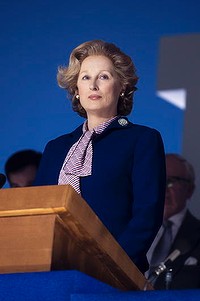
Remember Margaret Thatcher? I remember her well. She was the Prime Minister of Great Britain in the 80’s. For those who remember the 80’s, who could forget her? The Iron Lady is the movie where Meryl Streep brings Margaret to life. The big question is how good does Streep do it?

The movie opens in the present as Margaret in her 80’s goes out to buy milk and has breakfast with her husband. Problem is when her keepers see her, she’s the only one there. Margaret now has dementia and has people to look after her. She can’t tell the difference between her illusions and her reality. Even her daughter, who she has a strained relationship with, tells her that her son is in South Africa, she’s not the Prime Minister and her husband’s dead.

Margaret tries to adjust to her reality. She knows she has to accept the fact of her husband’s death. It has its difficulties. As she’s autographing books, she signs one Margaret Roberts. This flashes back to the days she’s the grocer’s daughter, working at her father’s grocery store while the town’s girls were having fun. Her father gave political speeches and encouraged Margaret to develop a strong will for herself. Further flashbacks move to when she falls in love with successful businessman Denis Thatcher and when she runs for her first election in 1950. She loses but Denis strongly believes in her.

In 1959 Margaret Thatcher, now married and a mother, is finally elected an MP in parliament. She has the difficulty of being the only female MP in parliament as she is known as the ‘lady of the house’. Nevertheless she does find support in a man, Airey Neive. He’s able to coach out her voice and her image. He even believes she could be the Prime Minister. Margaret doubts it and believes there will never be a woman Prime Minister as long as she’s alive. His death in a car bomb implanted by the IRA changed that. She became leader of the Conservative Party and won the national election in 1979. She didn’t just live to see Britain’s first woman Prime Minister. She achieved it.

Becoming Prime Minister in 1979 was not an easy thing. She had to deal with Britain’s rising unemployment, the Brixton riots, lengthy labor strikes like the seven month-long coal miners strike of 1984, and even an IRA bomb explosion during the 1984 Conservative Party Conference where she and her husband were almost killed. She also faced her biggest challenge when she declared war to reclaim the Falkland Islands. She was determined to win it back and she succeeded. Things improved for Thatcher as Britain had a better economy, she developed a friendship with Ronald Reagan and she emerged as a leading world figure.

By 1990, her reputation as the Iron Lady was starting to wear thin. She went from being seen as an active World leader to being more of a political tyrant who verbally assaults her own colleagues. Geoffrey Howe resigned after being humiliated by her in a Cabinet meeting. Michael Heseltine challenges her for the leadership of the Conservative Party and Cabinet forces her to resign as Prime Minister. She still carries the bitterness twenty years later.

Eventually Margaret does learn to let go as she packs up Denis’ belongings and tells him it’s time to go. Denis does leave and we see her washing a teacup, something she promised Denis she would never do.

The weakness of this movie is that it looks like it can’t make up its mind whether it’s a biographical drama or a fictional story amongst historical figures. No question there are a lot of times when it showcases the struggles, triumphs and defeats of Margaret Thatcher but it often feels like the story is more about her ordeal with dementia instead of the legacy she created. Many times it doesn’t make much sense as I came hoping for a biographical story of Margaret but instead felt like I was watching a movie about Margaret dealing with the loss of her husband. Even now I’m still confused what the main point of the movie was.

There is no doubt the movie did an excellent job in bringing back the legacy of one of the most legendary political heads of state of modern times. History should continue to remember Margaret Thatcher and the younger generations should be familiar with her. Margaret Thatcher sent a strong message of what a female head of state can do. She showed a woman head of state is as capable of being a world leader as a male head of state can be. She proved a woman head of state can have a long powerful term. She proved a woman head of state can transform a country. She also proved that a woman head of state is just as capable of declaring a war as a male head of state. There have been female heads of state before but never before was there a female head of state of a major country. Today the biggest country with a female head of state is Germany with Chancellor Angela Merkel. American media have strongly hinted there may be a president Sarah Palin in the future. Who knows?

Without a doubt, Meryl Streep delivers another winning acting performance. She never disappoints and always delivers. However this is a milestone for her and ranks amongst one of the best performances she’s ever done. Jim Broadbent was also excellent as her husband. The script however was the difficult part as I stated earlier as it doesn’t make it clear what this movie is exactly supposed to be. In all honestly, it’s another average film where Meryl’s acting saves the day. Director Phylidda Lloyd and scriptwriter Abi Morgan appear like they need more experience in their fields. They both know how to do well in their trade on the theatre but not necessarily too well on film. Even Phylidda’s own Mamma Mia from years ago doesn’t do her justice on film.

If there was one positive point of the script, it’s that it was able to capture Thatcher’s drive and beliefs. Lines like: “(Politics) used to be about trying to do something. Now it’s about trying to be someone.” or even how she talked of the Americans and their drive showed how she was one who wanted to achieve things for reasons beyond her own personal interest. The biggest strength of the script is that the essence of Margaret’s political muscle was very present.

The reception of the film has been mixed. I talked about how the film brought back the legacy of Margaret Thatcher. Some may agree with me while some may feel the movie hails her more than it should vilify her. We often forget that there are many people who were unhappy with her way of politics back during her administration and still harbor negative attitudes to her to this day. Even Margaret’s children, Mark and Carol, have said about the movie “It sounds like some left-wing fantasy.” Films about politicians are always going to start lots of talk.

The Iron Lady isn’t exactly as strong portrayal of Margaret Thatcher the Prime Minister. It took Streep’s performance as Margaret to save the film from being a major disappointment. No doubt Streep will win the Oscar this year.