Oscars 2024 Best Picture Reviews: Part Four

The thing about the Oscars is that each year, there are Best Picture nominees for films of subject matter that most people would normally not want to see. In some cases, films of unwatchable subject matter end up Best Picture nominees. A lot of these unwatchable things are based on people or events that actually happened, like these two films. For these next two films, I wouldn’t say they’re unwatchable but they do treat on dark subject matter. They’re far from the topics or themes that would draw crowds. Some scenes many would find too disturbing to watch. All I can say is you be your own judge:
I’m Still Here (Ainda Estou Aqui )

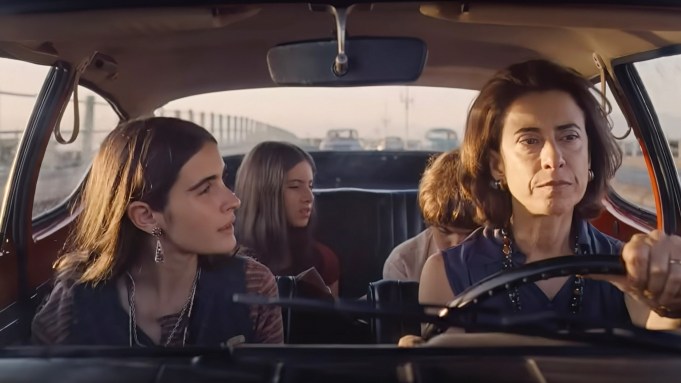
When one thinks of a Brazilian film, one would think of a film that may have scenes of the carnival, the festivities or the beaches. I’m Still Here is a very different film as it presents a dark side of Brazil’s history that they’re still troubled by today. Even the angle from which the film tells its story is unique. We have heard of people kidnapped during political regimes but we rarely hear about how it affects families. It’s through Eunice Paiva that we see how sometimes being married to an enemy to a regime could lead one to being imprisoned. Through Paiva we also see her as she struggles to keep her family together, struggles hiding the truth from her youngest children, struggles with her relationship with her youngest daughter and struggle to get the answers she needs of what happened to her husband. Eunice’s story of being the wife of a kidnapped man really tells a lot. It also shows how it would shape her to be the social justice warrior she became.

The film begins with a beach trip with the Paiva family. Everyone has fun, they all pose together for a photo and Marcelo found a stray dog they can make their own. It’s after that when everything changes. Soon the interrogation of Rubens, Eunice and their daughter, Eunice’s days of imprisonment and the years of aftermath not knowing whether her husband will return alive or if she will be kidnapped again. Then the long wait hoping Reubens will return and the fear of spies outside her door hoping to get her and imprison her again. It’s after the dog Pimpao is run over by the spies’ car that she lashes out at them and she’s had enough. Soon, her desire to leave Rio and start a new life for her and her family in Sao Paulo. The film moves forward to 1996 where Eunice has become a social justice advocate in Brazil, which had returned to democracy in 1989. She shows the death certificate of her husband she achieved. Her family has changed. Especially son Marcelo who became a successful author, despite being confined to a wheelchair. The film ends in 2014, years before Eunice would die of symptoms of Alzheimers. She is connected to a news story about the abductions and the continued pursuit of justice before a family photo.

Looking at it, the film is as much about family unity as it is about injustice in Brazil. Eunice had the nice orderly happy family life before the political abductions happened but that all changed after the imprisonment of the three. Trying to hide the truth of what happened to her father and deal with her older daughters’ knowledge of what happened is not an easy task. Trying to get the answers to what happened to her husband during a political regime that refuses to do so and trying to raise a family is a hard task. That’s one thing we rarely think about. We hear of political abductions in the news but we hardly ever hear of how families cope and try to keep themselves together. It’s through Eunice we see a personal strength we often ignore. You can understand why the family photo at the end of the film was so important. She succeeded in keeping the family ties together as much as she succeeded in achieving justice. The effect on children is also noticed in the film as her daughters fear the worst and are frequently arguing with Eunice. They’re the children with the most truth of what happened. Also the scene in 1996 when Marcelo and Maria, the two youngest, ask each other when they knew their father died, even as Eunice tried to hide the truth.

This is an excellent work from director Walter Salles. He’s one of the most acclaimed Brazilian directors with films like Central Station, The Motorcycle Diaries, Paris je t’aime and the adaptation of On The Road. This film is an excellent accomplishment of telling a dark story and making it a personal story. Even having it end on a positive note is an achievement. With the script written by Murilo Hauser and Heitor Lorega adapted from the novel written by Eunice’s son Marcelo, he takes the story and makes it relatable even though most of us will never experience something this terrible. He makes us connect with Eunice Paiva’s story and tells it so most of us who don’t know Brazil’s history know of the amazing woman Eunice Paiva was.

Making the film work is actress Fernanda Torres. She succeeds in telling Eunice’s story and makes us feel for Eunice and hope for the best. She did a great job, as did her mother Fernanda Montenegro who plays the dying Eunice at the end. Selton Mello was also great as the husband who still tries to live his life daily knowing he could be a political target any minute and eventually becomes one. The cinematography by Adrian Teijido added to the telling of Eunice’s story.

I’m Still Here is both the retelling of a dark era of Brazil’s history and the personal strength that came out of a kidnapped politician’s wife. It’s a sad story, but positive and hopeful.

Nickel Boys

Let’s face it. A film about a reform school that is infamous for its racism, physical and sexual abuse, and even murder of minors will not make one want to watch it. In fact, Nickel Academy is the pseudonym for the now-closed Dozier School For Boys in Florida where graves of those killed were discovered and survivors are now receiving their justice. Those that have learned of the ugly news of Dozier of recent years will want to avoid seeing Nickel Boys, but it does give people reason to see it.

When it comes down to it, what happened at Dozier School should serve as something that should never happen again. What happened there needs to be told, but how? How can you make a place of abuse and murder watchable? RaMell Ross succeeds in doing it with the character of Elwood Curtis. The film flashes frequently in between Elwood’s time at the school to the adult Elwood who just learns of the truths unraveled in 2003 as he’s a successful businessman with a stable relationship. The film tells Elwood’s story as it starts before Martin Luther King’s civil rights movement and Florida still having Jim Crow laws. The film shows how as we fast forward 40 years later, Elwood is overcome with hurt and trauma as the secrets are unraveled with the finding of mass graves. In the flashback, we see Elwood bond with one of the boys named Turner he’s with and the two plan an escape while Elwood documents all that has happened in a diary. The escape fails for Elwood as he’s shot dead while Turner succeeds in escaping around the time of the Civil Rights Movement. In the flash forward, Turner adopted Elwood’s name to thank him for all he taught him.

Elwood and Turner are fictional characters, but they could be representative of any of the boys at Dozier School. It’s through Elwood’s and Turner’s friendship at Nickel that we’re shown of the corruption, abuse of various kinds and the murders that happened there. Through Nickel Academy, Dozier School was as much about racism as it was about abuse. White students got better facilities and a better education while the black students got bad facilities, a bad education, the most hazardous jobs, and even harmful punishments like the sweatbox. African American students got it harder and their death rate at the school was way bigger than that of white students. Even black students who didn’t do what the white superintendent says, like fix a boxing match, could be executed and the superintendent would never get arrested. You can understand why the story has Turner’s escape around the time of the Civil Rights Movement. It would be the beginning of the end for Nickel/Dozier.

This is a great work from RaMell Ross. The story he directs is based upon a 2019 novel of the same title that is the telling of that fictional friendship. The story he co-adapts with Joslyn Barnes is very good and very revealing. He succeeds in making a film about the abuse that is watchable and gets one to think. It’s a reminder of the ghosts of the past and how even if we do well in the present, it will come back to haunt us. Even as the guilty people are slowly brought to justice, we’re reminded it can’t erase the hurt and trauma. He does a good job in making it as much a story about two friends as it is about exposing the truth. Excellent work. Also great is the acting of Ethan Herisse and Brandon Wilson. Their performance as the friends caught in the drama did as much storytelling about the place as it did about them. Daveed Diggs is also very good as the adult Elwood who tries to hide his hurts of the past, but they eventually come out. Also great is the performance of Aunjanue Ellis-Taylor playing the grandmother who is hoping for the best for Elwood and tries with every chance and opportunity, only for every white ‘helper’ to fail her. Her mix of optimism and heartbreak adds to the story.

Nickel Boys succeeds in making what could be a film of unwatchable subject matter be watchable. The mix of a story of a friendship around a school with a notorious past exposes truths of the school while maintaining a sense of hope.

And that does it for now. That’s my review of the latest two Best Picture nominees of review. The last two will be coming very shortly.
Oscars 2015 Best Picture Review: The Big Short

Big Short
The Big Short will make you lose all the respect you have in the banking system, if you’re even dumb enough to have any respect for it period.

We live in an era of fraud in America. Not just in banking, but in government, education, religion, food, even baseball… What bothers me isn’t that fraud is not nice. Or that fraud is mean. For fifteen thousand years, fraud and short sighted thinking have never, ever worked. Not once. Eventually you get caught, things go south. When the hell did we forget all that? I thought we were better than this, I really did.

The Big Short has been the surprise of this year’s awards season. It’s one of the Oscar entries with the least hype but is somehow coming out on top or pretty close. I decided to find out why.

The film begins in 2005 with Michael Burry, an eccentric hedge fund manager who’s socially flawed but very successful at what he does. He’s actually an M.D. but decided to go into the financial industry. One day he hears how housing prices have increased in Silicon Valley despite the decrease of jobs. He gets his answer. He finds out that the banks and financial industries are giving out subprime mortgages with big risk to underqualified people. The banks either don’t know about this or their too lazy to solve things.

Burry suspects this will lead to the collapse of the American economy within due time. However Burry is also creative. He knows how to ‘short’ the system by creating by creating a credit default swap market allowing him to bet against the housing market. He goes to the various banks offering megamillions to wager. The banks are willing to accept, feeling Burry will lose and the housing market is secure.

Burry’s deal catches the attention of Deutsche Bank trader Jared Vennett, whom the film is mostly scene through his point of view. Vennett hears about it from a banker he dealt with and investigates Burry’s claims for himself. Once he learns of the truth that the mortgages are high-risk, poorly-organized, sold-for-big-numbers and practically unsupervised by the banks and lending companies, he gets his own piece of the default swap action of his own.

An accidental phone call from Vennett to hedge fund manager Mark Baum catches Baum’s interest. Baum is a good businessman but is tough, cynical and isn’t afraid to let people know when something is going wrong. Heck, he was a Doubting Thomas since he was a child. Baum meets up with Vennett and is given a demonstration by Vennett and his assistant through a Jenga blocks set. Vennett demonstrates how the encroaching collapse is being further perpetuated by the sale of CDOs: Collateralized Debt Obligations. These poor loans are given incorrectly high loan ratings from A to AAA and B to BBB due to the dishonesty of the ratings agency. Baum is reluctant and this takes over his mind.

At the same time, Charlie Geller and Jamie Shipley are making their way into Wall Street. The two young Colorado men formed their own investment and trading business in Jamie’s garage where the two helped turn $100,000 into $40 million in four year. Now they want to take it to the next level by achieving on Wall Street but despite their promise, they lack the stuff to play with the big guns. At a bank where they failed to get assistance, Geller encountered a paper where he learns of Vennett’s attempt to short and they want a piece of the action. However they will need an IDSA and they lack the minimum capital to profit from this. They are able to get what they need from their friend and mentor Ben Rickert: a retired banker who now gardens for a living.

The time after is not business as usual. Burry’s story may have gotten a lot of notice but it’s also gotten to the ire of his clients. They feel the housing market is very secure and he’s wasting their money. Many demand he stop what he’s doing but he refuses. He even keeps the percentage increase in his ‘shorting’ in big red numbers on his whiteboard. Geller and Shipley consult with Rickert on making a future deal. Geller proposes a large amount of money despite Shipley’s reluctance.

Baum is frustrated by all this and he enlists two of his workers to check up on the housing situation by driving into neighborhoods. What they see is not pleasant: people with low incomes owning two-storied homes and one home rented out to a low income family by a landlord owing five months on his mortgage which he took out under his dog’s name! The landlord himself abandoned his own home to the point an alligator was able to crawl into the swimming pool. In addition, Baum learns of successful mortgage salesman who are going as far as selling mortgages to underqualified immigrants and even giving out NINJA mortgages (NINJA: NO Income No Job no Assests) as well as a banker for a major bank who’s willing to let it happen for fear clients will take their business to the competition and get their mortgage there.

Then comes the American Securitization Forum in Las Vegas. Burry isn’t there but Vennett and Baum are there together along with Geller, Shipley and Rickert to get their IDSA and their own piece of the default swap. Baum comes across a CDO manager who reveals much to Baum’s horror that he’s created synthetic CDOs: a chain of large bets on the faulty loans which actually total more money than the actual CDOs. It’s there where Baum’s business partners convince him to take this on. Geller and Shipley get their IDSA and they find their piece of the action in AA CDOs which have been overlooked by most of the bigwigs. They get their opportunity but they’re reminded by Rickert of the immense hurt that will happen to the American public once they win in their gamble. The celebration of the two ends right there.

Returning back to their business expecting the doomsday to happen any day soon, Baum wants to be the one settling the score as he himself tries to get the word out at public meetings. Geller and Shipley try to get the word out to the news but no one from a former college classmate who now works for the Wall Street Journal to Jamie’s brother’s ex-girlfriend who is a broker to even Charlie’s parents believe their doomsday claims. Burry’s investors still continue to refute his claims and want to pull out until Burry puts a moratorium on their withdrawals, much to their anger.

The stock market crash of 2008 eventually happens. Burry, Vennett and Baum were right all along. Businesses collapsed, the unemployment rate went up, the homelessness rate skyrocketed, trillions of dollars invested by the American people were lost. Not to mention many countries, especially in Europe, went through their economic crises that still exist today. In addition Burry’s investments increased fivefold from his original investment, Vennett made a nifty $77 million and Charlie and Jamie got the big financial break they sought. But no one’s smiling. Oh yeah, did I mention that there was no bank reform done and there was only one arrest from this whole mess?

This is a film that gets inside the world financial crisis of today. We should all be angry and outraged with the system for what it did with the people’s hard-earned money. We had a banking system that was too laxed and had next to no restrictions in giving out mortgages to people even if they weren’t qualified. We had people who saw the eventual doom but opted to get a piece of the action. We had bankers and mortgage dealers who were irresponsible enough to make salesmen of themselves and only care about getting big numbers for bonus checks. We had the bankers, investors and other financial professionals either negligent or ignorant to what’s happening. People’s hard-earned investments, funds and savings were treated like gambling money by these professionals. In the end, it led to the biggest collapse in the world’s economy since the stock market crash of 1928.

The film gives us what we should have to be angry with the system. However the film also does a good job in making a comedy out of it. I myself have come across a lot of situations that have been very nasty or very stressful but also very funny because of the stupidity behind it all. This is the magic of the film. It finds the humor of the stupidity that occurred in the system. While The Wolf Of Wall Street made Wall Street look like a jungle, this film made the banking and loan system look like they treated the system like it was a playground of people’s money. The film gives us many characters we find entertaining and funny but also types we just want to give the middle finger to. The film also makes us laugh at the stupidity that’s going on while having us leave the theatre infuriated in our afterthoughts.

In the end, the laughter ends and even those that profited big are disheartened. Burry’s not celebrating the big returns his investments got. Baum is left with a huge stomach ache and looks like his soul is crushed in the end. Geller and Shipley have possibly the biggest impact as you can see as they’re in the abandoned NYSE building and they’ve lost complete faith in the system.

Another quality of the film is that it helps the average person make sense of a complicated system. The story of how it all happened is a long and complicated story that consists of terms the average person hasn’t heard of and exists in a system only those inside can make sense of and understand why it happened. In making this film, they had to make a film that would help the average person make better sense of the banking system and the products and outside products that come with it. Who outside of banking or investing knows what a CDO is or how to ‘short’ the market when it’s doing business or even what an IDSA is? This film helps make sense of these complicated terms and showed how they worked in a business that is supposed to make things work. The vignettes from celebrities giving an explanation or a demonstration of how things worked added to the humor of the film as well as the quality. Even that flashback to the late 1970’s of how Lewis Ranieri changed the bank system, and our lives ‘more than Michael Jordan, the iPod and YouTube put together’ also added to the story and make more sense of the irresponsibility.

I have to say this is an accomplishment for director Adam McKay. Adam is not known for directing serious movies. For the most part, he’s most famous for writing and directing Will Ferrell comedies like Anchorman, Talladega Nights and Stepbrothers. This film is a completely different change of pace for him. However he succeeds in directing and co-writing with Charles Randolph an excellent film that’s as much a comedy as it is a tragedy.

It’s often a wonder why someone would take what is a terrible moment in American history and turn it into a comedy. I guess that’s what McKay and Randolph are doing is that they’re showing the bizarre stupidity that happened the whole time in a comedic way. They deliver a film that will have you laughing at the ridiculousness of it all and at the same time infuriate you for days or even weeks after leaving the theatre.

McKay and Randolph also succeed in delivering a film that defies convention which is all the better for it. The use of cameos from other people in an attempt to get the audience to understand banking methods and money-making methods adds to the movie. Most people would think something like this would subtract from the quality. Instead it adds. Additional tricks in the film that add to the quality are scenes and moments where the characters stop the drama in their scenes and face us explaining the real story.

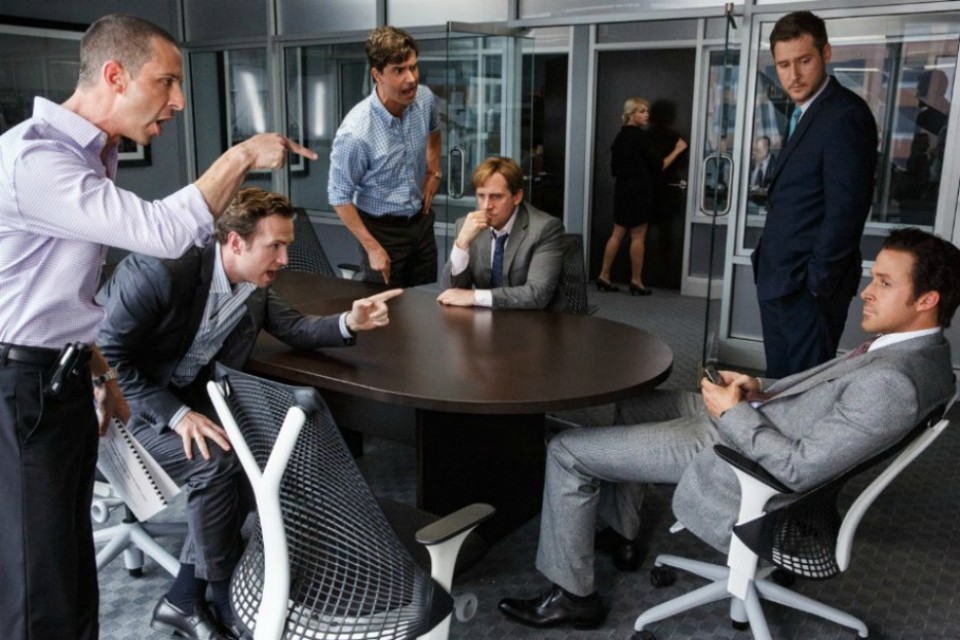
Standout performance has to go to Christian Bale as an eccentric businessman whose socially flawed but smart enough to sense a danger and get rich off of it despite his anger. His social reclusiveness as well as his fixation on music adds to the character’s dimension. The other big standout from the film was Steve Carell. His character of a man who just can’t get the impending doom off his mind and is unapologetically frank but also troubled is another show-stealer. Actually there were a lot of eye catching characters including that from Ryan Gosling as Jared Vennett despite the role not being as complex as Bale’s Burry or Carell’s Baum. Additional scene stealers include John Magaro and Finn Wittrock as the two young and hungry businessmen who want a piece of the action but have a lot of learning to do. They first come off as the Tweedledee and Tweedledum of the film but it’s right at the end you see how much the realities have bit them.

The film doesn’t prove much in terms of outside things like a score or cinematography or effects. However the film put together unconventionally worked on so many levels. Besides other unconventional qualities I talked about previously, there’s also the added element of showing pictures and film clips of average Americans as they would be the ones paying the hardest price of it all. Even the addition of various news clips and music videos add to the film. The addition of a wide variety of music from hip-hop to rock is another added quality. I feel the film ending with Led Zeppelin’s When The Levee Breaks was the right choice because the levee broke here.

The Big Short is one film that will get a lot of people thinking. I may be Canadian but I was shocked at what I was seeing. I too was outraged at how irresponsible the American banking system was and how it appears to have learned nothing from this. I consider myself lucky to be Canadian after seeing this. For all its headaches, the Canadian banking system is a lot more responsible in terms of who it lends its products to and even declines if it feels it has to. However it does have some careless elements of its own. For my own experience, I signed up for a credit card the very first week I was in university while under NINJA status and I still got it. There was another time I was at my bank during company time but a credit card saleswoman wanted me to sign up for a Gold Visa card. Since she wouldn’t take no for an answer, I signed up for it hoping she would get off my case. I thought I wouldn’t get it since I didn’t have the minimum annual income for a Gold card. I got it to my surprise. I’m still unhappy about this. Makes you wonder how and why banks seem to have forgotten their standards. No wonder that British man in a pub said to Rickert: “$100 million? Are you a banker or a drug dealer? Because if you’re a banker, you can fuck right off!”

The Big Short will make you angry with the banking system but will also make you laugh at the stupidity as well. It’s part drama, part comedy, part history lesson and that is probably what makes it a winner.

Oh yes. Another year of watching all the Best Picture nominees. This makes it the fifteenth year in a row I’ve done so! Here’s to another Oscar year.