Movie Review: Foxcatcher

John DuPont (Steve Carell) tries to be a wrestling mentor to Mark Schultz (Channing Tatum) in Foxcatcher.

Foxcatcher isn’t just simply an Olympic story with a tragically bizarre ending. It isn’t completely a crime story either. It’s about the people involved.

It’s 1987. Mark Schultz is an Olympic wrestling champion who’s about to do a talk at an elementary school substituting for his brother Dave who was expected to be the talker. The school gives him a small payment for his time. Dave is coach of the wrestling gym married with two small children and trainer of Mark. Although Dave tries to be a good mentor to Mark, you could tell something’s eating at him.

One day unsuspectingly, he’s greeted by John DuPont, heir to the E.I. DuPont family fortune. He offers to have Mark train at the Team Foxcatcher gym in Pennsylvania he created to promote wrestling. Mark agrees but John also wants Dave to coach. Dave turns it down because he has family commitments miles away. Despite that, Mark continues on with John coaching him even living in a DuPont guest house which John sometimes visits. The training pays off as Mark wins the World Championships later that year. John is even seen as a mentor to Mark and all the other wrestlers at Team Foxcatcher.

However something’s not right. John wants the wrestling trophies won by Team Foxcatcher to overtake one shelf of horseracing trophies his family have won over the years. Mark and John develop a friendship to the point John gets Mark to use cocaine. John even mentions his mother paid a boy to be his ‘friend’ when he was younger. His mother Jean who’s part of the DuPont legacy of horseracing is disapproving of his coaching wrestling feeling that it’s a ‘low’ sport. Then one day it happens. While Team Foxcatcher’s wrestlers take a day off to watch a Mixed Martial Arts event, John becomes furious especially when Mark insists Dave won’t join team Foxcatcher. John tells him he will get Dave by any means necessary.

Dave agrees to Team Foxcatcher where he even moves his wife and family over there. Mark however is going through self-esteem issues with the mental abusiveness of John and moves away to train for the 1988 Olympics. Just before the Olympic trials, John has his mother Jean escorted in her wheelchair to see what John has accomplished. She leaves in disgust after seeing John give his back to one of his students.

At the Olympic trials, you can tell something is bothering Mark. He loses his first match and in response cries, wrecks his room and goes on an eating binge. Dave is alarmed at discovering Mark in his condition in his hotel room and works to get him to lose weight in time for the weigh-in. As Mark competes on, he notices Dave prevent John from speaking to him. Mark wins the Olympic trials but both he and Dave notice John is absent. He returned home as his mother died. Mark lets Dave know he can’t stay with John and Team Foxcatcher after the Olympics and asks Dave to leave with him even though John created a promotional video of Team Foxcatcher with Dave asked to do a speech. Mark finishes sixth at the 1988 Olympics where he loses his last match 14-0. As he said, he leaves Team Foxcatcher for home while Dave agrees to remain training Team Foxcatcher in exchange for John giving Mark financial support.

It’s 1996. John watches the promotional video with the part of Mark’s speech about John. This would pave way to the depiction of the eventual murder. However the film ends showing what happened to Mark shortly after.

It’s funny how around Oscar time, it’s common to expect that most movies with big Oscar buzz would have some sort of political message or humanistic message. So it was quite natural for me to think that Foxcatcher might be a film with things to say about Olympic athletes or how they’re treated in the US. I don’t think it was but it did present a unique time in Olympic sport. Many older people remember that until the 80’s, you had to be a complete amateur in an Olympic sport. Even if you made a single penny off your sport, you were ineligible to compete at the Olympics. That all changed in the early 80’s when the IOC changed its constitution from allowing only ‘amateur’ athletes to allowing ‘eligible’ athletes to compete and it would be each sport’s respective federation decide who’s eligible. There were some sports like track and field, swimming and gymnastics that were the first to make the transition and the pay and sponsorship money was good albeit not the same level it is today. Wrestling was one of the sports to catch on later. In Mark’s time, wrestlers could not make a living off their sport unless you were also a coach like Dave. In fact I remember a quote from Olympic gymnast Bart Conner: “The big myth is that Olympic gold medalists can get rich off their gold medal. I know a lot of Olympic champions that are flipping burgers.” So it’s no wonder that Mark would find sponsorship from John DuPont and the state-of-the-art Team Foxcatcher wrestling gym a welcome relief.

I don’t even think it’s a statement about rich people in the United States. Sure, John was born into money as the DuPont family have a dynasty going all the way back to the 18th century. Sure, John appears to be spoiled living in the same gigantic mansion in the middle of nowhere as his parents. Sure, John has the money to make his dream of being a great wrestling coach come true. Sure, John had a sheltered childhood where he was the youngest of four and had a ‘paid friend’ during his childhood. And sure, John has a mother with a superficial attitude as made evident in her comment of wrestling being a ‘low sport.’ However I don’t feel it’s about the American rich.

What I do feel the movie is to do about are the people. Yes, it’s a crime story but it’s also about the people. John appears to be a person who may have been belittled all his life and dreamed of being a successful wrestling coach or manager. He has written successful books on birds but wanted to become successful as a wrestling coach. This is especially hard for him since his family has a tradition of horse racing. Throughout the movie, we get a sense that he felt that something was missing in him. Even after hiring Dave as the coach, we see friction between the two as they’re both training and managing Mark. Sure, it’s common for two coaches on the same team to have disputes but the disputes make you wonder. In fact that scene where John is watching the video of himself promoting him and his gym just before the shooting may be sending the message he always felt underrespected. Maybe it was because he felt like the misfit of the family. Maybe it was because his family never knew or honored his achievements. We’ll never know. There’s no question he shows his mental illness, especially at the end, but it’s just a wonder if his inferiority complex is what caused him to shoot Dave.

The film is not just about John. It’s about Mark too. The 1984 Olympics was of him and Dave winning gold but the time since then was a struggle. Dave was able to marry, become a father and continue as an athlete by coaching at the same time. He was well to do. Mark was the one who struggled. He lived single in a shabby home, he worked a measly job, he received spare cash from school appearances, he was always living in the shadow of Dave. Even though Dave was never the type of brother that would try to make Mark feel inferior, You could tell it was bothering him in that training scene at the beginning where he gives Dave a bad hit. It was easy for him to see John’s offer as a breakthrough for him but a struggle as he was trying to create his own identity while Dave and John had coaching disputes over him. It seemed more like a threesome rather than him. Possibly even sensing Dave was becoming the apple of John’s eye rather than him. Even after his win of the World Championship, you could tell the whole thing would take a toll on him especially seeing how he had to purge himself at the Olympic trials and struggled to make the team. Eventually it did take its toll right at the Seoul Olympics with his sixth-place finish and the threesome ended there. You can easily understand why when Mark moved out, he wanted to move without turning back.

The highlight of the film was the performance of Steve Carell. In fact even his biggest fans would be surprised to see Steve looking different and acting completely different from the way they’ve always known Steve to act. He embodied John DuPont well in terms of physicality and his mental illness but he also made us feel John’s feelings of inferiority which definitely added to the film. The film also has Channing Tatum’s best acting ever. He also embodies the character of Mark well in terms of his desire to succeed and in terms of his insecurities. Although the film focuses more on the characters of Mark and John than on Dave, it’s Mark Ruffalo’s performance that gives added dimension to a person who is both a coach and a father and tries to do the right thing but ends up an unsuspecting victim in the end. Even supporting performances from Sienna Miller as Dave’s wife and Vanessa Redgrave as John’s mother were done great despite being less than what they should be.

The directing of Bennett Miller was also impressive as he focused on both the story and insight into the people involved in the story. The script by E. Max Frye and Dan Futterman was also good in taking us to the right events even though it did feel slow at times. Even there, I think they were trying to make a murder story that didn’t just simply tell of the events but also give us portrayals of the characters. It’s not to say they haven’t experienced friction about it. There was a story that Mark felt the film made it look like John had a homosexual attraction to him. I didn’t notice it. Besides I later learned John was married for the first and only time at 45 and the divorce occurred just before he met Mark.

Foxcatcher is more than a murder story. It’s also a portrayal of the people involved in both their desires and their insecurities. Often it did feel more like the film was about who than what.

VIFF 2014 Review: Queen And Country

All is fair in love and war in Queen And Country.
All is fair in love and war for a grown-up Billy Rowan (played by Callum Turner) in John Boorman’s Queen And Country.

Remember Hope And Glory from 1987? The sequel to it, Queen And Country, came out this year and it’s a good film on its own even for those who didn’t see Hope And Glory.

Seven years have passed since the end of World War II. Billy Rowan is now 18 to 20. Since the war he and his family live on an island surrounded by the Thames River which has become a popular spot for filming. Billy however is still a bit of a sissy for his age. However being commissioned for military service may just change that. Before he arrives for training, he meets another young man his age named Percy Hapgood on the train. However he also meets an older woman named Ophelia in the town nearby his training base.

During military service, he goes from simply training to actually having positions of authority, albeit in typewriting class. Both he and Percy do not take well at all to their general Redmond whom they feel to be a hard-heart with no sense of humor at all. Also at their age, they want to have fun with the ladies. A certain girl at the local pub Sophie fancies Billy but he’s off pursuing Ophelia.

Over time Billy gains the respect of the elders and the friendship with Percy grows to the point he helps Percy to steal an office clock Redmond values. Billy even makes returns to the family, one time bringing Percy along whom younger sister Dawn fancies and another time bring Ophelia. Despite all the fun, realities do settle into Billy. The age of Ophelia will prove to be an unavoidable factor. The truth about the prank to steal the clock will come to light for both Billy and Percy as one head officer had already been stripped of his title. And the reality of war becomes more and more eventual for Billy as Britain enters the Korean War. This paves the way for an end that’s both happy, sad and funny for all who are involved.

The best thing about the film is that it is excellently made and it is entertaining. Seeing a young male of 20 being drafted with the British armed forces and all the irresponsibility and shenanigans that come with it does make for an entertaining show. It’s also a treat for those who saw Hope And Glory to see Billy now all grown up and now being placed into the possibility of fighting in a war himself. Whatever happens all turns out for the humorous and things do work out in the end despite paying the consequences.

It also makes one question if this film is autobiographical from Boorman just like Hope And Glory. I will admit it doesn’t have the same special uniqueness Hope And Glory had. For those who remember, Hope And Glory was World War II through a child’s eyes. It was actually one of three films in 1987 that showcased World War II through a child’s eyes. The other two being the French film Au Revoir les Enfants and Spielberg’s Empire Of The Sun which starred a 14 year-old Christian Bale and a not-yet-famous Ben Stiller. Queen And Country was not as unique as there have been other stories before. Nevertheless it’s very entertaining and more comedic than Hope And Glory.

This film is not too heavy of a political statement. However it does have some political messages with the potential of fighting in the Korean War. Another notable underlying message is the change of power after King George dies and the monarchy is transferred to Queen Elizabeth. We forget that Elizabeth was a mere 26 when she came onto the throne and a lot of people were not that confident in her at first. Interesting because she would be the one who turned the British Empire into a Commonwealth. Even British attitudes of what’s ‘manly’ also add to the theme of the film.

My big dilemma is I wonder why Boorman took so long to make a sequel to Hope And Glory. Queen And Country takes place at least seven years after the setting of Hope And Glory. It’s a wonder why such a film was not released back as say 1994. In fact I think that has to be the biggest weakness of the movie, its late release. I’m sure the movie can attract people who saw Hope And Glory back when it was first out but twenty-seven years is a long time to release such a follow-up story. Also I’m sure most of today’s movie crowds may not be familiar with the story of Hope And Glory. If it was released as say 1994 as I suggested, I’m sure there would be more of an audience interest especially since a lot of them can remember the adventures of Billy Rohan and would want to see how Billy grows up.

John Boorman again delivers a film of excellent direction and writing. Calum Turner did a very good job playing the grown-up Bill Rohan both in his character and as a young adult getting in trouble. Caleb Landry Jones was a scene-stealer as Billy’s partner in crime. Tasmin Egerton was very good as the seductive but confused Ophelia. Pat Shortt however did the best character acting as the shrewd Officer Redmond. The supporting actors also added into the film even if their parts were minor.

VIFF Note: The Vancouver International Film Festival is where Queen And Country made its North American debut. Aren’t we lucky?

Queen And Country is an excellent sequel to Hope And Glory, albeit badly timed. Nevertheless it was entertaining and worth watching.

Has Pixar Lost Its Spark?

The release of Monsters University shows Pixar putting more emphasis on commercialism and less in remarkable writing.

Remember how for many years Pixar animated movies would be some of the best made of the year? Monsters University showed signs of Pixar heading in a more commercial direction with more emphasis on profit than on script quality. The question is will Pixar return to the greatness it had for many years?

Pixar started off as a small animation studio that made computer animated shorts. Actually shorts was as far computer animation got as far back as 20 years ago. That all changed when they received a phone call from Disney. There they teamed up to make the first ever animated feature. The end result, Toy Story, was history in the making. Released in the fall of 1995, it won over the critics and was a big hit at the box office. Director John Lasseter even received a special honorary Oscar for his achievement.

Eventually over the years the success of Toy Story would pave the way for successes of other 3D animated features over the years. Much of which was done by Pixar itself with the successes and critical renown of A Bug’s Life in 1998 and Toy Story 2 in 1999. In fact in teaming up with Disney/Buena Vista, it became clear that 3D would be the next big thing in animation as it would even fare better with the critics and outgross 2D animated movies from Disney like Mulan in 1998 and Tarzan in 1999.

However it would soon be clear that Pixar would soon get some rivalry in terms of 3D pictures. DreamWorks animation would release Antz just weeks before A Bug’s Life. Then they’d release Shrek in 2001 which did even better critically and financially than Pixar’s Monster’s Inc. that year. The rivalry would eventually lead to the eventual domination of 3D animation in shelling out animated features.

Pixar teamed up with Disney would have continued success and critical renown with other pictures like Finding Nemo in 2003 and The Incredibles in 2004. The movies were not your typical Disney movies in terms of marketing characters in toys but they did continue to score well with the public with both grossing over $250 million and score excellently with the critics. However 2006 gave a sign that Pixar was leaning into commercial directions with Cars. The movie scored 74% on Rotten Tomatoes—the lowest for a Pixar feature at the time—but the movie succeeded in toy merchandise. Its gross was also an impressive $244 million.

2007 to 2010 saw continued success and critical renown with Pixar’s features like Ratatouille in 2007, Wall-E in 2008 and Up in 2009. The big bang came in 2010 with the release of Toy Story 3, the finale to the Toy Story series. Like most of Pixar’s previous movies, it scored excellently with the critics. Its box office result was also excellent as it grossed $415 million: the most ever for a Pixar feature.

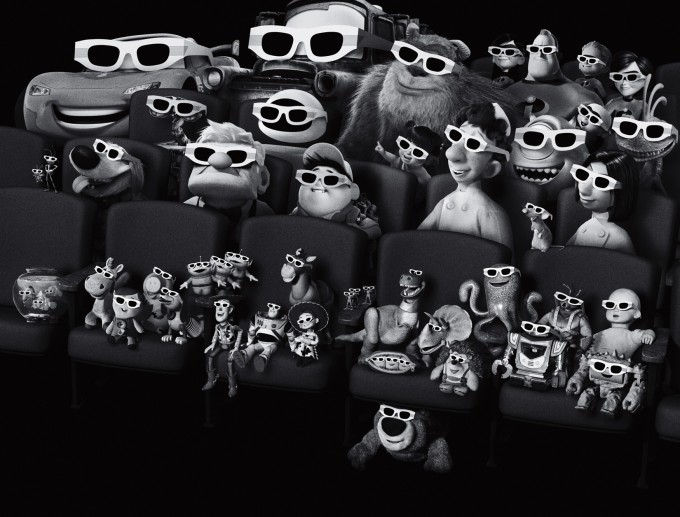
Vanity Fair saluted Pixar for its fifteen years of remarkable entertainment with this picture in its Oscar issue.
Vanity Fair saluted Pixar for its fifteen years of remarkable entertainment with this picture in its 2011 Oscar issue.

I still remember right after Toy Story 3 came there was countless mention of the success Pixar has made both financially and critically over the years. Entertainment webpages around that time made note of the successes they gave over the years. Rotten Tomatoes even pointed out that except for Cars, each Pixar movie up to then scored 90% or higher on its Tomatometer. Even Vanity Fair had a picture during the time of the Oscars of all the characters of Pixar movies. It was almost like around that Oscar time there was a big salute to Pixar for the 15 years of entertainment they gave. 15 years of excellent quality entertainment. 15 years of entertaining families and charming critics. A total of almost $3 billion gross. Forty-one Oscar nominations and eleven Oscar wins including seven wins in the Best Animated Feature category. In fact you could give credit for movies like Toy Story or Toy Story 2 for why the Best Animated Feature category was added by the Academy back in 2001.

Then it seems like right after Toy Story 3 and the glory that followed, things went downhill for Pixar. First came Cars 2 in 2011 with a lot of hype and merchandise. The film grossed a humble $191 million at the box office. However it was the Rotten Tomatoes result that was the big shocker. 39%: the first Pixar feature ever to be certified a Rotten Tomato. It even became the first Pixar feature to fail to receive a Best Animated Feature Oscar nomination ever since the category’s inception. As for the merchandise…

2012 gave a bit of hope that Pixar would be back into the swing of things with Brave. Brave was also a milestone as this would be the first Pixar feature with a female protagonist and would include two female co-writers and a female co-director. Unfortunately Brave received 78% at Rotten Tomatoes: falling short of Pixar’s finest efforts. The film did gross $237 million at the box office but still something was missing.

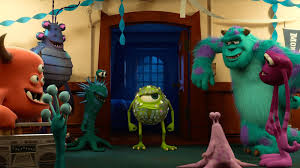
2013 seemed like another year where Pixar was aiming for quantity instead of quality. Monsters University, the prequel to Monsters Inc., was the only Pixar feature released in 2013. That hit a 78% on Rotten Tomatoes but still grossed an impressive $260 million. In terms of merchandise…

This weekend came Planes, a movie that was going along the same line as the Cars movies. It’s not necessarily a Pixar movie but it did have John Lasseter create the story for it. It scored only 24% on Rotten Tomatoes and opened the weekend with a paltry $22.2 million. That could be bad news about Lasseter’s creative juices.

It’s a question to what happened to Pixar as they always aimed for quality not just in terms of animation but also in the story and script. In fact seven of Pixar’s features have also been nominated in the screenplay categories and it’s those that have stood out as Pixar’s finest achievements. However as seen in the past, the desire to go more commercial does make the quality take a backseat. The animation is still top-of-the-line however the lack of inventiveness in its writing is making itself more evident.

It’s not to say that this is the end of Pixar’s legacy. 2014 will have The Good Dinosaur coming out. This was made from a concept of John Lasseter and will introduce a new scriptwriter to Pixar’s dream team. 2015 also shows Pixar keeping its creativity active with The Inside Out and also giving another commercial try with Finding Dory. How these movies will do both commercially and critically is something only time will tell.

Pixar has left a legacy of animated movies over the past twenty years. However it has been right after the release of Toy Story 3 that they appeared to be taking their legacy for granted. Their upcoming releases should send the message if they’ll return to it or not.

Election 2013: British Columbia Votes

BC Flag

It’s happening. British Columbia will be voting for a premier: the first such election in four years and two days exactly. There’s reigning BC Premier Christy Clark and there are challenging Party leaders, most notably Adrian Dix and Jane Sterk. But how do they stack up for the vote on May 14th?

CHRISTY CLARK: LIBERAL

She is the reigning premier, albeit not elected into office. Those of you living outside of British Columbia may not have known the state of politics in the 21st century. From 2001 to 2011, the province has had Liberal Gordon Campbell as premier of the province. He has been elected into office three times having to resign back in 2011 because of his approval rating declining to the point of single-digit percentage. Christy Clark has taken the role of premier ever since. Since becoming premier of BC, her approval rating as well as the approval rating of the BC Liberals improved greatly even superseding the rating of the NDP for some period of time. However the period has been short-lived.

The opposition Clark has faced during her premiership has not been as heated or intense as Gordon Campbell’s. Nevertheless she has faced heat of her own. One former Liberal MLA accused her of conflict of interest in assisting with the selling of BC Rail during the Campbell administration while cabinet minister. She has also been witness to seeing many key Liberals resigning from parliament.

With the provincial election approaching, Clark still faces a lot of heat from the opposing parties for a lot of what Gordon Campbell did during his administration. Remember I told you about her pre-election baggage? It didn’t completely go away. Her appearance at the Party leader’s debate gave her a chance to improve her political reputation as many felt she won the debate. The BC Liberal Party has greatly decreased its gap behind the BC NDP in the past three weeks trailing them only slightly. However many journalists are claiming it may be too much too late for her political career. Only the results on Tuesday will tell.

ADRIAN DIX: NDP

He’s already been written as the frontrunner for the race for premier. But it doesn’t mean that his chances of winning are unbreakable.

One of the reasons many claim Gordon Campbell has continued to be elected premier is because there hasn’t been an NDP skilled enough to rival him. Adrian may not have much experience as a Party leader but he does have considerable political experience under his belt. Dix was born the son of an insurance agency owner. He has been with the NDP Party since 1996 and like Clark has also been a political media personality for newspapers like The Sun Columnist and the Source. Dix has been the MLA for Vancouver-Kingsway since his election in 2005 and his prime areas of focus while MLA have been Children and Families and Health Issues. His biggest achievements have been bringing insulin pumps to children with type 1 diabetes and successfully preventing three Vancouver-Kingsway schools from shutting down.

He came to be elected leader of the NDP Party in 2011 upon the resignation of leader Carole James. Issues that led to his election have been Eliminating the HST, reducing business taxes, redirecting carbon tax, and increasing the minimum wage to name a few. For the provincial election, Dix has had ads marketed with the theme ‘time for a new government’. Those ads have been on television not as frequently as the BC Liberals but more commonly on Youtube. Dix has led through most of the pre-election polls and appears to be the heavy favorite to win.

However he does face stiff opposition. Firstly there was the recent Party leader debate where Christy Clark presented herself and her platform the best. That caused her to jump in the polls and even tied Dix on May 8th. Then there was bringing back the controversy Dix was responsible for during the scandal of 1990’s premier Glen Clark when Dix was Chief of Staff from 1996 to 1999. Back then he back-dated a memo to protect Clark from conflict-of-interest charges. That led to the resignation of both Clark and Dix. Dix has since redeemed himself as the MLA for Vancouver-Kingsway but the incident has arisen again by the opposing parties. That could hurt him.

Yes, Dix has a lead over Christy Clark in the polls right now but it’s too close to call right now. Don’t forget polls can say one thing and elections can say another. The big question is will it be a night for the first NDP premier in 12 years? It will all be at the buzzer Tuesday night.

JANE STERK: GREEN

Outside of the Liberals and the NDP, the only other Party making the biggest news in the election is the BC green Party and its leader Jane Sterk. The Green Party is a relatively young Party that started in 1983 but it fields policies that appeal to many BC residents like environmental issues, tolerance and diversity, social justice as well as personal and global responsibility. The questions has always been would they have what it takes to win elections and would they have what it takes to be good strong leaders?

The Green Party first made a name for itself under the leadership of founder Adrianne Carr back in 2001 when the Party finished third in the provincial election with 12.4% of the vote. They would continue to finish third in the next two provincial elections but with declining percentages of votes. In the 2009 election–the first in which Jane Sterk was Party leader– the Green Party finished with 8.1% of the vote and no seats.

The position of the Green Party here in BC is still a big question mark. Even in this election the Party won’t be fielding candidates for all 85 ridings like the NDP and Liberals: 61 to be exact. However this could be the Party’s best election. Right now the election is between two leading Party’s candidates who have both been involved with a former premier and the infamies of their administrations, even scandal involvement. The Green Party has been over 10% in the polls for most of the upcoming election period however their popularity has taken a bit of a dip in recent days. Also what should be remembered is that Sterk is native to Alberta and she didn’t move to BC until 2000. That could hurt her since the leading two candidates and many other candidates have spent most of their life in BC.

The question is will the Green Party finally make a name for itself and be able to land its first ever MLA seat? Best chances could be with Sterk in her Victoria-Beacon Hill riding but she would have to win over former NDP leader Carole James who is the incumbent leader in that riding. This will be a question not just of whether the Green Party can land a seat but its ability to strike a chord with voters. It has what it takes and now’s a better time than ever but can they do it?

JOHN CUMMINS :CONSERVATIVE

The Conservative Party is a long-standing Party like the NDP and Liberals and had it’s biggest heydays from the 30’s to the 50’s. However it has had rollercoaster success since then as the Party has had a very hard time not just trying to win seats but also trying to field seats. This year the Conservative Party has fielded candidates for 56 of the 85 MLA seats, their biggest number since 1972 and double the 24 seats they fielded candidates for in the 2009 election.

Its biggest challenge has to be with the general public. I live in New Westminster and work in downtown Vancouver. Already I can tell that the big cities are not known for welcoming politician with a right-leaning platform. Most of the bigger cities have a huge and very vocal animosity for right-wing politicians that are even as much as right-to-centre. Sometimes I think Vancouver is the capital of ‘Harperphobia.’ However it’s another story in areas like Langley and Abbotsford which are known for its conservative beliefs. In fact leader John Cummins is running in the Langley riding. Cummins himself is a former MP in the Canadian Parliament under the Reform Party and the national Conservative Party under the leadership of Harper. He resigned his seat in the Richmond-Delta national riding to pursue provincial Party leadership.

This could be the first chance in decades for the Conservative Party to make a name for itself in decades however it does face opposition of its own especially from BC residents that disagree with the Party agenda very vehemently. Like the Green Party, it too has had times where it has seen days of 10% approval or higher this past month. Also like the Green Party, it’s currently sitting below the 10% mark. There’s no question that it will have a higher percentage of votes than the 2.1% received in the last election. The question is not only what percentage of votes will it receive but also what will Tuesday’s results tell for the future of the Conservative Party?

LIBERTARIAN PARTY

Only the four parties I mentioned above have candidates running for more than half the MLA seats in the BC parliament. Actually only those four have candidates running in even as little as ten provincial ridings. The biggest Party with less than ten candidates in the running is the BC Libertarian Party. If you go to their website, you will see that the BC Libertarian agenda has a lot in common with the agenda of the American Libertarian Party. Libertarianism is still a definition that’s hard to define in terms of a political stance. Bill Maher, possibly the most famous Libertarian right now, defines a libertarian as a ‘pothead in a business suit.’ For the BC Libertarian Party, just go to their website.

The Libertarian Party of BC started in 1986 with three candidates and rose to 17 upon the 1996 provincial election. There would be no Libertarian candidates back in 2001 as Party president Paul Geddes ran for the BC marijuana Party. In the provincial elections since, the BC Libertarian Party has been putting efforts into reestablishing itself. In both previous provincial elections, the Party fielded six candidates and achieved just under 1500 votes both times.

This year the Party field eight candidates including one in my riding of New Westminster.  This could be the Libertarian’s best election since 1996 when they had 17 candidates and won just over 2000 votes. However lacking a Party leader could cause some problems. Plus its lack of advertisement to the public could make a lot of people unaware of Libertarian candidates in their area. This election should give a picture of where things are going for the Party.

INDEPENDENT’S DAY?

Of all the candidates running, the most interesting should be the Independents: those that won’t be running for a Party or its agenda. Independents have always been unique candidates as it has always been a case of the politician promoting their agenda that’s often unique in comparison to most formed parties’ agendas. Last year one independent candidate–Vicki Huntington of Delta South– was elected MLA. Most interesting is that since the 2009 election, two NDP MLAs and one Liberal MLA have become independents themselves. Three of the four incumbent independent MLAs will be running in this election.

This election will see 35 independent candidates running for MLA seats in 31 ridings. Each one will have their own unique agenda and/or run for their own purposes. Many have run for some of the major parties in the past. And one, Kelowna-Mission’s Dayleen Van Ryswyk, was running for the NDP three weeks ago but had to resign from the Party because of past comments that appeared bigoted in nature. She started her campaign as an independent the next day but has recently hired a bodyguard for fear of threats.

Tuesday could give a surprising glimpse as the independents could win some seats and could provide an outlook on the political culture of BC.

And there you have it. A brief rundown of the candidates for the 40th British Columbia General Election. Sure, I could talk about all the other fifteen political parties but it would be too tedious. Remember there are 85 MLA seats in BC’s parliament and the winning Party is the one that wins 43 seats for a majority. You can click on the Wikipedia link–which also happens to be my Works Cited page– here to get all the info of who’s running and which parties. So on the 14th, will it be Premier Clark elected into office or will Adrian Dix be elected BC’s new premier? Stay tuned!

Movie Review: Argo

“So you want to come to Hollywood, act like a big shot without actually doing anything? You’ll fit right in.”

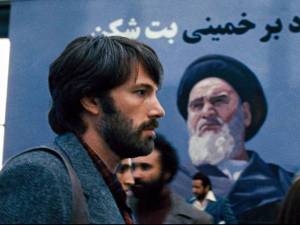
Argo is a story about an important moment in American History: The Iran Hostage Crisis. This focuses on the part that would be known as The Canadian Caper. What we get is more than just a reenactment of history.

The film starts in November of 1979. Iran has gone through its Islamic Revolution. The Shah had been dethroned. Ayatollah Khomeini was the figure of a revolution of Islam in the country and the people wanted justice. They wanted the Shah tried and hanged and were outraged he was housed in the United States, which was already denounced by Khomeini as ‘The Great Satan’. On November 4th, Iranians stormed the American embassy, captured at least 50 Americans and held them hostage. Some managed to escape and six were given refuge in the Canadian embassy under Ken Taylor.

More than ten weeks would pass and the Americans held hostage were still held captive facing an unknown fate with a kangaroo court of Iranian students. Those six in the Canadian embassy were still being sheltered with a future just as uncertain. Now it was a matter of finding them ways of getting them all out safe and sound. Some Americans thought military intervention and even a war was the thing to do but it would cause more bloodshed to the American and even could lead to the embassy being bombed. This was an embarrassment weighing heavily on the entire United States at the time. President Jimmy Carter made it clear he will not back down to terrorist demands. That left the CIA to decide what actions to pursue especially as time was running out and the fates of all were uncertain.

Enter CIA Tony Mendez. He hears about the six from people at the CIA table trying to devise rescue plans for the six. None come up as good ideas. It’s when he’s talking to his son from his failing marriage that his son’s talk of science fiction entertainment sparks an idea about a fake film production as the rescue mission. First: find the right Hollywood people for the idea. He finds it in makeup artist John Chambers and film producer Lester Siegel. Second: find the right movie title and subject line. Siegel finds it in a rejected script titled Argo. Third: give all those in refuge Canadian identities and a trial run through the local bazaar. Tony himself poses as the director. Fourth: know the ins and outs of how to make it out of Iran. One thing we’re reminded is there are guards at the airport who could arrest any American or even a citizen with an American name in their documents for possible connection to the Shah. It all sounds good but it’s not going to be easy. CIA may feel this mission is not as important as the main issues to deal with. Cooperation from the Canadian government would have to occur. President Carter giving the okay on the Swissair plane tickets to get them out would have to happen. The Hollywood people would have to be there whenever a guard questions Kevin, Tony’s guise. And this all has to be done before the Iranian people find out the secret of the hidden Americans and they eventually will. Will this mission succeed? History has already told us so. Nevertheless it’s all how it plays out in the film.

The best quality of the movie is not just its redirectioning of the events of the time but capturing the pressure of the moment. I was a child when the hostage crisis occurred and I knew that the six would all make it out alive. I knew the Shah would eventually be moved to Egypt where he’d spend his last months. I knew that all the other American hostages would be freed almost a full year after the six escaped. Nevertheless watching the movie made me forget all the facts I knew and made me wonder what will happen next? Will they succeed in their mission? Will something go wrong? It captures the sense of everything that was happening at the moment. It also captures the reasons why such an operation was necessary instead of an act of war. It captured the reasons why a war would only escalate the situation. This was not a simple political situation. This was a moment in history almost reminiscent to the French Revolution of 1789 where it was a revolution of the people consisting of a kangaroo court of trial, verdict and sentencing of even death. Anything more than the Canadian Caper would be disastrous and bloody. Anything less would be disastrous and humiliating.

Meanwhile it’s not just about a rescue mission. It’s also about people and what they mean to others. There’s Tony, a CIA agent who has the responsibility of these Americans in their hand. He’s also a father who values his time with his son even though it’s not often. There are the hostages who are fearing for their lives and nervous if this mission will fail. Especially the Lijeks, a married couple. There are all those involved in the mission–Tony, the six Americans, the film producers and the CIA–that feel the weight of this mission and know it’s can’t fail. Not with the eyes and hopes of all the USA watching. This was as much a human story as it was a thriller.

Often when a piece of history is reenacted on the big screen, it’s often a question if this moment is relevant today. I feel it is. Khomeini may have died in 1989 but anti-American sentiment is still present in many of the predominantly Muslim countries. The Iranian people have calmed down a lot since the Islamic Revolution of the late 70’s and have become somewhat more American-friendly, if imperfect. Nevertheless Mahmoud Ahmadinejad, the current President of Iran, is a man who idolizes Khomeini and his beliefs. We should keep in mind Ahmadinejad was 22 when the shah was overthrown and the Islamic Revolution began. Ahmadinejad has spoken narcissistically and even eccentrically about the ‘end of the American empire’ and has spoken openly about his nuclear ambitions. Most Iranians do not accept Ahmadinejad’s views but they’re either too afraid to speak or they’ve been punished criminally. This comes at a tense time as the US is trying to improve relations with the Muslim world. So I can see what happened in Argo quite possible to happen again now.

Ben Affleck did an excellent job in directing the movie. He took a smart script from Chris Terrio and directed an excellent movie out of it that was as much thought provoking as it was thrilling. He did a very good job of acting too. I liked how right during the very first scene I saw Ben play a role instead of coming across in typical Ben Affleck style. Mind you Ben was not the complete standout. Alan Arkin gave a great turn as Lester Siegel that stole the show many times. John Goodman was also a show stealer as John Chambers. Victor Garber also held his own as Canadian ambassador Ken Taylor.The script from Chris Terrio was also smart, funny at times, touching and thrilling. It also did a very good job of capturing the chaos of the times from the riots in the town to people being hanged from cranes. The inclusion of news footage added to the drama both before and after. Even hearing Jimmy carter speak during the credits added to the story and its significance in history. Other standout efforts are Rodrigo Prieto in cinematography and Alexandre Desplat in film scoring.

Argo is a movie about a piece of history that we often forget but is very relevant towards the poitical situation in the world now. Seeing it played out on screen does more than just retell history.

Movie Review: John Carter

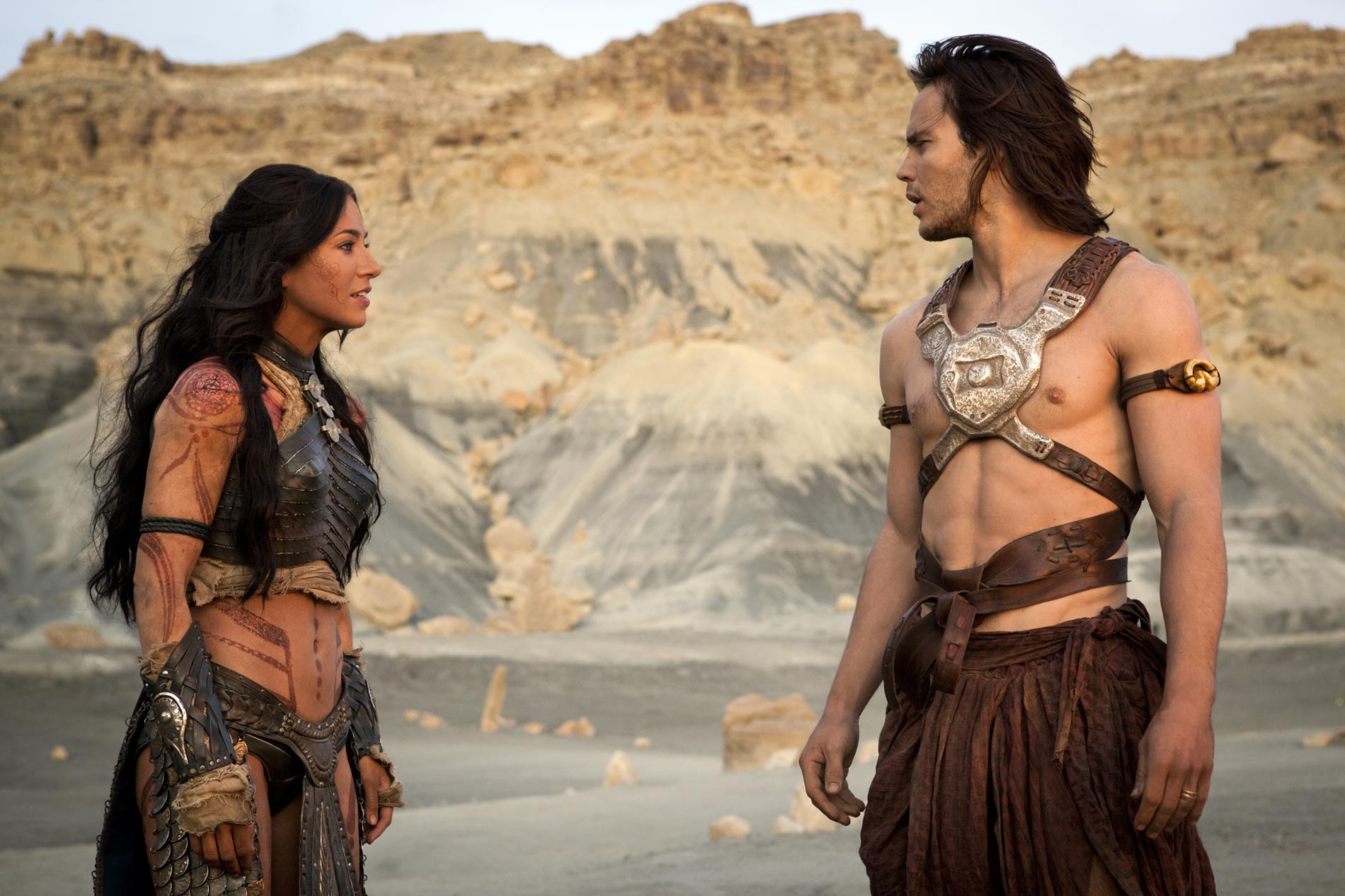
John Carter is not a superhero character invented for a movie. John Carter is actually a protagonist for an 11-volume series of novels by Edgar Rice Burroughs known as the Barsoom series. The first John Carter movie comes courtesy of Disney. Does it deliver?

The movie starts detailing that Mars is a dying planet with warring civilians. The live-action begins with a nephew of John Carter’s learning he’s dead, or maybe he’s not. He’s buried in a mausoleum that can be unlocked by a secret code.

Impressive beginning that leads to the origin of John Carter which actually comes across as too predictable. We learn that John, a citizen of the Confederate state of Virginia, is seen as an outlaw in New York. The opening shtick which leads John being a rebel in New York to being sent to Mars is all too common and formulaic for superheroes to be first learning of their superpowers.

The developing story of how John Carter learns of the race of four armed Martians and of the warring cities of Helium and Zodanga give promise to more climax. Additional climax is possible by possible cease fire if the princess of Helium being offered to marry the Jeddak of Zodanga. Often the quests that lead to battles and even gladiator matches become too predictable to a point. Even the gladiator-like scene looks like it was added in more for the sake of thrills than for the story.

If there’s one place that is out of the ordinary, it’s the ending. At first the triumph of John Carter at the end appears to be the ending but there is a surprise which leads us back to the framing story of John’s nephew that leads to an unexpected ending. That was one part that did impress me.

The problem with the movie is that it shifts too much. We don’t know if John Carter is supposed to be a superhero character or a gladiator-type character. Even seeing how it appears to have borrowed from too many movies also adds to the problem. John Carter landing on Mars appears like many superhero movies when they first learn of their superhuman trait. The gladiator scene comes across too much like Gladiator. There were even times I thought they borrowed a scene or two from Thor. The movie is good in terms of special effects and especially the costuming but its storyline’s confusing in terms of plot and character development. Even the acting appeared one-dimensional because the characters were mostly the stock type that one would come to expect from a superhero movie. They’re there to put on a show but lack depth. The script was what you’d expect for a superhero movie: stagy events thick on emphasizing the drama in the plot and full of high-climax moments but little depth. There was a bit of comic relief with the Martians calling John Carter “Virginia’ but not much else.

In terms of box office, John Carter is not looking all that good. The movie cost $250 million to make. Its opening weekend only amassed $30.2 million. Currently it sits at $62.4 million. It’s questionable how well it will finish. One thing to take into account is the record for the biggest money-losing movie of all time. It belongs to 2002’s Pluto Nash with a loss of $93 million. I hope John Carter doesn’t break that record. Already there’s talk that the movie will lose an additional $100 million it spent on advertising. Overseas things are looking better as it has so far grossed almost $172 million outside the US, according to Box Office Mojo. So all is not lost. Lots but not all. Nevertheless there’s probably no chance for a sequel. A bit of a shame because the ending looked like it was made to be the set up for the beginning of a sequel. Guess not. It’s even questionable whether this will be the star boost for Taylor Kitsch. Maybe his next big movie.

John Carter is an ambitious attempt from Disney at getting a new movie series off the ground but looks like it fell flat. If you’re going to start a movie series, a lot is expected, and it just didn’t deliver.