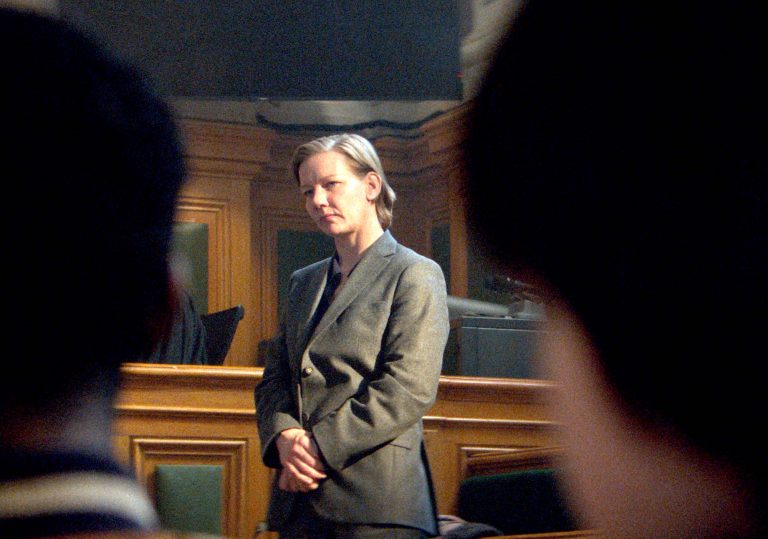
2023 Oscars Best Picture Review: Anatomy Of A Fall (Anatomie d’Une Chute)

Sandra Huller plays writer Sandra Voyter suspected of killing her husband in the courtroom thriller Anatomy Of A Fall.

DISCLAIMER: This is from a blog of four reviews I originally posted on March 2, 2024. The original blog has been removed.

Anatomy Of A Fall first appears to be a common courtroom drama with a story of intrigue. Over time, you’ll learn it’s a film that’s a lot more.

Courtroom dramas have caught our intrigue time and time again. We’re presented with a criminal scenario or a legal scenario, but it’s up for us to decide whether they’re guilty or innocent or who to side with in a dispute. We learn the verdict and we’re left to decide if it’s the right verdict or not. This story is a unique story. It presents a case of a death from a fall. The deceased is the French husband of a German novelist. The fall happens from a chateau in a remote mountainous area of Grenoble. The first to notice the fall is the seeing-eye dog of the blind son. Questions arise. We learn of the troubled marriage. People turn against the woman. The prosecutor is determined to prove her guilty. The son watches despite his blindness, and seems like he doesn’t know what to think. Could he hold the truth? Could his seeing-eye dog also provide clues to the truth?

This isn’t simply a story of whether Samuel’s death is a murder, a suicide or an accident. It’s a story that develops over time with each new fact exposed, opinions from people in the story coming about, and your own opinions being formed. As we learn of Sandra Voyter, her turbulent marriage, and her recent liaisons, some of us are tempted to look down upon her and even suspect her of possible murder. As we learn about Samuel and his immaturities and later of his depression over the last few years, will that change our mind? The film is as much about how we see things and see people as it is about our story itself. Even possibly exposing sexist attitudes we didn’t think we had. There’s even the angle of the trial as seen through Daniel: the child caught in the middle. A blind boy, he has the biggest sense of the friction his parents have been going through. He lost his father and he’s at risk of losing his mother if she’s found guilty. During the time, he doesn’t know what to think of his mother and often feels lonely. Almost as if Snoop, his seeing-eye dog, is the only one who loves him and he can trust. Sometimes your concern shifts from how Sandra will be found by the courts to what will happen to Daniel. It’s like the film is two stories in one. Even Daniel’s testimony at the end will make you reconsider your stance in the case.

Top respect goes to director/writer Justine Triet. Triet has become only the eighth female director to be nominated for the Best Director Oscar. This film is actually a project she co-wrote with Arthur Haran for actress Sandra Huller to star in after the two worked together in 2019’s Sibyl. She creates a great story that presents a death and the question if it’s an accident or a murder. She presents it as a story of a French-speaking wife and a German-speaking husband who use English as a common ground to sort things out, but it adds friction. The death, the courtroom drama, the turbulent marriage, the communication barrier, and the son caught in the middle adds to the story. Even the ending which allows you to draw your own conclusion of the incident adds to the film.

Along with Triet, there was great acting from Sandra Huller. Her acting in this story helps create the character along with the actions and allows the audience to make their decisions in the case. Huller is as much of a storyteller as Triet herself. Also great is the performance of Milo Machado-Graner: the son caught in the middle. There are many times in the story, some thanks to camera shots of the courtroom drama, where one can think the film is as much about Daniel as it is about Sandra. He’s trying to make sense of what is happening. He is suspicious of his mother but is scared he will lose it all. There are times he tries to be tough with him teaching himself piano by sound clips, but you can tell he could break down. It seems like the dog Snoop is his one friend, especially with his sheltered upbringing. Graner makes him a boy you want to hug. Adding to the film is Messi The Dog as Snoop. Through Messi, we see Snoop is more than Daniel’s seeing-eye dog and best friend. He’s also one that hold clues to what could expose the truth. Additional great acting performances include Samuel Theis as Samuel Maleski, the husband that struggled with mental illness whose struggles threatened the family, and Antoine Reinartz as the prosecutor who will get you wondering if he wants justice done or simply to have Sandra found guilty.

This film has been lauded with buzz since the Cannes Film Festival. The film won the Palme d’Or at the and Triet became only the third female director in history to win. You know how I talked about Messi The Dog adding to the story? At Cannes, Messi was even given the Golden Dog Award for his efforts! Even after Cannes, film festival after film festival it was entered in would have this come away as the big winner. The film also won six European Film Awards. The film was not France’s official submission in the Best International Feature Film category. I assumed it’s because there’s too much English in the film, but other articles are suggesting there may be politicking.

Anatomy Of A Fall is a great legal drama that tells the story of a death in question and doesn’t only leave its fate to the juries, but for the audience to decide for themselves what they believe to be the truth. Even Triet herself won’t say if Sandra is guilty or not. All your call!
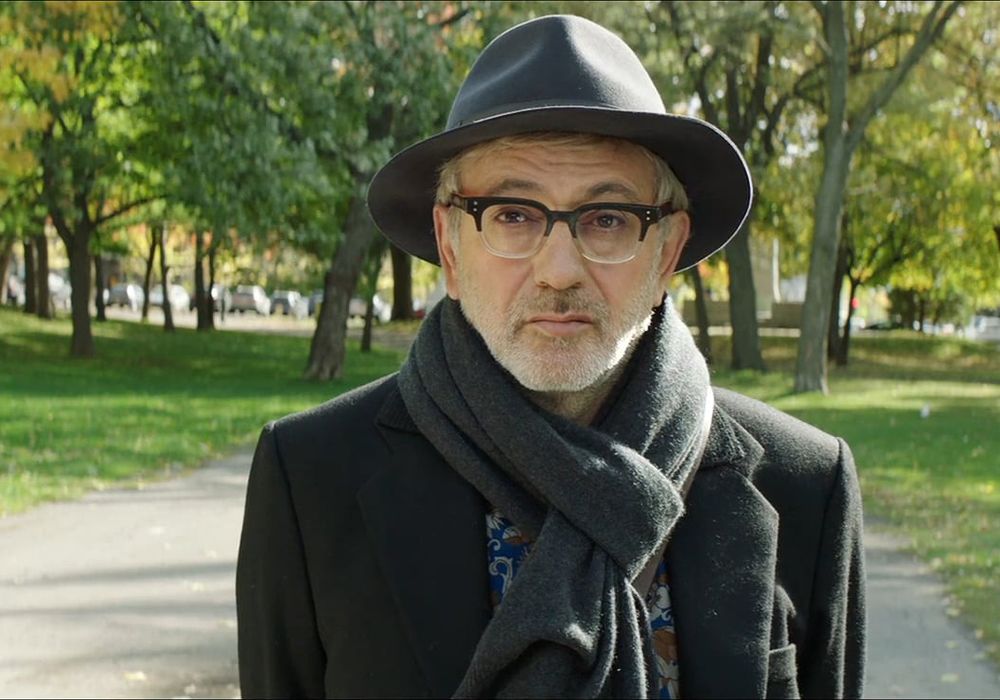
VIFF 2019 Review: It Must Be Heaven

Elia Suleiman
Director/writer/actor Elia Suleiman plays himself trying to get his film of Palestine made in It Must Be Heaven.

Saying It Must Be Heaven is a Palestinian film can give a lot of people the wrong impression at first. It’s a film that is enjoyable and worth seeing.

The film begins with a Christian religious ceremony in Nazareth, Palestine. They’re to enter the church, but it’s locked. It’s locked by the custodians who want to be alone drinking up. The priest and those part of the mass are angry. They barge in and get violent with him.

Life in Nazareth is not a pleasant experience for filmmaker Elia Suleiman. Elia has been experienced some downtime since a close friend of his died. Elia still has their wheelchair, walker and other personal items.  Wherever he goes, it appears people have a surly attitude. He goes to a restaurant and there’s an argument over the wine. He lives on the opposite end of an apartment where a father and son live in opposite suites and exchange insults. The few times when the Palestinians are nice to each other are when they know they’re being observed. Once outsiders leave, they go back to being their grumbling selves. The one Palestinian in Nazareth who looks to have a pleasant attitude is a young gardener who tends to Suleiman’s lemon tree, against Suleiman’s will. Suleiman tells him he doesn’t want him to trim it, but he comes back.

Elia seeks inspiration for his script. However he has to seek financial support from outside of Palestine. He goes on a flight to Paris and the flight gets turbulent as is goes over the Dinaric Alps. When he arrives in Paris, the Paris of people’s fantasies is alive. He sees it as a city of romance, a city of nice fashionably dressed women at a cafe having a good time together.

Then the realities of Paris start. His hotel suite is right next to a fashion house and their LED ad shines out a lot of lights that make it hard for Elia to sleep. He sits outside his window and looks out onto the street. He’s on the subway and sees a tattooed punk try to look menacing to him. He sees someone put a plastic bag underneath a car parked just outside. A bomb? The police come on Segways to check, but notice nothing and move away. He sees a homeless man lying around nearby and the police arriving to give him food. Suleiman is there during Bastille Day. He finds himself lost in a crowd during a military parade.

Elia knows he has business to deal with in Paris. He meets with a film producer, but the producer tells him that his film isn’t Palestinian enough. Elia tries to work more on his script. He notices that a bird has flown into his hotel suite. He welcomes the bird at first. However problems arise when Elia is typing on his script and the birds wants Elia’s attention. The bird hops onto his laptop and Elia gently pushes him aside. The bird repeats, but Elia’s had enough. He decides the bird need to fly back out in the open.

Elia then sets his sights on New York. Before he does, he has a day where he just wants to relax. He goes over to a park area, but notices a woman dressed in an angel costume with the Palestinian flag on her torso. A group of police try to pursue her, but she makes it a case of ‘catch me if you can.’ When they do catch her, she mysteriously disappears. Returning to his hotel that evening, he sees the car that had the bag placed underneath it is towed away. The bag is still visible.

When Elia arrives in New York, he is taken to a hotel by a cab driver who tries to develop conversation. The cab driver asks where he’s from, and Elia responds “Palestine.” The cab driver slams on his brakes and talks about how surprised he is to see a Palestinian. He’s never seen one before! He meets with a pretentious film professor. The professor wants his story to embody the Palestinian cause in the best way it can. He goes to a meeting held by a Palestinian-American group. The crowd is too enthusiastic for the leader to handle so she demands they all give one clap for each speaker she announces.

Then the meeting with the producer happens. Before he does, he is met in the waiting room with Gael Garcia Bernal who is his friend. Bernal has read over his script and he is very happy with what Suleiman has written. The exec however is uninterested in funding a ‘Palestinian story.’ Before Suleiman is about to return back home, he walks around New York and notices how Americans everywhere, even in the supermarkets, carry guns over their shoulders. He arrives back in Nazareth and notices that the gardener is back pruning his trees. The film ends with Suleiman in a discotheque with young people dancing to a song celebrating Palestine.

The film has a message to say, but instead of it speaking its message, it allows the message to be told in the images it shows. The film says its messages in what Suleiman sees. We see the world through his eyes. Nazareth looks to be this unhappy place in the middle of nowhere. Suleiman thinks that he will have a better time in the cities he will visit: Paris and New York. He can escape the unpleasant attitudes, the violent actions of others and fear of terrorism. He’s in for a surprise. In Paris, he notices what could be a car bomb placed underneath a car. The bomb never goes off, but it does remind you it has its own threats. Even in New York where there are still memories of 9/11, the threat of terrorism is there too. Bad manners? Suleiman witnesses as a stranger on a Paris subway tries to look menacing to him. Over in the part, an elderly lady tries to get a seat, but a young man on a bike beats her to it with no regrets. He’s reminded there’s rudeness there too. He’s also reminded of military preparedness and vigilance too as the Bastille Day parade has a military march and Americans in New York show their weapons openly. what he thought he’d leave behind in Palestine is still there in Paris and New York.

The film also feels about the difficulty of being a Palestinian in the outside world. Elia may be Christian but he defines himself as a Palestinian. He finds it hard enough living in Palestine, but finds it challenging to define himself to others. The meeting with the producer in Paris shows the French are interested in showing an image of Palestine, but one common or friendly with French audiences. The meeting with the taxi driver also adds to the feelings of confusion with his identity. He goes to a Palestinian-American rally that supports the cause, but doesn’t get too much out of it. How can a Palestinian relate to a Palestinian-American? Even if they share the same cause, they don’t have too much in common.

The film is less about the words spoken that it is about what one sees happening. This is pretty much a film of what Elia Suleiman sees through his eyes and he lets the images and moments do the talking instead of him. There are very few instances when you see Elia talking. It’s very rare in a film where the protagonist doesn’t even utter ten words.  Almost all moments of the film, including moments when he appears to be in a conversation, show him being a silent observer or a silent responder. That adds to the humor of the film, and Elia wants the film to blend humor with the theme and message of his story. Yep, even moments where you see Elia being dead silent get us laughing. It’s part of the film’s ironic dry humor. Some could say Elia’s wit is a lot like Woody Allen’s. You be the judge.

This is the first film in seven years for Elia Suleiman. His last one was 7 Days In Havana. This is a film he directs, writes, and plays lead. He does a good job in letting the images tell the story. Even during his mute moments, he adds to the humor of the story. It’s a silent humor that you have to get and understand while you watch this film. The inclusion of music in the various scenes adds to the story and fits it well.

It Must Be Heaven is Palestine’s official entry in the Academy Awards category of Best International Feature Film; a retitling of the Best Foreign Language Film category. The film has won a lot of acclaim. Acclaim includes a win for Special Mention at this year’s Cannes Film Fest as well as a nomination for the Palme d’Or, a nomination for Best Film at the Seville Film Festival, and a nomination for Best Canadian Feature Film at the Toronto Film Festival (film had production in Canada).

It Must Be Heaven is a film with a lot of wit and dry humor. Its silence of much of the story and of its main protagonist actually speaks volumes and is the film’s best quality.