VIFF 2025 Review: As The Water Flows (翠湖)

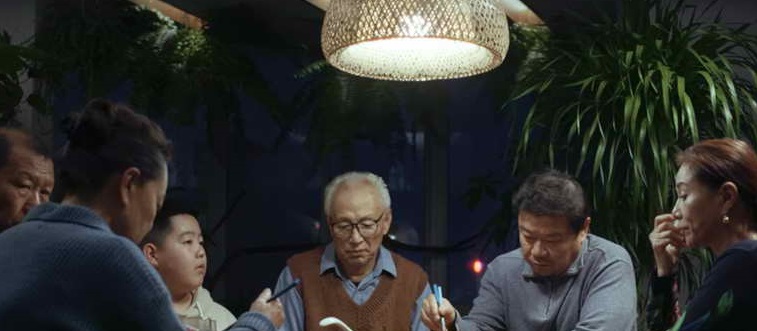
A dying grandfather, played by Li Zhenping (centre), seeks to mend family ties in the Chinese film As The Water Flows.

As The Water Flows is one of many Asian films that played at the VIFF this year. Its subject matter isn’t exactly a film that would make you want to see it, but it’s worth seeing.

The film begins with a grandfather on a boat on a river with his grandchildren. The film then goes to the grandfather Xie Shuwen, a former college professor. He’s with his new girlfriend whom he has seen recently since his wife died. He will be having a dinner with his daughters and he’s unsure they will be happy with the news of her. The dinner happens and all three daughters are there with their husbands. Only one daughter brought their child: a pre-teen chubby boy named Panda. He delivers the news, but they’re not happy about it. Especially the oldest and the most orderly of the daughters. After the dinner, bad memories of the past agent the daughters.

After the dinner, the daughters move on with their lives. They’re busy maintaining a career, their own families and their children. They want their children to grow up well and be successful but there will be difficulties ahead. One daughter is proud that her son, the eldest grandson, is going to Stanford the next year. Suspicion of what’s really happening grows when Xie notices the grandson drunk. Panda appears to participate in classes well but he is the target of bullying because of his short overweight stature. Another daughter of Xie’s is unhappy her own daughter quit a job in a family restaurant and has different career desires.

Meanwhile Xie learns he has a terming lung cancer diagnosis. As he knows he’s dying, he continues to spend his quiet time at Green Lake Park but he also uses the time to spend more time with people close to him. That includes his new girlfriend, friends from the college he taught at, neighbors, and his families. Family dinners become more common. One daughter notices how he has become closer to the family even more so than when they were younger. She also notices how his harmonica which he used to play often is showing age. She’s especially angry when she learns he’s still smoking and playing mah-jong.

As time passes, what the children are hiding becomes more obvious. The granddaughter wants to go her own direction and she has fallen in love with a man. She hints she may want to marry. The older grandson admits he forged the acceptance letter to Stanford and that he will really be going to a common University. He’s broken-hearted about this. Also Panda is unhappy with the demanding regiment at his school. It becomes frustrating to the point Panda buries his schoolbooks in dirt. It’s time with grandfather Shuwen that the grandchildren are able to be more confident with their life and their decisions. Even the older grandson is able to find luck in his life as he meets the granddaughter of one of his grandfather’s professor friends.

Shuwen then has one last visit with his girlfriend. It’s a nice quiet occasion. The marriage between the granddaughter and her boyfriend happens and Shuwen is happy to be there. The occasion is a happy occasion for all and he’s able to have amicable conversations with his daughters, despite his cancerous coughing. The ending and credits role gives a hint the wedding is the last family occasion Shuwen is present.

The film is as much about the family dynamic and the family ties as it is about the main protagonist trying to find his purpose to live. We have the widowed grandfather who has recently been diagnosed with lung cancer. Even though he lost his wife, he wants to maintain a life for himself by playing mah-jong, meeting with his professor friends and dating again. We have the three daughters who are trying to maintain their careers, keep their marriages together, and raise their children for the future. They’re the ones with the biggest struggles now. Finally, we have the three cousins that treat each other like siblings. They dream of the future, but they also fear for it. They feel it’s demanding and unforgiving and they either don’t know what to do or they want to do it their way.

This all comes as Xie Shuwen learns he is dying, just a year after his wife’s death. He spends time with his children and their families. He becomes like a guide or a mentor to the grandchildren while the daughters feel he didn’t spend enough time with them during his professor days. It’s possible he wants to seek relations with his grandchildren and resolve with his daughters. It’s not an easy thing to do with the constant arguing between the daughters and him. To add to it, the daughters are not very welcoming to his new girlfriend.

The story is told through all angles. The biggest angle seen is through Xie’s, but we also see the story through the angles of the daughters and the grandchildren. The multiple angles make for a good way of telling a story and presenting the complicated scenarios, but it can get confusing at times. The story itself is so complex, it can often seem like a drama that’s drawn out longer than it should be. Often throughout the film, you’re tempted to question who the story is mostly about. Some would argue the film follows the same formula as 1989’s Parenthood. Some would also say it has a similar sound of 2001’s The Royal Tenenbaums. It’s easy to dismiss as such but if you see the story, it relates to real situations that one can see happening in their own family. That’s the biggest quality of the film. That probably every family can see an element of the film or the characters in their own life.

This film is the directorial and writing debut for Zhuo Bian. Not much is known about Zhuo’s filmmaking before this film, according to IMDB. With this film, he creates a well-arranged family story that starts with a family dinner, goes into the lives of the separate families and the members, often returning with another family dinner from time to time, then going off again, and ending with the wedding. This type of storytelling allows the story to be told from all angles and remind us that it’s a family story. It’s very complex and sometimes difficult to connect all the stories together, but Zhuo does a very good job. He also does a great job in placing the story to the Green Lake Park in Kunming, China. That’s the place where Xie often visits or meets with others as he reflects on his thoughts. Adding that in adds to the sensitivity and solitude of the story.

The film has excellent acting from Li Zhenping as Xie. As the grandfather who’s at a crossroads between living again after losing his wife and just learning he’s dying, he does a great performance that is low on the drama but makes for honest emotions. He does a great job of holding the story together. It’s hard to pick out the best supporting performance because all the other actors did an excellent job of playing their parts well. The daughters, the sons in law, the grandchildren, they all did their parts well. The cinematography of Wang Zixuan and Jie Zhu gave the dramatic story a picturesque telling with its various shots happening inside homes and outside in nature.

As The Water Flows is as much about the family dynamic over three generations as it is about the difficulty of a grandfather trying to maintain a family and maintain one’s life. It’s possible you can see something where you can identify in your own life with this film.

VIFF 2019 Review: To Live To Sing (活着唱着)

to_live_to_sing
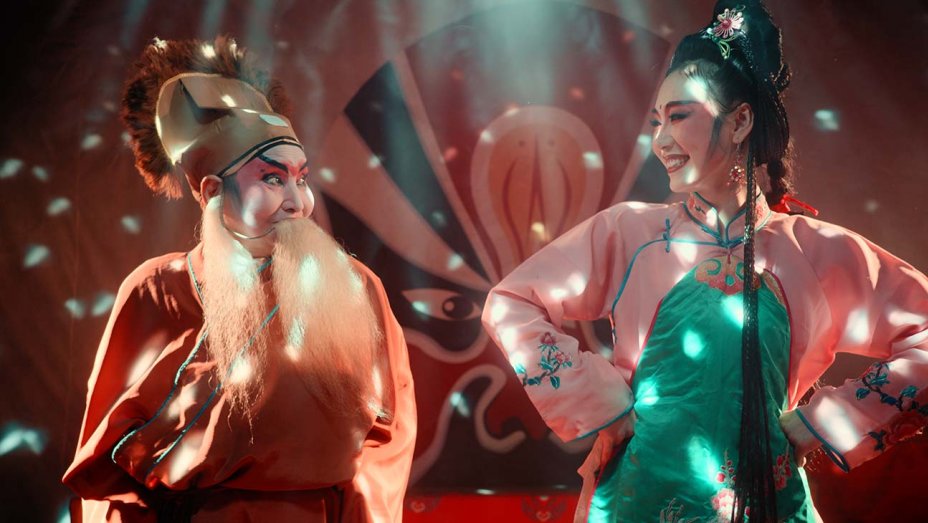
To Live To Sing is of a local Chinese opera troupe trying to save itself from gentrification.

I accidentally came across To Live To Sing when the virtual reality show I wanted to see was in a venue with a low capacity. I’m glad I saw it.

The film begins with a show of local performers in a Chinese city. The show starts with a modern fan dance by schoolgirls. It’s then followed by the Jinli Sichuan Opera Troupe: a local troupe that performs traditional Chinese opera. Right after the show, the opera troupe goes back to their own end of the city where they put on their own daily show. They perform every day at the same time at the same small theatre and entertain the same local crowd they’ve charmed for years. They rehearse well and they get along mostly fine. They have their own disputes on how to do something artistically, but it doesn’t last long. The Troupe is led by Zhao Li whom oversees everything. Her niece Dan Dan, who was orphaned at a young age and raised by Zhao, is seen by Zhao as the future of the troupe as most are aging.

Things are changing in the area they live. A lot of old homes are being crushed under government orders in order to build new developments. The theatre is under threat. This will not only mean the end of the theatre but the end of the opera troupe too. Zhao is frustrated as her theatre doesn’t attract crowds big enough. The others are worried too, but they try to make plans fearing the worst. Dan Dan however sees this as a breakthrough moment as she always dreamt of being a pop star instead of being confined to an opera troupe where she only gets paid 10%. During the time of frustrations, Zhao notices a dwarf in Chinese opera wear. She tries to spot him out, but he runs away.

Zhao is trying to negotiate with the government about keeping her theatre. However she knows it will be uncertain due to the small crowds that come to her theatre. Zhao is very forbidding of any modernisms that come to the theatre. She is strict on tradition. Then one night when she’s out, she notices the dwarf. She tries to follow him but loses focus of him. She is by a night club and she is drawn to the music. Then the announcer announces a singer for her first performance. It’s Dan Dan, and in a showy dress. Dan Dan notices Zhao in the crowd and can’t sing. The two have a fight outside where Dan Dan walks off furiously. The following day, Zhao confessed to Dan Dan that she always saw her as her daughter. Dan Dan becomes more committed to the troupe.

Zhao has another encounter with the dwarf and the dwarf takes her to a restaurant. There she sees one of the men negotiate a future job deal. Feeling the threat harder, Zhao decides one day to break with tradition and do a show that fuses modern with traditional. The troupe is welcoming of it. They perform the show with the mix of modern and traditional. The crowd loved it, but Zhao notices the spirit of the dwarf as it takes her to a mysterious land of Chinese art and culture.

Despite the audience pleased with the performance, Zhao can’t lose focus as an official from the party will be attending a show to see whether to keep the theatre up or not. They get a chance! However it’s a very slim one as the areas nearby are being crushed. The night before, Zhao has the same fantasy of the dwarf taking her to that land. Then the day of the show. The audience is ready. The players are ready, but the official is not to be seen. There has to be a wait and it’s making the crowd impatient. Then the official finally arrives and they are able to put on their show. Just as the show is happening, Zhao is again taken away to that imaginary place. The show she’s in is a dazzling trip of the imagination, until the character played by Dan Dan is stabbed. It all falls apart.

We then learn that the official decided to have the theatre removed. The troupe is heartbroken, even though some talk about plans of what to do after. The next day where there’s no show, members of the local audience show up and wonder why know show? The film flashes five years later with Zhao and Dan Dan returning to the same spot and what’s become of it. They see the development and the ruins. However Zhao sees the dwarf again. Possibly to send one last message.

The film is a common story about art attempting to stay alive. The film also touches on the subject of gentrification. We see it all around us; old buildings being crushed for new developments with big profits in mind. I see it a lot in Vancouver. Here it shows it happening in the People’s Republic of China. In most countries, they have the freedom where they can come bring this issue up to the government. Not all chances work out successfully, but they’re still given a fair chance. In China, you’re chances are very limited with a chance that’s slim to none. When the government says it will happen, it will happen. Zhao was lucky to have that one chance where she could prove to the government the importance of her opera. It was unsuccessful but she still had it.

The film also showed another aspect or battle. It also showcased the battle between traditional art and the more modern art or entertainment that’s the call of the day. Without a doubt, Zhao is a purist of the traditional Chinese opera and starts off as forbidding to the new ways and the new sounds. We should not be surprised that she would be furious if she saw Dan Dan become a contemporary pop star. Despite her belief in traditionalism, she does convince herself to welcome the modern sounds and even mesh it into the traditional opera. We see that a lot in many countries of mixing traditional or classical with the modern. It’s actually very successful in many countries. It proves to be a success here too. However the film sends a message that even with modernisms, the traditional should not be lost. It should still be admired and celebrated.

One thing the film tried to make clear with the story is of the spirits of art and how it exists inside Zhao. You may notice there are many times a dwarf in opera garb is in Zhao’s vision. The dwarf leads Zhao to many images all telling the story of what will happen. However the dwarf doesn’t always lead Zhao to images of a happy ending. That image where the opera comes alive in Zhao’s dreams but leads to the stabbing of Dan Dan is what would send the message of the bad fate of the opera troupe and its house. However it’s right at the end where when it appears all has been long lost at the end, it’s not. The spirit of art still remains even in the ruins.

This is the first film I’ve seen from Chinese-Canadian writer/director Johnny Ma. Living in Vancouver, he’s able to do Chinese stories that would not be the most welcome in the People’s Republic. His first feature from 2016 Lao Shi was about battling bureaucracy and legal manipulation in China. The film was shown at the Hong Kong film festival but not in Shanghai. This film was shown in both Shanghai and Hong Kong. It doesn’t depict the government that bad here. Instead the focus is on art and its attempt to survive. Johnny does a very good story and is good at sending a message, but it is a bit uneven in its storyline. The film also has a real opera troupe as its cast and they all play fictional versions of themselves. That’s another quality to the film. It does make you wonder how they’re doing in their home country. The actors all did well by being themselves when they had to, performers when they had to, and actors when they had to. Zhao Xiaoli and Gan Guidan stood out the most as the two did show a close chemistry in the film that made the aunt/niece relationship look real.

To Live To Sing is a story of artistic ambitions with a bittersweet ending. However it’s a good and colorful, albeit imperfect, reminder that art will triumph.

VIFF 2019 Shorts Segment: To Live In Infamy

Cinema

Those who know my film watching during the VIFF know that I try to watch at least one segment of short films. I saw a segment of seven films by Canadian directors entitled To Live In Infamy. In each of the films, there is some element of crime or taboo. Even some things that don’t qualify as a penal code may be seen as a crime of some sort, or even a simple wrongdoing. All of them are interesting in their own way.

Delphine (dir. Chloe Robichaud): A woman named Nicole looks back to a girl she only encountered for two brief times in her childhood. Her name was Delphine and she was a Lebanese immigrant to Quebec. The first flashback is in a private grade school where Delphine could only say one word in French: ‘oui.’ The other classmates make fun of her. Nicole, who is Lebanese-Canadian, doesn’t participate with her peers, silently shares in Delphine’s ostracism. The vice-principal of the school however does scold Nicole and the girls for lewdness. The second meeting between Nicole and Delphine is at sixteen in a public school. Delphine has a bully named Aminata who appears to try to dominate over every female. She attempts to dominate over Nicole too, but Nicole is physically resistant.

The story leaves us with the necessary questions. Some may ask were Nicole and Delphine lesbians? However the story is reflective of childhood. It reflects on fun memories like of some mischief and of family warmth. But also of upsetting memories like of being made to feel different and facing nemeses either violent or non-violent. We all have those moments in our childhood where we’re reminded how the world is a cruel place. It’s a story many can connect with, even if they didn’t live it exactly.

I’ll End Up In Jail (dir. Alexandre Dostie): A woman named Maureen is frustrated with her life. She tries to cover it up from her son and his boyfriend, but she can’t take it no more. One day, she drives off on an icy hilly road hoping for an escape but crashes into a parked car. It appears the car is parked so that a teen boy and his girlfriend can get stoned in the trunk of a car together. The girlfriend is dead. The boy learns she’s the mother of his classmates. They work to hide the body of the girl, but while Maureen is stuck underneath a tree, she learns a truth. She acts out in a way where she really has to be on the run from the law.

This film is a dark comedy that makes a lot of humorous situations in crime and personal problems. Even the uncovering of a dark truth appears humorously surprising, if not disturbing. The ending however feels a bit incomplete or doesn’t appear clear enough. I know it’s about Maureen’s escape and how it doesn’t go as planned, but it still looks like it’s missing something.

Shadow Trap (dirs. Damien Gillis and Michael Bourquin): In 1909, a white bounty hunter is out searching for Gitxsan business man Simon Gunanoot who is wanted for murder. The bounty hunter stocks up with a lot of supplies ready to find Simon, a reputed trapper and fur-trader, for a big reward. However the frontiers of Okanagan B.C. prove too much for him and he is in danger of freezing to death, until he’s rescued and sheltered by an Indigenous man. Is it Simon in hiding? He returns to the town with hides to trade.

This is a fictionalization of a true incident in Canadian history that says a lot. The message I seemed to get from the story may be about the common perception of Indigenous peoples by whites at the time as ‘savages,’ and how wrong they are. Even now as we’re trying to make reconciliation happen, I feel this story has a lot of value.

The Beach Raiders (dir. Tyson Breuer): A teen couple– the boyfriend having photography ambitions– is savoring the last days of summer at an Ontario beach. They have one last summer goal: steal some beer. They try to get it from the kitchen of a restaurant. However their attempt is not only in danger of being stopped by the owner, but their own relationship as both have differing goals. However their pursuit ends with a bang!

This film is a bit of an ode to the ‘young and stupid’ days. What starts with stealing one beer leads to a chance for something bigger. The film does however focus on a reality, though it is resolved in light fashion at the end.

Main Squeeze (dir. Brendan Prost): It’s Christmas. Benjy and Kiersey, a couple in an open relationship, are having fun in their apartment. However the fun is threatened when a young drunk woman smashes their window. It’s not just any woman, but Jacqui: Kiersey’s ‘other woman.’ He is not comfortable about having Jacqui in, but Kiersey insists. Benjy had every reason to be nervous because Jacqui says things making it clear she’s his rival. This not only threatens the relationship but the Christmas spirit too.

It’s a story that makes good use of a single location. It consists of a lot of moments where you don’t know what will happen next. It surprisingly ends with all conflict over.

Ghoulish Galactic Grievances (dir. Josh Owen): Wanna have some weird fun? A ghoul lives in a swamp, but she has a desire to pursue her friends in outer space. Her swamp friends want her to stay.

This is a fun and entertaining story of ghouls and aliens and creatures. It is definitely a fun comedic story to watch, but it succeeds in delivering a smart message within the theme.

Finding Uranus (dir. Ivan Li): This is the one short of this segment that is animated. A man is lost in a sea of internet porn and desires to find real sexual satisfaction. He pursues it through a very unorthodox trip.

This was entertaining, but bizarre at the same time. However I admire how the animator is not afraid to go crazy and let his creativity tread in territories many would not touch!

All seven shorts were entertaining in their own way. Some had a story to tell, while some were more about the show. Many were dramatic while some aimed more for comedy. All were good at telling their story, even if told in a bizarre style.

At the end, I can understand why this shorts segment is called To Live In Infamy. All of them had an infamy of some kind, whether big or small. Nevertheless all of them told their story well.