Movie Review: Prometheus

Prometheus is a movie many would compare to 1979 Alien, and tightly so. It’s intended to be a prequel to the Alien series despite being released 33 years after and directed by Alien director Ridley Scott. But does it succeed both on its own and as a prequel?

The movie begins with an alien disintegrating after drinking a liquid. A biogenetic reaction occurs as his remains fall into a waterfall. In the meantime a trip to a distant moon is planned after an archeological discovery in Scotland of a star map connecting several unconnected ancient cultures. The archeologists, Elizabeth Shaw and Charlie Holloway, interpret it as humanity’s ‘forerunners’ or ‘engineers’. The trip to that moon is a four-year trip via a spacecraft called ‘The Prometheus’ though Weyland Corporations monitored by a human-like android named David and instructed to find and study ‘the Engineers’.

Upon arriving on the moon they find many key artifacts as well as alien bodies and assume the alien Engineers are extinct. One of the artifacts, cylinders, leaks a dark liquid which David and Holloway later drink. Meanwhile a storm causes many to return to the stranded ship and Millburn and Fifield stranded in the structure the ship is resting by. Meanwhile in the structure, snake-like creatures start acting up, killing Millburn and melting Fifield’s helmet. After the others discover Fifield and Millburn’s body, David finds a control room with evidence of a surviving Engineer and a star map highlighting Earth. The black liquid Holloway drank now starts to attack his body badly enough for mission director Vickers to refuse him back on the ship and has his body burned. Shaw discovers she’s pregnant with an alien baby and attempts to abort it herself.

As the elder Weyland prepares to depart the planet on his craft, a mutated Fifield attacks and kills several crew members before he himself is killed. We learn the structure was part of a base that lost control because of the dark liquid. After learning the structure is part of a spacecraft, the crew run to an Engineer for help only for the Engineer to kill crew members, decapitate David and take control of the spaceship only to crash it. The crash prevents the Engineer from releasing any of the liquid on Earth. Even as Shaw gets away in a lifeboat, she learns that the Engineer survived the crash and her aborted alien baby is alive and grew to full-size. The departure of Shaw and David, whose head is still active after decapitation, won’t come without a fight and it leaves an ending that either sets up for a prequel or sets up for the actual Alien.

What should be noted is that Scott had planned as far back as 2002 in creating a prequel to Alien. However it was sidelined as Alien vs. Predator came up and would be released in 2004. Interest in this wouldn’t resume until 2009. One of the risks of prequels is that those who are familiar with the movie series will have expectations of it. Also there are those moviegoers who are unfamiliar with the series and just see the movie for what it is. Prometheus won’t answer all the big questions Alien fans will give but it will give some satisfaction to fans of Alien as well as thrill the unfamiliar moviegoers. Ridley Scott had a big task on his hand when he was to make a prequel to his famous Alien movie. He may not have succeeded completely but he did a respectable job of his own in this project.

Although the acting was mostly unspectacular as is to be expected in a SciFi movie, it was Michael Fassbender’s performance of android David that stood out as the best effort. Noomi Rapace may have given a good acting performance, if not great, but gave a good job at delivering a strong and determined, albeit vulnerable, heroine. The script was good but it still had a lot of predictable and unresolved plot elements and as I said before, it still leaves a lot of questions unanswered to fans of Alien. As expected in a SciFi movie, its best qualities were the visual effects and the set designs. It did an excellent job of recreating a fictional planet with excellent special effects, especially the alien effects. The score by Marc Streitenfeld also added to the drama of the movie.

Prometheus did have a lot of expectations put on it. Although it didn’t succeed at achieving them all, it still made for a good thriller of a movie. Whether there will be another prequel or not still remains in question.

Election 2011: Canada Votes

Okay, some of you who don’t live in Canada have heard that we have a National Election—the 41st Canadian General Election– in which we will be voting on May 2nd, but don’t know all the details of what’s going on. Here are the details about what’s been happening and what to anticipate.

For those unfamiliar with how Canadian elections work compared to American elections, Canadian elections are held on any given date instead of the first Tuesday of November. A Prime Minister’s term can be any length of time instead of the solid four years of an American President’s term, even though most Prime Minister terms are between three to five years. While Presidential Elections are decided by electoral votes based on which Party wins the most votes per state, Canadian Prime Ministers are decided by the most won seats with each voting district or region deciding its own winning Member of Parliament per Seat. In other words, while citizens vote for electors in the Presidential election and the winning Party in the state wins all the state’s electors, Canadians vote for MP seats in the Prime Minister election. While an American President is decided by the most electoral votes, even if he doesn’t have the highest total of votes, A Canadian Prime Minister can be declared upon winning the most seats even if they don’t have the highest total of votes. So there are some similarities between Canadian elections and American elections but a lot of differences.

Now for the current political scenario in Canada. Politics in Canada has gone through a lot of chaos over the past few years; so chaotic this is the FOURTH National Election in seven years. The most recent National Election was declared in the aftermath of a political scandal. Stephen Harper’s Conservative party was long considered to be in contempt of parliament at the beginning of March upon refusing to meet Opposition requests for details of proposed bills and their cost estimates. The Liberal Party responded by declaring a motion of non-confidence against the Government and on March 25, 2011, the House voted agreeing 156-145 to the motion. This marked the first time in the history of Canada or any nation in the Commonwealth of Nations that a cabinet has been found in contempt of Parliament. Following a meeting with Stephen Harper, Governor-General David Johnston agrees to dissolve the 40th Canadian Parliament and a Federal Election was declared.

Even before the most recent election was declared, Canadian politics has already been known for its chaos in the last seven years. Back in 2005, the Liberal Party under then-Prime Minister Paul Martin faced a sponsorship scandal of what would be documented in the Gomery Report. Even though Paul Martin had been Prime Minister for less than a year, an election was declared and in January 2006 Conservative Party Leader Stephen Harper won the election with a minority of seats. The Conservative Party victory was considered an arrival for political conservatives in Canada who struggled during the 90’s after the eventual decline of the Progressive Conservative party upon the resignation of Brian Mulroney.

 Another national election was held less than three years later in October 2008 and Harper’s Conservatives again won the election with a minority with Liberals, Bloc Quebecois and NDP making up most of the remaining seats. Shortly after the 2008 Federal Election, the Liberals and NDPs banded together for an overthrow of the Conservative government through a unified vote of non-confidence. Some may call it the right thing, others political mutiny. Whatever the situation, the coalition didn’t succeed and the Harper-led Conservatives remained the leading party of Canada. Since then, many Liberals have tried to distance themselves from the coalition.

Now it’s Stephen Harper’s try for a third term as Prime Minister. He comes in the election with the scandal creating baggage for him, but not a lot. Before the scandal, the Conservatives were tops in the polls and they still remain on top. One thing Stephen Harper is hoping for is a Conservative majority, especially with the 2008 attempted coalition still in his Party’s memory. The most surprising fact of the polls is that the Liberal Party is not the party with the second-highest ratings but the NDP. The Jack Layton-led NDP surpassed the Liberals in the April 20th poll and the most recent polls have the NDPs at an average of 31.4% in comparison with 3% for the Conservatives and the Liberals at 20%. This has many believing that the NDP could be setting up for a possible upset for Monday’s election; maybe even a Prime Minister Layton. Mind you the polls only represent popular voting patterns. It will all be decided when the ridings vote for the MP’s and their parties.

Win or lose, Jack Layton appears poised to have the biggest National Election result for the NDP party ever. The biggest ever result for the NDP Party is 43 seats in the 1988 election while the Party was led by Ed Broadbent. Even its founder, Tommy Douglas, never experienced the success Ed received. One difficulty of Layton’s, especially after the coalition, is for the NDP to distinguish its political platform from that of the Liberal Party. Too many voters label the NDP to be like the Liberals since they are on the same left stance. This may be seen good for liberal-siding voters but not so good for the NDP’s own identity. Whether Jack Layton wins or loses, he will have to prove the NDP’s distinction from the Liberals politically. Otherwise voters will continue to believe the NDP and Liberals are two choices of the same stance.

Then there’s the Bloc Quebecois. The Bloc was started in response to a resurgence of Quebec nationalism felt after the decline of the Parti Quebecois and after the Meech Lake Accord, which was intended to grant Quebec distinct constitutional status, was overturned in 1990. The party has attracted Quebec nationalists and even prompted a second referendum in 1995 in which Quebec nationalism lost again. Despite Quebec nationalism being voted down, the party has always won at least 50% of the Seats open to Quebec. The Bloc had 49 Seats in the last election–47 are still current– with 10% of the popular vote in Canada and 38.1% of the vote in Quebec. However recent polls have them at 7%. Could this mark a decline of the Bloc?

Party aspects aside, One thing about the election is that the parties are hoping for a better voter turnout than what happened during the 2008 election. Then, the voter turnout was 58.8%, the lowest turnout percentage ever for a National Election. Parties have been making the effort to urge voters out. Even campuses have had young people out to drum out support. Interesting how around the time I first became an adult, MTV started a ‘Rock The Vote’ campaign around the time of the 1992 Presidential election and MuchMusic started ‘Vote With A Vengeance’ for the 1993 Federal Election. This election, there’s no ‘Vote With A Vengeance’ campaign. Funny. Doesn’t Much care anymore?

The big day is May 2nd, tomorrow to be exact. Canadian history will be decided by the people. The election results and its aftermath will further shape Canadian democracy in the years to come. Stay tuned. As for Canadians, get out and vote!

WORKS CITED:

WIKIPEDIA: Canadian Federal Election, 2011.Wikipedia.com. 2011. Wikimedia Foundation Inc. <http://en.wikipedia.org/wiki/Canadian_federal_election_2011>

WIKIPEDIA: New Democratic Party.Wikipedia.com. 2011. Wikimedia Foundation Inc. <http://en.wikipedia.org/wiki/New_Democratic_Party>

 WIKIPEDIA:Opinion Polling in the Canadian Federal Election, 2011.Wikipedia.com. 2011. Wikimedia Foundation Inc. <http://en.wikipedia.org/wiki/Opinion_polling_in_the_Canadian_federal_election,_2011>

WIKIPEDIA: Bloc Quebecois. Wikipedia.com. 2011. Wikimedia Foundation Inc. <http://en.wikipedia.org/wiki/Bloc_Qu%C3%A9b%C3%A9cois>

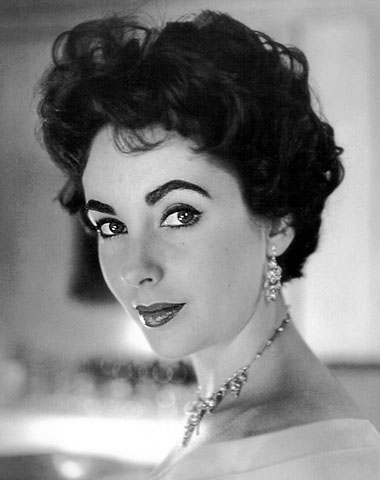
Elizabeth Taylor 1932-2011

I’ll start by asking a series of questions. When you think of the term movie star, who comes to mind? Or what comes to mind? Is it their captivating looks? is it their ability to epitomize fame and fortune? Is it their ability to win crowds to the big screen time after time? Is it a presence that captivates the audience in their seats? Or is it their ability to do great acting time and time again? Do the standards of those that deserve the term movie star change over time? Or are the standards of a movie star timeless? When you think of the term movie star, how many from the past deserve that title? How many current actors deserve to have such a title bestowed upon them?

On Wednesday morning, we lost one who deserved to fit the term movie star in any or possibly every definition of the term. Her name was Elizabeth Taylor. She’s possibly one of the last of a breed that fit the term movie star as we know it to a tee. She had the looks, she lived large in more ways than one, she was able to attract crowds to the theatres and grab hold of their attention, and she knew how to give wonderful acting performances time after time.

Her acting career started early. She was discovered and signed on by both MGM and Universal at the age of ten. She had a great career as a child actor in gems like Lassie Come Home and Jane Eyre but it was her performance in 1944’s National Velvet that was her signature turn as a child actor. She was also successful in making a transition to adult actor almost immediately when she starred in 1950’s Father Of The Bride. Her career as an adult actress would accelerate starting with her role in 1956’s Giant opposite Rock Husdon and James Dean. She would then be nominated for an Academy Award for Best Actress four years in a row starting with 1957’s Raintree County opposite Montgomery Clift, 1958’s Cat On A Hot Tin Roof opposite Paul Newman, 1959’s Suddenly, Last Summer opposite Montgomery Clift and finally a Winner for 1960’s Butterfield 8 which she acted opposite then-husband Eddie Fisher. In 1960, she became the highest paid actress in Hollywood and more starring roles continued, including for 1963’s Cleopatra, 1967’s The Taming Of The Shrew and her second Best Actress Oscar winning role in 1966’s Who’s Afraid Of Virginia Woolf? Soon after, the movies she starred were flopping and her bankability faded. It wouldn’t stop her from acting in movies, television and stage. Her last movie role was in 1994’s live-action version of The Flintstones. Immediately after, she announced her retirement from films.

She also had one-of-a-kind winning looks. Her looks were definitely that of a movie star. Even at a young age, you knew she had a face for the screen. The smooth face and glowing violet eyes. You could tell in her earlier moviesthat she had the looks. Even in adolescence, she matured with grace and beauty and would have the looks perfect for Hollywood’s Golden Age. She also knew how to live the glamorous life. She was always seen with the most glamorous dresses and was renowned for her huge collection of jewelry including huge diamond rings and diamond necklaces. She even launched two fragrances in the 1990’s.

She also had the ability to be the subject of much publicity, both while active in her acting career and after. She was known for her eight marriages to seven husbands: starting with hotel mogul Conrad Hilton and ending with Larry Fortensky. Her relationship and eventual marriage to Eddie Fisher made headlines because it interfered with his marriage to Eddie Fisher. She married Richard Burton twice over a period of twelve years. Only her marriage to Michael Todd lasted until his death. She was known for her weight gain battles, frequently lampooned in Joan Rivers’ standup comedy material. She had well-publicized substance abuse battles that included a stay at the Betty Ford Clinic where she met her final husband Larry Fortensky. Her friendship with Michael Jackson also made tabloid headlines. Fact: she is the godmother of Michael’s two oldest children. She also battled constant health problems and they would always make for good tabloid copy. She broke her back five times and had two hip replacements. She also battled life-threatening illnesses like a brain tumor, two bouts of pneumonia and numerous heart problems. 

Despite her life of luxury and her questionable relationships, she was also one who knew how to use her celebrity to attract a cause. She supported AIDS causes starting in 1984 when they were not popular but became more active after her friend actor Rock Hudson died of the disease in 1985. She founded or co-founded two major AIDS charities and promoted major AIDS fundraising events. He also devoted herself to many causes relating to Israel and Zionism. She herself converted to Judaism in 1959. She would use her celebrity for many fundraising events and for awareness for the causes she believed in. In turn, she has been awarded humanitarian awards during her life. She was even named a Dame in 2000.

When she died on Wednesday, many believe we lost the last great movie star of Hollywood’s Golden Era. Although that’s disputable, we did lose a one-of-a-kind. She had the picture perfect looks for Hollywood but she delivered solid acting every time. What mistakes she made in her personal life, she made up for in her charm and grace. She lived every inch of the definition ‘fame and fortune’ but was still in touch with what was happening in the world. Many leading ladies came before her and many have come since but she will never be equaled. Elizabeth, we’ll miss you.