Oscars 2024 Best Picture Reviews: Part Four

The thing about the Oscars is that each year, there are Best Picture nominees for films of subject matter that most people would normally not want to see. In some cases, films of unwatchable subject matter end up Best Picture nominees. A lot of these unwatchable things are based on people or events that actually happened, like these two films. For these next two films, I wouldn’t say they’re unwatchable but they do treat on dark subject matter. They’re far from the topics or themes that would draw crowds. Some scenes many would find too disturbing to watch. All I can say is you be your own judge:
I’m Still Here (Ainda Estou Aqui )

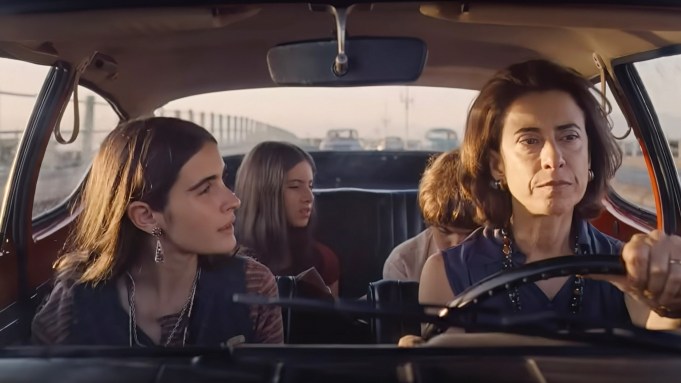
When one thinks of a Brazilian film, one would think of a film that may have scenes of the carnival, the festivities or the beaches. I’m Still Here is a very different film as it presents a dark side of Brazil’s history that they’re still troubled by today. Even the angle from which the film tells its story is unique. We have heard of people kidnapped during political regimes but we rarely hear about how it affects families. It’s through Eunice Paiva that we see how sometimes being married to an enemy to a regime could lead one to being imprisoned. Through Paiva we also see her as she struggles to keep her family together, struggles hiding the truth from her youngest children, struggles with her relationship with her youngest daughter and struggle to get the answers she needs of what happened to her husband. Eunice’s story of being the wife of a kidnapped man really tells a lot. It also shows how it would shape her to be the social justice warrior she became.

The film begins with a beach trip with the Paiva family. Everyone has fun, they all pose together for a photo and Marcelo found a stray dog they can make their own. It’s after that when everything changes. Soon the interrogation of Rubens, Eunice and their daughter, Eunice’s days of imprisonment and the years of aftermath not knowing whether her husband will return alive or if she will be kidnapped again. Then the long wait hoping Reubens will return and the fear of spies outside her door hoping to get her and imprison her again. It’s after the dog Pimpao is run over by the spies’ car that she lashes out at them and she’s had enough. Soon, her desire to leave Rio and start a new life for her and her family in Sao Paulo. The film moves forward to 1996 where Eunice has become a social justice advocate in Brazil, which had returned to democracy in 1989. She shows the death certificate of her husband she achieved. Her family has changed. Especially son Marcelo who became a successful author, despite being confined to a wheelchair. The film ends in 2014, years before Eunice would die of symptoms of Alzheimers. She is connected to a news story about the abductions and the continued pursuit of justice before a family photo.

Looking at it, the film is as much about family unity as it is about injustice in Brazil. Eunice had the nice orderly happy family life before the political abductions happened but that all changed after the imprisonment of the three. Trying to hide the truth of what happened to her father and deal with her older daughters’ knowledge of what happened is not an easy task. Trying to get the answers to what happened to her husband during a political regime that refuses to do so and trying to raise a family is a hard task. That’s one thing we rarely think about. We hear of political abductions in the news but we hardly ever hear of how families cope and try to keep themselves together. It’s through Eunice we see a personal strength we often ignore. You can understand why the family photo at the end of the film was so important. She succeeded in keeping the family ties together as much as she succeeded in achieving justice. The effect on children is also noticed in the film as her daughters fear the worst and are frequently arguing with Eunice. They’re the children with the most truth of what happened. Also the scene in 1996 when Marcelo and Maria, the two youngest, ask each other when they knew their father died, even as Eunice tried to hide the truth.

This is an excellent work from director Walter Salles. He’s one of the most acclaimed Brazilian directors with films like Central Station, The Motorcycle Diaries, Paris je t’aime and the adaptation of On The Road. This film is an excellent accomplishment of telling a dark story and making it a personal story. Even having it end on a positive note is an achievement. With the script written by Murilo Hauser and Heitor Lorega adapted from the novel written by Eunice’s son Marcelo, he takes the story and makes it relatable even though most of us will never experience something this terrible. He makes us connect with Eunice Paiva’s story and tells it so most of us who don’t know Brazil’s history know of the amazing woman Eunice Paiva was.

Making the film work is actress Fernanda Torres. She succeeds in telling Eunice’s story and makes us feel for Eunice and hope for the best. She did a great job, as did her mother Fernanda Montenegro who plays the dying Eunice at the end. Selton Mello was also great as the husband who still tries to live his life daily knowing he could be a political target any minute and eventually becomes one. The cinematography by Adrian Teijido added to the telling of Eunice’s story.

I’m Still Here is both the retelling of a dark era of Brazil’s history and the personal strength that came out of a kidnapped politician’s wife. It’s a sad story, but positive and hopeful.

Nickel Boys

Let’s face it. A film about a reform school that is infamous for its racism, physical and sexual abuse, and even murder of minors will not make one want to watch it. In fact, Nickel Academy is the pseudonym for the now-closed Dozier School For Boys in Florida where graves of those killed were discovered and survivors are now receiving their justice. Those that have learned of the ugly news of Dozier of recent years will want to avoid seeing Nickel Boys, but it does give people reason to see it.

When it comes down to it, what happened at Dozier School should serve as something that should never happen again. What happened there needs to be told, but how? How can you make a place of abuse and murder watchable? RaMell Ross succeeds in doing it with the character of Elwood Curtis. The film flashes frequently in between Elwood’s time at the school to the adult Elwood who just learns of the truths unraveled in 2003 as he’s a successful businessman with a stable relationship. The film tells Elwood’s story as it starts before Martin Luther King’s civil rights movement and Florida still having Jim Crow laws. The film shows how as we fast forward 40 years later, Elwood is overcome with hurt and trauma as the secrets are unraveled with the finding of mass graves. In the flashback, we see Elwood bond with one of the boys named Turner he’s with and the two plan an escape while Elwood documents all that has happened in a diary. The escape fails for Elwood as he’s shot dead while Turner succeeds in escaping around the time of the Civil Rights Movement. In the flash forward, Turner adopted Elwood’s name to thank him for all he taught him.

Elwood and Turner are fictional characters, but they could be representative of any of the boys at Dozier School. It’s through Elwood’s and Turner’s friendship at Nickel that we’re shown of the corruption, abuse of various kinds and the murders that happened there. Through Nickel Academy, Dozier School was as much about racism as it was about abuse. White students got better facilities and a better education while the black students got bad facilities, a bad education, the most hazardous jobs, and even harmful punishments like the sweatbox. African American students got it harder and their death rate at the school was way bigger than that of white students. Even black students who didn’t do what the white superintendent says, like fix a boxing match, could be executed and the superintendent would never get arrested. You can understand why the story has Turner’s escape around the time of the Civil Rights Movement. It would be the beginning of the end for Nickel/Dozier.

This is a great work from RaMell Ross. The story he directs is based upon a 2019 novel of the same title that is the telling of that fictional friendship. The story he co-adapts with Joslyn Barnes is very good and very revealing. He succeeds in making a film about the abuse that is watchable and gets one to think. It’s a reminder of the ghosts of the past and how even if we do well in the present, it will come back to haunt us. Even as the guilty people are slowly brought to justice, we’re reminded it can’t erase the hurt and trauma. He does a good job in making it as much a story about two friends as it is about exposing the truth. Excellent work. Also great is the acting of Ethan Herisse and Brandon Wilson. Their performance as the friends caught in the drama did as much storytelling about the place as it did about them. Daveed Diggs is also very good as the adult Elwood who tries to hide his hurts of the past, but they eventually come out. Also great is the performance of Aunjanue Ellis-Taylor playing the grandmother who is hoping for the best for Elwood and tries with every chance and opportunity, only for every white ‘helper’ to fail her. Her mix of optimism and heartbreak adds to the story.

Nickel Boys succeeds in making what could be a film of unwatchable subject matter be watchable. The mix of a story of a friendship around a school with a notorious past exposes truths of the school while maintaining a sense of hope.

And that does it for now. That’s my review of the latest two Best Picture nominees of review. The last two will be coming very shortly.

VIFF 2021 Review: The Electrical Life Of Louis Wain

Benedict Cumberbatch plays a troubled eccentric artist with a passion for cats in The Electrical Life Of Louis Wain.

Have you ever heard of artist Louis Wain? I should hope every cat lover has heard of him. You may have seen his art in the past, but may now know it. The film The Electrical Life Of Louis Wain is a colorful portrait of a colorful artist.

The film begins set in 1925. Louis Wain is in a mental institution. On the radio is a voice giving support for the troubled Louis Wain. He talks of how Wain fascinated us all with cats. He also talks of the need to raise funds to bring Wain to a better mental institute that allows him to paint and be with cats. The film then goes back to 1880. Wain is 20 years old and his father has passed. He is the first-born of six and the only son. His father’s passing now puts on him the responsibility of being the family breadwinner.

This is not a responsibility Wain can do easily. He has a history of losing jobs and his drawings and paintings are not exactly the type that can win the general public over, nor newspapers looking for illustrators. This is troubling for all the family members, but it’s oldest sister Claire who really lets Louis know through her frustrations how much of a pressure this is. On a train trip, he meets businessman Asim Chaudhry who sees his drawings and gives him advise. Wain’s drawings do attract the attention of Sir William Ingram: the Managing Director of the Illustrated London Daily News. Ingram gives him the opportunity to draw for the paper, but on a part-time basis. This, along with other odd jobs, is enough to provide for the family and allow them to hire a governess to teach the three youngest daughters: Emily Richardson. Emily is ten years Louis’ senior, but Louis can’t help but take a liking to her. During this time, Louis also keeps his drawings of his inspirations and fears inside a personal journal of his own.

Over time, the money Wain is able to provide goes so far, adding to the frustration. Wain’s fast swimming at the Turkish Baths gets on people’s nerves, even though Ingram is willing to tolerate it. Louis keeps on having recurring nightmares of drowning in a capsized ship: nightmares he’s had since childhood and may explain the scar underneath is lip. Louis’ feelings to Emily are feelings he feels he has to keep hidden, but there’s Shakepeare’s The Tempest the whole family plans to see in the theatre. Louis invites Emily by slipping the ad under the door, and she accepts. Before the Show, Emily reads his journal and is surprised by the paintings and drawings. During the play, it goes into a scene of a story boat trip, which causes Louis to leave for the bathroom. After he’s finished, he sees Emily. Emily reveals she read his journal and understands him and they kiss for the first time!

The romance of Louis and Emily does not go well with the family. They don’t want to be the source of scandal because of the class-gap and age-gap of the two. At the same time, Louis learns of photography from a boxing match he watches with Asim. Asim tells him that photography can replace illustrations for newspapers in the future. That does not settle well with Louis not just because of his job, but he feels photography lacks the imagination and electricity of drawings. Then one day, the closeness of Emily and Louis gets to the point Claire has to fire Emily. It’s then he asks Emily to marry her. He reveals to her he doesn’t care what others think of them both. Emily accepts, revealing she doesn’t care either. The two find a home in the countryside to avoid controversy and they have a happy first six months.

Then the news come Emily has fatal cancer. Louis agrees to live with her the final years of her life. Then one rainy day, they hear a meowing out in their yard. It’s a kitten and he’s freezing. The two take him in and they make a pet out of him. Making a pet out of a cat was seen as odd in British society as cats are seen as either nuisances or only good for catching mice on the farm. However the two decide to make a pet out of the cat and name him Peter. For the next three years, it’s just Louis, Emily and Peter together. However Emily’s condition deteriorates. Louis doesn’t know how to deal with life without Emily, but Emily encourages him to continue to live on and not be afraid to make his imagination come alive.

After Emily dies, Louis secludes himself and is broke. Claire gets on his case for that. However it’s after this time, he learns the more he hurts, the better he paints. He starts creating cat drawing and cat paintings. The images depict cats as charming, cute and mischievous. The works attract many a reader of the Illustrated London News. His cat paintings start selling like nobody’s business. He even gets honorary memberships to cat societies in London who always saw cats as pets long before the mass public did. This brought him considerable fame, but not fortune. It’s after receiving a lot of debts he confesses to sister Claire he didn’t copyright his works and people are copying and getting their own piece of the action. The only way he can make money is through his original paintings. Ingram came to the rescue and gave him additional work in illustrations.

Then in 1900, Peter dies. Wain is heartbroken. Soon he learns the harder he grieves, the bigger his imagination grows. He then paints multi-colored pictures of cats that take his art in a new direction. It grants him bigger fortune, which comes in time as Marie is diagnosed as schizophrenic and needs to be sent to a better hospital. Unfortunately the luck runs out after a few years and fortune went just as fast as it came. He attempts to market his work in the United States, which attracts the attention of William Randolph Hearst and Max Case. The trips to New York give him a bigger fascination with electricity, but the boat trips also bring back his recurring nightmares of drowning on a ship.

Bad business decisions continue to get Wain sudden riches and back into debt. Over the years, Wain loses people close to him like his mother, sisters Marie and Claire and his mentor William Ingram. Then in 1925, he has a violent mental outburst that puts him in a metal hospital. Asim sees him in the hospital. He notices his drawings lack the magic he once had. Also Louis appears dead inside as there are no cats. This allows Asim to team up with H. G. Wells and his three surviving sisters to start a fundraiser to help bring Wain to a better hospital where he’s allowed a better quality of life where he can draw, paint, be around nature, and cats. The hospital where he spends his last years is much better and it allows Louis to again experience his image of paradise. The paradise he and Emily possessed together.

I’m sure anyone who’s seen Louis Wain’s art may have mixed feeling about it. Some will think it’s not for them, especially people who don’t care for cats or can’t stand them. Others will wonder how one can call cat pictures art? Some can even look at some of his more colorful pictures of cats in his latter years and even see them as ‘psychedelic!’ Hard to believe they’d have this ‘psychedelic’ look many decades before the psychedelic look of the 60’s that is iconic of the term ‘psychedelia’ would come to be.

The film also shows how Louis Wain possessed a lot of traits that are common among even the most famous artists. Firstly it shows Louis Wain’s imagination: one common artistic trait. It takes you into his love of cats and his fascination of electricity and how he turned it into his art. It shows how he used his imagination to create his paintings. The best artists always did. His imagination gave Brits a new look towards cats. No longer were they seen as good just for mousing or nuisances. They could be seen as pets. The film also shows you the eccentricities he had during his lifetime. Artsy people are known for possessing eccentricities. The film showed how Wain was both a non-conformist and what we call today a ‘slacker.’ He didn’t care what society thought of him when he married Emily, and neither did she. Artists are also still seen as non-conformists in the way they lived. He was unable to maintain a real job and a steady income sweating it out; another common trait we see in a lot of artists.

The film includes the family pressures he faced, being the oldest of the Wain children and only male. Wain had to act as a provider to his family and his artistic talents were more of a hindrance in that aspect. Especially financially as there would be times he’d starve, times he’d prosper and times when his riches were all squandered. Many of the best artists would not receive their renown in their lifetime and some like Van Gogh starved. Wain received his renown, but still had periods of poverty. The film also takes one into the heartaches he experienced in his life like the death of his only wife Emily and the death of his first cat Peter. Even though he would have many cats since, Peter would still remain his beloved and he would never get over his death. It showed the deaths of his two sisters, his mother and his biggest mentor. He noticed the more he grieved the better and the more imaginative he painted.

The film also takes you into Wain’s mental torture. It’s a common belief among people that an artist should be the type to suffer for their art. Artists have been known to be people that suffer inside and Wain was no exception. One will notice early on in the film as they learn Louis had recurring nightmares of drowning upon a sinking ship. That was a nightmare that would never leave him. Many people into art want to see artists draw out or paint out their pain. Wain reminds us that even artists that do supposedly ‘happy’ pictures like his cat paintings also can possess inner demons and they make one their own worst enemy as much as they make them an artistic genius. Being type-two bipolar himself, director Will Sharpe let it be known about Wain and what it’s like to have those troubles.

Biographical films have changed a lot in the last twenty years. Most of the time, you see the story unravel itself over time without narration. Very rarely do you see a modern biographical film go from start to finish about their lives. This film does a lot of ‘traditional’ ways of going about the biographical film, but instead of it being a setback for the film, it enhances it. Hearing the narration from Olivia Colman is a delight to hear. Also the narration of the film actually adds humor to the film and the story. Seeing Louis Wain’s life unravel from the turning point of his life in 1880 up to his death in 1939 actually helps make the film instead of hinders it. The film even includes moments in his life that become picture perfect moments for his drawings and paintings. The film even shows times in Wain’s life when it becomes moments for his best work. However it’s shown imperfectly and sometimes becomes uneven with the story. I’ve seen biographic films of artists before. Often they try to mix the life experiences and mentalities of the artist in with some of their biggest art works. This film does it very well for the most part, but there are times when it comes off as lacking consistency or out of place.

This is a very good work from director Will Sharpe. He’s co-directed two films before with Tom Kingsley, but this is the first film he holds his own in. The film he directs and the story he co-wrote with Simon Stephenson is an impressive artistic biography. It’s as much of a comedy as it is a drama. It follows the ‘traditional’ way of making a biographical film, but it’s more of a benefit than a drawback. These aspects make the film. The layout of the film also works for the most part, despite the flaws being noticeable. Nevertheless it does tell us a lot about Wain. It reminds us that he was a troubled man who did not make a lot of smart decisions, had a tough family life and was mentally troubled. However it was his imaginative way of looking at things, his view of the beauty of the world, his love for cats, and the reassurance of Emily’s love for him that gave him his drive to create.

Benedict Cumberbatch did an excellent job in his portrayal of Louis Wain. He did a great job in showing both the comical side and the tragic side of the man which made the film impressive to watch. There weren’t too many standout supporting performances, but Claire Foy was very good as Emily Wain. She was very good in playing the woman that understood his mental troubles and still loved him. She was also good in showcasing how she was the one who inspired Louis to paint his imagination and to still continue to inspire even after her passing. Of the sisters, Aimee Lou Wood was the standout as Claire: the sister who was frustrated by Louis’ misdoings, but ended up admiring him as she was about to pass. Toby Jones was also an occasional scene-stealer as William Ingram, as was Taika Waititi as Max Case and Adeel Akhtar as Asim Choudhry. Standout technical elements are the cinematography by Erik Wilson and the score by Arthur Sharpe: Will’s brother.

The Electrical Life Of Louis Wain is more than just a biographical film of an artist. It takes one into the mind of the artist in his inspiration and of his troubles. Sometimes it doesn’t make complete sense or appear all together, but it is an excellent film that will get you interested in the artist and his work.