Oscars 2019 Best Picture Review: Little Women

Little women
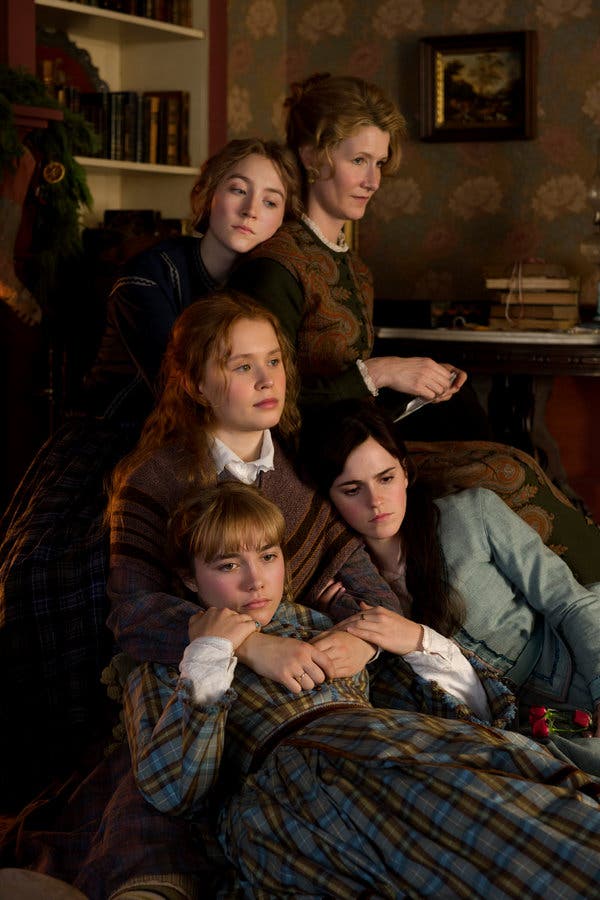
The latest adaptation of Little Women stars Saoirse Ronan (top left) as Jo March and is adapted and directed by Greta Gerwig.


I’m sure when most of you learned of Little Women about to be released, I bet most of you thought ‘not another Little Women adaptation.’ I admit I had those feelings at the start. However I was surprised to see how well it turned out.

In 1868, Jo March is a teacher in New York City. She has writing ambitions and takes her writing frequently to Mr. Dashwood who will publish her writing… under considerable editing. Her younger sister Amy is in Paris under the guidance of her elder Aunt March who never married and despises the idea of marriage. She meets her love from back home, Laurie and invites her to a party, in which he gets drunk to her dismay. Jo’s writing ambitions are kept alive by a professor named Friedrich Bhaer who supports her work but is constructive but blunt in his critiquing of her works. However Jo has to put everything on hold when she receives a letter that her younger sister Beth is sick. She has to return back home.

The film flashes back to the winter of 1861 in Massachusetts, just after the March’s father goes off to the Civil War, and the March sisters all dress up and prepare for a party where Jo meets Laurie, the grandson of their neighbor Mr. Laurence, for the first time. Just before Christmas dinner, the mother Marmee encourages the girls to give their food to their Mrs. Hummer and her group of hungry children. The girls return with a plentiful Christmas dinner thanks to Mr. Laurence and a letter from their father who just started fighting. During the trip, Jo is invited by her single elder Aunt March to come to Paris with her. Also during that winter, Amy is strapped by a teacher for her drawing in class and Laurie takes her in to his Latin lesson before her family arrives.

It’s obvious as Amy has artistic ambitions and Jo has writing ambitions, their ambitions clash, often violently. One night as Jo is out with the family for an occasion, Amy burns the notes to her novel. Jo discovers upon returning, and a violent fight ensued. However all animosity ends when on an occasion while skating, the ice breaks under Amy and is in danger of drowning. Jo saves her. Also during that winter, Mr. Laurence invites Beth to play on his piano as she reminds him of his late daughter.

Returning to 1868, Laurie apologizes to Amy for his drunken behavior the night before. He also begs Amy not to marry Fred Vaughn but marry him instead. That only makes Amy unhappy as she feels she’s ‘second to Jo’ at everything, including Laurie. Amy later rejects Fred’s proposal after she learns Laurie returned to London. Returning back to the past, there was a period of time when Marmee left to visit their father who was wounded during the War. During that time, Beth received a gift from Mr. Laurence: his piano! However she becomes ill with scarlet fever. With a weak heart, it means she might die. Her mother rushes home with their father, already recovered. All come home in time for Christmas and Amy is all better. However returning back to 1868, Amy dies shortly after Jo arrives from her train trip.

The film flashes back to the past on the day Meg is about to be married. Jo doesn’t want her to marry, feeling Meg doesn’t want to marry, but Meg reminds her Jo’s ambitions may be different from Meg’s ambitions, but they’re still her ambitions. It’s on the day of the wedding Aunt March announces she will take Amy to Paris instead of Jo. Laurie admits his feelings for Jo after the wedding, but Jo insists she doesn’t have the same feelings.

Returning back to 1868, a devastated Amy returns home with a dying Aunt March. Jo starts to wonder if she has second thoughts of her love to Laurie. She writes a letter confessing her feelings, but she soon learns Amy accepted Laurie’s proposal and rejected Fred Vaughn’s proposal. Jo later agrees with Laurie to just be friends. After she throws her letter of love to Laurie in the river, she’s inspired to write her novel about her and her sisters.

She takes the novel to Mr. Dashwood who dismisses it because he believes a lead protagonist female who marries is what sells novels. Mr. Dashwood is given a change of heart when he learns his own young daughters love the story. However he’s still skeptical and wants Jo to make the lead protagonist marry. Jo is at first against it as it is sacrilegious to her work. However she compromises, but on one condition. She gets a $500 up-front publishing payment and more than the original 5% profits promised. She starts at 10% but compromises at 6.6%. The novel Little Women is set to be published and the school Jo and her sisters wanted to open is opened in what was Aunt March’s house with Bhaer teaching children at the school.

This may be a film adapted from a novel written in 1868, but as one watches, one would be surprised to see its relevance for today. This may be a story set around the time of the US Civil War and in New England, but there are a lot of similarities to the present. One common theme is the competitiveness of sisters. We still have that. Ask any woman who comes from a family with a lot of girls! There’s also the story of women with desires and ambitions. Today’s young women have possibly the biggest ever ambitions for their future. Women may have had it rougher a century and a half ago, but it makes clear the ambitions the women shared, whether it be career ambitions, romance ambitions or artistic ambitions. We should remember from history that women had to work during the war while the men were fighting and that started suffrage groups and the first feminist groups. There’s dealing with dashing but stupid men, as seen in Laurie. There’s support and encouragement from others. There’s also the bond of the family. First of the March girls all live with their mother Marmee as they’re waiting for their father to come home from the war. Even dealing with the heartbreak of a sister that died too soon.

For those that read the novel Little Women, I feel the reason why it became so popular is that women could see mirror images of themselves in the March sisters. They shared similar goals, similar trials, similar ambitions and similar dreams. Here in the film, I felt the characters of the March girls were made to look very relatable to most young females of today.

Now Little Women has already been adapted into a film many times before. In fact this is the seventh film adaptation of the novel if you even include adaptations as far back as the silent era. To make people welcome a film adaptation of this in the present, there would have to be a freshness or a twist that works. Having it a case where Beth is one with no intentions to marry is a risky thing. I feel it did the smart thing by having it a case where Jo is the author of Little Women and trying to market it, and using the money to build the school, is a brave decision. I don’t think it does anything too sacrilegious to the book. In fact the character of Jo is to mirror that of Louisa. What the film does is actually give two alternatives of Jo: the Jo that’s common in the novel and the Jo who’s more of a reflection of Louisa’s own life and strong will when she deals with Mr. Dashwood. It’s a unique twist for Greta to make it happen. Plus instead of it defying the story, it actually adds a unique twist to it that works.

Top accolades of the film should go to director Greta Gerwig. This could have been another rehash of a commonly-adapted novel. Instead Greta adapts the story to make it very relatable to young women in today’s world and even adding a twist to the story without ruining the dignity of the original story. Gerwig bends instead of breaks. Even the constant flashes between the past and present work well. The best acting comes from Saoirse Ronan. Again she does an excellent acting performance that adds dimension and charm and speaks to the audience. Florence Pugh is also great as Amy: Jo’s most rivalrous sister and very good at stealing the show from Jo at times. Emma Watson and Eliza Scanlen are also very good as sisters Meg and Beth. Laura Dern is also good as Marmee, but her role is limited in dimension. Meryl Streep is also given a brief role as Miss March, but she delivers a character that commands your attention each time. Timothee Chalamet was good as the idiotic Laurie, but I feel he didn’t act 1860’s-ish enough.

The film also has a lot of great standout technical efforts too. There’s the costuming of Jacqueline Durran, there’s the score composition from Alexandre Desplat, the set design from Jess Gonchor and Claire Kaufman and there’s the cinematography of Yorick Le Saux.

The most recent adaptation of Little Women does the book justice, but it adds a twist at the end. I’m sure even the biggest fans of the novel will be happy how the film turns out.

Oscars 2019 Best Picture Review: Ford v. Ferrari

Ford Ferrari
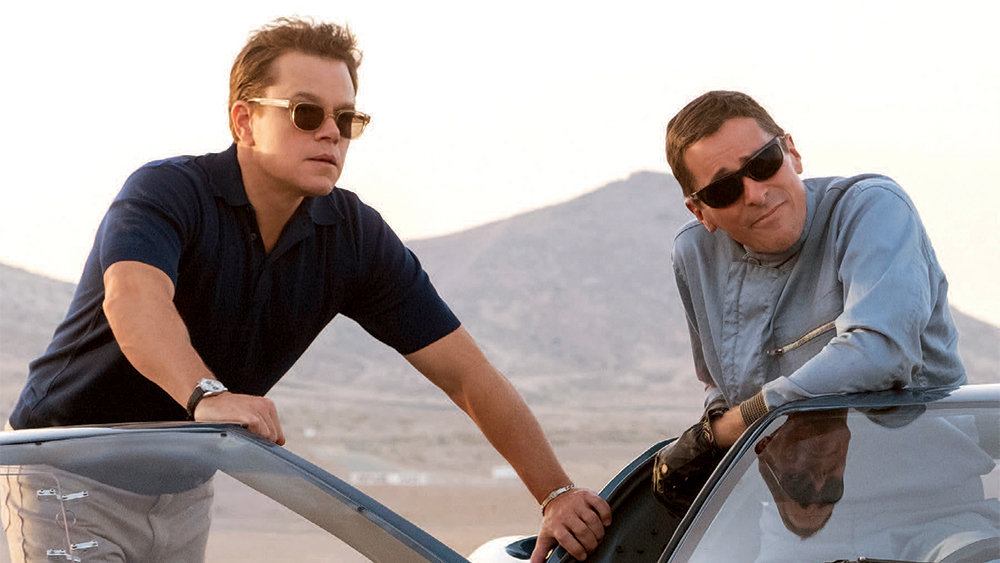
Matt Damon (left) is Carroll Shelby and Christian Bale (right) is Ken Miles in the racing drama Ford v Ferrari.

At first you’ll think Ford v Ferrari is about cars. It is, and about car racing. However, you’ll be surprised how much more it’s about.

The Ford Motor Company is going through an image issue in the mid-1960’s. For decades starting at the very beginning of the 20th Century, Ford under the genius of Henry Ford manufactured cars that completely redid the way Americans travel. Ford is still on top and currently led by Henry Ford’s grandson Henry Ford II, but it’s trying to win over younger buyers of their cars. It’s a bit harder because young people have recently developed an interest in racing cars and see Fords as their ‘parents cars.’ In 1963, Vice-President Lee Iacocca recommends to Ford they strike a merger with the cash-strapped Italian company Ferrari. It seems like a good choice as Ferrari has been a big winner in racing. In fact Ferrari cars have won the most recent 24-hours of Le Mans races since 1960.

However over at the meeting at the Ferrari office, the meeting does not go well. Enzo Ferrari tells Ford that he accepted a deal with Fiat that’s more lucrative and allows him to keep the Scuderia Ferrari racing division. In the meeting, Ferrari insults the Ford cars and Henry II as ‘not Henry Ford but the grandson of Henry Ford.’ That infuriates Henry Ford and he plans a revenge on Ferrari. The revenge is actually one to take the Ford Car company into the future. He plans to have a Ford car designed to win auto races. He hires Carroll Shelby who won the Le Mans in 1959 but had to retire because of heart problems: a problem he consistently takes pills straight out of the bottle. Since retiring racing, Shelby devoted his time to developing cars for auto racing through his company Shelby American. Carroll Shelby is close friends with 47 year-old Ken Miles: a British auto racer who is infamous for his bad temper and struggles as a mechanic with owning his garage in Los Angeles. This is a burden not only to him, but his wife Mollie and young son Peter. Especially since the IRS is on his case.

Miles is Shelby’s first pick in his Cobra team to test out his cars. Miles’ racing style and car know-how allows Shelby to make good decisions. He is always very honest with Shelby whenever he notices something that needs an improvement or when something’s a weakness. However, the choice of Ken Miles does not go well with Henry Ford, especially since he feels Miles’ personality and notorious temper doesn’t fit the Ford image. Ford elects to send Phil Hill and Bruce McLaren to the 1964 Le Mans instead. Miles predicts none of the Ford participants will win the race, and he ends up right. Once again, the race is won by a Ferrari driver.

Despite the big loss at Le Mans 1964, Shelby tries to reassure Ford that one of the Ford drivers hit 218 mph on the Ford GT40 and that made Ferrari nervous. Meanwhile it’s back to the drawing board. Shelby continues development on the Ford GT40 Mk II and he has Miles test the cars with Peter watching frequently and Ford unhappy about the arrangement. On one practice run, the brakes fail and cause the car to crash in fiery manner, which Miles is lucky to escape.

In 1966, Ford takes an extra step in the efforts of their racing cards by creating a racing division of their company and has Ford’s Senior Vice-President Leon Beebe run it. Beebe wants the program a case where Miles is not a part of any of it, not even the testing. Shelby meets up with Ford on an opportunity and offers to take him into his car. Ford accepts, and Shelby drives like a racer on the track which scares Ford almost to death. It’s right there he convinces Ford that Miles is the best man to win Le Mans. Ford agrees, but with a compromise; Miles needs to win the 24-hours At Daytona first before he can race at Le Mans. Shelby visits Miles at a street corner near his house after he’s finished grocery shopping to tell him the news. That infuriates Miles so much, he has a fist-fight with Shelby at the corner, which wife Mollie watches entertainingly.

Shelby and Miles continue with the racing and testing as Peter continues to watch and Phil Remington is the mechanic doing the fixing. Beebe is hoping Miles doesn’t win as he has puts in a second Ford entry in Daytona with NASCAR team Holdman-Moody supporting it. The Holdman-Moody team is faster at pit stops, but Shelby allows Miles to push his car to 7000 RPM. The result: Miles wins Daytona. It’s Miles’ first win in five years. Miles also has continued success later by winning the 12 Hours Of Sebring. Le Mans will be Miles’ chance to win the rare Triple Crown of endurance races.

At the 24 Hours of Le Mans in 1966, Miles is there as is Shelby, but so is Ford and Beebe. So is Enzo Ferrari in hopes of this being victory #7 for the Ferrari car. Ferrari has just released his latest racing prototype, 330 P3, and his best hopes in repeating rest with Italian driver Lorenzo Bandini. Mollie and Peter are listening to the race on the radio as Peter will be going through the race on the Le Mans racetrack he drew.

The race starts and Miles has problems on the first lap as the passenger door won’t close; he has to steer with his right hand and hold the door with his left. At the first lap, Miles alerts of the problem, which Remington fixes with a sledgehammer. Miles gets back to driving and has a lot of ground to make up. With each lap, he breaks the track record and passes numerous Ferraris as he gains ground on the leaders. However, as he’s pursuing Bandini, brake problems occur. At the pit stop, the team replaces the brake system, which infuriates Enzo Ferrari. He feels it’s against the rules, but Shelby is able to successfully convince race officials that the brake replacement is within the rules. As the race continues, Bandini is in hot pursuit by Miles, but Bandini is the last Ferrari driver in the race. As they duel again on the Mulsanne Straight, Bandini blows is engine and is out, making this the first Le Mans since 1959 Ferrari won’t win!

There’s still one more act of the drama. Three Ford cars lead the race nearing the finish with Miles leading them all. What should be a normal racing situation actually becomes a publicity opportunity for Henry Ford. He envisions all three Ford crossing the finish line simultaneously and even Beebe gets Shelby to tell Miles to slow down and set up for the opportunity. Miles is furious about this as this could put his Triple Crown in jeopardy and responds by setting more lap records, but eventually agrees with it. Miles does slow down and the three cross the finish simultaneously. However, it’s not a shared win as Ford driver McLaren is declared the winner. Shelby is mad that it ends all chances of Miles’ Triple Crown, but Miles is not down. Miles is just grateful for driving at Le Mans and giving the crowd a show.

That race would be Ken Miles’ last ever race. One day while testing a J-car, and with Shelby and Peter around, Ken crashed near a turn. It was a ball of fire and he didn’t get out. The fatal crash happened in Peter’s view. Some time later, Shelby goes to visit Mollie and Peter. He sees Peter still hurt but gives him words of comfort about his father and gives him a wrench Ken threw at Carroll years ago. As for Mollie, he just waves back from a distance after she waved to him. Then he drives off like a racer.

The film is unique as it is more than just a story about racing. It’s also how one race depended on taking a solid American business and a business legendary in making automobile travel the new norm for the USA into the future. Because of it, or maybe not exactly because of it, people still drive Fords today. Ferraris are still the most expensive sports cars today but Ford is still one of the biggest auto manufacturers in the World. The film also gave us some reminders about sports business. Businesses don’t simply look for sportspeople who win all the time. They also look for those with a marketable image. Michael Jordan may be a case where one of the best sportsmen ever becomes the most marketable ever, but it’s not always a guarantee. Seeing how a great racer like Ken Miles was shunned by everybody except by his family and those involved with Shelby American is one example. Also how Henry Ford looked at him was also unpleasant to see. I remember one person said that Henry Ford simply not liking you was enough for him to fire you. Goes to show he was cruel to whoever as he was to Ken Miles.

The story isn’t only about racing or even about a remarkable race. It’s about an auto racer whom at an age most would retire from the sport at was having the most successful year of his life. It was his love for his family. He wanted to win for them. And he especially wanted to be seen by his son as someone to be proud of. It was also of a friendship between Ken Miles and Carroll Shelby. Miles was the one person Shelby can best trust for an honest opinion about his cars, or should I say Ford’s cars. Shelby saw a lot of qualities in Miles most others overlooked. The friendship was strong, but it wasn’t without its friction as both men were temperamental and fighters. But the friendship was still very strong.

One thing about this film is that it doesn’t compromise in being an auto racing film. Being such, it knows that it has to make the audience feel like they are part of the race or they are in the driver’s seat. The camera angles as well as many of the scene shots helped greatly in creating the experience and intensity and leaving the audience at the edge of their seat. The film also does a great job of putting the audience in the races too. Despite the intimate story, the story does not forget what it’s about and makes the audience feel the moments too.

The film marks another great success for director James Mangold. This is his sixth film to earn Oscar nominations and his first ever to be nominated for Best Picture. Although he missed a Best Director nomination, he creates a great film that delivers just as good a story as it delivers in racing excitement. The story by brothers Jez and John-Henry Butterworth along with Jason Keller becomes more than a racing story with a simple plot. It’s a deep plot with three-dimensional characters and reminds the audience that the story is as much about the man, the friend, the husband and the father as it is about the racer.

The film marks another great performance for Christian Bale. Again he succeeds in getting into character and delivering a deep role. Not a false note about the character nor the father-son relationship. Matt Damon was also great as Carroll Shelby. His role may not have been as deep as Ken Miles’ but he added dimension and character to the role. The other standout of the film was Noah Jupe as Peter Miles. Noah made the father-son relationship work as well as Christian did. Other standout efforts include the cinematography from Phedon Papamichael. He knew the shots he needed for this racing film and he delivered, especially in some of the most intense scenes. The visual effects were also excellent and perfect for the film. Also the score by Marco Beltrami and Buck Sanders added to the excitement of the film.

Ford v Ferrari is the remarkable story how a driver and a race depended on the future of the Ford auto company. It’s also a story about a friendship between two racers few of us knew of. And a reminder of an overlooked great in the sport.

Oscars 2017 Best Picture Review: Lady Bird

Lady Bird
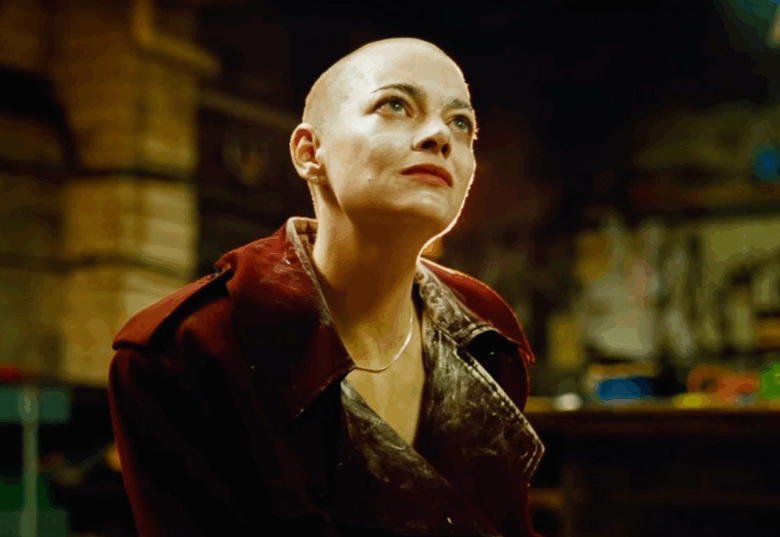
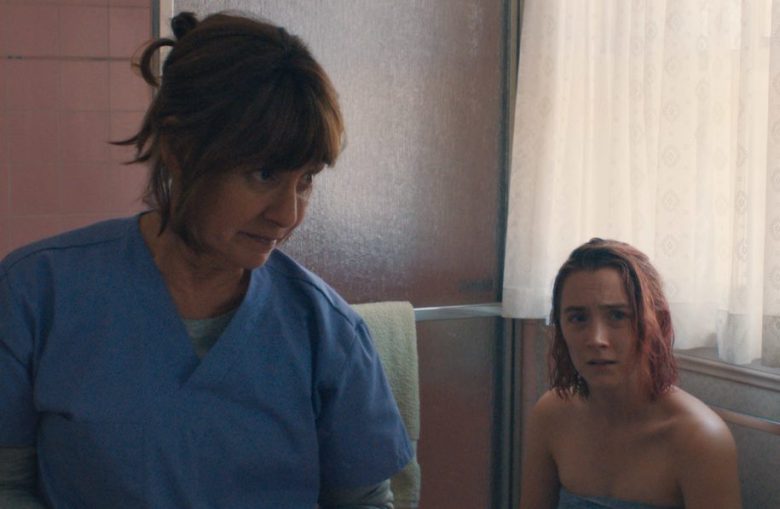
Lady Bird is about a 17 year-old girl (played by Saoirse Ronan) dealing with her life and her future, and her mother (played by Laurie Metcalf) trying to steer her in the right direction.

Lady Bird is a top contender for this year’s Academy Awards. If you’ve seen it, you can see how this film is not a typical ‘teen movie’ and actually a story with a lot packed in.

Christine McPherson is a frustrated 17 year-old girl living in Sacramento in 2002. She has a stormy relationship with her parents as well as her adoptive brother and his girlfriend. To make things more frustrating, she’s put in Catholic school for Grade 12 because there was a shooting at her public school. She appears unclear about her life direction and frequently insists that all people refer to her as ‘Lady Bird,’ including family.

Starting school, she has a close friendship with Julie Steffans whom she joins the drama club with. Through the club, she meets a sweet talented boy named Danny O’Neill. They soon start dating and they appear to be a match made in heaven until Lady Bird catches Danny in a bathroom stall kissing another boy.

Throughout her time at the school, Lady Bird develops a mean streak of rebelliousness. One minute, she’s consuming Eucharist wafers with Julie. The next, she vandalizes the nuns’ car with a sing saying “Just married to Jesus.” Another moment, she lashes out at a pro-life speaker who visits her school, which leads to a two-week suspension. This leads to a lot of friction with her friend Julie who sees her as one who does things for attention.

During this time, it all leads to a lot of friction with her mother Marion, who has a lot of high expectations for Lady Bird and her life, especially with applying for colleges. Marion often feels that Lady Bird lacks goals or appears like she doesn’t want to do anything meaningful with her life. Marion feels that way because she had to work hard to achieve. This generation gap appears to Lady Bird that her mother is an interference to her life and her own goals. To make family struggles worse, her father loses his job and is struggling with depression.

Lady Bird tries to escape from those headaches. She gets a job at a cafe where she meets Kyle Schieble, a boy from school she knows is part of a rock band. She strays away from Julie and starts hanging out with popular girl Jenna Walton. She sees opportunity after Jenna was reprimanded by the school for wearing short skirts. Thus Lady Bird bring Jenna into the ‘just married to Jesus’ prank. However none of her efforts to mix with the ‘cool kids’ works out. She lied to Jenna about her house so she can fit in, but Jenna finds the truth out. Also she agrees to have sex with Kyle, believing his claim that he’s a virgin, only to find out he’s had other girls before.

As graduation nears, things change for the better for Lady Bird. She gets a letter from a college in New York saying she’s on the waiting list, though she tells her mother she’s been accepted. She’s willing to go shopping for a prom dress with her mother. Her relationship with her brother and his girlfriend gets better as he gets a major job. On prom night, she forsakes a party with Jenna and Kyle to meet up with Julie. There, she rekindles the friendship and they go to the prom together. She even attends Danny’s school performance.

Over at the graduation party, Lady Bird admits to her mother that she was on the waiting list to the university in New York, to which Marion appears either hurt or angry. Lady Bird’s 18th birthday comes soon after. Marion has a letter written for Lady Bird to read when she’s settled in her college dorm. Then it’s the flight to New York. Marion does not talk to Lady Bird, appearing like she’s disappointed with her. Marion even drives away when Lady Bird enters the airport, but cries soon after. It’s in her first month in New York after reading the letter and a near-fatal bout of alcohol poisoning that she leaves a heartfelt message to her mother.

The biggest quality of this film is that it’s a story many people can relate to. Sure, it’s about a 17-year-old tart-tongued girl from Sacramento who’s clueless about which direction to go, but one will find themselves relating to this story. Many can watch what Lady Bird is going through at school, through her job, through falling in love, or through her stormy relationship with her mother and say: “That’s also what I went through,” or “That was my attitude at 17,” or “I knew someone like that.”

One of the things is about the character of Lady Bird is that despite her eccentricities, it also captures the essence of being a seventeen year-old well. Seventeen is that bizarre age where one is just a year away from becoming an adult. It’s a bumpy road as they are in the process of defining one’s self and making choices of what direction in life they want to pursue. We see that in all of the seventeen year-old characters in the film like Julie, the best friend who’s a social misfit, Jenna who thinks she’s too cool, Kyle who thinks he’s all that just like every rock star, and Danny who’s struggling with being gay in a conservative Catholic family.

Lady Bird is at the centre of being seventeen. The character of Lady Bird captures being 17 in a lot of its best traits, but also in some of its worst traits too. Lady Bird is all about her self-definition where she feels she has to find herself in the drama club. Lady Bird is one who also still feels social pressures despite her individualism and tries to fit in with the cool students despite leaving close friends behind. Lady Bird is also about her spiritual confusion too. She wants to be an individual and think for herself, even rebel against the Catholic Church at times, but somehow shows that she longs to believe in a god despite her rebellion.

Lady Bird is also about having that teen frustration towards her parents, especially her mother. In fact, the mother-daughter relationship between Lady Bird and Marion has to be one of the biggest elements of the film, if not the biggest. Lady Bird has desires for her life, but Marion has goals for her. Often Lady Bird feels she has to explode at Marion, but she learns to calm down and have the normal frustration a 17 year-old has to their mother. As for parent-teen relations, the film is also about Marion too. The personalities of Marion and Lady Bird are like oil and water trying to mix. Marion had her own upbringing and her own difficulties resonate in her personality and even how she raises Lady Bird. Marion feels that the best way she can steer Lady Bird down the right path is to tell her off about her misdoings and wrong directions. She has expectations for Lady Bird, but often feels she falls short. Over time, Marion becomes more accepting of Lady Bird, but she does show disappointment when she finds out Lady Bird lied about her application. That scene near the end where Marion is unemotional in the ride to the airport but cries after dropping Lady Bird off is an example of her personality.

I’m sure many people first thought that this film would be about Lady Bird Johnson. The funniest thing about this film is that there is not a single reference to the former First Lady! Not even a case of one of her classmates uttering out: “Hey Lady Bird, where’s LBJ?”

The true star of the film isn’t exactly an actor, but writer/director Greta Gerwig. After years of having an acting career of mixed results, she came up with this story that is not completely biographical. There are some similarities in Lady Bird that tie into Greta’s own teenage years, but Gerwig insists it’s its own story. Whatever the situation, Gerwig did an excellent job of constructing an entertaining story about a 17 year-old that anyone could relate to. I’m sure anyone no matter what race or gender can identify with moments in Lady Bird to moments in their own life at 17.

Additional top kudos go to Saoirse Ronan for delivering a character that is quirky, but shares a lot of common traits of teens. She does an excellent job of making the role of Lady Bird multi-dimensional. Also worthy of praise is the performance of Laurie Metcalf. She succeeds in turning this film into Marion’s story as much as it is Lady Bird’s story. She’s good at capturing the essence of the mother of a teenager both inside and out. She also does a good job of blending in Marion’s own personality traits of hardship and having a hard attitude. Laurie’s also very good at leaving out all traces of Jackie from Roseanne. Fans of the show would be surprised how different she acts here.

The actors in their supporting roles also did a great job of owning their moment. The most noticeable being Beanie Feldstein as the best friend who sometimes appears to be Lady Bird’s better half, Lucas Hedges as a boy who loves to act but is troubled by his sexuality in school, Timothee Chalamet as the teenage bad boy girls drool over but parents hate, Stephen McKinley Henderson as the priest that’s troubled on the inside, Jordan Rodrigues as the brother caught in the middle, and Tracy Letts as the father trying to make sense of it all.

Lady Bird is a quirky and humorous film about a mother-daughter relationship and the difficulties of being seventeen. Despite its off-the-wall humor, it’s also deep and touching and will resonate with the audience.