Oscars 2025 Best Picture Reviews: Part Three

My next pair of Best Picture reviews is for two films that have two nominations in common: Best Actor and Best Director. They’re also both comedies. Usually the Academy isn’t too fond of comedies but these two films are among the most heralded and have a lot of buzz for big Oscar wins. One film is directed by one of the business’ top directors and features one of the biggest leading men in the past two decades. The other is by an emerging director featuring a young actor whom many tout to be the next great one. One is set in the present and features a very political topic. The other is less about politics and more about a person seen as a joke trying to shed his skin. Here’s my look at them.
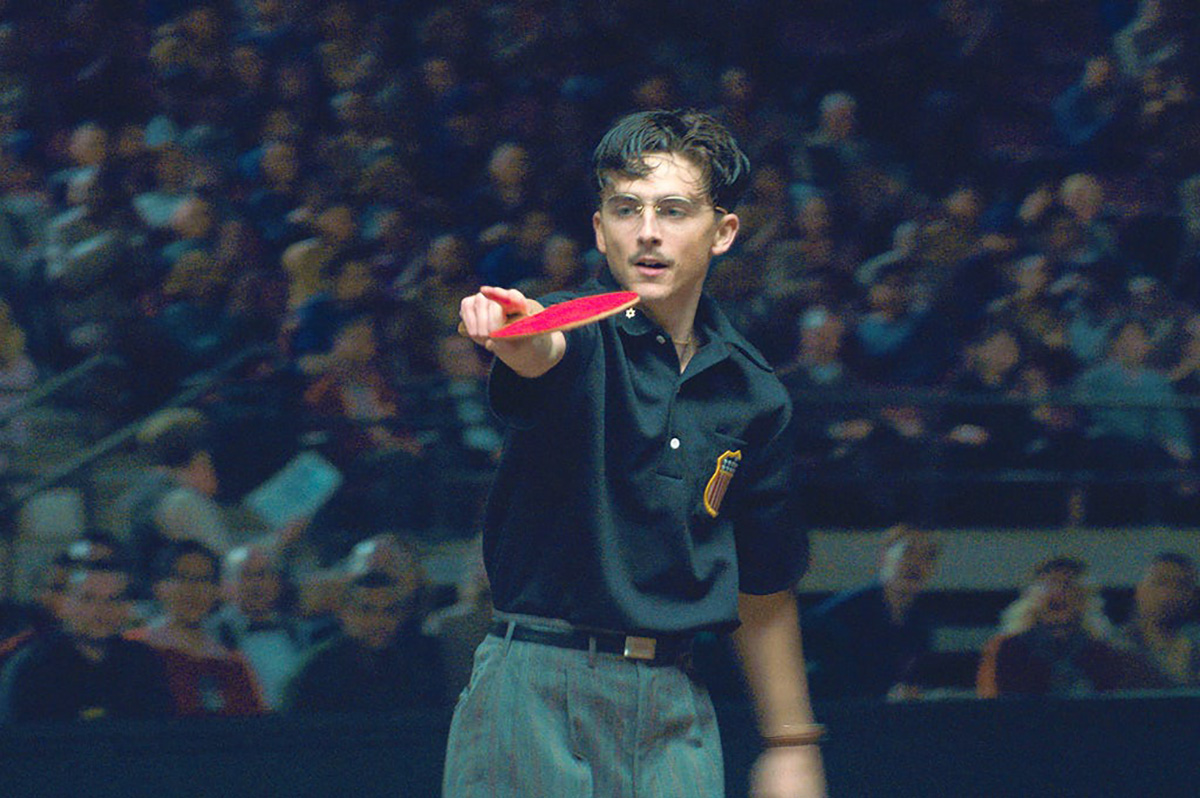
Marty Supreme

It’s interesting how this film doesn’t simply focus on a table tennis player but also the times he was in. We should keep in mind that table tennis didn’t become an Olympic sport until 1988. The International Table Tennis Foundation was founded in 1926 and in the time set in the film, the early 1950’s, it was fine for a player to be paid in their sport, unlike those in Olympic sports at the time. Despite that, we should also know that table tennis players were not paid very much for their wins back then. You could understand how the federations were hoping to use many methods to try to popularise the sport at that time. So it should not be a surprise to see Marty try to use the money from his shoe salesman job to pay for his entries, trips, and equipment, and it still wouldn’t be enough. A New York table tennis player like Marty, he would have to hustle or swindle or even use his playing skills to win gambling money to get the money he needs. That’s how it was for Marty Reisman: the table tennis player Marty Mauser is loosely based on. In his 1974 memoir The Money Player, Reisman said top table tennis players back in the day had to be ‘gamblers and smugglers.’

I’m sure at first, you’ll wonder who would watch a film about a table tennis player from the 50’s, even with Timothee Chalamet starring in it? This story is not just about a table tennis player, but a player who had a bizarre year between a key tournament and the World Championships. Basically, Marty would be regarded commonly as a loser. He lost the British Open to a Japanese player and wants to be the World Champion. His only options to help pay for his training, equipment and tournament trips is selling shoes, making a novelty act of himself touring with the Harlem Globetrotters, have his gambling matches at the bowling alley or a lot of illegal hustling. Other options come along the way with a businessman striking a deal with ping pong balls in his name and having an affair with his movie star wife to get help. Very risky indeed. Adding to the risky moves of he reunites with an already-married childhood friend, having an affair with her and making her pregnant. Then damaging a mobster’s suite and he gives him a dog to look after, which eventually becomes the property of a trigger-happy farmer. You can see how this would catch the attention of many people. All the messes Marty gets in and he has a World Championship to compete in. A loser of a person who wants to be a winner in what he lives for, a woman he loves and a baby to be. That can make for a thrill ride of a story.

The story is a unique timepiece that it takes Marty Mauser from one situation or another. It takes him into his sports world, it takes him into his world at home, it takes him into his world of opportunities made and opportunities lost, and it takes him into his world of constant troubles. The story is more about Marty trying to win for once instead of constantly being seen as a loser. It’s about a man trying to get his way out of troubles that he constantly gets himself into. It’s about the women in his life and how being the man they have an affair with will cause a lot of problems. Especially the businessman Rockwell who knows of the affair and loves seeing him humiliated publicly. The story also provides a unique filmmaking element where it’s set in a specific time period but often features music from another time period. I did not expect a film set in the 1950’s have songs from the 1980’s included in many of the scenes. That is something that is becoming more common in films. It works in this film as well.

This film is an achievement for director Josh Safdie. Almost ten years ago, the Safdie brothers, Josh and Benny, were seen as rising talents in film making with films like Good Time, Uncut Gems andFunny Pages. Back in 2024, the two brothers split to pursue their own film making directions. This film is Josh’s first film as a solo director. The story he directs and co-wrote with Ronald Bronstein takes the audience back to a time when things were both glamorous and shady and a man who can be both a hero and an anti-hero. He succeeds not only in presenting the story in a creative way, but also in an entertaining way. He succeeds in making a ping pong hustler fascinate the audience and his misdoings and potential troubles keep us intrigued. It’s an excellent accomplishment.

Making the film most come alive is actor Timothee Chalamet. Ten years ago, he was seen as yet another young rising face in the film world. The last few years, we’ve seen Chalamet become a top box office draw and deliver in challenging acting roles. This film is the latest film where he shows his acting maturity. He does a great job of making a troubled young man look comical and at the same time, get us to see him as a 3D person who just wants to be taken seriously and try to get his dignity back. Chalamet does a great job in making us root for Marty.

Of the supporting performances, Odessa A’Zion stands out as the girlfriend who is just as troubling as Marty. She will make you hate Rachel but also hope for the best for her. Also great is Kevin O’Leary as Rockwell. We may remember him from the television show Shark Tank. This is his first film role and he succeeds in making his character both likeable and hateable. You could easily see why Marty would want to get even with him. Gwyneth Paltrow is also great as the movie star Kay Stone. She succeeds in replicating the charm of a movie star of the time. Tyler Okonma, most commonly known as Tyler The Creator, does a great job in playing Wally the cab driver. With Marty having so many people he shouldn’t trust, Tyler succeeds in making Wally look like a person Marty can trust.

This film also has a lot of great technical achievements as well. Safdie and Bronstein also did the editing for the film and they deliver the right moves. Cinematographer Darius Khondji delivers a lot of great scene shots. The costuming from Miyako Bellizzi and the set designers succeed very well in physically setting the film back to the past. Composer Daniel Lopatin delivers a fitting score for the film that blends in with the songs used in the film.

Marty Supreme succeeds in being a film about a ping pong player that makes you want to see it. It also succeeds in making a hero out of a man whom you wouldn’t want to make a hero of any kind. It will make you like it.
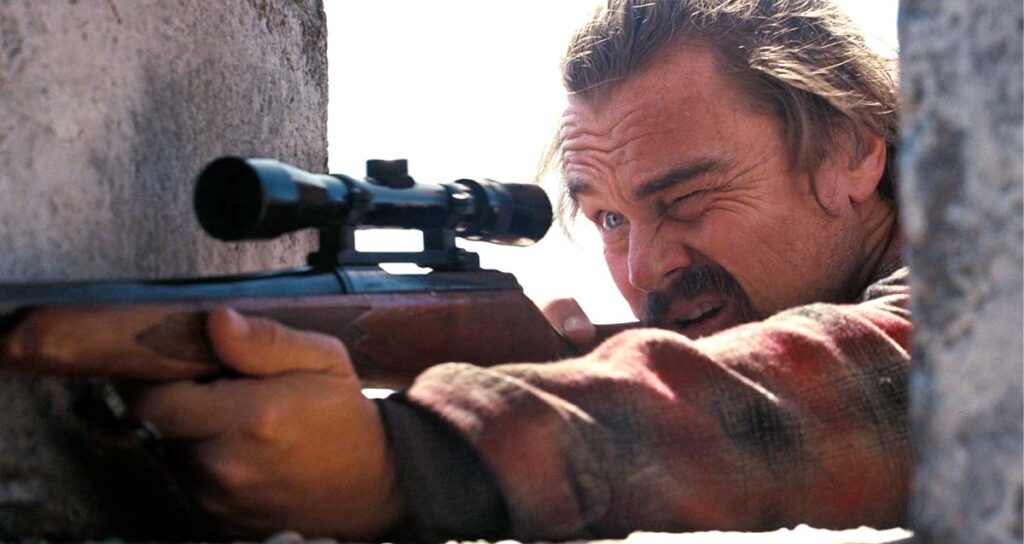
One Battle After Another

Usually around Oscar time, one can expect to have a film that’s very political as one of the top contenders. This year, there aren’t as many political films among the Best Picture contenders and those that are aren’t that heavy into the politics. This film is not only very political but it seems to come out at the right time. We see all that’s going on right now in the United States. We have a right-wing government whom many fear will threaten people’s civil liberties and their democratic system. We have the anti-immigration force ICE brutally abducting people and treating both the people they arrest and bystanders like garbage. With all this, it’s easy to understand why a film like this would come out.

In this film, it starts out as a left-wing militia rivalling the powers that be at the time and a right-wing militia. In the middle of it is a player in the left-wing group who uses sex to entice and manipulate her enemies. She bares the daughter of the white supremacist and her husband agrees to take care of her as she flees for refuge. Sixteen years later, secrets unravel, the daughter is grown, the father needs to sober up and join his group again to protect his wife’s child and the white supremacist father is trying to hunt the daughter down. When you watch all that unfolds and you learn of the scenarios, you can sense that this film has a lot to tell. Some say one can see far-left militias like the French 75 happening. We know of far-right militias. It should come as no surprise if one on the far-left arises with what’s going on now. And to have a child who’s the daughter of the racist colonel and the black revolutionary getting exposed to what happened around the time of her birth and learning she’s a target, it’s possible something like that could happen in real life. It’s a possibility Americans can’t avoid.

This film is based on a book from 1990 called Vineland where radicals from the 1960’s deal with the complexities in Ronald Reagan’s 1980’s. This film modernises the story and makes it more reflective of what is happening in our contemporary political landscape. The film will remind us of how many feared of what would happen during the Reagan Era was nothing compared to what is happening during the Trump Era. The film is also a mirror to our current society as we have all learned about extremist militias and about governments stimulating hate and racism. We’ve all seen in the recent ten years how racist groups have become more emboldened. The film creates the scenario of what would happen if a militant racist had a mixed-race child with ‘the enemy?’ How will it end up? The film makes for a drama that will have you at the edge of your seat as one hopes for the safety of Willa. The film also delivers comedy as we see Ghetto Pat become a fail of a person and try to get his life together and the racist Lockjaw face the music of what he did in surprising ways. To make such a film that’s both a drama and a comedy, that is no easy task, but it succeeds in doing it.

This film is another achievement for director/writer Paul Thomas Anderson. Hard to believe it was almost thirty years ago when he first made a name for himself with 1997’s Boogie Nights. He’s had many an acclaimed film since and this film gives him his fourth Best Director nomination. Anderson succeeds in modernising the story and making it reflective of what could happen in present-day United States. He also succeeds in making what should be an intense drama a comedy with shocker after shocker happening. It would be very difficult to make an intense story like this to be a comedy, but Anderson succeeds in achieving it.

Leading the film is Leonardo di Caprio. Delivering a character like Ghetto Pat who’s become an irresponsible father but the best father for Willa was no easy achievement. He succeeds in delivering the dramatic parts and the comedic parts in a good balance. Creating good chemistry with di Caprio is Chase Infiniti as Willa. This being her film debut performance, she shines greatly and makes the film as much a story about Willa, if not more, as it is about Ghetto Pat. Of the supporting performances, Teyana Taylor shines most as Perfidia Beverly Hills. Her performance as a modern-day Mata Hari-like soldier who knows how to take command of men steals the show and makes her character still felt long after she’s gone. Benicio del Toro is also great as Sergio in his duty to protect both Pat and Willa. Sean Penn is also great as a corrupt racist who faces a shocking truth and feels his only solution is killing Willa.

The film also features a lot of great technical achievements. Michael Bauman pulls the right moves in cinematography to deliver the best shots for telling the story. The film editing of Andy Jurgensen and the sound editing from the sound team give the right mix and the right placings to make it all work for the story for it to deliver well. The production design team does a great job in creating places like the militia hideouts and plotting scenes such as the convents. Composer Jonny Greenwood meets again for another Anderson film and delivers a score that’s fitting mixed in with popular songs from decades back.

One Battle After Another is a film that’s both a mirror to our society and an ironic comedy. It’s a story we can see happening, now but also be shocked with all that happens in the story. Not everyone will like it but it will please its crowd.

And that completes my third pair of reviews of the Best Picture nominees. Glad to see many of them are still in theatres and many of them are doing quite well this year.
Oscars 2018 Best Picture Review: Vice

Vice
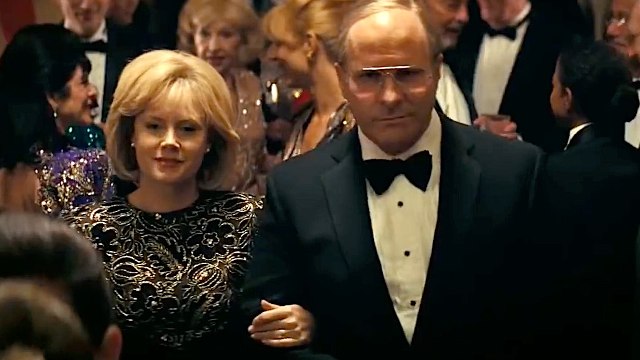
Amy Adams and Christian Bale play political power-couple Lynne and Dick Cheney in Vice.

As the world becomes more and more confusing, we tend to focus on the things that are right there in front of us. While ignoring the massive forces that actually change and shape our lives. With people working longer and longer hours, for less and less. When we do have free time, the last thing we want is complicated analysis of our government, lobbying, international trade agreements, and tax bills.

You would wonder would a film like Vice work at this time? A film about former US Vice-President Dick Cheney and his wife Lynne? A film about politics of the past? Turns out there’s more than meets the eye.

The film opens in the White House as the September 11th attacks happen. Instead of talking things out, Dick Cheney gives an immediate order. The film then flashes back to Wyoming in 1963. Dick Cheney and Lynne are married and living in Lynne’s parents’ house. Dick was originally a student at Yale University but his persistent alcoholism caused him to drop out. He takes work as an electrical lineman, but that doesn’t satisfy his in-laws at all. It’s after he gets busted by a cop for driving drunk, his second DUI, that Lynne tells Dick to clean up his life. All of this is narrated through a man named Kurt: a typical ‘middle-class’ American.

Fast forward to 1969; Republican president Richard Nixon is in the White House and Cheney has been hired as an intern. He meets a slimy scheister named Donald Rumsfeld who is Nixon’s policy advisor. Cheney works under Rumsfeld’s wing and tries to juggle family and political commitments. Cheney also overhears a conversation between Henry Kissinger and Richard Nixon about the bombing operation in Cambodia. There, Cheney learns about the true power of the executive branch. Rumsfeld’s abrasive attitude has an effect on Cheney as both distance themselves from Nixon. After Nixon resigns in the heat of the Watergate Scandal, both men are promoted: Cheney to Chief Of Staff to the new President Ford and Rumsfeld to Secretary Of Defense. Their jobs only last two years as a Democrat, Jimmy Carter, is elected president.

After leaving the Oval Office in 1977, Dick decides to pursue politics on a state level by running for the seat of House Representative for Wyoming; Wyoming is a state that has only one seat in Congress. Dick’s campaign starts on a lackluster note as he delivers an uncharismatic speech. However he soon suffers his first heart attack. While recovering in the hospital, Lynne decides to deliver speeches for him. Her speeches are more winning to the public and it succeeds in helping him to win his House seat.

Then Reagan becomes president in 1980. Cheney is able to provide influence to the agenda promoting conservative pro-business polices like promoting fossil fuels (which puts an end to Carter’s goal of more solar power) and also ending news media showing both sides of the issue, which paves the way for one-sided media like Fox News on the right and CNN on the left. In the meantime, Dick and Lynne are shocked to learn that their teenage daughter Mary is a lesbian. Nevertheless Dick agrees to be supportive to her, despite being a right-wing politician.

Dick is promoted to Secretary Of Defense during the tenure of George H. W. Bush and has a pivotal role in the Gulf War of 1991. Also during the time of the senior Bush, Dick meets his son George W. Bush, who’s a clumsy nimrod. Dick has desires to be President but after Bill Clinton is elected, he decides to retire from public life to spare the scrutiny for the sake of Mary. Cheney then becomes CEO of Haliburton while Lynne raises golden retrievers and writes books. Then starts an epilogue claiming Cheney lived the rest of his life happy and healthy with his family out of the public eye, then the credits roll.

But wait. That’s not really the end of the film. Dick is still CEO of Haliburton, but he meets with George W. Bush who’s the Governor of Texas. He wants to run for President for the 2000 Election not because he desires the power to himself, but to please his father. Cheney agrees to be his running mate provided Bush delegates ‘mundane’ executive responsibilities to him like foreign policy and energy. Things like family values issues, he doesn’t want to get involved with for the sake of Mary. Bush is elected president despite a hugely controversial election. On his first day as Vice-President, he learns Rumsfeld is back as Secretary Of Defense, and is still as slimy as he was when they first met. Added to the team of making foreign policy and defense decisions is legal counsel David Addington and Chief Of Staff Scooter Libby.

The film then returns to the 9/11 attacks and when Dick gave the immediate orders. After that, Cheney and Rumsfeld team up over initiating and presiding over the US attacks in Iraq and Afghanistan (which Kurt finds himself a soldier in both those wars). Cheney struggles with his heart attacks as the War Of Terror mounts. Nevertheless he continues through his vice-presidency which includes instituting the Unitary Executive Theory, his role in the Plame Affair, the accidental shooting of Harry Whittington (which he never apologized to him for). His actions are shown to cause thousands of deaths overseas, the rise of the Islamic State of Iraq and Syria, and record-low approval ratings upon leaving office. Rumsfeld is even forced to resign. Nobody likes him in Washington.

However it doesn’t end there. Cheney is about to die of heart failure while waiting for a new heart. Just as he says his teary goodbye to Lynne, Liz and Mary, Kurt is killed in an auto accident while jogging. Sure enough, Kurt’s heart is the perfect match for Dick’s transplant in March 2012. Then Liz runs for the House seat of Wyoming where she announces during a debate her opposition to same-sex marriage. This causes Mary to cease communication with Liz. Liz is now the Rep of Wyoming. At the end, Cheney says to us all he regrets nothing.

When you see one renowned film by a certain director, you are impressed, or interested, with what you see. When you see a second film by that director, you get a better sense of what their film making style is all about. I’ve seen The Big Short and I was very impressed with what I saw. However, when I saw Vice, I liked what I saw but throughout the film, I was thinking “Okay, I get Adam McKay’s filmmaking style.” I’ll admit throughout the film, I was seeing a lot of elements similar with what I saw in The Big Short. However I saw some new elements in Vice as well. Basically Vice told me more about Adam McKay than it did about the Cheneys. I noticed in both films, Adam likes to toy around with the story. He also likes to include references to the time of the story both in terms of the political landscape and of pop culture moments. Adam even admits that Vice is a ‘true story’ or as true as it gets since Dick is a private person.

The events in the film are events that are widely known, but are seen through the eyes and imagination of Adam McKay. The characters of the various politicians are also through McKay’s eyes, which may explain why they come off as cartoonish. It almost seems like the Cheneys are the only political figures that don’t come across as cartoon characters, despite also being portrayed as crazy and conniving. Like is Rumsfeld right? Is the top job of the Vice President to ‘wait for the president to die?’ The influence of Cheney’s decisions and politicking are shown to have a huge presence in American life and politics for many decades and have a huge influence now. Even the reason why Donald Trump became president.

However the biggest standout is having the story of Dick Cheney narrated by Kurt: a fictitious veteran of both the wars in Afghanistan and Iraq. Kurt even narrated while he’s dead and his heart is inside Cheney! I think the point of having Kurt, the average American, narrate the story is to show how much Dick’s decisions and political influence us Americans. It shows why we get such empty promises in terms of our economy, it shows why the middle-class is shrinking. It also even shows why we’re all so frustrated, we turn to dumbed-down entertainment to escape this frustration of American politics in our lives. No matter what serious issues we have to deal with in our lives, we’d rather tune out and watch another Fast And The Furious sequel. Adam demonstrates it all, through Kurt.

Kudos to Adam McKay for delivering another bizarrely-constructed but thought-provoking sad comedy. His direction and writing didn’t work as well as it did for The Big Short, but it worked well too and was very entertaining. Christian Bale was excellent as Dick Cheney. He did an excellent job in depicting both the young Dick and the older Dick Cheney too. Amy Adams also did an excellent job in depicting Lynne Cheney throughout the film and as she aged too. The film also showed how Lynne had an impact on some of Dick’s choices and how she acquired political influence of her own. Dick knew how to deliver policies and decisions, but didn’t know how to make speeches. Lynne knew how to deliver a speech. Amy did a very good job in demonstrating Lynne’s political savvy. The most surprising performance came from Sam Rockwell as George W. Bush. He was completely unrecognizable and dead-on! Steve Carell may not have delivered an accurate performance of Donald Rumsfeld but he was dead-on as the slimeball Rumsfeld as seen through McKay’s eyes. Also Jesse Plemons was an entertaining scene-stealer as Kurt. Instead of making Kurt look like something ridiculous, he made Kurt work.

Vice is a sad comedy about Dick Cheney and American politics. We both laugh and mourn how all this came to be.

VIFF 2018 Review: Edge Of The Knife (SG̲aawaay Ḵ’uuna)

Edge Knife
Tyler York plays a Haida man who’s inner monster overtakes him in Edge Of The Knife.

One of my goals each VIFF is to see a Canadian feature-length film. I had the good fortune when I went to see Edge Of The Knife. Not only is it a Canadian feature, but possibly the only feature-length film ever completely in the Haida language!

The film begins with the carving of a wooden mask and then burning it in a fire. The story begins with a meeting of two Haida families over at the Haida Gwaii in Northwestern BC in the 19th Century. It’s an annual fishing camp the families have together. Adiits’ii is the oldest son of and close to the family of Kwa and his son Gaas, who sees Adiits’ii as his mentor. Kwa’s wife Hlaaya finds his appetite for challenges to be too reckless for her son. However Adiits’ii often feels belittled by his own family. Sometimes Kwa makes him feel inferior.

In the evening, Adiits’ii decides to take Gaas onto the waters on boat. Overnight a storm hits the coast. The families fear the worst for Adiits’ii and Gaas. The next morning, the bad news. Gaas is found dead on the coast. Adiits’ii is missing and presumed dead. However Adiits’ii is still alive. He’s in a remote forested location and feels he can’t return because of the reactions from others he fears. Secluded, he becomes overtaken by a huge spirit. He transforms into a Gaagiid/Gaagiixiid — the legendary Haida Wildman  — and his behaviors become feral and even demonic. The whole family searches for Adiits’ii. Kwa and his wife are first to discover Adiits’ii, but lashes out at him wanting to kill him. The wife tries to stop him, but that leads Kwa to speak out his belief of who he thinks Gaas’ true father is. The families work to get Adiits’ii captured before they can free him from his possession. They set up a trap and they succeed. It’s at a ritualistic ceremony that involves prayer and piercing of the chest that they have to free Adiits’ii from the possession of the Gaagiixiid. The film ends with Adiits’ii carving out a mask out of wood, the very mask seen at the beginning, and burning it. At the end, we notice it’s in the image of how Adiits’ii was when possessed by the Gaagiixiid.

As far as film quality goes, this is a film I’d call great, but not excellent. The story is very good as it focuses on physical actions and unspoken feelings. However I have seen Canadian films with better dialogue and better story lines. Culturally, this is an excellent film as it captures the Haida culture and the Haida language without any interruption of the English language. Also it captures Haida mythology with excellence. It introduces us to the Gaagiixid. I am not familiar with Haida culture at all, but the film gives me a good understanding about the mythological belief of other beings. We should remember that Adiits’ii is a person with personal demons. He feels like the misfit and he feels like he’s belittled. Although he doesn’t say it, it’s obvious. After the accidental death of Gaas, it’s his guilt that gets the best of him and runs away. It’s there when he turns into the Gaagiixid. I believe the Gaagiixid is all about his personal demons and bad self-image. He had to conquer the Gaagiixid inside of him to truly come to peace with who he is and what he did.

SPOILER WARNING – Ending Revealed In This Paragraph: The film begins with the scene of a mask being carved of wood and then burned in a fire. At first one would wonder why would a person burn a mask that was just carved? Then it’s repeated at the end. At the end, you see that the mask is the image Adiits’ii had as he was fighting his inner demon. Then as you see it burn again, you see why. It’s like the final step in ending the demon inside. That scene is a good interpretation of Haida culture and Haida mythology.

This is an accomplishment of a film as far as culture goes. First off, this is a film done by not one, but two First Nations directors: Gwaii Edenshaw and Helen Haig-Brown. Secondly, this is a film done completely in the Haida language. This is a film that is essential for the language. At first, Haida was the only language the people spoke. However with the happenings of past history and with modernization, there are only twenty fluent Haida-speakers left. Even though there is educating young people inn the Haida language or even a resurgence of bringing back the language, the struggle is still there. This film does an excellent job in displaying the language and the culture of the Haida people. The idea of the film came back in 2011 by University professor Leonie Sandercock. In making the film, those involved received a Partnership Development Grant of $200,000 from the Social Sciences and Humanities Research Council, so even arts funds knew of the importance of this film to be made. Also to create a time before European settlers arrived really involved a lot of effort.

Also the film has been widely welcomed and celebrated by the Haida peoples and other First Nations peoples of BC. I remember a couple of times during the VIFF, I was waiting to see a film after Edge Of The Knife over at the theatre I was to attend. Each time I was in line, I was given the news that there would be a 30-40 minute delay of the start of my film. As Edge Of The Knife finished, I saw more than just people exiting. I saw some dressed in traditional First Nations costume. Some even brought drums and performed a song of celebration. When I saw that, I felt I had to see Edge Of The Knife when I had the chance. This was more than just something. I’m glad I did.

Gwaii Edenshaw and Helen Haig-Brown did an excellent job in directing and creating a world far back in the past and appear authentic. The script by Gwaai and Jaalen Edenshaw, Graham Richard and Sandercock was not too intense in terms of dialogue, but it does present a very good story that’s more about emotions and image-based. Tyler York did a very good job as Adiits’ii. His acting was more about what was inside of him rather than what he said. Willy Russ almost stole the show as Kwa. The actors involved are more of a Haida community rather than actors by profession. All did a very good job. The film was light on special effects, but the effects fit the film and the scenes right. It didn’t need more effects than necessary.

Edge Of The Knife may not be the best Canadian film I’ve seen or even the best of subject of First Nations peoples. However this is a very culturally-important film that deserves to be shown. It also tells its story in both an entertaining and mesmerizing way. Definitely worth seeing.