VIFF 2024 Review: Bird

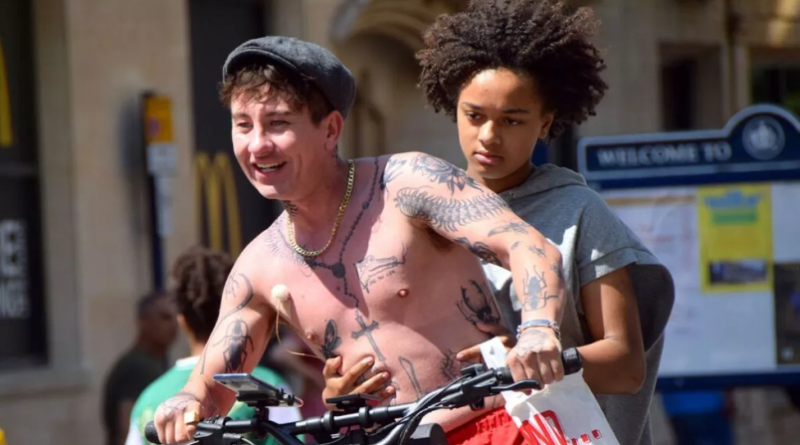
Young Bailey (played by Nykiya Adams, right) is a 12 year-old girl seeking her own identity and away from her father (played by Barry Keoghan) in Bird.

The first film I saw at 2024’s Vancouver Film Festival was Bird. It’s the latest film from renowned British director Andrea Arnold. How well does it make for a film?

Bailey is a 12 year-old girl living in the slums of North Kent. Despite living in bad conditions, she likes taking pictures and videos whenever she notices beauty. Especially beauty in nature. Bailey lives in a slummy house with her father Bug. Bug is what you’d call a ‘kidult.’ He even takes her home from school on a scooter. One day Debs, a woman his father only dated briefly, moves into the home. She’s also shocked and unhappy to find out he wants to marry her. She’s so unhappy with it, she won’t wear the pink outfit her father wants her to wear at the wedding. That leads Bug to get abusive on her, and Bailey runs off.

Bailey runs a long distance away from her neighborhood. She doesn’t only want to be away from her father but everyone she knows. Bailey finds herself in a field where horses are raised. It’s the perfect place to be alone and be captivated by nature. Suddenly she sees a stranger in the field. It’s a man in a dress who dances around like a crazy you’d see on the street. When Bailey comes face to face with him, she wants to avoid him. She later learns this man calls himself Bird and he has a message to deliver.

Bailey returns to her neighborhood but wants to avoid her father. She wants to stay at the flat with her half-brother Hunter and his girlfriend. Hunter is friendlier to Bailey than her father, but she can already tell Hunter is a bad enough influence. She tries to meet up with school friends but learns some are engaging in gang activities. She noticed another thing too. Bird is in her neighborhood. She meets face to face with him by chance. She also sees Bird from Hunter’s apartment. Bird stands atop the porch of the nearby apartment, just standing on top. She fears Bird might jump.

Over time, Bird and Bailey develop a friendship. She also learns that Bird is trying to look for his long-estranged father. One night Bailey decides to spend some time at her mother’s place after watching Bug snort cocaine. She happily meets with her younger step-siblings but learns that her mother’s new boyfriend is extremely violent and very threatening. It’s after he threatens Bailey that she has to run out.

Over time, things get better for Bailey. On the morning Bailey menstruates for the first time, Debs is able to talk to her about menstruating and give her some tampons. Another day, Bailey is able to take her younger siblings from her mother’s side out to the beach. She makes a great mother figure. Also while she herself is in the water, she finds herself in a moment of freedom.

Bug brings Bailey and all of his friends for a wedding rehearsal. Bailey is uncomfortable there. That day, she agrees to help Bird fulfil his goal of meeting face to face with his estranged father. It will be a long bus ride to a town very far out but Bailey is willing to help him. Once in town, Bailey and Bird finally get to the location of Bird’s written message. The father doesn’t notice Bird. Bailey steps in to insist to the man who has a new wife that Bird is his long-lost son.

The two return back to Kent appearing disappointed things didn’t go the way it should have. Bailey and Bird spend the night over at their mother’s place, hoping her violent boyfriend is not there. Unfortunately, he is there during the night and he assaults her mother. When Bird steps in, Bird becomes his latest punching bag. The fight escalates that it goes outdoors. Bailey notices something shocking. Bird sprouts feathers, like a bird. When the man attempts to assault Bird, Bird fights back like a bird! After beating the man unconscious, Bird flies off with the man in his claws like a bird carrying their prey. Bailey is shocked by it all.

Months later, Bug marries Debs in a court. Bailey is there in the pink outfit. That evening, the wedding happens at a bar consisting of singing performances from Bug and his friends. As Bailey takes a break from the events, she notices Bird paid a visit, wings and all. It’s a meeting of parting where he thanks Bailey for her help and bids farewell. The ending sends a message of a new beginning.

One of the focuses of the story is the difficulty of a 12 year-old girl trying to find herself. Being twelve is not easy as one is going from child to teenager. It has its own difficulties for girls. Imagine being a 12 year-old mixed race girl living in one of England’s ugliest slums and with toxic family situations and a neighborhood full of bad influences. You can imagine it would be difficult. A girl like Bailey would definitely be prone to the frustrations. Despite that, Bailey and her imaginative thinking are sources that can lead to something hopeful in the future. In fact that brief scene at the beginning of the cruise ship passing by being seen from her window is one sign Bailey is sensing something is better for her out there.

It’s her belief in something better and something hopeful in the future that keeps her going. It’s also her meeting with Bird that she helps to develop a stronger sense of herself. It’s very hard to believe that meeting with an eccentric like Bird would be the best thing for her. It’s through Bird that she’s able to discover that better things for her are out there. It’s as she helps Bird with his situation with his father that she’s able to be a stronger figure to her own family. She’s also able to show she’s a loyal friend by being determined to help Bird reunite with her father and it’s through her friendship with Bird she learns things about herself she never knew.. To think it was a chance meeting of two strangers who would be the least likely to form a friendship that turned out to be the best thing for Bailey. One who uses her imagination for her pictures and videos and the other who lives and dances out his imagination. It’s as Bird gains his wings, Bailey is able get her sense of self. Also the end of the film is both a moment of goodbye and a passing of the torch.

The story plays out well. It keeps making Bailey the prime source of the story, as it should, and it showcases her growth and her maturity over the time. It also showcases the troubles and the difficulties she goes through in both her personal life and the lives surrounding those she associates with. There are a few times when the story isn’t as steady or scenes not as fluid as it should be. Sometimes the story itself can be made confusing. Nevertheless it does all come together at the end. It makes sense that Bailey’s growth coincides with the engagement of Bug and Debs and ends with their marriage. The addition of Bird as an influence on her life also adds to the story of Bailey’s growth.

This is a good unique film from British director Andrea Arnold. Arnold first burst on the scene 20 year ago when her short film ‘Wasp’ won the Oscar for Best Live-Action Short Film. Since then, her films like Fish Tank, Wuthering Heights and American Honey have caught a lot of attention. Her latest film which she both writes and directs is a story that has a lot of ironies and twists, but it’s also smart and touching. It’s a story that shows Bailey for her uniqueness and for her common traits as a 12 year-old girl. It’s not that often a filmmaker is willing to do such a story. It’s great to see Andrea do it. Making the story work is young newcomer Nykiya Adams. This is her first acting role and having a fish actress in the role of Bailey works for the film. Nykiya did a great job in holding the film together as she did in her role as Bailey. Barry Keoghan did a great job in his role as Bug. It’s hard to picture Barry playing a thug from the slums but he masters the role and plays Bug well with his stupidities and vulnerabilities. Also excellent is Franz Rogowski. He played a believable eccentric with animalistic type of behaviors and kept Bird from looking wooden. The music added in the film also added to the quality of the film. It helped with the angry energy at times.

Bird is a unique coming-of-age story of a twelve year-long girl from the slums and her friendship with a person she’d be unlikely to befriend. It’s a unique story of a chance encounter that changes her forever.

VIFF Returns For 2024

The Vancouver International Film Festival returned for 2024 to make it their 43rd annual festival. As has been the case since the COVID pandemic, it’s an eleven day festival that started on Thursday the 26th and will end on Sunday October 6th. The Festival will not only show films but there will be live music performances as part of VIFF Live, talks about film insiders and technical people with VIFF Talks, forums as part of VIFF Industry, musical discussions as part of VIFF Amp, forums in skill development with VIFF Labs and promotion of works from promising filmmakers with VIFF Catalyst.

For my volunteer duties, I return to working for the International Village. I’m back to doing common usher duties like scanning tickets, line control, ushering to seats, whatever the venue managers call for me to do. Once again, I have my VIFF goals of hoping to see at least ten films including one shorts segment, one feature-length Canadian film and nation’s official entry in the Best International Feature Film for the upcoming Oscar race. I’ll have no problem with the endurance of watching films. I saw one the day it opened. I may have a problem posting all my reviews in a timely manner. You all saw how long it took me last year. The good news is I have no post-secondary online course so you will get the reviews a lot faster. Not exactly in time before the Festival ends, but enough ample time.

As for films, the Festival will be showing a total of 150 feature-length films and short films during its run. Theatres showcasing the films for this Festival include the VanCity theatre (the main theatre only), the International Village, Rio Theatre, Vancouver Playhouse Theatre, Centre for the Performing Arts, Cinematheque, SFU Goldthorp Theatre and new for the VIFF this year, a single screen from the Fifth Avenue Cinema. And now for the highlights of this year’s VIFF:

OPENING GALA: Ari’s Theme – This year’s VIFF opens with a documentary, and of provincial subject matter. It’s of Victoria composer Ari Kinarthy who won’t let his muscular spinal atrophy destroy the artist inside of him and is determined to compose his work. Eight members of the Vancouver Symphony Orchestra are expected to be live and perform a live score to the film.

CLOSING GALA: Emilia Perez – France’s official entry in the Best International Feature Film category for the Oscar race. The director of 2009’s Une Prophete presents a story of a Mexican former drug lord who is on trial for the crimes just after completing gender reassignment surgery. Zoe Saldana plays the lawyer assigned to defend her. Her performance won her a Cannes Film Festival prize for acting.

All We Imagine As Light – This film from India won the Grand Prix Award at Cannes. It tells of three nurses and the difficulties of their lives. One is a workaholic who works to forget about her estranged husband. Another has a Muslim boyfriend and avoids her parents as they want her with a Hindi man. The other is a widow who faces being thrown out on the streets because of land developments. Three different stories in which many women can see themselves in.

Anora – This year’s Palme d’Or winner in Cannes! A bizarre story of a Las Vegas stripper winning both the affection and eventual love of a spoiled Russian son of an oligarch. When the parents learn of the romance, all hell will break loose. Sean Baker, the director of The Florida Project and Red Rocket, promises something unpredictable!

Bird – The latest film from Andrea Arnold. A young 12 year-old girl named Bailey lives in one of England’s shabbiest slums. She has to deal with a childish father, a soon-to-be-stepmother she hardly knows, a half-brother part of a gang and her mother’s new abusive boyfriend. Can an eccentric stranger she just met one day change things for the better for her?

Can I Get A Witness? – A folksy but futuristic Canadian film. Starring Sandra Oh as the mother, it’s a story of a young woman whom, after the brink of an environmental crisis, tries to work with her colleague on a worldwide mandate to protect all life.

Conclave – From the director of the 2022 remake of All Quiet On The Western Front comes a story where a bishop in the Vatican (played by Ralph Fiennes) outlays the plan to have a new Pope elected after the passing of the recent one. This leads to factions, conspiracies and a squabble among seven bishops that leads to disaster.

The End – Joshua Oppenheimer directs a tragic drama that’s also a musical. It stars Michael Shannon, Tida Swindon and George MacKay and it’s about a selfish greedy family whom, two decades after the world’s environmental collapse, have selfish plans from outside their bunker but threaten to have it exposed by an outsider.

The Girl With The Needle – Denmark’s official entry in the Oscar race for the International Feature category. Based on a story of one of Denmark’s most notorious serial killers, a young seamstress left lonely after World War I has an affair with the owner of a clothing factory. It makes things worse and she turns to a man who offers ‘services in need.’

I’m Still Here – Brazil’s entry into the Oscar race. From renowned director Walter Salles comes a story of a Brazilian congressman and his family in the 1970’s while Brazil was under a dictatorship. He tries to prevent his teenage daughters form entering politics but that leads to trouble as he is picked up by armed man one morning. That could tear his family apart.

My Favorite Cake – The winner of the FIPRESCI Prize at the Berlin Film Festival. It tells the story of a widowed 70 year-old woman in Tehran who’s going through empty nest syndrome since her daughters moved out. One day, she listens into a conversation of late-in-life romance and soon finds herself fancying a cab driver.

Nightbitch – It’s directed by Marielle Heller and stars Amy Adams. A woman in the suburbs finds her life mundane having to tend her toddler and her husband leaving her alone as he travels city to city for his work. Soon she becomes more dog-like both physically and mentally over time and even attracts all the other dogs of the neighborhood.

The Piano Lesson -The third August Wilson play Denzel Washington brings to the big screen, it’s directed by son Malcolm and stars son John David. A man reunites with his sister in Pittsburgh in the 1930’s with a friend, a gift of a truckload of watermelons and a plan to sell the family piano she owns. The sister, who considers it a family heirloom, refuses to have any of it.

Rumors – A three-director collaboration that includes Guy Maddin. It tells of a G& meeting which world leaders assemble to create a first statement on the current crisis, in a remote gazebo isolated from the rest of the world. Their setbacks are dealing with a vain but incompetent Prime Minister of Canada and mysterious problems coming to light. If it’s from Guy Maddin, you know it will be out of the ordinary and unforgettable.

The Seed Of The Sacred Fig – Germany’s official entry in the Oscar race. It tells of an Iranian man who’s a newly promoted private investigator for the government in the early days of the feminist rebellion of 2022. His handgun goes missing, but neither his wife nor his two daughters will confess to having it. As the protests grow in size, Iman’s anger and paranoia grows and it threatens his relationship with his family.

The Tragically Hip: No Dress Rehearsal – Since they formed 40 years ago, The Tragically Hip have become one of Canada’s most beloved rock bands. This documentary directed by former member Mike Downie promises to showcase the Hip as you’ve never seen them or known them before with unseen backstage footage and rehearsal footage.

And there you go. That is my preview for this year’s Vancouver International Film Festival. I hope for this to be another ‘VIFFtastic’ year!

VIFF 2023 Wrap-Up: A Very Late Wrap-Up

DISCLAIMER: As most of you know, the Vancouver International Film Festival ended on Sunday, October 8th. That’s the day before Canadian thanksgiving. Also many of my more common readers know I usually delay my VIFF wrap-up until November. The reason why this year’s wrap-up comes so late is because, like Angela in my last VIFF review, I was overworked. Not completely because of jobs but also because of an online learning course that consisted of a lot of assignments. In fact I had only a brief wrap-up at the end of my last VIFF film review in mind at first. When I saw I wrote an awful lot of a review, it was then I felt it was worth its own separate blog.

VIFF 2023 ended well. Hundreds of films from around the world were shown. They came in a wide variety of genres and lengths and formats. They ranged from Canadian to French to Asian to African, from dramas to documentaries to comedies to horror, from three minutes to 3 1/2 hours, and from theatrical films to virtual films and virtual arts.

This year, I only saw twelve films at the Festival. Actually it’s a better number than I first thought I would do. In the past, I wouldn’t have problems taking time off from my job and seeing some films in that time. This year, time was harder to book off and I did a single weekday off. Despite that, I still had an enjoyable time. I made a lot of effort to see films as often as I could during whatever free time I could muster. When I was volunteering, I was lucky to see three films during my volunteer shifts. More on my volunteering later.

This year I was successful in fulfilling my three main VIFF goals. I saw a shorts segment consisting of eight Canadian films. The Best Foreign Language Film Oscar entries I saw were two films but they were my first VIFF film and my last VIFF film. I saw a Canadian feature, despite it being animated. I don’t have a problem with that. I support Canadian film of any genre. I went to a VR exhibit. This was my first in five years. A lot has changed with VR film and the exhibit even included interactive art. I also saw two Altered States films. Both were over the top and fit the format well of what VIFF picks for an Altered States film. To my surprise, I saw more documentaries than usual. I saw five this year. They were all a case of a film being available while I was free. If I didn’t enjoy them, I did find them all intriguing. The most bizarre film I saw ended up being a Christmas horror film. Since Christmas is coming up, should I watch it again?

As for volunteering, I was back at the International Village. This year, they asked volunteers to do a minimum of three shifts. I started out with three but the number eventually grew to five. I first did two shifts on the opening weekend. One thing they introduced this year was the Platinum Lounge: a section at the theatre where Platinum Pass holders can relax before their show. I did some supervision there. Other duties I did was line control and ticket scanning. I also did a Thursday morning show that was slated exclusively as a showing for high schools. It went well, but it was a bit of a headache with some students playing games and straying off. Teenagers never change! Sunday became a case I was willing to combine two volunteer shifts into one: seven straight hours of volunteering! I didn’t mind as long as I can end the last day of VIFF seeing a film. Funny how the last film I saw at the VIFF wasn’t the last VIFF film to start but the last VIFF film to end. Film is a funny art!

Some of you may wonder who the Award Winners are. For those that care, here’s a list of the Award Winners of the 2023 Vancouver International Film Festival. There were jury award categories and audience awards for the VIFF categories of movies:

JURIED AWARD WINNERS

Best Canadian Film:
Fitting In (dir. Molly McGlynn)

Best Canadian Documentary:
Someone Lives Here (dir. Zachary Russell)

Best Canadian Short:
Katshinau (dirs. Julien G. Marcotte and Jani Bellefleur-Kaltush)

Emerging Canadian Director:
-Anna Fahr for Valley of Exile

Best BC Film:
WaaPaKe (dir. Jules Arita Koostachin)

Vanguard Award:
Animal (dir. Sofia Exarchou)

AUDIENCE AWARDS

Galas and Special Presentations:
-Monster (dir. Hirokazu Kore-eda)

Showcase:
The Monk and The Gun (dir. Pawo Choyning Dorji)

Panorama:
Irena’s Vow (dir. Louise Archambault)

Vanguard:
Let Me Go (dir. Maxime Rappaz)

Northern Lights:
Altamaako’tamisskapi Natosi: Before The Sun (dir. Banchi Hanuse)

Insights:
Physician, Heal Thyself (dir. Asher Penn)

Spectrum:
Asog (dir. Sean Devlin)

Portraits:
Call Me Dancer (dirs. Leslie Shampaine and Pip Gilmour)

Altered States:
Humanist Vampire Seeking Consenting Suicidal Person (dir. Ariane Louis-Seize)

And there you have it. That does it for my look at VIFF 2023. For those wondering when VIFF 2024 will be, September 26th to October 6th. I plan to be back and volunteering then.

VIFF 2023 Review: Do Not Expect Too Much From The End Of The World (Nu astepta prea mult de la sfârsitul lumii)

Ilinca Manolache stars as Angela: a Romanian business executive who represents capitalism in Romania well in all its strengths and flaws in Do Not Expect Too Much From The End Of The World.

My VIFF experience for 2023 ended with the Romanian film Do Not Expect Too Much From The End Of The World. It was a good choice to end the film festival with, but not a really great choice. It has a point to deliver, but makes it in a way many will miss it.

The film begins with Angela, a young woman in Bucharest. Angela has a good-status job as an entertainment executive. Actually her job works her long hours and pays her not enough. Her job also interferes with her chances in getting a stable love life. She gets an income enhancement with her social media side gig. Angela is also a TikTok influencer named Bobita: a misogynist “alpha-male” type that Angela creates with a smartphone filter. Right into the beginning, Angela is part of the latest production job. It’s for a work safety video where they’re to have a victim tell their story. The decision of which story to use and the shooting of the video will have to be completed in two days. In addition, the head of the production company from Austria will be flying in tonight for this project and Angela is to pick her up.

Angela’s own life somewhat mirrors the life of another Angela. A fictional Angela from a 1981 Romanian film called Angela Moves On. In that film, the Angela is a cab driver in the era of Communism with Romania being part of the Eastern Bloc. Angela gets flack from her male co-workers of what a woman’s job should be. Her drives down the streets of Bucharest are relatively easy compared to the packed traffic present-day Angela gets. Angela presses on and hopes to find love on the job. She saw a chance in a man she picked up from the airport.

These two days come by with Angela at full force. The company has to pick and choose the person and family to do the video with. The story of the person’s accident has to fit the film’s narrative and the person needs to have a likeable personality. Meanwhile Angela tries to juggle work, a conference call with the video director Austrian Doris Goethe, meeting with her family, meeting with the actress who played Angela in Angela Moves On, shooting more Bobita videos (where Bobita’s phoniness is slowly given away video by video), entertaining Uwe Boll (and even shooting a Bobita video with him), dating a man and losing out, and driving Goethe after she arrives from Vienna. During the drive, Angela gives Goethe a good history lesson of Romania with its Communist past and present problems like the single-lane highway of death.

Then finally the safety video is being shot. They chose a family man who was left wheelchair bound and film him with his family posed in front of the area where it happened. The video goes through many takes and many style changes. In that time, Angela is there looking after things. She does her Bobita videos during the breaks and everyone can hear her. During shooting, a sudden fact is discovered but they continue on. The producers deal with it so they can get the story to fit the film’s narrative, much to the discomfort of the man and his family. The producers have it ‘stylized’ with the man telling his story with message cards.

Sometimes when watching this film, you think director/writer Radu Jude has a lot to say not simply about capitalism in Romania, but of Romania as a whole. On this film, we see pieces of Angela Moves On where it unintentionally showcases the hardships of Romanian life under the Communist Ceaucescu regime. Even how one of the male leads had his Hungarian name “Romanianized” may send a message. Now we have the Angela in Post-Revolution capitalist Romania. She works 16-hour days, she takes a side-hustle where she does this misogynist character on TikTok, the agency she works for tries to stylize the safety video. Romania has a sharp divide between the wealthy and the impoverished; the biggest in the EU. You can’t help but think that’s the statement Jude intends to have made in the film. To show that Romania had it the worst during the days of the Iron Curtain, but made to look nice, and now has it among the worst in the capitalist era of Eastern Europe.

The thing about this film is that it has a lot to say, but it doesn’t appear to have a consistent beginning, middle and end. Sure the film shows two days in the work life of present Angela, but it often appears there’s a story about to hatch. Yes, it shows her doing her Bobita videos and it shows scenes of the truth that can be given away any minute, but it doesn’t, leaving the viewer to wonder what’s next. Even the two long scenes — of most of the memorials of crash victims on that “highway of death” and of the 40-minute scene of the shooting of the safety video at the end — can leave one confused about the whole story. I’ve seen films before where it appears to be a magnifying glass on a person’s life, but even others I saw had a consistent flow from start to finish where everything connects solidly. This appears not to come together as solidly and fluidly. Either that or this film was not meant to be the film most of us expect. I’m sure Jude had his intentions for what the film is supposed to be.

This is actually the very first work I’ve seen from Radu Jude. His works have earned him a reputation as one of Romania’s best modern-day directors. It all started with the 2007 short The Happiest Girl In The World and it paved his reputation in his works to come. His breakthrough in feature-length films came in 2015 with Aferim! which became his first film Romania would enter in the Oscar category of Best International Feature Film. His past films have focused on a lot of themes in Romania’s history and Romania’s present. Even a film like his previous one — Bad Luck Banging Or Loony Porn — have elements of Romania’s past history despite the situation not intended to be political.

This film is the fourth Jude film Romania has entered into this Oscar category. This film has something in common with his two previous films: a very long title. Another thing it has in common is elements to do about Romania. The unique thing is how it does Romania past and Romania present. We have Angela the taxi driver in 1981 under Ceaucescu-era Communism and in color. We have modern-day Angela in the days of democracy, capitalism and the EU, but shown in black and white. We have Angela from 1981 dealing with male chauvinism in her job and trying to find the right man. We have modern-day Angela in a business that has a mix of men and women, but is overworked and gets her misogyny from the male drivers on the busy streets. It’s possible she uses the misogyny she gets for her Bobita videos. It’s a film that has a lot to say. Even if the film doesn’t make complete sense, it still leaves you with a lot to think about and definitely things Romania can identify with.

I feel the best thing about the film is the acting from Ilinca Manolache. If you’ve seen this film, this film seems less like a dramatic film and more like a documentary or a reality show. Manolache is successful in making this look like a natural situation instead of something acted out. She’s successful in making the actions and moments of Angela low key and happening in front of us as if this is real life. She’s also good in doing the Bobita parts in the humorous nature it’s intended to be and showing the irony of Bobita’s misogynist talk.

This film has garnered additional acclaim besides its Oscar submission status. It won the Best Film award at the Gijon Film Festival and at the Locarno Film Festival, it won the Special Jury Prize for international film and was also nominated in the Best Film category. Other nominations for this film include the Fiction Feature category for the Montclair Film Festival and the Gold Hugo award for Best Feature at the Chicago Film Festival.

Do Not Expect Too Much From The End Of The World is the type of film where you anticipate it to end a certain way, but it ends in a way different than one would expect. It’s a film that has a statement to make, but doesn’t do a good job of making its statement made well or clear. Despite its flaws, it is a film that will get you thinking.

And there you go! That is my look at the films of the 2023 Vancouver International Film Festival. I know it was later than usual but I figured that with these films bound to come out at a later time, reviews for them all are still worth posting. Even my wrap-up blog will come very soon.

VIFF 2023 Review: The Wait (La Espera)

Victor Clavijo stars as a Spanish marksman/farmer who seems to be possessed by something supernatural in The Wait.

With the VIFF ending the following day (October 8th) and Halloween about to come, it’s natural to want to see at least one more Altered States film. Though the Spanish film The Wait doesn’t have your common Halloween scariness, it does give you the fear and suspense you look for in such a film.

It is 1973 in the Andalusian countryside. A hunter named Eladio agrees to supervise the hunting grounds of land belonging to Don Francisco. He supervises one of ten grounds Don Francisco owns. He brings his wife Marcia and his son Floren to live on the land, but soon learns the land he supervises is quite desolate. He’s able to take Floren practice shooting, but Marcia is unhappy. She lets him know how much he let her down.

As his service comes close to reaching three years, Don Carlos, Don Francisco’s second in command, offers him a bribe to add an additional three stands to the area. Eladio is reluctant but Marcia wants him to accept since money has been scarce with his duty. Eladio accepts, unaware of what lays ahead. One day, Eladio takes Floren out practice shooting. Other marksmen are on the site. Out of nowhere, a bullet hits Floren in the head. Eladio is heartbroken but Marcia is devastated. She soon commits suicide. How can all these troubles happen to Eladio all at once?

Eladio soon becomes an alcoholic and finds himself in a violent nature he can’t control. The dog also shows moments of violent behavior. Eladio also notices bizarre images during his drunken hallucinations like slaughtered chickens, a goat’s head, and a human toenail in his stew. He sees Marcia in one of his hallucinations, but she curses him. Another hallucination, he sees Floren. He hopes to reunite, but instead sees Floren bloodied from the accident and reminds Eladio of the wrong he did and he will pay.

As the days get closer to the end of the lease, Eladio is frustrated and he goes to the mansion of Don Francisco. He notices something disturbing. He first sees a photograph of a family from three years ago on the land, and another photograph of another family three years earlier on that same land, and another and another. Eladio is scared. Is he part of a trap? Were those families in the photo also subject to that very curse Eladio is going through and claimed his family?

The day finally comes. It’s the end of the three years. Eladio faces up to Don Francisco at his mansion, but he also faces up to Don Carlos, Marcia, Floren and all the families of the other men who accepted that same bribe before. Their fate for what they accepted now becomes Eladio’s. The ending will have you at the edge of your seat.

This is a film that lets the suspense build slowly. The film starts as a man who made a bad purchase on the land and his wife lets him know it. Then the bribe starts the series of misfortunes such as the son’s accidental shooting death and the wife’s suicide. They all seem tragic, but it doesn’t seem like there’s a curse. It’s only until a short time before the lease is set to expire we learn there is a curse. Eladio senses it before we do and unravels it before our eyes. This is a curse that has plagued the families who also leased the land before him. It seems as though Don Francisco has this cursed land to set up families for their tragic fate and we learn about it as Eladio slowly learns about it. Don Francisco even told him about treating the land like family and if one betrays family, he will pay. It seems as though that contract from Don Francisco isn’t simply a three-year lease on the land but something that can be a loyalty test that could end up a “death warrant.” Anything that should be labeled a “death warrant” only kills the individual, but this is something that robs Eladio of prosperity, his family, his possessions, his colleagues and eventually himself. Just like those that leased the land before him! Did they also fall prey to a bribe like Eladio’s?

Another thing that grabs me about this film is that it’s estimated to be set in the year 1973. I find that as something of intrigue to me since Spain was under the fascist regime of dictator Francisco Franco at the time. I have seen two other films that were set during Franco-era Spain: Pan’s Labyrinth and Pa Negre. I’ve come to sense that Franco-era Spain is a common theme in a lot of Spanish film. It’s a period of their history that’s long passed but hard to overcome. Even though there are no specific signs in this film pointing to it, I do sense certain elements in the film reflecting the harshness of that era. Things like how farmers had limited prosperity back then, things like how Eladio was illiterate, and things like corrupt ownership. It can leave one thinking that.

The film itself is intended to be a paranormal thriller. One thing about it is it’s a story that slowly builds over time. The film begins with a slow melodramatic start. It’s when the tragedies in Eladio’s life happen that the story changes and the aftermath when the bizarre and the supernatural occur. The film does a good job in building itself as time progresses, leading up to the climactic finish. At the same time, this appears to be a film that tries to mix many genres together. That’s very tricky to do. The film doesn’t do a stellar accomplishment of trying to mix film genres together but it does a very good job here.

This film is a great work from director/writer F. Javier Gutierrez. This is only his third film in which he’s written and directed. It’s a very impressive work in taking dramatic story and mixing various film genres and styles together into what would eventually become a paranormal thriller. He tells his story not just with the dialogue but also with imagery and effective cinematography that adds to the story. I feel Gutierrez did a very good job, despite the film starting off slow.

Also adding to the story is the acting of Victor Clavijo. With him being the protagonist Eladio, he adds to the story’s intensity with his moments of silence as much as adds to it with the dialogue. Those with supporting roles added to the story and the drama, despite how short of a time they had. The cinematography from Miguel Angel Mora adds to the story and the musical score from Zeltia Montes adds to the intensity.

This film has been able to earn some accolades in the film festival circuit. It’s nominations and wins include: the Official Fantastic Competition at the Sitges – Catalonian Festival; Audience Award for Best Film at the Oldenburg Film Festival; five nominations including Best Director and Best Cinematography at the FilmQuest Festival; Clavijo winning Best Actor and Gutierrez nominated for Best Director at the ScreamFest; and two wins and the Audience Award for Best Picture at the Fantastic Fest.

The Wait is a film about a supernatural curse. It builds slowly, but the suspense greatly builds near the end. Definitely a film that will get your attention.

VIFF 2023 Review: Last Summer (L’Été Dernier)

Samuel Kircher and Lea Drucker play stepson and stepmother that goes too far in the French film Last Summer.

For those that attend film festivals, there are many patrons who hope to catch a film with a bizarre storyline that looks good. One film that attempts to do it is the France film Last Summer. It’s a bizarre story that comes with unexpected twists.

Anne is an attorney in family law. She knows the system well and what works and what doesn’t in the Corts, but she will fight for her clients. Especially children. Anne is well-respected with how she works with rape cases, especially those involving minors. Anne is married to Pierre and has two adopted daughters from China. She does a very good job of balancing family life with her career.

Things change when Theo enters the picture. Theo is the 17 year-old son of Pierre’s from his first marriage. Theo is a troubled boy frequently getting in and out of trouble. Pierre is hoping a summer stay at his house will help improve him and improve his relationship with his son. In fact Pierre picks Theo up after his release from a detention centre. Anne is hoping to have this time to establish a mother-son relationship with her stepson.

Over time, Theo has no problem with being one of the family. He comes to family occasions well. He’s able to be a fun brother to his step-sisters. Anne has also found Theo to be a lot of fun to be around. It seems like they’ve developed a good relationship…or it’s something more. Anne is attracted to Theo and lets him know it. Theo is attracted to Anne in turn. Their closeness becomes more. A lot more.

Only problem is secrets don’t stay secret for long. The first exposure comes at a family birthday party. Anne’s sister catches them too close. She is disgusted and hurls an insult. Soon Pierre hears the news from Theo. Anne insists it’s all a lie. Whenever Pierre tries to bring it up, Anne knows of the right thing to say. When Theo confronts her in her office, she levels with him. She reminds him of his bad reputation and that no one will believe him. As time passes, Anne has successfully convinced Pierre and her sister that what they thought all along isn’t true. Soon Anne has one last encounter with Theo, which shocks everyone in the end.

Now this film is something. Very rarely do we have a film about incest created. And rightly so. Incest is a topic that almost all of us find disturbing and still churns a lot of people’s stomachs. This is a bizarre case. Theo is the stepson of Anne. Even if you get yourself questioning your morality as he’s not a blood relative of hers, he’s still the son of Pierre. Theo is a boy Anne is not to be attracted to in more ways than one. Seeing how the romance that is not to be unravel itself is enough to shock the pants out of the audients.

The funny thing about this film is that this film appears be about an incident of incest but if you look closer, you’ll see the film looks to be about Anne. Anne is a lawyer and an advocate: a respected woman who appears to champion the causes of exploited children. Soon she finds herself in a ‘tangle’ with Theo — a tangle that would lead anyone in the hottest of hot water — but she’s able to state her innocence and successfully convince those closest to her that it’s all a lie. We often forget that is the profession of lawyers and politicians: the power of the talk. Talk that wins cases, talk that wins minds, talk that can even trump proven truths. Anne has that ability to deliver that type of talk power and we see it throughout. She has the talk to win cases for young girls in family court, talk that can convince her husband and even her sister who catches her in the act that there’s no incest, and talk to convince Theo he won’t win his case against her. Usually a film about such an incident would be a film consisting of the incident, arrest, trial, conviction and any aftermath. I think that theme of Anne and the power of her talk may be the reason why the film ended in the way it did.

This is an incredible film by Catherine Breillat. Breillat is not well known outside of France. Her films in France have been known for decades to do about sexuality and family conflict. Her most notable works are 2001’s Fat Girl and 2007’s The Last Mistress. This film which she directed and co-wrote with Pascal Bonitzer is her first release in ten years and is actually an adaptation of a 2019’s Danish film Queen Of Hearts. Breillat does a great job in capturing the intensities of moments and having only us the viewer knowing the truth of the story. She knows how to capture what’s at stake should Anne be found guilty and expose a power play between the accuser and the accused.

The thing to make a film like this work is the acting. Lea Drucker was excellent as Anne, the one calling the shots. She knew how to make Anne the imposing figure that she is with the ability to be convincing to everyone even if we know it’s all a lie. Olivier Rabourdin was great as the husband who’s struggling to make sense of the whole situation of whether this really happened, what type of father he is. He was excellent at playing the man caught in the middle. Also great is newcomer Samuel Kircher. He gives Theo his recklessness, his innocence and his vulnerability without missing a beat. Very well done for a first performance.

Let’s just say Last Summer is a film of intrigue. It’s a film that features of an unspeakable happening and it comes with a lot of surprises including an ending nobody anticipated to happen. It’s a film that will get you thinking of what you saw over and over again!

VIFF 2023 Review: The Oceans Are The Real Continents (Los océanos son los verdaderos continentes)

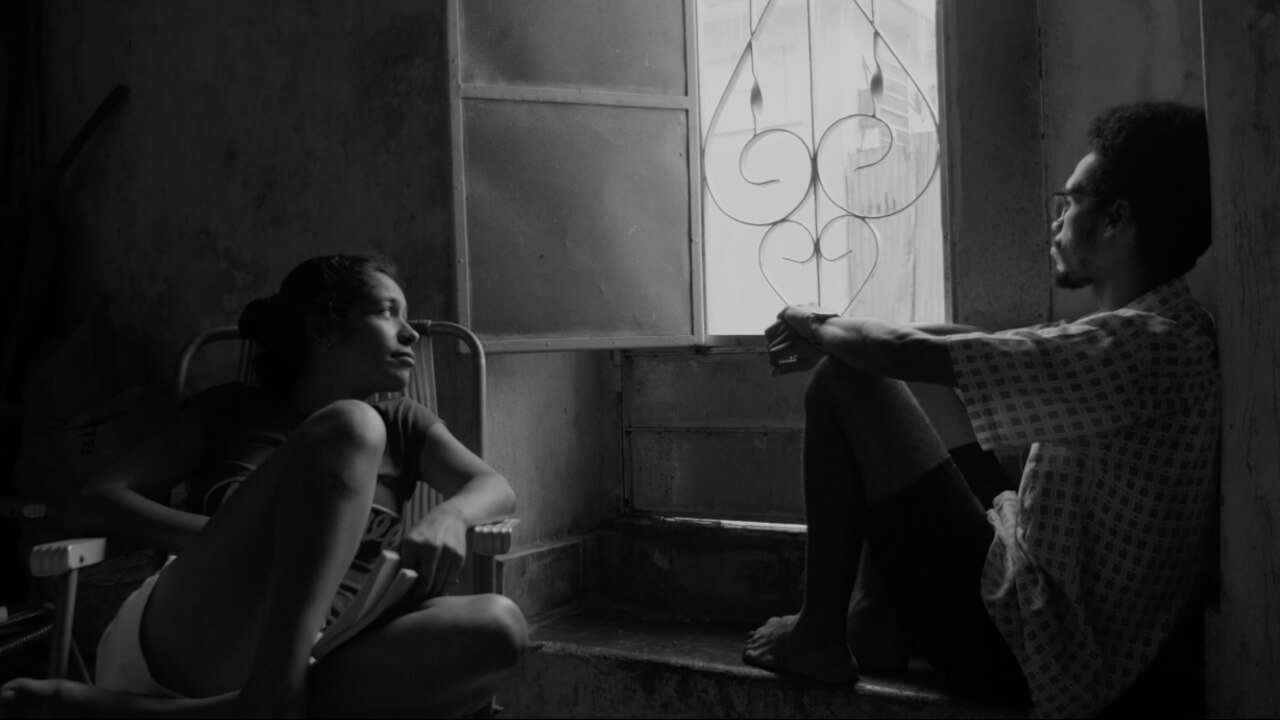
A Cuban couple with artistic dreams and goals is one of three stories in the film The Oceans Are The Real Continents.

A film like The Oceans Are The Real Continents is a unique portrait of life centred around three different people in a town in Cuba. It paints quite a picture and is full of feeling.

The story begins with a theatrical production live on the lake. Alex is the main actor of the production. He is on a floating island as he floats to the actress, his girlfriend Edith. Alex is an acting instructor in the small Cuban town of San Antonio de los Banos. He has a loving relationship with Edith, a actress and puppeteer. It’s very apparent with the times Alex and Edith spend together, they have a loving relationship and are big artistic dreamers themselves. Recently Edith has applied for a visa to work in Italy. It’s a long process. Especially as news of a record number of evacuees from Cuba is broadcast on the radio.

At the same time is San Antonio de los Banos, there are two boys, around none-years old, named Frank and Alain. Frank and Alain live very close to each other and attend the same school, where they’re taught about glorifying Cuba. They do a lot together, but what they share most is their love for baseball. They play on the same little league team and as expected in Cuba, they are among many boys whom the nation hopes to train up for national glory. Thing is glory for Cuba is not what Frank and Alain are most interested in. They both dream of living in the US and hopefully play in a MLB team like the Yankees.

Also simultaneously in San Antonio de los Banos is an elderly woman named Milagros. MIlagros is retired from her normal work and is now out on the streets selling peanuts. Returning to her place, she dusts off images of past memories, plays music from decades before and reads letters written to her form her husband or boyfriend that he wrote to her as he was among a group of Cuban soldiers who fought in the Angolan Civil War in the late-1980’s. The letters her husband has written sound like poetry. Reading the letters is something she does on a daily basis.

Soon moments of friction happen in the three scenarios. As Alex continues acting and teaching, Edith has a successful puppet show. As news of her visa is getting closer and closer, Alex feels the strain of it. He’s even vocal to her about it, fearing it could hurt the relationship in the future. Especially since Edith desires to move to Italy permanently. For the two boys, Frank overhears a conversation his mother has about heading to Miami to be with family. That could mean leaving Alain behind. He doesn’t want that. For Milagros, a sudden rainstorm causes flooding in her suite and it gets everything wet, including her letters. She hangs them to dry outside after the storm ends. As she hangs them, she comes across what’s possibly the last letter her lover wrote to her and she’s in tears.

SPOILER WARNING: Ending in paragraph. Go to next paragraph if you don’t want to know the ending. The film ends with Frank and Alain walking along the railroad track close to the town’s station. As they arrive at the station, we see both Milagros and Edith waiting at the station as the train going to Havana arrives. In the end, we see and hear the letters Alex writes to Edith. He shares his belief that the distance between the two won’t stop their love for each other.

This film is unique that there are three stories surrounding people in this small town in Cuba. In retrospect, the film seems to be a film with the theme of hope. The case of the actress is a case in hope where it’s actively being pursued through her career and her channels with the Italian Embassy. There’s the case of the boyfriend who hopes to still have her despite the future of being thousands of miles apart. There is Frank and Alain whose hope in their baseball goals is something that will take maybe ten or fifteen years to determine their fates. Finally there’s Milagos who appears to be nearing the end of her life and all hope appears to be gone. She appears to cling to the letters of her late husband possibly as her only chance to get any feeling of hope. One thing the film leaves unanswered is how her husband died. Did he die on the battlefield during the war or MIA? Did he die peacefully in Cuba long after returning home? We don’t know and it’s up to us to decide. It’s possible her appearance at the train station at the end is the hope her husband will return one day.

This is a unique story of three different generations of Cubans who are not related or connected but find themselves linked at the end. The main story is of a couple with artistic dreams. Edith has a chance to go to Italy to further pursue her artistic direction, but Alex is uncomfortable with it. Frank and Alain are two boys with baseball dreams and hope to play for the Yankees one day instead of the glory of Cuba that’s expected of them. Milagros struggles to come to terms with the loss of her husband: a soldier in the Angolan War. It often seems as if reading those letters is the one thing keeping her alive. One story is of a couple and the present, another of a woman and the past, and another of two boys and hope for the future. Shot in black and white and done as a melodrama, it’s as much of a portrait as it is a story. Even without an obvious given time for a setting with the absence of modern technology, it’s a story that looks like it can happen anytime. That’s also part of the story’s magic.

This is an excellent first feature for Italian director/writer Tomasso Santambroggio. Originally from Italy, he has studied in La Havana. It’s apparent his experiences there are input into this film. This film was originally a short film he released four years ago and has only now incorporated into a feature-length film. He creates a story that’s a three stories in one. It’s of a shared theme of for each of the story’s protagonists, hope comes from somewhere else. At the same time, he’s able to show Cuba as a postcard-perfect place despite the crumbly buildings and the lack of promise. He’s able to show the beauty inside the dreariness and have it captured in this three-way melodrama. It’s very easy to be spellbound by the imagery while watching the melodrama. Also it makes sense that the film is marketed as an Italian film. I don’t think the nation of Cuba would want to support a film that depicts the nation negatively.

The unique thing about the film is that it shows actors who have had no known major acting credits before and they pull it off well. Also all five of the main characters in the film use their real first names in the story. For the couple, Alexander Diego and Edith Ibarra make their chemistry very believable. As they central story, they make the love between them and the friction that threatens to separate them often give us the feeling we’re watching a documentary of an actual couple. Frank Ernesto Lam and Alain Alberto Gonzales are both non-actors who come across as typical Cuban boys living the common little boy life, and that works to the film’s advantage as well as the story’s advantage. Milagros Llanes Martinez is also excellent in how she makes us feel her loneliness and her heartache. Of the three stories, hers was the one that most grabbed my attention.

The Oceans Are The Real Continents is a unique film. It is a drama with a central story, but two connected stories. It is both a story and a portrait. It is slow in its storytelling but big in capturing the moments, the land, and the emotions. It’s a rare gem that’s a delight to watch.

VIFF 2023 Review: When Adam Changes (Adam Change Lentement)

The teen years are never easy. And overweight Quebec teenager Adam proves it in the animated film When Adam Changes.

The animated film When Adam Changes fulfilled the third of my annual VIFF goals of seeing at least one feature-length Canadian film. It’s an animated film that tells a common story of growing up the oddball, but done in a unique and entertaining way.

It’s a summer in the 1990’s. A grandmother is dying in the hospital. All the family members surround her. Then the grandmother utters her last words. It’s an insult of the size of the torso of Adam, her 15 year-old grandson. Adam has endured a whole lifetime of insults from her because he’s overweight. Crazy thing about it is her insult makes Adam’s torso grow bigger! After she dies, everyone is in tears, except Adam.

With the grandmother dying, Adam’s family will be having family over to make funerary plans, host gatherings and also have Uncle Mario living with him, his older sister and his parents. With Adam being 15, the father wants him to learn responsibility. He gets him to do things like mow a neighbor’s lawn, take care of the house of his cousin’s, and walk a neighbor’s dog. The latter is a bizarre case as the previous walker takes the bags of droppings and hangs them from a neighbor’s tree. Adam’s not too happy about that. He just wants to hang out with his equally awkward best friend, play video games or watch action movies.

As the family and other relatives make funeral plans and arrangements, Adam goes about his duties the best he can. He even disposes of the dog dropping properly. However problems arise. In the area of his dog walking is a boy named Pierrot. Adam knows Pierrot. Years ago, he was encouraged to befriend him on the playground. It went well until an accident Adam caused led to a big gash on Pierrot’s face. The scar from the accident is still very noticeable on Pierrot’s face and Adam is afraid to make eye contact with him To add to his problems, he learns a bully from his school lives close by. He’s going to take pleasure in being mean to Adam. Adam does see a possible ray of hope in his girlfriend, who’s also a classmate of his. He notices she takes a liking to him. Can he win her?

As the days pass, the funeral happens. Adam does his best to speak about his grandmother, as all her grandchildren were to say something about her. It’s not easy since she was so mean to him, but he pulls it off. After that difficult task, Adam goes about doing his duties. It’s not always easy as the school bullies are harassing him and seeing him being left out of parties makes him feel like a misfit. To add to his personal insecurities, his sister has a boyfriend who doesn’t look like the type to trust. On top of it, he keeps seeing Pierrot walking down the sidewalk with a long metal rod. Why? Is it personal? Does Pierrot hate him from that incident from long ago?

One day, Adam has a ray of hope. The bully’s girlfriend invites him to Marianne’s party. His best friend encourages him. Things do not go all that well. It’s crazy but Adam wants to do something to be popular and win her love. He fantasizes being the hero as he watches the action movies. Then he tells her a party at his place. Hopefully this will make things work out.

Adam’s been waiting for this moment. He’s even watched some of his action movies to make him feel big. Then the doorbell rings. She came! But shoe brought friends along, including her boyfriend. This is going to be a long night for Adam. The party doesn’t go well and his sister caught her boyfriend cheating. Suddenly Adam sees an opportunity with his classmate. She gets into a scuffle with her boyfriend, but he turns abusive to her. That’s it. Even though he may have bullied Adam in high school, Adam’s not taking it and he gives him a piece of him with moves he learned from the movies. The bully’s down on the ground. Adam things he won her, but i9t’s not the case. Dejected, Adam leaves the house. He notices Pierrot and that the reason for the metal rod was to take the dog dropping out of the tree and sending them to the original walker. Adam helps and it turns out a friendship between the two was there after all. The film ends with Adam at the couch with family.

Let’s face it. The teenage years are the years you both love and hate. You love it for the best music and best movies of your life. You hate it because of all the jerks and mean peers you have to deal with. I’ve even said that high school is a total social “torture chamber.” I think everyone can remember the false sense of superiority some students had or the many times peers made one feel inferior. We see that in Adam as he’s often fat-shamed. He wants to fit in, but he also has his hopes on a bigger prize: that girl. Can he win her? He looks like he can win her and he has a chance.

Watching the film will remind us of our teenage years. They’re some of the best moments of our lives and some of the worst moments of our lives. The film does a good job in displaying that in a humorous form that can make us laugh off even some of our worst high school memories. It also doesn’t miss in showing some of the ugly cases of teenage life such as use of substances, bullying, infidelity and abuse. Even that thing where someone hurls an insult at an aspect of Adam’s body and that aspect grows, wasn’t it just like us back in our teen years? Didn’t we also feel that same way the instant somebody taunted us about a physical flaw of ours, whether it be minor or major? I guess that’s what the film is intended to do. Remind us of our teen years as the most frustrating years of our lives, but in a humorous way.

The film ends with a touching moment where the protagonist gets the message that despite the garbage and pressures around you, it’s important to surround yourself with people who care about you. There’s Adam with his teenage sister, Uncle Mario, his parents and his best friend watching a movie. Leaving the peers who used him and crashed his party somewhere else. With the frustrations that come with being a teenager, I guess that’s what you need to have. Have a time to be around the people who make you feel good about yourself. That scene is a good “To hell with it,” to the garbage of teenage peer pressure.

This is a unique story and film by Joel Vaudreuil. Up until now, Joel has had experience in creating animated shorts and even directing music videos. This is his first attempt at making an animated feature and it’s impressive. Its 2D animation is unique in its style and fits the story well. Vaudreuil also gives a story that does hit close to home but in a humorous way. Yes, the teen years were a hurtful time for all of us, but it’s able to make light of it well. Even some of the nastier moments of our lives. Very impressive first feature-length film.

This film has already won an award in animated film. The Ottawa Animated Film Festival made it the Grand Prize winner.  The Annecy International Animated Film Festival made it a nominee for the Contrechamp Award for Best Film.

When Adam Changes is an enjoyable animated movie. It’s another example of how Canada keeps on sending out winning animation time after time. It’s also a good reminder of why you’re glad your teenage years are long over!

VIFF 2023 Review: The Sacrifice Game

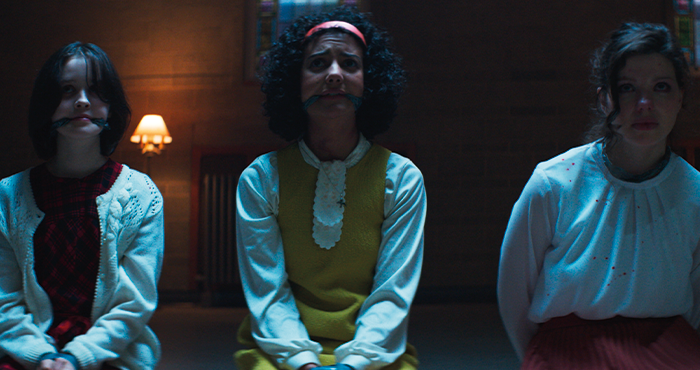
The Sacrifice Game is a super-bizarre story of a Christmas dinner two private school girls will never forget. Try as they might!

Can you mix the horror movie genre with the Christmas season and be able to create a good movie of the mix? The American film The Sacrifice Game makes that brave attempt.

The film begins with what appears to be four guests approaching a Christmas party three days before Christmas 1971. The hosts don’t recognize them, but that doesn’t matter because the four ‘guests’ kill the family in their home. One of them paints an image with a victim’s blood on the window. The following day is the last day before Christmas for a boarding school. All the girls leave the school and the dorms to be with their families for Christmas. All except Samantha, whose father can’t see her for Christmas this year, and Clara who appears not to have a family. Rose, one of the teachers, is willing to have a Christmas dinner with the two girls at the school. She even gets her fiance Doug to help.

That same day, the group of four, maned Jude, Maisie, Jimmy and Grant, go to a nearby church and claim the priest as their latest victims. Before they leave him behind, they take a piece of his skin that has like a bizarre tattoo on it. As the time gets closer to the ‘party’ at the girls’ school, Samantha tries to start conversation with Clara. Clara is reluctant. It may appear shyness, but more like Clara has a secret. A secret notable from the scars on her skin. Also the girls at the school hear the news of the killings. It makes them nervous, but they think it’s a distant problem.

The next day, two days before Christmas, Rose is helping to organize the dinner and Doug is helping along. The two girls go to the more closed-off areas of the school building. They come across a lot of secret things, including books they’re not to read. Meanwhile the four claim their latest victim. A policeman stops their car on the road. As he inspects the car, he comes across the pieces of marked skin from their victims. He becomes the latest victim of the four. The following day, Christmas Eve, Rose has everything ready for the two girls and Doug is heading over to the school. The group of four approach Doug and kill him. They then enter the school where the three are waiting for Doug and the group kidnaps them.

This is it. It’s Christmas Eve and the group of four are now terrorizing the three girls all tied up. Jude, the de facto leader, talks about how lovely the party is in a sinister way. He terrorizes them at the dinner table and in the gift area. Then Jude tells of a force that he read in a book and he believes to be coming to this very school on Christmas Day. Rose chastises him for it, but she gets killed. Now it’s just the four and the girls as the four wait for the force to come at midnight.

Midnight happens, but the force the four were hoping for doesn’t appear immediately. Jude, who appeared to be the one in control, is now angry and out of control. The three others go searching around the school. This allows the two girls to break free and hope to escape, but their secret is revealed to one of the members. Over time, the four are both trying to look for the spirit and chase the girls down. Samantha and Clara search things out but Samantha discovers secrets about Clara. To best describe the ending without giving it all away, it becomes a twist and turn of events in which leave the four of them dead and Samantha shocked for life!

Doing any horror movie is always a challenge. Humor is welcome, but to a limit. The best element of a horror movie is to give the audience a sense of fear. People come to horror movies to be scared for fun. Adding in the theme of Christmas does set up for a risk of balancing out being funny with the aim of scaring people. This film does a good job as it tells the story over four days. The four are in search of a demon. The people they kill before they go to the school are people with a skin print they believe will connect them to the spirit they search out. They sense it at the school but they can’t find it only for an unlikely girl to be the very spirit they were looking for.

The intriguing thing about this film is that it comes close to the time another film about kids left behind during Christmas, The Holdovers, is about to come out in theatres. Here we have two female Holdovers at an all-girls school in the 70’s. This is different as the teacher is very willing to befriend the girls. She even brings her boyfriend to the dinner. Little did any of them know of the mayhem of terror to come.

The film is mostly successful in piecing the story together, but its flaws are noticeable. The most noticeable is the middle of the story where the team of murderers wait for the moment to happen. Usually in horror films, the biggest clinic would come at the very end. It comes at the middle and it seems like.it’s trying to drag the climax throughout the rest of the movie. I’m sure there are a lot of people that felt the film either get too slow or too confusing. Also that twist when it becomes Christmas and the big force they expect to come doesn’t, I think that will leave a lot people scratching their heads and wondering what’s going on. I have no problem with surprise plot twists, but as long as they’re done well. Also the portrayal of insanity in some of the characters like Jude. That seemed too over the top.

Overall I consider this to be a good film by director Jenn Wexler. This film she directs and co-wrote with Sean Redlitz is a good take on using Christmas as the setting of a horror story. Wexler has already had experience in directing horror with 2018’s The Ranger. Here she takes a story that’s unpredictable and adds a few twists to it. Although it’s not as smooth and one might question the choices she makes, it actually turns out to be better than your average horror film and doesn’t cross into the stupidity traps most horror films fall into. As far as acting, the two girls, played by Madison Baines and Georgia Acken, were the best performers. They both played two scared lonely girls who felt like misfits in a boarding school well. Acken transitioned into her horror character well. That’s what makes for a believable horror story.

You’d think it’s highly unlikely that a horror film would win awards at film festivals but The Sacrifice Game has won awards. At the Fantasia Film Festival, it won the Audience Award for the Best Canadian Feature. Even though this is an American film, it qualifies as a Canadian film in some festivals because it was filmed in Quebec. The Nashville Film Festival awarded it the Best Graveyard Shift Feature award!

The Sacrifice Game is not the first horror movie to mix a horror plot with the Christmas season, nor is it the best. Nevertheless it does take full advantages of putting the Holiday season in its plot and even paves the way for an unlikely heroine!

VIFF 2023 Review: It’s Only Life After All

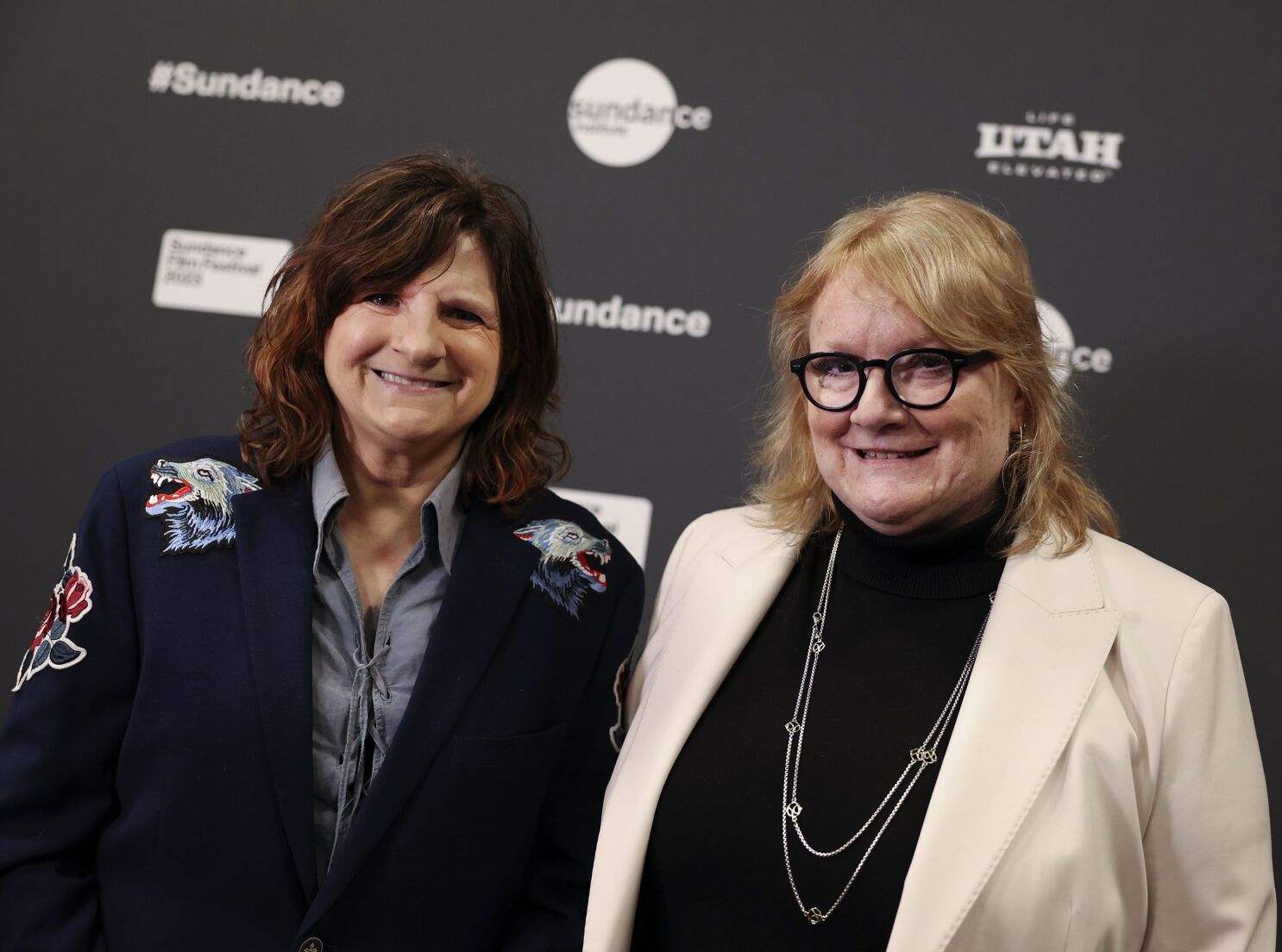
It’s Only Life After All is an intimate and personal look at the Indigo Girls and their long career of establishing themselves as musicians. Not just female musicians.

Before I saw the documentary It’s Only Life After All, I wasn’t really a fan of the music of the Indigo Girls. If you like music, this is a documentary that will keep you intrigued.

The film begins with Amy Ray and Emily Saliers, the two women making up the Indigo Girls, meeting with Alexandria Bombach and bringing out a lot of old audio tapes, video tapes, old magazine articles and various pictures. They wonder what this documentary will be like. First we learn that Amy and Emily first met in elementary school but it wasn’t until attending Shamrock High School in DeKalb County, Georgia that they both learned the other likes music. A friendship began and the musical companionship started soon after. At the same time, they discovered through their own ways, they’re lesbians. Both had differing initial reactions to it as well as initial reactions from family.

As both graduated in different years and went to colleges in separate states, they both eventually became homesick and dropped out. The music led them back together. The two went through various names at first but decided on The Indigo Girls in 1985. Over time they began to draw bigger crowds in their home state of Georgia and started cutting records. First a single, then an EP in 1986 and then a full-length album Strange Fire in 1987 recorded in a studio in the ‘college rock’ town of Athens, Georgia. Their album attracted the attention of music manager Russell Carter who first dismissed their music as too ‘immature’ to get a record deal. The album changed his mind about the two and Carter agreed to be their manager which he still is to this day.

Their success grew in the coming years but they did face some difficulties in terms of establishing themselves. Folk music had commonly been known as stoic and serious. The Indigo Girls were more light-hearted and cheerful on stage. Then there’s the fact that they’re two lesbians which was becoming more acceptable, but still seen as a taboo by most. The AIDS epidemic and how it increased the public’s hostility towards LGBT people in the late-1980’s didn’t help much either.

One thing is the two did have a source of luck on their side. In the late-80’s, there came this boom in folk music. Possibly as a backlack to the loud heavily-distorted guitars of the heavy metal phenomenon from years earlier. It was also a boost for female folk acts like 10,000 Maniacs, Suzanne Vega and Tracy Chapman. The folk phenomenon also led the two to be signed on to Epic Records in 1988. Their self-titled release with Epic included participation with REM’s Michael Stipe and Irish band Hothouse Flowers. After its release in 1989, it has since gone double-platinum and spawned their biggest hit “Closer To Fine.”

Their overnight success came with both perks and problems. The perks included appearances on MTV and VH-1, a Grammy win for Best Contemporary Folk Recording, praise from critics and a growing fan base. The problems included fame coming too fast, not being a feature in Rolling Stone or musical guests on Saturday Night Live, some negative reviews from male critics whose reviews sounded more like sexism than critiquing. Even the big question or concern about whether their fame will turn them into a ‘product’ or not was of concern.

As their sudden fame cooled off, they continued making music together. They also ventured into activism. Their causes include feminism and indigenous rights but their most notable activism has been LGBT rights. With them being two lesbians from Georgia and having established a big LGBT following, they have been active in being active in LGBT issues. From dealing with AIDS, whom they lost a lot of musical friends to, to military participation, marriage and adoption, The Indigo Girls have been very vocal on many LGBT issues. The two also made a cameo appearance in an Ellen episode in 1997. Even some LGBT fans have gone as far as crediting The Indigo Girls for saving their lives.

In the 21st Century, the two started to focus more on themselves as individuals. They wanted to start families. Both married another woman and have daughters of their own. Amy did solo recordings and started exploring her gender identity more. Emily encountered a struggle with alcoholism for years and needed time to recover. Despite it all, both came back to each other and got performing again. They also have their own record label. The film ends with a recent post-COVID concert.

This is a film that will capture one’s intrigue if they like biographies about music and musicians. This is a telling story about two friends who have had a career together going on almost 40 years. Like most musician’s careers, it has not been smooth and it has had its fair share of hurdles. The Indigo Girls being two women who play folk will undoubtedly face obstacles more than just facing a general public that may accept them or not. They face the sexism that’s common to women in music. They face the homophobia of them being two lesbians. They face the music business which frequently pressure musical acts, established and rising, to make a product of themselves. They face unwelcomed intrigue of them being two lesbians who never dated each other. They even have to face their own personal demons and their own personal obstacles. It’s not just about music that they face obstacles and frustrations with.

Even though it is about a folk duo who rose to fame and are still going strong after all these years, it’s about the two as people. It shows through images and their words about what it was like growing up as lesbian teens in the late-70’s and early-80’s. It shows how the two still worked to keep themselves together as a duo and still keep themselves grounded and avoid the common pitfalls of the music business. It shows Emily’s struggle with alcoholism, It shows Amy’s path to starting her own family. It shows personal sides to them known to few including Amy’s spiritual side. It shows the close personal relations they have with family, fellow musicians and close friends. It shows the duo’s move towards activism towards various causes. This film is very in depth about showcasing the two.

This is an excellent work from director Alexandria Bombach. Bombach’s documentaries have commonly been about feminist topics. Her most renowned works involve stories of women in Islamic countries. Here, her subject matter is less intense. Nevertheless the documentary she delivers presents The Indigo Girls as musicians, as temporary celebrities, as activists, as crusaders, as mothers and as people. It’s a good documentary featuring footage on media, footage never seen before and filming during their more private moments. It does an excellent job of being three-dimensional and going beyond.

This documentary has had awards acclaim at film festivals. Nominations for Best Documentary include Seattle, Cleveland, Atlanta and the South By SouthWest (SXSW) Film Festivals. The Sidewalk Film Festival awarded it their Audience Award for Best Documentary and The Film Club made it their winner of their Lost Weekend Award for documentaries.

It’s Only Life After All is a telling look at the Indigo Girls through all the ups and downs and struggles they had to go through from their formation to now. It succeeds in getting you to respect them and what they do.