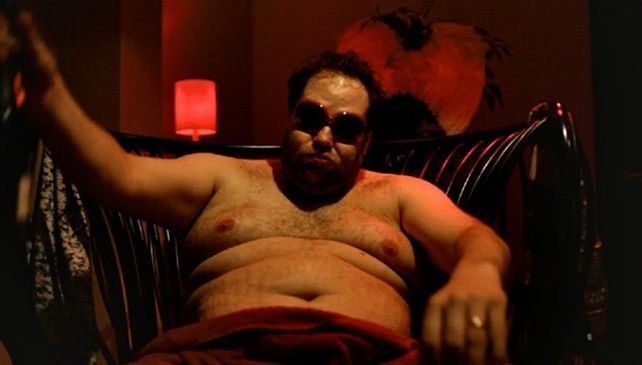
Olafur Darri Olafson plays a debaucherous Icelandic senator living it up before rehab in XL.
XL is something unique: a feature film from Iceland. Just as unique is the story and the subject matter. Question is how watchable is it?
The story focuses on Leifur Sigurdarson, a senator in the Icelandic parliament. Leifur has been told by the Prime Minister of Iceland that he is about to be placed into a rehab clinic. His alcoholism is that obvious. Leifur then decides to live his ‘last few days of freedom’ with a bang.
He is known for his tempestuous relationship with his girlfriend Aesa. He gets involved with all sorts of kinky games with Aesa and even sado-masochism. The two of them also live it up together with some of his rich friends who also like to live life in the fast lane. They all go from bar to bar having their fun and doing whatever they want.
Despite this orgy of debauchery, Leifur receives constant reminders from others about what he’s headed towards. Politicians remind him, family try to reach out to him and even his daughter from a past marriage tries to remind him of who he’s neglecting. Nevertheless Leifur continues on with his debauchery. It isn’t until the last day that he’s reminded that time is running out and he can’t handle it any more.
It is possible that the director is trying to send a message in this film of the corruptness of politicians in Iceland, especially as it headed to economic collapse in 2008.Iceland has always been ranked as one of the Top 10 least corrupt countries in the world according to Transparency International’s annual Corruptions Perception Index but it’s not to say that corruption doesn’t exist there or even in the other top nations. Even in the least corrupt nations in the world there are sleazy senators or debaucherous congressmen. Even heads of state can commit their own sleaze.
However the film caused me to question what the purpose of the film was. Was it to make a statement about corruption in Iceland? Was it to push boundaries or even envelopes with the material? Was it to be artistic? I was left undecided when I saw this. All too often it seemed like the film makers were putting huge focus on Leifur’s debauchery and even the sadomasochism. I was often tempted to think it was trying to put the heaviest emphasis on the shock value. Even the artistic elements like making a stage play out of Leifur’s life appeared confusing especially since it wasn’t put in as consistently. Sometimes there were some artistic merits the film makers took that even appeared like it was bad editing. I was left with the frank impression that this lacked a definite direction to what it was attempting to show.
This film is the latest effort from Marteinn Thorsson. He worked for Canada’s The Movie Network in the past directing ads and promos. His first film One Point O helped put him on Variety magazine’s list of ‘Top 10 Directors To Watch’ in 2004. He also directed the critically renowned drama-comedy Stormland from two years ago. I’ll admit I’m not familiar with his style of filmmaking but I still stand by what I say that this film he directed and co-wrote with Gudmundur Oskarsson doesn’t make its intentions or its point clear. Even if he’s trying to make a statement about political corruption, it looks like he’s making more of an effort trying to entertain us with shock value. The film has receives some renown. It was nominated for the Crystal Globe at the Karlovy Vary film festival and the performance of Olafur Darri Olafson won Best Actor at that festival.
If there was one standout from the movie, it was the performance of Olafur Darri Olafson. His performance as Leifur was very complex as he went from the king of debauchery to this man with a problem. Also a scene stealer is Maria Birta as Aesa, the one woman who seemed to know how to control Leifur. The best minor supporting role came from Tanja Omarsdottir as Anna, the daughter caught in the middle of this. The musical score by Anna Thorvaldsdottir, which was mostly modern-based, fit with the film well.
XL is an artistic attempt at telling a story of a politician and his corrupt mannerisms. In the end it comes across as a film that’s unclear what its intent is.
Filmmaker Jason DaSilva makes his MS and his life the focus in When I Walk.
When I Walk is a unique documentary where the documentarian is the complete subject of the film. It’s a very personal documentary. Possibly because this may be the last film he ever makes.
We meet Jason da Silva, a promising young documentarian of Indian heritage living in Vancouver. He lived the life of a budding 25 year-old filmmaker and had a promising future ahead. That all changed in 2006 during a family vacation in St. Maartens. His legs weakened and he was diagnosed with multiple sclerosis. His condition wasn’t fatal but it would lead to weakening of his body and other deteriorations. Jason was encouraged by his mother not to allow his disease to limit what he can do. So Jason decided to make his battle with MS his subject of his next film.
Jason is determined to fight it or deal with it the best way he can. He tries his hands as many different types of medicines and healings. He first travels to his parents’ hometown of Goa, India where he agrees to Ayurveda medicine. He then goes to Lourdes, France on the advice of his very religious Catholic grandmother and receives healing water. He also arranges an appointment for a wonder-surgery that’s a breakthrough in fighting MS and is highly advertised on Youtube by people cured through this surgery. The Ayurveda medicine procedures didn’t work. Lourdes didn’t heal. And this ‘wonder surgery’ only gave limited improvements that didn’t last.
Family unity is another theme in the film as Jason comes from a close family with relatives in Canada, New York and back home in India. His mother is the one who’s trying to encourage him to stay positive and hold his head up high. Though she cries near the end of the film and admits she didn’t know how bad it was and how limiting it would be. There’s another time when he visits a relative in India and tries to find out if his MS is inherited.
Despite his illness and its dehabilitation over time, Jason continues to be strong. He talks of difficulties going to restaurants and various other places in New York. He meet up with another person in a wheelchair and they decide to organize a blog of wheelchair accessible locations in New York. It’s not just simply taking restaurants that advertise themselves as ‘wheelchair accessible’ at face value. Both Jason and his colleague go to the various locations and test out how ‘wheelchair accessible’ the places are in both the facilities and the washrooms. Jason also purchases various filmmaking software and various computer accessories to assist him with his filmmaking as his body functioning lessens over time. They show one gadget which assists in functions as Jason makes commands in a microphone. Some days it’s so hard to talk, Alice–who I will talk about shortly– has to learn filmmaking and its functions in order to complete certain jobs for Jason.
Possibly the biggest plot of the documentary is not just simply overcoming his condition of MS in daily life but his relationship with Alice Cook. Before Alice, Jason was a frequent dater in the film making scene. He first thought MS would be the end of the dating road. Then he went to a support group for people with MS offered by his mother. He met a woman named Alice who was around the same age as him. Alice is a fully able person who attended the sessions in support of her stepfather who has MS. Alice took an interest in Jason. They started dating. Alice started helping and assisting Jason in his daily life. Then in 2009 they married. They even show Jason using his scooter with Alice on the back and a Just Married sign on the seat.
However right after the marriage came some new hurdles. First was the stress of being married to a physically limited person. Alice is a very cooperative and a very supportive wife but the stress does take its toll and Alice needs a vacation for a week to give herself relief. One of the things she sacrificed in her relationship with Jason was her love of hiking. She would have the chance to hike again after so many years. There’s also the effort of the two to have children. The film takes us to the doctor’s office where Jason learns he’s fertile and conception is possible. The first conception works but Alice miscarries. SPOILER ALERT: However the film ends with Alice showing Jason the result of her home pregnancy test: a positive. The film’s last scene shows the two in the ultrasound lab and the screen showing a healthy fetus.
One thing about this documentary that stands out is how personal this is for the filmmaker. Before MS, Jason was no simple documentarian. He was already showing promise at a young age with short documentaries like Olivia’s Puzzle, Twins Of Mankala and a Song For Daniel. He also had two feature-length documentaries to his credit: Lest We Forget and From The Mouthpiece On Back. One would figure MS would be an end to a filmmaking career at such a young age but Jason’s determined not to let it stop him. The film is very personal as it not only hides nothing of Jason but also of Alice. We see an image of blood in the bathtub when Alice miscarries. We also hear Alice tell her side of the story at times and she holds nothing back. In fact there are times when she’s in tears when she talks of the stress of managing a physically challenged husband and her fears for the future as his condition deteriorates over time. This film is as much about the struggle of the two as it is the triumph. Even Jason admits there are times when he can’t handle it or wants to give up.
Another addition to the documentary is the animation. Often the documentary will go to animated images of Jason in his life, MS eating away at him showing the MS as ‘bugs,’ and various other images. That is another added bonus to the documentary that keeps it from getting mundane. Although the animation is not the most professional, it still adds to the documentary.
As a documentary, it’s questionable whether this is worthy of box office release. It has already made appearances at the Sundance Film Fest and the Hot Docs Film Festival where it even won an award. It’s still possible. One thing I know is that it is definitely eligible for broadcast on a documentary television channel.
When I Walk is a film worth seeing. It’s as truthful about the struggles and the setbacks as it is about the triumphs. Definitely worth seeing for all types of people.
BONUS: If you want to learn more about Jason and When I Walk just go to: http://wheniwalk.com/ There’s even a mailing list to subscribe to.
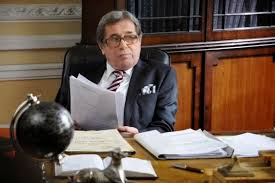
Janusz Gajos plays a tough-guy lawyer playing a legal gamble in The Closed Circuit.
DISCLAIMER: This may be mistaken as a review for the movie Closed Circuit starring Eric Bana and Rebecca Hall. This is actually a review for the Polish movie Układ Zamknięty whose English title is The Closed Circuit, also released in 2013.
The Closed Circuit is a legal drama from Poland that’s become one of the highest-grossing Polish-made movies there. Does it have what it takes to entertain North American crowds?
The film begins in Gdansk in 2003 where computer business Navar has just had a grand opening for their new factory. The building of the factory with high-tech equipment had a huge boost thanks to a partnership with a Danish community. Shortly after the deal, another businessman tries to make a deal with CEO Piotr Maj to no avail. Later it’s brought to the attention of a legal office headed by district prosecutor Andrzej Kostrzewa that the company made an illegal deal; that this was a scam. He hires Kamil Slodowski–a good lawyer who’s relatively new at tackling corporations–to head the crackdown.
Unknown to Kostrzewa at the time is that the company is headed by Maj who happens to be the son of a professor whom Kostrzewa got into a bad dispute with during his own college days and had him fired from the University and exiled back to Israel. One should take into account that Kostrzewa was a former Communist and still believes: “there are no honest businessmen.” Professor Maj died recently and his memoirs could be the smoking gun for Kostrzewa.
The arrests fly to the three businessmen and they are brutal not only to them but other family members too, even Maj’s pregnant wife who miscarries during the arrest. They get thrown into jail accused of financial irregularities and money laundering. They face inhuman conditions in the prison including Maj suffering at the hands of another prisoner. Meanwhile the team of lawyers get various recordings ranging from a news reporter stating the case will make him famous to one of the Navar’s head’s relatives bringing a lawyer down.
Meanwhile Slodowski is getting to the bottom of the case but Kostrzewa is wheedling the shares from the significant others. Slodowski is successful in getting whatever evidence he can against the accused. However he himself is being challenged by the media and he starts feeling like he’s being used in Kostrzewa’s team instead of getting his own fair share.
Soon the truths begin to unravel. Kostrzewa and his team experience retaliation on their part which leads to their fate. The two main businessmen of the factory are released with Maj recovering in the hospital from a suicide attempt. This sets up for a smart but unexpected ending to the events.
I don’t know if director Ryszard Bugajski was trying to get a message out about Communism meeting capitalism in a post-Eastern Bloc Poland or if he was trying to play out a drama that’s actually based on true events. If he tried to get a message out of old Communists in Poland trying to use power in keeping the spirit alive, I don’t think it was clear enough. Besides Kostrzewa suffers setbacks of his own. I’ll admit I’ve never lived in Poland so I can’t really describe this as a depiction of Polish power struggle or not. I feel it was more about playing events out and creating a drama that would have the audience intrigued with what will happen next for both the heads of Navar and the team of lawyers and the families of both teams.
There was an additional quality to the story line. The story didn’t just simply play out the events in a legal crackdown on a company. The story added the human elements to it too. The events during and after the arrests of the heads of Navar showed the hurt done to family members. Numerous times we saw the feelings of those played out. There were a lot of scenes that stood out. One was of Maj’s wife as she is left depressed after the arrest of Piotr and her miscarriage. Another is of the two heads of Navar who look through the empty factory after their release from jail. Another came from Kostrzewa, among other characters. Kostrzewa frequently comes across a tough pitbull-like lawyer determined to win. However there’s that scene where he sees Piotr Maj in the hospital after a suicide attempt. It’s as if at that moment, he’s no longer Mr. Tough Guy and he feels sorry for him. In retrospect, I think of that scene where Kostrzewa starts having regret and hopes not to destroy a second Maj.
This is a great film by Ryszard Bugajski. Bugajski is a director who has been able to prove himself well in recent years. He actually worked with legendary Polish director Andrzej Wajda in his Studio X in the late 70’s. He fled Poland in 1985 and moved to Canada where he was able to acquire opportunities in writing and directing episodes for American television dramas in the 80’s. His film work only started coming to light once Communism fell in Poland and his films have since won Bugajski renown of his own including Interrogation: a film made in 1982 but was denied release until the fall of Communism in 1990. Once released, he was nominated with the film for a Palme d’Or in Cannes and a European Film Award.
He has followed it up with excellent film works since and this is now his chance to make a movie in his home country. His direction in this film along with the collaboration of writers Miroslaw Piepka and Michal Pruski is an excellent drama that could even rival the suspense levels of American legal dramas. The acting was also excellent too as there were many good performances from the main leads to the supporting parts. If there was one performance that stood out, it was from Janusz Gajos as the tough guy Kostrzewa. His portrayal of a tough lawyer who eventually gets weakened mentally when he’s reminded of past mistakes and has to confront his misdoings in this case was a very good performance and definitely the one that got the most attention from the film.
The Closed Circuit is another example of countries trying to shell out movies internationally. They may have shelled out movies before that would fare well in their home country but would end up substandard internationally in the past. Now they’re making the effort to shell out quality movies that can fare well outside their home country too. As I mentioned before, the main thing that separates movies from films is that they are more entertainment-focused. As a legal drama, it’s very good at including incidents to keep the audience intrigued from start to finish as well as include human elements inside the story. I’m sure North American audiences who don’t mind watching a movie with subtitles would also be taken in by the suspense of the events. One thing about the VIFF crowd I saw it with. They laughed during the scene where the bishop blesses the factory. I guess they don’t understand Polish society where they value the blessings of priests even in business locations.
The Closed Circuit was a top attraction at the VIFF. It is a very good drama and is an excellent choice for people who like legal dramas. This also takes Polish moviemaking to a new level.
NOTE TO VANCOUVERITES: This weekend (October 18-20) there will be the Vancouver Polish Film Festival over at the SFU Theatre at the Woodwards square. The Closed Circuit will be playing Saturday the 19th at 5:30. More info at: http://www.vpff.ca
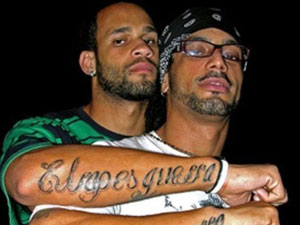
Meet Los Aldeanos, a Cuban rap duo who are more than mere entertainers in Viva Cuba Libre: Rap Is WAR.
I won’t look the other way. The truth will find a way out.
You can’t ignore us much longer. People are beginning to wake up!
That motherfucker made this country a prison!
Put walls in front of me, I’ll knock ’em down!
If you stop my shows, I will sing on!
-Los Aldeanos
When you think of revolutionary voices in rap, who first comes to mind? Public Enemy? N.W.A? 2pac? How about Los Aldeanos? Okay, I know you’re asking “Los Who?” In Viva Cuba Libre: Rap Is WAR, you’ll learn all about Los Aldeanos and why they should be considered revolutionary voices.
Los Aldeanos is a rap group beloved by the people of Cuba but greatly feared by the government. Why should the government fear them? We should remember that Cuba is a communist country. The Communist Party run by Fidel Castro in the late 50’s won a brutal war and started a revolution in Cuba. For decades Fidel was the charismatic leader of Cuba firm to the communist ideal. Fidel even stood by his communist beliefs and rulings during the late 80’s-early 90’s as many countries under communist regimes including the U.S.S.R. did away with communist rule. Fidel simply declared the moves to freedom in those countries as ‘terrible, terrible things.’ Tight Communism still stands in Cuba today even after various economic sanctions against the country, even after Fidel Castro’s daughter defected in 1993 and even after Fidel transferred rule over to his brother Raul upon retirement five years ago.
Rap Is WAR shows the difficulties of living in Cuba. Most of us in North America see Havana and the rest of Cuba as a beach paradise or a place where locals like to dance the samba at night spots. Here we see the shabby living conditions Cubans have to go through in cities like Havana and Holguin City or even local villages and farms. We also see of police brutality given to people even simply for speaking freely. Some of us older people may remember how we were taught that in Russia one could be jailed for free speech. It happens in Cuba today. We also learn of young people of how limited their future is and how it appears they don’t have much of a choice in the matter. We also see a crying child at a farm who misses his mother. She’s jailed for prostitution because she can’t afford to raise her family with the meager wage she received.
One pair of people who are not afraid to speak the truth about what’s happening in Cuba is the rap duo Los Aldeanos: two young men from Havana named Aldo ‘El Aldeano’ and Bian ‘El B’. “Los Aldeanos” is Spanish for “The Villagers.” Those two friends see and live the same daily life as the people in Havana and the rest of Cuba. However they refuse to be silenced. They will speak about the struggles about daily life in Cuba. They will rap about how phony those images of Cuba on those postcards are. They will rap about the limited future Cuban people are given. They will rap commemorating those Cubans who lost their lives seeking to escape the brutal Communist life in Cuba. They aren’t even afraid to rap about what cowards Fidel, Raul and the Communist Regime of Cuba are.
Their music is very well-known across Cuba. The music is not allowed any radio airplay or sales in stores. So the duo record their songs and burn them onto discs to give to the people to hear. The music has spread by the thousands or even millions across Cuba. The people on the streets love Los Aldeanos. They dance to it. They rap along to it. Many are proud of Los Aldeanos for speaking the truth. Many feel that Los Aldeanos speak the voice of Cuba that most Cubans are afraid to speak.
However it’s not to say it comes without consequences. Los Aldeanos use their ‘underground’ distribution methods because they know that what they say in their raps is breaking the law in Cuba and can subject them to imprisonment. In fact they often play to concerts without them on the bill as promoters ‘sneak’ them on stage during intermissions. Both men of Los Aldeanos know of the potential consequences their recorded raps and their rapping in their concerts can give them and it’s a gamble they’re willing to take. In fact the documentary shows two incidents where the two men of Los Aldeanos are arrested but released shortly after. Communists, even locals who believe in the Communist regime, would consider them unpatriotic. Truth is they’re very patriotic to the point they believe in a free Cuba.
The film shows images of Havana and the rest of Cuba as their raps are in the background. The film also shows them on stage at a concert only to have the sound shut off just after they say a few lines. That doesn’t stop the audience from rapping their lyrics out loud. We also see Los Aldeanos as they record their next disc Viva Cuba Libre: a disc they believe will be the ‘death of them’ but are not afraid. We see them preparing for a big street concert but the two struggling to negotiate with concert promoters. We also see as Bian’s girlfriend is pregnant. It’s a struggle for Bian especially since her girlfriend has had bad symptoms during her pregnancy and it threatens to put the duo on hold during their anticipated big show. The big show in the square in Havana goes as planned and they both are able to avoid arrest. Bian’s girlfriend did have to go to the hospital where she gave birth to a healthy boy. Bian proudly says that he will rap for a better Cuba for his son.
The film doesn’t strictly focus on the duo as they plan for their next disc or their big concert. The film also alternates from Havana where Las Aldeanos live and perform to Holguin City. There we meet the mother of the Cruz brothers who are in prison awaiting trial for ‘anti-government activities.’ Their crime? One night they played the music of Los Aldeanos out loud from the top of their house, waved the Cuban flag and shouted out “Viva Cuba Libre!” The police were fast as they came and beat the whole family and arrested the two sons. Their house which had freedom messages painted on it was painted over by the government. The mother talks tearfully of the prison conditions her sons are going through and her fears for the youth of the country. Even the father talks of the fears he has for this country. A reminder that even playing Los Aldeanos’ music can result in criminal punishment.
It’s at the end days after Los Aldeanos gave their grand performance that they meet with the parents and hear their story. They even decide to write a rap about the injustice the brothers have been receiving. The parents give the two huge praise. Looking at that, you could say the documentary is two stories in one. The story of the rap group and the story of the two brothers who are political prisoners for loving their music.
The film is an excellent depiction of a rap band, their music, and the status quo they threaten. It let the duo tell their story and the cameraman show the images uncensored instead of a narrator speaking a point of view. There were times when the cameraman had to turn the camera off but not without showing on film the reason why. Hidden cameras were often used in certain scenes. The film is also a risk to all those involved. It’s not just Los Aldeanos but also the villagers and city people who openly speak their mind about how terrible life in Cuba is. It’s also the fans of Los Aldeanos in the street who proudly say their reasons why they love their music and how true it is. They all risk going to jail for speaking the truth or supporting Los Aldeanos. In fact there’s a message at the beginning that names have been changed and identities protected because of fear of reprisal. Even the Americans involved with the film are subject to possible arrest and are unaccredited. The cameraman even is credited as (Anonymous). Director Jesse Acevedo even risks his own freedom for the sake of getting this documentary out. No one involved with this is immune.
One of the things of this documentary is that it restores the credibility of the term ‘underground rap.’ Underground Rap was a huge phenomenon in the 80’s as young people of a generation wanted music that was untouched and devoid of ‘watering down’ from the mainstream. That’s why underground rock and rap was huge during that time. Underground rap especially took off as a phenomenon during the late 80’s thanks to the release of N.W.A’s Straight Outta Compton. It received no radio airplay but the buzz of the anger in the songs spread like wildfire and made it go quadruple-platinum. The controversy of songs like Fuck Tha Police made headlines and made young people hungrier to buy the records. Its offensiveness to adult society made young people like it even more. It was only a matter of years when gangsta rap would become a huge phenomenon that would last for almost two decades. The ‘rebel spirit’ of gangsta rap and other underground rap was catchy enough for even white middle-class or upper-class kids to get a piece of the action and don the athletic wear gangsta baggy jeans, multiple tattoos, ghetto hand-gestures African-American accents and the walking swagger. Even though it was phony, it shows how catchy the ‘rebel spirit’ of rap was. Even if they couldn’t live it, they adopted the clothes and mannerisms of it to get the feel of it.
Nowadays ‘underground rap’ appears to be a thing of the past at least in the modern world. Underground music of the past had an impact on mainstream music and has caused changes to it. Much of underground rap was able to come above ground over time. Alternative music no longer has to rely on specialized record shops or independent labels to get their stuff hear. Apple’s iTunes has become a domain where even unsigned musicians can display their music and have the creative control alternative musicians in the past could only dream of. On top of it, the ‘rebel spirit’ of rap has faded over time. When the offensiveness of Eminem and 50 Cent faded, it took the flare and fire of rap with it. Rap music is still popular with the young but its phenomenon in terms of shelling out hot new music talent and dominating youth culture has faded over these past few years. Today’s hottest new rap talents seem simply to be ‘carbon copies’ of past phenomenons or just mere entertainers compared to those of the past. In fact I’ve often said: “Rap and hip-hop has faded in popularity so much over the last five years, it’s no longer sissyish for guys to wear skinny jeans anymore.”
One thing about Los Aldeanos is that they bring back the rebel spirit of rap. It’s rightly so because they are rebels. They’re the ones trying to shake the tight grip of Castro’s Communism in Cuba with their raps and the fans that agree with all they say. They do it at a huge risk knowing that they risk imprisonment for violating the tight Communist speech laws but they’re not afraid to do it or pay whatever price comes their way. It’s like one of their lines in their raps: “Rap is war!” Very true as they are battling the regime with the power of their rhymes. It’s been commonly said that the pen is mightier than the sword. Here’s a chance for their raps to be mightier than the sword in Cuba. In fact when I myself heard the raps of Los Aldeanos, I was reminded of Public Enemy. That’s how good they are.
Viva Cuba Libre: Rap Is War is an excellent depiction of a rap group few people know about and the country they come from. Those who have a chance to see this will see why Los Aldeanos is not only great for Cuba but necessary. I can’t think of any other people in Cuba inspiring the young for the hope of a better tomorrow.
BONUS: If you want to learn more about Los Aldeanos, here are a pair of sites to go to:
DISCLAIMER: The 2013 Vancouver International Film Festival officially ended on Friday. Nevertheless I will continue to post reviews of films associated with it including repeat screenings shown within one week after the festival’s end.
Big Bad Wolves is one of those films at the VIFF that’s more movie than film. It’s Israel’s attempt at creating a thriller movie. How good is it?
The movie starts with a young girl going missing. The police first question Dror: a physically awkward religion teacher. He is accidentally released due to a police bungle. This upsets officer Miki and he decides to take things into his own hands. He hires men to beat up Dror into confessing but it doesn’t work. Unknown at the time is a teenager caught it on his camera phone. Within days the girl is found dead and beheaded. It is learned that the killer had the victim eat a cake full of sedatives before murdering her. Dror has become defamed at his teaching job and his ex-wife won’t even let him see his daughter. Meanwhile another girl is found killed and beheaded. She too was set up with the drugged-up cake. And word has come of the beating video appearing on YouTube. This leads Miki getting fired.
The firing doesn’t stop Miki from taking things into his own hands and getting to the bottom of this. He attempts to corner Dror and hopefully torture him into a confession. However Gidi, the father of the latest victim, also wants Dror to confess for his sake. Gidi and Miki first appear to form an alliance for getting Dror to confess only for things to turn ugly as Miki ends up attacked by Gidi too.
Gidi then takes Dror and Miki to the basement of his house. Miki is handcuffed to a pipe while Dror is strapped to a chair. Gidi attempts to be the one to get a confession out of Dror by torture. But no matter how hard he tries, Dror still maintains his innocence, even after Gidi rips off his toenails or disjoints his fingers. Gidi even has a cake full of sedatives ready. However just as he’s about to get Dror, interruptions occur like a phone call from his mother and a visit from his father Yoram. Things become surprising when Yoram joins with Gidi in the torture. Meanwhile Miki plans a getaway after one act from Yoram backfires and Dror gives an alleged burial location of the girls’ heads. Things have a twist of surprises that has the movie ending on a surprising note but a note that works with the story.
I don’t think the movie is trying to give a social message. I believe the movie is trying to play out a story while giving some comedic ironies at times. Like when the phone rings just as Gidi is about to torture Dror or the visit from his father or Yoram eating the sedative-loaded cake in front of Dror. It kind of gives the movie a bit of a dark humor like Fargo or even a Quentin Tarantino movie. It’s interesting that when you first see the movie, you’d think it would be a strictly serous drama but the humor added to the moment and to the surprises. The movie’s other great quality is it’s also full of surprises. There are a lot of unpredictable moments. Like who would have thought that Yoram the father would participate with Gidi in revenge? Or even Miki would receive the shocking news of his own? Also for those that saw the movie, did you really think it would end that way? I didn’t.
I’m not too familiar with the Israeli film scene or the entertainment business but I think this film is a positive move for them to create movies. As you know there’s a big difference between movies and films. Films are works of effort and creativity. Movies have ingredients to draw crowds. I’m sure anyone who likes suspense movies will find this to be a movie that will keep them intrigued in what happens next and what will happen in the end. There may be some that would think the basement torture scene went too long but some thought the intensity of that long scene was just right. I myself am appreciative of the story that was being drawn out. I may question the ending whether it should have ended that way but otherwise a very good story that had me thrilled and even laughing at times. I’m sure Hollywood will pay attention to something like this.
Surprisingly this is only the second work in both writing and directing for the duo of Aharon Keshales and Navot Papushado. You’d figure with an effort as professional and polished as this, they would have been veteran writers and directors. I am very impressed. It was an excellent script and excellent directing work. However there are times I’ve questioned whether the basement scene should have been that long.
There were a lot of great performances but I think the best performance came from Rotem Keinan. His portrayal as the victim Dror was very dead-on in terms of emotions and physical acting. He will often win your sympathy and have you believe he is an innocent man. Tzahi Grad was also very good as Gidi especially in making his role alternate between the dramatic and the comedic. Lior Ashkenazi was also very good but I think his part of Miki could have been more. Doval’e Glickman however came across as too cartoonish. The editing was very professional as well as the addition of the score in the movie. So overall I’m very impressed with how well-done this Israeli movie is. Sometimes I think it looks like something Hollywood would send out.
Big Bad Wolves is a very good thriller movie that will keep the viewer at the edge of their seat. It’s also an excellent effort from the Israeli film industry in movie making. I can see this as a crowd winner.
Kresimir Mikic (right) plays a priest with a plan for his island in The Priest’s Children.
The Priest’s Children is the first film from Croatia in four years to play at the VIFF. The question is does it have what it takes to entertain? And also how would it fare for a film coming from Croatia?
The story is about Don Fabijan: a weary village priest. But he’s not just any weary priest. Don Fabijan was to be the next priest in line at the church on a Dalmatian island. However it’s not just about filling the shoes of a veteran priest who has become like a father figure to the islanders. It’s also dealing with the village’s declining population. The past year there were no births and eight deaths. There was even fear from the villagers that the island might be taken over by immigrants from Africa and China.
So Don Fabijan decides to do something in cooperation with Petar the news agent. He decides to pierce the condoms He sells. Every one. The scheme works well but limited. Yes, sex is more delightful but not as many babies have come. It’s then he decides to take it one step further by getting Marin the town chemist to substitute the birth control pills with vitamins. Soon the birth rate gets better and even marriages are performed. The island even attracts news attention from across the nation and visitors from around the world.
Unfortunately schemes do backfire. Even though the scheme is approved by everyone inside and even the bishop, problems arise. One woman is carrying a baby of her boyfriend who recently died in an accident. His parents lock her up to prevent her from getting an abortion. One baby is found abandoned at Marin’s doorstep. A father grows hostile upon marriage and fatherhood. Even a suicide among the villagers. The scheme had caused great strife amongst the village and major stress among the priests in the end. Don Fabijan himself has to confront the wrongs of the scheme. This paves the way to an ending of humorous but touching resolve.
One thing film festivals like to do is showcase films that put envelopes. I don’t know if this film would push a lot of envelopes upon release in North America but I’m sure this film would raise eyebrows in the director’s home country of Croatia. We shouldn’t forget that Croatia’s a highly-conservative country. It has a lot of mainstream traits in its society common with most of Europe but the country still holds tight to its Roman Catholic roots and still looks at the Church quite highly for the most part. Bresan steps on a lot of touchy ground here when he focuses on the Church, its anti-birth control message, even its scandals in other countries and the subject of Croatia’s declining population and national feeling of xenophobia. It’s a wonder how Croats would take to that film. It’s also a wonder how Catholics will take to such a film.
There’s also question about how such a film would boost the Croatian film industry. We should not forget that Croatia has been a nation independent of Yugoslavia for 22 years and is a country of 4.5 million people. It has an entertainment system that’s capable of holding its own inside Croatia but not well enough to cross over. In fact I heard one Croatian rock singer once say that there’s no current rock scene in Croatia.
As for film, Croatia’s okay for producing entertainment for their own country but there hasn’t been a film style or signature director that is able to give a signature definition to Croatian film. Vinko Bresan is one director that has been able to make a name for himself in Croatia with some crossover success in other countries. Two of his films were Croatia’s official entry for the Academy Award for the Best Foreign Language Film category. For the record, no Croatian film has ever been nominated in that category nor has it made the nine-film Shortlist before nominations. He has received recognition for shelling out films that break taboos of society, especially Croatian society. His films range from comedies like 1999’s Marshall Tito’s Spirit and 2009’s Will Not End Here to dramas like 2004’s Witnesses. His films have done very well at the Croatian box office and have also won international awards at the Karlovy Vary Film Festival, the Pula Film Festival and Witness was even a nominee for the Golden Bear at the 2004 Berlin Film Festival.
As for The Priest’s Children, this film earned a nomination at Karlovy Vary. It doesn’t hold the same buzz as some of Bresan’s more celebrated works as far as awards go. As for seeing the film myself, I found the film humorous, has some edginess and even looked like one that could rattle cages. However there were many comedic elements that I’ve seen in films past. Also I didn’t notice anything in terms of its edginess or its distinctiveness that really stood out. The acting was goos from actors like Kresimir Mikic, Niksa Butijer and Marija Skaricic but nothing that really stood out. I will sum the film up as good for Croatia but not really one to take film to a new level or make a big statement.
The Priest’s Children is a humorous film that’s entertaining but not too original and doesn’t really stand out too much. Nevertheless it is an added boost to the developing Croatian film industry and Croatia’s developing arts scene.
A Field In England is intended to be a historical drama/dark comedy. This makes for a unique and daring combination but does it work?
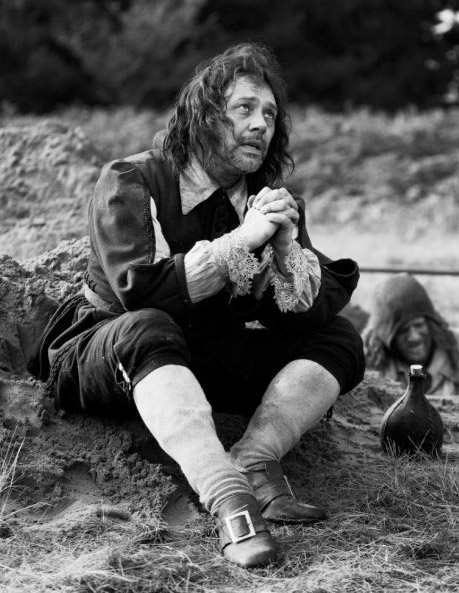
The story is set in the British Civil war of the 1600’s. Whitehead, an alchemist’s assistant, flees from his strict commander and meets a deserter from his own side and two other deserters from “the enemy’s” side. They all try to leave the war behind in search of an alehouse. Meanwhile they have a stew made with the mushrooms they found along the ground. Along the way they meet with an Irishman whom Whitehead had been sent to hunt down for stealing his master’s documents.
The Irishman however tries to get control over the group by letting them know of a treasure in the ground underneath. Whitehead is able to locate the area while the other three are digging or supervising. The exhaustion if digging takes its toll on the two diggers as they get into a fight and one is shot by the one supervising. After all the others run off, the one who did the supervising must now do the digging himself where he learns there’s nothing more than a skull. The Irishman then shoots him and then goes after Whitehead and the one surviving deserter. The two manage to escape and head back to the camp. However one of the deserters originally thought to be dead returns only to get embroiled in a shooting with the Irishman. After an ensuing shootout between the others, Whitehead is the one left standing and he buries the four. After burial, he returns to the hedgerow he originally deserted and finds the three soldiers still standing.
The thing about this movie is that it often appears clueless. All too often I’m sitting there in the theatre wondering what the point of the movie is or what the point of certain scenes were. Was his point about the British Civil War? Was his point about the warring factions: the Royalists and the Roundheads? Was it about the attitude the deserters shared? Was it to be experimental as noted by the many bizarre images? Was it another case of Ben Wheatley getting into his violence obsession? I was left very confused. The violence and even the alleged sodomy part really had me questioning. Even the special visual effects like the exploding sun and the strobe images had me wondering if Wheatley was trying to be experimental in his work.
I will admit that this is just my judgment from watching as I am unfamiliar with Ben Wheatley’s work. He has established a reputation in England with seven years of film making and video making under his belt. He is also primed and ready for the mainstream as he has already been slated to make an American-made film Freakshift and a sci-fi series for HBO in the future. Nevertheless I’ve been left assuming that A Field In England, which is directed by Wheatley and written by his wife Amy Jump, is an experimental picture for Wheatley. I saw nothing in the storyline involving any facts or factoids about the British Civil War and more of a focus on torture, violence and hallucinations. Even the language used in there didn’t sound like talk that would be used from the 17th Century but contemporary times.
The film has already received some acclaim. It has already won a Special Jury Prize at the Karlovy Vary Film Festival and was a Crystal Globe nominee at that festival. It has also made its round of film festivals and has already been released on DVD.
A Field In England appears to be more of a trip of psychedelia and violence than historical documentation or historical fiction. The best I myself can classify this film is an experimental work.
One thing about the Vancouver Film Fest is that they show a lot of films and shorts from upcoming filmmakers. They also show films made by youth or young filmmakers too. The Reel Youth Film Festival–which is a festival all it own and had its premiere at the VIFF on Sunday–showcases films from young filmmakers.
Most of the time whenever there’s a shorts segment show I see, I review all the shorts one by one. Now rather than review the shorts, I will just describe what I saw. Besides I wouldn’t consider it to be fair to critique student films.
The twenty-five films were chosen out of three-hundred entries. The films are from Canada and seven other countries and range from one minute to nine minutes. They consist of animation or live-action. They are filmed on typical motion picture format or typical run-of-the-mill video camera. They range from a played-out stories to music videos to animation exhibits to social messages. Some of the films appeared amateurish in quality, some appeared quite professional in quality. Most can be classified as G-rated works but two films in the festival were rated PG with one even including nudity and masturbation (non-explicit, of course). Three videos included were also part of the United Way’s contest to create a one-minute anti-bullying film. Two videos were from the UNIS student program including one of two girls growing up in a rural area of Vietnam.
The films show a lot through their eyes. A lot of it is often about school life, home life and even the work life they anticipate to have in the coming years. Sometimes they focus on other people such as gypsies, two sisters in Vietnam, a graffiti artist or an elderly man in the town. Sometimes they focus on social issues like bullying, corporate greed, homelessness or drugs. Sometimes they focus on fun aspects like dating, school irritations, social media and even the city they’re proud to call home. Sometimes they even focus on nonsense subjects like the death of a sandwich, being scared by a ghost, an office dork or a certain secret about Barbie we never knew.
The thing is that most of the students doing the filming may or may not want to take filmmaking to further directions in their life. Some–like the directors of Crack, Hank and Light Switch–appear to want to take filmmaking seriously in the future. Many others look like they prefer the direction of animation. Some are just amateurs doing it for fun. I guess that’s what the focus of the Reel Youth Film Festival is: more concerned about getting out their voice or creativity rather than the seriousness or professionalism of the craft.
The screening I saw Sunday evening was actually the World Premiere of the annual Reel Youth Film Festival. There will be one more showing at the VIFF on a Wednesday morning open for student groups. It will be showing at more locations to come and the Festival can act as a fundraiser for your community centre. If you’re interested in screenings or interested in showing it at a place you know, or even if you know a young filmmaker with dreams, just go to: http://www.reelyouth.ca/
One last thing. That evening I went had a ballot for all to fill out. The ballot was asking the voter of their three favorite films and their favorite local film. I don’t know if they will be doing it again in their next showings but I had a chance to pick my favorites:
More
Crack
Being Ernest
Fav Local: Too Old For Fairy Tales
The Reel Youth Film Festival is a good attraction at the VIFF. Who knows? Maybe one of the directors can make it big one day.
The couple of Jim and Kelly get the fright of their lives in their vacation to Willow Creek.
I saw Willow Creek at the Vancouver International Film Festival just for the heck of it. What I got was something familiar but just as thrilling and had its own uniqueness.
The film appears to be videos of a couple, Jim and Kelly, as they are about to search for the mystery of Bigfoot. The legend of bigfoot started in Willow Creek, California one 1967 day when two men names Roger Patterson and Robert Gimlin claimed they sawe him and even provided a picture. The stories have kept on popping as the years went by.
Jim and Kelly head to Willow Creek to camp out in the Rockies and get their own piece of the action. Jim especially is a huge bigfoot enthusiast. Kelly doesn’t seem too into it but is cooperative with Jim nonetheless. They come to the town that’s full of Bigfoot landmark and businesses named Bigfoot. They even go to a Bigfoot diner where they have a Bigfoot burger with the buns shaped like a big foot. They interview residents, visit a Bigfoot museum and even have fun with the Bigfoot statues. They even show a singer who wrote the song Bob and Roger about the legendary discovery. It’s not to say that all has been fun before their camp-out. They did see one person who didn’t like how they were having a mock interview with a Bigfoot statue. They also met another man with an aggressively rude attitude while driving their Humvee down the valley.
That doesn’t stop them from finding another path to set up camp. They set up and then leave temporarily. Once they return they find their tent down and their stuff thrown about. Jim even finds his sock up in a tree. That doesn’t stop them from setting up again. They even sleep in the valley overnight leaving the camera running in hopes of getting a piece of the Bigfoot action. The night is a special bonus for Jim as it’s his chance to finally propose to Kelly. Kelly gives an unexpected answer but Jim’s cool with it.
Overnight they hear a lot of noises. First sounds like banging of rocks. Then sounds like loud growling. Then comes forceful actions outside their tent like their tent body being pushed. Jim and Kelly decide to leave the following morning. As they go to return to their car, Jim still tries to capture some stuff related to Bigfoot like hair from a tree or footprints near the creek. The fun ends when the two learn they’re lost without a map. The two are left stranded in the night where the unexpected happen.
Some of you may say this film sounds very familiar to The Blair Witch Project or Paranormal Activity. That’s definitely what I thought. It may be another spin off that formula but it does have elements of its own. First is of a mysterious phenomenon that’s already hugely popular and the place that made it popular. For those that don’t know, the town of Willow Creek, California is dubbed the Bigfoot Capital Of The World. They not only have all these Bigfoot places as shown in the film but also a Bigfoot festival. Back to the subject of the film, I’m sure one could see themselves doing such a film with other phenomenon like say going to Roswell for the alien phenomenon or Kelowna, BC for the Ogopogo.
Even separate from the subject of the search for Bigfoot was the story is also about the couple too. Blair Witch was of a group of friends together. Paranormal Activity had a couple but there wasn’t much focus on the relationship of the two. Willow Creek had a lot of focus on the relationship of Jim and Kelly first during their moments of fun together then on moments of great fear. Alexie Gilmore and Bryce Johnson gave a great performance as the couple. They made it work with their believable performance.
Bobcat Goldthwait also did a good job of directing and writing the story. Many of you may remember Goldthwait from the 80’s and 90’s with his comedic acting and his stand-up comedy where he had this irritatingly growling voice which people really liked. Filmmaking is something you would not normally associate with Goldthwait but he does make films of his own. This was a good film put together as it had a lot of people in suspense. Also he was at the showing for both the intro and the Q & A. Shows he still has it in terms of stand-up.
Willow Creek may remind you of certain other movies of the past but it’s a good story of its own and is worth watching. However I don’t think it may want you to check out the Bigfoot mystery anytime soon.
Blue Is The Warmest Color is a French lesbian love story that tells more than just a story.
One of the biggest attractions at this year’s Vancouver Film Festival is the French film Blue Is The Warmest Color. The win at the Palme d’Or at the Cannes Film festival will make it an attraction, no doubt. There are some that already know what it’s about and others that don’t. The question is will the crowds be satisfied?
The story starts with Adèle, a young high school student from Paris nearing adulthood and trying to decide what she wants to do with her life especially in times when Europe is going through economic troubles. She’s very involved with her job at day care, but lost in thought during school and unhappy in her relationship with Thomas. She soon leans of her lesbian attractions and starts trying to get as better understanding of it. She even breaks up with Thomas in the process.
Her gay friends from high school introduce her to Paris’ gay scene. She’s exposed to gay culture at one gay bar then visits a lesbian bar for the first time where she meet a tomboy woman with blue hair named Emma. Emma not only introduces Adèle to the lesbian scene but also to her work as an artist. Adèle’s high school friends are surprised with her relationship with Emma but over time the relationship goes from being simply Adèle being the subject of Emma’s art to a full intimate relationship. They share everything. Both are also good with each other’s parents. Both are also supportive as Emma helps with Adèle’s 18th birthday and Adèle cooks for Emma’s art party.
Things mark a turning point at Emma’s art party as Adèle senses something between Emma and Lise, her artistic colleague. Adèle also senses the advances of her boss from the daycare she works at. Eventually she does engage with her boss only for Emma to find out. Emma breaks up with Adèle in a rage leaving Adele frustrated and heartbroken. Months pass and Adèle is now a first grade schoolteacher. Emma is soon to have her first art exhibit opening. They meet again in a café to try and resolve what they can only for Adèle to learn a hard new truth. Adèle goes to the exhibit opening only to leave heartbroken but older and wiser.
The surprising thing about this is how this film tries to portray a relationship between two young girls. Its biggest quality was its truthfulness. It showed a girl-meets-girl scenario that’s often the common way two meet. It shows the relationship and how the two share so much with each other that almost mirrors other relationships. It also shows the friction in relationships with being attracted to another person, infidelity, break-up and aftermath that you will notice in other relationships. I believe that’s the biggest thing about this film. This is not a film that aims for heavy intense dramatic story but rather a film of a lesbian relationship between two young girls that mirrors most relationships people have or have had, possibly even one of your own.
It’s not only about the relationship in the film but also as much about the two main characters too. Adèle is turning 18 and in the midst of deciding what she wants to do with the rest of her life, eventually setting on teaching elementary school. Emma is an older art student and she’s disinterested in conforming to the expectations of the world nor to the art business. Adèle has just recently learned of her same-sex attraction. She slowly tries to learn about it and welcomes it when Emma comes into her life, but questions if she still has attractions and feeling to men. Emma on the other hand knew of her lesbian attraction at 14 and became very comfortable with it. The personality traits of both adds to the story of the relationship as it shows that opposites can attract. It also shows how the two personalities cause friction as Adèle has the common immaturities with an 18 year-old and Emma is a free person but with a fierce attitude.
One of the things of the movie is that it also brings up certain forms of thought. It should not be surprising because Adèle is a student just learning and it’s the student years where one tries to expand their mind. Emma makes mention of Sartre and him creating a intellectual revolution in saying we are ‘condemned to be free.’ Another time we’re in one of Adèle’s science classes seeing a lesson in gravity and one student talks of unavoidable vices and how the Catholic Church tells us that vices should be avoided. There’s also the division of the arts world and the business world that’s also present in the film. Adèle embraces the arts greatly in her own way but wants a career that’s stable especially since the future of the young of France looks uncertain and chooses teaching. Emma on the other hand wants to do what she wants to do and paint what she wants to paint and resists offers to ‘market’ her talent. That pressure of the dilemma of doing what one is born to do vs. doing what pays the rent is a common pressure in the minds of a lot of young people during those years. I remember it was even a pressure for me when I was a college student.
Without a doubt, the biggest thing that got me thinking were the graphic lesbian sex scenes. I know that sex scenes are choreographed but I was still surprised in seeing it’s explicitness. Even though I learned just now that fake genitalia were used, there’s no question that there will be many who will label it ‘pornography.’ In fact the producers refused to edit the film for release in the US and that got it an NC-17 rating.
In all frankness, I did find this a very revealing and intimate look at a lesbian couple but nevertheless I found this film to be too long. I believe if a film is going to be 3 hours long, it should justify its purpose. I really question whether 179 minutes is really necessary for that film because it didn’t appear to justify its length of time. I’m sure the film could’ve done as good a job of telling the story of the relationship if it was even two hours. There are even times when I question if that heavy-duty sexual activity, especially the impulsive activity in the café near the end, really added to the story or was included for shock value. That’s the problem with over-the-top sex scenes in movies: it may be intended for the story but could be taken the wrong way with the public. In fact there were times my ‘inner teenager’ felt like saying: “Owww! Get down!”
The best quality was the acting. Adèle Exarchopoulos did a very good job not just of portraying a young lesbian but also of a young teenage girl on the verge of womanhood. Her mix of a character who’s on the verge of adulthood trying to be more responsible but also dealing with her own immaturities, both behavioral and sexual, made Adèle very believable as a young woman. Lea Seydoux did a great job of playing Emma, the older freer one who’s in control. For those who didn’t notice, Lea is the one who won Owen Wilson’s heart in Midnight In Paris. It’s surprising how she’s completely unrecognizable here. She did a very good job of character transformation. Director/writer Abdelatif Kechiche was really daring in his subject matter and his adaptation of the story. I checked his Wikipedia profile and there’s no mention of himself being gay. Nevertheless He did an excellent job of taking the relationship and making it look so relatable.
The question will remain will Blue Is The Warmest Color go well with the movie-going public? Marketing gay-themes movies to the general public is not an easy task especially with the predominantly heterosexual crowd. Yes there have been films of gay characters and gay relationships that have scored well like Philadelphia, The Hours, Brokeback Mountain and Milk, but it’s still a chancy thing that’s still hit-and-miss with no proven consistent results. Even this being a French-language film may cause some difficulties. I even question if a film like this will score well with the LGBT populations in North America. We should also take in mind that living as a gay man or lesbian in Europe is a lot different that living as a gay man or lesbian in North America. Two different continents with two different social attitudes. Something I question.
Blue Is The Warmest Color is a unique film in its portrayal of a lesbian couple. It has a lot of good qualities that make it worth watching for some but not for others. It all boils down to the individual audient and their tastes and tolerances to decide if this is the right film for them or not.





 Jon The Blogcentric