Oscars 2017 Best Picture Review: Call Me By Your Name

Call Me By
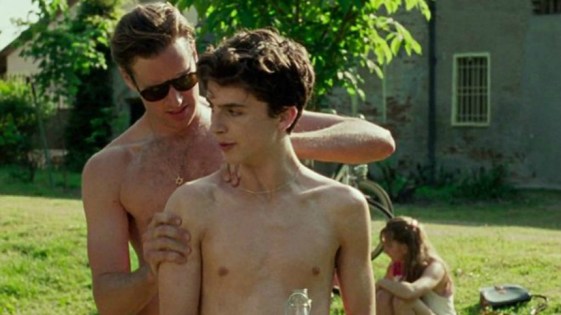
Call Me By Your Name is the story of a son of a professor (played by Timothee Chalamet; right) who falls in love with an academic (played by Armie Hammer).

Call me by your name,

And I’ll call you by mine.

This year’s Best Picture nominees feature a wide variety of themes and subjects. Call Me By Your Name may get note about its gay subject matter, but it’s a lot more.

Elio is a 17 year-old American boy living with his father, a Jewish-American archaeology professor, and his Italian mother in his father’s summer getaway in Northern Italy in the summer of 1983. He has a passion for reading and is prodigious in playing the piano. During the summer, his father invites Oliver, a 24 year-old Jewish American graduate student, up for three months to help with his academic paperwork.

Elio’s first impressions of Oliver are not the best, especially since Elio has to give up his bedroom for him. He finds him arrogant, a show-off, and it annoys Elio when Oliver flirts with one of the local Italian girls he knows. Why should it matter to Elio? He has a girlfriend named Marzia.

However Elio and Oliver develop a friendship as the two spend a lot of time together. You don’t know if something’s happening between them or not. You’re tempted to think the latter as Elio is trying to get more sexual with Marzia and even talks about it at the dinner table. However it becomes obvious Elio is attracted to Oliver as Elio smells his swimsuit and masturbates. Elio makes the first move, but Oliver tells Elio he should not act on his feelings. Even a kiss at the post office doesn’t work on Oliver.

After being distant for a few days, Oliver gives Elio a note to meet him at a tree by midnight. The two kiss. The relationship grows more intimate and more sexual, but they have to keep it a secret, not knowing how their Jewish families will react. Meanwhile Marzia notices Elio has become more distant with her.

Then the time comes when Oliver’s stay is nearing its end. They don’t know what to do. The parents sense the relationship with them, but recommend the two spend a three-day trip in Bergamo. The trip eventually becomes their last intimate time together. Oliver leaves for the US and Elio returns home brokenhearted. Marzia gives him sympathy and agrees to stay friends and his father tells him he should be lucky because a true love like that is rare. A phone call from Oliver on Hanukah where Oliver discloses that he is to marry a woman, leaves Elio with mixed feelings over what should be but will never be.

The story is not as thick on the drama as the other Best Picture nominees. This is a story that simply unravels itself slowly and quietly. Nevertheless the events are consistent and they all fit within the story. This story bears a lot of similarities with Blue Is The Warmest Color where the protagonist is just becoming an adult and just learning of their same-sex attraction after believing they were hetero the whole time. Like Blue, the story is as much about the protagonist’s progression into adulthood and meeting their first same-sex love. Like Blue, the protagonist struggles with their same-sex attraction even as they pursue love with someone of the opposite sex. Also like Blue, it’s about a person of the same gender that sweeps them of their feet. Another element where it’s like Blue is that the story takes place along an artistic setting. While Blue is about Adele becoming infatuated with Emma through her paintings, it’s Elio becoming infatuated with Oliver in Northern Italy in an environment full of art: both natural and man-made. It’s also Oliver becoming infatuated with Elio through his readings and his piano playing. It’s a unique story how two young men– one who’s artistically-inclined and one who’s academically-inclined– both feel like polar opposites at the beginning, but come to love each other over time.

Another element in common with Blue is that it features a lot of elements one would commonly find in French films. We see how the imagery of the Northern Italian country side and even all the art and artifacts in the more urban areas play in with the story. We see how the elements of Oliver’s academia and Elio’s passion for the arts also help colorize the story and even heat up the romance. We also see the environment of the 1980’s and the music in the film adds to the story line. And we especially see how the theme of apricots plays into the romance. It goes from simple academia discussion to an element of their love. The film could have simply been titled Love And Apricots! Such background elements found here are common in French films as it helps provide a lot of value and background to the story and even the themes of the film.

However the biggest difference between Blue and Call Me By Your Name is that the story of Adele meeting Emma is more about meeting her first same-sex love and Emma being more like a chapter in Adele’s life. Call Me By Your Name is different because it’s a case where Olivier is more than Elio’s first same-sex love, Oliver becomes his soul-mate. The film is also a sad love story because it’s a case of what was meant to be can’t be. We don’t learn of the true divide of the two until the very end. While Mr. Perlman is supportive of Elio’s love to Oliver, Oliver has to marry as he knows his parents not only would disapprove, but send him to a psychiatrist for therapy. I won’t say the reason being because Oliver’s family’s Jewish, but more because the US in the early 1980’s was still very hostile towards homosexuality. That was it. Two soul mates from two different worlds that would face their big divide at the end.

The film is the accomplishment of the collaboration of director Luca Guadagnino and scriptwriter James Ivory. Both openly gay, they did a very good job of creating a story about meeting the love of one’s life and placing it in a glorious picturesque background that gives the story its charm and its feel. The film is also an accomplishment for young actor Timothee Chalamet. Most of the film revolved around Elio and Chalamet delivered an excellent job of a 17 year-old who learns of his sexuality through meeting the love of his life. That end scene where the film focuses on his face and his various emotions is as much the best part of Chalamet’s acting as it is a heartbreak for the audience to see.

Also excellent is the acting of Armie Hammer as Oliver. He portrays a man who first appears arrogant, but possesses an excellent gift of making his academia sound almost like poetry. It’s easy to see why Elio would be charmed to him. Also very good is Michael Stuhbarg. He first just appears in the movie simply as the father and a professor, but his characters fruition comes out at the end as he tells Elio of how happy he is Elio loved Oliver. The choreography by Sayombhu Mukdeeprom was spot-on as it was the various camera angles and capturing the Italian beauty that was needed to make the story.

It’s funny how most people thought that Sherwin and Johnathan from the viral animated short In A Heartbeat were to be 2017’s top gay pair on film. Looks like Elio and Oliver overtook them in the end. They may not be as cute-as-a-button as Sherwin and Johnathan, but they are better at giving the romantic feel to their respective film.

Call Me By Your Name may be a gay-themed film, but it’s a lot more. It’s a film that will charm those who see it with its beauty and its story.
Oscars 2017 Best Picture Review: Three Billboards Outside Ebbing, Missouri

Three Billboards
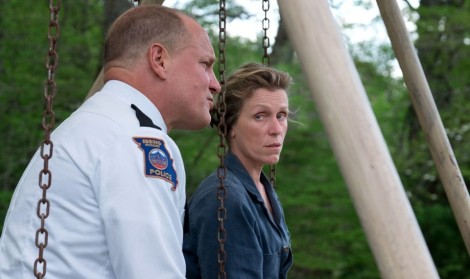
Frances McDormand faces off against Woody Harrelson in Three Billboards Outside Ebbing, Missouri

Three Billboards Outside Ebbing, Missouri is a film that has got a lot of people talking since its release. Talk is of its unique story line, but also of its themes.

The film begins seven months after a teenager from Ebbing, Missouri named Angela Hayes was brutally raped and murdered. The case remains unsolved. Mother Mildred Hayes goes to the office of businessman Red Welby to rent three billboards outside her home and unused for 30 years to post a message directed to the police of Ebbing, especially officer Willoughby, advertising what she sees of a lack of action. She isn’t even afraid to be interviewed by the media where she doesn’t hesitate to mention the negative treatment of African Americans by the police.

This hits the police hard. Chief Willoughby is angry about this, but sympathetic to her situation as DNA tests failed to result in a lead. Officer Jason Dixon is a lot more hostile as he goes about angrily arguing with Mildred, threatening Red, and even arresting Mildred’s African American co-worker from her shop on suspicious marijuana charges. Dixon is the cop in ebbing who has been acting the most hostile to African Americans.

Outside the police, the hype surrounding the billboards creates a lot of heated discussion throughout the town. Many throughout the town find it insensitive as Willoughby is battling terminal pancreas cancer. Robbie is upset about it, especially since it made him a victim of harassment at school. Her ex-husband Charlie, who’s currently dating a 19 year-old named Penelope, even visits and violently blames her for Angela’s death.

Nevertheless Mildred stays firm, even despite knowing she can expect violence any minute. Mildred even receives a surprise when she learned an anonymous person gave her money to keep the signs active for another month. Her dentist makes mention that he heard the story, but she impulsively reacts by using his dental drill on his fingernail. Chief Willoughby brings her into questioning after the incident, but accidentally coughs up blood on her. It’s obvious his cancer is getting worse and he will die very soon. Willoughby is to be in the hospital for a set period of time, but leaves early despite doctor’s demands. Willoughby sets out to the lake to have an idyllic day with his wife Anne and two daughters. The next day, he commits suicide, leaving behind suicide notes for Anne, Mildred and Jason.

The police react with hurt over Willoughby’s death. A male customer in Mildred’s store reacts angrily over his death and even threatens her. Jason reacts to his death by assaulting Red in his office and even throwing him out of the window. This is all witnessed by Ebbing’s new chief of police, who happens to be black. On his first day, the new Chief fires Dixon. Dixon however does not return his badge, claiming it’s missing. Right after Anne reads her suicide note, she angrily hands Mildred her note. Willoughby tells her she’s not responsible for his death and he’s the one who paid for the extra month, admiring her stunt and wishing her justice in the future. Shortly after, the billboards are set ablaze.

Jason learns he has a note from Willoughby waiting at the police office. He goes during a night during the closed hours. Willoughby writes he thinks Dixon would make a great detective as long as he learns to slow down, think and not react so hostile. Mildred reacts to the sign burning by burning the police office, believing it to be closed and no one there. Right in the blaze, Dixon comes falling out of the building in from of Mildred with the suicide note and the Angela Hayes case in his hands. Dixon is hospitalized for his burns in the same room as Red, recovering from Dixon’s assault. Dixon apologizes.

After Dixon is released, he goes into a bar. He comes across the male customer who threatened Mildred. What catches his ear is that he brags about an incident similar to the Angela Hayes murder. Dixon gets into a brawl with him, but only to use the brawl as opportunity to gather DNA evidence for the Angela Hayes case, as well as his Idaho license place number. He even phones Mildred to inform her. However the DNA results prove unsuccessful and that the man was an armed forces officer overseas at the time. To which, Dixon returns his badge.

After an unsuccessful date with James, who witnessed Mildred torch the police officer and cover her up, Mildred sees Charlie on a date with Penelope and even learned he was the one who burned the signs. Mildred gives him a bottle of champagne and tells him to treat her well. The film ends in a way one doesn’t expect and even leaves one questioning.

The thing about this film is that the audience will expect the film to be about something and for it to end in a certain way, but it doesn’t. Most of you probably expect this film to be like a crime story where those billboards succeed in bringing Angela Hayes’ killer to justice, but it ends in a completely different way. The film may be about the themes you think it’s about, but its main theme appears to be something else. Yes, there’s the theme of racism in there. We see that even in the name of racist officer Jason Dixon; possibly a reference to the Mason/Dixon line under which Missouri was a ‘slave state.’ Sure, there’s the theme of police brutality and how they sometimes act before they think, especially in Ebbing as we witness. However the film is a lot more. The film has themes about stories and truths. There are the stories we hear, the ‘truths’ we assume, and what is the real story. We see that in the town of Ebbing, Missouri, we see it in the individual residents, we see it in people’s family members, we see it in their police force, and we see that in the media team filming story after story.

I feel the biggest theme of the film had to be about two people who were polar opposites that somehow found themselves coming together at the end as they’re both fighting their personal demons: demons they both had in common and their own personal demons.

The first demon is their impulsiveness. Mildred Hayes is a mother angry because of what she sees as justice denied. She wants her daughter’s murder solved and hopes those three billboards will be the trick to do it. She appears ignorant towards how her son Robbie feels about the issue and is ignorant over his hurt and depression. Mildred is a woman fast on the draw with what she says and fast on the draw for the way she reacts. We learn how impulsive a person she is when she impulsively attacks her dentist just by simply mentioning he learned of the story. He didn’t voice support for it or show anger for it. He just mentioned it and that’s all it took for her to drill that hole in his fingernail. We also see her impulsiveness as the billboards are set ablaze right after Chief Willoughby’s death and she rushes out to put out the flames. The sign company would later fix the signs as it was part of her policy. Jason Dixon’s impulsiveness and acting before he thinks is also a problem. He feels that using brute force or use arrests to look menacing would get justice done. His violence even becomes a case of revenge on Red Welby. He doesn’t hesitate to use his racism when carrying out his police ‘efforts.’ This all makes the police unit of Ebbing look bad.

Both also had their own separate demons. Jason had his racism problem. It’s evident as he lives with his mother who also has a racist attitude. It’s obvious where he learned to be bigoted. Mildred also had her problem with her family life. She had just gone through a divorce with her abusive husband and is trying to live life again despite everything. Her ex-husband has not lost his abusive ways despite the divorce and even while he’s dating a woman half his age. There’s even the memory of the last words she said to her daughter. Words of anger: “I hope you get raped!” And it happened as she was murdered. Maybe it’s her own personal blame.

The most bizarre thing is that Chief Willoughby eventually ends up being the mediator between the two and hit was his suicide that would lead the two onto their meeting and their eventual road to healing. However it was not without its friction immediately after. First came the hate from the male customer to Mildred , then Jason assaulting Red Welby  witnessed by the new Chief of Police, then Jason’s firing and finally the billboards being torched. It was through the suicide notes to Mildred and Jason that we all learn what really happened despite what everyone else thought. It’s that scene when Jason comes out of the burning police building in from of Mildred holding the Angela Hayes file for protection that it was a turning point for the behavior of both.  The film does a very good job of placement of both the main characters and the events. That scene where Jason is in the hospital recovering from his burns in the same room as Red especially serves as a scene of the main characters knowing they need to change.

One of the top qualities of a film is delivering an ending of a film that the audience doesn’t expect or anticipate, but turns out to be right. We all thought that Mildred’s hopeless date with James would end up in a brawl with Charlie just after Mildred buys the bottle of champagne. Admit it! We all thought she’d smash it across his head! Instead she gives it to him and tells him to treat Penelope well. A sign of her personal changes. Most of us all thought that Jason’s evidence he collected from the brawl with that customer would lead to Angela Hayes’ killer being identified, but it doesn’t. It shows how Jason has become a person who now thinks before he acts, but not the result we hoped for. Even that common plotline in police movies where a cop saves the day after losing his job gets defeated there too.

SPOILER ALERT – Do Not Read This Paragraph If You Don’t Want To Know The Ending: That end-scene where we see Mildred and Jason in the same car on their vigilante mission against that man will surprise a lot of people and even ask “That’s it?” I even thought that too. However it does seem appropriate as it’s a case of two impulsive people who were two polar opposites and even at each other’s throats find themselves together as allies. It even makes one wonder if the ‘abrupt’ ending was the right decision. However I constantly remind myself of what Sean Penn said many years ago: “Movies should leave people asking questions rather than give the answers.” Maybe that’s the quality of the ending; get the audience to decide for themselves what happens next.

This film is the best work of writer/director Martin McDonagh. Dark comedies appear to be McDonagh’s expertise as he has delivered before with In Bruges and Seven Psychopaths. Here, McDonagh delivers something I thought would be impossible. I was surprised to learn this is a drama-comedy of a mother trying to get justice for the rape-murder of her daughter. I find nothing funny at all about rape and murder, or even the hurt family members go through. However McDonagh achieved it through clever plotting of the story and the events as well as placing of the humorous dialogue without compromising the drama behind it. He delivers a story that’s very thematic and gets people thinking.

The acting performances definitely boosted the film’s excellence. Frances McDormand’s performance as the protagonist was an excellent mix of both drama and humor. For those who saw her in Fargo, you’ll know she knows how to make that work. That’s where she won her Best Actress Oscar. Her ability in handling a character that’s both dramatic and humorous again shines here and could win her another Oscar. Also Oscar-worthy is Sam Rockwell who plays what first appears to be a stock character of a redneck cop, but later shows his dimension after the later chain of events. Also a standout is Woody Harrelson. He delivers an excellent performance as the cop under fire who handles the billboard situation cooler than Dixon and even uses his suicide as the event to start the resolve. His character even makes the words in his suicide notes sound like poetry. There were also minor supporting performances that stood out and owned the film like Lucas Hedges as the son hurting inside, Caleb Landry Jones as the well-meaning businessman, Peter Dinklage as the man trying to win Mildred despite his hopeless chances, Abbie Cornish as the wife of the chief, and John Hawkes as the abusive ex-husband trying to change.

The film also features a lot of standout technical aspects too. There’s the cinematography from Ben Davis that add to the power of the story. There’s the editing from Jon Gregory that places the chain of events and plotlines together in a creative way. There’s also the addition of music from the mix of classic songs from the 60’s and 70’s to the blending of Carter Burwell’s score in between scenes

Three Billboards Outside Ebbing, Missouri is a film whose best qualities are delivering a story different from what you thought it would end up being. You will appreciate it for being just that.