Movie Review: Saving Mr. Banks

Emma Thompson portrays the author of Mary Poppins to be like someone we never expected her to be at all in Saving Mr. Banks.
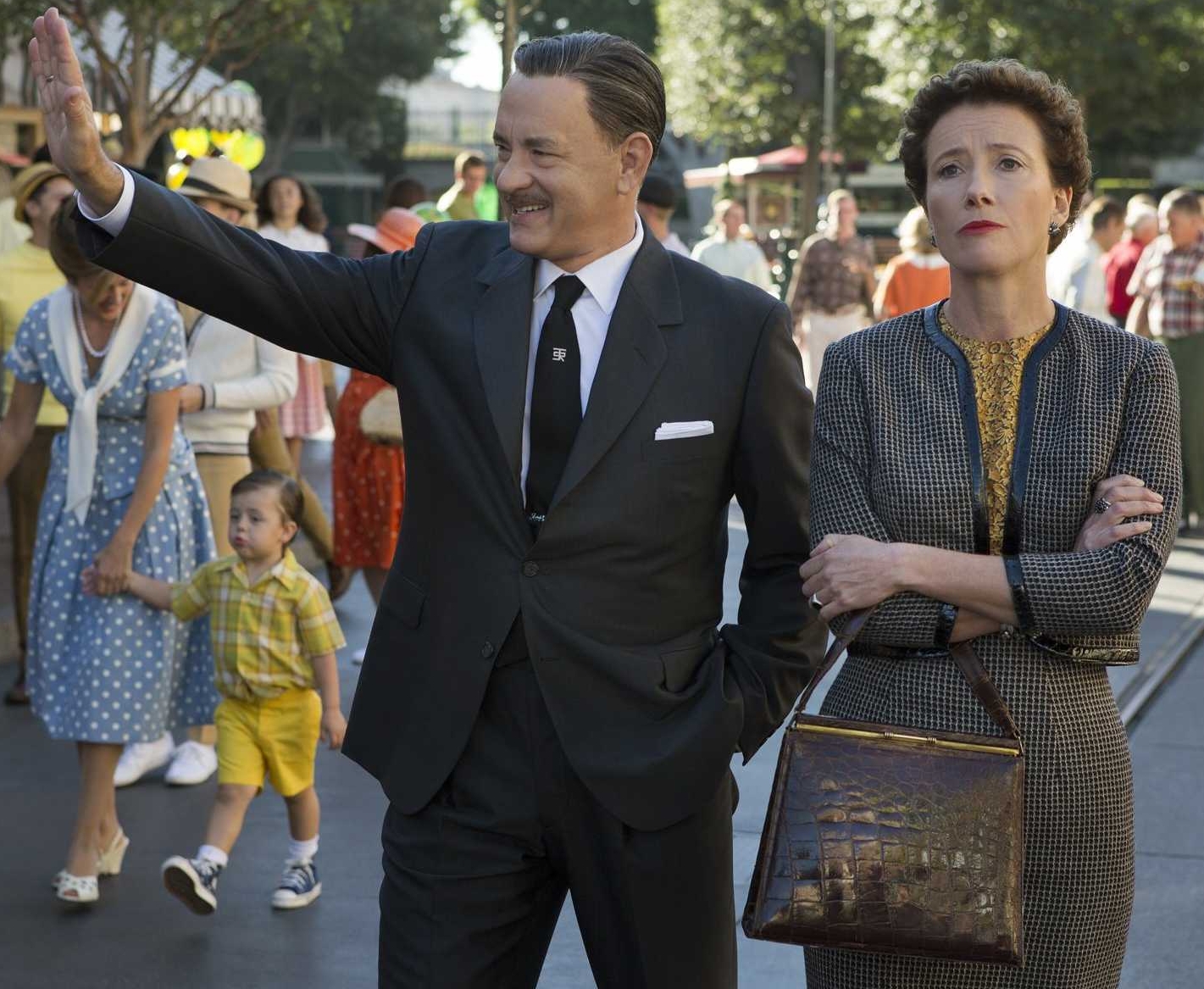
Walt Disney (Tom Hanks) tries to get a stubborn P.L. Travers (Emma Thompson)  to agree to a movie version of Mary Poppins in Saving Mr. Banks.

Saving Mr. Banks is to be the story of how Walt Disney was able to bring Mary Poppins to the big screen. The question is not just will it bring the story to life but will it make people want to see it on the big screen?

It’s 1961 and Mary Poppins author P.L. Travers is struggling financially. Walt Disney has been trying to get Travers to agree to allow him to adapt Mary Poppins to the big screen for 20 years on account of a promise he made to his daughter. Travers finally agrees, albeit reluctantly but she’s extremely distrustful of Walt. She has stern expectations of Mary being adapted to the big screen such as no musical numbers, no Dick Van Dyke, none of the Disney frilliness and no animation.

Things do not start well for Mrs. Travers. She’s unhappy in Los Angeles with the carefree attitude of the city and by the happy ways Walt Disney, his co-workers and even Ralph the chauffeur do business. Not even Walt’s familiar manners warm up well to Travers.  Things get harder as Don DaGradi does the script, the Sherman brothers compose the music and Walt designs the characters. She even has a problem with Mary Poppins being the epitome of sentiment and whimsy, believing she’s the opposite of that. That surprises the Disney crew as they’ve always viewed Poppins as fantastical and known Travers to have a fantastical childhood, as seen through flashbacks.

However things take a turn for the worse when Travers sees the depiction of George Banks. She believes he is completely off-base  and leaves distraught. It’s then where the Disney studio realizes that Mary Poppins and its characters are very personal to Travers. It’s through flashbacks that we learn that Travers Goff, her father and the inspiration of George Banks, was indeed a banker but valued his imagination more than work in the real world. Things became too crushing for Travers and he would lose his job and his sanity to alcoholism. Her mother was the stern one of the family who even attempted suicide once.

The Disney team are persistent and try to work things out. Walt even offers to take Ms. Travers to Disneyland to lighten her mood. Things improve. The trip to Disneyland improves her embrace of the imagination, albeit slightly. Travers also has an unlikely friendship with Ralph the chauffeur as he tells her his handicapped daughter loves the novel. Things really improve when she walks in and hears George Banks is given a happier manner and has him singing ‘Let’s Go Fly A Kite’ at the end. But just when things seem to be working out, she learns of dancing penguins in a scene. That infuriates Travers to the point she refuses to Walt the film rites and flies back to London.

Once Disney learns that P.L. Travers is actually an Australian names Helen Goff, he departs to London for one last chance. Walt arrives at Travers’ home and opens up to her during his visit. He tells her that he too had a troubling childhood with a stern father and growing up poor. It was through his animation and his happy characters that he was able to heal and he tells Travers that having a creative imagination would also help in her healing of her disappointment with the world. She eventually agrees but she’s not invited to the 1964 premiere for fear of her panning it. Once news hits her, she shows up at Disney studios demanding to be invited. Her reactions at the premiere are unexpected but those of us who’ve seen Mary Poppins would know the movie would have a happy ending.

There have been movies before about the making some of the most famous children’s stories. I even remember seeing Finding Neverland a few years ago. The film of an adaptation of a novel to movie is not something one would call a fresh idea. Nevertheless it is unique this case of adapting the Mary Poppins novel to the big screen.

We should keep in mind that to make a film like this, it would have to be entertaining and keep audiences interested. It succeeds with some surprises. First is the personality of P.L. Travers. It’s funny that we see this uppity personally and we’re left thinking: “Are you sure this prig is the author of Mary Poppins?” Second is Travers’ feelings towards Disney’s style of creativity and how on earth it would ever be adapted. Crazy thing is we all know it was adapted. Even still the film makes you forget that and wonder if it will, even as the Sherman brothers sing the movie’s songs we all know. Third is that the biggest issue wasn’t the depiction of Mary but of George Banks. Travers designed George to be kind like her own father while Walt was in favor of a stern George Banks like his own father. You could understand how this would cause the two to collide.

The movie isn’t just of the dealmaking for the adaptation. The film is also of Travers’ own inspiration of Mary Poppins from her own childhood. We see how over time Travers had a nanny she thought as magical as her father was dying. We also see her father as a banker but one who believed in fantasy and the imagination. Even after he died, the spirit of his imagination lived on in Travers, even as she tended to her younger sisters and dealt with a troubled mother. Many of us are already familiar with Walt Disney and his fun ways. However we learn more of P.L. Travers and of her upbringing and her own imagination. That’s a good thing because I don’t think most of us ever did. None of us ever expected the author of Mary Poppins to be the stern type. However she was one who would try to come to terms with her imagination as noted in a scene where she’s in bed and confides to hugging a stuffed Pluto.

People should not be fooled too easily. There are many people who think this will be a family movie since this is done by Disney and since this a depiction of Walt trying to convince Mary Poppins to agree to let him adapt the novel to screen. However the film’s depiction of Travers’ troubled childhood as Ginty is what keeps it from being family friendly. Elements like an alcoholic father and a suicidal mother are not entirely for a family audience. It may be okay to bring older children to the film but younger ones are not a good idea.

It’s very rare for a female lead to steal a movie from Tom Hanks but Emma Thompson does just that. She was excellent in embodying P.L. Travers as an uptight prig who still harbored a love for the imagination, though only Walt knew it. She also depicted Travers as a person who still struggled with the memory of the father she cherished. We should be reminded that people that produced some of the most delightful entertainment came from troubled childhood, even Walt himself. Tom Hanks delivers a performance that is more a case of character acting than say mastering a difficult part like he did in Captain Phillips. He was very good at capturing Walt’s fun imaginative way of doing business and he made Walt seem like the Wizard Of Oz at times.

Colin Farrell also did a good job as Travers Goff, the father who was troubled by his job but valued his imagination. Paul Giamatti’s role as Ralph the chauffeur was small but he was able to get notice of his own. The other actors with smaller roles, especially those in Walt’s office, added their own pieces and elements to the movie as well. John Lee Hancock did a good job in directing but nothing that really stood out for this film year. Kelly Marcel and Sue Smith do their best in making a story for family audiences with their script. Technical items like the set design and costumes were excellently done in fitting the times they were made in. And Thomas Newman did a great job with the score.

Saving Mr. Banks is a delightful movie despite being too polished and ‘safe’ to excel amongst the top Oscar contenders of the year. It’s biggest success is the acting of its actors and the telling of the story of an author we never new. Even with scenes of the author’s troubled childhood, it succeeds in entertaining young and old.

Movie Review: Nebraska

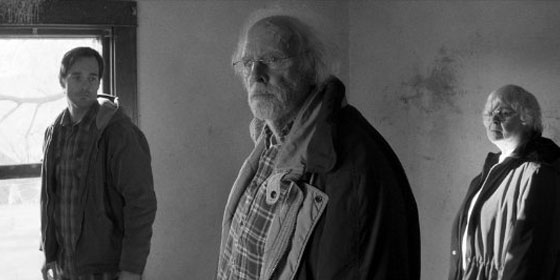
Will Forte (left), Bruce Dern (centre) and June Squibb (right) go on what appears to be a surprise homecoming, only to not be in Nebraska.

A film like Nebraska isn’t the type of film that would normally draw a huge crowd but those lucky enough to see it will be quite surprised by it.

The movie begins with Woody Grant walking past the city limits of Billings, Montana and being stopped by the police. Why? He’s making his way to Lincoln, Nebraska to collect a $1,000,000 prize he believes he’s won in a sweepstakes. Son David and wife Kate let him know it’s a trick to get him to buy magazines. Woody is not a sharp tool. He easily gets injured and loses simple things like his dentures during walks. In fact David and his brother Ross have talked of putting him in a retirement home. Nevertheless he insists he’s won and he’s determined to collect it. David makes a big decision. He decides to take his father to Lincoln, Nebraska to find out for himself and get it over with. He doesn’t have much to lose. He has a solid job and his girlfriend recently left him because he wouldn’t marry her.

Before hitting Lincoln, Woody’s able to have his father stay at his brother Ray and Aunt Martha’s house in the nearby Nebraska town of Hawthorne for a couple of nights before. David goes for the visit and meets family he hasn’t seen in a long time. His mother joins up and soon the family learns of the people they grew up with and the places they visited. Some information about people coming out of Kate’s lips is too much for David to handle. They even visit the old farmhouse Woody spent his childhood in. It’s also where David learns of Woody’s drinking problem and how it kept him from being a successful farmer over in Hawthorne.

Ross joins up the next day leaving the wife and kids at home. Soon Woody tells everyone–family and friends at the bar– that he’s won a $1,000,000 prize. Everyone believes it and soon he becomes a celebrity even catching the attention of the local newspaper. To add to the problem, David and Kate insists to everyone he won nothing but no one believes them. Making things worse, David hears from family members and the town big man Ed Pegram how they lost money to Woody and they now want it back. David finds it hard to defend his father since the people know more about him, especially Ed as he has a menacing character. June however is able to defend Woody to the family claiming they owe him instead. She even reveals that Ed actually stole a compressor from Woody.

It’s not until an attempted robbery from the two nephews that the truth is revealed to the family and to the townspeople as Ed Pegram reads the letter mockingly to the bar crowd. Even though Woody is humiliated, David gives Ed something he’ll never forget. It’s after that incident David drives Woody to Lincoln to find out the truth. Even though Woody finds out the truth, the movie ends on a positive note and gives one the impression Woody leaves town as a winner as he drives by and his true friends from that town are revealed.

I know that Alexander Payne has done movies where a person’s struggle is depicted alongside the geography or the scenery of where the incident is taking place. This is something else. This is a movie where one gets a feel of the town or even a feel of the protagonist’s past life as the story is taking place. It’s interesting as Woody returns to the town of his upbringing how people make him feel welcome and even consider him a hero after hearing of his ‘prize.’ Also as interesting how these people like past friends and family try to get a piece of the action. They even know of his past to make up things where Woody owes them. You’ll soon learn that maybe Woody isn’t even part of the town or even part of the family. You’d probably understand why Woody moved to Billings. Because the town was too nasty to him. I think that’s why the film was done in black and white, to show the one-sidedness of coming from a small town. Even seeing how Aunt Martha knocks Woody’s past drinking while taking the criminal acts of her sons Cole and Bart with a grain of salt makes you wonder.

This movie is another accomplishment of Alexander Payne. I’ve never once been disappointed by him. This is another good one as it was a nominee for the Palme d’Or at the Cannes Film Festival. I know I talk a lot of Payne’s films being a man’s personal trial in the middle of their geography. Payne does it again but he doesn’t just simply show the geography of a small Nebraska town here. He gives a feel for it. Sometimes he can make one feel like a part of the family or a part of the town in Nebraska. I believe that was the best quality of the movie. Also you could say this film is a bit of a ‘homecoming’ for Payne. About Schmidt was the last movie he did with it set in Nebraska, albeit temporarily in Omaha. He’s gone from the Rocky Mountain valleys in About Schmidt to California’s wine country in Sideways to Hawaii in The Descendants to returning back to Nebraska here. Seems right since he is Omaha-born and raised. Also excellent is the script from South Dakota-born writer Bob Nelson. This is his first script for a feature-length film and he does an excellent job. Being born in South Dakota, I think Nelson intends for Hawthorne, Nebraska to appear like your typical small town.

Sure director Payne and writer Nelson get kudos but the story wouldn’t be without the fine acting performances. Bruce Dern was excellent playing an aging man who’s slow on wits and is easily prey to other people. He succeeds in winning feelings from the audience. It’s no wonder the performance won Best Actor in Cannes. Will Forte was also excellent in playing the son who is both caught in the frustration of the lie everyone including his father believes and starts to wonder if he really knows his father. You can see it in his face as it appears the Hawthorners appear to know more about Woody than David. June Squibb was also great as the mother. Some of you may recognize her as Warren Schmidt’s wife in About Schmidt. Here she was quite the scene stealer as the mother who had quite an outlandish mouth but was also tough as nails with those who tried to bully woody into paying. At first you think Kate’s a bad wife for Woody but then you learn she’s the best woman for him.

Even though Bruce, June and Will were the standout performances of the movie, there were other good performances too. Stacy Keach also delivered a great performance as Ed Pegram, the town’s head honcho. His scene-stealing performance kind of reminds of you of a lot of Texas cowboys that act like big shots. Makes you feel that punch in the face David gave him was well-deserved. Tim Driscoll and Devin Ratray were also great as the nephews who’d do anything to get a piece of the action. Actually the film had an excellent ensemble and an excellent set of characters of family and townspeople. It’s a shame they weren’t nominated for the SAG award for Best Movie Ensemble. In addition there was great cinematography from Phedon Papamichael and good music from Mark Orton.

Nebraska is an excellent film for those that want to get off the beaten path. It starts off with a plot that normally would make for a ridiculous movie but gives you an accomplishment in the end.

Movie Review: Twelve Years A Slave

Chiwetel Ejoifor (right) recreates Solomon Northup's slavery expereince with brutal honsety in Twelve Years A Slave.
Chiwetel Ejiofor (right) recreates Solomon Northup’s slavery experience with brutal honesty in the film adaptation of Twelve Years A Slave.

Twelve Years A Slave is a landmark book for what it helped to overthrow. Adapting it to the big screen is a new challenge. Did the attempt from British director Steve McQueen work?

The movie begins with Solomon Northup in captivity. However it flashes back to when he lived as a free man in a town in New York. New York was a free state during the days of slavery and blacks were free even to the point where they could be businessmen. However he was tricked during a trip one day by slavetraders into touring with the circus. He was drunk that night and the following morning he finds himself chained to a floor and beaten. He was forced through brutal punishment to accept the name Platt and was sold in New Orleans to plantation owner William Ford.

His first experiences as a slave were not bad under Ford. Ford actually treats him with enough respect for Northup to give him a violin in gratitude. However things change when his boss becomes carpenter John Tibeats. Tibeats is terrible as he mocks all his slaves but takes a special dislike to Northup. Tensions go from Tibeats harassing Northup to the two fighting to Tibeats getting his men to hang Northup. Ford notices this and sells Northup away from Tibeats to cotton planter Edwin Epps.

Both Ford and Northup know Epps is cruel to his slaves and believes his right to be cruel to them is in the Bible. Northup insists to Ford that he’s a free man but Ford believes it’s not for him to say because he has a debt to pay. Epps places a demand on all his slaves they pick 200 pounds of cotton a day or be whipped. Throughout his stay, he is subject to brutal treatment from the Eppses and even a plague of the cotton worm where he and the other slaves are sent away to a temporary field. He is even betrayed in his attempts to freedom and has his letter to New York burned by Epps.

Meanwhile Epps is observant to the other brutality going on. Most notably to the female slave Patsey. She is excellent at picking cotton but has caught the jealous of Edwin Epps’ wife who repeatedly beats her. Edwin himself rapes her repeatedly and worsens over time. Patsey’s mental condition worsens to the point where she wants a suicide and even welcomes a whipping from Solomon ordered by Mistress Epps.

There is a ray of hope as Northup works construction along with a Canadian named Bass. Northup knows of Bass’ opposition to slavery by how much it disgusts Edwin Epps. Northup confides to Bass of his experiences. Northup again attempts a letter to pass on but Bass agrees to do so despite that being a risk to his life. The movie ends on a bittersweet positive note and provides information on what happened after the novel was published.

I’ll admit I’ve never read the actual book ‘Twelve Years A Slave.’ Nevertheless I consider it an accomplishment to bring it to the big screen for the first time. It gave an excellent depiction of the horrors and brutalities the slaves went through during the times of slavery. Those who don’t know all the details of what was all involved with slavery other than simply owning black people don’t know all the details. The movie in itself was a recreation of the slave life Northup experienced. This is a life that Northup experienced and witnessed and was a life with thousands or even millions of slaves experienced in the United States. It will shed quite a light and will give all the reason why slavery had to be ended. It will also surprise you with the fact that Solomon was one of the few slaves to escape to freedom. It will even cause you to think of the slaves that weren’t lucky enough to be free.

One thing that made me question was the state of slavery laws at the time. I may be Canadian but I knew of the Dred Scott Decision that had a bearing to the Civil War and the eventual end of slavery. What surprised me is that Northup was a free man living in New York State when he was kidnapped and sold off to Southern slave owners. That had me thinking there must have been some laws against kidnappings and even selling of African Americans from free states. I’m actually surprised to see that kidnappings of free black people by Southern slave traders happened back then. Makes me wonder if there were those that unlike Northup never got their freedom back.

Another thing that caught my attention was the scene where Edwin Epps whips Solomon mercilessly. A white man tries to stop him but he rejects, saying; “he’s my property.” It’s a reminder of the reason why African-American slaves were treated so abhorrently. The white owners looked at them as property that they can do whatever they wanted to them. They could whip them all they wanted or even kill them. They could even be raped in the case of Patsey. None of it would matter because they weren’t considered people. They were considered ‘property.’ And one thing that will strike you once you leave the theatre was how much the Southern states treasured slavery. This was something they valued to the point that when it became clear slavery would end in the United States, they declared their own nation: The Confederate States of America. They would even fight a brutal Civil War over four years with hundreds of thousands of soldiers killed for the sake of keeping their slavery, in which they’d eventually lose. Really makes you think.

The biggest accolade for the efforts given to the film have to be given to director Steve McQueen. Steve is actually a mostly unknown director in the past who had previously directed two previous feature-length films and 23 shorts. Watching Twelve Years A Slave will cause many including myself not to believe this is only his third feature-length. This is excellent and impressive. He did an excellent job of recreating the story and also bringing out excellent performances of actors famous, well-accomplished and those short on experience. What’s also surprising is that Steve McQueen is not African-American but British of Grenadian descent. I too find it surprising that it’s a black British director that has best depicted American slavery to the big screen. He already looks poised to become the third black director to be nominated for a Best Director Oscar. Not even Spike Lee was nominated in that category. The big buzz is will he win? If he does, he’ll be the first black director to do so.

The acting was also excellent. Chiwetel Ejiofor was excellent as Solomon Northup. It was not only of what he said and what he did but also what he witnessed that made his performance of Solomon. Supporting performances were also excellent too. Lupita Nyong’o was the one that stood the most out as Patsey: a slave that’s as tortured inside as outside. This is actually Lupita’s feature-length film debut. Excellent work. Michael Fassbender was also excellent as Edwin Epps. His jerk attitude made him that hateable. Sarah Paulson was also excellent as Mistress Epps. Even though her role didn’t have as much dimension as Edwin, she was just as hateable. Both made it look like the Eppses had a lust for blood and abuse. Even the performances from Benedict Cumberbatch, Brad Pitt and Paul Dano added to the film.

John Ridley did an excellent job of adapting Northup’s biography to the big screen. This is surprising as Ridley has more of a reputation for writing for television comedy. However he did write the story for 1999’s Three Kings. This was an excellent job for him. Sean Bobbitt did an excellent job of cinematography and Hans Zimmer did a great job for composing original music.

Twelve Years A Slave is an accomplishment of a film. An accomplishment in both acting and directing. The story may be too unwatchable for some but its brutal honesty is its best quality and help make it one of the best films of 2013.

Movie Review – The Hunger Games: Catching Fire

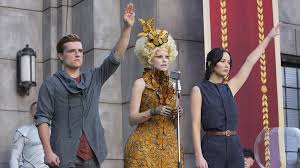
Catching Fire does include some elements that keeps it being too much like the first Hunger Games.

NOTE: I know this is awfully late to post a review of Catching Fire but I’ve had another lack of ambition in terms of writing this year. Those of you who’ve been subscribed to my blog for more than a year will remember the six week gap that began after the Oscars and left me with a March of nothing. Fortunately this gap ends today. However it explains this review coming awfully late.

I’m sure most of you have already seen The Hunger Games: Catching Fire. Heck, there are still people seeing it as it’s still in the Top 10 at the box office this weekend and about to pass the $400 million mark. In this review, I won’t focus too much on the nitty gritty as I normally do. However I will post my thoughts on it as I was watching. Being one who has not read the novels, I will have a lot to say from what I remember seeing.

Those of you who have read my review of the original Hunger Games may have gotten a sense I did not read the novels. Especially since I made guesses about what was to happen in future movies. The funny thing is in the first movie, I thought the new love between Katniss and Peeta was real. I should have known Katniss did it for the sake of both of them winning. If it was a real relationship, why would boyfriend Gale applaud at the end?

One thing about the ending of the first. It provides the catharsis for President Snow to visit Katniss and even threaten her. The funny thing about the beginning is that it tells the whole truth about Katniss’ love triangle. There’s Gale whom she truly loves. And there’s Peeta whom she faked love for the both of them winning but he truly loves her and is crushed with the truth. There’s also the whole Hunger Games charade. Champions have to tour year after year across the districts. That mean the Katniss/Peeta charade has to be kept alive. It’s not an easy thing to do as people see them as this thing and rebels are executed by militia. Even harder is Peeta adding to the charade by proposing marriage to Katniss.

As one who hasn’t read the novel, the Quarter Quell came to me as a total surprise. Each year you have kids killing for the win and now you have winners killing each other off? I’m sure there were others who thought: “Not another Hunger Games. Twenty-four winners competing to be the one still alive? Why?” I was confused by it all, even though I was made aware that this was part of President Snow’s plan. I was also thinking is this was going to be your typical movie sequel where they rehash the elements of the original.

The Quarter Quell does appear to be redundant as it involves a parade around the stadium and even the contestants introducing themselves to the crowd and showing off their costumes. Even the new high-tech training does appear to be a case of rehashing from the first. Having Heymitch back as their coach and Cinna back as their costumer didn’t make things that much fresher either. There was one new element. There’s Katniss interacting and even befriending some of the other contestants before the competition.

Then comes the actual competition. There comes deadly rivalry from some of the contestants. There’s even potential fatality from some of the virtual effects created by the games masters. The way Katniss reaches out and befriends some of the other contestants is only slightly repetitive of the first but it does have its own original moments with her befriending of Mags, Wiress, Beetee and even the obnoxious Johanna. The Katniss/Peeta relationship in this movie had me on the untrusting side. It left me wondering if this was real or fake for the show again. Even the addition of Finnick leaves me wondering about the love triangle as I wondered is he really helping or is he trying to get a piece of Katniss?

It isn’t until the very end of the movie that I learned that the real battle in this Hunger Games movie is not Katniss against the other competitors but actually Katniss against the whole Hunger Games institution. It was obvious she knew what President Snow was up to. It also gave Katniss a sense that the other contestants in the Quarter Quell were as much a victim of this whole Hunger Games system as she was. It was evident that they all wanted out and would be lucky to survive getting out. The ending of the movie left me with a lot of questions about what to expect for the final part of the trilogy. Make that ‘parts’ since the final novel will follow the examples of Harry Potter and Twilight and divide it into two movies. Way to go, Hollywood!

Now onto the technical stuff. Jennifer Lawrence was good but not that spectacular. I’ll admit that I compared it to her Oscar-winning role of Silver Linings Playbook and it just doesn’t compare. It’s hard not to now! Josh Hutcherson turned Peeta from a lonely homely boy to a boy now angry and hurting. Sam Claflin helped make Finnick the one fresh character that added to the movie this time around. Actually the characters of the contestants of the Quarter Quell were all quite good in terms of both their characterizations and in making their characters human and likeable. The characters of those pulling the strings of the Hunger Games like Stanley Tucci’s Caesar and Elizabeth Banks’ Effie may have come across as irritating and stockish at times but they added to the story. Actually they added to the theme of the movie of how there are these cartoonish people pulling the strings of the show while the contestants are mostly the real 3D people in this game. Even though they have a show to put on and a game to kill for the win, they still feel and hurt.

Now onto the technical stuff. Francis Lawrence did a good job of directing, even though there was nothing fresh added. Actually he’s slated to direct both Mockingjay movies. We’ll see how he works it. Once again I admit I’ve never read the novel so I can’t say how good of an adaptation Simon Beaufoy and Michael De Bruyn did. I will say that it did seem too much like the first. James Newton Howard did a very good job in terms of the score. The visual effects team did an excellent job with the effects. Trish Summerville did a very good job with the costumes. It’s unfortunate that the first movie’s costumes didn’t get an Oscar nomination. I shouldn’t be surprised since the Academy normally favors timepiece costuming over fantasy costuming. But is it deserving, even again here.

The Hunger Games: Catching Fire is bound to get a lot of people who haven’t read the novel surprised, then questioning, then surprised and then guessing at the end what to expect next. The good thing about this movie is that even though there is some redundancy, it doesn’t resort to Twilight’s trick of focusing on hot guys. It knows it’s mostly about the drama and sticks to it. That’s the best thing and I hope they keep it up for the two Mockingjay movies.

2014 World Cup Group Stage: Luck Of The Draw

The stage was set Friday to decide the eight First Round groups for next year's FIFA World Cup in Brazil.
The stage was set Friday to decide the eight First Round groups for next year’s FIFA World Cup in Brazil.

You could say it took a lot to determine the 32 countries that qualified for the 2014 FIFA World Cup: thirty months, six confederations, 204 countries or teams, 820 matches, and a total of 2303 goals to decide the 31 berths up for grabs. Finally on November 20th, all thirty-one berths up for contention were all decided. However deciding the eight groups of four for the Group Stage was also another tricky matter. Yeah, just when you thought it would get easier.

Yesterday, the eight First Round groups were decided at the Costa de Sauipe resort in Bahia. It was broadcast live around the world. I myself saw the live telecast at 9am my time. The draw to form the eight groups for each World Cup involves a process with a lot of thought: four countries per group with continental separation. That would mean each continent other than Europe would have only one of their countries in a First Round group. Europe by means of fielding thirteen berths this World Cup would have a maximum of two countries per group. That’s always been the case since the World Cup expanded to 32 countries back in 1998.

The respective continent’s confederations contested their matches conducted their own qualifying format for deciding their qualifiers for the World Cup. There were even two countries that qualified via a ‘wildcard’ berth where they’d have to play a team from another continent twice. The thirty-two qualifying countries were all decided more than two weeks ago. Seeded teams which I will talk about later are in italics:

  • Host Nation: Brazil
  • South America: Argentina, Chile, Colombia, Ecuador, Uruguay
  • Europe: Belgium, Bosnia-Hercegovina, Croatia, England, France, Germany, Greece, Italy, Netherlands, Portugal, Russia, Spain, Switzerland
  • Africa: Algeria, Cameroon, Ghana, Ivory Coast, Nigeria
  • The CONCACAF (North and Central America, Caribbean): Costa Rica, Honduras, Mexico, U.S.A.
  • Asia: Australia, Iran, Japan, South Korea

That list of qualifiers does provide for some interesting notes. Australia has played for the Asian confederation (AFC) since 2006 because of its superiority in Oceania’s confederation (OFC). Also Spain, the defending World Cup nation, still had to play qualifying matches as the defending World Cup team no longer qualifies its own automatic berth: a FIFA rule in effect starting with the 2006 World Cup.

Dividing the groups into four teams of appropriate continental separation would include something else involved: a seeded pot. Host Brazil was already allocated to Group A: a FIFA regulation in effect starting with the 2006 World Cup. Each of the other seven groups would have to have one of the teams amongst the Top 7 of FIFA’s World rankings from October 2013. In order from 1st to 7th, they were:

  • Spain
  • Germany
  • Argentina
  • Colombia
  • Belgium
  • Uruguay
  • Switzerland

There always was a seeded pot for drawing groups for the World Cup that would involve a complicated system involving a multitude of ranks, previous World Cup places and other factors. This time around the seeding was just on that one FIFA ranking list. Sure, it was odd to see countries normally not amongst the top seeds like Belgium and Switzerland in the mix but finally creating a seeded pot was that simple.

The pots meant for continental separation amongst the groups were not that easy. One easy element was that Pot 3 consisted of teams from Asia and the CONCACAF: continents that both fielded four berths. As you could tell, the seeded pot consisted of three South American teams and four European teams. That’s where complications and confusions would arise as Pot 2 would consist of Africa and South America. Pot 2 ended up with seven countries since three of South America’s five berths were seeded teams. Pot 4 consisted of the nine non-seeded European teams. So how do you solve this problem of those pots with the continental maximums?

Yeah, explaining continental limits and parities is easy. Making it happen in the groups this year is the hard part. So FIFA under Sepp Blatter decided to make the following procedures to even it up:

  • Draw one European team from Pot 4 and place into Pot 2 for four even pots of eight with the teams assuming the first position of their group.
  • Draw from Pot 1 to decide the first teams for Groups B to H.
  • Draw amongst the four seeded South American teams and place the drawn out team in auxiliary pot  ‘Pot X’ for the sake of continental separation.
  • Place the European team drawn out of Pot 3 with the South American team from Pot X.
  • Draw from the remaining pots to determine the other qualifying teams.
  • After the Pot 1 teams were drawn, draw the positions of the teams of the other three groups as the draw goes group by group.

Yes, it’s hard to make sense. It’s hard to explain. And it’s hard to make it all work out. It’s not like the last World Cup where there were five seeded European teams and you’d easily have a European pot of eight. Nevertheless it was accomplished. The European team from Pot 3 that was drawn out first was Italy. The seeded South American team that was put into Pot X was Uruguay which was already drawn to Group D. That would mean Uruguay and Italy would both be in the same group. The remaining teams would also be drawn out evenly.

So after all that confusion and fretting, all the First Round groups were drawn out. The parity and continental separations took place as FIFA wanted it: maximum two European teams and maximum one team from the other continents in each group. So here are the eight First Round groups for the 2014 FIFA World Cup:

Group A

  • Brazil
  • Croatia
  • Mexico
  • Cameroon

Group B

  • Spain
  • Netherlands
  • Chile
  • Australia

Group C

  • Colombia
  • Greece
  • Ivory Coast
  • Japan

Group D

  • Uruguay
  • Costa Rica
  • England
  • Italy

Group E

  • Switzerland
  • Ecuador
  • France
  • Honduras

Group F

  • Argentina
  • Bosnia-Hercegovina
  • Iran
  • Nigeria

Group G

  • Germany
  • Ghana
  • Portugal
  • U.S.A.

Group H

  • Belgium
  • Algeria
  • Russia
  • South Korea

The group set-ups sure have gotten a lot of people talking. Some people have noticed that some groups are so tightly put together, it’s hard to declare the one group to call the ‘Group Of Death.’ Some are stating it’s Group D with Uruguay, England and Italy. Some are saying it’s Group G with all four of its teams being top contenders. Some are even saying it’s Group B with their very first match—Spain vs. Netherlands—a re-contest of the 2010 World Cup finalists.

Whatever the situation, all 32 teams have to be ready to face their Group Stage opponents and put their best foot forward if they want to advance and be the last team standing that wins the 2014 World Cup. The world will be watching from June 12th to July 13th. I myself will be doing group-by-group reviews on my blog in the weeks leading up to the start. Stay tuned for more action.

Movie Review: Captain Phillips

Captain Phillips

Captain Phillips is a recreation of a moment of recent history. It’s as much about the man involved in this moment as the moment itself.

Richard Phillips is a captain of freighter ships who lives in Vermont but pilots his freighter ships mostly in the Arabian Sea. One day in April 2009, he’s assigned to be a captain of a freighter bringing relief supplies from Oman to Mombasa, Kenya. He accepts the duty but is well aware of the risk of pirates from Somalia once he sails around the horn of Africa. Meanwhile in Somalia, a group of pirate leaders recruit young men for their next sting. It could be big, it could be small, it’s all in a day’s work.

Captain Phillips is sailing the freighter Maersk Alabama through the Arabian Sea. He’s also taking all precautions to prevent a pirate attack including getting the ship to participate in a drill. The pirates are hungry not just for a simple ship but bigger stuff. Their small rusty motor boats, or skiffs, have ship radar. They see the Maersk Alabama within their view and they chase after it. Fortunately Captain Phillips and the crew are prepared. The first day, the pirates’ motor blows on their boat. Captain Phillips and the crew think the have it solved. What they don’t know is that the pirates are fixing the motor in the boat overnight.

The next day the pirates try again. Captain Phillips and the crew again take precautions like using the hose system to prevent them from coming on board. The pirates notice an area where a hose isn’t working. Perfect opportunity to climb aboard the ship and hold the crew hostage. It’s there where pirate Muse and Captain Phillips meet eye to eye. Phillips tries to get them to leave by offering $30,000 but they want more: millions. The ship is able to shut the power down and able to make the pirates fail in their attempt. However the US forces have received word and have arrived. They try to negotiate with Muse only the have the pirates get away in a lifeboat with Captain Phillips as hostage. They hope Phillips will be their ticket for ransom.

That night the lifeboat is surrounded by navy ships and the crew is too frustrated and start turning on each other. Muse is stubborn with Phillips feeling he can’t go after going this far. The end scene adds to the intensity as it shows the whole standoff between the pirates, the Navy and the SEAL team. You’d be surprised to see how close Phillips was to being executed by the pirates. And even after you think it’s over, it’s not.

The most remarkable thing about the movie is that this is one that really depicts pirates for the negative people that they are. Admit it. We’ve all been charmed by pirate stories: Captain Hook, Captain Kidd, Jack Sparrow, Blackbeard, you get the idea. Even the popular lines like: “Arrrrgh Matey;” “Shiver me timbers” and “Yo ho ho and a bottle of rum!” show how charmed we are with them. However the news about Somali pirates have given us a reality check about pirates and what they do. This film even shows pirate really are: dirty, merciless thieves who threaten people on ships for their riches.

Another remarkable aspect the movie shows us is the sheer determination of those four pirates. You’d think that a group of four young Somali pirates not even 21 would not stand a chance against a huge freighter like the Maersk Alabama with all their devices and a prepared captain. However they were stubborn enough to fix a motor overnight, find a dry gap in the ship’s hosings, use a ladder to get to the deck, try a getaway with a lifeboat and even resist arrest with the US Armed Forces. The film is very focal on the pirates’ determination and their false sense of invincibility. It even shows how sometimes small has a competitive advantage over the big guy. It’s like that way in the animal kingdom too where insects can find their way into large prey.

Just as much as it focuses on the Somali pirates and their determination, it also focuses on Captain Rich Phillips himself. It especially focuses on Rich’s smarts as he knows about Somali pirates before the attack and even prepares his crew just in case, his smarts when he’s under attack on board and his smarts during the attempted getaway. Even the assault by the navy and the aftermath had Rich Phillips in focus. It was as much about Richard Phillips as it was about the pirates.

Tom Hanks once again delivered a remarkable performance: his best since Cast Away. It’s great to see him perform well in a movie that’s the least Hollywood-like I’ve seen him in. His performance really had a lot of range and was as much about Captain Phillips the person as it was about Captain Phillips the hostage. Equally as spectacular is the direction of Paul Greengrass. Actually It shouldn’t be that Greengrass, who made a name for himself with United 93 about a 9/11 terrorist operation botched by vigilante passengers, directs it. It’s like the film reminds us that the pirates of the seas are like the terrorists on airlines. Always were. Billy Ray did an excellent job of scriptwriting. Surprising that the writer of The Hunger Games is the scriptwriter here.

It’s not to say the movie’s all Tom Hanks, Paul Greengrass and Billy Ray. Barkhad Abdi was also excellent as pirate Muse. He makes Muse look like a pirate who didn’t have much of a clue to what he got himself into. Barkhad Abdirahman was also great as the vicious pirate Bilal who possessed a false sense of invincibility. The emsemble of lesser-known American actors added to the quality of the film. The only other well-known actor in the film is Catherine Keener. Actually it’s surprising to see the role of Andrea Phillips, Captain Phillips’ wife, as such a small role. The music of Henry Jackman and the cinematography of Barry Ackroyd also added to the quality of the film.

Captain Phillips is an excellent recreation of a moment in recent history that’s both about the moment and the man involved. Both Hanks and Greengrass do it again.

Grey Cup Preview

Grey Cup

On Sunday November 24th, the 101st Grey Cup will be contested at Mosaic Stadium at Regina’s Taylor Field. The game promises excitement as it will pit the Saskatchewan RoughRiders against the Hamilton Tiger Cats. But what’s in store for this year?


This year’s Grey Cup is not a milestone Grey Cup like last year. And unfortunately for a Vancouverite like myself, BC won’t be playing like two years ago. Nevertheless the game promises excitement. The defending champions will not be returning. Neither will the teams that finished at the top of their division during the regular season be playing. Instead it’s the two underdogs from both divisions.

The game also brings a return to Mosaic Stadium for the third and last time. Mosaic Stadium has previously hosted in 1995 and 2003, back when it was still called Taylor Field. Normally it seats about 33,000 people but it’s expandable to 55,000. As I said earlier, this will be the last year Mosaic Stadium will host the Grey Cup. Back in July of last year, it was decided that a new staudium was needed for Regina and its Roughriders. The new open-air stadium is expected to be completed by 2017 with an estimated cost of $280 million and is planned for Evraz Place. This will make it a break with a 107-year tradition with Taylor Field being home of the Roughriders.

The entertainers at the Cup are expected to please the crowds. The Saskatoon-based group The Sheepdogs are to perform in the pre-game show, Serena Ryder will sing the national anthem and Hedley will be doing the halftime show. The Roughriders will spend $14 million on temporary seating to increase the capacity to 50,000. Corporate boxes and concessions will also be added. A new 60-foot wide LED screen an scoreboard will be added to the northeast end zone while a 55-foot wide LED screen and scoreboard will be brought to the west grandstand. Now time to check out the two contenders:

SASKATCHEWAN ROUGHRIDERS

Being the host city of a Grey Cup has been a lucky thing for its team for the third year in a row. Two years ago when Vancouver hosted, the Lions qualified and won. Last year when the Skydome was hosting, the Argonauts qualified and won. This year luck is on the side of the RoughRiders. The regular season went well with 11 wins and 7 losses, placing them second in the West just behind Calgary at the end of the season. They were able to score a win against every team they played. Even leading into the playoffs, the RoughRiders had the advantage as both teams they faced–the Lions and the Stampeders– they’ve had at least one win against. Their play experience payed off as they beat the Lions 29-25 and beat the Stampeders 35-13.

HAMILTON TIGER CATS

They came in as a team with small expectations and they now find themselves playing in the Grey Cup. This year was adifficult year for the TiCats as they were not only no longer playing in the Ivor Wynne Stadium but were playing in the Alumni Stadium in Guelph as they were awaiting their new home stadium. They actually started their 2013 season off slow winning only one of their first five games. Almost echoing the BC Lions in 2011. However head coach Kent Austin was able to turn things around and they’ve won nine of their last thirteen regular season games. Like the RoughRiders, they too had at least one regular season win against the playoff opponents they faced and they materialized too beating the Alouettes 19-16 in overtime and the defending Grey Cup champion Argonauts 36-24.

THE BIG GAME AND MY PREDICTION

Coming to the game, my prediction is pretty much solid. I predict the Roughriders to win scoring double whatever Hamilton gets. It’s no doubt of the two teams, Saskatchewan has showed the most muscle this year. They have the strongest offence in the CFL and a very strong defence too. On top of it, Saskatchewan has beaten the TiCats both times they played them this season. It’s not to say the TiCats can pull an upset. Underrated teams have come from behind in the past. Plus keep in mind the losses to Saskatchewan were part of the first five games where the TiCats struggled. We have a whole new set of TiCats since so Saskatchewan should take note if they want to win. I still stand by my prediction that the RoughRiders will win but that doesn’t mean they’re not vulnerable.

So there you go. The preview for the 101st Grey Cup. Kickoff is slated for 6:00pm EST which would actually be 5:00pm in Regina. May the best team win!

Movie Review: Ender’s Game

Asa Butterfield plays child genius Ender Wiggin in the family sci-fi thriller Ender's Game.
Asa Butterfield plays child genius Ender Wiggin in the family sci-fi thriller Ender’s Game.

Very rarely do I go to see a live-action family film nowadays. There isn’t usually one that makes me want to go out and see it. However Ender’s Game was one that caught my eye. It’s based on the novel written by Orson Scott Card.

It’s the future and the Earth is under threat from alien Formics. They’ve already attacked in the year 2086 but their advances were halted by a small reserve force which involved an attack which had commander Mazer Rackham sacrifice himself in the battle to win. The International Fleet or IF was created shortly after to protect the Earth from the Formics.

Years later, IF commanders Colonel Hyrum Graff and Major Gwen Anderson are screening out teenage cadets as part of their next battle. They’re impressed with the intelligence and strategic thinking of cadet Andrew Ender Wiggin both with his playing of virtual games and his ability to deal with rejection in a fake dismissal. Ender is a complex boy. He’s smart as he can deliver what it takes to win virtual games but has a sensitivity as he feels like a misfit because he’s the ‘third born’ and frequently confides with his older sister Valentine. However it’s when Graff and Anderson visit the Wiggin household that things change. They offer him a place in their battle school. It’s after an intimate talk with Graff that Ender accepts because: “it was what he was born for.”

On the trip to the school via the shuttle, Ender and the other recruits or launchies are given lessons of the school by Sargent Dap. Ender further impresses Major Anderson when she asks him to create a mind game for the sake of analyzing recruit’s emotional states. He creates a mouse and giant game where he causes a surprise win to Anderson’s amazement.

The intrigue on Ender continues to grow. Ender is then promoted to the Salamander Army headed by Commander Bonzo Madrid. Bonzo is a fierce trainer with an unlikeable personality. One of his top students, Petra Arkanian, takes a liking to Ender and teaches him how to shoot free time. Bonzo starts a feeling of dislike to Ender especially after he cheats with Petra during a training game and they win with a surprise attack. Ender continues with his mouse mind game where he also has a Formic, an image of his sister, a snake he kills off and his brother in the game. The military are further amazed with Ender and switch him to the Dragon Army. To everyone’s surprise, he defeats the other two army’s including the Salamander Army headed by Bonzo in a weightless battle contest.

Despite Ender amazing the heads of the military, things start to take a turn for the worse. Bonzo is infuriated with Ender after his army loses and challenges him to a fight. Ender seriously injures Bonzo in self-defence leaving Bonzo badly injured enough to return to Earth. The emotional toll weighs in on Ender and demands to be flown back to Earth and leave the army. It’s right after Valentine convinces him to stay and fight that he continues on.

Ender learns of his mission through a travel to a Formic outpost of the IT. It’s there through the image of the deceased Mazer Rackham that he learns of his mission and of his most deadly devise on their ship. Ender then becomes a commander and assembles the best launchies and trainies he’s been working with. They continue training up for a ‘Graduation Day’ exercise. Gaduation Day turns out to be a game but it turns out to be a lot more. After the outcome, everybody is happy with Ender and themselves for what they have done, except Ender. He’s remorseful and it’s only after meeting with one of the Formics in his mind that he makes clear what his next mission is.

The movie is intended to be both a sci-fi action film for the family and the first book of a potential series. The film shows Ender Wiggin as a fighter who triumphs via brain more than brawn. It was once said in a US Marines commercial years ago: “To compete, you have to be strong. To win, you have to be smart.” Ender’s that smart competitor who’s able to make his mind do incredible things even to the point of the supernatural in the virtual world. That was the type of hero Orson Scott Card intended with Ender Wiggin. However Ender is unique in terms of his sensitivity and feeling for others, including his enemies. In fact a unique quote from Ender appears at the beginning of the film: “In the moment when I truly understand my enemy, understand him well enough to defeat him, then in that very moment I also love him.” It’s there where we understand Ender Wiggin and how he’s able to do what he does. He’s a very unique protagonist in both how he thinks and how he feels and how someone so young can do all this.

You may remember how back in the summer I talked about big-budget action thrillers losing at the box office. I figured that the fall season would provide a better picture for them. It has been better but the outcome has been better for the more established movie franchises like Riddick, Insidious and Thor. Ender’s Game is a sci-fi thriller that is the first of the trilogy of Ender Wiggin novels. Any hope of future films rode on the success of Ender’s Game. The film debuted at #1 but with a weekend intake of only $27 million, it was questionable whether it would hit its $110 million budget. The latter weeks have shown it wouldn’t as it gained less and less. It now stands at just $55 million. It’s unfortunate that the success didn’t pan out, especially since this is 28 years in the making. However all is not lost. If there are no additional films, it may be turned into a television series.

Harrison Ford did a good job as Colonel Graff, even though I’ve seen him play better and stronger action roles. He shows that even after three decades he can still make the thriller. Viola Davis was probably the best scene stealer as Major Gwen. She showed that she’s able to upstage Harrison at times. Asa Butterfield was also very good as the protagonist Ender Wiggin. Actually he’s a major reason why I saw this. He impressed me in Hugo and I was looking forward to seeing how he would do in Ender’s Game. He did a very good job of playing a child soldier that was both an outside soldier and an inside soldier. Also he was able to give Ender more dimension with his sense of emotions and feelings. Asa helped make Ender a unique character. Ben Kingsley was also good in his role of Mazer but lacked scene-stealing qualities. The young supporting characters were also very well done. Haille Steinfeld made Petra likeable, Abigail Breslin was very convincing as making Valentine the source of Ender’s mental strength and Moises Arias was very successful in making Bonzo dislikeable.

Gavin Hood did a very good job in terms of directing. The screenplay was also done well but I feel the ending could have been done better. His best effort is the South African film Tsotsi which won the Oscar for Best Foreign Language Film but he already has experience in directing sci-fi with directing X-Men: Wolverine. The movie’s qualities that most stand out are its visual effects and the score by Steve Jablonsky. The film did have some controversy as Orson Scott Card’s opposition to the same-sex lifestyle and gay marriage has caused outspoken critics and pundits. Card has defended his views each time. As for my feeling, I feel Card’s opinions should not matter in terms of this film because his opinions are not made present in the film anyways.

Ender’s Game is an impressively smart sci-fi film for families and young adults. It’s a very smart story that’s very well-done. However it does fall prey to the box office because of its lack of buzz and tight competition of other sci-fi releases this November.

Len Bias Remembered

Len Bias was drafted by the Celtics during the 1986 NBA Draft. He was expected to be one of the greats. But all promise ended in tragedy two days later.
22 year-old Len Bias was drafted by the Celtics during the 1986 NBA Draft. He was expected to be one of the greats. He was even compared to Michael Jordan. But all promise ended in tragedy two days later.

Today is the birthday of basketball player Len Bias. He’d be 50 years old today. It’s one thing for a life to be cut short early but it’s another to see how much has happened since.

Bias was born in Landover, Maryland and grew up there attending high school in Hyattsville. His nickname since childhood was ‘Frosty.’ He then attended the University of Maryland upon graduation. His freshman year didn’t start well and most coaches saw him as raw and undisciplined. The 6’8″ Bias would develop into an All-American player in the latter years. His junior year proved impressive as he led the Atlantic Coast Conference in scoring and was named the ACC’s Player Of The Year. His senior season was highlighted by a performance against top-ranked North Carolina where he scored 35 points including 7 in the last 3 minutes of regulation and 4 in overtime. At the end of that season, Bias collected his second ACC Player Of The Year award and was named to two All America teams.

Right in his senior year, basketball fans were very impressed with Len Bias. His most impressive traits were his amazing jumping ability, his physical stature and his ability to create plays and was considered one of the most impressive players in the United States. NBA scouts in 1986 already had seen him as the most complete forward of the Class of 1986. Even Boston Celtics scout Ed Badger said of him:  “He’s maybe the closest thing to Michael Jordan to come out in a long time. I’m not saying he’s as good as Michael Jordan, but he’s an explosive and exciting kind of player like that.”

On June 17, 1986, the 1986 NBA Draft took place at Madison Square Gardens. Bias was the second overall pick and he was picked for the Boston Celtics. He admitted that he always wanted to play for the Celtics: “and my dream’s come true.” He and his family returned back to his home in suburban Maryland later that day. The following day, Bias and his father flew to Boston for an NBA club draft acceptance and a product endorsement signing ceremony with the Celtics coaches and management. Bias was also in talks with Reebok for a five-year endorsement package worth $1.6 million. It seemed like it was all uphill from there.

After returning home to Washington, Bias retrieved his newly leased sports car and drove back to his dorm room at the University of Maryland campus. He left campus at around 2am on June 19 and drove to an off-campus gathering, which he attended briefly before returning to his dorm in Washington Hall at 3am. It was at that time Bias and his friends used cocaine. According to friends accounts, Bias felt pains in his chest, had a seizure and collapsed around 6:30am that morning while talking to teammate Terry Long. At 6:32am while friend Brian Tribble made the 911 call, Bias was unconscious and not breathing. That was echoed in Tribble’s haunting 911 message: “This is Len Bias. You have to get him back to life. There’s no way he can die. Seriously sir. Please come quick.” All attempts at resuscitation from paramedics in the ambulance were unsuccessful. Additional attempts to revive Bias were made upon his arrival at Leland Memorial Hospital in the Emergency Room but it was all to no avail. At 8:55 on the morning of June 19, 1986, Leonard Kevin Bias was pronounced dead. He was only 22.

Len’s death was a shocking blow to those who knew him and those who followed basketball. Four days after his death, more than 11,000 people packed the Cole Field House at the University of Maryland for a memorial service. Speaking at the service was Celtics manager Red Auerbach, who said he had planned to draft Bias with the Celtics for three years. Michael Jordan sent the Bias family their first set of flowers: peonies, Larry Bird sent the second set of flowers, President Ronald Reagan and First Lady Nancy sent sympathy cards as well as other heads of state, athletes called the Bias house. The popularity of Len Bias surprised his mother. The Celtics honored Bias with their own memorial service on June 30th that year. At that service, Len’s mother Lonise was given his never-used Boston Celtics jersey with his Celtics number 30 on it.

The reason why I’m focusing on Len’s death has a lot to do about the year he was born: 1963. 1963 was also the year a lot of legendary NBA greats were born: Hakeem Olajuwon, Charles Barkley, Spud Webb, Karl Malone, Chris Mullin, and most notably Michael Jordan. The era in which they played in from the late-80’s to the 90’s would be an era that would change the NBA forever.

Without a doubt, Michael Jordan was king. He was not only famous for his playing style and his NBA record breaking but for his immense endorsement marketability. Everything Jordan touches, everything Jordan wore, everything Jordan ate saw sales reach impressive totals. He was Madison Avenue’s dream. Even his shoe endorsed by Nike, the Air Jordan, sold large enough to make the company the top athletic wear company. Hey, I don’t call the Air Jordan “the shoe that changed the world” for nothing. The shoe was originally meant to be an athletic shoe but Michael’s popularity eventually turned it into a staple of streetwear. I remember the popularity of Air Jordans too well. I wanted to be different and wore L.A. Gears with snazzy-colored triple laces hoping to make Air Jordans wearers envious. It didn’t work because it wasn’t how cool your shoes looked; it’s whether they were Air Jordans or not.

Michael Jordan may have been king during that time but it also worked magic for the whole NBA too. In the few years just before Jordanmania, the NBA was already doing well with the star power of Larry Bird, Earvin ‘Magic’ Johnson, Julius ‘Dr. J.’ Erving and Kareem Abdul Jabbar. However it was Jordan who created the revolution with a superstardom that even surpassed the best baseball players and football players at the time. His popularity catapulted the NBA from simply being a third major sports league to even rivaling the popularity of baseball and football. Seven new NBA franchises have since started up since his popularity. Sportswear and athletic uniforms, especially basketball jerseys and anything with Chicago Bulls, were a men’s wear phenomenon. Other basketball teams also sold a lot of sportswear like the San Antonio Spurs, L.A. Lakers and the Charlotte Hornets. I remember I did the Phoenix Suns because I was tired of all this Chicago Bulls stuff and also because I liked Charles Barkley.

Also Jordan may have been the Babe Ruth of his time but his megastar status helped promote other basketball stars like David Robinson, Barkley, Scottie Pippen, Isaiah Thomas and Shaquille O’Neal to superstar status. Yeah, basketball players sure got the rock star treatment back then. We should also not forget the Dream Team. That was the 1992 U.S. Olympic basketball team whose twelve team members consisted of eleven NBA greats. That was when NBA professionals were allowed for the time to compete in the Olympic Games. Since Jordan’s retirement, the NBA still thrives well but still lacks the glory days of the late 80’s and 90’s. Even today’s top NBA star Lebron James isn’t able to fill Jordan’s shoes.

Okay, now that I’ve talked of all this, you may wonder what does that have to do with Len Bias? As I mentioned, Bias was born the same year as a lot of NBA greats including Jordan. Ever since I saw the 30 For 30 documentary Without Bias, directed by Kirk Fraser, it left me wondering what would have happened to Bias had he not taken that fatal dose? It’s not just how well Bias could’ve excelled in the NBA that had me thinking. Sometimes I think it could’ve been the Celtics who could have most rivaled the Lakers and the Bulls for major NBA championships during that time. The Celtics could have had the power duo of ‘Bird and Bias.’ When I think of all those sneakers that were advertised during that period of time, I wonder what type of Reebok posters Len would’ve had? Even in thinking of the Dream Team of 1992, I wonder would Len have been part of the Dream Team? Those are questions no one will ever know the answer to.

A tragedy like that is always a sad occasion leaving me and others asking ‘why’ and ‘what if?’ You wonder would any good come out of it? Good did come out of it. One thing we should remember is Bias’ overdose came while cocaine was the biggest problem in the War On Drugs at the time. The basic powdered cocaine was already an epidemic and crack was already starting to create its own problems. Tribble was charged with possession of cocaine with intent to distribute. Bias’ University of Maryland teammates Terry Long and David Gregg were charged with possession of cocaine and were dropped from the team. Tribble would later be convicted of drug dealing and be sentenced to ten years in prison. The University of Maryland came under huge fire including cover-ups in Bias’ cocaine possession to Bias’ academic status. Bias’ father called for investigation of the University of Maryland and the NCAA responded. Athletics director Dick Dull resigned soon after.

In 1988 U.S. Congress passed a stricter anti-drug law known as the ‘Len Bias law.’ Even the NBA got involved with having its stars promote anti-drug messages. In fact one person said Len Bias never tested positive for drugs but had he done so, it wouldn’t have affected his NBA recruitment back then. The NBA was that lax about it back then. Len’s death changed all that. Another thing that came to light over Bias’ death was that he was credits shy of graduating college and even failed courses in his last year knowing he was about to be signed to the NBA. Back in Bias’ day an athlete could be signed on to a sports league without graduating via a letter-of-intent. The NCAA system of athletes had to be revamped and reformed with stricter minimums for college entry and regulations for graduation.Nowadays no athlete is signed to a letter-of-intent without a review by the office of admission.

The Bias family would once again experience tragedy in December 1990 when their youngest son James Bias III was shot to death in his car in a shopping mall parking lot. The Bias parents, James and Lonise, have become involved in causes involving their sons’ deaths. Lonise became an anti-drug spokes person visiting schools, telling the story of Len and giving the message “Peer pressure destroys, peer pressure kills if you don’t know who you are.” James has lobbied for stricter handgun control. Another footnote: Seven years later the Celtics would lose one of their own, Reggie Lewis, to a heart attack caused by cocaine use.

Some of you may think that it was the 30 For 30 documentary that inspired me to write this on this day. True, just like it inspired me to write the 9.79 articles of the big run and the aftermath. It’s one thing to be reminded of a moment in sports like this while watching a 30 For 30 documentary. It’s another to hear the moment and even learn of who Len Bias was from the people that knew him best. Len Bias didn’t come across as your typical cocaine abuser. Actually in watching Without Bias, you’d think that Len was a sweet kid. He loved his parents terribly. He was close to his family. He even had a friendship with his church pastor Rev. Gregory Edmond. Even hearing of Len’s excited reaction on the day he was out promoting sneakers made me think he must have been a sweet kid. That doesn’t sound like your typical cocaine abuser. Just as shocking was how it was top-of-the-line cocaine he tried. It’s like one said, how social cocaine users could get cocaine that pure and that potent is unheard of. Normally it’s bought by people higher up the social ladder. Hearing it all just makes me want to shake my head.

27 years have passed since that tragic day. The NBA has seen its fair share of talents own the spotlight for many years. For the Bias family, they’re left with memories of a son and the heartbreak of missing him. For the University of Maryland, they’re left with regret over letting such an incident go overlooked until it was too late. For the Boston Celtics at that time and even the NBA, they’re left with the wonder of what Bias would have been like. We’ll never know. Watching Without Bias really made me think. Seeing his mother receive the Celtics jersey at the memorial service was a gripping moment. Even hearing the quotes from people who remember him really make me think: “He had the purest jump shot I’ve ever seen… and it was a work of art.” “Both Jordan and Bias played with a rage. A controlled rage.” “Len Bias as a player as I remember him was a consummate  inside/outside force. A truly exciting player.”  Makes you wonder.

Happy 50th Birthday, Len ‘Frosty’ Bias. You’re gone but still remembered by many. It’s unfortunate you’re best known for your untimely death but many remember you as a great player. That’s as it should be.

Movie Review: Gravity

Sandra Bullock plays a rookie astronaut who struggles to survive in space after a freak accident in Gravity.
Sandra Bullock plays an inexperienced astronaut who struggles to survive in space after a freak accident in Gravity.

DISCLAIMER: Okay, I know Gravity has been out in theatres for weeks. Even I saw it almost a month ago. But as you can tell from my VIFF writing, I lacked the ambition to write for weeks. It’s only until now I’m getting it back. So I hope you understand. Also I hope you like my review.

Gravity is a movie that promises not to be like your typical outer space movie. The trailer also promised a thrill ride. The question is does it deliver?

The film shows a space shuttle mission commanded by two people: Dr. Ryan Stone and Matt Kowalski. This is Ryan’s first journey. She receives guidance from Matt: a veteran on his last shuttle trip. It is while they both service the ship’s hubblescope that they learn the Russians did a missile strike on a defunct satellite. It appears to be no big deal until the debris comes straight to their spaceship. The debris detaches Stone, damages the shuttle to the point it’s unusable and leaves the rest of the crew dead. Fortunately Kowalski is able to catch Stone before she flies away into oblivion.

Stone and Kowalski are the only two survivors left. They know they have to make it to the International Space Station (ISS) within 90 minutes to avoid the orbiting space debris. The two talk. Stone admits she hasn’t had a happy life since her young daughter died. They approach the ISS finding many of the Soyuz models inoperable. Kowalski finds one still operable and suggests it be used to travel to a Chinese space station to return back to Earth. However the force of weightlessness becomes too much for the two to travel to the Soyuz together. Kowalski leaves Stone to the Soyuz despite her protests and floats away.

Stone is left on her own in the ISS trying to get to the one safe Soyuz even as there’s a fire in the ship area. Fortunately she finds her way there in time as the debris make a return orbit to commit further damage. Stone tries to communicate with the Chinese ship only to come across audio of a Greenlandic fisherman cooing his baby. Stone turns off her oxygen resigned to giving up. She receives a change of heart from Kowalski where he scolds her and tells her to go on and she receives instructions.

Stone immediately realizes that her conversation with Kowalski was a dream but she develops the will to go on. She directs herself to the Chinese capsule only to learn that it’s been damaged too. She immediately has to find her way to land back to Earth. She has to do it and time is running out. Nevertheless the movie ends as many believe it will but actually not as many originally though the ending would be.

This is one of the best and one of the most unique against-all-odds stories I’ve seen in a long time on the big screen. If you’ve seen it, you’ll know everything was against Ryan. She suffered tragedy in her life and made a loner of herself. She was completely inexperienced in space travel and nothing disastrous was expected to happen. The debris of the satellites leaves the ship damaged and the crew dead. Then Matt Kowalski, her partner in need, floats off into oblivion. She’s left all alone to fend for herself, try and work two damaged spaceships she has no clue how to operate and with broken communication and bring herself back to Earth. Being in the theatre will leave one at the edge of their seat not knowing what will happen next. I myself remember feeling the intensity of the moment during its high-tension scenes. Once you thing something is solved, it turns out that it isn’t and a new decision has to be made.

The best thing about this movie is that it’s not just and outer space thrill-ride. It’s a thrill-ride that’s able to keep its focus on one main actor practically throughout the whole movie and it succeeds in being both entertaining and thrilling. Even having it almost completely in space without ever really focusing outside of it during the space scenes also adds to it being an accomplishment. I remember 127 Hours attempted to focus on one person and their story but there were a few times it shifted away in flashbacks or other scenes. Gravity was better at the focus. It was almost like watching a moment in real-time.

Without a doubt, Sandra Bullock was the performance of the movie. She was the lead role and it was her movie technically from start to finish but she did all the right moves. She succeeded in making her character not just a player in the action but a three-dimensional person with deep feelings. That’s what made the movie more. George Clooney also did well in his supporting role. His role didn’t include the depth or range as Bullock’s but he succeeded with his presence and playing an experienced astronaut who’s cool under pressure.

The big accomplishments go to Alfonso Cuaron and his son Jonas. Alfonso directed it. Alfonso and Jonas both wrote it. Alfonso also co-produced and co-edited it. They took a story one normally could not create a good box office-winning movie with. Trying to turn a story like that into an eye-catching movie would take a huge amount of effort and may needs the right effects to be added to it to make it work. But they made it work. The cinematography from Emmanuel Lubezki and the music from Steven Price also added to the excellence of the movie.

Gravity is a sci-fi movie that goes above and beyond what one would expect from a space movie. No big space wars. Just one person and their struggle to stay alive and make it back to Earth. A tough job to turn into a winning picture but it succeeds brilliantly.