Oscars 2014 Best Picture Review: The Imitation Game

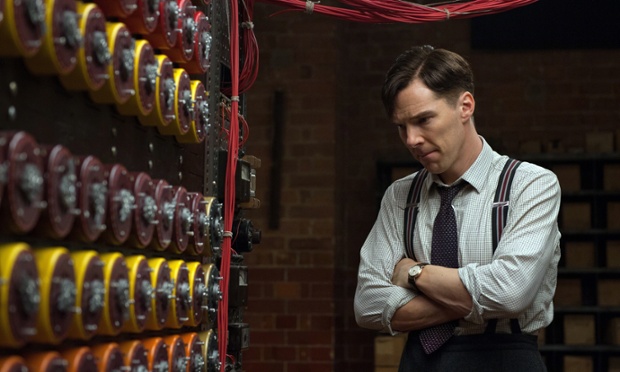
Benedict Cumberbatch plays mathematician/inventor Alan Turing through many angles in The Imitation Game.

“Am I a machine? Am I a war hero? Am I a criminal?”

The Imitation Game is a film that presents us a story of legendary scientist Alan Turing. It shows who he is and his life but also sheds light on many things we didn’t know.

The film opens in 1951 with Alan being investigated by detectives Nock and Staehl. This takes the film back to moments of the past starting in 1939. World War II has started and Turing applies to become part of the cryptography team at Bletchley Park. His ability to decode things and his knowledge that the Nazis use a code called Enigma impressed Commander Alasdair Dennison so much, he brings him on with the team of Hugh Alexander, John Cairncross, Peter Hilton, Keith Furman and Charles Richards.

Turing is difficult to work with as he distances himself from his colleagues. He has an idea for a machine to decipher Enigma but Commander Dennison doesn’t approve. Turing writes to Winston Churchill asking for assistance. Churchill is so impressed with Turing’s idea, he declares him the leader upon which he fires Furman and Richards. He uses a crossword puzzle to find his replacement. Upon which he hires a woman, Cambridge graduate Joan Clarke. Joan however has to deal with her overbearing parents as they don’t want her to work with men and marry immediately. However Turing is convinced enough she’s the right person for the job to the point he provides her a room to stay and work with female clerks while he shares his plans with her.

Difficulties continue as the code of Enigma needs to be reached. First the Germans change the code daily so that the enemies don’t succeed in breaking it. Secondly, Dennison is infuriated with the machine which Turing names Christopher and wants it destroyed and Turing fired. It’s only after the team threaten to leave if Turing is fired that he’s able to continue. Joan is pressured by her parents to either marry or leave her job, to which Turing proposes to her. On top of it, Turing’s team know of his homosexuality but promise to keep it secret.

Even after results happen and Christopher is able to successfully decipher Enigma, the solutions don’t start there. They can’t make it obvious to the Germans that they know Enigma so they have to carefully plan their strategies of attack even if it means considerable time later. Turing learns Cairncross is a spy for the Soviets but is told to keep it a secret or else Cairncross will expose his homosexuality. The place becomes too dangerous for Joan to stay and Turing tells her to leave, outing himself to her and even saying he was only interested in her as a co-worker. Joan leaves angrily. World War II was won and the cryptographers plans are burned.

The film progresses to the 1950’s when Turing was arrested first pursued for hiding confidential information only for them to uncover his homosexuality. His homosexuality was as much of a challenge as his eccentric way of thinking even as far back as his school days when he would be bullied. Fortunately a boy named Christopher befriended him and encouraged him with his coding and shared feelings with him. Unfortunately Christopher died before Alan had a chance to tell him he loved him. At the end, he’s shown with his final struggle with his homosexuality just before his eventual suicide as he’s sentenced to chemical castration: a sentence he chose over two years prison time. In his home where he secludes himself with his own concocted version of the machine Christopher, it’s Joan who comes to him in the end offering moral support and reminding him how significant he was because he was ‘not normal.’

Some would first come to the movie thinking it’s about him and his lifestyle. Some would first think this is autobiographical. It’s more. It presents the story of Alan and his eccentrically intelligent and creative thinking. It presents Alan’s side of the story from beginning to end focusing on the three biggest events in his life: in 1928 as a teenager when he’s first given support of his eccentric imaginative thinking and first learns of his homosexuality; during World War II and the story of the moment and invention that defined him; and in 1951 with Scotland Yard’s trying to link him of a crime only to discover his secret that would lead to his tragic fate. The focus of the story is especially clear at the beginning when Alan asks us: “Are you paying attention?” The film also presents why it was so important for this machine to crack Enigma had to be created as Alan would remind us it wasn’t simply against the War but against time. Especially for the UK which was suffering terribly. It also presents their strategy for helping to win the war as soon as they could.

It’s also very much about Alan the person as it is about Alan and the team working to crack the code. It presents Alan’s intelligence as creative in which he can decipher things through his work on crossword puzzles. It presents Alan as one who also has a very unlikable side including a ruthlessness his coworkers found hard to deal with though they stick with him because they feel he’s the only one who can succeed at cracking the code. They can’t stand him but they believe in him. It especially presents Alan’s homosexuality as for why he was about to go on trial. As he is about to be tried, he looks back on his life for when he was part of the mission to his schoolboy days and his encouragement from Christopher: the one person who truly understood him. It ends with Joan, the one colleague who knew him best and deserves to desert him after what he said to her but comes in the end to remind him of his significance to this world.

It’s obvious that Alan was able to solve Enigma in time but appeared unable to solve himself and even doubt his self-worth just after his sentencing of ‘chemical castration.’ A common thing as we see all too often in history how some of history’s biggest heroes would eventually become rejected by the people and even die lonely. Nevertheless we’re reminded that he still had people willing to stand by him even as he felt worthless. Especially Joan as she reminds him after he becomes a recluse after his defamation: “Do you know, this morning I was on a train that went through a city that wouldn’t exist if it wasn’t for you. I bought a ticket from a man who would likely be dead if it wasn’t for you. I read up, on my work, a whole field of scientific inquiry that only exists because of you.”

The movie tries to show more of what Alan Turing did as an effort to combat the war rather than focus on his lifestyle. Actually the movie does show about the struggle with his homosexuality throughout his life. His first difficulty came in high school as he fell in love with his friend Christopher and had to pass notes in his special code to him. We should remember that Alan was not beaten up in high school because he was gay but because of his intellectual eccentricities where it first showed its presence. He had continued difficulty during his work as even though his colleagues were supportive of him, they did remind him he could lose his job and be imprisoned because of it. Joan appeared to be the one who dealt with it best as she was not afraid to be in a sham marriage with him especially since it would help get her parents off her case. Then we see at the end as Alan has to deal with his ‘chemical castration’ which would eventually lead to his suicide at 41. We should remember those were the times. It’s because of the criminalization of homosexuality in the past that we had the pride movements that spawned out of the 70’s and are what they are today.

Benedict Cumberbatch did an excellent job in his portrayal of Turing. His performance was full of dimension for a person who was hard to like and had quite an imagination but quite smart and even troubled in the end. It’s a role where he not only acts off of his actors but us the audience too filling us in on all the details and making us think too. You can tell when Alan as narrator tells us to pay attention. Of the supporting players, it’s Keira Knightly as Joan who shines the best as the one who not only helps decipher Enigma but is the one person who can decipher Alan as a person in the end. The actors making up the cryptography team–Matthew Beard, Matthew Goode and Allen Leech– did great both as a team unit and in their own individual moments. Other standout supporting performances came from Rory Kinnear as detective Nick and young Alex Lawther who did a remarkable job playing the young Alan Turing.

Also deserving of acclaim is director Morten Tyldum. Very experienced in his home-country of Norway, this is actually his first direction of a English language feature and it’s an excellent first-effort. Also excellent is the script from Graham Moore. He did an excellent job in creating the story off of Andrew Hodges’ biography setting the three periods of Alan’s life that defined him most and piecing it all together. It succeeds in keeping us interested. Technical aspects were also excellent such as the set design, costuming, cinematography and the composed score by Alexandre Desplat.

The Imitation Game is a unique story about a scientist who went from a hero to a criminal of his time. It tells the story through his eyes and leaves us both interested and getting us to think as well. That’s the movie’s best quality.
Oscars 2014 Best Picture Review: The Grand Budapest Hotel

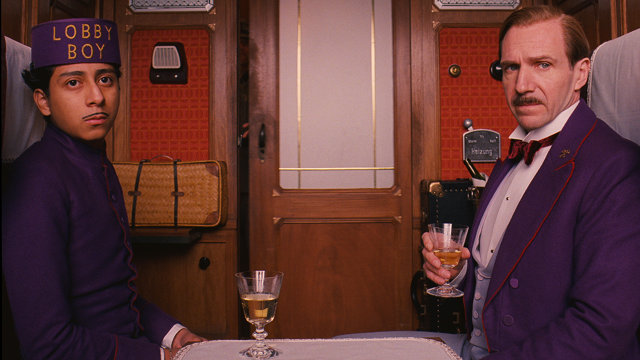
A hotel owner and his lobby boy (played by Tony Revoloro and Ralph Fiennes) go on a bizarre adventure in The Grand Budapest Hotel.

Anyone else here who missed seeing The Grand Budapest Hotel back when it was released in the spring? Yes, I’m guilty of that too. I can blame it on things like me being tired right after last year’s Oscar season to having a lot of preoccupations in my life at that time. This year’s Oscar race sent me the message of what I missed out on the first time. I finally saw it on DVD a few days ago and I now finally see why it ranks among one of the best of 2014.

This is another review of mine where I won’t give an analysis of the plot. Instead I will put focus on the movie’s strengths and possible flaws.

This film is quite typical of what to expect from a Wes Anderson film. It has an eccentric situation along with eccentric characters and a lot of comedy along the way. However this movie has its charm: the common charming eccentricity with Wes Anderson movies that continuously attract fans of his movies and moviegoers looking for something different. It’s also a trademark charm of the director that does not run stale with their movies time after time and continues to be enjoyable.

This too is a film that offers a lot and doesn’t make a whole lot of sense at first but makes sense as it goes along. It starts with a young girl paying honor to a writer in the present. Then flashing back to the writer in 1985 talking about hearing from Zero the owner of the practically lifeless Grand Budapest Hotel in 1968 about why he won’t close it down and Zero flashing back to 1932 to explain the whole story why. Wow, a lot of flashing back!

The story itself unravels itself over time with its various chapters from Zero joining the hotel as an orphaned lobby boy to the fictional country of Zubrowska nearing war to the owner Monsieur Gustave’s affair with Madame D to inheriting her most coveted painting much to the anger of her own family who hoped to have it to being framed for her murder. Yes, already bizarre. However the colorfulness comes with Zero’s love for the cakemaker Agatha whom he eventually becomes engaged to and helps bake cakes with escape tools.

The situation gets weirder as an assassin is on pursuit for him and the hotel needs to be managed, especially since news about a second will from Madame D is in existence somewhere. It’s after a pursuit while at a winter sport’s to kill off the assassin that the can return to the hotel only to find it overtaken by soldiers in the war and police on the hunt for Gustave.

As you can tell, this all makes for a bizarre confusing story and even leave you wondering about why the hotel is still in existence.  Understanding it means having to see the story for itself from beginning to end. There may be some confusing moments along the way and even a lot of eccentric humor but you will understand it and even the reason why a mountaintop hotel that’s completely useless is still in existence. You’ll even understand why the lobby boy is the only person in the world Gustave can trust wholeheartedly and would eventually own it. It’s no wonder Wes had to write a story along with his writing partner Hugo Guinness in order to bring this to the screen and make it work.

There are even times when I felt the story resembled Farewell To Arms, albeit with Wes Anderson’s dark humor intertwined into the story. Actually the credits in the end say the film was inspired by the readings of Stefan Zweig. I’ve never read Zweig’s writings so it’s hard for me to judge on that factor. Nevertheless the fact that Zweig was an Austrian Jew who fled to Brazil for refuge where he died may have some bearing on this. Even seeing how the character of The Writer looks like Zweig gives a hint.  Whatever the situation and even if the story does not go as well as you hoped it would, it does leave you feeling that it does end as it should.

Despite this film being another excellent work from Wes Anderson, we shouldn’t forget that this is also because of the excellent ensemble of actors. Many of which have already acted in Wes Anderson movies of the past. Here they deliver well as a whole to make the movie enjoyable and true to Anderson’s style of humor and style of film making. However it also succeeds well with those who have never acted in a Wes Anderson movie before, like lead Ralph Fiennes. He delivers a character that’s humorous and true to the humor of the movie. Newcomer Tony Revolori also adds to the charm of the movie as the young bellboy who becomes Gustave’s partner in crime as does Saoirse Ronan as Agatha. You can easily see why she won his heart. Even minor roles from other Anderson first-timers like Jude Law and F. Murray Abraham add to the story.

Even the technical aspects of the story are excellent. The costumes designed by Milena Canonero are perfect to a T in this movie as is the set design and the makeup and hair. All these elements fit the times they’re set in and add to the film’s charm. The cinematography by Robert Yeoman fit the story well and the music from Alexandre Desplat also fit the film.

The interesting thing to note is that The Grand Budapest Hotel is Wes Anderson’s highest-grossing film ever with $59.1 million in North America and almost $175 million worldwide. Buzz for the film first started after it won the Silver Bear at the Berlin Film Festival. Buzz continued after it continuously impressed film festival after film festival. Although his box office total in North America is not too impressive, it should be seen as respectable as it opened around the same time as the summer movie phenomenon that was happening. It made for a nice humorous alternative to the overhyped summer schlock.

The Grand Budapest Hotel is a DVD worth watching. We all didn’t know what we were missing during the summer and now we can finally see why.

Movie Review: Interstellar

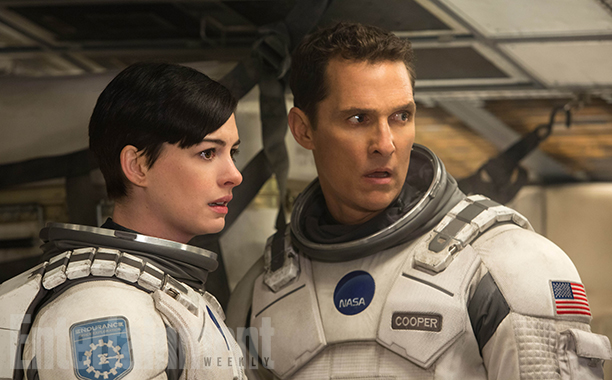
Matthew McConaughey and Anne Hathaway are on an intergalactic mission to save civilization on Earth in Interstellar.

Interstellar is one of those movies one would not expect to be too big of a success especially with a November release but it has really caught on. I had my chance to find out why just a short time ago.

Normally I would go into an analysis of the plot but I decided to skip it since it was so widely seen by now. Instead I will focus on how the film did as a film and as a sci-fi movie.

I will admit that this is not an original concept. A story of a civilization in danger requiring a trip to save it has been done before. I haven’t seen a movie where it required a space trip to do so but I’m sure it’s been done. In order for a movie like Interstellar to work those themes, it had to have a well-thought out story. Especially with the situation where saving civilization meant travelling to another planet or even another galaxy. Already at the beginning we see aspects of a hopeless world with crop blight and dust storms. We see further chaos at the school as Murphy’s teachers teach liberal conspiracy theories as the truth and Tom’s grades are great for his career pursuit but not competitive enough to get into a university.

A story like this also would have to make the time delay between space and earth work rather than look stupid and schlocky. Even for a space mission that’s doomed from the start to succeed, it has to be well-written and thought out with precision. One element that was rightfully included was the human element of the film. Cooper was to go on a mission to preserve the human race from a future of doom. It’s a trip where he ages one month for every seven years humans on earth age. It’s Cooper’s connection with his family over the spans of time–especially with Murph– that keeps the focus on why this mission has to be a success. It’s at the very end where Cooper who appears not to have aged a bit finally meets up with Murphy, elderly and on her deathbed surrounded by her family, that we see why this mission was so important. Even the images where Cooper talks with Tom and sees his grandson is an element that shows why this mission is necessary and why they have to succeed even when it seems all hope is lost.

The mission itself had to be smartly written from launch to activity to failures to battles and to returning to Earth in order for this film to be successful. The inclusion of TARS had to work. He can have his humorous moments but he can’t come off looking ridiculous as if he was trying to be a rip-off of C3P0 or Johnny Five. Also outer space and the terrain of the other planets had to look like a world unlike any other. That’s what makes a space movie: the ability to thrill as well as capture people’s imagination.

Overall, this is what Christopher Nolan had to do both as director and co-writer along with his brother Jonathan in order to make a film like this work. They not only had to show the hopeless state of the world but also make the mission work out even with its doomed failings and it had to keep Cooper’s connection with this family on earth while this aging gap was happening along the way. They had to deliver a film that was smart but also entertaining and mesmerizing like a film about space travel should be. They succeeded. Having a mission that was smartly planned out, making the staggered time lapsing happen and keeping Cooper connected with his family a galaxy away is what made this film not only work but win over audiences. It shouldn’t really be all that surprising that a smart sci-fi thriller should come from Christopher Nolan. He showed he can do a thriller that’s both intelligent and a box office winner with Inception. He does it again here.

The excellence of the film is not just that of Jonathan and Christopher Nolan. It also involved great acting from Matthew McConaughey, Anne Hathaway, Michael Caine, Jessica Chastain and even minor performances from Casey Affleck, John Lithgow and Matt Damon. I’ve seen better acting from all of them in the past but they all did very well here. Newcomer Mackenzie Foy was also very good in portraying the daughter with her love for her father and her anger for him.

Other standouts of the film were the top notch visual effects. A space movie is supposed to capture people’s imaginations and take the audience to a different world and it succeeded here. The cinematography from Hoyte van Hoytema delivered and the music from Hans Zimmer added to the feel and experience of the film.

Interstellar is a sci-fi movie that’s both imaginative and intelligent. It combines a smart story with a dazzling space mission and comes out a winner.

Movie Review: Whiplash

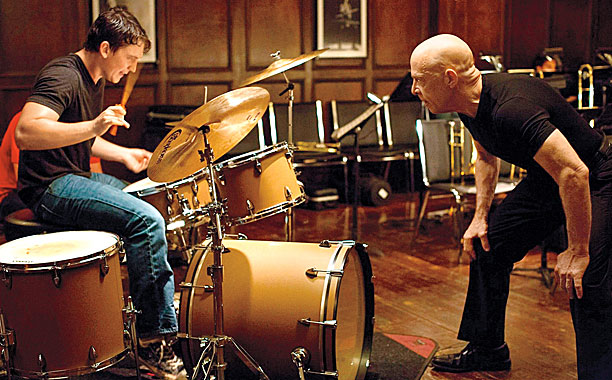
J.K. Simmons plays a jazz instructor inflicting tyrannical teaching methods on Miles Teller in Whiplash.
J.K. Simmons plays a jazz instructor inflicting tyrannical teaching methods on a drumming student played by Miles Teller in Whiplash.

There are no two words in the English language more harmful that good job.

One of the year’s biggest surprises has to be Whiplash. You think a movie about a jazz drumming student and his teacher wouldn’t be one to win people over but you’ll have to see it for yourself.

Andrew Neiman is a 19 year-old jazz drummer who has been accepted into the Shaffer Conservatory to pursue his dream of being one of the greats like Buddy Rich.  Despite practicing long hours, he does take time to take things easy watching movies with his father and even dating the girl working at concessions.

That all changes one day when during class, instructor Terence Fletcher who already has an infamous reputation among students substitutes for one instructor. It’s more than instruction as Fletcher is looking for a new drum alternate for the school band he conducts. Sure enough, Andrew catches his eye. Actually Andrew caught his eye days before while practicing alone.

On the first session, Neiman learns that part of Fletcher’s rehearsal methods is manipulating emotions out of his students. It is while rehearsing the Hank Levy song ‘Whiplash’ that Fletcher makes Andrew his target of attacks including berating him verbally especially when Andrew is brought to tears, throwing a chair at him and even slapping him for going off tempo. The rehearsal ends with Andrew being the alternate drummer and relegated to page turner for the lead drummer.

Instead of quitting, Andrew is determined to win over Fletcher and master ‘Whiplash.’ He listens intensely to its drumline and studies videoclips of the drummers. He even cuts his movie time with his father and breaks up with Nicole to intensely pursue his ambition. Then bad luck happens during a competition when Andrew misplaces the drummer’s sheet music. However Andrew is determined to perform ‘Whiplash’ without the notes. To the astonishment of all including Fletcher, he does it perfectly and becomes Fletcher’s new lead drummer.

However it’s short-lived as Ryan a drummer from Fletcher’s former class, is promoted to lead drummer. Andrew is frustrated to the point he confronts Fletcher only to learn Fletcher decides who has earned the part. That only drives Andrew to practice intensely to the point his hands bleed. Just before Fletcher starts rehearsal one day in tears, he reveals to all that one of his former students from six years ago Sean Casey, whom he describes as a ‘marvelous musician,’ died in a car accident. He starts rehearsal on ‘Caravan’, the next competition piece, but has a hard time picking out the right drummer for the song. Fletcher gets all three drummers including Andrew continually trying out the piece for several brutal hours until he makes his final decision at 2:30 am. He decides it to be Andrew.

Andrew buses to the competition but the bus suffers a flat tire. Andrew’s determined to be there on time to the point he rents a car but forgets his drumsticks at the rental office. Andrew only finds that out once he arrives and Fletcher dismisses him for not having his drumsticks. Determined to play, Andrew rushed back to the agency to get the sticks. Speeding to the concert hall and talking to Fletcher on his phone, Andrew is hit by a car. Despite the car flipping over and Andrew bloody and injured, Andrew rushes to the hall to play. A stunned Fletcher lets him play but it’s obvious Andrew is off as his injuries cause him to drop his drumsticks continuously. Fletcher gives him the words onstage: “You’re finished.” That causes Andrew to attack Fletcher onstage in front of the audience.

The attack caused Andrew to get expelled form the school. Soon Andrew learns from the lawyer of Sean Casey’s parents that Casey actually committed suicide and believes it was because of the personal torment endured by Fletcher’s teaching methods right from when he first started. Andrew agrees to testify, leading Fletcher to be dismissed from the school. Just when it seemed to be all over for Andrew, he learns months later Fletcher is performing in a club. Andrew and Fletcher meet up again and it’s during a drink together that Andrew learns why Fletcher teaches the way he does. Because he drives his students to be the next jazz great. And he saw it in Andrew more than the other two. Fletcher agrees to have Andrew as part of the band he’s conducting for the upcoming JVC festival where they will be playing the same songs. Andrew agrees. However things do not go as planned as Fletcher tells Andrew he knew he got him out. On top of it, the band opens with a piece Andrew never rehearsed. This leads to an ending that’s unpredictable and entertaining.

One can simply say it’s a story about a student with the drive and the teacher determined to make him succeed no matter how soul-crushing his teaching methods. I myself saw a lot more to it. I see it as about music and arts in general. We see and hear a lot of great pieces of music, great acting performances and great pieces of art. One thing we don’t often see is that it takes everything out of a person, especially their heart and soul. We also see that here in teaching as Fletcher verbally beats his students into the ground to bring out the best in them. He feels he’s doing the right thing even as he was blamed for Sean Casey’s suicide. He even brings up the example of Charlie Parker who was a substandard saxophone player until his bandleader threw a cymbal at his head. That was the turning point. I myself have taken acting courses and there have been times in which I was encouraged to dig deep into my soul even to the point of remembering some of the more upsetting moments of my life. It’s not uncommon for teacher sin the art to be that tyrannical to their students to bring out the best in them.

It’s not just about a teacher putting his students through such agonizing torturous methods to better his students and bring the best out of them. It’s also about the drive of a student. Andrew is determined to be the best drummer ever. In his mind, he thinks it’s better to be a success even if it means dying in his 30’s and having no friends than it is to be not so successful but live a long life and be beloved. Andrew is willing to practice drumming until his hands bleed, willing to give up his girlfriend and even determined to make a competition even if he’s in a car accident and the car flips over. The crazy thing is that there are a lot of people in the arts that feel that same way. That success in their art is better than being loved and even worth dying for. We see that in Andrew.

Even there, it’s not just about the teacher and about the student, it’s the relationship between the two. Fletcher can be brutal and abusive both verbally and physically but he pushes Andrew because he sees a quality in him he has not seen in a student before. Andrew is driven to succeed but he sees something in Fletcher’s tutelage that he feels he can’t get anywhere else. He senses Fletcher and only Fletcher can help him to be the best jazz drummer ever. And he’s willing to take it on even with the physical, verbal and emotional abuse. Even after both Andrew and Fletcher are both dismissed from Shaffer, Andrew still relies on Fletcher’s judgment on his abilities. Often Fletcher’s teaching and pushing Andrew can remind a lot of people of sports coaches who are that tough on their athletes but are determined to bring out the best in them. Andrew willing to endure it all to be the great he wants to be will remind you of athletes who wholeheartedly trust their coach to the point that they’ll willing to do illegal things like steroids upon their urging.

Without a doubt, J.K. Simmons owned the movie. His portrayal of Fletcher determined to bring out the best in his students even if it requires him to deliver physical or verbal abuse stole the movie. His focus on perfectionism, his love for jazz music and the greats, his portrayal of that kind of teacher will keep you glued to your seat. Even though Simmons owned the film, credit should be given to Miles Teller. He as well delivered an excellent performance of a student with a dream and determined to succeed even if it means taking physical abuse from a teacher. He also did an excellent job of showing how Andrew’s determination to succeed almost destroys him at times. Miles himself also drummed as a kid so it’s kind of natural he was chosen. Plus if director Damien Chazelle was interested in making his film bankable, he could have chosen Nick Jonas as Andrew. Miles was one who could both drum and act.

The film is actually the brainchild of director/writer Damien Chazelle. Chazelle wanted to become a successful jazz drummer in high school. He was in a very competitive jazz band in high school and had an intense music teacher who would become the inspiration of Terence Fletcher. However unlike Andrew, Chazelle knew he wasn’t good enough to excel in jazz drumming and turned to film making instead. You could rightfully call this film his baby. This film has won the Sundance Audience and Jury Award for Best Drama and the reception has been excellent.

 Whiplash is as much about the punishing training and studying music students go through to pursue their dreams as it is about the determined teacher, the driven student and the turbulent but solid chemistry between the two. It will also remind all you young ones with musical dreams that if you think chasing your musical dreams is a cakewalk, you couldn’t be wronger.

LATE Movie Review: The LEGO Movie

Emmet Brickowski (centre) becomes the unlikely hero in The LEGO movie.
Emmet Brickowski (centre) becomes the unlikely hero of the Lego world in The LEGO Movie.

You will all be pissed off with me. I actually saw The LEGO Movie when it was first out around the first weekend in March. The reason why I never wrote a review about it is because I was so tired out from doing a multitude of Academy Award articles. You can understand that I felt enough was enough back then and I lacked the ambition. Well ambition to write a review on it sparked in me already, especially with the Oscar season coming up and the multitude of accolades it’s received. Now I can say my thoughts.

This is another review where I won’t be giving a synopsis of the plot. I don’t feel it’s necessary since most people have already seen it by now. Nevertheless I’ll focus on how the movie worked.

This is a film that needed to have a winning script in order to make it work. It starts simple about a guy who does what he can to be liked only to learn he’s not well-liked. He’s the ‘chosen one’ despite the surprise of everyone but ends up victorious in the end. Sounds like a formulaic story that been done endlessly before, right?

In order to make a story like this fly, it has to add its own quirks and elements to make it fly. This movie succeeds in creating a Lego world beyond a toy lover’s imagination. On top of it, it had to make the Lego toys very animate and full of character. Remember the Legos are the focus of the movie. The film also did a smart job in adding in characters that are exclusive to the Lego toys and in including the Lego characters based of off movie characters. It does seem like the writers did a lot of research about the characters to have in the movie.

The film adds in a lot of humor. Firstly it creates a humorous world with the wizard Vitruvius, a villain in the Lord Business and a superweapon called Kragle which is actually Krazy Glue. However its other great asset is including the human world in the story with ‘the Man Upstairs’ and his son. It’s that twist at the end where we are all shown that this Lego world is all part of a giant Lego diorama created by the Man Upstairs. Whatever the situation, it had to make the two worlds mix in the end in order to make the story work and it did. Not to mention give a surprise humorous ending.

Now it’s not just the story that had to work. Not to mention having ‘Everything Is Awesome’ the movie’s theme song. The film had to make the animation believable. They had to make the Lego characters fluid in movement rather than wooden and choppy. They also had to be given the perfect animation in their faces while remaining Lego characters. Finally the Lego world had to be animate and 100% Lego from the building world Emmet works in to the sea the Lego galleon sails on. When you have a Lego movie, the world and the characters have to be 100% Lego-like from start to finish. One glitch in the animation and that would have blown it.

Kudos to Phil Lord and Christopher Miller for writing and directing an excellent entertaining film for all ages. In addition, great job on the vocal talents of Chris Pratt, Elizabeth Banks, Liam Neeson and Morgan Freeman. Also great job of Will Ferrel for delivering a live-action character that’s a refreshing alternate from his more idiotic characters.

It’s no wonder The LEGO Movie has been so loved since it opened back in February last year. It’s also no wonder it’s still beloved by people of all ages even now. It’s only those under a rock that haven’t seen it that don’t know why.


Movie Review: Gone Girl

Gone Girl is a movie of a woman that appears to be a victim in a fading marriage but is actually the one in control.
Gone Girl is a movie of a woman who’s a children’s book author but her biggest masterpiece of storytelling isn’t written on pen and paper.

I’ll admit that I’m one of those people that went out to see Gone Girl later than the huge crowds. I will admit I was lax at it because of the tight times I was experiencing. I finally did see it just a while ago and I was impressed.

I usually do a run though the plot in my reviews. I have decided to skip it since most of you have already seen it. Instead I will focus on some of the unique elements and why this movie stands out.

One noticeable thing of the movie is that there is a big focus on the media, especially as it surrounds a murder story. There’s no doubt the message is about how the media takes on crime stories by being its own judge and jury, typing people and packaging them as good people and bad people. This was especially seen on how Nick is typed not only as the bad guy but as the murderer even though no body was found. This was also seen on the police as they eventually felt the pressure to make a move and arrest Nick for the murder. There was also the focus of the egos in the media behind it all and epitomized best by Ellen Abbott who mercilessly defames and slanders Nick as the murderer. Even before the interview of Nick and Amy after Amy’s arrival, you can tell Ellen shows no regrets about it all. Even as Nick confronts Ellen about how she dismissed him as a murderer, she simply says “I go where the story goes” without any noticeable remorse or apology. I guess it shows what it takes to be a talking head in the news.

Despite the exploitative judgmental ego-driven media being a major theme, it’s not the main focus of the film. The main focus is on Amy. Amy first comes across as a warm charismatic person with a lack of confidence but lives her confidence out through the character of Amazing Amy in her Amazing Amy books. As the story goes through the search for Amy day by day, the story flashes back to the first signs of their marriage falling apart. The marital troubles appear so much like millions of marriages before that hit rocky moments during hard times and even face ugly moments like infidelity and even physical abuse. That’s what the first half is all about.

It’s the second half that we see the twist in the story that Amy is not the sweet thing we think she is. She’s conniving, very clever and smart enough to make things work for her revenge plan to have Ben framed for her murder that never happened. Even faking things like her pregnancy, Ben’s alleged credit card debt and agreement to a huge life insurance payout was as clever as it was shallow. Her cleverness especially intriguing that she’s even able to make a calculating change of plans even after some neighbors of her getaway place rob her. She’s able to get Desi back into her life and appear to rekindle the romance only to have another thing up her sleeve after seeing Nick’s interview on the television. Her tricks are even crafty enough to get Nick trapped into the relationship without him being able to escape thanks to a pregnancy. Her tricks are even clever enough that there’s nothing Nick, Margo, Tanner Bolt or even Detective Boney can do to bring out the truth, even though they know it.

The funny thing is I’ve been watching a lot of crime shows like Forensic Files where they show of people committing murders and attempting to cover it up only to have advancing technology over time uncover the truth slowly but surely. They not only tell of people committing the crimes but what they do to get away from it all and even cop a new identity. Seeing Amy go about her charade not only reminds you of those diabolical minds but gets you intrigued in Amy’s own diabolical ways. Throughout the movie I was waiting for the moment for truths to be unraveled and Amy to get caught. Funny thing is that over time, it appears her new actions and tricks appear better executed than the ones Amy had planned on Nick from the start. It appeared Amy’s new plan to have Nick in a loveless marriage raising their child was a better form of torture on Nick than her original plan of having him convicted and executed for her fake murder. It’s like she told him after he hit her: “I’m the c*** you always wanted.”

I think that’s what makes this movie so winsome. Amy is a diabolical mind who’s not only that good but appears to get better and craftier over time. Funny thing is it’s one of those movies that had me leaving the theatre wondering how Amy gets away with it all? How Amy’s able to keep it all covered up even with all this modern technology and in control of everybody else involved including the law? That’s like the same wonder I had at the end of 1999’s Arlington Road of how a couple could pull off a terrorist explosion framing their neighbor and being a step ahead of everybody in every which way to get it done. That’s also like the same wonder I had in 1992’s Basic Instinct when Beth kills Gus with an ice pick and minutes later confronts a gun-wielding Nick with a normal pulse rate and no stress level at all. Then I remind myself it’s the movies where they can make anything happen and make us believe it at that moment.

Top kudos to Rosamund Pike. She delivered a character that made the movie. She gave a feel for the character right from the start and kept us intrigued right until the end. She had to be the top factor on why this movie is so winsome. Ben Affleck did well but he didn’t own the show the way Rosamund did. Carrie Coon was very good in the supporting role of the sister who knows the truth but is helpless to do anything. Tyler Perry was good as the lawyer. Missi Pyle came across as cartoonish as the Ellen Abbott but it fit well with the movie as I will reflect on later.

It seemed like the right thing for Gillian Flynn, the writer of the novel, to also write the screenplay too. It makes sense since she’s the one who knows Amy inside out. It’s also great to see her deliver an ending possibly unlike anyone would anticipate. David Fincher does an excellent job of directing the story. I know there were many times that the people in the murder scenario came off as cartoonish in the film but it seems fitting because all too often, people in the middle of a trial that involved heavy media attention often come off as cartoonish or like drama queens. Even as we read murder stories or murder dramas about real-life murders, it’s as much about personalities as it is about the people. David did a good job of making it the focus in the movie. You could say David delivers another winner. In addition kudos to the music of Trent Reznor and Atticus Ross that added to the feel of the film.

Gone Girl is a story that keeps you interested from start to finish. You think it will go one way but it goes the other way. Even after you leave the theatre, you’re left wondering how she was able to make it work. I guess that was the secret of the movie.

Movie Review: Big Eyes

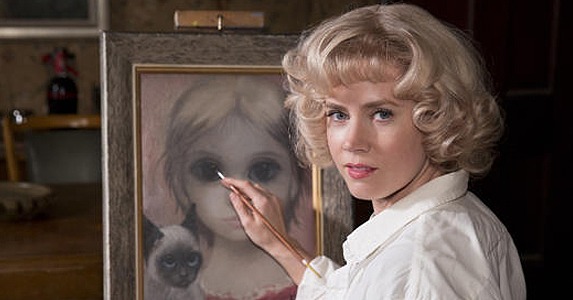
Amy Adams plays artist Margaret Keane in Big Eyes: a story of possibly the biggest art forgery of our time.

Remember those popular Big Eyes paintings from the 60’s? Did you know about the story of art forgery behind it? Some of you will first think that the film Big Eyes is about art. As true as that is, it’s also a drama about art forgery and the ones caught in the middle. This is especially of intrigue to those who remember the ‘big eyes’ paintings from the 60’s.

The film begins with Margaret Ulbrich arriving in San Francisco with her daughter. She has recently divorced her husband and is hoping to make it as an artist. Art is not only her best skill but it’s her one and only skill in terms of employability. At first she’s hired by a furniture factory to paint drawings on children’s furniture. She does drawings of caricatures in a San Francisco market to make extra change.

Soon she catches the attention of a successful ‘artist’ by the name of Walter Keane. He’s impressed with her ‘big eyes’ caricatures she draws. They’re based off the wide eyes of her daughter Jane and Margaret even says that children’s eyes are the windows to their souls.  Walter promises Margaret that he can make her art famous. He’s a good salesman as he knows how to sell real estate and his own art: painting of Paris where he claims to have been inspired by the city even though spending a mere week in it. She agrees and the two marry.

This comes as a welcome relief for Margaret as she is threatened to lose custody of Jane because she can’t afford to care for her. This is also a relief for Walter as his paintings of Paris are declining in sales. Soon Walter promotes the big eyes paintings at restaurants. He’s even willing to create phony brawls to stimulate news hype. Whatever he does, it works and the big eyes painting are catching a ton of renown.

However the secret of the success is exposed to Margaret and it’s ugly. Walter is claiming the paintings as his own. As the paintings become more popular and Walter becomes more famous, they become more and more in demand. That leads Walter to keep Amy in a hidden room where she’s to paint all the portraits. She’s practically exiled away from everyone including friends and her own daughter. Further friction grows when Margaret learns the truth about the Paris paintings. They were actually painted by an artist going by S. Cenic. Somehow Walter is able to talk his way out of it.

The real turning point is when the giant painting of a crowd of big-eyed children to be displayed at a pavilion during Expo 1964 is dissed by art critic John Canaday as ‘appalling.’ Keane can’t take it. He tries to stab Canaday but fails. He tried locking Margaret and Jane in a closet and setting it ablaze. Fortunately they escape and find a new life for themselves in Hawaii. However it’s after a visit from two Jehovah’s Witnesses that Margaret is prompted to bring Walter to justice. The trial goes with Walter playing his own attorney and doing a big song and dance for the jury but there comes the moment of truth. The film ends rather conventionally but will leave the audience satisfied justice was done.

One thing we should not forget is that art forgery is nothing new. There have been imposters claiming paintings and other works of art in the past. However this makes for an intriguing story. There are many elements why one would consider this intriguing. One would be people who remember the big eyes painting and still like them to this day. Another would be because of the conniving nature of Walter who knows how to get his way until the score is finally settled. I’m sure there’s something many people can find intriguing with the film to want to see it.

However the film doesn’t make itself too clear about what it is primarily all about. I do give the film credit for showing a story of art forgery and both the artist and scammer. I do give credit for showcasing the thriving and influential San Francisco art scene form the 50’s and 60’s. I also give the film credit about showing just how much of a conniver Walter Keane was to the point he felt he could kill a critic and even connive a judge in the court of law. And I especially give the film credit for showing the mother-daughter relationship involved with the story. In fact that was one of my favorite parts of the film where after Margaret left Walter, Margaret became a typical mother again and Jane became a typical daughter again. However it does leave one to wonder if it was mostly to do about the art or to do about the forgery behind it? It’s very possible to balance those two elements out appropriately on film but I just wonder if it was balanced out right.

Amy Adams did a very good job of portraying Margaret Keane. However I’ve seen better acting performances from her in the past. Christoph Waltz was also very good as the conniving Walter Keane. He succeeds at making you hate Walter and get annoyed with him. However there are times in which I think his role of Walter is a bit too close to his Oscar-winning roles of Hans Landa and King Schultz. Danny Huston also did well in the role of Dick Nolan. However it does seem odd how the narrator of all that’s happening gets so little screen time. There were additional good performances in minor roles from Terence Stamp and Jason Schwartzman.

Tim Burton did a good job of directing a film that doesn’t seem too much like your typical Tim Burton film. Interesting fact is that Burton owns two of Keane’s paintings.

Scriptwriters Scott Alexander and Larry Karaszewski did a good job with the script even though it lacked consistency and focus. The set designers and costumers did a very good job in setting the scenes to the time of the film. And the score by Danny Elfman also fit the movie well.

Big Eyes is an intriguing look at the artist, the art and the forgery behind it. Even though the story was a bit off in terms of focus to its central theme, it does keep one interested.

Movie Review: Birdman

Michael Keaton plays a movie star trying to escape the image he was famous for en route to a comeback on Broadway in Birdman.

I know the awards season is just starting to declare winners en route to the Oscars. I will have a lot of movie watching to catch up with. I finally did see Birdman, one movie with a lot of big buzz, and I’m glad I did.

Riggan Thomson is a former Hollywood movie star who hit the big time as Birdman: a movie that propelled his fame and had him act in two more sequels. However he soon became yesterday’s news after he left the Birdman franchise and he’s aiming for a Broadway comeback. His plan is a stage adaptation of Raymond Carver’s What We Talk About When We Talk About Love which he plays lead, directs and writes. However something is knwing at him. He hears a voice and he has telekinetic powers.

Upon rehearsal, he is pissed off with the male lead actor. Suddenly a stage light lands on his head. Everyone is shocked and fearing for his life except Riggan, who just walks away. He soon admits to his lawyer friend Jake that he rigged the light to fall on him to get popular stage actor Michael Shiner into the play. Getting Michael came from him refinancing a house that should belong to Sam, his recovering drug-addict daughter and assistant.

However friction eventually happens. Riggan is unhappy with how Mike does a scene during rehearsal and he storms off violently. Even Mike’s suggestion of using a more realistic gun for the suicide scene doesn’t sit well with him. The feelings are justified when Mike is scene in a news story and how he mentions Raymond Carver made him want to become an actor. On top of it, reviews of the dress rehearsal are not impressive at all and it hits Mike bad.  Meanwhile the voice inside his head is either supporting him or mocking him for turning his back on Birdman. Adding to it, Sam is unhappy with him and tells him that his play is garbage and that he doesn’t matter. Not in this day and age of Facebook and Twitter, media streams he consistently rejects.

Things actually take a turn for the better but through some of the most unlikely of methods. Right in the middle of a preview, Riggan accidentally locks himself out of the theatre with the door accidentally catching hold of his robe. He impulsively walks around Times Square in nothing but his underwear to get back to the theatre and catches the notice of everyone whom he walks by and even enters the theatre leaving the audience confused and delighted. After the show, he gets drunk and encounters theatre critic Tabitha Dickinson who says she will crucify his play because of her detest of Hollywood movie stars trying to pass themselves off as legitimate actors. The next day, a drunken Riggan actually has a hallucinative conversation with Birdman and he gains powers including flight. It’s like he became Birdman again as he’s flying all around Manhattan.

Then opening night for the play happens. Riggan uses a real gun for the suicide scene shooting himself in the head in front of the audience. Everyone in the audience gives him a standing ovation but Tabitha just walks out without emotion or applause. Turns out Riggan didn’t kill himself. He survives but wakes up in a hospital bed learning the bullet badly damaged his nose. On top of that, he learns from Jake that Tabitha gave the play rave reviews. He’s even able to spend a poignant moment with Sam in his hospital bed. After Riggan is left alone, the film ends in a way I don’t think most people will understand. I guess the point was to have you the audience decide the ending. You’ll have to see it for yourself.

This film is a unique method of telling a story and giving portraits of the characters. The film’s method of following characters around and often appearing like one non-stop shoot adds to the film and can make the audience curious to what will happen next. However the most striking thing for me about the film is how it shows actors and even those involved in the whole showbiz scene. We have a lead actor who’s a former movie star now struggling to re-establish himself. We have a daughter who’s loving but ill-tempered and frequently at odds with him. We have a supporting actor who isn’t as big a name but well-respected and tries to use this opportunity to promote himself further. We have both an ex-wife and a current flame struggling with personal issues with him. We have a theatre system that demands the movie be a hit for the sake of the show, the sake of the theatre and for the sake of Thomson’s finances. We have the fame system which has had major changes in the ‘fame game’ in recent years thanks to online technology giving us video sites and personal homepages. We have media critics who not only make judgments about plays but are egotistical enough to unapologetically trash a work if they see fit. It’s no wonder an actor/director like Riggan Thomson drinks a lot. Heck I’ve frequently said: “Actors and drinking go together like ham and eggs.” Here I’m finally shown why!

The funniest thing about the film is that while I was watching, I was constantly sensing that Birdman may be about Michael Keaton himself. For those that don’t know, Michael Keaton was the first Batman when the franchise was revived on the big screen in a big way back in 1989. He also starred in the second Batman movie Batman Returns from 1992. The role of Batman has since gone onto Val Kilmer and now Christian Bale. Michael Keaton had some continued commercial success for a few years after his last Batman movie. Actually he even had some healthy commercial success before thanks to 80’s movies like Mr. Mom and Beetlejuice. So it had me wondering if Riggan’s struggle of coming back while having the baggage of being famous as Birdman was a parallel reflection of Michael Keaton being famous as Batman. I found it odd because I’ve never heard of Michael having a struggle with it. I even looked over his biography and info of his personal life at Wikipedia to see if it was. Although I saw some parallels, I was still left without a conclusion. I haven’t even seen an interview of Michael Keaton where he publicly declared it synonymous.

I will say that Keaton did an excellent performance as Riggan. This is not like any performance I’ve seen from Keaton and this is the best acting I’ve seen from him. Possibly the best acting performance of the year. Edward Norton was also great as Michael Shiner and did a great job of showing ego conflict between actors. Emma Stone also delivered her best ever performance as a daughter who’s also an assistant with the same showbiz-style nastiness to her own father. Zach Galifianakis gave what I feel to be his best acting performance and one where I actually end up liking him in a film. Additional standout supporting performances are Amy Ryan as the ex-wife, Andrea Riseborough as the new girlfriend and Lindsay Duncan as the theatre critic who did a lot in that one scene of hers.

The technical aspects are also excellent and one-of-a-kind for this film. Emmanuel Lubezki did a smart job with having the follow-around method of filming. Usually such a method is risky in the storytelling aspect of film making but it works to near-perfection here. Douglas Crise and Stephen Mirrione also did an excellent editing job especially in how they made it look like there was a single non-stop scene for over an hour. Of course modern technology can do the film fakery to make it look like a non-stop scene but Crise and Mirrione did it all right and made it work. Also kudos to composer Antonio Sanchez. I like how he delivered a score that was a jazzy style of music for the stageplay scenes and then our typical grandiose orchestrated score for the Birdman scenes. That score that corresponded with the themes was an excellent choice for the film.

Birdman is not your typical Hollywood fare but it’s all the better for it. It doesn’t make sense to a lot of people but would make more sense to those who see it twice or even those that know acting or showbiz as a whole.

Movie Review: Mommy

Mommy is an impressive story about a troubled son, a mother's iron will and a friend willing to help them all out.
Mommy is an impressive story about a troubled son, a mother’s iron will and a friend willing to help them all out.

I was hoping to see Mommy at this year’s VIFF. It was one of those films I really wanted to see. Unfortunately there was only one showing–I think it was the only film that had a single showing– and this was not open to volunteers and tickets sold out days before. Fortunately I was able to see it when it came out in theatres shortly after. I’m very glad I did.

The film begins telling us it’s 2105 and Canada is under a newly elected administration that has passed a controversial new law. The law states that government agencies can now decide the fate of a minor with mental conditions and the parent has no control over it which includes transporting them to hospitals and facilities.

Diane ‘Die’ Despres, a 46 year-old widow of three years has been given the news. Her 16 year-old son Steve, an ADHD child with a history of violent behavior, has been sent to a long list of list of juvenile institutions over the years. His violent behavior has gotten him constantly kicked out and transferred to the next. However his actions at his most recent institution– setting fire to the cafeteria which left one boy badly burned– led to the final straw: transfer to a more restrictive detention centre where she knows he’ll never be rehabilitated. She goes against all judgment and takes Steve into her own hands.

Die has to be a toughy with Steve if she wants to make this work all on her own. She’s even willing to risk losing her job to keep Steve from the alternative, which does happen. She knows it will be very hard to keep Steve because of his behavior and it’s his first violent outburst since taking him on that’s her first test. She stops him by throwing a bookcase on him and that leads to Steve having a gash. She can’t take him to a hospital but she finds help from Kyla, a neighbor from across the street who’s always been so private and only seen with her husband and children. She gives Steve the stitches.

Die is impressed with Kyla’s nursing skills.  The three form a friendship that’s very close as they do many things together. Kyla is especially beneficial as she’s a nurse who knows how to handle the behavior of people with ADHD like Steve. The three of them share many good times together. Die is finally smiling and happy, Steve is able to show off his enthusiasm and a passion for life, and Kyla is able to come out of her shell. Die is even impressed with how she knows how to handle Steve. She doesn’t have to do this alone. However all three know that they have to keep this top secret.  Die even meets with a lawyer to work on their case against the institution. It appears to look good until Steve is mocked at a bar during karaoke night. he becomes violent and threatens the heckler with a broken beer bottle. Steve even gives a further outburst towards the lawyer which causes the lawyer to drop the two.

Despite it all, the three continue on even after Die is served. She is given the warning to give Steve up or she will be charged. The three hope to keep things hidden and things continue to go well until Steve tries to slit his wrist in a store. That was the final straw. Die can’t take it anymore and has to take Steve to the institution. Changes also come for Kyla as her husband has a job in Toronto. The film does end not how one would expect.

Once again this is another entertaining film from Dolan. Like many of his films, it gives a lot of focus on the madness of his protagonist’s minds. However this is not just simply that. This is also a focus on the protagonist’s behavior problems associated with the mental condition. It gives some good focus on the ‘wild imagination’ associated with people with ADHD, especially in scenes with Steve having fun in the parking lot and skateboarding feeling free.  However it also focuses on behavior problems where Steve gets dangerously violent with his mother, verbally abusive with the lawyer who’s supposed to help the two out, impulsively suicidal in the store and even shows the lack of sexual restraint when Steve tries to come on to Kyla. The character of Steve does a good display of showing the positive side of ADHD but also its weaknesses, especially how many young people act like they don’t know their boundaries. We’re already made aware of the fire Steve set which left another teen badly burned at the beginning. However it’s in the film we get a better sense of the condition and a young person’s behavior patterns from sweet and loving to ruthless and nasty.

The film is also about a mother’s love for such a child and how it’s tested. I remember reading a book on parenting teenagers and it said a sentence that really stuck in my head: “If you can handle a teen with ADHD, you can handle any kid.” We know how much Die loves Steve to the point she’s willing to break the law to keep him. That opening scene when she unapologetically barges into Steve’s bedroom to wake him up even while she catches him masturbating already showed that she’s a tough-as-nails mother. However there’s no doubt that her love for him will be put to the test big time. The story shows the trials Die has to go to in order to keep Steve from his violent outbursts to the point of even throwing a bookcase on him. The story also shows how much sacrifice Die has to deal with to keep Steve such as losing her job and losing the lawyer that can help the two win the case. The story even shows how even the toughest of mothers like Die can just have enough of it all and turn Steve in.

It’s not even strictly about ADHD and a mother’s love. It’s also about the trio of a friendship. Kyla’s presence is also very vital as she is one of the few adults who know how to deal with Steve and she becomes Die’s first friend since the death. And to think Kyla was simply a loner wife and mother before the two met her. The film makes for a fascinating friendship between the three.

Interesting thing about this is that the story is in the near future but by a single year and talks of a law passed by the newly elected administration. The funny thing is that most Canadians, especially British Columbians, would expect a law like that to be passed by our current administration. Okay, enough of that. Back to focusing on the film, the one weakness about the film is that it gets us wrapped up in the story to the point we forget about this law that threatens to tear the two apart. And we’re only reminded of it near the end. I’m sure the law has a lot to do with Die keeping Steve to herself and Kyla keeping things hidden but the story makes it so easy to forget.

Once again, this is another triumph for Quebec wunderkind Xavier Dolan. I still remember five years ago when he burst on the scene as a 20 year-old with I Killed My Mother and caught loads of attention at that year’s Cannes. I saw it. Excellent film. Dolan has since proved he’s no one-trick-pony as he has delivered other consistent films like 2010’s Heartbeats, last year’s Tom At The Farm and this film. It’s no wonder he’s become all the buzz at Cannes these past few years and has even caught the attention of Brad Pitt. However this is something unique as this is the first Dolan film where Xavier does not act at all in it. It’s a very good film and another accomplishment from Xavier.

The funny thing about this film is that there have been times I wanted to compare it to his breakthrough film I Killed My Mother. It’s not an easy thing to do as both have a lot of things in common. I do admit that I Killed my Mother is still my favorite film from Dolan. Also looking back, I’ve been trying to see if Mommy shows a filmmaking maturity in Dolan in the five years since. It was very hard to pinpoint out in all the retrospective thinking I’ve been doing. Mind you for those who saw I Killed My Mother, I’m sure you were all surprised how well-directed it was. It easy makes you forget it was done by a 20 year-old.

Actually there were some differences and even some challenges between the two. And not simply because Xavier doesn’t act here. First was creating a story involving a character with a common mental condition. Dolan had to know it inside out and deliver a character that displayed those traits but didn’t come across as insulting to those that had it. Another difference was the focus of a teen boy’s heterosexual feelings. Most of Dolan’s films have focused on homosexuality. And another trait of the movie was Dolan trying to portray the essence of being a teenager even as Dolan was 24 at the time of making the film. Dolan shows she still hasn’t forgotten that essence five years later.

Antoine-Olivier Pilon did an excellent performance with a character very complex. It’s good to see someone that young do a great acting job. However Anne Dorval was the standout of the film. She also delivered well as a mother who is easily tested despite her rebel side. Suzanne Clement is also excellent as the friend who comes out of her shell. The three of them together had the right chemistry to make the film work. Even the minor characters added to the movie. Like Kyla’s husband added to it as one who could say a lot without speaking a word. The mix of music in the film was an excellent mix of common hits and neo-classical compositions and it fit the film well.

Mommy has already won some good accolades. It was nominated for the Palme d’Or at the Cannes Film Festival and won the Prix du Jury. It even won awards at a Francophone film festival in Namur, Belgium and has made almost $3 million at box offices around the world.  It’s also Canada’s official entry in the Best Foreign language Film Category for this year’s Oscars.

Mommy also further confirms my belief about the Canadian motion picture system. For those who don’t know my belief about it, my belief is there are two different types of movies coming from Canada: the films from Quebec and the films from English Canada. The films from Quebec have their own distinct style and consistently display creativity and professionalism. The directors themselves have gained universal recognition and even won awards including an Oscar. The films from English Canada are also professional lack the eye-catching ability of Quebec and have to do lots of effort in order to win attention even in Canada. There isn’t even much of a legacy for the films of English Canada. I believe Mommy further adds to the legacy of Quebec filmmaking and further proves the films of English Canada have a lot of catching up to do.

Mommy is another accomplishment for Xavier Dolan. It quite possibly even makes him the biggest ‘young gun’ director in the world right now. Twenty-five years old and this is his fifth critically-renowned film. I can’t think of another young gun with as much accomplishments right now.

VIFF 2014 Review: Still Life

Still Life is a story of a man who's as alone as the deceased subjects he works with.
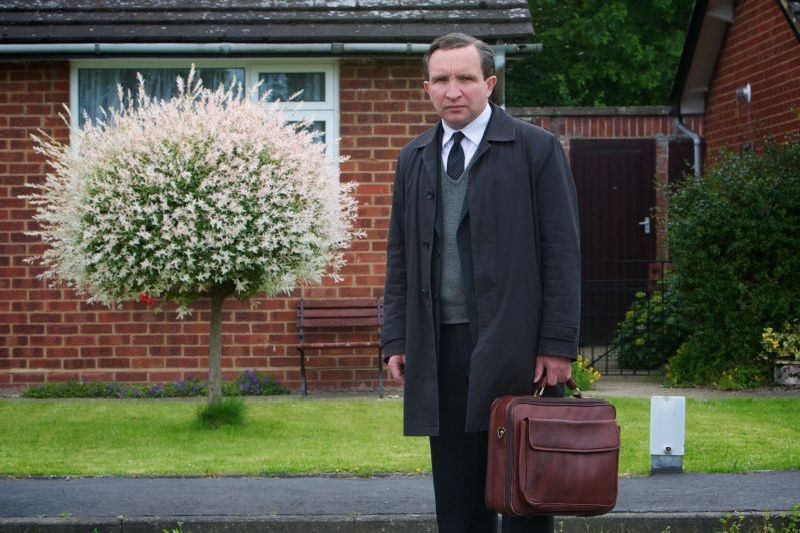
Still Life is a story of a man (played by Eddie Marsan) who’s as alone as the deceased subjects he works with.

Still Life was the last film to do with the VIFF that I saw. It was a surprise that I saw such a downer film as my last one but it wasn’t a complete downer. In fact it has a lot of good elements worth watching.

The film begins with John May doing his job. He’s a council case worker in South London who looks for relatives of those found dead and alone. It’s not an easy job to do. In fact it’s very hard sometimes when he deals with relatives who want nothing to do with the deceased. Not even their own children. He arranges funerals for them even if he ends up being the only one attending and gives them a respectful burial. He even takes the pictures of those whom he was the sole attendee at their funeral and puts them in his own personal album.

Problem is John himself is an ‘alone’ person living by himself in an apartment with no real contact with neighbors. His job which he’s been doing for 22 years appears to be his only real purpose or his only interaction. However the news breaks one day. The company’s changed ownership and he’s about to be laid off by the new owners, feeling his services to those he buries are too ‘costly’ and are making the move to ‘efficiency.’

John wants to make his last case work especially since the deceased, Billy Stoke, lives in the same apartment as him. He comes across a photo album that shows pictures of his daughter ending in her teen years. He tries to get more information like from two people on the streets who used to drink with Billy. He finds out that Billy used to live in Truro. He meets with people who knew him like his ex-wife and former co-workers but none are interested in paying their last respects to Billy.

Finally John meets his daughter Kelly but she doesn’t want anything to do with Billy either. John proceeds with having a tombstone made and finding a burial spot. Just when John thought it was all over for him, he gets a call from Kelly. Kelly hears all that John has done and is happy about it. She even invites John to come see her on the weekend, to which John accepts and appears to finally come to life. Then comes a moment no one expects. It appears to set up for a very sad ending but instead ends on a positive note that appears appropriate.

It’s a question whether the film was trying to convey a message about lonely people or not. Mind you it does touch on a lot of things such as some who left other relatives estranged, some who lost all their friends because of their surly attitude or some who just have no one. There’s one scene that catches my eye and that’s where John looks over the photo album of those he arranged a funeral for. As each picture was seen, it reminds you that those people that died alone with no other loved ones used to be a somebody to others some time ago in their life. Sad how life made a turn for the worse for them. It is good to see someone like John May out there who does give such people found dead and alone a dignified last respects. Another scene that stands out is when John arranges Billy’s grave at the cemetery. Soon he sees the people that are to replace him and what they do is just simply cremate the bodies and pour the ashes in a mass grave. No funeral, no last respects, no nothing. Hey, it’s more ‘efficient.’ It only makes what John’s always been doing look like the right thing.

The most surprising thing about this film is that this first appears to be the downest of the down films ever made. It has all the making for it: a story of a man who has no family and friends trying to give a respectful last respects to those who died alone. The film does have a morbid feel to it and even John looks like the walking dead at times. What kept it from being a complete downer were some humorous moments. They were easy to spot. The film had a way of making humor of certain moments come unexpectedly like John at the intersection, John eating that shepherd’s pie after being told what Billy did after he was fired or even when a drunkard pours liquor on Billy’s coffin as a farewell. Even the scenes near the end as John is seen smiling to Kelly gives the movie an unexpected warmth and a welcomed warmth. That scene as John sees Kelly off was that moment where John appeared to truly be alive. Even the ending added to the quality. It didn’t end suddenly fluffy and happy like so many Hollywood movies would do.  The audience would first think this will be the saddest ending in all of movie history added to the quality. Instead it doesn’t as it ends with an ending that will have you saying: “Yes, very appropriate.” To this day, the ending of Kids remains the most depressing film ending I’ve seen.

This was a very good film written and directed by Unberto Pasolini. He takes what would normally be a very down topic and makes a very good and very watchable story about it. This has to be his best work since his production work on The Full Monty. Also good to see he didn’t give a fluffy ending that was still positive despite the circumstances. It’s not to say that it didn’t have its imperfections. Like we don’t know exactly why John himself is all alone. Did his parents die? Was he ostracized? Was he so fixated on his work, he ignored everything and everyone else around him? There’s that lack of clarity.

Excellent acting from Eddie Marsan. For all intents and purposes, this was his film. He does a very good performance of a character who actually feels like the walking dead. Only he adds humorous elements to him and makes him into a 3D person rather than a stock character he can easily become. The supporting actors were also good as a whole however it’s Joanne Froggatt who’s the one with a role with the most dimension. The only other standout is the music from Rachel Portman. It does a good job of creating the mood.

Still Life is a surprising film in more ways than one. It makes a film about loneliness with a protagonist being its epitome and actually makes it quite watchable rather than completely depressing.

And that does it for reviewing VIFF films. I didn’t have time to see them all. In fact there some I had a chance for but I was either ill or too exhausted to see. Anyways it made for an exciting festival. My wrap-up of this year’s VIFF coming soon.