Forest Whitaker plays a butler in The Butler who serves the White House and includes himself in history.
Lee Daniels’ The Butler is another surprise hit movie of the summer. It doesn’t feature the typical fare for what one would call a ‘summer movie.’ Actually it features more mature fair that’s meant for a release around October, November or even December. So how did it manage to become a hit this summer?
The Butler is a unique story of Cecil Gaines. Born in a cotton field, he was forced into labor by the Westfalls, a Georgia family who owned the plantation. Even though slavery was out of existence, it didn’t stop people from treating their black employees like slaves. The son raped Cecil’s mother and shot his father dead. The state’s caretaker, the mother, takes Cecil out of the farms and assigns him to be a house servant. However it would be a businessman whom encounters Cecil after he breaks into a bakery and steals a cake after running away. The businessman turns him into a successful butler who’s able to provide a good income for his wife and children. Something very rare for an African-American man to be able to do before 1960.
A breakthrough occurs when Cecil is offered a job as a butler at the White House. This is a big breakthrough for the Gaines family as they can improve their way of life. However it does not come without its prices as Gloria feels alienated from Cecil and his workaholic manner and turns to adultery. His son Louis becomes very involved with political activism and the Civil Rights Movement from restaurant sit-ins to the Black Panthers movement. That doesn’t sit well to Cecil at all to the point they fight and they don’t speak for years. His 34 year career as a butler in the White House takes some turns as he’s able to converse with the president and even influence many on how they deal with African-Americans. Cecil is also involved in other incidents such as the riots after Martin Luther King’s assassination to losing his son in the Vietnam War. The story intertwines with his career with social changes for Black America during that time period with his own family life from his childhood to his career to Obama’s inauguration.
A short while back when I was doing a Wikipedia search on the movie, I learned that this film is loosely based on Eugene Allen: an African-American butler who first served in the White House in 1952, advanced to Maitre d’Hotel in his career and finally retired in 1986. The movie admits that this is inspired by a true story rather than actually being a true story. Though one can doubt the truthfulness of the story, the script by Danny Strong does capture one’s attention and is able to mix the White House life of Cecil with moments of history and even the struggle of one family dealing with the changes and trying to make life better for themselves and for their race. It’s almost like Cecil could be labeled the ‘Black Forrest Gump.’ The relationship between Cecil and Louis also highlights the divisiveness between two generations of African Americans. One learned he had to work hard to get places. Another adopted the new attitudes of Black pride during the 60’s. The clashes between the two represent the clashes of the two generations of Black America. Lee Daniels also does a very good job of directing the movie with its complexities. This is a big move for him to go from something like Precious to something more polished. Nevertheless it’s a very good move and can allow him to replace Spike Lee as the top African American director in the business.
The actors were also excellent, especially Forest Whitaker as Cecil. I’m not sure if Forest is trying to imitate Eugene Allen or trying to make Cecil into his own character–I admit that I myself have never seen video footage of Eugene Allen–but he gave an excellent performance both in terms of the character’s personality and his aging. Oprah Winfrey also gave an excellent performance as Gloria encompassing the struggles of maintaining family unity while dealing with a husband that seems too preoccupied with success. David Oyelowo achieves a personal breakthrough here as Louis Gaines. He does a very good job of representing the new black attitude of his times in both life and personal political attitude through Louis Gaines. Supporting acting was also very good from star actors like Terrence Howard, Lenny Kravitz, Vanessa Redgrave, Mariah Carey and Jane Fonda. The supporting acting performances from the lesser-known actors like Mika Kelly, Nelsan Ellis, Elijah Kelley, Clarence Williams III and Yaya da Costa were also very good and added to the ensemble cast. One thing that struck me about Yaya da Costa’s performance of Louis’ girlfriend is the Black Panthers scene where she has a big afro and admits her desire to kill. Didn’t she remind you of Angela Davis in that scene?
There’s one glitch in the movie, it’s the casting for those who portray presidents in the past. At first I thought Robin Williams as Eisenhower was a good choice but the others didn’t seem so. John Cusack made Richard Nixon seem awfully young as did Liev Schreiber as Lyndon Johnson and James Marsden as John F. Kennedy. All three of them were at least ten years younger than the presidents they played when they assumed office. I feel the biggest miscast was Alan Rickman as Ronald Reagan. Reagan had a charming personality and Reagan was not seen as charming at all in the film but rather a toughie. Makes me wonder what was with this? Was it miscasting? Or were those the ways the presidents looked to Lee Daniels or through the eyes of Cecil Gaines?
One final note of the movie. This was the scene near the end showing Obama’s election to the Presidency in 2008. I know that there has been a ton of flack given to Obama over what he’s done or what he’s failed to do as President of the United States. One thing you can’t deny is that even in the five year’s since his election, he’s still the face of hope for a race and other racial minorities. That’s one thing that can’t be taken away.
Lee Daniels’ The Butler is an excellent movie worth watching. I have sometimes co-related to movie to Forrest Gump where a man is part of history. Despite some of its flaws, it was an excellent intelligent alternative to the hyped-up summer stuff and still draws audiences now.
Jason Sudeikis (right) and Jennifer Aniston (left) lead an unorthodox trip in We’re The Millers.
At first I wasn’t too interested in seeing We’re The Millers back around when it opened across theatres August 7th. Well guess what? Its eighth weekend has passed and it’s still in the box office Top 10 so I figured I had to see why this is such a hit.
Before I review, I want to give the box office details that sparked my interest. When We’re The Millers first debuted at the box office, they were pitted that weekend against debuts from Elysium, Planes and the latest Percy Jackson movie that weekend. The big-budget Elysium was the winner that weekend with $29.8 million while We’re The Millers was second with $26.4 million. Actually Millers opened the Wednesday that week which gave them a healthy extra $9.5 million. That helped a lot in making back their $37 million budget that Sunday. The following weekend saw The Butler, which I will review at a later date, at the top with $24.6 million. As for last weekend’s debuters, the other three movies started to move down in terms of their weekend grosses while Millers remained in second with a healthy $18 million as compared to the humble $13.7 million Elysium racked up. Yeah, very humbling since Elysium came at a $115 million budget. The following week saw a repeat of the Top 2 with the Labor Day weekend only seeing the One Direction concert movie superseding the two. Even over the weekends in September, We’re The Millers still did consistently well and now sits at #9 in its eighth weekend with its total gross just recently passed the $140 million mark.
Firstly we have to admit that the situation of the comedy is humorously unusual. A veteran pot dealer has to make back money he lost by being a drug mule in Mexico for his boss. However being single makes him a dead giveaway to the police while families are often overlooked by the cops. So you have to admit creating a fake family with a runaway girl, a stripper neighbor who can’t stand him and a shy neglected boy in his block would make for an unusual premise and leave the audience wondering what will happen next. Having a bizarre drug-trading situation also adds to the story as well as another travelling family who’s uberfriendly and whose daughter captures the attention of Kenny adds too. Scenes like the strip-show getaway and the fake baby named Lebron add to the humor as well. The uberfriendly family having the father being a former FBI agent adds to the suspense in wondering what will happen next. Many of the dramatic moments are somewhat predictable as you mostly know what will happen in the end but it’s still fun to see them played out. Also there are some surprise moments.
The actors themselves also added to the humor of the story. Jennifer Aniston is the one with the biggest resume in the movie. She has starred in hit after hit for so many years. Also adding to this is funny guy Jason Sudeikis. Many Saturday Night Live regulars in the past have gone on to bigger and better things once leaving, but it hasn’t happened to all of them. Very often the first few years after they leave determine whether their post-SNL success will be sink or swim. We’re The Millers is actually a very good boost for Jason Sudeikis. There’s no telling how far his next movies will go but Millers is already a good boost. Also good was the addition of Ed Helms. Funny thing that when I was watching this movie, I wondered if it was written by those involved with The Hangover because I saw a lot of similar humor elements. It wasn’t but including Ed as this off-the-wall cartoonish drug lord added to the humor. Makes you wonder how a yutz like Gurdlinger can be a successful kingpin. The young actors of Emma Roberts, Molly Quinn and Bill Poulter also added to the story as they appeared to be the ones closest to normal, even Casey the street girl. Actually I was surprised Poulter because I didn’t think he’d be the type for sexual slapstick or slapstick of any kind.
Another factor to the movie’s success could be as well is the timing of the movie. This comedy came as big-budget action flick after big-budget action flick were doing less than expected. It almost appeared the summer hype was fizzling out. I will admit that charmingly offensive humor doesn’t have the same heyday that it had back in the late 90’s-early 2000’s. You remember how gross out comedies like There’s Something About Mary, American Pie and Scary Movie surprised everyone by getting loads of people laughing with their low-brow humor and became bigger hits than expected. Since then there hasn’t been as mammoth of hits in the charmingly offensive comedy genre. Nevertheless it’s fair to say there was a steady diet of such thanks to the ‘Frat Pack’ or ‘Slacker Pack’ made up of Jack Black, Ben Stiller, Will Ferrell and Owen Wilson. They churned out comedies that kept everyone entertained continuously up until 2008 when people started to tire of them. Since then it hasn’t been as consistent but there have been some hits along the way. The first one being The Hangover. Its hit success proved that obnoxious and even lewd comedy could still draw good-sized crowds. Grown Ups soon followed. Last year was Ted. This year showed that the Hangover formula and the Grown Ups formula were fading. Fortunately We’re The Millers was able to take the place of both and became the surprise hit of the summer this year.
Actually from my own point of view, I found a lot of moment so We’re The Millers funny but also a lot of unfunny moments. Yes, there was the bag of dope disguised as a baby named Lebron. Yes, there was the stripper dance getaway. Yes, there was the idiot Gurdlinger. But all too often it seemed like they were resorting to sex humor or sexual languages for the sake of cheap laughs. It may be because I’ve aged but I’m okay with sex humor as long as it justifies itself in the movie or the script. All too often I can tell the sex humor or sex language is used for the sake of a shock effect or a cheap instant laugh. And that’s what it seemed to be doing all too often in Millers. I know I should be expecting this especially since the writers have The Wedding Crashers, She’s Out Of Your League and episodes of Married With Children to their writing credits. Even the director has Dodgeball to his directing credits. Nevertheless I felt it tried too hard to deliver shock-laughs at times. Hey, I know comedy is the hardest thing in the world to do but still…
We’re The Millers is a surprise hit of the summer and for a lot of good reasons. I often feel it’s National Lampoon’s Vacation meets The Hangover. However it’s not to say that its over-the-top humor can come across as desperate for shock laughs at times. It’s all a matter for the audient to decide whether it’s funny or not.
A Field In England is intended to be a historical drama/dark comedy. This makes for a unique and daring combination but does it work?
The story is set in the British Civil war of the 1600’s. Whitehead, an alchemist’s assistant, flees from his strict commander and meets a deserter from his own side and two other deserters from “the enemy’s” side. They all try to leave the war behind in search of an alehouse. Meanwhile they have a stew made with the mushrooms they found along the ground. Along the way they meet with an Irishman whom Whitehead had been sent to hunt down for stealing his master’s documents.
The Irishman however tries to get control over the group by letting them know of a treasure in the ground underneath. Whitehead is able to locate the area while the other three are digging or supervising. The exhaustion if digging takes its toll on the two diggers as they get into a fight and one is shot by the one supervising. After all the others run off, the one who did the supervising must now do the digging himself where he learns there’s nothing more than a skull. The Irishman then shoots him and then goes after Whitehead and the one surviving deserter. The two manage to escape and head back to the camp. However one of the deserters originally thought to be dead returns only to get embroiled in a shooting with the Irishman. After an ensuing shootout between the others, Whitehead is the one left standing and he buries the four. After burial, he returns to the hedgerow he originally deserted and finds the three soldiers still standing.
The thing about this movie is that it often appears clueless. All too often I’m sitting there in the theatre wondering what the point of the movie is or what the point of certain scenes were. Was his point about the British Civil War? Was his point about the warring factions: the Royalists and the Roundheads? Was it about the attitude the deserters shared? Was it to be experimental as noted by the many bizarre images? Was it another case of Ben Wheatley getting into his violence obsession? I was left very confused. The violence and even the alleged sodomy part really had me questioning. Even the special visual effects like the exploding sun and the strobe images had me wondering if Wheatley was trying to be experimental in his work.
I will admit that this is just my judgment from watching as I am unfamiliar with Ben Wheatley’s work. He has established a reputation in England with seven years of film making and video making under his belt. He is also primed and ready for the mainstream as he has already been slated to make an American-made film Freakshift and a sci-fi series for HBO in the future. Nevertheless I’ve been left assuming that A Field In England, which is directed by Wheatley and written by his wife Amy Jump, is an experimental picture for Wheatley. I saw nothing in the storyline involving any facts or factoids about the British Civil War and more of a focus on torture, violence and hallucinations. Even the language used in there didn’t sound like talk that would be used from the 17th Century but contemporary times.
The film has already received some acclaim. It has already won a Special Jury Prize at the Karlovy Vary Film Festival and was a Crystal Globe nominee at that festival. It has also made its round of film festivals and has already been released on DVD.
A Field In England appears to be more of a trip of psychedelia and violence than historical documentation or historical fiction. The best I myself can classify this film is an experimental work.
Daily life around the Tonle Sap River in Cambodia and potential changes is the subject in the documentary A River Changes Course.
A River Changes Course is one of the many documentaries being shown at the VIFF. It has its own message to say and it says it by the way a family lives.
The film focuses on three families that live on the Tonle Sap River: the Math family, the Moh family and the Sabourn family. The Math family is a fishing family who rely on fishing for their income. The Mok family works the rice farms but it’s hard considering the mother has a big family to raise. The Samourn family is an indigenous family living in an agricultural area that help to keep their family with a decent income.
Things have not been easy for either family. Sari Math must quit school to help the family but the fishing population of the river is dwindling. Khieu Mok, the eldest daughter of the Mok family, leaves the family farm for the capital Phnom Penh for a factory job to help pay her family’s debts. And Sav Samourn notices the land she’s always known as home being bulldozed for the sake of factories and farms for export. It hurts her as she always called the area ‘home’ whether through good or bad times.
The object of the film was to get the people to tell their stories. There’s no narrator. There’s just the camera showing the family through their everyday lives. Whether it be fishing from a boat, reaping harvest or working in the factory, or selling what they’ve made, it shows the difficulties they go through to make a living. It even shows the children of the family working in the farms, from the boat or even near the fish market. That shows childhood ends early and one makes a worker of themselves at an early age. It also shows conversations with those in jobs associated with the subjects being filmed. Just as Khieu talks of her difficulties in making a livable wage at the factories, two of her other co-workers talk of their own difficulties. Basically this documentary about the lives of three families in Cambodia showcase the lives of millions.
Even outside of the images of the people working and struggling, other scenes also send a message too. One is of a young boy singing a song with lyrics; “Marry me and I will make you rich.” Many times in the film, you will hear people sing songs in which they composed themselves. Another is seeing the small children in school learning how to read. Another is where the family gathers in a town area to watch television: one television per village. Another is even when it’s raining in the area but the young boys see it as swim time in the river. That’s a reminder that despite the hardships, childhood does exist. Actually all the images that don’t deal directly with the main plot say something.
One thing about the film is that it’s not just a showcase of daily life in Cambodia but it also shows glimpses of hope for the nation. We shouldn’t forget that Cambodia has a troubled past. There’s the dictatorship of the Khmer Rouge under Pol Pot in the late 1970’s where 2 million Cambodians were slaughtered. Cambodia has struggled to rebuild but it hasn’t been easy especially since the country is under a fixed democracy. Agriculture and fishing have always been ways of life in Cambodia but it’s always been conditional depending on the crop year or fish catch. The factory work offer some hope, albeit limited. Just as land is cleared for factory land or cropland for China, Khieu talks about the potential for better chances closer to home. Khieu’s mother talks of her son being a migrant worker in China. Even the images of the young children in school show an image of hope. Especially while Sari is talking in the background of quitting at Grade 7 and lucky to get that far. I believe that’s why it’s titled A River Changes Course as it shows potential changes for Cambodia.
However despite the images of hope for the future, it does come at a price for others. Sav is completely unhappy with the deforestation as this has been a land she has always called home, being indigenous. What’s seen as hope or a future for others can be seen as a big loss for someone like Sav. She even says: “We’ve worked so hard on this land and now they’ve come to destroy it all. Sooner or later it will all be gone.” It also shows that the title A River Changes Course does not completely have a positive meaning.
This documentary is not just a showcase of life in Cambodia but also a ‘homecoming’ for director Kalyanee Mam. She was born in Cambodia and emigrated with her family of nine to the USA in 1980 as refugees of the Khmer Rouge regime. She is a law graduate of Yale and UCLA Law School and has worked as a legal consultant in Syria and Iraq. Mam has also done film work along the way. She completed her first documentary Between The Earth And Sky in 2009. She also worked in the cinematography in the Oscar-winning documentary Inside Job. Mam is now working on another documentary Power of Pearl, due for release in 2015.
Mam also took time at the VIFF showing of A River Changes Course where she told her story of her family escaping Cambodia for the United States and living as refugees. She told about why she did the documentary and also about some of the raw deals Cambodia is getting in terms of creating crops for China, like none of the harvested crop going to Cambodians: all straight to China for ethanol. I myself asked her a question about politics in Cambodia: if it’s a democracy or dictatorship. She told of how fixed a democracy it is right now. Nevertheless she and other Cambodians believe in a hope for the future. In fact Mam made mention that when Khieu casted her ballot, she said it was for a livable wage. A River Changes Course is a chance for her to tell the story of her homeland across the world in hopes for a better tomorrow. In fact you’ll learn more about it at the film’s official website and how you can help too.
A River Changes Course has already received a lot of acclaim. It’s already received the Grand Jury prize for documentaries at this year’s Sundance. It has also won top documentary prizes at the Green Film Festival in Seoul and the San Francisco Film Festival. It has also received other awards such as Best Feature at the Atlanta Film Festival, a Human Rights Award at the River Run Film Festival, a Best Feature award at the Yale Environmental Film Festival, and a Grand Jury Conscience award at the Docville International Documentary Film Festival. I’m sure there’s more to come.
A River Changes Course is Kalyanee Mam’s most acclaimed work yet. It is an accomplishment too as it helps open people’s eyes towards what is happening in her land of origin and raise awareness and help. I believe that art can make for a better future. Much the same way The Killing Fields opened people’s eyes over what happened during the Khmer Rouge, this documentary can shed a big light to its aftermath many decades later.
One thing about the Vancouver Film Fest is that they show a lot of films and shorts from upcoming filmmakers. They also show films made by youth or young filmmakers too. The Reel Youth Film Festival–which is a festival all it own and had its premiere at the VIFF on Sunday–showcases films from young filmmakers.
Most of the time whenever there’s a shorts segment show I see, I review all the shorts one by one. Now rather than review the shorts, I will just describe what I saw. Besides I wouldn’t consider it to be fair to critique student films.
The twenty-five films were chosen out of three-hundred entries. The films are from Canada and seven other countries and range from one minute to nine minutes. They consist of animation or live-action. They are filmed on typical motion picture format or typical run-of-the-mill video camera. They range from a played-out stories to music videos to animation exhibits to social messages. Some of the films appeared amateurish in quality, some appeared quite professional in quality. Most can be classified as G-rated works but two films in the festival were rated PG with one even including nudity and masturbation (non-explicit, of course). Three videos included were also part of the United Way’s contest to create a one-minute anti-bullying film. Two videos were from the UNIS student program including one of two girls growing up in a rural area of Vietnam.
The films show a lot through their eyes. A lot of it is often about school life, home life and even the work life they anticipate to have in the coming years. Sometimes they focus on other people such as gypsies, two sisters in Vietnam, a graffiti artist or an elderly man in the town. Sometimes they focus on social issues like bullying, corporate greed, homelessness or drugs. Sometimes they focus on fun aspects like dating, school irritations, social media and even the city they’re proud to call home. Sometimes they even focus on nonsense subjects like the death of a sandwich, being scared by a ghost, an office dork or a certain secret about Barbie we never knew.
The thing is that most of the students doing the filming may or may not want to take filmmaking to further directions in their life. Some–like the directors of Crack, Hank and Light Switch–appear to want to take filmmaking seriously in the future. Many others look like they prefer the direction of animation. Some are just amateurs doing it for fun. I guess that’s what the focus of the Reel Youth Film Festival is: more concerned about getting out their voice or creativity rather than the seriousness or professionalism of the craft.
The screening I saw Sunday evening was actually the World Premiere of the annual Reel Youth Film Festival. There will be one more showing at the VIFF on a Wednesday morning open for student groups. It will be showing at more locations to come and the Festival can act as a fundraiser for your community centre. If you’re interested in screenings or interested in showing it at a place you know, or even if you know a young filmmaker with dreams, just go to: http://www.reelyouth.ca/
One last thing. That evening I went had a ballot for all to fill out. The ballot was asking the voter of their three favorite films and their favorite local film. I don’t know if they will be doing it again in their next showings but I had a chance to pick my favorites:
More
Crack
Being Ernest
Fav Local: Too Old For Fairy Tales
The Reel Youth Film Festival is a good attraction at the VIFF. Who knows? Maybe one of the directors can make it big one day.
The couple of Jim and Kelly get the fright of their lives in their vacation to Willow Creek.
I saw Willow Creek at the Vancouver International Film Festival just for the heck of it. What I got was something familiar but just as thrilling and had its own uniqueness.
The film appears to be videos of a couple, Jim and Kelly, as they are about to search for the mystery of Bigfoot. The legend of bigfoot started in Willow Creek, California one 1967 day when two men names Roger Patterson and Robert Gimlin claimed they sawe him and even provided a picture. The stories have kept on popping as the years went by.
Jim and Kelly head to Willow Creek to camp out in the Rockies and get their own piece of the action. Jim especially is a huge bigfoot enthusiast. Kelly doesn’t seem too into it but is cooperative with Jim nonetheless. They come to the town that’s full of Bigfoot landmark and businesses named Bigfoot. They even go to a Bigfoot diner where they have a Bigfoot burger with the buns shaped like a big foot. They interview residents, visit a Bigfoot museum and even have fun with the Bigfoot statues. They even show a singer who wrote the song Bob and Roger about the legendary discovery. It’s not to say that all has been fun before their camp-out. They did see one person who didn’t like how they were having a mock interview with a Bigfoot statue. They also met another man with an aggressively rude attitude while driving their Humvee down the valley.
That doesn’t stop them from finding another path to set up camp. They set up and then leave temporarily. Once they return they find their tent down and their stuff thrown about. Jim even finds his sock up in a tree. That doesn’t stop them from setting up again. They even sleep in the valley overnight leaving the camera running in hopes of getting a piece of the Bigfoot action. The night is a special bonus for Jim as it’s his chance to finally propose to Kelly. Kelly gives an unexpected answer but Jim’s cool with it.
Overnight they hear a lot of noises. First sounds like banging of rocks. Then sounds like loud growling. Then comes forceful actions outside their tent like their tent body being pushed. Jim and Kelly decide to leave the following morning. As they go to return to their car, Jim still tries to capture some stuff related to Bigfoot like hair from a tree or footprints near the creek. The fun ends when the two learn they’re lost without a map. The two are left stranded in the night where the unexpected happen.
Some of you may say this film sounds very familiar to The Blair Witch Project or Paranormal Activity. That’s definitely what I thought. It may be another spin off that formula but it does have elements of its own. First is of a mysterious phenomenon that’s already hugely popular and the place that made it popular. For those that don’t know, the town of Willow Creek, California is dubbed the Bigfoot Capital Of The World. They not only have all these Bigfoot places as shown in the film but also a Bigfoot festival. Back to the subject of the film, I’m sure one could see themselves doing such a film with other phenomenon like say going to Roswell for the alien phenomenon or Kelowna, BC for the Ogopogo.
Even separate from the subject of the search for Bigfoot was the story is also about the couple too. Blair Witch was of a group of friends together. Paranormal Activity had a couple but there wasn’t much focus on the relationship of the two. Willow Creek had a lot of focus on the relationship of Jim and Kelly first during their moments of fun together then on moments of great fear. Alexie Gilmore and Bryce Johnson gave a great performance as the couple. They made it work with their believable performance.
Bobcat Goldthwait also did a good job of directing and writing the story. Many of you may remember Goldthwait from the 80’s and 90’s with his comedic acting and his stand-up comedy where he had this irritatingly growling voice which people really liked. Filmmaking is something you would not normally associate with Goldthwait but he does make films of his own. This was a good film put together as it had a lot of people in suspense. Also he was at the showing for both the intro and the Q & A. Shows he still has it in terms of stand-up.
Willow Creek may remind you of certain other movies of the past but it’s a good story of its own and is worth watching. However I don’t think it may want you to check out the Bigfoot mystery anytime soon.
Blue Is The Warmest Color is a French lesbian love story that tells more than just a story.
One of the biggest attractions at this year’s Vancouver Film Festival is the French film Blue Is The Warmest Color. The win at the Palme d’Or at the Cannes Film festival will make it an attraction, no doubt. There are some that already know what it’s about and others that don’t. The question is will the crowds be satisfied?
The story starts with Adèle, a young high school student from Paris nearing adulthood and trying to decide what she wants to do with her life especially in times when Europe is going through economic troubles. She’s very involved with her job at day care, but lost in thought during school and unhappy in her relationship with Thomas. She soon leans of her lesbian attractions and starts trying to get as better understanding of it. She even breaks up with Thomas in the process.
Her gay friends from high school introduce her to Paris’ gay scene. She’s exposed to gay culture at one gay bar then visits a lesbian bar for the first time where she meet a tomboy woman with blue hair named Emma. Emma not only introduces Adèle to the lesbian scene but also to her work as an artist. Adèle’s high school friends are surprised with her relationship with Emma but over time the relationship goes from being simply Adèle being the subject of Emma’s art to a full intimate relationship. They share everything. Both are also good with each other’s parents. Both are also supportive as Emma helps with Adèle’s 18th birthday and Adèle cooks for Emma’s art party.
Things mark a turning point at Emma’s art party as Adèle senses something between Emma and Lise, her artistic colleague. Adèle also senses the advances of her boss from the daycare she works at. Eventually she does engage with her boss only for Emma to find out. Emma breaks up with Adèle in a rage leaving Adele frustrated and heartbroken. Months pass and Adèle is now a first grade schoolteacher. Emma is soon to have her first art exhibit opening. They meet again in a café to try and resolve what they can only for Adèle to learn a hard new truth. Adèle goes to the exhibit opening only to leave heartbroken but older and wiser.
The surprising thing about this is how this film tries to portray a relationship between two young girls. Its biggest quality was its truthfulness. It showed a girl-meets-girl scenario that’s often the common way two meet. It shows the relationship and how the two share so much with each other that almost mirrors other relationships. It also shows the friction in relationships with being attracted to another person, infidelity, break-up and aftermath that you will notice in other relationships. I believe that’s the biggest thing about this film. This is not a film that aims for heavy intense dramatic story but rather a film of a lesbian relationship between two young girls that mirrors most relationships people have or have had, possibly even one of your own.
It’s not only about the relationship in the film but also as much about the two main characters too. Adèle is turning 18 and in the midst of deciding what she wants to do with the rest of her life, eventually setting on teaching elementary school. Emma is an older art student and she’s disinterested in conforming to the expectations of the world nor to the art business. Adèle has just recently learned of her same-sex attraction. She slowly tries to learn about it and welcomes it when Emma comes into her life, but questions if she still has attractions and feeling to men. Emma on the other hand knew of her lesbian attraction at 14 and became very comfortable with it. The personality traits of both adds to the story of the relationship as it shows that opposites can attract. It also shows how the two personalities cause friction as Adèle has the common immaturities with an 18 year-old and Emma is a free person but with a fierce attitude.
One of the things of the movie is that it also brings up certain forms of thought. It should not be surprising because Adèle is a student just learning and it’s the student years where one tries to expand their mind. Emma makes mention of Sartre and him creating a intellectual revolution in saying we are ‘condemned to be free.’ Another time we’re in one of Adèle’s science classes seeing a lesson in gravity and one student talks of unavoidable vices and how the Catholic Church tells us that vices should be avoided. There’s also the division of the arts world and the business world that’s also present in the film. Adèle embraces the arts greatly in her own way but wants a career that’s stable especially since the future of the young of France looks uncertain and chooses teaching. Emma on the other hand wants to do what she wants to do and paint what she wants to paint and resists offers to ‘market’ her talent. That pressure of the dilemma of doing what one is born to do vs. doing what pays the rent is a common pressure in the minds of a lot of young people during those years. I remember it was even a pressure for me when I was a college student.
Without a doubt, the biggest thing that got me thinking were the graphic lesbian sex scenes. I know that sex scenes are choreographed but I was still surprised in seeing it’s explicitness. Even though I learned just now that fake genitalia were used, there’s no question that there will be many who will label it ‘pornography.’ In fact the producers refused to edit the film for release in the US and that got it an NC-17 rating.
In all frankness, I did find this a very revealing and intimate look at a lesbian couple but nevertheless I found this film to be too long. I believe if a film is going to be 3 hours long, it should justify its purpose. I really question whether 179 minutes is really necessary for that film because it didn’t appear to justify its length of time. I’m sure the film could’ve done as good a job of telling the story of the relationship if it was even two hours. There are even times when I question if that heavy-duty sexual activity, especially the impulsive activity in the café near the end, really added to the story or was included for shock value. That’s the problem with over-the-top sex scenes in movies: it may be intended for the story but could be taken the wrong way with the public. In fact there were times my ‘inner teenager’ felt like saying: “Owww! Get down!”
The best quality was the acting. Adèle Exarchopoulos did a very good job not just of portraying a young lesbian but also of a young teenage girl on the verge of womanhood. Her mix of a character who’s on the verge of adulthood trying to be more responsible but also dealing with her own immaturities, both behavioral and sexual, made Adèle very believable as a young woman. Lea Seydoux did a great job of playing Emma, the older freer one who’s in control. For those who didn’t notice, Lea is the one who won Owen Wilson’s heart in Midnight In Paris. It’s surprising how she’s completely unrecognizable here. She did a very good job of character transformation. Director/writer Abdelatif Kechiche was really daring in his subject matter and his adaptation of the story. I checked his Wikipedia profile and there’s no mention of himself being gay. Nevertheless He did an excellent job of taking the relationship and making it look so relatable.
The question will remain will Blue Is The Warmest Color go well with the movie-going public? Marketing gay-themes movies to the general public is not an easy task especially with the predominantly heterosexual crowd. Yes there have been films of gay characters and gay relationships that have scored well like Philadelphia, The Hours, Brokeback Mountain and Milk, but it’s still a chancy thing that’s still hit-and-miss with no proven consistent results. Even this being a French-language film may cause some difficulties. I even question if a film like this will score well with the LGBT populations in North America. We should also take in mind that living as a gay man or lesbian in Europe is a lot different that living as a gay man or lesbian in North America. Two different continents with two different social attitudes. Something I question.
Blue Is The Warmest Color is a unique film in its portrayal of a lesbian couple. It has a lot of good qualities that make it worth watching for some but not for others. It all boils down to the individual audient and their tastes and tolerances to decide if this is the right film for them or not.
Ben Johnson taking the stand at the Dubin Inquiry in June 1989, eight months after testing positive for stanozolol at the Seoul Olympics.
“Sooner or later your ability to succeed on natural talent runs out when you run against a chemical barrier. The question became do you take drugs to try to win or do you content yourself with losing forever by staying away from them?”
– Charlie Francis
“I think about it for about three weeks before I say yes. Why should I train hard doing it clean and then these other guys are not clean? Face fear…I was young, in the business and (Jamie Astaphan) was a doctor and he said ‘If you don’t take it, you won’t make it.'”
– Ben Johnson
Back on Tuesday, I posted my memories and thoughts of the big run, the events leading up to it and the aftermath. It made sense since it was the 25th anniversary of that controversial run. Today is another 25th anniversary: the anniversary of the bad news hitting the fan. Here I will reflect on what I’ve learned from watching 9.79* and all that I’ve noticed in doping in the years since.
I know I talked a lot about the ESPN 30 For 30 Film 9.79* in my last article. For those who haven’t seen it, 9.79* is a very informative documentary about the Ben Johnson scandal that not only tells about the process of how Ben got into taking steroids but also about the changing world of track and field at the time as well as the widespread doping amongst those in the track world at the time too. It not only interviews Ben Johnson and Carl Lewis but all eight runners that participated in what’s commonly called ‘the dirtiest race in Olympic history:’
Lane 1: Robson da Silva – Brazil
Lane 2: Raymond Stewart – Jamaica
Lane 3: Carl Lewis – USA
Lane 4: Linford Christie – Great Britain
Lane 5: Calvin Smith – USA
Lane 6: Ben Johnson – Canada
Lane 7: Desai Williams – Canada
Lane 8: Dennis Mitchell – USA
It also interviews the coaches of Carl Lewis, Calvin Smith and even the coach of the US Olympic track team of 1988. Calvin Smith is of special focus too as he was the 100m dash World Record holder until Ben broke it at the 1987 Worlds. It also interviews two of Ben’s former teammates from the Scarborough Optimist Track Club: Angella Issajenko and Desai Williams who had stories of their own of what they saw around them and what they themselves did. It also interviews those associated with the USOC Doping programs like Dr. Robert Voy and Dr. Don Catlin from the UCLA lab during the 1984 Summer Olympics. Members of Canada’s Olympic Committee, Robert Armstrong from the Dubin Inquiry and a doping historian are also interviewed as well as Mary Ormsby: a Toronto Star journalist. Mary’s analysis of Ben Johnson and those associated with him as well as Canadian attitudes and even celebrations of Ben during those times really summed it up well and really struck me.
There are many key people who were not present in the film like Ben’s mother, Dr. Jamie Astaphan, human growth hormone Dr. Robert Kerr, Charles Dubin, Alexandre De Merode and Charlie Francis because they’re all now deceased. There is however one film footage of interview of Charlie from 2000. Also Andre Jackson, whose significance I will talk about later, is not interviewed either.
BEFORE IT ALL STARTED
Long before the whole Ben Johnson scandal, I knew about doping in sports. I first took an interest in the Olympic Games back in 1984 in the months leading up to the Los Angeles Olympics. I was a kid back then and with each preview show and each book I read, my curiosity grew and grew and I continued to learn more about the Games. Even seeing shows about Olympians past like The Olympiad widened my knowledge and excitement. However there was one Olympic preview show that focused on the subject of doping and anabolic steroids. They even made mention of athletes from the Pan American Games the year before that tested positive including two Canadian weightlifters.
Later on I’d learn just slightly more about doping. Actually I learned about an Olympic fatality from 1960. It was Danish cyclist Knud Enemark Jensen in the team road race. Two other members of the Danish team also dropped out of the race. The coach later admitted to giving his riders Roniacol. Amphetamines were also found in his autopsy. That would lead to the start of doping tests in 1968. The first athlete stripped of a gold medal for a doping violation was American swimmer Rick de Mont for using an asthma medication. Even though the substance is no longer on the banned list, the IOC won’t give back his gold medal. Steroid use was known in the 70’s and it was actually 1976 that the Olympic Games started testing for them. There were steroid positives in Montreal. Moscow in 1980 had no positive tests but some medalists including two track and field gold medalists had been banned for a positive steroid test in the past.
WHAT LED TO IT ALL
Back to the subject of Ben Johnson, I made mention of how Ben Johnson burst onto the international scene by winning bronze in the 100m dash at the 1984 Olympics. That was a great improvement from the World Championships a year before where we only got as far as the semifinals. His two bronze was rather quiet news for Canada’s athletes as they had their best Olympics ever with 44 medals. Ten of them gold. Our ten golds during those Games were not only a delight but a relief since our last Summer Olympics gold medal came back in 1968. Between that time we had to deal with the embarrassment in Montreal in 1976 of becoming the first and so far only host nation of a Summer Olympics to fail to win gold. We also had to deal with the heartache of our 1980 Summer Olympics team not even making it to Moscow as Canada joined the U.S. in boycotting those Olympics.
What was going on is that the sports world knew what was going on in terms of doping back during the 70’s and 80’s. Just like Calvin Smith said:”(Track athletes) know more than the public ever will.” I guess you can say that about every sport. Charlie Francis, Ben Johnson’s coach, would compete for Canada in the 100m dash at the 1972 Munich Olympics. He would hear rumors of how 80% of the field were on steroids. The crunch of sport being full of people on performance enhancing drugs would get heavier after the 1976 Olympics and the successes of athletes like the East German swimmers and weightlifters from various countries who many knew were doped but they won and passed the drug tests. When Charlie himself took to coaching, he was determined to make champions out of his athletes. However he had to deal with the challenge of an unlevel playing field and felt the only way to win was to encourage his own athletes to use steroids. That attitude: “If you don’t take it, you won’t make it.” He would give them drugs he knew the East Germans were taking at mass level. He even hired Dr. Jamie Astaphan after the 1984 Olympics to increase sophistication in his steroid program.
As for why Ben and his teammates agreed to take steroids, it was more than just about the desire to win. It also wasn’t until I saw the film that his athletes considered him not just a coach but a friend. Ben Johnson, Desai Williams and Angela Issajenko looked up to him very highly. They were Canadian immigrants from the Caribbean who felt like misfits and they took aback to Charlie how he made them feel like they belonged and how he helped them to succeed as athletes. In fact Francis helped coach all three of them to the 1984 Olympic Games where they all came home with Olympic medals. In addition to Ben’s two bronzes, Desai was part of Canada’s bronze medal-winning relay team and Angella was part of Canada’s silver medal-winning women’s 4*100m relay team. It’s that coach-athlete relationship thing that could have a lot to do with why they agreed to take the steroids at his encouragement. They looked up to him that much. Coach-athlete relationships are also of focus in 9.79* as it shows the relationships between Carl Lewis and Tom Tellez and Joe Douglas as well as Calvin Smith and his coach Wayne Williams. One thing the film showed me is that for all the show-off and braggart I always saw Carl Lewis to be, I admire him for the huge respect he had for his coaches and still has. Like he sang in his flop song: “You can’t win on your own.”
I’ll admit I knew a lot about doping even before the 1984 Summer Olympics. I’ll admit, as evident in my article from Tuesday, that I learned a lot of what was going on in the Scarborough Optimists Track Club and other athletic sources around that time. In watching the film 9.79*, the things that stuck most with me were the things I don’t remember or didn’t know about. The mention of the USOC and the drug testing programs back in 1983 were a surprise to me. Even as well the number of noticeable tampered or ‘chemically masked’ samples they attained and how none of the athletes were punished but warned instead. I’ll admit I didn’t pay much attention to the BALCO scandal that came to light in 2003. I knew only partial details and mention of Carl Lewis testing positive for a banned stimulant but I didn’t know all the facts. Also I didn’t know about the missing positive results from the last days of the 1984 Olympics. Nor did I know about Human Growth Hormone being untestable at the time. I’ve always known it to be testable but I forgot there was a time when it wasn’t.
This film gave more information about the doping programs created and the lightweight actions carried out. One of the things I was not surprised about was when Dr. Don Catlin talked about him asking the athletes why they were taking drugs. The answer was obvious: they want to win. Even as track and field was being professionalized, it became obvious that success was winning medals. In fact I remember the USOC conducted a survey in 1988 where they asked athletes who trained at the US Olympic Centre in Colorado Springs the survey question: “If you were given a pill that was guaranteed to make you Olympic champion but would kill you within five years, would you take it?” The result: 52% said “Yes.”
THERE’S MORE TO IT THAN DOPING
The film doesn’t just simply show you thoughts and opinions of those surrounding the event, and especially the subject of doping in track and field. The film also focuses on the sport of sprinting. It shows a lot of the training whether it be old videotapes of Ben’s workouts or even Dennis Mitchell coaching his young athletes. Ben will remind you in his conversations as demonstrated by Dennis Mitchell in his coaching that track athletes push their bodies beyond the human limits to be the best. Desai Williams summed it up well in his own words: “You work every single day, five or six days a week. You’re going to beat yourself into the ground. It’s tough: the sacrifice that every track person makes with no guarantee. None.”
The film also shows the times in which this was all happening too. The film also reminds us that this was happening at a huge turning point in track and field. Until 1980, professionals were not allowed to compete at the Olympics. If you wanted Olympic gold, you couldn’t make a single penny off your sport. Any money you made had to be a well-kept-secret. In fact track and field had separate amateur and professional leagues. Once professional athletes were given the green-light to compete in the Olympics in the early 80’s, things changed. Athletes who dreamed of Olympic gold didn’t have to accept under-the-table money anymore. Meets run by the IAAF could pay the athletes. Athletes in Olympic sports who had high profiles could hire agents. However professionalizing track and field it didn’t come without its growing pains. Meets hopping on the professional bandwagon had to market themselves. Hence Zurich’s Weltklasse being passed off as ‘The Olympics In One Night.’ Only athletes with big star status like Carl Lewis or Daley Thompson could command big appearance fees. The Carl Lewis/Ben Johnson rivalry was a great boost to the professionalizing of the sport and created a rivalry that drew crowds. Prize money per athlete varied anywhere from big money for the top finishers to chicken feed for the also-rans. It shouldn’t be a surprise that the prize money thing could cause problems in terms of doping.
That was quite an era for track. I don’t think there has been an athlete since Carl Lewis that could be that big of a draw, although I see a rival in Usain Bolt currently. There also hasn’t been a rivalry as exciting as the Carl Lewis/Ben Johnson rivalry. Not even the Carl Lewis/Mike Powell rivalry in the long jump that happened years later was as exciting, nor the rivalry of Carl Lewis vs. age during the mid-90’s. There isn’t a rivalry nowadays, not even Usain Bolt vs. Yohan Blake, that has the same excitement.
WHAT’S HAPPENED SINCE
Also remember how I talked about the East Germans and that being Angella Issajenko’s drive to hop on Charlie’s doping bandwagon? Well shortly after Germany reunified in 1990, just a year after the Dubin Inquiry concluded, the confessions were out that East Germany had a program of systematically administering steroid to their athletes headed by the Stasi, East Germany’s equal to the KGB. They knew which drugs to give which athletes, when to break them off to avoid detection, how often doses were needed to reach top performance and which drugs were undetectable at the time. After the confessions, many former East German Olympic champions have admitted to being part of the program. Some have asked their records be stripped and some are willing to give their medals back. One thing is many are reluctant to give their medals back, giving a common claim: “Yes, I was on steroids but I had the talent to win.” The thing is all of the records held by East Germans, even the world records, still stand and none of the medals have been demanded back by the IOC. That especially bites as a Canadian knowing that in three women’s swimming events in 1976, the fastest non-East German was a Canadian. It’s a shame. Three gold medals from Montreal that could’ve been and should be.
The thing was the intention of the Dubin Inquiry was not just to get to the bottom of Ben Johnson’s positive from Seoul. It was also to expose truths about doping in the sports world and hope to clean up sport not only in Canada but around the world too. If it did, it was quite minimal. You know how there are a lot of things that would eventually defeat their purpose over time like called ID and warning stickers on records? The Dubin Inquiry also defeated its purpose in a lot of aspects. This was the only time in history athletes confessed their doping use under oath. The subsequent punishments to the athletes who confessed caused many athletes to be a lot more protective of their innocence even after they test positive. Some would maintain their innocence to the point of taking their doping situation to court. They know that meets outside of the World Championships and the Olympic Games have doping labs that don’t have the same top-notch consistency and errors in procedures can result. They can use that to overturn their positive. There are even countries that know of positives in their own country but hide it around Olympic time so that the athlete can compete and win. A country like Canada can’t afford to do something like that, not after the embarrassment of Ben Johnson’s positive.
The 1996 Atlanta Games would present a new doping situation. There were many cases where athletes with positives outside of steroids would give explanations of taking medicine given by their team doctor. They’d be exonerated and they’d get their medals back. However it was made obvious at Sydney in 2000 that this kind of forgiveness was over when Romanian gymnast Andreea Raducan tested positive for a stimulant provided to her by the team doctor. Instead of exoneration, the stripping of her all-around gold medal stood and the doctor was suspended for two Olympic cycles. That was it. No more exonerations over a team doctor’s bad medicine. Enough was enough.
Doping still continues to be an issue in sport. New drug discoveries, new incentives or new needs to revamp the testing, new ways of dealing with doping, and even new commissions like WADA: the World Anti-Doping Agency, which was started in 1998 after officials believed the IOC lacked consistency in cracking down on dopers. WADA is headquartered in Montreal and headed by Canada’s Dick Pound who used to be the Vice-President of the IOC. In the 2000’s it was the Americans that were most under fire for doping in sport. If there were cover-ups during the 80’s, the cover-ups weren’t happening anymore as many sprinters were faced with positive drug tests. Marion Jones was the most famous as she would take years to confess her own steroid abuse since 2000. Even while two ex-husbands of hers had already tested positive during the times of her marriages, it still took her until 2007 to confess it all.
There are always new drugs. There are always new ways to try and get them and try to stay ahead of the tests. One thing is that there are some advancements. Out-of-competition testing has increased with surprise tests and even programs sponsored by the USOC where top runners volunteer to have themselves tested. One of which is sprinting star Allyson Felix. In addition, each Olympics takes doping tests to unprecedented levels than from before. Beijing 2008 introduced a new procedure where all tests would include samples frozen for four years and retested to crack down on athletes who thought they could be ‘ahead of the game.’ London 2012 had it so that every athlete in every sport that finished in the Top 5 in each event was tested. Also I don’t think we’ll ever see an equal to the sophistication of the East German doping program. That has to be the most successful systematic doping program of all time. China tried to copy that program in the 90’s but it wouldn’t work as positives resulted.
Steroid use isn’t just limited to sport. It’s also subject to professional wrestlers too and it was made a big issue in the wake of the murder-suicide of Chris Benoit and his family. Many believe ‘Roid Rage to be the cause. Steroid use is even rampant simply with men who go to the gym to work out. Ask anyone that works at a gym. There are even teenage boys and some as young as 11 going to guidance counselors and asking for steroids simply to look bigger. Even after they hear of the consequences, they still want it because they only care about their looks. I know there’s a lot of attention made to young girls and anorexia. I believe there should also be the same attention to young boys and steroids.
Interesting to note is that Track And Field is not the Olympic sport with the biggest doping problems. Weightlifting is. In fact just days before Ben Johnson would make the biggest doping news out of Seoul, two Bulgarian weightlifters who had won gold medals tested positive for diuretics, a drug possibly intended to be a masking agent. Funny how it could mask the steroids but failed to mask itself and caused the lifters to give back their gold medals, both receive the same sports ban as a steroid positive and cause the whole Bulgarian weightlifting team to return home prematurely and in embarrassment. Weightlifting has gotten tougher on doping. They have since changed the weights of weight classes and erased past records to start on a clean slate. They now give lifetime bans on the first steroid positive. They also place bans on nations who have multiple lifters that test positive consistently. One nation currently on that banned list is Bulgaria.
Funny thing is that the sprints are not the events in Track And Field with the biggest doping problem. It’s the throwing events. You’d be surprised how many Olympic medals have been given back in those events. The shot putters however have received the most doping positives and most returned medals. 9.79* presents the doping problem of the 1980’s and portrays it as the heyday of doping in sprints, or as Calvin Smith put it: “a time of big time drugs.” It doesn’t seem as rampant at first but 2013 shed light that it’s still a problem, if not at the same length as back in the 80’s. This year there were three doping positives from sprinters that made news which included former World Record holder Asafa Powell of Jamaica and former World Champion Tyson Gay of the US. In fact Powell tested positive for the same stimulant his Jamaican teammate Sherone Simpson tested positive for. This could cause suspicion over the Jamaican track program which has been so dominant in sprinting and hurdling over the past seven years.
ADDITIONAL NOTES ABOUT THE FINAL
Interesting thing about that final is that all of the runners in that final would have won Olympic medals in their careers. In fact you’ll see in 9.79* footage of the victory ceremony of the 1984 Men’s 4*100m relay: the US won gold with Jamaica silver and Canada bronze. There in that footage you’ll see five of the eight finalists: Lewis, Smith, Stewart, Johnson and Williams. As for the other three finalists:
Linford Christie who finished third would get his bronze upgraded to silver in the aftermath and would be Olympic 100m champion in 1992.
Robson da Silva won bronze in the 200m four days later.
Dennis Mitchell would have to wait until 1992 to win Olympic medals where he won bronze in the individual 100m and gold in the 4*100 relay which Carl Lewis anchored to a new world record.
Also interesting to note is the drug issues the other athletes faced after the 1988 Olympics:
Raymond Stewart: His doping issues came as a coach after he retired from running. It was made evident he was giving performance enhancing drugs to his athletes. The USADA banned him from coaching for life in 2010.
Carl Lewis: so far that banned stimulant was the only known violation he did. Had proper doping procedures been carried out, he would have been banned for three months including the 1988 Olympics. However the USOC exonerated Lewis when he showed an official the supplements he was taking and classified it as an ‘inadvertent positive.’
Linford Christie: he actually tested positive for a banned stimulant after the 100m dash final but was exonerated by the IOC’s disciplinary committee vote of 11 to 10 to keep him from sanctions. He wasn’t so lucky in 1999. An indoor meet in Germany tested him positive for Nandrolone and he was slapped with a two-year ban.
Dennis Mitchell: he was banned for two years in 1998 for showing high levels of testosterone.
You yourself would be interested seeing the reactions of them when they’re confronted by Gordon in 9.79* of their own doping issues. Raymond insists that what he was giving to athletes were Vitamin B12 and insists he’s innocent. Carl Lewis provided me with one of my favorite moments while watching 9.79* When confronted about his positive for the banned stimulant, he gets all defensive and even insists on the fact that the stimulant is no longer on the banned list. Looks like Carl isn’t completely the Mr. Clean he packages himself to be. Linford isn’t questioned about the stimulant from 1988 but he is about the nandrolone from 1999. He tries to make like he’s ‘Mr. Clean’ and denies his 1999 positive even though he never did anything to legally overturn the result. Dennis Mitchell appears to be the only one of the others with a positive test willing to confess his wrongdoings. He admits to making a bad coaching decision and bad choices along the way.
It looks as though the only athletes never to have any doping issues in their careers was Calvin Smith and Robson da Silva, just two. If I had my way, I’d give the gold to Smith, silver to da Silva, get all the semifinalists who failed to qualify together for a run-off and give the bronze to the winner. That should fix everything. That’s another thing about the film is that it shows Calvin to be the one that should’ve been Olympic champion and even the sprinting great that could’ve been. Makes you wonder what would’ve happened had the field been level. Also sad to see that he may have received the bronze medal after Johnson’s disqualification but there wasn’t a second medal ceremony. Reminds you that even after justice was done, that’s the one thing missing.
The crazy thing about the whole doping thing is that the most honest former athletes in 9.79* were the Canadians. Of course, the Dubin Inquiry exposed it all. Ben, Desai and Angella were all punished. The Canadian ones lost the most and they have nothing left to hide and no one left to hide it from. Ben however acts like he still feels he deserves respect for what he did. Almost like he feels that since the field was unlevel and he was just the one that didn’t get away, he should receive some sort of vindication. Even his mention of Andre Jackson and the sabotage he claims–he claims Andre slipped pills in his beers and training water and even admitted it to him years later–makes me question his character. I felt like saying to Ben: “Just admit the truth.” Besides the Dubin Inquiry exposed the facts that Astaphan injected Ben with stanazolol that was called Winstrol before the competition. I want to think that it was the injections from Astaphan that caused the positive in Seoul. For those that didn’t see the film, Jackson responded to Ben’s allegations with an uninterviewed answer: “Maybe I did, maybe I didn’t. What was carried out in 1998 cannot and will not be invalidated.” Nevertheless it does make me wonder how an athlete from the Santa Monica Track Club who never qualified for the Olympics was able to get Olympic credentials to be with the finalists and even be with Ben in the doping room. That claim from Douglas that he was there to see if Johnson was taking a masking agent to cover up steroids in his system even got me thinking.
Desai and Angella however made class acts of themselves in the film by being honest and setting the record straight about themselves, their own doping and about what it’s like to be an elite athlete. I don’t condone sports doping of any kind but can understand the pressure to win these athletes feel. However I now have more respect for Angella and Desai as they have appeared to get wiser over time.
Of the non-Canadians, the most honest Americans were the doping officials Voy and Catlin. Now that the BALCO scandal exposed the cover-up facts starting in 2003, they can tell the whole story. Funny how Carl and his coaches deny everything. Carl’s lifetime coach Tom Tellez insists: “As a coach I wouldn’t want to (encourage steroid use.)You’re not a coach anymore!” Yes, there’s no evidence to suggest Carl used steroids–even coach Douglas’ statement about Carl’s eyes suggest Carl’s innocence–but seeing how defensive Carl gets when the positive at the 1988 Olympic trials is brought up suggests Carl may have something to hide.
Calvin Smith however was a class act as he was able to tell it how he saw it. Robson was another class act too. I like how he made mention of the potential money he lost in that race and mentions: “…but I sleep very nice every night.” You probably can’t say that about those that doped, even those that passed every doping test in their career.
There are a lot of interesting notes about what has happened since that race. 9.79 is no longer the world’s fastest time. It would be 11 years until a runner was able to touch 9.79 and pass the drug tests. It was American Maurice Greene at the 1999 World Championships. For the record, Greene never tested positive in any of his drug tests. 9.79 his either been touched or surpassed by seven sprinters since. In fact 9.79 was only good enough for a bronze in the London Olympic final. The world record is now 9.58 set by Jamaica’s Usain Bolt in 2009. Bolt also holds the Olympic record with the 9.63 he ran in London last year. The Canadian Record is 9.84 and is owned by Donovan Bailey for his gold medal run in 1996 and Bruny Surin for his second-place finish at the 1999 Worlds.
There’s no record whether the Scarborough Optimists club still exists. It wouldn’t surprise me if it folded in the midst of the scandal. Charlie Francis returned to coaching after the Dubin inquiry but was later banned for life when he made it clear he would return to giving his athletes steroids. He would later become a respected personal trainer and in 2003 would secretly train American sprinters Tim Montgomery and Marion Jones who would later face heat for their own doping issues. Francis died in 2010 at the age of 61. Ben Johnson was a pallbearer at his funeral. Dr. Astaphan would continue to face doping and drug trafficking issues for years after the scandal. After a release from a US prison in 1996, he would return to St. Kitts where he practiced medicine until his death in 2006.
Angella Issajenko released a tell-all just two years after Johnson’s disqualification telling her story of how she got into sports and doping. She would later become a teaching assistant and a track coach. Desai Williams now works as a speed coach for the Toronto Argonauts football team and currently trains Olympic track athletes as well. Mark McKoy, who was not interviewed for 9.79*, would later move to Austria in the wake of his steroid admission and subsequent two year ban. He would continue to represent Canada until 1994 and would win gold in the 110m hurdles at the 1992 Olympics. He has since returned to Toronto where he now works as a personal athletics trainer and therapist.
Ben Johnson comes across in the film as a lonely person looking for vindication. Actually he’s not that lonely as he is both a father and a grandfather. Johnson may have tested positive three times as a runner in his career but he has found success on his own as a soccer trainer. He’s trained Diego Maradona and Muammar Gadhafi’s son. He also released an autobiography of his own in 2010: Seoul To Soul.
Many Canadians had felt that this moment made Canada look like a country that dopes to win. I myself didn’t really lose faith in my country’s athletes. In fact I was at the Summer Olympics in Barcelona where Canada won eighteen medals, seven of them gold. I will admit that the Ben Johnson incident did make me suspicious when I saw the men’s 400m hurdles and a new World record set by the US’s Kevin Young. I was also in Vancouver cheering on our winter athletes too. Many want to look at the Olympic athletes as noble people who compete for the honor of their country and that Ben Johnson’s positive scarred their dignity forever. We should also remember they face pressures we ourselves will never face like the pressure to win for their country or for prize money and even face a tainted playing field. Also they face the pressure of people saying they let us down if they don’t win gold. We the fans are guilty of that too. As for Olympians, I know for a fact that there was cheating in the ancient Olympics too. In fact cheaters during the ancient Olympics would have their names engraved on a stone wall to be disgraced for eternity.
Not all was lost since that infamous moment. The Canadian Olympic Team would eventually leave Seoul with ten medals. Three of them gold. Yeah, that’s one thing I didn’t like about the film. It made Canada look like a gold medal-starved country when in fact Montreal in 1976 would eventually become the last Summer Olympics where Canada failed to win a gold medal. Canada has left every Summer Olympics since with anywhere from the one gold won in London 2012 to ten golds won in Los Angeles in 1984. Canada would begin a strong anti-doping campaign of its own. One of the athletes within the infamous Scarborough Optimist ring, hurdler Mark McCoy would win gold in the 110m hurdles in 1992. The biggest treat came the following Olympics in Atlanta where Canada could again claim the World’s Fastest Man. This time it was Donovan Bailey. Like Ben Johnson, a Jamaican Émigré. Unlike Ben Johnson, he had a natural sprinter’s build. Combine that with excellent coaching and he won the 100m dash gold in a World Record time in 9.84. It only took two Olympics for a Canadian sprinter to redeem Canada’s reputation in the eyes of the sports world. Bailey then teamed up with three other Canadian teammates for the 4*100m relay and helped to win another gold. This was a remarkable feat as this Canadian team was the first 4*100 relay team to officially defeat the American team of the gold medal. Officially meaning cause the Americans to cross the finish line after the gold medal champions. Until then, the American team lost the gold only upon disqualifications and the 1980 boycott.
9.79* is one of those documentaries I watch over and over again. I know this blog looks like a mix of a 30 For 30 Film review with talk about doping but the film did remind me about the problem of doping in sport and even make me question a lot of the runners that didn’t test positive that race and still try to pass themselves off as clean even though there’s a lot of evidence suggesting otherwise. It also makes you question the braces on Carl Lewis from 1987 to 1988. Was he on Human Growth Hormone at the time? 9.79*not only gives us answers but it still leaves us with a lot of questions.
Hard to believe that it was 25 years ago the world was in shock. Canada was especially shocked. I too was shocked in disbelief even as I was watching the news that day. We would all receive more shocking news over the years about Ben Johnson, those associated with him and even his rivals at the time. You think that people would learn from this. They may have but probably not much. I remember going on Twitter to an account about sports quotes and one uncredited quote was: “It’s better to lose on principles than to win on lies.” Sadly most young athletes don’t feel that way.
Yes, it’s leading up to the Vancouver International Film Festival. It’s to start Thursday September 25th and runs until Friday October 11th. There are a lot of similar expectations from last year that carry over to this year, but there’s one big new expectation for this year.
As noted in my summary of last year’s VIFF, 2012 was the last year it was to be held at the Granville 7 Cinema. The Cinema would continue for another three weeks until it was too close for good and be built into a condominium strata. All the volunteers and supporters of VIFF received a summary email where we were told that there would be a new main facility decided by the spring. The months of waiting would keep us guessing and the changes in the Vancouver movie theatre scene would have many of us nervous. First was the closure of the Ridge Theatre at the beginning of February of this year. The second would happen later that month as Festival Cinemas–the independent cinema group that ran The Ridge, The Park and Fifth Avenue cinemas–ceased existence upon the president’s retirement and left the two remaining cinemas in the hands of bigwig Cineplex Odeon. The question of which main theatre would be in charge of the VIFF left followers further in the dark.
Eventually the news came. The Vancouver Film Festival will be shown on nine screens at seven different locations:
International Village Cinema (three screens)
Vancity Theatre
Cinematheque
Centre For Performing Arts
Vancouver Playhouse
Rio Theatre
SFU Woodwards Theatre
So there’s no one central location for this year’s VIFF. This will take some getting used to in its post-Granville 7 era. It’s a shame because the Granville 7 was very instrumental in its growth. In fact I was at the volunteer orientation yesterday and the volunteer leaders mentioned that even they are having to try to get used to the new theatres. So this year’s VIFF will be a challenge but it also promises to show a lot. The fact sheet states that 341 films are slated to be screened: over 200 are feature length and 92 are Canadian. Also those of you who attend the festival will notice the Cineplex logo on our volunteer shirts. That’s our new sponsor. So that’s a plus. Hey, having most of the showings at the International Village Cinema helps.
I’m back to volunteering again this year. This makes it my sixth year in volunteering. I’m looking forward to it. I’m able to get four days off from work to be able to volunteer during the daytime. So I hope to have a good time. I also hope for this to be a record-breaking year. I know it may be too much to expect for a film festival getting used to a new theatre system. Nevertheless it’s possible. Remember that 2011 is the record-setting year.
Wow. Sixteen days over three-hundred films from over 75 countries! The Vancouver Film Festival is back. So get ready to VIFF again!
Ben Johnson (6) beat Carl Lewis (3) in the heavily hyped 1988 Olympic final of the 100m. A shocking truth would be unraveled three days later.
“It’s one of those moments everyone remembered where they were when he won.”
-Toronto Star journalist Mary Ormsby
It’s funny how time passes. We always think that way whenever we remember a great moment in sports. It’s that same feel whenever we remember one of the more infamous moments in sports too. Today marks the 25th anniversary of the 1988 Olympic 100m dash final: a moment that would eventually become Canada’s most infamous moment at the Olympic Games. Any Canadian who was around at the time will remember that moment whenever you bring it up. However I was reminded of it two months ago when I saw an ESPN 30 For 30 film about it entitled 9.79* It was a film I watched repeatedly on Youtube. The film brought back a lot of memories for me but it also showed me there was more than met the eye at the time.
THE START OF IT ALL
Here in this blog I will reflect on my memories of that moment, the years leading up, the years since, and my own thoughts while watching 9.79*. I was a teenager around the time of the Ben Johnson/Carl Lewis rivalry. I was one who followed the rivalry rather closely. I still remember how it was first a case of Carl Lewis and how he matched Jesse Owens’ feat of four gold medals at the Los Angeles Games of 1984 in the same four event Jesse won gold in 1936. I knew of the Canadian named Ben Johnson who won bronze in the 100m dash during those Games. Back then, Ben Johnson’s bronze and the bronze of Canada’s 4*100 relay was good news but quiet news. Thanks to the boycott of the Eastern Bloc nations, Canada won 44 medals in Los Angeles including ten gold.
A RIVALRY IS BORN
I remember around 1985 reading about a Canadian named Ben Johnson who won a big 100m race and beat Carl Lewis along the way. Already that would catch some Canadians’ attention, including mine. A Canadian that could beat the great Carl Lewis. Attention from Canadians grew in 1986 when Ben Johnson continued his winning streak against Carl in 1986. I even remember reading of a meet Ben won with a time of 9.95 which was just .02 seconds shy of the world record. I sensed Johnson to be a possible Olympic champion in 1988 at that time and maybe a possible world record breaker.
Then came the 1987 World Championships in Rome. There are only two competitions in an Olympic sport where one can truly prove themselves the best in the world: the Olympic Games and the World Championships. It’s especially memorable not only for Ben Johnson’s win but for breaking the world record with a time of 9.83: one tenth of a second. I myself remember the World Championships of that year and CBC’s live broadcast. There was additional excitement to this showdown as Carl and Ben were assigned in side-by-side lanes which added more excitement. I was hoping to see the final live but I went away for something at the time. I don’t remember exactly what I left for. That night I saw the race at the end of a news broadcast. Before they were to show the race at the very end of the news show, the man made mention of the ‘9.83 seconds of Ben Johnson.’ I thought to myself: “9.83? That can’t be. You can’t break a 100m dash world record by a full tenth of a second. That’s too much. That has to be wind-aided.” I saw the rebroadcast of the race. I heard it was legit and I took it at face value at the time. For a year, I felt the same excitement as the rest of Canada knowing that we had the fastest man in the World. I think Ben even stole a lot of attention away from Wayne Gretzky. How often does a track athlete get more attention in Canada than a star hockey player? It made the anticipated Olympic showdown in Seoul that more exciting.
1988 AND THE BUZZ BEGINS
The Olympic showdown in Seoul was definitely something to wait for in big anticipation but it was still one year away. And a lot can happen in a year. First off was the Calgary Olympics. Canada again failed to win a gold medal. The months and weeks leading up to the Seoul Olympics would provide both excitement and drama. First there was excitement of the anticipated Johnson/Lewis duel. Then there was mention of another Canadian, Desai Williams who was also Johnson’s teammate from the Scarborough Optimists track club, being another potential threat to the field. There were the two Angelas–Bailey and Issajenko– who were both threats for the women’s 100m dash. For the record, the two Angelas did not get along well off the track. There was the CBC Olympic preview show Road To Seoul which showed the potential medalists for these Games, both Canadian and foreign in the various sports, and them telling their stories of their training, competing and their goals for the 1988 Olympics.
Then there was the drama of learning of Ben Johnson’s injury: a pulled hamstring. I didn’t learn about his injury until I was watching an Olympic preview show and it talked of Desai winning an international track meet as an injured Ben was a spectator in the stands. It left a big question mark whether Ben would heal in time for Seoul, not just for the sake of their own competition but drawing excitement and big-time attention to the Seoul Olympics. During Ben’s healing process came some more exciting news. In addition to Desai’s win, Angella Issajenko won the 100m at an international meet beating 1984 Olympic champion Evelyn Ashford of the US. The US Olympic trials also added to the excitement as Carl Lewis won the 100m in a wind-aided 9.78. Even though the time was not legit enough to be a world record, it sent a message to Ben which Ben naturally brushed aside. Another surprise moment at the US Olympic Trials was the 10.49 world record of Florence Griffith-Joyner in the 100m. It chopped more than a quarter of a second off the world record and is still questioned to this day, even though Griffith-Joyner’s autopsy results from 1998 declared nothing of steroid abuse.
Another note: I also remember one Olympic preview show talk about doping procedures and how they’re conducted. After a sporting event the athlete would produce their sample and it would be divided into two testing samples. If the first sample called the A-sample tests positive, only the athlete is notified and they are given two options. I forget what the first option was but I know the second option was reproducing a sample. If the second sample called the B-sample is positive, it’s confirmed and the necessary penalties and suspensions are carried out.
I was reminded in 9.79* of one key competition weeks before Seoul that would have a bearing on the story: the Weltklasse in Zurich. It’s funny how Zurich’s Weltklasse competition would provide a lot of key moments in the years of the Johnson/Lewis rivalry. In fact it was the 1985 Weltklasse where Ben’s first victory over Carl occurred. 1988’s Weltklasse was yet another focus of the Lewis/Johnson rivalry especially since this was Ben Johnson returning to competition since his hamstring injury. The Lewis/Johnson duel got even more attention than American sprinter Butch Reynolds breaking the 20 year-old world record in the 400m dash at that meet. I still remember CBC stopping broadcast of a soap opera at that time to show live telecast of that competition. I remember first seeing the warm ups and then seeing all of the runners shown lane-by-lane. Funny how the other sprinters who were in the same events of the Lewis/Johnson rivalry like Brit Linford Christie, American Calvin Smith and Jamaican Ray Stewart were frequently regarded by most as simply “lane-fillers” as Dennis Mitchell put it. I remember that Ben and Carl were again in opposite lanes and they both received the biggest cheers in the stadium when their names were announced. Then the run took place and Carl won with Ben third. That was Ben’s first loss to Lewis since 1985. I know it had some of us Canadian’s nervous. Hey, it was natural for us to want Ben to win in Seoul.
SEOUL 1988: THE MOMENT ARRIVES
Then came the Seoul Olympics. Sure enough the Lewis/Johnson rivalry was probably the most hyped-up rivalry before the Games. I can’t think of any other rivalry for Seoul that was more hyped-up. There were even the sentimental stories added to the hype of the rivalry. First was the constantly repeated story of Johnson being an immigrant and finding his place in track and field. As for Carl Lewis, his story was that his father died the year before and Carl put the 100m gold medal from 1984 into his coffin. He told his surprised family: “Don’t worry. I’ll win another.”
Even before the final, there was drama in the preliminary races. First was the quarterfinal Johnson ran in. Johnson finished third and with there being six quarterfinals, the Top 2 automatically qualified for the semi while the last four qualifiers would be the four fastest of those that finished between 3rd and 6th. Ben ran the first quarterfinal and would have to wait until all six were run to know if he qualified. You could bet it was an agonizing time not just for Ben but for Canada too. Even after it was clear Ben’s time was fast enough to qualify, many of us Canadians including myself were still nervous. After seven days of Olympic competition, Canada was still waiting for its first medal of any color at these Games and we didn’t know what to expect from Ben the next day. As for Carl, he not only won his quarterfinal easily but was the only one to run it under 10 seconds. Anyways Ben and Canada could breathe a sigh of relief in the semis the next day as Ben won his semifinal. However Carl also won his semi and just like in the quarterfinals, he was the only one to run it under ten seconds. The heavily-anticipated Lewis/Johnson rivalry in Seoul would finally be a reality in the final but the world would then have to wait an hour and a half for it to start.
THE FINAL: THE HYPE IS NOW A REALITY
I remember where I was during that exact moment too. It was a Saturday afternoon in Seoul when the event happened which meant because of the time difference, live broadcast took place late evening on a Friday for us Canadians. I don’t remember exactly too much about what I saw before the race started. I remember that my mother, my sister and I gathered around the television set. My father was at work doing overtime. Talk about hard luck that day. I remember the lane-by-lane rundown of all the finalists. I knew all their names but 9.79* reminded me of which runner was in which lane. I never forgot Carl was in Lane 3 and Ben was in Lane 6. I was also reminded by 9.79* of the starter and how he said “Take your marks” and “Set” in Korean. The film has made the memory hard to forget since.
Then the start. Surprisingly there was not a single false start beforehand: just one bang and it started. Then the race: I could remember Ben in the lead right at the start of the gun. All of us were glued to the television set in both excitement and nervousness. Once Ben crossed the finish line, we all jumped up and cheered loudly in celebration. I was also stunned to see the world record from Rome broken. My father even called from work as he heard it on the radio while working. I remember he asked me: “Did you see it?” in excitement. I remember going into a conversation though I forgot all we talked about. The following night I went to a party. We were all drinking and dancing. I remember one guy saying “Yeah! Ben Johnson!” Euphoria continued on the Sunday as well as relief that we were now winning more medals in other events.
THE TRUTH IS UNRAVELED
Then the bombshell. Everybody may remember where they were when they were when the final was contested and I’m sure most, if not everybody, may remember where they were when they heard the shocking news. I remember where I was when I received the first hint. It was late Monday afternoon and I returned home from school. My mother came and said: “I heard some bad news.” I didn’t know what she was talking about. Then she said: “There’s news of a positive drug test and they think it’s Ben Johnson.” I was surprised but I thought to myself; “It can’t be.” I then turned on the television. Within time I learned that it was true. Ben Johnson had tested positive for the anabolic steroid stanozolol. I believe at first I didn’t want to believe it. However it was there on the television right in front of my face.
I remember switching between the channels showing Olympic coverage that evening. It was all the same. Both CBC channels, the English and French-language ones, had the story. Even NBC was showing it. I also remember CBC’s live broadcast from the International Olympic Committee (IOC) Main Press Centre. It first started with an official announcing the sanctions to Ben: disqualification which included being stripped of his gold and a two-year ban from competition. It was followed by Alexandre de Merode, head of the IOC Medical Commission, being asked questions in various languages and responding in French. I was flicking between the three channels at that time. One station returned attention to the Olympic competition with the start of the men’s road race in cycling. Very ironically, it was won by Olaf Ludwig of East Germany. You’ll what I mean by ‘very ironically’ in my follow-up blog three days from now. That day did have some redeeming competition moments like Greg Louganis completing diving’s double-double of gold medals by winning platform diving and Canadian sailor Lawrence Lemieux receiving a porcelain box from the IOC for saving the life of a Singaporean sailor in danger of drowning days earlier.
The aftermath was ugly. I remember Ben’s sister constantly saying: “No! No! He would never do anything like this!” I remember many people were saying it’s possible to be sabotage. I remember news footage of Ben making his way to the Seoul airport and Ben’s arrival in Toronto. Both times he was met by news people that were both hungry and hostile. I remember hearing of all the professional companies that endorsed Ben Johnson including Diadora withdrawing their endorsements to him almost immediately. Most Canadian athletes tried to compete without letting the news affect their own performances. The Canadian team would leave Seoul with a total of ten medals, three of them gold. The Canadian track team struggled to compete in the wake of that debacle. Canada’s only legit medal in Track and Field was decathlete David Steen’s bronze. The sprinters just fell apart. Canada was medal favorites in both 4*100m relays but the scandal just caused the sprinters to fall apart. The women’s team failed to qualify for the final and the men’s team could only muster 7th.
Outside of Olympic competition, I remember a lot of news stories continuing. I remember Ben publicly declaring he had never knowingly taken steroids. Charlie Francis added to the alleged insistence of sabotage. But Angella held nothing back when she returned back to Canada. She declared that Ben took steroids and he knew about it. I remember news talk about Charlie’s team doctor Jamie Astaphan. I don’t remember of any mention of Dr. Astaphan before the news of the positive. If there was any, it may have been footnotes. After the news of the positive, you can bet there was focus on him. All this would pave way to an inquiry to get answers. Did Ben knowingly take steroids? Or was it sabotage? Who else was involved?
On a comedic note, I remember watching the first Saturday Night Live of that season. There was the Weekend Report with Dennis Miller and he did some post-Olympic humor. First was of the American Joyner family. The second was on Ben Johnson. You’d figure SNL wouldn’t dare miss a chance on this. And they delivered as they had a segment where Ben inspired the All-Drug Olympics. The competition was held naturally in Bogota, Colombia and there was ‘live footage’ of a Soviet weightlifter attempting to lift a huge weight. The sportscaster detailed all the drugs the lifter took and said: “but it’s legit, actually it’s enouraged, here at the All-Drug Olympics.” The lifter didn’t just simply fail in his lift but his arms fell off, leading him bleeding from the joints. Miller ended the segment cracking: “With the Games half-over, Canada leads in total medals.” Further cracks from SNL on Ben Johnson would continue over the episodes which would piss my teenage sister off a lot. I don’t think she got it at the time but the reason why Ben Johnson and Canada got a lot of pot shots on SNL was because creator-writer Lorne Michaels is Canadian.
AN INQUIRY GETS TO THE BOTTOM OF THIS
The Canadian government set up an official inquiry at the start of 1989 to get the answers on Ben’s positive results. The inquiry would be conducted by chief justice Charles Dubin and would be officially known as the Dubin Inquiry. The Inquiry turned out to expose more than just the answers to the Ben Johnson scandal. In fact I remember one of the athletes testifying one month before Charlie Francis was a Canadian weightlifter who had nothing to do with the Ben Johnson scandal. Even some doctors involved in outside doping cases were interviewed. Shows that the inquiry was more than about getting answers to a positive drug test at the Olympics.
In March 1989, almost five months since the test results were made public, Charlie Francis took the stand to testify. He admitted that he gave steroids to his athletes and that Ben knew all along that he was taking them. He even said that steroids gave a one-meter advantage in an event like the 100m dash. Simultaneously I remember reading that Desai Williams, who was preparing for a track meet in Europe, confessed his own participation in taking the steroids given by Charlie Francis. His reason: “If you can’t beat ’em, join ’em.” I also remember Carl Lewis’ reaction in response. He declared Ben: “a liar and a cheat. At least I have the world record by a clean athlete.” Angella Isajenko testified the following week. She even went as far as bringing her diary where she documented her steroid intake since 1979. I never saw live broadcast of the inquiry or even news coverage of that event. I did however read about it in the local newspaper. That’s the most I remember of that, and the tears she shed for her teammates the following day.
There was one athlete not directly connected to the Ben Johnson scandal that caught my attention. It was Canadian sprinter Tony Sharpe. He competed at the Los Angeles Olympics in 1984 and qualified for the 100m dash final and would run as part of Canada’s bronze medal-winning 4*100m relay team. He stated in his testimony that steroid abuse gave him physical complications and would eventually lead to his premature retirement from the sport back in 1985. Serves as a reminder that for all the physical advantages steroids give, they also cause a lot of physical problems too.
Funny thing is right when the Dubin Inquiry was happening, an American sprinter named Darrell Robinson said he saw Carl Lewis and Florence Griffith-Joyner purchase vials of steroids. I remember that story quite well. I also remember reading in Sports Illustrated that Robinson and Griffith-Joyner, who retired shortly after Seoul, were both interviewed on the Today show where Griffith-Joyner called Robinson a ‘lying lunatic.’ Robinson responded: “The truth will come out.” I remember hearing many stories about Carl threatening to sue Robinson but I don’t think it ever came about. I never did learn the end result.
Back to the Dubin Inquiry, Dr. Astaphan finally testified. He admitted of all the steroids he gave to Charlie Francis and his athletes but the biggest shocker is that he gave some steroidic medicines that were veterinarian medicines: not meant for humans! I also remember him talking frequently of Winstrol. The bizarre thing I remember about this was that after he talked of all that he administered, he said he was keeping in line with the Hippocratic Oath he swore under. Funny. Since when did giving athletes performance enhancing drugs become in allegiance with the Hippocratic Oath?
The crazy thing about this is that with every athlete or professional connected to the Ben Johnson scandal giving testimony, it made me more and more impatient in waiting for Ben himself to testify. Ben finally testified in June. I remember on that day, someone in my family was watching something else on television. It was the only television in the house at the time. I then turned on the radio and I could hear Ben Johnson examined by the justice. Later on he would admit to taking them. When asked why he said he never knowingly took them upon arriving home, he said it was because he was tired and frustrated from all that was happening. He also told the youth of Canada not to take steroids. Funny thing is even after Ben Johnson had completed his testimony, there were still people and doctors that testified some time after. Also I remember just shortly after Johnson’s testimony, Geraldo Rivera did a show about steroids on his talk show Geraldo. I remember at the conclusion of the inquiry, Justice Charles Dubin stated his conclusions and verdicts. He also blamed the cutthroat competitiveness of competitive sports and even things like the Olympic Games and high-payout athletic endorsements for the rampant use of steroids.
THE AFTERMATH
There were additional penalties after the Dubin Inquiry. Both Desai and Angella were banned from competition for two years and were stripped of all their records. They would retire in that time. Other Canadian runners such as Mark McCoy who didn’t run his relay leg in Seoul in the wake of the scandal also received a two year ban. Charlie Francis would soon be banned from coaching for life. He appeared to have come clean after he admitted giving his athletes steroids. However he’d be disgraced again when he announced that he’d continue giving his athletes steroids. Once that was made public, he was banned for life. Ben Johnson’s world record from the 1987 World Championships was also stripped from the record books. The new record was the 9.92 run by Carl Lewis in Seoul. Ben was however allowed to keep both of his Olympic bronzes from Los Angeles. Desai and Angella were allowed to keep their 1984 Olympic medals too.
There are some interesting footnotes. One is that there were three books released in a matter of two years since that were either about the scandal or made mention of the scandal. The most notable was Carl Lewis’ autobiography Inside Track released late in 1990. In that same time period Charlie Francis released his book Speed Traps. However the biggest one for me was Angella Issajenko and her book Running Risks which was released around the same time as Inside Track. I remember she even had a radio interview on a Winnipeg station while promoting her book. She made mention of a meet where Canada’s senior women’s relay team finished behind East Germany’s junior relay team. That’s when she made the decision to go on steroids. She also said she believed the world has learned nothing from this. I admire Angella for most telling it like it was.
For years after Seoul, there was the big question about Ben Johnson running again. For a long time, the Canadian Olympic Committee (COC) was saying he can’t run for Canada again. Jamaica said they didn’t want him back. That changed when Carol Anne Letheren was made head of the COC. Johnson was allowed to compete for Canada again. I even remember a news story of Ben Johnson with his new coach in 1990. Ben’s comeback began at an indoor meet in the winter of 1991. I remember tracing Ben’s comeback attempt at the time. Upon returning, Ben looked less bulky since Seoul. Ben lost the race by a close margin. Ben would continue competing. However reality sunk in when there was a meet in France which was to be the first Johnson/Lewis rivalry since Seoul. It was actually won by American Dennis Mitchell. Carl Lewis finished second and Ben finished eighth and last. I was really hoping for Ben to come back from this and I was starting to lose hope in him. Further hope was lost when I learned he finished fourth at the World Championship Trials. His only berth at the Worlds came on the men’s relay. For the record, Canada had a new national fastest man: Bruny Surin. Ben was still persistent. He would qualify for the 100m dash at the 1992 Summer Olympics in Barcelona while Carl Lewis was ill at the US Olympic Trials and missed qualifying. Johnson only got as far as the semifinals in Barcelona. At that time I sensed some hope for Ben in the future.
Unfortunately the Barcelona Olympics would be the last major competition Ben would appear in. Months later, he allegedly failed another drug test. This time he was banned for life. I was shocked myself because I wanted to see him come back a winner. He protested his innocence but declined to fight the charge since he was nearing the end of his career. He did fight the charges five years later and won only to test positive again in 1999. By then, I just shrugged it off. I didn’t have to worry. Canada already had a new World’s Fastest Man in Donovan Bailey and he never failed a doping test. It was obvious that steroids made Ben.
So there you go. Those are my memories of the final in Seoul and what happened in the years leading to it and the years leading since. If I wouldn’t have seen that film 9.79*, I wouldn’t have remembered that today’s the 25th Anniversary of that moment. My how time flies. Anyways you heard my thoughts on the big moment today. I also posted my thoughts on doping in sport on Friday.
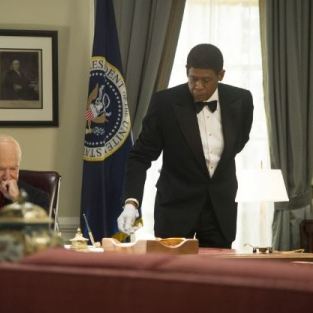

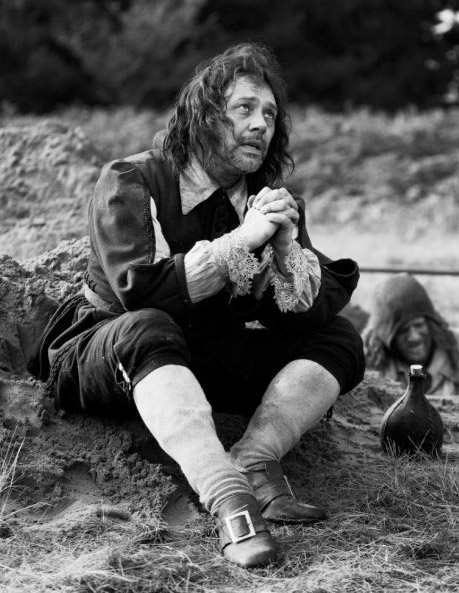





 Jon The Blogcentric