Confessions Of A Canucklehead

Okay. Now’s when I take a break from my journalistic ambitions and I write about something on my mind.
 
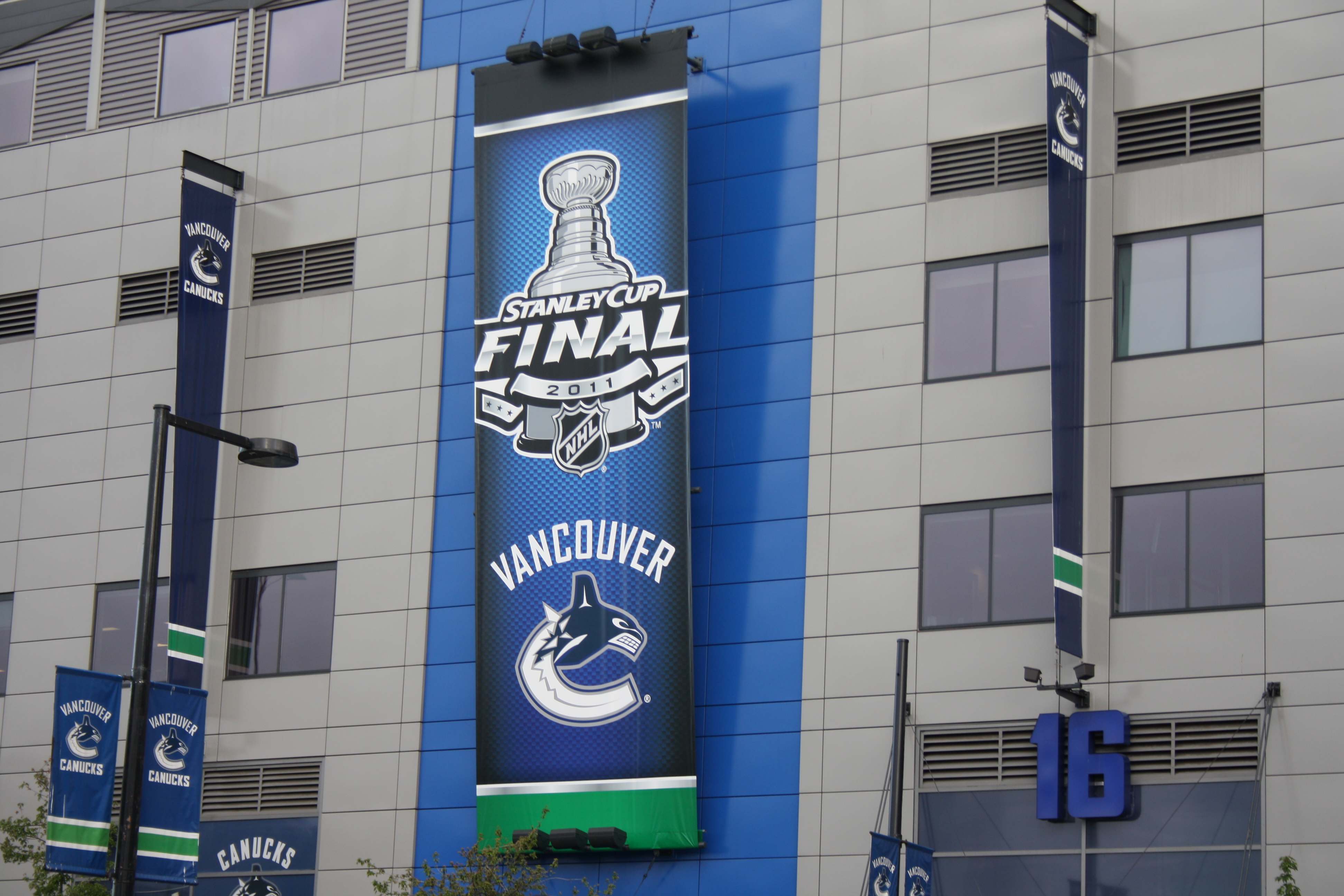
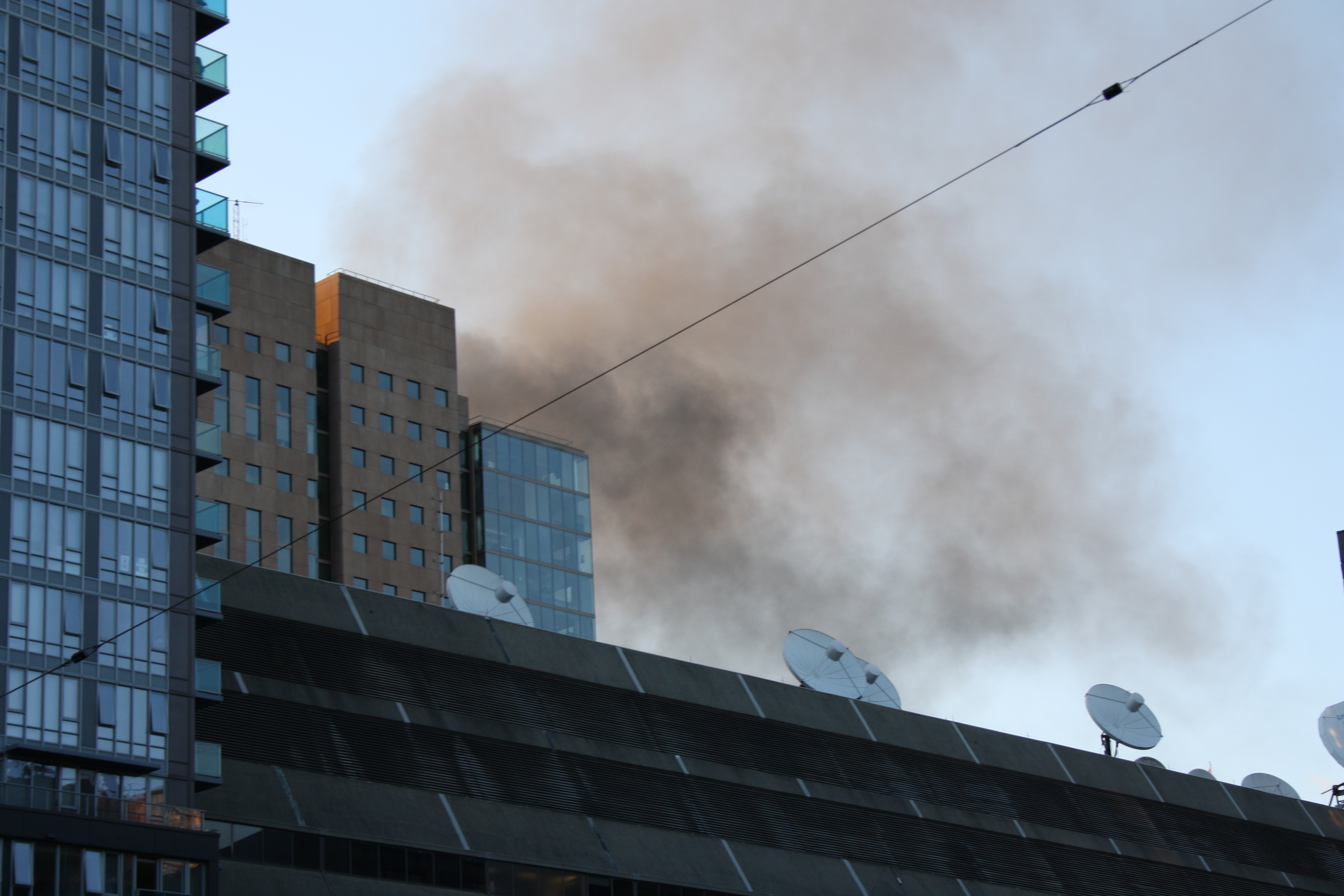
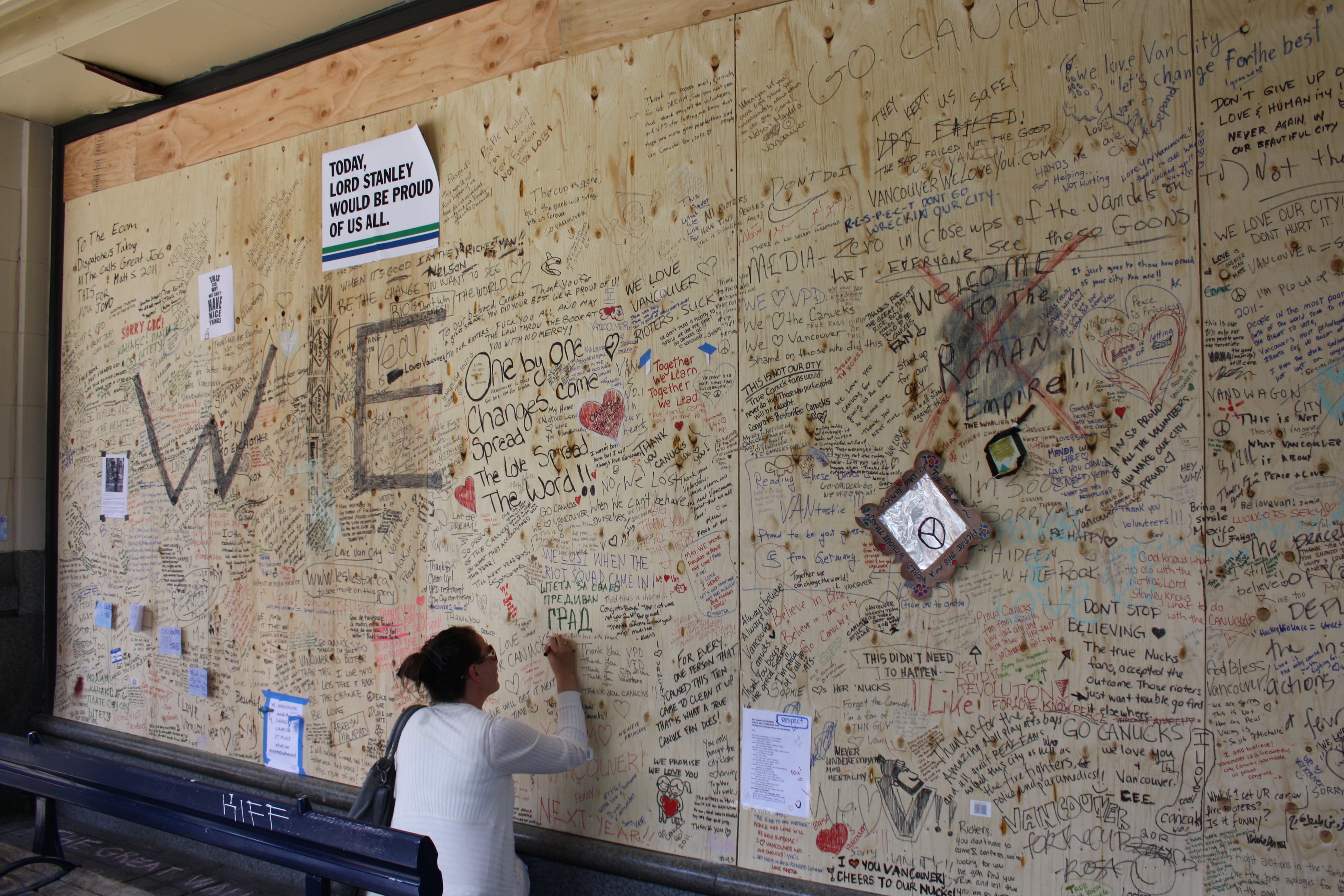
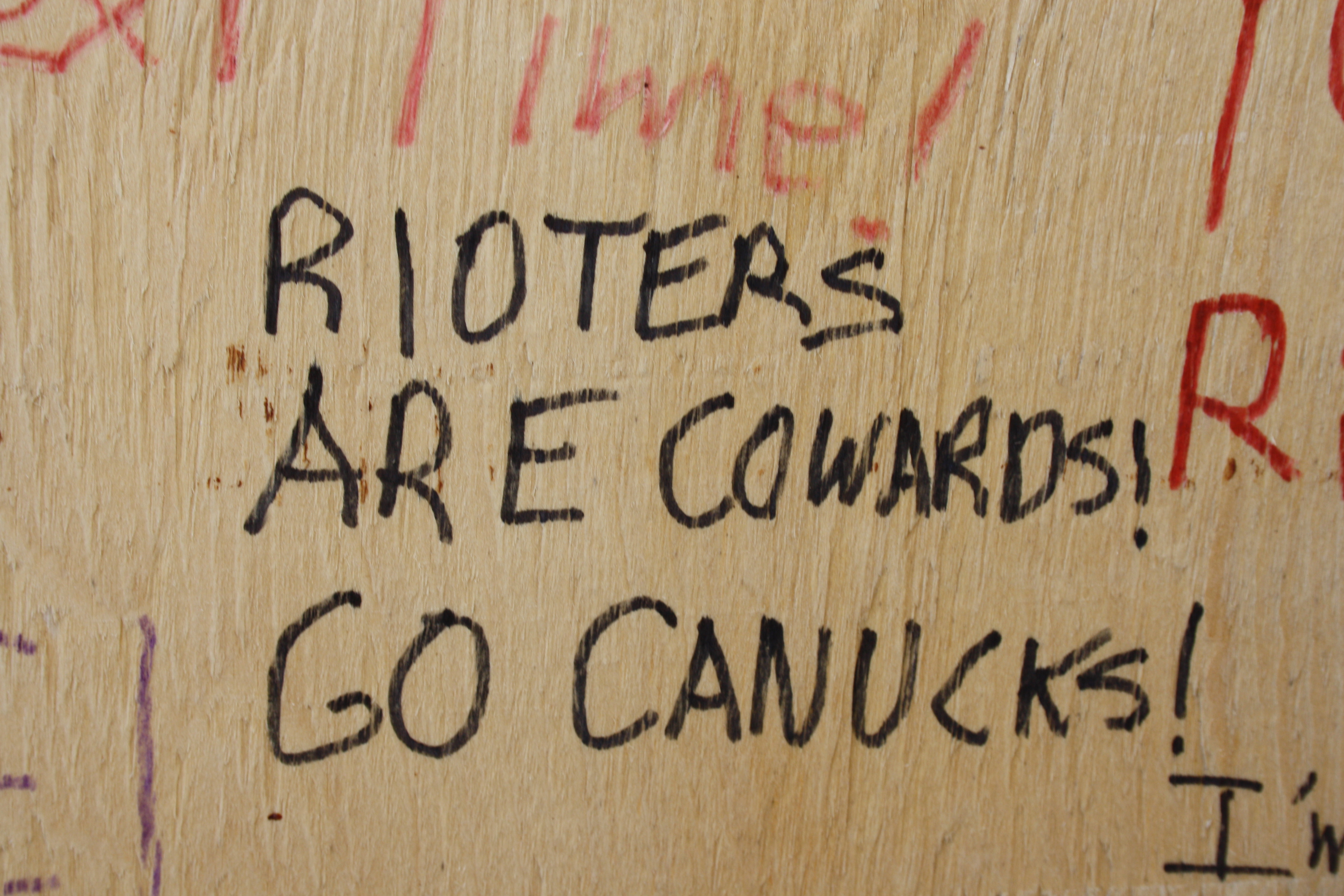
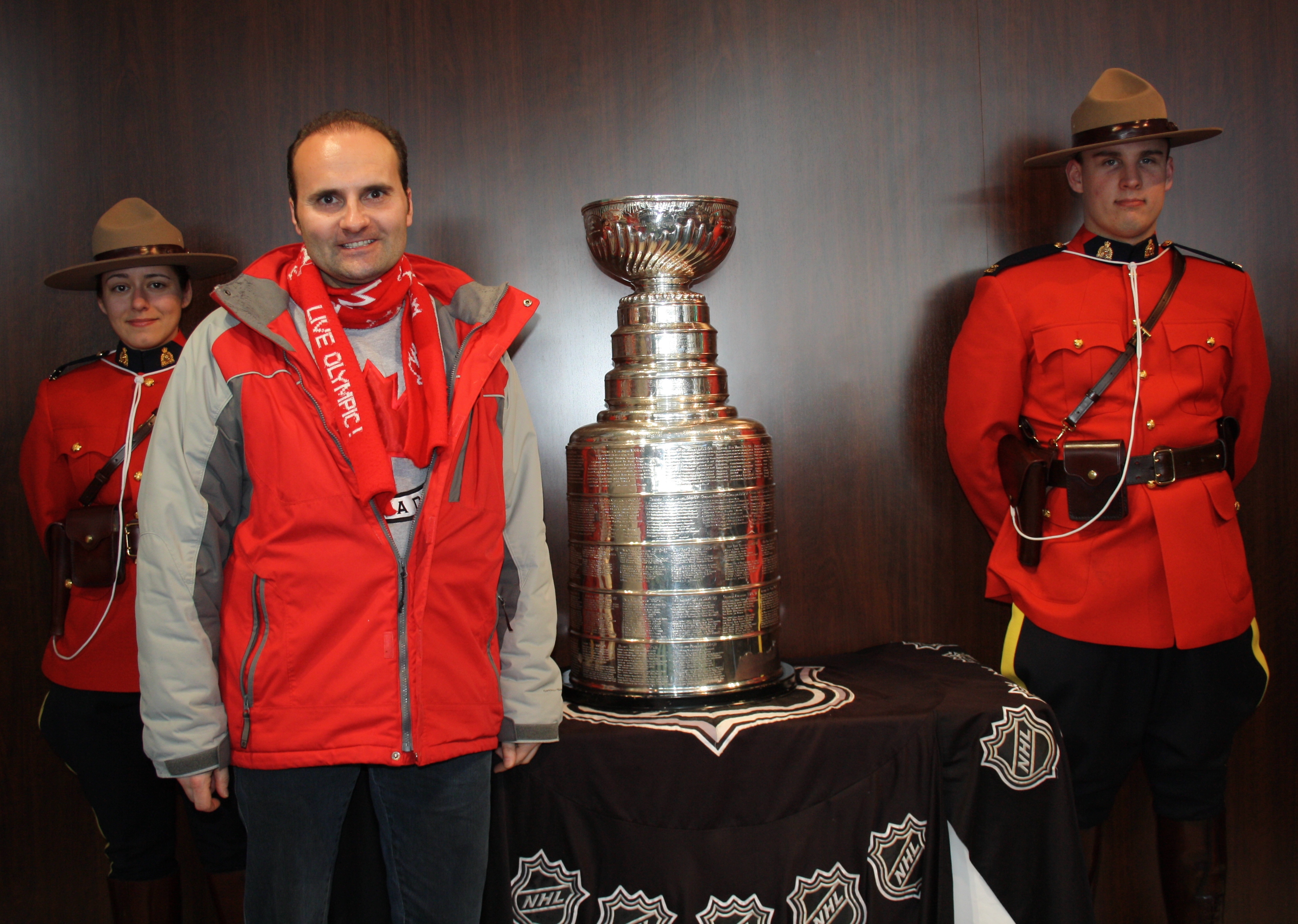
Normally during most of the year, I don’t pay attention to hockey that often until playoff time. Then, like most Vancouverites, it’s my focus on how far they make it through the playoffs to the Cup. This year was a landmark year for the Vancouver Canucks. For years, Vancouverites have been hoping they’d win the Stanley Cup and this looks like the first year they might do it. They’ve made it to the Stanley Cup finals before–in 1982 and 1994–but they’d lose both times. The latter was especially famous for the rioting that happened for days. Since then, Vancouver has had a reputation of being the unofficial riot capital of North America.
 
Since the 1994 Stanley Cup, Vancouverites have been hoping their Canucks would have another shot at the Cup. The time since the 1994 Stanley Cup to the 2004 NHL Lockout were not the best of times for the Canucks. Despite a new arena with the GM Place, now called Rogers Arena, it had some difficulties including four years in a row failing to make the playoffs. Whenever it did qualify, they would only get as far as a Conference Quarterfinals of Semifinals. After the 2004 Lockout, the Canucks have had a change for the better. Upon returning to NHL play, they didn’t qualify for the 2006 or 2008 playoffs. 2007, 2009 and 2010 would see them win the Northwest Division but only make it as far as the Conference Semifinals. one bright note was that Roberto Luongo was named Goalie Of The Year by the NHL for two years straight.
 
The 2010-2011 was a different year for the Canucks. After the usual trades and free agent deals, the Canucks were ready to start their new year, which was also their 40th Annivarsary, with a bang. After losing their first game against the Los Angeles Kings 2-1, the rest of the season was complete magic.With 54 wins and 19 losses, including scoring 262 total goals and conceding only 185, the Canucks were the top team of the NHL in regular season. Upon having the top standings in regular season, they were awarded the President’s Trophy.
 
When the playoffs began, their first round pairing was against none other than the defending Stanley Cup champions the Chicago Black Hawks. The first three games were wins against the Hawks and appeared to have a comfortable lead over them. Things sure changed once the fourth game began. The Hawks showed that even though they entered the playoffs the last of the Western Conference teams to qualify, they were not going to give up their Stanley Cup chances easily, and boy did they pour it on once the fourth game started. The Hawks came back with 7-2, 5-0 and 4-3 overtime wins. That left the seventh and last game a nailbiter. Played at Rogers Arena on Tuesday April 26, the Canucks appeared poised to win with 1-0 until Hawk Jonathan Toews scored the game-tier with 2 minutes to go. This left fans nervous as the game went into overtime. It took a goal from Alexandre Burrows at 5:22 to win it for the Canucks and move them to the next round. It’s a good thing too because the previous two Presidents Trophy winners lost in the Conference quarterfinals. If the Canucks did the same, three-in-a-row would make the Presidents Trophy a curse!

After the Conference quarterfinals, things were easier for the Canucks although they still had to put in a good fight. The conference semis against the Nashville Predators was also a tight competition but the Canucks prevailed four games to two. The Conference Finals against the San Jose Sharks were possibly the easiest of the bunch. The Canucks won four games to one and the Canucks wins were in spectacular fashion. They’re the first Canadian NHL team in four years to qualify for the Stanley Cup finals. For the record, the last Canadian team to win the Stanley Cup was Montreal in 1993. Will the Canucks break Canada’s 18-year drought?
 
Now the Finals. The Western Conference winning Canucks will be up against the Eastern Conference winning Boston Bruins. How well do they stack up?:
 
CANUCKS-What haven’t I talked about already. A team loaded with talent, but all coming down to how they play as a team unit, and under the pressure of the Stanley Cup. They showed they could lead well but almost give it up, as they did against Chicago. They also showed they can come on strong as they did against the Sharks. It all depends how they play against the Bruins. One thing about the Presidents Trophy winner is that those winners that qualify for the Stanley Cup final have the odds with them. Of the nine previous Presidents Trophy winners that made it to the Cup Finals, seven won. Will the Canucks be the eighth to do so or the third to lose?
 
BRUINS-They finished third in the Eastern Conference and won the Northeast Division. Like the Canucks, they had a tough fight in their Conference Quarterfinals against the Montreal Canadiens and qualified for the semis on a seventh game overtime goal. Their Semis against the Philadelphia Flyers were magic as they won four straight games en route to their Conference Finals against the Tampa Bay Lightning. Their Conference Finals against the Lightning  was a tougher affair as Tampa Bay proved to be a tough opponent. In the end, the Bruins won their seventh and final game with a single goal by Nathan Horton with 7 1/2 minutes to go in the third period. That’s all it takes! One important fact: In their one regular season game against the Canucks, they won 3-1. Even the Canucks will admit that they are a good rival. The Bruins had one of the highest goals-per-game averages in regular season this year. The defence of the Bruins is so good, even Luongo will admit it’s their strongest asset. However in playoffs, their scoring magic has taken a backseat. They’ll have to pour it on against the Canucks featuring Luongo if they want to win their sixth Stanley Cup.

Anyways on with the show. Hopefully the Canucks will win their first ever Stanley Cup. What’s especially noteworthy is that I promised my Admin team at work that if we win the Cup, I will buy them all a cake! I’ve already bought cupcakes for them when we won the Conference quarterfinals. Make it a yummy win guys!

Movie Review: The Room (2003)

There’s one thing about really bad movies. Most of which get lost into oblivion. Many bad Hollywood movies get to be laughing stocks forever. And then there are some that develop a cult following often as audience participation movies. The most legendary is the Rocky Horror Picture Show: the raunchy musical that made no sense and lives on as an audience participation free-for-all. There hasn’t been a movie that could replace the Rocky Horror Picture Show or even rank well with it. There was an attempt from 1995’s Showgirls many years earlier but it didn’t pan out. The latest one to enter the flock is 2003’s The Room. It has developed a huge cult following too. But will it replace the Rocky Horror Picture Show in terms of being an audience participation phenom?

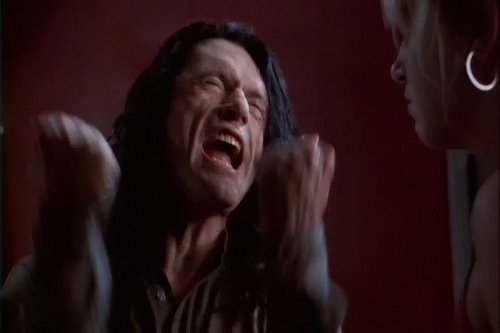
The film was written, directed and produced by Tommy Wiseau who also plays the lead character Johnny. The film stars as Johnny comes home to his fiancee Lisa. He’s a successful banker with a loving relationship with Lisa who’s a successful real estate agent. His young friend Denny, an orphaned kid with a troubled upbringing, comes to visit but has to leave because of… you get the idea. After Johnny leaves, we learn Lisa is bored with Johnny and is more interested in Mark, his best friend. Lisa and Mark end up making more than love, so to speak. Lisa’s mother insists that she marries Johnny because of his stability. Later Johnny doesn’t get the promotion promised to him. Johnny later learns of talk from Lisa’s best friend that things aren’t going right and start suspecting things. Johnny soon finds out that Denny has been getting into drugs. Not even Johnny’s friend Peter, a psychologist, can help him with his issues. Finally Johnny’s surprise birthday party happens and the truth comes out. At the end Johnny commits suicide and Mark tells Lisa how selfish she is over Johnny’s dead bloody body.

Okay you can draw out your own conclusion through my description of the movie. But the key ingredient towards its awfulness has to be the lines. Laughing moments happen more often than they should. Playing football happens at the most awkward times. ‘Future wife’ is said instead of ‘fiancee.’ “Everything’s going to to be fine” is uttered more often than it should. But the real creme de la creme of lousiness comes with the lines uttered only once: “You’re tearing me apart, Lisa!” “I feel like I’m sitting on an atomic bomb waiting for it to go off.” “Everybody betrayed me! I fed up with the world.” “You betrayed me… you that good… you, you’re just a chicken, chirp-chirp-chirp-chirp, cheep, cheep.” “Why Lisa, why? Please talk to me! Please!” Yeah, that bad. If the bad lines weren’t enough, there were also fight scenes that looked like they weren’t coordinated at all, cinematography that was bad, story lines that made no sense at all, and love-making scenes set to R&B music that came across as cheesy as hell. Even the end scene as people cry over Johnny’s dead body leaves the audience laughing. All this made over a budget of $6,000,000? And to think Tommy first tried to market it as a drama but then marketed it as a black comedy. That adds to its weirdness it’s already garnered.

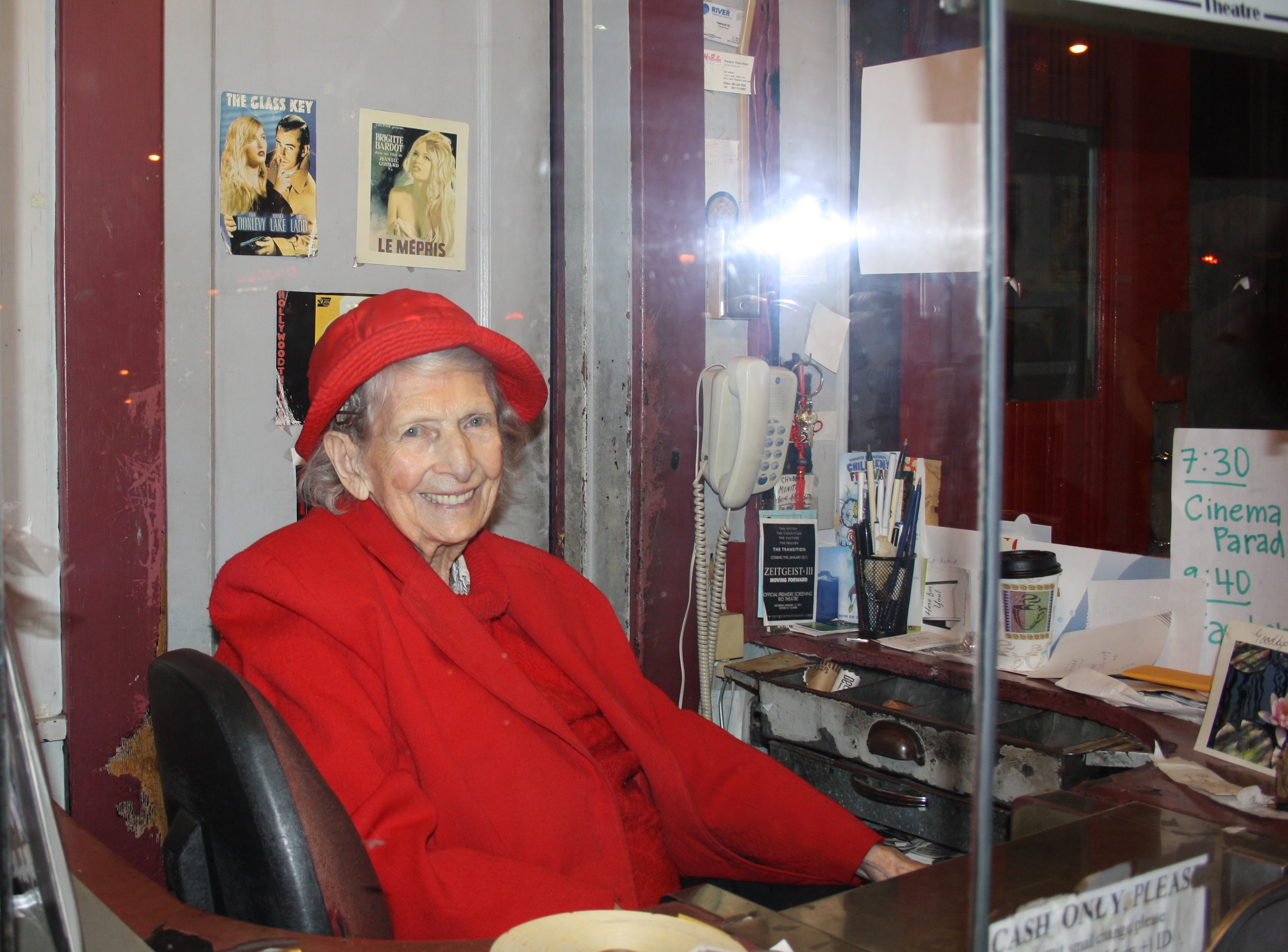
You’d think a movie like that would be too insufferable to watch, right? Well some people somewhere sometime ago turned this into an audience participation movie and that’s where its success came. People dress up as their favorite characters. People throw things around like spoons, food and footballs during certain scenes.  People say “Hi…” and “Bye…” whenever a character enters or exits. People hurl insults and lewd comments during the scenes. People shout “Go, go, go!” during the landscape shots. People also reenact the cheesy lines as they come during the movie. It’s a lot like Rocky Horror. Over at the screening I saw at Vancouver’s Rio Theatre, there was one host dressed up as Tommy Wiseau reenacting his voice and holding an impression contest before the movie was aired. The theatre was filled with mostly twentysomethings; some dressed up as the characters. In the end, the movie is not the same without the audience participation. Sure you could watch it alone on your DVD and laugh but it’s not as fun without the crowd.

It’s already garnered a cult following in the last few years. Will The Room ever achieve the same cult status as Rocky Horror? I doubt it. It hasn’t stood the test of time that Rocky Horror has. The Room’s test of time is something only the future will tell. Also while I’ve never heard of any cast or crew from Rocky Horror often showing up at screenings, occasionallyTommy Wiseau will make a guest appearance at certain screenings of The Room. He wasn’t here in Vancouver, at least this time.

In conclusion, it’s no wonder that The Room is labeled the Citizen Kane of bad movies. The cult following of audience participation is a celebration of its lousiness and makes for a fun night out at the movies. Prepare to laugh like you never laughed before.

2011 Movie Year Picking Up Slowly But Surely

I’m sure a lot of you remember back in March of this year, I posted a story about how dismal the first two months of the box office were looking. Yeah, they kind of had me nervous of what was yet to come for the whole year.

The month of March didn’t look too optimistic either. Mind you it is hard to challenge the previous year’s March when it had Alice In Wonderland opening, and that had the sixth-biggest opening weekend gross ever at the time. Basically March 2011 was another yawner of a month with it failing to outgross March 2010. The box office for the first three months was so bland, I’m glad Box Office Mojo didn’t write up a summary of March. Otherwise I would have had an article titled Diary Of A Wimpy Box Office.

With that dismality, I was expecting April to be yet another ho-hum movie month in 2011. Actually things looked up. According to Box Office Mojo, this April was the highest-grossing April ever at $791 million, outgrossing last year’s April by 5%. This was also the first year since 1984 in which April’s box office tally was bigger than any of its preceding months. A lot of it can be attributed to strong showings from Hop, Insidious, Source Code and Rio. However it was a case of save the best for last when Fast Five opened with $86.2 million, the highest-ever April opening weekend. This April also sold the third-most movie tickets of any April.  And to think that most of the April movies weren’t in 3D.

The month of April did a lot to lift some spirits who were paying close attention to the box office. Despite April’s strong showing, the year-to-date is still struggling.The box office total from January to April is nearly $2.9 billion, the lowest since 2008. Total ticket sales up to April were also the lowest since 1995.

As for May, the biggest opener came from Thor and it continues to hold the #1 spot this weekend. The May tally so far is just 5% less than that of May 2010 to date. Nevertheless there’s a lot to anticipate, like Pirates of the Caribbean: On Stranger Tide this weekend. The following weekend, The Hangover Part 2 and Kung Fu Panda 2 will open, so there’s still lots to wait for.

Interesting about the box office. Sometimes the most intense competition isn’t necessarily movie vs. movie or star vs. star or even studio vs. studio. Sometimes it’s movie weekend vs. last year’s movie weekend or movie month vs. last year’s movie month. Or even movie year vs. previous movie year. The competition doesn’t end, does it?

WORKS CITED:

BOX OFFICE MOJO: April Sees Box Office Rebound. BoxOfficeMojo.com Author: Brandon Gray. May 4, 2011. Imdb.com. <http://www.boxofficemojo.com/news/?id=3154&p=.htm>

Movie Review: In A Better World

In A Better World is the winner for this year’s Oscar for Best Foreign Language Film. It is only the third of the five nominees I’ve seen: the others being Canada’s Incendies and Spain’s Biutiful. I finally had the chance to see In A Better World a while back. This film has a story line that really gets one thinking.

The film begins as a Danish boy named Christian reads a eulogy at his mother’s funeral. He appears calm and composed but his mother’s death troubles him. He and his father move from London to Denmark where he spends his spare time on the roof of his grandfather’s silo looking out. We then meet Anton, a Swedish doctor who lives in Denmark but spends most of his time working in a refugee camp in Sudan. The villagers, especially the children, regard him as a hero but home life is difficult as he is on the verge of a divorce and he doesn’t see his sons as often as he’d like.

Their paths cross as Anton drops his son Elias off to school. A group of bullies taunt Elias because of his awkward looks. As Christian interferes, he too is assaulted. As Elias is bullied again the next day, Christian assaults the bully with his bike pump and threatens him with a knife at his throat never to hurt him again. Anton hopes to teach the two boys about the wrongs of violence as he himself witnesses it in the refugee camp each day. He gets a chance as his son is fighting with another boy in a playground and the father of the other son hits Anton. From atop the silo, Christian is able to spot where the man who hit Anton works by his car. Anton takes the boys again to see him confront the man where he gets hit again. Anton wants the boys to see how violence fails but they don’t get his intended message.

Later Anton is called back to work in the refugee camp. He soon has to deal with tending to the wounded warlord despite villagers pleading for him not to help. It’s later after a female patient dies that the warlord coming asking for her body that Anton leads him out where he is met by villagers ready to lynch him. After coming across fireworks in the silo, Christian gets an idea to create a bomb to blow up Anton’s attacker’s van. Meanwhile Christian’s relationship with his father takes a turn for the worse as Christian lets out his frustrations about his mother’s death, including his father’s failed promise that his mother would get better. Elias tries to talk to his father via Skype about Christian’s plan but Anton is exhausted after a stressful day. Elias then agrees to Christian’s plan. They go out one Sunday when no one is to be around and set the bomb off under the van. As Elias notices joggers, he wards them off but the bomb explodes knocking him unconscious.

Anton comes rushing back to Denmark after learning Anton is unconscious and hospitalized. When Christian tries to visit Elias in the hospital, Elias’ mother tells him to leave and calls him a ‘brat’ and a ‘psychopathic killer.’ Christian runs off and goes to the top of the silo contemplating to jump, only to be stopped by Anton. He reconciles with his father and goes to visit Elias, relieved knowing that Elias is alive and recovering well. The movie ends as Anton returns back to Sudan and is greeted by the adoring children.

There are a lot of subjects in this film. One of which is about communication barriers between people. There’s the main protagonist Anton struggling with communicating to his wife while they’re on the verge of splitting up. Anton again struggling to be there for Elias while he’s thousands of miles away in Sudan. Anton struggling to be an idealist to the boys and show how weak violence is when the boys expect Anton to be a hero. Christian struggles to relate with his father just after his mother’s death. He also struggles with the personal troubles of himself. There’s also the subject of making hard decisions. Anton has a duty of being a doctor to the refugees while Elias faces problems of his own. Anton is faced with a hard decision of being a doctor to the wounded landlord while the people insist that he doesn’t help him. Overall Anton is trying to be the man of reason and he has his share of successes and failures. Elias makes a tough decision whether to rejects Christian’s plan to blow up his father’s enemy’s van or not. All of which deliver in the results in the choices they make, or fail to make.

This is another impressive script from Susanne Bier. Although I have not seen her past works, I know she has developed a reputation. She has produced many works in Sweden and Denmark and even has one American release: 2007’s Things We Lost in The Fire. This is her latest work. The script she co-wrote with Anders Thomas Jensen also touches base on another subject of the film. Before they wrote the script for the film, Bier and Jensen had a discussion about how Denmark is perceived as having a harmonious society. They then wanted to write a story where dramatic turns of events would disrupt the image of a place perceived as blissful. The film’s original title is Hævnen, which is Danish for ‘revenge’. This film is a stark reminder that it’s quite possible in countries like Denmark that appear to be harmonious and peaceful, violence can happen through the actions of a single instigator. The film does a good job of setting situations of violence, both in Denmark and Sudan, while capturing the perceived peacefulness of Denmark at the same time.

The acting in the film was also excellent. The lead actor, Mikael Persbrandt, was excellent in portraying a man trying to maintain peace and show rational thought in hugely stressful situations both on the job and at home. Young actor William Johnk Neilsen was excellent as the troubled Christian. Also excellent were the performances of Trine Dyrholm and Markus Rygaard. The film did a good job of not overdramatizing events and maintaining its themes along with the storytelling. The cinematography added to the storytelling of how acts of violence can happen in such a peaceful place like Denmark.

It’s hard to say if In A Better World deserved the Oscar for Best Foreign Language Film. I’d hate to compare it against its rivals. Nevertheless it was a very good film in its own right. It keeps one thinking as they leave the theatre.

Osama Bin Laden’s Death Doesn’t Make The World Safer

The news came unexpectedly on May 1, 2011. Osama Bin Laden, the Saudi hermit and terrorist leader of Al-Qaeda who was the master mind of the attacks on US soil on September 11,2001, was finally found and killed. He had been on the run from the law and taunting the US by videotape for 9 1/2 years until he was finally caught and killed. Reactions have been numerous and varied. One thing is for sure, that his death leaves an uncertain question about the safety of the world, particularly the United States.

 Before September 11, 2001, the world was not a safe happy place. The World was a place that was already as precautionary as it felt to be. Airline terrorism had been a reality for almost 40 years and prevention procedures were already in place and carried out as best as they did. Terrorism from Muslim extremists, especially against the US, had been known for years. Until then the biggest terrorist attack on US soil from foreigners was the 1993 bombing of the World Trade Center which left six dead but failed to bring the two towers down. Osama bin Laden was actually already on the FBI’s Ten Most Wanted list. His connection to money and his ability to access arms was already legendary. He formed and headed the terrorist group Al-Qaeda, which means ‘the foundation’. He helped to empower the Taliban in Afghanistan and they would become his biggest ally.  He was the admitted mastermind of the 1998 US Embassy bombings: the August 7, 1998 bombings of the American embassies in Dar Es Salaam, Tanzania and Nairobi, Kenya that left hundreds dead. He had already been known for making a ‘death wish’ against the United States for his wish to see every American dead. In 1999, just two years before 9/11, Bill Clinton had already encouraged sanctions against Afghanistan in an attempt to extradite him. Weeks before 9/11, bin Laden promised in a videotape a ‘great day of terror’ to the United States.

Then 9/11 happened. Terrorists with flight training knowledge committed possibly the most shocking terrorist attack ever. The Two Towers destroyed by terrorists in a Kamikaze-style attack. Part of the Pentagon was also destroyed by a plane attack. A fourth plane meant for the Camp David site crashed outside it thanks to the vigilantism of American passengers. In the aftermath, thousands of Americans were dead. The world’s airline system was shut down for days. Memorial services were conducted all around the world. Some Arab countries and Arab peoples considered it a great victory for them and punishment from Allah to the US. Bin Laden himself acknowledged the attacks and praised the ‘martyrs’ in the attacks. He promised more in the future and promised never to get caught. Soon President George W. Bush declared war in Afghanistan against al-Qaeda and the Taliban. Bin Laden was now the World’s Most Wanted man.

Even while at large for years, Osama still had access to money and had a huge worldwide group of allies with the ability to carry out a terrorist attack anywhere in the World at any given time. The war in Afghanistan and the subsequent war in Iraq have fueled further attacks since. Osama’s Al-Qaeda have carried many terrorist acts out since that have left a total of hundreds dead: the 2004 Madrid Train bombings; the 2005 attacks in London; two bombings in Algiers in 2007; the 2008 bombing of the Danish embassy in Pakistan; a 2009 shooting in Little Rock; and two failed bombing attempts.

You could say the world has changed a lot since 9/11. Arabic words we never knew before are now part of our everyday language. Airline security has become more advanced and becomes increasingly stricter after additional foiled terrorist attempts. We have no-fly lists. We have a colored alert system whenever a terrorist threat appears coming. Right-wing and left-wing politics in the United States have increased in their division. We have a ‘Patriot Act’ which claims to be a prevention to terrorism. We had a terrorist list introduced in attempts to catch those connected to the bombings or terrorist associations. There have even been conspiracy theories surrounding the 9/11 attacks with protesters seeking attention for their cause. A lot has changed in the past ten years. The one thing that remained unchanged during that time was Osama bin Laden was alive and still at large. His lack of access to any means of modern technology besides a personal courier helped keep him from being found for years. He was capable of orchestrating terrorist attacks and shelling out videos to Al Jazeera television while remaining at large from authorities. Billions of dollars and cooperation from many nations failed to capture bin Laden. But on May 2, 2011, that all changed.

On May 2, 2011 in Pakistan (still May 1 back in the US), Osama had been killed by shots to the head and chest by an operation ordered by Barack Obama on his compuond some 40 miles from Islamabad, Pakistan. This operation was conducted by Navy SEALs under the command by the Joint Special Operations Command in cooperation with the CIA. It will forever be remembered at Operation Neptune Spear. Many other associates of Bin Laden, including his courier, one son and two others, were also killed. Soon after the killing, his body was taken to Afghanistan for identification and confirmation, then buried him at sea within 24 hours.

Reaction around the world was almost immediate. US President Barack Obama made the address on US television with the phrase “Justice has been done.” There was cheering in the streets, especially in New York around the area where the Twin Towers stood. Many Americans, especially those who lost loved ones on 9/11, were met with relieve that the killer had finally been brought to justice. There’s also cynicism too. Some conspiracy theorists are adding to the claim it’s a conspiracy. Many are demanding that the ‘death photo’ be shown. In the Arab World, reactions were mixed. Pakistan is denying ‘hiding’ bin Laden since his compound was so close to the capital of Islamabad. Some were happy of his death. Others were hurt and angry that their hero had been killed by the Americans.

It is because of the latter reactions that it’s too soon to believe that the world is a safer place now that Osama is gone. Both Obama and Bush have stated that. We should not forget that Al-Qaeda was a group built on revenge. That is why they carried out their terrorist attacks. Osama even stated that the 9/11 attacks were for revenge of all the Arab blood. Osama has also stated in previous tapes that he had people to carry on his mission even after his death. Even Al-Qaeda promised revenge shortly after acknowledging Osama’s death. That is the top reason why the US won’t release the death photo of Osama. Plus with Al-Qaeda spread so far out around the world, including countries like the US and Canada, there’s no telling when and where the next terrorist attack will happen. Also there’s no telling who from Al-Qaeda would be the new mastermind and there will be no telling what new security precautions will result because of this. So the terrorism precautions used shortly after 9/11 still have to be in effect. Also airlines have to maintain top professionalism and security competence to keep any further security risks. we should not forget that part of the 9/11 attacks’ success was taking advantage of the security ‘weak spots’ at airports.

While millions of people are probably still celebrating Osama’s death, the celebrations can’t last for long. The next ten, possibly twenty, years will tell whether this was a smart movie for the US to carry out. I personally wanted to see Osama arrested, tried by a World tribunal court, and executed. Also the next years will tell whether Al-Qaeda was in fact weakened by Osama’s death or only grew stronger and wider. Only time will tell.

WORKS CITED:

WIKIPEDIA: Osama Bin Laden. Wikipedia.com. 2011. Wikimedia Foundation Inc. <http://en.wikipedia.org/wiki/Osama_bin_Laden>

WIKIPEDIA: Death Of Osama Bin Laden. Wikipedia.com. 2011.Wikimedia Foundation Inc. <http://en.wikipedia.org/wiki/Death_of_Osama_bin_Laden>

Election 2011: Canada Votes

Okay, some of you who don’t live in Canada have heard that we have a National Election—the 41st Canadian General Election– in which we will be voting on May 2nd, but don’t know all the details of what’s going on. Here are the details about what’s been happening and what to anticipate.

For those unfamiliar with how Canadian elections work compared to American elections, Canadian elections are held on any given date instead of the first Tuesday of November. A Prime Minister’s term can be any length of time instead of the solid four years of an American President’s term, even though most Prime Minister terms are between three to five years. While Presidential Elections are decided by electoral votes based on which Party wins the most votes per state, Canadian Prime Ministers are decided by the most won seats with each voting district or region deciding its own winning Member of Parliament per Seat. In other words, while citizens vote for electors in the Presidential election and the winning Party in the state wins all the state’s electors, Canadians vote for MP seats in the Prime Minister election. While an American President is decided by the most electoral votes, even if he doesn’t have the highest total of votes, A Canadian Prime Minister can be declared upon winning the most seats even if they don’t have the highest total of votes. So there are some similarities between Canadian elections and American elections but a lot of differences.

Now for the current political scenario in Canada. Politics in Canada has gone through a lot of chaos over the past few years; so chaotic this is the FOURTH National Election in seven years. The most recent National Election was declared in the aftermath of a political scandal. Stephen Harper’s Conservative party was long considered to be in contempt of parliament at the beginning of March upon refusing to meet Opposition requests for details of proposed bills and their cost estimates. The Liberal Party responded by declaring a motion of non-confidence against the Government and on March 25, 2011, the House voted agreeing 156-145 to the motion. This marked the first time in the history of Canada or any nation in the Commonwealth of Nations that a cabinet has been found in contempt of Parliament. Following a meeting with Stephen Harper, Governor-General David Johnston agrees to dissolve the 40th Canadian Parliament and a Federal Election was declared.

Even before the most recent election was declared, Canadian politics has already been known for its chaos in the last seven years. Back in 2005, the Liberal Party under then-Prime Minister Paul Martin faced a sponsorship scandal of what would be documented in the Gomery Report. Even though Paul Martin had been Prime Minister for less than a year, an election was declared and in January 2006 Conservative Party Leader Stephen Harper won the election with a minority of seats. The Conservative Party victory was considered an arrival for political conservatives in Canada who struggled during the 90’s after the eventual decline of the Progressive Conservative party upon the resignation of Brian Mulroney.

 Another national election was held less than three years later in October 2008 and Harper’s Conservatives again won the election with a minority with Liberals, Bloc Quebecois and NDP making up most of the remaining seats. Shortly after the 2008 Federal Election, the Liberals and NDPs banded together for an overthrow of the Conservative government through a unified vote of non-confidence. Some may call it the right thing, others political mutiny. Whatever the situation, the coalition didn’t succeed and the Harper-led Conservatives remained the leading party of Canada. Since then, many Liberals have tried to distance themselves from the coalition.

Now it’s Stephen Harper’s try for a third term as Prime Minister. He comes in the election with the scandal creating baggage for him, but not a lot. Before the scandal, the Conservatives were tops in the polls and they still remain on top. One thing Stephen Harper is hoping for is a Conservative majority, especially with the 2008 attempted coalition still in his Party’s memory. The most surprising fact of the polls is that the Liberal Party is not the party with the second-highest ratings but the NDP. The Jack Layton-led NDP surpassed the Liberals in the April 20th poll and the most recent polls have the NDPs at an average of 31.4% in comparison with 3% for the Conservatives and the Liberals at 20%. This has many believing that the NDP could be setting up for a possible upset for Monday’s election; maybe even a Prime Minister Layton. Mind you the polls only represent popular voting patterns. It will all be decided when the ridings vote for the MP’s and their parties.

Win or lose, Jack Layton appears poised to have the biggest National Election result for the NDP party ever. The biggest ever result for the NDP Party is 43 seats in the 1988 election while the Party was led by Ed Broadbent. Even its founder, Tommy Douglas, never experienced the success Ed received. One difficulty of Layton’s, especially after the coalition, is for the NDP to distinguish its political platform from that of the Liberal Party. Too many voters label the NDP to be like the Liberals since they are on the same left stance. This may be seen good for liberal-siding voters but not so good for the NDP’s own identity. Whether Jack Layton wins or loses, he will have to prove the NDP’s distinction from the Liberals politically. Otherwise voters will continue to believe the NDP and Liberals are two choices of the same stance.

Then there’s the Bloc Quebecois. The Bloc was started in response to a resurgence of Quebec nationalism felt after the decline of the Parti Quebecois and after the Meech Lake Accord, which was intended to grant Quebec distinct constitutional status, was overturned in 1990. The party has attracted Quebec nationalists and even prompted a second referendum in 1995 in which Quebec nationalism lost again. Despite Quebec nationalism being voted down, the party has always won at least 50% of the Seats open to Quebec. The Bloc had 49 Seats in the last election–47 are still current– with 10% of the popular vote in Canada and 38.1% of the vote in Quebec. However recent polls have them at 7%. Could this mark a decline of the Bloc?

Party aspects aside, One thing about the election is that the parties are hoping for a better voter turnout than what happened during the 2008 election. Then, the voter turnout was 58.8%, the lowest turnout percentage ever for a National Election. Parties have been making the effort to urge voters out. Even campuses have had young people out to drum out support. Interesting how around the time I first became an adult, MTV started a ‘Rock The Vote’ campaign around the time of the 1992 Presidential election and MuchMusic started ‘Vote With A Vengeance’ for the 1993 Federal Election. This election, there’s no ‘Vote With A Vengeance’ campaign. Funny. Doesn’t Much care anymore?

The big day is May 2nd, tomorrow to be exact. Canadian history will be decided by the people. The election results and its aftermath will further shape Canadian democracy in the years to come. Stay tuned. As for Canadians, get out and vote!

WORKS CITED:

WIKIPEDIA: Canadian Federal Election, 2011.Wikipedia.com. 2011. Wikimedia Foundation Inc. <http://en.wikipedia.org/wiki/Canadian_federal_election_2011>

WIKIPEDIA: New Democratic Party.Wikipedia.com. 2011. Wikimedia Foundation Inc. <http://en.wikipedia.org/wiki/New_Democratic_Party>

 WIKIPEDIA:Opinion Polling in the Canadian Federal Election, 2011.Wikipedia.com. 2011. Wikimedia Foundation Inc. <http://en.wikipedia.org/wiki/Opinion_polling_in_the_Canadian_federal_election,_2011>

WIKIPEDIA: Bloc Quebecois. Wikipedia.com. 2011. Wikimedia Foundation Inc. <http://en.wikipedia.org/wiki/Bloc_Qu%C3%A9b%C3%A9cois>

The Royal Wedding: Positive For The Royal’s Future?

Unless you’ve been under a rock all this time, you know by now that William Windsor, Son of Charles Prince of Wales and grandson of Queen Elizabeth, is engaged to commoner Catherine ‘Kate’ Middleton. The wedding will take place the morning of Friday, April 29th: tomorrow to be exact. It is scheduled to be the biggest Royal Wedding of the British Monarchy since Prince Charles wed Lady Diana Spencer in 1981. Most of the world will be watching, especially England and other members of the Commonwealth. The big questions are what will the future of the Monarchy be like? And will the new Royal couple go the distance?

The British Monarchy has always been an important symbol of the British Empire, especially in the heydays of its superiority back in the 19th Century. In fact Victoria Day is still celebrated in Canada in tribute to the Queen that granted Canada its Dominion. Even though the United Kingdom is a democracy under rule of the Prime Minister, the Queen and her Royal subjects are still an important symbol of rule in England and many other nations of what is now called the Commonwealth Of Nations.

The present-day Commonwealth is completely different from what has been known as the British Empire. The Commonwealth is an intergovernmental organization that promotes many core values amongst its fifty-three independent member states including Canada such as democracy, human rights, good governance, the rule of law, multilateralism and world peace. Even Queen Elizabeth herself declared shortly after her Coronation in 1952: “The Commonwealth bears no resemblance to the empires of the past. It is an entirely new conception built on the highest qualities of the spirit of man: friendship, loyalty, and the desire for freedom and peace.”

The Head of the Commonwealth is the King or Queen Of England. Currently that title belongs to Elizabeth II. She is a symbol of the Commonwealth’s free association and plays an important role in shaping the Commonwealth. She attends the biennial meetings of the Heads of Government, attends dinners and makes speeches at the meetings, and has private meetings with the individual heads of state.

Now that we’ve dished out on the importance of the British monarchy–and as stated above, they actually are important in today’s world–there’s the question of the future of the one sitting on the Throne. Elizabeth II has held the throne since her coronation as Queen in 1952. She shows no signs yet of handing the throne over to the next in line: Charles Prince of Wales, first-born child of Queen Elizabeth and father of Prince William. One of the key rules of the monarchy–one that reiterated in the movie The King’s Speech–is that the King is not to be married to a woman previously divorced. Prince Charles was married to Lady Diana Spencer in 1981 but the marriage dissolved in 1992. Soon he had a relationship with Camilla Parker-Bowles who was already married. It was her relationship with Charles that led her first husband, Andrew Parker-Bowles to divorce her. In 2005 the two finally married with Camilla choosing to adopt the title Duchess of Cornwall. Since the marriage, Camilla has worked to develop a more positive image away from the ‘scandals’ of the past. This may explain why Elizabeth is in no rush to hand over the Throne to Charles. As for Edward, the only one of Queen Elizabeth’s children who has kept their first marriage intact, he shows no interest in owning the Throne. Talk about a Royal dilemma!

Now outside of the future of the Throne is the big question of another future: the marriage of William and Kate. William and Kate first met when they were both students at the University of St. Andrews in Scotland back in 2001. You could say the rest is history but there’s more to it. While the world is familiar with William’s ancestry and background of privilege, Kate came from a family that started as workers for British Airways but later formed their own mail order business which succeeded well. Kate herself worked as an accessories buyer for a clothing company for some time. William has grown up in a fishbowl while Kate experienced discomfort during the first few years upon dating William but leaving the relationship ambiguous. Many times during the early years of the suspected relationship, she would complain to her lawyer and even threaten legal action against the press. In 2007 they broke up but would reconcile within months. Even after the reconciliation, they would try to keep their relationship low-key. That all ended in November of last year when their engagement was officially announced.

Now comes the personalities of the two. William may have been born into a life of privilege but he has come across as well-behaved and considerate. A lot of it is attributed to Diana raising him and Harry outside of Buckingham Palace. It’s noticeable as William appears to posess more of Diana’s personality traits than Charles’. Although he’s second in line to the throne behind his father Prince Charles, there are many who feel he should be King instead. He’s had his share of living the high life, but he has also followed in his mother’s footsteps and has done humanitarian work. He’s also part of the RAF and has done military work in recent years. Kate, like Diana, has developed a fashion sense all her own and has made many ‘Best Dressed’ lists in recent years. She has graduated university with an honors degree. She’s also known for being well-mannered. As for whether the marriage will go the distance, that remains for the future to tell. They both appear to be two intelligent people in love but anything could change. We shouldn’t forget about their breakup from years earlier. It’s possible it could happen again. As mentioned earlier, Kate had her own difficulties with living life in a fishbowl when she was just ‘seeing’ William. After the marriage, it will most likely increase and top of it Kate will now have to play a role as a public figure. Will she be able to handle her new role and the pressure of the press?

Friday April 29th will not only mark the beginning of Prince William’s marriage but also the beginning to his future fate in being heir to the Throne. We all know it’s the divorce and remarriage to a divorcee that is causing Prince Charles to wait. Only the future will tell if Prince William’s marriage will go the distance, and if whatever happens is a help or hindrance to his line of succession. Also Kate’s role in both the Royal Family and in the public eye will also come under intense media scrutiny. Will she remain calm under pressure? Or will she be a huge subject of scandal and tabloid fare? Stay tuned.

WORKS CITED:

WIKIPEDIA: Commonwealth Of Nations.Wikipedia.com. 2011. Wikimedia Foundation Inc. <http://en.wikipedia.org/wiki/Commonwealth_of_Nations&gt;

WIKIPEDIA: Catherine Middleton.Wikipedia.com. 2011. Wikimedia Foundation Inc. <http://en.wikipedia.org/wiki/Catherine_Middleton&gt;

WIKIPEDIA: Camilla: Duchess of Cornwall.Wikipedia.com. 2011. Wikimedia Foundation Inc. <http://en.wikipedia.org/wiki/Camilla,_Duchess_of_Cornwall&gt;

Movie Review: Paul

Okay, you’re probably wondering why on earth am I just posting this review now when Paul has been out for at least a month? Here’s the thing. I don’t immediately rush out to the theatres whenever a movie comes out. I see them when I see them. Often when there’s a big hit movie, I wait weeks until the crowds die down to go see it. So that explains why you get my review of Paul later than most. So after explaining all that…

Who is Paul? He’s a fugitive. He’s a celebrity. He’s a slacker. He’s a joker…He’s an alien. Paul is all those things, and the subject of a recent comedy movie. The latest concoction of the British writing/acting collaboration of Simon Pegg and Nick Frost. So how does this close encounter of the funny kind end up?

Graeme Willy and Clive Gollings are two British comic book dweebs with a passion for sci-fi and alien encounters. The love it so much, they rent an RV and take it from San Diego’s Comic-Con all across the US for their own alien encounter tour. Little do they know they’d find themselves in trouble. First they come across some homophobic hunters who suspect them to be a couple. They head off, accidentally denting their truck. On the run, they get hit by a car driven by, among other things, an alien named Paul. The two bring Paul along in the RV. Little do they know that Paul is actually in pursuit by a shady government agent named Zoil who even recruits two inept FBI agents in the capture.

Later during a campfire over at a campground run by Moses, a strict Christian and his daughter Ruth, Paul tells the twosome that while captured by the government, he helped with Spielberg’s E.T. and the X-Files’ Mulder. Ever since he learned the government planned to dissect his brain, he’s been on the run since. Ruth is then kidnapped by the two. Once in the RV, she learns of Paul and refuses to trust him as it contradicts her devout beliefs. Once Paul heals her blind eye, blind since she was four, she trusts him to the point she becomes eager to sin.

Meanwhile Zoil and the two agents question Moses who says she was abducted by demons. Graeme, Ruth and Willy once again meet up with the homophobic hunters, but Paul comes to the rescue. Upon pursuit of Paul, Zoil and the agents come across him. Once Paul makes his escape, all three are after him but for their own separate pursuits each. Meanwhile Moses is chasing for Ruth.

Paul finds refuge in an old house which is owned by Tara, a young girl who saved his live back in 1947 and is all grown up, reclusive because of the ostracism she received throughout her life. Tara is relieved to find that Paul is real. After turning on the stove, a shootout ensues at her house, causing it to explode with Paul, Graeme, Clive, Ruth and Tara on the run. The three agents go on their pursuits again but only Zoil survives in meeting up with Paul, who is in a field waiting for his UFO to take him home. Instead, it’s a helicopter with ‘The Big Guy’, Zoil’s superior. Zoil reveals he was the one who helped Paul get away. Zoil disarms the men but is shot in the shoulder. Tara punches out ‘The Big Guy’. Moses shoots Clive dead. Paul heals him but his healing powers come at the risk of his own life. After Clive is revived, it appears Paul is dead but he’s just exhausted. Paul’s ship arrives, crushing ‘The Big Guy’. Heading for home, he invites Tara to come with him and finally live a life. Two years later, Clive, Graeme and Ruth return to Comic-Con. This time, they are on stage as successful comic book writers thanks to their comic book Paul.

I have to say the biggest overall glitch with this movie is that it often appears to rely on the crude and rude one-liners in many parts. It has enough humorous subject matter and comedic characters without having to resort too often to such lines. First off,  the incorporation of the subject lines of many alien shows of past, like Star Wars, Close Encounters, E.T. and the X-Files. Second off, there are already a lot of talented actors that have been able to prove of recent that they can do comedy well. Kristin Wiig and Bill Hader have proved their humor in Saturday Night Live and other movies they’ve acted in. Blythe Danner, Sigourney Weaver and Jason Bateman were also able to make their roles work in the movie. Seth Rogen, already a reputed funny man himself, did a good job in the voice over as Paul. Pegg and Frost are already known for their comedic acting as well as their writing for Shaun Of The Dead and Hot Fuzz. They don’t have to resort too often to such low brow material.

Outside of that, the movie was a good job of meshing 3D animation with live-action, an alien encounter story with comedy, and even romance with sci-fi dweebs. Pegg and Frost once again show that they’re at their best when they’re together. They also showed they can do a good job with an American story line for the first time. Also it was unique to see a comedy not just revolve around an alien encounter but also with San Diego’s Comic-Con, which has grown in popularity in recent years to the point even A-listers make appearances.

Simon Pegg and Nick Frost, who both wrote and star in Paul, describe it as a ‘love letter to Steven Spielberg’. You could describe their two previous big-screen comedies, Shaun OIf The Dead and Hot Fuzz, as ‘love letters’ too. If you saw Shaun Of The Dead, you’d tell it was a love letter to all those zombie movies. If you saw Hot Fuzz, you’d definitely know it was a love letter to all those gunslinger action movies of the 80’s and 90’s. I don’t think Paul is so much a love letter to Spielberg as much as it is a love letter to sci-fi as a whole. Good mesh of stories but I feel this movie is more of a salute to sci-fi dweebs and comic books geeks the world over.

Paul is an enjoyable movie. Even though I felt it could be better with the humor in the script, it is a delight to watch. Pegg and Forst know how to do enjoyable movies and they do it again here.

Pope Benedict XVI: 21st Century Radical

Pope Benedict XVI: 21st Century Radical

One thing about the Easter holidays is that there’s often stories on magazines focusing on Christianity, Churches, Jesus or other Bible figures.  The Pope also becomes subject of cover stories around Easter time. This Easter, there were a lot of good reasons to pay attention to the Pope and the Church, especially this Easter. This also comes to light as April 16th was Pope Benedict’s 84th birthday.

Joseph Ratzinger has been with the Vatican since 1981 when he was voted Cardinal-Prefect for Pope John Paul II. After John Paul’s death, he has led the Catholic Church as Pope Benedict for six years. He has made a lot of news over the years on the actions he’s done and the responses to issues he’s spoken out about. The responses have differed. Some have welcomed his views and his actions. Others are unhappy or even outraged. Even though he is an interim Pope, he has already made his own legacy in the history of the Roman Catholic Church.

This Easter weekend, he did something unique for a Pope. On Good Friday, he hosted an international televised dialogue where he answered questions written to the Vatican. Of 3000, he answered seven. This was done so on an Italian television show In His Image which was taped a week earlier.

One question was from a 7 year-old Japanese girl Elena. She asked him to explain the suffering in her country ever since the March earthquake and tsunami. His response: “I ask myself the same question: Why is it this way? Why do you have to suffer so much while others live in ease? And we do not have the answers, but we know that Jesus suffered as you do, an innocent.” He went on to give words of comfort: “even if we are still sad, God is by your side.”

Other questions he asked included one from an Italian man of what Jesus did in between the time of his crucifixion and resurrection. His answer: “The descent of Jesus’ soul should not be imagined as a geographical or spatial trip, from one continent to another. It is the soul’s journey.” An Italian woman asked of the soul of her son who has been in a coma for two years:  “The situation . . . is like that of a guitar whose strings have been broken and therefore can no longer play . . . The soul cannot be heard, but it remains within.” A woman from the Ivory Coast asked of the violence that’s tearing her country apart: “Violence never comes from God, never helps bring anything good . . . The only path is to renounce violence, to begin anew with dialogue.”

This is a break from the traditional or expected norm for the Pope. It’s a common belief that the Pope preaches from the pulpit but has no clue of what’s going on in the real world. If that interview has proven something, it’s that the Pope is listening and he is aware of the situations around the world and of people’s concerns. He’s also willing to give answers. Last year, we saw an example of his response to sexual abuse scandal by setting up a council dedicated to the scandal. This year’s example of how he’s willing to answer questions for an Italian television show demonstrated how Pope Benedict is willing to go to connect people with the answers of the Church. This factor is enough to consider Pope Benedict a radical of the Catholic Church.

We shouldn’t forget that during the reign of Pope John Paul II, John Paul came to Benedict for advise and speeches back when he was Cardinal Ratzinger. It was because of this that he was heavily expected to be elected Pope after the death of John Paul II. Pope Benedict knew what the job of being Pope was long before he took to the throne. Despite what one believes, he is to represent the moral voice of the Roman Catholic Church to its 1.2 billion followers. He can’t simply ‘go with the times’ or ‘get with the program’ and say ‘yes’ to what is already deemed sin in the Bible. In fact many faithful admire how the Pope is refusing to bless popular sins. New York Cardinal Timothy Dolan said that the Church now has a ‘counterculture’ status: “Jesus stood in opposition to the world, in opposition to culture and society. It’s a good thing the Church is against the world.” This is enough to label Pope Benedict a radical of the times.

This is one of the challenges of the Church and of Pope Benedict. He knows that the Catholic Church has to be an example of God’s love. He also knows that the Church has to be a strong moral voice to its followers and condemn sinful acts. Finding a balance between the two is the hard part. This is not the only balancing act Pope Benedict has been trying to do. Another is trying to bring back a lot of common traits of the Catholic Church before the Second Vatican Council from fifty years ago. One of which was encouraging a return to the Latin Mass. He knows how a lot of Catholics left when the Latin Mass was dropped. He also is taking into account the Traditional Catholics that separated themselves from the Vatican after the Council and consider the Church false and the seat of the Pope vacant.

However the biggest surprise I received in terms of the press’ attitutes towards Pope Benedict came in an Article from Maclean’s magazine. It asked “Is The Pope Catholic?” It gave account to a lot of surprising things Pope Benedict has done over his reign and puts them into question. MacLean’s has even highlighted some of his questionable sayings:

From inflaming the Islamic world by quoting medieval anti-Muhammad remarks to welcoming disaffected Anglicans into the Roman fold, becoming personally embroiled in the clerical sex-abuse scandal, endorsing the (sometimes) use of condoms, writing a passage in his newest book exonerating Jews from the charge of killing Christ, and a host of less headline-grabbing initiatives (including a casual acceptance of the theory of evolution).

This was brought to the attention by a book by Canadian author Michael Coren entitled Why Catholics Are Right. Coren defends the Church and Pope Benedict’s actions in the book. However it’s also highlighted that the top concern of Pope Benedict is the spiritual state of Europe. There’s no question that the secularizing of European society has upset Benedict a great deal and he wants Europe to see that the Church has reason in society. He also wants to see Europe return to the Church-based values that helped shaped the continent for centuries. Only time will tell if it does or not.

Interesting the quote above mentions the ‘condom use’ part. Many remember how Pope Benedict mentioned that condom use is justifiable in some cases, like sex with a prostitute. Although it created a lot of news the world over, one thing that was overlooked that that sex with a prostitute remains a mortal sin, condom or no condom.

As Easter passes, the Church will experience another year. As the world becomes more secularized, Pope Benedict carries the Church and its moral voice on his shoulders. Some will welcome what he has to say while some will question and others will be outraged. Nevertheless, the Church has to stand firm on its morals as it carries the conscience of the Church’s 1.2 billion believers. Pope Benedict knows it and he’s ready to meet the challenge.

WORKS CITED:

MACLEAN’S: Is The Pope Catholic?. Macleans.ca. Author: Brian Bethune. 2011. Rogers Media Inc.<http://www2.macleans.ca/2011/04/18/rebel-with-a-cross/>

NEW YORK POST: Pope Benedict Answers Questions On TV On Good Friday.NYPost.com. Author: Andy Soltis.2011. NYP Holdings, Inc. <http://www.nypost.com/p/news/international/good_fri_popecast_bXYW6mxE0djUeun3iQ4j5K>

Is Lady Gaga A Madonna Clone?


In the past year, Lady Gaga has gone from being the latest diva phenomenon to getting people suspecting if she’s stealing Madonna’s act. How could that be? She’s already been able to start buzz with her own songs and her own outrageous wardrobe.

Lady Gaga arrived at the right time. In 2008, she blew the world away with her electronica-dance song Let’s Dance. That one song was enough to create buzz on the charts and welcome the world to the biggest female singing debut since Britney Spears and the biggest diva since Madonna. Let’s face it. As much as Britney is often refered to as a diva, she’s really more tart than diva. Further hits like Poker Face and Paparazzi followed and we had a new diva phenomenon. Her stage show at concerts would add to the new legend.

Like Madonna, she also knew how to rattle cages on her own. At awards shows, she would frequently thank “God and the gays.” She was also known to wear a meat dress at performances. Her video to Bad Romance took outrageous to new lengths and won the Video Of The Year award at the 2010 MTV Video Music Awards. Further hits like Telefone, Alejandro and Dance In The Dark followed. Even though she may not have been as original as Madonna, she knew how to be provocative and entertaining on her own.

Lately however, she has brought upon suspicions of trying to copy Madonna. The first such issue came almost three months earlier with the release of the single Born This Way. Many have drawn comparisons to Madonna’s Express Yourself, while one magazine writers claims it’s actually a mix of big pop tunes meshed together. Then came the song Judas and its accompanying video. Along with the controversy the video has cause, it has also drawn comparisons from a certain Madonna video: Like A Prayer. This is enough cause to suspect that Lady Gaga is a Madonna wannabe. Gaga would have to come up with something less like Madonna for her next single and video release.

Anyways I’ll hold off from any more accusations and wait until her next hits play out. Right now Gaga is facing another sort of flack for her albums cover in which many critics and fans dismiss as amateurish Photoshop work. In the meantime, I want to see Gaga being more Gaga than Madonna.