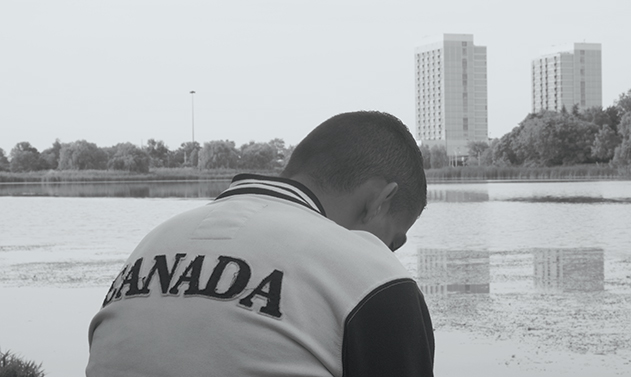
VIFF 2025 Review: The Last One for the Road (Le città di pianura)

The Last One for the Road is a charming film of a road trip of two middle-aged friends and a young student they take along the way.

There is never a next time.

I find it quite intriguing that a film titled The Last One for the Road ended up being MY last film for my VIFF! Although I would rather have ended my VIFF with a film of a different genre in mind, I’m glad I ended with this one.

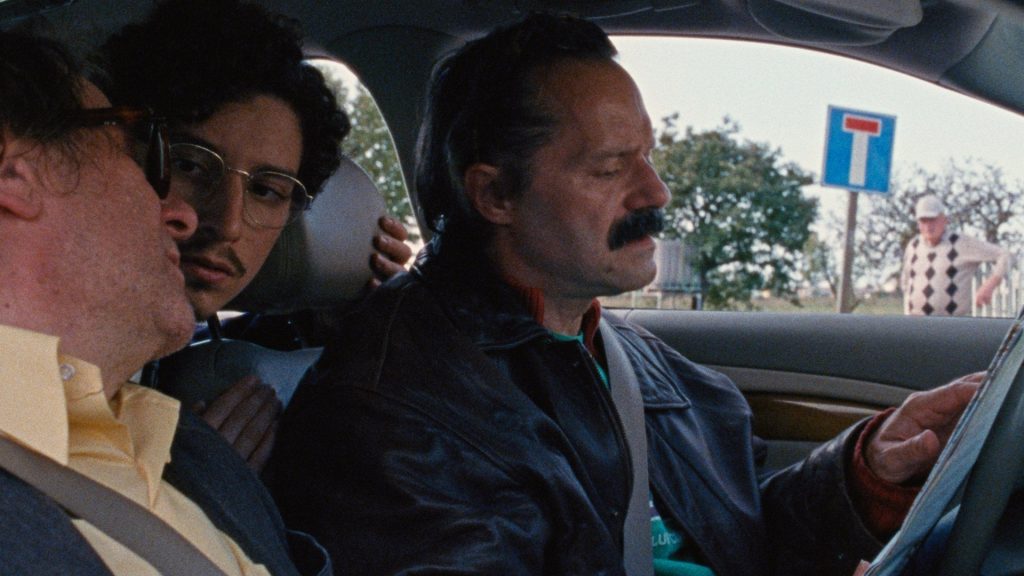
The film begins in the early-2000’s. A CEO of some company flies into a construction site. One of their veteran workers is retiring. He gives him a gold Rolex watch as a gift. Flash forward to the present. There are two fifty-something men at a bar in Veneto taking in what should be their last drink. The waitress tells them the bar is closing and they’re drinking non-alcoholic beer. Talk about a disappointment for a last drink! The two men, lifelong friends Doriano and Carlobianchi, decide to go on a trip to Venice and to a bar that serves a real beer!

They make a trip to the nearest town that will serve alcohol. They go over to a night club. It’s a country-western club. They have no problem taking in a real beer. They also notice something. There is a young male who looks unhappy. His name is Giulio, an architecture student. He has an exam on his mind and he is unhappy with how things are going for him right now. Especially after a woman he took interest in turned him down. Doriano and Carlobianchi talk to him and even offer to take him along for the ride for their ‘last drink.’ Giulio reluctantly accepts and is uncomfortable being part of this trip. Especially since he wants to return home to Mestre.

Now Doriano and Carlobianchi are a colorful bunch. Carlobianchi told Giulio the night before he holds the secret to the world. He also talks of always having one last drink because ‘it’s still yesterday for us.’ The two of them have drink after drink wherever they go. The two of them also talk about how the were construction workers who used to work on a highway in the to connect Lisbon through Treviso ending in Budapest. The two also talk about how they’re waiting for a friend named Genio whom they claim has money buried somewhere to fly in. At first, Giulio is uncomfortable with the two and can’t wait to take the train home.

Over time, Doriano and Carlobianchi are able to find temporary overnight shelters for themselves and for Giulio. They know how to create tabs and do clever talk to get it. As they go through various places, they talk about the glory times they used to have as partying young adults in the 1990’s and of their success in construction work before the 2008 financial crisis. The work they’re proudest of is the highway that links Lisbon through Treviso to Budapest. Since then, they had to swindle and scam their way into getting money whichever way they can. One job including stealing boxes of sunglasses and selling them. They even visit the house where they used to live in and come across one of the big boxes of unsold glasses. Giulio soon reluctantly warms up to the two men and starts liking them more.

Soon it becomes obvious to Giulio that this trip to anywhere will soon become a trip to somewhere. Within their talk of their ‘glory days,’ they also talk of Genio: a friend who helped them along with their scams. They mention that Genio was the lucky one as he managed to flee to Argentina before he could get caught. Genio is expected to fly in that day: the first-ever time since his ‘escape.’ Maybe Genio can give them some money. During the wait, they again make it to site after site where they either enjoy it or try to swindle something out of someone. Even a place the two used to stay at and there are still photos of them during their young days of the early 1990’s. Of course there are trips to bars for one last drink after last drink. At one bar, Doriano finds the retiree that received the watch that day. He’s at the slot machines hoping to get rich. Then they do meet up with Genio right at the airport. They pick him up and talk to him.

It’s not clear if they were able to get money out of Genio or not but it is made obvious that they now have the money. They are now able to pay some things off. Finally Giulio has his ticket for Verona. The two men help him along and see him off to his departure. Giulio tries to get a message the two men are trying to tell him but the train windows block all sound. As Giulio relaxes on the train, the two follow his train by car and give him well-wishes. Back to the regular daily life for Doriano and Carlobianchi, but just after having a cone of lemon gelato.

There have been numerous road trips films before. This is a unique story of two close broke friends who do a road trip just for the sake of taking in a drink and having a good time. When they meet a young adult who is bogged down with his cares, then it becomes a case of the trip being an actual destination and things to do. Over time, they reminisce over past memories: both good and bad. They expose secrets only they themselves know. While the young man doesn’t welcome this traveling around at first, he learns to relax and enjoy it. When he finally does board the train for Verona, it’s possible the two men left something behind with him. We hear near the beginning that Carlobianchi believes he holds the secret to the world. We never hear him tell the secret but I guess it may be in this story, Giulio’s time with these two men help him witness this secret for himself. That could be it that Giulio just sees or experiences the secret instead of hears it.

I don’t know if it’s been done before but it makes for a good story that feels more like an experience than a story. What also makes this story is that Doriano and Carlobianchi are not your typical pathetic slobbering drunks They’re drunks that are charming and they know how to get the best of life, no matter how dour it is for them. The likeability of the two is what makes this story not only watchable, but enjoyable as well. They also hint to things that are not made clear. Like is it possible the two are also secret boyfriends? Hey, a bit of mystery is an added perk to the story.

One thing you’ll notice as you watch is that the set places and towns they visit add to the atmosphere of the story. This being a road trip story, the film does a great job in telling its story around the locations and scenery of the region. The area of Northern Italy is on display from its old buildings to the Venetian coast to the landscape. The addition of the geography is another addition to the atmosphere of the film. Places that are part of the moments of the past that are significant to the two protagonists’ lives add to the story. Even some of the more run-down buildings look add to the story being played out.

If there’s one flaw about this film, it’s that you’re often left wondering what the point of the story is. You have two men who go from town after town for last drink after last drink, bring a young student along for the ride, pick up a colleague at an airport and go from place to place reminiscing of old times. The story can get confusing but it does reach an understandable ending as the two men see Guilio off at the train station and even follow his train. The middle may be disjointed but the beginning and end made the point of the film better to understand.

This is a great film for writer/director Francesco Sossai. Four years ago at VIFF 2021, he won the Vanguard Jury prize for his film Other Cannibals (Altri Cannibali). That film helped pave the way for Sossai to become assistant director for Mission Impossible: Dead Reckoning. This film is different than his other major films. The trip of two men wanting last drink after last drink and bring a young stranger along the way makes for a warm charming story. This film also gives a certain feel that will remind you of many of the more beloved Italian films of the past. I noticed that as I was watching and I sensed that’s what Sossai was aiming for. This film has been nominated for Un Certain Regard at Cannes and for the CineCoPro award at the Munich Film Festival.

The two leads, Sergio Romano and Pierpaolo Capovilla, have a great chemistry as two lifelong friends whom you will sense are lovers. The two of them and their ability to see the ability to celebrate the joys of life and laugh off the negative as they have drink after drink made the movie a joy to watch. They will succeed in making you like them. Filippo Scotti is also great as young Giulio. His performance was very believable as the young shy student who’s cynical of the zest for life of the two, but warms up later on. He made a great addition to the story. The cinematography of Massimiliano Kuveiller is another standout achievement. Showing off the places of the visit with great angles adds to the atmosphere of the film.

The Last One for the Road is more than just a road trip film. It’s about two men going through the good times and the bad times and the young stranger half their age they befriend. Although it may get confusing at times, it makes for a charming relaxing story.

And there you have it! That’s the last of the films of the Vancouver International Film Festival I have to review. My wrap-up blog is coming soon.
VIFF 2024 Review: Paying For It

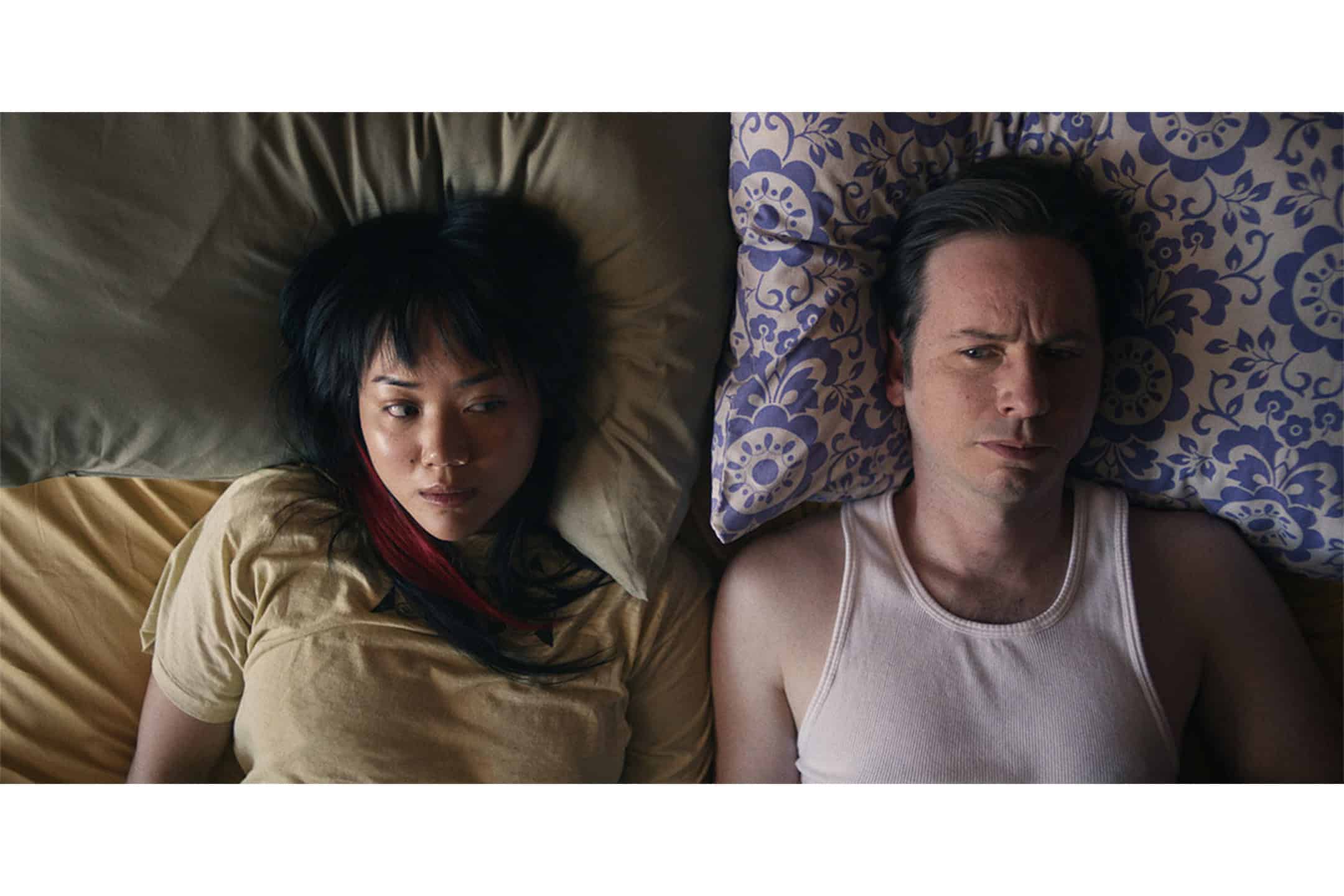
Emily Le and Dan Beirne play a couple who try open love and go in unorthodox directions in the oddball romance Paying For It.

I first took an interest to Paying For It knowing it’s directed by Sook-Yin Lee. I had no clue of what to expect. Boy was I in for a surprise!

Chester Brown and Sonny Lee are a Toronto couple in a tough situation. They’ve had a romantic relationship together for years and do a lot together, but they haven’t had sex in a long time. Both Chester and Sonny come from two different worlds in the arts. Sonny is a video jockey on the music channel Max Music and Chester is an illustrator/author of cartoon books that detail his personal life. Sonny has a few friends at her place of work while Chester frequently meets with his work colleagues from the same writing community and has a close friendship bond with them. Sonny has a lot of success but Chester is struggling to make a name for himself. Chester is quite introverted and keeps to his circle while Sonny’s not afraid to meet new people.

Sonny recommends they try open love. Maybe they were or weren’t meant for each other and maybe they need time away to figure it out. Sonny being famous on national television has no problem finding other men. Chester on the other hand struggles. His author friends warn him jealousy will sink in pretty soon. Chester does become frustrated how Sonny is able to find many a nightly partner. It even reflects in his illustrations. Chester tries an unorthodox route advised from one of his writer friends: prostitutes. Besides, he’s given up on romantic love.

Over time, both find a lot of pleasure from what they get into but they struggle to find the one. Every other man Sonny hitches up with, he’s a great passionate lover but they’re not as fun as Chester and they don’t relate to her as well. Also at work, she learns one of her female colleagues is attracted to her. Meanwhile each prostitute and escort Chester gets involved with involves something complicating or some kind of discomfort. Many are willing to give Chester what he wants that night but most of them completely back off of any commitment. Some even have demands of their own. Despite it all, Chester is finding a quality in this he feels is missing in monogamy.

Simultaneously, both have difficulties and challenges at their own jobs. Sonny had no problem being a VJ while the alternative rock wave of the 90’s was riding high, but the wave has become a ripple and in came the tsunami of boy bands and other teenpop acts Sonny does not like introducing at all. Over time, Chester and his friends question about what’s going on with his many hook-ups and it affects the art for his latest literature. Especially since Chester hasn’t found ‘the one’ and it’s frustrating for him.

Then things change over time. Chester’s writing career and the careers of his writer-colleagues get a boost. Chester also spends the night with an escort who’s her own madam and it changes his life. Sonny, on the other hand, won’t be silent about the frustration with her job and her life, even on live TV. That eventually leads her to be dropped form Max Music. The two eventually reunite during a tragic moment. The death of her dog. It’s as they mourn together they learn they had something so special, no new love of theirs can replace that, even though they have to move on.

The film is about this complicated thing called love. I’m sure a lot of you look at the situation in your relationships and find yourselves asking why can’t we just love? Why do we have to make it complicated? This film itself is about that human fallibility of making love more complicated than it should. In this case, it’s not just creating the freedom of an open relationship but also the types of people both of them date during that time. Then there’s the mix of the two professions that are similar that they’re both in art or entertainment, but very different. Then there’s the talking with friends. The people they most trust to confide into and divulge their personal feelings. Then there are the changes in their lives. Then there are human idiocies and their attitudes. All that is what makes love more complicated than it should be.

Basically this is a story about a relationship that was doomed to end. Chester and Sonny are close, but complicated. The expired birth control should send that message. Eventually Chester and Sonny grew as different people and learned in the end, they were best as friends. Chester may have found a new love with an escort who’s her own madam but his relationship with Sonny made clear he’ll never have a closeness with another that’s the same. Sonny may have found men that were better at making love, but she learned they all made lousy partners. It was Chester who had no problem with her squirt gun or her dog or any of her other oddities. The ending gave a message I have seen often enough where two in a relationship couldn’t succeed as a couple but they could succeed as soul mates.

The film does give a lot of humor and in a lot of ways is somewhat biographical of both Brown and Lee. For those that remember MuchMusic during the 80’s and 90’s, you will remember Sook-Yin Lee as one of the VJ’s in the 1990’s. Yep, Canadian Generation Xer’s like me and early Millennials will have fond memories of her. Those of us who remember her from that and see the film will see the humor in how what’s happening in the film mirrors her own life and will laugh at the humor involved. Those who have read the book Paying For It will know that Brown and Lee were romantically linked and it detailed the complications. The film does some changes with the dates as it has the film taking place as Sonny’s career is bustling while Brown’s is struggling. In real life, Brown started his relationship with Sook-Yin in 1992, before she was signed onto MuchMusic and the relationship ended in 1996 just shortly as Sook-Yin’s MuchMusic fame took off.

This is a great alternative comedy from director Sook Yin-Lee. It is a very personal story to her and she’s able to show the comedy in it in this story she co-wrote with writer Joanne Sarazen. She’s also able to make some of the changes in chronology work for the flow of the film. There were some elements of shock in the film, but the story and settings made the shock humor work. Emily Le is great as Sonny Lee. She’s great at doing the comically side of the story as well as some of the more serious moments. She may not be Sook-Yin’s twin as far as personality goes but she knows how to do it well. Dan Beirne was also great as Chester Brown. I myself never knew Chester or read his works so I’m judging his performance for how well Dan did his role. Beirne was very good at playing an introvert engaging in a sexual activity most introverts wouldn’t normally try and it changes him. His awkward traits made the character and the story. The addition of the other supporting characters like Chester’s writer friends or Sonny’s ‘other men’ also added to the storytelling and the comedy of the film.

Paying For It isn’t just a sex comedy full of sex humor and some shock humor. It’s also quite a smart comedy about a couple that could no longer be but have a special bond. It’s even a comedy that tells about our own idiocies when it comes to love.

VIFF 2024 Review: Bird

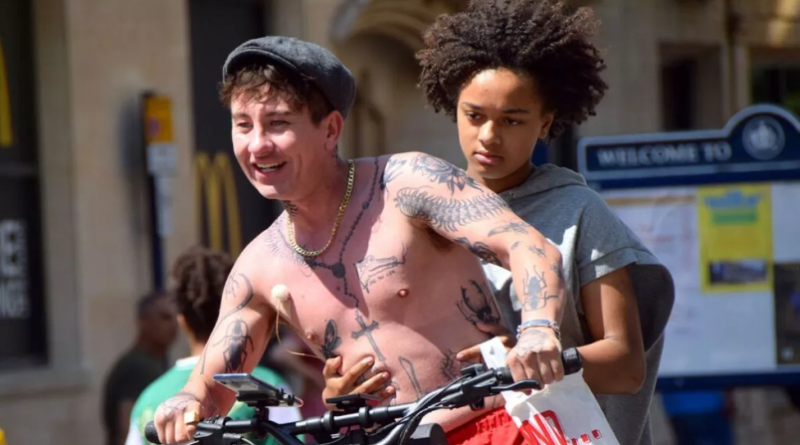
Young Bailey (played by Nykiya Adams, right) is a 12 year-old girl seeking her own identity and away from her father (played by Barry Keoghan) in Bird.

The first film I saw at 2024’s Vancouver Film Festival was Bird. It’s the latest film from renowned British director Andrea Arnold. How well does it make for a film?

Bailey is a 12 year-old girl living in the slums of North Kent. Despite living in bad conditions, she likes taking pictures and videos whenever she notices beauty. Especially beauty in nature. Bailey lives in a slummy house with her father Bug. Bug is what you’d call a ‘kidult.’ He even takes her home from school on a scooter. One day Debs, a woman his father only dated briefly, moves into the home. She’s also shocked and unhappy to find out he wants to marry her. She’s so unhappy with it, she won’t wear the pink outfit her father wants her to wear at the wedding. That leads Bug to get abusive on her, and Bailey runs off.

Bailey runs a long distance away from her neighborhood. She doesn’t only want to be away from her father but everyone she knows. Bailey finds herself in a field where horses are raised. It’s the perfect place to be alone and be captivated by nature. Suddenly she sees a stranger in the field. It’s a man in a dress who dances around like a crazy you’d see on the street. When Bailey comes face to face with him, she wants to avoid him. She later learns this man calls himself Bird and he has a message to deliver.

Bailey returns to her neighborhood but wants to avoid her father. She wants to stay at the flat with her half-brother Hunter and his girlfriend. Hunter is friendlier to Bailey than her father, but she can already tell Hunter is a bad enough influence. She tries to meet up with school friends but learns some are engaging in gang activities. She noticed another thing too. Bird is in her neighborhood. She meets face to face with him by chance. She also sees Bird from Hunter’s apartment. Bird stands atop the porch of the nearby apartment, just standing on top. She fears Bird might jump.

Over time, Bird and Bailey develop a friendship. She also learns that Bird is trying to look for his long-estranged father. One night Bailey decides to spend some time at her mother’s place after watching Bug snort cocaine. She happily meets with her younger step-siblings but learns that her mother’s new boyfriend is extremely violent and very threatening. It’s after he threatens Bailey that she has to run out.

Over time, things get better for Bailey. On the morning Bailey menstruates for the first time, Debs is able to talk to her about menstruating and give her some tampons. Another day, Bailey is able to take her younger siblings from her mother’s side out to the beach. She makes a great mother figure. Also while she herself is in the water, she finds herself in a moment of freedom.

Bug brings Bailey and all of his friends for a wedding rehearsal. Bailey is uncomfortable there. That day, she agrees to help Bird fulfil his goal of meeting face to face with his estranged father. It will be a long bus ride to a town very far out but Bailey is willing to help him. Once in town, Bailey and Bird finally get to the location of Bird’s written message. The father doesn’t notice Bird. Bailey steps in to insist to the man who has a new wife that Bird is his long-lost son.

The two return back to Kent appearing disappointed things didn’t go the way it should have. Bailey and Bird spend the night over at their mother’s place, hoping her violent boyfriend is not there. Unfortunately, he is there during the night and he assaults her mother. When Bird steps in, Bird becomes his latest punching bag. The fight escalates that it goes outdoors. Bailey notices something shocking. Bird sprouts feathers, like a bird. When the man attempts to assault Bird, Bird fights back like a bird! After beating the man unconscious, Bird flies off with the man in his claws like a bird carrying their prey. Bailey is shocked by it all.

Months later, Bug marries Debs in a court. Bailey is there in the pink outfit. That evening, the wedding happens at a bar consisting of singing performances from Bug and his friends. As Bailey takes a break from the events, she notices Bird paid a visit, wings and all. It’s a meeting of parting where he thanks Bailey for her help and bids farewell. The ending sends a message of a new beginning.

One of the focuses of the story is the difficulty of a 12 year-old girl trying to find herself. Being twelve is not easy as one is going from child to teenager. It has its own difficulties for girls. Imagine being a 12 year-old mixed race girl living in one of England’s ugliest slums and with toxic family situations and a neighborhood full of bad influences. You can imagine it would be difficult. A girl like Bailey would definitely be prone to the frustrations. Despite that, Bailey and her imaginative thinking are sources that can lead to something hopeful in the future. In fact that brief scene at the beginning of the cruise ship passing by being seen from her window is one sign Bailey is sensing something is better for her out there.

It’s her belief in something better and something hopeful in the future that keeps her going. It’s also her meeting with Bird that she helps to develop a stronger sense of herself. It’s very hard to believe that meeting with an eccentric like Bird would be the best thing for her. It’s through Bird that she’s able to discover that better things for her are out there. It’s as she helps Bird with his situation with his father that she’s able to be a stronger figure to her own family. She’s also able to show she’s a loyal friend by being determined to help Bird reunite with her father and it’s through her friendship with Bird she learns things about herself she never knew.. To think it was a chance meeting of two strangers who would be the least likely to form a friendship that turned out to be the best thing for Bailey. One who uses her imagination for her pictures and videos and the other who lives and dances out his imagination. It’s as Bird gains his wings, Bailey is able get her sense of self. Also the end of the film is both a moment of goodbye and a passing of the torch.

The story plays out well. It keeps making Bailey the prime source of the story, as it should, and it showcases her growth and her maturity over the time. It also showcases the troubles and the difficulties she goes through in both her personal life and the lives surrounding those she associates with. There are a few times when the story isn’t as steady or scenes not as fluid as it should be. Sometimes the story itself can be made confusing. Nevertheless it does all come together at the end. It makes sense that Bailey’s growth coincides with the engagement of Bug and Debs and ends with their marriage. The addition of Bird as an influence on her life also adds to the story of Bailey’s growth.

This is a good unique film from British director Andrea Arnold. Arnold first burst on the scene 20 year ago when her short film ‘Wasp’ won the Oscar for Best Live-Action Short Film. Since then, her films like Fish Tank, Wuthering Heights and American Honey have caught a lot of attention. Her latest film which she both writes and directs is a story that has a lot of ironies and twists, but it’s also smart and touching. It’s a story that shows Bailey for her uniqueness and for her common traits as a 12 year-old girl. It’s not that often a filmmaker is willing to do such a story. It’s great to see Andrea do it. Making the story work is young newcomer Nykiya Adams. This is her first acting role and having a fish actress in the role of Bailey works for the film. Nykiya did a great job in holding the film together as she did in her role as Bailey. Barry Keoghan did a great job in his role as Bug. It’s hard to picture Barry playing a thug from the slums but he masters the role and plays Bug well with his stupidities and vulnerabilities. Also excellent is Franz Rogowski. He played a believable eccentric with animalistic type of behaviors and kept Bird from looking wooden. The music added in the film also added to the quality of the film. It helped with the angry energy at times.

Bird is a unique coming-of-age story of a twelve year-long girl from the slums and her friendship with a person she’d be unlikely to befriend. It’s a unique story of a chance encounter that changes her forever.

VIFF 2021 Shorts Forum: Programme 3

I had already fulfilled one of my VIFF goals of seeing a segment of short films when I saw MODES 2. However I was hoping that for short films, I would see something less experimental and more in the lines of either documentaries or live-action storytelling. I had my opportunity when I saw the shorts segment entitled Programme 3. They were seven films by Canadian directors that were all unique in their films and their messages.

-Flower Boy (Canada – dir. Anya Chirkova): It’s summer. Nav is a musical dreamer. He plays music from piano to guitar to his analog synthesizer at parties. His girlfriend Sarah is a painter who has artistic dreams of her own. She even painted a portrait of Nav with a flower instead of a head. For summer income, Nav works at a laser tag ground where he does the typical duties and the co-workers talk of how much they hate the job and the boss. As the months pass, Nav grows further in love with Sarah, but knows summer will end and he will be heading to college in another province. Also during the job, the 60 year-old boss shows Nav that he had music dreams too, as a rock ‘n roll drummer. The boss shares with him his passion. As summer ends, he makes a decision that a surprise to all.

This is a nice picturesque story. The images do as much of the storytelling as the dialogue. The story is pretty much a celebration to any and all artistic dreamers. Even for those who eventually went on to pursue real jobs. Those who’ve had artistic dreams of their own when they were young can identify with this story of see themselves in some way somehow. This also works well for me because I had dreams of being an actor when I was younger and, well, I turn 50 next September. It’s a reminder of no matter how old you get or even how successful you are at your real job, the dream never dies. Even if it’s in an against-all-odds profession, it’s still worth it to chase the dream and never stop dreaming!

-Things We Feel But Do Not Say (Canada – dir. Lauren Grant): Genevieve is hurting, but does not make it obvious. Later we learn what’s been hurting her. The pregnancy that’s supposed to be, isn’t. It’s a miscarriage. She tries to keep it inside, even to her husband, but you know it’s going to come out. She goes with him to the doctor’s appointment and tries to keep a poker face about it, but you know it will come out. Then it does. She then returns back to her work, greeted warmly by her friend, and carries on with her day.

This isn’t just a story about a miscarriage and the hurt one feels. It’s also about trying to hide emotions and go about daily life, even though one is hurting inside. The body language actually does more telling about the story and Genevieve’s feelings than the dialogue. That’s what the film is for the most part. About unspoken feelings we hold deep inside.

-Tla-o-qui-aht Dugout Canoe (Canada – dir. Steven Davies): Joe martin is a 66 year-old man from the Tofino First Nation. His profession is making dugout canoes: canoes made from trees that are dug out from the trunk. He is skilled from teachings from his late father. The skills he uses to make the canoes, like the hand-carving and painting, are centuries-old traditions passed on from his people. The skills and canoes were scorned upon by the Canadian government decades ago who had a system to assimilate the Indigenous people, robbing them of their culture and language and sending them to Residential Schools where they were abused and neglected mercilessly. Joe is now free to make his canoes. His daughter Tsimka uses the canoes he made to take visitors on tours of Clayoquot Sound.

This is one of two documentaries that’s part of ‘indigiDOCS.’ This allows the canoe maker to tell his story of his craft and how it’s important to him and his people. At a time when Indigenous peoples are going through Truth And Reconciliation and working to take back what was stolen from them in the past, like their languages and cultural rites, this is an important documentary. You learn of the skill of how it’s important for the maker and his people and why it’s worth keeping alive and worth passing on to generations.

-News From Home (Canada – dir. Sara Wylie): It’s March 2020. A daughter makes a phone call to her mother. She has anxiety and she’s scared. She doesn’t know what to do. She wants to fly back to be with her mother, but her mother advises it’s not a smart idea. This breaks the daughter’s heart. She’s scared and frustrated to tears. She just doesn’t know what to do. Another phone call some days later. The daughter again calls the mother. The daughter doesn’t have the same frustration she had during the first phone call. She reassures her mother she’s calmed down, if imperfectly. The mother says things of reassurance. It ends with a friendly goodbye.

This is a film that consists of recorded phone calls, home movies, and the images of the rooms inside the hose where the calls took place. No actors or people present. One thing we should not forget is it’s in March 2020 when the COVID pandemic hit Canada and all these social restrictions and isolations started taking place. There was a lot of fear among people about what would be next. I too anticipated this could be the next Influenza. This film captures the moment. Even reminds us of our own first moments of dread when this all started. However it also shows the moment of relief and reassurance over time. It even shows the close bond of family. It’s that bond with someone who reminds us things will be fine that we all need.

-Indigenous Dads (Canada – dir. Peter Brass): The film is a documentary. It’s an interview of four Indigenous fathers from across Canada and of various Indigenous Nations including Brass himself. Two are fathers of two, one is a father of four, and one is a father of one. All of them share their feelings of what it was like when they became a father for the first time, both positive and negative. All four talk about how fatherhood made them grow and change as men. All talk of their love for their children. They also all talk of how they teach their children of what it is to be Indigenous and how they even remind them of the racism they can face. They also all talk about their hopes and dreams for their futures and what they want their children to grow us to be.

This is an important documentary short. It’s very inciteful. This shows a side of being both a father and being Indigenous that we rarely see. It’s an eye opener to this subject. It reminds you of the immense responsibilities these men have to face and are willing to face head-on, despite how hard it is. They speak their hopes, their joys and their fears. There are times of great emotion as well. I’m really glad I saw this.

-Srikandi (Indonesia/Canada – dir. Andrea Nirmala Widjajanto): Anjani, a young girl in Indonesia, is about to start college. This comes in the aftermath of the death of her father and as her mother is about to sell the house. Something her daughter is out protesting over. Soon, her daughter discovers something. She comes across her father’s puppet studio. Her father’s profession was the traditional Indonesian puppetry of Srikandi. She discovers she has been taught the skills of Srikandi by her father, even though Srikandi is traditionally forbidden o females. Anjani makes a decision about her career path to her mother. Her mother is not happy with it as it won’t guarantee a steady income, but Anjani is firm in her decision as he is days from leaving for Jakarta.

This is a student film from a Vancouver Film School student. Andrea Widjajanto is born and raised in Indonesia and came to Vancouver to study film. This is another film about artistic passions burning inside one’s self. This is also as she faces the heartache of the death of her father and the time in one’s life where she’s reached the college age and now preparing for a path she is to pursue for the rest of her life. This is a good film as it involves an artistic puppetry few people from outside Indonesia know about. It also reminds you that this desire to pursue your dream with the pressure from others to pursue something more bankable and steady is universal. It transcends cultures and borders. The dream to pursue one’s dream is universal. Despite the story taking place half a world away, one can relate to the story.

-Together (South Korea/Canada – dir. Albert Shin): It’s a seaside motel in South Korea. Two strangers who met online with fake names, a young-adult female who goes by the name Happy Virus and a middle-aged male who goes by Rabbit Doll X, are there. They are here for one reason: a suicide pact. Both have a cooking element and chemicals ready to do the job. During the time there, they talk about their lives and what they’ve been through. They take an interest in each other and even laugh and have a mini-party of just the two of them. It gets to the point the woman feels she can’t go through with this.

This is a story by Korean-Canadian director Albert Shin that treads on a serious subject matter. It’s of a common thing in South Korea of the type of suicide pact where two strangers with suicidal feelings meet online to commit their suicide together. Shin taps into human feelings as well as ethics and morals. In the end, he delivers a story that goes from potentially tragic to life-affirming in the end.

Overall these seven shorts have their differences, but they share a lot in common. All are from either Canadian directors or students in Canada. Some are documentaries or docudramas, while some are live-action. Most are in English while two are in different languages. All speak a message about the human spirit and human feeling.

Each of the seven films of the VIFF Shorts Segment Programme 3 either contain an aspect of life that we can all relate to or they will open our eyes. All of them are valuable to watch. I’m glad I had the chance.

VIFF 2019 Review: Mr. Jones

Gareth-Jones
Mr. Jones is about journalist Gareth Jones, played by James Norton (left) who seeks to expose a tragedy in Ukraine the USSR is determined to hide from the outside world.

I was interested in seeing Mr. Jones at the VIFF as it’s based on a topic of my interest: the Holodomor or Ukrainian famine of 1932-1933. It’s an intriguing story with a relevant message for today’s world.

In 1933, Gareth Jones is a 28 year-old Welsh journalist who is very good at getting stories. He was the first foreign journalist to fly with Hitler and Goebbels at the start of Hitler’s regime while working as an advisor for British statesman Herman Lloyd George. During the time, he discovered of Hitler’s intentions to wage war. His story fell to deaf ears in the press and his job as advisor is dropped due to budget cuts. Despite being dropped, George gave Jones a letter of recommendation. He hopes to use it to go to the USSR to find an investigative journalist. Before he does, he gets a phone call from a friend named Paul Kleb in the USSR. He talks of how the economy is booming in Russia, but he is about to tell of something terrible happening in Ukraine… and then he gets disconnected.

Jones arrives in Moscow. His trip is regulated from start to finish: what he does, how long he stays and where he goes. That’s how things are in the USSR. In fact his job as a foreign journalist is under heavy scrutiny by national officials during his stay and no foreign journalist is allowed outside of Moscow. He arrives at the hotel in Moscow of New York Times bureau chief Walter Duranty. Duranty welcomes him and introduces him to his assistant Ada Brooks. Jones is expected to be in the USSR for seven days but he can only stay at the hotel for two days. Duranty offers Jones to stay and partake in the late-night partying. At the parties is all kinds of debauchery from prostitutes to heroin shooting to even homosexual advances. Jones wants none of this as he knows Paul Kleb was killed in Ukraine and has to find out why.

Jones finds a train headed to Eastern Ukraine. He breezes past security to stow away on it. When he arrives in Ukraine, he steps off to see the farmed grains loaded onto trucks by the Soviet army, but people dead in the snow and farmers starving. He tries to get answers. He goes to soldiers putting the bagged grain in a truck. He asks in English where it’s going, but is suspected as a spy. Soldiers go out chasing and shooting after him. Fortunately, Jones is able to evade the pursuit. He comes across some children who sing a haunting song to him of the death and starvation happening around him. He goes to a house which is in a photograph he holds, but sees the residents dead in their beds. Jones goes into a town where he sees the Soviet army take the dead bodies in the snow and pile them in a sled to be buried in a mass grave. They even take a baby that’s alive and still crying. Jones goes into a house where he is able to find living residents. They give him something to eat, which appears to be meat, and from Kolya. He soon learns they’re staying alive by cannibalism, and Kolya is a famine fatality.

Soon Jones is captured by Soviet forces. The Communist government commands him to be silent by using the lives of six British auto workers as hostages. Jones tries to plead with Walter Duranty to expose the truth of what’s happening, but Duranty is ‘in bed’ with the Soviet regime. Duranty has a habit of writing of the ‘Worker’s Revolution’ in the USSR like he romanticizing it. In fact Duranty has the reputation of being known as ‘Our Man In Moscow.’ Ada however is more supportive towards Jones and believes he has to get the story out. This can’t be hidden and knowing that Jones is to be sent back to the UK, she encourages him to make the truth known.

Back in the UK, Jones can’t get any British paper to buy into his revelations of a man-made famine. The government either doesn’t want to believe it, or fear it will jeopardize diplomatic relations with the USSR. This upsets Jones as he knows this must be stopped. The events upset him so much, he can’t stop himself from breaking down in tears in his hometown. However he has an opportunity to talk to William Randolph Hearst while at a newspaper office. Hearst, however is extremely busy and will only allow Jones thirty seconds to state his case. However when he mentions of the death of Paul Kleb, that grabs Hearst’s ear and makes Hearst want to hear everything Jones saw. Finally the story ‘Famine In Ukraine’ makes the front page of the New York Times. Jones is defamed. He is not allowed in the USSR again. Duranty is also defamed, but never had his Pulitzer Prize rescinded. Nevertheless George Orwell is caught in the intrigue of Jones’ pursuits and it inspires him to write ‘Animal Farm’ published ten years after Jones was shot to death.

I’ll admit any story about the Holodomor catches my interest. I’m of Ukrainian ancestry. My great-grandparents arrived in Canada around the 1890’s-early 1900’s. They came here long before World War I even started, before Ukrainian land was annexed as part of the USSR and before the Holodomor. This film showcases the Holodomor and is possibly one of the best cinematic depictions of it, but the Holodomor is not the biggest theme of the film. The biggest theme of the film is about censorship in the USSR at the time. All the censorship that happened in the film is an example of the censorship that happened in the USSR since it began after World War II until it broke down in the mid-80’s to when it dissolved in 1991. All news was censored. Nothing but good news was to be published in Soviet newspapers and whatever negative news could not hit either Soviet news nor news to the outside world. Phone wires were tapped and letters were opened and investigated by authorities before it reached the mailboxes of the citizens or outsiders. Even speaking negative words of the Communist government would get one a jail sentence. The Soviet media promoted propaganda to glorify itself and its Communist system and vilify the capitalist system in the United States.

As seen through Gareth, the Soviet system was also restrictive to outsiders. The system decided if a person from an outside country could visit, where they could go and stay and for how long. There were already six British autoworkers who were treated like hostages at the time and threatened with death to have the UK comply to their demands. You can understand just what Jones had to face in order to get the truth out.

Gareth had good reason to pursue the story. It’s not just trying to find out why Paul Kleb died, but Ukraine had personal interest to him as his mother taught English in Ukraine in the 1890’s. Gareth even had barriers in journalism to overcome once he had his story. He had top journalist Walter Duranty to deal with. Duranty had a big reputation at stake and kept insisting that the Holodomor isn’t happening. It isn’t until Jones meets with William Randolph Hearst that he finally gets a willing ear. The big feud between Duranty and Jones shows how even in what is supposed to be the ‘free world,’ there is still a lot of truths that are suppressed or even denied. Seeing all that goes on can make one wonder if this is happening today in what is supposed to be free countries. If we are really getting this freedom of speech or if we’re getting a lot of concocted stories.

This film is great in making a point about journalism and getting the truth out. There are a lot of truth even in today’s world that need to be exposed, but are covered up. The film does a good job in making a moment of past history, and the journalistic feuding surrounding it, make for a relevant message for today. Even the fact that Gareth was shot to death in 1935 while investigating a story in Chinese territory bordering Russia (which many consider to be a Soviet plot of revenge) reminds us of how many journalists risk their lives to uncover truths.

The film was very good at making its point. However the story didn’t seem to be heading on a straight path. There were times when moments that only deserved a certain time, like all the debauchery at Duranty’s hotel party, was slowed down and given more screen time than necessary. Even the moments of the journalistic feuding and political feuding appeared to take too long. The moments involving Jones witnessing the Holodomor in Ukraine were given the best screen time and the best on-screen depiction. It showed a lot of brutal honesty of the Holodomor, including that of cannibalism. It may have taken over less than half the screen-time, but it was done in excellent detail and gave the right haunting feel to this moment of tragedy.

Veteran director Agnieszka Holland teams up with emerging writer Andrea Chalupa to bring this story to the big screen. The story is one of great personal interest to Holland as she is well-knowledged of the Holodomor. Holland also has renown for her depictions of the Holocaust in some of her films. She does a very good job in directing the story, even if there are some moments of irrelevance or moments drawn out longer than they should be. James Norton does a good job in his portrayal of journalist Gareth Jones, but his part could have been developed more. Most of the parts didn’t have too much development and could have had more done with it. Nevertheless, Peter Saarsgard was able to make Walter Duranty hateable on the big screen. Vanessa Kirby was able to make her role of Ada gain more dimension over time.

Mr. Jones is about more than just about the Holodomor. It’s also about the topic of censorship that is just as relevant now with the ‘freedom of speech’ we’re led to believe we have in the ‘free world.’

VIFF 2016 Review: Tales Of Two Who Dreamt

tales-website
Tales Of Two Who Dreamt document the dreams of a Romani refugee family who dream of immigrating to Canada and hopefully doing a small film.

One thing about the VIFF is that it will show films done by Canadian directors or people close to home. In fact the VIFF credits itself as the film festival that shows the most Canadian films: shorts and feature-length. One example this year of a feature-length Canadian film shown at the VIFF was Tales Of Two Who Dreamt which was a unique documentary.

The film begins with a man, Sandor Laska, telling a story of a boy who turned into bird after a dream. Over time, we the director is planning to make a small film of this story. Even a makeup artists is seen putting a beak on the son Alexander.

What we get is something else. We hear the story of the father and the Laska family. They are refugees living in a tall apartment in Toronto specifically for refugees. They are Romani people from Hungary. They seek refuge in Canada because they are of an oppressed minority and often face discrimination.

As they live in the apartment awaiting approval of their status in Canada, we learn there are many Romani families also seeking refuge. Often they meet together and party together. The children play soccer on the apartment’s field together often with refugee kids from other countries.

Time passes as the family continues to pursue both dreams: the dream of doing the film and the dream of immigrating to Canada. In the end, neither happen. Their immigration case wasn’t approved and they have to return back to Hungary where they really have nothing to return to. The film that was to be made couldn’t be done. The family were deported back before it could be completed.

This film is a good eye opener to the Romani people that seek refuge. They are a people who number in the tens of millions spread across various countries of Europe. They are people whose lifestyle are considered questionable. They are a people who value their cultural roots in music and dance often to the point they neglect working a real job. They live their lives their own way; many of which are illiterate.

The Romanis are seen by the other people in the country as lazy, irresponsible or even the ‘scum of the earth.’ They are often referred to as ‘Bohemians’ or ‘gypsies’: the latter of which they consider to be a slur. They’ve had their discrimination over the decades and centuries. They were even one of the groups of people executed during the holocaust. Discrimination against them still continues today in various European countries. Some countries like Italy have passed anti-Romani laws. Some countries like Hungary let discrimination go freely. You can easily see why a family like the Laskas would try to seek refuge in Canada.

Sometimes when you see the struggle of the Laskas and other Romanis in the apartment as they seek their residency status, you sometimes think this film is about the refugee situation as a whole. What you see the Romanis struggling with is often what you see most refugees struggling with. That tall apartment with nets on the outside put on after the death of a six year-old boy who fell off his 19th floor balcony tells a lot about the place where refugees wait to hear their fates in Canada. At the end, you get thinking that the Laskas didn’t succeed in escaping what they attempted to escape. Sandor talks about how the interpreter didn’t state his case right to the judge and that had to be why his residency status was revoked. Sometimes it makes you sense could the interpreter have an anti-Romani attitude? Did he misinterpret purposefully so that the Laska did fail and then get sent back to Hungary to return to their discrimination? It does get you thinking.

Directors Nicolas Pareda and Andrea Bussmann turn the film into a docudrama. There are times when the film gets ready to film the ‘birdboy’ story, times when they focus on another family who are to be part of the skit, times when they focus on the apartment building as a whole, and times when they focus on the Laskas and their reality. It’s a mix of various shots from family struggles to kids playing to young adults holding a party. The two directors try to piece together the many stories. There are times when scenes are shown with a score of a Romani song sung a capella. There are even times when they include Timea’s scratchy violin-playing as score to a scene in the film. Sometimes it hits, sometimes it misses. There are times when the mixed organization appears to work and then there are times when the film feels disjointed. I think the film aimed to be creative in its documentation during times when it wasn’t supposed to be.

Despite the film’s noticeable imperfections, I would have to say the best thing about this film is that it gave a voice to a people. This was a chance for Romani refugees to tell their story of what they faced and why they came to Canada along with the hopes for their children. The adding in of the ‘birdboy’ story adds color to the film as it is a Romani tale. You can see why the film is called Tales Of Two Who Dreamt. The first dreamer was the ‘birdboy’ and the second dreamer was Sandor Laska. I’ll admit I was disappointed at the end to learn the ‘birdboy’ film was never finished. But it’s something that just happens and you saw why.

Tales Of Two Who Dreamt is a documentary that’s noticeably disjointed in a lot of areas. It is still very valuable as it gives an image of the refugee situation Canada is trying to deal with.