2023 Oscars Best Picture Review: Past Lives

Teo Yoo and Great Lee star as two childhood sweethearts who could be destined to be for each other after all these years in Past Lives.

Do you believe in destiny? Do you believe in reincarnation? Past Lives is a story that examines it and how it pertains to love.

Reincarnation and a person’s belief they had a past life or many past lives is a topic popular with many. It’s also a topic of great skepticism. This story is unique as it shows the cultural significance of the topic of reincarnation. Specifically reincarnation commonly regarded through Korean people. This concept is called In-Yun. It’s hard to understand, but protagonist Nora Moon does a good example of simplifying it by saying a simple action could mean they’ve met before in a past life. Even a simple brush of each other’s clothing can send that message of In-Yun between two strangers that simply pass by and never see each other again. The concept of reincarnation itself is completely something someone will choose to accept or not, but something like In-Yun experienced through simple encounters like those are even harder for someone outside of Korea to understand and accept.

Nora is one who believes in In-Yun, despite her non-Korean husband being skeptical. What makes this story unique is how it relates in terms of romance. Could it be that destiny would make Hae Sung and Nora lovers in past lives?  Is it also destiny that they should be lovers in the present? And will it come at the cost of the end of Nora and Arthur? This is a romance story of a different kind! Also how does this belief of In-Yun sit well with Arthur who was never taught In-Yun? It’s not clear of Arthur’s beliefs himself but not being Korean, how will Arthur take to Nora’s belief of In-Yun? Will something he himself doesn’t understand mean this is something that is supernatural and beyond his control and something sending him the message he and Nora were not meant to be?

One thing I learned in my college courses of literature that for a work themed on the culture or popular attitudes of a region the protagonist lives in or a culture the protagonist comes from, it has to find ways to transcend the physical and cultural borders to make it understandable and relatable to “outsiders.” This concept of In-Yun is definitely something most people outside Korea can’t understand, but it gives the viewer a better understanding. Various scenes in the story like their reuniting online twelve years later or even Nora and Hae Sung visiting New York landmarks together, one’s Nora and Arthur didn’t go to together, will also stimulate your interest and question if these former schoolmates are soul mates. Making it not just a story about the two, but also about the man caught in the middle adds to the intrigue. If they’re soul mates, will it come at the cost of the man who loves her? It’s a story with a pace that’s slow and even quiet, but it succeeds in keeping your intrigue of the three involved and of the In-Yun most non-Koreans are just learning about.

This is an excellent film from director/writer Celine Song. A mostly fresh writer on the scene, Song has had experience writing for the stage and for television for The Wheel Of Time. This film is her first-ever work for film. The life of character Nora mirrors her own life as she herself  was born in South Korea in 1988, emigrated to Canada in 2000, achieved her MFA from New York University and worked her way to the New York theatre industry. Like Nora, she married a Jewish-American writer. Even the scenario mirrors her life as five years ago, a childhood sweetheart came to New York to visit. That must have been the making for this and it’s an excellent work.

The film starts with a lounge scene of Nora and Hae Sung talking happily while Arthur is looking down. You don’t hear them talking but you see them and hear the talk from two white observers. Then the story begins. Throughout the film, she takes this personal story and makes it into a story engaging for the audiences of all backgrounds. That’s another thing too. You might dismiss this as a “boring story” at first, but it will spark your intrigue over time. She helps the audience get a better standing and makes them a believer of In-Yun, if only during the film. Even the ending when Arthur gives Hae Sung a warm friendly goodbye seems right and fitting, even if it wouldn’t be your nature to do so. A very excellent film debut from Song.

Also excellent is the performance of Greta Lee. She has been active on the acting scene for the last ten years. She does a great performance as one who strongly believes in this In-Yun, even if it might threaten her marriage. Nevertheless she also exhibits confusion and heartbreak well. For a performance that’s not too demanding, Greta does a graceful job with it. Teo Yoo is also great as Hae Sung. It’s quite the effort playing someone whole heartedly believing in a soul mate only to learn right there it was not meant to be. Also great is John Magaro as Arthur. He played the frustration of being the man who might lose Nora to something she believes in and he doesn’t understand. He also makes the befriending of Hae Sung at the end believable.

Past Lives takes a love story about destiny some could dismiss as a joke and turns it into something great and something believable. It becomes a more engaging story as you continue watching.
VIFF 2020 Review: Black Bear

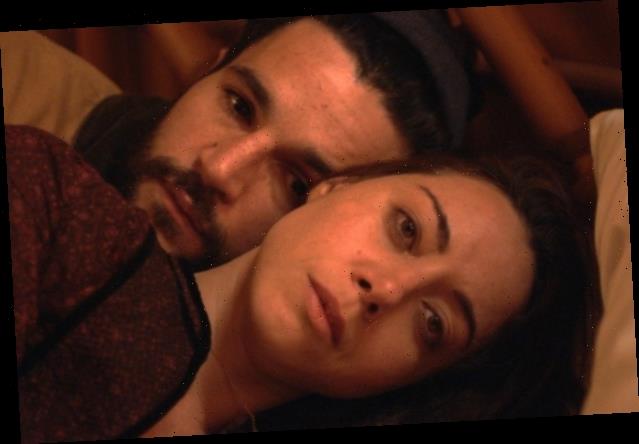
What starts as film work leads into what becomes a bizarre love triangle in the film Black Bear.

It’s funny I didn’t see my first American live-action film at the VIFF until the second-last day of the Festival. Black Bear was that film. It was quite a story.

The film begins with a woman in a swimsuit out by the dock near a lake in the Adirondacks region and just meditates by the water instead of swimming. We later see that woman walking down a road in what appears to be a remote area of the woods. She has a lot of baggage. A man stops to ask if she’s lost. She says she’s an actress-turned-director names Allison. He introduces himself as Gabe. He is actually the director who will be working with Allison on an upcoming production. Allison is willing to accept Gabe’s offer to bring her luggage to the place. During the walk she reveals she chose directing because she’s hard to work with. She’s known for emotional outbursts. She hopes to spend some time at the cottage in hopes that the natural greenness with help her unblock her creativity and help her to produce her next project. They arrive at their cottage near the lake with his pregnant wife Blair waiting. Gabe tries to introduce Blair to Allison, but you can sense the jealousy in Blair’s body language, even though she tries to hide it.

During the dinner, things really get heated. Blair talks of how they moved from Brooklyn to the Adirondacks; because Brooklyn was too expensive and they were getting nowhere in the film business. Blair soon gets all confrontational with Gabe. She even gives him a hard time in front of Allison about a comment she perceives as his male chauvinisms. Allison sides with Gabe, adding more suspicious feeling from Blair. The dinner leads to more friction from Blair about Gabe and how she can’t stand the world he creates. Late at night, Gabe finds Allison alone. The two develop a good conversation. Then it leads to a lot more. It turns out Gabe has had a thing for Allison since they first met and she has a thing for Gabe too. Right while they are about to have sex, Blair physically attacks both of them. She knew it all along and she’s infuriated. She even chases Allison out, but it leads to an area in the woods where Allison is confronted by a black bear. The bear doesn’t attack Allison at all.

The film then progresses forward weeks or months later to the wrapping up of the film. The shooting is taking place around the cottage and the dock. The crew is setting up. The directors are having confrontations of how to have the next scenes shot. Gabe and Blair are cooperating well for this project. It’s possible they’ve decided mostly for the sake of the film to put all personal feelings aside. But for the last scene, Allison appears to be out of it. The calm, cool Allison from that time before is not there. She appears angered or hurting inside. However the final scenes still need to be shot.

As Allison becomes more uncooperative with the actors and crew on the set, she finds a place to withdraw herself. Problems arise all over the place. The crew have their issues of setting up and one has a severe stomach problem. The directors have an ego clash over what is to be done. Gabe and Blair have talks about the film that appear to be more about their relationship, or fading relationship. The actors squabble with each other. However it’s Allison who’s the biggest of the problems. She’s just become an emotional time-bomb. It’s unclear why she’s that way but any attempt from anyone to get her to work properly on the scene, especially from Gabe, only succeeds in making her even more confrontational. Eventually she does agree to the scene, but it appears things could go better. After the shootings done, she leaves the cottage where she comes across the bear again. Again the bear doesn’t attack and Allison smiles for the first time today.

This is an interesting story about a bizarre love triangle and how it intermingles with film. An actress who wants to venture into film decides to meet with the director of her next film. She makes the way into the house and the wife suspects something. Everything falls apart from that point on. Blair starts friction with Gabe while Allison appears to coax him. It results in an affair that drives Blair angry. Three weeks later, work on the film happens and Allison can’t take it anymore. She becomes an emotional timebomb. You’re left wondering why? She said at the beginning of the film she was confrontational on the set. Is that the reason why Allison is acting like a time bomb? Or could it be she still has feelings for Gabe? Or is something deeper than that? Even of a natural sense? You’re left to wonder.

Despite how interesting the story is, it does get confusing. The first story appears to set up for the second story. I can understand how films don’t try to reveal everything mainly so the audience can make their own decisions, but there’s still too much that’s unclear. One of the things that’s unclear is whether the marriage between Gabe and Blair ended. They get along better while shooting. You’re left to wonder did they patch things up or did they split and are now getting along better? Another is Allison. I know I mentioned how Allison’s behavior on the final day of shooting get you wondering. If you saw the scene yourself, you yourself would find it hard to decide the biggest reason why she’s acting that way. Also confusing is the role of the bear in the film. The film’s two scenes are titled Part One: The Bear On The Road and the second scene is Part Two: The Bear By The Boat House, but you don’t see the black bear until the very end. The bear doesn’t attack Allison in either scene and the appearance of the bear causes Allison to smile at the end. You’re left to wonder what’s the symbolism of the bear? Allison coming to grips with her mentality? Her tranquility with nature finally reached? You’re left wondering.

Despite the confusing story, this is an ambitious film from writer-director Lawrence Michael Levine. This is the sixth film and third feature-length film he writes and directs and the first of his films he doesn’t act in. The film is impressive that it is a psychological film about human nature and how personal problems, especially among people in the arts, cause the friction, but its imperfections are noticeable. The best work from the film comes from the actress Aubrey Plaza. She goes from an actress who doesn’t appear to be the type to call a time-bomb at first to one who fits the description of ‘time-bomb’ perfectly. Her transformation was excellent because she was portraying two different Allisons and it worked excellently. Christopher Abbott was also good as Gabe: the director left confused in all of this. Sarah Gadon was excellent with portraying Blair as one who does not shy away from letting her personal feelings show. Additional technical efforts that highlight the film are the cinematography of Robert Leitzell, the cinematic score of Giulio Carmassi and Bryan Scary, and the images of pencil and paper of going from scene to scene and the end credits.

Black Bear hasn’t won too many awards on the film festival circuit. It was a nominee for a NEXT Innovator Award at the Sundance Film Festival and a New Vision Award at the Sitges – Catalonian Film Festival. Nevertheless those who saw it have talked a lot about it and its story and it has become a major attraction at film festivals.

Black Bear does make for a drama about a bizarre love triangle. It’s a story of the affair and the aftermath. The problem is there’s too much in the film that is unclear, including the inclusion of the bear.