Oscars 2024 Best Picture Reviews: Part Three

At first I intended for my Best Picture blogs to be three in total. When it became clear how much writing I did for the first two films, I decided dividing them into blogs of two reviews each is more worth it.  So in the meantime, here’s the third of my five Best Picture review blogs:
Dune: Part Two

The reboot of the Dune series has been so far the biggest movie action of the 2020’s. The re-adaptation of the Frank Herbert novel was a highly anticipated event in 2021 and hoped to get people back into the movie theatres after the relaxing of the strictest COVID precautions in history. It worked. Dune made over $400 million at the box office, was nominated for ten Academy Awards and won six. It was like what David Lynch got wrong, Denis Villeneuve got right. Originally, Villeneuve planned to divide the story into two films. This is what led to Dune: Part Two to be made.

The second Dune film continues with the drama left behind from the first. The second makes the stories of the dehumanizing Water Of Life, the installation of the young sadistic nephew of Arrakis as the ruler and heir to House Harkonnen, Paul’s romance interest to soldier Chani, the threat of holy war from Fremen fundamentalists, a spice trade at risk of smugglers, Paul’s consumption of the Water Of Life much to the disappointment of Chani, his dealing with his mother, his duel to battle the throne of the Harkonnen kingdom, his ascendancy to the role of king upon winning and the rejection of all as leader, including Chani. The drama continues, the excitement and thrills increase and the ending leaves the audience in suspense and the anticipation of what will follow in the sequel Dune: Messiah, set for release in the spring or summer of 2026.

Every year, there seems to be at least one ‘popcorn movie’ that seems to rack up enough buzz to eventually become a Best Picture nominee. Not only did Dune: Part Two get nominated for Best Picture, but the Dune franchise joins the Godfather, Lord Of The Rings, Going My Way and the Avatar franchise as the only five movie franchises to have two or more of its films nominated for Best Picture. It’s deserving of it because it succeeds in doing what a science fiction film should do. It takes people into another world. It creates an intense complex drama of the threat of the order of humanity and how it rests in the hands of one young man. It delivers in the action people go to expect form a film like Dune. On top of it, it succeeds in being the opposite of your typical movie sequel that ends up being a repeat of the first. Instead, we get a continuation of the chronologic drama and ends with the anticipation of the third and final part. Deserving of its Best Picture nomionation. And to think it was released back in March 2024. Talk about endurance!

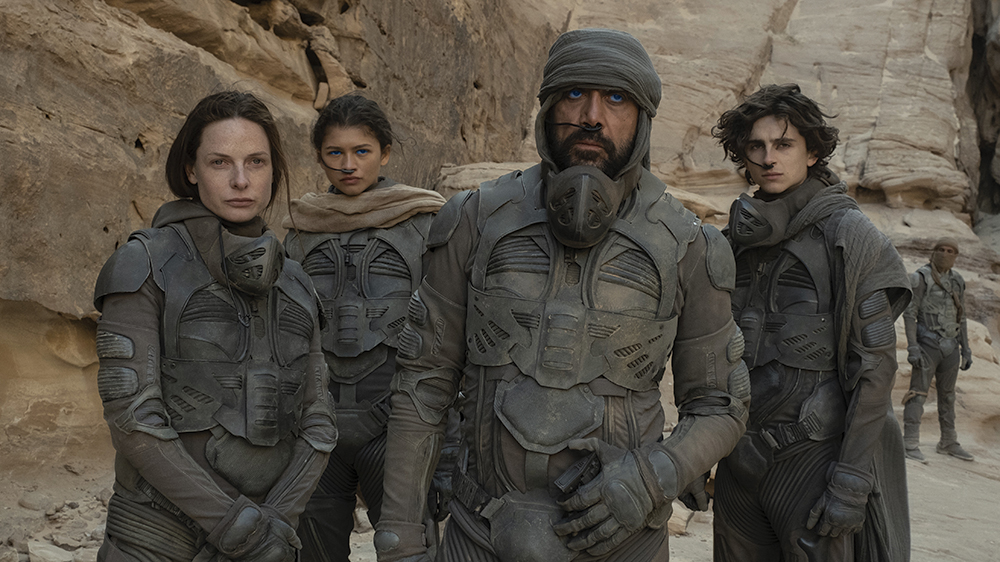
Once again, top respect goes to Denis Villeneuve. You can trust Villeneuve to deliver in a sci-fi film. Both in his direction and his co-adaptation of the story with Jon Spaihts, he continues the excitement of the story well by keeping in the right parts, delivering on the action needed and making the smart decision to make his adaptation of Dune a three-film series instead of the two-film series he originally hoped for. He did things right and in winning fashion. Like most sci-fi films, the story is more focused on the special effects and action moments, but the film doesn’t stray away from its focus on the story and the characters. It is still there and still consistent. Even though Timothy Chalamet’s performance as Paul wasn’t too deep of a role, it is still consistent to the story and very believable. Zendaya’s performance as Chani added to the story. In the first Dune movie, Chani was a minor supporting role. Here, she’s the lead female protagonist and Zendaya does an excellent job in making her a key part of this chapter. There were also good performances of minor roles like Josh Brolin as Paul’s trainee and mentor, Rebecca Ferguson as Paul’s mother with whom Paul harbors resentment, Austin Butler as Paul’s fierce deadly rival to the throne and Christopher Walken as the emperor.

As is common with great science fiction films, the standout achievements are in the technical areas. You need it for a sci-fi film to excel and Dune: Part Two had some of the best of the year. Its top achievements are in the cinematography by Greig Fraser, the production design by Patrice Vermette and Shane Viau, the costuming by Jacqueline West, the editing by Joe Walker, the special effects by the film’s effects team, and the music from Hans Zimmer. All of it was successful in taking the audience into Dune’s futuristic world and enhancing the film’s action.

Dune: Part Two succeeds in keeping alive the drama, intensity and excitement of the first film and sets the audience up for anticipation of the third and final chapter. It succeeds in having the best qualities of a sci-fi film without the common watering down or cheapening of the quality.
Emilia Perez

Now this film has been the subject of a lot of discussion, for better or for worse. In watching it, one would be shocked how a musical is made out of subject matter that would be the last themes and elements thought of as subject matter for a musical. Nevertheless, the mix of a musical with modern-day dark drama works as a film from start to finish. Despite that, this film is not for everybody. If you’re a person who welcomes experimentation in film like I do, then you will like it or respect it as a film. If you want to be entertained, that’s taking chances as a lot of people will be unhappy with a film like this. Trust me. A transsexual druglord and all the corruption in Mexico and the missing people that come with it does not make for an entertaining film. Making a musical out of it would seem quite the oddity.

From the start, it looked like the type of film that would get a lot of Oscar buzz. It had great acting, an eyebrow-raising story and quite the unconventional way of making a film. The film would achieve thirteen Oscar nominations and then the hate began. First, there are the complaints from the transsexual communities complaining of the transsexual character being a murderous drug lord before the operation. Then came complaints from the people of Mexico of how Mexico was depicted as a place of rabid crime. Additionally, it came to light past social media messages from Karla Sofia Gascon. Exposed in her messages were tweets that were Islamophobic, racist and even critical of her own co-stars. This only came to light just after all the nominations were revealed. I know there’s always at least one Best Picture contender that starts a load of controversy. Best Picture nominees often start some controversy or debate but there’s always one that stands out the most. This will have to be the biggest of the ten.

I’m not normally one to trash a film unless it’s really horrendous or really terrible either in quality or in its subject matter. While the film is definitely one of uncomfortable subject matter, I do give it credit for its experimentation. We should know that this film is originally a stage opera created by Jacques Audiard who adapted it from a chapter in a French book Ecoute. I will give Audiard credit for trying to make a musical out of out-of-the-ordinary subject matter. Watching it will make you question if the musical elements of the film work or not but there are many parts that stand out as great and will even blow you away. Don’t forget this isn’t a story about a transition from man to woman. It’s also a transition of personality going from leader of a drug cartel to a humanitarian. Also I feel the acting in the story works well. It’s the acting from the three main stars of the film that help make the film work on the screen and work as an unexpected musical. The funny thing is after you’ve finished watching, you will ask yourself if you liked it or not. Or if this worked or not. Despite its imperfections, I consider it a brave attempt.

Responsible for this film is French director Jacques Audiard. Audiard has had a decades-long reputation as a filmmaker in France and has directed many films outside the French language. This film, which was a Palme d’Or nominee at Cannes 2024, should be seen as an accomplishment in retrospect. A flawed accomplishment, a provocative accomplishment but an accomplishment nevertheless. It’s not just this being an unlikely musical but also adapting a stage opera to the big screen. As if adapting a musical isn’t hard enough. Despite its flaws, I give Audiard credit for that.

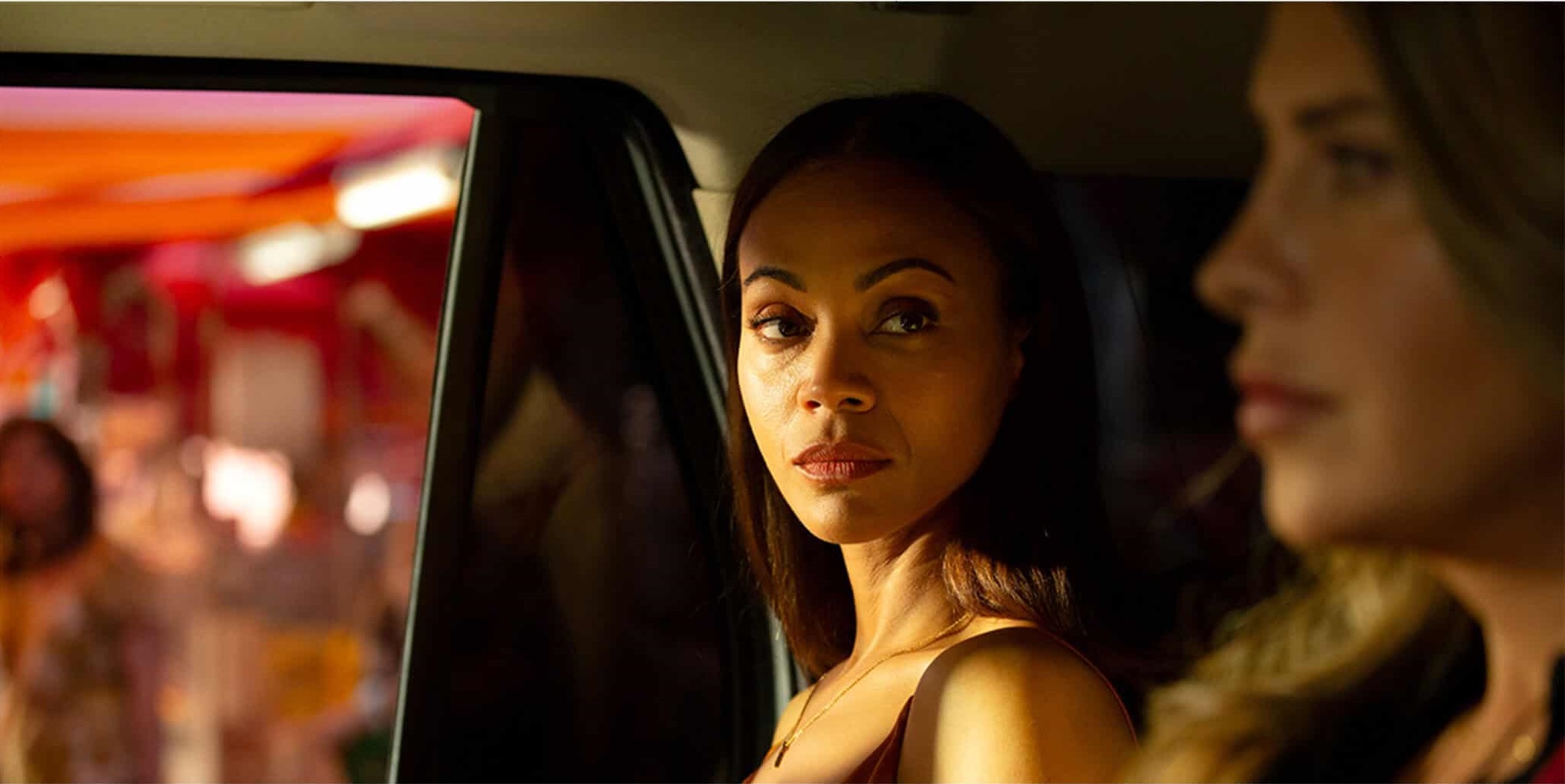
Also excellent is the performance of lead Karla Sofia Gascon. A transsexual woman herself, Gascon does a great job in both the male role of Manitas and the female role of Emilia Perez. It’s two different conflicting personalities of the same character and it needed to be done well, and Gascon succeeds in doing it. Also excellent is Zoe Saldana as the lawyer caught in the middle of it all. When watching the film, you wonder if the lead is Emilia or if the lead is Rita Castro. Zoe does a great job in making the film as much hers as it is Emilia’s. Selena Gomez’ performance was not all there. Nevertheless she did have some great moments and was believable in most scenes. Adriana Paz is also great in playing Emilia’s lover. I give top technical acclaim to Paul Guilhaume in the cinematography, the hair and makeup team for the convincing work on the pre-transition Manitas, and the collaboration of Clement Ducol and Camille on the standout music.

Emilia Perez is not everyone’s cup of tea. It gives a lot of reasons for you to hate it and a lot of reasons for you to like it. I consider it a film for myself to like and admire, despite its obvious flaws.

And there you go. This is my look at two more contenders for the Best Picture Oscar. With ten films, boy do you get a lot of different films.

Oscars 2020 Shorts Review: Documentary

It was a big wonder if I would be able to see the Oscar-nominated shorts this year. The theatres are still closed and now is a case where in BC, places can’t have more than 10 people at a time. It’s frustrating not to be able to go places. Nevertheless I’m happy to have the chance to stream the shorts. To start with, I’ll be dealing with the Documentary nominees:

Colette: dirs. Alice Doyard and Anthony Giacchino – During World War II, Colette Marin-Catherine was a young French woman who took part in the resistance against the Nazis. Her older brother Jean-Pierre, stockpiled weapons for the resistance. He was caught, tried, and extradited to the Dora-Mittelbau concentration camp where he was eventually killed. It’s 2019 and the 75th Anniversary celebrations of D-Day are approaching. Colette is to make a return to Dora-Mittelbau to come to terms with her past: a past that still upsets her 75 years later. She doesn’t know if she can do it. She relies on director/producer Alice Doyard for help. During the trip, it appears she might not be able to do it. She can’t hold herself as the mayor of Dora-Mittelbau makes a speech about preventing such an incident like happening again. She confides in Doyard her past and her fears as the moment is approaching. Then she visits the Camp. It brings back bad memories. Then she visits the oven where her brother is executed. She’s in tears and she says her goodbyes to Jean-Pierre.

This is an important film. This is a film that reminds you that very often, wounds and scars are very heard to heal, even 75 years later. Peace needs to be made, but peace is hard to achieve. Especially after something this horrific. The film does an excellent job of making it Colette’s story. However it also does a good job of making it Alice’s story too. Dealing with Colette, she learns a lot and is also overcome with her own emotions. The two even develop a closeness as Colette passes her brother’s ring onto her. It’s a great short film about humanity.

A Concerto Is A Conversation: dirs. Kris Bowers and Ben Proudfoot – Composer Kris Bowers is about to perform a concerto he recently wrote at the Walt Disney Concert Hall. Interviewing him is his grandfather: 91 year-old Horace Bowers Sr. Horace Sr. had just come from a celebration honoring him for his dry-cleaning business that has served the area of Los Angeles he lives in. Kris appears in many an outfit. During the film, Kris interviews Horace and Horace interviews Kris. Horace reveals how he escaped the segregation in Florida for a better life in Los Angeles. He talks of racism he experienced in LA, but an opportunity to make a business happen. Kris talks about music, how much it means to him and some of the music he wrote over the years. The film then ends with his concerto and his grandfather watching on.

This was the last of the documentaries seen as part of the five-set. Since the other four were of depressing subject matter, it was nice to see one of an uplifting story. This is a story of a grandfather and grandson who are successful in two different ways. The grandfather owns a dry-cleaning business that has been hugely successful in the Los Angeles area it serves for decades. The grandson is a composer whose musical scores have been heard in video games, television and film including Madden NFL, Mrs. America, Green Book and The United States vs. Billie Holiday just to name a few. The film shows what it’s like to be black in the United States. It’s also as much about the triumph as it is about the struggle. The film is both an interview where one asks questions to the other and a show of a bond between the two that’s on full display during the documentary’s 13 minutes. You’ll enjoy it and be enlightened.

Do Not Split: Charlotte Cook and Anders Hammer – This film is a compilation of footage of the Hong Kong protests. The footage takes place over a period of eight months from August 2019 when the protests start to March 2020 when Hong Kong goes through social restrictions because of the COVID pandemic. The footage is of various individuals you will only see once and some individuals you will see constantly in the film. In the film, you will see images of the protests, rioting and even makeshift places of shelter they use during the protests. You will see a lot of actions they take, but you will also hear them speak their mind about the issues.

This film will capture your attention and will not let go. This film really gets you concerned with the students and their welfare. If you are up to date on the situation in Hong Kong, the film will make you side with the students and give you a good understanding why they’re fighting this. The arrangement of the footage is great at capturing the essence of the story as well as giving the people their voice.

Hunger Ward: dirs. Skye Fitzgerald and Michael Shueuerman – The film is focused in two therapeutic feeding centres in Yemen. The film focuses on the two female doctors in the feeding centres. Over in the centres, the doctors have to deal with children near death and as well with the families. This is happening during the Yemeni Civil War during what the UN calls the biggest current civilian crisis in the world. The film shows how they deal with them, how they weigh them, how they deal with near-death situations and their attitudes of the whole issue. They even show the aftermath in two cases when the child dies. It shows devastating reactions from family members and the frustrations of the doctors. One of the nurses keeps an album on her iPhone of images of all the children she dealt with who unfortunately didn’t make it. The film also shows survivor stories, like of two girls that did make it.

This is a film that showcases an issue that often gets overlooked by the media. We hear of wars but we often overlook some of the effects of the wars, like how it affects children. This is a film that definitely has a message about its topic. This malnourishment during the Yemeni Civil War ranks Yemen second only to the Central African Republic for the worst child malnutrition in the world. The doctors themselves have their own messages to say. One talks of how Yemen used to be such a great nation, but it has now fallen. The other doctor, she blames this child malnutrition not only on the war but the whole nation, including herself. The film also includes the two survivor stories as messages of hope. The film ends sending a message that the stories of hope and tragedy you see are part of an issue that’s still fighting. I admire how a film like this showcases a message the world’s news cameras rarely focus on. That’s why I give it my Should Win pick.

A Love Song For Latasha – dirs. Sophia Nahali Allison and Janice Duncan – The film is narrated from young women who knew Latasha Harlins personally. For those who don’t know who Latasha Harlins personally, Harlins was a 15 year-old African-American Los Angeles girl whom in 1991 was shot to death by a hostile storeowner in L.A.’s Koreatown. The store owner was found guilty of manslaughter and was given a very lenient sentence which had no prison time at all. In this film, you hear from women who used to know of Latasha of who she was and of her hopes and dreams, including a dream to be a lawyer. You see images of areas where Latasha lived and played and went to school. You also hear from one woman of the store Latasha would meet her fate. She talks of how the owner was already known for her hostility. Latasha knew of it but brushed it aside, saying “She won’t kill anybody.” She couldn’t have been wronger that day when she went to simply buy some orange juice and the storeowner thought she was shoplifting. That led to a violent confrontation where the owner shot her in the back of her head.

The film gives a human image of a person who was a subject of racial tension back in the early 1990’s. For those that didn’t know, the L.A. Riots of 1992 were started by the reaction of the verdicts of the police officers in the beating of Rodney King. however the Koreatown area of Los Angeles was a particular scene of much of the rioting. The death of Latasha and her killer’s lenient sentence was most to do with that. In fact the liquor store Latasha was shot dead at was burned to the ground during the riots. This film creates Latasha not simply as a victim of racism, but as a young girl with hopes and dreams. The media shows one thing; these girls show another thing. The film also showcases images of Latasha’s childhood, images of Latasha at school, and images of young African-American girls in poses of confidence.

This is a documentary important to have out. 2020 was known for its race riots. This film takes us back to the race riots of Rodney King and shows how complex of an issue racism is and how it’s not just one central story that’s the cause of the friction. Yes, the reaction of George Floyd’s death is what provoked the riots of 2020, but George Floyd wasn’t the only victim. Same with Rodney King and the 1992 L.A. Riots. The story of Latasha reminds us it’s not just Rodney’s incident that provokes such an angry backlash. The story reminds us that Latasha is not just a 15 year-old African-American girl who met bad luck that tragic day. She was a somebody. She was a person that mattered, and she will never be forgotten. That’s why I make this film my Will Win pick.

And there you have them. Those are my reviews of the five films nominated for the Oscar category of Best Documentary Short Subject. Reviews of the other short films coming very soon.

VIFF 2015 Review: Hadwin’s Judgement

Hadwin's Judgement is about Grant Hadwin and why he committed his act of what some would call 'ecoterrorism.'
Hadwin’s Judgement is about Grant Hadwin and why he committed his act of what some would call ‘ecoterrorism.’

British Columbia, especially Greater Vancouver, is known for people using radical and even destructive methods to make their statement heard on an issue. One such person who’s lesser known in Grant Hadwin who cut down a beloved tree on the Queen Charlotte Islands in 1997. The documentary Hadwin’s Judgement traces Hadwin’s path from logger to radical to his mysterious disappearance.

The film is almost like a biography of Grant Hadwin and the moments in his life that changed him forever. Grant Hadwin was born in West Vancouver. He came from a logging family and eventually found himself working on the Queen Charlotte Islands. However he soon developed an anger when he saw how much forest was being cut down from the island and how fast with the modern cutting methods. He writes letters of complaints to businesses. He even tries to start his own business which makes products out of decayed wood or wood long cut down but it doesn’t succeed.

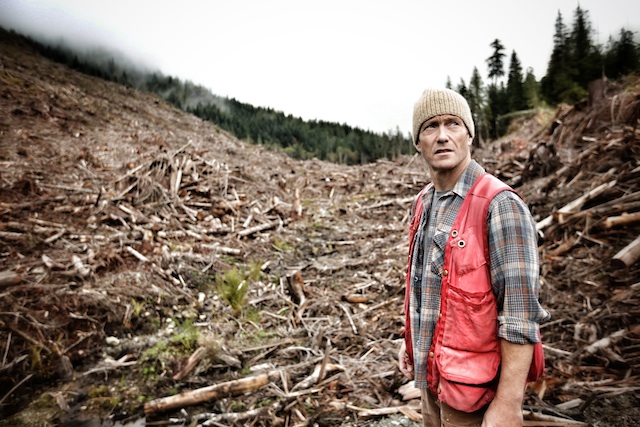
Doug Chjapman plays Grant Hadwin in re-enactments with no dialogue but says it all with his mind.
Doug Chapman plays Grant Hadwin in re-enactments with no dialogue but says it all with his mind.

The deforestation of the area along with his mental instability takes his toll on him and he cuts down the sacred tree of the island– the 1000 year-old Kiidk’yaas (The Golden Spruce)— to send his message. He awaited trial with many a person angry at him. However Grant pursues a kayaking trip up the Boeing Strait. He is never seen again although his broken kayak, letter in lamination and tools have been found intact. He has still never been found dead or alive.

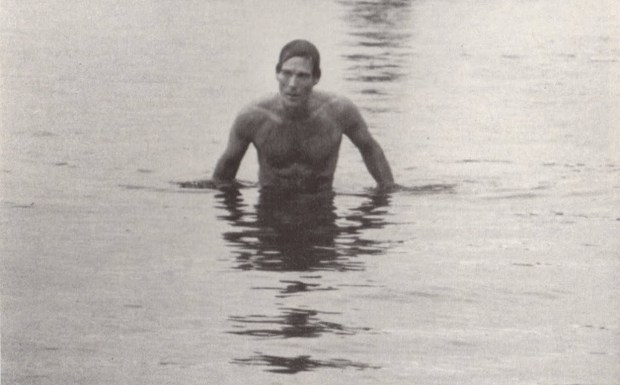
The film is mostly a documentary featuring people who mostly knew Grant during his lifetime. It features co-workers to friends to a local photographer who photographed him swimming just before his disappearance to John Vaillant who wrote an award-winning book on him. It also interviews people of the Haida Gwaii who knew the tree. The Haida Gwaii consider trees to be sacred so it’s no wonder the chopping of that tree would hurt them deeply.

However the film doesn’t just present people interviewed. It also provides people first-hand knowledge of the Haida Gwaii people, their legends and their beliefs. It provides insight to Grant’s feelings around the time and includes narration of the letters he wrote in his protests. It even includes moments in Grant’s life re-enacted by actor Doug Chapman playing Grant. Doug never utters a word of dialogue in his acting but it’s like you’re reading Grant’s mind just with the looks on his face. You could see why Grant would lose his patience with what was happening and do what he did. It still remains a question. Was it Grant’s attitude to the deforestation of the area? Or was it a mental imbalance? Or both? Even I myself wondered if he valued trees so much why would he cut the sacred Golden Spruce down? I later assumed Grant did it possibly to say to all those logging companies: “You want wood so bad? Here’s your wood, bastards!” That’s my belief to why he did it. People snap.

Despite the storytelling, narration and re-enacting of Grant’s moments, the best attribute of the documentary has to be the cinematography. Right from the start, you see images of the rain forest, an aerial view of Queen Charlotte Island and a panoramic shot of the forest. Already images of beauty that tell what this island is all about and why the island’s natural features are important. It’s not just beautiful images like those that make the film but the uglier images too. The film includes footage of the tree cutting mechanisms through all angles. You can see just how they can cut down a whole tree in seconds. You can see why through such mechanisms looms the threat of deforestation. So much cutting in so little time. The film also shows the ugly aftermaths of all the trees cut down. There’s one panoramic view that not only shows a wide forest but of a cut-down area. That’s one of the many eyesores. Other eyesores include closer shots of land that used to be forests, images of piles of dry dead wood and the biggest of all: the Golden Spruce down on the ground with its leaves soaking in the river. Even single images like that of a freighter full of logs tells the story of the land and why Grant Hadwin was compelled to make such a judgement. Shots that included Grant also provided for the storytelling including the site of his broken kayak.

Sasha Snow did a great job in creating a documentary that gives people’s opinions of Grant through all angles and even re-enacts some of his key moments. Sasha not only includes those that know him but the local Haida Gwaii and author Vaillant. Sasha made a lot of smart choices in telling the story such as having an actor act out Grant’s moments instead of showing photographs. In fact we only see one photograph of Grant in the film right at the very end.

Hadwin’s Judgement is more than a documentary. It takes you inside the person, the land, the people of the land and the economic pressures of the times. I don’t know if the film completely supports Hadwin’s decision but it provides the reasons why he did it.