VIFF 2025 Review: Christy

Christy is about female boxing legend Christy Salters-Martin (played by Sydney Sweeney) who had more than her fair share of fights.

It’s very rare to see a sports film at the VIFF. Christy was one of the feature attractions of the Festival. It’s more than a film about a pioneering female boxer.

We see Christy Salters-Martin just about ready for a fight. She talks about all she went through to get there. The film flashes back to 1986 in her hometown in West Virginia. A teenage Christy Salters is into sports. She also spends a lot of time with a girl named Rosie. Rumors are going around that they’re more than best friends. The rumors upset the mother. One night, Christy attends a fighting group. She caught the attention of a boxing promoter named Larry. He believes she’s worth promoting. Christy is reluctant at first, feeling it won’t give her much of a future, but she eventually accepts.

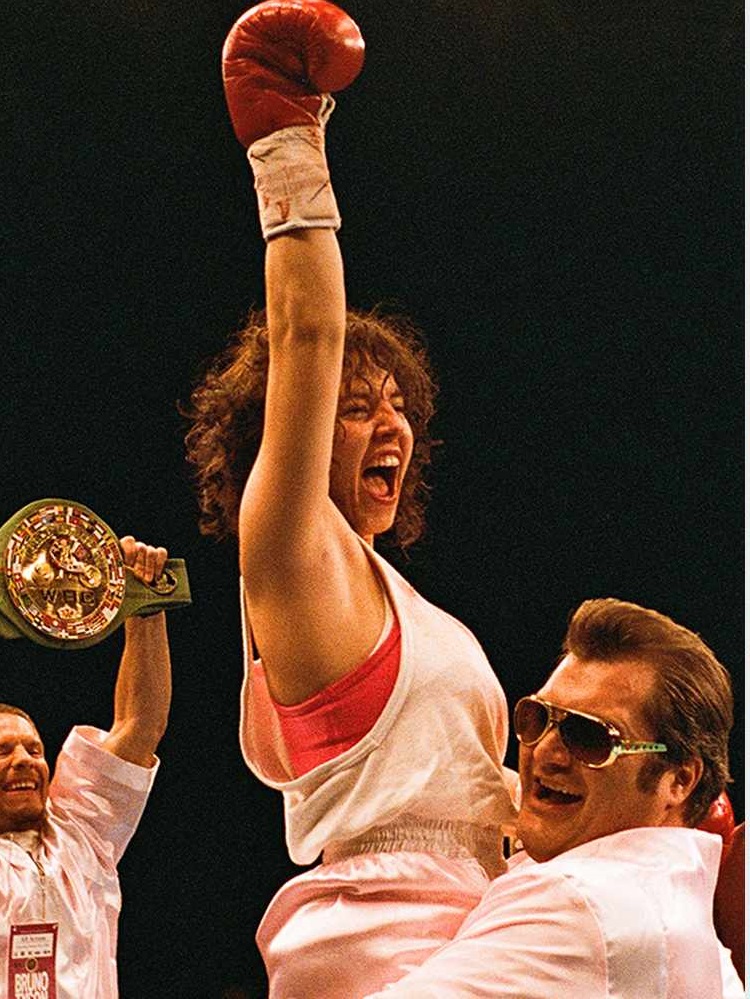
Larry finds a local boxing coach named Jim Martin. Jim is not at all interested in training a female boxer at first but when he sees Christy punch, he sees promise in her. He believes with his coaching, she can become the best female boxer in the world. As Jim trains Christy, but he’s very suspicious of her behavior. He notices she’s a lesbian and she’s more masculine than other women. He gets her to wear a pink uniform with pink boxer trunks and give her the name the ‘Coal Miner’s Daughter.’ He even gets her to marry him. Over the years, Christy does become the top female boxer in the world. She even gets legendary boxing promoter Don King to pay attention to her and promote her in 1996. It’s after that Christy helps to pioneer the sport of women’s boxing. She becomes known for her fierce fighting and her trash-talking of her opponents. She’s also noted for calling some of her opponents ‘lesbians’ despite the secret she’s hiding.

Things change in 2003 as in one of the most hyped-up fights in women’s boxing, Christy will face the challenge of Laila Ali, daughter of legend Muhammad Ali. Once again, her title of World Champion is on the line. In a highly broadcasted fight, she loses by KO. The marriage between her and Jim Martin also starts showing friction as Jim has been getting more and more controlling over her and even abusive. Adding to the difficulty, she tries to get her mother to listen to her situation but she is so flattered by Jim, she sooner takes Jim’s word over Christy’s.

In 2010, Christy is still training in the gym, but Jim is busy training new younger fighters, male and female. Christy is unhappy about this because she still wants to fight. Jim also notices Christy meeting up again with high school friend Rosie. Jim, fueled by cocaine he and Christy both do, starts becoming more controlling of her and watches her every move, threatening to kill her. He even gets Christy to participate in super-lewd videos which upsets her mother. Once again, the mother takes Jim’s word over Christy’s.

Soon Christy develops a bigger sense of assertiveness at the urging of Rosie. Jim responds to it one day by stabbing her four times and shooting her. Miraculously, Christy survived and is able to get help from a driver to the hospital. At the hospital, Rosie is by her bedside, to the disgust of her mother. With the family by her bedside, the father and son care about her condition but the biggest thing her mother cares about is her being a lesbian. It’s there she finally puts her mother in her place. Christy recovers faster than the doctors expect. She returns to the gym and is greeted warmly by all. They are also shocked that she wants to get back into fighting. Jim is put on trial where Christy delivers a scathing speech making him confront what he did and is sentenced to 25 years in prison. The film ends with the start of one of Christy’s fights!

Normally when you go to see a biopic of an athlete, one would expect it to be about their long rise to the top. Christy is different. It does showcase a story of a boxer who wins and pioneers women’s boxing to new heights. In actuality, it becomes more about Christy Salters breaking free from her controlling and abusive manager at a time that was now or never. It’s also of Christy assuming her identity and dealing with a mother who cared more about what she thought than what Christy felt. You could understand why that fight at the end was important to Christy, win or lose.

There have been films of female boxers before. The two best known are 2000’s Girlfight and 2004 Best Picture Oscar winner Million Dollar Baby. This film is a biopic of a legendary female boxer. At a film festival, one would expect to have films that take filmmaking to new or unique artistic directions. This film isn’t as artistically inclined as most of the films at this Film Festival. One unique direction the film goes into is that it focuses on Christy and the intensity of what she goes through. It focuses on her fighting wins, her fighting losses and her abusive relationship with Jim.

It may be common for any protagonist of a film to dominate the focus of the whole film, but it’s important here as it is Christy’s tough will that gets her through the hardest of times. The abuse she endured at the hands of Jim Martin is just as important as her fights. You can understand why that fight in 2010 with Christy at the age of 42 was an important part of the film. If there’s a message to sense in this film, it has to be Christy Salters is a woman of many victories but her biggest victory was outside the boxing ring.

This film is great work from director David Michod. With the story from Katherine Fugate, Michod co-adapts the story with wife Mirrah Foulkes and creates a film that will keep you intrigued from start to finish. He does a great job in getting the actors to do their parts well. Sydney Sweeney is not only unrecognizable as Christy, but she delivers an excellent performance from start to finish. She will let you know she is not simply performing the role of an athlete. It’s about a person and her grit. Ben Foster is also as unrecognizable as Jim Martin and he succeeds in making him into a cocaine-fueled controlling megalomaniac. You will end up hating Jim. Merritt Wever is also great and hard to recognize herself as the mother Joyce Salters. It’s completely different from her Nurse Jackie role she’s known for but she does a great job of making the mother look like the parent you can’t trust. Cinematographer Germain McMicking did a great job of the shooting angles and the close-ups. The musical score of hits mixed with original music from Antony Partos fit the film well, but some hit songs were years behind the year of the scene!

Christy is more than just a biopic of a successful boxer. It’s a film that shows Christy Salters had bigger battles outside the ring. It may be imperfect, but it is a compelling story.

Oscars 2024 Best Picture Reviews: Part Four

The thing about the Oscars is that each year, there are Best Picture nominees for films of subject matter that most people would normally not want to see. In some cases, films of unwatchable subject matter end up Best Picture nominees. A lot of these unwatchable things are based on people or events that actually happened, like these two films. For these next two films, I wouldn’t say they’re unwatchable but they do treat on dark subject matter. They’re far from the topics or themes that would draw crowds. Some scenes many would find too disturbing to watch. All I can say is you be your own judge:

I’m Still Here (Ainda Estou Aqui )

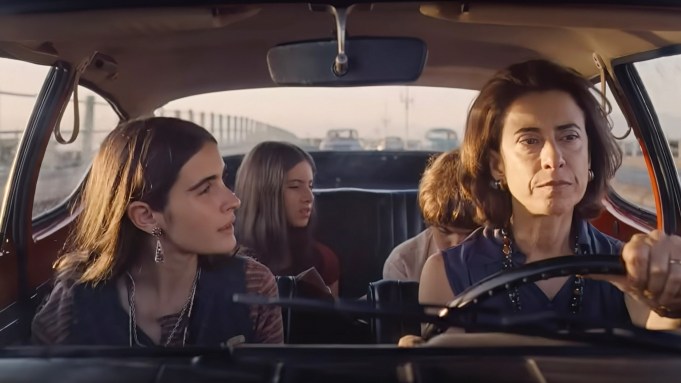
When one thinks of a Brazilian film, one would think of a film that may have scenes of the carnival, the festivities or the beaches. I’m Still Here is a very different film as it presents a dark side of Brazil’s history that they’re still troubled by today. Even the angle from which the film tells its story is unique. We have heard of people kidnapped during political regimes but we rarely hear about how it affects families. It’s through Eunice Paiva that we see how sometimes being married to an enemy to a regime could lead one to being imprisoned. Through Paiva we also see her as she struggles to keep her family together, struggles hiding the truth from her youngest children, struggles with her relationship with her youngest daughter and struggle to get the answers she needs of what happened to her husband. Eunice’s story of being the wife of a kidnapped man really tells a lot. It also shows how it would shape her to be the social justice warrior she became.

The film begins with a beach trip with the Paiva family. Everyone has fun, they all pose together for a photo and Marcelo found a stray dog they can make their own. It’s after that when everything changes. Soon the interrogation of Rubens, Eunice and their daughter, Eunice’s days of imprisonment and the years of aftermath not knowing whether her husband will return alive or if she will be kidnapped again. Then the long wait hoping Reubens will return and the fear of spies outside her door hoping to get her and imprison her again. It’s after the dog Pimpao is run over by the spies’ car that she lashes out at them and she’s had enough. Soon, her desire to leave Rio and start a new life for her and her family in Sao Paulo. The film moves forward to 1996 where Eunice has become a social justice advocate in Brazil, which had returned to democracy in 1989. She shows the death certificate of her husband she achieved. Her family has changed. Especially son Marcelo who became a successful author, despite being confined to a wheelchair. The film ends in 2014, years before Eunice would die of symptoms of Alzheimers. She is connected to a news story about the abductions and the continued pursuit of justice before a family photo.

Looking at it, the film is as much about family unity as it is about injustice in Brazil. Eunice had the nice orderly happy family life before the political abductions happened but that all changed after the imprisonment of the three. Trying to hide the truth of what happened to her father and deal with her older daughters’ knowledge of what happened is not an easy task. Trying to get the answers to what happened to her husband during a political regime that refuses to do so and trying to raise a family is a hard task. That’s one thing we rarely think about. We hear of political abductions in the news but we hardly ever hear of how families cope and try to keep themselves together. It’s through Eunice we see a personal strength we often ignore. You can understand why the family photo at the end of the film was so important. She succeeded in keeping the family ties together as much as she succeeded in achieving justice. The effect on children is also noticed in the film as her daughters fear the worst and are frequently arguing with Eunice. They’re the children with the most truth of what happened. Also the scene in 1996 when Marcelo and Maria, the two youngest, ask each other when they knew their father died, even as Eunice tried to hide the truth.

This is an excellent work from director Walter Salles. He’s one of the most acclaimed Brazilian directors with films like Central Station, The Motorcycle Diaries, Paris je t’aime and the adaptation of On The Road. This film is an excellent accomplishment of telling a dark story and making it a personal story. Even having it end on a positive note is an achievement. With the script written by Murilo Hauser and Heitor Lorega adapted from the novel written by Eunice’s son Marcelo, he takes the story and makes it relatable even though most of us will never experience something this terrible. He makes us connect with Eunice Paiva’s story and tells it so most of us who don’t know Brazil’s history know of the amazing woman Eunice Paiva was.

Making the film work is actress Fernanda Torres. She succeeds in telling Eunice’s story and makes us feel for Eunice and hope for the best. She did a great job, as did her mother Fernanda Montenegro who plays the dying Eunice at the end. Selton Mello was also great as the husband who still tries to live his life daily knowing he could be a political target any minute and eventually becomes one. The cinematography by Adrian Teijido added to the telling of Eunice’s story.

I’m Still Here is both the retelling of a dark era of Brazil’s history and the personal strength that came out of a kidnapped politician’s wife. It’s a sad story, but positive and hopeful.

Nickel Boys

Let’s face it. A film about a reform school that is infamous for its racism, physical and sexual abuse, and even murder of minors will not make one want to watch it. In fact, Nickel Academy is the pseudonym for the now-closed Dozier School For Boys in Florida where graves of those killed were discovered and survivors are now receiving their justice. Those that have learned of the ugly news of Dozier of recent years will want to avoid seeing Nickel Boys, but it does give people reason to see it.

When it comes down to it, what happened at Dozier School should serve as something that should never happen again. What happened there needs to be told, but how? How can you make a place of abuse and murder watchable? RaMell Ross succeeds in doing it with the character of Elwood Curtis. The film flashes frequently in between Elwood’s time at the school to the adult Elwood who just learns of the truths unraveled in 2003 as he’s a successful businessman with a stable relationship. The film tells Elwood’s story as it starts before Martin Luther King’s civil rights movement and Florida still having Jim Crow laws. The film shows how as we fast forward 40 years later, Elwood is overcome with hurt and trauma as the secrets are unraveled with the finding of mass graves. In the flashback, we see Elwood bond with one of the boys named Turner he’s with and the two plan an escape while Elwood documents all that has happened in a diary. The escape fails for Elwood as he’s shot dead while Turner succeeds in escaping around the time of the Civil Rights Movement. In the flash forward, Turner adopted Elwood’s name to thank him for all he taught him.

Elwood and Turner are fictional characters, but they could be representative of any of the boys at Dozier School. It’s through Elwood’s and Turner’s friendship at Nickel that we’re shown of the corruption, abuse of various kinds and the murders that happened there. Through Nickel Academy, Dozier School was as much about racism as it was about abuse. White students got better facilities and a better education while the black students got bad facilities, a bad education, the most hazardous jobs, and even harmful punishments like the sweatbox. African American students got it harder and their death rate at the school was way bigger than that of white students. Even black students who didn’t do what the white superintendent says, like fix a boxing match, could be executed and the superintendent would never get arrested. You can understand why the story has Turner’s escape around the time of the Civil Rights Movement. It would be the beginning of the end for Nickel/Dozier.

This is a great work from RaMell Ross. The story he directs is based upon a 2019 novel of the same title that is the telling of that fictional friendship. The story he co-adapts with Joslyn Barnes is very good and very revealing. He succeeds in making a film about the abuse that is watchable and gets one to think. It’s a reminder of the ghosts of the past and how even if we do well in the present, it will come back to haunt us. Even as the guilty people are slowly brought to justice, we’re reminded it can’t erase the hurt and trauma. He does a good job in making it as much a story about two friends as it is about exposing the truth. Excellent work. Also great is the acting of Ethan Herisse and Brandon Wilson. Their performance as the friends caught in the drama did as much storytelling about the place as it did about them. Daveed Diggs is also very good as the adult Elwood who tries to hide his hurts of the past, but they eventually come out. Also great is the performance of Aunjanue Ellis-Taylor playing the grandmother who is hoping for the best for Elwood and tries with every chance and opportunity, only for every white ‘helper’ to fail her. Her mix of optimism and heartbreak adds to the story.

Nickel Boys succeeds in making what could be a film of unwatchable subject matter be watchable. The mix of a story of a friendship around a school with a notorious past exposes truths of the school while maintaining a sense of hope.

And that does it for now. That’s my review of the latest two Best Picture nominees of review. The last two will be coming very shortly.

Oscars 2015 Best Picture Review: Bridge Of Spies

ST. JAMES PLACE
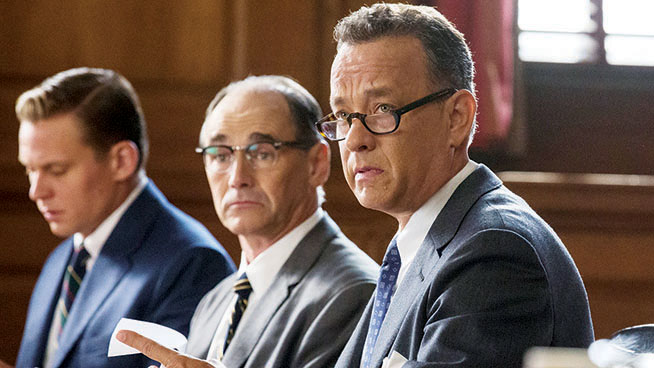
Tom Hanks plays James Donovan, a lawyer in the middle of the height of the Cold War, in Bridge Of Spies. Mark Rylance (centre) steals the show as his subject.

Bridge Of Spies is a Spielberg drama I missed out on seeing during its original theatrical release. I only saw it once it was a choice on a flight I took heading home. It was a good choice.

The film begins in 1957 with Rudolf Abel arrested by CIA agents as he’s trying to read a secret message. He is taken away but is able to keep the message. As Abel awaits trial, American lawyer James Donovan is assigned to defend him. The US government believes him to be a KGB spy but Donovan wants to have a fair trial because an unfair trial may be used as propaganda in the USSR. Donovan meets Abel whom is very welcoming to Donovan but will not cooperate with the US Government for any revelations in the intelligence world.

Donovan knows he has a heavy task in defending Abel. He’s serious about it but no one, not even his closest family, expects him to make a strong defense for Abel. Nevertheless Donovan is persistent and continues to seek acquittal for Abel despite an angry American public, persistent hate mail and threats on the lives of him and his family. Abel is found guilty on all charges. Before sentencing, Donovan asks the judge that Abel receive a prison sentence of 30 years instead of the death penalty because he feels Abel may become a bargaining chip with the Soviet Union. Further difficulties continue as Donovan is unable to win a Supreme Court case where evidence against Abel was tainted by an invalid search warrant.

Meanwhile two innocent Americans find themselves in the hands of Communists. One is US air force pilot Francis Powers whose plane is just shot down between the USSR-Turkish border. He’s able to escape his doomed plane and tries to steer his parachute into Turkey but fails and becomes captive. The other is Frederic Pryor, an American economics student studying in Germany just as the Berlin Wall is being built. He studies in West Berlin but has a girlfriend in East Berlin. He tried to bring her with him to the West but is arrested as a spy.

News gets to Donovan of the two men arrests. He’s even offered a deal from the USSR of the exchange of Abel for Powers. Donovan is insisting in a 2-for-1 deal of exchanging Abel for both Powers and Pryor. However he has the challenge of dealing with Soviet agents and a CIA that’s interested in only getting Powers back. The whole deal puts the governments of three nations– East Germany, the USA and the USSR– in a heated debate with Donovan make the outcome work out right. The end result is historic.

This is yet another film about war Steven Spielberg does focus on. There have been many films of the theme of war he’s done in his career. The wars he have depicted on screen have spanned time from World War II in Empire Of The Sun and Saving Private Ryan to World War I in The War Horse to the Civil War in Lincoln to even revenge missions in Munich.

Here he tackles a war that’s less about brutality but more about ideology and had victims of their own: the Cold War. Although there wasn’t as much blood shed, the Cold War did put a sense of paralyzing fear in the world, especially in the United States, with a possibility of nuclear war and armageddon. Thus the ‘duck and cover’ scene. Ask anyone over the age of 60 about doing all those ‘duck and cover’ practices at school. People were constantly being suspected as spies on both sides and there were reactions of hysteria to those accused of spying or treason. The construction of the Berlin Wall at a time when Germany was divided between the capitalist West and the Communist East is an example of the war.

The story takes us back to the 1950’s at a time when Cold War hysteria was at its highest. Neither side could be trusted if one from the other country came in to visit. That explains why even innocent visitors could be seen with suspicion. People arrested as spies for the other side were huge headline news. Most of the public wanted them dead with Julius and Ethel Rosenberg still fresh in their minds. It’s easy to see why someone like James Donovan would be so easily vilified by the American public and even face a possible shooting. The film shows why James’ efforts in the prisoner trade were necessary in the Cold War. It was something that was able to ease some tension on both sides.

Spielberg does a very good job of showing what the Cold War was like. Instead of showing fighting that’s common in the wars, he focuses on the more tense moments of the Cold War and captures its tense feel most people of that time felt. The screenwriting by Matt Charman and the Coen brothers was very good in providing insight to the moments in history and keeping the key elements of the situation. It didn’t focus too much on Jim’s personal life but it did focus on his efforts and even on the prisoners themselves. It may lack some historical accuracy but it does provide knowledge and keep the audience intrigued. Its one glitch is that it had too sweet of an ending. I don’t think it ended on the right note.

Tom Hanks was very good as Jim Donovan but it’s not at the same level as his most stellar roles. The biggest scene-stealer of the film was Mark Rylance as Rudolf Abel. He not only matched Abel physically but also gave him character with his love for art and his ability to say persuasive things. Other good supporting performances came from Amy Ryan as Jim’s wife and Alan Alda as Thomas Watters. Janusz Kaminski did a very good job of cinematography, the production designers did a very good job of recreating the 1950’s and 1960’s with their sets and Thomas Newman delivered a very good score to the film.

Bridge Of Spies is very much a story about a lawyer and his pursuits but also the times he had to deal with. Reminds you of some of the political tensions and paranoia that’s currently happening now. Spielberg does a good job of capturing the feel of the intensity as well as the political climate of the story.

Movie Review: Unbroken

Unbroken is the story of American Olympian Louis Zamperini (played by Jack O'Connell) and his ordeal as a POW in Japan.
Unbroken is the story of American Olympian Louis Zamperini (played by Jack O’Connell) and his ordeal as a POW in Japan.

One of the surprise hit movies of the winter was Unbroken. many would think it’s another World War II drama but it’s more of a biographical story. A story worth telling.

The story begins in 1943 with Louis Zamperini missioned an air battle against Japan over the Pacific Ocean. The plane he’s in is hit but they’re able to land safely. Louis isn’t just your typical soldier. Louis grew up in Torrance, California an outsider. The only Italian in his small town, Louie was subject to a lot of bullying as a child and spent much of time stealing, drinking alcohol or smoking. He was frequently arrested and his parents were very concerned if he’d turn out okay. His older brother noticed something as he tried to run from bullies: speed. His brother encouraged him to try track and field. It paid off as Louis became the talk of the town as he was winning race after race and soon became known as the Torrance Tornado. At the age of 18, he qualified for the 1936 Olympics in the 5000m. The race was won by Finnish runners as expected but Louis finished eighth with an incredible 56-second last lap: something unheard of at the time.

Soon after, Louis and surviving members of the crew are on a rescue mission on a plane military officials believe is suitable to fly but has noticeable faults. Over the Pacific Ocean, the plane breaks down and crashes. Only Louis, Mac and Phil from the plane survive and find refuge on two inflatable rafts. Alone at sea, the two try to live the best they can until relief finds them or they hit land. That would mean drinking rain water and fishing for food and avoiding having sharks try to eat them. Attempts at getting a rescue plane failed. The first, that happened on the third day, didn’t notice them. The second, on the 27th day, is a Japanese plane that sees them as the enemy and shoots at them. They survive by hiding under their raft. Unfortunately Mac dies on the 33rd day.

On the 47th day, they bump into a Japanese boat, where they’re taken on as prisoners of war. The Japanese demand fact but neither Louis nor Phil know anything. This leads them being sent to POW camps on the mainland. Zamperini is sent to a camp in Tokyo full of Americans and Australians and run by a sadistic young general who calls himself ‘The Bird.’ The Bird has especially singled out Louis because he’s an Olympic athlete and takes pleasure in beating him. The Bird also gets Louis to broadcast messages on radio that he’s okay and treated well. When he’s given an offer to speak anti-American propaganda, Louis refuses and is punished by having all the other POWs punch him in the face.

The Bird would torture Louis for two years until he is to be transferred elsewhere. Louis’ relief is short-lived as the camp is damaged by the American bombing in Tokyo. They’re all taken to a new camp which is run by The Bird and are made to work in a coal barge. Upon hearing Louis sprained his ankle, The Bird gets him to life a big piece of wood. If he drops it, The Bird will kill him. Louis holds it up for hours until The Bird can’t take it anymore and beats him in frustration. Soon World War II ends and the movie moves to Louis returning and makes mention of his life after the War.

This is an impressive story about one man and his ability to withstand torture. This is also an impressive story of a man who was singled out among other POW’s in being tortured by the leader only to triumph in the end. It even succeeds in the action moments and has the audience wondering what will happen next.

However the way the movie has been carried out, it’s nothing new, different or fresh. The story plays out like a common Hollywood against-all-odds story. There’s nothing wrong with that as long as it plays itself out well to the crowd and keeps the story true. However this is not going to work come Oscar time when the standards of what makes a movie among the ‘elite of the year’ change and evolve over time. This could be Best Picture material twenty years ago but it won’t cut it now. Unbroken makes better movie material than film material. There’s nothing wrong with it. It’s just the movie is better set for something like summer movie fare.

However the movie does have a notable positive factor. I may have mentioned in my review of Selma of how violence is made to look cowardly. Here in Unbroken, we have The Bird who loves to inflict pain on ‘the enemy’ and has taken Louis as his favorite person to assault. The Bird was looking for a chance to kill Louis with having him hold that block of wood up or else he’d kill him. When Louis succeeded it lifting it up again, it was there the Bird’s pride was damaged and he beats Louis with a bamboo pole in frustration. I can’t think of better revenge. Funny how it would assault The Bird’s pride forever as he would decline all the times Louis offered to make peace.

This also leads to another glitch in the movie. Louis is not only known for what he withstood during the war but also for making peace with the Japanese people and even the army over time. At the end, it’s only focused briefly through end-notes and video footage of Louis running with the torch in Japan during the 1998 Nagano Winter Olympics torch relay and not much else. I felt that should have be added in or given script because it is a significant part of Louis Zamperini’s life.

Angelina Jolie did an impressive job in directing. She didn’t really direct anything remarkable but she did an excellent job of directing a story that’s also a war thriller. Joel and Ethan Coen delivered a script with the help of William Nicholson and Richard La Gravenese that’s a surprise from the Coens. Usually you’d expect darker artsy work from them. This time they delivered on a thriller war story. Not what you’d expect from them but quite impressive. The acting was good if not spectacular. Jack O’Donnell was very good as Zamperini but the role could have been more developed. Miyavi was also very good as The Bird but I felt the role was missing something there too as it still seemed like your typical bad guy.

If there’s one place where the film is at its best, it’s in the technical categories. Alexandre Desplat again delivers another winning score. It should be no surprise Desplat is composer of the year. Roger Deakins again delivers another excellent cinematography job, the set areas were very realistic to the World War II era with its set time and with its war-like grittiness and the action sequences were also excellent.

Unbroken is a very good, very enjoyable movie about a remarkable story. However it would’ve been better released in the summer or the fall instead of Oscar time. Still very much worth watching.

Movie Review: Boyhood

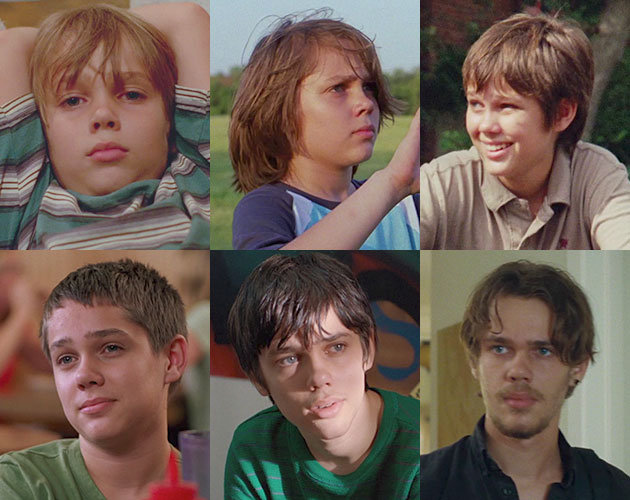
Boyhood is a movie of the growing years of Mason Evans Jr. (played by Ellar Coltrane) shot over a period of twelve years.
Boyhood is a movie of the growing years of Mason Evans Jr. (played by Ellar Coltrane) and was shot over a period of twelve years.

I know there have been a lot of people who liked my World Cup blogs but there are still some who feel like saying: “Jon, when’s your next movie review?” For those wondering about that, yes I have been watching movies over the summer and I have a few reviews to share. To start with, I’ll do Boyhood: a good choice for those who want something different.

The movie starts with six year-old Mason Evans Jr., a boy growing up in a small Texas town who’s more interested in nature and collecting arrowheads than playing football. He lives with his slightly older sister Samantha, single mother Olivia and her boyfriend. Things are not the best as Mason has to share a bedroom with his sister and that causes typical brother-sister issues. Then it changes one day after an argument with Olivia and her boyfriend which she claims she has no free time. She moves to Houston with the children. This causes concern for mason wondering if he’ll ever see his father again.

Life in Houston starts to work out fine for Mason and the family. Olivia is able to attend classes at the University of Houston while Mason and Samantha attend school. They’re able to meet up with their father Mason Sr. but it’s not so frequent. Even as Mason Sr. drops the kids off, friction between him and Olivia come back. In the meantime, Olivia meets up with Professor Bill Welbrock. He appears to be a good man with a head on his shoulders and even takes a liking to Mason, willing to introduce him to his own son Randy who’s a similar like. The two marry and his children Mindy and Randy move in together. The family appears close knit as the stepsiblings have fun together and Bill appears to be the ideal husband. However things turn for the worse as Bill develops a drinking problem he first tries to keep secret only to have it exposed as he becomes abusive to Olivia and the children, even forcing Mason Jr. to get his head shaved. Olivia immediately leaves the household taking Mason and Sam with her.

The three find a new life in a town close to Austin. Olivia becomes a psychology teacher and falls in love with one of her students Jim who’s a former Afghanistan War veteran whom she eventually marries. Mason Sr. has married and has become a father to a newborn. In the meantime, Samantha and Mason Jr begin social interaction of their own as they make friend and start dating. However Mason’s drinking and earrings have gotten on the nerve of a visibly drunken Jim. Not surprisingly Olivia divorces him.

In the meantime Mason has a girlfriend named Sheena, works part-time at a seafood restaurant and has developed a passion for photography. His work in taking pictures and developing in the darkroom inspires him to be an artistic photographer. However it doesn’t sit well with his teacher because he knows how competitive of a field photography is and how gimmicks are easier moneymakers than art. The teacher then makes Mason photographer for the football team.

Grade 12 is a life changing year for Mason Jr. Sam has moved onto college but she does allow Mason and Sheena to ‘visit.’ Sheena soon breaks up with Mason for a boy on the high school lacrosse team. Mason also wins second prize in a photography contest and receives scholarship money. His graduation is celebrated with family and others close in his life like his teacher and his boss at the restaurant. Going to college is the next chapter in Mason’s life. However it’s not without heartache as his mother finds it hard both her children have moved out and wonders of her own life. The film ends with Mason attending college, becoming friends with his roommate and being introduced to his roommate’s girlfriend’s best friend who shares a lot of common interests and common dreams with Mason.

Now this is something. Director Richard Linklater tells a story of Mason Jr. over the years and the people around him. He uses all the same actors, no replacements. This was very chancy because a lot can change over a period of twelve years. It’s possible Ellar could have gotten tired of acting and wanted nothing to do with it anymore within that time. It’s even possible one of the actors in one of the main roles could have died. Any one of them. But it worked. And it wasn’t just simply the technical bits. It was also a story about a boy whose life over the years catches our intrigue. We’re astonished to see Mason Jr. (or should I say Ellar?) grow over a twelve year span. We also see the lives of his mother, father and Sam pave their way too. All those who were part of the film and its ‘aging process’ contributed significantly. Also as it progresses over the time, Linklater doesn’t leave anything out as far as aging goes. He doesn’t get the adult actors to hide their facial aging. He doesn’t replace the child actors if any one of them go through the ‘awkward stage’ or get braces. He keeps it all as is. That’s another quality.

The thing is the film doesn’t really tell the typical story that has a beginning, middle and end. Rather it tries to paint a portrait of Mason Jr. growing up over the years and of the boy he was and would grow up to be. It’s not too thick on a plot but rather lets time unravel itself and tell the story as it goes along. Almost like childhood through Mason Jr’s eyes. It’s common with Richard Linklater’s movies that they’re not too heavy on the plot and give more of an atmosphere. Another thing this film can do is remind audience members of their own childhood growing up. It may tell a story of a boy who’s not into sports and more of a dreamer but I’m sure there are some parts of Mason’s childhood that will remind them of their own.

Another additional element that adds to the film are the surrounding scenes that add to the atmosphere. Linklater has done that in past films where he would show elements in the film that would actually add to it. We see it here too with Sam’s like of popular culture from Britney Spears to High School Musical to Lady Gaga. We see it in the computer technology as the cast go from Apple computers with big box screens to iPhones. We see it in Mason Jr. growing up in highly conservative Texas and the values the state tries to instill with the people and through the schools. We also see it in how it with Mason Sr. being a liberal Democrat in a state that has a lot of staunch conservatives. We also see it with scenes with other artistically-minded people in the film. It all adds to it.

This film also adds to a common theme of Richard Linklater’s movies. Linklater has never been one to dwell into the typical Hollywood fanfare. He’s always been one to do his movies his way. His movies have featured people pursue their passion and even dream out loud. He often focuses on the visionaries and the inspired ones and he presents them as the ones to be admired. I think that’s why he has such a following with Generation X. We can see that in Mason Jr. He falls in love with photography and wants it to be his life passion. The problem is those around him don’t think highly of his choice. The teachers question it and whether it’s a career choice that will allow for a decent living. His father wonders why he doesn’t pursue something that ‘wins chicks.’ His girlfriend drops him for a jock because it doesn’t make him look cool enough. And his friends razz him about it. But it’s his passion. I think that’s what Linklater is showing. About how passion is what matters. Especially for a boy like Mason.

Without a doubt, this is an accomplishment from Linklater. It was a unique idea from him that was creative but risky and it paid off very well. However this is also an accomplishment from actor Ellar Coltrane. It was not an easy job to play the same role over twelve years of filming. Nevertheless he did an excellent job in the role. It wasn’t so much a role filled with emotional range or drama but rather a role that required the actor to grow along with the role and have the personality of the dreamer Linklater intended to have as the central protagonist. Much of it was natural personality but a lot of it was maturity over age. And Ellar did it. Very excellent.

Patricia Arquette was also very good as the mother almost to the point it appeared she stole the movie. The movie was also about the mother over the years improving her life, raising her two children and falling into two marriages that appeared right at the time but would soon make a turn for the worse. Her struggles added to the story not just to add to Mason Jr’s story but to also mix it in as her own story too. Ethan Hawke was also good as the father who makes the annual visit. He too shows maturity over the years but his overall role was not as challenging as his past roles. Lorelei Linklater was also very good. She may have been cast as Sam simply because she’s Richard Linklater’s daughter–much the same way Ethan was cast because of working in his Before Sunrise series– but she wasn’t just simply there. She was given a role too that involved her to grow along with Ellar and also portray Sam as this sister who was liked pop culture, had her own individual style, had ambitions of her own and was a typical older sister in both the fun times and the bad times with Mason.

One thing to note as well. It has been noticed in the last few years the lack of buzz alternative or independent cinema has had over the years. There hasn’t as big of a phenomenon from Sundance or any other film festival promoting independent film in the last while. I don’t know if Boyhood would qualify as a phenomenon but it is one film that has gotten bigger notice over time and has grown with the buzz. It currently has made $22 million in the US and $37 million worldwide. It has also received a lot of critical admiration and a lot of praise for its uniqueness. Definitely a big boost for independent cinema this year.

Boyhood is one of those summer movies one who wants to get off the beaten path of your typical summer movie fanfare would want to see. It’s definitely worth it.

Movie Review: Before Midnight

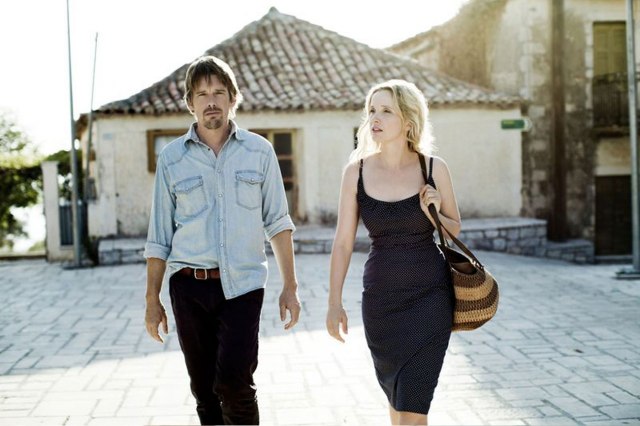
Greece becomes the setting for the latest film of  Jesse (Ethan Hawke) and Celine (Julie Delpy) in Before Midnight.
Greece becomes the setting for the latest film of
Jesse (Ethan Hawke) and Celine (Julie Delpy) in
Before Midnight.

It’s the summer which means now is the time for movies to win crowds over for the top of the box office. Before Midnight doesn’t seem like the type of film that the summer movie crowd would rush out to see. Those lucky enough to give it a chance will be delighted.

NOTE: I know that Before Midnight is the third film in a series that includes Before Sunrise and Before Sunset which I will refer to as the ‘Jesse & Celine’ series. For the sake of the review, I will review Before Midnight without comparing them to the two previous films.

The film starts as Jesse is seeing his son Hank off back home to Chicago after spending the summer with him and Celine in the Greek Peninsula of Peloponnese. On the ride back to the house of their friend Patrick, the two have a discussion while their twin daughters are sleeping. Jesse has been doing well as a writer but wants to spend more time with Hank and give him a healthy childhood. Meanwhile Celine has been considering a job with the government back in Paris.

The visit at Patrick’s place becomes a moment of tranquility as the people staying with them, especially the other couples, talk about love and life. The couples even share their own experiences and feelings about each other and their relationships as Jesse and Celine are the centerpiece of it all. Patrick even gives his insight about Jesse future as a novelist in this time of electronic media.

Then Jesse and Celine head to the hotel the guests bought for them so they could spend some time alone. The walk seems light and sweet as the two talk about how they’ve met and how they’ve changed since then. However it’s in the suite that the friction starts. We learn that Hank’s mother back in Chicago is a suicidal alcoholic and citizenship laws can’t bring him to live with the two. We also learn that this government job is an opportunity of a lifetime for Celine. Then the fears about their future start pouring out from both of them which causes Celine to storm out of the hotel room leaving their relationship in question. The movie ends on the right notes in tune with the reality of the situation and allows the audience to decide the end of this story for themselves.

Even without the whole ‘Jesse & Celine’ factor, the film has the ability to stand well alone. The best quality of the film is that it’s one of the most thorough scripts I’ve seen when it comes to being about a relationship. The film focuses on the highlights and the struggles of the relationship between Jesse and Celine but it also features a scene at the house of Patrick and the other couples at the villa. The scene shows the couples young and old and their relationships where they talk about all the factors going into their love and their relations. There’s even talk from those no longer married. That scene adds to the story of Before Midnight. It’s a common trait of Richard Linklater to add conversations of others in situations involving the main plot of his films.

The other quality of the film is not just the film about being about relationships but of how two people can make or break it either by who they are, what they do or even what point in their lives they’re at. A lot of it has to do with the development of the characters. Jesse is the dreamer writer who tries to balance his imagination with his reality. He has become a successful writer as he’s on the verge of writing another novel. He appears to be in a happy relationship to Celine and a good father to his twin girls. However he wants to spend more time with his son in Chicago because he doesn’t trust his son’s mother. In the meantime, Celine is on the verge of a major career opportunity. This request from Jesse couldn’t come at a worse time. Celine however is the opposite of Jesse as she is very business oriented and does let her surrounding factors get to her. At the beginning of the film, you think this is a problem that will eventually sort itself out over time but it doesn’t. In fact all factors come into play such as the couple’s individual personalities, their vocations, Jesse’s fame as a writer, their roles as parents, their past selves, their genders, their current middle-ages and even their concepts of what they will be many years from now.

The thoroughness of the subject of relationships is one of the best qualities of the story. Another quality of the story is how the status of the relationship changes with every trip they make and every location they’re both at. In fact it’s all within a single day for changes to happen for the two to go from a family during a drive from the airport to one of the couples at Patrick’s house to a happy couple walking the streets of the town to a relationship in trouble at the hotel suite. That’s another strong addition to Before Midnight having all this happening in one day.

You have to give kudos to Richard Linklater, Julie Delpy and Ethan Hawke. It’s this trio that made it work in their collaborative scriptwriting, Richard’s directing and Ethan’s and Julie’s acting. You can bet with this series practically being Richard’s baby he would deliver a third movie that adds to the story of Jesse & Celine and he does it very well. Ethan and Julie have to know their roles of Jesse and Celine if they want to deliver performances that show them aging and growing believably in order for this movie to make the story of the two progress and even add to the series. Mind you it’s not just Richard, Ethan and Julie that deliver in this movie. Walter Lassally was a charming scene-stealer as Patrick and the dinner guests also added to the film very well. Another standout was the cinematography of Christos Voudouris that captured the feel of Greece in the movie.

Before Midnight may or may not be the last film in the Jesse & Celine series. Nevertheless it is an excellent and intelligent movie as it is and adds to the series. People who loved Before Sunrise and Before Sunset will not be disappointed.Those from the summer movie crowd who don’t bother to see this film don’t know what they’re missing.