VIFF 2023 Review: It’s Only Life After All

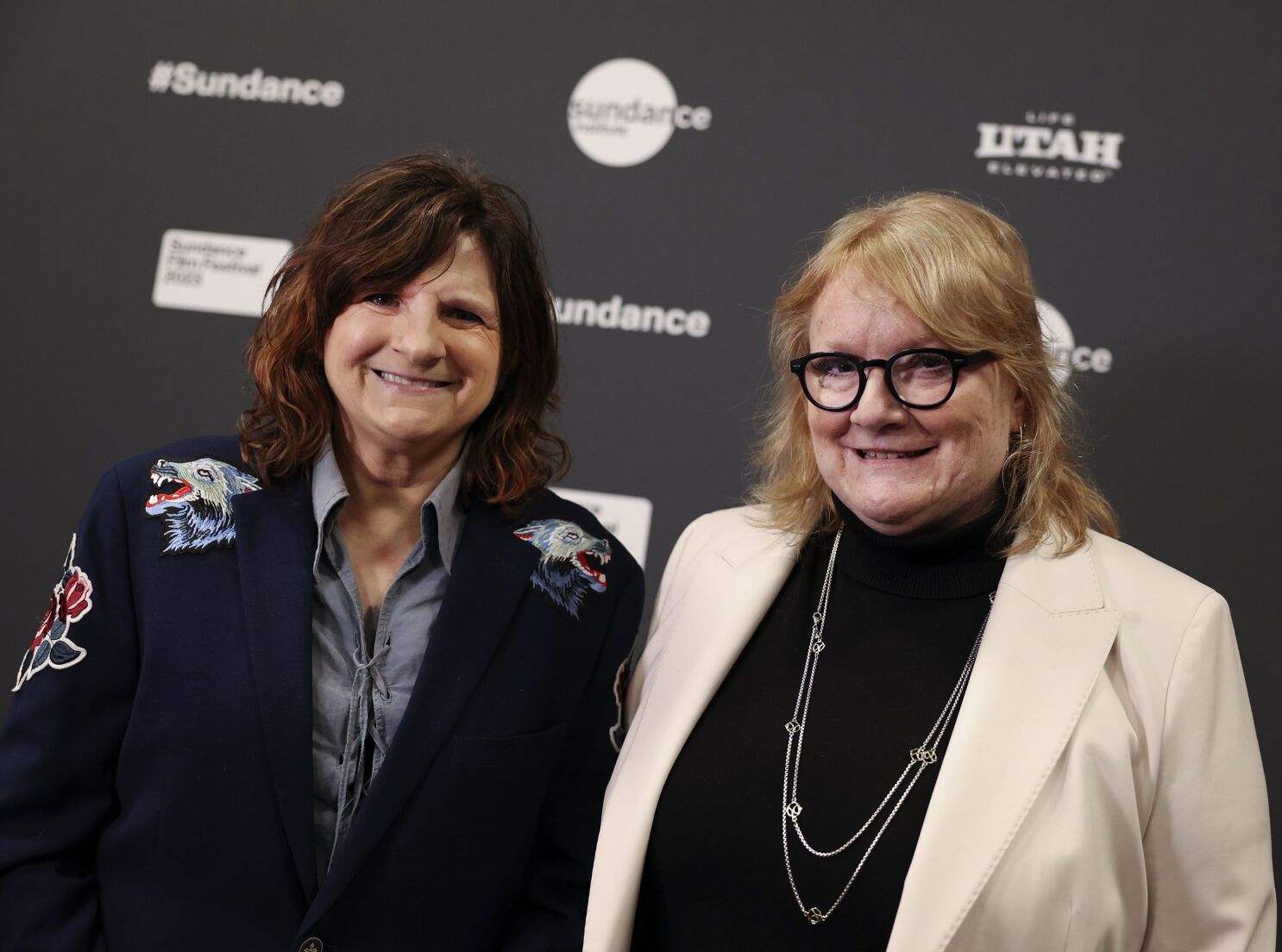
It’s Only Life After All is an intimate and personal look at the Indigo Girls and their long career of establishing themselves as musicians. Not just female musicians.

Before I saw the documentary It’s Only Life After All, I wasn’t really a fan of the music of the Indigo Girls. If you like music, this is a documentary that will keep you intrigued.

The film begins with Amy Ray and Emily Saliers, the two women making up the Indigo Girls, meeting with Alexandria Bombach and bringing out a lot of old audio tapes, video tapes, old magazine articles and various pictures. They wonder what this documentary will be like. First we learn that Amy and Emily first met in elementary school but it wasn’t until attending Shamrock High School in DeKalb County, Georgia that they both learned the other likes music. A friendship began and the musical companionship started soon after. At the same time, they discovered through their own ways, they’re lesbians. Both had differing initial reactions to it as well as initial reactions from family.

As both graduated in different years and went to colleges in separate states, they both eventually became homesick and dropped out. The music led them back together. The two went through various names at first but decided on The Indigo Girls in 1985. Over time they began to draw bigger crowds in their home state of Georgia and started cutting records. First a single, then an EP in 1986 and then a full-length album Strange Fire in 1987 recorded in a studio in the ‘college rock’ town of Athens, Georgia. Their album attracted the attention of music manager Russell Carter who first dismissed their music as too ‘immature’ to get a record deal. The album changed his mind about the two and Carter agreed to be their manager which he still is to this day.

Their success grew in the coming years but they did face some difficulties in terms of establishing themselves. Folk music had commonly been known as stoic and serious. The Indigo Girls were more light-hearted and cheerful on stage. Then there’s the fact that they’re two lesbians which was becoming more acceptable, but still seen as a taboo by most. The AIDS epidemic and how it increased the public’s hostility towards LGBT people in the late-1980’s didn’t help much either.

One thing is the two did have a source of luck on their side. In the late-80’s, there came this boom in folk music. Possibly as a backlack to the loud heavily-distorted guitars of the heavy metal phenomenon from years earlier. It was also a boost for female folk acts like 10,000 Maniacs, Suzanne Vega and Tracy Chapman. The folk phenomenon also led the two to be signed on to Epic Records in 1988. Their self-titled release with Epic included participation with REM’s Michael Stipe and Irish band Hothouse Flowers. After its release in 1989, it has since gone double-platinum and spawned their biggest hit “Closer To Fine.”

Their overnight success came with both perks and problems. The perks included appearances on MTV and VH-1, a Grammy win for Best Contemporary Folk Recording, praise from critics and a growing fan base. The problems included fame coming too fast, not being a feature in Rolling Stone or musical guests on Saturday Night Live, some negative reviews from male critics whose reviews sounded more like sexism than critiquing. Even the big question or concern about whether their fame will turn them into a ‘product’ or not was of concern.

As their sudden fame cooled off, they continued making music together. They also ventured into activism. Their causes include feminism and indigenous rights but their most notable activism has been LGBT rights. With them being two lesbians from Georgia and having established a big LGBT following, they have been active in being active in LGBT issues. From dealing with AIDS, whom they lost a lot of musical friends to, to military participation, marriage and adoption, The Indigo Girls have been very vocal on many LGBT issues. The two also made a cameo appearance in an Ellen episode in 1997. Even some LGBT fans have gone as far as crediting The Indigo Girls for saving their lives.

In the 21st Century, the two started to focus more on themselves as individuals. They wanted to start families. Both married another woman and have daughters of their own. Amy did solo recordings and started exploring her gender identity more. Emily encountered a struggle with alcoholism for years and needed time to recover. Despite it all, both came back to each other and got performing again. They also have their own record label. The film ends with a recent post-COVID concert.

This is a film that will capture one’s intrigue if they like biographies about music and musicians. This is a telling story about two friends who have had a career together going on almost 40 years. Like most musician’s careers, it has not been smooth and it has had its fair share of hurdles. The Indigo Girls being two women who play folk will undoubtedly face obstacles more than just facing a general public that may accept them or not. They face the sexism that’s common to women in music. They face the homophobia of them being two lesbians. They face the music business which frequently pressure musical acts, established and rising, to make a product of themselves. They face unwelcomed intrigue of them being two lesbians who never dated each other. They even have to face their own personal demons and their own personal obstacles. It’s not just about music that they face obstacles and frustrations with.

Even though it is about a folk duo who rose to fame and are still going strong after all these years, it’s about the two as people. It shows through images and their words about what it was like growing up as lesbian teens in the late-70’s and early-80’s. It shows how the two still worked to keep themselves together as a duo and still keep themselves grounded and avoid the common pitfalls of the music business. It shows Emily’s struggle with alcoholism, It shows Amy’s path to starting her own family. It shows personal sides to them known to few including Amy’s spiritual side. It shows the close personal relations they have with family, fellow musicians and close friends. It shows the duo’s move towards activism towards various causes. This film is very in depth about showcasing the two.

This is an excellent work from director Alexandria Bombach. Bombach’s documentaries have commonly been about feminist topics. Her most renowned works involve stories of women in Islamic countries. Here, her subject matter is less intense. Nevertheless the documentary she delivers presents The Indigo Girls as musicians, as temporary celebrities, as activists, as crusaders, as mothers and as people. It’s a good documentary featuring footage on media, footage never seen before and filming during their more private moments. It does an excellent job of being three-dimensional and going beyond.

This documentary has had awards acclaim at film festivals. Nominations for Best Documentary include Seattle, Cleveland, Atlanta and the South By SouthWest (SXSW) Film Festivals. The Sidewalk Film Festival awarded it their Audience Award for Best Documentary and The Film Club made it their winner of their Lost Weekend Award for documentaries.

It’s Only Life After All is a telling look at the Indigo Girls through all the ups and downs and struggles they had to go through from their formation to now. It succeeds in getting you to respect them and what they do.

VIFF 2023 Shorts Segment Review: Forum 2

With me having to spend the entirety of VIFF in Vancouver this year, I have better chances of completing my three annual VIFF goals. I was able to complete the second of my goals: see a segment of short films. I did so at a “Film Forum” titled Forum 2. Not the most original of titles, but the stories made up for it. On top of it, they’re all from Canadian film makers. Definitely worth checking out:

-Sisters (Ontario – dir. Marisa Hoicka): The film begins with a 1960’s look and it appears to be an instruction film on how to be a “proper woman.” Instead the film is the narrator talking about how her “sister” taught her how to be a powerful woman with what she said and how she lived.

This is a unique short film. It comes in the guise of your stereotypical instructional film on how to be prim and proper, but instead is a story about empowerment. Throughout it all, it never loses that 60’s feel it intends to have. Very good film that does a lot in its brief time.

-Four Mile Creek (Quebec – Dir. Ryan McKenna):****The story begins with the retelling of the Cormier family as they go through Ontario until their eventual settlement to La Salle, Manitoba. Their journey is in the mid-1880’s and during a time of rampant smallpox. While in Ontario, the Cormier children were hit and their eight year-old daughter Aurore died. She was buried in the plains near their house and outside Kenora, Ontario by her father because a priest would not perform the blessing. A century later, a group of University of Winnipeg archivists, including family and one claiming to be haunted by Moise Cormier’s ghost, go on a mission to research and uncover Aurore Cormier’s grave.

This is a docudrama that combines recalling of letters from the Cormier’s to re-enacting of the moments of the family and their smallpox ordeal to those involved in the uncovering telling their story. It’s two films in one and tells a revealing historical story known to few. Impressive and creative.

-Cloud Striker (B.C. – dir. A.W. Hopkins): At an Indian Residential School in 1931, four male students are being punished by the nun. Their crime: speaking in their Indigenous language. One student, Elijah Cloud Striker, is defiant and even uses his Indigenous name in front of the nun. She slaps him and gives him the hardest of the punishment. A man comes to visit. He’s Chief Cloud Striker and he’s looking for his son. Both the nun and the priest try to persuade him to stop but the Chief punches the priest in the face after he hurls the chief a racist slur. The Chief and Elijah make a run for it. Later while resting in a remote area, they talk and wonder why their people aren’t angrier about this

The treatment of Indigenous peoples through the residential school system has scarred our nation like nothing else. Especially since Canada has been dealing with the ugly aftermath this past half-century. It’s unclear if this is based on a true story or if this is a story of an incident the filmmaker wishes had happened. The film is good at retelling ugly things that happened at residential schools and how it hurt peoples. The ending talk between the Chief and Elijah gives an impression of how a lot of Indigenous people feel about this system. That mention from Elijah of two boys being buried is another ugly reminder. Even though the residential school system completely ended in 1996, I’m sure there’s a lot of harbored anger with the system, the Roman Catholic Church, and the Canadian government. This story tells a lot.

-Conviction (Alberta – dir. Bruce Thomas Miller): A former convict named Joseph, an Indigenous man, is released from prison after years of incarceration. He is given a job as a custodian at a thrift store. He is given residence with a man maned Quincy who himself was a former convict and is to look out for him. At his job, he has to deal with co-workers who find him suspicious, a second-in-command who wants to be at odds with him, a customer who hurls an insult at him and traumatic memories of his crimes and his incidents in prison. At the end, Quincy reminds Joseph of what he himself had been through and he’s someone for Joseph to turn to.

We go from a film about the ugliness of Residential Schools to a film about the aftermath. Over time, it became evident the residential schooling system was a terrible idea as it led to substance abuse, homelessness, substance addictions, suicides and crime among the Indigenous people’s. Joseph is like a lot of Indigenous men who want to leave their ugly past behind and want to start a new life, but doesn’t know if he can. The director/writer wrote this script as he himself was going through his own healing of PTSD. It speaks volumes of the struggle they have to go through. Sometimes, Joseph doesn’t know if his freedom is a bigger hell than prison and may feel it’s better to return. At the same time, it’s a reminder there is support along the way from those who also went through what they went through. Excellent story that’s well-acted and gets one thinking.

-Black Box Investigations (B.C. – dir. Paige Smith): A woman buys a disposable camera. She takes all sorts of pictures of her, of her surroundings and of various angles. She buys another with a flash. Again all sorts of weird photos, including inside her mouth. The photos are for all to see.

This is the kind of short film I’d expect to see in a shorts show of MODES. Although I didn’t exactly like this short film, I give the director credit for wanting to play around and want to do something creative and fun.

-Autre Chose (Quebec – dir, Etienne Lacelle): A biker is repairing his motorbike. He had a bad crash the day before. He has a hard time repairing his bike but succeeds. He wants to go for one last ride in the wild. On thing. Just before he leaves, he comes across a strand of long blonde hair on him. It’s a strand of his late girlfriend who died in the crash. He puts it in a small bag and heads off on his bike with a rifle. He drives through the terrain but gets his bike stuck. He tries to camp out and throws his girlfriend’s hair in a bonfire. While out walking the wilderness, he contemplates shooting himself. He doesn’t and moves on. As he comes across a lake, he cleanses himself in it. But as he drives off, he comes across her hair again.

This is a unique short film with no dialogue and lets the images and the sounds tell the story. You can get a sense of what is happening with the story. The images of the story even gets one asking questions. Like did he kill her during the accident? The thought of suicide and the bathing in the lake just after could mean it’s showcasing a chance at redemption. The ending can also send a message that even if redemption is possible, he still has to deal with the unresolved aftermath. The film really gets you thinking and will leave you with questions of your own..

-The Great Kind Mystery (Newfoundland =dir. Ella Morton): Images of Daniel’s Harbour, Newfoundland and its surrounding area are shown as young artist Amy Hull, who is of Mi’kmaq and Inuk descent, tells her story. The stories she tells are of the area of Daniel’s Harbour and its history, her denial of her Indian Status while she was attending university, and of the pride she feels of her ancestry.

This is the third Indigenous-themed short that was part of the segment. The first dealt with oppression of the past, the second dealt with the aftermath and this short deals with the current systemic racism in Canada’s Indian Act. This film is a reminder that Canada still has a long way to go to do things right and drop its racist systematic treatment of Indigenous peoples, especially in these post-Residential School times. This documentary is also a film that inspires hope. Amy is young and resilient and refuses to let racist politics destroy her pride or her identity and pursue her artistic dreams. She embraces her identity despite what has happened to her and won’t bow down. This film, and Amy’s story, is a ray of hope for the future.

-Element (Quebec/Ivory Coast – dir. Will Niava): It’s a hot summer day in Abidjan, the capital city of the Ivory Coast. A group of four young thugs have a hard time trying to make money. Their current business is not doing so well so they decide to get involved in illegal things. As the money gets better, things make a turn for the worse such as in their unity, the leader’s relationship with his girlfriend and even his soul. He even comes across a vision of himself of him dead and all of his loved ones at his funeral. It’s there he emerges from the ocean water and starts a new life, but not without something tragic at the end.

This is a unique story as it tells the story of pursuing life in the fast lane with the mix of spirituality. What the leader experiences is consequences both in the earthly world and the spiritual world. The inclusion of the spiritual world adds to the film and shows a form of spirituality rarely seen by others. It’s rare to see something like that in a film about young thugs trying to live fast. Overall, a great unique drama.

That’s what it was. Eight shorts from eight Canadian directors. Two were from BC, three were from Quebec. Three were from female directors and three were Indigenous themed. Most were dramas, some were experimental and some were even documentaries or docudramas. All of them are unique in the stories they showed and what messages they want to send. Also all of them showcase directors with a promising future.

Those are my thoughts on the eight short films of Forum 2. Some I liked, some I found intriguing, a few I didn’t. All of them did showcase the director’s works and abilities very well.

VIFF 2023 Intro And Review: The Promised Land (Bastarden)

Mads Mikkelsen plays Gustav Kahlen, a settler in 18th Century Denmark in the film The Promised Land.

VIFF INTRO: Normally I do a separate blog for VIFF when it opens. Since the Festival ended on Sunday the 8th, I’ll do a brief summary here. The Vancouver International Film Festival returned. This year, there were no longer films to stream as VIFFaccess is no longer. It became a case cinemas are working to bring crowds back to the theatres. Same with VIFF as its films were shown at seven different facilities. There was a reduced number of films shown at 140. Now that the pandemic is almost over, the arts communities have to downsize in order to rebuild itself. Nevertheless a lot of great films to see coming from 73 nations. A wide selection of Canadian films, Indigenous films, LBGT-themed films, documentaries and an excellent number of films directed by women are yours to watch. And even after the Festival with VIFF repeats just after! The Festival may be over but the reviews are still worth posting as the films could return to the VIFF theatre, get wider release or even be put on a streaming service.

One of my goals of the Vancouver International Film Festival is to see at least one film that’s a nation’s official entry in the Best International Feature Film category for this year’s Oscar race. I did it on my very first VIFF film: Denmark’s The Promised Land. This film already has a lot of buzz, and rightly so.

It’s the middle of the 18th Century in Jutland; territory ruled by Denmark. A peasant man named Ludvig Kahlen of unknown fatherhood sets out to cultivate the untouched heath land in hopes to win honor from the king. Even though the king’s men accept and give him servants, he soon makes an enemy with Frederik Schinkel who owns the land and wants to believe his say supersedes that of the king’s. He also reminds Kahlen that those who attempted to cultivate the land before him have failed. Nevertheless Kahlen is stubborn and is determined to make it work with the minister Anton Eklund and a servant couple. He also meets a dark-skinned Romani orphan girl named Anmai Mus who tries to connect with him, but he rejects her at first with the common racist attitude.

Over time as Kahlen gets better at his work, Schinkel gets more envious and more control-hungry. He even takes the servant husband, has him whipped in his private chamber and executed with boiling water poured on him in a dungeon. All are shocked but Schinkel is remorseless. A distraught Kahlen soon develops an intimacy with the servant’s widow. He even welcomes Anmai Mus in his life and soon it becomes a family-like situation between the three. As for the heath, Kahlen and the two work tirelessly against a stack of odds to make the land work. If it’s not the land that’s hard and lacks fertility, it’s the unpredictable weather, workers that desert and the murder of Eklund by Schinkel’s men.

In the second year, Kahlen gets a new set of settlers from Germany. They are hesitant to help Kahlen out as they view Anmai Mus as a wicked child because of her dark skin. Kahlen is insistent since he has developed a fatherly love for her. Meanwhile problems threaten Kahlen’s goal and his unity with Ann Barbara and Anmai Mus. The jealous Schinkel starts coming onto Ann Barbara and creating a love triangle between her and his cousin wife. In addition, the workers refuse to assist as long as Anmai Mus is there. They consider her bad luck. Kahlen makes a resolution to send her to a boarding school miles away. It works in getting the settlers to work, but Ann Barbara is disgusted how he did this in the name of his pride.

The cultivation of the heath becomes successful, but the envy of Schinkel gets to the point he feels he has to destroy what Kahlen has created. Kahlen’s land and livestock are set ablaze. Kahlen responds by killing some of Schinkel’s men. That leads him to being captured by Schinkel and sentenced to death. The method being whipping and boiled water: the fame fatal punishment Ann Barbara’s husband receives. Kahlen is whipped mercilessly and Schinkel would delight in seeing him burned to death but as Kahlen is put in the dungeon, Schinkel is called to his chamber. Ann Barbara awaits him and promises him an unforgettable night. After a cup of tea, which Ann Barbara poisoned, Schinkel convulses and Ann Barbara has him at his most vulnerable. Ann Barbara does not resist arrest at all for his murder.

Schinkel’s murder is successful in stopping Kahlen’s execution, but Ann Barbara is imprisoned for life hundreds of miles away. Before Kahlen returns to his farm, he takes Anmai Mus away from the boarding school and promises never to let her go. Upon returning to the fame, Kahlen leads and demands the settlers treat Anmai Mus with respect. Over the years, the farm is prosperous and Kahlen earns the title of baron from the king. Also Anmai Mus grows up to be a successful woman who wins the eyes of a young man in the area. It is after her marriage to him and her goodbye to Kahlen that Kahlen knows what he must do. The ending is slow, but it comes with a surprise result.

This is one of those films that is based on a historical person that gets you questioning if it’s real or not. This story of Ludvig Kahlen as he and his wife try to grow a farm and overcome the ruthlessness of landowner Schinkel does appear farfetched in how it plays out. Actually this is based on a novel from Danish writer Ida Jessen. Nevertheless this film does tell a lot about the case of classism and racism. It was as problematic back then as it is today. It will shock many how the settlers viewed the dark-skinned daughter as bad luck, but that’s how most people thought back then. Also seeing how someone who owns the land thinks he has bigger empowerment on situations than the king, we can see examples of people like that in the world.

I’ve seen films based on a novel based on a historic person before. It seems to be a common thing now. Although it is still common to do historical dramas, it’s become more common lately to adapt novels of stories loosely based on historical people. Gets you wondering about the “Based on a true story” factor. In this film, we see a case where a historical figure overcomes racism and adopts a dark-skinned girl. He overcomes classism by making the Heath fertile and marries the widow of his servant. He overcomes geographic odds by cultivating land in Jutland. He also overcomes his own class odds by him, a bastard peasant son who’s normally destined to stay in the peasant class, achieving Baronhood. It’s uncertain how much of this is true or loose fiction, but it is a story to get one thinking.

You can either welcome a loose story of historical figures like this or you can pan it for its inaccuracies or farfetched drama. However you view it, this film plays this story out in a unique style. One can say it plays out in the style of an epic film with all this recreation. Some would even view the film as an unlikely romance. Some even say this story plays out with the common dramatic elements of an American western. It takes a story of a historical person few have heard of and makes people get intrigued by the drama and even anticipate what will happen next. It even adds some comedy with the behavior of people, including Schinkel. The stupidities of Schinkel are behaviors that can easily remind people of bad behavior of some rich people of today. In addition, this story does not end like your typical drama. There are atypical twists at the ending, surprising people who didn’t expect the film to end that way. Maybe sending the message this film isn’t what they thought it would be about.

Top credits go to director Nikolai Arcel. Arcel has already amassed a good reputation with having written for fourteen previous films and directing five. One film he wrote and directed, A Royal Affair, was nominated for an Academy Award. In this film that he directed and co-wrote with Anders Thomas Jensen and Ida Jessen, he goes back into the genre of epic films and delivers a drama that’s grand in spectacle and thrills. Also worthy of top honors is lead actor Mads Mikkelsen. Here he temporarily leaves behind the MCU and Indiana Jones that has catapulted his stardom and returns to Denmark for a character he helps create and enhance with his performance. Also worth admiring is Simon Bennebjerg who creates a villain in Schinkel that succeeds in making you hate him for being evil and laugh at him for being stupid. Additional good performances include Amanda Collin for adding the drama as Ann Barbara and Melina Hagberg for adding in the charm as Anmai Mus. The set designers did an excellent job in recreating the barren land of the 18th Century and the score by Dan Romer adds to the dramatic feel of the film.

Danish film has really had it strong at the Academy Awards in the 21st Century, especially these last ten years. In the Best International Feature Film category, Denmark has achieved two of its four wins, six additional nominations and three years making it into the annual shortlists this Century. Arcel himself had one of his films, A Royal Affair, nominated in that category back in 2012. The Promised Land is the second of his films submitted as Denmark’s official film in this category. This film was even nominated for the Golden Lion at this year’s Venice Film Festival. At that same festival, Arcel was given Honorable Mention for the SIGNIS Award.

Whether it is true or mostly made up, The Promised Land is an intriguing story about classism and racism and the lust. Even a telling story about what it’s like to live under a monarchy. It’s also an unlikely love story.

VIFF 2023 Review: The Invention Of The Other (A invenção do Outro)

The Invention Of The Other is an intriguing look at a mission to reunite lost members of a Brazilian indigenous peoples.

One thing about documentaries is that they give an intriguing look at people from various parts of the world. The Invention Of The Other is an intriguing look at Indigenous Brazilians and how they try to continue to live their way of life at a time of increased modernization.

It’s 2019. The Brazilian government has organized a mission. The mission is conducted by FUNAI: a Brazilian state protection agency that works with Indigenous rights. The mission, led by Bruno Pereira, is the most complicated mission in decades. The mission is to go into the heart of the Amazon rainforest, make contact with the Indigenous peoples, provide medical services, and locate and reconnect separated family members from the Korubo tribe, an isolated group. The Indigenous leader who is to be reconnected with his people is named Xuxu. This mission will take them along the borders of Brazil, Peru and Colombia.

This will not be an easy task. There was one previous mission where it was attempted and many who participated were killed either by loggers, miners, fisherman or drug traffickers. Reuniting with his people will not be easy for Xuxu as he has become quite modernized in many ways. He is still able to do things in traditional Indigenous manner like hunt food, but there’s concern his many years in developed society could lead to strain. He talks of eating Brazilian food of how it’s good and it takes some getting used to. He often speaks with Bruno as he’s the one Brazilian who best knows how to speak Korubo. During the trip, Xuxu sings his native songs on a daily basis.

The trip takes them along the far reaches of the rainforest along the Amazon River. Over time, it becomes obvious the Indigenous people never lost their original hunting skills. The then have to go into the jungle in order to meet up with their lost people. In the jungle, they face dangerous obstacles like trees and wild animals. Finally Xuxu and the other men reunite. It is a warm unite. His fellow tribesmen welcome him well with a dance and a ritual. Many thought he was dead. Over time we learn that Xuxu’s singing was a way to keep some connection with his people. Near the end, Xuxu tells his people of the medicines coming and prepares them for it. The film ends as a boat with cases of medicine arrives. We also learn at the end Bruno Pereira was murdered along with British journaist Dom Phillips during a 2022 expedition.

In recent decades, talk of indigenous rights has been a hot topic not just in Canada but in many nations in the Americas. The last few decades have seen a lot of achievements in fighting injustices and dismantling many oppressive systems. The national governments appear more cooperative than ever to help them along the way, but they definitely fall short. It’s either a case they don’t make it enough of a priority that they should, they simply don’t know how to do it right or they’re just not even trying to do it right.

As we watch the mission, it becomes less of a story of people trying to make their way into dangerous territory and more of a study of peoples. We learn of the Indigenous peoples and of how they live, how they hunt, how they develop a community and a family. These are people whom we’ve often dismissed as too primitive but as you look closer, they have a set of values. You see it in their families and of how Xuxu is welcomed back into the community as a brother. They have family relations and community relations that sometimes make you wonder how on earth did we as people isolate ourselves from others? How is it we can’t treat our own family and value family members the way we do? They may not have lost their primitive ways but they’ve also haven’t lost their ability to relate to other people or keep a family bonding we never bother to give.

The thing about this film is that it does a very good job of showing the peoples, the values they live by, how they live their lives and how they make peace. The problem with this film is that it appears too drawn out. There were a lot of scenes where it appeared it just took longer than it should in some moments. Even the whole running time of almost 2 1/2 hours will make some people wonder if it was really necessary to have the film that long. I’m sure the filmmaker would want to capture the essence of many of the moments, but you wonder if all that time on that scene was really necessary?

This is a good documentary form Bruno Jorge. The Indigenous people are a common subject in Jorge’s documentary. In this documentary, he takes us on a rare mission where we don’t know what will happen next but we discover the story along the way. He lets those in the mission and the cameramen who follow the various people around do the storytelling. This documentary tells the story of the mission and of the people. They tell of ways that refused to be lost to modernism and of a set of values owned by a people that should make us envious. The problem of the drawn-out scenes don’t take away from the quality of the documentary but they do drag various scenes out. It’s nice to showcase their rituals and their habits and their reunions, but the dragged-out scenes make it feel like it’s overdone. Despite this, this documentary has won an a Jury award for Best International Documentary at the Docville Film Festival in Leuven, Belgium.

The Invention Of The Other is a unique look at a peoples and the difficult mission created to reunite them with others and to bring medicines to them. The problem is it’s too long and feels drawn out. Worth seeing, but it shouldn’t be this long.

VIFF 2023 Review: Lynx Man (Ilveskuiskaaja)

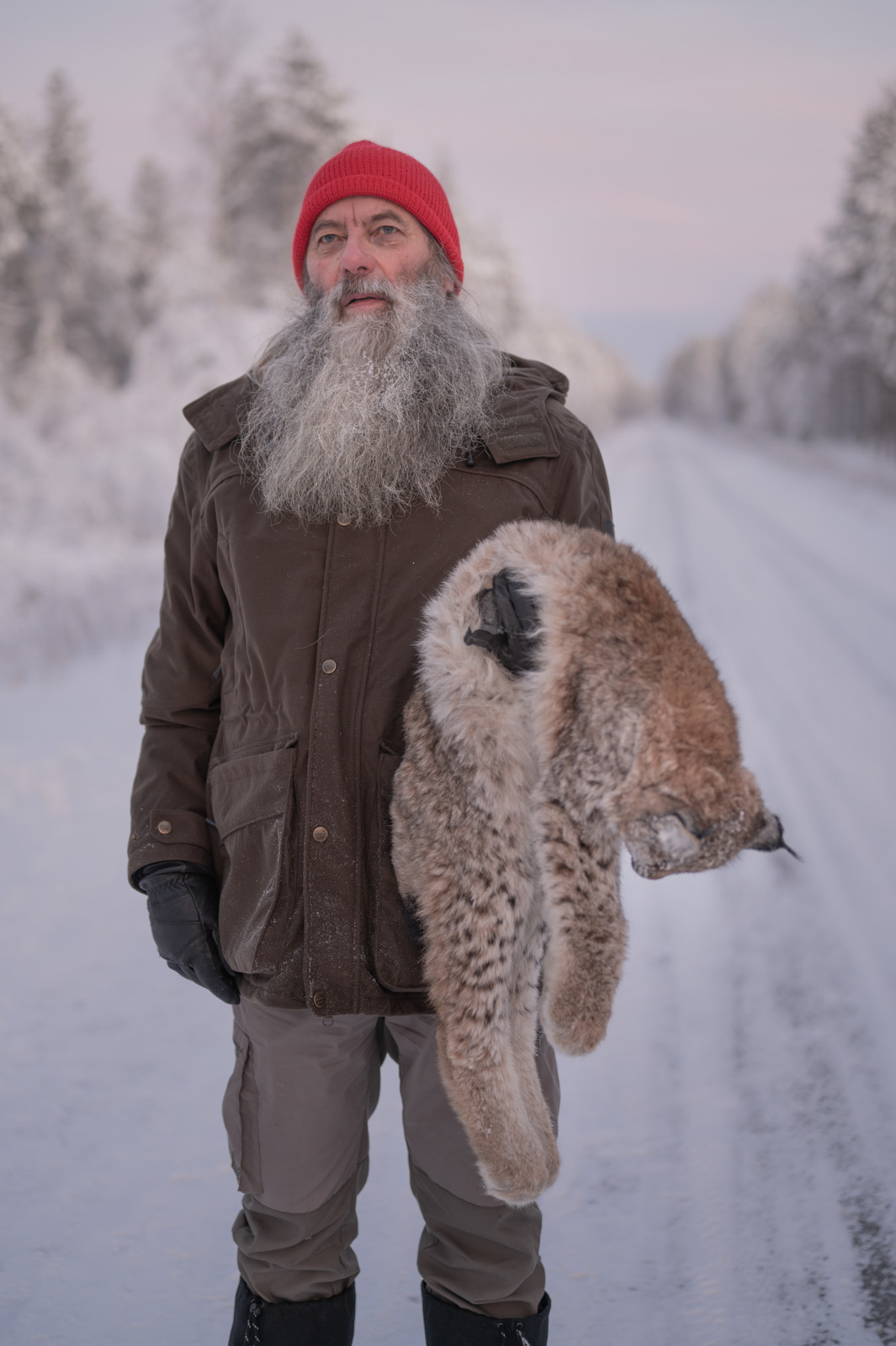
Finnish hermit Hannu and his fascination with the endangered Eurasian lynx is the subject of the documentary Lynx Man.

The documentary Lynx Man showcases a man who you’d first think to be an eccentric. Over time, you’ll see his work is less of a hobby and more of a mission.

The film begins with an old Finnish man finding a dead Eurasian lynx near the street. He picks it up and takes it with him. Soon we learn this man’s name is Hannu. This Eurasian lynx is not just any animal he came across. This is an animal he has studied. But how could he study them? He lives in a house in the forest completely away from all people?

Over time, we learn that Hannu has set up video cameras in the wild in various set-ups. He has one by a mirror near a pond. He has one by a tree where he has a hanging rooster. He has many other cameras set up in the wilds surrounding his little hut. Over time, we learn the videos he takes of these lynxes are observances of their behavior. They are a study in how they behave, how they hunt, how they lead their children. One could say that Hannu knows how to study the lynxes well.

There’s more than meets the eye. Hannu’s filming does more than just document the lynx’s behaviors. Hannu can also differentiate between the lynxes. He can recognize and identify each one. He knows the males from the females and he gives names to the ones he distinguishes. He even knows their behaviors. He talks of “Joseph” and about how he knows his way and how he lures females to his area. He talks of another he names “Grumpy Girl.” He even talks of the other animals in the area like the deer, the rabbits and the birds that could end up being the lynx’s prey.

We also learn about Hannu. He has become a nature man ever since he asked his doctor about going outdoors just once for the sake of his mental health. His love for the outdoors never stops. Even with his sauna habits and playing music to himself, he occasionally goes out and hikes and skis. Sometimes he wears a lynx mask on and does some bizarre dancing like a ritual to nature. The filming of the lynxes is almost like his connection to nature. It’s almost as if he has made friends with these lynxes that he’s never come face to face with. Sometimes we sense the lynxes know about him.

Soon we learn about a skin disease on one of the lynxes. He calls one of the veterinarians about the skin disease found on their tail and learns it’s a contagious disease. Soon he finds the lynx dead. Hannu has pictures of the deceased lynxes that he has known. It breaks his heart, but he has an environmental battle to deal with the Finnish government.

It’s easy to think of Hannu as an eccentric person. This man who lives in a remote area of northern Finland and has a seemingly-bizarre fascination with the Eurasian Lynx will get you thinking this way at first. Over time, we see this fascination less bizarre and even gain an appreciation for it. It’s interesting seeing the various camera arrangements Hannu does and of the various videos Hannu achieves from what he does. Even though Hannu never comes face to face with them, he develops a friendship and a closeness with them. As we watch this film, we feel it is a good thing that he does so. Not mentioned in the film is that Hannu is a divorced man who withdrew from the work force after a work accident did a lot of physical damage to him. When you know that, it seems like nature is his one connection to the outside world. He never comes close to the lynxes but the videotapes and his studying of them and giving them names gives him a connection of some sort.

The story presents itself as Hannu and his lifestyle. We see him relaxing in t he sauna, we see him eating, we see him in the various ways he sets up his videotaping of the lynxes, we see his finished results and learn of the names he has for them. Near the end, we see why he does the filming. The northern area of Finland has been threatened with expanded urbanization. We see how a highway threatens the habitats of the lynxes. Modernization and urbanization threatens the ways of a lot of species all over the world. The Eurasian lynxes have proved in numbers since their threats of extinction were brought to light but they still face new threats as time passes.

The best part of the documentary is that it takes us into Hannu’s world. As he becomes fascinated with the lynxes and their behaviors, we share in that fascination. When he sets up the cameras in their unique poses and their unique concoctions, we’re tempted to see what the end result will be. When we see the footage played, we also get curious on how the lynxes react, Do they play along with Hannu’s concoctions? Do they wreck one of the cameras? Do any of the lynxes become prey or prey on other animals? Anything can happen in the wild. The film is slow, but the slowness helps your intrigue in these lynxes grow as well.

This is a great film from documentarian Juha Suonpaa. Suonpaa lets Hannu tell and show his own story. Suonpaa shows how Hannu studies the lynxes and befriends the lynxes. In many ways, he shoes how Hannu has more knowledge about these endangered animals than the best zoologists. Suonpaa also shows Hannu’s habits like playing music, exercising and spending time in the sauna. Sometimes it appears his sauna time is to get out his personal frustrations. Suonpaa does a great job in making an intriguing documentary about a person one would either not be intrigued with or would want to judge as an eccentric.

Lynx Man doesn’t just show you a man, his studies of a certain animal and his mission to do it. The film also succeeds in making the viewer appreciate his work and even get a feel for his passion. That’s what makes this documentary unique.