VIFF 2014 Review: Reel Youth Film Festival

Movie (640x306)

You may remember at last year’s VIFF, I saw the Reel Youth Film Festival. The Reel Youth Fest was back again at this year’s VIFF. Again it was entertaining and creative.

Last year the main focus was to get the works of a lot of young filmmakers on screen. It didn’t matter if the quality was amateurish or professional. Its focus was to get the filmmaking images of the youth–whether it was making a point or just having fun– and get them on the big screen. This year did feature a lot of films done by the young. However it also featured a lot of productions by professional companies with a message to give to the young.

One of the top themes of the short films was bullying. This was especially the case as the United Way showcased the top three anti-bullying films by students. It was also focused on in a short film by a young Scottish director. Environmentalism was also a top theme of focus. With the controversial subject of shipping LNG’s, that was reflected in a BC film of three girls who have what starts as an innocent water balloon fight. There was the theme of youth representation which was focused on in a film done by five Hamilton teens. There was also the theme of digital media overkill that was shown in one young man’s film. There was also the theme of pressures young people face today–both socially and academically–as seen through the eyes of a young teen girl. Even teen love triangles were also focused. The theme of sexuality was included in a few films too including one on the topic of transgenderism from Portugal of a girl who always felt she was a boy.

The standout theme amongst the short films was to do about the promise and hope of a better tomorrow. That was reflected in one short film from Mexico about a boy who has to vacate his home to a new home. Another film showing the daily life of a Mexican-American girl’s mother while the  daughter narrates in the background shows hope for her family. It was also reflected in an Iranian film of a young boy who sees hope in a piece of trash. It was even focused creatively in one film of a Bengali boy doing pretend filming. There was even one film from ex-street youth from Sierra Leone who showed what happens when they get $2000 handed to them immediately. The outcome isn’t what they expected but they all learned from it. I felt the message of hope for the future was best reflected in a film about a Peruvian youth orchestra where the orchestra is their escape from the poverty and harsh lives.

Sometimes the films weren’t always thematic. Sometimes they were reflections of people. There were two films which were of two different elderly people living in Greater Vancouver. One was the first black quarterback in professional football. Another was of a woman who just turned 91. Both were nice stories to hear. There was even a film about children in a small town in the Northwest Territories. It was just them playing in the background as the stories they tell of themselves and their family are told. It was a simple film that’s a nice eye opener.

Then there were films that try to get creative. This is where the young directors started to have fun. One was a story of a hitman’s murder attempt with poisonous muffins gone wrong. Another of a toy car getting lost and going on an adventurous trip. Another an animated adventure of a polar bear. Even an animated story of a fish dinner gone awry. No major point to it. Just a chance to have some fun and even possibly make a future out of it.

The films either came from all over the world or were shot in many places around the world. It made for an eclectic look at the lives of young people from a global perspective. Needs and concerns differ from one place to the next but they all share that common desire for hope for the future. There were at least eight films from Canadian filmmakers. There were six of which that were done locally. There was even one that was done by New Westminster youth and shot in areas I frequently visit. That was the film where it appears they’re giving adults a glove. Then they show they’re spreading the love. It left me wondering when it was filmed and how I wasn’t there at the time. I’m sure if they gave me the glove at first, I too would think: “What on earth is this?”

Just like last year, they gave all the attendees a ballot to fill out of their Top 3 films and favorite local. It’s hard to play favorites but here’s what I voted for:

  1. Orchestra For A Dream – I rated it first because it had the best message of hope by showing a way out for disadvantaged youth.
  2. Sin Madre – The film of the young girls’ mother and the daughter’s admiration for her really made me like this a lot.
  3. What If There Was A Place? – Five Hamilton youth make their message heard that they demand to be taken seriously. Excellent two-minute film.
  • Best Local: And That’s Remarkable – A creative film that sends the message that you can either let bullying comments hurt you or you can defy them.

And there you go. That was the Reel Youth Film festival for this year. If you want to learn more about the Reel Youth Fest coming to your town or if you want to book a showing of your own, just go to the Reel Youth website.

← Back

Thank you for your response. ✨

It’s VIFF Time Again

CinemaYes, it’s that time of year again. The Vancouver International Film Festival will be back up and running. It will open Thursday September 25th and run until Friday October 10th.

This year’s festival looks to be optimistic. As you may remember, last year’s festival could be considered a test pilot for the new way of doing the VIFF. They had no choice. The Granville 7–our main venue for years–closed in 2012 and a whole new system had to be created. It took finding new venues like the Vancouver Playhouse, the SFU Arts Centre, three cinemas of the International Village and the Rio Theatre and relocate their gala shows from the Vogue Theatre to the Centre for the Performing Arts. The end result was a success as it had one of the best per-screening averages. Sure there was a slight decrease in the number of films shown and the number of screenings but it payed off and kept the VIFF in a very healthy state.

There are not too many changes as far as screenings of films. One cool thing is that there will again be 11:30 showings at the Rio Theatre during certain nights. The festival promises to show 365 films from 70 countries during its duration. Some of the hot ticket films include:

  • Mommy– The latest film from 25 year-old Quebec directing phenom Xavier Dolan
  • Wild- A film starring Reese Witherspoon from Dallas Buyers Club director Jean-Marc Vallee
  • Maps To The Stars – A film by David Cronenberg with an excellent performance from Julianne Moore
  • Whiplash– a musical drama featuring drumming phenom Miles Teller
  • Welcome To Me– A dramedy starring Kristen Wiig that’s surprisingly very personal
  • Clouds of Sils Maria– A humorous but personal story starring Juliette Binoche and Kristen Stewart
  • Foxcatcher– An Olympic story directed by Bennett Miller that ends up being far from the Olympic dream
  • Men, Women and Children– The latest Jason Reitman film that shows relationships of teenagers and their parents’ relationships and the complications coming with it
  • The Riot Club– An intriguing look at special clubs and establishments in England in the 1800’s
  • Winter Sleep– Cannes’ Palme d’Or winner this year from Turkish director Nuri Bilge Ceylan
  • Goodbye To Language 3D– The latest from Jean-Luc Godard that caught the attention of crowds at Cannes.

The biggest change would be in the case of volunteering. In the past, volunteers would be kept strictly to a single theatre throughout the running of the festival. This time they can volunteer at any theatre or theatres they want. I myself have chosen to volunteer at three theatres so far. Yesterday at the volunteer orientation, all volunteers had to learn the five different duties which they will be assigned. This was the first time ever that the VIFF has given us instruction during the volunteer orientation. Nevertheless it’s a good thing for when they have to do their duty.

Anyways the festival begins tomorrow. Expect a lot of excitement. And expect to see a good number of reviews from me. For more information or to purchase your own tickets, go to the VIFF website.

Oscars 2013 Shorts Review

CinemaI saw the Oscar-nominated shorts yesterday and this makes it the sixth year in a row I’ve seen them. However it almost wasn’t the case. By the time I arrived for the first segment, for the animated shorts, news was they were all sold out and those interested had to stand in a rush line. By the time the rush line were allowed, only those with orange tickets could get in. That had me waiting for a bit longer. Fortunately I was able to get in but I was probably the fourth-last in and my friend the third-last.

Nevertheless I was able to see all the shorts. And I’m able to give you all my thoughts as well as my picks for what Should Win and what Will Win:

BEST ANIMATED SHORT FILM:

  • Get A Horse! – dir. Lauren MacMullan – If you’ve seen Frozen, you’ve already seen this short. At first you think this is a Disney cartoon from the 1930’s until Peg-Leg Pete gets nasty with Mickey and punches him off through the theatre screen and into the present as 3D. The whole story is a battle between the good characters and Peg-Leg Pete which has them all going from the black-and-white past to the 3D color present with humorous results. Very entertaining and funny and that’s why I pick it as my Will Win pick.
  • Mr. Hublot – dirs. Laurent Witz & Alexandre Espigares – This is very unique and also quite futuristic. It’s of a robot man who has a robot dog as a pet. He’s man’s best friend but gets bigger and bigger over time. So what’s Mr. Hublot to do? The short is more focused on the animation than in telling the story. It comes off as both intriguing and quite charming.
  • Feral – dir. Daniel Sousa – This may remind some of the 1960’s French film The Wild Child. This 2D film is of a boy found in the wilds of the wood by a hunter. He is taken and raised to be a human but finds at times he has to rely on his animal skills for survival. This short reminds us that not all the stories involve humor. Some are dark. This 2D short does capture the darkness of the story and one can get an understanding of it without any dialogue.
  • Possessions  – dir. Shuhei Morita – This is a unique style of Japanese anime: not of the style we commonly call ‘anime.’ This was not too focused on the plot as it was about the style of animation and the entertainment factor. Nevertheless very colorful and very entertaining. It also included a lot of elements of Japanese culture which I really liked. That’s why I give it my Should Win pick.
  • Room On The Broom – dir. Jan Lachauer & Max Lang – This is another entertaining short from the team of animators responsible for the Gruffalo shorts. Here they tell a different story of a witch with a broom whom she first uses for herself and her cat. Soon other animals find a place on it until it becomes too small and it stars to break. Features voices of Simon Pegg, Gillian Anderson, Timothy Spall and Sally Hawkins. Very charming story which is great for all ages. It will also remind you of the Gruffalo shorts.

BEST LIVE-ACTION SHORT FILM:

  • Helium – dir. Anders Walter – This Danish short is of Alfred, a dying boy striking an unlikely friendship with Enzo, the hospital janitor. Enzo tells him the story of a place called Helium where he’s about to head to. The place is a wonderful fantasy world. The problem is that Alfred’s condition worsens as the story nears its end. Enzo has to tell Alfred about his trip to Helium before he dies but Enzo being a janitor is not allowed in the area. The story keeps from being your typical story of a dying child that pulls at your heartstrings. Instead it aims for a happy ending. It’s as much a nice trip to a fantasy world as it is a drama. That’s why I give it my Should Win pick. It could pull an upset to the one I think will win.
  • The Voorman Problem – dir. Mark Gill – This British short stars appearing as a drama but comes off as a surprise in the end. Dr. Williams feels he’s dealing with yet another mentally ill person when he’s dealing with a man named Voorman. Voorman tells him all sorts of bizarre and eccentric things, even how he destroyed the country of Belgium. Dr. Williams tells his encounters to his wife but is in for a surprise. A bigger surprise awaits him in what would be his last interview with Voorman. The best quality is its unpredictability and surprise ending.
  • Just Before Losing Everything – dir. Xavier Legrand – This French short starts off as a melodrama that you think is about the young boy Julien. Instead things take  sharp turn as Julien’s mother Miriam picks him up and his sister who leaves her boyfriend in tears. Turns out the mother is hiding herself and her children from her abusive husband and seeks the department store she works at as her refuge. Then her husband shows up. Excellent drama that’s very true to life and you don’t know what will happen next, even though you hope for the best result. That’s why this is my Will Win prediction.
  • That Wasn’t Me – dir. Esteban Crespo – The story begins as international doctors going to work in a village in Africa only to be held at gunpoint by child soldiers and then held hostage by an angry and accusative warlord. Frequent flash-forwards to when the young boy soldier is all grown up and telling his story to an audience. The drama of what takes place and how he’s able to escape is a painful reminder of child soldiers but also a message of hope that they can find a way out. Very well-played out and passes on a good message.
  • Do I Have To Take Care Of Everything? – dir. Selma Vilhunen – This Finnish short is actually a comedy. A family overslept and is late for a wedding. they’re in a rush to dress themselves and their children. The parents get themselves ready fine but their daughters end up in Halloween costumes. They forgot their present so they take their plant instead. even after they drop it while running to the church and smash the pot, they still take the plant there. The ending is a hilarious surprise. Definitely the funniest of the five and succeeds in entertaining in the seven minutes it has.

And there you have it. My thoughts and predictions of the five nominees from both shorts categories. Any of the five can win. I remember last year the ones I thought would win didn’t. We’ll just see which ones win on Oscar night. For those that want to know my predictions for all the other categories, click here.

A VIFF 2013 Wrap-Up: Better Year Than Expected

Cinema

The 2013 Vancouver International Film Festival wrapped up show on Friday, October 11th. Almost 350 films were shown on nine different screens in seven movie venues over the sixteen days. This year was expected to be a nervous one as it was trying to fit a new venue format but it worked out well in the end.

Getting used to new venues was part of this year’s VIFF. It was with that with us volunteers, the supervisors and the VIFF heads. The theater I volunteered at, the SFU Woodwards, was unique that it was located in the Woodwards Square of Gastown. It’s also a campus for film and theatre students of Simon Fraser University. The theatre itself was very good. It’s both a screen and a classroom with a seating capacity of 350. Also the theatre didn’t have concessions but the shopping square had no shortage of eating facilities.

One of the challenges of this year was separating moviegoers from students. Another was knowing how to set up lines. The venue consisted of the main floor, second floor and theatre on the third floor. On the first day we had the box office on the main floor and throughout the VIFF. Thus we’d have the ticketholders on that floor. We’d organize passholders in a line in the outdoor area of the second floor. On the third day we’d have ticketholder and passholder lines all outside. That became a concern because of the rain. After that we returned to having ticketholders indoors on the first and passholders indoors on the second. A bit of getting used to.

I was able to take advantage of my film viewing opportunities as often as I could. One highlight was the Rio Theatre showing films at 11:30 in the evening. That was actually one of my best chances to see films. Yes, I’d be very tired the following morning but it was worth it for my VIFF fix.  This year featured an additional treat for volunteers however it would have to wait until after the Festival was officially finished. The treat was free films for the repeat screenings in the week that followed the Festival. Volunteers were allowed only 5% of the seats during the actual Festival but repeats allowed for 20% of the seats up for volunteers. That explains why you see so many of my reviews coming late. It was great for me because it allowed me to see three more films and do some more volunteering at the SFU Woodwards Theatre. Oh yeah, that’s another thing. VIFF repeats were not strictly limited to the Vancity theatre this year. They also added in repeat screenings at both the Rio and the SFU Theatre on Saturday and Sunday. I volunteered at SFU that Sunday and finished the night taking stuff from both SFU and the Rio back to the storage of the main VIFF office downtown.

Those who’ve followed my blog may have noticed I saw sixteen films in total both at this year’s VIFF and the week of repeats. They came from many countries around the world like the US, Australia, South Africa, Israel, Iceland, Mexico, Poland, Croatia, I could go on. The list could even be extended if I add in filming locations like Laos, Cambodia, Cuba or India. The films ranged from dramas, to comedies to thrillers to documentaries to horror films. The quality ranged anywhere from film for art’s sake to moviemaking to getting their message across. The material ranged from entertainment-driven to message-driven to envelope-pushing to family friendly. I also saw two nation’s official entries for Best Foreign Language Film category at this year’s Oscars: Heli and The Rocket. One thing I felt I missed out on this year was my fix of short films. I did get a fix of it over at the reel Youth Film Festival but I would have liked to have seen more shorts shows. Also I only saw two Canadian films. Hopefully I’ll see more next year. If you want to see all my reviews of VIFF films, just click here.

The Festival also ended on a positive note for us volunteers. We were all given a volunteer screening at the Vancity Theatre to attend. Actually the VIFF organizers had to do two volunteer screenings of the film in order to accommodate the 700 volunteers for this year. I went to the one that was held late Friday evening. It was a good occasion. Out in the lobby there was your typical party food and we were all treated to at least one free drink. I was able to meet with people I volunteered with. There were door prizes given to people before the movie was shown. Then we were treated to The Fantastic Mr. Fox. I actually saw it four years ago but I was cool with seeing it again. Also have you ever noticed the things you see in a movie the second time you forgot you saw the first time?

As for the Festival itself, the Festival films attracted a total of 130,000 in gated admission. As a flat number, that’s 7% lower than last year  and 20,000 shy of 2011’s record but that’s actually a very optimistic number to the VIFF staff. The reason being the new theatre facilities had less total capacity than those of last year and the VIFF staff were anticipating a smaller number. Don’t forget there were some facilities that took some time off from showing VIFF films. Like the SFU theatre had all of Monday the 6th off and the evening off on the 7th. Also the three screens at the International Village stopped showing movies on Sunday the 6th. Media coverage was extensive and mostly positive. Audience and filmmaker feedback was also very good regarding the films shown and the facilities. The VIFF wrap-up report called the ticket numbers ‘a record year.’ I assume that ‘record’ would be based on a per-screening analysis which is a good estimate of over 250 per screening.

Here is this year’s VIFF by the numbers:

-130,000+: gated attendance
-1000+: Film and Television forum delegates
-700+: volunteers
-515: public screenings
-341: films shown

  • 212: feature length (60+ minutes)

-92: Canadian Films shown

  • 31: feature length
  • 55: shorts
  • 6: mid-length

-85: non-fiction films shown

  • 73: feature length
  • 17: Canadian

-75: countries entering films
-64: Canadian premieres
-41: North American premieres
-27: International premieres (first screening outside home country)
-26: World Premieres
-16: days of showing films
-15: entries in the Best Foreign Language Film category for this year’s Oscars shown
-9: screens showing films
-7: theatres participating in the VIFF

Bonus Stats:

-27: media screenings

-26: VIFF repeats

Another year of good numbers. Now I know some of you want to know what were the award winners, right? Here they are:

ROGERS PEOPLE’S CHOICE AWARD

-LIKE FATHER, LIKE SON  (Japan) dir. Koreeda Hirokazu,

VIFF MOST POPULAR INTERNATIONAL DOCUMENTARY FILM AWARD

-DESERT RUNNERS (USA) dir. Jenifer Steinman

VIFF MOST POPULAR CANADIAN DOCUMENTARY AWARD

WHEN I WALK, dir. Jason da Silva

VIFF MOST POPULAR ENVIRONMENTAL FILM AWARD

-SALMON CONFIDENTIAL(Canada) dir. Twyla Roscovich

VIFF MOST POPULAR INTERNATIONAL FIRST FEATURE

-WADJDA (Saudi Arabia/Germany), dir. Haifaa Al Mansour

VIFF MOST POPULAR CANADIAN FILM AWARD

-DOWN RIVER, dir. Ben Ratner

WOMEN IN FILM AND TELEVISION ARTISTIC MERIT AWARD

-SARAH PREFERS TO RUN (Canada) dir. Chloe Robichaud

DRAGONS & TIGERS AWARD for YOUNG CINEMA

-ANATOMY OF A PAPERCLIP (Japan) dir. Ikeda Akira

Runner-Up: TRAP STREET (China), dir. Vivian Qu

Special Mention: FOUR WAYS TO DIE IN MY HOMETOWN (China), dir. Chai Chunya

BEST CANADIAN FEATURE FILM AWARD

– (tie)RHYMES WITH YOUNG GHOULS, dir. Jeff Barnaby

THAT BURNING FEELING, dir. Jason James

MOST PROMISING DIRECTOR OF A CANADIAN SHORT FILM

-Matthieu Arsenault for NATHAN

Honorable Mention: Timothy Yeung for 90 DAYS

BEST BC FILM:

-THE DICK KNOST SHOW, dir. Bruce Sweeney

MUST SEE BC AWARD:

-LEAP 4 OUR LIFE, dir. Gary Hawes

BC EMERGING FILMMAKER AWARD:

-Matthew Kowalchuk for LAWRENCE & HOLLOMAN

So there you go. Those are the winners of the 2013 Vancouver International Film Festival. A good end to a great VIFF. I know this year was a nervous year as we didn’t know what to expect with a new set of theatres to work with. Nevertheless it turned out great and we had our best per-screening rate ever. Next year’s VIFF is scheduled from September 25th to October 10th, 2014 and should be bigger and better. Also I hope one year the VIFF grows to achieve accreditation from the FIAPF: the International Federation of Film Producers Associations. Most of the big Film Festivals are accredited and the VIFF being accredited should definitely add to its attraction. Anyways see you next VIFF!

VIFF 2013 Review: XL

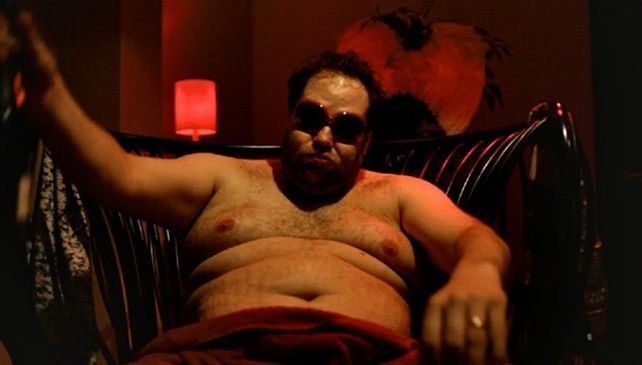
Olafur Darri Olafson plays a debaucherous Icelandic senator in XL.
Olafur Darri Olafson plays a debaucherous Icelandic senator living it up before rehab in XL.

XL is something unique: a feature film from Iceland. Just as unique is the story and the subject matter. Question is how watchable is it?

The story focuses on Leifur Sigurdarson, a senator in the Icelandic parliament. Leifur has been told by the Prime Minister of Iceland that he is about to be placed into a rehab clinic. His alcoholism is that obvious. Leifur then decides to live his ‘last few days of freedom’ with a bang.

He is known for his tempestuous relationship with his girlfriend Aesa. He gets involved with all sorts of kinky games with Aesa and even sado-masochism. The two of them also live it up together with some of his rich friends who also like to live life in the fast lane. They all go from bar to bar having their fun and doing whatever they want.

Despite this orgy of debauchery, Leifur receives constant reminders from others about what he’s headed towards. Politicians remind him, family try to reach out to him and even his daughter from a past marriage tries to remind him of who he’s neglecting. Nevertheless Leifur continues on with his debauchery. It isn’t until the last day that he’s reminded that time is running out and he can’t handle it any more.

It is possible that the director is trying to send a message in this film of the corruptness of politicians in Iceland, especially as it headed to economic collapse in 2008.Iceland has always been ranked as one of the Top 10 least corrupt countries in the world according to Transparency International’s annual Corruptions Perception Index but it’s not to say that corruption doesn’t exist there or even in the other top nations. Even in the least corrupt nations in the world there are sleazy senators or debaucherous congressmen. Even heads of state can commit their own sleaze.

However the film caused me to question what the purpose of the film was. Was it to make a statement about corruption in Iceland? Was it to push boundaries or even envelopes with the material? Was it to be artistic? I was left undecided when I saw this. All too often it seemed like the film makers were putting huge focus on Leifur’s debauchery and even the sadomasochism. I was often tempted to think it was trying to put the heaviest emphasis on the shock value. Even the artistic elements like making a stage play out of Leifur’s life appeared confusing especially since it wasn’t put in as consistently. Sometimes there were some artistic merits the film makers took that even appeared like it was bad editing. I was left with the frank impression that this lacked a definite direction to what it was attempting to show.

This film is the latest effort from Marteinn Thorsson. He worked for Canada’s The Movie Network in the past directing ads and promos. His first film One Point O helped put him on Variety magazine’s list of ‘Top 10 Directors To Watch’ in 2004. He also directed the critically renowned drama-comedy Stormland from two years ago. I’ll admit I’m not familiar with his style of filmmaking but I still stand by what I say that this film he directed and co-wrote with Gudmundur Oskarsson doesn’t make its intentions or its point clear. Even if he’s trying to make a statement about political corruption, it looks like he’s making more of an effort trying to entertain us with shock value. The film has receives some renown. It was nominated for the Crystal Globe at the Karlovy Vary film festival and the performance of Olafur Darri Olafson won Best Actor at that festival.

If there was one standout from the movie, it was the performance of Olafur Darri Olafson. His performance as Leifur was very complex as he went from the king of debauchery to this man with a problem. Also a scene stealer is Maria Birta as Aesa, the one woman who seemed to know how to control Leifur. The best minor supporting role came from Tanja Omarsdottir as Anna, the daughter caught in the middle of this. The musical score by Anna Thorvaldsdottir, which was mostly modern-based, fit with the film well.

XL is an artistic attempt at telling a story of a politician and his corrupt mannerisms. In the end it comes across as a film that’s unclear what its intent is.

VIFF 2013 Review: Reel Youth Film Festival

Movie (640x306)

One thing about the Vancouver Film Fest is that they show a lot of films and shorts from upcoming filmmakers. They also show films made by youth or young filmmakers too. The Reel Youth Film Festival–which is a festival all it own and had its premiere at the VIFF on Sunday–showcases films from young filmmakers.

Most of the time whenever there’s a shorts segment show I see, I review all the shorts one by one. Now rather than review the shorts, I will just describe what I saw. Besides I wouldn’t consider it to be fair to critique student films.

The twenty-five films were chosen out of three-hundred entries. The films are from Canada and seven other countries and range from one minute to nine minutes. They consist of animation or live-action. They are filmed on typical motion picture format or typical run-of-the-mill video camera. They range from a played-out stories to music videos to animation exhibits to social messages. Some of the films appeared amateurish in quality, some appeared quite professional in quality. Most can be classified as G-rated works but two films in the festival were rated PG with one even including nudity and masturbation (non-explicit, of course). Three videos included were also part of the United Way’s contest to create a one-minute anti-bullying film. Two videos were from the UNIS student program including one of two girls growing up in a rural area of Vietnam.

The films show a lot through their eyes. A lot of it is often about school life, home life and even the work life they anticipate to have in the coming years. Sometimes they focus on other people such as gypsies, two sisters in Vietnam, a graffiti artist or an elderly man in the town. Sometimes they focus on social issues like bullying, corporate greed, homelessness or drugs. Sometimes they focus on fun aspects like dating, school irritations, social media and even the city they’re proud to call home. Sometimes they even focus on nonsense subjects like the death of a sandwich, being scared by a ghost, an office dork or a certain secret about Barbie we never knew.

The thing is that most of the students doing the filming may or may not want to take filmmaking to further directions in their life. Some–like the directors of Crack, Hank and Light Switch–appear to want to take filmmaking seriously in the future. Many others look like they prefer the direction of animation. Some are just amateurs doing it for fun. I guess that’s what the focus of the Reel Youth Film Festival is: more concerned about getting out their voice or creativity rather than the seriousness or professionalism of the craft.

The screening I saw Sunday evening was actually the World Premiere of the annual Reel Youth Film Festival. There will be one more showing at the VIFF on a Wednesday morning open for student groups. It will be showing at more locations to come and the Festival can act as a fundraiser for your community centre. If you’re interested in screenings or interested in showing it at a place you know, or even if you know a young filmmaker with dreams, just go to: http://www.reelyouth.ca/

One last thing. That evening I went had a ballot for all to fill out. The ballot was asking the voter of their three favorite films and their favorite local film. I don’t know if they will be doing it again in their next showings but I had a chance to pick my favorites:

  1. More
  2. Crack
  3. Being Ernest
  • Fav Local: Too Old For Fairy Tales

The Reel Youth Film Festival is a good attraction at the VIFF. Who knows? Maybe one of the directors can make it big one day.

VIFF 2013: New Year, New Format

Cinema

Yes, it’s leading up to the Vancouver International Film Festival. It’s to start Thursday September 25th and runs until Friday October 11th. There are a lot of similar expectations from last year that carry over to this year, but there’s one big new expectation for this year.

As noted in my summary of last year’s VIFF, 2012 was the last year it was to be held at the Granville 7 Cinema. The Cinema would continue for another three weeks until it was too close for good and be built into a condominium strata. All the volunteers and supporters of VIFF received a summary email where we were told that there would be a new main facility decided by the spring. The months of waiting would keep us guessing and the changes in the Vancouver movie theatre scene would have many of us nervous. First was the closure of the Ridge Theatre at the beginning of February of this year. The second would happen later that month as Festival Cinemas–the independent cinema group that ran The Ridge, The Park and Fifth Avenue cinemas–ceased existence upon the president’s retirement and left the two remaining cinemas in the hands of bigwig Cineplex Odeon. The question of which main theatre would be in charge of the VIFF left followers further in the dark.

Eventually the news came. The Vancouver Film Festival will be shown on nine screens at seven different locations:

  • International Village Cinema (three screens)
  • Vancity Theatre
  • Cinematheque
  • Centre For Performing Arts
  • Vancouver Playhouse
  • Rio Theatre
  • SFU Woodwards Theatre

So there’s no one central location for this year’s VIFF. This will take some getting used to in its post-Granville 7 era. It’s a shame because the Granville 7 was very instrumental in its growth. In fact I was at the volunteer orientation yesterday and the volunteer leaders mentioned that even they are having to try to get used to the new theatres. So this year’s VIFF will be a challenge but it also promises to show a lot. The fact sheet states that 341 films are slated to be screened: over 200 are feature length and 92 are Canadian. Also those of you who attend the festival will notice the Cineplex logo on our volunteer shirts. That’s our new sponsor. So that’s a plus. Hey, having most of the showings at the International Village Cinema helps.

I’m back to volunteering again this year. This makes it my sixth year in volunteering. I’m looking forward to it. I’m able to get four days off from work to be able to volunteer during the daytime. So I hope to have a good time. I also hope for this to be a record-breaking year. I know it may be too much to expect for a film festival getting used to a new theatre system. Nevertheless it’s possible. Remember that 2011 is the record-setting year.

Wow. Sixteen days over three-hundred films from over 75 countries! The Vancouver Film Festival is back. So get ready to VIFF again!

Oscars 2012 Shorts Review

Interesting how these past few years, they’ve released the short films nominated for an Academy Award as reels at the box office. They’ve since drawn good-sized crowds as they’ve been doing it again ever since. This marks the fifth year in a row I’ve seen them and this year’s crop of nominees are both entertaining to watch and interesting to see the visions of either the director or the animators. Here’s my rundown of this year’s nominated short films:

BEST ANIMATED SHORT FILM:

Adam And Dog – dir. Minkyu Lee- Unique story how a dog became man’s best friend as Adam meets the dog before Eve. It seems charmingly cartoonish at first and gives the viewer a feel. Soon it becomes more cartoonish both in drawing and in the characters of the two. Also the plot before the ending becomes a bit awkward. Nevertheless it did end well. Overall I felt something was missing in it and I don’t think it will win.

Fresh Guacamole – dir. PES-What can an animated film accomplish in two minutes? This film does a lot as it goes from cutting items for guacamole into turning it into gambling goodies and toy bits. It’s both entertaining and charming. It doesn’t even have to tell a story to entertain. Its ability to charm and entertain in its two minutes is why this is my Should Win pick. Great job!

Head Over Heels – dir. Timothy Reckart- Walter and Madge are an unhappily-married couple. They live in the same house but she lives right side up while he lives upside down as the house floats in the sky. It’s a shame since they used to dance ballet together. One day Walter tries to solve things by repairing Madge’s ballet shoes. However something goes wrong between him and Madge and the separateness grows. Its use of its form of 3D ‘puppetry’ adds to the unique charm of the story but its ability to convey human emotions much like flesh and blood people is its biggest quality that makes it shine and why this is my Will Win pick.

Maggie Simpson: The Longest Daycare – dir. David Silverman- Maggie Simpson is the star of this funny short where no dialogue is needed. If you’ve seen Ice Age 3 in the theatres, then you’ve seen this short already. Maggie is left at the Ayn Rand School For Tots. And when there’s a daycare run in the spirit of Ayn Rand, you know trouble will abound. This Simpson’s short without dialogue succeeds in entertaining while remaining true to the flavor of the Simpsons show. And you finally find out why Maggie always had animosity to the baby with the unibrow. I always had a feeling he was diabolical!

Paperman – dir. John Kahrs- If you’ve seen Wreck-It Ralph in the theatres, then you’ve seen this short already. Done in black and white with the only color being the woman’s red lipstick. It’s a charming boy meets girl story where they meet on a subway platform and boy attempts to meet girl again by making paper planes out of his inbox papers. Eventually the paper planes become his destiny as they send the message the two were meant to be. Another charming short from the Disney studios.

One thing to say about all five of the films is that you’ll notice all are done without dialogue. I find it unique that all five nominees possess that quality. Shows how volumes can be spoken without uttering a word. Pixar’s been showing that for years in the shorts they’d shown before their features. Another thing is that it’s something that none of the nominated shorts were done in 3D computer graphics. That’s a bit of a surprise for me considering it’s now all the rage for feature-length animation.

BEST LIVE-ACTION SHORT FILM

Asad – dirs. Bryan Buckley & Mino Jarjoura- Normally you would not expect a story of Somalian children being caught in the war to be a comedy but this is and it succeeds well. It does show a lot of the nastiness of war with the temptation of young children to become pirates but it has an ironically humorous ending that makes it a delight. Normally a story about a child being caught in an African civil war doesn’t sound like comic material at all but this film does an excellent job in making a comedy out of it without crossing the line. Also this film could be seen as a ray of hope for Somalia as most of the actors are in fact Somali refugees living in South Africa.

Buzkashi Boys – dirs. Sam French & Ariel Nasr- This is a story of two poor boys in Kabul, Afghanistan. One, Rafi, is the son of a blacksmith whose father expects him to carry on the family tradition. The other, Ahmad, is a young fatherless street urchin who begs on the streets. One day Rafi’s father allows him to see a game of Buzkashi with Ahmad. Ahmad tells Rafi his dreams of being a Buzkashi star and isn’t afraid to shout out his dream from a demolished castle while Rafi is skeptical for his future. One incident changes everything that changes how Rafi thinks and dreams. This story is the one of the five that most stayed with me. It was very well-played out and gets you thinking. That’s why I declare this to be my Should Win pick.

Curfew – dir. Shawn Christensen- This is a dark story that features some humor. The girl is a scene stealer even thought the man is the main protagonist. Often you’d wonder why a sister would let her suicidal brother babysit her daughter but it turns out to be the best thing for both of them in the end. It’s dark humor is what gives it its edge. Definitely the most original of the five.

Death Of A Shadow – dirs. Tom van Avermaet & Ellen De Waele- This is a haunting story of Nathan, a death photographer who photographs deaths and transfers the shadows onto his master’s wall for his artistic entertainment. We later learn that Nathan died in World War I and the master will give him his life back upon 10,000 photographs. He wants to return to life to return to the love he believes he could’ve had if he wasn’t killed by soldiers. It’s the 10,000th photograph and the aftermath that changes everything including his perspective. Very dark and haunting. Very well-directed and well produced. That’s why I give it my Will Win pick.

Henry – dir. Yan England- This is a story of an elderly man with Alzeimer’s trying to remember and reclaim the past for his memory. It starts in a bizarre situation. He’s strapped to his hospital bed and can’t remember his wife Maria or daughter Nathalie. His recollection progresses through the help of his daughter, his twentysomething self and the classical music he played with his loved ones. It’s through both of them and the music that he’s able to go back in time to remember the two for their sake and for his. It’s haunting as it is touching. It is a sad story but it does lead to an ending that’s somewhat positive. Very good and very intimate as it’s honest in human feelings.

This is the difficulty of predicting a short film. The winner could be a story that makes you think like recent past winners Toyland or The Shore. Or it could be something humorous like past winners The New Tenants or God Of Love. There’s no telling what will impress the Academy.

And there you have it. My thoughts and predictions for the short films. Predicting short films in never easy. Any five can be the winner. There’s no clear favorite. Nevertheless it’s always great to see that he audience again has a chance to see them on the big screen. Also those interested in seeing some new directing talent or animating talent, here’s your chance.

A VIFF 2012 Wrap-Up

By now you’ve probably read the reviews of all eleven of the films I saw at this years’ Vancouver International Film Festival. The Festival ended its sixteen days of films and festivities on Friday October 12th. I was working at the Granville 7 theatre at the time. The following Sunday all volunteers were treated to a volunteer appreciation luncheon at the Fan Club Cabaret in downtown Vancouver. The luncheon consisted of a live jazzy blues performance and a good lunch buffet. I was able to talk with people I volunteered with during the Festival.

As for the Festival itself, the festival did not succeed in breaking its 2011 record in ticket sales. The number of tickets went down 8% to 140,000. That can be blamed in part due to record-breaking hot Vancouver weather at that time. Yeah, it was a milestone ‘Indian summer’.  Nevertheless there were excellent turnouts and even filled crowds at many shows, even at special showings at the Vogue Theatre. If you want to read up about last-year’s success, which includes details about how film festival income is made, read here.

Here is this year’s VIFF by the numbers:

-140,000 – total admissions

-750 – volunteers

-643 – screenings

-392 – total films shown

  • 235 – feature length (60+ minutes)

-800 – number of Canadian films entered for the VIFF

-108 – Canadian Films shown

  • 37 – feature length
  • 51 – shorts
  • 20 – mid-length
  • 15 – co-productions

-96 – non-fiction films shown

  • 83 – feature length
  • 17 – Canadian

-75 – countries entering films

-64 – Canadian premieres

-51 – North American premieres

-37 – International premieres (first screening outside home country)

-21 – World Premieres

-16 – days of showing films

-12 – entries in the Best Foreign Language Film category for this year’s Oscars shown

-10 – screens showing films

-4 – theatres participating in the VIFF

Very impressive numbers for this year. Anyways I’m sure most of you want to know what film won what award, right? Well let’s say it had to be tough from the multitude of ballots filled out at this year’s Festival. An impressive 87% of the films shown were mostly rated ‘very good’ to ‘excellent’ so you could understand this would be quite the tough call for both the VIFF juries and the ballot tally. Nevertheless winners have been declared and here goes it:

ROGERS PEOPLE’S CHOICE AWARD

-THE HUNT/Jagten (Denmark/Sweden) dir. Thomas Vinterberg,

VIFF MOST POPULAR INTERNATIONAL DOCUMENTARY FILM AWARD

-NUALA (Ireland) dir. Patrick Farrelly, Kate O’Callaghan

VIFF MOST POPULAR CANADIAN DOCUMENTARY AWARD

-BLOOD RELATIVE, dir. Nimisha Mukerji

VIFF MOST POPULAR ENVIRONMENTAL FILM AWARD

-REVOLUTION(Canada) dir. Rob Stewart

VIFF MOST POPULAR INTERNATIONAL FIRST FEATURE

-I, ANNA (UK/Germany/France), dir. Barnaby Southcombe

VIFF MOST POPULAR CANADIAN FILM AWARD

-BECOMING REDWOOD, dir. Jesse James Miller

Women in Film and Television Artistic Merit Award

-LIVERPOOL (Canada) dir. Manon Briand

DRAGONS & TIGERS AWARD for YOUNG CINEMA

-EMPEROR VISITS THE HELL (China) dir. Li Luo

Honorable Mentions:

-A FISH (South Korea), dir. Park Hongmin

-PECULIAR VACATION AND OTHER ILLNESSES(Indonesia), dir. Yosep Anggi Noen

BEST CANADIAN FEATURE FILM AWARD

– BLACKBIRD, dir. Jason Buxton

Honorable Mention: BECOMING REDWOOD, dir. Jesse James Miller

MOST PROMISING DIRECTOR OF A CANADIAN SHORT FILM

– Juan Riedinger for FLOAT

Honorable Mention: PEACH JUICE, dirs. Brian Lye, Callum Paterson and Nathan Gilliss

So there you have it. Those are the winners of this year’s Vancouver international Film Festival. Great to see the Festival end on a great note. I myself had a good time seeing films. I saw eleven, as I reviewed at this site in the last while. I wanted a mix of films and I got a good mix out of it: four documentaries, two shorts programs (all by Canadians), three foreign-language films, one country’s entry in the Oscar category for Best Foreign Language Film and three Canadian features. I feel I had a good mix.

One thing about this year’s festival is it did mark the end of an era for the VIFF. This is the 11th Vancouver Film Festival held at the seven-screen Granville 7 Theatre in Downtown Vancouver. As of November 4th, the Granville 7 will cease to exist as it will be constructed into a condominium building. It was a shock to all of us but for years we kept on hearing “It’s closing within the year” and we’d come back there each and every year. This time it’s for real and even Empire Theatres that owns the Granville 7 made it official in an email to Granville 7 patrons.

The Vancouver Sun and Province didn’t shy away from that fact and even wrote stories that it will mark doomsday for the VIFF in the future. It first seemed believable since the Granville 7 was key to the VIFF’s growth over the years and its location being central to most of the other theatres showing films during the VIFF. The actual fact is most of us won’t believe it to be doomsday. If you know Vancouver media, they love moaning ‘doomsday’ about everything. In fact they kept on shouting ‘doomsday’ in the years leading up to the Vancouver Olympics and they ended up being the best thing that happened to the city. So what does that tell you? Finding a new theatre facility will be a challenge for next year’s film festival. I myself predict it may be either the Tinseltown in downtown Vancouver or the Fifth Avenue Cinema near Kitsilano. Nevertheless I’m confident that a new location for next year’s VIFF will not hurt the festival. In fact those who have VIFF email subscriptions will learn of the new location in the spring of 2013. Also they pointed out in that email that with the healthy attendance at this year’s Festival and 60,000 year–round members, the future of the Festival is bright and secure. Plus the Festival continued its reputation as one of the Top 5 Film Festivals in North America. So no reason to mourn doomsday. Besides if Canadian cities smaller than us in population continue to hold their own International Film Festival, there’s no reason Vancouver can’t.

Here’s to the continued success of the Vancouver International Film Festival and to a new era starting next year. I haven’t been given a start date of VIFF 2013 so I assume it will either be September 26th or October 3rd. I’m looking forward to next year.

VIFF 2012 Review – Side By Side: The Science, Art And Impact Of Digital Cinema

The first documentary I saw at the Vancouver Film Festival was Tribeca Film’s Side By Side. It first caught my interest on opening day as I was assigned to be an usher for the screening. I was lucky to see it as an audient three days later. I’m glad I did because this is of a topic I’ve been interested in over the past ten years.

The documentary is hosted by Keanu Reeves and it is on a hot button in the filmmaking industry. this hot button is the transition from making celluloid motion pictures to digital motion pictures. It attempts to answer the question: “does it mark the death of an art form or does it accelerate it?”

The documentary starts with some opening opinions by some of the biggest names in directing like George Lucas, Martin Scorsese, James Cameron, David Lynch, Christopher Nolan and Danny Boyle. It also features opening comment from independent filmmakers too. The beginning also gives descriptions and computer simulated examples of how images from both celluloid cameras and digital cameras are created. Interesting is the terminology used for filming: film filmed on a reel in a single day and developed the next day would be called ‘dailies’ while digital images would be described as ‘immediates’. Later on the documentary would describe the invention of digital filming dating back to the late 60’s to George Lucas experimenting with it. The progress of digital filming would be described more over the remainder of the documentary, which I will elaborate on more throughout my review.

The documentary also points out that the use of video cameras was not accepted by the film industry at first because video cameras were seen as something for ‘cheap movies’. They showed the first two movies filmed on video camera that made an impact on video cameras’ use in film: Denmark’s The Celebration from 1998 and the US’ Chuck And Buck from 2000. The quality was obviously cheap but the cinematic angles it was taken from caught people’s eyes. Nevertheless many people still felt video cameras were not good enough quality for something like motion pictures. To think back in 1999 when George Lucas announced after The Phantom Menace that he would no longer film on celluloid, most people didn’t take it that seriously.

As I just mentioned, we shouldn’t forget at the time digital film was still lacking in quality. Slowly but surely big name directors would take notice over time and make the switch. That’s another quality of the documentary is hearing of how so many big name directors made the switch to digital. They describe the scene filmed on digital that put the nail in the coffin for their use of celluloid film. The most interesting for me is Danny Boyle’s story about the change. He described one scene in 28 Days Later–the scene of a deserted London–that was able to be done on digital because he could shut down traffic in one area temporarily for a few minutes while he would have to shut the whole of downtown down for hours if he did it on celluloid. Many directors said that filming on celluloid film has gone as far as it can go and none sensed any limit to filming on digital in sight.

Back to the part which give demonstrations of the two filming methods. As the descriptions of are demonstrated, film professionals interviewed would describe their experiences in dealing with both filming forms, both the positive aspects and the negative aspects. One filmmaker talked of the use of dailies of how they’d look at the dailies in the screening room and at how they were taken aback by what they’ve created. It was often the case but not always. There were times when the dailies would be something flimsy. As for digital, the ‘immediates’ were convenient because they were there in an instant and they were cheaper. It’s not to say the ‘immediates’ were a complete solution. One director even said immediates would show the filming well immediately on a computer screen but won’t answer what it will look like on a 50-foot big screen.

Also described in the documentary are the various changes to how one does their job. The director and cinematographer, or director of photography (DP), have always worked as a team during the days of celluloid. The two still work as a pair even during digital filming but there are changes to how they work and communicate to each other during their job. The documentary also describes how actors have had to make adjustments of their own. During filming of celluloid, there was always a period of time when the cameramen had to do technical things that would allow for a break. Now with digital there’s more consecutive shooting less of that break time, if any at all. There’s even mention of a certain ‘protest’ done by Robert Downey Jr. when he did his first digital picture. Another thing involving actors, which would get on the directors’ nerves, is that they’d want to see the ‘immediates’ to see what they looked like all too often. Should we really be surprised? Film editors as well describe how their job has changed from literal cut and paste of reels to the computerized cut and paste. Some say the quality is still there while others say it’s cheapened. And we also see how visual effects personnel work with digital film as they’re able to create greener trees and bluer skies.

Another aspect showcased in the documentary is the changes in technologies over time. I mentioned at the beginning that video camera use for motion pictures were not accepted at first because of the lack of quality. What a difference more than ten years can make. Over time just as computer technology has improved, so has video imagery and designs of cameras. The documentary showcases the pixel quality of pictures over time and also highlights camera companies creating digital motion picture cameras that would be breakthroughs. Interesting how images shot for the big screen are at least ten times better than they were at the start of the century. Video cameras used for filming motion pictures have also become better and even smaller which allows for more unique angles. The simultaneous use of two cameras for filming 3D movies is another example of technological breakthrough. Then the news of the ultimate: the announcement from motion picture camera companies in 2011 that they would no longer manufacture celluloid movie cameras.

Despite the mention of all the technological progresses of digital cameras and its progresses leading to digital practically overtaking celluloid filming, the documentary does remind us there are still Hollywood movies and independent movies shot entirely on film and there are also still ‘celluloid purists’ who won’t hop onto the digital bandwagon for their own personal and professional reasons. Last year’s Oscar winner for Best Picture The Artist was shot entirely on film as were Best Picture nominees Moneyball and War Horse. Even two of the biggest moneymakers of this year, The Hunger Games and The Dark Knight Rises were shot entirely on film. In fact both Christopher Nolan and his personal DP Wally Pfister have even declared that if they’re the last people in Hollywood to shoot movies on celluloid, so be it. There are even some independent filmmakers that talk of the beauty of shooting on celluloid that digital can’t equal.

This documentary may give a lot of examples and opinions about the filming types but it doesn’t give the final word on the future of film. It cuts off to now and will leave the future to define itself. With no more celluloid cameras being made, the ‘celluloid purists’ will face a bumpy ride if they want to stay true to their principles. As for moviemaking, where will an industry full of predominantly-digital movies take this in the future? Will the ‘celluloid purists’ succeed despite the odds? We’ll see. One thing one director said was as long as a director has a vision, they will try to create that vision with whatever means they have.

I admit that this is a topic that caught my attention and it’s one dating back ten years ago. How it caught my attention was when I attended an acting class which a top Hollywood cinematographer Monty Rowan. He talked about celluloid filming and brought up George Lucas’ comments about never filming on film again. Rowan mentioned that digital will never have the same artistic quality as celluloid. Years later I read a magazine–either Time or Newsweek–that talked about filmmaking and once again Lucas’ talk about filming on digital: “You don’t work at the office the same way you used to. So why should I do my filming the same way I used to?” It also mentioned of a younger generation weened on digital this and that and who don’t have the same appreciation for the filmmakers of the past. That had me scratching my head. Even hearing how filming on digital has cut costs on filmmaking has still led me wondering about Rowan’s comments. Yes, filmmaking is an art but there’s this vice called ‘showbiz’ that’s unavoidable. Can celluloid continue one despite the business demands of showbiz? Especially as movie viewing is no longer cinema-only and now flexible to the point one can see movies on their tablet or cellphone?

The best quality of the documentary is the big names and wide array of professionals being interviewed by Keanu for this picture. We not only hear opinions and experiences from some of the top name directors in the business but some of the independent  filmmakers who have their own say, whether positive or negative. We also hear the various cinematography, film editing and visual effects angles from some of the top names in their respective fields. We also hear from the various ‘trailblazers’ of digital filming who did something that would pave the way to the future of film, though they didn’t know it at the time. Hard to believe that Anthony Dod Mantle filmed with video cameras with the thought “I may never win an Oscar but…” and he did for Slumdog Millionaire. It does however limit the number of independent filmmakers in the business. Yes it’s great to hear opinions from the big Hollywood names but the independent directors were limited in numbers and opinions.

Another thing I liked about the documentary is that Keanu did it unegotistically. He wasn’t like Michael Moore or Morgan Spurlock who try to steal every scene and force their personal opinions. Keanu stuck to the topic and put focus and emphasis on the facts, the technologies and the professionals’ opinions. I don’t think I noticed anywhere in the documentary him talking about his own personal experiences.

As far as this documentary goes, I would not consider this to be a documentary meant for a movie cinema. One of the things with the VIFF is that there will be a lot of documentaries shown. Some will be lucky enough for a big screen run. Some will most likely be shown on television through either a documentary channel like Vancouver’s Knowledge Network or a teaching channel. This documentary looks like something that would be best suited for something like a science channel or even an entertainment information channel. I would like to see it again as this this about a topic I’m interested in as I mentioned earlier. I like how thorough this documentary was.

Side By Side is an important documentary for anyone in film, whether a professional or a student at a film school, should see. It doesn’t just present the situation but is very thorough in presenting the examples of filming, history of technological advances, and how some of the biggest names in moviemaking have taken it on. Thank you Keanu for doing a great job of giving us the facts.