Oscars 2024 Best Picture Reviews: Part Four

The thing about the Oscars is that each year, there are Best Picture nominees for films of subject matter that most people would normally not want to see. In some cases, films of unwatchable subject matter end up Best Picture nominees. A lot of these unwatchable things are based on people or events that actually happened, like these two films. For these next two films, I wouldn’t say they’re unwatchable but they do treat on dark subject matter. They’re far from the topics or themes that would draw crowds. Some scenes many would find too disturbing to watch. All I can say is you be your own judge:
I’m Still Here (Ainda Estou Aqui )

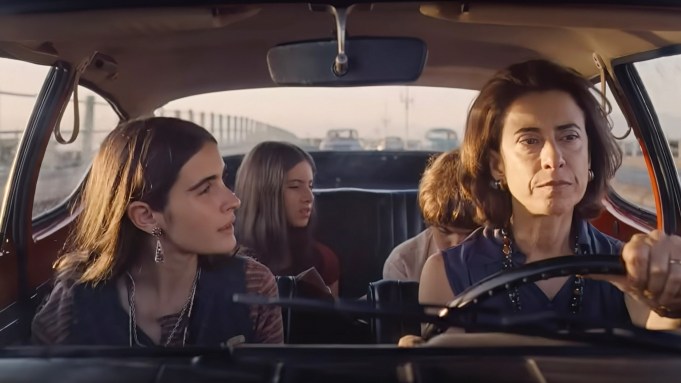
When one thinks of a Brazilian film, one would think of a film that may have scenes of the carnival, the festivities or the beaches. I’m Still Here is a very different film as it presents a dark side of Brazil’s history that they’re still troubled by today. Even the angle from which the film tells its story is unique. We have heard of people kidnapped during political regimes but we rarely hear about how it affects families. It’s through Eunice Paiva that we see how sometimes being married to an enemy to a regime could lead one to being imprisoned. Through Paiva we also see her as she struggles to keep her family together, struggles hiding the truth from her youngest children, struggles with her relationship with her youngest daughter and struggle to get the answers she needs of what happened to her husband. Eunice’s story of being the wife of a kidnapped man really tells a lot. It also shows how it would shape her to be the social justice warrior she became.

The film begins with a beach trip with the Paiva family. Everyone has fun, they all pose together for a photo and Marcelo found a stray dog they can make their own. It’s after that when everything changes. Soon the interrogation of Rubens, Eunice and their daughter, Eunice’s days of imprisonment and the years of aftermath not knowing whether her husband will return alive or if she will be kidnapped again. Then the long wait hoping Reubens will return and the fear of spies outside her door hoping to get her and imprison her again. It’s after the dog Pimpao is run over by the spies’ car that she lashes out at them and she’s had enough. Soon, her desire to leave Rio and start a new life for her and her family in Sao Paulo. The film moves forward to 1996 where Eunice has become a social justice advocate in Brazil, which had returned to democracy in 1989. She shows the death certificate of her husband she achieved. Her family has changed. Especially son Marcelo who became a successful author, despite being confined to a wheelchair. The film ends in 2014, years before Eunice would die of symptoms of Alzheimers. She is connected to a news story about the abductions and the continued pursuit of justice before a family photo.

Looking at it, the film is as much about family unity as it is about injustice in Brazil. Eunice had the nice orderly happy family life before the political abductions happened but that all changed after the imprisonment of the three. Trying to hide the truth of what happened to her father and deal with her older daughters’ knowledge of what happened is not an easy task. Trying to get the answers to what happened to her husband during a political regime that refuses to do so and trying to raise a family is a hard task. That’s one thing we rarely think about. We hear of political abductions in the news but we hardly ever hear of how families cope and try to keep themselves together. It’s through Eunice we see a personal strength we often ignore. You can understand why the family photo at the end of the film was so important. She succeeded in keeping the family ties together as much as she succeeded in achieving justice. The effect on children is also noticed in the film as her daughters fear the worst and are frequently arguing with Eunice. They’re the children with the most truth of what happened. Also the scene in 1996 when Marcelo and Maria, the two youngest, ask each other when they knew their father died, even as Eunice tried to hide the truth.

This is an excellent work from director Walter Salles. He’s one of the most acclaimed Brazilian directors with films like Central Station, The Motorcycle Diaries, Paris je t’aime and the adaptation of On The Road. This film is an excellent accomplishment of telling a dark story and making it a personal story. Even having it end on a positive note is an achievement. With the script written by Murilo Hauser and Heitor Lorega adapted from the novel written by Eunice’s son Marcelo, he takes the story and makes it relatable even though most of us will never experience something this terrible. He makes us connect with Eunice Paiva’s story and tells it so most of us who don’t know Brazil’s history know of the amazing woman Eunice Paiva was.

Making the film work is actress Fernanda Torres. She succeeds in telling Eunice’s story and makes us feel for Eunice and hope for the best. She did a great job, as did her mother Fernanda Montenegro who plays the dying Eunice at the end. Selton Mello was also great as the husband who still tries to live his life daily knowing he could be a political target any minute and eventually becomes one. The cinematography by Adrian Teijido added to the telling of Eunice’s story.

I’m Still Here is both the retelling of a dark era of Brazil’s history and the personal strength that came out of a kidnapped politician’s wife. It’s a sad story, but positive and hopeful.

Nickel Boys

Let’s face it. A film about a reform school that is infamous for its racism, physical and sexual abuse, and even murder of minors will not make one want to watch it. In fact, Nickel Academy is the pseudonym for the now-closed Dozier School For Boys in Florida where graves of those killed were discovered and survivors are now receiving their justice. Those that have learned of the ugly news of Dozier of recent years will want to avoid seeing Nickel Boys, but it does give people reason to see it.

When it comes down to it, what happened at Dozier School should serve as something that should never happen again. What happened there needs to be told, but how? How can you make a place of abuse and murder watchable? RaMell Ross succeeds in doing it with the character of Elwood Curtis. The film flashes frequently in between Elwood’s time at the school to the adult Elwood who just learns of the truths unraveled in 2003 as he’s a successful businessman with a stable relationship. The film tells Elwood’s story as it starts before Martin Luther King’s civil rights movement and Florida still having Jim Crow laws. The film shows how as we fast forward 40 years later, Elwood is overcome with hurt and trauma as the secrets are unraveled with the finding of mass graves. In the flashback, we see Elwood bond with one of the boys named Turner he’s with and the two plan an escape while Elwood documents all that has happened in a diary. The escape fails for Elwood as he’s shot dead while Turner succeeds in escaping around the time of the Civil Rights Movement. In the flash forward, Turner adopted Elwood’s name to thank him for all he taught him.

Elwood and Turner are fictional characters, but they could be representative of any of the boys at Dozier School. It’s through Elwood’s and Turner’s friendship at Nickel that we’re shown of the corruption, abuse of various kinds and the murders that happened there. Through Nickel Academy, Dozier School was as much about racism as it was about abuse. White students got better facilities and a better education while the black students got bad facilities, a bad education, the most hazardous jobs, and even harmful punishments like the sweatbox. African American students got it harder and their death rate at the school was way bigger than that of white students. Even black students who didn’t do what the white superintendent says, like fix a boxing match, could be executed and the superintendent would never get arrested. You can understand why the story has Turner’s escape around the time of the Civil Rights Movement. It would be the beginning of the end for Nickel/Dozier.

This is a great work from RaMell Ross. The story he directs is based upon a 2019 novel of the same title that is the telling of that fictional friendship. The story he co-adapts with Joslyn Barnes is very good and very revealing. He succeeds in making a film about the abuse that is watchable and gets one to think. It’s a reminder of the ghosts of the past and how even if we do well in the present, it will come back to haunt us. Even as the guilty people are slowly brought to justice, we’re reminded it can’t erase the hurt and trauma. He does a good job in making it as much a story about two friends as it is about exposing the truth. Excellent work. Also great is the acting of Ethan Herisse and Brandon Wilson. Their performance as the friends caught in the drama did as much storytelling about the place as it did about them. Daveed Diggs is also very good as the adult Elwood who tries to hide his hurts of the past, but they eventually come out. Also great is the performance of Aunjanue Ellis-Taylor playing the grandmother who is hoping for the best for Elwood and tries with every chance and opportunity, only for every white ‘helper’ to fail her. Her mix of optimism and heartbreak adds to the story.

Nickel Boys succeeds in making what could be a film of unwatchable subject matter be watchable. The mix of a story of a friendship around a school with a notorious past exposes truths of the school while maintaining a sense of hope.

And that does it for now. That’s my review of the latest two Best Picture nominees of review. The last two will be coming very shortly.
VIFF 2018 Review: Dovlatov (Довлатов)

Dovlatov
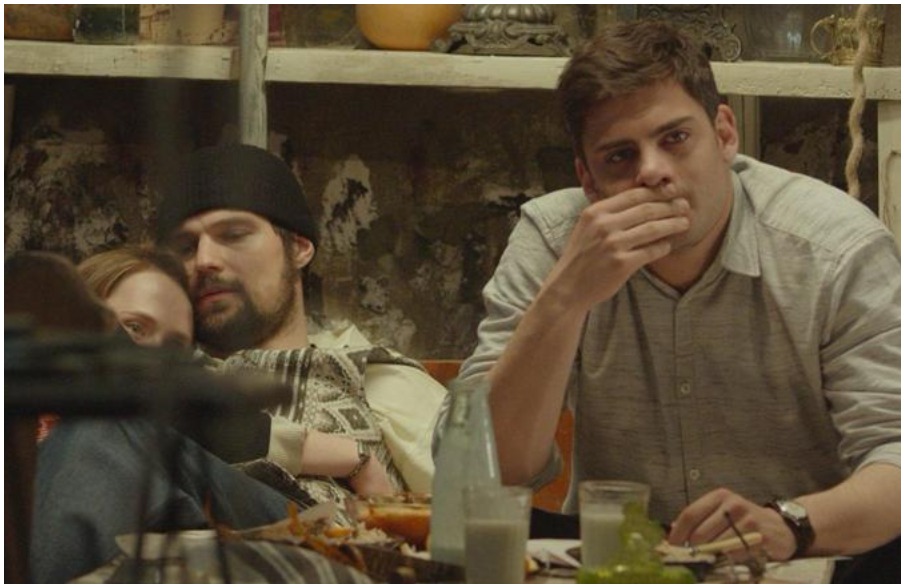
Dovlatov is a focus on writer Sergei Dovlatov, played by Milan Maric (right), and what drove him to defect from the USSR.

Every now and then one sees a biographical film that not a lot of people know a lot about, but grow to understand after the film’s end. Dovlatov is the Russian film of the Soviet-American writer Sergei Dovlatov.

It is November 1, 1971. Leningrad resident Sergei Dovlatov has a talent and a yearning to write, but the Soviet government won’t accept his writings. His writings are very truthful to what is happening, but the Soviet government wants writings that glorify the nation, especially the Soviet regime of the time, and champion factory workers. With Leonid Brezhnev in power, the pressure is even harder as writers of such are either censored or unemployed. Dovlatov is denied membership into a Writers Guild and can’t get any of his poems or stories published. Dovlatov is reduced to pounding out articles for a factory magazine like many of his peers. Dovlatov is expected to help contribute to a film from the factory where workers dressed up as legendary writers commemorate Soviet achievements on the eve of the Revolution. Dovlatov can’t take that seriously and his superiors aren’t happy.

His married life is a frustration. He is on the verge of divorcing his wife Lena and he’s currently living with his supportive mother. He is allowed to see his daughter Katya. Dovlatov does find a break from it all. Each day he meets up with many other literary comrades going through similar struggles in this Communist regime. They listen to jazz, play music and tell stories of their frustrations.

Dovlatov’s life during this six-day period seems like a daily ritual. He begins the day with assignments he finds uncomfortable, tries to make the necessary connections to get his Guild status, and ends his day in a literary and artistic salon with colleagues of his own.

However there are two incidents that shake Dovlatov up. The first is when he’s sent to do a celebratory article of subway builder and poet Anton Kuznetsov. They meet in a subway dig with the intention of doing a ‘pure and prose’ article, but both are shocked to have discovered skeletons of children from a World War II bombing. The second is when he meets with a friend who’s a Black Market dealer. Often throughout the film, Dovlatov talks of looking for a German doll for his daughter. He talks with the man, but the police crack down on him and shoot him dead. The film ends after those six days.

I’ve seen a lot of biographic films. I’ve seen a lot of biographies that are frequently from birth to death. There are even some that focus on the period of a person’s life where they emerge into their greatness. They could be a short period of time but most end up being a long period of time. There have often been a lot of films that focus on that one moment in a famous person’s career that either makes or breaks them, like the Emancipation Proclamation in Lincoln or the writing of In Cold Blood in Capote. It’s even possible to use a week’s period of time that could be when this famous person chances leading into the future path of greatness.

Here in Dovlatov, the focus is on six days. Usually a film maker would pick out a six-day period that could be what changed Dovlatov. Instead the film focuses on a six-day period that could be any six-day period in Dovlatov’s life before he finally defected to the United States in 1978. I think what the focus of the film maker was intended to be was to focus what it was like for Dovlatov to live in Soviet Leningrad. The filmmaker’s intention is to have Dovlatov’s feelings and mindset resemble his works of writing. We shouldn’t forget that soon after the death of the USSR, writers that defected or writers that talk of past-Soviet life became writers of high fixation. Dovlatov may have died in 1990 at the age of 48, but his writing became hugely admired in Russia.

The film doesn’t just show life in Soviet Russia at the time, but gives the viewer a good feel of it. It seems slow at first, but it is very telling. It’s about a writer seeking renown or simple publication, but won’t get credentials because he won’t conform to the writing style the Soviet government demands. During his life, he sees the troubles and the weariness of people in Soviet Leningrad. We should also remember that Leningrad was the name of St. Petersburg during the days of the USSR. What he sees is ugly and hard. Even his own personal life is a frustration. He may get a break when he’s at the parties with his artistic colleagues, but it’s only temporary. The next day, he has to go back to doing what the government wants him to do. One can see the frustration he goes through. One could even understand how trying to get a German doll for his daughter isn’t really something simple and may actually be valuable for this film.

This is the latest film from Russian director Alexei German Jr. German Jr. has had racclaim for his films in the past like 2005’s Garpastum which was nominated for the Golden Lion at the Venice Film Festival, 2008’s Paper Soldier which won the Silver Lion in Venice and 2015’s Under Electric Clouds. In this film he directed and co-wrote the script with Yuliya Tupikina, he delivers a piece that’s less of a film with a beginning, middle and end and more of a film that’s a portrait of a famed writer. It’s interesting they casted a Serbian actor, Milan Maric, to play Dovlatov. Maric has a reputation as a stage actor and this is Maric’s first film role. Maric does a very good job getting into the heart and soul of Dovlatov and he plays the part very well.

Dovlatov may not make sense to most people who see it at first. For those that are into writers and into the writing of Sergei Dovlatov, it’s a good look into the inside of the man and what made his writing.

Double Movie Review: Paddington and Cinderella

Normally I don’t see live-action family movies unless the renown for it catches my eye. In the last three months, there were two that caught my eye: Paddington and Cinderella. I’m glad I had the chance to see them.

PADDINGTON

Paddington Bear was adapted into a movie for the first time. The movie is an impressive result.

For the first time, Paddington Bear comes to the big screen. And in live-action format rather than animation. However this did involve taking some chances. The first chance was making a movie that could entertain today’s children. The second was not having to mess with the Paddington Bear people know and love.

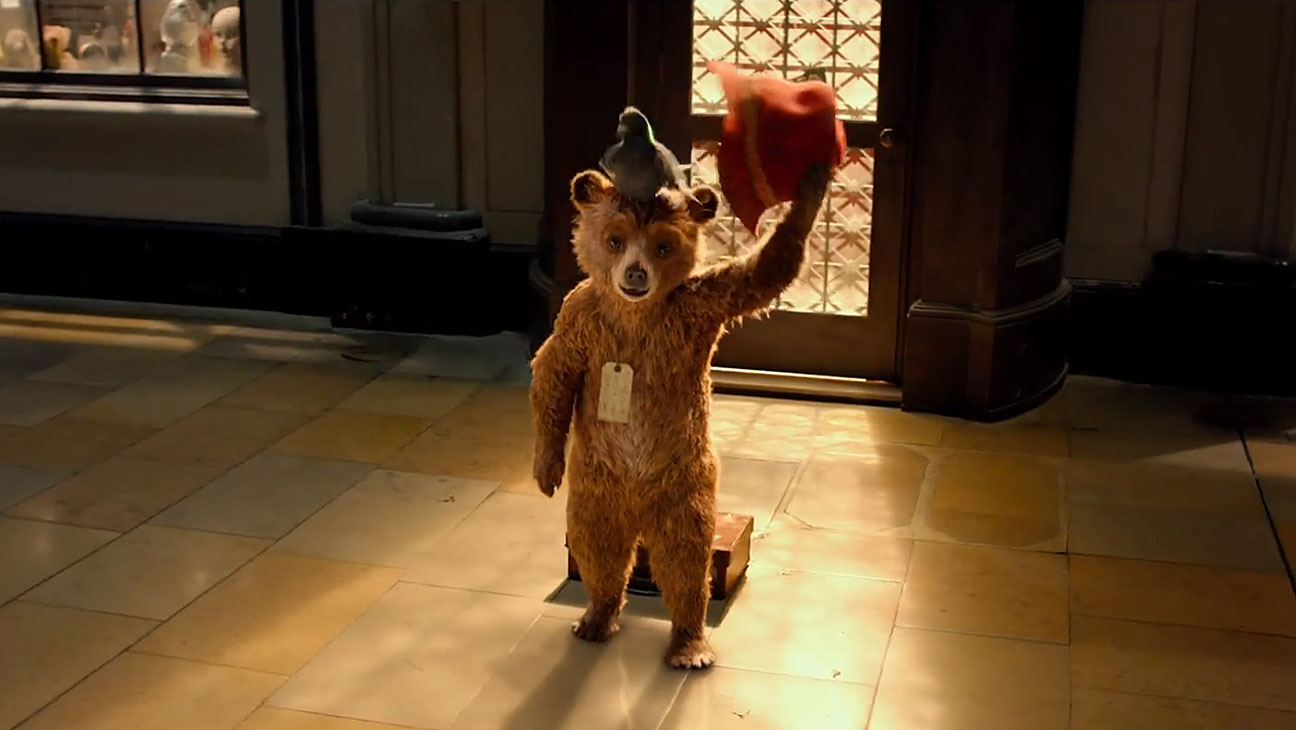
The film does a good job of keeping many aspects of Paddington such as his love of all things British, especially marmalade. The film also does a decent job of not trying to resort to too many cheap laughs like one would come to expect in today’s children’s films. It’s not to say there were some questionable moments, like the scene where Paddington thinks the toothbrushes are ‘earbrushes.’ The film also does a good job in presenting Paddington in today’s world and meeting the Brown family who are actually reluctant to adopt at first.

I give kudos to director/writer Paul King and co-writer Hamish McColl for coming up with a very good adaptation of Paddington Bear into a feature-length film. It was no easy task to make such a film especially when Paddington has resorted to being simple children’s books since the 1950’s.  The plot where Paddington boats from Peru to London only to find a cold country, a reluctance to adopt from the Brown family and being pursued by the daughter of a poacher whose goal was to make him hers to kill and stuff worked well to entertain crowds. The inclusion of the effects in the film couldn’t be avoided as nowadays family movies have to have some special effects to win crowds. Even though Paddington wouldn’t be the type of movie for a lot of visual effects, the effects included did things right without messing with the story.

I also give them credit for not messing with the spirit of Paddington whose sweet charm is the reason why he has become one of the most beloved children’s book characters in recent decades. He’s even so beloved in England to the point there’s a bronze statue of Paddington Bear at Paddington Station where he got his name from. I also give them kudos for adding character to the Brown family. They may not be much like the Browns in the Paddington books but the character of the Browns do fit well in the movie.

Just as much deserving of respect are the performances of the actors. Hugh Bonneville and Sally Hawkins did a very good job playing the Brown parents. Madeleine Harris and Samuel Joslin also did well as playing the Brown children. They both played their roles well without being too overly-cutesy. Julie Walters succeeded in stealing scenes as the wise Mrs. Bird. Nicole Kidman also did a good job of playing the evil Millicent Clyde without becoming too hateable. Actually Millicent Clyde was rather entertaining as a villain. Finally Ben Whishaw did a very good voice-over as the voice of Paddington. Paddington needed a sweetness in order to make the story work and Whishaw was the right fit.

Paddington is now out on DVD and BluRay. For those that didn’t see it in theatres, it’s worth seeing. I don’t know if it’s the type of family movie one won’t need to see with a family of their own but it is entertaining and very good quality entertainment.

CINDERELLA

In ofor Cinderella to work as a live-action movie, the set design and costuming had to be top notch.
The live-action version of Cinderella had a lot of expectations placed on it but it delivered.

If you think making a film about Paddington Bear is difficult, try making a live-action version of Cinderella. And knowing that it will be Disney doing the work, you can understand they’d be under a lot of pressure. We’re talking about the film company that made their 1950 animated version a staple into many people’s hearts. So it would not be surprising that there would be a lot of questions surrounding the make of the new live action version. Will it have the same Disney spirit? Will it stray too much from the animated version that lives on in the hearts of millions? Or even the book? How will the sets and costumes be done? And will it entertain crowds of today?

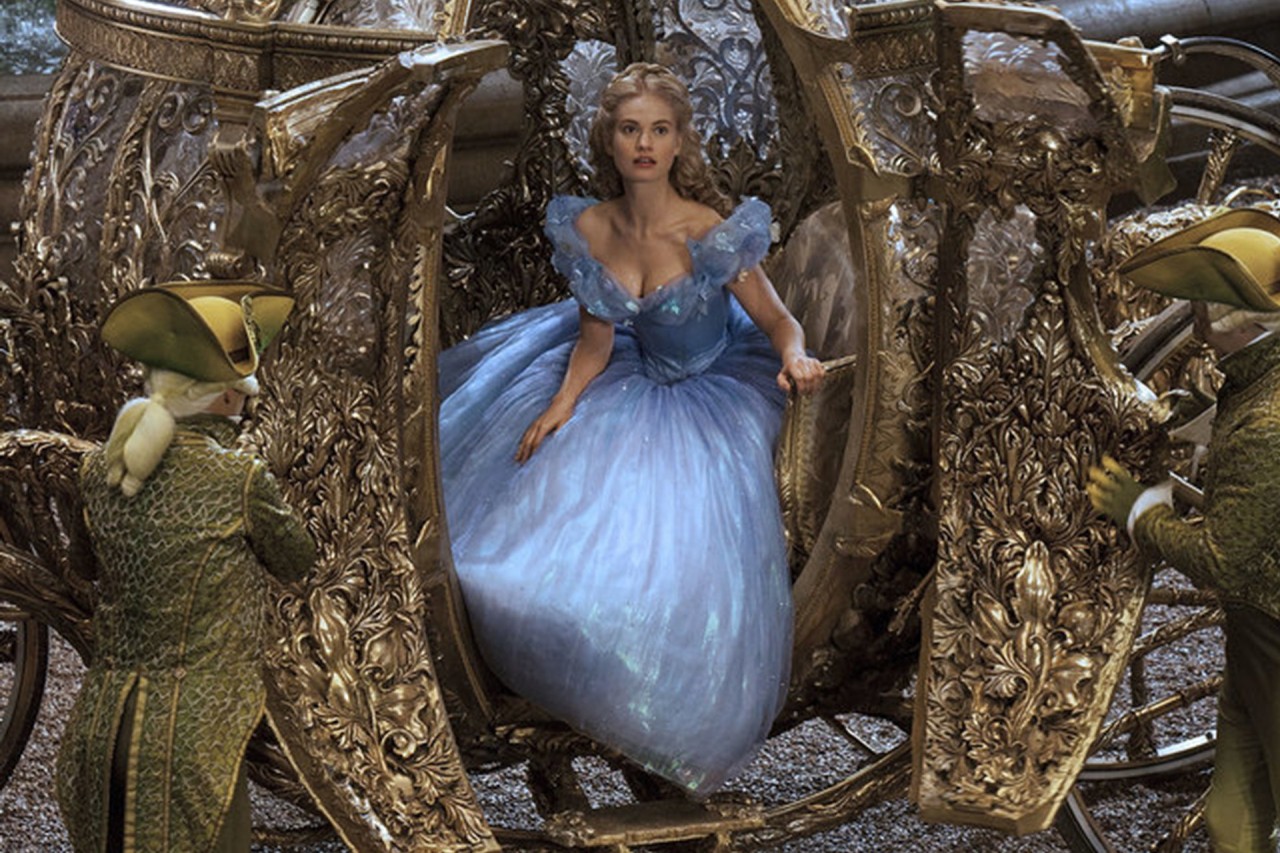
There’s no question that making a live-action version of a fairy tale can be expensive in production. Cinderella wasn’t too expensive to make but $95 million is expensive enough. For a film like Cinderella to work, there’s no question that one of the top aspects to focus on would be the technical areas like set design and costuming. Dante Ferretti was a top choice for set design. We’re talking about a set designer whose works have earned him nine Oscar nominations and three wins for The Aviator, Sweeney Todd and Hugo. Ferretti did not let anyone down. In fact his set designs in all scenes worked perfectly for the movie. It was hard to notice a glitch.

Costumer Sandy Powell was another top pick with loads of cred including ten Oscar nominations and three wins. Here she again adds to the reputation by making costumes perfect not only for Cinderella but for all characters in the movie. My favorite costumes were actually the bratty looking outfits for Drisella and Anastasia. It fit their brattiness perfectly. However Cinderella’s glass slippers really caught my eye. They looked more like crystal slippers. The visual effects team also did a top job in adding the necessary visual effects for the film and giving them the magic that will remind people of the magic Disney movies are famous for. They even succeed in making the mice and lizards human enough without being too ridiculously cartoonish.

Credit should also be given to director Kenneth Branagh and writer Chris Weitz. People easily forget that Branagh is as much of a director as he is an actor directing films from Shakespeare (Henry V) to comedy (Love’s Labor’s Lost) to superhero action flicks (Thor). Now he ventures into the territory of fantasy films. The result is excellent. Just as excellent is the writing from scriptwriter from Chris Weitz. He does a very good adaptation by retaining the spirit of Disney and even including some aspects not included in the original. Actually his writing makes you forget he wrote American Pie!

Despite all those efforts, the success of the movie would have to bow down to the roles being done right. The inclusion of the king, the prince’s father, added to the story as did the appearances of Cinderella’s parents. The characterizations of the mice and lizards were well done and didn’t go over the top or even cheesy. The characters of the two stepsisters were very good depictions. They were nasty and bratty but you’ll actually find yourself laughing at how stupid they are rather than hating them. If there’s one character you will hate, it’s the stepmother Lady Tremaine. Cate Blanchett did an excellent job of depicting Lady Tremaine as both cruel and hurting on the inside to the point she feels she should hurt Cinderella. Her depiction also fits within the common Disney theme of featuring a female villain who’s beautiful rather than ugly. Blanchett’s depiction actually seems more like the queen from Snow White rather than the stepmother of the animated version.

There were some radical choices for character depictions in the movie. The first was the prince as being more of an awkward young adult rather than the flawless Prince Charming we come to expect. Even referring to himself as ‘an apprentice’ during the casual contact with Cinderella is something no one would have expected. The most radical of character depictions has to be Helena Bonham Carter as the fairy godmother. I found it very different to have a clumsy fairy godmother this time around. I wasn’t expecting another fairy godmother that sang ‘Bibbity Bobbity Boo’ but this was way different from what I expected.

Finally I focus on the character of Cinderella. Lily James did a very good job as Ella. She’s already an experienced actress in her native England and she does a very good portrayal here. She portrays Ella as a young woman who doesn’t make having an imagination look like a weakness. We shouldn’t forget her imagination has kept her holding her head high during the toughest of times such as the deaths of her parents and keeps her going strong with her stepmother and stepsisters whom even her father described as ‘trying.’ Hah, ‘trying’ is an understatement! However she does not come across as naive as most would come to expect of her or anyone with an active imagination. In fact it’s the scene where she says to her stepmother: “You were never my mother and you never will be.” shows Cinderella to have more inner strength than most thought.

Focusing on Cinderella lastly seems appropriate because she is essentially the epitome of the theme of the movie. The movie showed two people who had a lot of tragedy in their lives: Cinderella and Lady Tremaine. One was bitter about it. The other did what her mother said: “Have courage and be kind.” Cinderella’s courageous positivity upset Lady Tremaine to the point she had to hurt her however she can. Cinderella stayed strong. There were some points where her courage was tested but she still stayed strong. I guess that’s what this version of Cinderella was trying to say. That staying positive is not being oblivious. That having an imagination is not a weakness. That’s what was not only shown in Cinderella but almost every Disney movie.

Both movies have had their own box office success stories. Cinderella has grossed $197 million in North America and over $500 million worldwide. Paddington was not as big of a hit but it did have its own success with $76 million in North America and $259 million Worldwide. Impressive since it was done with a $55 million budget. The marketers of Paddington did a common job but a smart job in releasing it in most of Europe, South America and Asia first during the latter weeks of 2014 before releasing it in the US on January 16th. That’s a common technique used to plug movies with characters common in European pop culture. They did that with Tintin back in 2012.

Paddington and Cinderella are two family movies that have pleased the critics and will also please audiences alike. Both have what it takes to entertain children but they both also have elements that will please adults.