
After thirty years, the Olympics are returning to South Korea. After 20 years, the Winter Olympics return to an Asian country. The region of PyeongChang will be ready to host the 2018 Winter Olympics. There are expected to be over 2000 athletes from 92 nations competing. From February 9th to the 25th, medals are to be awarded in 102 events in 15 sports. Here are ten athletes and teams expected to catch your eye during the Games.
Marcel Hirscher/Austria – Alpine Skiing: Much the same way the Dutch always shell out new greats in speed skating, Austria always seems to create a new great in alpine skiing. Seeking to be the next Austrian great is Marcel Hirscher. Hirscher has been the Overall World Cup winner for the past six years and has won gold at the world Championships six times. The one title that eludes him is an Olympic gold. His one and only Olympic medal is a slalom silver at the Sochi Games of 2014.
He currently leads the World Cup standings in slalom, giant slalom and overall. He’s expected to win slalom, giant slalom and combined here in PyeongChang. He will face rivalry from Norway’s Kjetil Jansrut and France’s Alexis Pinturault. PyeongChang will be the scene where he could become a ‘best ever’ or a ‘best never.’
Mikaela Shiffrin/United States – Alpine Skiing: Back at the Sochi Olympics when Shiffrin was 18, people were already anticipating her to be the next great. She was already world Cup slalom winner and World Champion in the slalom the year before. Her gold medal in the slalom in Sochi would set in stone that she was one to watch.
Since Sochi, Shiffrin has won the World Cup in slalom every year except 2016 and finally won the World Cup overall title last year. She is expected to win slalom, giant slalom and the combined here in PyeongChang, but she will face challenges from France’s Tessa Worley, Italy’s Sofia Goggia and Liechtenstein’s Tina Weirather. PyeongChang is her chance to crown herself a great.
Martina Sablikova/Czech Republic – Long-Track Speed Skating: There have only been two long-track speed skaters that have won the same event twice: American Bonnie Blair in the 500m from 1988 to 1994, and German Claudia Pechstein in the 5000m from 1994 to 2002. One of two seeking to be the third is Czech Martina Sablikova in the 5000m.
Sablikova has won three of the Czech Republic’s seven gold medals at the Winter Olympics. Before Sablikova, no Czech speed skater has won a medal. At the Turin Games of 2006, an 18 year-old Sablikova missed a medal in the 5000m by a second. The following year, Sablikova set the first of her world records in the 5000m. Her Olympic coming-of-age came in Vancovuer 2010 as she won two gold and a bronze. Success continued for her in Sochi as she repeat at 5000m champ and won silver in the 3000m. She serves message she’s prepared to threepeat in the 5000m and return to gold in the 3000m, but she faces rivalry from Canadian Ivanie Blondin and two Dutch skaters: veteran Ireen Wust and newcomer Antoinette de Jong. Whatever happens, Sablikova has already solidified her greatness in the sport.
Johannes Thingnes Bø/Norway – Biathlon: Norway has always fielded greats in the Nordic skiing events. The sport of biathlon is no exception with greats like Magnar Solberg and Ole Einar Bjorndalen. This year with Bjorndalen failing to make the Olympic team, Norway’s future rest with their latest protege Johannes Thingnes Bø.
Bø is actually the youngest brother of Tarjei Bø who won Olympic gold in the biathlon relay in 2010. Johannes Bø first competed at the Sochi Olympics in 2014 at the age of 20, but did not win a medal. However talent was yet to come as he finished third in the overall category in that year’s World Cup. He first burst onto the scene at the world Championship the following year when he won gold in the Sprint and two additional relay medals. The following year, he won the Mass Start event and a relay gold. At last year’s worlds, he won silver in Sprint, Pursuit and Mass Start. He hasn’t won a World Cup title yet, but he has eight World Cup victories this season. Sports Illustrated predicts him to win three gold medals, but he will face rivalry from his own brother Tarjei, Slovenian Jakov Fak and Frenchman Martin Fourcade, who leads Bø in the World Cup overall this season. PyeongChang should make for an exciting showdown.
Martins Dukurs/Latvia – Skeleton: Latvia has never won a winter Olympic gold medal. In the past 15 years, Latvia has sent top contenders in the sledding sports. Latvian lugers, bobsledders and skeleton sledders have won a total of seven medals in the sledding sports since the Turin Games of 2006. Poised to win Latvia’s first ever winter Olympic gold is skeleton sledder Martins Dukurs. Martins and his brother Tomass have become two of the top skeleton sledders in recent years. Both are tndrained by their father Dainis who was a former bobsledder.
Dukurs has had the Olympic misfortune of being the silver medalist to sledders from the host nations: Canada’s Jon Montgomery in 2010 and Russia’s Aleksandr Tretyakov in 2014. The last one is biting because Tretyakov is one of many Russian athletes in which the IOC had on a lifetime ban for their part in their systematic doping for the Sochi Olympics, which I will talk about later. Their stripping of their Sochi medals, including Tretyakov’s gold, was overturned by the Court of Arbitration of Sports just on February 1st. It’s also biting for Tomass as he finished fourth in 2014 and would have been elevated to the bronze medalist.
Dukurs serves notice he is finally ready to claim the elusive gold medal. He has won every World and European skeleton title since Sochi. However he is ranked fourth in the World Cup standings this season with South Korea’s Yun Sung-bin leading, German Axel Jungk second and his brother Tomass third. PyeongChang could be his last chance to seize Olympic gold.
Marit Bjorgen/Norway – Nordic Skiing: Some of you may remember from my Sochi Olympic preview blog that I anticipated more greatness for Marit Bjorgen. I was right as she added three more gold to her legacy. She’s one of only three females with ten winter Olympic medals and one of three with six Winter Olympic golds. She continued her legacy at last year’s world Championships where she won three individual events and the relay.
Leading up to the Olympics this year, Bjorgen’s success has been lackluster, compared to previous seasons. This season she’s only had two World Cup victories and a second-place: her lowest ever. On top of that, young talent like Sweden’s Charlotte Kalla, American Sadie Bjornsen and her own teammates Ingvild Østberg and Heidi Weng are seeking to overtake her supremacy. PyeongChang looks like to be her last Olympics. However even without a gold medal, she can still add to her legacy. She’s just needs to win a single medal of any color to become the first woman with eleven winter Olympic medals and even just one gold away from being the first woman with seven golds. Keep in mind the men’s records are eight for golds and thirteen for total medals. Both records are owned by Norwegians. These Olympics are the place for Bjorgen to send the message that she’s not done yet. There’s still more to win.
Felix Loch/Germany – Luge: The nation of Germany pretty much owns luge. German lugers have won 32 of the 44 Olympic gold medals awarded. Felix Loch ranks as one of their greats. When he won at the Vancouver Games of 2010 he became the youngest male winner ever at the age of twenty. He has won almost every World Championships he has been in since 2008, only finishing second in 2011 and 2015. He also won gold again in Sochi both in individual and as part of the inaugural mixed relay.
However he has had his difficulties. He was too injured to compete at last year’s world Championships. In addition, he finished second at this year’s European Championships held just last week. Semen Pavlichenko of Russia who won will be there to block Loch’s path to a third straight gold medal, as well as Austria’s Wolfgang Kindl who won the Worlds last year. 2018 should prove to be an interesting challenge for Loch, but he definitely intends to rise to the occasion in PyeongChang.
Team Of Olympic Athletes From Russia: It all started at the Sochi Olympics where Russian athletes won the most gold medals. Then the secrets were unraveled before the Rio Olympics of 2016 of systematic doping of Russian athletes. They were told to accept the doping or be dropped from the team; reminiscent of the East German Olympic teams of the 1970’s and 1980’s. It was the IAAF, the governing body of Athletics, that was the first whistleblower. The International Olympic Committee responded by banning all Russian athletes from the athletics events and allowing Russian athletes to compete in the other sports, as long as the sports’ governing bodies can prove then clean through consistent testing results.
The doping even extended as far back as the Sochi Olympics. The IOC made the move to have athletes on the list face lifetime suspensions and even be stripped of their gold medals. This involved 28 athletes who had won ten medals including three gold in Sochi. However the moves to have the athletes banned and their medals stripped were overturned by the Court of Arbitration of Sport on February 1st because of lack of evidence. Not only are their bans overturned, including those banned for life, but they are allowed to keep their medals from Sochi.
Now PyeongChang. The IOC faced pressure to ban Russian athletes because of past controversies and also because there’s no evidence to suggest the doping system has ceased since Rio. In December, the IOC rules that athletes under the Russian Olympic Committee were banned from the Olympics in all sports. The IOC also ruled that like Rio, Russian athletes who have passed all doping tests and have been cleared by their respective sports federation and even the IOC’s own accreditation commission would be allowed to compete in PyeongChang. However they will compete under the label ‘Olympic Athletes From Russia.’ They will complete under the Olympic flag and if any of them win a gold medal, the Olympic hymn will be played.
As for the team, the team currently stands at 168 athletes across all fifteen sports. There have been restrictions as Russia originally qualified eleven biathletes, but only four are allowed to compete. Luge has also seen their entries reduced from 10 qualifications to eight invited and skeleton go from five qualified to two competing. Only one athlete in Nordic Combined is invited. The level of competition has gone down–Sports Illustrated predicts Russian athletes to take 11 medals including two gold– however some events will remain unscathed. Russian figure skaters are ones who are still expected to contend well and the men’s hockey team is still expected to win a medal. Russian athletes’ results should prove to be interesting and get one thinking about their future if they want to compete any further.
AND FROM THE HOST COUNTRY:
Lee Sang-hwa – Long-Track Speed Skating: Martina Sablikova isn’t the only long-track speed skater seeking a threepeat. South Korea’s Lee Sang-hwa is seeking to do that in the 500m. She first competed at the Turin Games of 2006 at the age of 16 and finished fifth in the 500. She would grow in world supremacy over the years as she would win the event in Vancouver 2010 and Sochi 2014 as well as win the event at the World Championships three times.
She is anticipated by the home country to win again, but she will face challenges from China’s Yu Jing, who finished third at last years’ Worlds, and two Japanese skaters: newcomer Arisa Go and 2017 World Champion Nao Kodaira. Whatever the situation, she will celebrate her 29th birthday on the day of the closing ceremonies!
Choi Min-jeong – Short Track Speed Skating: If there’s one Winter Olympic sport South Korea dominates, it’s short-track speed skating. Ever since short-track speed skating became an official Olympic event in 1992, South Korea has won 21 of the 48 golds warded in the sport. All but five of South Korea’s Winter Olympic golds and all but eleven of South Korea’s total Winter Olympic medals have been won in short track.
Their latest great is expected to be Choi Min-Jeong. She was too young to compete at Sochi in 2014, but she has come a long way since. She first burst onto the scene at the 2015 World Championships when she took home three gold and a bronze at the tender age of 16 including winning the Overall title. She would repeat her success the following year by repeating as Overall champ and winning two more gold and a silver. However 2017 was a bad year as she left those Worlds empty-handed. She has served notice that she will be on fire in PyeongChang, but she will face rivalry from last years’ Overall World Champion Elisa Christie of Great Britain, last year’s Overall runner-up Marianne St. Gelais of Canada, and even her own teammates Shim Suk-hee and Kim Ji-yoo. Her chance to prove herself a national hero on home-turf awaits.
One More From The Host Country (Added After Publishing):
Yun Sung-bin – Skeleton: Here’s a bit of trivia. All of South Korea’s 53 Winter Olympic medals, including 26 golds, have been won on skates. Short-track speed skaters account for 42 medals including 21 gold. Long-track speed skaters won a total of nine medals including four gold. The remaining gold and silver were won by figure skater Kim Yu-na. That could all change thanks to 23 year-old skeleton sledder Yun Sung-bin. Back at the Sochi Games in 2014, the 19 year-old Yun didn’t seem like muck of a future threat as he came in 16th. A lot can change in four years. Since then, he won this year’s World Cup season and finished second in the previous two. He even won a silver at the 2016 World Championships. In fact many anticipate he’s the one person most likely to block Martins Dukurs from winning the elusive gold medal. We’ll wait and see.
And those are ten athletes to watch for in PyeongChang. My blog of Canadians to look for in PyeongChang was published Thursday.


 -Belgium (3)- The Red Devils sure have been ranking very high these past few years. You can attribute that to brilliant play within UEFA matches and world Cup qualifying. However they’re hoping to make a big impression on the world stage. Before the last World Cup, they had a high ranking back then but got as far as the quarterfinals. That’s actually a respectable achievement since it’s their best finish since their fourth place in 1986. However Belgium feels they have more to prove.
 -Panama (55)- So you may wonder how did a team with an outside shot like Panama qualify for the World Cup? Simple. With just the final game in World Cup qualifying, the US needed to simply tie Trinidad and Tobago to join Mexico and Costa Rica in qualifying. Instead the US lost 2-1 while Honduras beat Mexico 3-2 and Panama beat Costa Rica 2-1. That’s sport. What’s rightfully yours will go to someone else if you’re not there. And Los Canaleros are the ones laughing!
 -Tunisia (21)- One thing about Les Aigles de Carthage is that they keep on trying. Tunisia has participated in four World Cups but have not yet made it past the group stage. Their only World Cup win was in their debut year of 1978. Tunisia is hoping this is the year in which they finally progress to the knockout stage.
 -England (12)- England has had a reputation of being a top team that excels in underachieving. However it was the last World Cup where they took it to a new low by failing to advance past the group stage for the first time since 1958. A Round-of-16 elimination at Euro 2016 did not help much either. After Euro 2016, they have been coached by Gareth Southgate who played at the 1998 and 2002 World Cups. His experience is expected to help the team do much better this time, if not win.

 -Brazil (2)- I’m not going to bring up the humiliation Brazil went through during the 2014 World Cup. I will say it has been an interesting four years since. The first two years were the hardest, but also very hopeful. Dunga had assumed the role as head coach and things looked promising, until the 2015 Copa America. There, they were ousted in the quarterfinals. For the next year, they struggled in international play and were even ranked low in World Cup qualifying. Then at the 2016 Copa America, another early ouster: in group play. With the Olympics coming soon, they changed to coach Tita, who was most experience in play and coaching with Brazil’s Campeopnato Brasiliero league. The change has worked to success. Brazil won gold at the 2016 Olympics and won every World Cup qualifying game since. Brazil would become the first team to qualify for this World Cup.
 -Switzerland (6)- Switzerland is one team that’s been waiting long and hard for their big breakthrough. They have a lot to prove, but have often come up short. The last time they won a knockout game was back in 1938. Their best ever result is the quarterfinals which was last achieved in 1954 which they hosted. They’ve grown in talent and prowess in recent years. At the last World Cup, Xherdan Shaqiri delivered a hat trick en route to qualifying to the Round Of 16, but their trip to the Cup was ended by Argentina.
 -Costa Rica (25)- Costa Rica is a team that will surprise you when you least expect it. At the last World Cup, the team wound up in Group D where they would have to play Italy, Uruguay and England. Just about everybody, including myself, thought Coast Rica would be the team least likely to qualify. Instead they topped the Group with wins against Italy and Uruguay and drew against England. A win against Greece on penalties in the Round of 16 took them to the quarterfinals for the first-time ever. Despite losing to the Netherlands on penalties, Costa Rica defied all expectations and set a new standard for the team.
 -Serbia (35)- Serbia is a national team that’s rather young: only 12 years old. Its national team may not have the experience as most of the teams present in Russia. However they’re a team of surprises. If you remember the 2010 World Cup, they won against Germany 1-0. The team of the former Yugoslavia has had way better success in the past; even going as far as fourth. Serbia hopes one day to emulate the past success. The team does show promise as they won the under-20 World Cup in 2015.

 -Argentina (5)- Argentina is one team at this year’s World Cup with the most accolades. Two World Cups, five World Cup finals appearances, fourteen Copa Americas, and legendary players like Mario Kempes, Diego Maradona and Lionel Messi.
  -Iceland (22)- Iceland is the team that keeps on surprising the world. Two years ago, they became the first team from a country with a population under 1 million to qualify for a European Championships, and they made it to the quarterfinals, beating England in the process! This time they become not only the first team from a country with a population under 1 million to qualify for a World Cup, but the first from a country under 500,000!
 -Croatia (18)- Croatia is a team that has had a lot of hard luck over the past few years. There is less news copy about the playing prowess of the team and more copy about the team’s fans’ obnoxious behavior. And don’t get me started about the Euro 2016 game against the Czechs! Mind you,
  -Nigeria (47)- Nigeria may not be one of the three African teams that have gone as far as the quarterfinals at a World Cup. However the Super Eagles the only African team that has made it past the group stage in three World Cups. That’s a feat in itself along with three Africa Cup of Nations wins and four more Cup finals appearances.
 -France (7)- Les Bleus has had a reputation of being an all-or-nothing team. France is never short on talent. The 2014 World Cup saw a lot of young French talent on the rise like Paul Pogba and Antoine Griezman. This World Cup’s team promises a big mix of the old and the new. The team is still coached by legend Didier Deschamps and are poised to perform very well, especially after the strength of making it to the finals of Euro 2016. France’s play since Euro 2016 has been consistent with wins against England and the Netherlands, but they have also lost to Sweden 2-1 and Columbia 3-2. 2018 is an opportunity for France to win their second World Cup. It’s a matter of them all being there and delivering.
 -Australia (40)- When Australia made it to the Round of 16 at the 2066 World Cup, people were expecting more to come from the Socceroos. However they haven’t done as well as originally hoped. In fact they’re coming back from three straight losses in 2014. Not everything is down for Australia. They did win the 2015 AFC Asian Cup. Their play is still struggling to show. The only win against a team outside of Asia was against Honduras in a World Cup playoff.
 -Peru (11)- Ten of this year’s teams at this year’s World Cup had to wait longer than four years to return to the World Cup stage. Peru has had the longest wait of all: 36 years to be exact. Things have changed ever since they’ve been coached by Argentine Ricardo Gareca who was part of Argentina’s World Cup-winning team. The team consists of players whom play mostly for teams in North and South America. The players are a good mix of youth and experience with defenseman Alberto Rodriguez leading. Peru may have the most experience playing against South American teams, but they’ve had three wins this year against European teams like Croatia, Iceland and Scotland. Peru could be the surprise of the Cup.
 -Denmark (12)- The last time the Danish Dynamite made it to the World Cup was back in 2010. There they didn’t advance past the group stage. Since then, they’re recently acquired Norwegian coach Åge Hareide. The team was able to qualify for the 2016 Olympics and finished in the quarterfinals. They’ve done very well having not lost a game since 2016. They’ve had some notable wins against teams like Ireland and Poland and even drew against Germany last year. Denmark’s current lineup consists of players mostly from the Premier League and Spain’s La Liga. Denmark looks poised to be one of the teams from Group C to advance. Russia will be their big test.
 -Russia (66)- Russia had its glory days on the World Cup scene back during the days of the USSR. Since the USSR dissolved in 1992, Russia has qualified for three World Cups but always ended its trip in the group stage. It’s been a frustration. They went through two top ranked Dutch coaches Guss Hiddink and Dick Advocaat and Italian coach Fabio Capello, but would always come up short. Just before Euro 2016, they went back to a Russian coach, Leonid Slutsky, but again fell out in the group stage. Since Euro 2016, they’ve stuck to having a Russian coach. This time it’s Stanislav Cherchesov whose managed Dynamo Moscow and Legia Warsaw in the past.
 -Saudi Arabia (67)- The Saudi team looked like it was heading to better times after they made it past the Round of 16 at World Cup 1994. However the big reluctance to export players to the bigger European clubs has always proved to be the biggest obstacle. The Saudi team would face an exit at the Group Stage during the next three World Cups.
 -Egypt (46)- This is only the second time Egypt has been to the World Cup. The only other time is in 1990. However Egypt is ready to play well. They’ve hired Argentine coach Hector Cuper to coach the team. The team’s players play for various team in Egypt, Europe and the US. However many consider the heart and soul of the team to be led by 26 year-old Mohamed Salah who as a striker for Liverpool won 2017 CAF footballer of the year. Many see Salah as an emerging great and could boost team Egypt in the future.
 -Uruguay (17)- This is the team from Group A that has the most clout. For a long time, Uruguay was seen as a team that was a blast from the past. Their biggest glory days came with World Cup wins in 1930 and 1950 and Olympic gold medals in 1924 and 1928. However a resurgence of Uruguay on the world scene starting with World Cup 2010 has catapulted the team back to the top of the world elite. It started with Diego Forlan and has now transferred to Luis Suarez. Uruguay’s stint at the 2014 ended in disgrace after Suarez was banned from nine games following a biting incident on an Italian player. And to think Chewy Louie was the player that infamously blocked a potential goal from Ghana at 2010.

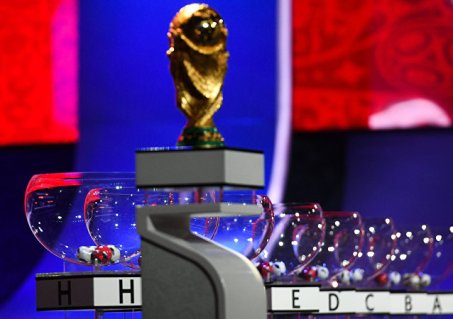
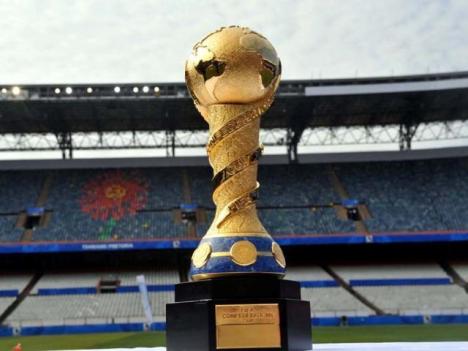
 -Russia (63): Russia is an enigma in football right now. The team has a lot of talent but constantly misses in delivering in major tournaments and qualifying events. Such examples include qualifying for three World Cups since the USSR dissolved and failing to qualify for the knockout round each time. Another example is the Euro tournament: semifinalists in 2008 but out in the Group Stage in 2012 and 2016. Trying coaches from other countries like Guus Huddink and Fabio Capello have delivered sub-par results.
 -New Zealand (95): New Zealand can be either a very good team or a bad team. It qualified for the 2010 World Cup and drew in all of its games. However it hasn’t made much of an impact since. The current line-up of the all-blacks only features one player that plays for a team in a major European League (France’s Ligue 1). The Kiwis have been dominant against teams from Oceania but have struggled against teams from other continents such as a 1-1 draw against the US and losses to Belarus, Northern Ireland and Mexico. If they don’t go far here, they can always learn in time for next year.
 -Portugal (8): Portugal is a team of surprises. The team went from lackluster group play in Euro 2016 to becoming Cup champions. Portugal has since maintained its reputation as one of the best teams in the world with excellent play in World Cup qualifying and continuing to win most of their games. However they have had some notable losses such as a 2-0 loss to Switzerland in September and a 3-2 loss to Sweden in March. Portugal can either be very on or very off here in Russia. The next two weeks will decide their fate.
 -Cameroon (32): Cameroon have been one of the most consistent African teams. However their play in the last two decades have been far from their glory days in the early 90’s. The team has worked hard to become better and more consistent since the embarrassment of the 2014 World Cup where they finished dead last. The current squad has many players from many leagues. The team hasn’t had the best chances at proving themselves since. In the past twelve months, they’ve either won or tied every game, but they’ve all been against African teams. The Confederations Cup is a chance for them to prove themselves and where they stand.
 –Chile (4): We can have a long discussion about the ‘sleeping giants’ in football waiting for their big moment to arrive. Chile would be one of them. They have been underestimated in the past and have even gone out in the Round Of 16 in the past two World Cups; and to Brazil both times. However Chile has seized the moment at both the 2015 and 2016 Copa Americas by winning their first-ever Copas. Chile now wants to prove its greatness on the world stage, but they have had an up-and-down period since Copa 2016. They’ve had wins against Uruguay, Colombia and Iceland, but they’ve also had losses to Romania and Argentina and even drew against Russia 1-1 just a week ago. Chile will have to seize the moment if they want to prove themselves further.
 Jon The Blogcentric