If there is one genre of movie that stands out during the summer movie season, it’s the superhero movies. Every year they win crowds and give them their enjoyment for the most part. For this summary, I will review two such movies: Captain America: Civil War and The Suicide Squad. Both are two different types of superhero movies in the way the people try to be heroes and with the comic franchises: Marvel vs. DC once again.
Captain America: Civil War
While DC Comics has the two biggest superheroes, Marvel’s edge is its multitude of different superheroes: take your pick. This time around in Captain America: Civil War, the focus is on Captain America. Or is it?
Watching the film, I was expecting it to be a story about Captain America. You can imagine my surprise to see all the other Avengers characters. I was cool with it at first. However things started getting uncomfortable for me when I saw them take up so much screen time. They all took up so much time, I even questioned whether Captain America was even the lead role in the film. I even thought if it was to have one hero as the lead role, it should probably be Iron Man.
Nevertheless the film does have a lot of excellent qualities. The first is a story that is thought-provoking. There’s a situation where international rules are imposed on the Avengers. Right when an incident happens, it causes friction within the team and even division. The question remains of what is the right thing to do? The movie attempts to give you the answer. Virtues and morals are an uncompromisable ingredient in superhero movies no matter how much action is involved. Even top directors will say that the values of humanity are necessary for a winning superhero movie. Here we have a movie that gets one questioning what is the right thing to do considering the situation. That adds to the film as it gets the audience thinking.
Of course high-tech special effects and action battles are a must in superhero movies. The crowds come to get blown away. Captain America: Civil War delivers on such action just like most of the Marvel comic movies before it. It has moments that will leave you on the edge of your seat. In addition, it adds some comedy too as it gives us a young Peter Parker, played by Tom Holland, as a preview for the new upcoming Spider-Man installment. Here Peter comes across as your typical young idiotic yuts. Gives anticipation of what to expect when Spider-Man comes out.
The Russo brothers return to direct the movie. They directed the last Captain America movie. They did a very good job of delivering another great superhero movie. Christopher Markus and Stephen McFeely return with the Russos to write the latest installment. They did a good job despite the push of some actors to have more screen time. Of course, Robert Downey Jr. stole the movie and Chris Evans appeared to have a supporting role this time. The other actors did their parts well and didn’t appear to get into too much of the mix-up. The special effects delivered and Henry Jackson’s music added to the film.
For all intents and purposes, Captain America: Civil War is an Avengers movie in disguise. Don’t be fooled. However the quality of the story is maintained as it gives a thought-provoking story with the superhero action to deliver.
Suicide Squad
There’s something about the knack to do an anti-hero movie. We saw that with Marvel when they released Deadpool. Now we see DC Comics making the attempt with the Suicide Squad. Do they succeed?
You’d think after Sausage Party, I’d start again on how this movie of a bad-guy superhero squad is trying to ‘bring back the 90’s’ but you’re wrong. A story where it takes bad guys and makes heroes out of them is actually a very common theme. It’s even been done in film as far back as the 1930’s as I once saw 1939’s Stagecoach take the outcasts of society and turn them into heroes. It’s a theme that has been done decade after decade. We see it done here again with the Suicide Squad. The people recruited to be part of the Squad are criminals and crazies that look like they deserved to be shunned away from society but an intelligence operative sees them as the right people for the job. They even make clear that they’re bad, not evil.
The ‘bad vs. evil’ theme is what makes this movie unique among the superhero movies of this year. Even from Deadpool. While Marvel’s Deadpool is about a selfish man who’s disinterested in being the superhero bestowed upon him, Suicide Squad is about a conscience present in even the baddest of badasses. A reminder that bad and evil are two completely different things. Don’t forget we’re dealing with a world where Superman is deceased, as exhibited in Batman vs. Superman: Dawn Of Justice months earlier.
Now the Suicide Squad is not a team of badass superheroes created in vain after Deadpool: an attempt at having ‘anti-Avengers.’ It’s a team that actually debuted in DC Comics in 1959 in their monthly Brave And The Bold series and made a return in 1987 in their Legends series back then. The comic would be a monthly series that would issue for some months, end temporarily for a year or two and then make a comeback from time to time. Now seems like the right time to bring them to the screen. I must say their craziness and eccentricities were big time scene-stealers. While Deadpool mostly relied on the idiotic actions and lines from its lead characters, the characters of the Suicide Squad were more about their crazy and even eccentric personalities. That was their edge and I’m sure that’s what won the crowds to them this year. It’s no wonder it’s the 4th highest grossing movie of the summer.
This is David Ayer’s first attempt at directing and writing a superhero movie. He has a resume for writing and directing a lot of good police dramas and action movies in the past. However his experience doesn’t completely translate the best. Imperfections are easy to notice and it seems the movie does get a bit disjointed at times. Even in terms of the characters, there’s not that much depth to their roles and it often appears like the actors are trying to play characters more than acting out roles. I’ve noticed that DC Comics movies this year are lacking in terms of writing. It’s noticeable in Batman vs. Superman too.
Nevertheless the actors do deliver on character acting and that’s one quality I feel made the movie. In addition the actors succeeded in making characters you want to hate at first and then surprise you as they become heroes and then return as bad guys. Margot Robbie was the standout as Harley Quinn. Her character was the one that knew how to grab your attention, even upstaging Will Smith. Others standouts include Jared Leto as the Joker, Jay Hernandez as El Diablo and Jai Courtney as Captain Boomerang. Visual effects were top notch and loaded with bright color that’s eye catching and very rare to see in most other movies, especially superhero movies. The mix of music was also an added quality. It seems like after Guardians Of The Galaxy, filmmakers are playing around and even experimenting with use of songs in the movies. Here they mix in music spanning five decades and it produces an entertainingly winning result.
Suicide Squad may be lacking in the script and in the editing but it’s the on-fire character acting, colorful visual effects and the eclectic music track that make the movie entertaining and a winner for the summer.
Sure, I only have two superhero movies in my summary of the genre but both do shed some light on the presence of the superhero movies of the summer and why they continue to win us over. They have spectacular action but they also test our conscience as well. I saw that in Batman vs. Superman earlier in the role of a superhero even after they cause destruction to do good. I see it again in Captain America as the Avengers question whether it’s right to break the law to do what’s right. I also see it in the Suicide Squad as outcasts get a shot at redemption and even remind themselves as well as others that they do possess a conscience and can even do what’s right despite their criminal minds.
Once again, the superhero genre remains one of the most winning movie genres of the summer. Even with the surprise success of Deadpool, families still come to the movies to see the good guys win. Some even like to get their ‘bad boy/bad girl’ kicks. All deliver in terms of action and a message.
The World Cup in 1950 was to be Brazil’s shining moment. Instead it delivered a heartbreak that still haunts them to this day.
You may remember a while back I talked about Brazil’s football legacy but refrained from talking about 1950, the first time they hosted. The first time they hosted was intended to be a grand moment for the country and especially their football team. In fact the Maracana was built to be the grand stage for Brazil’s win. Unfortunately the Cup ended with a heartache that still haunts the country to this day.
WAR IS OVER, THE WORLD CUP IS BACK
1950 was to be the fourth time the FIFA World Cup would be held. It started in 1930 but the 1942 World Cup had to be cancelled because of World War II. The 1946 World Cup was also cancelled as the world was still recovering from the end of that war just one year earlier. Just like 1948 was the year that brought the Olympic Games back to life, 1950 was the year the World Cup came back. However Germany and Japan were still part of the international sanctioned list and were banned from competing, just like they were banned from the 1948 Olympic Games. Brazil and Italy were given automatic berths: Brazil as host country and Italy as defending champions. The four British nations of England, Scotland, Wales and Northern Ireland returned to FIFA after seventeen years of ‘exiling’ themselves.
WE WANT OUT
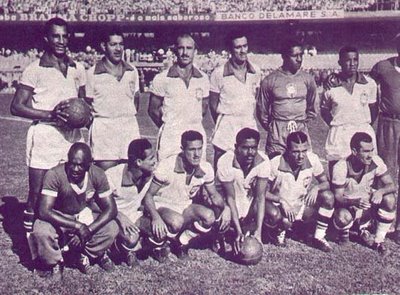
The 1950 Brazil team. Before 1950, Brazil’s best finish at the World Cup was third in 1938.
Seven spots were allocated to European countries, six to American countries and one to an Asian country. If you think it’s hectic getting teams to qualify for the World Cup, you should hear about 1950. Not because of competitive play but more because of international politics and football politics. Iron curtain countries like the USSR and two countries that participated in 1938–Hungary and finalist Czechoslovakia– refused to participate. Argentina, Peru and Ecuador withdrew after the qualifying round, possibly because of a dispute with the Brazilian Football Federation. The Philippines, Burma and Indonesia withdrew leaving India to receive the Asian berth by default. Austria declined to participate in qualifying feeling its team wasn’t good enough and Belgium withdrew from the qualification tournament which allowed Switzerland and Turkey to qualify without playing their final round of matches.
With the qualification done, it was off to the World Cup, right? Scotland withdrew because the very prideful chairman of the Scottish Football Federation insisted Scotland would only travel to Brazil as winners of the Home Championship. When England showed up, Scotland withdrew, even though England planned to attend even without the Championship. Turkey withdrew because of the huge cost of traveling to Brazil. FIFA invited two European nations who failed in qualifying–Portugal and France–to fill the gap. Only France accepted.
Now with the fifteen teams set for Brazil, that should lead to straight competition, but that led to more withdrawals. First came the draw on May 22, 1950 in Rio de Janeiro. India was the first drawn team to withdraw because of travel costs. France then withdrew because of the cost and time to travel between the cities. That left the World Cup with a field of only thirteen teams. Just like 1930 again! After all that, here’s how the teams worked out:
Group 1: Brazil, Mexico, Switzerland and Yugoslavia
Group 2: England, Chile, Spain and the United States
Group 3: Italy, Paraguay and Sweden
Group 4: Uruguay and Bolivia
ON WITH THE CUP
After all that hassle, the World Cup finally began on June 24, 1950. This would be the first world Cup since the inaugural 1930 World Cup where group play would be contested and would be the only World Cup where group play would decide the winner. It was Brazil’s idea to do this because more games meant more ticket sales to help compensate for the expenses of the stadiums. FIFA at first rejected the idea but agreed when Brazil threatened to pull out as hosts. The matches were held in six stadiums in six cities: Rio De Janeiro, Sao Paulo, Belo Horizonte, Curitiba, Porto Alegre and Recife. Four of the six stadiums were long into existence before the World Cup. There were only two that were build especially for the Cup: Estadio Raimundo Sampaio in Belo Horizonte and the Maracana in Rio.
Because of the uneven number of teams per group, it was decided that only the team that finished first advances. Group 4 had no problem deciding the advancer as that only required a single game, which Uruguay won 8-0 over Bolivia. In Group 3, Sweden was the winner with a win against Italy 3-2 and a draw against Paraguay 2-2.
Groups 1 and 2 were the two fully contested groups and they provided the most action. Group 1 was a no-brainer right from the start. Brazil delivered an attack style of play that would take them to the top of the group with a 4-0 win over Mexico, a 2-2 tie against Switzerland and a 2-0 win over Yugoslavia.
World Cup 1950 wasn’t all Brazil, Brazil. It also was the stage for the American’s 1-0 upset over England with Joe Gaetjens (right) scoring the winning goal.
Group 2 was not exactly remembered for its winner Spain or for Spain’s wins of 3-1 over the US, 2-0 over Chile or 1-0 over England. Instead Group 2 was known for one of the biggest soccer upsets of the time. The US vs. England match first appeared to be England’s for the taking since England, known then as the ‘Kings of Football,’ had the pros on their team while the American team was made up of part-time players who made their income from the jobs they worked. However the English and the 13,000 in attendance at the Estacio Independencia in Belo Horizonte were stunned when American Joseph Gaetjens, who was actually not an American citizen, scored the first goal in the 38th minute. Despite strong challenging play from both sides throughout the game, there were no other goals scored. The Americans’ 1-0 win over the English is still considered one of the biggest upsets in World Cup history.
The aftermath of this was also interesting. It made huge news in World Cup countries and almost made huge news in England but was trumped by the news the English cricket team lost to the West Indies for the first time ever. The English were nitpicky about the win saying that the team ‘had arrived through Ellis Island,’ referring to the assumption most Americans on that team were children of immigrants or immigrants themselves. For the record, three members of the American team including Gaetjens were not yet American citizens. In the United States, the win only made sidelined news. The Americans were still disinterested in soccer as they still promoted their ‘all-American’ sports like baseball, football and basketball. The win would gain appreciation by the Americans over time and especially in the last 25 years with the Americans slowly welcoming soccer especially after hosting the 1994 World Cup and the formation and success of MLS (Major League Soccer). The game has recently been dubbed by the Americans as the ‘Miracle Match’ and even spawned a small 2005 film “The Game Of Their Lives.’
ANOTHER SET OF GROUP PLAY?
Because of the uneven numbers of the groups in the first round, it was not only decided that only those that finish first in their group advance but also that it be group-style play to decide the winner.Also that ticket sales thing also has a lot to do with it too. This would be the only time in World Cup history in which group play would decide the winner. In group order, the finalists were Brazil, Spain, Sweden and Uruguay. All of the games in the ‘winners group’ were played either in Sao Paulo’s Estadio de Pacaembu or the Maracana. All teams played all their matches on the same day and at the same time. Brazil’s matches in this round were all contested at the Maracana.
The group play of the winners started July 9th with a 2-2 draw between Uruguay and Spain. Brazil delighted a crowd of 139,000 with a 7-1 win against Sweden which included four goals from Ademir. On July 13th Brazil continued their winning ways in front of a crowd of 153,000 with a 6-1 victory over Spain which included the Cup’s only ‘own goal’ by Spaniard Jose Parra Martinez. Uruguay gained some boost with a 3-2 win over Sweden with the winning goal coming with five minutes to go. The two games on July 16th were still group games however many still believed they played the role as 3rd Place Final and Final because of the end result and the team’s overall placing. Sweden beat Spain 3-1 in Pacaembu with a measly attendance of 11,000 and would finish the World Cup in third place.
A FINAL GAME TO BE REMEMBERED
“Down through its history, only three people have managed to silence the Maracana: the Pope, Frank Sinatra and me.”
-Alcides Ghiggia
Okay, here it was. This was Brazil’s for the winning. They were in excellent position to win the World Cup. They’ve already proven to the world their greatness. Even if Brazil tied Uruguay, they could still win the World Cup because Brazil had two wins while Uruguay had a win and a tie. The general public were not the only ones claiming Brazil to be the victors days before the match even started. The specialized press were too. In fact the Brazilian newspaper O Mundo printed an early edition paper that day with the Brazilian team on the front page with the headline ‘These are the World champions.” There was a song composed days before the game entitled Brasil os vencedores (Brazil The Victors) and was to be played once Brazil won. Even Julie Rimet, president of FIFA and founder of the World Cup, anticipated Brazil would win and even had prepared a speech in Portuguese to congratulate anticipated winners Brazil after their win. Unlike now, medals were not awarded to teams at the World Cup who finished in the Top 3 but the Brazilian Football Confederation has already made 22 gold medals with the names of the players engraved on them.
On the morning of July 16th, the streets were already full of energy and there was even a ‘makeshift carnival’ with thousands of signs celebrating the world title and chants of ‘Brazil must win!” The Maracana was bustling in its own way. One thing we should remember is that the Maracana stadium consisted of two tiers of stands and much of the stands were standing area. This is the reason why unlike today they could field a capacity of over 100,000. At this match, the official paid attendance registered 173,380 attended while many estimate the actual attendance was over 210,000. This still remains as a world record for attendance for a team sports match.
As Brazil were in the dressing room, confident of victory in their spiffy white shirts and blue collars, Uruguay has other plans. Uruguay’s captain Obdulio Varela brought as many copies of O Mundo that had ‘These are the World champions” on the front page, laid them on their bathroom door and encouraged his teammates to urinate on them. In Uruguay’s locker room prior to the match, coach Juan Lopez informed the team that their best chance of surviving of surviving the powerful offensive line of Brazil would come through adopting a defensive strategy. After he left, Varela stood up and addressed the team himself, saying “Juancito is a good man, but today, he is wrong. If we play defensively against Brazil, our fate will be no different from Spain or Sweden”. Varela then delivered an emotional speech about how they must face all the odds and not to be intimidated by the fans or the opposing team. In response to his squad’s underdog status, the captain delivered the memorable line, “Boys, outsiders don’t play. Let’s start the show.”
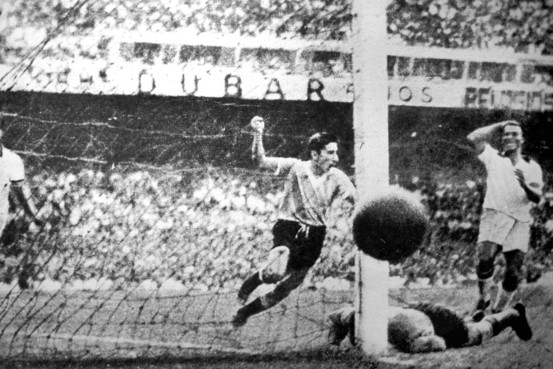
The goal scored by Alcides Ghiggia (centre) in the 79th minutes stunned the Maracana silent and would break the hearts of Brazil.
As expected, the game began with Brazil playing aggressively and attacking against the majority of the Uruguayan defensive line for the first half. However unlike Spain and Sweden, Uruguay was successful in maintaining their defense and the first half ended scoreless.
First blood was drawn at the 47th minute when Sao Paulo forward Friaca shot low past the goalkeeper to give Brazil the first goal of the game. Captain Varela immediately took the ball after the goal and disputed its validity, arguing that it was offside. Varela’s argument was obviously intentional to the point he even forced the referee, Englishman George Reader, to bring out an interpreter. The protest was unsuccessful but it succeeded in calming the crowd down. Then Varela took the ball to the centre of the field and shouted to his teammates: “Now it’s time to win.”
Uruguay was able to find control of the game and Brazil soon had its defensive frailty exposed. Juan Alberto Schiaffino scored the equalizer for Uruguay in the 66th minute. Then in the 79th minute, Alcides Ghiggia ran down the right side of the field, dribbled past Brazilian defender Bigode and scored another goal. The crowd was virtually silenced; Uruguay was now the leader. The silence continued for the remainder of the play until Reader blew the final whistle. It was official: Uruguay won the Cup by defeating Brazil 2-1.
THE AFTERMATH: BOTH IMMEDIATE AND IN THE LONG RUN
“The maximum punishment in Brazil is 30 years imprisonment, but I have been paying, for something I am not even responsible for, by now, for 50 years.”
-Moacir Barbosa
When the sudden news was official, many said there was a ‘traumatic and disturbing absolute silence’ except for the celebrating by the Uruguayan team and delegation. In Brazil, many newspapers refused to accept the fact that their team had been defeated. Radio journalist Ary Barroso retired, albeit briefly. At least two or three people on the top tier of the stands of the Maracana were so distraught by the loss, they committed suicide. Yes, there were peole so distraught over Brazil’s loss, they committed suicide. One man in the stands even had a heart attack. The gold medals were immediately disposed of. The song Brazil the Victors was never played. The nation was just heartbroken over the loss. The game remains one of the biggest upsets in football history and Brazil commonly refers to that game as the Maracanazo, or “blow at the Maracana.” Even Pele talks of how his father cried saying: “Brazil lost!”
In the years to come, the game was influential for a lot of superstition. For one thing, Brazil refused to have a white-and-blue uniform and would soon adopt their famous yellow shirt with blue collar that still exists today. White is seen as bad luck in Brazil. The players of the time were vilified by the fans and were sometimes seen as bad luck. Many went into silent retirement while some never played for the national team again. Only two players that didn’t play in the final played for Brazil’s team in later World Cups. The defeat would weigh down on Brazil’s team so much, they brought a psychiatrist to the 1958 World Cup to remove the haunts of the memories of that game. Whatever the situation, the Brazilian team of 1958 which featured a 17 year-old Pele capturing the world’s imagination won the World Cup: the first of five total World Cups won by Brazil.
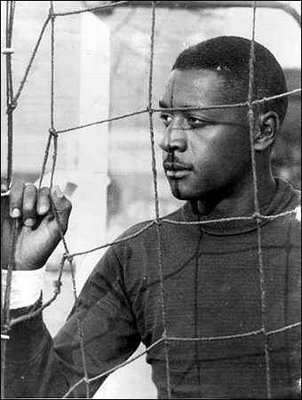
Brazilian goalkeeper Moacir Barbosa would be blamed and even vilified for Brazil’s loss for the rest of his life.
However of all the players from Brazil, it was goalkeeper Moacir Barbosa that got hit the hardest. He received the biggest flack and biggest blame for the Maracanazo and it seems like Brazil never forgave him. He was still able to play professionally for another thirteen years and was even part of Brazil’s national team until 1953 but he was commonly shunned by the nation. There was even one time he was in a store in Brazil and a mother pointed at him and said to her small son: “Look at him, son. He is the man who made all of Brazil cry.” Little changed over the years. In 1993 the president of the Brazilian Football Confederation refused to let him be a commentator. In 1994, the Brazilian national team did not want him to visit them because they feared he would give them bad luck. If there was one good thing, his wife stayed married to him for a total of 50 years until her death in 1997. He managed administration at the Maracana but was always at a shortage for money after leaving. He did however received assistance from sources such as Brazilian football team Vasco da Gama and his wife’s friend after her death. The friend remembered his last years: “He even cried on my shoulder. Until the end he used to always say: ‘I’m not guilty. There were 11 of us.'” Moacir Barbosa died of a heart attack in 2000 at the age of 79. He was penniless at the time.
One interesting note is what happened to Alcides Ghiggia who scored that heartstopping goal. He would continue to have a prolific career as a professional player until 1968 and was even signed onto European teams like AC Milan and AS Roma during a time when it was extremely rare for South American players to play for teams outside their home country. As of today, the 87 year-old Ghiggia is the only surviving member of Uruguay’s World Cup winning team from 1950.
Interesting note is that on December 29, 2009, Brazil honored Ghiggia by celebrating that decisive goal by having Ghiggia plant his feet in a mould to take his place along greats like Pele, Eusebio and Franz Beckenbauer. The reception to Ghiggia was surprisingly warm and Ghiggia himself was overcome by emotion to the warmth. Ghiggia also made a return appearance to Brazil during the draw for the groups of the 2014 World Cup in December 2013. Each country that had won a World Cup in the past was allowed to send one of its great players to participate in the draw. Uruguay sent Ghiggia. There was however one negative thing as of recent. Ghiggia has been invited to the opening games of both the 2006 and 2010 World Cup but it was revealed by him that he was not on the guest list for this World Cup. I wonder who did it too? Whatever the situation, FIFA spokesperson Delia Fischer insisted the day before that Ghiggia and a guest will have at ticket. Ghiggia has also commented on this World Cup: “I hope Brazil become world champions, so they can all enjoy it here.”
The Brazilian team this year are hoping to finally make that bad memory of 1950 a think of the past. So far Brazil have been doing very well even if they’re not the most spectacular team out there. They opened with a 3-1 win over Croatia but left people shocked with a 0-0 draw against Mexico. They did reassure people that they will win with a 4-1 win over Cameroon to close out the Group Stage. They did win the Round of 16 match against Chile on penalty kicks after a 1-1 draw. For those concerned since that, don’t be. There have been many teams in the last 28 years that had a match lead to penalty kicks before they played in the final for the Cup and won.
Brazil is often praised and even fancied in the way they treat football like a religion. However their reaction to their loss in 1950 is a negative side of that. Sure the loss to Uruguay was a shock but it’s a shame how they went about it. You know how when the Boston Red Sox won the 2004 World Series and fans then showed a sign saying “We forgive Bill Buckner” in reference to Buckner’s Series-costing fumble in Game 6 of the 1986 Series? I hope that if Brazil wins the World Cup, there should be someone in the stands with a sign saying: “Nós perdoamosMoacirBarbosa (We forgive Moacir Barbosa).”
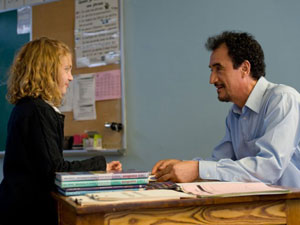
If a Canadian movie has a Best Foreign Language Film nomination, do you think I’m going to go see it? Of course I’m going to go see it. For the second year in a row and for the sixth time ever, a Canadian film was nominated for an Oscar in that category. This year’s nominee is titled Monsieur Lazhar.
The film starts with what is to be a typical day at a Catholic elementary school. A boy named Simon is getting the milk for the day. As he walks into his classroom alone, he discovers his teacher Martine hanging. This is very hard for the students and the school. One of the difficulties is finding a new teacher for the students of the deceased teacher’s class. In walks Bachir Lazhar, an Algerian immigrant. They are hesitant at first but they agree to hire him.
Known to few is that Bachir’s immigration status is in question by the courts. A package he receives comes into question. The immigration court asks him why he won’t return since ‘Algeria is back to normal’ but he replies “Nothing is ever really normal in Algeria.” The interrogations eventually get frustrating to the point Bachir admits of the fire in Algiers that killed his wife and children back in the 90’s. That fire was no accident.
The class tries to move on as usual. For some students, it goes fine. For others like Simon and Alice, who witnessed their teacher hanging, it’s difficult and painful. Alice is more vocal about her difficulties. She makes a speech in class about violence and how the hanging has an effect. She also has a softer side and develops a liking for Monsieur Lazhar, even learning about his home city of Algiers. Simon is more reserved and difficult. He’s not the same since the hanging and appears like he has something to let out but can’t. He even resorts to fights with other students. Home life isn’t easy for him because his parents are rarely there. However something has to be done as it’s discovered he has a picture of Martine which he drew angel wings and a noose on.
Dealing with the students is not an easy task to do either. The elementary school is worried about the suicide being brought out into the open. Plus teachers are now under strict limits over what to deal with students’ issue and how to deal with them. The new laws set twenty years ago changed lots to how a teacher can function towards a student. This is hard for Bachir as he wants the students to heal from this trauma. Especially Simon, whom the teachers are considering expelling. We learn shortly before Martine hung herself, Simon was hugged by Martine while he was crying but told his parents she kissed him. The parents came down hard on her.
What happens in the end is one scenario ends on a bright note and another scenario ends on a low note for Bachir. In the end we get a turnaround that’s more valuable than Bachir keeping his job as a teacher. Something that the school board could never give the children.
The role of Monsieur Lazhar was that of a man who would help bring help when it was needed unexpectedly. Right at the beginning of his teaching he would tell the meaning of his name: “Lucky” and “Tell the good news,” In the end, he was the lucky one who would give the good news to the children. The students in turn would be the lucky ones as he would help the most troubled of the students heal from the trauma. He would succeed where the school board and the counselor would fail. Even in the end, his impulsive helping of the students would be too much for the school to handle. The ending would show the common belief that no good deed goes unpunished but it’s not without its rewards. Bachir Lazhar would give to the students and he would receive from them as well. His teaching of the students would also help him in terms of his own healing from the loss of his own family.
The best quality of the movie was in its gentle storytelling. We have a situation of a troubled school being taught by a teacher with a troubled past of his own. He faces two pressures of keeping his new-found job, keeping the peace of his classroom since the suicide, maintaining the peace of the school and being able to stay in Canada to avoid persecution back home in Algeria. All of this was told in a gentle manner that would keep the audience intrigued and hoping for the best for Bachir Lazhar and for Simon and Alice. That was its best quality.
The acting overall was excellent and stuck to their parts well without coming across as showy or phony. Mohammed Fellag was excellent playing a teacher with a troubled past thousands of miles away. The children were also good as they played genuine child roles instead of the typical cutesy acting Hollywood normally gives them. Their feelings, traumas and actions were not over-the-top either. The directing and scriptwriting of Phillippe Falardeau was also well-written, although not a standout. Known to few, Monsieur Lazhar is actually an adaptation of a one-man monologue. Falardeau did a very good job in creating and directing a script with a multitude of actors. He did a very smart job in making the story very real.
Intersting how Monsieur Lazhar gives Canadian film a unique achievement. This is the first time Canadian entries in the Best Foreign Language Film category has been nominated for two years in a row. Last year was Incendies. Interestingly two of the three producers of Monsieur Lazhar also produced Incendies. The Oscar nomination isn’t the only acclaim Monsieur Lazhar has received. The film also won the Viewers Choice Award for Best Canadian Film at the Toronto Film Festival, Best Film award at the Valladolid Film Festival and has been nominated for nine Genie Awards, Canada’s national award for filmmaking excellence. Surprisingly, it was not shown at the Vancouver Film Festival. It’s a shame because I would have liked to have seen it if it was out then.
Monsieur Lazhar is a film that starts out on a dark subject but it ends on a bittersweet positive note. The warmth of Monsieur Lazhar reminds us how people can succeed where the system fails. We need more people like Monsieur Lazhar out there.
 While DC Comics has the two biggest superheroes, Marvel’s edge is its multitude of different superheroes: take your pick. This time around in Captain America: Civil War, the focus is on Captain America. Or is it?
 There’s something about the knack to do an anti-hero movie. We saw that with Marvel when they released Deadpool. Now we see DC Comics making the attempt with the Suicide Squad. Do they succeed?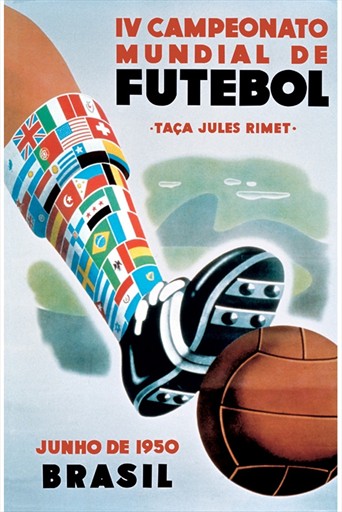

 Jon The Blogcentric