Double Movie Review: Mad Max- Fury Road and Jurassic World

Here I am back to my blogging habit. Yes, I have quite the backlog in terms of movie reviews. I have the energy to post now and I’m able to post a double review of two of the hottest movies of the summer: Jurassic World and Mad Max: Fury Road. Both were either sequels or part of a franchise. Both cost $150 million each to make. Both are different in terms of the audience they can win over and both have differing success results.

Tom Hardy (left) and Charlize Theron pursue a post-apocalyptic world in Mad Max: Fury Road.
Tom Hardy (left) and Charlize Theron fight for survival together in a post-apocalyptic world in Mad Max: Fury Road.

MAD MAX: FURY ROAD

Yes, it’s been a long time since there’s been a Mad Max movie: 30 years to be exact. George Miller is back in directing this Mad Max movie, or picking up where he left off as one could assume. And believe me this movie was quite something else.

Right at the beginning you’re left wondering what kind of world this is. The world is a complete bizarre wasteland and the whole universe in existence is fighting each other and Max. Mind you even the bad guys are insane enough that Joe uses Max as a universal blood donor and has five wives for the sake of breeding purposes. Over time, some of the people become Max’s friend in order to save civilization from Joe.

Already that’s a lot of craziness most fans of the original three Mad Max movies would find hard to fathom but watching the movie even gives it enough craziness for any movie viewer hard to fathom. Even the people all act like they’re all on something–crack, smack, speed–and it’s not just the bad guys. Just one insane place full of insane people. However what would have to make people adjust to this new version of the Max Max franchise would have to be good characters. First would have to be Furiosa. Right in the middle of the movie, you could see the pain in which she’s going through. It’s also a pain shared by the other four wives of Joe. Once these characters were made more human, it made for something for people to connect to the story. In addition is the connection of the character Nux. Nux was very unhuman but his human side was more noticeable later on and it gave cause for people to feel for him even as he sacrifices himself.

The character work couldn’t have been done firstly without Charlize Theron as Furiosa. It’s her performance that made people feel the pain of Furiosa. There’s even talk of Oscar buzz for Charlize this early. Nicholas Hoult’s performance help turn a beast of a character like Nux into a character with dimension and actually makes the audience feel for him. Tom Hardy did a good job as Max Rockatansky. I’m sure in this film he had the duty to try to fill Mel Gibson’s shoes. I don’t know if he did it but he did a good job as Max.

George Miller did a good job not just in directing the movie and co-writing the script with two additional writers. He also created the bizarre world in which Mad Max and his allies had to survive in and fight for their freedom. Also instrumental in creating this bizarre world are the set designers, costumers and the visual effects team. The music from Junkie XL also adds to the drama and the insanity of the movie.

Of the $150 million Mad Max: Fury Road cost to make and produce, it has so far made $152.6 million in North America and $368.6 million worldwide. Not huge spectacular numbers as far as summer movie fare goes but pleasant enough for a sequel– Mad Max The Wasteland— planned for either 2017 or 2018. It has even impressed critics that it received 98% on Rotten Tomatoes. Who says all summer movies are money-grabbing junk?

Mad Max: Fury Road may not be exactly the type of movie most would expect, not even fans of the original Mad Max movies, but it exceeds the expectations of whatever you throw at it. I know for me it didn’t appear at all like what I normally expect from a sequel. And many of you already know what I feel about Hollywood sequels. I don’t even think this is even a sequel. Mad Max may just be a franchise instead of a chronological series. Nevertheless it’s way better than most common summer fare.

JURASSIC WORLD

Jurassic World is about the latest Jurassic theme park where chaos ensues any minute.
Jurassic World is about the latest Jurassic theme park where chaos will undoubtedly ensue any minute.

Already you know a movie like Jurassic World will be a hit simply because of the title. This is the few times where judging a book by its cover is legit. Whether the movie is all that great remains to be seen.

The film doesn’t really carry on the tradition of the Jurassic Park book of Michael Crichton. Instead it’s a new story concocted by Rick Jaffa and Amanda Silver and adapted to screen by Jaffa and Silver along with Derek Connolly and Colin Trevorrow who directs the movie. What happens is Jurassic Park is long defunked especially after the fatalities. The writers and directors create a story in a new park, Jurassic World. Jurassic World is a theme park that`s a whole island that includes exhibits that make it both a museum and like one of those safari parks one can drive through.

Clever work for a popcorn movie but over time, you feel the story is as simplistic as one would expect from a Hollywood story. A park worker is a woman out of love while looking after her about-to-be-divorced sister`s kids and dealing with the dinosaur trainee whom she finds charming but had a flop first date with. Sometimes it seems as though the characters seem too simplistic as well: Owen as the charming but stuffy trainer, Claire as the out-of-love-and-depressed type, Vic as the slacker security operations person, Grey as the cute kid with sad puppy dog eye and his bother Zach as the typical bored miserable teen who somehow gets cheered up by the dinosaurs.

Even the drama becomes a bit predictable over time. You sense there would have to be some sort of havoc at the World to get the story rolling. Sure enough, the escape of Indominus is what starts the drama. You have to admit it was a tad predictable. Even how the two boys become threatened in the ensuing drama is predictable too. I will admit the one unpredictable thing was when Indominus breaks into the park`s pterosaur aviary and has them all on the loose chasing all the other park visitors. I did not expect that nor did I expect the whole Jurassic World to look like a war zone at the end. I give that credit.

Overall, Jurassic World came across as a common popcorn movie where a lot of the excitement was either missing or anticipated right from the start. It`s a movie that appears undecided whether it wants to be charming or a thriller. I kind of blame it on the lack of Spilberg magic that came with the first Jurassic Park movie. I also kind of blame it on some of the character acting that appears so stocky like Bryce Dallas Howard playing another unlucky in love type, Vincent D`Onofrio playing an all-to-common slacker player and Ty Simpkins playing a typical cute kid with sad puppy dog eyes. The one good performance although in a typical popcorn movie character was from Chris Pratt. He was able to make his character of Owen Grady charming and even a bit charismatic. I also give credit to the set design team for creating this island where Jurassic World is situated on and credit to the visual effects team for delivering top notch visual effects and even delivering some thrills to the movie. Although I said the action was mostly predictable, it did deliver in some thrills.

Jurassic World wasn`t too much of a critical darling as it received 71% on Rotten Tomatoes. Good but it could be better. However the big payoff came for Jurassic World at the box office as it broke a ton of records. It all started in breaking the opening weekend record and becoming only the second movie ever to have an opening weekend that grossed more than $200 million (the 2012 Avengers movie is the first ever) and it`s been growing ever since:

  • All-Time Opening Weekend: $208.8 million.
  • All-Time second weekend: $106.7 million
  • Fastest to $500 million (North America): 17 days
  • Worldwide Opening Weekend: $524.4 million
  • Fastest to $1 billion (Worldwide): 13 days

That`s just a sample of the records Jurassic World broke. I`m sure you`ll find more at Box Office Mojo. I don`t think it will break the all-time gross records especially as it finds itself out of the Top 10 in its ninth week. It may eclipse Titanic as the second-highest grossing movie in North America but it would still need at least $100 million more to contend to beat Avatar`s record.

Sure enough, there will be a Jurassic World sequel. It`s not clear if Trevorrow will return as director but he will write and produce it. Bizarre because if the Jurassic World wreaked that much havoc on that many visitors, you`d figure Jurassic World would mark the absolute end of any Jurassic theme parks. Hey, money talks especially in Tinseltown.

Jurassic World and Mad Max: Fury Road were two of the big movies of the summer of 2015. One didn`t do as well as expected while one was a record-breaker. One had a better story and better character than the other. Both gave a good statement of what the summer movie season of 2015 was like.
Oscars 2014 Best Picture Review: Selma

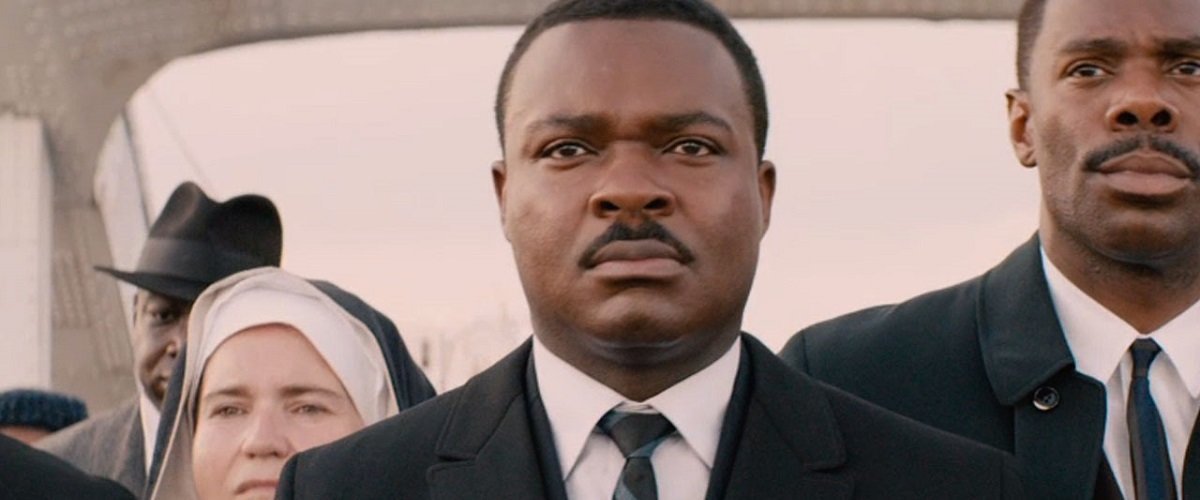
David Oyelowo (centre) plays Martin Luther King in Selma.
David Oyelowo (centre) plays Martin Luther King in Selma about an important part of American history.

Selma appears to be about an important time in US history. However it tells more than what we’ve learned about the whole story including those involved.

The film is about the march from Selma to Montgomery in 1965 led by Martin Luther King Jr. that would pave way to President Lyndon Johnson signing the Voting Rights Act of 1965. But it was more than that. It starts with Martin receiving his Nobel Peace Prize in 1964. However it’s just the beginning for Martin. A black church in Alabama explodes killing four young girls. Annie Lee Cooper has been denied the right to vote like most black people in Alabama before her. Meanwhile King is unsuccessful in convincing Johnson to pass a law allowing black citizens to vote.

Instead of accepting defeat, King is undeterred and determined to achieve this. Selma, Alabama is the meeting place for King and other activists to organize efforts to achieve this law. However both Johnson and FBI head J. Edgar Hoover are nervous about this. Hoover uses phone calls to disrupt his marriage to Coretta. Undeterred, King and black residents of Selma march to the registration office only to be confronted by a mob of police and a riot ensues where King and Cooper are arrested.

Things get even harder as state governor George Wallace, a pro-segregationist, speaks out against the marches and even calls police in Marion, Alabama to use force from state troopers during a planned night march. An assault by troopers does occur during the march where Jimmie Lee Jackson, who hid in a restaurant for the safety of him and his family, is shot to death by the police. Jimmie’s death only prompts King to tell people to stick to fighting for their rights. However the Kings receive threats on their children and activist groups are becoming unhappy with him.

A march from Selma to Montgomery to make their message heard is planned especially with the hopes of having all of the United states watching and paying attention, especially as working on ‘white consciousness’ is one of King’s objectives. At first King is hesitant but is convinced by his colleague Andrew Young. The original march takes place with all African-Americans. Right on the Edmund Pettis Bridge they’re stopped by police and attacked. The news goes nationwide. A second march is planned. This time King not only has blacks from other cities but white supporters too from regulars to religious clergy. Just before the marchers reach the end of the bridge, the chief officer and his group are back again. This time they’re allowed to proceed but King kneels in prayer and goes back. The reason was because King was suspicious. He doesn’t trust the mob of police and wants legal permission for them to march. The push for permission is especially stressed as one of the white allies, Rev. James Reeb, was beaten to death. The permission is granted by Alabama Judge Frank Minis Johnson. Lyndon Johnson, Martin Luther King and the marchers make history.

There’s no question that this is to do about an important moment in American history. Actually coming from Canada, I was never taught about Selma. I knew about the I Have A Dream speech but was never taught about Selma. However the film is also about Martin Luther King himself. The movie begins with him accepting his Nobel Peace Prize which came months after his I Have A Dream speech. However we would be reminded that King had more work to be done. Selma was a new challenge for him as his people needed the right to vote. However there was the constant threat of police brutality and even death. He stood firm in his non-violence stance and his plan was to work on ‘white consciousness’ and he knew it was the only way to work. He also knew he had to work with the tough minds of President Johnson and other politicians including Alabama Governor George Wallace. Each death linked to the marches would make him more fearful but it would make him more convinced this is something that needs to be done. We all know it was achieved but this is a reminder of how King and his people had to achieve their right.

The film also takes us back to the time and place. It reminds us just how hard it was to be black in southern US states like Alabama. Living in segregation was one thing. Being denied the right to vote was another. The only time in my life I knew of black people being denied the right to vote was in South Africa up to 1994. Apartheid riots were common news stories in the 80’s. I was shocked to learn that it was happening to black people in the 60’s in the Southern US. I always thought the US was supposed to be the ‘land of the free.’ It showed the red tape black people had to face in the justice system and especially with the police. We are all shocked and disgusted to hear about the fatal shootings of Michael Brown and Trayvon Martin in recent years and their killers getting away with it. This was happening in Alabama in the 60’s all the time. Especially shootings by police on young unarmed black men like Jimmie Lee Jackson. You couldn’t blame them for having had it. They couldn’t be denied this anymore and this was a must-win situation for them and King.

Just as much of a focal point as blacks fighting for their right to vote is also the focus of the bigoted attitude of the whites in Alabama. King made it his duty to work on ‘white consciousness’ in order to achieve this victory. Alabama, especially in the city of Selma, showed what type of ‘racial battleground’ they had to deal with. The first sign was the church explosion but we’d see it all throughout. We’d see it in the police brutality, we’d see it as a restaurant proudly advertises itself as ‘a whites-only restaurant since 1883,’ we’d see it as a white man ‘introduces’ himself to King and punches him in the face, we’d see it in the taunting of white people from all around. That’s the type of environment the black people had to fight. We should forget that Alabama has segregation removed years ago but the white people weren’t happy. They felt that segregation was right and they reacted in frustration with taunting and even violence. Even when white people joined the blacks in their march, that didn’t change a lot of people’s minds. In fact they found white supporters to be a threat and reacted with the same violence on them, even killing some. Another reminder that white supporters of the Selma marches would also be at risk to the same violent reactions as blacks. The film takes us back to the time, place and the hostile attitudes at the time. An ugly reminder but necessary to show.

Even though the film was about Martin Luther King, his crusade for human rights and the bigoted attitudes in the area, the film also showed another factor: the strength of non-violence. King’s use of non-violent means to achieve human rights may appear radical to many and even ridiculous to some at first. In fact it explains why he had a rivalry with Malcolm X as seen near the beginning of the film. Because Malcolm believed: “by any means necessary.” However it was shown to be successful in the actual event and in the film. In fact I noticed the film to also show violent means to look cowardly. We see it in the police who try to use it to strike fear in the protesters in hoping they’d quit. We see it in the white Alabamans as they use it to strike fear in the blacks and their supporters. Most of the times it’s seen they do it on impulse because they just don’t know how to deal with the situation. Funny how we’ve seen a lot of Hollywood movies, especially in the action movies of the 80’s and 90’s, where the leading man uses vengeance and violence to become the hero. Here violence looks very cowardly.

Without a doubt, this film has to belong to Ava DuVernay in directing and co-writing the story with Paul Webb. She did an excellent job in recreating the story of the marches, the people involved with them and the atmosphere of the time and place. The end result is an excellent film that won’t leave you. It’s not without controversy. There are many questioning the depiction of Lyndon Johnson in the film. Historical documents show he was actually supportive of Martin Luther King and his mission. Even I myself believed for a second that Johnson may have had some difficulty at first, knowing Johnson was originally from Texas: a state that formerly had segregation. DuVernay simply responded: “I’m a storyteller. Not a historian.” Whatever the situation, it was still a very good film put together.

David Oyelowo was excellent as Martin Luther King Jr. as she showed him in both his convictions, his inner strength and even his own personal frailties at times, like that time he relied on Andrew Young to go through with the march. Even that scene where he calls gospel singer Mahalia Jackson for inspiration and she sings to him shows that King did have fears which he needed support for. Tom Wilkinson was also very good as Johnson. Even if you feel his depiction of Johnson wasn’t that truthful, it was still a very good performance. Carmen Ejogo was excellent as Coretta. She did more than just simply play Martin Luther King’s wife. She played a young woman who herself grew in courage: a courage Coretta would need after Martin’s assassination. Oprah was also surprisingly well as Annie Lee Cooper. Right at the beginning we could see a character completely opposite to the Oprah we know. A character that looks like she’s been through the hardest life offered her. You could see it in her face. The cinematography and music added to the environment of the story. You could feel that this was a struggle worth winning.

Selma is a film retelling an important moment in history. It gives us insight into the people involved and the environment they had to fight in order to achieve their rights.

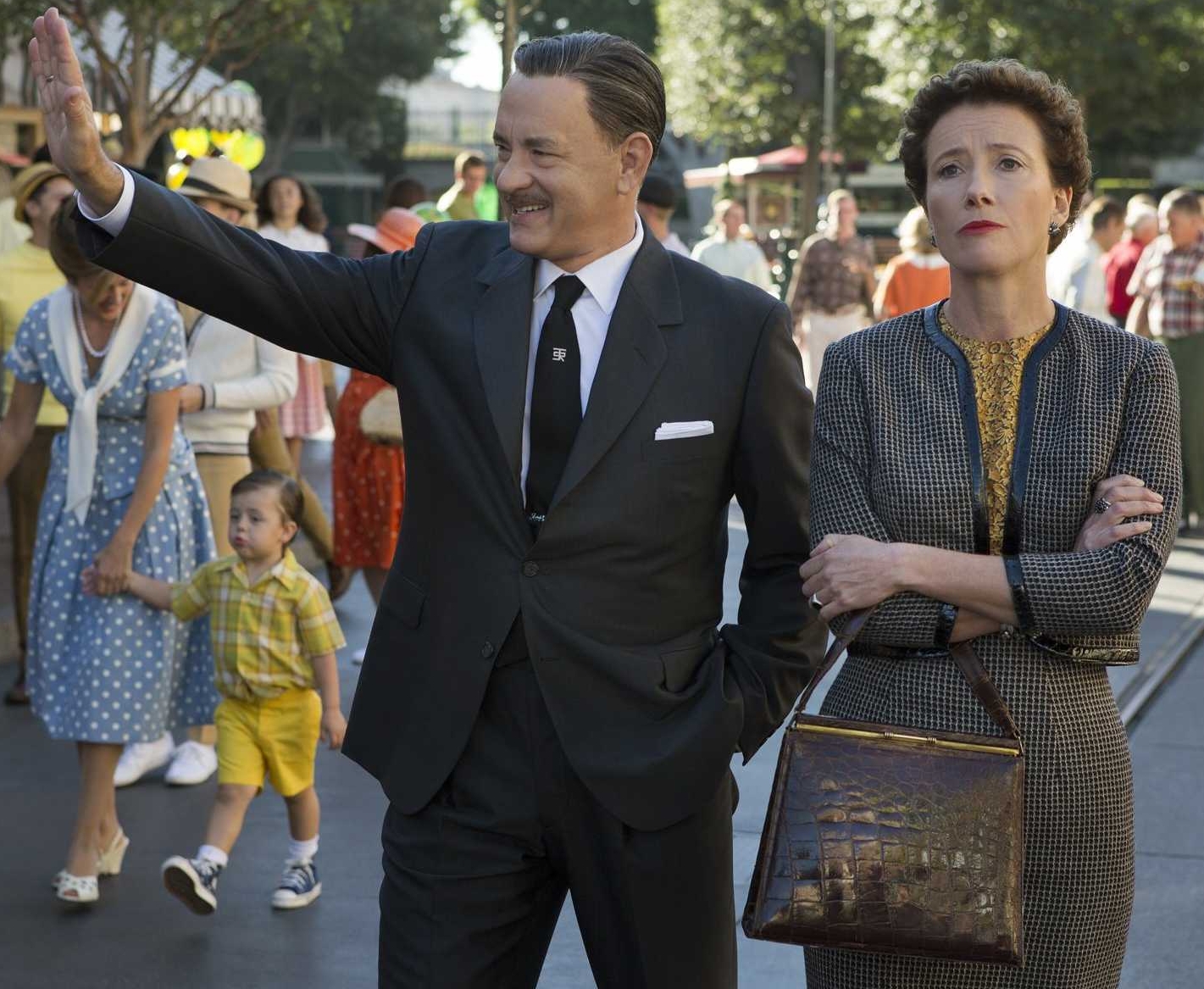
Movie Review: Saving Mr. Banks

Emma Thompson portrays the author of Mary Poppins to be like someone we never expected her to be at all in Saving Mr. Banks.
Walt Disney (Tom Hanks) tries to get a stubborn P.L. Travers (Emma Thompson)  to agree to a movie version of Mary Poppins in Saving Mr. Banks.

Saving Mr. Banks is to be the story of how Walt Disney was able to bring Mary Poppins to the big screen. The question is not just will it bring the story to life but will it make people want to see it on the big screen?

It’s 1961 and Mary Poppins author P.L. Travers is struggling financially. Walt Disney has been trying to get Travers to agree to allow him to adapt Mary Poppins to the big screen for 20 years on account of a promise he made to his daughter. Travers finally agrees, albeit reluctantly but she’s extremely distrustful of Walt. She has stern expectations of Mary being adapted to the big screen such as no musical numbers, no Dick Van Dyke, none of the Disney frilliness and no animation.

Things do not start well for Mrs. Travers. She’s unhappy in Los Angeles with the carefree attitude of the city and by the happy ways Walt Disney, his co-workers and even Ralph the chauffeur do business. Not even Walt’s familiar manners warm up well to Travers.  Things get harder as Don DaGradi does the script, the Sherman brothers compose the music and Walt designs the characters. She even has a problem with Mary Poppins being the epitome of sentiment and whimsy, believing she’s the opposite of that. That surprises the Disney crew as they’ve always viewed Poppins as fantastical and known Travers to have a fantastical childhood, as seen through flashbacks.

However things take a turn for the worse when Travers sees the depiction of George Banks. She believes he is completely off-base  and leaves distraught. It’s then where the Disney studio realizes that Mary Poppins and its characters are very personal to Travers. It’s through flashbacks that we learn that Travers Goff, her father and the inspiration of George Banks, was indeed a banker but valued his imagination more than work in the real world. Things became too crushing for Travers and he would lose his job and his sanity to alcoholism. Her mother was the stern one of the family who even attempted suicide once.

The Disney team are persistent and try to work things out. Walt even offers to take Ms. Travers to Disneyland to lighten her mood. Things improve. The trip to Disneyland improves her embrace of the imagination, albeit slightly. Travers also has an unlikely friendship with Ralph the chauffeur as he tells her his handicapped daughter loves the novel. Things really improve when she walks in and hears George Banks is given a happier manner and has him singing ‘Let’s Go Fly A Kite’ at the end. But just when things seem to be working out, she learns of dancing penguins in a scene. That infuriates Travers to the point she refuses to Walt the film rites and flies back to London.

Once Disney learns that P.L. Travers is actually an Australian names Helen Goff, he departs to London for one last chance. Walt arrives at Travers’ home and opens up to her during his visit. He tells her that he too had a troubling childhood with a stern father and growing up poor. It was through his animation and his happy characters that he was able to heal and he tells Travers that having a creative imagination would also help in her healing of her disappointment with the world. She eventually agrees but she’s not invited to the 1964 premiere for fear of her panning it. Once news hits her, she shows up at Disney studios demanding to be invited. Her reactions at the premiere are unexpected but those of us who’ve seen Mary Poppins would know the movie would have a happy ending.

There have been movies before about the making some of the most famous children’s stories. I even remember seeing Finding Neverland a few years ago. The film of an adaptation of a novel to movie is not something one would call a fresh idea. Nevertheless it is unique this case of adapting the Mary Poppins novel to the big screen.

We should keep in mind that to make a film like this, it would have to be entertaining and keep audiences interested. It succeeds with some surprises. First is the personality of P.L. Travers. It’s funny that we see this uppity personally and we’re left thinking: “Are you sure this prig is the author of Mary Poppins?” Second is Travers’ feelings towards Disney’s style of creativity and how on earth it would ever be adapted. Crazy thing is we all know it was adapted. Even still the film makes you forget that and wonder if it will, even as the Sherman brothers sing the movie’s songs we all know. Third is that the biggest issue wasn’t the depiction of Mary but of George Banks. Travers designed George to be kind like her own father while Walt was in favor of a stern George Banks like his own father. You could understand how this would cause the two to collide.

The movie isn’t just of the dealmaking for the adaptation. The film is also of Travers’ own inspiration of Mary Poppins from her own childhood. We see how over time Travers had a nanny she thought as magical as her father was dying. We also see her father as a banker but one who believed in fantasy and the imagination. Even after he died, the spirit of his imagination lived on in Travers, even as she tended to her younger sisters and dealt with a troubled mother. Many of us are already familiar with Walt Disney and his fun ways. However we learn more of P.L. Travers and of her upbringing and her own imagination. That’s a good thing because I don’t think most of us ever did. None of us ever expected the author of Mary Poppins to be the stern type. However she was one who would try to come to terms with her imagination as noted in a scene where she’s in bed and confides to hugging a stuffed Pluto.

People should not be fooled too easily. There are many people who think this will be a family movie since this is done by Disney and since this a depiction of Walt trying to convince Mary Poppins to agree to let him adapt the novel to screen. However the film’s depiction of Travers’ troubled childhood as Ginty is what keeps it from being family friendly. Elements like an alcoholic father and a suicidal mother are not entirely for a family audience. It may be okay to bring older children to the film but younger ones are not a good idea.

It’s very rare for a female lead to steal a movie from Tom Hanks but Emma Thompson does just that. She was excellent in embodying P.L. Travers as an uptight prig who still harbored a love for the imagination, though only Walt knew it. She also depicted Travers as a person who still struggled with the memory of the father she cherished. We should be reminded that people that produced some of the most delightful entertainment came from troubled childhood, even Walt himself. Tom Hanks delivers a performance that is more a case of character acting than say mastering a difficult part like he did in Captain Phillips. He was very good at capturing Walt’s fun imaginative way of doing business and he made Walt seem like the Wizard Of Oz at times.

Colin Farrell also did a good job as Travers Goff, the father who was troubled by his job but valued his imagination. Paul Giamatti’s role as Ralph the chauffeur was small but he was able to get notice of his own. The other actors with smaller roles, especially those in Walt’s office, added their own pieces and elements to the movie as well. John Lee Hancock did a good job in directing but nothing that really stood out for this film year. Kelly Marcel and Sue Smith do their best in making a story for family audiences with their script. Technical items like the set design and costumes were excellently done in fitting the times they were made in. And Thomas Newman did a great job with the score.

Saving Mr. Banks is a delightful movie despite being too polished and ‘safe’ to excel amongst the top Oscar contenders of the year. It’s biggest success is the acting of its actors and the telling of the story of an author we never new. Even with scenes of the author’s troubled childhood, it succeeds in entertaining young and old.

Movie Review: Captain Phillips

Captain Phillips

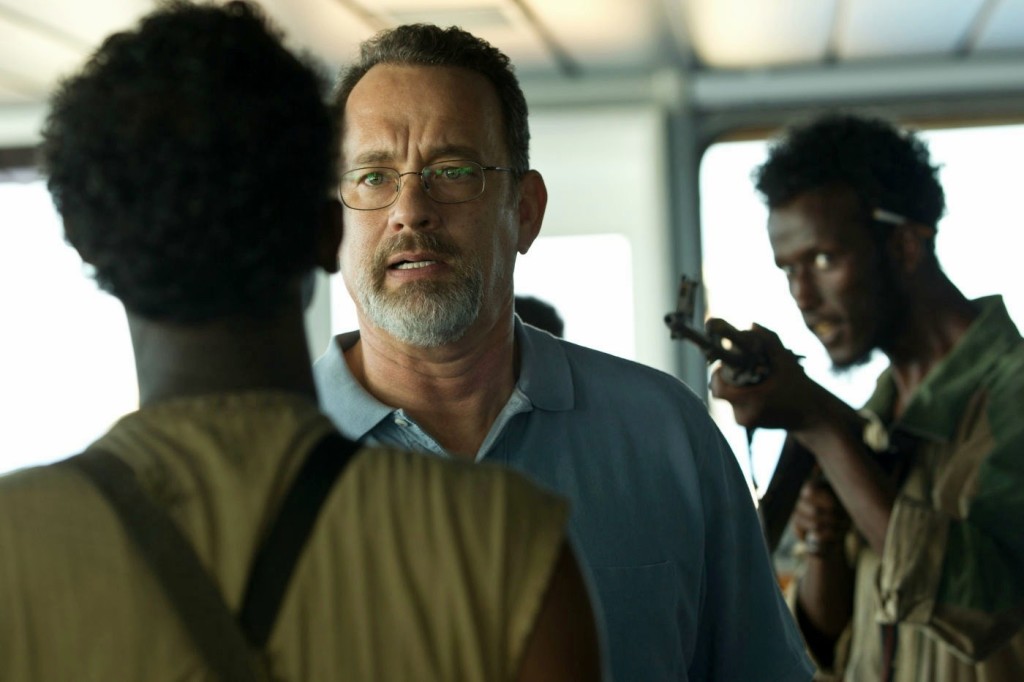
Captain Phillips is a recreation of a moment of recent history. It’s as much about the man involved in this moment as the moment itself.

Richard Phillips is a captain of freighter ships who lives in Vermont but pilots his freighter ships mostly in the Arabian Sea. One day in April 2009, he’s assigned to be a captain of a freighter bringing relief supplies from Oman to Mombasa, Kenya. He accepts the duty but is well aware of the risk of pirates from Somalia once he sails around the horn of Africa. Meanwhile in Somalia, a group of pirate leaders recruit young men for their next sting. It could be big, it could be small, it’s all in a day’s work.

Captain Phillips is sailing the freighter Maersk Alabama through the Arabian Sea. He’s also taking all precautions to prevent a pirate attack including getting the ship to participate in a drill. The pirates are hungry not just for a simple ship but bigger stuff. Their small rusty motor boats, or skiffs, have ship radar. They see the Maersk Alabama within their view and they chase after it. Fortunately Captain Phillips and the crew are prepared. The first day, the pirates’ motor blows on their boat. Captain Phillips and the crew think the have it solved. What they don’t know is that the pirates are fixing the motor in the boat overnight.

The next day the pirates try again. Captain Phillips and the crew again take precautions like using the hose system to prevent them from coming on board. The pirates notice an area where a hose isn’t working. Perfect opportunity to climb aboard the ship and hold the crew hostage. It’s there where pirate Muse and Captain Phillips meet eye to eye. Phillips tries to get them to leave by offering $30,000 but they want more: millions. The ship is able to shut the power down and able to make the pirates fail in their attempt. However the US forces have received word and have arrived. They try to negotiate with Muse only the have the pirates get away in a lifeboat with Captain Phillips as hostage. They hope Phillips will be their ticket for ransom.

That night the lifeboat is surrounded by navy ships and the crew is too frustrated and start turning on each other. Muse is stubborn with Phillips feeling he can’t go after going this far. The end scene adds to the intensity as it shows the whole standoff between the pirates, the Navy and the SEAL team. You’d be surprised to see how close Phillips was to being executed by the pirates. And even after you think it’s over, it’s not.

The most remarkable thing about the movie is that this is one that really depicts pirates for the negative people that they are. Admit it. We’ve all been charmed by pirate stories: Captain Hook, Captain Kidd, Jack Sparrow, Blackbeard, you get the idea. Even the popular lines like: “Arrrrgh Matey;” “Shiver me timbers” and “Yo ho ho and a bottle of rum!” show how charmed we are with them. However the news about Somali pirates have given us a reality check about pirates and what they do. This film even shows pirate really are: dirty, merciless thieves who threaten people on ships for their riches.

Another remarkable aspect the movie shows us is the sheer determination of those four pirates. You’d think that a group of four young Somali pirates not even 21 would not stand a chance against a huge freighter like the Maersk Alabama with all their devices and a prepared captain. However they were stubborn enough to fix a motor overnight, find a dry gap in the ship’s hosings, use a ladder to get to the deck, try a getaway with a lifeboat and even resist arrest with the US Armed Forces. The film is very focal on the pirates’ determination and their false sense of invincibility. It even shows how sometimes small has a competitive advantage over the big guy. It’s like that way in the animal kingdom too where insects can find their way into large prey.

Just as much as it focuses on the Somali pirates and their determination, it also focuses on Captain Rich Phillips himself. It especially focuses on Rich’s smarts as he knows about Somali pirates before the attack and even prepares his crew just in case, his smarts when he’s under attack on board and his smarts during the attempted getaway. Even the assault by the navy and the aftermath had Rich Phillips in focus. It was as much about Richard Phillips as it was about the pirates.

Tom Hanks once again delivered a remarkable performance: his best since Cast Away. It’s great to see him perform well in a movie that’s the least Hollywood-like I’ve seen him in. His performance really had a lot of range and was as much about Captain Phillips the person as it was about Captain Phillips the hostage. Equally as spectacular is the direction of Paul Greengrass. Actually It shouldn’t be that Greengrass, who made a name for himself with United 93 about a 9/11 terrorist operation botched by vigilante passengers, directs it. It’s like the film reminds us that the pirates of the seas are like the terrorists on airlines. Always were. Billy Ray did an excellent job of scriptwriting. Surprising that the writer of The Hunger Games is the scriptwriter here.

It’s not to say the movie’s all Tom Hanks, Paul Greengrass and Billy Ray. Barkhad Abdi was also excellent as pirate Muse. He makes Muse look like a pirate who didn’t have much of a clue to what he got himself into. Barkhad Abdirahman was also great as the vicious pirate Bilal who possessed a false sense of invincibility. The emsemble of lesser-known American actors added to the quality of the film. The only other well-known actor in the film is Catherine Keener. Actually it’s surprising to see the role of Andrea Phillips, Captain Phillips’ wife, as such a small role. The music of Henry Jackman and the cinematography of Barry Ackroyd also added to the quality of the film.

Captain Phillips is an excellent recreation of a moment in recent history that’s both about the moment and the man involved. Both Hanks and Greengrass do it again.

Oscars 2012 Best Picture Nominee: Les Miserables

Les Miserables

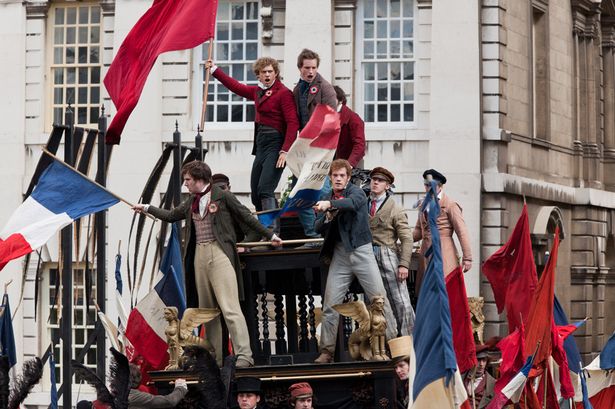
How many of you are familiar with the Broadway musical Les Miserables? Lots of you, I’m sure. Yes, Les Miserables was the one Broadway musical phenomenon from the 1980’s that could even have Andrew Lloyd Webber looking over his shoulder. When you heard that the musical finally would have a film adaptation, how many of you looked forward to seeing it? I’m sure a lot of you have including me, but does it deliver to movie crowds and especially to fans of the musical?

One thing I’ve learned about hit musicals being adapted to the big screen is that it’s a very tricky job. The whole filmmaking crew has the job of dealing with the fact the fans of the musicals want something that won’t disappoint them. The scriptwriter has the duty to make a script that includes the musical’s most popular songs mixed with the emotions of the characters in each scene. The director has the duty of making the songs, the emotions, the setting and the theme fit into a 2 1/2 hour long movie. The actors have the duty of delivering a performance that’s both believable and entertaining in both their acting and their singing, especially when a camera is filming them up close and it will be seen by all.

For the record, I saw the stage musical when it came to Canada in 1995. Most of the numbers possessed the same energy, spirit and emotion that was present in the stage musical. The only number I thought was lacking the same spirit was “Master Of The House”. That was the one number that had the least spirit and flavor that was present in the musical. Also Gavroche didn’t make that grand of an introduction. I know he does so in the stage musical but he just didn’t seem to grab you attention at the beginning the way he does on stage.

One thing I have to say about the film version is that it gave me a better understanding of what the musical is all about. Back when I first saw it on stage, I didn’t fully understand it. Now that I’m older and my attention span is better, I can understand it’s about redemption and the triumph and trials of justice in a world devoid of morals and justice. It was entertaining to watch on stage but it was through seeing it on film that it’s like a story from a Dickens novel where a man makes a promise to a dying woman and keeps his promise despite his trials and rivals until the end.

We should remember that there are many loyalists of the musical Les Miserables who hold the stage production dearly to themselves. The musical version of the Victor Hugo novel began in Paris in 1980 by Claude-Michel Schonberg and Alain Boulbil and became a musical on Broadway in 1985 thanks to the translations of Herbert Kretzmer. If you remember Broadway back in 1985 there were two types of musicals: those of Andrew Lloyd Webber that go on to charm the word and every other musical. Ever since it’s been released it’s become a huge Broadway phenomenon that could even rival some of Webber’s most legendary musicals. Every city it touched, it drew huge crowds. So you can imagine that when the film version of the musical came out, there would be a lot of pressure placed by fans of the musicals. It’s like that with any musical where loyal fans expect it done excellently if not perfect. There have been many musical adaptations that have been hits and misses in terms of comparing it with the stage play. Chicago and Hairspray are two examples where the film version hit. Rent and Nine are two examples of the film version missing. I myself have seen the stage production. I personally was impressed by it and I don’t see anything that would let anyone loyal to the stage musical down. I feel Tom Hooper and the producers did a very good job with it. I talked earlier about the energy of most of the songs still there. That had to be the best quality in terms of keeping it true.

There has been some flack from Tweeters and some fans of the musical about the use of actors in the movie. You’ve heard the disses: “Actors trying to sing.” I do give them partial credit because many actors had to learn singing for the sake of getting acting jobs in musicals. In fact John Travolta even made it clear after Saturday Night Fever that if you wanted to get acting work in New York, you had to sing, dance and act. Don’t forget that if there were singers in the film, there would be disses like: ‘singers trying to act.’

Anyways getting to the nitty gritty, one can notice those that are able to sing their roles gracefully from the actors just trying to sing. Russell Crowe gave his best effort as Javert but often came across as too forced and sometimes uncomfortable at what he was doing. Eddie Redmayne also didn’t look too comfortable performing as Marius. That’s the risk when you take when you insist on singing your parts instead of ADR. Hugh Jackman did an excellent job not just in singing and acting as Jean Valjean but also for being consistent in having the biggest role in the musical. Anne Hathaway as Fantine was however the best at combining both singing and acting in their role and coming across the most gracefully. In fact it was her performance of “I Dreamed A Dream” that stood out above all others. It’s no surprise to me if she wins the Oscar. The lead actors were not the only ones who impressed. Helena Bonham Carter and Sacha Baron Cohen did a good job in their supporting roles. Daniel Huttlestone was a good scene stealer as Gavroche is supposed to be. If there’s any fresh face that could rival the veterans, it’s Samantha Barks that was excellent in her supporting performance as Eponine.

Tom Hooper was given the difficult task of taking the musical and putting it on screen and he succeeded very well in doing it. William Nicholson also had the challenge of turning the script and songs of the musical and turning it into something for the big screen. He did a very good job of it retaining the spirit of the musical and of the songs. Also noticeable is that there are some scenes of dialogue. The stage musical doesn’t have that. Good to see he added those small parts of dialogue without dulling or upsetting the musical. As I said before, the music was great with Schonberg, Boulbil and Kretzmer even composing a new song ‘Suddenly’. The technical aspects like the sets, costuming, cinematography and sound mixing were also top notch.

Les Miserables finally has its chance to hit the big screen and faced a huge whack of pressures expected on any adaptation of a legendary Broadway musical before opening. The end result is an accomplishment, if not a triumph.

Oscars 2011 Best Picture Nominee: Extremely Loud And Incredibly Close

“If things were easy to find, they wouldn’t be worth finding.”

I know many of you would be nervous at first of attending a movie like Extremely Loud And Incredibly Close. 9/11 films aren’t exactly crowd-winners. Ever since United 93 and even up to now, it still isn’t. It’s still a tense topic to this day and doesn’t make for good subject matter for people to see a movie about. Nevertheless Extremely Loud And Incredibly Close is a good film of its own, if imperfect.
 
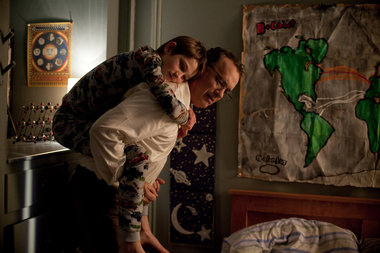
Oskar Schell is a young boy who’s a smart but fearful and eccentric brainiac often mistaken for having Asperger’s. However he’s dealing with an inner pain. His father Thomas died in the Twin Towers on 9/11, a day Oskar refers to as ‘the worst day’. His father was a jeweller who spent a lot of time with Oskar nurturing his creative and eccentric quest for knowledge. He would create puzzles, help him develop his own business cards (which lists him as inventor, Francophile and pacifist), have oxymoron challenges while practising karate, and even have scavenger hunts. You could tell Oskar is still very much an intellectual now. He keeps his collection of butterflies. He has his collection of facts and figures. He’s even intellectual in his lewd talk: “Succotash my Balzac, dipshiitake!” Yeah, real charming.
 
However his father’s death still upsets him. He died in the first tower and his body was never found. His mother held a fake funeral with an empty coffin in hopes that it would help them both heal. But Oskar is still hurting and lonely to the point he has distanced himself from his mother and even hurts himself physically. He still has the answering machine of the last six messages his father left before he was killed and replays all but the sixth and last one often, something he has hidden from his mother and replaced with a new answering machine on ‘the worst day’. The only person he talks to regularly is his grandmother who lives in an apartment next door..He feels that the missing ‘puzzle piece’ from the last scavenger hunt he had with his father could keep him from losing the spirit of his father altogether. The quest is to find out what to search for and find it.
 
One year later while Oskar goes through his father’s clothes and olf belongings, he accidentally breaks a vase. In it is a key inside a small envelope with the name black. Oskar believes this key may be the clue to the last scavenger hunt. He looks in the phone book for all the people in New York named Black: over 400 in total. He vows to search every Saturday for the person with the last name Black who knew his father and refuses to quit until its done. He won’t take any public transit, has a camera to keep a scrapbook of all the Blacks he sees, and he walks shaking his tambourine to keep his sanity while dealing with the world.
 
The first Black he sees is Abby Black, a woman just recently divorced form her husband. She says he doesn’t know his father. He visits other people named Black who don’t know his father but reach out to him: one hugs, one offers her prayer group to pray over him, another is a cross dresser, another gives him a ride upon her horse. One day, Oskar goes to visit his grandmother but meets the man his grandmother refers to as ‘the renter’.’The renter’ doesn’t talk because of witnessing a bombing during his childhood. The two become friends in the search and he learns from the man when to intervene and how to face his fears. Oskar stars to sens that the man is in fact his grandfather. Oskar even plays the messages from ‘the worst day’ for the stranger but he cannot bear to hear and demands it to stop before hearing the sixth and last message. The renter than moves out and begs Oskar not to search anymore.
 
When all seemed lost, Oskar notes a phone number on the newspaper clipping his father left a hint. It returns him to Abby Black. It turns out her ex-husband, whom she was divorcing the first time she met Oskar, may know about the key. He does meet with Mr. Black and learns about the key only to learn it’s not for Oskar at all. Disappointed and disheartened, Oskar destroys everything from his search until he learns that his mother was secretly helping him all along and even contacted all the Blacks even before Oskar had visited. Oskar compiles a scrapbook of his search and is able to find the last link of the scavenger hunt in the most overlooked of places. His fears had been conquered.
 
One strength of the movie is that it uses a creative puzzle and the Oskar’s intellectual way of thinking to help Oskar through the healing process and conquering the simplest of his fears. The scavenger hunt becomes like the journey to healing and along the way the healing comes in the moment he least expects it. The scavenger hunt is also that connection where Oskar searches for that connection that keeps him from being completely lost form his father. He finds it and learns that his bond with his father is still alive and something that ‘the worst day’ can never take away. Another thing Oskar receives is the love and care from people he never met before. It was all the people with the surname Black he encountered that shares some amount of care for him from the start of his journey to the end. It was also where his relationship with his mother heals. It was her own help with Oskar’s mission that showed the bond between the two never died. It also helped her heal too.
 
One glitch with the movie is that it doesn’t make the best of efforts of being watchable. Yes, the movie has the theme of healing but many times it focuses on the pain Oskar and his mother are going through. Especially the scenes where Oskar is shown with self-inflicted scabs. There were many times I was sitting there feeling that there would be many movie audients turned off this movie. People who have lost loved ones in 9/11 may themselves find the movie uncomfortable to watch too. Another glitch is that many feel this is a flawed look at autism. There’s no mention of autism in the movie but it has been sensed by many critics.
 
Tom Hanks did a good job of character acting as Thomas Schell, the intellectual father who always taught in character. Sandra Bullock was also very good as the grieving wife and mother. Max von Sydow was the biggest standout amongst the supporting actors playing the mute renter. Interesting how silence can make a role more that dialogue in a lot of cases. Without a doubt, the movie belonged to young Thomas Horn. This is his first ever acting role and he shines as the boy who’s both brilliant, puzzled, grieving, driven and eccentric. He doesn’t play a sugar-coated child character but one who’s very three-dimensional. Stephen Daldry is one lucky director. Ever since his first feature Billy Elliot, each of his four feature films have earned him either a Best Director Oscar nomination and/or receive Best Picture nomination. This is his fourth feature but the first one where he wasn’t nominated for Best Director. Nevertheless he does another excellent job in directing. Eric Roth does and excellent, if not glitchy, scriptwriting effort that makes this story as much our puzzle as it is Oskar’s puzzle. The score from Alexandre Desplat also fit the movie well.
 
Extremely Loud And Incredibly Close is a good adaptation of a 9/11 novel but it’s not the best at being a watchable 9/11 movie which has always been a difficult task. The effort to create a mostly watchable 9/11 movie continues.
 
And there you have it. I have now finished reviewing all the Best Picture nominees of 2011. My Oscar predictions are coming Friday.