Oscars 2024 Best Pictures Reviews: Part Two

It does seem awkward for me to do five blogs of Best Picture contenders. It’s all about my writing. Last year my writing was so over the top, I had to post individual reviews instead of all ten within three blogs. This time as I was writing, I felt doing blogs consisting of two reviews each is a nice steady dose of my writing. Hope you like them. Now on with my next two reviews:
A Complete Unknown

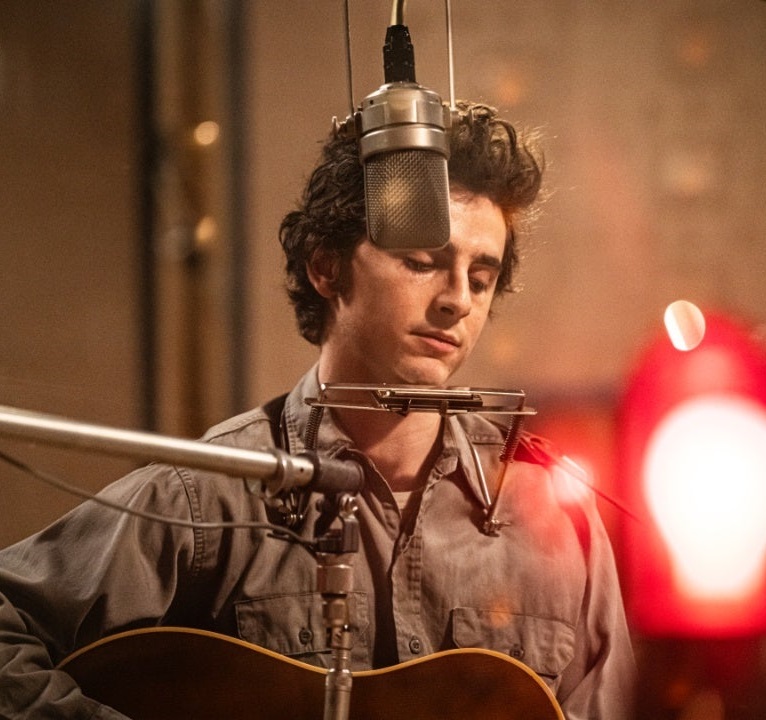
I’ve seen musicographies before. I’ve seen how they told the story of the musician or even show one part of the musician’s life. This film is a case of telling a part of Bob Dylan’s life. It tells of how he goes from an unknown folk singer in Greenwich Village to being part of the main folk scene of the time to branching out on his own. One thing we often forget about is that in the early-1960’s folk music was seen by many young people as the antidote to Rock ‘N Roll. Rock ‘N Roll music was seen by them as filled with scandals, fabricated acts, and music done for money’s sake. Folk was regarded by them as the opposite. It was regarded as self-composed music, honest feeling and even having a word to say to the powers that be. Bob, having a liking to Rock ‘N Roll, did not sit well with fans of folk music. To add, the Folk scene was becoming as much like showbiz as Rock ‘N Roll itself. You could easily see why folk fans would be outraged by his Rock ‘N Roll schtick. Looking back, it leaves me wondering after that moment did Rock ‘N Roll change Folk or did Folk change Rock ‘N Roll? Neither genres have been the same since.

The unique thing about this film is that it’s as much about the person as the musician. Most of us have known Dylan through his music. He always spoke his mind in his music. The film shows things most of us have overlooked. There’s the time Bob is torn between the love of Joan Baez and Suzy Rosso and finds it hard to hold a relationship with either. There’s Bob desire to expand and grow as a musician while the folk scene wanted to her him perform his more legendary hits. There’s how Bob found guidance from Johnny Cash and regarded Woody Guthrie as a musical father figure. There’s how the folk scene became just as much of a clique as even the most commercial music scene. We see that in how the folk scene was all about those connected to Pete Seeger and the shows he helped organize. You can understand why Bob would rebel and do his electric show. Bob always wanted to do his own thing. At the end of it all, he was still Bob.

This is quite possibly the best work from James Mangold. For so long he’s created films in which have received Oscar nominations and wins, but left him empty handed. Films like Girl, Interrupted, Walk The Line, 3:10 To Yuma, Logan and Ford vs. Ferrari. He did get a scriptwriting nomination for Logan but it’s this film he finally gets nominated for Direction. Having directed Walk The Line, Mangold knows how to direct a musicography. With the story he co-adapts with Jay Cocks, Mangold shows Dylan as a musician, artist, flawed lover and rebel. He also captures the essence of what folk music was to do about, the folk music scene of the 60’s and the times very well. It’s easy to see why he has received this acclaim.

The film also excels through the excellence of the performance of Timothee Chalamet. I’ll admit I first thought Chalamet playing Bob Dylan was a bad idea. I could not see him doing it. He accomplished it very well by making it a three-dimensional performance when it could have been wooden or cartoonish. I’m impressed with his work. Also really great is Edward Norton as Pete Seeger. I know Edward knows how to get into character. Here he makes a very convincing performance as Seeger. Newcomer Monica Barbaro is also excellent as Joan Baez. The film is, in a way, also showing us the Joan Baez we never knew. Very different from her on-stage persona we’re so familiar with. Elle Fanning was also great as Sylvie Russo who faces a hard time trying to love Bob as his fame was starting to take off. Boyd Holbrook was also very convincing as Johnny Cash and Scoot McNairy was also great as woody Guthrie. Even though both performances had a short amount of screen time, they were still both good and convincing.

A Complete Unknown is not your typical musicography. It presents a Bob Dylan we never knew, a Joan Baez we never knew and a folk scene different from what we thought it was. It’s as revealing as it is great.
Conclave

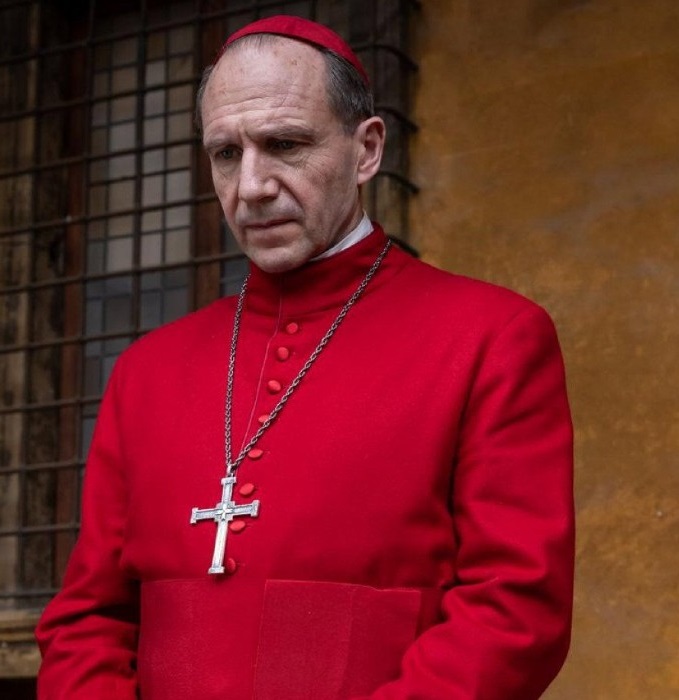
There has been a lot of unhappy talk from a lot of Catholic people about the film. One thing we need to talk in mind is that this story is a fictional story based on the adaptation of a book. Watching it, the cardinals did not act very priest-like. It made the whole conclave look like a joyless sect. Throughout the film, there’s hardly any focus on the spirituality of the cardinals. As the election of a new Pope is happening, it appears they are all rivals against each other with animosity. It almost makes the election of the Pope look like a political election where candidates look to expose the dirt of their rivals in order to win votes. Maybe that’s the point of the film. To make a papal election look similar to that of a political election. Although they do a good job of making that connection, I’m still unhappy about how the bishops and cardinals were portrayed.

Although I was unhappy of how the conclave is depicted, I am not angry as I am well aware this is a fictional story. Besides none of us knows what goes on behind the scenes of electing a new Pope. One thing the film does do well is that it shows the complications of being inside the Catholic Church. Although the film doesn’t know much about the faith of the bishops and cardinals and makes them look similar to dirty politicians, each of the bishops and cardinals represent ways of thinking most common among Catholic leaders. I myself have complained that the Catholic Church feels more like an institution than a church, but we forget how big the Church is. The Catholic Church is almost 2,000 years old and has 1.3 billion members and has churches on all the world’s continents. In some nations, Roman Catholicism is the religion of the majority. With a church that big, there is bound to be differing opinions on various issues. Some have Bible-based answers for various issues, some base their opinions on Church-based teachings, and some just give their own rational thought. You can understand why a church this big will have a lot of conflicting opinions among its members and leaders. The various debates among the College of Cardinals are reflective of that. Then there’s the powers that be. As you can see in the film, the electing of a new Pope is not an easy thing. There’s knowing that the Pope they elect with become the epitome of the image and the morality of the Catholic Church. You can understand why choosing the right bishop or cardinal to be Pope will be a difficult.

This film is good at making the election of a new Pope look like an intense drama. It succeeds in doing it by inventing a clever ‘behind the scenes’ story and making it into an intense drama that will keep you focused. It may overdo it in terms of the various conflicts between the bishops and cardinals but the conflicts reflect the common mixed beliefs held by Catholics. Sometimes the squabbles over certain bishops in the running are reflective of squabbles of the various beliefs of many Catholics. A Church of 1.3 billion is too big to have everyone believing the same thing on each issue. Also the film reflects on difficulties, scandals and controversies that the Church has left unfixed over the years. Even how secrets unraveled behind the Church walls are representing how the Church has a lot of hidden secrets. The film also succeeds how getting the problem of the Papal election solved is best assisted by two people least expected. It’s first done by Sister Agnes who, by being a nun, is to exist in the background but she can’t hide her silence anymore on all that has happened. The second is Cardinal Benitez who seems like the candidate least likely to win, but after he made his powerful speech, he appeared to be the best choice to be Pope, only for his secret to be revealed after his election. The film gives an ending that leaves us with questions of what will happen next. That’s what a film should do.

This film is an excellent work from Edward Berger. With the script Peter Straughan adapted from the novel, Berger directs a film that takes a world event and turns it into a behind-the-scenes drama that will keep you intrigued in the drama more than you thought you would be. Although it’s off in its depiction of priests and bishops, it’s still a great work.

Also great is Ralph Fiennes as Cardinal Lawrence. He performs the role of a priest whose spirituality is clashing with his role of leading the College Of Cardinals. He makes the stress look obvious. The performances of the various bishops from John Lithgow, Stanley Tucci and others were very good, despite more focus on the Cardinals’ arrogances. Isabella Rossellini is the surprise of the film. Playing Sister Agnes who can’t hide her silence anymore, she really provides needed impact to the story and her silent moments are as good at storytelling as her talking parts. Carlos Diehz is also great as the Cardinal who’s the best most mortal choice for Pope, but has a hidden secret. The film also has a lot of great technical merits like set designers Suze Davies and Cynthia Sleiter for creating a set that looks very much like the Vatican, costuming Lisy Christl in making the clergy costuming look perfect and composer Volker Bertelmann delivering a score that adds to the intensity of the drama.

Conclave may be off in their depiction of cardinals and the Church itself but it succeed in bringing up hot topics surrounding the Church as it succeeds in making an intense drama of a Papal election.

And there you go. Those two films are my second look at the Best Picture contenders of this years. More reviews of Best Picture nominees to come.
Oscars 2015 Best Picture Review: Spotlight

Spotlight stars Rachel McAdams, Michael Keaton and MArk Ruffalo as journalists ready to settle the score.
Spotlight stars Rachel McAdams, Michael Keaton and Mark Ruffalo as journalists ready to settle the score.

I’ll admit I saw Spotlight two months ago and I’ve been procrastinating at writing my review. Now that the Oscar nominations are out–actually only an hour ago– this is a better time than ever.

The film begins in the 1970’s of a priest being fired from his job as a teacher at a Catholic elementary school in Boston. Fast forward to 2001. The Boston Globe has a new editor, Marty Baron. He first learns of the investigative Spotlight team of the paper headed by Walter ‘Robby’ Robinson.

Baron gives the Spotlight team a story to chase: a story of a priest sexual abusing children and Cardinal Bernard Law knowing about it and doing nothing about it. It first starts as a pursuit on a single priest who was continuously moved around from school to school. Over time it they would uncover that there were many priests who also committed acts of sexual abuse on school children and they were all covered up by the Archdiocese.

This is one story they had to get to the bottom of. However they’re limited in terms of resources. Plus they need permission to access sealed documents and have a trial or even an inquiry happen and they doubt they can get it from a Catholic judge. They talk with a head of a victims rights group who himself was abused, they talk to other abuse victims, they talk to a lawyer who’s handling the cases of some of the victims and they even find through an ex-priest who tried to rehabilitate pedophile priests that there could be as 90 sex offenders in the clergy. Further research uncovers additional priests moved about upon their actions being revealed and being listed as ‘relocated’ or ‘resigned.’

In September 2001 it appears the Spotlight team is finally ready to release the story. Then 9/11 happens which makes every other news story in the world take a backseat and cause even a further delay of the story being printed. However the wait works for the better as one of the Spotlight reporters, Michael Rezendes, uncovers proof through publicly available documents that Law knew all about the abuse going on and ignored it. Then a major victory. The judge grants them the right to look into sealed documents. Just as they are about to print the story, Robinson confesses he published a list of pedophile priests in 1993 but he never followed up on it. As the story is published, it creates history.

I’m sure that some people would be nervous about this film and declare it ‘anti-Catholic.’ In fact if I were a conservative conspiracy theorist, I would say Spotlight is a film released by an anti-Catholic director who wonders where all the Catholic hate from liberals went once Pope Francis came to power and wants Spotlight to bring it back. But I’m not a conspiracy theorist nor am I a conservative pundit. In fact the film has received positive feedback from Vatican Radio and even the current Cardinal of Boston praised it in showing how the Archdiocese had to confront its wrong.

I will say that I’ve seen bigger even more savage attacks on the Catholic Church in films in the past, especially from Martin Scorsese. In fact I remember watching 2002’s The Magdalene Sisters where the nuns were depicted as total monsters. I feel films nowadays are less anti-Catholic than that of 20 years ago or even 40 years ago. In fact one thing I give the film credit for is that it looks at all sides. It may portray Cardinal Law as a conniver but it wasn’t hard on depiction of the priests. In fact one scene that stuck out to me was when one of the alleged priests was interviewed. He not only appeared confused in how he didn’t know what sexual abuse was but admitted that he was raped as a boy. That not only shocked me but left me wondering how many of the abusive priests were themselves sexually abused as a boy?

On a personal note, I will admit that when I first saw the film, I left the theatre asking myself “Jon, why did you return to the Catholic Church?” It was a dilemma for days but it did solve itself over time. In fact shortly after, I wrote on my Facebook page: “I gave the Catholic Church a second chance in 2003 and it better not blow it this time.” I will never excuse a priest for sexually abusing any child. I believe they should be brought to justice. In fact, Pope Benedict clarified the issue when he said: “Forgiveness is not a replacement for justice.” I know you can’t take back the past however you can improve the future. The Catholic Church has not become blind to the issue of sexual abuse. In fact I learned from one man who tried to enter into education for the priesthood he had to get a criminal record check, an HIV test and a psychiatric assessment. I’m happy that the Catholic Church is taking the best preventative measures to ensure this doesn’t happen again.

In fact off topic from the film, I will admit that sexual abuse and the various Diocese’s and Archdiocese’s bad handling of it is a problem but I will also say that it’s a problem that goes far beyond the Catholic Church. It’s a problem that exists in other churches as well, it exists within certain families, it exists within school and it even exists within children’s sports programs. In fact this decade’s biggest sexual-abuse-and-cover-up story came not from a Catholic institution but from coach Jerry Sandusky and the cover up from Penn State university. Makes you wonder why the priesthood gets a lot of defamation from the sexual abuse of those while children’s sports coaches don’t get the same defamation. A sex offender is a sex offender no matter what their profession or even if it’s not to do with a profession at all.  Same thing with Universities, especially since it’s only come to light that colleges have a known rape problem but they’re doing next to nothing about it.

Back to the film, I think the biggest thing the film was focusing on was the bad marriage of church and state. Separation of church and state is enforced in the American constitution but it’s not to say it does find its way mixed into politics one way or the other. In fact I don’t think Spotlight attacks the Catholic Church as a whole but actually attack the Archdiocese of Boston. The film presents how the Archdiocese of Boston has such a huge influence over the city. We’re talking about a city with a huge percentage of Catholics and with a history of the Catholic Church giving, providing and influencing the city. No wonder a city like Boston would have such high regard for the Archdiocese. No wonder most Bostonians would look at priests as father figures. No wonder also would that present the biggest difficulty in terms of getting the ugly truth out, especially with people having a high regard for the Church in power and with a Cardinal sweet-talking those determined to get the truth.

The theme of sexual abuse may be very prevalent in the film but I think the biggest focal point of the film was to show a group of reporters uncovering a scandalous story and bringing it to print. One thing is the film doesn’t make like the Spotlight team are the blemish-free good guys of the film. It’s made known near the beginning of the film that this information was given to them five years earlier. They themselves made a big mistake of their own by delaying the story. Sure, they did a whole whack of effort to finally bring it to press in 2002 but they could have done it sooner. I think that was the whole thing of Spotlight is that it was a movie disinterested in making the image of a hero out of anybody. Besides we already hear of the mistakes of having an image of somebody is a bad thing as one abuse victim admitted he looked at priests to be like God. I’m sure millions more have had that deluded image of the priest being like God in their head. However it also shows how easily people can be feel a sense of betrayal by a Church when such atrocities occur. You can’t really blame them for being that disheartened.

I give top credit to director/writer Tom McCarthy and his co-writer Josh Singer for directing a complex film that’s like a bunch of pieces of a puzzle that had to be put together. This is a story that’s set in the Spotlight room of the Boston Globe and set in various other places throughout and they had to both show all the different parts of the story and make them come together from time to time. They did a good job of making this complex story come together without straying off into unimportant territory. Also they did a very good job of writing a story of sexual abuse that was watchable. I’ve seen other films of sexual abuse that were more explicit like 1992’s The Boys Of St. Vincent. Mind you it was a 90’s thing to do explicit entertainment because envelope-pushing was all the rage back then because 1; you could never put enough nails in the coffin of the Hays Code and 2; because back then softening of scenes or leaving such things out was considered a form of ‘denial’ in art. Anyways these are not the 90’s anymore and watchability is values more. I’m sure if they showed scenes of abuse in the film, it would make it somewhat unwatchable for many. I feel they made a good choice of limiting the topic of abuse to conversations of victims with the journalists. Especially since the top point of the film is how they brought the story to press. Besides I don’t consider compromising elements in a film for the sake of making it more watchable to be a filmmaking weakness. It’s not the 90’s anymore and Tom McCarthy’s not among the likes of Lars Von Trier.

As for acting, there were a lot of great individual performances most notably from Michael Keaton, Mark Ruffalo and Rachel McAdams but none of them owned the film. In fact another top quality of the film is that it’s a combined effort from all the actors to play parts that don’t steal the show and add to the story telling by making it look like a unified effort. Even acting of the smaller roles that that of the abuse victims were excellent and added to the story. Overall this not simply a film that’s well-crafted. This is a film that does capture your intrigue. It’s a combined accomplishment from McCarthy, Singer and the actors.

Spotlight isn’t strictly about the incident. It’s about getting the story to the presses and the battles the Boston Globe had to go through to break the silence and finally get the word out. Keeps you interested from start to finish.