Oscars 2025 Best Picture Reviews: Part Two

It’s interesting for my next blog of Best Picture nominees. One film is a remake of one of the most captivating monster stories ever and the other film tells the story of the tragedy that produced one of the most legendary plays ever. They’re both unique in their own way.
Frankenstein

Ever since Mary Shelley has published her book titled Frankenstein; or, The Modern Prometheus back in 1818, the story and the monster have captured the imagination of the world. The monster definitely more often than the story. The Frankenstein monster has been featured and parodied frequently to the point people have created their own versions of Frankenstein on both the character and the physical appearance. People on Halloween especially have a field day with Frankenstein costumes and their own Frankenstein stories. Crazy thing is most of these stories stray greatly away from the original story of Mary Shelley. They may get the basics like a mad scientist creates a living person from the body parts of deceased people but they are too loosely based. The very first Frankenstein film, a silent film from Edison Studios released in 1910, was a film the director intended to be ‘broadly based’ on Shelley’s story or call itself a ‘liberal adaptation.’ The most famous film adaptation has to be the 1931 film which was an adaptation of a stage play. Frankenstein’s monster in that film, played by Boris Karloff, has the most iconic image of the Frankenstein monster with the rectangular forehead and green skin. That film also includes the memorable line: “It’s alive! It’s alive!”

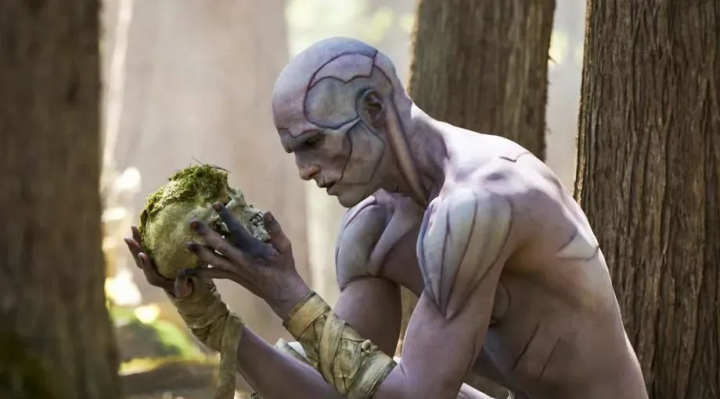
This film is Guillermo del Toro’s adaptation of the story that is still off the original in some amount but is closer to Shelley’s story. The film is set in 1857 and a Danish ship of the Royal Navy is stuck in ice. The ship becomes like a hospice for a gravely injured Victor Frankenstein who was hurt from the wave of an explosion. The ship is then attacked by a fur-laden humanoid creature that appears indestructible. As Victor notices that’s the creature he created, he tells his story, which becomes Part I: Victor’s Tale. After Victor tells his story, the creature tells his story in Part II: The Creature’s Tale. This layout of the story sets up for the finale where the creature finally makes peace with Victor and Victor apologises for being too cruel to the creature. It’s after Victor’s death that the creature departs, but not until he frees the ship from being stuck in the ice.

Some of the most noticeable differences are in the novel, Victor’s mother dies of scarlet fever. In this film, she dies of childbirth giving birth to William. While the novel shows Victor discovering the possibility of creating new life through his studies, the film shows him actually conducting his proven findings in front of professors and being expelled. In the novel, Victor is shocked and repelled by the creature he created and abandons it in the cold snows. In the film, he’s proud of his creation but enslaves him. In the film, Victor wins the love of a woman named Elizabeth. In the film, it’s William who courts Elizabeth and Victor tries to win her, but his mad science and arrogance prevent her. Victor even kills Elizabeth and William. Also in the film, Elizabeth embraces the creature when he rushes back to Victor to demand a female creation for him. It turns out Elizabeth has more feelings for the creature than for Victor. The creature in the novel becomes lost in the wilderness and has both seen the best and ugliest of humanity. In the film, he is given refuge to a farming family whom the blind man treats him well. The other family think he killed the blind man when they return and try to shoot him. There is the reconciling of the two on the ship but the creature remains on the ship at the end of the novel while the creature leaves the ship but is powerful enough to push the ship free of the ice.

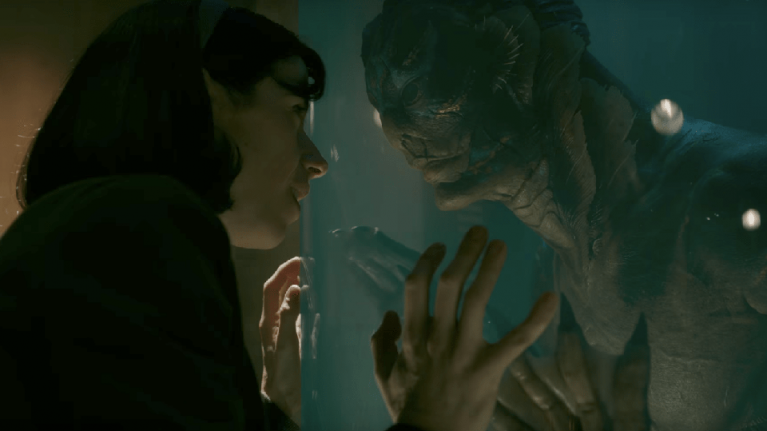
This adaptation that is both written and directed by Guillermo del Toro is a story that is more faithful to the book than most stories. Del Toro already knows how to do an excellent job of stories involving monsters like Pan’s Labyrinth and The Shape Of Water. Here, he shows off his expertise again with an excellent adaptation of the story. Making it two stories, of Victor’s story and The Creature’s story, is done quite well without deviating too much from the original. The two stories do a good job of playing themselves out leading to its eventual connection in the end. The result is not only an adaptation well done but an adaptation that will capture your attention and get you caught up in the story and the drama as it unfolds. The story will also get you feeling for The Creature as well as it showcases he’s not only a human in flesh but he’s a human in feeling. If you see the story, you will agree that the creature has more heart than Victor. Del Toro masters the story and the drama.

Oscar Isaac does a great job in making Victor Frankenstein into a doctor that isn’t completely heartless but full of personal flaws. His eccentricities interfere with his ability to relate with others, have any kind of heart to his creation or even love Elizabeth enough to win her love. Surprisingly, Isaac does succeed in making you feel sympathy to Victor and even forgive him for all he’s done. The dimension Isaac bring is excellent to the role. Jacob Elordi steals the film as the creature. Creating a character of a created human with the common sensitivities of people, even having feelings of love and heartbreak, gives the film its heart and soul within the spectacular drama. Many times, you’re tempted to think Elordi is the lead. Mia Goth is also very good in her role as Elizabeth, but the role could have been given more dimension in the story. Other good supporting acting performances come from Christian Convery as the young Victor, Felix Kammerer as William Frankenstein, and Lars Mikkelsen as the Captain Andersen.

For a film like this, you can bet this has a lot of excellent technical achievements. The cinematography from Dan Lautsen captures the story very well. The costuming from Kate Hawley, the production design from Tamara Deverell, and the hair and makeup team do a great job in taking the audience back to the past and recreating scenes of the times. Alexandre Desplat knows how to deliver a score for a film and he does it again here with a score that fits the drama of the story very well. The sound team and the visual effects team all deliver the right stuff to deliver the excitement of the film.

Frankenstein is not just another adaptation of the story. It’s one Guillermo del Toro does his own telling of the story mixing his own take and trying to stay faithful to the story. It succeeds in a very thrilling way!
Hamnet

There have been many semiautobiographical films of William Shakespeare many times before but you hardly see any films, plays or literature about his children. Among possibly the least known is his only son Hamnet Shakespeare. Little is known or documented about him or what he was like. It was known that he died at the age of 11. The play Hamlet premiered three or four years after his death and scholars have frequently debated Hamnet’s young death and how much inspiration it bored on Hamlet. It is known that before Hamnet’s death, Shakespeare mostly wrote comedies and Hamlet was a significant turning point. The film makes the case in point that it was very inspirational to the creation of Hamlet. You could tell in rehearsals Shakespeare was a perfectionist and was very demanding on his lead actor. It’s possible he wanted the actor to create the spirit of Hamnet in Hamlet.

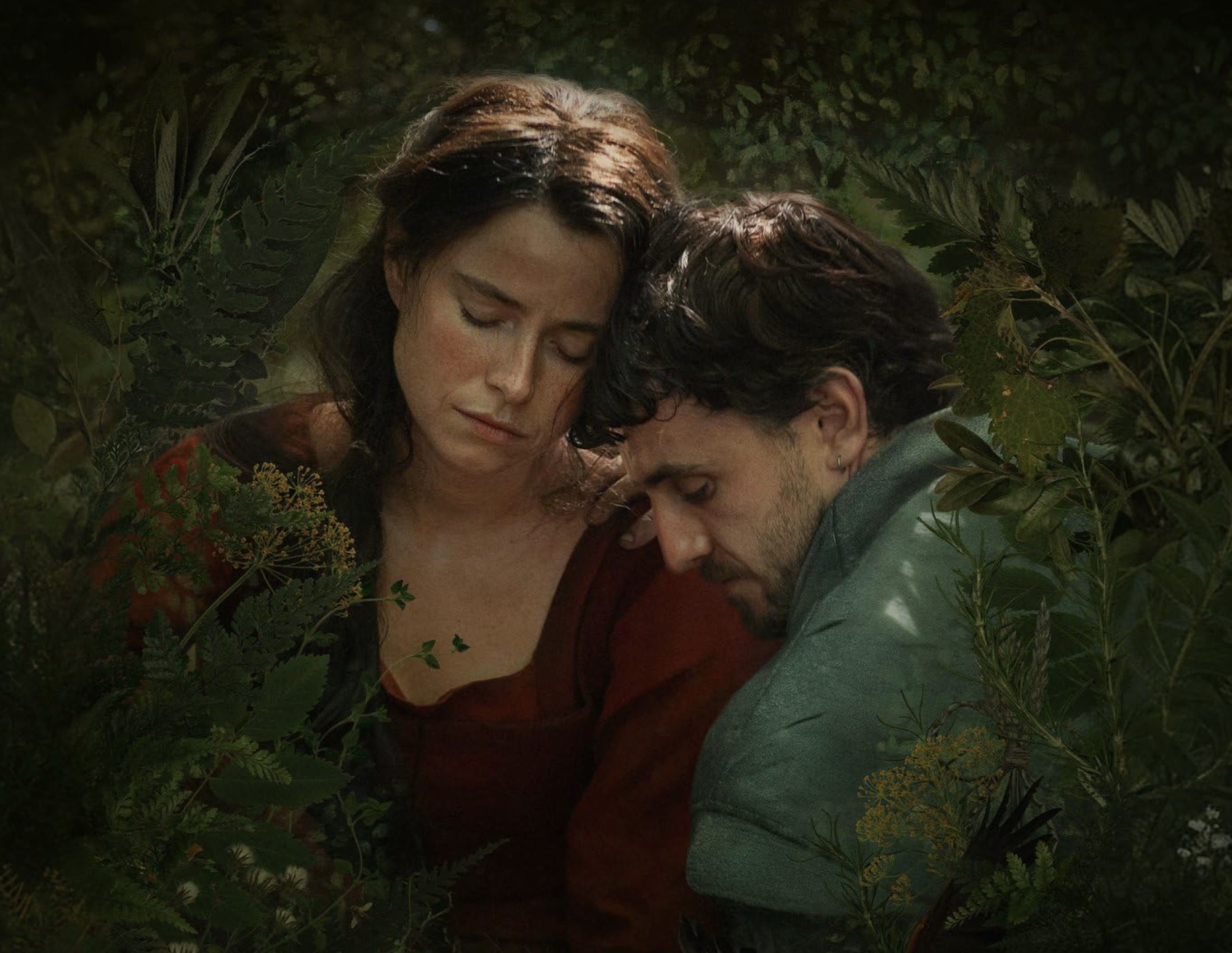
There are two things that stand out the most from this film. The first is that it is based on a novel that is historical fiction. There are many details in the film that are fact with Shakespeare’s life, but there are also a lot of myths and imagined fiction. Very little is documented about Hamnet so in her novel Hamnet, Maggie O’Donnell gave him a personality and in writing of Hamnet’s death, O’Donnell used some of her own experience when her daughter was suffering from a potentially fatal illness. The second thing that stands out is that the film is mostly focused on Shakespeare’s wife: Agnes Shakespeare. The film is more Agnes’s story as it shows her an herbalist who’s a lover of nature. She finds herself attracted to this playwright whom her family does not approve of. They fall in love, develop a family and marry. William frequently makes trips to London for his plays while Agnes does mostly motherly duties. Agnes is the one who has to deal with her twin children, their teachings and eventually their illnesses. She is the one who has to witness Hamnet’s death. No doubt she’s angry with William being away in London during that time. Years later, she learns of his plays Hamlet. She’s there at the opening. She fears the play could upset her. Instead she is touched by the play, by the actor, and by the character. It gives one the sense in seeing Hamlet played on stage, she senses Hamnet’s spirit living in him and shared with all.

The film itself doesn’t try to be a historical docudrama. It does keep many actual facts of history but it does its own storytelling. It does maintain situations that many would commonly relate to. It reminds people that Shakespeare’s choice to pursue arts or teaching was not well-regarded in his working class family. It shows William and Agnes married because she was pregnant and she didn’t want her daughter Susanna to be born a ‘bastard.’ It’s known that in between the death of Hamnet and the premiere of Hamlet, there was a period for Shakespeare known as the ‘lost years.’ What it does is it tells its story. As I mentioned earlier, the film is based on a book that is loosely based on the lives of the Shakespeares. It’s a story that connects with common situations in ones life like not being accepted into a family, loving someone their family doesn’t approve of, the loss of a child, trying to live life again and of how art connects with the human spirit. The latter, I think that’s the theme of the film. How art reflects humanity and can even be a method of healing. The film does an excellent job in having its story connect with the viewer while also maintaining intrigue towards the family of a legend. That’s its biggest quality.

This film is another excellent accomplishment for Chloe Zhao. When she agreed to do the story, she also hired Maggie O’Donnell, the author of the novel Hamnet, to help with the scriptwriting. Human connection is a common theme of Zhao’s films and Chloe does an excellent job in directing a story of an artist’s method of healing and how he shares it with the world. There have often been films that show how art connects with the human spirit. This film also succeeds in displaying that theme and Zhao creates an excellent work in delivering that message.

The performance of the film definitely belongs to Jessie Buckley. The film is mostly about Agnes and Jessie does an excellent job of taking charge of her role and owning the movie. She shows many dimensions of Agnes Shakespeare: falconer, herbalist, teacher, daughter, wife, mother and griever. She showcases both the triumphs and the struggles Agnes goes through and delivers a performance that’s an achievement in itself. Paul Mescal is also great as William Shakespeare but he does not deliver the performance of Shakespeare one would expect. Here, he’s seen as a son with a stormy relationship with his father, husband of Agnes, a playwright who’s away from the family for a long period of time and one who grieves the loss of his son. His performance in making William Shakespeare a three-dimensional common person instead of the icon we all know makes for the excellence of the film.

The film also has a lot of good supporting performances. The one that most stands out is Jacobi Jupe as Hamnet Shakespeare. While O’Donnell creates a character in the son of Shakespeare we never knew, Jupe adds an appeal to him and portrays Hamnet to be just as much of a dreamer as his father. Jupe is also good at portraying Hamnet as a twin brother willing to give his life for his ailing twin sister. Jupe really catches the spirit in both senses. Also good is Noah Jupe, Jacobi’s older brother. I think there was a sense of purpose in the film of having Jacobi cast as Hamnet and Noah cast as the actor who plays Hamlet. Noah is great in having the actor capture the spirit of Hamnet in his acting and be able to connect with Agnes. Other good supporting performances in the film are Emily Watson as Shakespeare’s mother and David Wilmot as John Shakespeare who was frequently at odds with his son.

The film also has a lot of excellent technical aspects. The cinematography from Lukasz Zal fits the film excellently. The set design by Fiona Crombie and Alice Felton excellently takes the film back to the past and the costuming by Malgosia Turganska fits the times perfectly. The score from Max Richter does an excellent job in capturing the drama of the story and the artistic triumph at the end.

Hamnet is more than just another Shakespeare story. It’s a story that connects with people and it shows how the arts are the way to the soul. It’s a story of joy, of love, of tragedy and of the eventual triumph.

That completes my second look at the Best Picture contenders for this year. Six more films left to review.
Oscars 2024 Best Picture Reviews: Part Five

All this writing does get tiring after awhile. Despite it, I have no problem blogging my thoughts on the Best Picture nominees. So here’s my fifth and last blog on the nominees:

The Substance

If you were to have a debate on the one genre of film that the Oscars seems to neglect the most, I’ll bet horror will come out on top. Only seven horror films have been good enough to get nominated for Best Picture. The Substance becomes the latest. Actually it was also a nominee for the Palme d’Or at Cannes. It tells the story of movie star Elisabeth Sparkle whose career has ended and feels a certain substance recommended from a doctor can do that very trick. It gives her another person coming out of her: Sue. The other person is half her age and the two are to switch lives every seven days. Problem is the other person is getting all the benefits her life used to have, like her old job back and attracting rich men. Sue also starts violating the directions of the medicines and using Elisabeth more and more. As New Year’s is coming and Sue is expected to be the star of the New Year’s Eve special, mayhem erupts. I can’t describe any more of the bizarreness without delivering a spoiler or two.

What makes this horror film better than most horror films is that it has a common theme. The theme is of the ageism and sexism women face in showbusiness from managers dealing with show’s ratings to stakeholders who expect to win to crowds who expect a picture-perfect princess and will throw her away when they get bored  with her, replacing her with a new next big thing. That is very evident throughout the film as we hear what her boss Harvey says, of what casting directors say and of what the crowd expects. The thing is Elisabeth takes her rejection badly because we soon learn her stardom is the only thing in her life. She has nothing else. She feels if she takes this substance, she can get her life back. Problem is she gets another life. Instead of it being a case like the two are one, as instructed from that substance, one vies for control of the other and it’s reduced to hate between the two. I gotta say carrying on a habit of one is active one week while the other is active the next week, that would be something hard to keep up without error. There’s bound to be a slip-up and boy will it be messy.

Now I know most of you will say you’ve seen all sorts of horror movies and that you’ve been shocked by this stuff before. I guarantee you that you will be either shocked or surprised. You have a feeling that this switching of bodies will have a ness-up sooner or later but I’m sure the mess-up you thought would happen didn’t or went a different way. Even that New Year’s Eve show, you probably expected it to wreak some sort of havoc, but I’ll bet it’s not the havoc you expected to happen. It also seems the New Year’s Eve show incident with all its goriness is a case of Elisabeth getting revenge with those who threw her away. The story has a lot of common elements you have seen in past horror movies but it succeeds in having many an unpredictable or unexpected moment. That’s what makes this horror film special. The shocks and gory scenes you anticipated but didn’t expect it to play out the way you thought it would. Even the ending, which I will not spoil at all, plays itself out in unexpected fashion.

Top accolades have to go to director/writer Coralie Fargeat. Upon Fargeat’s nomination, the 2020’s five female nominations in the Best Director category equal the total of all previous years combined. This is actually the second feature-length film Fargeat has directed. Here, Fargeat succeeds in delivering a thriller of a horror film that says a lot about its theme and has many of the silent scenes do a lot of talking of the story. Fargeat proves that women can do horror films! And a gory bloodbath of one to boot!

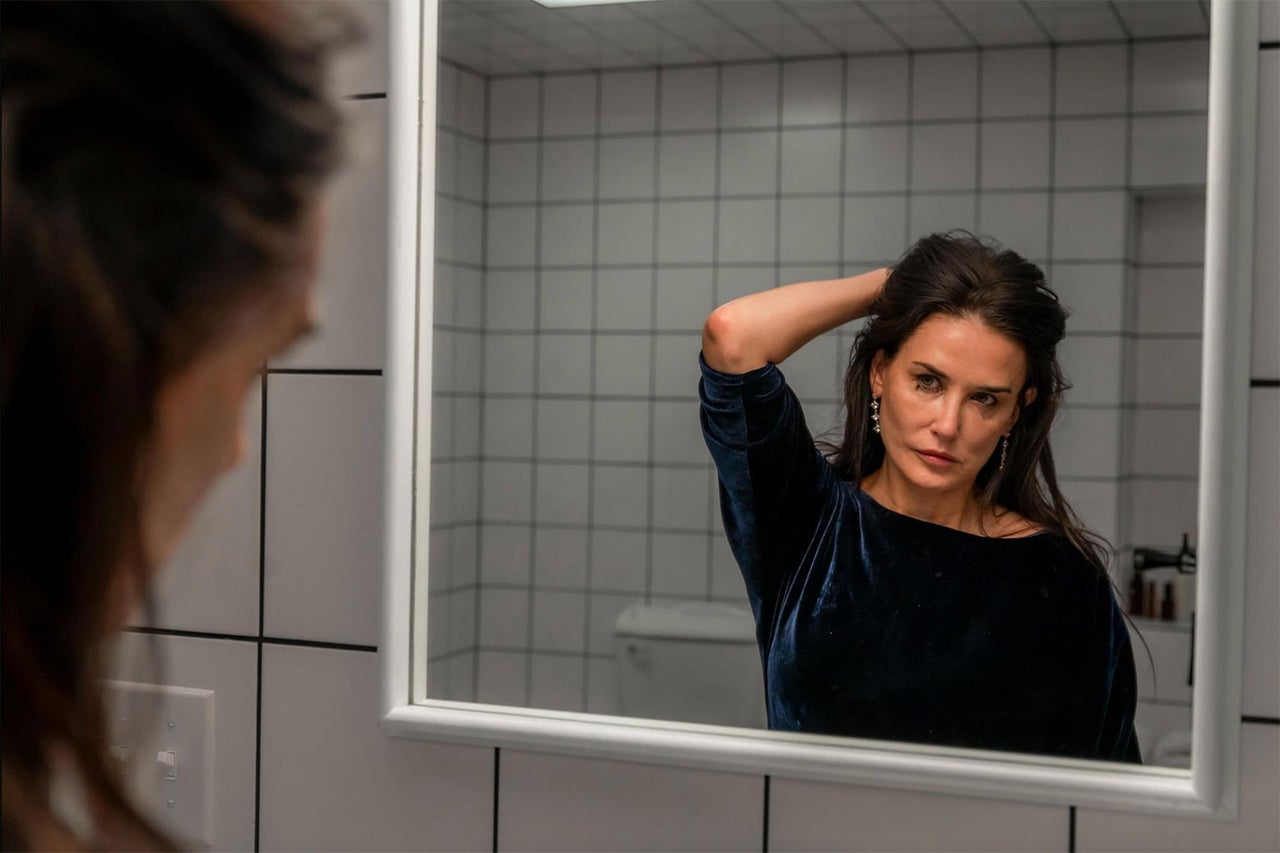
Making the film work is Demi Moore. She does an excellent job of playing an insecure movie star whose career is her life and takes a medicine that could end up being the death of her. Her character switch to the tormented monster of herself was also incredible. It would not surprise me if she wins the Oscar. Also great is Margaret Qualley for playing Sue who’s supposed to be one with Elisabeth but her new-found fame prevents her and starts using Elisabeth, only to pay in the end. Also great is Dennis Quaid. His performance as Harvey the manager is cartoonish, but Fargeat wants it that way for the vibe of the movie. He did a great job in being both comical and hateable at the same time. For the technical achievements, there’s Benjamin Kracun and his cinematography which adds to the storytelling, make-up artist Pierre-Olivier Persin delivering the right makeup for the right gory scenes, the visual effects team for the insane special effects and Raffertie for the perfect techno score for the film.

The Substance is just the horror film you need. It’s a way better story than most horror films you’ve seen and it will deliver the unexpected. I guarantee you.

Wicked: Part One

This movie is bound to attract two standout audiences: those that liked the musical in its theatrical run and those Wizard Of Oz fans that are intrigued of a prequel. It’s interesting how The Wizard Of Oz story has enchanted people for over a century. To have a prequel-like story of how the witch and Glinda met in school is bound to catch people’s intrigue. Even ask questions. Like was the witch’s name really Elphaba? Even the character who would become the wicked witch of the east would have a name: Nessarose. Was high school just as bad in Oz as it is in real life? You mean the witch didn’t really start as evil? You mean Glinda’s real name is Galinda? How was Glinda able to befriend the witch? It really has you thinking. It will even have you thinking about the Wizard Of Oz too. Since the musical has been popular for twenty years, I feel the film adaptation came out at the right time. It does make one wonder why the film is billed as Wicked: Part One and if a Part Two is needed instead of the whole musical in one film.

In watching part one, it begins with the people of Oz celebrating the witch’s death and Glinda given a hero’s welcome. Then the revelation of the secret that Glinda knew the witch in high school. That’s where Glinda tells her story. Throughout the story, we learn how the witch was born the black sheep, or in this case green sheep, of the family while her younger sister was seen as a princess. Even the wheelchair didn’t harm Nessarose’s princess image. When high school begins, Elphaba gets singled out and nobody wants to befriend. As Glinda unintentionally becomes Elphaba’s roommate, Glinda becomes a positive influence on Elphaba and helps her find her true self, use her intelligence to be a force for good, and ultimately bring down the corruption happening in Oz. The film ends with Elphaba singing about her turn to fly and it sets up for a ‘To Be Continued’ ending.

Although this film is just a part one of a musical, the film itself is a good story of the popular girl befriending the misfit girl and bringing out the best in her. It’s also a good nerd-to-queen story for Elphaba. Even having the ability popular boy Fiyero. Near the end where we learn of how Oz is imprisoning animals and Elphaba learns of the corruption going on from the Wizard, it’s there where she learns to take a stand for what she believes in and her rebellious side comes out of her shell. It’s right at the end she flies off and celebrates her personal identity and her new-found confidence in herself as Glinda supports her on. As a film itself instead of a Part One, it works as a story about finding one’s confidence, learning to embrace being different and make your best qualities winning qualities. As a musical, it’s entertaining and colorful from start to finish. It may not have the same vibe as the classic Wizard Of Oz but it will entertain you.

And there’s the film as the Wizard Of Oz prequel. Many of us who have seen or read The Wizard Of Oz but never seen Wicked onstage, like myself, will know how it all turned out. The sister is killed by Dorothy’s house, Glinda makes Dorothy a hero, the witch (who doesn’t have the name Elphaba) wants revenge on Dorothy and to get her sister’s ruby slippers, chases Dorothy down her trip to Oz and threatens her and her friends along the way, and is killed by a splash of water. If you have not seen the musical like I have, the film will get you thinking how did Elphaba become evil? Did Nessarose also become evil? If Elphaba and Glinda befriended each other in high school, how did they have their eventual falling out? This film succeeds in getting us to anticipate it all in the ‘prequel sequel’ which is expected in Winter 2025 and will be titled Wicked: For Good.

This is a great accomplishment for director Jon M. Chu. In the last fifteen years, the films he has directed have been a wide range like dance films like the two Step Up sequels, action film G.I. Joe: Retaliation, music film Jem And The Holograms and romantic comedy Crazy Rich Asians. Here he tries his luck with a Broadway musical with the screenplay adapted by Winnie Holzman and Dana Fox. He succeeds greatly in making it entertaining for audiences to watch and for making for a dazzling story. It’s not an easy task to adapt a musical to the screen but he does it very well.

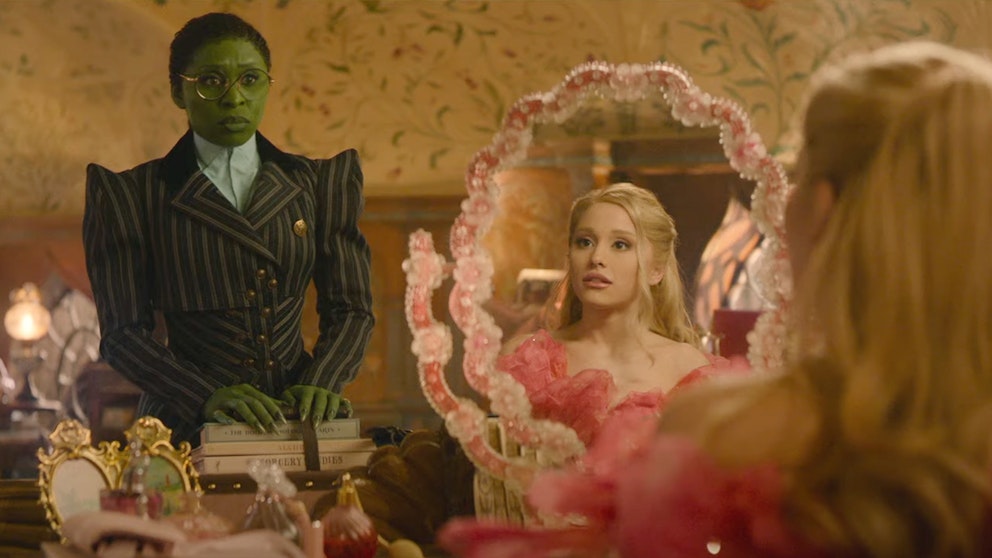
Top credit goes to Cynthia Erivo for playing Elphaba. Cynthia has established herself as a triple-threat in entertainment and one of the biggest rising talents around. Here, she does it again as she not only captures the role well but is also able to play young convincingly and sing excellently. This should add to her achievements. Also great is Ariana Grande. Although I’m not a fan of her or her music, she appeared to be the best choice to play Glinda in this movie adaptation. She is very good at capturing Glinda’s princess side, sings the songs very well, and plays the part excellently as well. Also great is newcomer Jonathan Bailey. Although he doesn’t stand out as much as Elphaba or Glinda, he does a great job of playing popular rebel Fiyero and makes his singing and dancing look effortless. The supporting performances of Michelle Yeoh as Madame Morrible and Jeff Goldblum as the Wizard, added to the film despite the small amount of screen time.

You can’t give accolades to Wicked if you don’t include the top technical qualities. There’s the editing work of Myron Kerstein which makes the film work right. There’s the costuming from Paul Tazewell which goes beyond what one would expect to being costumes and outfits you’d see in Oz. There’s also the makeup and hairstyling team that makes for the dazzling hairstyles, the original score from John Powell and Stephen Schwartz that blends in excellently with the songs and the visual effects team that does a great job in bringing back the magic of Oz, and then some.

Wicked is a great adaptation of a musical that will dazzle many a crowd. Whether you’re a fan of musicals, or a fan of Wicked, a fan of The Wizard Of Oz or even a fan of the stars, you will enjoy it.

And there you have it! This is my last blog of reviews of the Best Picture contenders for the 2024 Academy Awards. My blogs where I review the nominated short films are coming soon.

Oscars 2024 Best Picture Reviews: Part One

Ten is not a set number for the number of Best Pictures nominees. Nevertheless it’s still nice to have ten as the total of nominees.

This year, there are a wide variety of films nominated from science fiction to two musicals to a musicography to a dark comedy to a horror movie to many types of dramas. Here  are my first two reviews of the Best Pictures nominees:

Anora

This is quite the unexpected comedy that delivers an unexpected sad ending. A sad ending was anticipated but the sad ending we got was not the one anticipated. It seems odd to have a story about a stripper/hooker marrying a rich kid to be one of the best films of the year but Sean Baker has developed a reputation for directing films about people in the sex trade. This is quite the story itself. We have a stripper who plays a ‘love kitten’ day after day for lusting men, but craves real love. We have a billionaire’s son who’s too spoiled, immature and careless to get it about life and love. He thinks marrying Anora is easy like that and he can live the same irresponsible life again, but he has a lot to learn. We have Igor, the henchman hired by the Zacharovs to have the marriage annulled, but Igor becomes the first person to see Anora as a human being throughout this whole ordeal. We also have the Zacharovs who are so obsessed with their money and power, they think they can do whatever they want. This is the kind of story that brings a lot to the table to talk about.

It’s hard to pinpoint the exact theme of the story because there’s so many topics and themes this story presents a point about. One could be the theme of sex workers. As I mentioned, Baker’s films often deal with sex workers. Here we see the case of a sex worker who is treated like a piece of meat and there are times her true feelings are shown. There are moments we stop seeing Anora as ‘this thing’ and start seeing her as a person. There’s also the case of wealth and privilege. Not only do we see wealthy people having the best luxuries but we see them having a privileged son living a careless irresponsible life, we see how the rich devalue marriage both with Vanja’s eloping of Anora and the Zacharov’s own marriage, we see how being a henchman to the Zacharovs means having to leave a christening of your godchild because your boss demands so, and we also see how the rich Zacharovs know that their money gives them power and uses it against Anora. Especially when the mother insists the family doesn’t apologize to anyone just as Igor points out Vanya owes Anora an apology for the eloping. It’s quite the irony when a stripper or prostitute has a better sense of what marriage is all about than a billionaire’s son. Or even his parents.

Often overlooked, I feel one of the top themes in the film is love. We have Anora, a stripper who pretends to love the men she sleeps with, but she craves real love. We have Vanya, whom Anora thinks she found love with as she spends weeks with him and easily falls for his marriage proposal. Anora is oblivious Vanya wants to marry an American so he doesn’t have to return to Russia and work his father’s business. Even the scenes as Vanya’s playing video games after the two marry hinds at Vanya’s irresponsibility. We also have Anora’s delusion with the marriage. Even though Vanya continues to play video games after they marry, she still thinks she met her love. We have the Zacharovs who view their son marrying a sex worker to be a disgrace to the family. We also see scenes which make you question the Zacharov’s own marriage. Finally we have Igor who becomes the first person to see Anora as a human being instead of ‘that thing.’ It was made obvious in the scene where Igor says Vanya owes Anora an apology. That ending where he allows her to stay at the Zacharovs one last night to sleep, bathe and pack and the ending scene as he’s about to drop her off is also an irony. He’s first hired as a henchman to stop the marriage, even if it means brute force, and now he actually has feelings for Anora. A shock to us all, and to a disheartened Anora as well.

This is the big breakthrough film Sean Baker has been waiting for. The film world has known Baker for a long time as one knocking on the door. He’s delivered small breakthrough films before with 2015’s Tangerine and 2017’s The Florida Project. Here, he directs a story that’s intriguing and unpredictable. It first seems like a film that would give us a cartoonish story but as the film progresses, the story is a lot deeper and it’s not the story we thought it was. Also worthy of top acclaim is lead actress Mikey Madison. If you thought you’d never shed tears for the character of a stripper, you will be wrong. It’s remarkable we have a film where the character of a stripper is shown to have real three-dimensional feelings, but Mikey’s performance of Anora was deep and revealing and we actually start feelings for her. He go from seeing her as ‘that thing’ to seeing her as a frail hurt person. Also excellent is Yura Borisov. Nobody expects any of the henchmen to have feelings for Anora, but Yura catches us by surprise. It’s also he who makes the movie into something we didn’t expect. Also good is Mark Eydelshteyn in playing Vanya. His portrayal as an immature irresponsible spoiled rich son makes you want to hate him in the end. Both Aleksey Serebryakov and Darya Ekamasova are great at Vanya’s parents. They also succeed in making you hate them as much as you’ll hate Vanya. We can see why Vanya is a spoiled brat.

Anora is not your typical story of a prostitute or a stripper. It’s a story of a love gone wrong and ends with a love you don’t know if it should be. Those who see it won’t forget it.

The Brutalist

We’ve seen stories about the difficulties of achieving the American Dream before. Some are harder than others. This film takes a cynical look at an architect who achieved his American Dream. We have a Jewish architect who left post-Holocaust Hungary to find refuge in the United States and achieve his success there. We see how he has to fight his demons like his infidelity, family members that are petty, harrowing memories that cause him to take heroin, a difficult market for his Bauhaus style, rival architects, people that want to use him and above all, his own egotism. It’s not at all a pretty sight to see but it does tell a good story of a man hoping to pursue his greatness in the United States.

The thing that makes this film is not just the telling of Laszlo Toth’s story, but how it’s presented. The film begins as Laszlo’s ship sails past Ellis Island and he sees the Statue Of Liberty, but from his angle, he has to look at it upside down. He has to struggle to achieve his dream by eating at soup kitchens, living at the YMCA, embraced and then neglected by a family member who’s a successful business man, and having to prostitute himself at times. His breakthrough comes by fluke as it was the renovation unapproved by Harrison Van Buren where they first meet, and the meeting is bad. It’s after Harrison discovers who Laszlo is and of Laszlo’s pre-war success in Hungary that he’s willing to take him on. It’s not an easy task as it involves years of work and labor, supplies cancellations, dirty work form Harrison, his friendship with Gordon put to the test and Laszlo’s own ego coming to light. Then there’s how Laszlo’s attempt on success threatens his marriage to Erszebet as she has now arrived in the United States. She knows his secrets and she says she’s fine with it, but it will become obvious she’s not. His success threatens family unity with the niece as the daughter adopted after the Holocaust.

The crazy thing about the film having a half-hour intermission may have some question its purpose. We should remember many decades ago, it was common for long movies to have intermissions. This film’s intermission is very successful not only in dividing the movie properly, but give you the feeling you’re watching two different films. The first half focuses on Laszlo’s arrival, his attempt to make it in the United States, the dirty obstacles he has to face and his big break. And right while he’s writing to Erzsebet with the hopes of her coming to the United States. At the end of the intermission comes a new scenario. As Erzsebet finally arrives in the United States with niece Zsofia, there’s the added pressure of keeping a family together. Especially since Laszlo can’t keep his secrets to Erzsebet any more and she has a disability to deal with. Over time, she senses things like Laszlo’s ego and how Harrison wants to make a pet out of him. Despite being confined to a wheelchair, Erzsebet is able to muster the strength to use her walker to confront Harrison about his mistreatment of Laszlo. The ending epilogue is also something as Laszlo is saluted for his work, in Italy. It’s like he achieved his American Dream but had to achieve it at a harrowing cost and he had to get his honor from outside the US.

This is an accomplishment from Brady Corbet. Younger adults may remember his teen actor days in films like Thirteen and Thunderbirds. Like a lot of young actors, Corbet felt the need to make films of his own. This is Corbet’s fourth feature film. This film that he directs and co-wrote the story with wife Mona Fastvold is definitely something. It mixes some classic film styles while telling the story of a Holocaust survivor’s pursuit of the American Dream. There have been films where the American Dream has been achieved at a big cost before, but this film meshes Laszlo’s pursuit with the shaping of the United States and most notably Pennsylvania after World War II. As the US shapes itself after the war, Laszlo attempts to shape his success in the US, but at a huge price that comes at the cost of him, his dignity and his marriage. Right at the end as they have the tribute gala in the epilogue, you wonder if this should be a happy occasion or not with what Laszlo has gone through.

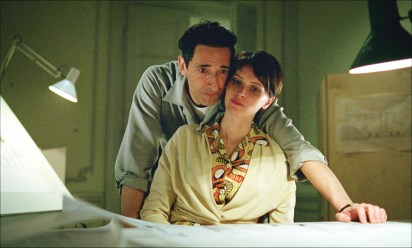
Excellent performance from Adrien Brody. Remember him from 2003’s The Pianist? He appears to have kept it low-key since. This year, he comes back with another performance of a lifetime where he shows Laszlo to be a creative man and a troubled man. He will make you hate him as much as he will break your heart. Also great is Felicity Jones as Erzsebet. It’s the appearance of Erzsebet that most turns this film into two films in one. With her arrival comes the change of environment. She appears to be one who will most interfere with Laszlo’s success and even a victim of his own selfishness but in the end, she’s the best person Laszlo needs during his most troubling time. Guy Pearce is also great as the deceptive Harrison. He’s excellent in portraying an all-American businessman who welcomes Laszlo and his talents, but as long as something’s in it for him and is willing to make a toy of Laszlo. Additional excellent acting comes from Raffey Cassidy, as the niece Zsofia who’s mute at first but soon develops her ability to talk, and from Isaach de Bankole as Gordon, Laszlo’s first friend and business associate who Laszlo later turns on in his success. Excellent technical merits are the cinematography of Lol Crawley, the production design of Judy Becker and the musical score from Daniel Blumberg.

It’s easy to see why The Brutalist is a heavy favorite to win Best Picture. It combines a graphic disturbing story of one man’s pursuit of the the American Dream and shows it in a stylish artistic fashion. Hard to outdo it.

And there’s my look at the first two Best Picture nominees for this year. If you’ve seen them, you can understand why they’ve won most of the Best Picture awards.