Wrap-Up Of VIFF 2025

The 44th annual Vancouver International Film Festival concluded on Sunday, October 12th. The day before Canadian Thanksgiving. There were more facilities and with that, more films. It’s a case where the VIFF is trying to revive itself to its post-COVID state, like most major events. This year’s VIFF was very impressive in making that effort.

This year’s VIFF does not yet have their attendance figures published but you can bet with more films, attendance was up. There were huge crowds for a lot of films and galas were sold out. Films in the Showcase series also received excellent attendance and many did sell out. Films with a lot of Oscar buzz or award winners from Cannes or Venice were also big hits. One of the most noticeable details was that there were sell-outs for many Canadian films. Especially for some films made by local artist. That is another goal of VIFF to promote the films made from local filmmakers.

Set-Up and Strike Adventures

For volunteer work, this was the first year I did the Set-Up And Strike work. It was quite the experience and it could get crazy at times. My first such shift was two days before the start. It involved bringing in supplies to the Granville Island theatre and then to the theatres of the International Village. The activity wasn’t too hard of impact but the International Village had the most supplies to load in.

My second shift took place the day before opening. This involved loading a truck full of items from the VanCity theatre and taking them to both the Alliance Francaise theatre and the SFU theatre. The Alliance Francaise wasn’t too much to load out, but it was a half-hour wait to start moving again. The SFU theatre was more complicated because the garage was secured, cellphone access wasn’t around in the garage and taking things out also meant assembling tents. Assembling tents outdoors in a limited area was a headache!

My third shift took place on the final day, Sunday the 12th. It started at 9pm and it involved taking supplies from theatres we brought in. First was the Rio, then SFU and then International Village. All had complications. For the Rio, we learned the truck we were given by the rental company had a lock from the last customer and we could not get it off! We had to wait for a new truck. After we finished at the Rio, we go to SFU and find the garage door locked just after we finished loading. It was a wait to get moving again! Then the traffic and crowd of people from the Shawn Mendes concert added time for us! Then we see the garage at International Village all locked up! That was another delay in loading stuff. Unloading at the end at VanCity was the easier part and we all left in good time: quarter to midnight!

My fourth and last shift had to be the easiest. It started at noon the day after the Festival ended and it involved returning rented festival supplies to film rental companies. The first trip unloading things from the supply trucks was for Sunbelt Rentals in Burnaby. That move wasn’t too hard as VIFF has a space for their rentals. It took only 40 minutes to unload and pack it all in. Even the big tents didn’t end up as complicated as we feared. The next trip was to Sparky’s Rentals in Vancouver. Finding it was harder than unloading things as Google maps didn’t do things right. The unloading didn’t take as much time as we thought and we ended at 1:40pm; twenty minutes ahead of time!

My Film Watching

With my first two volunteer shifts completed and the last two to take place on the final day and the day after, I used my free time to see as many films as I could. I saw two on opening Thursday (the 2nd) and both were Spanish-language. Actually the very first five days, I saw two films a day and it was quite tiring. Especially since I saw them at various cinemas. I saw most at the International Village, but I also saw some in that time at the Rio, the Playhouse, the Granville Island Stage and the SFU theatre. I like doing different theatres and trying to do it all is tiring. So tiring, I decided to skip film-watching for Tuesday the 7th. Besides I had already completed my yearly major VIFF goals.

On Wednesday the 8th, I saw a shorts segment at the International Village with a friend I had not seen in a long time just for the sake of meeting up. We had a lot of catching up! The next day, I wanted to see a Canadian film at the Cinematheque but it was all sold out! With a free day on Friday the 10th, I saw one film in the morning at the IV, returned to the Cinematheque and got in this time, and ended at the Playhouse. Saturday the 11th was a case I saw my first film at the Alliance Francaise theatre and ended at the Rio. The last film I saw was in the early evening of Sunday the 12th at the Granville Island Stage. In time to do the takedown at the various theatres!

Isn’t it something how I completed all my film reviews and my wrap-up blog all before the end of October? What can I say? While I was waiting for my new job to start in the middle of the month, I used my free time to do whatever blog typing that I could. Boy did it help me get my blogs all completed faster than I expected. Anyways it makes me relax for the rest of 2025. So for those that want me to list all the films I saw during VIFF 2025, here’s my list and the links to my reviews for you listed in the order I saw them and with the film’s nation(s):

2025 VIFF Award Winners

So you’re all now wondering who the Award Winners are? All six juried award categories from last year returned. Two categories for Canadian films expanded to include Indigenous filmmakers from all over. For Audience Awards, the number of awarded categories expanded from nine to eleven. I find it something I saw four feature-length films and one short film that won awards. Here are the award winners for VIFF 2025:

JURIED AWARD WINNERS

SUMMIT Award
for outstanding narrative feature by an established Canadian or Indigenous filmmaker:
-The Things You Kill (dir. Alireza Khatami)

HORIZON Award
for outstanding first or second feature by a Canadian filmmaker:
-Blue Heron (dir. Sophy Romvari)

TIDES Award
for outstanding documentary feature by a Canadian or Indigenous filmmaker:
–The Track (dir. Ryan Sidhoo)

ARBUTUS Award
for outstanding feature film production in BC:
–Blue Heron (dir. Sophy Romvari)

SHORT FORUM Award
open to all short films in the Short Forums
-No Skate (dir. Guil Sela)

VANGUARD Award
open to all feature films in VIFF’s Vanguard section
–Wind, Talk To Me (dir. Stefan Djordjevic)

AUDIENCE AWARDS

Special Presentations
-Kokuho (dir. Sang Il-lee)

Showcase
-In The Room (dir. Brishkay Ahmed)

Panorama
-Meadowlarks (dir. Tasha Hubbard)

Vanguard
-Gazelle (dirs. Nadir Saribacak and Samy Pioneer [Selman])

Northern Lights
-Akashi (dir. Mayumi Yoshida)

Insights
-Free Leonard Peltier (dirs. Jesse Short Bull and David France)

Spectrum
-Khartoum (dirs. Anas Saeed, Rawia Alhag, Ibrahim Snoopy, Timmea Mohamed Ahmed and Phil Cox)

Portraits
-The Essence Of Eva (dirs. Alex Fegan and Malcolm Willis)

Altered States
-****toys (dir. Annapurna Sriram)

Spotlight On Korea
-3670 (dir. Park Joon-ho)

Focus
-Bad Girl (dir. Varsha Bharath)

And that does it for another year at the Vancouver Film Festival. It offered a lot more this year and I enjoyed as much as I could. We’ll see what 2026 has to offer next October.
VIFF 2025 Review: The Last One for the Road (Le città di pianura)

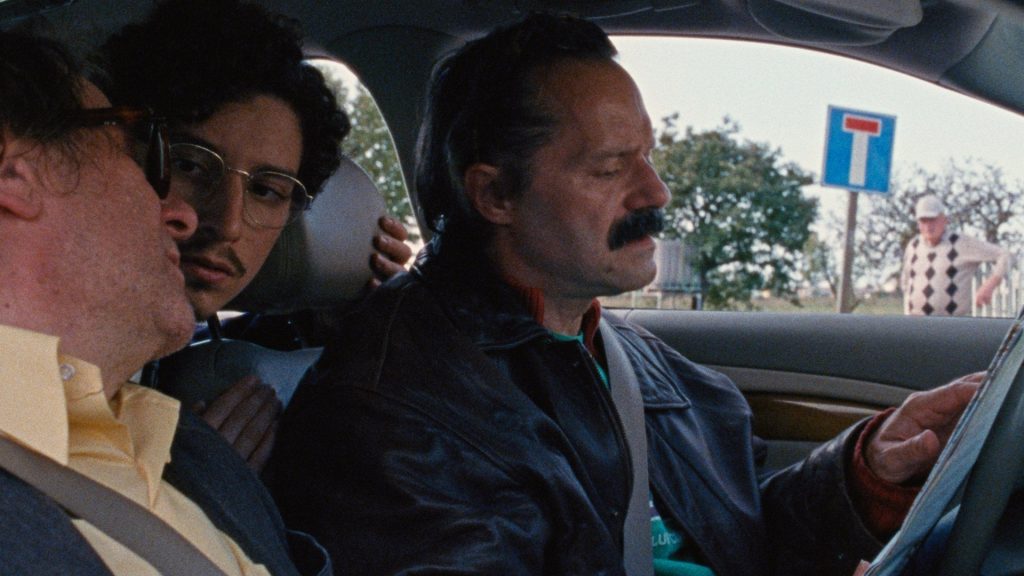
The Last One for the Road is a charming film of a road trip of two middle-aged friends and a young student they take along the way.

There is never a next time.

I find it quite intriguing that a film titled The Last One for the Road ended up being MY last film for my VIFF! Although I would rather have ended my VIFF with a film of a different genre in mind, I’m glad I ended with this one.

The film begins in the early-2000’s. A CEO of some company flies into a construction site. One of their veteran workers is retiring. He gives him a gold Rolex watch as a gift. Flash forward to the present. There are two fifty-something men at a bar in Veneto taking in what should be their last drink. The waitress tells them the bar is closing and they’re drinking non-alcoholic beer. Talk about a disappointment for a last drink! The two men, lifelong friends Doriano and Carlobianchi, decide to go on a trip to Venice and to a bar that serves a real beer!

They make a trip to the nearest town that will serve alcohol. They go over to a night club. It’s a country-western club. They have no problem taking in a real beer. They also notice something. There is a young male who looks unhappy. His name is Giulio, an architecture student. He has an exam on his mind and he is unhappy with how things are going for him right now. Especially after a woman he took interest in turned him down. Doriano and Carlobianchi talk to him and even offer to take him along for the ride for their ‘last drink.’ Giulio reluctantly accepts and is uncomfortable being part of this trip. Especially since he wants to return home to Mestre.

Now Doriano and Carlobianchi are a colorful bunch. Carlobianchi told Giulio the night before he holds the secret to the world. He also talks of always having one last drink because ‘it’s still yesterday for us.’ The two of them have drink after drink wherever they go. The two of them also talk about how the were construction workers who used to work on a highway in the to connect Lisbon through Treviso ending in Budapest. The two also talk about how they’re waiting for a friend named Genio whom they claim has money buried somewhere to fly in. At first, Giulio is uncomfortable with the two and can’t wait to take the train home.

Over time, Doriano and Carlobianchi are able to find temporary overnight shelters for themselves and for Giulio. They know how to create tabs and do clever talk to get it. As they go through various places, they talk about the glory times they used to have as partying young adults in the 1990’s and of their success in construction work before the 2008 financial crisis. The work they’re proudest of is the highway that links Lisbon through Treviso to Budapest. Since then, they had to swindle and scam their way into getting money whichever way they can. One job including stealing boxes of sunglasses and selling them. They even visit the house where they used to live in and come across one of the big boxes of unsold glasses. Giulio soon reluctantly warms up to the two men and starts liking them more.

Soon it becomes obvious to Giulio that this trip to anywhere will soon become a trip to somewhere. Within their talk of their ‘glory days,’ they also talk of Genio: a friend who helped them along with their scams. They mention that Genio was the lucky one as he managed to flee to Argentina before he could get caught. Genio is expected to fly in that day: the first-ever time since his ‘escape.’ Maybe Genio can give them some money. During the wait, they again make it to site after site where they either enjoy it or try to swindle something out of someone. Even a place the two used to stay at and there are still photos of them during their young days of the early 1990’s. Of course there are trips to bars for one last drink after last drink. At one bar, Doriano finds the retiree that received the watch that day. He’s at the slot machines hoping to get rich. Then they do meet up with Genio right at the airport. They pick him up and talk to him.

It’s not clear if they were able to get money out of Genio or not but it is made obvious that they now have the money. They are now able to pay some things off. Finally Giulio has his ticket for Verona. The two men help him along and see him off to his departure. Giulio tries to get a message the two men are trying to tell him but the train windows block all sound. As Giulio relaxes on the train, the two follow his train by car and give him well-wishes. Back to the regular daily life for Doriano and Carlobianchi, but just after having a cone of lemon gelato.

There have been numerous road trips films before. This is a unique story of two close broke friends who do a road trip just for the sake of taking in a drink and having a good time. When they meet a young adult who is bogged down with his cares, then it becomes a case of the trip being an actual destination and things to do. Over time, they reminisce over past memories: both good and bad. They expose secrets only they themselves know. While the young man doesn’t welcome this traveling around at first, he learns to relax and enjoy it. When he finally does board the train for Verona, it’s possible the two men left something behind with him. We hear near the beginning that Carlobianchi believes he holds the secret to the world. We never hear him tell the secret but I guess it may be in this story, Giulio’s time with these two men help him witness this secret for himself. That could be it that Giulio just sees or experiences the secret instead of hears it.

I don’t know if it’s been done before but it makes for a good story that feels more like an experience than a story. What also makes this story is that Doriano and Carlobianchi are not your typical pathetic slobbering drunks They’re drunks that are charming and they know how to get the best of life, no matter how dour it is for them. The likeability of the two is what makes this story not only watchable, but enjoyable as well. They also hint to things that are not made clear. Like is it possible the two are also secret boyfriends? Hey, a bit of mystery is an added perk to the story.

One thing you’ll notice as you watch is that the set places and towns they visit add to the atmosphere of the story. This being a road trip story, the film does a great job in telling its story around the locations and scenery of the region. The area of Northern Italy is on display from its old buildings to the Venetian coast to the landscape. The addition of the geography is another addition to the atmosphere of the film. Places that are part of the moments of the past that are significant to the two protagonists’ lives add to the story. Even some of the more run-down buildings look add to the story being played out.

If there’s one flaw about this film, it’s that you’re often left wondering what the point of the story is. You have two men who go from town after town for last drink after last drink, bring a young student along for the ride, pick up a colleague at an airport and go from place to place reminiscing of old times. The story can get confusing but it does reach an understandable ending as the two men see Guilio off at the train station and even follow his train. The middle may be disjointed but the beginning and end made the point of the film better to understand.

This is a great film for writer/director Francesco Sossai. Four years ago at VIFF 2021, he won the Vanguard Jury prize for his film Other Cannibals (Altri Cannibali). That film helped pave the way for Sossai to become assistant director for Mission Impossible: Dead Reckoning. This film is different than his other major films. The trip of two men wanting last drink after last drink and bring a young stranger along the way makes for a warm charming story. This film also gives a certain feel that will remind you of many of the more beloved Italian films of the past. I noticed that as I was watching and I sensed that’s what Sossai was aiming for. This film has been nominated for Un Certain Regard at Cannes and for the CineCoPro award at the Munich Film Festival.

The two leads, Sergio Romano and Pierpaolo Capovilla, have a great chemistry as two lifelong friends whom you will sense are lovers. The two of them and their ability to see the ability to celebrate the joys of life and laugh off the negative as they have drink after drink made the movie a joy to watch. They will succeed in making you like them. Filippo Scotti is also great as young Giulio. His performance was very believable as the young shy student who’s cynical of the zest for life of the two, but warms up later on. He made a great addition to the story. The cinematography of Massimiliano Kuveiller is another standout achievement. Showing off the places of the visit with great angles adds to the atmosphere of the film.

The Last One for the Road is more than just a road trip film. It’s about two men going through the good times and the bad times and the young stranger half their age they befriend. Although it may get confusing at times, it makes for a charming relaxing story.

And there you have it! That’s the last of the films of the Vancouver International Film Festival I have to review. My wrap-up blog is coming soon.

VIFF 2025 Review: The Plague

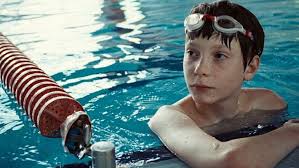
Thirteen year-old Ben, played by Everett Blunck, is preoccupied by an odd teammate’s skin condition in The Plague.

A film like The Plague is one of those films that sounds ideal to watch on a Saturday night at the Rio. Let’s just say it delivers on the crazy stuff you’d expect from a film in the Altered States series, and more.

It’s 2003 and Ben is a 13-year old boy at a water polo camp for 12-13 year old boys from across the nation. They spend time training in the school pool coached by a coach nicknamed ‘Daddy Wags’ and sleeping in the same lodge. The boys all have the best and worst attributes of boys their age. They befriended one moment and taunted the next. Ben’s first encounter comes while talking to Jake who’s back for his second year. During dinner, Jake notices Ben’s speech impediment when he says ‘s’op’ instead of ‘stop.’ Ben soon gets the nickname ‘Soppy.’

Despite being called ‘Soppy,’ Ben is still one of the boys. They tease and they are teased back. Ben and the boys talk of the girls they fantasize over. Ben notices that Eli is the boy most singled out. Eli showers alone, changes alone, and eats alone. When it’s dinner on the first day at camp, the boys leave whatever table Eli sits at. Ben wonders why. The boys say it’s because Eli has ‘the plague.’ Eli has a noticeable rash on his arm and wears a long-sleeved shirt while training while the other boys wear simple trunks.

Ben doesn’t buy this talk of ‘the plague’ or its alleged contagion from the other boys. Ben dares to befriend Eli despite what the other boys say. Ben does notice a lot of ‘weird talk’ from Eli and it gets him thinking about him. Other incidents that get Ben thinking is when the boys have fun vandalizing an alley one night. One of the boys plays music and they all dance, but Eli does a super-bizarre dance to music that includes dancing with a poster of a cartoon character he calls ‘Boopie.’ Another time, Eli’s finger looks like it’s cut of, but it grows back in front of Ben. Ben is starting to get nervous about Eli.

Things soon get more heated. The water polo camp shares a pool with the 12-13 artistic swimming camp. The girls to their training after the boys are finished and all the boys are attracted to the girls. Including Ben being attracted to one swimmer with braces. One day, as the girls are warming up at the other end, Eli’s hormones let loose (to put it politely) and they all taunt Eli. Daddy Wags disciplines the boys about people’s feelings. Jake is the one that still gives a jerk attitude to the coach and doesn’t regret the teasing. Soon the boys start suspecting Ben has ‘the plague’ because of the time he spends with Eli and they notice a similar rash on him as Eli’s rash is growing.

Ben tries to run away from the camp and even calls his mother from a diner’s pay phone to try and pick him up. Daddy Wags finds him at the diner. They have a dinner together and Wags tells him about the teasing he endured when he was Ben’s age. Upon returning, Ben tries to make peace with Jake but Jake reveals to Ben that his mother died.

Very soon, the rash on Ben grows and that prompts more rumors from the boys. Especially from Jake. In a training scrimmage, Jake is mad Ben wasn’t fouled while he was. He starts a fistfight with Ben and that becomes the end of it. Jake is expelled from the camp. Despite Jake being gone, it’s clear from the looks of the other boys the torment won’t be over.

As the camps for both water sports end, Daddy Wags is holding an end-of-camp dance where the water polo boys can finally dance with the artistic swimming girls. Finally, Ben will have a chance with the girl he’s been interested since the start. At the dance, there’s not much dancing but they notice Eli doing his ‘freak dance’ from days ago. It’s when Eli again dances with the Boopie poster that Ben has had enough and has to give Eli a talk. Ben just let’s it out on Eli that his behavior will get him continuous ostracism. It gets so heated, Ben tears the Boopie poster. What happens after, I won’t give away the ending. I will say that what happens to Eli and Ben will convince you that ‘the plague’ is real!

Bizarre supernatural thrillers like these usually have some theme that’s a common reflection of daily life. This is a case of boys on the verge of puberty. I don’t miss being a 12- or 13- year old boy either. I was the mocked at times and the mocker other times. Acting like a jerk, talking tough, lewd talk, being mean to look like a big shot, I don’t miss being a young mouthy jerk. This film does make the nastiness of the middle school years it’s common theme. I’m sure those that watch this film, especially adult males, will remember the insecurities they themselves faced when they were that young. Looking back, it’s kind of understanding why it would make the ideal theme for a scenario as bizarre as this plague. A bizarre thing happening to one at the most vulnerable time in a person’s life..

Here we have a water polo camp for boys sharing a poll with the girls of the artistic swimming camp. Both camps have the same age ranges. At the end of the camp, there’s a farewell dance where the boys and girls can finally dance together. As for the story being a thriller, the toxic masculinity of middle school boys adds to the drama of this story. Does Eli really have a ‘plague’ that’s contagious? Or are the boys just being mean? You’re left to question. The drama gets even bigger when Ben gets the same rash. Is it really ‘the plague’ they’re talking about? What will happen to Ben? Will he be able to dance with the girl he fantasizes over? Or will he end up acting like a freak like Eli? Add that in to the story of the difficulties of being 12 or 13 and other boys being big shots. It does make one curious of how this story will end for either of them.

Mind you this story isn’t just showcasing the nastiness of middle school boys. It also showcases the fun with the recklessness of getting into mischief. It showcases the feelings of love and attractions to girls at that age. The desire to meet with the girl of Ben’s curiosity will remind you of the innocence of those days. Mix that in with the camera angles and the slow-motion filming as well as the mix of hit songs and original score, it gives a fun boost to the drama of the story.

This film is a great first feature-length film from writer/director Charlie Polinger. Based on his summer camp experience in 2003 when he was 12 and kept journals over, Polinger does a good job in mixing in the story of the anxiety of being a misfit among a group of 12-13 boys while fearing getting the ultimate in ostracism from the possible contagion. The characters of the boys will remind you of some middle school-aged boys you may have encountered in your own life. He does a very good job of showing the ugliness of boys being big shots at other boys’ expense while reminding us this is a thriller about something supernatural. It’s a story that’s mixed with scripted dialogue and improvisation. The addition of subtitles that are not always there and leaves some things out is an odd but unique addition to the story. A great achievement!

Holding the film together is the performance of young Everett Blunck. He handles a role involving a lot of young insecurities well and makes a story about something both bizarre and frightening compelling to watch. Joel Edgerton plays it low-key as the coach Daddy Wags. In playing the coach trying to guide the boys and keep order, he keeps it low but makes for a believable coach hiding his own insecurities.

The biggest scene-stealer of the film has to be Kayo Martin. His performance as Jake will remind you of the middle school boy that seems to be the stand-out of jerks or the ‘king jerk’ of all of them. We all have memories of that boy! At the same time, he is sympathetic. We all remember how middle school boys are bad at dealing with their feelings. It may explain why Jake acts like a jerk. Maybe Jake doesn’t know how to deal with the death of his mother. Kayo is very convincing. Kenny Rasmussen also stole scenes as Eli. He’s both sympathetic and frightening at the same time. You don’t know if he is the ‘odd boy’ (another middle-school boy type we have memories of) or if ‘the plague’ is the real thing. Despite being singled out as a freak, he will make you feel for him at the same time too. The cinematography from Steven Breckon mixes the fun, cruel and frightening environments very well and the mix of hit music and original composition from Johan Lenox helps with the film’s shifting moods from start to finish.

It’s interesting to note this film has won awards at film festivals. The film was nominated for Un Certain Regard at Cannes as well as Charlie Polinger nominated for the Golden Camera award. At the Deauville Film Fest, the film won two awards: for the Critics Prize and the Grand Special Prize. At the Calgary Film Festival, it won for Best International Feature in the narrative category.

The Plague will remind you of the ugly days of middle school and how you tried to prove you were all that or were mean to others. It also makes for a bizarre and intriguing thriller about something that turns out to be more than just a skin condition in the end.

VIFF 2025 Review: As The Water Flows (翠湖)

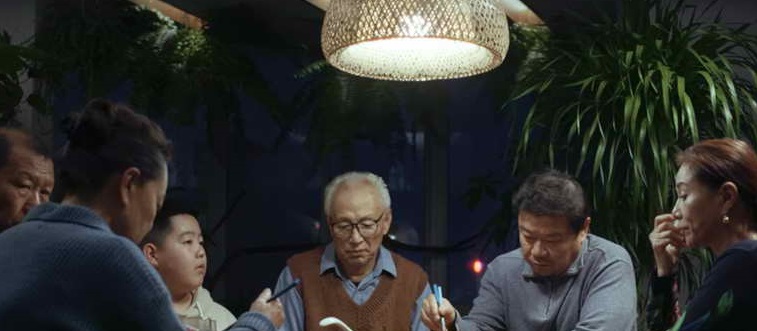
A dying grandfather, played by Li Zhenping (centre), seeks to mend family ties in the Chinese film As The Water Flows.

As The Water Flows is one of many Asian films that played at the VIFF this year. Its subject matter isn’t exactly a film that would make you want to see it, but it’s worth seeing.

The film begins with a grandfather on a boat on a river with his grandchildren. The film then goes to the grandfather Xie Shuwen, a former college professor. He’s with his new girlfriend whom he has seen recently since his wife died. He will be having a dinner with his daughters and he’s unsure they will be happy with the news of her. The dinner happens and all three daughters are there with their husbands. Only one daughter brought their child: a pre-teen chubby boy named Panda. He delivers the news, but they’re not happy about it. Especially the oldest and the most orderly of the daughters. After the dinner, bad memories of the past agent the daughters.

After the dinner, the daughters move on with their lives. They’re busy maintaining a career, their own families and their children. They want their children to grow up well and be successful but there will be difficulties ahead. One daughter is proud that her son, the eldest grandson, is going to Stanford the next year. Suspicion of what’s really happening grows when Xie notices the grandson drunk. Panda appears to participate in classes well but he is the target of bullying because of his short overweight stature. Another daughter of Xie’s is unhappy her own daughter quit a job in a family restaurant and has different career desires.

Meanwhile Xie learns he has a terming lung cancer diagnosis. As he knows he’s dying, he continues to spend his quiet time at Green Lake Park but he also uses the time to spend more time with people close to him. That includes his new girlfriend, friends from the college he taught at, neighbors, and his families. Family dinners become more common. One daughter notices how he has become closer to the family even more so than when they were younger. She also notices how his harmonica which he used to play often is showing age. She’s especially angry when she learns he’s still smoking and playing mah-jong.

As time passes, what the children are hiding becomes more obvious. The granddaughter wants to go her own direction and she has fallen in love with a man. She hints she may want to marry. The older grandson admits he forged the acceptance letter to Stanford and that he will really be going to a common University. He’s broken-hearted about this. Also Panda is unhappy with the demanding regiment at his school. It becomes frustrating to the point Panda buries his schoolbooks in dirt. It’s time with grandfather Shuwen that the grandchildren are able to be more confident with their life and their decisions. Even the older grandson is able to find luck in his life as he meets the granddaughter of one of his grandfather’s professor friends.

Shuwen then has one last visit with his girlfriend. It’s a nice quiet occasion. The marriage between the granddaughter and her boyfriend happens and Shuwen is happy to be there. The occasion is a happy occasion for all and he’s able to have amicable conversations with his daughters, despite his cancerous coughing. The ending and credits role gives a hint the wedding is the last family occasion Shuwen is present.

The film is as much about the family dynamic and the family ties as it is about the main protagonist trying to find his purpose to live. We have the widowed grandfather who has recently been diagnosed with lung cancer. Even though he lost his wife, he wants to maintain a life for himself by playing mah-jong, meeting with his professor friends and dating again. We have the three daughters who are trying to maintain their careers, keep their marriages together, and raise their children for the future. They’re the ones with the biggest struggles now. Finally, we have the three cousins that treat each other like siblings. They dream of the future, but they also fear for it. They feel it’s demanding and unforgiving and they either don’t know what to do or they want to do it their way.

This all comes as Xie Shuwen learns he is dying, just a year after his wife’s death. He spends time with his children and their families. He becomes like a guide or a mentor to the grandchildren while the daughters feel he didn’t spend enough time with them during his professor days. It’s possible he wants to seek relations with his grandchildren and resolve with his daughters. It’s not an easy thing to do with the constant arguing between the daughters and him. To add to it, the daughters are not very welcoming to his new girlfriend.

The story is told through all angles. The biggest angle seen is through Xie’s, but we also see the story through the angles of the daughters and the grandchildren. The multiple angles make for a good way of telling a story and presenting the complicated scenarios, but it can get confusing at times. The story itself is so complex, it can often seem like a drama that’s drawn out longer than it should be. Often throughout the film, you’re tempted to question who the story is mostly about. Some would argue the film follows the same formula as 1989’s Parenthood. Some would also say it has a similar sound of 2001’s The Royal Tenenbaums. It’s easy to dismiss as such but if you see the story, it relates to real situations that one can see happening in their own family. That’s the biggest quality of the film. That probably every family can see an element of the film or the characters in their own life.

This film is the directorial and writing debut for Zhuo Bian. Not much is known about Zhuo’s filmmaking before this film, according to IMDB. With this film, he creates a well-arranged family story that starts with a family dinner, goes into the lives of the separate families and the members, often returning with another family dinner from time to time, then going off again, and ending with the wedding. This type of storytelling allows the story to be told from all angles and remind us that it’s a family story. It’s very complex and sometimes difficult to connect all the stories together, but Zhuo does a very good job. He also does a great job in placing the story to the Green Lake Park in Kunming, China. That’s the place where Xie often visits or meets with others as he reflects on his thoughts. Adding that in adds to the sensitivity and solitude of the story.

The film has excellent acting from Li Zhenping as Xie. As the grandfather who’s at a crossroads between living again after losing his wife and just learning he’s dying, he does a great performance that is low on the drama but makes for honest emotions. He does a great job of holding the story together. It’s hard to pick out the best supporting performance because all the other actors did an excellent job of playing their parts well. The daughters, the sons in law, the grandchildren, they all did their parts well. The cinematography of Wang Zixuan and Jie Zhu gave the dramatic story a picturesque telling with its various shots happening inside homes and outside in nature.

As The Water Flows is as much about the family dynamic over three generations as it is about the difficulty of a grandfather trying to maintain a family and maintain one’s life. It’s possible you can see something where you can identify in your own life with this film.

VIFF 2025 Review: Christy

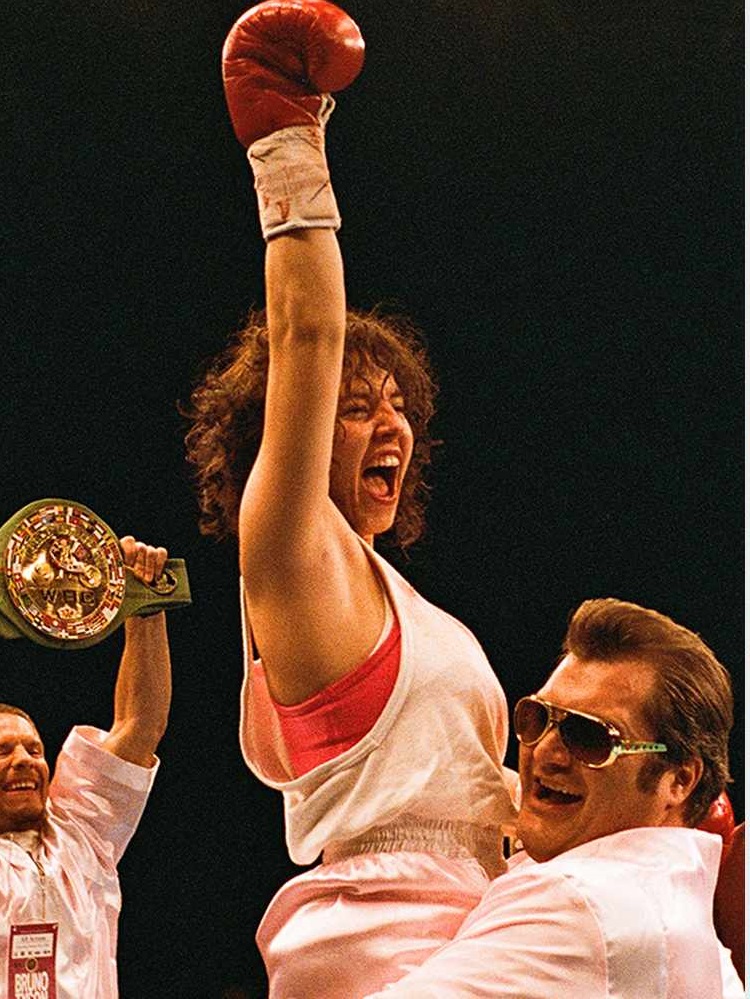
Christy is about female boxing legend Christy Salters-Martin (played by Sydney Sweeney) who had more than her fair share of fights.

It’s very rare to see a sports film at the VIFF. Christy was one of the feature attractions of the Festival. It’s more than a film about a pioneering female boxer.

We see Christy Salters-Martin just about ready for a fight. She talks about all she went through to get there. The film flashes back to 1986 in her hometown in West Virginia. A teenage Christy Salters is into sports. She also spends a lot of time with a girl named Rosie. Rumors are going around that they’re more than best friends. The rumors upset the mother. One night, Christy attends a fighting group. She caught the attention of a boxing promoter named Larry. He believes she’s worth promoting. Christy is reluctant at first, feeling it won’t give her much of a future, but she eventually accepts.

Larry finds a local boxing coach named Jim Martin. Jim is not at all interested in training a female boxer at first but when he sees Christy punch, he sees promise in her. He believes with his coaching, she can become the best female boxer in the world. As Jim trains Christy, but he’s very suspicious of her behavior. He notices she’s a lesbian and she’s more masculine than other women. He gets her to wear a pink uniform with pink boxer trunks and give her the name the ‘Coal Miner’s Daughter.’ He even gets her to marry him. Over the years, Christy does become the top female boxer in the world. She even gets legendary boxing promoter Don King to pay attention to her and promote her in 1996. It’s after that Christy helps to pioneer the sport of women’s boxing. She becomes known for her fierce fighting and her trash-talking of her opponents. She’s also noted for calling some of her opponents ‘lesbians’ despite the secret she’s hiding.

Things change in 2003 as in one of the most hyped-up fights in women’s boxing, Christy will face the challenge of Laila Ali, daughter of legend Muhammad Ali. Once again, her title of World Champion is on the line. In a highly broadcasted fight, she loses by KO. The marriage between her and Jim Martin also starts showing friction as Jim has been getting more and more controlling over her and even abusive. Adding to the difficulty, she tries to get her mother to listen to her situation but she is so flattered by Jim, she sooner takes Jim’s word over Christy’s.

In 2010, Christy is still training in the gym, but Jim is busy training new younger fighters, male and female. Christy is unhappy about this because she still wants to fight. Jim also notices Christy meeting up again with high school friend Rosie. Jim, fueled by cocaine he and Christy both do, starts becoming more controlling of her and watches her every move, threatening to kill her. He even gets Christy to participate in super-lewd videos which upsets her mother. Once again, the mother takes Jim’s word over Christy’s.

Soon Christy develops a bigger sense of assertiveness at the urging of Rosie. Jim responds to it one day by stabbing her four times and shooting her. Miraculously, Christy survived and is able to get help from a driver to the hospital. At the hospital, Rosie is by her bedside, to the disgust of her mother. With the family by her bedside, the father and son care about her condition but the biggest thing her mother cares about is her being a lesbian. It’s there she finally puts her mother in her place. Christy recovers faster than the doctors expect. She returns to the gym and is greeted warmly by all. They are also shocked that she wants to get back into fighting. Jim is put on trial where Christy delivers a scathing speech making him confront what he did and is sentenced to 25 years in prison. The film ends with the start of one of Christy’s fights!

Normally when you go to see a biopic of an athlete, one would expect it to be about their long rise to the top. Christy is different. It does showcase a story of a boxer who wins and pioneers women’s boxing to new heights. In actuality, it becomes more about Christy Salters breaking free from her controlling and abusive manager at a time that was now or never. It’s also of Christy assuming her identity and dealing with a mother who cared more about what she thought than what Christy felt. You could understand why that fight at the end was important to Christy, win or lose.

There have been films of female boxers before. The two best known are 2000’s Girlfight and 2004 Best Picture Oscar winner Million Dollar Baby. This film is a biopic of a legendary female boxer. At a film festival, one would expect to have films that take filmmaking to new or unique artistic directions. This film isn’t as artistically inclined as most of the films at this Film Festival. One unique direction the film goes into is that it focuses on Christy and the intensity of what she goes through. It focuses on her fighting wins, her fighting losses and her abusive relationship with Jim.

It may be common for any protagonist of a film to dominate the focus of the whole film, but it’s important here as it is Christy’s tough will that gets her through the hardest of times. The abuse she endured at the hands of Jim Martin is just as important as her fights. You can understand why that fight in 2010 with Christy at the age of 42 was an important part of the film. If there’s a message to sense in this film, it has to be Christy Salters is a woman of many victories but her biggest victory was outside the boxing ring.

This film is great work from director David Michod. With the story from Katherine Fugate, Michod co-adapts the story with wife Mirrah Foulkes and creates a film that will keep you intrigued from start to finish. He does a great job in getting the actors to do their parts well. Sydney Sweeney is not only unrecognizable as Christy, but she delivers an excellent performance from start to finish. She will let you know she is not simply performing the role of an athlete. It’s about a person and her grit. Ben Foster is also as unrecognizable as Jim Martin and he succeeds in making him into a cocaine-fueled controlling megalomaniac. You will end up hating Jim. Merritt Wever is also great and hard to recognize herself as the mother Joyce Salters. It’s completely different from her Nurse Jackie role she’s known for but she does a great job of making the mother look like the parent you can’t trust. Cinematographer Germain McMicking did a great job of the shooting angles and the close-ups. The musical score of hits mixed with original music from Antony Partos fit the film well, but some hit songs were years behind the year of the scene!

Christy is more than just a biopic of a successful boxer. It’s a film that shows Christy Salters had bigger battles outside the ring. It may be imperfect, but it is a compelling story.

VIFF 2025 Review: The Scout

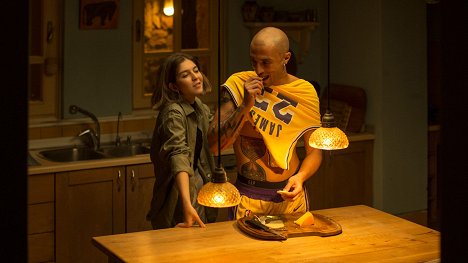
The Scout is about a film location scout names Sofia played by Mimi Davila (left) who discovers more than film locations.

With the Vancouver Film Festival, you can get a wide variety of styles of film showing throughout the Festival. One unique film is the American film The Scout. It’s unique in its own way, even if it is confusing.

Sofia is a location scout in New York City for a film company. Most of the day, she drops flyers into the mailboxes of surrounding houses or apartment suites saying she’s interested in having the inside of their places as set pieces with her phone number listed. After sending out a set of flyers, she makes a trip to an apartment of an older woman as she listens to her voicemail responses. The voicemail range from people interested to those thinking it’s stalking to some unhappy she hasn’t come to her place yet. As she photographs the suite of the older woman, she learns more about her life. She learns the mother has two grown children who have moved out and never returned to see her.

Her second trip is to another apartment. At the house is a man who works from home and often spends time looking after his infant daughter Sophia. Sofia takes a special liking as they’re names are similar. As she photographs the house, she learns more about him and has a sense from the talk that his marriage is falling apart. Her third trip is to another apartment, but that will require crew from the film company to also review. This will be busy for Sofia, the crew and the suite holders. The resident is quite welcoming. The talk from the film crew makes obvious a lot of thought is to go into selecting. Some like it, some are critical of it. Sofia is hoping it will work out.

The day continues as Sofia goes to another apartment of one who accepted. She finds out it’s her friend from her college days. Both of them are shocked. They reminisce about the good times of the past and they talk about what’s happening in the present. Not all of it is pleasant, especially in terms of their relationships. Sofia’s last appointment is to be with a pet store. She’s a half-hour late and the owner is unhappy with it as he’s locking his store. Despite his anger, she’s able to convince him for the appointment. The appointment goes so well, they even have dinner together going into the night. As great as that was, Sofia finds out it took so long, the traffic police clamped her car and she’ll have to pay a fine of more than $400!

The next morning, she attends a meeting at her company’s office. There they talk about certain locations for a scene. Judging by the discussion, it looks like one of Sofia’s discoveries won’t be considered for this scene. After the meeting, she spends the rest of the day over at an urban beach. She just goes there onto the sand holding a coffee and stands there looking out. You can tell on her face something is wrong.

The thing about this film is that it has a good beginning and a good end, but an unsolid middle. In seeing the film, it’s hard to understand what it’s all about. It does show a lot about what it’s like to be a location scout for a New York City film company, but it doesn’t fully make clear what it’s about. You don’t know if it’s intended to be a day-in-the-life film. You don’t know if it’s about the loneliness Sofia’s going through. You also don’t know if it’s to do about the frustration of working a film job in New York. The film could be a case that the director wants us to decide for ourselves what the story is, but I wish it was clearer.

If this film is intended to be one of those day-in-the-life films, it’s not an easy genre to accomplish as the day could present itself as a story to tell or just a portrait of daily life. The film does have a lot to say as Sofia goes from place to place and either meets with her crew or has an ordeal to deal with. It doesn’t make it too clear about what it’s trying to say. One can think of many themes this film could be about like the demandingness of a filming job, life inside different from what we see on the outside, or the story of a successful but lonely young woman. Scenes like when Sofia goes into her parents’ house and call out for her mother make you question if loneliness is the theme. You may have to watch it a second time to make up your own mind what this film is about.

This is the directorial debut of Paula Gonzales-Nasser and the first feature-length script she wrote. Paula has been in the New York film industry for eight years and has made a jack-of-all-trades of herself in doing set design, cinematography, art direction, location managing and producing. The first six years she spent being a location scout so it becomes pretty clear she’s basing this story on her own experiences. The story she writes and directs is a telling story of a location scout trying to make it, but it’s not the clearest in telling its story or making its main point of focus. Despite the lack of overall theme, the performance of Mimi Davila is great. Davila has had an acting career of over 15 years in various roles. In this film, she keeps her performance low-key but she can send a lot of messages even in her moment of silence. She makes for a very believable performance. The supporting performances from the people Sofia visits to the crew she works with also add to the film and make like you’re watching a real situation instead of seeing them act.

The Scout is a unique drama. It could easily be dismissed as a ‘boring movie,’ but you have to look closer. One thing is that the message or theme are not the clearest to understand.

VIFF 2025 Review: Bidad (بیداد)

An Iranian singer named Seti (left, played by Sarvin Zabetian) is threatened by the law and only has a random man she met (right, played by Amir Jadidi) supporting her in Bidad.

At this year’s Festival, you will see a lot of films that deal with the harsh realities of the filmmaker’s home nation. Bidad is a film that deals with the issue of simple human rights.

Seti is a young Iranian woman who dreams of a singing career. In Iran, only men can be lead singers and female singers are relegated to the background. Seti did sing at a park sing-along but was stopped by the Guidance Patrols, or ‘morality police’ of Iran. Since she can’t perform on a public stage, the most she can do is post videos of her singing on social media. Seti also has a major problem in her life. Her mother Homeyra, whom she lives with, is an alcoholic who can’t seem to recover from her addiction. To make matters worse, Homeyra often has an alcohol-fueled explosive temper. Seti often stumbles into her with a bottle in her hand, and it infuriates her.

Seti is a bit of a rebel. She dares to walk the streets of Tehran without a veil or a hijab, despite the chance of the Guidance Patrols arresting her even for that. She even cuts her hair in anger. One day after rehearsing with others in her underground college, she comes across a man who hoots at her from her car. At first, she thinks it’s just another young jerk male. She reluctantly decides to spend the night at his place. She learns this man named Bebin is a lot more. He has shown a liking to Seti and her music. Overnight she learns more about Bebin and he’s a man who really cares about her. Bebin also has a secret of his own. He has a bottle of specialty alcohol that he has to keep hidden from the Guidance Patrols. He gives her a drink and he talks about hope of seeking refuge in another country.

Seti has a public performance set up for her at a club. The advertising had to be kept to a minimum for the sake of Seti’s safety. Homeyra is scared to see her there but Bebin will see her perform. Before she is even able to perform, the Guidance Patrols bust the place up. They boot everyone out of the club. Infuriated, Seti attacks the Patrol and runs off with Bebin helping her escape. The Patrols did track her identity down and later arrest her at home. She is taken into custody for a week’s period of time. The cell she’s kept in feels like a prison. The inspections she is forced to endure from both male and female patrols are humiliating. She is released on bail awaiting trial.

After her release, she returns home. Homeyra tries to show Seti that she has stopped drinking for nine days. Seti learns some unhappy news. Her social media account is restricted and Homeyra posted a message that Seti will never perform or post videos again. Seti is infuriated and lets out her anger to Homeyra. She leaves for the streets and soon learns the club she performed at is closed off by a concrete barrier. Soon, she learns of an underground public music rally. Many other women will be performing. On her way, she’s fortunate to bump into Bebin again.

Seti and Bebin find a group of ‘underground’ performers. It looks ideal for Seti to sing as many women are singing and are without veils. Just as Seti finds a female guitarist to sing along with, the Guidance Patrols bust the location up and are ready to make arrests. Bidad knows if Seti is caught, she would be arrested and could be executed. Bidad is willing to take her to safety, but Seti insists on singing with the guitarist. The ending doesn’t give full details of the aftermath but the images during the credits are telling.

Seti’s story is a common story for many women in Iran. Men have more freedoms and the women are frequently targets of the Guidance Patrols if they don’t obey. It’s been that way since 1978 when the Islamic Revolution happened in Iran. Even seeing how there are a lot of women that are part of the Guidance Patrols speaks a message how there are many women in Iran who agree with this restrictiveness. Seti is a woman of rebellion. Her only weapon is her singing voice, but the powers that be in Iran consider it a threat. No veil and a woman singing in public. You can understand the reason for rebellion with the Iranian women revolting in 2022. In fact, the word Bidad is Farsi for ‘outcry.’ You can see that this film is also outcry about this problem. That scene where Seti cuts her hair will remind you of how Iranian women cut their hair during the revolt that year.

It should also be reminded it’s not just women doing what women are not allowed to do that are under scrutiny from the Guidance Patrols. Drinking alcohol is a crime for any Iranian. That explains why Bebin has a hidden bottle of whiskey and that’s why Homeyra can’t get proper treatment for alcoholism. Because she’ll be arrested.

The film isn’t just a reminder of what women in countries like Iran are going through. The film is about Seti herself. Seti loves to sing. It’s her expression. She does not understand why only men get the lead and only men can perform in public. It’s because of her passion for singing that she dares to perform in the club and dares to attack the Guidance Patrol when she’s about to be arrested. It’s because she’s furious with her mother when she learns she posted a fake video that she’ll never sing again. How dare she say a lie like that on social media about her passion. You can understand why Seti dared to perform at that underground performance. She won’t even let the threat of death stop her from doing what she loves.

This film is a great work from Iranian director Soheil Beiraghi. Iranian women and their fight for their rights and autonomy are a common theme in his films like 2016’s I (Me), 2018’s Cold Sweat (Permission), and 2020’s Popular. This fourth feature he directed and wrote is another story of Iranian women and their struggle. This is something how Iran and their Guidance Patrols consider something as simple as a woman singing in public is seen as a threat to order. He has a statement to make and he does an excellent job of making it as a dramatic story rather than something preachy. It’s tricky to do something like that but he succeeds very well. This film was a nominee for the Best Film award at the Karlovy Vary Film Festival and won the Crystal Globe at that Festival for Special Mention.

The performance of Sarvin Zabetian is excellent. She not only delivers a good performance but she makes Seti and her dream of public singing a relatable story. One can’t help but feel a connection to her dream and disgust to why she’s forbidden, and she succeeds in making us feel that way. Leili Rashidi is another actor who delivers a great performance. Her performance of Homeyra is one where you don’t know whether to despise her or feel sympathy for her. I know Seti makes it appear living with her is like a prison of its own but sometimes, you sense Homeyra is also a prisoner of her own situation. Amir Jedidi delivers a great character in his role of Bebin. He makes Bebin to be a likeable person, especially as he’s the one person Seti feels completely secure around, but I feel his role could have been developed more.

Bidad is both a tragedy and a story of hope. You can see an incident like this happening in Iran. You can also sense the film telling you despite these dark times, there is hope for the future of women in Iran.

VIFF 2025 Shorts Segment Review: Forum 6 – City slickin’

What can I say about short films? A lot of them are good and can often promote an emerging director. The latest Shorts forum I saw was Forum 6: City slickin‘.

As you can tell by the title, the series revolves around situations in cities. The cities in the six shorts are in Spain, Belgium, Jordan, France and two in the Unites States. All six make for some great tales:

-Budget Paradise (USA – dir. Latajh Simmons-Weaver): Chester is a non-binary artist looking for an area to paint in peace and inspiration. They are told to leave one public place. They go to an art store and steals $97 worth of paint. They try a café for artists, but the cashier gives them attitude. They try a hotel for a two-hour stay in a suite promising to pay. The model they hire attracts them, but the hotel owner demands they pay.

Trying to get art done wherever and whenever. A common artistic dilemma. This adds humor as Chester finds bad place after bad place, has to steal paint, gets caught up in a street dance and the the one place they can find, it demands pay. A humorous story how one steals paint and coaxes their way into creating their art.

-Our Room (Spain – dir. Jaime Claret Muxart): Gal-la is a disc jockey at a Spanish radio station for its classical music show. She brought along her younger son Marius to watch, but he’s bored. She is also unhappy in her setting. She thinks to how her French-speaking husband Paul is into electronic music. It’s there she decides to quit and the three of them can start their own home radio station that fuses classical music and electronica with Marius’ keyboard!

It’s hard to picture something like this happening in real life where they can make a radio station at home, but it makes for a fun story. I believe the theme of the story is about family relations and family closeness. The beginning seems a bit drawn out or elongated. The ending, however, is happy and you’re left convinced that’s how it should be.

-Father Alphonse and the Fight Between Carnival and Lent (Canada – dir. Diana Thorneycroft): Father Alphone is a new priest and his first mass is to be on Ash Wednesday. As he readies himself, it’s Fat Tuesday and all the people in town are having a blast with all their pre-Lent debauchery. Something his strict father forbade him to do throughout his life. As he walks through town, he’s shocked by all the debauchery but finds himself in an unexpected tangle. That leads to a humorous and unexpected ending.

This short by Winnipeg animator Diana Thorneycroft was inspired by the 16th Century Belgian painting The Fight Between Carnival And Lent. This charming stop-motion short is a case where life imitates art for the new priest and he get tangled in with behaviors his strict father would condemn of! It’s cute and humorous and a delight to watch.

-Ambush (Jordan – dir. Yassmina Karajah): In a conservative area in Jordan’s capital Amman, a hall is turned into a techno club and makes a lot of noise in the normally quiet neighborhood. Hasan, a young man, watches the club from his family rooftop and anticipates an encounter one day. One of the attendees, Jana, is a recovering alcoholic wresting with her own love issues. Can they connect?

The story has two themes in one. One is about people’s desire for love. The other is about how what we see from the outside isn’t completely what we think it is. Hasan watches from afar and thinks they’re all having fun while Jana shows a reality Hasan can’t notice from that far away. As time passes, you think they won’t connect. The ending could get you thinking otherwise.

-There’s A Devil Inside Me (USA – dir. Karina Lomelin-Ripper): Teenage girl Teresa is about to be confirmed at her Catholic church. She struggles in her confirmation class as other girls have attitude. As she struggles with her faith, she dons a nun’s habit as a mass is taking place. An altar boy mistakes her for a real nun and hands her all the collection money. What’s she to do with the money she’s given? Especially after her bratty little sister lost a tooth and swallowed it?

Watching a film like this can cause one to question is this is blasphemy or just simply a film about a mistake that happened. Teresa makes for a believable story of a teenage girl who’s trying to work things out with her life, her faith, her romancing boys and her place in the family. It does make for a bizarrely far-fetched comedy that gives an ending you can laugh at either way you see it.

-No Skate! (France – dir. Guil Sela): Isaac is a student who’s hired to promote swimming in the Seine River. He notices Cleo, his colleague, get into a fight with her skateboarder boyfriend. He sees it as a chance. She’s reluctant, even though they do date and she gets him to spend the night with her. Cleo insists it’s just a friendship, but is it?

New love can come from the unlikeliest of people in the unlikeliest of places. Even the type where one tried to make like it’s not really love. This is a boy-meets-girls story that is slow and leads to an ambiguous ending. Even if you’re left undecided if this is new love or not, the story is funny and charming.

And there they are. Those are the six short films part of the City slickin‘ forum. All of them were unique in their own way and all six had a good story to tell.

VIFF 2025 Review: Akashi (あかし)

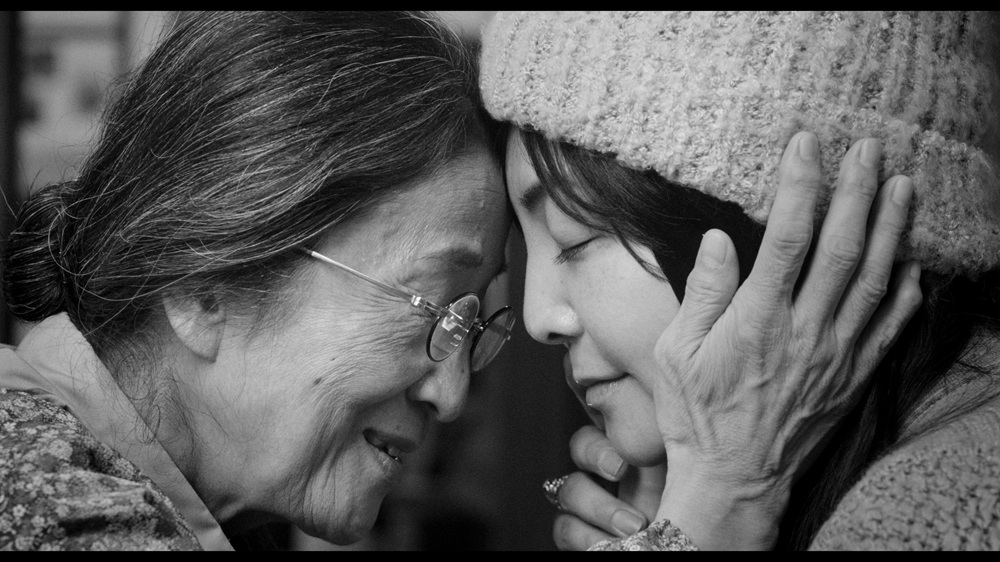
Akashi is a film by Mayumi Yoshida (right) who makes peace with her Japanese family’s past during the funeral of her grandmother, played by Hana Kino.

One thing about the Vancouver Film Festival is you will find some unique films from local filmmakers. The Japanese-language film Akashi is one of those films and it was met with great fanfare.

The film begins with Kana returning to Tokyo, Japan from Toronto, Canada. Kana is an advertising professional who dreams of breaking through as an artist. The purpose for the trip is a sad one: her grandmother’s passing. She is welcomed warmly by her parents, siblings, niece, nephew and in-laws. Kana is the only one of the children who has not yet married. In Canada, she’s been more focused on getting a prestigious arts grant and is awaiting the news of her third attempt at it.

As she’s in the home of her grandparents, memories come back to her. As she sees her grandfather’s artwork on the walls, it reminds her of how he used to teach her how to draw when she was younger and how it would lead to her own dream to be an artist. As she sees photos of her grandmother, she is reminded of the last talk she had with her. Her grandmother told her the marriage was arranged shortly after World War II and her grandfather actually loved another woman named Wakaku.

As she’s on a shopping errand before the funeral, she goes to a local store. In the store is Hiro, the boyfriend she had before she left for Canada. As they dated, Hiro had dreams of becoming an actor and the relationship was a case of two lovers with artistic dreams. Kana does not want Hiro to know she’s here and hides, but a sudden phone call from Shelby, her work colleague in Toronto, gives it away. Hiro is surprised to see her and the two talk for a while.

Kana is staying with her family for that week’s period. The funeral happens and they hold the service, tearfully paying their last respects. As Kana spends more time with her family, she starts observing her parents and how they struggled to keep a marriage and a family together while they were pursuing their professions. Now she sees it in her brother and sister and how they’re trying to raise their two children. This causes her to spend more time with Hiro. She starts to sense maybe Hiro was the one she was meant to be with.

Things become more frustrating for Kana as she learns that the drama group he’s with is not that successful. This comes over time she tries to learn more about the love between her grandfather and the other woman Wakaku. It’s in her grandfather’s drawings and notes that she learns more about what was covered up over time. Even though her grandfather was arranged to be marries to her grandmother, his love for Wakaku never died. Any interaction between the two had to be kept private. It’s noticeable as in one encounter in an art gallery, Wakaku and the grandfather had to give small talk and not have people notice. One boyfriend of Wakaku’s did find out about the love in the 1950’s and blamed her miscarried pregnancy on him, but it was the boyfriend that impregnated her.

As Kana is nearing the end of her visit, she has to make decisions. As she’s about to leave, she tells Hiro that she can’t be his. Hiro is heartbroken to hear the news. He takes it as another failure in his life. She gets the news of her attempt for her grant from Shelby. Again, it was unsuccessful. She also has a meeting with Wakaku on the day she is to leave. She sees Wakaku and learns she never married. She hears from Wakaku all that happened. Wakaku even appeared at her grandfather’s funeral. For which, the grandmother had no ill feeling and thanked her for loving him. The film appears to end with a telephone interaction between Hiro and Kana that appears she will live out a similar love story like her grandparents.

One theme of this film is about making resolve of the past and making sense of what love is. Kana sees the strong but difficult marriage of her parents and the marital situations of her own siblings. She has the reflection of her own relationship with Hiro and doesn’t know if it’s worth pursuing again. Then there’s the loveless marriage of the grandparents and knowing of the other woman. It is through talking with the other woman that Kana can resolve the dark secret in her family. Hidden truths no longer have to haunt her or the family. The marriage of her grandparents happened in post-World War II Japan and times were difficult as the nation was rebuilding itself. All personal lives and all family’s lives in Japan were affected by it in some way. It was a hard time for the family and for the grandmother to marry a man she didn’t love, but she held no hard feelings to the other woman in the end.

The film has many more themes to it. Another element of the story is about how things relate to in her own life. Kana is a struggling artist. Despite having a good job with an advertising agency, she still wants to make it as an artist. Meanwhile she reunites with her boyfriend who has still not become too successful as an actor. Her other siblings have bustling but difficult careers and her parents are retiring. This comes as she’s waiting to see if her application for the grant, her third attempt, will come through or not. As this all happens during her grandmother’s funeral, it’s there she finally gets the answers about the ‘other woman’ she learned of years ago. It’s there she learned of grandfather’s true love and gets a look at the relationship of her own parents and her siblings. It’s as she sees and learns what goes around her, she’s trying to question her own life and her own love. All this in a week’s period of time. To add to it, she begins the film as the family member who has been away for so many years and appears out of place at the start. At the end, she gets her feeling of belonging back. It’s almost like everything in question at the beginning was answered in the end.

This film is unique that it has most of the story in black and white, but both the story of the affair of Wakaku and the grandfather and the mental interaction of Kana and Hiro at the end in color. I think Yoshida had a reason to make it that way. I think it may be because the color was to represent the love that’s meant to be, despite the barriers and friction separating them. The story itself is slow and can get intense at times, but it does tell its story very well.

This film is an accomplishment for actor/writer/director Mayumi Yoshida. It’s a feature-length film nine years in the developing. It started as a stage play, adapted into a short film in 2017 and eventually evolved into a feature-length film. The audience at the Playhouse Theatre cheered loudly as a Japanese-born Vancouver local made her dream happen! The story is based on a conversation Yoshida had with her own grandmother back in 2011 shortly after the earthquake and tsunami that year. In an interview, she mentioned she noticed how her grandmother’s generation and her own generation look at love and marriage differently and has often reflected on the popular misconception of the young that the older generations had it better and easier. The film may be slow at times and appears to try and keep solitude even in the biggest moments of friction, but it tells the story well and pieces the puzzle together in good form.

Additional good acting performances are from Hana Kino. Her portrayal as the grandmother who kept secrets and eventually found peace in the end added to the drama of the story. Ryo Tajima is also very good as Hiro. His portrayal as the ex-boyfriend who still loves Kana makes for a very telling situation of modern love in a story about love between three generations. The performances of Kimura Bun as the younger grandfather and Sayaka Kunisada as the young Wakako is acted very well and makes for a believable scenario of the complications of love at the time. Even that single-scene performance of Chieko Matsubara as the older Wakaku makes you feel for the ‘other woman.’ The best technical aspects of the film are the cinematography from Jaryl Lim, the colorizing from David Tomiak, and the piano-driven score from Andrew Yong Hoon Lee.

Akashi is a film that’s simply more than a woman returning home. It’s about making peace and resolve with the past while making decisions about her own life. Although it may be slower than it should be, it’s still nice to see and showcases the skills of a promising director.

VIFF 2025 Review: Idiotka

Anna Baryshnikov plays a fashion designer looking for her big break on a reality TV contest in Idiotka.

The VIFF will be full of dramatic films this year, so it’s kind of understanding why I would want to look for a comedy break. I was lucky to get it with Idiotka. It’s an American comedic film that can make you laugh.

Margarita Levlansky is a woman who dreams of becoming a fashion designer. Trouble is she lives in the Russian section of West Hollywood where it’s hard to get notice. She also has a flimsy sewing machine. The only way she can make money from her fashions is when she sells them with a big-name designer label on them and sell on eBay. Margarita’s family are full of hard times in America. Her brother Nerses is an unsuccessful musician, het father Samuel was a doctor who spend eight years in prison because of medical fraud and was depressed enough to leave his practice, and grandmother Gita is physically unable to work thanks to chain-smoking. To complicate things, they’re waiting for a house being constructed and they’re five months behind in rent at their apartment. Their landlord, restaurant owner Vlad, is not happy at all about it.

One day, Margarita finds a chance for a big break. A fashion television channel is starting a new reality competition for fashion designers from underprivileged backgrounds called Slay, Serve and Survive. At the audition, she meets the shows top producer Nicol Garcia. She let’s Margarita know from the start that this fashion contest will involve a lot of playing to the camera. That will mean things like a likable personality, a relatable scenario and even exposing personal things about her family is she progresses in the rounds. Margarita accepts. Within time, she is one of the final five for the big prize of $100,000. The family is excited for Margarita. Finally, a chance for a way out of the financial mess for them.

At the start, Margarita is nervous when she learns who her four rivals are. They also have attention-getting backgrounds of their own. To add to it, she also learns of the flamboyancy and ego of the two other judges: Candy and Emma Wexler. The first round starts where they all have to take various types of yellow-colored pieces of clothing and work them to make something nice and eye catching. They all have a limited amount of time to make it work. At the end, all five show their works off. Then the judges decide. One has to go home. It’s not Margarita! She’s still in the running!

As each round progresses, the fashions get more and more personal and the competition gets that much tighter. They even go as far as showing off one’s ethnic background. The producers are looking for more chaos from Margarita but she’s reluctant. Grandmother Gita wants to be on camera but father Samuel is reluctant. He still doesn’t want to admit his failings. Soon bad news hits the family as Vlad is evicting them from the house and Gita has been diagnosed with lung cancer.

The two finalists have been narrowed down. It’s Margarita and Jung-soo. For the final episode, only one will walk away with the $100,000. In the days leading up, Margarita is still uncertain how things will go. Her father is still reluctant, she has no place to show her clothes, and her sewing machine works terrible. She’s just about to quit. The night before the main event, she has drinks with Jung-soo and he talks about his own nervousness for this contest. Soon things look up. Gita used her last money to buy Margarita a new sewing machine. One that works effortlessly! Vlad learned of Margarita on television and is willing to forgive the family of the money they owe as long his restaurant is shown in the final episode. Right just an hour before Margarita is to give her show, the father is finally willing to go along and be on camera.

The final show is on. Filming takes place in Vlad’s restaurant. All of Margarita’s family wear fashions showing off the shortcomings of their lives. Nerses shows himself off as the flop singer. Gita shows herself off as the smoking grandmother and tosses cigarettes to the hosts and producers. Samuel comes on with his MD uniform and takes it off to unveil a prison uniform. Finally Margarita comes out in one of her hand-made outfits with all the designer labels she uses sewn all about. Then it’s up to the judges to decide who the $100,000 winner is. The ending gives us a sense that things will get better for the family, but not without some heartbreak along the way.

It’s not that often I go to see a comedy at the VIFF. I just took the film because it was available at the time. I’m glad I did. This comedy does have a lot of relatable teams. A young budding fashion designer who longs for her big break. Her family that’s full of flaws and problems. A fashion contest/reality show that’s a chance to be her breakthrough. It gives a lot to identify with and laugh about. Especially for the young.

I know that films about a reality TV competition have been done very frequently in the past, so this comedy doesn’t offer anything too new. What this comedy does do is it gives a relatable situation about a family with problems and one person trying to find a way out of it. It will require family cooperation and it gets messy, but it does work out in the end. The story is also about how the child of the family has the biggest responsibilities with her being the breadwinner. To do all that she does and then risk it big time to win on reality TV, that is one big challenge. Nevertheless the story pulls itself off well. It may get messy at times in the story, but it succeeds in the end.

This is the first feature-length film for Nastasya Popov. She has directed short films including documentaries before. Here she delivers a compelling comedy about trying for a big break while hanging by a string. It’s a funny story, if it’s not always together. Popov has gotten some acclaim for this as she won a New Director award at the San Francisco film festival.

Anna Baryshnikov holds the film together as the protagonist. The daughter of legendary ballet dancer Mikhail Baryshnykov, she’s had a steady acting career for over eight years and she looks great here. She’s able to balance the humorous with the dramatic and be able to be the centre of a story of a messy family drama. The chemistry of the family also made the film work. Mark Ivanir is great as the father too prideful to fess up to the mistakes he made. Nerses Stamos is also good as the son who can’t get a break. Galina Jovovich often steals the film as Gita the fierce grandmother. Camila Mendes adds to the humor as Nicol as do both Julia Fox and Saweetie as exaggerated versions of themselves.

Idiotka may follow a common story line found in most comedies, but it succeeds in delivering its own story. It has a mix of relatable and unrelatable ingredients that will make you enjoy it.