VIFF 2015 Review: Cop Car

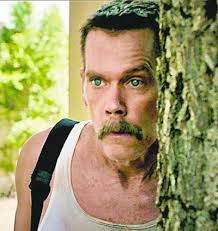
A corrupt cop (Kevin Bacon) had his car stolen by two eight year-old boys in the dark comedy Cop Car.

What do you get when you mix two eight year-old boys, a corrupt cop, a crooked man, a female witness and an empty cop car all out in the middle of Colorado? You get a bizarre dark comedy called Cop Car.

The film starts with two eight year-old boys, Harrison and Travis, walking along the Colorado farm land cussing and having fun. During their fun, they notice an empty sheriff car not running and nobody inside. They go in to check it out and find the keys. They’re able to turn it on and the two start their fun.

We found out how it got there. A corrupt sheriff named Kretzer appears to have killed two men; there’s one lifeless in the trunk and one Kretzer buries in a hole. Kretzer returns to where his car was parked only to find it gone. All that remains is his empty beer bottle. He goes to town to try and steal a car for himself. Nobody can know of his plot. Once he steals one, he goes to town and alerts the police of what happened. Meanwhile the boys are driving superfast on the highway and catches the eye of a passing motorist who questions what she sees. She reports it to police but they think she’s crazy. Even she’s seen sitting at a diner questioning what she saw.

Kretzer believes it and sends the boys a radio message letting them know they’re in trouble. But they don’t hear it because they’re playing around with the police tape and assault rifles in the car. All of a sudden, they hear a thump coming from the trunk. The other man is alive and scared as hell. However he’s shocked to see two boys looking at him. The two help free the man from his ‘shackles.’ Sheriff Kretzer sends another message to the two boys, this time more comforting. They boys say to meet him at a location but it’s at the gunpoint of the man who threatens them and their families if they don’t do as he says. Then he goes with the two assault rifles hiding behind the windmill right in the remote rural highway.

SPOILER ALERT: The ending of the movie will be revealed from this point on. If you want it a complete surprise, do not read any further.

Sheriff Kretzer arrives. He sees the two boys in the car but suspects something suspicious. Coincidentally the witness is driving on that same highway and bumps into the sheriff car again. She gets out relieved that she is not as crazy as they say she is but ready to give those two boys a good talking to. However she’s shot and that’s when the shootout between Kretzer and his hostage occur. The hostage is dead. Kretzer is badly injured and the two boys are scared as hell. They shoot the car window down by accident and Travis is accidentally shot. It’s up to Harrison to drive back to town for safety. But not without one last pursuit by Kretzer which proves fatal for him. The film ends with Harrison still driving over 70 mph with the lights flashing and the sirens on.

I don’t think the film was intended to give a social message. I don’t need to see this film to know how corrupt a lot of cops can get. What I think director Jon Watts and co-writer Christopher Ford are trying to do is tell a story and have fun with it. They have fun showing the wonders of what it’s like to be a child to the point their cussing and diarrhea joke seem like a disgusting but charmingly funny reminder of how we were kids. They have fun showing the two boys having fun in this bizarre and even dangerous situation. They have fun with a corrupt policeman whose stuck in the middle of his crime right and tries to ‘set things right.’ They have fun with the witness who questions what she saw. They have fun with the hostage in the trunk who doesn’t seem to have a clue what’s going on.

They also have fun with the audience. One of the elements in making it a dark comedy is that they have us at the edge of our seats. They show two boys driving off in the sheriff’s car shouting ‘this is our cop car!’ and leaving us the audience nervous and afraid of what will happen next. They show police tape by the car as Sheriff Kretzer sends the boys a message only for us to learn the two boys are having fun with it. They show the boys playing with the guns, even the assault rifles, leaving us afraid a bullet will go off any minute but it doesn’t. They show the hostage threatening the boys and demanding they relay Kretzer a message only to appear clueless in what he’s about to do. I think that’s one thing Watts and Ford try to do: play with our fears. I know I was afraid as hell what would happen next. Even that scene at the beginning of the boys trying to crush the snakes in the snakehole was the first sign of the fun Watts and Ford were going to have with us.

However both Watts and Ford do set a moment where the fun ends and things become more serious: right at the shootout. The carefree fun even ends for the boys as it finally sinks into them the danger they’re about to face. I think the moment when it gets darkly serious was timed right.

The film shows a lot of surprises. Firstly we’re all surprised not to see the two boys land the car in any dangerous hill. We’re also surprised the hostage in the trunk is alive right while the boys are playing around. We’re surprised to see the witness actually bump into the site of where the boys are with the car. We’re surprised of the hostage’s plans of his own on Kretzer. We’re surprised the sheriff not only survives the shootout but is fit enough to drive. We’re surprises that Harrison is able to turn to avoid the truck while Kretzer smashes into it. We’re also surprised to see despite playing around with the car and the guns, the moment Travis gets shot is when he uses it for help. We’re also surprised to see the best driving of the boys come from Harrison as he’s rushing back to town for safety in the pitch dark and the police lights flashing.

The film is full of ironies. However one of the best qualities of the film is not just of what we know but of what we don’t know. In fact the film will leave us asking a lot of questions. Why did Kretzer kill one man and hold another hostage? What exactly was the hostage after that he was trying to kill Kretzer? Why did the witness have to get shot? I think it’s trying to have us decide for yourself why things were this way. Even the ending leaves us asking a lot of questions. Will Travis be okay? Will Harrison drive back to town safely? I think that was the quality of the ending. I believe it lets us create our own ending to the story.

Watts and Ford delivered a good fun dark comedy. I wouldn’t call it a stellar movie but it’s hard to notice the imperfections. Kevin Bacon’s performance as the corrupt Sheriff Kretzer may be Golden Globe worthy but I don’t think it’s Oscar worthy. He made the right comedic choices in his character for it to work and fit with the story. Shea Whigham was funny as the bumbling hostage. Camryn Mannheim made the most of her brief appearances in her minor role. The two boys, Hays Wellford and James Freedson-Jackson, owned the show. It’s funny how they cussed, played dangerously and told a crude joke but still managed to maintain the innocence of childhood.

Cop Car first got a lot of good buzz at the Sundance Film Fes5tival and has been an attraction at various film festivals this year. It was given a box office release in August but only grossed up to $150,000. That’s odd for a film starring Kevin Bacon.

Cop Car is a surprise treat. I’ll admit the movie left me so nervous and afraid of what will happen next, I wanted to walk out. Nevertheless it was a delight to watch.

VIFF 2015 Review: A Flickering Truth

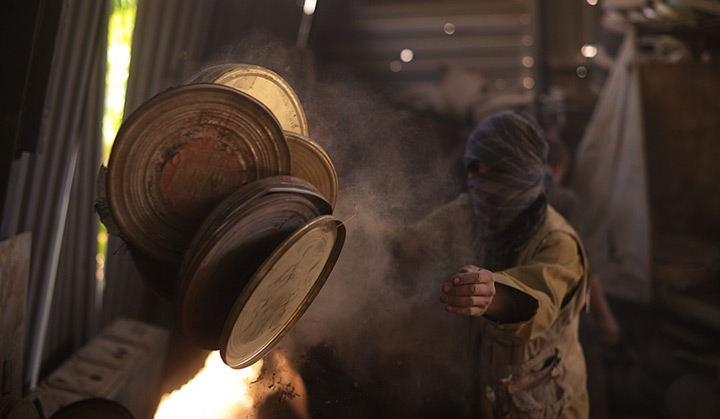
Reels of Afghani film hidden from decades of warfare and political regimes are uncovered for restoration in A Flickering Truth.

“When Winston Churchill was asked to cut arts funding in favour of the war effort, he simply replied “then what are we fighting for?”

-popular internet quote

A Flickering Truth is the first documentary I saw at the VIFF. I’m a bit mistrustful of documentaries but this was an eye opener.

The film opens with some Afghani men looking for a job. The job pays lousy even with their pay boosted 4 times the amount of their original offer. The boss, Ibrahim Arify, seems like a dictator giving orders and belittling his workers and his abilities. Then you see what business this is: Afghan Film. Over time, you see what their mission is. Their job is to restore many old films to show the Afghani people on a national tour.

Over time you will see this is no vanity effort. Afghan Film is more than just a film company. It’s a building archiving both the entertainment films and film footage of news events. Inside the building of Afghan Film are films that had to be kept in private rooms and hiding places. We’re dealing with film in a country that has gone through corrupt tyrannous rule for about half a century. The company came about while Afghanistan had a king. The king was friendly and helped the Afghani people mostly live well despite their impoverished conditions. Then he was deposed in a coup d’etat by his uncle in 1973 and it was downhill from then on. More than five years later his uncle was hanged and the Soviets invaded. The Soviets left in 1987 and the Mujahideen took over. Then the Taliban in 1996. After war was declared to oust the Taliban, Afghanistan became a democracy and more freedoms were restored. But not without daily threats on people’s lives that continue today. Even standing in a line-up to vote in an election is a threat on your life. That’s Afghanistan.

Afghan Film was a company that was under thread of the constant regimes and the tyranny that came with it. As we watch Arify get the project under way, we learn what type of films Afghan Film has kept hidden and has ready to show. They show archived footage, mostly in black and white of Afghanistan’s moments of history from military marches on camelback in the 1930’s to footage of the king’s visit to Washington in 1963 and a warm reception from President Kennedy to footage of the royal family swimming at the palace to even the most brutal aftermaths of war and political upheaval. Their final film footage was of the 1996 hanging of President Najibullah by the Taliban.

Afghan Film is not just film footage. They also have archived many entertainment films they’ve had hidden. Many of the films were of war dramas but there were also many romance films. They even archive Afghani films made during the silent era of the 1920’s and even a drama made back in 1936: films that came to be long before Afghan Film was founded.

What Afghan Film was saving this whole time was a part of Afghanistan’s cultural and historical identity. What their saving it all from and why becomes very obvious over time. Seeing of what the films of archive and entertainment contain are easy to see why the various political regimes and especially the Taliban would consider it a threat. We see films of kings and rulers, of luxury, of fields of poppies, of feelings of love, of conscientious thought, and even women without burkas or veils. Seeing the images and one’s knowledge of the Taliban can easily see why the Taliban would consider it a threat. In fact, film or even television entertainment of any kind was not allowed during their control of the entire country. Much of the film we see in the documentary is only a small portion of the film from Afghanistan. Most of Afghanistan’s films have been burned by the Taliban. All those hidden films they bring out and even recover in hiding places are the lucky ones.

We see the importance of saving the films. We also see the huge task of restoring the films and having them ready to show the crowds. It’s a challenge as they can only do so much themselves. Sending them off to foreign countries to do it for them is also a challenge as restoration is not always guaranteed. There’s one scene where one film which was sent to South Korea for restoration makes it back unrestored because the company was too busy The company did send a letter of apology. They show the difficulty of planning the national tour. Sure, the Taliban doesn’t control the whole of Afghanistan anymore but there are many areas especially around the border of Pakistan where Taliban control remains. We’re even reminded of the current situation of Afghanistan when we see the shattered glass of the former Afghan Films president’s apartment from a bomb blast.

The restoration and national exhibition of the films are not just simply a mission but also a mission of personal nature for the past president Isaaq Yousif and his successor Ibrahim Arify. Yousif has been president of the company for many decades. He was orphaned at 13 and was never matched with a woman in his lifetime. The film was his life. We see films he acted in when he was younger. He’s one who has survived the various regimes and civil wars in the country. There was a time the Afghan Film office was even his personal home. Ibrahim Arify was luckier as he fled Afghanistan in the 1980’s to live in Germany. He married an Afghani woman and had three children. His wife and two of his children are afraid to set foot in Afghanistan. Life in Germany helped make Arify a good business man and admires those of his colleagues that stayed behind, even those that were killed. The mission is almost like a ‘passing of the torch’ from Yousif to Arify especially since this happens during the last year of Yousif’s life. We even see Yousif’s grave.

The restoration is completed and the films make their tour. Arify has to return to Germany as Afghanistan is holding an election and foreigners risk having their lives threatened. The tour starts in Kabul and will be an outdoor showing. Security is there. Popcorn is popped. The crowd enjoys what their seeing. The tour visits many town halls and schools and is a huge success and shows promise for the future.

The most revealing moment of the documentary comes at the end when the people are watching the films. All this that has survived regimes and destructive wars. As the films are shown, the cameras focus on the people viewing. The most profound images are those of the children. They’re watching images of times when Afghanistan was prosperous, films of people not afraid to speak their emotions and women not restricted to what they wore. As the children watch, who knows what confidence it will give them towards their own future?

This documentary is a revealing introspect from Pietra Brettkelly. She not only shows us the films but the people behind restoring them and the country that’s it’s taking place. It’s like we’re looking inside-out into Afghanistan, what the country is been through and why this is so important. Hearing Arify and Yousif talk about the country and its history in both its positive and negative aspects sheds a light on what we’re dealing with. Hearing Arify describe the Afghani people as lazy by nature does get you thinking too: “If the Afghani people weren’t so lazy, the Taliban wouldn’t have lasted a week. People think I act like a dictator. You have to be like a dictator to get the people to do their job right.”

Actually that was a quality Brettkelly included where she lets the men in the film tell their story. Even the female actors of films past give a unique introspect. The film is an excellent documentary that appears put together very well. I don’t know if it tells the whole history of Afghani film but it tells a lot. It even presents the events leading to the exhibition in a very good manner. It may appear a bit disorganized at times but it does it very well.

A Flickering Truth may not stand out from many documentaries as we know it but it does show something unique and a story that deserves to be told. It almost makes those words from Churchill, whether he really said them or not, look very true here.

It’s VIFF Time Once Again

CinemaYes, it’s that time when I volunteer for the Vancouver International Film Festival and see movies for free. At least when I have that lucky chance during my usher duties.

The festival opens Thursday September 24th and runs until Friday October 9th. This year’s festival looks full of energy. If you remember last year, it set a per-screen attendance record. Hopefully they can break it again or even break the total attendance record this year too. This is especially relieving since the future of the VIFF was questioned when the Granville 7 theatre closed. The last two VIFFs have been able to run very successfully under the new format and set-up. Having many theatres within various areas of the downtown and even including the Rio has not hurt attendance.

There aren’t that many changes in terms of screening of films. One minor change for the Rio is that they will be showing films on five nights at 11pm instead of 11:30. Another difference is that there’s an increase in the number of days films at the three screens of the International Village will be shown. It used to end on the last Sunday of the fest. Instead it will end the day before the fest closes: four more days. That will allow for more showings.

As for this year’s lineup, there will be 375 films shown over nine screens and sixteen days. Films with big buzz include:

Brooklyn – John Crowley directs this drama/comedy starring Saoirse Ronan that is loaded with buzz. Opening Gala film.

I Saw The Light – Tom Hiddleston takes a break from playing Loki and plays Hank Williams in this biopic. Closing Gala film.

Arabian Nights – Portuguese director Miguel Gomes directs a trilogy of films inspired by, but not adapted from, the novel.

Beeba Boys – Deepa Mehta directs a crime drama. Definitely one to raise eyebrows, especially among Indo-Canadian communities.

Dheepan – This year’s Palme d’Or winner from Cannes. Spotlights Sri Lankan refugees trying to make a living in Paris.

High-Rise – Ben Wheatley’s adaptation of J.G. Ballard’s novel that seems like a 70’s version of 50 Shades Of Grey.

Ingrid Bergman: In Her Own Words – Ingrid Bergman like you’ve never seen her before in rare film footage and an intimate look at the legend.

Louder Than Bombs – A family melodrama starring Jesse Eisenberg and Amy Ryan that can get overheated but touches on human emotions.

Room – Stars Brie Larson and William H. Macy. This Irish-Canadian drama may seem like a focus on one family until you learn its ugly truth.

A Tale Of Three Cities – A Chinese romance/drama directed by Mabel Cheung that is based on the real life story of Jackie Chan’s parents.

This Changes Everything – a documentary where Naomi Klein puts the right-wing pundit and other global warming critics in their place.

Youth – Remember how I did The Great Beauty? Director Paolo Sorrentino makes his English-language debut of a retiring director reflecting on his past. Stars Michael Caine, Harvey Keitel, Jane Fonda and Paul Dano.

As for volunteering this year, we’re now back to doing a single venue. However there are exceptions such as advertised jobs at certain venues such as in the case of disassembling and various other duties. Or my case where I work the International Village but want to volunteer on the two days it’s not operating such as yesterday. Fortunately I was given the bonus option of volunteering for Cinematheque. It was a good first night where I ushered and I was able to see a film. Review coming soon.

Anyways the VIFF has begun again. Be prepared for more films, fun and excitement.

A VIFF 2014 Wrap-Up: A Record Year

CinemaDISCLAIMER: Okay, I know this is a month late but I’ve had some computer problems plus I was waiting for some certain facts that still have not yet come. Nevertheless I decided to publish this VIFF wrap-up as is today. Especially since I want to get my review of Mommy out soon.

The Vancouver International Film Festival wrapped itself up the night of Friday, October 10th. It was quite the sixteen days of films, discussions, films, events, films. You get the point. Nevertheless the end gave lots for people at the VIFF to smile about.

You may remember last year was about getting used to a new system of theatres with the closure of both the Granville 7 and the Ridge. This led to two new smaller theatres, a back-theatre to a mainstage and temporary use of three theatres in a downtown megaplex. It worked out well in the end in more ways than one.  Firstly it helped the VIFF have a very good per-screen average of attended. Secondly it was an opportunity to learn and make improvements for the following year. This year was really excellent both in terms of attendance and festivities. I’ll get to the numbers later in my blog. One thing is that the film festival heads were now more familiar with the new format and could make it work better this time.

It seems like each year is a new adventure both in watching films and volunteering. Volunteering was a unique thing this year as people could now schedule their shifts electronically via an online booking system. Nevertheless things were the same that we all still had to sign in and sign out via a paper sheet. Yep, they still keep a total of hours through that method. One of the good things about the electronic system is that it expected people to trade shifts if they couldn’t make it or call in to cancel. A confirmation e-mail would be sent to them with a number for them to call and cancel if they couldn’t make it. If they didn’t, they risked being dropped and having their volunteer card cancelled if they had free movies in mind.

Another unique thing this year was we were not all confined to a single theatre. We could book shifts to as many theatres as we wanted. The commitment level was still expected as we were still expected to meet up with the theatre manager at all our shifts. I was able to book for SFU Woodwards, Cinematheque, The Rio, International Village (Tinseltown) and the Centre for Performing Arts. I think the only ones I didn’t do were the VanCity and the Queen Elizabeth Playhouse. Nevertheless it made for some good times. It made for some frustrations too in the case of scanners that delayed their use at times or didn’t scan passes or iPhones well.

One unique duty as far as volunteering was surveying. This was something new as I’ve never seen surveying done before. It wasn’t an easy thing to do as there wasn’t that huge of a number of people willing to do it at first. When incentives for entry into a contest came up, I made myself willing. There were three times I did it: a Saturday and a Sunday at Tinseltown and closing day at the Centre for Performing Arts including the gala. It was a good focus on attendees with the prime focus on people from out of town.

Filmwatching opportunities were good for me as you can tell by my reviews. However this year was not the year I gave the most reviews. Last year was with 16. This year I was able to review 14 even though I saw 15 in their entirety or close enough. The only one I chose not to review was In Search Of Chopin because it was more a DVD biography of Chopin simply played in front of a big screen. I saw films from France, Canada, the UK, the US, New Zealand, Mexico, the Netherlands and South Korea. I saw comedies, dramas, documentaries, shorts, feature-length films, television shows brought to the screen, independent films and big production company films. It was a good mix though I wish I could see more variety but I’m not complaining. They were all unique and had their own styles. I don’t think I saw anything really bad this year. Also I don’t think any of the movies I saw pushed the envelope in a big way unlike in the past. I think El Incidente was probably the edgiest because it told a unique story of the supernatural.

The most interesting thing that happened on screen was the unexpected airing of a short before some films showed. The short was called Echoes and I saw it three times: only once in its entirety. The first time I saw it, it was as it was ending and I thought I walked into the theatre just as a film was finishing. I tried looking in my VIFF guide for it but couldn’t find it. All I knew was that it was produced by the Weinstein brothers. Then I saw it again just before I saw Haemoo. Once again I walked in long after the short started and it didn’t make much sense at first. Also this time it was at the Centre and they had a tent from Lexus where they were signing people up for a Lexus contest, in which I entered. Later on I learned of the title and researched it online. I saw some Youtube videos and write ups about it and how both Lexus and the Weinstein Group are involved in its promotion. It caught my interest but still left me confused what the short was all about. I finally did have a chance to see it in its entirety when I was in my seat long before I saw El Incidente. I finally got what it was all about and the point of airing it before the show. Funny how it wasn’t until the very last show when it all made sense.

The number of films I saw could have been higher especially with the Rio having their 11:30 at night screenings for seven of those days. However I would only be willing to see such a late-night film if it was worth it and I was guaranteed to return home in decent time that night. I only saw two 11:30 shows. There were some I passed up: the one the first Friday because of its late start time, the one the second Friday because I was ticket scanning and only finished scanning long after the film started, two because I already saw one film while ushering and that was enough, and the one on the Thursday before closing because I fell ill. Weird how I was still ill but saw the 11:30 Rio show on the last night of the VIFF. Hey, it’s a personal tradition of mine I either see the last VIFF movie or volunteer on closing day.

As for the festival itself, the Festival had its third-highest number in terms of flat ticket entries: 144,000. 2011 and 2010 had higher numbers but this year’s VIFF of 144,000 entries over 349 films exceeded 2011’s record for per-screen attendance of 150,000 over 386 films. The results are especially impressive when you compare it 2012 which had more films and with last year under the new format. Last year’s total entries were 130,000: an increase this year by more than 10%. Great job, VIFF!

Anyways here is the 2014 Vancouver International Film Festival by the numbers:


144,000: estimated gated attendance

1000+: Film and Television forum delegates

700+: volunteers

549: public screenings

349: films shown

  • 219: feature length (60+ minutes)
  • 130: short or mid-length films (less than 60 minutes)

76: Canadian Films shown

68: countries entering films

83: Canadian premieres

  • 45: North American premieres
  • 24: International premieres (first screening outside home country)
  • 11: World Premieres

24: Media Screenings

19: entries in the Best Foreign Language Film category for this year’s Oscars shown

18: percentage increase of visitors from the US

17: panels featuring 73 speakers

16: days of showing films

9: screens showing films

7: theatres participating in the VIFF


Now I know some of you want to know the award winners. Here they are:

ROGERS PEOPLE’S CHOICE AWARD

-THE VANCOUVER ASAHI (Canada), dir. Ishii Yuya

VIFF MOST POPULAR INTERNATIONAL DOCUMENTARY FILM AWARD

-GLEN CAMPBELL: I’LL BE ME (USA), dir. James Keach

BEST NEW DIRECTOR AWARD (tie)

-MISS AND THE DOCTORS, dir. Axelle Ropert

-REKORDER, dir. Mikhail Red

VIFF MOST POPULAR CANADIAN DOCUMENTARY AWARD

-ALL THE TIME IN THE WORLD, dir. Suzanne Crocker

Runners-Up: MARINONI, dir. Tony Girardin

-JUST EAT IT: A FOOD WASTE STORY, dir. Grant Baldwin

VIFF IMPACT AWARD

-JUST EAT IT: A FOOD WASTE STORY, dir. Grant Baldwin

VIFF MOST POPULAR CANADIAN FILM AWARD

-PREGGOLAND, dir. Jacob Tierney

WOMEN IN FILM AND TELEVISION ARTISTIC MERIT AWARD

-SITTING ON THE EDGE OF MARLENE, dir. Ana Valine

BEST CANADIAN FEATURE FILM AWARD

-VIOLENT, dir. Andrew Huculak

MOST PROMISING DIRECTOR OF A CANADIAN SHORT FILM

-THE CUT, dir. Geneviève Dulude-Decelles

Honorable Mention:

BEST BC FILM:

-VIOLENT, dir. Andrew Huculak

MUST SEE BC AWARD:

-JUST EAT IT: A FOOD WASTE STORY, dir. Grant Baldwin

BC EMERGING FILMMAKER AWARD:

-SITTING ON THE EDGE OF MARLENE, dir. Ana Valine

Those were awarded at Friday’s closing gala. After the VIFF closed, VIFF repeats happened at select theatres for three more days. I helped volunteer two of those days at the SFU. Then it was the volunteer party on Sunday. I was able to get there right after seeing Still Life. The party was at the Rickshaw Theatre and it started with a showing of the 1972 film The Poseidon Adventure which not only consisted of the movie being shown but a cast re-enacting and spoofing the movie. There were even times they had people from the audience including myself participate. After the showing, it was a feast on appetizers, drinks and dancing to two of the VIFF’s favorite bands. Of course there were prizes given away and this year’s posters being given out. Great to see this year’s VIFF end on an exciting note.

So there you go. The 2014 Vancouver International Film Festival ended with record success and fun for all volunteers. Next year’s VIFF is anticipated to be from September 24th to October 9th, 2015 and should be bigger and better. I know last year I said I hoped the VIFF would be one Film Festival added to the FIAPF: the International Federation of Film Producers Associations. However some people prefer that it’s not as they feel VIFF not being part of the FIAPF-associated film fests would add to the VIFF’s reputation being an unspoiled celebration of film. We’ll see in the future. Anyways things look optimistic already and the VIFF’s reputation improves over time. See you next year!

VIFF 2014 Review: Still Life

Still Life is a story of a man who's as alone as the deceased subjects he works with.
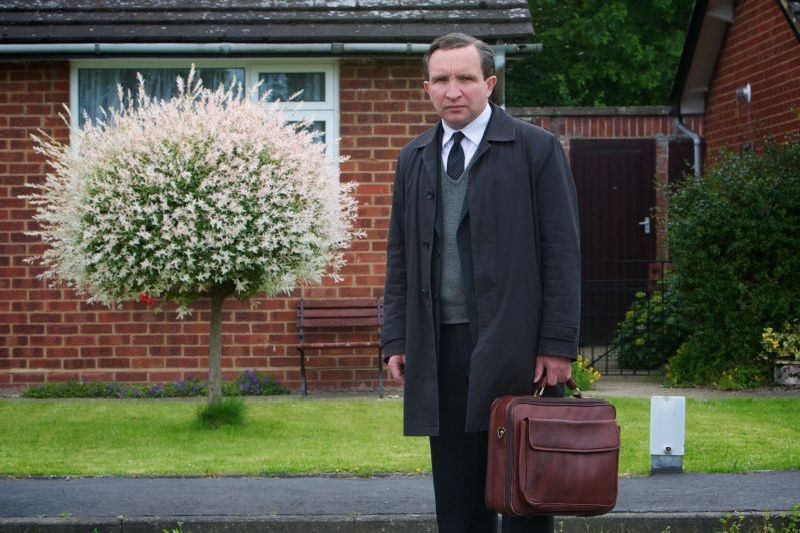
Still Life is a story of a man (played by Eddie Marsan) who’s as alone as the deceased subjects he works with.

Still Life was the last film to do with the VIFF that I saw. It was a surprise that I saw such a downer film as my last one but it wasn’t a complete downer. In fact it has a lot of good elements worth watching.

The film begins with John May doing his job. He’s a council case worker in South London who looks for relatives of those found dead and alone. It’s not an easy job to do. In fact it’s very hard sometimes when he deals with relatives who want nothing to do with the deceased. Not even their own children. He arranges funerals for them even if he ends up being the only one attending and gives them a respectful burial. He even takes the pictures of those whom he was the sole attendee at their funeral and puts them in his own personal album.

Problem is John himself is an ‘alone’ person living by himself in an apartment with no real contact with neighbors. His job which he’s been doing for 22 years appears to be his only real purpose or his only interaction. However the news breaks one day. The company’s changed ownership and he’s about to be laid off by the new owners, feeling his services to those he buries are too ‘costly’ and are making the move to ‘efficiency.’

John wants to make his last case work especially since the deceased, Billy Stoke, lives in the same apartment as him. He comes across a photo album that shows pictures of his daughter ending in her teen years. He tries to get more information like from two people on the streets who used to drink with Billy. He finds out that Billy used to live in Truro. He meets with people who knew him like his ex-wife and former co-workers but none are interested in paying their last respects to Billy.

Finally John meets his daughter Kelly but she doesn’t want anything to do with Billy either. John proceeds with having a tombstone made and finding a burial spot. Just when John thought it was all over for him, he gets a call from Kelly. Kelly hears all that John has done and is happy about it. She even invites John to come see her on the weekend, to which John accepts and appears to finally come to life. Then comes a moment no one expects. It appears to set up for a very sad ending but instead ends on a positive note that appears appropriate.

It’s a question whether the film was trying to convey a message about lonely people or not. Mind you it does touch on a lot of things such as some who left other relatives estranged, some who lost all their friends because of their surly attitude or some who just have no one. There’s one scene that catches my eye and that’s where John looks over the photo album of those he arranged a funeral for. As each picture was seen, it reminds you that those people that died alone with no other loved ones used to be a somebody to others some time ago in their life. Sad how life made a turn for the worse for them. It is good to see someone like John May out there who does give such people found dead and alone a dignified last respects. Another scene that stands out is when John arranges Billy’s grave at the cemetery. Soon he sees the people that are to replace him and what they do is just simply cremate the bodies and pour the ashes in a mass grave. No funeral, no last respects, no nothing. Hey, it’s more ‘efficient.’ It only makes what John’s always been doing look like the right thing.

The most surprising thing about this film is that this first appears to be the downest of the down films ever made. It has all the making for it: a story of a man who has no family and friends trying to give a respectful last respects to those who died alone. The film does have a morbid feel to it and even John looks like the walking dead at times. What kept it from being a complete downer were some humorous moments. They were easy to spot. The film had a way of making humor of certain moments come unexpectedly like John at the intersection, John eating that shepherd’s pie after being told what Billy did after he was fired or even when a drunkard pours liquor on Billy’s coffin as a farewell. Even the scenes near the end as John is seen smiling to Kelly gives the movie an unexpected warmth and a welcomed warmth. That scene as John sees Kelly off was that moment where John appeared to truly be alive. Even the ending added to the quality. It didn’t end suddenly fluffy and happy like so many Hollywood movies would do.  The audience would first think this will be the saddest ending in all of movie history added to the quality. Instead it doesn’t as it ends with an ending that will have you saying: “Yes, very appropriate.” To this day, the ending of Kids remains the most depressing film ending I’ve seen.

This was a very good film written and directed by Unberto Pasolini. He takes what would normally be a very down topic and makes a very good and very watchable story about it. This has to be his best work since his production work on The Full Monty. Also good to see he didn’t give a fluffy ending that was still positive despite the circumstances. It’s not to say that it didn’t have its imperfections. Like we don’t know exactly why John himself is all alone. Did his parents die? Was he ostracized? Was he so fixated on his work, he ignored everything and everyone else around him? There’s that lack of clarity.

Excellent acting from Eddie Marsan. For all intents and purposes, this was his film. He does a very good performance of a character who actually feels like the walking dead. Only he adds humorous elements to him and makes him into a 3D person rather than a stock character he can easily become. The supporting actors were also good as a whole however it’s Joanne Froggatt who’s the one with a role with the most dimension. The only other standout is the music from Rachel Portman. It does a good job of creating the mood.

Still Life is a surprising film in more ways than one. It makes a film about loneliness with a protagonist being its epitome and actually makes it quite watchable rather than completely depressing.

And that does it for reviewing VIFF films. I didn’t have time to see them all. In fact there some I had a chance for but I was either ill or too exhausted to see. Anyways it made for an exciting festival. My wrap-up of this year’s VIFF coming soon.

VIFF 2014 Review: God Help The Girl

God Help The Girl is an original musical by Stuart Murdoch of three young Glasgow adults who form their own band.

Musicals are always very chancy in terms of putting them on screen, especially if they’re an adaptation of a legendary musical. Try putting an original musical on screen. That’s what God Help the Girl does. It comes off surprisingly well.

The film starts with Eve singing about the difficulties of being young. Mind you Eve does have her problems as she has an eating disorder which brings her to a psychiatric hospital. Her counselor there tells her she needs guidance to make it out in the world. Eve is defiant and breaks out of the hospital to head to Glasgow to make music.

Over in a Glasgow pub, she meets up with James who leaves his band after an on-stage fight with the drummer. James is an aspiring songwriter who works part-time as a lifeguard and teaches guitar to Cassie, a naive daughter of a rich family. A relationship cooks up with James over time. After meeting Cassie, the three of them spend a lot of time together and compose songs.

Eve is also looking for exposure and hopes to get it through Anton, a singer of the band Wobbly-Legged Rat who’s star is on the rise thanks to a local radio station promoting them. Eve gives Anton her tape hoping it will make it to the radio station and a relationship is brews between the two. The three form a band after James convinces Eve she needs a bass and drum for her songs. They call their band God Help The Girl and they perform a gig and knock the socks of the crowd.

However not all is well as Eve learns that Anton, who’s too arrogant for his own good, never gave the tape to the station, claiming her music lacks professionalism. The two argue and Eve walks off. To make matters worse James finds out about her relationship with Anton and is distraught to the point of distancing himself from her. That leads Eve back to taking pills and returning to the hospital. She meets again with the counselor who tells her she warned her about rushing out into the world on her own. Eventually Eve decides on her own path. The ending is not what one would expect but is fittingly appropriate for the film.

I have to say this is is a brave attempt from Stuart Murdoch to create an original musical and bring it to the big screen. It’s been a long time since there has been something like this. Musicals are always a risk to bring to the big screen whether they’re original or adapted. It’s obvious that God Help The Girl had some risks of their own. There are a few times that leave you wondering is the film lulls back into being a story and makes you forget it’s a musical until the next song comes on. Those who know big-screen musicals know about the feel of a musical on screen. There were a few times I felt the film lost its feel. The musical parts were very good and were able to stay away from crossing the line of  cheesy most of the time but I did notice some imperfections. Even having Eve with an eating disorder makes you wonder if that would make fans of musicals uncomfortable.

One thing I liked about this musical is that it had a lot of songs that gives one the look and feel of the excitement of 60’s rock ‘n roll. The songs for the most part are loaded with energy and really capture the essence of what it is to be young. Another unique thing about this musical is that it musically showed how a lot of the best songs are inspired. We see a lot of themes in God Help The Girl that are quite common in rock and roll songs such as the frustration of fitting in this world, feelings of love and the bizarre love triangles that arise. We also get another reminder about rock and roll. Just after Eve left for college to pursue music, James declares “I think she wrote her best music here.”

The funny thing about this film is that it includes the music from a group called God Help The Girl. For those who don’t know, God Help The Girl was an all-girl group formed by Belle and Sebastian lead singer Stuart Murdoch. They were formed for one time only in 2008 for an album that was eventually released in 2009. The film God Help The Girl is a musical set to those songs and is directed by Murdoch.

I don’t want to go into the subject of ego-tripping but Murdoch puts together a well-constructed and well-written musical that is entertaining. There are some noticeable imperfections in the choreography and editing but the film is mostly together. I also think this will be Murdoch’s only directing effort as I don’t see him directing any other movies in the future. Emily Browning is very good as the protagonist and is able to sing well in her first on screen singing role. Olly Alexander was also very good. He’s the opposite of Emily where he’s actually a singer in a band rather than an actor. Nevertheless he did very well. Hannah Murray was very convincing as the young naive Cassie. The three of them made an excellent trio full of chemistry. Pierre Boulanger was good but his role as Anton was underdeveloped and could have been more.

God Help The Girl was nominated at the Sundance Film Festival for the World Cinema Grand Jury Prize and won a Special Jury award for the ensemble. It was even nominated for the Crystal Bear award at the Berlin Film Festival. It has just been released in the US the last weekend of September and has just fizzled out with just grossing over $100,000. I blame it on the lack of promotion. I think it will develop a better afterlife as a Broadway musical. There’s no talk of a musical version of the film yet but I feel it has a lot of potential of being a hit in that format.

God Help The Girl is a flawed but entertaining original made-for-the-big-screen musical. Oddly enough I think I sensed a bit of Beatlemania there.

VIFF 2014 Review: The Incident (El Incidente)

The Incident (El Incidente) is a Mexican film about the mysterious and the supernatural.

The Incident was actually the very last movie shown during the VIFF. I actually saw four more in the VIFF repeats: some I will post my review in later days. The Incident turned out to be a good choice because I felt I was missing a film that was either envelope-pushing or edgy. This Mexican film turned out to be just that.

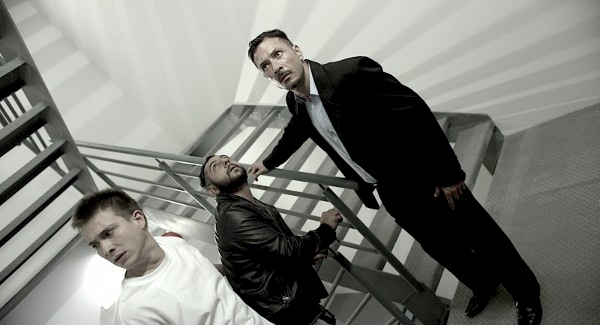
The film begins with two seemingly unrelated scenes. One is of a couple in a hotel just married and another is of an elderly woman lying on an escalator. Then cut to the first scene. Two brothers living in an apartment ion the ninth floor are confronted by a detective who thinks they’ve done them wrong. He has a gun and he’s after them down a staircase. Then a mysterious explosion happens. One of the brothers is shot in the leg. They go for help but once they hit the main floor, they find themselves back on the ninth floor. They’re both confused as is the hitman. They try and find a door to get out but they’re stuck. Adding to the bizarreness, whatever food or drinks that were taken from the vending machine in the stairwell comes back instantly. Then the brother dies. That leaves the other brother and the hitman stuck in the stairwell with no way out.

Second scene is a seemingly unrelated incident. A family head out on a road trip. It’s the mother, stepfather, teenage son and the six year-old asthmatic daughter. They pass a convenience store on the way to the camping ground. Then an explosion like the one involving the three men happened. The daughter has an asthma attack. They look for an inhaler but Daniel the son admits he forgot it at home. The stepfather accidentally broke the other one on the road. They go back to the convenience store only to find it empty. They try to head back home but the pass the campground sign they saw just miles ago. Meanwhile the daughter’s attack is worsening. Nevertheless the family keep coming across the same empty convenience store and pass the same campground sign. They too are stuck in the infinite standstill with no way out. The daughter does die.

The film returns to the stairwell. This time it’s filled with litter and is full of writing on the walls about various things including how long it’s been since the incident. It’s 35 years past. We see one elderly man and one middle aged man. This has been their ‘house’ during that time with nothing but food from the machines to eat and using water bottles for showering and using empties for sewage. Thirty-five years have passed for the family as well. Daniel is now a middle-aged man while his parents are elderly and unkept. The desert has been their home since and the ground is where the little girl was buried.

It’s all a mystery to get it solved even though they both know the cause of the problem. It’s because they won’t let go of the bad memories. The brother because of the shooting and Daniel for believing he caused his sister’s death. However it’s when one of the men in the apartment talks of a memory he had a long time ago of what happened when he was with his father when he accidentally died. After finally making sense, they’re able to get it solved and a door can finally be opened. After that, the people in both scenes can now live their lives in a forward motion. The daughter is still alive and Daniel can live his life even though it’s imperfect and full of problems. The two brothers and the detective also live their lives even though one will get a life sentence for a murder they commit later. However it’s at the very end when we see a newlywed couple in an elevator controlled by an elevator man named Karl that we learn it’s not all completely over.

This is one of those paranormal things I’ve never seen before. It consists of an everyday scenario then a sudden explosion happens. Then a near-fatal incident happens. After that, it’s nothing but a repetitive infinite that eventually leads to the vulnerable person’s death and everyone within that circle stuck in the same time and place forever. Four different scenarios of the infinite. All but one unrelated to the other and exactly thirty-five years apart. This may have been done before or it may be something original from director Isaac Ezban but it will haunt you. Especially seeing time elapse 35 years and how those involved in the two main situations all age staying stuck in the same place. It’s the creepiness of the bizarre that keeps you in suspense.

You hope those involved with the two scenarios will find a way out and they do. They’re also able to live their lives out, even though they’d live out a life that would have both Daniel and the detective lose in the end. But at least they lived lives where they moved forward. However even though we see the two live out their lives, we’re reminded from a moment seen during the opening scene that there was one thing unanswered: how it all started or who is behind it. We learn it right there at the end when the married couple get their own nightmare of the infinite. The ending can even leave one wondering if the couple will be able to work their own way out of the tragedy and the infinite that came with it.

As for whether it would be a crowd-grabber, that’s a question. I know crowds are willing to go to something as gruesome as Saw but you wonder if they’d go to something like this. It is something the thriller crowd would get their attention stolen with. It’s also a very smart and creative thriller that gives nothing away. I can see this being made into an American version in the future and can attract crowds of sci-fi. However seeing a six-year old girl die from asthma may be too much for them to handle. Seeing the long-haired old people might also freak them out.  Also this story may be a bit too bizarre for them to understand.

Kudos to Isaac Ezban for creating a creative story that’s both mysterious and smart, even if there were scenes that might creep many out. It’s hard to pick out the one single performance that was the best because there were so many good performances. Humberto Busto, Erick Camacho, Gabriel Santoyo, Hernan Mendoza, it’s hard to pick out the one who’s the best. It’s the ensemble of actors that delivered here. No one stand-out. All very good and all very believable.

The Incident (El Incidente) is an original thriller that may not be something that most moviegoers would want to see, including young fans of thrillers, but it’s very smart, very mysterious and worth watching.

VIFF 2014 Review: Haemoo (Sea Fog – 해무)

Haemoo (Sea Fog) is a story of romance in the midst of an illegal immigration expedition.

Even though the Vancouver International Film Festival is officially over, I still have four films left to review. Now on with the fourth-last. I have a habit every VIFF to see at least one national entry into the Best Foreign Language Film category for this year’s Oscars. Here at the VIFF I saw Haemoo: South Korea’s official entry. I’m glad I did.

The film begins with Kang Cheol-ju, a captain of a fishing ship the Jeonjinho that’s old, crumbly and is catching less than ever. Because of the low catches in the fishing industry and the difficulties with South Korea’s economy, Kang is in danger of losing his ship and his livelihood. In the meantime one of his crewmen Dong Sik has just joined the boat. He doesn’t see himself pursuing a livelihood as a shiphand and is contemplating construction.

Kang has just received an idea of how to make money for his ship, big money. He’s been offered a deal to go into the illegal trade. He’s willing to involve himself with anything to get him ahead, whether it be illegal jewels or even illegal immigrants. He knows it means going into international waters and possibly get arrested by the coast guard but he believes it will work.

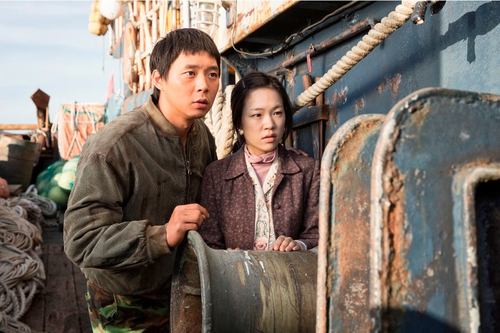
One day after going into international waters they spot a ship full of illegal immigrants from China and North Korea. They have to make the tricky transfer from their ship to the Jeonjinho. Yes, walking across. Thirty or so men and one female make it. However there’s one young frail woman who fell into the water. Dong Sik doesn’t think. He rushes out to save her. After saving Hong Mae from drowning, she along with the other immigrants are fed hot ramen at first. However the police are suspicious of Kang and what his boat is up to. Kang’s already under suspicion for a long history of evading loan sharks. Every time a coast guard boat comes by, he has to hide all the illegals in the fish tank, risking them to suffocating and unhealthy conditions.

The immigrants are unhappy about their treatment but Kang makes an example to the crowd by throwing one in the water and showing them who’s boss. Dong Sik knows that Hong Mae shouldn’t have to deal with such harshness so he finds a safe spot for her. Soon the two fall in love and Dong promises her safety. However it becomes threatened when the immigrants are all put back into the fish pit as a loan shark makes a visit. Dong Sik keeps Hong Mae from entering. After the shark’s visit, it’s discovered all of the immigrants in the pit are dead. It only boosts Kang’s lust for power as he wants them chopped with an axe before being tossed out at sea and their personal belongings burned. One of the crewmen tell him off for what he did only to be killed by Kang.

Hong Mae has seen all that happened and has no trust for anyone, not even Dong Sik at first. Nevertheless Dong Sik promises her safety. He knows Hong Mae will be seen as a lust object or a womanizing sailor and as a threat to Kang as she’ll know the truth. Things only get worse for the Jeonjinho as the power is completely out. Then it’s given away about Dong Sik’s hiding of Hong Mae. As expected Kang feels she’ll land him in jail and the sailor animalistically wants a go at her. Dong Sik knows he has to protect her from the two despite how challenging it is. He knows he will have to kill some of them. However it’s after the Jeonjinho collides with a freighter that solidifies the fates of all and paves the way for an ending that’s unexpected and keeps you thinking long after the movie.

One thing I have to say is that the script is unique for a lot of surprising things. At first you think the film’s protagonist will be Kang because the focus of the story first appears to be about him and his ship. Instead it ends up being about Dong Sik even though he is focused on very little at the beginning. Another unique thing is how the deaths of the immigrants made animals of some of the key shipmen on board. One example is of how Kang first appeared to be a typical authoritarian jerk to the immigrants but soon his lust for control would just make a ruthless animal of him. Even the ship mechanic who was just simply a womanizer made like a mindless dog to Hong Mae and had nothing else on his mind but to have sex with her. Another surprising thing is how the ship is doomed to sink but Kang is determined to keep it afloat despite it being hopeless. It’s almost like Richard III’s “My horse. My horse. My kingdom for a horse.” In the end, the ship becomes the judge, jury and executioner of Kang. And for those who saw it, you’ll know the last surprising thing was the ending. It’s an ending that will leave you asking your own questions. I know it left me with my own questions.

The one thing is that it is a very good movie but it did have its noticeable flaws. First thing is that it makes a good honest effort of making a love story in a scenario that’s hard to stomach. For those who don’t know, this film is based off of an actual illegal immigration case from South Korea in 2001 where a fishing boat carrying illegal immigrants accidentally left 25 dead. The difference between Haemoo and the actual case is that the ship never sank, there were many more surviving illegal immigrants and all the crewmen were brought to justice. Nevertheless it makes the romance too awkward because of the testy subject matter. I know I’ve seen films before that have made what would normally be unwatchable material end as a triumph of the human spirit but I sensed some unevenness in it. Nevertheless this is a very brave attempt.

The biggest accolades for this film should go to director Sung Bo-Shim. Lately South Korean directors are starting to make a name for themselves internationally. The most notable being Boon Joon-Hu who directed the critically acclaimed 2009 Korean film Mother and this year’s English-language film Snowpiercer. This time Boon co-writes the script with Shim in his feature-length directorial debut. It’s an excellent debut. The biggest of the standout actors is Kim Yoon-Seok. Even though he was not the protagonist, he was the scene-stealer as the power-hungry Kang whose lust for power would eventually destroy him. Multitalented Park Yoochun was also impressive as the young Dong Sik who was the only one on the ship who appeared to have any conscience to what was really happening. Han Ye-Ri was also very believable as the young Hong Mae but her best part was definitely the end. The special effects and action parts added to the intensity of the film and the score composed by Jeong Jae-il fit the movie excellently.

Haemoo (Sea Fog) is not a flawless movie or a flawless story. Nevertheless it is an excellent debut from a promising South Korean director. We’ll have to wait until Oscar time to see how it fares.

VIFF 2014 Review: New Boobs

New Boobs is a documentary by Dutch film director Sacha Polak pursuing a revolutionary breast operation that isn't simply cosmetic. It's to prolong her life.
New Boobs is a documentary by Dutch film director Sacha Polak pursuing a unique breast operation that isn’t simply cosmetic. It’s to prolong her life.

At first when you hear the title New Boobs, you’ll think it’s about trying to conform to an idealized body types. However you shouldn’t misjudge it as such. It’s a lot more than that.

This is an autobiographical documentary by Dutch film maker Sacha Polak. Not even 30, Sacha has established herself as a rising director in the Netherlands with numerous shorts and films to her credit including one film, Hemel, which won her a FIPRESCI Prize at the 2012 Berlin Film Festival. However not even 30, she’s also hindered by a health problem of her own. Her mother died of breast cancer at the age of 29 just months after Sacha was born. Sacha goes for gene testing if she possesses the BRCA1 gene. The gene poses as a huge threat to contracting breast cancer before the age of 40 and increases the threat of ovarian cancer by 40-60%. She gets the doctor’s results. It’s a positive.

There are a lot of things running through Sacha’s mind upon hearing the news. First is how long she’ll live. Second is whether she’ll be able to have a child with her boyfriend before she gets her ovaries removed: something she wants to do before she turns 35. Third is about her next production. However the one that stands out is what to have done with her breasts. Removal of both? Surgery with implants? An operation will greatly improve her odds of avoiding breast cancer. She goes to one plastic surgeon and learns of the implants that would be used in their operation. However she soon hears of a plastic surgeon in Ghent, Belgium who performs a unique breast operation that would involve removing the breast tissue and filling it with body fat. That operation becomes Sacha’s focus.

Things are frustrating as the surgeon moves her consulting from November to March. Finally she does have the consultation and she learns of the surgery and what it entails. She agrees to it. During the waiting time she tries to conduct her life as usual doing filmwork and keeping the relationship with her boyfriend intact. She eventually does have the first operation. She shows the outcome and talks over time how she’s felt about it and how others including her boyfriend have felt about it. She then has her second operation and is happy with the end result. The film ends with her talking about her thoughts on the future, about her next film, about having a child in time. However she’s happy that she has solved one problem in the meantime.

The film wasn’t strictly about a cosmetic operation. It was also about a woman fearing for her health and hoping that this operation that would prolong her life will come out well in the end. It’s also about the mother she never knew. Frequently the film shows images of her mother and even the book her mother wrote to Sacha before she died. It’s also about family relations such as the support she receives from her boyfriend that isn’t immune to friction. Even the fears from both her father and her stepmother are showcased. The father himself is especially concerned as his wife just fell ill, entered the hospital and died. It still upsets him to this day and it especially bears down on him sensing that it could happen to Sacha. This documentary is as much about the human factor as it is about the medical factor.

The theme about being born with a bad gene is very present in the movie. This was definitely a theme that would stick in a lot of audient’s heads especially after they had just seen a documentary short of a close friend of Jason Ritter and Bryce Dallas Howard learn of her positive diagnosis for a Huntington’s gene. After seeing that short before, we’re reminded of the hard luck and the physical threats people that have genes that make them prone to certain illnesses face.

This documentary is not meant for the big screen. This is mostly filmed with minor technical cameras and even Skype footage. This is a documentary that’s more meant for broadcast on a television channel like BC’s Knowledge network.

New Boobs is an intriguing documentary that is more than just about an operation. It’s about dealing with illness-prone genes and even family relations surrounding it. A reminder that the person doesn’t fight this alone.

NOTE: For those interested in Sacha’s next film, she had just finished filming Zurich and is due for release in the Netherlands in February 2015.

VIFF 2014 Review – The Other One: The Long Strange Trip Of Bob Weir

The Other One is a documentary of Grateful Dead guitarist Bob Weir who often gets overlooked forJerry Garcia.
The Other One is a documentary of Grateful Dead guitarist Bob Weir who often gets overlooked for Jerry Garcia.

When you think of the Grateful Dead, who’s the first person that comes to mind? Jerry Garcia, right? Even though Jerry is the most famous member, rhythm guitarist Bob Weir is also a key part of the band. The Other One: The Long Strange Trip Of Bob Weir is a documentary focusing on Weir both as a member of the Grateful Dead and his own personal life.

Bobby weir was born in San Francisco in 1947 and was adopted by a well-to-do family. He had an adopted brother and a sister born to his adoptive parents. However Booby grew up a very restless boy. He was expelled from schools within a matter of months. However he developed a passion for the guitar at a young age. There’s even mention of how excited he was when he got a guitar for Christmas. At a young age, he caught the attention of a band playing in the back alley of a Palo Alto spot. They were the Grateful Dead. They took a liking to Booby and the rest is history.

The funny thing about Bobby is that he was a bit of an oddity with the Dead. The other members of the Dead describe themselves as ‘uglies’ and Booby as a ‘cutie’ and they describe the Grateful Dead in its early days as ‘Bobby and the four uglies.’ It seemed like a good break to be welcomed into a band at such a young age but his parents were firm on his education and reminded the other dead members of that.

Over time the San Francisco music scene of the 60’s would rise and eventually become a permanent fixture on pop culture and even definers of the counterculture of that period. The Grateful Dead themselves would become synonymous with the psychedelia of that time. But even before that happens, the documentary pays attention to the band’s first few years trying to make a name for themselves. It reminds you they had to struggle with small gigs just like many other bands before them. Then they signed onto a big label. Then they went from playing in bars to playing in concert halls. Then came the Deadheads: a group of people that stayed loyal to the band year after year, decade after decade. A loyalty not seen before in rock ‘n roll.

Even despite playing music and hitting the big time, the documentary shows of the friendship Weir had with the band. It was of a family nature to the point that Weir almost ignored his own family. The family relation with the other bands did take challenges of their own. The first sign was in the 1980’s when they made a comeback which included a chart-topping album for the first time with 1987’s ‘In The Dark’ and the single ‘Touch Of Grey.’ There was the focus of Jerry Garcia’s cult-of-personality: something Jerry didn’t really welcome in his life. There were even times Bob took personal vacations. Then there was the time Jerry was going through rehab and Bobby acted as a support for him up until his dying day.

It doesn’t stop there. It also focuses on how Weir decided to finally settle down after decades of womanizing with Natascha Munter. The two wed when he was 52 and they have two daughters. Even then the trip wasn’t over. Weir tried to learn of his birth parents. He learned of his mother after she died that she had gave birth to 12 children. He was able to meet up with his birth father and the two have been close ever since.

This documentary is definitely one for people who like biographies of musicians or biography shows in particular.  No question Deadheads young and old will want to see this. In fact I remember seeing a wide range of people in the audience watching this documentary. It’s possible some of the seniors in the audience may have been amongst the first generation of Deadheads. If you only care about musicians and their star power, this is not for you. Also if you’re a Deadhead simply because of Jerry Garcia, this will remind you that you’re not a true Deadhead. It’s not just a biography but gives you a feel of the music Bob helped create and continues to play whenever he performs with surviving members of the Dead. The mix of biography with live performances of his music really adds into the feel of it.

The documentary doesn’t really offer anything original as far as documentary film making goes. What it does is showcase a musician’s life that is a life less ordinary. The stories of how he was adopted and how he got into a lot of trouble as a kid will surely raise eyebrows and even a giggle or two. However seeing how he was able to settle down in his older years and even meet up with his adoptive father in recent years shows this is no ordinary life. The intimacy of the biography doesn’t stop with his personal life. It also shows how Bob treated the other Dead members like family even more than he treated his own. In fact hearing from Jerry’s daughter how Bob was like a brother to Jerry up until his last days shows how much the other members meant to him.

The are some flaws with the documentary. Most noticeably, it focuses almost exclusively on his music with the Grateful Dead and hardly ever focuses on his music with his other bands like Kingfish, RatDog, Booby and the Midnites and Furthur. Also the documentary made him look like he was a swinger all his life before Natascha. There’s no mention of his seven-year relationship with Frankie Hart back in the 70’s.

The Other One: The Long Strange Trip Of Bob Weir is a very good documentary to watch even if you’re not a fan of the Grateful Dead. It was time well spent for me. It reminds you there are a lot of great rock ‘n roll musicians that contributed a lot to the genre but don’t get the star status as many others.