Movie Review: Foxcatcher

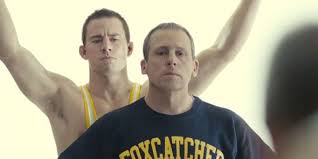
John DuPont (Steve Carell) tries to be a wrestling mentor to Mark Schultz (Channing Tatum) in Foxcatcher.

Foxcatcher isn’t just simply an Olympic story with a tragically bizarre ending. It isn’t completely a crime story either. It’s about the people involved.

It’s 1987. Mark Schultz is an Olympic wrestling champion who’s about to do a talk at an elementary school substituting for his brother Dave who was expected to be the talker. The school gives him a small payment for his time. Dave is coach of the wrestling gym married with two small children and trainer of Mark. Although Dave tries to be a good mentor to Mark, you could tell something’s eating at him.

One day unsuspectingly, he’s greeted by John DuPont, heir to the E.I. DuPont family fortune. He offers to have Mark train at the Team Foxcatcher gym in Pennsylvania he created to promote wrestling. Mark agrees but John also wants Dave to coach. Dave turns it down because he has family commitments miles away. Despite that, Mark continues on with John coaching him even living in a DuPont guest house which John sometimes visits. The training pays off as Mark wins the World Championships later that year. John is even seen as a mentor to Mark and all the other wrestlers at Team Foxcatcher.

However something’s not right. John wants the wrestling trophies won by Team Foxcatcher to overtake one shelf of horseracing trophies his family have won over the years. Mark and John develop a friendship to the point John gets Mark to use cocaine. John even mentions his mother paid a boy to be his ‘friend’ when he was younger. His mother Jean who’s part of the DuPont legacy of horseracing is disapproving of his coaching wrestling feeling that it’s a ‘low’ sport. Then one day it happens. While Team Foxcatcher’s wrestlers take a day off to watch a Mixed Martial Arts event, John becomes furious especially when Mark insists Dave won’t join team Foxcatcher. John tells him he will get Dave by any means necessary.

Dave agrees to Team Foxcatcher where he even moves his wife and family over there. Mark however is going through self-esteem issues with the mental abusiveness of John and moves away to train for the 1988 Olympics. Just before the Olympic trials, John has his mother Jean escorted in her wheelchair to see what John has accomplished. She leaves in disgust after seeing John give his back to one of his students.

At the Olympic trials, you can tell something is bothering Mark. He loses his first match and in response cries, wrecks his room and goes on an eating binge. Dave is alarmed at discovering Mark in his condition in his hotel room and works to get him to lose weight in time for the weigh-in. As Mark competes on, he notices Dave prevent John from speaking to him. Mark wins the Olympic trials but both he and Dave notice John is absent. He returned home as his mother died. Mark lets Dave know he can’t stay with John and Team Foxcatcher after the Olympics and asks Dave to leave with him even though John created a promotional video of Team Foxcatcher with Dave asked to do a speech. Mark finishes sixth at the 1988 Olympics where he loses his last match 14-0. As he said, he leaves Team Foxcatcher for home while Dave agrees to remain training Team Foxcatcher in exchange for John giving Mark financial support.

It’s 1996. John watches the promotional video with the part of Mark’s speech about John. This would pave way to the depiction of the eventual murder. However the film ends showing what happened to Mark shortly after.

It’s funny how around Oscar time, it’s common to expect that most movies with big Oscar buzz would have some sort of political message or humanistic message. So it was quite natural for me to think that Foxcatcher might be a film with things to say about Olympic athletes or how they’re treated in the US. I don’t think it was but it did present a unique time in Olympic sport. Many older people remember that until the 80’s, you had to be a complete amateur in an Olympic sport. Even if you made a single penny off your sport, you were ineligible to compete at the Olympics. That all changed in the early 80’s when the IOC changed its constitution from allowing only ‘amateur’ athletes to allowing ‘eligible’ athletes to compete and it would be each sport’s respective federation decide who’s eligible. There were some sports like track and field, swimming and gymnastics that were the first to make the transition and the pay and sponsorship money was good albeit not the same level it is today. Wrestling was one of the sports to catch on later. In Mark’s time, wrestlers could not make a living off their sport unless you were also a coach like Dave. In fact I remember a quote from Olympic gymnast Bart Conner: “The big myth is that Olympic gold medalists can get rich off their gold medal. I know a lot of Olympic champions that are flipping burgers.” So it’s no wonder that Mark would find sponsorship from John DuPont and the state-of-the-art Team Foxcatcher wrestling gym a welcome relief.

I don’t even think it’s a statement about rich people in the United States. Sure, John was born into money as the DuPont family have a dynasty going all the way back to the 18th century. Sure, John appears to be spoiled living in the same gigantic mansion in the middle of nowhere as his parents. Sure, John has the money to make his dream of being a great wrestling coach come true. Sure, John had a sheltered childhood where he was the youngest of four and had a ‘paid friend’ during his childhood. And sure, John has a mother with a superficial attitude as made evident in her comment of wrestling being a ‘low sport.’ However I don’t feel it’s about the American rich.

What I do feel the movie is to do about are the people. Yes, it’s a crime story but it’s also about the people. John appears to be a person who may have been belittled all his life and dreamed of being a successful wrestling coach or manager. He has written successful books on birds but wanted to become successful as a wrestling coach. This is especially hard for him since his family has a tradition of horse racing. Throughout the movie, we get a sense that he felt that something was missing in him. Even after hiring Dave as the coach, we see friction between the two as they’re both training and managing Mark. Sure, it’s common for two coaches on the same team to have disputes but the disputes make you wonder. In fact that scene where John is watching the video of himself promoting him and his gym just before the shooting may be sending the message he always felt underrespected. Maybe it was because he felt like the misfit of the family. Maybe it was because his family never knew or honored his achievements. We’ll never know. There’s no question he shows his mental illness, especially at the end, but it’s just a wonder if his inferiority complex is what caused him to shoot Dave.

The film is not just about John. It’s about Mark too. The 1984 Olympics was of him and Dave winning gold but the time since then was a struggle. Dave was able to marry, become a father and continue as an athlete by coaching at the same time. He was well to do. Mark was the one who struggled. He lived single in a shabby home, he worked a measly job, he received spare cash from school appearances, he was always living in the shadow of Dave. Even though Dave was never the type of brother that would try to make Mark feel inferior, You could tell it was bothering him in that training scene at the beginning where he gives Dave a bad hit. It was easy for him to see John’s offer as a breakthrough for him but a struggle as he was trying to create his own identity while Dave and John had coaching disputes over him. It seemed more like a threesome rather than him. Possibly even sensing Dave was becoming the apple of John’s eye rather than him. Even after his win of the World Championship, you could tell the whole thing would take a toll on him especially seeing how he had to purge himself at the Olympic trials and struggled to make the team. Eventually it did take its toll right at the Seoul Olympics with his sixth-place finish and the threesome ended there. You can easily understand why when Mark moved out, he wanted to move without turning back.

The highlight of the film was the performance of Steve Carell. In fact even his biggest fans would be surprised to see Steve looking different and acting completely different from the way they’ve always known Steve to act. He embodied John DuPont well in terms of physicality and his mental illness but he also made us feel John’s feelings of inferiority which definitely added to the film. The film also has Channing Tatum’s best acting ever. He also embodies the character of Mark well in terms of his desire to succeed and in terms of his insecurities. Although the film focuses more on the characters of Mark and John than on Dave, it’s Mark Ruffalo’s performance that gives added dimension to a person who is both a coach and a father and tries to do the right thing but ends up an unsuspecting victim in the end. Even supporting performances from Sienna Miller as Dave’s wife and Vanessa Redgrave as John’s mother were done great despite being less than what they should be.

The directing of Bennett Miller was also impressive as he focused on both the story and insight into the people involved in the story. The script by E. Max Frye and Dan Futterman was also good in taking us to the right events even though it did feel slow at times. Even there, I think they were trying to make a murder story that didn’t just simply tell of the events but also give us portrayals of the characters. It’s not to say they haven’t experienced friction about it. There was a story that Mark felt the film made it look like John had a homosexual attraction to him. I didn’t notice it. Besides I later learned John was married for the first and only time at 45 and the divorce occurred just before he met Mark.

Foxcatcher is more than a murder story. It’s also a portrayal of the people involved in both their desires and their insecurities. Often it did feel more like the film was about who than what.
Oscars 2014 Best Picture Review: The Theory Of Everything

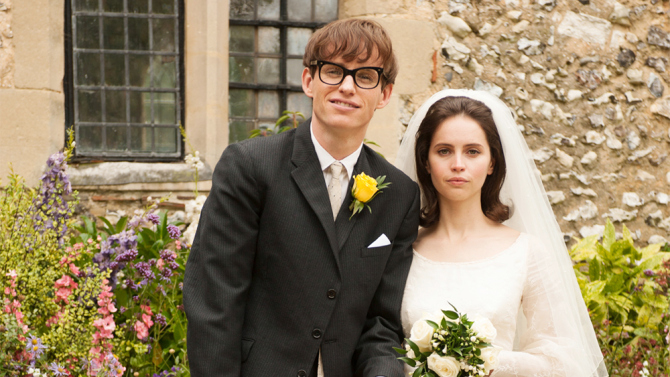
The Theory Of Everything is as much about Jane Hawking (played by Felicity Jones) as it is about Stephen (played by Eddie Redmayne).

When you hear about The Theory of Everything being about Stephen Hawking, you’d probably assume it’s about his scientific conclusions. You will actually be quite surprised.

Stephen Hawking is an astrophysics student at Cambridge in 1963. Stephen is awkward-looking, rather clumsy and already his imaginative thinking is being noticed by students and professors with varying reactions. One night, he meets Jane Wilde, a literature student. They form an unlikely couple with Jane actually taking an interest and liking in Stephen’s imagination.

The following year, there are two incidents that will change Stephen’s life: the first being a lecture on black holes which inspires him to write a thesis about time; the second being when he learns he has ALS–Lou Gehrig’s disease– and is given two years to live. Stephen becomes a recluse upon hearing the news but Jane tells him he loves him and will marry him. The two marry and they have a son Robert.

Stephen continues giving lectures as his condition deteriorates from using crutches to needing a motorized wheelchair and even talking with great difficulty. Jane is always there to help him but it’s becoming very hard on her. Nevertheless he continues to give lectures about black holes, evolution and time to top professors. Some professors find it erroneous while others praise it and give him an honorary doctorate.

Over time Hawking continues to win more acclaim in the science world including becoming a world-renowned physicist. Nevertheless the fame and his physical condition is making it hard for Jane both as a wife and as an educator. Upon her mother’s advice, she joins the church choir where she meets conductor Jonathan Hellyer Jones. Jonathan becomes a friend of the family but the birth of her third child causes suspicion from her mother if Jonathan is simply a friend. Jonathan senses the suspicion and leaves the family for a bit but Stephen tells Jonathan himself she needs him.

While Stephen’s in Bordeaux, Jane has a camping trip with Jonathan and the children and it’s obvious their feeling for each other are shown. The trip ends as Jane learns Stephen contracted pneumonia and needs a tracheotomy in order to fight this. Jane agrees. However Jane finds dealing with Stephen too difficult and hires a helper named Elaine. Elaine works well with him on the letter board. Then computerized technology comes in play and Stephen is able to communicate with a talking machine. He’s able to speak better with the machine than he did when he still had his own voice. It enables him to write a book where he dictates and Jane and Elaine type. The book, A Brief History Of Time, becomes a best-seller and wins Stephen worldwide renown. However it does mark the end of the marriage as he plans to accept an award in the US with Elaine instead of Jane. Nevertheless the film ends on a positive note leaving one to believe Jane and Stephen are still soul mates despite no longer being married.

The remarkable thing about the film is that it shows Stephen Hawking in a light we don’t normally notice. Yes, it shows Stephen and his scientific thoughts. Yes, it shows Stephen in his wild imagination. In fact there are times when it makes Stephen look like the Albert Einstein of our times. However it also shows other aspects of Stephen like how ALS can paralyze his body but not his mind. It’s safe to assume ALS made him a stronger person and the movie shows him acquiring his personal strength over time. He was expected to live only two years when he was first diagnosed and he’s still alive today. It shows how he won’t even let ALS stop him from getting a Penthouse subscription. It also shows him as a father and a husband but also a man with some personal weaknesses such as being sucked into his new-found fame and falling for his assistant Elaine.

But somehow it often appears the movie is not about Stephen. It appears more like it’s about Jane. We shouldn’t forget the film is based off of Jane’s memoirs of being Stephen’s wife. It shows Jane as she’s first attracted to Stephen despite being nerdy and having an eccentric mind. It shows her as the one who got Stephen out and living right after he learns he has ALS and even marries him. It shows her as the one that stood behind Stephen every time he gave a lecture on his Black Holes Theory even when top professors would dismiss it as rubbish. It also shows her as the one who helped Stephen write his legendary book with his talking machine. It almost appears like she was his arms and legs.

The film however does make Jane out to be a saint. It does show Jane’s struggle of being both a wife to a man with a disability. In fact it was the scene when Stephen is playing croquet just after his diagnosis and Jane sees how much it’s deteriorated him that sent me the message this movie could be about Jane. Despite Jane doing her best to be a supporting wife, there are times she can’t hide the frustration and it upsets her. Her frustration is a common frustration people who are spouses with disabilities go through. The film also shows Jane in another flawed light when she falls in love with Jonathan and has a long affair. This film highlights Jane’s own flaws as it highlights Stephen’s.

Without a doubt, the highlight of the film has to be the performances of the two leads. Eddie Redmayne was beyond dead-on as Stephen. In fact it’s the scene of the divorce where Eddie playing Stephen said more with  his face than his talking machine did that caught my attention. There were many times in the film Eddie was able to say more in silence as Stephen than when he was talking. From beginning to end he was excellent and embodied the ALS flawlessly. It wasn’t just the ALS. Eddie also gave us an inside look into Stephen’s imagination which adds to the character. Imaginative minds must be something for a topic for film this year. First Alan Turing and now Stephen Hawking. Felicity Jones was not only excellent but also did a great job of stealing the show. Her embodiment of Jane Hawking helps you get to know Jane better as well as have a new found respect for her. In terms of acting, this is mostly a two-person film. Nevertheless there were some good supporting performances from Charlie Cox as Jonathan and Maxine Peake as Elaine that added color to the story. Even the minor appearances of Stephen’s college mates and Stephen’s family added to the story too.

James Marsh did a very good job in directing, especially since he’s more of a documentarian (Man On Wire). This is his second feature-length film that isn’t a documentary and he does a great job of directing the story and bringing out the characters. Anthony McCarten did a great job of adapting Jane Hawking’s memoirs into a good story with great character depth. However it did often come across as a two-actor screenplay and could have added more depth to the other actors. The film had other great efforts too such as Benoit Delhomme’s cinematography, the score from Johan Johannson and added visual effects that dazzled.

The Theory Of Everything isn’t a perfect depiction of Stephen Hawking and his marriage to Jane but it is entertaining. We get to know the two better and feel for them both.

Oscars 2014 Best Picture Review: The Imitation Game

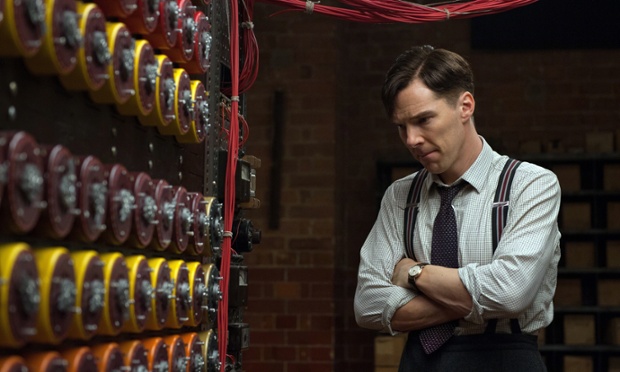
Benedict Cumberbatch plays mathematician/inventor Alan Turing through many angles in The Imitation Game.

“Am I a machine? Am I a war hero? Am I a criminal?”

The Imitation Game is a film that presents us a story of legendary scientist Alan Turing. It shows who he is and his life but also sheds light on many things we didn’t know.

The film opens in 1951 with Alan being investigated by detectives Nock and Staehl. This takes the film back to moments of the past starting in 1939. World War II has started and Turing applies to become part of the cryptography team at Bletchley Park. His ability to decode things and his knowledge that the Nazis use a code called Enigma impressed Commander Alasdair Dennison so much, he brings him on with the team of Hugh Alexander, John Cairncross, Peter Hilton, Keith Furman and Charles Richards.

Turing is difficult to work with as he distances himself from his colleagues. He has an idea for a machine to decipher Enigma but Commander Dennison doesn’t approve. Turing writes to Winston Churchill asking for assistance. Churchill is so impressed with Turing’s idea, he declares him the leader upon which he fires Furman and Richards. He uses a crossword puzzle to find his replacement. Upon which he hires a woman, Cambridge graduate Joan Clarke. Joan however has to deal with her overbearing parents as they don’t want her to work with men and marry immediately. However Turing is convinced enough she’s the right person for the job to the point he provides her a room to stay and work with female clerks while he shares his plans with her.

Difficulties continue as the code of Enigma needs to be reached. First the Germans change the code daily so that the enemies don’t succeed in breaking it. Secondly, Dennison is infuriated with the machine which Turing names Christopher and wants it destroyed and Turing fired. It’s only after the team threaten to leave if Turing is fired that he’s able to continue. Joan is pressured by her parents to either marry or leave her job, to which Turing proposes to her. On top of it, Turing’s team know of his homosexuality but promise to keep it secret.

Even after results happen and Christopher is able to successfully decipher Enigma, the solutions don’t start there. They can’t make it obvious to the Germans that they know Enigma so they have to carefully plan their strategies of attack even if it means considerable time later. Turing learns Cairncross is a spy for the Soviets but is told to keep it a secret or else Cairncross will expose his homosexuality. The place becomes too dangerous for Joan to stay and Turing tells her to leave, outing himself to her and even saying he was only interested in her as a co-worker. Joan leaves angrily. World War II was won and the cryptographers plans are burned.

The film progresses to the 1950’s when Turing was arrested first pursued for hiding confidential information only for them to uncover his homosexuality. His homosexuality was as much of a challenge as his eccentric way of thinking even as far back as his school days when he would be bullied. Fortunately a boy named Christopher befriended him and encouraged him with his coding and shared feelings with him. Unfortunately Christopher died before Alan had a chance to tell him he loved him. At the end, he’s shown with his final struggle with his homosexuality just before his eventual suicide as he’s sentenced to chemical castration: a sentence he chose over two years prison time. In his home where he secludes himself with his own concocted version of the machine Christopher, it’s Joan who comes to him in the end offering moral support and reminding him how significant he was because he was ‘not normal.’

Some would first come to the movie thinking it’s about him and his lifestyle. Some would first think this is autobiographical. It’s more. It presents the story of Alan and his eccentrically intelligent and creative thinking. It presents Alan’s side of the story from beginning to end focusing on the three biggest events in his life: in 1928 as a teenager when he’s first given support of his eccentric imaginative thinking and first learns of his homosexuality; during World War II and the story of the moment and invention that defined him; and in 1951 with Scotland Yard’s trying to link him of a crime only to discover his secret that would lead to his tragic fate. The focus of the story is especially clear at the beginning when Alan asks us: “Are you paying attention?” The film also presents why it was so important for this machine to crack Enigma had to be created as Alan would remind us it wasn’t simply against the War but against time. Especially for the UK which was suffering terribly. It also presents their strategy for helping to win the war as soon as they could.

It’s also very much about Alan the person as it is about Alan and the team working to crack the code. It presents Alan’s intelligence as creative in which he can decipher things through his work on crossword puzzles. It presents Alan as one who also has a very unlikable side including a ruthlessness his coworkers found hard to deal with though they stick with him because they feel he’s the only one who can succeed at cracking the code. They can’t stand him but they believe in him. It especially presents Alan’s homosexuality as for why he was about to go on trial. As he is about to be tried, he looks back on his life for when he was part of the mission to his schoolboy days and his encouragement from Christopher: the one person who truly understood him. It ends with Joan, the one colleague who knew him best and deserves to desert him after what he said to her but comes in the end to remind him of his significance to this world.

It’s obvious that Alan was able to solve Enigma in time but appeared unable to solve himself and even doubt his self-worth just after his sentencing of ‘chemical castration.’ A common thing as we see all too often in history how some of history’s biggest heroes would eventually become rejected by the people and even die lonely. Nevertheless we’re reminded that he still had people willing to stand by him even as he felt worthless. Especially Joan as she reminds him after he becomes a recluse after his defamation: “Do you know, this morning I was on a train that went through a city that wouldn’t exist if it wasn’t for you. I bought a ticket from a man who would likely be dead if it wasn’t for you. I read up, on my work, a whole field of scientific inquiry that only exists because of you.”

The movie tries to show more of what Alan Turing did as an effort to combat the war rather than focus on his lifestyle. Actually the movie does show about the struggle with his homosexuality throughout his life. His first difficulty came in high school as he fell in love with his friend Christopher and had to pass notes in his special code to him. We should remember that Alan was not beaten up in high school because he was gay but because of his intellectual eccentricities where it first showed its presence. He had continued difficulty during his work as even though his colleagues were supportive of him, they did remind him he could lose his job and be imprisoned because of it. Joan appeared to be the one who dealt with it best as she was not afraid to be in a sham marriage with him especially since it would help get her parents off her case. Then we see at the end as Alan has to deal with his ‘chemical castration’ which would eventually lead to his suicide at 41. We should remember those were the times. It’s because of the criminalization of homosexuality in the past that we had the pride movements that spawned out of the 70’s and are what they are today.

Benedict Cumberbatch did an excellent job in his portrayal of Turing. His performance was full of dimension for a person who was hard to like and had quite an imagination but quite smart and even troubled in the end. It’s a role where he not only acts off of his actors but us the audience too filling us in on all the details and making us think too. You can tell when Alan as narrator tells us to pay attention. Of the supporting players, it’s Keira Knightly as Joan who shines the best as the one who not only helps decipher Enigma but is the one person who can decipher Alan as a person in the end. The actors making up the cryptography team–Matthew Beard, Matthew Goode and Allen Leech– did great both as a team unit and in their own individual moments. Other standout supporting performances came from Rory Kinnear as detective Nick and young Alex Lawther who did a remarkable job playing the young Alan Turing.

Also deserving of acclaim is director Morten Tyldum. Very experienced in his home-country of Norway, this is actually his first direction of a English language feature and it’s an excellent first-effort. Also excellent is the script from Graham Moore. He did an excellent job in creating the story off of Andrew Hodges’ biography setting the three periods of Alan’s life that defined him most and piecing it all together. It succeeds in keeping us interested. Technical aspects were also excellent such as the set design, costuming, cinematography and the composed score by Alexandre Desplat.

The Imitation Game is a unique story about a scientist who went from a hero to a criminal of his time. It tells the story through his eyes and leaves us both interested and getting us to think as well. That’s the movie’s best quality.

Oscars 2014 Best Picture Review: The Grand Budapest Hotel

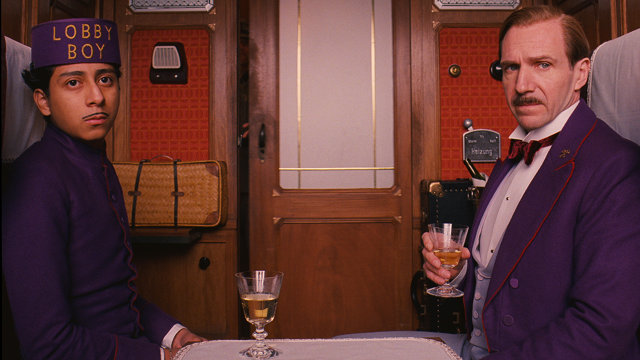
A hotel owner and his lobby boy (played by Tony Revoloro and Ralph Fiennes) go on a bizarre adventure in The Grand Budapest Hotel.

Anyone else here who missed seeing The Grand Budapest Hotel back when it was released in the spring? Yes, I’m guilty of that too. I can blame it on things like me being tired right after last year’s Oscar season to having a lot of preoccupations in my life at that time. This year’s Oscar race sent me the message of what I missed out on the first time. I finally saw it on DVD a few days ago and I now finally see why it ranks among one of the best of 2014.

This is another review of mine where I won’t give an analysis of the plot. Instead I will put focus on the movie’s strengths and possible flaws.

This film is quite typical of what to expect from a Wes Anderson film. It has an eccentric situation along with eccentric characters and a lot of comedy along the way. However this movie has its charm: the common charming eccentricity with Wes Anderson movies that continuously attract fans of his movies and moviegoers looking for something different. It’s also a trademark charm of the director that does not run stale with their movies time after time and continues to be enjoyable.

This too is a film that offers a lot and doesn’t make a whole lot of sense at first but makes sense as it goes along. It starts with a young girl paying honor to a writer in the present. Then flashing back to the writer in 1985 talking about hearing from Zero the owner of the practically lifeless Grand Budapest Hotel in 1968 about why he won’t close it down and Zero flashing back to 1932 to explain the whole story why. Wow, a lot of flashing back!

The story itself unravels itself over time with its various chapters from Zero joining the hotel as an orphaned lobby boy to the fictional country of Zubrowska nearing war to the owner Monsieur Gustave’s affair with Madame D to inheriting her most coveted painting much to the anger of her own family who hoped to have it to being framed for her murder. Yes, already bizarre. However the colorfulness comes with Zero’s love for the cakemaker Agatha whom he eventually becomes engaged to and helps bake cakes with escape tools.

The situation gets weirder as an assassin is on pursuit for him and the hotel needs to be managed, especially since news about a second will from Madame D is in existence somewhere. It’s after a pursuit while at a winter sport’s to kill off the assassin that the can return to the hotel only to find it overtaken by soldiers in the war and police on the hunt for Gustave.

As you can tell, this all makes for a bizarre confusing story and even leave you wondering about why the hotel is still in existence.  Understanding it means having to see the story for itself from beginning to end. There may be some confusing moments along the way and even a lot of eccentric humor but you will understand it and even the reason why a mountaintop hotel that’s completely useless is still in existence. You’ll even understand why the lobby boy is the only person in the world Gustave can trust wholeheartedly and would eventually own it. It’s no wonder Wes had to write a story along with his writing partner Hugo Guinness in order to bring this to the screen and make it work.

There are even times when I felt the story resembled Farewell To Arms, albeit with Wes Anderson’s dark humor intertwined into the story. Actually the credits in the end say the film was inspired by the readings of Stefan Zweig. I’ve never read Zweig’s writings so it’s hard for me to judge on that factor. Nevertheless the fact that Zweig was an Austrian Jew who fled to Brazil for refuge where he died may have some bearing on this. Even seeing how the character of The Writer looks like Zweig gives a hint.  Whatever the situation and even if the story does not go as well as you hoped it would, it does leave you feeling that it does end as it should.

Despite this film being another excellent work from Wes Anderson, we shouldn’t forget that this is also because of the excellent ensemble of actors. Many of which have already acted in Wes Anderson movies of the past. Here they deliver well as a whole to make the movie enjoyable and true to Anderson’s style of humor and style of film making. However it also succeeds well with those who have never acted in a Wes Anderson movie before, like lead Ralph Fiennes. He delivers a character that’s humorous and true to the humor of the movie. Newcomer Tony Revolori also adds to the charm of the movie as the young bellboy who becomes Gustave’s partner in crime as does Saoirse Ronan as Agatha. You can easily see why she won his heart. Even minor roles from other Anderson first-timers like Jude Law and F. Murray Abraham add to the story.

Even the technical aspects of the story are excellent. The costumes designed by Milena Canonero are perfect to a T in this movie as is the set design and the makeup and hair. All these elements fit the times they’re set in and add to the film’s charm. The cinematography by Robert Yeoman fit the story well and the music from Alexandre Desplat also fit the film.

The interesting thing to note is that The Grand Budapest Hotel is Wes Anderson’s highest-grossing film ever with $59.1 million in North America and almost $175 million worldwide. Buzz for the film first started after it won the Silver Bear at the Berlin Film Festival. Buzz continued after it continuously impressed film festival after film festival. Although his box office total in North America is not too impressive, it should be seen as respectable as it opened around the same time as the summer movie phenomenon that was happening. It made for a nice humorous alternative to the overhyped summer schlock.

The Grand Budapest Hotel is a DVD worth watching. We all didn’t know what we were missing during the summer and now we can finally see why.

Movie Review: Interstellar

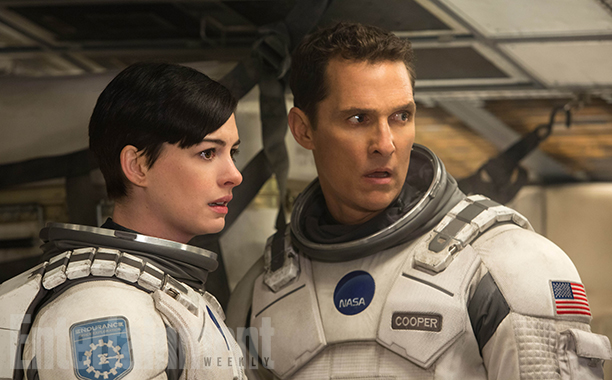
Matthew McConaughey and Anne Hathaway are on an intergalactic mission to save civilization on Earth in Interstellar.

Interstellar is one of those movies one would not expect to be too big of a success especially with a November release but it has really caught on. I had my chance to find out why just a short time ago.

Normally I would go into an analysis of the plot but I decided to skip it since it was so widely seen by now. Instead I will focus on how the film did as a film and as a sci-fi movie.

I will admit that this is not an original concept. A story of a civilization in danger requiring a trip to save it has been done before. I haven’t seen a movie where it required a space trip to do so but I’m sure it’s been done. In order for a movie like Interstellar to work those themes, it had to have a well-thought out story. Especially with the situation where saving civilization meant travelling to another planet or even another galaxy. Already at the beginning we see aspects of a hopeless world with crop blight and dust storms. We see further chaos at the school as Murphy’s teachers teach liberal conspiracy theories as the truth and Tom’s grades are great for his career pursuit but not competitive enough to get into a university.

A story like this also would have to make the time delay between space and earth work rather than look stupid and schlocky. Even for a space mission that’s doomed from the start to succeed, it has to be well-written and thought out with precision. One element that was rightfully included was the human element of the film. Cooper was to go on a mission to preserve the human race from a future of doom. It’s a trip where he ages one month for every seven years humans on earth age. It’s Cooper’s connection with his family over the spans of time–especially with Murph– that keeps the focus on why this mission has to be a success. It’s at the very end where Cooper who appears not to have aged a bit finally meets up with Murphy, elderly and on her deathbed surrounded by her family, that we see why this mission was so important. Even the images where Cooper talks with Tom and sees his grandson is an element that shows why this mission is necessary and why they have to succeed even when it seems all hope is lost.

The mission itself had to be smartly written from launch to activity to failures to battles and to returning to Earth in order for this film to be successful. The inclusion of TARS had to work. He can have his humorous moments but he can’t come off looking ridiculous as if he was trying to be a rip-off of C3P0 or Johnny Five. Also outer space and the terrain of the other planets had to look like a world unlike any other. That’s what makes a space movie: the ability to thrill as well as capture people’s imagination.

Overall, this is what Christopher Nolan had to do both as director and co-writer along with his brother Jonathan in order to make a film like this work. They not only had to show the hopeless state of the world but also make the mission work out even with its doomed failings and it had to keep Cooper’s connection with this family on earth while this aging gap was happening along the way. They had to deliver a film that was smart but also entertaining and mesmerizing like a film about space travel should be. They succeeded. Having a mission that was smartly planned out, making the staggered time lapsing happen and keeping Cooper connected with his family a galaxy away is what made this film not only work but win over audiences. It shouldn’t really be all that surprising that a smart sci-fi thriller should come from Christopher Nolan. He showed he can do a thriller that’s both intelligent and a box office winner with Inception. He does it again here.

The excellence of the film is not just that of Jonathan and Christopher Nolan. It also involved great acting from Matthew McConaughey, Anne Hathaway, Michael Caine, Jessica Chastain and even minor performances from Casey Affleck, John Lithgow and Matt Damon. I’ve seen better acting from all of them in the past but they all did very well here. Newcomer Mackenzie Foy was also very good in portraying the daughter with her love for her father and her anger for him.

Other standouts of the film were the top notch visual effects. A space movie is supposed to capture people’s imaginations and take the audience to a different world and it succeeded here. The cinematography from Hoyte van Hoytema delivered and the music from Hans Zimmer added to the feel and experience of the film.

Interstellar is a sci-fi movie that’s both imaginative and intelligent. It combines a smart story with a dazzling space mission and comes out a winner.