VIFF 2012 Review: Our Children (À Perdre La Raison)

A movie about a mother scorned is very rare. Our Children is a rare chance to make such a big-screen movie on that subject. The question is does it succeed at making such a movie watchable?

SPOILER WARNING: Many incidents including the ending will be mentioned in this review. So if you want it a complete surprise, please do not read any further.

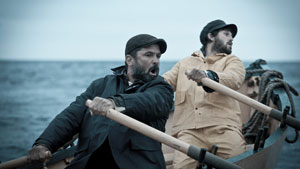
The film is actually one that begins with the end of the story at the beginning. We see a woman in a hospital bed saying to have her children buried in Morocco. After we see four red coffins being brought onto a plane. Hey, don’t say I didn’t give you a spoiler warning!

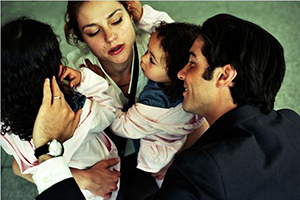
We first see a young Murielle in love with a Moroccan medical student named Mounir. He wants to marry but feels he have to have the blessing not of his father but of Dr. Pinget: a Belgian doctor who has helped him out financially and morally to study medicine. The marriage is successful even receiving the blessing of Mounir’s mother. However there’s one catch. Dr. Pinget is to live in the same house. Murielle reluctantly goes along with it. Meanwhile Mounir has to deal with the feeling of animosity from his brother.

Murielle continues on with her job as a teacher and Mounir starts practicing medicine. They have two daughters. They go through the usual ups and downs of having a family. Dr. Pinget is not that much of an interference although he is strict with the couple that he is the only doctor they see. However it’s obvious about Pinget’s control when Murielle is pregnant with her third child. Mounir thinks of moving to Morocco as it would be less stressful with the couple. Pinget is infuriated and takes it as an insult.

The couple do spend time in Morocco and it helps with Murielle as it alleviates her stress. Mounir’s mother even makes her feel like one of the family. Murielle’s sister even falls in love with Mounir’s brother and they marry.

The stress returns to Murielle as she returns back to Belgium. Pinget is back into her life. The stress of managing three children is catching up to her and a fourth child is expected on the way. The stress has gotten to the point she even takes it out on a student who misbehaves in class. On top of that her husband is always under Pinget’s wing and controlling in his own way. She sees a psychiatrist, Docteur De Clerk, who’s very helpful with her psychological condition even after the birth of her fourth child. However Pinget finds out and is very angry towards her, even threatening. It’s then that Murielle finally decides to commit a rash act to ‘end her troubles’ once and for all.

At first when I saw this, I wondered why on earth would someone try to make a big-screen movie about a mother killing her children. It isn’t until later on I read that this film is based on a story that actually happened in Belgium where a young mother couldn’t take it anymore and she killed all five of her children. This movie attempts to parallel that very story. After reading up more on the story of the event, I could see a lot of parallels: the relationship, the doctor that was controlling and how the children were killed one by one.

I think that’s it about this movie. It echoes a common story we hear many times before: a mother murdering her children. North Americans are familiar with the stories of Susan Smith, Tarajee Maynor and Andrea Yates. A story like this is not that common in Europe but it does happen. The thing about this film is that it is done primarily from the mother’s point of view. I think that was the attempt of the filmmakers: to make such a film that people could relate to. I don’t think people seeing this would want to kill their children but I think people could relate to the struggles of young motherhood and someone interloping into their life and having control over what they do. There have been many murder movies where the murderer is shown as a person that possesses dark personality traits that are inside all of us. I think that may be why this story was done; to show the killer that personality traits and weaknesses we too possess.

Also I have to commend the filmmakers for not crossing the line and making it unwatchable. No one wants to see children murdered on a big screen, especially in a story close to the truth. It made a smart move by making it similar as she called the children one by one but kept the killing part hidden off-screen and completely silent. Even in the aftermath, all we see is a house with her phone call to the police. I remember taking an acting course where a teacher said people like simulation as opposed to the real thing. Good to see them holding off there.

The movie does answer some questions but it also opens for other questions too, especially about the murders that story is based upon. Why did she kill her children? I don’t condone murder of any kind but why didn’t she kill the doctor instead? He was the controlling one. I guess I’ll never know and there’s only one person in the world that can answer those questions. Also the position of Dr. Pinget in the relationship. Why was he that controlling? Was it because of Belgian law? Was it because of his belief that since he was a mentor to Mounir, Mornir’s whole family should do everything he says? Was it Mounir’s own feelings of loyalty for all the mentoring he gave him? We shouldn’t forget Dr. Pinget was as controlling to Mounir as he was to Murielle. That question remains unanswered too.

Emilie Duquenne did an excellent job in her acting as Murielle from the young girl in love to the mother breaking down. That scene where she’s behind the car singing a song and breaking into tears is a very powerful scene and was excellently acted. North American audiences are not familiar with Duquenne but European filmgoers know her as the young teen lead in the Cannes Palme d’Or winning Rosetta from 1999. Tahar Rahim was also very good in his role as Mounir, the one caught in the middle. Niels Arestup was also excellent in his supporting role as the controlling Dr. Pinget. Interesting is that Tahar and Niels have worked with director Joachim Lafosse before in the film Un Prophete. The three are back together with something different. Lafosse does a good job in making a normally-unwatchable story watchable not only with his direction but also co-writing the script with Matthieu Raynart and Thomas Bidegain who also wrote Rust And Bone and co-wrote Un Prophete. The directing and writing did a good job in sending the message to the audience through what was unsaid and silent more than most films can send through dialogue.

Our Children is Belgium’s official entry in the Best Foreign Language Film category for the upcoming Academy awards: one of twelve films at the VIFF that are their respective country’s official entry in that category. The film was nominated for the ‘Un Certain Regard’ award at this year’s Cannes Film Festival and Dequenne’s performance won the Best Actress award in the ‘Un Certain Regard’ category.

I don’t know if Our Children is really all that watchable of a movie about a mother scorned but it does make efforts to be watchable without losing the story and relatable as far as human emotions go.

VIFF 2012 Review: Stories We Tell

Stories We Tell was one film that was added to the VIFF at the last minute. I was expecting this to be more of a live-action film but it turned out to be a documentary to my surprise. And quite an intriguing one.

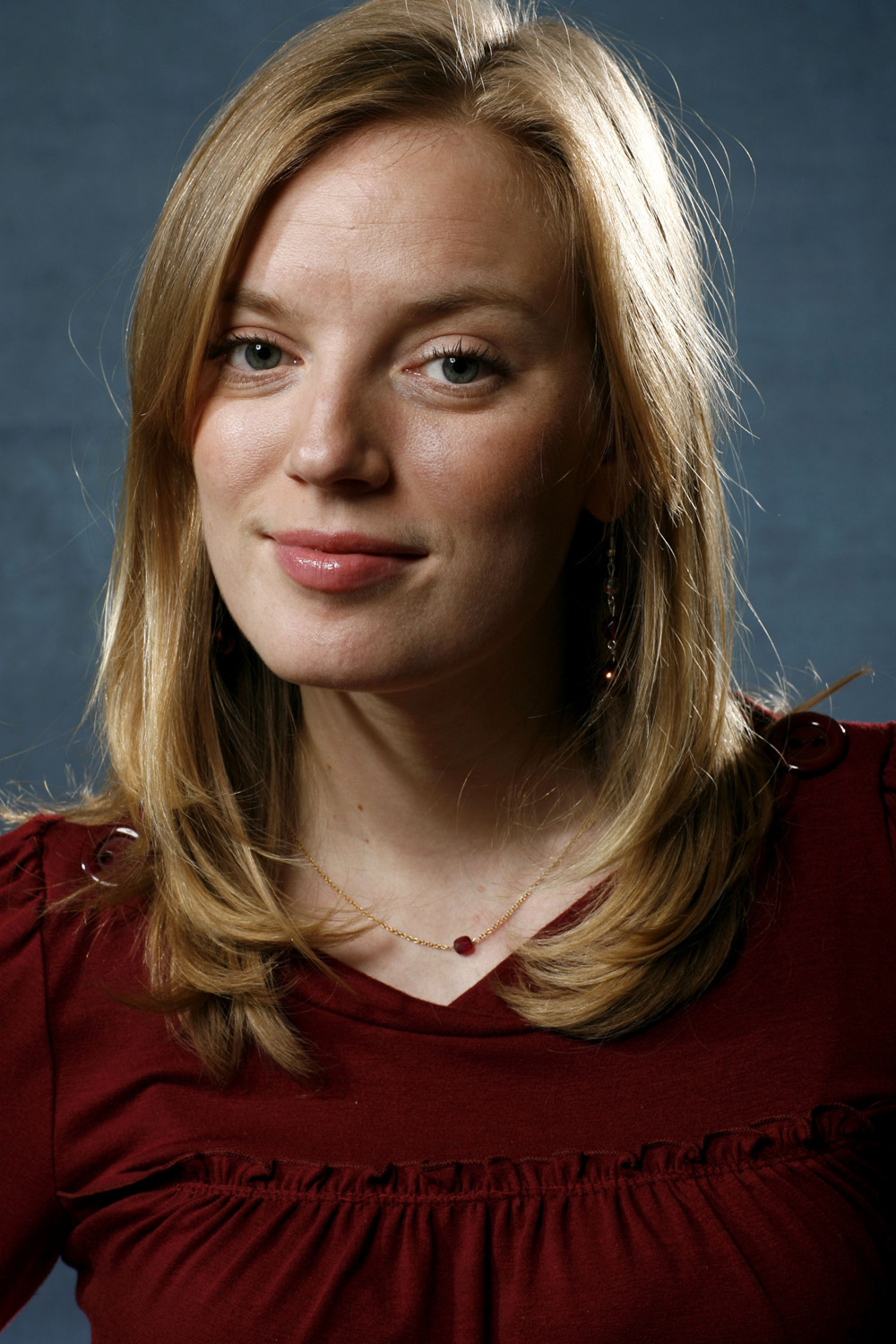
The documentary is directed by famed Canadian actor/director Sarah Polley. The documentary first appears to be her father, siblings and other friends and loved ones talking about her mother Diane Polley, from her career as an actor and a singer to her work in a Montreal play around the time her pregnancy with Sarah was starting (April 1978) to the abortion that wasn’t to the birth of Sarah to Diane’s death. All of those involved tell their story with reenacted images appearing in the style of Super-8 home movies. Some even receive direction from Sarah in telling their story and Rebecca Jenkins is cast to play Diane in the Super-8 re-enactments and fake television footage.

After more than half an hour, you think it’s a chronology of the Polley family, or at least the mother. It turns out to be a lot more: a ‘family secret.’ After the death of her mother, Sarah began to question her birth father. Could it really be Diane’s husband Michael Polley or was it another man? It even became a bit of a family joke at the dinner table when Sarah was a young teenager. Eventually the jokes died down and Sarah did some serious business about it. She learned about the actors her mother was acting within that play. She tried to look up one whom many in her family joke as the father but it’s not. Later she learns through conversations of those with the play and through a paternity test her father was Harry Gulkin, Canadian actor and film producer.

The story about searching for the truth of her birth father is seen and heard from the various angles interviewed for the movie: Sarah, her four siblings, Michael Polley, Harry, Harry’s daughter from a previous marriage, and castmates of that fateful Montreal show. The interviews are real in their retelling of the story but some interview dialogue is dramatized for the sake of the film. Possibly to show how a story that happens turns into a story told. I think that was the point Sarah was trying to get across in this is how people take the experiences of their lives and turning them into stories. That explains why we see Sarah giving those she interviews direction at times.

One thing about this documentary is that despite the re-enactment of events on Super-8 film (which had me fooled into thinking they were actually home movies) and the facts being told dramatically by some of the interviewees is that the drama does stop. There is a point where Michael does admit that there was a time in the late 70’s when the marriage seemed to be going dry: he had ambitions of being a playwright but settled on becoming an insurance salesman. He even confesses he told Diane during that time it’s okay for her to romance another man. Another point near the end, Michael cuts away from his cheery personality and his ability to laugh off the situation into showing the hurt he feels knowing he’s not Sarah’s biological father. It’s like that for all the others interviewed too where they all have a calm face or are smiling when they tell the story throughout but it’s near the end when they’re deep in thought that the hurt comes to them. You can see it in their faces.

This is not just a documentary that exposes a family secret of a popular Canadian celebrity. It’s also about Sarah’s relation to the people around her, both family and friends. New people came into her life after learning the truth. Most of her personal relations with others remained unchanged. She still has a healthy relationship with her siblings from her mother’s side as well as the father she always knew. She also has developed a healthy relationship with her biological father and her daughter: people that just came into her life years ago. Another angle of the documentary is it shows how despite laughing off the story, there are still some that feel hurt knowing the truth about the story. Siblings she always knew as full-siblings are now half-siblings. Even the half-siblings from her mother’s first marriage are hurt knowing the truth. The father has hurt behind the laughter. Harry occasionally thinks of the years he missed seeing Sarah grow up.

The thing that surprises me most about this is how successfully the family and others involved were in their ability to keep it secret and away from the media. We shouldn’t forget that this was all happening when Sarah was a public figure. The first secrets were unraveling during her days as Sarah Stanley in Road To Avonlea. It accelerated just as she was becoming the it-girl of Sundance in the late 90’s. The truth was finally revealed just as she was making a name for herself as a director in Away From Her. If this secret had been let out earlier, this could have put a big dent in her career and her image as ‘Canada’s Sweetheart’ during her child actor days could have been tarnished. It’s good to see the family and those who knew the truth kept quiet about this and that only Sarah herself could allow this to be exposed through this film only now. In a world that’s tabloid-obsessed and loves celebrity scandal, it’s good to see this was kept quiet enough to give Sarah the privacy she wanted.

THREE BITS OF TRIVIA: First, Diane Polley was a casting director for two made-for-TV movies of Anne Of Green Gables: the Canadian novel series the family drama Road To Avonlea was spun off of. Second, Diane died only three days after the pilot episode of Road To Avonlea was aired across Canada. Third, Sarah notes on the National Film Board of Canada (NFB) website that at least two journalists knew of the story for years but respected her wishes to keep it private and for her to be the first to let the truth out.

Once again, Sarah can add another accomplishment to her resume. She has already accomplished television acting as a child, movie acting as a teenage adult, directing and scriptwriting just years ago and now documentary director. It’s interesting how back during the late 90’s, Sarah turned her back on Hollywood in an attempt to be taken more seriously despite being referred to as the Sundance it-girl. It was a risky move that has paid off over the years. That’s something to admire especially since we’re in a time when people are mostly willing to become famous however they can, even if it doesn’t involve talent at all.

This is one documentary I saw at the VIFF that works well as a big-screen film. I myself saw it at the 1100-seat Vogue stage theatre in Vancouver. However this is one documentary that would best draw a crowd with Canadians or those into arthouse films. Those are the filmgoers who recognize Sarah best.  Outside of that, it’s still a documentary that can touch one who may have a similar story like this in their own family. For the record, American film company Roadside Attractions has purchased the film and plans to release it in the US in early 2013. No word yet on Canadian theatrical release. It’s all in the hands of the NFB.

Stories We Tell is an amusing and touching documentary about the retelling of a family secret within Sarah Polley’s family. It’s as charming and witty as it is intimate, touching and even heartbreaking. Definitely worth seeing.

VIFF 2012 Review – High Five: An Adoption Saga

The Wards and their five adopted children are the focus in the documentary High Five.

High Five is a documentary filmed over a five-year period. It’s a story about international adoption and about a couple’s iron will to let their heart win out over politics, finances, and inter-family strife in their attempt to adopt and parent five Ukrainian siblings. We don’t get what we expect to have but we do get an eye opener on the subject of international adoption and the lives of all seven.

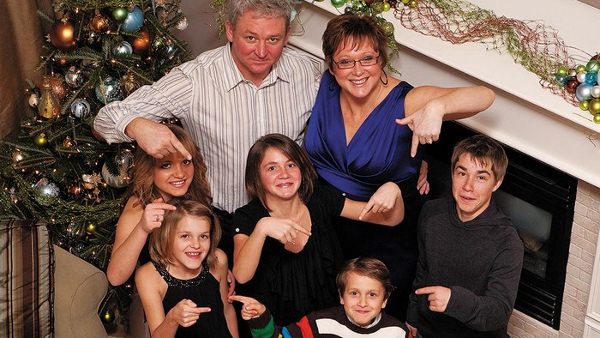
We first meet Cathy and Martin Ward, a couple from Surrey, BC who’ve always wanted children. A car accident to Cathy ten years earlier to which she constantly needs operations for even now makes pregnancy very risky. They first decided to play host to a 7 year-old Ukrainian orphan named Alyona in 2006. During the visit, they learn that Alyona have additional siblings. They bring Alyona with her next oldest sibling Snezana the next year. The following year they visit all five at the orphanage in Gorodnya, Ukraine. They decide to adopt all five but laws allow them to only adopt two at the time. They first adopt Alyona and Snezana but promise the other three–Older siblings Yulia and Sergey and youngest sibling brother Sascha–that they will adopt them the following year. Politics delay the adoption of the other two siblings for years. After much struggle–political, financial and emotional–the three other siblings are finally adopted. Problem solved, right?

Not completely. Even before the full adoption process we learn of potential problems that could arise. The five come from an abusive household in Ukraine where their mother died and their stepfather was an abusive alcoholic. It took the courts to remove the children from the stepfather and put them in the orphanage. All five remember the abuse very well. The gap between the two adoption periods also has an effect on the siblings too as there’s a sense Yulia has lost some feelings to the two others. One thing to keep in mind is that Yulia, the oldest daughter of the five, acted as the mother figure to her four younger siblings in the orphanage. There are also the health problems of the two. Martin is a nurse at the BC Children’s Hospital but Cathy needs frequent surgery from her car accident and Martin has a bout of the flesh-eating virus. Sergey himself has a growth stunt that has slowed his growing down to which he’s only 4’6″ at the age of 17. The adoption process is also a financial risk. The process was very costly and Martin would have to take a nursing job in the territories to help make finances more manageable. Then there’s the fact that the siblings are growing up. There’s always growing pains and approaching adulthood for some. Even Sergey returns to Ukraine temporarily for better job opportunities.

The biggest difficulty appears to be the relationship of the family with Yulia. Yulia has always been a sensitive and emotional girl. Since the adoption, Yulia would now have to go from the mother-figure to the parented. This does not fit well with her as she’s so used to being the mother figure. Her relationship with Martin is mostly unaffected but it’s sour with Cathy. The bad vibe also doesn’t go well with the other siblings as they find her hard to stand, even Sergey whom she’s always been the closest with. On top of it, she’s a growing girl who’s graduating from high school, working a job, has a boyfriend and is entering adulthood. She had made two trips to Ukraine both for employment purposes and to meet with another sibling of theirs who was adopted by a Ukrainian family.

The documentary ends with Yulia still in Ukraine. She still has a negative attitude: “I have no mother.” The other four are still seen being parented by Martin and Cathy. The documentary ends with the six on a local snowboarding trip. As Martin looks out to them as they’re having fun, we’re left wondering what he’s thinking about as he watches them. As for the documentary’s ending, it ends with a ‘to be continued’ ending. It leaves off in the present as the continuing story that it is and leaves one asking questions. Will Yulia return to the family? Will the five be one again? Will any of the other sibling try to pursue opportunities in Ukraine? Those are questions only time has the answers for.

This documentary is a good example of international adoption and how it doesn’t always worked out as wished. It didn’t have a completely happy ending nor did it have a tragic ending. It just presents the story as is and is able to balance the positive aspects with the negative aspects. As I just said, this documentary ends without a real ending. It’s a story that continues to this day with the cameras no longer rolling and will have changes to the lives of all seven over the years. Nevertheless I wish the Wards and the five all the best in the future.

Directors Yulia Ivanova and Boris Ivanov did a very good job of filming this story which appears to be like a daily or yearly chronology of the adoption story over the five-year period. Even though most of the documentary is narrated by Martin, the story is seen through a wide variety of angles: both the parents and the siblings themselves. There are moments when it’s about the family and moments when it’s about one individual. They give the right focus for each situation. Sometimes they try to be mediators in this situation by attempting to help the interviewed subjects by giving advice behind the camera. That doesn’t become a weakness for the documentary. This documentary does give a feel of being like a reality show but this is not a ‘reality show’ as one would commonly associate with popular reality TV. There’s no sensationalism or explosive brattitudes. This is a real situation with real human emotions present and real problems and crises arising in the adoption process.

This is another documentary that’s meant more for the television than for the big screen. The fact that it’s produced in association with the Knowledge Network is the best example of why. From what I heard at the screening, it will be shown on The Knowledge Network in British Columbia in December. I have no information about whether there will be a DVD release for it. I feel it’s worth a DVD release since this is good teaching material. Those interested in international adoption will get a good experience to what it’s like and the potential risks that lay ahead.

High Five is as much a documentary that tells a story as it teaches. It presents a common story of international adoption that presents the viewer with the stories of the individuals as much as it does with the family. It’s worth watching.

VIFF 2012 Review: Hunky Dory

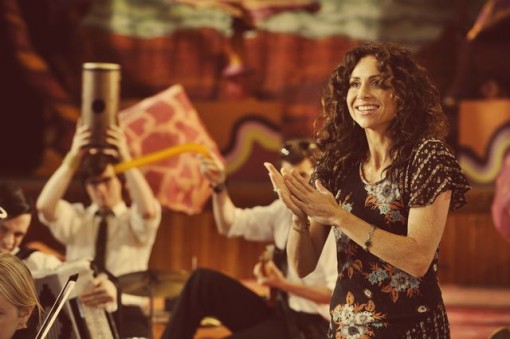
Minnie Driver urges her students on in Hunky Dory.

How often has a movie about a high school musical been done before? Now that Hunky Dory is out, does it add anything new or is it the same old schtick?

It’s the summer of 1976 in a small Welsh town. A young teacher, Vivienne, gets together with her drama group students to arrange to put on a play. As anticipated, it’s a Shakespeare play: The Tempest. Not as anticipated, she wants to put a twist on it by adapting the popular music of the time to it.

It’s difficult enough to arrange as it is but Vivienne and the students face other difficulties along the way. First Vivienne puts the students under a demanding rehearsal schedule that demands much of their time and in sweltering heat. Secondly the students have problems of their own: Stella is undecided between loving Davey or the boy at the disco; Evan is struggling to accept his homosexuality while he currently has a girlfriend; Kenny is pressured by his brother to join a gang of skinheads; the band face tensions of their own; and Davey, the central teen, faces the lures of Stella and Vivienne while dealing with the pressures of a broken home. Thirdly Vivienne faces a lot of dissent from many people in the school, especially Mrs. Valentine and Mr. Cafferty. She does find relief with the volunteering of the headmaster. Fourthly a fire happens and all the play’s props are burned to a crisp. The movie leads to a somewhat predictable ending but it also gives an epilogue detailing what has happened to the students since. It left me wondering “Did this really happen?” I’ve been known to question movies that are ‘based on a true story’ or ‘inspired by true events.’

I’ll have to admit this is not original stuff. This is a common scenario of a music teacher putting on a new twist to a play, people in the school unhappy and even offended with it and teenage conflicts during and between rehearsals along the way. How often have we seen that before? One quality that the story has is that the problems the students went through along the way were very common and realistic to the problems teenagers go through and continue to go through today. Romantic love triangles, the pressures of joining a gang, learning of one’s homosexuality, starting a band and tensions happening along the way, those are all common teenage problems that occur decade after decade. The young cast did a very good job of making them look real and relatable.

Another thing the film did very well is remind us of the charm of 70’s music. Yes the film gave you the feel you were watching a Glee episode but seeing the young people sing and perform songs from David Bowie, Roxy Music, 10cc, ELO, The Byrds this movie brings the charm back and reminds you why those songs charmed the teens then and continue to charm today. In fact the film’s title is the title of a 1971 album by David Bowie and one of the songs from it, Life On Mars, is the first song in the film where the students are performing or rehearsing.

Minnie Driver did a good performance where she was able to display her singing skills along with her acting, but I’ve seen better overall acting from her in the past. This movie actually belonged to supporting ensemble of actors playing the teenagers in the movie. The movie was about them growing up and dealing with their own personal issues while rehearsing for the musical and they did a very good job of it. They also did a good job of acting like Welsh teens from the 70’s. The one of the teens that stood out was Aneurin Barnard as Davey, the one caught in the middle of the play, family tensions and a possible liaison with Vivienne. The only adult actor to steal the movie away from the teens had to be Robert Pugh who goes from your typical stodgy headmaster to siding with Vivienne in the end. Marc Evans is not too experienced with directing features as he is with television and documentaries but he does a good effort in this movie, if unspectacular. Scriptwriter Laurence Coriat brings in some depth in what could have been another run-of-the-mill high school musical script. The music was very good and very professional. Overall all actors did a good combined job of acting and singing.

I didn’t originally plan to see Hunky Dory that day: the Sunday before Canadian Thanksgiving. I meant to see Late Quartet but tickets for volunteers were finished and I had to wait in the Rush Line as my last chance. I did secure a ticket for Hunky Dory just in case I was out of luck. Sure enough, I was out of luck for Late Quartet. Despite missing Last Quartet, I’m quite content in seeing Hunky Dory that Sunday night.

Hunky Dory has done the film festival circuit and is due for big screen release anytime soon. IMDB shows the movie listed as released on March 2, 2012 in the UK and Ireland. Wikipedia says that it will be released by Universal Pictures in the US and 20th Century Fox around the rest of the world. This would make it the first British independent film secured by a major studio. I thought Billy Elliot was. Whatever the stats, the purchase by those two companies should boost the box office outcome of Hunky Dory in the future.

Basically Hunky Dory is not meant to take film making or music making in any new directions. It’s the same story redone and made to look different. Nevertheless its purpose it appears is to entertain the crowd and it does just that. Fans of musical movies or shows like Glee or High School Musical will like it.

VIFF 2012 Review – Side By Side: The Science, Art And Impact Of Digital Cinema

The first documentary I saw at the Vancouver Film Festival was Tribeca Film’s Side By Side. It first caught my interest on opening day as I was assigned to be an usher for the screening. I was lucky to see it as an audient three days later. I’m glad I did because this is of a topic I’ve been interested in over the past ten years.

The documentary is hosted by Keanu Reeves and it is on a hot button in the filmmaking industry. this hot button is the transition from making celluloid motion pictures to digital motion pictures. It attempts to answer the question: “does it mark the death of an art form or does it accelerate it?”

The documentary starts with some opening opinions by some of the biggest names in directing like George Lucas, Martin Scorsese, James Cameron, David Lynch, Christopher Nolan and Danny Boyle. It also features opening comment from independent filmmakers too. The beginning also gives descriptions and computer simulated examples of how images from both celluloid cameras and digital cameras are created. Interesting is the terminology used for filming: film filmed on a reel in a single day and developed the next day would be called ‘dailies’ while digital images would be described as ‘immediates’. Later on the documentary would describe the invention of digital filming dating back to the late 60’s to George Lucas experimenting with it. The progress of digital filming would be described more over the remainder of the documentary, which I will elaborate on more throughout my review.

The documentary also points out that the use of video cameras was not accepted by the film industry at first because video cameras were seen as something for ‘cheap movies’. They showed the first two movies filmed on video camera that made an impact on video cameras’ use in film: Denmark’s The Celebration from 1998 and the US’ Chuck And Buck from 2000. The quality was obviously cheap but the cinematic angles it was taken from caught people’s eyes. Nevertheless many people still felt video cameras were not good enough quality for something like motion pictures. To think back in 1999 when George Lucas announced after The Phantom Menace that he would no longer film on celluloid, most people didn’t take it that seriously.

As I just mentioned, we shouldn’t forget at the time digital film was still lacking in quality. Slowly but surely big name directors would take notice over time and make the switch. That’s another quality of the documentary is hearing of how so many big name directors made the switch to digital. They describe the scene filmed on digital that put the nail in the coffin for their use of celluloid film. The most interesting for me is Danny Boyle’s story about the change. He described one scene in 28 Days Later–the scene of a deserted London–that was able to be done on digital because he could shut down traffic in one area temporarily for a few minutes while he would have to shut the whole of downtown down for hours if he did it on celluloid. Many directors said that filming on celluloid film has gone as far as it can go and none sensed any limit to filming on digital in sight.

Back to the part which give demonstrations of the two filming methods. As the descriptions of are demonstrated, film professionals interviewed would describe their experiences in dealing with both filming forms, both the positive aspects and the negative aspects. One filmmaker talked of the use of dailies of how they’d look at the dailies in the screening room and at how they were taken aback by what they’ve created. It was often the case but not always. There were times when the dailies would be something flimsy. As for digital, the ‘immediates’ were convenient because they were there in an instant and they were cheaper. It’s not to say the ‘immediates’ were a complete solution. One director even said immediates would show the filming well immediately on a computer screen but won’t answer what it will look like on a 50-foot big screen.

Also described in the documentary are the various changes to how one does their job. The director and cinematographer, or director of photography (DP), have always worked as a team during the days of celluloid. The two still work as a pair even during digital filming but there are changes to how they work and communicate to each other during their job. The documentary also describes how actors have had to make adjustments of their own. During filming of celluloid, there was always a period of time when the cameramen had to do technical things that would allow for a break. Now with digital there’s more consecutive shooting less of that break time, if any at all. There’s even mention of a certain ‘protest’ done by Robert Downey Jr. when he did his first digital picture. Another thing involving actors, which would get on the directors’ nerves, is that they’d want to see the ‘immediates’ to see what they looked like all too often. Should we really be surprised? Film editors as well describe how their job has changed from literal cut and paste of reels to the computerized cut and paste. Some say the quality is still there while others say it’s cheapened. And we also see how visual effects personnel work with digital film as they’re able to create greener trees and bluer skies.

Another aspect showcased in the documentary is the changes in technologies over time. I mentioned at the beginning that video camera use for motion pictures were not accepted at first because of the lack of quality. What a difference more than ten years can make. Over time just as computer technology has improved, so has video imagery and designs of cameras. The documentary showcases the pixel quality of pictures over time and also highlights camera companies creating digital motion picture cameras that would be breakthroughs. Interesting how images shot for the big screen are at least ten times better than they were at the start of the century. Video cameras used for filming motion pictures have also become better and even smaller which allows for more unique angles. The simultaneous use of two cameras for filming 3D movies is another example of technological breakthrough. Then the news of the ultimate: the announcement from motion picture camera companies in 2011 that they would no longer manufacture celluloid movie cameras.

Despite the mention of all the technological progresses of digital cameras and its progresses leading to digital practically overtaking celluloid filming, the documentary does remind us there are still Hollywood movies and independent movies shot entirely on film and there are also still ‘celluloid purists’ who won’t hop onto the digital bandwagon for their own personal and professional reasons. Last year’s Oscar winner for Best Picture The Artist was shot entirely on film as were Best Picture nominees Moneyball and War Horse. Even two of the biggest moneymakers of this year, The Hunger Games and The Dark Knight Rises were shot entirely on film. In fact both Christopher Nolan and his personal DP Wally Pfister have even declared that if they’re the last people in Hollywood to shoot movies on celluloid, so be it. There are even some independent filmmakers that talk of the beauty of shooting on celluloid that digital can’t equal.

This documentary may give a lot of examples and opinions about the filming types but it doesn’t give the final word on the future of film. It cuts off to now and will leave the future to define itself. With no more celluloid cameras being made, the ‘celluloid purists’ will face a bumpy ride if they want to stay true to their principles. As for moviemaking, where will an industry full of predominantly-digital movies take this in the future? Will the ‘celluloid purists’ succeed despite the odds? We’ll see. One thing one director said was as long as a director has a vision, they will try to create that vision with whatever means they have.

I admit that this is a topic that caught my attention and it’s one dating back ten years ago. How it caught my attention was when I attended an acting class which a top Hollywood cinematographer Monty Rowan. He talked about celluloid filming and brought up George Lucas’ comments about never filming on film again. Rowan mentioned that digital will never have the same artistic quality as celluloid. Years later I read a magazine–either Time or Newsweek–that talked about filmmaking and once again Lucas’ talk about filming on digital: “You don’t work at the office the same way you used to. So why should I do my filming the same way I used to?” It also mentioned of a younger generation weened on digital this and that and who don’t have the same appreciation for the filmmakers of the past. That had me scratching my head. Even hearing how filming on digital has cut costs on filmmaking has still led me wondering about Rowan’s comments. Yes, filmmaking is an art but there’s this vice called ‘showbiz’ that’s unavoidable. Can celluloid continue one despite the business demands of showbiz? Especially as movie viewing is no longer cinema-only and now flexible to the point one can see movies on their tablet or cellphone?

The best quality of the documentary is the big names and wide array of professionals being interviewed by Keanu for this picture. We not only hear opinions and experiences from some of the top name directors in the business but some of the independent  filmmakers who have their own say, whether positive or negative. We also hear the various cinematography, film editing and visual effects angles from some of the top names in their respective fields. We also hear from the various ‘trailblazers’ of digital filming who did something that would pave the way to the future of film, though they didn’t know it at the time. Hard to believe that Anthony Dod Mantle filmed with video cameras with the thought “I may never win an Oscar but…” and he did for Slumdog Millionaire. It does however limit the number of independent filmmakers in the business. Yes it’s great to hear opinions from the big Hollywood names but the independent directors were limited in numbers and opinions.

Another thing I liked about the documentary is that Keanu did it unegotistically. He wasn’t like Michael Moore or Morgan Spurlock who try to steal every scene and force their personal opinions. Keanu stuck to the topic and put focus and emphasis on the facts, the technologies and the professionals’ opinions. I don’t think I noticed anywhere in the documentary him talking about his own personal experiences.

As far as this documentary goes, I would not consider this to be a documentary meant for a movie cinema. One of the things with the VIFF is that there will be a lot of documentaries shown. Some will be lucky enough for a big screen run. Some will most likely be shown on television through either a documentary channel like Vancouver’s Knowledge Network or a teaching channel. This documentary looks like something that would be best suited for something like a science channel or even an entertainment information channel. I would like to see it again as this this about a topic I’m interested in as I mentioned earlier. I like how thorough this documentary was.

Side By Side is an important documentary for anyone in film, whether a professional or a student at a film school, should see. It doesn’t just present the situation but is very thorough in presenting the examples of filming, history of technological advances, and how some of the biggest names in moviemaking have taken it on. Thank you Keanu for doing a great job of giving us the facts.

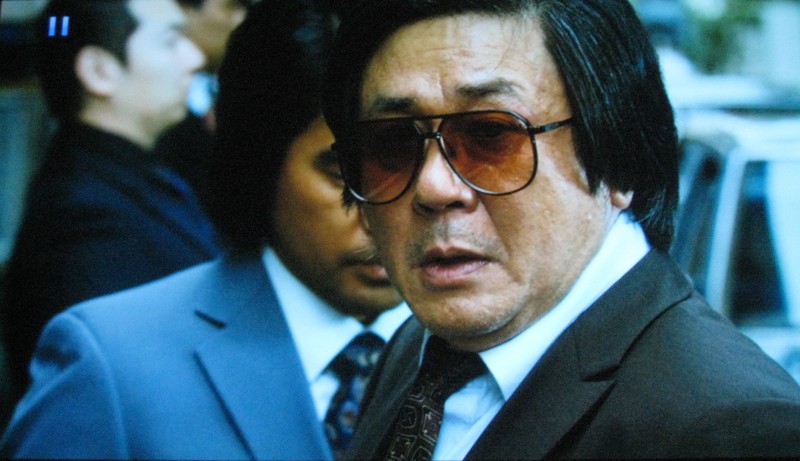
VIFF 2012 Review – Nameless Gangster: Rules Of The Time (범죄와의 전쟁)

Nameless Gangster looks like South Korea’s attempt to try and make a gangster movie. The one thing is it does a very good job at making one. This film is more than what one bargained for.

Choi Ik Hyun doesn’t seem like the type to become a gangster. He’s a customs officer in Busan who was pilfering goods and taking bribes along with colleagues at the most. On top of it, he gets drunk very often and comes off as both clumsy and idiotic after a lot of drinking. That all changes when he comes across 10kg of heroin in the warehouse. He and a friend approach a gangster, Choi Hyung-bae, to sell it to Japan’s yakuza that he’s tied to. He also learns that Hyung-bae is from the same family tree.

Soon the two would become partners in crime and they would form their own organized crime syndicate. Soon Choi’s power grows to owning night clubs and one of Busan’s first class hotels. He also faces power struggles from close associates, people within his gang and even among rivals. Some of it has to do with his feisty personality and his habit for getting drunk easily. Other times it’s because of the conflict of who’s really in power. As Choi’s power grows, politics are changing in South Korea. The dictatorship which allowed Choi to prosper in his criminal activity is now making way to democracy with the election of President Roh Tae-woo just before the Seoul Olympics. Just two years after the election, the government proposes a crackdown on organized crime. Choi knows his days are numbered. He knows the connections to prosecutors that helped some of his men get off charges in the past won’t work anymore. The story ends with the predictable as the movie begins with a prosecutor announcing the arrest of Choi in 1990 but it ends on a different and on a note one wouldn’t expect from a gangster movie.

The film’s script is good for that it’s able to mix humor with organized crime the same way Pulp Fiction and Fargo does. However the film is just as smart as it is in its story too. The film’s script is very detailed in how it’s able to take into account the situation in Busan and the rest of South Korea during that time. It takes into good account the situation of crime in Busan in the 80’s during the time South Korea was still under a dictatorship. Yeah, just because South Korea wasn’t under the tight grip the communist North was under as was well-to-do doesn’t mean the people of South Korea were completely free at the time. It also highlights the changes in South Korea as the decade progress from the student protests, to the Seoul Olympics to the election of President Roh Tae-Woo to Roh’s crackdown on organized crime and corruption. This is a part of history few outside South Korea know about. It’s as much of an eye-opener as it is entertaining.

The movie not only shows South Korea’s changing political climate at the time but how it impacted Choi and why he made his choice to organized crime. South Korea was under a dictatorship to the move to democracy to the crackdown on organized crime. While South Korea was still under a dictatorship Choi’s income as a customs officer wasn’t good. Organized crime seemed his way out at the time. He chose it and reaped the lucrative rewards as well as the star status. He also faced threats from outside rivals and rivalry within his own gang. As South Korea made the move to democracy, prosecutors then became the stars of the new Korea and that meant the downfall of Choi. The title Nameless Gangster could be because Choi could be any man in South Korea at that time. The subtitle Rules Of The Time send the message that the movie is as much about the times as it’s about the protagonist.

There were two powerful scenes in the film on that subject. The first was when Choi was having dinner with his children while he knew his arrest would be eventual. He says goodbye to his son as he is about to go to Los Angeles and told him of the importance of learning  the English language. Another was when he was at a religious ceremony for his newborn grandchild. It’s the child of his son who’s now a prosecutor. The scene where his grandson grips Choi’s finger is a powerful one of hope. It’s like Choi’s happy that his son and grandson have the better futures that Choi never had the chance for.

Without a doubt, the character of Choi was the top quality of the movie. It’s surprising how a bumbling, clumsy, easy drunk like Choi could ever manage to rise to the top of the organized crime scene in Busan but somehow he does. The movie wasn’t just about Choi and his bumbling meetings or his criminal activities. It was also about Choi the husband and Choi the father. The scenes with his children and grandchild show a different side of Choi and make his character three-dimensional rather than the typical stock character of comedies. Actor Choi Min-shik did a very good job with the role. Scriptwriter and director Yun Jong-bin did an excellent job in writing a script that was as comical as it was smart and bringing it to the screen well. I will admit I was first confused during the movie wondering what the point was in having a clumsy, oafish man as a major organized crime don but it all made sense in the end.

Nameless Gangster has received a lot of buzz. In South Korea, the film was #1 at the box office for three weeks. The film has received many awards and nominations amongst South Korea’s movie awards. Time magazine even described it as: “the Korean mob film Scorsese would be proud of.”  Interesting that the Busan-born Yun is almost 32 years-old and he has released two other films that have raised eyebrows, especially in the ways they depict male mannerisms. Already Yun looks like he’s on to a very promising career in directing especially with the success of Nameless Gangster.

Nameless Gangster is more than just an entertaining story of a crime boss. It’s also a statement about South Korea’s politics at the time and about the man caught in between. Definitely a film worth seeing.

VIFF 2012 Review – City Lens: 60s Vancouver by Night & Day

I mentioned that I already saw one shorts program at the VIFF. I was lucky to come across a second one. City Lens wasn’t just any shorts program but one done by Vancouver filmmakers in the late 50’s and early 60’s and all were filmed in black and white. It was an interesting look at Vancouver through those years and what they showcased. Here are the films I saw and what I thought of them:

-City Patterns (1962)-This was a ten-minute short that featured images of Vancouver architecture to band music. It’s not necessarily the quality of the short I paid much attention to but of the places that were filmed. I often thought things like “So that’s what it looked back then” or “Does that place still exist?.” It was just a piece-by-piece film but I was amused with it.

-The Outcast (1963)-This was a biographical film of a former criminal trying reintegrate himself back to society. He’s both the subject being filmed and the narrator. We see him in a hotel on Main Street getting ready for the morning. We see him walk from industrial area to industrial area looking for work. We see him have a nervous look as a flashing police car drives by. During the filming shots he narrates who he is and what crimes he committed. He talks of his struggles to find a job with his criminal record. He also talks about his hopes to leave his bad past behind. The short left me wondering about former criminals and their opportunities to reintegrate into society back then. It left me wondering what was it like then? Is it better or worse now?

-PNE Midway (1960)-Now this is something that would definitely take a Vancouverite back in time. The Pacific National Exhibition fifty years ago. It was nice and fun to see how a day in their life of the PNE was like back in 1960 from workers setting things up to the rides and performances happening all day and night to the closing down for just another night. It was really neat and exciting to see. There was one scene I wasn’t happy to see which was the performance of an African American singing group with ‘Ebony Queen’ on the sign. It was a reminder that entertainment was one of the few big opportunities open to blacks back then and even having ‘ebony’ in the name was unpleasant to see. We should remember this was three years before Martin Luther King’s ‘I Have A Dream’ speech.

-The Seeds(1959)-This was actually a show meant for CBC Vancouver back then but it never was aired due to what claimed to be disturbing content. The movie starts with a gang of guys who like to control a diner. When the owner tries to stop the leader from harassing a girl, he gets beaten up. We later see the gang hang out in their favorite abandoned building playing cards and drinking straight whisky. At night they like to drive around like maniacs anywhere and everywhere. One day a young woman goes shopping with her young daughter when she caught the attention of the gang. She tries to get away only to be found in a shopping area. S tells the daughter to go home, sensing danger. They all try to chase her into a corner of the parking lot and it ends with her unhurt, unrobbed but scared. I didn’t understand what the point of the show was. Violence? Misogyny? I was left confused. I’m sure I would’ve felt uncomfortable watching that on television. I found it disturbing enough watching it in the theatre.

Overall I thought it was a nice break from the usual film fare. It was also nice to see how Vancouver looked those many years ago. I’ve only lived in Vancouver for 11 years but it was still quite an eye-opener to see how the city looked back then. Also it was unique to see four different types of films: documentary, a drama, a visual diary and a parade of images. This program was brought to us by Videomatica’s Graham X Peat along with some assistance from a Vancouver Archival Film company. It’s very rare to have a chance to see something like that.

City Lens was a welcome break for me at the VIFF. I think there should be something like this every year at the VIFF  that shows images of Vancouver past.

VIFF 2012 Review – Shorts Program: Break Even

Once again it was my goal at the VIFF to see at least one program of shorts. I had the good opportunity to see one during my ushering duties. You remember how the four programs of Canadian shorts were given names of the earth’s natural resources: Earth, Air, Fire and Water? This year the theme is about breaks. The program I saw was titled Break Even and featured nine shorts done by Canadian filmmakers. So here’s the rundown:

-Barefoot-In a Cree community, Alyssa is the third girl in her class expecting to be a mother. She has a supportive boyfriend and a supportive family but she has secrets. The story was meant to be a drama but I think this was a statement to do about teen pregnancy in First Nations reserves. An upsetting story but important as it will hit you with some hard truths.

-Peach Juice-An amusing animated movie using dolls and wrapping paper for the animating. Not the most professional but it succeeded in entertaining. This was another teenage story that has a charming outlook on a certain curiosity.

-OMG-A teenage daughter moves in with her grandmother after a spat over her phone use. Grandma handles her granddaughter’s annoying habit well both in her cellphone use and her relationship with her mother. Very clever ability to have a great entertaining story within the same location. Funny and charming.

-Liar-Tara believes her boyfriend Brian lied about being gay when he broke up with her. She and her two girlfriends attempt revenge on Brian but when it goes too far, what will Tara decide? Very good story but it leaves one wondering if it was meant to be a story or a message about violence on gay teens, especially since the bullies were all female?

-First Snow-Siblings and their mother reunite but not in the happiest settings. It’s in a hospital and it’s to decide who will donate their kidney to save their father’s life and it has to be immediate. Who will go forward, especially with all this squabbling? Very comedic with a surprise ending that ends the story well.

-Canoejacked-Two escaped prisoners try to escape across a river with a metal canoe. Only problem is the canoeist is inside with him, and he’s a ‘canudist’. How will they all escape with them in full view of the officer. They find a way. Quite funny, despite the bizarre situation.

-Hollow Bones-Boy bird loses girl bird in this live-action–yes, it’s live-action–short. However he does see hope along the way. Didn’t see the point of showing a break-up scene with the actors having birdheads. Wasn’t that amused.

-With Jeff-Nydia is in love with Jeff but wants to be a strong teenage girl. She receives a lot of advise from friends but loses herself whenever Jeff takes her on his motorcycle. The story appeared to be a good thoughtful story but the ending didn’t make a lot of sense.

-The Worst Day Ever-Bernard is one hard-luck kid. He has one bad incident after one bad incident happen this day. You think things couldn’t get any worse for that tyke until…It was a bit shocking to see all this happen to Bernard but it was funny and easy to find comical.

As for the whole segment, I have to say I first had the sense I was watching a program of shorts about teens after the first four shorts. It wasn’t until First Snow was showed that I got more of a sense of variety. Sure five of the nine shorts had teen subject matter but the mix of more adult shorts evened it out. Many of the shorts either charmed me or made me think. I’d say five of the nine were both entertaining and professional.

Some of the shorts were filmed by BC companies, some by Ontario companies and others by Quebec. I don’t know any of the filmmakers who filmed these shorts but I hope this leads on to bigger projects for them in the future.

The shorts program of Break Even was great to watch. Director wannabes often use short films to try to launch their careers for bigger things in the future. I’d have to say most of them show potential for both the director and even some of the actors involved.

VIFF 2012 Review: Rust And Bone (De Rouille et D’os)

Rust And Bone is a French film that’s not your typical artsy type of movie you’d associate with the term ‘French film’. Instead it’s an offbeat romance between two unlikely people. It has to be the year’s most unlikely romance story.

Ali is a Belgian man who’s had it rough. A young father of a five year-old boy names Sam, he’s dirt poor and often looks for food or steals it. He dreams of being a mixed martial arts fighter but has to earn a living as a security guard or bouncer and make whatever extra money he can from outdoor fringe fighting. He travels with Sam to Antibes, France living with his sister in hopes of a better life.

Stephanie is a killer whale trainer at the French resort town. She appears to have things better for her as her job is more stable and pays well but something is missing in her life. The fact that she goes to night clubs scantily dressed shows she’s missing something.

Ali and Stephanie first meet by accident. A brawl starts at the night club Ali is a bouncer at and Stephanie is hurt with a bloody nose. Ali offers to take her home and look after her for a short while. They trade phone numbers but they soon return to their regular lives. The next day Stephanie returns to her job at the oceanarium. The show seems business as usual until one of the orcas flies in and smashes the wooden office leaving Stephanie injured and bleeding. The wounds were so bad, both her legs were amputated.

Ali had all but ignored Stephanie until he received a call from her. They spend time together including times when he takes her swimming at the beach. During the time, she learns to get her self-confidence back. She’s able to swim, to stand and walk with prosthetics and even return to her job at the oceanarium.

Even though Ali helped her through it all, he is the one struggling. He has problems financially and still does his fighting outside. He has difficulties juggling his security work with his fighting. Sometimes he spends less time around Sam than he should. He constantly spends time with Stephanie and even has sex with her but still engages with women frequently even in front of Stephanie.

There would eventually have to be some message to send him to turn his life around but nothing does. Stephanie is tired of spending all this time with Ali despite his unwillingness to have a relationship. During his work as a security guard, he discovers people stealing from the store his sister works at. One of them is his sister and she gets fired. The sister throws him out of the house and it’s just up for him and Sam all alone. Things don’t change for him until a near-tragedy happens. It leads to changes for both but an ending that ended rather flat.

It’s hard to pinpoint what the actual theme of the movie is. If I could determine a theme, it would be about love turning your life around. I think the most unique thing about this film is that it makes a very good effort in creating a romance in the most unlikely of circumstances. A romance between a woman who just lost her legs and a man who is pursuing bloodsports doesn’t come across as your typical romance fair but the film was successful in achieving it. Part of it had to do with the screenplay co-written by director Jacques Audiard with Thomas Bidegain and in directing. It was most well-written to present a very real situation and real sets of events. Also part of the success of it was the acting from Marion Cotillard. She has one of her best acting performances in years. Her ability to act out the part very well and give depth to her character also adds to the film. Matthias Schoenarts didn’t give as stellar a performance as Ali but he did a good job for himself. Also a standout effort is the score from Alexandre Desplat. He keeps on churning out scores that fit movies well and he does it here again. Another standout effort of the film is the use of Katy Parry’s song Firework. The song is first used as part of the orca show but later becomes Stephanie’s personal anthem of self-recovery. Stephanie’s a firework.

Rust And Bone has already received good acclaim at film festivals. It was nominated for the Palme d’Or at the Cannes Film festival. It also won the Golden Swan for Best Film at the Cabourg Romantic Film Festival. It has made the circuit for many Canadian film festivals including Toronto. It’s expected to be released in North American theatres on Novermber 23rd in limited release.

Rust And Bone is not your typical romantic movie but it’s a very deep story about people with deep emotions that were meant to be together. Despite its imperfections and lack of spectacle, it’s still worth seeing. You’d be surprised how good it is.

Here I VIFF Again

September 27th to October 12th will be when this year’s Vancouver International Film Festival will occur. Lots to look forward to. Hundreds of films and shorts from 75 countries over these 16 days. Last year’s was a record-setter. This year the Film Festival wants to take things further.

You may remember last year I wrote about that year being the 30th for the VIFF, explaining the history and what to the festival showcases. Also you may remember the Festival records that year achieved. What’s also remarkable about last year is the Oscar success of some of the featured films from last year. The Best Picture winning The Artist was featured last year as was the Best Foreign Language Film winner A Separation.

This year’s VIFF also has goals of achieving a lot. There is estimated to be 380 films from 75 countries this year. Canadian and Asian film as well as documentaries are once again expected to be the highlighted genres of film at the Festival. What’s new this time is having the closing gala at the Centre for Performing Arts. Two live performances at the Centre are also expected to take place this year. Also added is a new real-time electronic ticketing system much like the one used at sporting events. The additions came upon the return of a $250,000 gaming grant the Festival once had until it lost its eligibility in 2009 as the government left adult arts groups behind in giving grants out. The grant returned as a result of the provincial government reassessing gaming grants.

Now that the grant is returned, the festival can continue to grow in both attendance and the number of films exhibited as well as the venues showcasing the films. The Granville 7 and its seven cinemas is once again the theatre with the most action. Pacific Cinematheque and the VanCity Theatre are the two other main theatres showing films throughout the sixteen days of the Festival. Temporary theatres showing films include the Park Theatre which will show a pair of films on two separate days and the Vogue Theatre which is scheduled to be a venue on nine of the sixteen days including the opening gala tomorrow night which will feature the screening of Canadian director Deepa Mehta’s Midnight Children.

As for me, I’m scheduled to do six shifts of five hours each. I actually volunteered this morning. It was good. Good to see a lot of volunteers I know back. Also exciting to see what featured films will be playing. I plan on taking in as many films as I can. Like last year, I’ll be aiming for a mix of Canadian, international, shorts and documentaries. I hope to post as many reviews here about the films I have seen. Anyways here’s to another year of film festing. If you want to check out this year’s fest, just go to the official website.