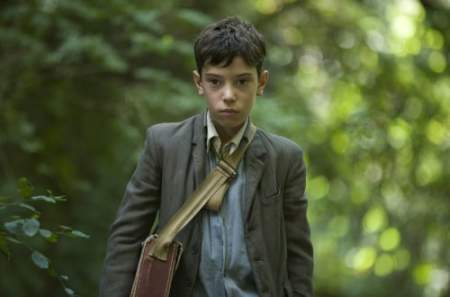
VIFF 2012 Review – Shorts Program: Break Even

Once again it was my goal at the VIFF to see at least one program of shorts. I had the good opportunity to see one during my ushering duties. You remember how the four programs of Canadian shorts were given names of the earth’s natural resources: Earth, Air, Fire and Water? This year the theme is about breaks. The program I saw was titled Break Even and featured nine shorts done by Canadian filmmakers. So here’s the rundown:

-Barefoot-In a Cree community, Alyssa is the third girl in her class expecting to be a mother. She has a supportive boyfriend and a supportive family but she has secrets. The story was meant to be a drama but I think this was a statement to do about teen pregnancy in First Nations reserves. An upsetting story but important as it will hit you with some hard truths.

-Peach Juice-An amusing animated movie using dolls and wrapping paper for the animating. Not the most professional but it succeeded in entertaining. This was another teenage story that has a charming outlook on a certain curiosity.

-OMG-A teenage daughter moves in with her grandmother after a spat over her phone use. Grandma handles her granddaughter’s annoying habit well both in her cellphone use and her relationship with her mother. Very clever ability to have a great entertaining story within the same location. Funny and charming.

-Liar-Tara believes her boyfriend Brian lied about being gay when he broke up with her. She and her two girlfriends attempt revenge on Brian but when it goes too far, what will Tara decide? Very good story but it leaves one wondering if it was meant to be a story or a message about violence on gay teens, especially since the bullies were all female?

-First Snow-Siblings and their mother reunite but not in the happiest settings. It’s in a hospital and it’s to decide who will donate their kidney to save their father’s life and it has to be immediate. Who will go forward, especially with all this squabbling? Very comedic with a surprise ending that ends the story well.

-Canoejacked-Two escaped prisoners try to escape across a river with a metal canoe. Only problem is the canoeist is inside with him, and he’s a ‘canudist’. How will they all escape with them in full view of the officer. They find a way. Quite funny, despite the bizarre situation.

-Hollow Bones-Boy bird loses girl bird in this live-action–yes, it’s live-action–short. However he does see hope along the way. Didn’t see the point of showing a break-up scene with the actors having birdheads. Wasn’t that amused.

-With Jeff-Nydia is in love with Jeff but wants to be a strong teenage girl. She receives a lot of advise from friends but loses herself whenever Jeff takes her on his motorcycle. The story appeared to be a good thoughtful story but the ending didn’t make a lot of sense.

-The Worst Day Ever-Bernard is one hard-luck kid. He has one bad incident after one bad incident happen this day. You think things couldn’t get any worse for that tyke until…It was a bit shocking to see all this happen to Bernard but it was funny and easy to find comical.

As for the whole segment, I have to say I first had the sense I was watching a program of shorts about teens after the first four shorts. It wasn’t until First Snow was showed that I got more of a sense of variety. Sure five of the nine shorts had teen subject matter but the mix of more adult shorts evened it out. Many of the shorts either charmed me or made me think. I’d say five of the nine were both entertaining and professional.

Some of the shorts were filmed by BC companies, some by Ontario companies and others by Quebec. I don’t know any of the filmmakers who filmed these shorts but I hope this leads on to bigger projects for them in the future.

The shorts program of Break Even was great to watch. Director wannabes often use short films to try to launch their careers for bigger things in the future. I’d have to say most of them show potential for both the director and even some of the actors involved.

VIFF 2012 Review: Rust And Bone (De Rouille et D’os)

Rust And Bone is a French film that’s not your typical artsy type of movie you’d associate with the term ‘French film’. Instead it’s an offbeat romance between two unlikely people. It has to be the year’s most unlikely romance story.

Ali is a Belgian man who’s had it rough. A young father of a five year-old boy names Sam, he’s dirt poor and often looks for food or steals it. He dreams of being a mixed martial arts fighter but has to earn a living as a security guard or bouncer and make whatever extra money he can from outdoor fringe fighting. He travels with Sam to Antibes, France living with his sister in hopes of a better life.

Stephanie is a killer whale trainer at the French resort town. She appears to have things better for her as her job is more stable and pays well but something is missing in her life. The fact that she goes to night clubs scantily dressed shows she’s missing something.

Ali and Stephanie first meet by accident. A brawl starts at the night club Ali is a bouncer at and Stephanie is hurt with a bloody nose. Ali offers to take her home and look after her for a short while. They trade phone numbers but they soon return to their regular lives. The next day Stephanie returns to her job at the oceanarium. The show seems business as usual until one of the orcas flies in and smashes the wooden office leaving Stephanie injured and bleeding. The wounds were so bad, both her legs were amputated.

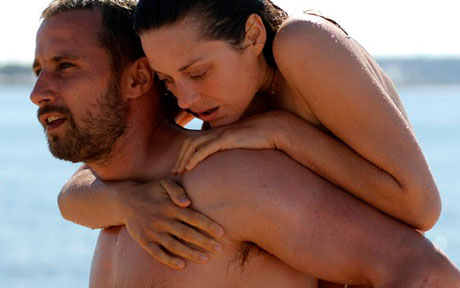
Ali had all but ignored Stephanie until he received a call from her. They spend time together including times when he takes her swimming at the beach. During the time, she learns to get her self-confidence back. She’s able to swim, to stand and walk with prosthetics and even return to her job at the oceanarium.

Even though Ali helped her through it all, he is the one struggling. He has problems financially and still does his fighting outside. He has difficulties juggling his security work with his fighting. Sometimes he spends less time around Sam than he should. He constantly spends time with Stephanie and even has sex with her but still engages with women frequently even in front of Stephanie.

There would eventually have to be some message to send him to turn his life around but nothing does. Stephanie is tired of spending all this time with Ali despite his unwillingness to have a relationship. During his work as a security guard, he discovers people stealing from the store his sister works at. One of them is his sister and she gets fired. The sister throws him out of the house and it’s just up for him and Sam all alone. Things don’t change for him until a near-tragedy happens. It leads to changes for both but an ending that ended rather flat.

It’s hard to pinpoint what the actual theme of the movie is. If I could determine a theme, it would be about love turning your life around. I think the most unique thing about this film is that it makes a very good effort in creating a romance in the most unlikely of circumstances. A romance between a woman who just lost her legs and a man who is pursuing bloodsports doesn’t come across as your typical romance fair but the film was successful in achieving it. Part of it had to do with the screenplay co-written by director Jacques Audiard with Thomas Bidegain and in directing. It was most well-written to present a very real situation and real sets of events. Also part of the success of it was the acting from Marion Cotillard. She has one of her best acting performances in years. Her ability to act out the part very well and give depth to her character also adds to the film. Matthias Schoenarts didn’t give as stellar a performance as Ali but he did a good job for himself. Also a standout effort is the score from Alexandre Desplat. He keeps on churning out scores that fit movies well and he does it here again. Another standout effort of the film is the use of Katy Parry’s song Firework. The song is first used as part of the orca show but later becomes Stephanie’s personal anthem of self-recovery. Stephanie’s a firework.

Rust And Bone has already received good acclaim at film festivals. It was nominated for the Palme d’Or at the Cannes Film festival. It also won the Golden Swan for Best Film at the Cabourg Romantic Film Festival. It has made the circuit for many Canadian film festivals including Toronto. It’s expected to be released in North American theatres on Novermber 23rd in limited release.

Rust And Bone is not your typical romantic movie but it’s a very deep story about people with deep emotions that were meant to be together. Despite its imperfections and lack of spectacle, it’s still worth seeing. You’d be surprised how good it is.

Here I VIFF Again

September 27th to October 12th will be when this year’s Vancouver International Film Festival will occur. Lots to look forward to. Hundreds of films and shorts from 75 countries over these 16 days. Last year’s was a record-setter. This year the Film Festival wants to take things further.

You may remember last year I wrote about that year being the 30th for the VIFF, explaining the history and what to the festival showcases. Also you may remember the Festival records that year achieved. What’s also remarkable about last year is the Oscar success of some of the featured films from last year. The Best Picture winning The Artist was featured last year as was the Best Foreign Language Film winner A Separation.

This year’s VIFF also has goals of achieving a lot. There is estimated to be 380 films from 75 countries this year. Canadian and Asian film as well as documentaries are once again expected to be the highlighted genres of film at the Festival. What’s new this time is having the closing gala at the Centre for Performing Arts. Two live performances at the Centre are also expected to take place this year. Also added is a new real-time electronic ticketing system much like the one used at sporting events. The additions came upon the return of a $250,000 gaming grant the Festival once had until it lost its eligibility in 2009 as the government left adult arts groups behind in giving grants out. The grant returned as a result of the provincial government reassessing gaming grants.

Now that the grant is returned, the festival can continue to grow in both attendance and the number of films exhibited as well as the venues showcasing the films. The Granville 7 and its seven cinemas is once again the theatre with the most action. Pacific Cinematheque and the VanCity Theatre are the two other main theatres showing films throughout the sixteen days of the Festival. Temporary theatres showing films include the Park Theatre which will show a pair of films on two separate days and the Vogue Theatre which is scheduled to be a venue on nine of the sixteen days including the opening gala tomorrow night which will feature the screening of Canadian director Deepa Mehta’s Midnight Children.

As for me, I’m scheduled to do six shifts of five hours each. I actually volunteered this morning. It was good. Good to see a lot of volunteers I know back. Also exciting to see what featured films will be playing. I plan on taking in as many films as I can. Like last year, I’ll be aiming for a mix of Canadian, international, shorts and documentaries. I hope to post as many reviews here about the films I have seen. Anyways here’s to another year of film festing. If you want to check out this year’s fest, just go to the official website.

30th Year Of VIFF A Record Year

After sixteen days of showing films, welcoming crowds, making deals, and allowing directors to give Q&A’s to the audience, the Vancouver Film Festival ended its 30th year on Friday, October 14th. I had my excitement with volunteering and seeing seven different shows of differing variety. Those that volunteered, like myself, were treated to a Mexican style brunch at the Waldorf Hotel which consisted of some prize giveaways and small gifts. Almost a week later, the news hit that this year’s film festival achieved new records.

The 2011 Vancouver International Film Festival was the most attended and highest-grossing VIFF. Admissions totalled over 152,000, up from 148,000 from last year. Ticket revenues also hit a record with $1,178,811, breaking the record of $1,074,025 also set last year. Very impressive.  

One thing we learn about hosting film festivals like these is that the money from ticket sales are not enough. Although we hit a new high in ticket sales, the Festival itself costs $3.5 million to put on. The remainder of the baklance is covered by government support (about 10%), private sector sponsorship, and personal donations. One thing about this year is that there was a bigger expense this year in using the Vogue Theatre for showing movies. Although the VIFF used the Granville 7, Pacific Cinematheque and the VanCity Theatre as it did last year, the Park Theatre wasn’t used this year, opting for bigger crowds with the Vogue Theatre. The Vogue served as the Visa Screening Room for all the big premeieres and Gala events, replacing Theatre 7 at the Granville 7. It did pay off as film crowds were bigger for the Vogue.

The success of this year’s VIFF keeps its reputation as one of the Top Five film festivals in North America in attendance and films screened. Here are some of the numbers behind this year’s Vancouver International Film Festival:

-152,000 – total admissions

-633 – public screenings

-600 – industry guests

-386 – total films shown

  • 240 – feature length (60+ minutes)
  • 126 – shorts
  • 20 – mid-length films (20-59 mins)

-97 – Canadian Films shown

  • 39 – feature length
  • 57 – shorts
  • 1 – mid-length

-80 – countries entering films

-49 – North American premieres

-40 – Canadian premieres

-36 – media screenings

-30 – International premieres (first screeening outside home country)

-20 – World Premieres

-17 – entries in the Best Foreign Language Film category for this year’s Oscars shown

-16 – days of showing films

-10 – theatres showing films

Very imporessive numbers indeed and a hard act for 2012 to follow. Also for those interested in the award winners, here’s which film won what:

DRAGONS & TIGERS AWARD for YOUNG CINEMA

  • The Sun-Beaten Path  (China/Tibet) – dir. Sonthar Gyal

ROGERS PEOPLE’S CHOICE AWARD

  • A Separation (Jodaeiye Nader az Simin)  (Iran) – dir. Asghar Farhadi

VIFF MOST POPULAR DOCUMENTARY FILM AWARD

  • Sing Your Song (USA) – dir. Susanne Rostock

ENVIRONMENTAL FILM AUDIENCE AWARD

  • People of a Feather (BC/Nunavut) – dir. Joel Heath

SHAW MEDIA AWARD for BEST CANADIAN FEATURE FILM

  • Nuit #1 (Québec) – dir. Anne Émond

MOST PROMISING DIRECTOR of a CANADIAN SHORT FILM

  • Andrew Cividino for We Ate the Children Last (Québec)

NFB MOST POPULAR CANADIAN DOCUMENTARY AWARD

  • Peace Out  (BC/Québec) – dir. Charles Wilkinson

VIFF MOST POPULAR CANADIAN FILM AWARD

  • Starbuck  (Québec) – dir. Ken Scott

So there you have it. Those are the winners of this year’s Vancouver international Film Festival. Great to see the Festival end on a great note. I’m happy to have volunteered for the Festival this year. I hope to volunteer for the Festival again next year and I hope to see its records broken again. Will it be a marquee film festival in the future like Cannes, Sundance, Venice or Toronto? Only time will tell. Nevertheless I commend the VIFF for showing its huge variety of films, showing the most Canadian film and for promoting a wide array of films and talents from the up-and-coming to the established. Also I commend the volunteers for doing a good job with the crowds. Last year my uncle visited the Toronto Film Fest and he said the people thee get treated like cattle. So I myself comment the VIFF volunteers for treating the crowds right.

Here’s to the continued success of the Vancouver International Film Festival and to its success in the future years. VIFF 2012: Starting September 27th. Already I can’t wait!

VIFF 2011Review: Black Bread (Pa Negre)

On Friday October 14th, the Vancouver International Film Festival came to a close. The film shown at the Closing Gala in the Visa Screening Room at the Vogue Theatre, where all the festival’s awards were given out, was the French-language film The Kid With A Bike. The very last film to start running at the film fest was the 9:45 showing of The Kid With A Bike again at the Visa Screening Room.

However the last film to finish at the festival was the Catalan-language Spanish film Black Bread (Pa Negre). It was actually at the former location of the Visa Screening Room; Theatre 7 at the Granville 7. Fortunately for me, I had a ticket for Black Bread. I have to say I’m very glad I had a chance to see it. It’s an intriguing story of innocence lost and of the scarring of hard truths.

The film starts with a murder taking place. A man and his son are killed as their coach falls off a cliff led by their horse who had been slapped by a rock. The film’s protagonist, young Andreu, discovers the wreckage and sees the wounded boy utter his last words: “Pitorliua.”

We soon learn that the victims were Dionis, a bird dealer, and his son. Dionis was a bird dealer who raised and dealt birds with Farriol, Andreu’s father. Farriol is suspected of the murders by the town major. He’s an easy target for his Marxist beliefs and supported the Second Spanish Republic whom Generalissimo Franco opposed, and because he rivaled the major for the love of Florencia who’d eventually marry Farriol. Things take a turn in the family as Farriol flees across the border into France, Florencia starts working in a fabrics factory in another town and Andreu is sent to live with paternal relatives. The house he lives in consists of his grandmother, a widowed aunt who has a son slightly older than Andreu, an unmarried aunt who’s pressured into marrying a man she doesn’t love and Nuria, an orphaned cousin of his who lost her hand while playing with a grenade. He and Nuria would develop a friendship and it’s his time with Nuria that would most change his life forever.

Now Andreu is a smart boy with a very promising future but the surroundings he lives in are unpromising. His father is on the run, his mother works in a factory, the village teacher is an alcoholic who teaches the wrong things, and the relatives he lives with work as servants to the wealthy Manuben family. Soon over time, the first dark secrets about Andreu’s family would be exposed. His unmarried aunt is having a secret affair with a civil guard. Nuria is engaging in sexual games with the teacher. Meanwhile he also meets a teenage boy naked in the woods: a sickly boy living in a monastery who believes he has angel wings. Andreu befriends him and even sets food aside for him daily.

Soon Andreu accidentally learns his father was hiding inside his relative’s attic raising birds, instead of fleeing to France. The major eventually searches the house, finds Farriol, and imprisons him. Farriol tells Andreu to convince his mother to ask the Mrs. Manubens for help. Mrs. Manubens, childless herself, is impressed with Andreu and writes a letter to the major interceding for Farriol. When Florencia tries to deliver it, the major makes a sexual advance to her.

Soon a secret about his mother would be exposed with the unraveling of the truth about Pitorliua. Since the coach crash, Andreu had been told by villagers that Pitorliua was a ghost that believed to live in a cave. However there was a person many years ago who would be given the name Pitorliua after death. He was a delicate young man whom his mother befriended in her youth. When Andreu and Nuria go to Pitorliua’s tomb, they encounter Pauletta, the half-demented widow of Dionis. Pauletta exposes that the man known as Pitorliua was Mrs. Manubens’ only brother and a homosexual who was castrated in ‘punishment’ for his orientation. The two children discover the cave where Pitorliua was castrated and discover the names of the culprits on the wall: Farriol and Dionis. As Andreu confronts his mother, Florencia reveals that they were paid by Mrs. Manubens to scare Pitorliua off but things went too far.

Farriol is sentenced to death. Florencia and Andreu visit him the day before he is executed. Andreu shows him the bird he raised. Farriol tells Andreu to never forget his ideals and to go with his heart. After the execution and burial, Pauletta reveals to Florencia with Andreu listening that it was Farriol killed Dionis and her son. Farriol was instructed by Mrs. Manubens to get revenge on Dionis for blackmailing her. In return, Mrs. Manubens bought Farriol’s silence in exchange for Andreu to get an excellent education. Angry at all the lies he had heard of his family, this was the last straw for Andreu. He immediately rejects his family and even goes as far as trying to kill all his father’s birds. After, he and Nuria bury dead birds and Nuria’s severed hand in a box. They first plan to run away together but Andreu accepts the education offered at the expenses of Mrs. Manubens. Even as Florencia visits Andreu at the school, Andreu still hasn’t forgiven his parents.

The major theme of the film has a lot to do with children’s innocence being exposed to the dark secrets of their family and learning the truth about the lies adults tell. Andreu is a carefree child at the beginning of the film but the coach crash would signal the beginning of the end. It is upon meeting Nuria, already insane from the grenade explosion and her ‘encounters’ with her teacher, that Andreu would be lead into ultimately unleashing his inner monster. Even though Andreu is innocent enough to reject Nuria’s sexual advance at first, Nuria would lead Andreu along that path as she would lead him to the cave where Farriol killed Pitorliua. As each additional lie and dirty secret about his family and village is exposed to him, his innocence withers away. It is when Pauletta reveals the truth about Farriol and the coach crash that it’s finally all over and Andreu explodes in rage. In the end, Andreu’s heart is so hardened, he still can bring himself to forgive his parents or even associate in any which way with his mother. I believe the death of the children’s innocence is best symbolized with the burial of the box with the dead birds and Nuria’s severed hand. In retrospect, it seems as though the children, even the crazy and deluded ones like Nuria and the teenage boy, are more trustworthy than the adults.

The motif of birds is key in this film as it is birds or bird-like people that are linked to the unraveling of events. It is the last words of Dionis’ son ‘Pitorliua’ that would start the unraveling of truths to Andreu about his father and village. It is the father’s raising of birds that connects Andreu with his father in both Farriol’s life and death. It is the real Pitorliua who is the exposure of truth behind the myth claimed by the village and the truth of Farriol exposed to Andreu. It is how the crash where the boy uttered Pitorliua where the hardest truth about Farriol would be exposed to Andreu some time later. It is Andreu’s killing of his father’s birds that would symbolize his severing of ties with his family and his inner monster breaking out. Even the statement Nuria gives him; “That would be your portrait: portrait of a bird killer” would symbolize the dead innocence in Andreu. It is the teenage boy that resembles the spirit of Pitorliua that Andreu would be the one connection to Andreu and his innocence. It is when Andreu hugs the boy goodbye that symbolizes the end of Andreu’s innocence.

What adds to the film’s story is the political situation in the time set. This is the 1940’s. Catalonia lost to Generalissimo Francisco Franco’s Spain in the Civil War in the 1930’s and is under its tight rule. The Catalan language and culture is repressed under criminal punishment and Marxism is also grounds for arrest too. The rich Manubens not being punished for their role in the planned killing of Dionis and his son, and even paying people to carry out duties they wanted, can also be seen as something political too. I strongly believe director Augusti Villaronga is making a statement about the politics of the past. What made me nervous in the film was hearing the teacher teach the children “History is written by winners.” That made me nervous because Catalonia was on the losing side of the Spanish Civil War. I also feel Villaronga is making an additional statement as Farriol appears to be a Marxist to the end but is later revealed to be a murderer and one willing to commit acts of atrocity for a rich family in exchange for either payment or other favors.

The overall acting of the actors was excellent. Nora Navas and Roger Casamajor are excellent as the parents. Young actors Marina Comas and Francesc Colomer are also excellent and very believable in what is their acting debuts. Supportive roles from Marina Gatell and Laia Marull were also excellent. Augusti Villaronga did an excellent job in directing and adapting the novel to screen.

Black Bread already has a lot of buzz surrounding it. It was a big hit at the San Sebastian Film Festival. It won nine Goya Awards, Spain’s national film awards. Then the day before the VIFF began, news was made that it beat out Pedro Almodovar’s The Skin I Live In as Spain’s official entry in the Best Foreign Language Film category for this year’s Academy Awards. It’s especially ironic since The Skin I Live In was the film shown at the VIFF’s Opening Gala. Black Bread is one of seventeen films at the VIFF that are its respective country’s official entry into that category. It was the first time a film shot primarily in Catalan–the predominant language the northeastern region of Catalonia– was entered into that category As Spain’s official entry.

Black Bread was a great film to end my year at the Vancouver International Film Festival. It’s haunting story of innocence lost stays with you and leaves you thinking. The world does seem less truthful and less noble. The past seems more brutal and more chaotic than the images of peace and harmony that we often associate it with. A definite eye opener.
VIFF 2011 Review: Policeman (Ha-Shoter)

Policeman is an Israeli film released this year. What’s unique about this film is not just to tell two different stories about two different characters but also to present a theme and an ending that will provide a lot of heated discussion amongst many Israelis and some thoughtful discussion elsewhere around the world.

 The film is actually two stories in one. The first half of the film is dedicated to following the life of Yaron: a member of an Israeli anti-terrorism unit. Yaron is a likeable character: dedicated serviceman, family man and supportive husband to an expecting wife. However he has to deal with an operation gone wrong whom is group is being investigated for. They’re planning to make a terminally-ill colleague their scapegoat in order to avoid suspension. He’s seen as a tough and rugged man on the job and with his colleague but a tender man outside of his work.

The second half focuses on Shira, a poetic radical. She too leads a group of radicals who want to protest the division of rich and poor in Israel. As noble as her group sounds, sexual tensions between the members including Shira cause friction. Shira and her group want to give their ‘justice’ to the rich, which means killing them. They plan to organize a hostage-taking mission over at a wedding of a rich businessman’s relative. Shira is seen as passionate towards her cause but very snake-like in terms of conducting her methods.

Then the heist. The group come to the wedding posing as guests. Right at the time, the hostage taking happens. The CEO, his father, mother and the married couple are now hostages. Yaron now has to be part of the group to stop the heist. They devise a plan in the back room with careful planning. Before they start, Shira shouts out to them a chant: “Policemen, you are not our enemies. Policemen, you are also oppressed.” Right at the end, the tense standoff brings the two groups together abruptly.

One thing about this film is that it shows a unique twist that would shock a lot of people in Israel. Their country has mostly experienced Israeli vs. Palestinian conflict. This is a case of Israeli vs. Israeli. It would surprise many who would think that all Israelis are allies when one Israeli attempts to attack another. This topic is bound to make a lot of viewers in Israel uncomfortable or even angry. Those that know Israel well would best know about the poverty Shira is speaking of. Even those of us outside of Israel could identify with some of the incidents happening in the film. Here in Vancouver, our city is full of young radicals looking to make their statement, even though they often make ‘attention whores’ of themselves. Despite it, there are a lot of people angry with the city’s divide of rich and poor. Even though Policeman takes place in Israel, I’m sure there are some people that feel the same way Shira does.

This film is actually the debut feature ever directed by Nadav Lapid. This is a very courageous effort for a beginning director to tackle such a hot button in his country. Outside of the topic itself, the film is also good in its way of presenting two different characters and their surrounding lives before the attack. Yaron lives day to day while Shira dreams up to that day. Both outlooks are intimate as they are personal. You learn of both their strengths and their flaws before the attack.

Already this film has received buzz. This film has already received praising reviews at the Locarno Film Festival and even won its Special Jury Prize. It is a multiple award winner at the Jerusalem Film Festival. It would also be shown a week after the VIFF at the New York Film Festival. As of now, it doesn’t have a distributor but I believe this film is loaded with promise.

Policeman is an excellent daring debut from a director who’s not afraid to tackle hot topics. If you’re looking for a film that makes you think or even challenges your thoughts, this is a good one to see. Even if you don’t live in Israel, you will leave the theatre thinking.

VIFF 2011 Review: Miss Representation

One of the most notable things about the VIFF is that it features a huge selection of documentaries both in the number of films aired and the variety of topics. Many documentaries are focused on topics revolving Canada. The documentary of Miss Representation is focused in the United States but one can see a lot the issues discussed in the documentary facing Canada in similar ways too.

Tired of your daughter trying to make a sex object of yourself? Tired of your daughter imitating the stupidities of reality show stars? Ever stop to think about how women are depicted on television? Ever feel a lack of female roles or smart female roles in movies? Tired of the lack of females in CEO positions or politics? While some people, including other women, overlook it, there are women that don’t and are unhappy about the state of things. This dilemma is well-stated in the documentary Miss Representation.

Miss Representation has an impressive lineup of women interviewed for this documentary from actresses like Geena Davis, Jane Fonda and Rosario Dawson to feminists like Dr. Jean Kibourne and Gloria Steinem to newscasters like Katie Couric and Rachel Maddow to politicians like Condoleeza Rice and Nancy Pelosi. It does an impressive investigation of how women are portrayed in today’s media, in both entertainment and news. It highlights the negative depictions of them in ‘reality shows’ and misogynistic treatment in hip-hop videos. It shows how computer enhancements shorten a model’s waistline to an unrealistic width. It shows sexist depictions in television ads. It shows networks’ news shows hiring women for sexiness over professionalism. It shows the negative role models girls are given via reality shows and MTV. It also highlights how these images have affected their self-esteem, especially in terms of eating disorders, depression and even undergoing cosmetic surgery.

It doesn’t just stop at entertainment but also focuses on politics too. It points out the United States ranks 90th in the world in terms of the percentage of female politicians in office and noticed a decline in 2010 that was enough cause for alarm. It shows how American female politicians get more copy over what they wear than what they have to say in office. It shows how right wing conservative pundits and their ridiculing of female politicians also are part of the blame. Even conservative groups who hurl slurs at Hillary Clinton like “Iron my clothes” have their part in this. It also focuses on the business world, on how it’s like being a woman with a top position in a room full of men. It also talks of the lack of female CEOs. Funny how when we’ve made progress in the last 40 years, we learn there’s more to be done, and at a faster pace.

Mind you it doesn’t completely dwell on the negative. It also features messages of hope. It also shows of the efforts of young teenage girls in their own political pursuits. It shows a discussion with teenage students–both boys and girls– and how they feel about this. Just when you think teenage America is eating it up and enjoying it all, there are some teens that are concerned. It even talks of Miss Representation, the campaign. The documentary Miss Representation is as much a campaign as it is a documentary film. Its goals are to empower women and girls to challenge limiting labels in order to realize their potential. They are encouraging actions that lead to a cross-generational movement to eradicate gender stereotypes and create lasting cultural and sociological change. They are using various media outlets like girls using social media to speak their mind, a school curriculum to educate and encourage activism, community screenings where discussion is encouraged, and consumer empowerment to encourage the success of female-friendly entertainment.

The unique thing is that the film is done from the point of view from the director and the founder and CEO of the Miss Representation campaign. The filmmaker is Jennifer Siebel Newsom. She is married to former San Francisco mayor Gavin Newsom. Siebel has a Masters Degree from Stanford, completed acting studies at the American Conservatory Theatre and had done environmental work overseas through Conservation International.  Her acting credits include films like Something’s Gotta Give, Rent and In The Valley Of Elah. Her television credits include Strong Medicine, Numb3rs and Mad Men. This documentary is her directorial debut. Miss Representation is as much a personal focus of hers as it is a documentary as she filmed it just after she had given birth to her daughter and wonders what type of world she would grow up in. Anyone else who has a daughter might want to question the same thing too.

I found this documentary quite intriguing. I especially took note of what they said about entertainment. Entertainment and how it’s delivered to various peoples is a big interest of mine. Interesting is during the film, they pointed out to entertainment in the early 90’s that took women’s roles in new directions, like Thelma & Louise and A League Of Their Own. It brought back memories back in the 90’s when women were defying convention in entertainment. We had the sitcom Roseanne where the star Roseanne Barr looked like an actual mother. We had A surge of female singer/songwriters whose intimate work helped spawn off the Lilith Fair festival. Nowadays you could say it’s a memory with profit-oriented entertainment more competitive than ever. We shouldn’t forget about entertainment sinking to new lows for the sake of new highs in profits. In fact I myself could even right an essay on how the improvement of women’s image and role in music in the 90’s suddenly grounded to a halt thanks to Britney and “Oh Baby Baby…” I could also write how Paris Hilton reversed the women’s movement. Or even my thoughts on Snooki. But I’ll save it for now. I’m sure you have your own annoyances too. I’m just glad Lilith Fair hasn’t been replaced by Tartapalozza.

It also got me thinking about how things are doing in Canada. I often feel that Canada is not as sexist as the US but I’m frequently reminded that there’s still work to be done. Even though wage parity between male and female workers is closer than its ever been, female workers are still paid less than male workers. Canada ranks 50th on the world scale of females holding political office. 70 on the 308 seats in the House Of Commons are women; 27 from the victorious Conservative party. Canadian teenage girls have done their share of idolizing Britney and other reality show stars. In fact it encouraged one Canadian magazine journalist, Anne Kingston to write an article that made the cover story for Maclean’s, Canada’s national magazine. For those who want to read it, here it is: http://www2.macleans.ca/2010/08/10/outraged-moms-trashy-daughters/ Glad to see that while Americans mostly ignored this issue, one Canadian writer decided to speak up.

Miss Representation is a film that’s angry about the portrayal of women without having to ‘shout’. It shows stats and views to show its disappointment but also offers messages of hope. Jennifer Siebel Newsom put in a lot of effort and research to get her message across. I’m sure her frustration would not only be shared by mothers like her but fathers of daughters as well. For those interested in the Miss Representation campaign, go to: http://missrepresentation.org/

VIFF 2011 Review: i am a good person/i am a bad person

The Vancouver International Film Festival is very good at showcasing Canadian films. Some from directors who have establised themselves and some who are trying to make a name for themselves. The film i am a good person/i am a bad person is a film directed by Ingrid Veninger. Ingrid has already established herself first as an actress, then as a director in films like Gambling, Gods and LSD, Nurse. Fighter.Boy and MODRA. Her latest film i am a good person/i am a bad person is the latest film she directs and plays lead.

In this film, Ruby White is a married director who’s taking her daughter Sara to two film festivals with her as she showcases her latest release, leaving her husband and son at home.

Both are having problems. Sara’s dilemma is obvious as she is testing herself for a pregnancy. Ruby’s dilemma is less obvious emotionally but more physically as the strains of her marriage appear to be affecting her. Ruby is the more bohemian type as she enjoys partying and meeting new people at clubs and is unafraid of trying eccentric things for inspiration and solving problems. Sara is more reserved and often keeps to herself about her problems. Nevertheless their problems cause obvious friction in their relationship and their own lives during their first stop in Brighton. Ruby’s film is showed to a small audience unimpressed enough for one to ask her during a Q&A why she made the film. That leaves Ruby at a loss for words. Meanwhile Sara doesn’t know if she’s pregnant or not and it’s bothering her to the point she wants to leave her mother to visit cousins in Paris. Ruby agrees.

During their three days away, Ruby tries to assess herself as a person, as a wife and as a filmmaker in Berlin before her film opens. Sara meets up with the cousin in Paris and her beau and is able to take her mind off her troubles. Each try their own method in sorting out their problems. Sara is able to enjoy Paris and find it as a source of enjoyment and inspiration in her drawings and her photography. Ruby relies on a poster board sign she wears with “i am a good person” on the back and “i am a bad person” on the front. It is the input she receives from others that draws her insight. In the end, both make crucial decisions for themselves: Ruby for her filmmaking and marriage and Sara for her pregnancy. They meet up again back in Brighton and are able to return as mother and daughter with the satisfaction of their decisions made.

One unique thing about the film is how the alone time of three days helps to develop both Ruby and Sara. While in Berlin, Ruby contemplates herself and her relationship. While in Paris, Sara’s imagination and artistic dreams come alive. While both spend time with themselves and with others, they come to terms with making the huge decisions with their lives in the end.

Another unique thing about the film is that it is very woman-centered, unlike most movies out there right now. Ingrid Veninger directs, writes and plays the protagonist in the film and her daughter Hallee Switzer plays Sara, the main supporting role. The whole story revolves around these two women. It’s here in film festivals where female directors get their works best showcased. In an industry that is very much bottom line and almost completely run by men, it is through female filmmakers through independent companies being exhibited at film festivals where they have their best opportunities to showcase their works. This could lead to more female-based film works in the future. It’s film festivals like these that serve as a reminder that a lot of bottom line-oriented entertainment is missing something valuable.

 Of all the unique things about the film, the most unique thing about it is Ingrid’s shoot-as-you-go approach. For those who don’t know, this film was shot within a period of 19 days. Ingrid shot her scenes in Brighton and Berlin while she herself was out promoting her latest production at film festivals. During the time, she would use some of the film festival audience as part of the audience for this film, for what would be her follow-up. She would also use her interactions with other people as additional footage for the film. This capturing is very unique especially since filmmaking is frequently seen as something carefully directed and edited. I admire Ingrid for her courage to try something new and unique. Basically the only thing about the film that wasn’t that unique was that this is Ingrid plays the lead, as she does in most of her works, and includes her children–Hallie and Jacob–in the works. Here Hallie and Jacob play her character’s children.

This film I believe is meant more to be a personal film than it is to be a crowd-grabber. It is a very though provoking work that will cause some viewers to think as it does reflect on a lot of themes like a failing marriage, one’s career, sudden changes in life, and how to deal with what’s coming. I believe Ingrid did a very good job with her work. Some are calling it her best and most chance-taking work to date.

If you’re looking for a film out of your usual movie-going and are more interested in a thought-provoking film that your typical heavily marketed escapist fluff, i am a good person/i am a bad person is a good choice. At first you think the film makes no real sense but it comes together in the end.

VIFF 2011 Review: BumRush

The gangsta film BumRush played at the Vancouver Film Festival. I know what you’re going to say: “I’ve seen gangsta movies before.” BumRush is different. Firstly, it’s Canadian and set in Montreal. Secondly, it’s based off a sting and of events that really happened. Whether it can compare to other hood movies or gangsta movies of the past is one big question mark.

The film is set in Montreal in a strip club. In the past, the neighborhood of the club has had its dealings with rivalry from biker gangs and the Montreal mafia. Now comes a new messy chapter for the club as the neighborhood sees a crossfire between two rivaling street gangs. Soon they want to seize power over the club. This leads to a huge mess on all sides and the condition of the club in jeopardy. Soon the IB11 gang declares the club their property.

To end it all, the leader of the sting, Le Kid, finds an opportunity in five tough men who have had a brotherhood for many years. They also see it in Catherine, a girl who was imprisoned for her activity in relation for one of the gangs. She wants out of gang life but is having trouble with her criminal record being checked. Le Kid sees her and the brotherhood as an opportunity to get the gangs out of the club. It starts with a sting where Catherine gives the leader and his girlfriend spiked shooters. Later one of the gang members takes the drugged up girlfriend out to make out, only to have a cop videotape it with a phone and send it to the gang members. The video leads to more heated friction between the gangs. Then the brotherhood kidnap the two leading gang members to a mortuary to force them to tell the whereabouts of two men they’re after. This leads to an ending that has a small amount of action and some amount of cheeseball moments.

If there’s one strength about the movie, it’s that it shows a lot of forgotten truths that most gangsta movies or hood movies leave out or neglect. One often overlooked truth is girls involved with gangs like Catherine. Catherine’s role shows an angle of girls who want out of the gang system and start a better life. It also shows the ill misogynistic treatment girls get from gang members like the vulgar treatment of the strippers and the girl that was ‘gangbanged.’ That’s it with gangs. They think that because they have all the gun power they can treat women as mysogynistically as they want. That part happens to be the movie’s biggest strength.

Another thing is that it doesn’t show a completely happy ending. It shows the ugly reality that gangs have taken their street activities online and expanded their territory greatly. It’s a new truth that gangs have gone from just their own hood to anywhere online. There’s even talk on the news in Vancouver about gangs going online. That’s one thing that we often forget is that even after a sting is made, there’s still a lot of things left behind or things that don’t go away.

Another thing about the movie is that it features the final acting performance of Montreal musician Bad News Brown. He was famous in Quebec for being a harmonica-playing hip hop blues musician and was a opening act for many big name hip hop stars in Montreal, even accompanying some on stage. Brown was murdered in Montreal on February 11th or this year at the age of 33. This movie could possibly be English Canada’s first introduction to him and Quebec’s last time they’d see him on the screen.

Director Michel Jette did an excellent job in researching the story and creating a good script that was as smart as it was thrilling. He doesn’t rely completely on too much action or too much shootouts but rather focuses on the scenes leading up to the big moment and the people surrounding it. Nevertheless for all of the script’s intelligence, there were a few flat points and noticeable glitches. There were also some corny moments with the harmonica playing of Loosecannon. I often wondered if having a harmonica playing gangsta was such a good idea. The acting was imperfect and often overdone from some. Also the timing of this movie being out at a time when the popularity of gangsta movies have faded over time makes me question whether this would make for a good commercial release.

BumRush’s best quality is its truthfulness about gang activity and those around it. Its weakness is its lack of professionalism from many of the actors and a script that gets confusing over time. This one left me questioning its potential in the end, especially for English Canada.

VIFF 2011 Review: Shorts Segment – Air

This is another shorts segment that I saw at the VIFF. It was not the original movie I planned to attend but when someone at the info desk was giving away free tickets, I told them I already had a ticket for a show that was happening. She offered a trade, which I accepted. I’m glad I did. Like Water, the shorts of Air also had styles and varieties of their own:

 Spirit Of The Bluebird – This is mostly animation that’s very colorful and meant to tell a story. A story about a Native woman killed one night by two strangers. The bluebird is to represent her. At the end, we see her relatives standing by the building near where she died painted permanently with a mural in her memory. This was as much of a reminder that no one and nothing is forgotten as it was a picturesque short of animation.

Parkdale – This is a very thought-provoking short to do about two sisters living in a rough area with a father who’s constantly in trouble with the law. As they try and draw up money for a bus trip to Kingston, this paints an unhappy but truthful statement about street youth and their attempts to try and stay afloat.

Hope – As a war general lies on his deathbed, he confronts images of violence. It’s hard to make sense of it all. I’m sure that through some of the bizarre images the director is trying to make some statement. It didn’t come across too clear or maybe he tried too hard to be graphic.

CMYK – This is another animated movie focusing on the primary picture colors: cyan, magenta, yellow and key. The filmmaker tries to be creative but the short ends up coming off as mind dizzying and drawn out.

Oliver Bump’s Birthday – Oliver’ three older siblings died on their 13th birthday, and he’s doomed for the same fate. While all three made achievements during their lives, Oliver dreamed of the stars and space travel. On his birthday, he leaves his family party, which is quite like a pre-funeral, for his homemade space ship. You’ll enjoy seeing him chase his dream and enjoy a surprisingly enlightening and happy ending.

Theatrics – Two flirty thirtysomethings go for a night out in a movie theatre with surprises left, right and center. Starts off with drinking a drink with horse tranquilizers and then leads to one misfortune after another. Humorous and amusing. Just hope I never have to go through what she went through.

The Provider – Just when we see mention of the droppings of the atom bombs on Hiroshima and Nagasaki, we think we would get something serious. However we’d be surprised to get a darkly comical story about coming home. Very bizarre indeed.

Cold Blood – I don’t know if it was because I saw a lot of originality of the previous shorts or because I was expecting something else instead, but this short came up less than what I expected. Perhaps it was just meant to represent an aspect of life. Perhaps it was as much about the mother of the two children as it was of the son giving blood for his sister.

The Balcony Affair – This is one comedic short that is completely unpredictable. A lonely Russian man who’s always out on a balcony falls in love with a woman in the apartment across. Will they meet? Will they fall in love? The ending will surprise you, more than you expected.

So there you have it. The shorts that made up Air. All were Canadian. All were unique. Some I liked, some I didn’t. Some were thought provoking. Some were meant just to entertain. Some may go on to bigger and better things. Some may continue to do just shorts. All were worth seeing. It’s good that a film festival like the VIFF showcases shorts from up-and-coming directors as well as from established film companies. It’s what makes the VIFF different from Toronto.