UEFA EURO 2020: Intro and Group A and Group B Focus

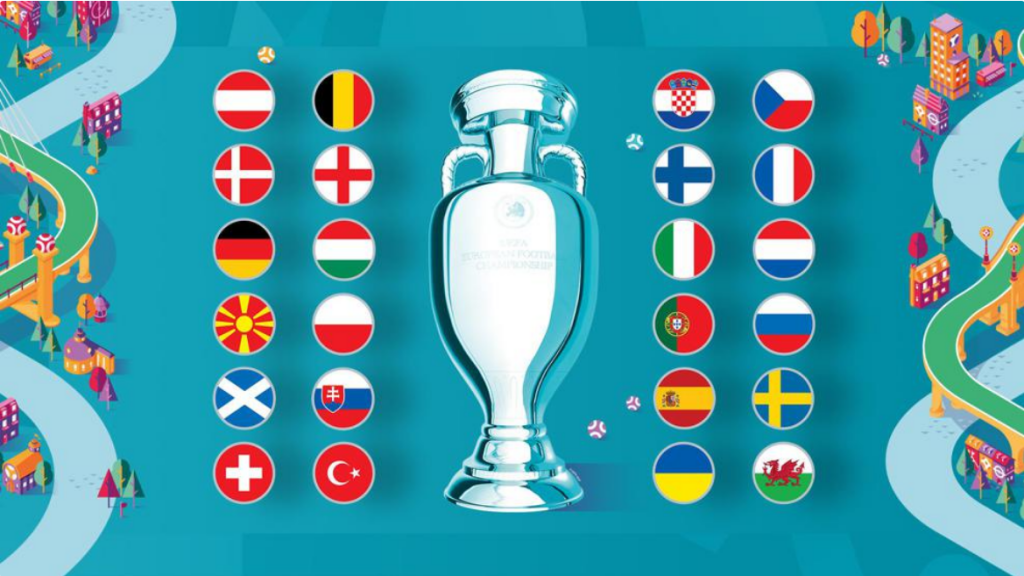
Euro 2020 which starts on Friday the 11th will be a multi-nation event contested in eleven stadiums in eleven countries.

The 2020 UEFA European Football Championships, or Euro 2020, were one of many big sporting events of 2020 that had to be cancelled out because of the pandemic. The Euro was relocated to 2021 in hopes that conditions would improve and that the tournament would be contested. The UEFA Euro will take place in 2021, with the first game to start on Friday, June 11th, but will still keep its original name Euro 2020.

For the 2020 tournament, Michel Platini intended back in 2012 not to have a single host-nation for the tournament’s 60th anniversary. Instead he decided to have multiple host stadiums in multiple nations as a ‘romantic’ one-off event to celebrate the tournament’s anniversary. The event was originally planned for 13 stadiums in 13 nations. It eventually was reduced to 11 stadiums in 11 nations.

The 2020 Euro is the first major multi-nation sporting event to take place since the pandemic started. UEFA wants crowds for the tournament, but is well aware of the precautions they will need to take during this pandemic. This is what led to Aviva Stadium in Dublin to withdraw from the tournament as they couldn’t guarantee spectators could attend. Spain also relocated their site from Bilbao to Seville as there was a bigger guarantee there spectators could attend matches. Also worth noting is that this is the first Euro in which VAR (Video-Assisted Referee) technology will be included.

All stadiums except Puskas Arena will have limited crowd sizes to prevent the spread of the pandemic. However Puskas Arena organizers say it will maintain stadium entrance requirements. One note about the stadiums is that the host country of the stadium would not guarantee their national team’s qualification. Nine of the eleven nations hosting games were successful in qualifying their team for the tournament. Here’s a list of the stadiums for the tournament. Asterisk (*) denoted national team did not qualify:

Final, Semi-Finals, Round of 16 Matches and Group Matches
Wembley Stadium – London, England
Quarterfinal and Group Matches
Baku Olympic Stadium – Baku, Azerbaijan*
Stadio Olimpico – Rome, Italy
Allianz Arena – Munich, Germany
Krestovsky Stadium – St. Petersburg, Russia
Round of 16 Match and Group Matches
Parken Stadium – Copenhagen, Denmark
Puskas Arena – Budapest, Hungary
Johan Cruyff Arena – Amsterdam, Netherlands
Arena Nationala – Bucharest, Romania*
Hampden Park – Glasgow, Scotland
La Cartuja Stadium – Seville, Spain
Group Matches
Friends Arena – Stockholm, Sweden
Millennium Stadium – Cardiff, Wales

And now to get with my common tradition every World Cup or Euro, my group-by-group review of the teams competing at the Euro. For my blogging, I decided to review two groups in each post. Note that this might be harder than in most years: both blogging two groups and making predictions altogether. It’s quite possible the pandemic may have changed a lot of team statures. It’s quite possible teams that didn’t have such a high expectation the first time around could be better this time or teams with a high standing before the pandemic can end up being worse. Anyways here’s my review and prediction with the most recent FIFA ranking in brackets:

GROUP A

Overall Group A is a mixed bag. They have a traditional powerhouse in Italy and three teams that could pull a surprise. It can go any which way.

Turkey (29) – Turkey is a nation with a proud football legacy. They have a third-place finish at both a World Cup and a Euro as their best-ever results. Their current roster is full of good players. Four play for England’s Premier League, four for French teams, four for Italian and one each in Spanish and German leagues. However Turkey’s success has been known to have a yo-yo effect. They do very well in the years leading up to the Euro but struggle during the year before the World Cup. That may explain why they’ve only qualified for three World Cups.

These past two years, Turkey has played very well only losing to Hungary. They’ve drawn against top-ranked teams like Germany and Croatia and even won against the Netherlands in World Cup qualifying. Chances look good that the Crescent-Stars could defy all expectations this Euro and come out better than most expected.

Italy (7) – The Azzurri have normally been one of the most admired and most feared football teams in the world. Their reputation took a beating during the 2018 World Cup qualifying when they failed to qualify for the tournament. Russia 2018 was only the third World Cup ever where Italy was not present! The coach was subsequently fired and the President of the Italian Football Federation resigned in response.

Here in Euro 2020, the Azzurri come as a team with a lot to prove. All was not lost to Italy in 2017. The same year they failed to qualify for the World Cup, Italy’s under-20 men’s team finished third at the Under-20 World Cup. Their last loss came to Portugal in September 2018. Italy had an excellent 2019 in Euro qualifying winning all of their games. Their biggest win was 9-1 over Armenia. They’ve also proven themselves with wins over teams like the Netherland, Poland and the Czech Republic in recent years. Italy knows it has a lot to prove and Euro 2020 is the perfect domain for the new Italian team to prove itself.

Wales (17) – Many people the success of team Wales due to Gareth Bale. However the success is a team effort. In fact Bale isn’t the most capped member of the current Welsh team. Defender Chris Gunter is. Also goalkeeper Wayne Hennessey has more caps than Bale. Eighteen players play for the Premier League and one plays for Juventus. Back at the last Euro, The Dragons surprised everybody when they became semifinalists. And that was their first-ever Euro! However their prowess at the Euro didn’t carry over for World Cup qualification.

It’s interesting Cardiff is one of the Euro 2020 venues but team Wales won’t play any of their Group games there! Recently Wales has shown a mixed bag of results in terms of their play. They’ve achieved wins over Mexico and the Czech Republic. However they’ve also had losses to England, Belgium and France. This group looks to be a good group for Wales to play in and their chances to advance are good. Euro 2020 will give them the chance to prove themselves again.

Switzerland (13) – Switzerland has always been a team that is full of talent but doesn’t seem to reach high. These last twenty years, they qualified for the last four World Cups, but the furthest they ever got was the Round of 16. 2016 was the first Euro Switzerland made it past the Group Stage, but it ended at the Round of 16 match against Poland there.

Switzerland’s play since World Cup 2018 has been mostly up and down. They’ve had wins against Iceland and Belgium, but they’ve had losses against England, Portugal, Spain and 2022 World Cup host nation Qatar. They have had a great 2021 winning all five of their pre-Euro matches. Euro 2020 can be an exciting time for team Switzerland to prove what they have.

My Prediction: Judging how things look, I predict Italy to top the group with Wales coming in second. I anticipate Turkey to be third and to be a wildcard qualifier.

GROUP B

It’s easy to assume certain teams of Group B will do better than others, but don’t be too fooled. Surprises could come and the big favorites may not come out on top.

Denmark (10) – Denmark is known for mixed success. One quadrennial, they’re there. Another quadrennial, they’re in a slump. They failed to qualify for Euro 2016 but they were successful in qualifying for the 2018 World Cup where they made the Round of 16. The current team consists of six members in the Premier League, seven players in Italy’s league and four in Germany’s Bundesliga.

Since 2020, Denmark’s only lost games came to Belgium. They’ve won against England and Sweden and even drew against Germany. Their biggest win was 8-0 over Moldova. Chances look good for The Red And White to be able to prove themselves. They may not have the same form as they did when they won in 1992 but Denmark could have their best result since.

Finland (54) – Many regard Finland as one of the least successful football teams in all of Europe. Finland is the biggest European nation never to qualify for a World Cup. This will be the very first Euro Finland has ever qualified for. The players play for various leagues throughout Europe and in the MLS.

The current Finnish team will surprise you. Since the start of 2020, they’ve had wins against Greece, Sweden and France. 2021 however has been a difficult year for them. They haven’t had a single win and have lost to Switzerland, Finland and Estonia. Finland comes to Euro 2020 as possibly the biggest underdog. However anything can happen during the total 270 minutes of Group Stage play.

Belgium (1) – Possibly the biggest change of football in the last ten years has to be the mega-success of team Belgium. The 2010’s saw a turnabout where The Red Devils went from delivering substandard play to suddenly performing as one of the best team units in the world. With players like Romelu Lukaku, Eden Hazard, Kevin de Bruyne and Vincent Kompany, Belgium wen from underachievers to a third-place finish at the 2018.

As for Euro, Belgium’s best result is runners-up in 1980. Belgium definitely want to do better than the quarterfinal finish they had at the last Euro. Belgium have continued their winning ways since the World Cup. They’ve had wins over teams like Switzerland, Russia and England. England is also the only team they lost to, during a Nation’s League match in October 2020. Euro 2020 is a good chance for Belgium to show Europe what they’re made of. Possibly even clinch their first-ever win.

Russia (38) – Russia’s abilities and prowess as a team was always very questionable leading up to the 2018 World Cup which they were host nation. During the World Cup, Russia sent a message to the world just how good their team really is by finishing in the quarterfinals. All but four of the team’s current players play in the Russian Premier League. The other four play in leagues in France, Spain, Italy and Turkey.

Since 2020, Russia has had a mixed bag of results. They’ve won against Serbia and Hungary. However they’ve also endured losses to Sweden, Serbia and Slovakia as well as draws to Turkey and Poland. In football anything can happen. And Russia could just end up going further in Euro 2020 than most people expected.

My Prediction: I’m tempted to say Belgium will top this group with Denmark being second. I expect Russia to be third, but I don’t know if their stats will hold up for their qualification.

And there you have it. That’s my first review of the groups for Euro 2020. More reviews of the groups coming your way. Remember that the tournament is just three days from starting!
Eurovision Song Contest Held During The Pandemic

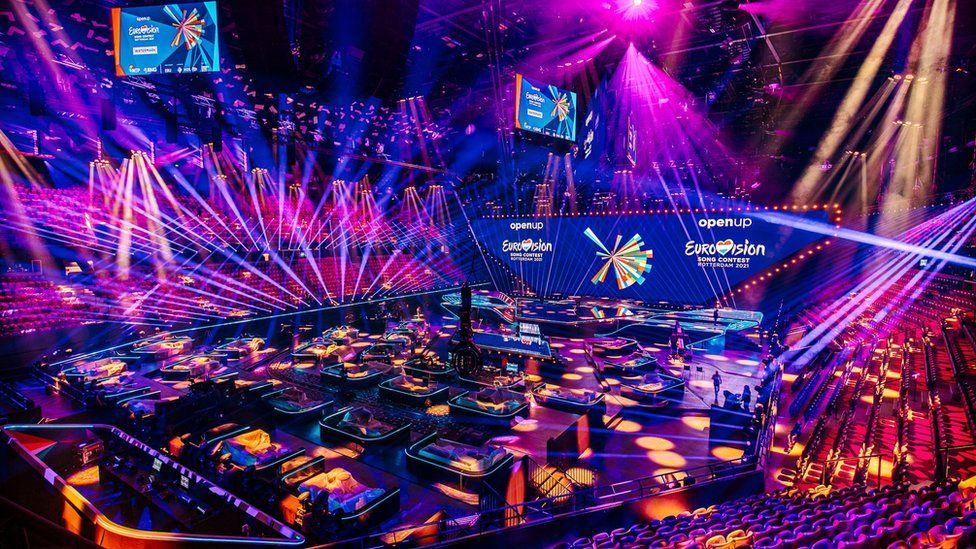
In the middle of May 2021, the Eurovision Song Contest took place while the COVID pandemic was still happening. In addition, it allowed seating capacity for thousands of spectators. One would consider this to be a very dangerous move as the world is trying to recover from a world wide pandemic. Few know that this is an event to test whether it’s possible to hold a concert during a pandemic.

EUROVISION 2020 CANCELLED

2020 started like any other year. If there was COVID happening, it was half a world away and showed no real signs of crossing any borders. The Rotterdam Ahoy arena looked like it had plans to be made ready to stage the Eurovision 2020 while national TV networks were getting their performers and songs ready, whether by internal selection or by hosting national finals. Then the pandemic crossed borders. The news got more frightening every day as cases were starting to crop up from country to country. Sports events like the PGA golf series, MLB and NFL football had to cancel their seasons, the Olympics had to postpone to the following year. Then in mid-March Eurovision 2020 had to cancel because of the pandemic. That was just after all 41 competing nations had already submitted their entries and songs.

The COVID-19 pandemic led to the cancellation of the 2020 Eurovision Song Contest in Rotterdam.

With no Song Contest happening and it being hugely complicated, if not impossible, for people to meet up, the European Broadcasting Union (EBU) decided to have all the entered songs recognized for the participation. There would still be a set of Eurovision shows during the days the Song Contest was originally intended to take place. The Tuesday and the Thursday which were originally supposed to have the semi-finals contested had the Eurovision Song Celebration which paid tribute to the songs and performers of that year and during what was to be their respective semi-final performance. Even before the Song Celebration, the Eurovision Youtube channel had the artists of 2020 perform ‘home concerts’ to keep people’s spirits up.

On the Saturday that was to have the Grand Final held, May 16, 2020, there was Eurovision: Europe Shine A Light. It was a two-hour show which paid tribute to the 41 songs and performers who were to be participating that year. A piece of the video of their song was played followed by a message of well-wishes during this pandemic from the respective entered act remotely from their home country. The show was held with a central location of Studio 21 in Hilversum instead of an arena. Past Eurovision entries gave their wishes to all during this time. There were additional performances from past Eurovision entries singing past Eurovision songs with encouraging messages like ‘Ein Bisschen Frieden,’ ‘Molitva,’ and ‘What’s Another Year.‘ Italian entry Diodato performed ‘Volare‘ live from Milan as well as showcased his song ‘Fai Rumore‘ from an empty arena in Verona. Singers of the two most recent winning songs, Israel’s Netta and the Netherlands’ Duncan Laurence, performed original songs about the frustration of loneliness one receives during the time we all have to isolate ourselves to prevent contagion. Israel’s Gali Atari performed her 1979 winning song ‘Hallelujah‘ with Dutch Junior Eurovision contestants and Junior Songfestival entries from past years. It was done as a Zoom-style ensemble. The show ended with all the 41 contestants singing a piece of the 1997 winning song ‘Love Shine A Light‘ with the song ending with all of them singing together as a Zoom-style choir with Katrina Leskanich, formerly of Katrina and the Waves, to sing the last part.

There were also two noteworthy announcements that happened during the show. The first announcement came during the part when they were with the 2019 Junior Eurovision winner Viki Gabor from Poland. From her home in Poland, she announced that the Junior Eurovision Song Contest will be taking place in Warsaw on November 29, 2020. The second announcement came from the hosts of Europe Shine A Light. It was announced that the Eurovision Song Contest will be taking place in May 2021 in Rotterdam.

CONSIDERING OPTIONS FOR EUROVISION 2021

The announcements of a Junior Eurovision in six months time and a Eurovision in a year’s time seemed like far-fetched things at the time. Nobody knew what the pandemic would be like over time. Rates were increasing at frightening rates, people were still in lockdowns and a vaccine of any kind had not been discovered. Nevertheless it was something still worth pursuing. Twelve months since the ill-fated 2020 Contest is enough time for the pandemic to either subside or for preventative measures like vaccinations to be in effect. Countries were already announcing their intention to compete in 2021. Many even announced their intended 2020 entry would be their performer for 2021. However staging the Contest would be difficult. Possible, but difficult. The EBU had four scenarios to deal with. Each of the scenarios would involve the holding of shows, presence or non-presence of performers, number of spectators, side events and the media press:

  • Scenario A (normal): This would almost be as if the pandemic never happened. All shows from Ahoy Arena, all the participants in Rotterdam to perform, arena filled to 100% capacity, side events happening throughout Rotterdam the Press Centre would have all 1,500 anticipated press people on site.
  • Scenario B (1.5 metre social distancing): All shows would be from Ahoy, but only performers who are COVID-negative could perform on stage. Since there would still be no guarantee that the performers would all be COVID-negative on the day of the show, they would all do taped back-up performances that would act as their Contest submission in case. Those whose country was still under lockdown because of travel restrictions could have a taped performance recorded by their network. Arena audience could be anywhere from 0% to 80%, side-events would have to be adapted virtually, and the 1500 press people would be limited to 500 on site and 1000 virtually.
  • Scenario C (Travel-restrictive): All shows would still be from Ahoy and the arena would still have a capacity of spectators anywhere from 0 to 80%, but participants would all do their performances in their home country. There would still be adapted side performances, but greatly reduced and all 1,500 press people would conduct interview questions virtually.
  • Scenario D (lockdown): Even with a lockdown mode, there would still be a show from Ahoy arena as there was a show from a studio during 2020’s lockdown in the Netherlands as well as most of Europe. The arena however would only be empty of spectators, consisting only of show and network personnel. There would be no side-events, performers would do their performance in their home country and again all 1,500 press people would conduct interview questions virtually.

JUNIOR EUROVISION 2020: THE FIRST TEST EVENT

Six months in between the intended Eurovision Song Contest 2020 and the Junior Eurovision Song Contest 2020 was enough time to get a good sense of how to conduct business and events during the pandemic. The 2020 Eurovision Contest couldn’t be held because everything happened all of a sudden and it was too sudden to plan an alternate for holding a Contest. However the EBU was well-aware statistics and restrictions would change by the time Junior Eurovision, the song contest for performers aged 9 to 14, would come around on November 29, 2020. Some would be for the better, some worse. It was decided that the Junior Eurovision would be held in a situation close to that of Scenario D. I will get to the specifics in the next three paragraphs.

The 2020 Junior Eurovision Song Contest held in November that year was a trial of Eurovision Scenario D consisting strictly of studio performances.

Over time, seven nations that competed at the 2019 JESC such as Australia, Italy, North Macedonia, Ireland and Portugal would not participate because of the COVID situations in their country. Armenia intended to compete, but the Nagorno-Karabakh conflict that happened a month before Junior Eurovision was about to start led to their withdrawal. In the end, twelve countries, the lowest since 2013, chose to compete. Germany was one country that would make their Junior Eurovision debut. The Contest organizers were sensitive to the pandemic and announced that the Contest would be restricted to studio performances. They gave two options where the performers could do their performances in Warsaw in the studio of the host network TVP (Telewisja Polska) or in the studio of their respective nation’s network. I believe it was a case of three performances could be done and the best of the three was chosen as the performance for the competition. Only performers from four nations — Poland, Malta, Ukraine and Serbia — were willing to do their performances in Warsaw. Performers form the other eight countries stuck to doing their performances in the studio of their respective nation’s network. Also performances and parts from the Common Song — a song performed by each nation’s singing entries as an ensemble onstage — had to be recorded from whichever studio they performed at beforehand.

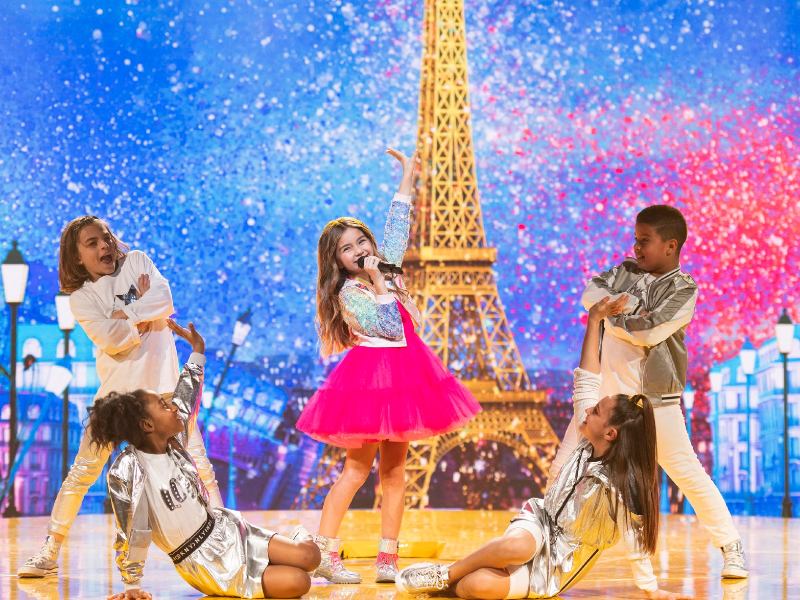
Junior Eurovision 2020 was finally held on November 29 inside the TVP headquarters in Warsaw. There was an audience but it was restricted to network organizers and their families. The show began with a performance from last year’s winner Viki Gabor performing her winning song from that year: ‘Superheroes.’ Back-up dancers were present during the performance. For the remainder of the show, the chosen performances from the studios were the competitive performances the juries judged on and the home audiences would vote for online. Instead of the Green Room where the competing performers would normally sit, drink and mingle in, the performers and their assistants were in a special room in their respective network studio. It was also live broadcast from the room where interviews were conducted and their reactions to the scoring would take place.

For the Interval Acts after all the competitive performances were shown and viewers voted, the Common Song was shown as if all the performers gathered together as one. It was actually created through hologram technology. Another hologram performance was the performance of the 2019 Eurovision-winning song ‘Arcade’ by winner Duncan Laurence and Poland’s two Junior Eurovision winners Viki Gabor and Roksana Wegiel. Viki and Roksana performed together, but Laurence’s part was done in an NPO Zapp studio in the Netherlands. The winning song — “J’Imagine” by singer Valentina from France — was a song whose submitted performance was taped one month earlier in a France 2 studio in Paris. There was not the usual Winner’s Reprise where the act of the winning song traditionally goes back on stage, accepts the award and gives and encore performance of their winning song. Instead Valentina and her team celebrated in the France 2 studio and a replay of the submitted competitive performance was done instead of the Winner’s Reprise.

EUROVISION 2021 PLANNING

In all honesty, that year’s Junior Eurovision did feel like a constricted event with all the performers limited to taped performances in a studio, hologram performances of most interval acts, and studio rooms instead of a green room. It didn’t have the same look and feel as if the performers were performing in from of a live audience full of excitement or the same celebratory feel of the performers all getting together in the Green Room having their post-performance fun. What it did do is that it showed that a Eurovision contest was possible. It would be very limited but very possible. Also on an optimistic note, that year’s Junior Eurovision’s online voting had the most online votes totalling 4,500,000! That showed the pandemic can’t stop the Eurovision excitement. For the organizers of Eurovision 2021, this Contest served as an example on how to do a Eurovision if it does come down to a Scenario D situation. Of course they would want to do the Contest with a bigger stage, as many performances on that stage as possible, and with a live audience full of excitement. It would be dependent on time and the situation involving the pandemic as they got closer and closer to Contest time. This would be dependent on statistics of numbers of cases, possible other COVID variants and their effects, the potential for vaccines to be distributed, the efficiency of testing, and the latest studies in COVID prevention.

As time passed, it was announced all 41 nations that entered in the 2020 Contest intended to participate in the 2021 Contest. Many nations intended to enter their entry from 2020 into the 2021, but a new song had to be created in order to keep within the rules. Some nations stuck to having their usual national contests to have the performer and song selected, but said their respective 2020 entry can participate without having to audition. As for the pandemic, there would be a lot of changes over time in terms of the pandemic. The statistics would yield differing results, but vaccinations would also begin to take place en masse in the countries and many travel restrictions would be lifted. This would allow for the ability for performers to travel to the Netherlands to perform and even foreign visitors to come. The one thing the vaccinations and eased restrictions did not do over the time is decrease the potential contagion of COVID significantly nor the disease’s effects on those that caught it. The organizers in the end decided to do the Contest via Scenario B. There would be live performances for all six live rehearsals and three live shows, and the Dutch Cabinet approved a live performance one month before the Contest. Concert crowds would be a limited number and there would be no spectators standing on the arena floor level. More details on the concert crowds in the Handling Of Ticket Holders section. Side events would be impacted such as the ‘Turquoise Carpet’ being the only in-person side-event to take place normally, the Opening Ceremony not held, the Eurovision Village to be held only as an online event and the EuroClub cancelled completely.

The 2021 Eurovision Song Contest was allowed to take place in Rotterdam’s Ahoy arena with spectators. The event was under strict preventative regulations for performers and spectators alike.

Safety Measures For Performers

None of the nations from 2020 that intended to compete in 2021 cancelled out because of COVID-related reasons, but two nations did withdraw. Armenia withdrew because of political unrest from after the Nagorno-Karabakh conflict and Belarus withdrew because their entry for this year had a political message, which is against the EBU rules for the Contest, and would not submit a replacement song. Thirty-nine nations did compete in the Contest. Twenty-six of those nations had the act that was intended for the 2020 Contest as their entry for 2021.

The COVID pandemic was just as real of a threat in the performers’ home countries as it was if they were in Rotterdam. The EBU knew this. They were still aiming for live performances for rehearsals, jury performances and live Contest performances. They still wanted to make sure the performers didn’t endanger themselves or others. In addition, not all travel restrictions had been lifted for the participating countries. The EBU gave the entries the obligation to record back-up performances on video for in case they could not perform their song live on stage whether it be the semifinal, final, or even rehearsals because of travel restrictions. Rules for back-up performances were the artists were each given an hour and during that hour, they were allowed to give three performances of their song. At the end of taping, the delegation would decide which one of the three performances they were most satisfied of. The choice would be the entry’s official back-up submission.

There was also the possibility that some performers would test negative while in their home country, but end up testing positive or being a high-risk group any time while they were in Rotterdam. It could happen anytime, whether it be after the first rehearsal, but before the jury performance or even the live performances. Performers had the option to use their best rehearsal performance or even a jury performance, whichever they were happiest with, as their back-up performance for the Contest. There could even be stand-ins for the rehearsals should one test positive and have to sit the rehearsals or performances out. There were times when these regulations for this year’s Contest were very helpful for all thirty-nine to have a performance worthy of submission for the Contest:

  • Australia was still unter travel restrictions. Montaigne could not travel to Rotterdam to do her performance of her song ‘Technicolor‘ so the chosen back-up performance acted as the entered song. Audiences both in the arena and through television would see the performance on the LED.
  • Kateryna Pavlenko, lead singer of the Ukrainian band Go_A, reported feeling ill before the performance of their song ‘Shum’ for the second rehearsal just before the first semifinal. Rules were that anyone reporting feeling ill before performing no matter what had to miss because of a precaution. All other band members tested negative for COVID-19. The band continued with their performance as a Dutch singer, Emmie van Stijn, acted as the stand-in. Pavlenko soon after took a COVID test and the results were negative. Pavlenko was able to continue performing for the remainder of the competition. The band was so impressed with van Stijn’s singing and diction of the Ukrainian language, they had her sit with them in the Green Room during the semifinal as a thank-you!
  • All six members of the Icelandic entry Daði og Gagnamagnið were COVID-negative when they arrived in Rotterdam. Their performance of their song ’10 Years’ went as normal during the first and second rehearsals. However one of the members tested positive for COVID. They had a rule that they would all perform as a band on the Eurovision stage. They opted to miss out from further performances. Their performance from the second rehearsal was their chosen submission for the jury performances and live shows.
  • 2019 winner Duncan Laurence was slated to reprise his winning song ‘Arcade‘ and perform his new song ‘Stars‘ as part of the interval act of the Grand Final. Laurence opened the first semifinal with the song ‘Feel Something,’ but tested positive for COVID shortly after. Duncan had to miss performing live in the Grand Final, but he did deliver a message of well-wishes on the LED screen and pre-recorded performances of ‘Arcade‘ and ‘Stars‘ were used instead.

Handling Of Ticket Holders And Rapid Testing

It was decided by Dutch Parliament in less than three weeks before the start of the Contest that the event would be open to spectators. Organizers set the limit to the number of performances accessible to public audiences to be nine: all jury shows, family shows and live shows of the two semi-finals and Grand Final. The number of spectators per show was set to a limit of 3,500. Now I know a lot of people would be freaking out over live crowds occurring during a pandemic, but there were rules and regulations regarding spectators for the Contest. In fact the Contest was a pilot event event under FieldLab Concerts. Rules included:

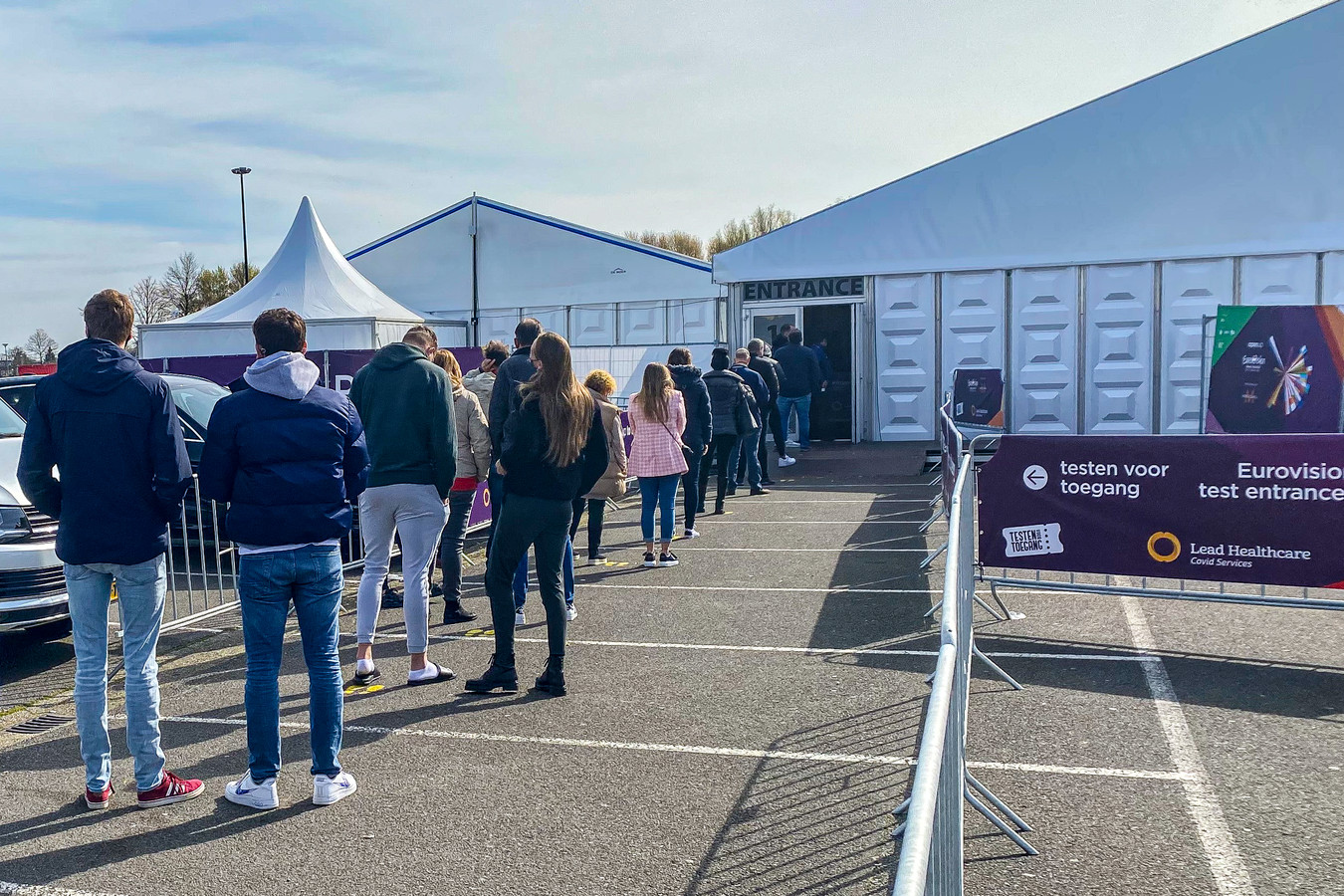
Ticket holders had to personalize their tickets, undergo COVID tests within the day of their event, and show up at the Ahoy entrance during their allotted time-slot.
  • High-risk groups as defined by the Netherlands’ National Institute for Public Health and the Environment (such as those 70 years or older) cannot purchase tickets.
  • Those attending the events couldn’t just simply purchase tickets. All sold tickets had to be personalized and registered. Meaning only the specific person is allowed to use the ticket. There are to be no ticket exchanges. Part of the personalization includes ticketholders to download the Close app and CoronaCheck app.
  • Just after purchasing the ticket, the Eurovision Contest Shop will bring ticketholders to a webpage to personalize the tickets. The ticket will be accessible for the Close app.
  • Ticketholders will need to take COVID tests the day of the ticketed event. Maximum 24 hours before the event’s anticipated end. Showing a card that confirms COVID vaccination is not enough. Appointments for COVID testing would have to be made through the Dutch ‘Testen Voor Toegang’ website which assists in setting appointments for rapid COVID testing throughout the Netherlands. Even attendees coming from other countries will have to be tested in the Netherlands. Test results can be made available as soon as an hour after they’re taken. Tests done through Testen Voor Toegang appointments are the only valid COVID tests for the Contest.
  • Results of the COVID test will be made available through the CoronaCheck app. Those that test negative are allowed to attend their ticketed event. Those that test positive are not allowed and they do not receive a refund.
  • All spectators who test negative can’t simply arrive at the Ahoy Arena anytime. In their Close app, they are given an entrance time-slot for them to show up at the entrance to their ticketed event and do their airport-style security check.
  • At their entrance, they are required to show both their ticket and their negative COVID test result in order to be admitted.
  • As far as face masks go, attendees are allowed to take off their face masks when they’re inside the actual arena seating. Spectators are allowed to eat and drink inside the arena seating.
  • Spectators will have to put their face masks back on once they leave the arena seating area. That includes in areas of the Ahoy Arena such as concession lobbies or the washrooms. Arena seating is the only mask-free area for Contest spectators.
  • Once spectators are outside the Ahoy Arena building, all mask-wearing regulations made by the Dutch government apply.

Also worth taking note is that all spectators had to be in seated areas. In fact the Green Room took up the whole arena floor area outside of the stage to ensure no spectators on floor level and the performers’ own social distancing. This is arguably the first big event with large spectators to be held during the pandemic so it’s obvious strict regulations would be required. Since the Contest has been completed, there has been no news of massive positive tests from spectator attendance. It so far has proven to be an excellent success, if not a flawless success, that a concert can still take place during the latter period of a pandemic and make progress to more back-to-live performances. Even spokespeople throughout the Contest were speaking their delight and approval of the Contest getting back to live performances and celebrative spirits. Also for those who want to know who the winner is, but don’t know, it’s Italy’s glam-rock band Måneskin who won with the song ‘Zitti e Buoni.’

This year’s Eurovision Song Cotest proved that live performances with spectators can happen during a time of a pandemic. Measures in terms of ticket holders and performers had to be strict and within government regulations, but it all turned out to be successful in the end.

WORKS CITED

WIKIPEDIA: Eurovision Song Contest 2020. Wikipedia.com. 2021. Wikimedia Foundation Inc. <https://en.wikipedia.org/wiki/Eurovision_Song_Contest_2020>
WIKIPEDIA: Eurovision: Europe Shine A Light. Wikipedia.com. 2021. Wikimedia Foundation Inc. <https://en.wikipedia.org/wiki/Eurovision:_Europe_Shine_a_Light>
WIKIPEDIA: Junior Eurovision Song Contest 2020. Wikipedia.com. 2021. Wikimedia Foundation Inc. <https://en.wikipedia.org/wiki/Junior_Eurovision_Song_Contest_2020>
WIKIPEDIA: Eurovision Song Contest 2021. Wikipedia.com. 2021. Wikimedia Foundation Inc. <https://en.wikipedia.org/wiki/Eurovision_Song_Contest_2021>
Tickets For Eurovision. EBU 2002-2021. Website by SCRN. <https://eurovision.tv/tickets>

My Predictions For The 2020 Academy Awards

To think that before 2020, the Academy was strict about having films viewed in theatres. Internet films were off limits. Then the pandemic happened. Most of the theatres were closed. Most films had to put themselves on online streaming services to have themselves viewed. The Academy became more forgiving in that aspect and allowed for more streamed films to be submitted as entries. The pandemic also caused the Oscars themselves to be delayed until the last Sunday of April. That also meant those other ‘influencer’ award shows would have to delay in compensation of the pandemic too.

Whatever the situation, I was able to see all eight Best Picture nominees. Yes, it involved signing up for more than one streaming service and renting movies on Youtube, but it had to be this year. Hopefully next year, I’ll be back in the theatres. As for this year, I saw them all and now I’m ready to make my opinions for the winners for the 93rd Academy Awards:

BEST PICTURE

Last year, Olly Gibbs did a similar picture of the Best Picture contenders. This year he does it again! I’ll bet most of you who have seen any of the Best Picture nominees most likely saw it through a streaming service. That seems to be the case this year. The favorites were seen through a wide variety of streaming methods like Netflix, Hulu, Disney+ or Amazon Prime. For most, it was the only way to access any of the Best Picture nominees.

Normally I’d publish separate reviews of the various Best Picture nominees and include the link to the blog in my review. This was not the case that I reviewed them before Oscar day. Separate reviews will have to come later. In the meantime, here’s my take on the eight Best Picture nominees:

The Father: To make a film about dementia that’s watchable is a big challenge. Having a lead actor like Anthony Hopkins helps. However this is a unique story as it goes through the father’s life as he and his daughter are going through major changes in their lives. The father’s struggle with dementia gives hints to his past. It makes for a unique and telling story. However I don’t see it as having what it takes to win Best Picture.

Judas And The Black Messiah: This is the story of the Black Panther with a big following and the FBI agent who sets him up for his assassination. It’s to do about a powerful leader who had a love for his woman and the FBI who poses as the leader’s friend only to lead him to the fatal heist. This is an intriguing story that gives you a piece of history that is often overlooked. Also it provides insight on the secret that haunted the FBI agent until the end of his life. Excellent film worthy of Best Picture, but unable to contend due to the tightness of this year’s competition.

Mank: For those who like seeing films of the Golden Age of Hollywood, you’ll like seeing Mank. This is a film that focuses on Herman Mankiewicz, Hollywood scriptwriter and producer. It focuses on his messing with the political system, his difficulties in the Hollywood studio system and his struggle with alcohol. It presents a unique story for someone that should be presented as unlikeable as most of the Hollywood producers should be seen. This is a film with Best Picture marked on it, but a certain other film has better Best Picture clout.

Minari: There have been stories of immigrants in pursuit of the American Dream before. This is a unique story because it’s of Korean farmers seeking to pursue the American Dream in Arkansas in the 1980’s. It’s of a family that tries to pursue a better life, brings the grandmother over in hopes to build the family back up, and a son struggling with a heart condition. This is a very personal story from writer/director Lee Isaac Chung. It has Best Picture potential, but there are at least three other films that are seen as stronger contenders.

Nomadland: This is an introspective look at the modern-day American nomad. Desperation in an economy that failed them is what caused them to adopt this modern style of the nomad life. However it’s something that they don’t just simply get used to doing, but it becomes a lifestyle for all those involved. There is a central character named Fern who first appears she has no choice but to accept this nomad life. Even as things don’t get any better, she learns to make it her own life, embrace her experiences, and then be able to say goodbye to her own life. This is an excellent personal story that really caught a lot of people’s eyes. That’s why I make it my Will Win pick.

Promising Young Woman: This is definitely a film that’s been made with rage in mind. And good reason. When the #MeToo movement came out, it highlighted a lot of problems. This is a rape revenge film that focuses on a friend’s rape and the failings that went around her like the friend who wouldn’t believe, the college system that hides things for the protection of their reputation, the friend of the rapist who watched and did nothing. The film also focuses on the culture of misogyny that provokes date rape. Cassie is the central figure that first comes off like she is the one to put misogyny in its place and later tries to get revenge for her friend’s rape. I think it’s the Generation X-er in me that likes how this film is like a lightning rod on society. That’s why I call it my Should Win pick.

Sound Of Metal– This is a unique story of a drummer who goes deaf and doesn’t know how to struggle with hearing loss. His willingness to accept deafness and move on with his life or his desire for a hearing implant that will give him his old life back is the central part of the story. This is a very good story that relies on images and sounds to tell of the musician’s struggle and also of the new life he tries to get used to. Very good film. Also in a year where this year’s batch of Best Picture contenders have been commonly described as ‘a pack of downers,’ this is the most uplifting film without going too overboard in its uplifting moments.

Trial Of The Chicago 7: This is a historical film that comes at the right time. It was released at a time when there was, and still is, a lot of political turmoil in the United States. It’s about a group of men arrested and tried for taking a stand for what they believed in. It’s about a corrupt judge who constantly made the wrong decisions on others. It’s about a political system that’s all about keeping the order of things. Centrally it’s about a leader who needed to fasce his fears and muster the courage displayed by the others. Excellent retelling of a historical moment. Among one of the top contenders for the win, but this is the year for Nomadland.

BEST DIRECTOR

Should Win and Will Win: Chloe Zhao – Nomadland

Directors nominate the Best Director nominees. This Oscar category is known for its all-too-frequent exclusion of female nominees. The first was back in 1976: Lina Wertmuller for Seven Beauties. Since then, it’s been Jane Campion for The Piano in 1993, Sofia Coppola, daughter of Francis Ford Coppola, for Lost In Translation in 2003, Kathryn Bigelow in 2009 for The Hurt Locker (which she won), and before this year, the last was Greta Gerwig for Lady Bird back in 2017. Five female nominees before the 2020 nominees were announced. This year made Oscar history as the first year two women were nominated for Best Director: Chloe Zhao and Emerald Fennell. The two female directors have the most talked-about films of this Oscar season: Nomadland and Promising Young Woman. It looks as though Zhao is poised to become only the second female winner of the Best Director category.

Also who knows after this year? Maybe in the future, two or three female Best Director nominees will become the annual norm.

BEST ACTOR

Should Win and Will Win: Chadwick Boseman – Ma Rainey’s Black Bottom

Most of us will remember Chadwick Boseman as T’Challa the Black Panther in the MCU. Since his death, there has been a lot of attention paid to a lot of his other works of the past. As 2020 was drawing to a close, the big focus was his performance as Levee Green in Ma Rainey’s Black Bottom. In fact it’s his performance as Levee that steals the show from Ma. It makes it more the story about Levee’s own struggle for fame and fortune and his inner hurt and struggles. His portrayal of Levee Green cuts deep to the core. Giving him the Best Actor Oscar is the best way to remember him.

BEST ACTRESS

Should Win and Will Win: Viola Davis – Ma Rainey’s Black Bottom

Boseman may have stolen the film as Levee Green, but Viola’s performance of Ma Rainey helped give this film its powerful 1-2 punch. Davis’ character is both that of an entertainer whose beloved and a person subject to the same hurt and harshness a black woman in America gets. As she cuts her record Ma Rainey’s Black Bottom, you can tell the wrath she feels towards her lifetime and her struggles are present in the story. That’s why I feel Viola deserves the Best Actress Oscar.

BEST SUPPORTING ACTOR

Should Win and Will Win: Daniel Kaluuya – Judas And The Black Messiah

This year’s Oscars had a surprise with two Supporting Actor nominations for Judas And The Black Messiah. The nomination for Kaluuya was not a surprise as he won the Golden Globe for supporting actor. The nomination for LaKeith Stanfield was a surprise as it was felt Stanfield played the lead as Bill O’Neal. That had a lot of people wondering who’s the lead if O’Neal is supporting? I can’t answer that question. I will say that Stanfield didn’t get a single lead acting win or nomination so the Supporting Actor campaign was very successful here. Nevertheless the film belongs to Kaluuya for his performance of the late Black Panther Fred Hampton. He was very good at portraying Hampton both as a rebel with a cause and as a man with a lot of love.

BEST SUPPORTING ACTRESS

Should Win and Will Win: Youn Yuh-jung – Minari

Youn Yuh-jung is an actress with an illustrious career in South Korea. Minari is pretty much the film where she’s introduced to North America. And it’s a great performance as a grandmother who first exhibits over-the-top behavior to becoming closer with grandson David to struggling with life after a stroke. She helped make the grandmother the central character of the story and it’s because of this I feel she should win here.

BEST ORIGINAL SCREENPLAY

Should Win and Will Win: Emerald Fennell – Promising Young Woman

For a long time, Emerald Fennell was just another struggling actress. Her biggest success is in the British television series Call The Midwife. She also had good roles in film such as in Anna Karenina, Pan and The Danish Girl. Her first attempt at directing and writing was in the short film Careful How You Go. Promising Young Woman is her first attempt at a feature-length film and boy is it an eyebrow raiser. There have been ‘rape revenge’ movies before, but this is a film that doesn’t just get revenge on the rapist. It’s a story of one who has a reckoning of all those involved in her best friend’s rape like the friend that didn’t believe her, the college administration ‘protecting the boys’ futures,’ the lawyer who was menacing to the victim upon his client’s command, and the friend of the rapist who just watched and stood by. This is an angry film, but well written and well thought-out. Fennell’s feature went the furthest this year.

BEST ADAPTED SCREENPLAY

Should Win and Will Win: Chloe Zhao – Nomadland

For those that read Jessica Bruder’s book Nomadland: Surviving America in the Twenty-First Century, one would know it’s not a novel. It’s a set of stories of people that are modern-day nomads in America. Zhao was able to create a story of a fictional woman coming from an actual economic setback. She makes a nomad of herself because of the desperate times she was going through and of the people she meets along the way. It has a beginning, middle and end and it’s a story that is a reflection of life. That’s why Nomadland has to be the winner here.

BEST ANIMATED FEATURE

Will Win: Soul

BEST CINEMATOGRAPHY

Should Win and Will Win: Eric Messerschmidt – Mank

BEST COSTUME DESIGN

Will Win: Ann Roth – Ma Rainey’s Black Bottom

BEST DOCUMENTARY FEATURE

Will Win: My Octopus Teacher

BEST FILM EDITING

Will Win: Mikkel E. G. Nielsen – Sound Of Metal

BEST HAIR AND MAKE-UP

Will Win: Sergio Lopez-Rivera, Mia Neal and Jamika Wilson – Ma Rainey’s Black Bottom

BEST INTERNATIONAL FEATURE FILM

Will Win: Another Round (Denmark)

BEST ORIGINAL SCORE

Will Win: Trent Reznor, Atticus Ross and Jon Batiste – Soul

BEST ORIGINAL SONG

Will Win: “Speak Now” – One Week In Miami

BEST PRODUCTION DESIGN

Will Win: Donald Graham Burt & Jan Pascale – Mank

BEST SOUND

Will Win: Sound Of Metal

BEST VISUAL EFFECTS

Will Win: The Midnight Sky

SHORT FILM PREDICTIONS

For my reviews of the nominees and predictions for the wins for the various shorts categories, just click here for Animation and Live-Action and here for Documentaries.

JUST ONE MORE – TOP OSCAR UPSETS

Here are the six upsets I anticipate are most likely to happen. In category order:

  • Carey Mulligan for Best Actress in Promising Young Woman
  • Maria Balakova for Best Supporting Actress in Borat Subsequent Moviefilm
  • Lee Isaac Chung for Best Original Screenplay for Minari
  • Joshua James Richards for Best Cinematography for Nomadland
  • Time for Best Documentary
  • Tenet for Best Visual Effects

And there you have it. Those are my predictions for the winners of the 93rd Academy Awards. The Oscars ceremony promises to be like a film. We’ll have to wait and see!

My Predictions For The 2020 Oscar Nominations

This year’s Oscars may not make you want to go to the theatres, but it will make you stream like crazy. This year may have a lot of cases where movie theatres were either forced to close or limit capacity because of health regulations. This year also made may film companies send many Oscar-calibre films to streaming services since theatrical release would be harder than ever to achieve. The Academy has been very forgiving in this situation. They’ve loosened up the rules for this year in particular to allow movies that only had a streaming life have Oscar eligibility. What can I say? Nobody wanted this pandemic. Especially since many people are now labeling this period of time the ‘Coronaversary!’Has it been a year already?

In a regular year, the Oscars would have been awarded by now. Actually the last Sunday of February. This year the nominations are delayed until March 15th. Nevertheless it has still kept Oscar-trackers like myself busy. And I’m ready to make my predictions for this year:

BEST PICTURE
The Father
Judas And The Black Messiah
Ma Rainey’s Black Bottom
Mank
Minari
News Of The World
Nomadland
Promising Young Woman
Sound Of Metal
Trial of the Chicago 7

BEST DIRECTOR
Lee Isaac Chung – Minari
Emerald Fennell – Promising Young Woman
David Fincher – Mank
Aaron Sorkin – Trial Of The Chicago 7
Chloe Zhao – Nomadland


BEST ACTOR
Riz Ahmed – Sound Of Metal
Chadwick Boseman – Ma Rainey’s Black Bottom
Anthony Hopkins – The Father
Gary Oldman – Mank
Tahar Rahim – The Mauritanian

BEST ACTRESS
Viola Davis – Ma Rainey’s Black Bottom
Andra Day – The United States Vs. Billie Holiday
Vanessa Kirby – Pieces Of A Woman
Frances Mcdormand – Nomadland
Carey Mulligan – Promising Young Woman

BEST SUPPORTING ACTOR
Chadwick Boseman – Da 5 Bloods
Sacha Baron Cohen – Trial Of The Chicago 7
Daniel Kaluuya – Judas And The Black Messiah
Leslie Odom Jr. – One Night In Miami
Paul Raci – Sound Of Metal

BEST SUPPORTING ACTRESS
Maria Balakova – Borat Subsequent Moviefilm
Glenn Close – Hilbilly Elegy
Olivia Colman – The Father
Amanda Seyfried – Mank
Youn Yuh-jung – Minari

BEST ORIGINAL SCREENPLAY
Will Berson and Shaka King – Judas And The Black Messiah
Lee Isaac Chung – Minari
Emerald Fennell – Promising Young Woman
Jack Fincher – Mank
Aaron Sorkin – Trial Of The Chicago 7

BEST ADAPTED SCREENPLAY
Paul Greengrass and Luke Davies – News Of The World
Christopher Hampton and Florian Zeller – The Father
Kemp Powers – One Night In Miami
Ruben Santiago-Hudson – Ma Rainey’s Black Bottom
Chloe Zhao – Nomadland

BEST ANIMATED FEATURE
Farmageddon: A Shaun The Sheep Movie
Onward
Over The Moon
Soul
Wolfwalkers

BEST CINEMATOGRAPHY
Eric Messerschmidt – Mank
Lachlan Milne – Minari
Joshua James Richards – Nomadland
Darius Wolski – News Of The World
Hoyte Van Hoytema – Tenet

BEST COSTUME DESIGN
Alexandra Byrne – Emma
Ann Roth – Ma Rainey’s Black Bottom
Trish Summerville – Mank
Bina Daigeler – Mulan
Susan Harman and David Wolsky – The Personal History Of David Copperfield

BEST DOCUMENTARY FEATURE
Dick Johnson Is Dead
MLK – FBI
My Octopus Teacher
Time
The Truffle Hunters

BEST FILM EDITING
Kirk Baxter – Mank
Harry Yoon – Minari
Chloe Zhao – Nomadland
Frederic Thoraval – Promising Young Woman
Alan Baumgarten – Trial Of The Chicago 7

BEST HAIR and MAKEUP
Birds of Prey
Hillbilly Elegy
Ma Rainey’s Black Bottom
Mank
One Night In Miami

BEST INTERNATIONAL FEATURE FILM
Another Round – Denmark
Collective – Romania
Dear Comrades – Russia
La Llorona – Guatemala
Two Of Us – France

BEST ORIGINAL SCORE
Jon Batiste, Trent Reznor and Atticus Ross – Mank
Alexandre Desplat – The Midnight Sky
James Newton Howard – News Of The World
Trent Reznor and Atticus Ross – Soul
Ludwig Goranson – Tenet

BEST ORIGINAL SONG
“Fight For You” – Judas And The Black Messiah
“Io Se (Seen) – The Life Ahead (La vita davanti a sé)
“Hear My Voice” – Trial Of The Chicago 7
“Husavik” – Eurovision Song Contest: The Story Of Fire Saga
“Speak Now” – One Night In Miami

BEST PRODUCTION DESIGN
Emma
Mank
News Of The World
The Personal History of David Copperfield
Tenet

BEST SOUND
Greyhound
Mank
News Of The World
Nomadland
Sound Of Metal

BEST VISUAL EFFECTS
Birds Of Prey
Mank
The Midnight Sky
Mulan
Tenet


Just like I did in past years, I not only did predictions for the nominees but also possible upsetters in most of the categories. With this year being a year where most films were streamed, there could be upsets a pleanty. So here are my picks for the potential upsetters:

BEST PICTURE
Da 5 Bloods
One Night In Miami

BEST DIRECTOR
Regina King – One Night In Miami
Spike Lee – Da 5 Bloods

BEST ACTOR
Sacha Baron Cohen – Borat Subsequent Moviefilm
Steven Yeun – Minari

BEST ACTRESS
Sidney Flanagan – Never Rarely Sometimes Always
Rosamund Pike – I Care A Lot

BEST SUPPORTING ACTOR
Jared Leto – The Little Things
Bill Murray – On The Rocks

BEST SUPPORTING ACTRESS
Jodie Foster – The Mauritanian
Helena Zengel – News Of The World

BEST ORIGINAL SCREENPLAY
Eliza Hittman – Never Rarely Sometimes Always
Abraham And Darius Marder – Sound Of Metal

BEST ADAPTED SCREENPLAY
Ramin Bahrani – White Tiger
Jonathan Raymond And Kelly Reichardt – First Cow

BEST ANIMATED FEATURE
The Croods: A New Age
The Willoughbys

BEST CINEMATOGRAPHY
Phedon Papamichael – Trial Of The Chicago 7
Newton Thomas Sigel – Da 5 Bloods

BEST COSTUME DESIGN
Francine Jamison-Tanchuck – One Night In Miami
Nancy Steiner – Promising Young Woman

BEST DOCUMENTARY FEATURE
The Painter And The Thief
Welcome To Chechnya

BEST FILM EDITING
Yorgos Lamprinos – The Father
Mikkel E. G. Nielsen – Sound Of Metal

BEST HAIR and MAKEUP
Emma

BEST INTERNATIONAL FEATURE FILM
Night Of The Kings – Cote D’Ivoire
Quo Vadis Aida? – Bosnia-Hercegovina

BEST ORIGINAL SCORE
Emile Mosseri – Minari

BEST ORIGINAL SONG
“Loyal Brave True” – Mulan

BEST PRODUCTION DESIGN
Ma Rainey’s Black Bottom
Mulan

BEST SOUND
Soul
Trial Of The Chicago Seven

BEST VISUAL EFFECTS
Soul
Welcome To Chechnya

Those are my predictions for the nominations for the 2020 Academy Awards. The nominees will be revealed the morning of Monday the 15th. We’ll wait and see what the decisions are!

Three Important IOC Decisions This Week

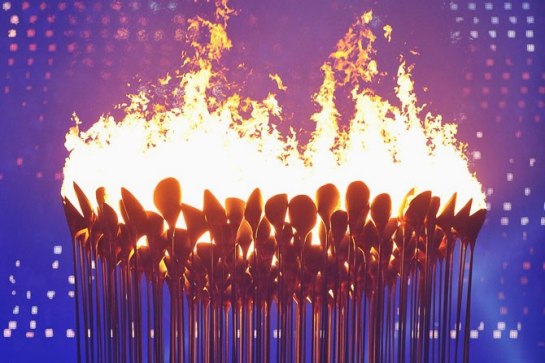
London Flame

The members of the International Olympic Committee will meet in Buenos Aires from September 7th to 10th for their committee Session. This will be the 125th Session the IOC has held since 1894. Usually there’s your typical IOC business to discuss at the Session but this is one Session where there will be three high-focused issues.

 Host City Of The 2020 Summer Games:

The IOC Sessions are where the elections are held for the host cities of future Olympic Games. They’re voted on usually six or seven years beforehand. The bidding process officially begins two years earlier when the IOC sends letters to the national Olympic Committees to submit bids. Bid confirmations and seminars follow and then the field gets narrowed down to a shortlist of candidates. This time it’s three. All three cities were visited by the IOC’s Evaluation Commission in March during three separate four-day periods and the report of the cities would be delivered in June followed by a briefing session of the candidate cities with IOC members in Lausanne. On Saturday the 7th, the vote for the host city of the XXXIInd Olympics will come down to three cities:

  • Istanbul, Turkey – Turkey is the one country amongst the bidders that has never hosted an Olympic Games. However Istanbul has a good reputation of hosting events such as many soccer events and even a swimming World Championships. Also Turkey’s worldwide reputation has improved a lot in the past thirty years especially amongst joining the EU.
  • Tokyo, Japan – This is the heavy favorite. Tokyo actually has hosted the Summer Games before back in 1964. Japan has continued to be a good host for sporting events like two Winter Olympics (Sapporo in 1972 and Nagano in 1998) and co-hosting the 2002 World Cup. However the earthquake, tsunami and the Fukushima nuclear plant catastrophe still hang like a dark cloud over Japan and this may cause some to be weary of voting for Tokyo.
  • Madrid, Spain – This is Madrid’s third attempt at hosting the Summer Olympics. It is given the least odds of the three host cities but don’t rule it out. We shouldn’t forget Rio had the third-most odds before the vote for the 2016 host. Both Madrid and Spain have a stellar record of hosting sporting events. Barcelona hosted the 1992 Summer Olympics. Spain hosted the 1982 World Cup and the final was held in Madrid. Madrid has also hosted World Championships in Aquatic sports, basketball and even major tournaments in track and field and tennis. Madrid enters this race as the city that has proven the most in hosting sporting events.

The 26th Sport For 2020:

The fate of Wrestling's Olympic sport status could make as much news as the vote on the host city of the 2020 Games.
The fate of Wrestling’s Olympic Sport status could make as much news as the selection of the host city of the 2020 Games.

Usually an Olympic Session votes on including sports in the Olympic program. Here there will be a vote on including a 26th sport for the 2020 Summer Olympics. However that inclusion risks causing a highly-publicized exclusion. Months ago the IOC announced the Top 25 ‘core’ sports that made the cut for being contested for the 2020 Summer Olympics. What made the biggest noise was the one sport that didn’t make the cut: Wrestling. Wrestling has been part of the Olympic Games even up to its ancient contests in the 7th century B.C. It was included in the modern revival of the Olympic Games ever since the first Olympics in 1896 and has been part of every modern Olympics except for 1900. Wrestling was again contested at the London Games of 2012 where 29 nations won at least one Wrestling medal. Only Track and Field put more nations on the podium in London.

However it was not seen as Olympic enough to be a ‘core’ sport. Many National Olympic Committees have spoken their disappointment with this decision. Even the president of the International Wrestling Federation (FILA) resigned in disappointment. However Wrestling has been given a second chance as a sport up for the vote for the ’26th sport’ for 2020. The only other two sports rivaling wrestling are Squash which has never been contested at the Olympics and Baseball/Softball: sports contested from 1992 to 2008 and seeking to return to the Olympic program. The structuring of inclusions and exclusions of sports really shows how much the IOC has changed in the last 20 or so years. It also puts into question the future of other sports. I know the IOC is trying to keep the Olympics from getting too big but is exclusion of sports really the answer?

The New IOC President:

Tuesday September 10th will be the vote for a new president of the International Olympic Committee. After 12 years, Jacques Rogge will step down as president of the IOC. Rogge leaves a legacy of improving sports in developing countries and of making efforts for hosting the Olympic Games to be less costly. It’s not to say he’s had some controversies of his own. He had been rumored to participate in a discussion about Chinese internet censorship as they we about to host the Beijing Games in 2008. Nevertheless I consider him to be the least dictator-like IOC president in history.

Now on to selecting a new president. There are six men from six countries up for the position:

  • Thomas Bach – Germany: Four months ago he was actually the first person to announce his run for the IOC presidency. He is an IOC member since 1991 and the President of the Arbitration Appeals Division for the Court of Arbitration of Sport. He is also an Olympic champion. Back in 1976, he was part of West Germany’s gold medal-winning Foil Fencing team. He’s the heavy favorite.
  • Ng Ser Miang – Singapore: Ng has been an IOC member since 1998 and has been part of the Executive Board since 2005.
  • Richard Carrion – Singapore: He has been a member of the IOC since 1990, currently chairs the Finance Commission and is a member of the IOC’s Marketing, TV and International Rights Commission. He’s also the CEO of financial holding company Popular, Inc., one of the most powerful financial companies in Puerto Rico.
  • Wu Ching-Kuo – Taiwan (Chinese Taipei): He has served as an IOC member since 1988 and has served as the president of the International Boxing Association.
  • Denis Oswald – Switzerland: He has served as an IOC member since 1991 and is the current head of the International Rowing Federation.
  • Sergei Bubka – Ukraine: He has served as an IOC member since 2008 and is current head of the Ukrainian Olympic Committee. He is also considered to be the greatest pole vaulter in history. He was Olympic Champion in 1988 and has set 35 pole vault world records in his career.

One of these six will be the new president. It’s possible we could have the first president ever that was a former Olympic champion. It will all be decided Tuesday.

The 125th IOC Session has lots in stock when the various IOC members meet in Buenos Aires. There’s the usual admission of new members and there’s also the big matters I talked about. No kidding that lots need to be taken care of here.