VIFF 2025 Shorts Segment Review: Forum 3 – The peripheral core

One thing about being into cinema is that it will give you a liking for short films. I saw a second segment or forum of shorts at the VIFF entitled The peripheral core. This segment, the third Forum segment, consisted of eight films that are very similar, very different, but tell a lot.

-Resistance Meditation (dir. Sara Wylie): In this documentary, we see a woman (possibly director Wylie) sleeping in bed. As she sleeps, Wylie talks about sleeping and how the time on the clock we follow is ‘corporate time.’ As she lays in bad, we learn she has a disability and she calls her sleep here ‘crip time.’ It’s not just for her sleep, but to rebel against the demands of the capitalist world.

Simply put, this is a five-minute documentary where the filmmaker has something to say. Although I don’t completely agree with her opinion about ‘corporate time,’ I like how she makes her statement in a creative way. It makes sense to present filming of sleeping and her speaking her belief about time, disability and rebelling against it.

-A Very Straight Neck (Japan – dir. Neo Sora): A woman wakes up from her sleep and has terrible neck pain. The dream she has haunts her. Her dream was she was lying face-down on the sidewalk of a busy street and the world passes around her. Even crumbling out of its existence in her mind.

This is a picturesque short film which the focus is on unspoken images and the main character narrating in the background. The biggest quality is the visuals as it adds to the story and creates the mood of what she’s trying to say. Sometimes we can understand the pain she’s going through. Very well done.

-Not Enough for the Love Inside (Brazil – dirs. Marcelo Matos de Oliveira and Wallace Nogueira): Cassio and Otto are both gay couple in Bahia, Brazil and both became blind recently. Cassio is unemployed while Otto is able to participate with a theatre group. Through all that happens in the story and Cassio’s body language, one can’t help but notice the relationship appears doomed to end.

The biggest quality of the film is the body language. I don’t know if both became blind from the same incident or from separate incidents, but you can understand how sudden changes can affect a relationship. The body language in the film is as valuable to the story as the dialogue itself. It creates the negative vibe of a relationship that is starting to fall apart.

-The Sphinx (USA – dir. Jesse Pavdeen): Harold is a young adult locksmith by profession, but he has a problem. He was born without a nose and he needs to wear a prosthetic. His nose falls off during a date, but his date doesn’t mind. She encourages him to come to a party. Things get worse when the people at the party want him to show ‘his true self.’ He takes his nose off and they all laugh. He runs to his estranged mother’s house, but she has the door locked with seven locks. Meeting with his father exposes the secret.

When you have short films, you should expect a bizarre comedy or two. Harold is seen as The Sphinx as The Sphinx itself has its nose missing. I’ve seen stories of missing body parts or weird body parts before, but this comedy does a unique job in showing one young man’s flaw and how the world treats him. Even his mother who has cut herself off from everyone. It’s a bizarre story that’s humorous too.

-Confluence (Canada – dirs. Charlene Moore and Oliver Darrius Merrick King): This is a documentary made by Indigenous members of the Winnipeg Film Group for their 50th anniversary. As images of parts of Winnipeg are shown on screen, the Indigenous members of the Group talk about various topics like their land and colonizing, being an Indigenous person, filmmaking as an Indigenous person and even envisioning the future and pondering ideas of what to film next.

I’m from Winnipeg and I remember the Winnipeg Film Group and how it took a modest area in an office building back in the 1990’s. The Group has grown a lot. This documentary is important because in recent decades, the Indigenous peoples are getting more into the arts and holding their own. Film has a bright future in Winnipeg, but the Indigenous filmmakers show the most promise and most envisioning. It’s good to hear them speak their minds about the topics as we view images of Winnipeg.

-In My Hand (Norway – dirs. Marja Helander and Liselotte Wajstedt): The film begins with a re-enactment of Norwegian Sami activist Niillas Somby waking up in prison with his amputated arm bandaged. Niillas narrated how he spent 21 years in prison and was involved greatly with Sami activism. He also talks of the accidental battery explosion from 1981 that led to the loss of his arm. He also talks of the time he went to Canada cleverly disguised as a white man and with a fake passport. The film ends in the present with present-day Niillas and today’s Sami activists.

This is another film that showcases the racism felt by a nation’s first peoples. In this case, it’s the Sami peoples of the Nordic nations. Niillas Somby tells his story about what it was like to be a Sami activist and of some of the illegal things he did in his life. We hear Somby narrate as the moments are re-enacted in front of us. This is a valuable story in learning about their struggle and has a message worth hearing.

-Cocotte Coulombe, Filmmaker (Canada – dir. Charles-Francois Asselin): Charles-Francois has always known his unmarried deaf aunt Cocotte. He does remember her bringing a film camera to family events. It’s after her death that he discovered she had taken lots of family films. As he watches the family films of hers, he discovers this was they way she communicated her love to them.

This documentary is great at telling its story. Cocotte’s family films play in the background as Charles-Francois tells his story of Cocotte and his recent discovery of the films. It’s an intimate story of how a film maker himself learns how home videos were not just a hobby for Cocotte, but also the means for a deaf family member to show her love to them. It was nice to watch.

-We Were The Scenery (USA – dir. Christopher Radcliff): In 1978, Hoa Thi Le and Hue Nguyen Che were Vietnamese refugees in a refugee camp in the Philippines. During that time in that same place, Francis Ford Coppola was filming Apocalypse Now and wanted to use the refugees as extras for the film. Le and Che rewatch Apocalypse Now and during the scenes, they point themselves out and mention of other people they knew personally as their appearances come on screen.

This is one documentary one would not expect. Most of us who saw Apocalypse Now probably never bothered to notice the extras were from a Vietnamese refugee camp. It was great to hear the story of how a couple who are married were those very extras and they saw it as just a way to make some extra money. It’s also a smart choice the director had them tell their story in Vietnamese. Although they are now American citizens, telling their story in Vietnamese only adds to this documentary.

And that was my experience with the short films from Forum 3: The peripheral core. Interesting how with this forum, five of the eight films were documentaries. Although I prefer watching live-action, I still found the documentaries intriguing to watch. Whatever the documentaries had to say, they said it well in their own way. For the live-action, they were unique to watch as well.

Oscars 2024 Best Picture Reviews: Part Four

The thing about the Oscars is that each year, there are Best Picture nominees for films of subject matter that most people would normally not want to see. In some cases, films of unwatchable subject matter end up Best Picture nominees. A lot of these unwatchable things are based on people or events that actually happened, like these two films. For these next two films, I wouldn’t say they’re unwatchable but they do treat on dark subject matter. They’re far from the topics or themes that would draw crowds. Some scenes many would find too disturbing to watch. All I can say is you be your own judge:

I’m Still Here (Ainda Estou Aqui )

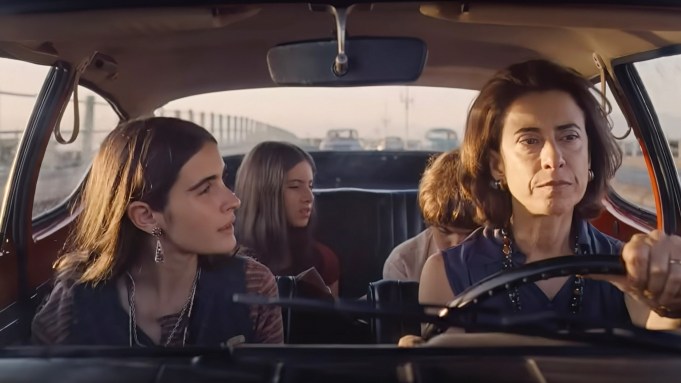
When one thinks of a Brazilian film, one would think of a film that may have scenes of the carnival, the festivities or the beaches. I’m Still Here is a very different film as it presents a dark side of Brazil’s history that they’re still troubled by today. Even the angle from which the film tells its story is unique. We have heard of people kidnapped during political regimes but we rarely hear about how it affects families. It’s through Eunice Paiva that we see how sometimes being married to an enemy to a regime could lead one to being imprisoned. Through Paiva we also see her as she struggles to keep her family together, struggles hiding the truth from her youngest children, struggles with her relationship with her youngest daughter and struggle to get the answers she needs of what happened to her husband. Eunice’s story of being the wife of a kidnapped man really tells a lot. It also shows how it would shape her to be the social justice warrior she became.

The film begins with a beach trip with the Paiva family. Everyone has fun, they all pose together for a photo and Marcelo found a stray dog they can make their own. It’s after that when everything changes. Soon the interrogation of Rubens, Eunice and their daughter, Eunice’s days of imprisonment and the years of aftermath not knowing whether her husband will return alive or if she will be kidnapped again. Then the long wait hoping Reubens will return and the fear of spies outside her door hoping to get her and imprison her again. It’s after the dog Pimpao is run over by the spies’ car that she lashes out at them and she’s had enough. Soon, her desire to leave Rio and start a new life for her and her family in Sao Paulo. The film moves forward to 1996 where Eunice has become a social justice advocate in Brazil, which had returned to democracy in 1989. She shows the death certificate of her husband she achieved. Her family has changed. Especially son Marcelo who became a successful author, despite being confined to a wheelchair. The film ends in 2014, years before Eunice would die of symptoms of Alzheimers. She is connected to a news story about the abductions and the continued pursuit of justice before a family photo.

Looking at it, the film is as much about family unity as it is about injustice in Brazil. Eunice had the nice orderly happy family life before the political abductions happened but that all changed after the imprisonment of the three. Trying to hide the truth of what happened to her father and deal with her older daughters’ knowledge of what happened is not an easy task. Trying to get the answers to what happened to her husband during a political regime that refuses to do so and trying to raise a family is a hard task. That’s one thing we rarely think about. We hear of political abductions in the news but we hardly ever hear of how families cope and try to keep themselves together. It’s through Eunice we see a personal strength we often ignore. You can understand why the family photo at the end of the film was so important. She succeeded in keeping the family ties together as much as she succeeded in achieving justice. The effect on children is also noticed in the film as her daughters fear the worst and are frequently arguing with Eunice. They’re the children with the most truth of what happened. Also the scene in 1996 when Marcelo and Maria, the two youngest, ask each other when they knew their father died, even as Eunice tried to hide the truth.

This is an excellent work from director Walter Salles. He’s one of the most acclaimed Brazilian directors with films like Central Station, The Motorcycle Diaries, Paris je t’aime and the adaptation of On The Road. This film is an excellent accomplishment of telling a dark story and making it a personal story. Even having it end on a positive note is an achievement. With the script written by Murilo Hauser and Heitor Lorega adapted from the novel written by Eunice’s son Marcelo, he takes the story and makes it relatable even though most of us will never experience something this terrible. He makes us connect with Eunice Paiva’s story and tells it so most of us who don’t know Brazil’s history know of the amazing woman Eunice Paiva was.

Making the film work is actress Fernanda Torres. She succeeds in telling Eunice’s story and makes us feel for Eunice and hope for the best. She did a great job, as did her mother Fernanda Montenegro who plays the dying Eunice at the end. Selton Mello was also great as the husband who still tries to live his life daily knowing he could be a political target any minute and eventually becomes one. The cinematography by Adrian Teijido added to the telling of Eunice’s story.

I’m Still Here is both the retelling of a dark era of Brazil’s history and the personal strength that came out of a kidnapped politician’s wife. It’s a sad story, but positive and hopeful.

Nickel Boys

Let’s face it. A film about a reform school that is infamous for its racism, physical and sexual abuse, and even murder of minors will not make one want to watch it. In fact, Nickel Academy is the pseudonym for the now-closed Dozier School For Boys in Florida where graves of those killed were discovered and survivors are now receiving their justice. Those that have learned of the ugly news of Dozier of recent years will want to avoid seeing Nickel Boys, but it does give people reason to see it.

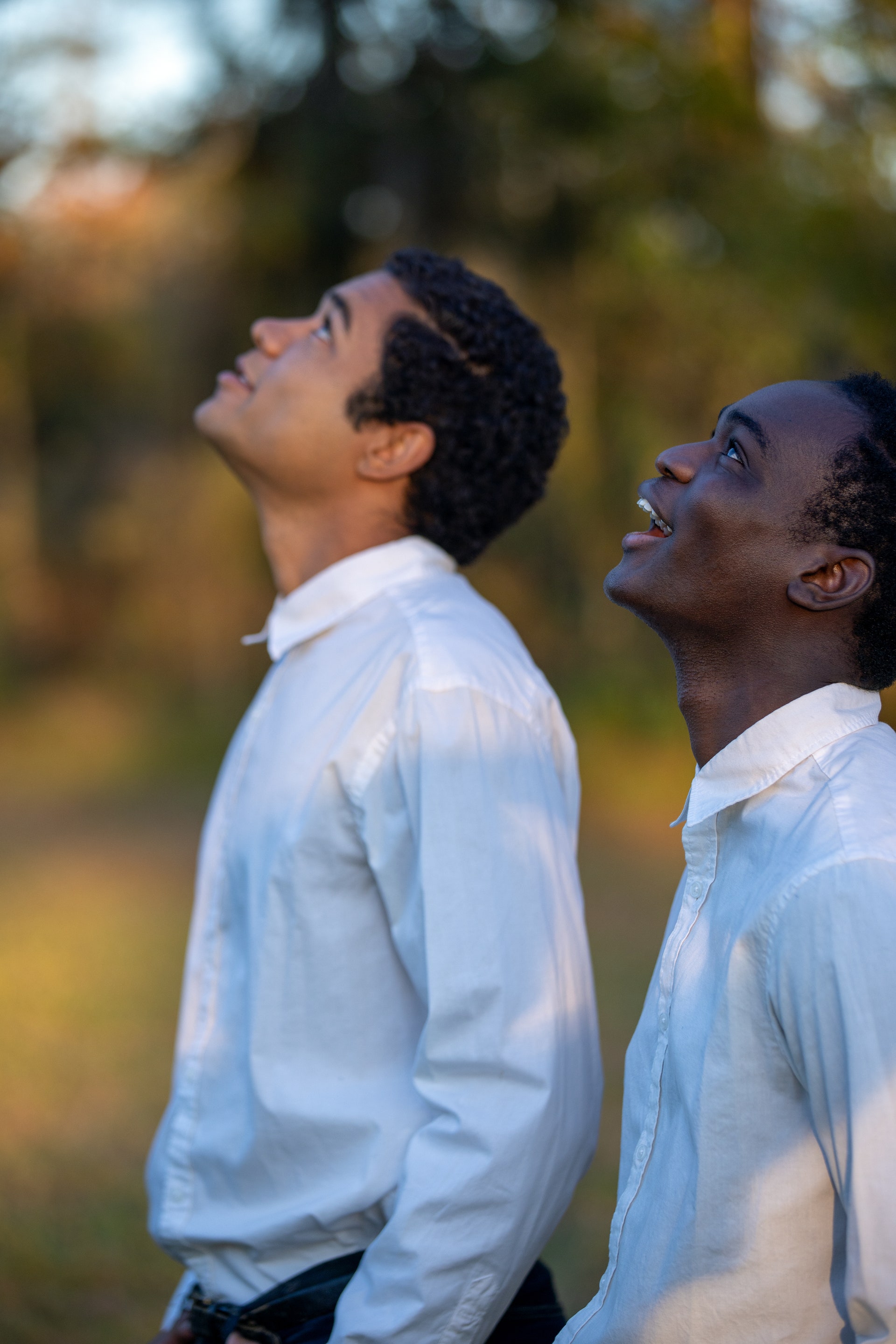
When it comes down to it, what happened at Dozier School should serve as something that should never happen again. What happened there needs to be told, but how? How can you make a place of abuse and murder watchable? RaMell Ross succeeds in doing it with the character of Elwood Curtis. The film flashes frequently in between Elwood’s time at the school to the adult Elwood who just learns of the truths unraveled in 2003 as he’s a successful businessman with a stable relationship. The film tells Elwood’s story as it starts before Martin Luther King’s civil rights movement and Florida still having Jim Crow laws. The film shows how as we fast forward 40 years later, Elwood is overcome with hurt and trauma as the secrets are unraveled with the finding of mass graves. In the flashback, we see Elwood bond with one of the boys named Turner he’s with and the two plan an escape while Elwood documents all that has happened in a diary. The escape fails for Elwood as he’s shot dead while Turner succeeds in escaping around the time of the Civil Rights Movement. In the flash forward, Turner adopted Elwood’s name to thank him for all he taught him.

Elwood and Turner are fictional characters, but they could be representative of any of the boys at Dozier School. It’s through Elwood’s and Turner’s friendship at Nickel that we’re shown of the corruption, abuse of various kinds and the murders that happened there. Through Nickel Academy, Dozier School was as much about racism as it was about abuse. White students got better facilities and a better education while the black students got bad facilities, a bad education, the most hazardous jobs, and even harmful punishments like the sweatbox. African American students got it harder and their death rate at the school was way bigger than that of white students. Even black students who didn’t do what the white superintendent says, like fix a boxing match, could be executed and the superintendent would never get arrested. You can understand why the story has Turner’s escape around the time of the Civil Rights Movement. It would be the beginning of the end for Nickel/Dozier.

This is a great work from RaMell Ross. The story he directs is based upon a 2019 novel of the same title that is the telling of that fictional friendship. The story he co-adapts with Joslyn Barnes is very good and very revealing. He succeeds in making a film about the abuse that is watchable and gets one to think. It’s a reminder of the ghosts of the past and how even if we do well in the present, it will come back to haunt us. Even as the guilty people are slowly brought to justice, we’re reminded it can’t erase the hurt and trauma. He does a good job in making it as much a story about two friends as it is about exposing the truth. Excellent work. Also great is the acting of Ethan Herisse and Brandon Wilson. Their performance as the friends caught in the drama did as much storytelling about the place as it did about them. Daveed Diggs is also very good as the adult Elwood who tries to hide his hurts of the past, but they eventually come out. Also great is the performance of Aunjanue Ellis-Taylor playing the grandmother who is hoping for the best for Elwood and tries with every chance and opportunity, only for every white ‘helper’ to fail her. Her mix of optimism and heartbreak adds to the story.

Nickel Boys succeeds in making what could be a film of unwatchable subject matter be watchable. The mix of a story of a friendship around a school with a notorious past exposes truths of the school while maintaining a sense of hope.

And that does it for now. That’s my review of the latest two Best Picture nominees of review. The last two will be coming very shortly.

VIFF 2024 Review: Balomania

Balomania is about balloon artistry in Brazil. An art that’s illegal in its country of origin.

Is setting a big artistic stylish balloon in the air a crime? Balomania is a documentary that focuses on the popularity of balloon art in Brazil that is illegal.

The film begins with Danish-Spanish filmmaker Sissel Morell Dargis detailing her move to Brazil at 19. She soon became a graffiti artist and became known popularly as ‘Simba.’ During her first years, she noticed what she thought were stars floating from the favelas of Sao Paulo. Her Brazilian friends told her they’re balloons and they were launched in the air by a secret society called the ‘baloeiros.’

That discovery started a fascination in her of that ‘balloon world’ that still continues to this day. The balloons are the hot air balloons launched without passengers. They come in all sorts of artistic designs. Some include a wide banner hanging from underneath it. Some include hundreds of small burning candles in colored cups whose arranged image adds to the balloon’s allure. Some even include fireworks. These balloons are very expensive to make but those involve with it believe it runs in the blood and is passed from generation to generation. This group of balloon launchers she meets with launches balloons once a week.

This balloon culture is also illegal in Brazil. In the past, it was common for Brazilians to release such artistic balloons in the sky. Then in 1999, the government felt it was happening more often than it should and they criminalized it. The government claims the reasons for these bans on balloons are because of public safety, air flight safety and for environmental issues. Dargis feels there’s something more underlying to it. Possibly classism of peoples.

She meets with the many men involved in this balloon culture and are part of these ‘balloon mafias.’ She meets the artists, the crafters, the launchers, and the catchers who catch the balloon in time so that no one is arrested and will eventually have to relaunch that balloon one day. She meets with those like Zulu, Tron, legend Sergio and young father Jaba. They talk of the balloon works they’ve done in the past. They talk of how expensive it is and how they don’t get paid anything for it. Just the thrill of dazzling people who view them. Jaba talks of how he wants to break the record of the biggest balloon ever launched.

Over the ten years, Sissel films this sub-culture, she showcases the balloons crafted and launched, the catchers who catch and relaunch, and the personal lives of many of those involved. She especially focuses on Jaba as he is a father to a six-year-old son and Jaba’s seen as the future of this balloon group. Sissel also films news stories of how the governments feel they’re not doing enough to stop this and feel the best solution is to toughen the jail sentences to 5-8 years. Sissel also gets opinions from people in Jaba’s favela who speak their mind about it. The favela has divided opinions. Some feel criminalizing this is just an excuse to distract form the real problems of the nation like defeating poverty, drug crime and corruption. Some people do favor the criminalization and see it as a safety threat. We even see one case where a balloon launched in the night burns up in a similar way the Hindenberg burned up. Jaba’s son tries to convince his grandmother that it’s art.

The COVID pandemic hits Brazil. Sissel is reminded her filmmaking of this balloon underworld was a distraction to her main purpose for life in Brazil, which was making video games. Sissel did however create a video game about balloon launchers called Cai Cai Balao. During those years that passed, Sissel wonders if Jaba achieved his goal. Balloon godfather Sergio has died. Jaba left creating and launching balloons for the sake of becoming a responsible father to his son. The project of the balloon of Jaba’s dreams, the biggest balloon ever with half a ton of fireworks, did not die and is carried on by his group. Although he’s not an active member anymore, he is still part of the group. The influence never leaves. We see it being launched in the air successfully with more than a hundred men involved..

I think it’s a common thing that can happen in any nation at any time. Even in the nations with the most freedom. A style of art that the nation’s government feels uneasy about or so much contempt for, they criminalize it. We’ve seen it before in the past with genres of music or literature. Paintings and statues have also come under government scrutiny for centuries. Here in the big cities of Brazil, we have balloon launching. The setting off of these eye-catching balloons. It was done commonly in the 80’s and 90’s but the government criminalized it because it was done too much and fear of safety both in the air and on the ground. If I was a Brazilian politician, I wouldn’t criminalize it, but I would have people who know how to do it properly licensed to do it.

Here in this documentary, it presents the art and those involved through a variety of angles. Since this is about the balloon art, there has to be a lot of scenes of the crafts they launch in the air. It’s part of Brazil’s culture. It’s eye-catching. There’s a set of people who are involved in this and it’s like a whole culture of these baloeiros. It’s an art that costs in the tens of thousands to make and they get paid nothing for it. It’s also the passion for it where you’re still a part of it even after you’re no longer active with it. It’s something these men do sometimes at the expense of family relations. It’s also a source of controversy among the public. Is launching an artistic balloon in the air a crime? Is it worth having these alleged criminals in prison for years? The film also uses news stories, talk from politicians and even debate from citizens about this. One scene I liked is the debate between Jaba’s son and his grandmother who thinks it should be criminalized. She asks him why he thinks it’s art and his response: “Because it’s very beautiful and if it’s beautiful, it’s art.” Smart way of thinking!

This documentary is an accomplishment for Sissel Morell Dargis. It’s natural for a creative person who takes an interest in some topic or some subject to want to do a film about it. This film is ten years of film footage from Dargis of those involved with the craft, those who watch and those who fear it. It succeeds in getting the audience interested in those involved with the craft as it succeeds in dazzling their eyes with the images of the balloons created and launched. It also succeeds in convincing one that the criminalization of this craft is foolish while also presenting the side of those who support the criminalization. Although it appears to side more with those that consider it art, it still tries to let you decide for yourself. It’s no surprise that due to the nature of touching on a craft that’s criminalized, Dargis has to do most of the filming on simple hand-held cameras. The documentary is as intriguing to watch as it is about the filmmaker making her point.

Balomania is an intriguing documentary that shows the art, the artists, the tricks of the trade and the opposition they face. It’s also about the director making the film and making friends along the way. It’s an art documentary that becomes a lot more.

2024 Copa America: Group D Focus

Interesting as the Euro is almost halfway finished into their group play, the Copa America starts playing. Sometimes it does seem unusual for the US to host it. Personally I want to see it being a predominantly CONMEBOL event. I don’t mind the idea of guest teams coming, but I do hope to see a South American team win in the true spirit of the event.

Group D is only one of two groups that has only one CONCACAF team and the rest CONMEBOL. Also interesting is all but one team has an Argentinean coach! The only team in this group without an Argentinean coach Is Brazil, of course. So here’s a look at the last Copa America group: Group D:

-Brazil (5): Right now seems to be one of the toughest times for the Seleção Canarinha. Ever since their fifth and last World Cup, they haven’t finished in the Top 3 since, going out in the quarterfinals most of the time. Even now with 1/3 of World Cup qualification games played, Brazil is in sixth and the last qualifying spot currently. At the Copa America, however, it has not been a complete downer for Brazil as they won in 2019 and were runner-up in 2021.

Since the beginning of this year, Brazil has been managed by Dorival Junior. Top players include defender Marquinhos, midfielder Lucas Paqueta, forward Vinicius Junior and goalkeeper Alisson. Since Qatar 2022, Brazil has had wins to England, Peru, Bolivia and Mexico. It’s had draws to Spain and Venezuela, and losses to Uruguay, Argentina, Colombia and Senegal. The stage is set here in the USA. Brazil can pave another path for them here at the Copa and aim to get their greatness back.

-Colombia (12): It’s been an up-and-down ride for Los Cafeteros. The 2010’s seemed to be their breakthrough with their first time ever in the World Cup quarterfinals. Over time their magic wore off as they made it to the Round of 16 in 2018 and failed to qualify for 2022. One bright light is they did finish third at the last Copa America. The current team is hoping to bring their past prowess back.

Since September 2022, the Colombian team has been managed by Argentinean Nestor Lorenzo. Top players include defenders Davinson Sanchez and Santiago Arias, midfielder James Rodriguez, forward Luis Diaz and goalkeeper David Ospina. Interestingly since the start of 2023, Colombia has not had a single loss! Wins in that time include Spain, Mexico, Brazil and Germany. They’ve had a win and a draw against the United States and draws against Uruguay, Ecuador and Chile. If their prowess is still with them, Colombia could find themselves the new Copa winners. It will all be decided right here.

-Paraguay (56): It does seem like the biggest days of Los Guaraníes or La Albirroja are a thing of the past. Their streak of four straight World Cups ended in 2010. They won the Copa in 1953 and 1979 and their last Top 3 finish was runner-up in 2011, but they’ve faded in to making it only as far as the quarterfinals. The next generation of players look to change that.

Paraguay’s team has been managed by Argentinean Daniel Garnero for a year. Top players include defenders Gustavo Gomez and Junior Alonso, midfielder Miguel Almiron, and forward Derlis Gonzalez and Angel Romero. Since the start of 2023, they’ve had wins to Bolivia, Panama and Nicaragua. They’ve had a draw and a loss to both Peru and Chile, and losses to Argentina, Colombia and Venezuela. Despite that, anything can happen in football and a team with low expectations like Paraguay could deliver a strong performance to send a message to the Americas.

-Costa Rica (52): One way to describe Los Ticos is unpredictable. No doubt they’re arguably the best Central American team. They’ve been to six World Cups including the last three and made it as far as the quarterfinals, they’ve been to five previous Copas and no other Central American nation has won three CONCACAF championships or Gold Cups.

The current Costa Rica team has been managed by Argentinean Gustavo Alfaro for over a year. Top players include defender Francisco Calvo, midfielder Ariel Lassiter, and forward Joel Campbell. Since World Cup 2022, they’ve had wins to Martinique, Honduras and Saudi Arabia. They’ve had a win and a draw to El Salvador along with losses to Argentina, Panama, Mexico and Ecuador. The arena here in the US gives Costa Rica another opportunity to prove itself and possibly surprise the world again.

My Predictions: Sometimes I feel this group is the Group Of Death because of three teams that are known for great play and delivering shockers. I will have to go with Brazil and Colombia as the qualifiers.

And there you have it. That’s my review for Group D of Copa America 2024. Now all that’s remaining is for the Copa to start! Lots of excitement ahead.

VIFF 2023 Review: The Invention Of The Other (A invenção do Outro)

The Invention Of The Other is an intriguing look at a mission to reunite lost members of a Brazilian indigenous peoples.

One thing about documentaries is that they give an intriguing look at people from various parts of the world. The Invention Of The Other is an intriguing look at Indigenous Brazilians and how they try to continue to live their way of life at a time of increased modernization.

It’s 2019. The Brazilian government has organized a mission. The mission is conducted by FUNAI: a Brazilian state protection agency that works with Indigenous rights. The mission, led by Bruno Pereira, is the most complicated mission in decades. The mission is to go into the heart of the Amazon rainforest, make contact with the Indigenous peoples, provide medical services, and locate and reconnect separated family members from the Korubo tribe, an isolated group. The Indigenous leader who is to be reconnected with his people is named Xuxu. This mission will take them along the borders of Brazil, Peru and Colombia.

This will not be an easy task. There was one previous mission where it was attempted and many who participated were killed either by loggers, miners, fisherman or drug traffickers. Reuniting with his people will not be easy for Xuxu as he has become quite modernized in many ways. He is still able to do things in traditional Indigenous manner like hunt food, but there’s concern his many years in developed society could lead to strain. He talks of eating Brazilian food of how it’s good and it takes some getting used to. He often speaks with Bruno as he’s the one Brazilian who best knows how to speak Korubo. During the trip, Xuxu sings his native songs on a daily basis.

The trip takes them along the far reaches of the rainforest along the Amazon River. Over time, it becomes obvious the Indigenous people never lost their original hunting skills. The then have to go into the jungle in order to meet up with their lost people. In the jungle, they face dangerous obstacles like trees and wild animals. Finally Xuxu and the other men reunite. It is a warm unite. His fellow tribesmen welcome him well with a dance and a ritual. Many thought he was dead. Over time we learn that Xuxu’s singing was a way to keep some connection with his people. Near the end, Xuxu tells his people of the medicines coming and prepares them for it. The film ends as a boat with cases of medicine arrives. We also learn at the end Bruno Pereira was murdered along with British journaist Dom Phillips during a 2022 expedition.

In recent decades, talk of indigenous rights has been a hot topic not just in Canada but in many nations in the Americas. The last few decades have seen a lot of achievements in fighting injustices and dismantling many oppressive systems. The national governments appear more cooperative than ever to help them along the way, but they definitely fall short. It’s either a case they don’t make it enough of a priority that they should, they simply don’t know how to do it right or they’re just not even trying to do it right.

As we watch the mission, it becomes less of a story of people trying to make their way into dangerous territory and more of a study of peoples. We learn of the Indigenous peoples and of how they live, how they hunt, how they develop a community and a family. These are people whom we’ve often dismissed as too primitive but as you look closer, they have a set of values. You see it in their families and of how Xuxu is welcomed back into the community as a brother. They have family relations and community relations that sometimes make you wonder how on earth did we as people isolate ourselves from others? How is it we can’t treat our own family and value family members the way we do? They may not have lost their primitive ways but they’ve also haven’t lost their ability to relate to other people or keep a family bonding we never bother to give.

The thing about this film is that it does a very good job of showing the peoples, the values they live by, how they live their lives and how they make peace. The problem with this film is that it appears too drawn out. There were a lot of scenes where it appeared it just took longer than it should in some moments. Even the whole running time of almost 2 1/2 hours will make some people wonder if it was really necessary to have the film that long. I’m sure the filmmaker would want to capture the essence of many of the moments, but you wonder if all that time on that scene was really necessary?

This is a good documentary form Bruno Jorge. The Indigenous people are a common subject in Jorge’s documentary. In this documentary, he takes us on a rare mission where we don’t know what will happen next but we discover the story along the way. He lets those in the mission and the cameramen who follow the various people around do the storytelling. This documentary tells the story of the mission and of the people. They tell of ways that refused to be lost to modernism and of a set of values owned by a people that should make us envious. The problem of the drawn-out scenes don’t take away from the quality of the documentary but they do drag various scenes out. It’s nice to showcase their rituals and their habits and their reunions, but the dragged-out scenes make it feel like it’s overdone. Despite this, this documentary has won an a Jury award for Best International Documentary at the Docville Film Festival in Leuven, Belgium.

The Invention Of The Other is a unique look at a peoples and the difficult mission created to reunite them with others and to bring medicines to them. The problem is it’s too long and feels drawn out. Worth seeing, but it shouldn’t be this long.

2023 Women’s World Cup – Group F Focus

As we’re getting closer to the start of the Women’s World Cup, FIFA already has it as its main feature on its website. There’s a lot of talk of new talent, but there’s also talk that this will be the last WWC for Megan Rapinoe, Christine Sinclair and Marta. That’s normally how it is in sport. Greats eventually retire and new legends are made. Nevertheless it’s exciting to see them play one last time.

Up next is Group F. This is a rarity as there are two CONCACAF teams in this group. This became the case as one CONCACAF team, Jamaica, was drawn while the inter-confederation berth was drawn months before the matches were to be played. This seems to be a new thing with World Cups. Drawing before certain berths are decided. The inter-confederation playoff was played in New Zealand in February and it was between four teams from four confederations. In the end, Panama won! Without further ado, here’s my look at Group F:

-France (5): France is one team that has struggled to show how great of a team they are. They made their first WWC in 2003 and achieved a fourth-place finish in 2011. Since then, they’ve been out in the quarterfinals at the last two Women’s World Cups and their best Olympic finish was fourth in 2012. Even hosting the Women’s World Cup in 2019 didn’t give them they breakthrough they sought. Last year, however, they achieved their first-ever Top 3 finish at the Women’s Euro.

The team is currently managed by Herve Renard who assumed his position in March after coaching the Saudi Arabia team during the men’s World Cup and taking the job after their original manager was dropped. Most of the team plays for teams part of France’s Division 1 Feminine. Top players include forward Eugenie Le Sommer and defender and captain Wendie Renard. The team has not had a loss yet in 2023. In the past 12 months, they’ve achieved wins against Canada, Denmark, Norway and the Netherlands. They’ve also had a draw to Norway as well as Iceland. Losses in the last 12 months have been to Germany and Sweden. Nevertheless Australia/New Zealand 2023 could write a new chapter for Les Bleues.

-Jamaica (43): Jamaica is one women’s team that was late to start its progress. Lately they’ve shown great improvements as they made it to the last Women’s World Cup in 2019 and they’ve finished third at the last two CONCACAF Women’s Championships. As of now, the last 12 months have seen the Reggae Girlz with their best-ever FIFA World Rankings.

The team is coached by Jamaican Lorne Donaldson who coached the team two months before they officially qualified. The team play for teams for various leagues in the US and in Europe. Interestingly, Jamaica’s ten most capped players are part of the current national team as well as seven of their eight best scorers! Leading the team is Khadija “Bunny” Shaw with 38 caps and 56 goals. These last 12 months have been difficult. The only national teams they had wins against are Paraguay and Costa Rica. They recently achieved a draw against Costa Rica. Their losses have come from Canada, South Korea, Australia and Mexico, This Women’s World Cup is a great chance for Jamaica to prove to the world they’re better than most people think.

-Brazil (9): The Brazilian men have the reputation as one of the most legendary football teams in history. The Brazilian women, or As Canarinhas, hope to achieve the same excellence the men have achieved. Like the men, they’ve competed in every Women’s World Cup. Unlike the men, they’ve never had a major win on the world stage. They’ve only made it to the WWC final once, back in 2007, and won Olympic silver twice. They’ve finished in the Round of 16 in the last to WWC’s and only made it to the quarterfinals in the last Olympics.

Since the 2019 Women’s World Cup, the head coach is Sweden’s Pia Sundhage who has coached the US women’s team to two Olympic golds. The current team consists of legends like forwards Marta, Debinha, and Bia Zaneratto along with defenders and defenders Rafaelle and Tamires. The team also has some young rising talents like forward Geyse, midfielders Kerolin and Ary Borges and young defender Lauren. In the past twelve months, they’ve achieved notable wins against Germany, Italy, Norway and Japan. At the UEFA-CONMEBOL Finalissma, they drew against England 1-1falling on penalty kicks. They played Canada three times, Brazil winning once and Canada winning the other two times. Their only other loss came to the US. The 2023 Women’s World Cup is a chance for Brazil’s women to get back their reputation as one of the best in the World and hopefully go to new heights.

-Panama (52): Panama is one women’s team that was slow to start. Their first-ever international game was in 2002. They were a team slow to start but their first sign of promise was at the fourth-place finish at the 2018 CONCACAF Women’s Championship. They followed it up with a quarterfinal finish at the 2019 Pan Am Games. It received its breakthrough at the 2022 CONCACAF championships after a win against Trinidad and Tobago granted them their berth to the inter-confederation playoffs which they won and gave the Canal Girls their first-ever Women’s World Cup trip! Right now their 52nd World ranking is its best ever.

The team has been coached by Mexico’s Ignacio Quintana who has not only coached to team since 2021 but successfully lobbied to have the women receive equal pay with the men’s team. The team’s players play mostly in teams belonging to women’s leagues throughout the Americas. Despite having a team with players having less than 20 caps, the team has played well in the last twelve months. They have achieved wins against Paraguay, and the Dominican Republic. They’ve had a win and a draw against Ecuador. They’ve also had a loss and a draw against Colombia, a win and a loss to Chile and a loss to Spain. This Women’s World Cup is an opportunity for Panama’s team to achieve bigger feats and take the team to greater heights.

My Prediction: Once again, a case of two clear favorites, which I normally hate going with. Nevertheless I predict the qualifiers from Group F to be France and Brazil.

And there you go. Those are my predictions for Group F of the 2023 Women’s World Cup. We shouldn’t forget that this Cup’s slogan “Beyond Greatness” isn’t just about winning. I’ll focus more on it in my next blog.

World Cup 2022 Preview: Group G

Before I get into my preview of Group G of the FIFA World Cup, I just want to inform of something. There has been a lot of talk over the issue of human rights in Qatar. This is especially in concern of foreign visitors coming to Qatar with tickets. FIFA has not ignored this. In fact FIFA makes public on its website that it has developed a Human Rights Grievance Mechanism. If a visitor notices a concern, the information of what to do is on this link: https://www.fifa.com/social-impact/human-rights/grievance-mechanism

And now, my review of Group G of the 2022 FIFA World Cup:

-Brazil (1): It’s easy to believe that Brazil is the best. No other team has played in all 21 previous World Cups. No other nation has won the World Cup five times. They’ve also won the Copa America an impressive nine times. Despite all their victories, it can be a mistake. Ever since their last World Cup win back in 2002, they’ve gone out sooner than expected thanks to bad mistakes on plays, blown chances and sometimes a lack of top talent or team unity. Their best World Cup finish since has been fourth in 2014 as host nation, and it was quite humiliating.

Since the 2018 World Cup where they were out in the quarterfinals.,the Seleção have showed improvements. They won the 2019 Copa America and were runners-up to Argentina last year. The national squad is coached by Tite, manager since 2016. Neymar is back, as well as Dani Alves, Thiago Silva, Casemiro and goalkeeper Allisson. Since Copa America 2021, they have not lost a game since. Wins include Ghana, Tunisia, Japan and Uruguay. They’ve had a win and a draw against Colombia, and they’ve drawn against Argentina and Ecuador. The whole world is looking forward to how Brazil will performi in Qatar 2022. No doubt they will be ready.

-Serbia (21): Serbia is a team that’s full of surprises. Ever since they’ve been competing and playing on their own, they’ve never qualified for a Euro, but they’ve qualified for their third World Cup out of four tries! Even now, they rank 19th in the UEFA Nations League. As for World Cup play, The Eagles are hoping to relive the glory days when the Yugoslavian team would go far in world football.

The current squad is coached by Dragan Stojkovic who played for the last two Yugoslavia teams that played in the World Cup: 1990 and 1998. The team’s players play in clubs in various European leagues with the most common being Italy’s Serie A. Team captain Dusan Tadic plays for Ajax Amsterdam. In recent play, they’ve had wins over Sweden, Hungary and Portugal. They’ve had a win and a draw against Slovenia. They’ve also had a win and a loss to Norway and endured an additional loss to Denmark. Qatar is the stage for Serbia to show the world what they’re made of.

-Switzerland (15): Switzerland is a team that should be admired for its consistency. This will be their twelfth World Cup and fifth consecutive. But the problem is the Nati always have a problem with getting ahead. They’ve never progressed passed the second stage and they’ve never won a knockout game. That would include Round-of-16 exits in the last two World Cups. Recently they achieved a breakthrough at Euro 2020 when they won their first-ever knockout match, albeit on penalty kicks. Right now in UEFA Nations League play, they rank 9th in the A-league.

Since Euro 2020, the Swiss team is coached by Murat Yakin who played for Switzerland in Euro 2004. Most of the team plays for teams in the European leagues with the Premier League and the Bundesliga being the most common. Captain Granit Xhaka plays for Arsenal. Interestingly enough, vice-captain Xherdan Shaqiri plays for the Chicago Fire in the MLS. Four of Switzerland’s players at the World Cup rank among Switzerland’s Top 10 most capped. Recent play has been a mixed bag. They’ve had a recent win against Bulgaria. draws against Italy and Kosovo, and a recent loss to England. In Nations Cup play, they’ve had a win and a loss against Portugal, Spain and Czechia. The stage is set in Qatar and a chance for the Swiss team to prove themselves.

-Cameroon (43): Cameroon used to be seen as the leaders in African football. It seems like the glory days of the Indomitable Lions were so long ago. Their quarterfinal finish was back in 1990. They failed to qualify for 2018, and they lost all three matches in the two previous World Cups. Lately things have been making improvements for Cameroon. They finished third at the most recent African Cup of Nations. They also finished fourth in the 2020 African Nations Championship.

Cameroon is coached by Rigoberto Song who played for Cameroon in four World Cups. Song was named Cameroon’s head coach in February of this year replacing Toni Conceicao of Portugal. The players mostly play for leagues in European or Arabian nations. Captain Vincent Aboubakar plays for Al-Nassr in the Saudi Pro League. Recent play has them with wins against Burundi, Ethiopia and the Ivory Coast. They’ve had draws against Jamaica and Egypt. They’ve had a win and a draw against Burkina Faso and a win and a loss against Algeria. 2022 is a chance for Cameroon to regain their old glory and pave the way for a new generation.

My Prediction: Here we go. Now it’s time to make the prediction of the two most likely to advance. For this group, I will have to go with Brazil and Serbia. I pick Switzerland as the team most likely to surprise.

And there you go. My review of World Cup Group G. Hard to believe there’s only one group left to do! The excitement doesn’t end, does it?

Copa America 2021: My Prediction For The Final

This year’s Copa America final is the classic battle of Brazil vs. Argentina.

I’ve been so focused on the Euro 2020, I completely forgot that the CONMEBOL’s Cop America was happening this year! And the final is the very night before the final of the Euro! Interesting that both major tournaments are taking place around the same time. Nevertheless they’re both worth predicting to winner for. Before I give you my Euro pick, I will give my prediction for the Copa America final.

Copa America Summary

It seems like there hasn’t been a major event in the world that hasn’t been affected by COVID. Copa America is one of those events affected too. It was supposed to be held from June to July of 2020 in Argentina and Colombia. COVID caused its eventual cancellation and rescheduling to 2021. The twelve-month wait also led to the Copa being rebooked to another nation in May 2021. Colombia went through political unrest with protests against the president and Argentina had issues with the severity of its COVID situation. This led the Copa to be rebooked to Brazil: five venues in four cities.

For the tournament, it was originally scheduled to be twelve teams competing: the ten CONMEBOL nations, special guests Australia, and 2022 World Cup host nation Qatar. The pandemic is what caused the limit of nations to be just the ten CONMEBOL nations. The pandemic is also the reason why all matches have been contested behind closed doors. The preliminary matches were contested under five groups of two. The two groups were decided under the ‘South Zone’ or the ‘North Zone.’ In Group A, Argentina topped with Uruguay second. In Group B, Brazil topped with Peru second. For the knockout rounds, Brazil qualified with 1-0 scores against Chile and Peru. Argentina qualified with a 3-0 win over Ecuador in the quarterfinals and a penalty kick shootout against Colombia in the semis.

This is the eleventh time the Copa America final is Argentina vs. Brazil. Messi leads Argentina while Neymar leads Brazil.

Now that I did my brief summary, here’s my summary of the two teams and my prediction for the win for the Copa America:

Team By Team Analysis:

Argentina: The South American team with the second-biggest legacy in football is undoubtedly Argentina. We’re talking about a nation that has won the World Cup twice, made the World Cup finals a total of five times, and won the Copa America fourteen times. A notion that has had their share of legends on the international scene like Guillermo Stabile, Daniel Passarella, Mario Kempes, Diego Maradona, Gabriel Batistuta, Claudio Cannigia, and the latest being Lionel Messi. Messi is often seen as the tour-de-force of the Albiceleste, but playing football is not a one-man job. In fact even at this tournament, Argentina has had other top scorers like Lautaro Martinez and Alejandro Gomez.

The Argentine team has underperformed in tournaments in the past. The most recent World Cup, they bowed out at the Round of 16. The previous Copa America, in 2019, they finished third. Their last Copa America win was back in 1993. And to think Messi has not won either a World Cup or a Copa America. This is not just a burden for Messi but the whole team as I sure they would want some big international glory too. In fact their losses in the 2015 and 2016 Copa America finals to Chile were to penalty kicks. The team however have been playing very well. Their last loss was to Brazil in the 2019 Copa semifinals. Since then they’ve had seven wins and five draws before this Copa, including a 1-0 win against Brazil back in November 2019. Here at the Copa, they showed moderate but strong play against their rivals. Even in their draws, Argentina always scored first. However in their semifinal against Colombia, they drew 1-1 and it had to come down to penalty kicks. Argentina will definitely have to be on and in control if they want to take the Copa this year.

Brazil: And now onto the nation with not just the biggest football legacy of South American teams but of all teams worldwide! Brazil has won the World Cup five times in the seven finals they’ve played in and have won nine Copas. If you started a list of the legendary Brazilian players in history, you’ll end up writing forever. However Brazil is not perfect. In fact the last fifteen years have been very good at exploiting Brazil’s weaknesses. Three of the past four World Cups, they’ve been out in the quarterfinals and talk about the humiliating semifinal against Germany at the 2014 World Cup which they hosted. And if there are any teams that are best at exploiting Brazil’s weaknesses, it’s the South American teams. In fact their 2019 win was their first Copa win since 2007. In between, there were three Copas and they were out either in the quarterfinal or group play.

Brazil is currently coached by Tite, who has coached many Brazilian clubs before heading the national team in 2016. Neymar is not the captain, but Thiago Silva is. The team has some good veterans, but they also have a wealth of new young talent. In the 28 matches Brazil has played since their quarterfinal ouster at the 2018 World Cup, they have won 21 of them and only lost three. Their last loss was to Argentina back in November 2019. Here at the Copa, their one game they didn’t win was a 1-1 draw against Ecuador. They won their other three preliminary matches well. However in the knockout rounds, all their wins were 1-0. Brazil will have to contend well against Argentina if they want to take their tenth Copa.

Final Verdict: This is tough one. Especially since this is one of football’s fiercest rivalries. Argentina is the team Brazil has played the most and Brazil Argentina has played the second-most (they’ve only played Uruguay more). Brazil and Argentina have played each other 107 times. 43 of those times, Brazil won. 39 of those times, Argentina won. The last head-to-head match, as I mentioned previously, Argentina won 1-0. I predict this game will go to a 1-1 draw with Argentina taking it on penalties.

And there you go! That’s my prediction for the final of the 2021 Copa America. Good to see a tournament to take our eyes off the Euro for a bit. And for a lot of good reasons!

VIFF 2020 Review: Reel Youth Film Festival

Has it been five years since I last saw the Reel Youth Film Festival? It’s been a long time. Nevertheless having VIFF online gave me the chance to see it again.

This year’s films were a mix of films that looked like they were done by youth and films that were obviously directed by 20+. Some looked very professionally done while some make the amateurishness obvious. All of them did have themes and messages that appeared to be directed to the youth or would be of youth interest.

This year, there were eighteen films. There were five Canadian films, but only two local. Film entries for this year came from the United States, Brazil, India, Bulgaria, Spain, Australia, Romania, China, Ethiopia, Switzerland, Iraq and the UK. Films were a mix of animation, documentary to live-action fiction. They ranged from drama to comedy to informative.

Topics were of a wide range. Even with this pandemic, there was one Canadian film by a teen girl about the struggles of physical isolation and only being able to reach out through a computer. There was another from India of a woman using her creativity to work from home. There were other themes of focus like breaking social barriers, generation gaps, regaining silence in a world full of noise, choices that can change one’s life, a future of pollution, overcoming loneliness with your passion, dealing with post-war trauma, and dealing with autism. There were also some light-hearted films like an animated film about monkeys and baby aliens.

The two themes that most stood out among the short films were themes involving racism and racial identity, and sexuality. With racism being a hot topic in 2020, the Fest didn’t stray away from it this year. One film was about a black girl admitted into an all-white private school and made to feel inferior. Another is of a Mexican-American girl and how she deals with the identity of herself and her people at a time with calls of ‘build the wall’ from Trump and his supporters. There were two films of Inuit people. One was of an elder from Nunavut who passes down to the younger generation hunting skills, cultural traditions and the language. Another film focuses on Inuit youth and what culture means to them. The film ends with them doing traditional throat singing.

As for films about sexuality, there were three. One was a documentary about a Vancouver drag performer who performs by the rule “Don’t do drag for free.” Another was a drama of a girl from China returning home after her grandmother’s death; a grandmother who rejected her after she spoke of her orientation. The third was a comedy about a girl who never had a first kiss from a boy. She realizes she’s a lesbian and gets her first kiss from a girl during the first snowfall.

They again had the ballot for the three favorite films of this year. This year’s ballot was completely online. I had lots of problems trying to access the online ballot. So it looks like I will have to post the picks of my Top 3 here:

  1. Monochrome – The story of Essence, a 17 year-old girl who’s the only black student in an all-white private school. The teens and students don’t hesitate to make her feel like a misfit. She feels like the only way to fit in is to assimilate herself. It’s a very powerful message about the racism we don’t always notice.
  2. Little Swallow Coming Home – A Chinese film about a young girl who returns home after her grandmother died. The memories of how her grandmother rejected her when she came out as a lesbian flood her mind and make her nervous. Then she notices a photo with a message from her grandmother saying she always loved her. It’s a reminder that LGBT struggles are universal. Not just at home.
  3. Dayo – A man named Dayo is lonely at home. But when he walks into the kitchen, he’s an artist and beloved for his culinary confections by the customers and his co-workers. It’s a brief three-minute animated film, but it packs in the charm in its time.

This year’s Reel Youth Film Festival didn’t offer too much in terms of local film. Nevertheless the Festival was very good at providing a wide variety of films from around the world with common themes relating to young people.

2019 FIFA Women’s World Cup Group C Focus

You can’t talk about the Women’s World Cup without bringing up the state of women’s football and its participation levels around the world.

We all know that in international football, men’s football is dominated by countries from Europe and South America with the occasional African surprise while most North American teams (except Mexico) and Asian teams struggle. In women’s football, it’s the opposite. It’s where the North American and Asian teams have their day in the sun while the teams from Europe, South America and Africa are working to catch up. FIFA is putting in the effort to increase participation in women’s football, especially in those countries. I remember during World Cup 2015 there were a lot of exhibits and booths promoting women’s football and aiming for an increase. A country like Canada is an excellent place to promote this because North American and many Asian countries promote football to girls as much as they do to boys. In the future, I think more girls from developing countries will be able to have access to playing football. Also who knows? Maybe Europe and South America will someday reach the standards of Canada, USA, China and Japan? And don’t forget Africa. They could have a WWC breakthrough soon.

Moving on, here’s my focus on the teams from Group C. I find it interesting that two teams that met in a Round of 16 match at WWC 2015 — Australia and Brazil — are meeting this time in the group stage!:

Australia-Australia (6): If there’s one team that knows how to show improvement, it’s the Matildas. In fact they showed it at the 2015 World Cup by beating Brazil in their Round of 16 match: their first ever knockout-game win. Australia made it to the quarterfinals at the Olympics too with their best scoring result. They’ve also been runners-up at the last two AFC Women’s Championships.

Australia has been getting better at dealing with their opponents. In the past twelve months, they’ve won against top ranked teams like Brazil, Japan and South Korea and even drew against England and the US. They’ve also had a loss to the US as well as the Netherlands and France. Australia has a lot to prove and they could just do it here in this World Cup.

Italy ficed-Italy (15): The Azzurre have a long way to go to catch up with the legacy of the Azzuri. They’ve never qualified for the Olympics and the last time they competed in a Women’s World Cup was in 1999. On top of that, the last time they qualified for the quarterfinals of the Women’s Euro was back in 2013. 2017 was a case of out in the Group Stage.

Since qualifying for the WWC, Italy has made a lot of improvements as a team. In fact in 2019, they have not had a loss. They’ve amassed wins against Chile, Mexico, Hungary and Switzerland and draws against Poland and North Korea. Italy is another team whose potential is unknown but could surprise us in France.

Brazil-Brazil (10): Brazil is a team that has experienced a lot of ups and downs over the years. Back in the previous decade, they showed themselves to be a nation on the move by being a finalist at the 2003 World Cup and winning Olympic silver medals in 2004 and 2008. However things have gotten to a downturn. They were eliminated in the quarterfinals of the 2011 WWC and in the Round of 16 in 2015. At the Rio Olympics, they looked like they were well on their way to gold in the Group Stage, but finished fourth.

Even Brazil’s play record in the last twelve months has been questionable. Their only win outside of South American teams has been to Japan. They’ve endured losses to big-name teams like Australia, USA, Canada, France, England, Spain and Scotland. This could mean they’re going through a troubling time right now, or maybe they’re ‘playing possum.’ That will all be decided in France very soon. Also this looks to be Marta’s last Women’s World Cup. Hopefully she’ll have a good ‘last hurrah.’

Jamaica-Jamaica (53): The Reggae Girlz are coming here for their very first World Cup. Remarkable because there have been many years Jamaica wouldn’t enter a women’s football team for the Women’s World Cup, or not even the CONCACAF Women’s Championship. The women’s team have shown a lot of improvement lately as they finished third at last year’s CONCACAF championships.

In the last twelve months, Jamaica has won against Colombia, Cuba, Costa Rica and Chile. They’ve drawn against Panama and South Africa, but they’ve had losses to Scotland, the US and Canada. Whether they go far or lose out in the Group Stage, this Women’s World Cup will be a great place for experience and development of the Jamaican team.

MY GROUP PLAY PREDICTIONS:

I’m tempted to go with my best instincts and pick Australia to top this group, but a surprise as Italy to come in second with Brazil third. That’s how it looks right now. We’ll see how it turns out very soon.

And there you have it. Those are my predictions for Group C of the 2019 Women’s World Cup. Hard to believe I’m halfway done. And I didn’t even publish my first Focus until Friday! What a relief I’ll be completed before the start.